


 , for any λ
 is considerably different from that of the ordinary first-passage time
 where, under certain conditions, exponentiality sets in as n →∞. We will prove that, when λ
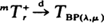 as r → ∞where T

Crossref Citations

This article has been cited by the following publications. This list is generated based on data provided by Crossref.
Doney, R.A.
1984.
Letter to the editor.
Journal of Applied Probability,
Vol. 21,
Issue. 3,
p.
673.
Sumita, Ushio
and
Masuda, Yasushi
1985.
On first passage time structure of random walks.
Stochastic Processes and their Applications,
Vol. 20,
Issue. 1,
p.
133.
Abate, Joseph
and
Whitt, Ward
1987.
Transient behavior of regulated Brownian motion, I: Starting at the origin.
Advances in Applied Probability,
Vol. 19,
Issue. 3,
p.
560.
Sumita, Ushio
and
Masuda, Yasushi
1987.
Classes of probability density functions having Laplace transforms with negative zeros and poles.
Advances in Applied Probability,
Vol. 19,
Issue. 3,
p.
632.
Sumita, Ushio
and
Masuda, Yasushi
1987.
Classes of probability density functions having Laplace transforms with negative zeros and poles.
Advances in Applied Probability,
Vol. 19,
Issue. 3,
p.
632.
Masuda, Yasushi
1988.
First passage times of birth-death processes and simple random walks.
Stochastic Processes and their Applications,
Vol. 29,
Issue. 1,
p.
51.
Kijima, Masaaki
1988.
On passage and conditional passage times for Markov chains in continuous time.
Journal of Applied Probability,
Vol. 25,
Issue. 2,
p.
279.
Sharma, O.P.
and
Nair, N.S.K.
1996.
Transient analysis of finite state birth and death process with absorbing boundary states.
Stochastic Analysis and Applications,
Vol. 14,
Issue. 5,
p.
565.
Sharma, Vinod
and
Kuri, Joy
1998.
Stability and performance analysis of rate-based feedback flow controlled ATM networks.
Queueing Systems,
Vol. 29,
Issue. 2-4,
p.
129.
Andersson, Håkan
and
Djehiche, Boualem
1998.
A threshold limit theorem for the stochastic logistic epidemic.
Journal of Applied Probability,
Vol. 35,
Issue. 3,
p.
662.
Sharma, V.
and
Kuri, J.
1998.
Stability and performance analysis of rate-based feedback flow controlled ATM networks.
Journal of Mathematical Sciences,
Vol. 92,
Issue. 3,
p.
3930.
Flajolet, Philippe
and
Guillemin, Fabrice
2000.
The formal theory of birth-and-death processes, lattice path combinatorics and continued fractions.
Advances in Applied Probability,
Vol. 32,
Issue. 3,
p.
750.
2004.
Birth and Death (BDP) Process Models with Applications.
American Journal of Mathematical and Management Sciences,
Vol. 24,
Issue. 1-2,
p.
1.
Jouini, Oualid
and
Dallery, Yves
2008.
Moments of first passage times in general birth–death processes.
Mathematical Methods of Operations Research,
Vol. 68,
Issue. 1,
p.
49.
Sagitov, Serik
and
Shaimerdenova, Altynay
2013.
Extinction times for a birth–death process with weak competition.
Lithuanian Mathematical Journal,
Vol. 53,
Issue. 2,
p.
220.
Aliee, Maryam
Rock, Kat S.
and
Keeling, Matt J.
2020.
Estimating the distribution of time to extinction of infectious diseases in mean-field approaches.
Journal of The Royal Society Interface,
Vol. 17,
Issue. 173,
p.
20200540.
Chaumont, Loïc
and
Kyprianou, Andreas E.
2021.
A Lifetime of Excursions Through Random Walks and Lévy Processes.
Vol. 78,
Issue. ,
p.
1.