




Introduction
South Korea’s sweeping 2004 political reforms stand as one of the most consequential and contested cases of anti-corruption campaign finance reform among young democracies. Landmark amendments to the Political Party Act, Public Election Act, and Political Funds Act have attracted sharply divergent assessments. Proponents hail them as a decisive blow against corruption that eliminated corporate political money and drove perceived bribery down by 90 percent.Footnote 1 Critics, however, condemn the reforms as an elite-orchestrated, cartel-like arrangement that entrenched the dominance of the two major parties at the expense of progressive third-party challengers, and dismiss such metrics as unreliable proxies for actual change. Identifying who drove these reforms, and why, carries implications well beyond Korea’s borders. At stake is a fundamental question about the nature of campaign finance reform itself: does it serve as a democracy-promoting mechanism that makes elected representatives accountable to their constituents rather than to big business, or does it function instead as a tool for established parties to insulate themselves from competition, entrench their privileges, and consolidate power? This article challenges the cartel party interpretation directly. Drawing on case study, quantitative, and values-based evidence from Korea’s 2004 reforms, it argues that campaign finance reform was driven not by self-interested incumbents but by civic organizations mobilizing modernization-related public demand for clean, accountable government, and that, as the article’s quantitative evidence shows, the reforms worked. The central question is therefore not just what reform produces, but who drives it and why. This article’s answer is the civic accountability perspective: that civic groups, rather than parties, can drive reform even in under-institutionalized party systems where elite capture is most expected, and civic groups are most easily dismissed as too weak to matter. In the Korean case, civic groups succeeded in the face of sustained political resistance by performing functions that parties would not: overcoming informational asymmetries, setting the reform agenda, and mobilizing popular support.
The article develops this argument against the dominant framework in the field. The cartel party framework, developed by Katz and Mair (Reference Katz and Mair1995), offers a skeptical account of campaign finance reform: rather than cleaning up politics, incumbent parties use reform to tilt the political marketplace in their favor, replacing private donations with state subsidies, raising barriers to entry, and severing emerging parties from their grassroots bases. Applied to Korea, Choi Jang Jip (Reference Choi2012) and Erik Mobrand (Reference Mobrand2019) argue that the 2004 reforms entrenched the two dominant parties by eliminating local party offices, restricting campaign activities, and starving newer competitors, most notably the progressive Korean Democratic Labor Party, of the resources they needed to organize. The anti-corruption rationale, on this account, was a pretext.
If the cartel party logic were going to hold anywhere, Korea in 2004 would be a likely candidate. Korea’s democratization provided elites with leverage to write the new order’s rules on their own terms, preserving old networks and leaving chaebol funding channels untouched. Political culture reinforced these advantages: Confucian norms of deference to authority weakened civil society traditions, entrenching elite-dominated policymaking. Parties were poorly institutionalized vehicles for elite factions rather than programmatic mass organizations. Korea, in short, presents a most-likely case for cartel-style reform, which is precisely what makes it so surprising that the 2004 reforms appear to have delivered genuine anti-corruption outcomes rather than incumbent entrenchment, and provide a critical test of whether civic pressure can overcome elite entrenchment even under the most unfavorable conditions.
An alternative grassroots explanation of the 2004 reforms centers on the interaction between reformist party factions and organized civic groups. Hellmann (Reference Hellmann2014) characterizes the 2004 reforms as bottom-up initiatives led by a reformist faction within the Democratic Party, coalescing around Roh Moo-hyun and later the Uri Party, responding to public demand for reduced corruption fueled by middle-class growth and outrage over clientelism’s role in the 1997–98 IMF crisis. His account draws implicitly on the logic developed by Kitschelt and colleagues (Reference Kitschelt, Wilkinson, Kitschelt and Wilkinson2007): that politicians in modernizing democracies face rational incentives to shift from clientelist to programmatic appeals as rising education and income levels generate an electorate increasingly capable of, and demanding, policy-based rather than gift-based exchange. Yet Hellmann does not explain how diffuse public demand was organized into a specific reform agenda, or how the reformist faction strengthened relative to its clientelist rivals. This article argues that Korean civic groups, built by the 386 Generation of former pro-democracy activists, provided the missing mechanism, compensating for weak party institutionalization by performing functions parties could not—what it terms the civic accountability model. Drawing on moral authority accumulated through the democratic struggle, they set legislative agendas through institutionalized advisory roles, mobilized public opinion, and, most consequentially, ran blacklist campaigns that helped voters overcome information asymmetries, reshape nomination pools, and entrench pro-reform legislators over time—shifting power toward reformist factions and making genuine anti-corruption reform possible despite a decade of failure. The article develops this argument through analysis of four reform episodes spanning 1991 to 2004.
The first section presents a case study analysis testing the civic accountability perspective against positional and cartel party interpretations. It finds that politicians consistently resisted meaningful reform when left to their own devices, that civic groups won only incremental gains when they first entered the fight in 1997, and that the tide turned in 2000 when a blacklist campaign purged the assembly’s most clientelist incumbents and established civic groups as a credible electoral force. By 2004, civic groups combined that weapon with formalized agenda-setting power to finally achieve their core objectives: a real-name funding system, a corporate donation ban, and severe penalties for violations. The pattern of strong civic mobilization driving reform against entrenched political resistance, and the opposition parties’ anti-reform positioning in negotiations, is consistent with the predictions of the civic accountability approach, while cutting against the predictions of both cartel party and positional theories.
The second section tests whether the 2004 reforms produced measurable behavioral change in campaign corruption, their stated goal, or whether, as cartel party theory would predict, they functioned primarily as a distraction from collusive reforms that insulated and entrenched the two major parties. Drawing on post-election survey data on selective incentive provision to voters, it finds that the reforms produced a fall in reported gift receipt from an average of 10.6 percent to 1.7 percent, a statistically significant reduction across all tests.
The third section uses regression analysis to ask why some legislators supported the 2004 reforms while others did not. It tests the cartel party prediction that party leaders coordinated the vote from above against the civic accountability perspective’s prediction that legislators who shared post-material democratic values would be disproportionately likely to support reform. Examining voting at the individual legislator level provides a particularly clean test of the civic accountability approach, and specifically of the Kitschelt mechanism, since if programmatic demand from modernizing constituencies was genuinely driving reform, we should see legislators who embraced post-material values disproportionately backing the reforms. This is measured through legislators’ use of Inglehart emancipatory values in their own campaign materials, providing an indirect but revealing indicator of the degree to which individual politicians had internalized and were responding to those demands.
This connects directly to the article’s broader argument: if civic groups and reform-backing legislators were responding to the same Inglehart emancipatory values, and if civic groups used those same values as the standard for their blacklist campaigns, then the values-based voting pattern in the legislature is not coincidental but reflects the civic accountability dynamic at work. Using a word-dictionary methodology to measure legislators’ invocation of Inglehart emancipatory values in campaign materials, ordinal and binomial logistic regressions across all three reform votes find strong support for the civic accountability explanation and no empirical support for the cartel party hypothesis: legislators facing competitive pressure from the progressive KDLP were less likely to support reform, and long-serving incumbents, who should have benefited most from entrenchment, opposed rather than backed the reforms.
The fourth section refines the grassroots explanation by tracking value change among Korean legislators over time, testing economic modernization theory against the civic accountability model as competing explanations. Analyzing longitudinal patterns of Inglehart emancipatory values in campaign materials from 1988 to 2004, it finds that value change was strikingly uneven in ways modernization cannot explain: scores stagnated and even regressed during the high-growth period of 1992 to 1996, while the improvement from 2000 to 2004, coinciding precisely with the blacklist campaigns, exceeded the cumulative progress of the entire preceding period, providing strong support for the civic accountability model.
These findings indicate that Korea’s 2004 campaign finance reforms represented genuine democratic deepening, reducing illicit political spending and enhancing legislative responsiveness to constituents over donors. That the cartel party framework fails to explain even a most-likely case, a young democracy with weak party institutionalization and elite-managed democratization, suggests that civic agency must be incorporated into any adequate account of reform outcomes. Whether through blacklists, advisory committees, or sustained public mobilization, civic groups can act as functional complements to weakly institutionalized parties in ways that existing party-centered frameworks have largely overlooked.
The article proceeds as follows. The first section develops the civic accountability model and tests it against the cartel party interpretation through a case study of four reform attempts from 1991 to 2004, finding that civic groups prevailed over consistent politician resistance through a blacklist campaign and an institutionalized role on an outside committee. The second section draws on post-election survey data on selective incentive provision to voters, finding a statistically significant reduction in reported gift receipt coinciding with the 2004 reforms. The third section tests which hypothesis better explains legislator voting on the reform using a word-dictionary methodology to measure legislators’ use of emancipatory values in campaign materials, and strong support for the grassroots explanation is found. The fourth section refines the grassroots hypothesis by comparing a strict modernization approach with the civic accountability explanation for longitudinal patterns of emancipative values from 1988 to 2004, again finding strong support for civic accountability. Data and code are available at https://figshare.com/s/934917610f70b08ccbbf.
Literature review
The dominant explanation in the literature for why parties support campaign finance reform is Richard Katz and Peter Mair’s (Reference Katz and Mair1995) cartel party framework. They argue that modern political parties in advanced democracies have transformed into “cartel parties,” which operate less as genuine democratic competitors than as members of a regulated oligopoly. Established parties thus enact campaign finance reforms governing party finance, campaign activities, media access, and party organization not, as they profess, to clean up politics, but to tilt the political marketplace in their favor. State subsidies allocated by vote-share replace member dues, severing parties from their social bases while raising barriers against emerging political movements. The framework’s reach extends beyond Western Europe. Petr Kopecký (Reference Kopecký2006) found heavy party financial dependence on the state across the post-Communist democracies of Eastern Europe, while both Choi Jang Jip (Reference Choi2012) and Erik Mobrand (Reference Mobrand2019) apply cartel party logic to the South Korean case, arguing that the 2004 anti-corruption campaign reforms were principally backed to entrench the dominance of the two major parties by raising high barriers to entry. The anti-corruption rationale was a pretext: elites exploited the language of reform to advance their electoral interests. Mobrand, writing over a decade after the reforms, suggests corruption was never a significant problem in the first place. Kim Yeaji (Reference Kim, Poguntke and Hofmeister2024) and Han Jeonghun (Reference Jeonghun2021) subsequently applied the term “cartelized” to Korean parties, citing state funding dependence and weakened ties to civil society as direct consequences. Choi (Reference Choi2012) argues that eliminating party district offices “severed the link between political society and civil society”—a civil society he had already characterized as weak.
Mobrand argued that this measure, combined with restrictions on voter assemblies, speeches, and rallies, was primarily aimed at undermining the electoral prospects of emerging progressive parties, most notably the Korean Democratic Labor Party (KDLP), a pro-worker party that had first fielded candidates in the 2000 National Assembly election. Without local offices, which the KDLP decried as crucial for recruitment, organizing dues-paying members, and nominating candidates, the party struggled to harness grassroots energy and mobilize members, while established parties could rely on politicians with wide name recognition. Although eliminating corporate donations was presented as an anti-corruption measure, it deprived independent campaigns of necessary capital, raising the barrier to entry still further. State subsidies, meanwhile, guaranteed financial resources for established parties, while starving newer, smaller competitors.
Cartel theory, and its Korean application, fail to explain the 2004 reforms on two grounds. First, both oversimplify the political field: Katz and Mair flatten the difference between ruling and opposition parties into an endnote, while Choi and Mobrand ignore civil society entirely. Second, Choi’s and Mobrand’s empirical expectations rest on a mass party baseline that Korea’s electoral institutions never produced and the incentive structure of a FPTP system never supported.
First, Katz and Mair acknowledge, in an endnote citing British Labour’s support for proportional representation, that parties systematically excluded from office may engage in anti-cartel behavior by pursuing institutional reforms to break incumbent advantages (Katz and Mair Reference Katz and Mair1995), but they leave this unexplained. Choi’s and Mobrand’s framework inherits and deepens the same blind spot by assessing party organizational capacity in isolation, without considering how civic groups interact with parties within the broader political system, and offers no category for functional substitution: the possibility that civil society organizations assume roles parties fail to perform. In the Korean case, civic groups did precisely this, stepping in to perform agenda-setting, accountability, and voter information functions that the literature typically assigns to parties. Viewed at the party level alone, this looks like organizational weakness; assessed at the system level, it reveals a functional equivalent to what catch-all parties perform elsewhere. As the legislative history of Korea’s three campaign finance laws demonstrates, civic groups were the only consistently pro-reform actor across four revision episodes spanning a decade, a pattern that party-level analysis alone cannot explain.
Choi’s and Mobrand’s analyses also presuppose a mass party baseline that Korea’s electoral institutions never produced and were never likely to produce. It was the first-past-the-post system, not the 2004 reforms, that generated Korea’s two-party dominance (Duverger Reference Duverger1954): FPTP confines left-wing mass parties like the KDLP to highly concentrated industrial enclaves such as Incheon and Ulsan, and gives the two major parties no incentive to build the kind of organized labor constituencies the SPD model requires. The ruling and opposition parties therefore had little need to use the 2004 reforms to exclude smaller competitors, since the electoral system was already doing that. The appropriate programmatic destination for major Korean parties was not the SPD-style mass party Choi and Mobrand both assume, but the catch-all party (Kirchheimer Reference Kirchheimer, La Palombara and Weiner1966), which competes for median voters rather than organized class constituencies. From that perspective, the district office that Choi and Mobrand both treat as a critical institution for democratic party-building was always more likely to function as a casework office than a site of interest aggregation or political mobilization; and in a median-voter environment, a district office visibly tied to a labor union becomes an electoral liability rather than an asset.
Beyond the Korean case, Cartel Party theory has a deeper problem: it assumes shared reform interests across ruling and opposition parties. Martin Shefter (Reference Shefter1994) argues that opposition parties and minority factions have a stronger interest in reform than the ruling party. Where Katz and Mair assume parties converge on state funding as a shared resource, Shefter argues that outside elites have a positive instrumental interest in reform as a means of dismantling the ruling party’s monopoly on private rent-seeking, from which the opposition is excluded. The ruling party values private rents more than any state funding which reform might provide. Shefter develops this argument through the case of nineteenth-century American urban patronage machines, where reformers employed civil service reform as a factional weapon to strip the incumbent machine of its primary organizational currency: politicized bureaucratic appointment. Ramseyer and Rosenbluth’s (Reference Ramseyer and Rosenbluth1993) account of Japan’s Liberal Democratic Party illustrates a modern equivalent: a bureaucracy penetrated and converted into an instrument of party dominance, in which agencies granted technocratic discretion coexisted with ministries organized primarily around coalition maintenance through construction contracts and amakudari networks. Opposition parties unable to inherit or operate the incumbent’s rent network had a rational incentive to change the rules of the game and 1994 electoral reforms that dismantled the single non-transferable vote system, which had made local pork delivery electorally valuable, followed that logic. The reform’s fundraising consequences bear this out: the 1994 reforms reduced the LDP’s relative fundraising advantage over opposition parties (Carlson and Nakabayashi, Reference Carlson and Nakabayashi2023).
Shefter’s framework nonetheless requires modification for the Korean case. In both Shefter and Ramseyer and Rosenbluth, the ruling party’s advantage derives from control of a bureaucracy which is inaccessible to the opposition. Korea’s 2004 reforms targeted electoral clientelism, however, which was available to both parties, weakening the clean positional logic on which Shefter’s argument depends. Explaining why the opposition nonetheless pursued reform requires understanding the conditions under which programmatic strategies become advantageous over clientelistic ones. Legislators face a genuine strategic choice between personalist and programmatic appeals (Cain et al. Reference Cain, Ferejohn and Fiorina1987); in the context of machine politics, the relevant personalist strategy is clientelism, and Kitschelt’s account specifies when the programmatic alternative becomes rational. Clientelism involves exchanging particularist benefits, such as cash payments, jobs, welfare access, or personal favors, contingent on political support, whereas programmatic politics entails competing through general policy platforms offered to broad categories of citizens, whether through tax, welfare, or education policy, economic reform, or ideological commitment. Rational politicians select whichever strategy offers the highest expected electoral return given their environment. The programmatic option becomes advantageous when voters are economically secure enough to discount immediate particularist benefits in favor of longer-term policy gains; where they are sufficiently politically sophisticated to evaluate platforms; when parties have developed reputations to credibly commit to those platforms; or where politicians lack the local organizational networks necessary to monitor whether particularist benefits have been reciprocated with votes.
Inglehart’s modernization framework helps explain when and where these conditions arise. As development raises living standards and expands educational access, citizen value priorities shift from survival and traditional authority concerns toward secular-rational norms and self-expression values, what Inglehart calls post-material orientations. Citizens with post-material values are less responsive to particularist material inducements and more demanding of transparency, rule of law, and programmatic policy commitments. This value shift generates the societal constituency to which programmatic appeals are addressed: an electorate that evaluates politicians by their policy platforms and institutional integrity rather than their capacity to deliver personal favors.
Clientelism is a rational strategy that becomes increasingly costly and unreliable as development and party institutionalization advance, at which point programmatic competition becomes the more efficient path to electoral victory. Since clientelism is cash-intensive and requires an ongoing stream of private goods, programmatic politicians can hobble clientelist rivals by using campaign finance reform to cut off access to state rents and wealthy donors.
Olli Hellmann (Reference Hellmann2014) draws on Kitschelt’s framework to offer a bottom-up interpretation of the 2004 Korean reforms, characterizing them as initiatives led by reformist factions within the major parties in response to widespread public demand for reduced corruption. These measures aimed to undermine elite patronage networks, through which particularist gifts or favors were exchanged for electoral support, and to foster programmatically oriented political competition. Hellman identifies the emergence of an expanded middle class in the 1990s, which was less susceptible to patronage and more interested in policy, alongside growing public outrage over clientelism and corruption, which had been widely blamed for the 1997–98 IMF crisis, as the key drivers of reform pressure. He traces the emergence of a reformist faction within the Democratic Party around Roh Moo-hyun, which sought to link the party to its constituents through an open nomination system, to institutionalize collective decision-making, and to reinforce the party’s policy brand. After breaking from the Democratic Party to form the Uri Party, reformers partnered with civic groups to craft the 2004 reform package. The legislation imposed strict campaign-finance rules, capping expenditures and contributions while providing public funds, introduced a two-ballot system to counter regionalism, and abolished the district offices that had functioned as clientelist hubs.
Hellman correctly identifies the emergence of a pro-reform faction responding to modernization-related, demand-side pressures, but does not explain how diffuse public demand was organized into a specific reform agenda, or how the reform faction strengthened relative to the clientelist faction within the same party. Where Choi’s and Mobrand’s framework lacks a category for civil society’s substitutive role, Hellman’s account lacks an explanation of the mechanism, specifically, how civic groups transmitted societal demand into party politics. This mechanism takes concrete form in Kim Sunhyuk’s (Reference Kim2000) analysis: Korea’s post-democratization civic movement was built by the 386 Generation, the former pro-democracy student activists who led the street protests of the 1980s, who moved from street protests to forming institutionalized civic organizations. Civic groups set legislative agendas on advisory committees, mobilized public opinion, and built public consensus for reform across a wide range of policy areas, including environmental protection, gender and labor rights, constraints on chaebol power, welfare and redistribution, and democratic deepening. Drawing on the moral authority accumulated through the democratic struggle, they were well positioned to persuade the public to back reform initiatives. Acting as watchdogs, they monitored government conduct and served on hundreds of advisory committees overseeing legislative implementation — leaving Korea first in the OECD in outside regulatory impact assessment and third in stakeholder engagement. Most consequentially, civic groups took on traditional party functions, providing cognitive shortcuts that helped ordinary citizens navigate the political landscape. Through blacklist campaigns, they vetted candidates before and during nominations, actively reshaping candidate pools in both major parties and entrenching pro-reform legislators over time. While identifying civic groups as crucial political actors, however, Kim does not examine their role in the 2004 campaign finance reforms that are the focus of this study.
Case study: The politics of campaign finance reform, 1991–2004
This section tests the cartel party, Shefter positional, and Kitschelt civic accountability perspectives against four reform episodes. If the cartel party thesis is correct, incumbents across both parties should collude to pursue reforms that stabilize their collective dominance, favoring increased state funding for established parties while imposing restrictions on campaign activity that entrench insiders and raise barriers to entry. Outsider candidates and new entrants will be the primary targets, and civic groups will be largely irrelevant.
Shefter’s positional thesis predicts that opposition and minority factions will be the primary drivers of reform, wielding it as an offensive weapon against the ruling mainstream. The dominant faction will resist because reform threatens the patronage networks and rent distribution systems through which it maintains loyalty and control. As with the cartel party thesis, civic groups remain peripheral, with meaningful competition occurring between elite factions.
The civic accountability thesis predicts that reform emerges where politicians face policy-oriented electorates that render clientelism costly and inefficient. Civic groups play a pivotal role by generating the programmatic demand that makes reform electorally rational, while parties representing poorer or rural constituencies persist with clientelist linkages where targeted material benefits remain a more effective currency of exchange. A key observable difference between the positional and civic accountability theses lies in how opposition forces respond to rent-restricting reforms: the positional thesis predicts consistent support, since such reforms undermine the ruling faction’s advantage, whereas the civic accountability thesis predicts support only where programmatic demand makes it electorally rational.
Before turning to the cases, the article first establishes the rent exchange and clientelism-related interests of key actors: civic groups, the ruling party, opposition and minority factions, academics, chaebol, and labor. This step is necessary because causal inference requires specifying actor interests prior to examining outcomes. Without it, predicted behavior cannot be clearly distinguished from post-hoc rationalization of the evidence. Katz and Mair’s cartel theory, by contrast, assumes that incumbent politicians across parties collectively prefer secure state funding over private rent dependence, considering societal actors largely inconsequential to reform outcomes.
Actor interests
Civic groups, rooted in the democracy movement, have structural reasons to prioritize reform. First, they view corruption as a fundamental democratic threat: a mechanism by which chaebol capture rents and divert politicians from their constituents. Chaebol money disadvantages opposition and left-leaning candidates, skews electoral competition, while recurring scandals erode public confidence in democratic institutions. Second, politicians beholden to chaebol donors are systematically less responsive to civic group demands, whether on labor rights, welfare, environmental protection, or gender equality. Clean politics is therefore a necessary precondition for civic groups to achieve their broader agenda. So, commitment to democratic integrity and instrumental interest in politician responsiveness give civic groups a uniquely strong and consistent stake in anti-corruption reform.
The ruling party has the strongest positional incentive to resist reform. Its control of state resources provides unparalleled access to business donations—under the designated donation system it monopolized nearly all contributions until 1997, making private rent-seeking more valuable than any state funding reform might provide.
Opposition parties and minority factions face mixed incentives. With a smaller share of corrupt spoils and seats on key National Assembly committees, they have both the means and motivation to expose scandals and champion reform as a wedge issue against the ruling party. Yet their actual negotiating positions often reveal a preference for a more equitable distribution of spoils rather than their elimination (Park Reference Park2011, Reference Park2016). Since many of their politicians depend on clientelist appeals, stricter rules would constrain their own options should they gain power. Politicians’ incentives on campaign finance reform thus tend to follow constituency lines: those from urban, higher-income districts tend to support reform, while those from poorer rural districts, more dependent on direct material benefits, have stronger incentives to preserve clientelist networks.
Academics who developed the initial reform proposals are divided between catch-all party proponents favoring transparency measures compatible with the existing FPTP system and mass party advocates pushing for a German-style PR system that would benefit small, membership-funded parties. Chaebol business associations have an incentive to oppose donation caps to preserve political influence, endorsing transparency measures only where these do not threaten their access to politicians. Major labor unions, including the KCTU and their allied KDLP, share most of the civic reform agenda but have additional interests in expanded proportional representation and preservation of local district offices along European social democratic lines to strengthen their organizational presence in the party system.
The four episodes that trace negotiations over revision of the so-called ‘politics-related laws’ – the Election Act, the Political Funds Act, and the Party Act – showing how reform capacity shifted over time, from the politician-dominated process of 1991 through to the civic-led breakthrough of 2004.
The 1991 reform effort
The 1991 reform episode was initiated not by civic pressure but by elite factional maneuvering. Kim Young-sam, head of a ruling party minority faction, leaked details of the Sooseo Land Scandal to the press in early 1991, triggering media coverage that fueled public demands for anti-corruption reform. Democratic diffusion of authority had decentralized bribery, giving minority faction leaders both motive and opportunity to expose rivals through scandal.
Academics Choi Jang Jip and Park Se Il responded with two competing anti-corruption electoral reform models. Both promoted government funding, favored small over large donors, and backed transparent management of donations and expenditures, but differed on party structure. At a seminar held by the minor leftist Minjoongdang party, Choi argued for a German-style PR electoral system built around mass-based parties using district office outreach to labor union constituents (Song Reference Song1991). Park, presenting at a ruling Democratic Liberal Party (DLP) conference, favored a catch-all party model and proposed many reforms later promoted by civic groups and adopted into law in 2004: replacement of clientelist activities with mass media appeals, reduction of organizational costs, increased NEC oversight, strict penalties for electoral violations, and a transparent (later termed “Real Name”) Political Fund system (Oh Reference Oh1991). The Citizens’ Coalition for Economic Justice (CCEJ), founded in 1990, became the first major civic group to focus on revising political laws in the wake of Sooseo. It operated fraud reporting centers for the June 1991 local elections but concentrated on legalizing NGO campaigning rather than campaign finance reform. Consequently, the ruling DLP and opposition Democratic Party (DP) negotiated political law reforms in October and November l991 largely free from societal pressure. The resource-starved DP sought increased government funding but backed legalizing the sale of PR list seats, and opposed transparent fund disclosure on the grounds that it would expose donors to political retaliation. On campaigning, the DLP sought to limit speeches to controlled indoor gatherings, where attendee lists made clientelism most effective, while the DP pushed for open speeches, combining selective clientelism with movement-style mobilization (Kwak Reference Kwak1991).
The resulting December 1991 amendments to electoral and political fund laws were regressive by any measure. Despite increasing state funding by over 50 percent, the reforms expanded rather than constrained private money: donation restrictions were relaxed, funding committee membership doubled, the donation period extended by 30 days, and campaign offices, party rallies, and public campaigning legalized. Most critically, the amendments rejected NEC-backed transparency and enforcement proposals for disclosed income, expenditure reports, and electoral violation penalties, that would have given reform real bite. The CCEJ, meanwhile, focused narrowly on civic groups’ exclusion from campaign activities, missing the broader transparency issues at stake (Kim Chang-hee Reference Kim1991; Kim Myung-ho Reference Kim1991).
The 1991 episode offers little support for either the cartel party or Shefter’s positional thesis. Cartel party logic would predict collusion around state funding at the expense of private rents, yet the reforms expanded private fundraising while rejecting the transparency and enforcement measures that would have constrained it. The state funding increase looks less like cartel collusion than a concession thrown to the opposition to preserve the ruling party’s private rent advantage. Shefter’s thesis fares no better: rather than wielding reform as an offensive weapon against the ruling mainstream’s rent monopoly, the opposition actively promoted clientelism by opposing transparency measures and proposing to sell PR seats as a new revenue stream. Without civic groups, elite actors on both sides defaulted to clientelist accommodation.
The 1997 reform effort
In early 1997, the opposition National Congress for New Politics blew the whistle on over a dozen National Assembly members and high-ranking officials implicated in the Hanbo bankruptcy bribery scandal, heightening public concern about corruption. What is noteworthy about this episode is that civic groups sought to influence the negotiations over the political laws in order to reduce corruption. The CCEJ seized on the moment, and renewed its call, advocating since 1993, for a real-name political fund system which included a ban on corporate donations, mandatory donor disclosure, all transactions processed through a single NEC account, serious penalties for violators, reduced clientelistic activities such as speeches and pamphlet distribution, and expanded use of televised debates and advertisements (Cho Reference Cho1997).
With 43 other civic groups, the CCEJ submitted Electoral and Political Fund Law revision petitions, held street campaigns and rallies, gathered supportive National Assembly member signatures, and raised voter awareness (Yoon Reference Yoon1997). Negotiations between the parties commenced in August and under unrelenting pressure from civic groups and with strong scandal-fueled public support for ending money politics, the reluctant parties agreed to a set of incremental reforms announced on November 1, 1997. Both parties successfully blocked a proposal to adopt a real-name political funds system that would have required all funds to flow through a single, transparent NEC bank account, but conceded to grant the NEC authority to investigate electoral crimes. While the ruling NKP agreed to limits on the number of indoor campaign speeches and gift distribution at public events, it resisted penalizing campaign violations, restrictions on private donations, or caps on campaign spending. The reforms eliminated the designated donation system and surrogate fundraising organizations that had funneled chaebol funds to the ruling party, but by narrowing the definition of “political funds” so that unlabeled money fell outside criminal liability, they effectively permitted unlimited, undisclosed contributions and expenditures (Ahn Reference Ahn1997). Meanwhile, parties continued to incur steep organizational costs at both central and district levels, and the opposition NCNP secured increased government financial support. The reforms did, however, take meaningful steps toward cleaner campaigning by requiring more televised speeches and debates and expanding TV advertising access.
The 1997 episode produced civic-driven incremental progress again consistent with the civic accountability thesis. Civic groups engaged in campaign finance reform for the first time, adopting Park Se-il’s proposals and pushing through rallies and petitions to end rent exchange and clientelism while advocating public funding and media access as programmatic alternatives. Their pressure produced incremental gains: restrictions on some clientelist activities, limited NEC investigatory powers, and the introduction of mass media campaigning.
Neither the cartel party nor Shefter’s positional thesis fares well. Both parties rejected transparent reporting of receipts and expenditures, which would have most directly constrained private rents, suggesting that cross-party collusion operated around protecting rent exchange rather than securing state funding as cartel party theory predicts. The ruling party’s strong resistance to spending limits and campaign activity restrictions further undermines that account. Shefter finds only weak support: the opposition’s push for state funding and spending limits fits a positional logic, but its simultaneous rejection of transparency reveals an interest in preserving private rents that contradicts the thesis’s core prediction. The episode’s incremental reform gains are better explained by civic group pressure than by factional maneuvering.
The 2000 reform effort
In April 1999, the CCEJ and allies petitioned the National Assembly to revise the three Politics-related Laws (Election, Party, and Political Funds Acts), renewing demands for a transparent real-name funding system, penalties for violations, and a ban on corporate donations. When the Special Committee on Political Reform deadlocked and disbanded in December, the parties agreed on a regressive amendment that reduced the statute of limitations for election crimes, expanded government subsidies, rejected the real-name system, and banned civic group political ratings (Hwang Reference Hwang1999).
In response, the CCEJ and PSPD united 412 civic groups under a new coalition, the General Election Citizens’ Solidarity (GECS), and launched a blacklist campaign targeting politicians who had supported authoritarian leadership, committed corruption or electoral violations, or opposed human rights legislation and political reform (“412 Civic Groups Launch” 2000). After President Kim Dae-jung, facing public outcry, ordered his party to renegotiate the problematic provisions, GECS rallied civic groups outside the National Assembly. The final amendment, passed February 16, allowed civic groups to blacklist candidates and hold debates, expanded government funding, reduced organizational costs by capping staff at central and branch offices, and strengthened oversight by creating election fraud monitoring groups and granting the NEC authority to gather criminal evidence and compel witnesses. It also covered costs for televised and radio speeches. Beyond these gains, civic groups set an important precedent by securing direct participation in a redistricting commission whose proposal to eliminate 26 districts was accepted in the final amendment.
The 2000 episode again offers little support for the cartel party thesis. Both parties opposed restrictions on private rent exchange across the board, resisting spending and contribution limits, organizational constraints, transparency requirements, and penalties for violations. Their one area of agreement, support for increased state funding, superficially fits the cartel party prediction but is better read as a lowest-common-denominator concession that left private rent-seeking intact. Shefter’s positional thesis again finds little traction. Rather than deploying reform as an offensive weapon against the ruling mainstream, the opposition joined the ruling party in blocking the measures that would have most constrained private rents.
The civic accountability thesis again fares best. Civic groups maintained support for the full reform agenda and, critically, were stronger than in 1997, deploying the blacklist campaign as a credible electoral weapon for the first time. This, combined with the electoral pressures of an upcoming election, generated sufficient grassroots momentum to prevent a complete regressive rollback. The result was incremental but real: increased NEC investigatory powers and reduced party organizational spending, though transparency requirements and penalties again fell short. Civic group capacity, not elite factional dynamics, determines how much reform survives political resistance.
The 2004 reform effort
The 2000 blacklist campaign had strengthened pro-reform factions in the ruling and opposition parties by removing their internal opposition, defeating 59 of 86 (69 percent) candidates most opposed to reform, human rights, or implicated in corruption (Moon Reference Moon2000). Following the 2002 election, the now-ruling Millennium Democratic Party (MDP) split between a reformist faction supporting President Roh Moo-hyun and the Donggyo-dong faction loyal to former President Kim Dae-jung. The reformists, younger, urban politicians seeking to break with regional patron-client politics, championed anti-corruption measures, government transparency, internal party democratization, civil society participation, and expanded social welfare. The Donggyo-dong faction, drawing power from personal loyalty networks rooted in the Honam region and controlling the party leadership and organizational machinery, prioritized stability over reform. This split produced the MDP’s division in July 2003 and the formation of Korea’s first reformist party, the Uri Party.
Within the Grand National Party (GNP), Lee Hoi-chang’s 2002 departure created a leadership vacuum that empowered reformist first-term members. In January 2003, ten junior progressive GNP lawmakers, mostly from Seoul, formed “Kukmin Sokero” to challenge the conservative majority faction rooted in the party’s Gyeongsang provincial base (Cheon Reference Cheon2003). Reformist factions in both parties sought to strip majority-faction-controlled district party heads of influence over delegate selection and candidate nomination, pushing instead for participatory primaries.
After a year of stalling by legislators, the CCEJ delivered another petition in September 2003, invoking GNP Leader Choi Byung-ryul’s June proposal to form a civilian advisory body, the PNPRC, comprising representatives from media, civil society, and academia, to set the political reform agenda for inter-party negotiations.
With their blacklist strategy’s credibility established in 2000, the CCEJ surveyed and publicized politicians’ reform and human rights positions and held rallies in Yeouido. Pressure intensified in October as media coverage grew of the prosecution’s investigation into the “Truckloads of Cash” GNP presidential campaign scandal. Against this backdrop, the PNPRC, led by Professor Park Se-il and comprising representatives from academia, the CCEJ, and the PSPD, presented its reform plan, including a real-name political funding system, to the four-party Political Reform Special Committee (PRSC) in November (Lee Reference Lee2003). By late December it was clear the PRSC’s own measure ignored all PNPRC proposals and would dismantle existing restraints on money politics: it increased campaign workers, relaxed restrictions on campaign meetings, stripped the NEC of authority to request data, investigate accounts, or compel interviews, left fundraising committees intact, kept cash donations untraceable and unlimited, and failed to increase penalties or provide whistleblower protection (Seo Reference Seo2003).
Reformist Uri Party committee members refused to vote on the regressive legislation as a broad civic coalition mobilized behind the PNPRC proposals, including the Citizens’ Organizations Urging the Realization of Political Reform (13 groups), the Emergency National Conference for the Eradication of Corrupt Politics (394 organizations), and the Coalition of Civil Society Organizations (355 groups). Together they threatened a massive resistance movement and launched a new blacklist campaign targeting reform-resistant politicians. The pressure worked: on January 8, the GNP, DP, and ULD agreed to reconstitute the PRSC with reformist faction members leading each delegation, and one week later the reconstituted PRSC accepted the PNPRC proposals (Ahn Reference Ahn2004).
The 2004 episode provides the strongest support for the civic accountability thesis and the clearest refutation of the cartel party and Shefter positional accounts. The 2000 blacklist campaign laid the groundwork by purging the assembly’s entrenched clientelist incumbents and strengthening reformist factions within each of the major parties. The most significant organizational consequence was the formation of the Uri Party from the ruling party’s reformist wing. Its pro-reform orientation reflected its founding composition, disproportionately comprised of urban representatives, younger members, and politicians with stronger ties to the anti-corruption movement than to clientelist networks.
Civic groups consolidated this advantage by seizing agenda-setting power through the Pan-National Political Reform Committee, an outside body that devised reform proposals and submitted them directly to the National Assembly’s Political Reform Special Committee. When the mainstream factions of both major parties and the minor ULD attempted a last-minute regressive hijack, civic groups responded immediately. Threatening a renewed blacklist campaign and mobilizing nationwide protests in the shadow of approaching elections, they generated sufficient electoral pressure to force the Political Reform Special Committee to fully adopt the PNPRC agenda.
The resulting reforms were entirely oriented toward dismantling private rent exchange: a corporate donation ban, mandatory full transparency in the receipt and expenditure of funds, vastly expanded NEC enforcement powers, and severe penalties for violations. Notably, no state funding or public media measures were included, contrary to cartel party theory predictions. The Uri Party’s support for the full reform agenda further undermines Shefter’s positional thesis: this was not opposition factionalism exploiting reform opportunistically, but a party whose organizational identity was inseparable from the anti-corruption cause that civic groups had driven for over a decade.
Case study summary
South Korea’s campaign finance reform story supports the civic accountability model. Across four episodes spanning thirteen years, reform progress tracked civic group capacity rather than elite factional dynamics or cartel collusion. Left to their own devices in 1991, politicians produced a regressive outcome, expanding private fundraising while rejecting the real-name funding system, corporate donation ban, and enforcement measures that Park Se-il had proposed. When civic groups entered the fight in 1997, they won only incremental gains, as politicians remained strong enough to block structural reform. The tide turned in 2000, when civic groups deployed the blacklist as a credible electoral weapon, purging the assembly’s most entrenched clientelist incumbents, strengthening reformist factions within both major parties, and stopping a regressive rollback. By 2004, civic groups combined that weapon with formalized agenda-setting authority to finally overcome political resistance and achieve their core objectives: a real-name political funding system, a corporate donation ban, steep cuts to party organizational infrastructure, and severe penalties for violations.
The cartel party thesis finds little support across the four episodes. Rather than colluding around state funding at the expense of private rents, both major parties consistently sought to preserve the anonymous inflow of private funds, unrestricted campaign spending and activities, and freedom from external oversight and penalties. State funding support, the one prediction cartel theory gets right, was more strongly championed by the opposition than the ruling party, and it coexisted in both parties with a strong preference for continued private rent exchange, which cartel theory cannot explain.
Shefter’s positional thesis fares only marginally better. While the opposition occasionally pushed for state funding and spending limits consistent with a positional logic, it simultaneously opposed the transparency and enforcement measures that would have most directly undermined the ruling party’s rent monopoly, suggesting an interest in accessing clientelist spoils rather than dismantling the system.
The civic accountability thesis best explains both the pattern of reform and its limits. Civic group blacklists helped citizens overcome information asymmetry, remaking the composition of the assembly in favor of reform, while their formal advisory role secured agenda authority at the critical 2004 juncture. Neither tool was available off the shelf, however. Both depended on the reputational capital that groups like the CCEJ and PSPD had spent the better part of a decade building through persistent, credible, and independent engagement with the reform process.
The anti-corruption logic of the 2004 amendments
The 2004 amendments to the Election, Party, and Political Funds Acts attacked electoral corruption through four complementary mechanisms: restricting and substituting funding sources, reducing and redirecting campaign expenditures, increasing transparency, and strengthening enforcement.
On the supply side, the reforms aimed to replace private with public funding and shift from large private contributions, often exchanged for favors, toward small individual donations. The Party and Election Acts banned corporate and organizational contributions entirely while incentivizing donations under 100,000 won through tax credits. Caps on individual donations were tightened from 120 million to 20 million won, and fundraising limits for central parties and incumbents were cut from 30 billion and 300 million won to 5 billion and 150 million won respectively. Government campaign support was calculated on each party’s average vote share, and candidates received deposit refunds upon clearing 15 percent of the vote.
To reduce demand for illicit funds, the reforms replaced clientelist activities with non-clientelist alternatives while lowering organizational costs. The Election and Political Funds Acts banned gift distribution at party events and at congratulatory or condolence occasions, paid-attendance speeches, and gatherings, including policy reports, book launches, and party officer meetings, that had frequently served as pretexts for distributing cash.
Most significantly, the Party Act eliminated district party offices, long derided as “money-eating hippos,” for dispensing patronage to local brokers and providing gifts, food, and entertainment to visitors. The Election Act shortened the campaign period by three days, while the Party Act further reduced costs by cutting paid staff at party headquarters and city and provincial offices and closing central and regional fundraising committees in 2006. The reforms also promoted media-based campaigning by legalizing candidate websites, constituent emails, and online party membership management, alongside the televised debates and discussion programs established under the 2000 amendments.
Strict transparency requirements made it harder for wealthy donors to exert corrupt influence and easier for the NEC to detect fraud and unreported expenses. The Election and Political Funds Acts required candidates to channel all income and expenditures through a NEC-designated account, use traceable checks or credit cards for contributions over 1 million won and expenditures above 500,000 won, provide receipts for contributions above 100,000 won, and limit untraceable cash to 20 percent of annual spending. The NEC published the names of donors giving over 1.2 million won annually to candidates or regional branches, or over 5 million won to central parties.
The Election Act strengthened NEC investigatory powers and stiffened penalties, increasing both the likelihood of detection and the costs of violation. The NEC gained authority to audit campaign finances, compel submission of financial and telecommunications data, collect on-site evidence, and summon individuals for questioning, with fines up to 3 million won for noncompliance. Whistleblower identities were protected, and informants could receive rewards up to 50 million won for reporting electoral crimes.
The Political Funds Act raised prison terms to five years, introduced absentee trials to prevent strategic delays, and extended the statute of limitations. The Election Act nullified election victories and reclaimed deposits and campaign costs if a candidate exceeded spending limits, falsified NEC reports, or accumulated fines over 3 million won. Both candidates who distributed gifts or meals and recipients who accepted them faced fines equal to 50 times the value exchanged. Taken together, these provisions represented the most ambitious legislative attempt to date to sever the link between private money and electoral competition in Korea, but whether they achieved this goal in practice requires examination before turning to legislative voting behavior.
The effects of the 2004 reforms
Did the 2004 reforms actually reduce electoral clientelism, or were they the symbolic exercise that cartel party theory predicts? Cartel party theory holds that campaign finance reform is primarily a mechanism for justifying increased state funding rather than a genuine constraint on private rent exchange—the position Mobrand applies directly to the Korean case. The NEC post-election survey data suggests otherwise (see Figure 1) (National Election Commission n.d.-c.).
Share of Voters Reporting Receipt of Selective Benefit.
Note: Selective benefits include: cash, campaign tourism, gifts, food, and entertainment.
Source: National Election Commission, Voter Awareness Surveys, various years.

Figure 1. Long description
The y-axis represents the percentage of voters, ranging from 0 to 20 in increments of 2. The x-axis lists specific dates from March 1, 1992, to July 1, 2021.
* The data begins at its highest point of approximately 18 percent in March 1992.
* It drops sharply to 12 percent in February 1993, then rises to a secondary peak of nearly 15 percent in October 1996.
* A significant decline follows, reaching a trough of 3 percent in September 1997.
* The line fluctuates with a peak of 9 percent in June 2000 and 7 percent in March 2003.
* From 2004 to 2012, the values remain low, generally between 1 and 3 percent.
* The lowest point occurs in April 2013 at 0 percent.
* A small recovery is seen in January 2016 at nearly 4 percent, before trending back down toward 1 percent by July 2021.
Voters reporting receipt of selective incentives (money, gifts, food, entertainment, or trips) almost certainly an undercount given reluctance to self-incriminate, show a sharp and durable post-reform decline (Table 1). Pre-reform elections averaged 10.6 percent reported gift receipt, falling to 1.7 percent post-reform, a difference that is statistically significant across all tests (Welch’s t-test p = 0.010, Mann-Whitney U p = 0.002) and large in magnitude (Cohen’s d = 2.24). Bayesian changepoint detection confirms that the most probable structural break falls between the December 2002 and April 2004 elections, with a posterior probability of 82 percent. The next most probable location, between April 2004 and December 2007, carries a 13.6 percent probability, consistent with a delayed effect as politicians absorbed the consequences of strict penalty enforcement in the first post-reform election. Together these two adjacent intervals account for 95 percent of the posterior probability mass, converging on the 2004 reforms as the structural break rather than any prior episode. Since self-reported figures understate true incidence, the pre-reform baseline was likely higher still, strengthening the contrast.
Self-Reported Receipt of Selective Benefits from Candidates, Pre- and Post-2004 Reform

Table 1. Long description
The table consists of eight columns and one data row.
Column headers from left to right are: Voter Survey Results, Pre-2004 Reform Mean (n), Post-2004 Reform Mean (n), Mean Difference, Welch’s T, Welch P-value, Mann-Whitney P-value, and Cohen’s D.
The data row for ‘Self-reported receipt of selective benefit’ contains the following values:
- Pre-2004 Reform Mean (n): 10.58% (n=6)
- Post-2004 Reform Mean (n): 1.73% (n=9)
- Mean Difference: 8.85%
- Welch’s T: 3.90
- Welch P-value: 0.01
- Mann-Whitney P-value: 0.002
- Cohen’s D: 2.24 (large)
A note below the table explains that values reflect the percentage of surveyed voters self-reporting receipt of a selective material benefit such as cash, campaign tourism, gifts, food, and entertainment from a candidate or party during a campaign.
Note: Values reflect the percentage of surveyed voters self-reporting receipt of a selective material benefit (e.g., cash, campaign tourism, gifts, food, and entertainment) from a candidate or party during a campaign, before and after the 2004 reform.
Source: National Election Commission, Voter Awareness Surveys, various years.
The evidence is inconsistent with the cartel party interpretation. A reform designed primarily to justify state funding transfers would not be expected to produce an 84 percent reduction in reported gift receipt sustained across eight subsequent elections. The scale, timing, and durability of the decline point instead to the enforcement provisions, the real-name funding system, corporate donation ban, and severe penalties, that civic groups insisted upon and politicians repeatedly tried to block.
Cartel Party or Grassroots Pressure? Explaining Legislators’ Reform Votes
The qualitative case study in Section One identifies civic groups as the pivotal actors in the 2004 reforms: through their blacklist, their agenda-setting on the PNPRC, and their pre-election mobilization, and traces how that capacity was built over a decade of persistent engagement with the reform process. But why were some legislators responsive to civic group pressure while others were not? Examining individual legislator voting behavior allows a sharper test of the competing theoretical predictions than the case study alone can provide: whereas the case study establishes the macro-level mechanism, the regression tests whether the civic accountability and cartel party logics can be distinguished at the level of the individual rational politician. This matters because Kitschelt’s framework implies a continuum between programmatic and clientelistic strategies that should be visible in individual legislative behavior—specifically, in whether politicians chose to appeal to constituents using post-material values associated with transparency, human rights, and democratic accountability, which I interpret as the rational politician’s response to constituent demands amplified and channeled through civic group mobilization. The cartel party account, already weakened by the case study evidence, offers a top-down answer: party leaders coordinated the vote from above, and competitive pressure from the new progressive KDLP brought members into line. The positional account, which has not, to my knowledge, been applied to the Korean case, was tested and found wanting in the case study, where the opposition’s sustained anti-reform positioning in negotiations sits poorly with the expectation that parties exploit reform as a weapon against incumbents. The civic accountability model implies something more consistent with the case study findings: if civic groups were the organizational expression of a broader democratic post-material value shift that Inglehart’s modernization framework predicts, deploying standards of transparency, human rights, and democratic accountability that resonated with an increasingly secular-rational and self-expressive electorate, then legislators who either shared those values or believed that signaling them would appeal to their constituents, should have been disproportionately likely to support reform independent of party discipline. The regression in this section tests that proposition directly.
This framing has an important measurement implication. Civic group blacklist criteria were not arbitrary but reflected precisely the post-material value cluster established in the literature review: transparency, human rights, and democratic accountability. Civic groups drew their membership and moral authority from the same societal constituency that Korea’s rapid development had produced: citizens less responsive to particularist material inducements and more demanding of programmatic policy commitments and institutional integrity. If reform-minded legislators were responding to the same underlying current, they should be distinguishable from resistant colleagues by their alignment with this value cluster, both in what they communicated to voters and in how they voted on related legislation.
H1 (Civic Accountability): Assembly members who more strongly deploy Inglehart pro-democracy secular-rational and self-expression values in their campaign materials should be more likely to support the 2004 reforms. Conversely, deployment of traditional and survival-oriented values should be negatively associated with reform support.
A second behavioral measure captures prior voting on human rights legislation, covering the rights of the disabled, foreign workers, and children, including civic-group-sponsored bills and petitions directly in line with the blacklist criteria, and representing among the most value-relevant votes of the session.
H2 (Civic Accountability): Assembly members with stronger records of supporting human rights legislation should be more likely to vote for the reform.
Together, these measures capture both the rhetorical and legislative dimensions of value alignment between individual members and the civic groups whose pressure brought the reform to a vote.
The retirement indicator captures a related mechanism. Members who chose not to seek re-election were drawn disproportionately from anti-reform factions, especially in the GNP, and included those who opposed the new leadership’s reform agenda or carried corruption records. Faced with an open primary rather than an automatic nomination, most recognized that without the clientelist networks that had sustained their careers, they could not compete. Retirement thus marks prior identification with the anti-reform faction rather than simply an absence of electoral incentives.
H3 (Civic Accountability): Assembly members who retired before the next election should be less likely to vote for the reform.
Most critically, competitive pressure from the new progressive party is the variable the cartel party account identifies as the key disciplining force on incumbents.
H4 (Cartel Party): Extraparliamentary KDLP progressive party challenge, inferred from its vote share in the 2000 general elections, should be positively associated with reform support, especially the Political Party Act amendment which eliminated party district offices.
Similarly, assembly members in districts where organized labor, the KDLP’s core constituency, represented a significant political force should be more likely to support reforms aimed at mitigating the KDLP’s threat. Extending cartel party logic, legislators ideologically closer to the KDLP, such as those from the Uri Party and Democratic Party, may have perceived its rise as a more direct electoral threat and thus been more likely to support reforms like the Political Party Act amendment.
H5 (Cartel Party): Legislators facing a KDLP challenge who belong to ideologically proximate parties should be the most likely to support reforms aimed at limiting their rise.
Finally, by curtailing campaign periods, activities, and spending, the reforms are argued to entrench incumbency. Longer-serving legislators enjoy greater name recognition and are therefore less dependent on campaign spending, making them the primary beneficiaries of such restrictions. Civic accountability logic predicts the opposite, as longer-serving legislators are more deeply embedded in clientelistic networks that reform directly threatens.
H6a (Cartel Party): Longer-serving legislators should be more likely to support the reforms. H6b (Civic Accountability): Longer-serving legislators should be less likely to support reform.
The data
To examine how secular-rational and self-expression values and competition from emergent parties influenced legislators’ support for anti-corruption reform, the analysis draws on a comprehensive dataset with the following components.
Dependent variable
Roll-call votes on each of the three reform measures (The Public Election Law, The Political Funds Act and the Party Act) were obtained from the official National Assembly records (National Assembly Secretariat 2004b). Two partisan versions of the Public Election Act were drafted, one by the Democratic Party and one by the Uri Party, differing only in a clause redrawing districts in Northern Cholla province to benefit two Democratic Party representatives at the expense of two Uri Party representatives. Any vote in favor of either version was therefore counted as support for the reform; representatives who opposed both versions, or opposed one and abstained on the other, were classified as oppositional; all other cases were treated as abstentions.
Independent variables
Legislative tenure was drawn from online biographies. Constituency type, party affiliation, member age, KDLP vote share in the 2000 and 2004 elections, and participation in the 2004 election were extracted from the NEC database (National Election Commission n.d.-a.). Value measures—self-expression, survival, traditional authority, and secular-rational—were derived from word lists applied to official campaign materials obtained from the NEC website, converted to plain text via OCR, and organized for analysis (National Election Commission n.d.-b.).
The analysis also measures legislator support for human rights legislation as a proxy for self-expression values encompassing human dignity, equal justice, freedom from unfair treatment, and inclusive democratic legitimacy. The first measure is a September 2000 CCEJ survey of support for a proposed human rights law that would have established an independent Human Rights Commission with authority to monitor government agencies and address violations (Citizens’ Coalition for Economic Justice 2000, 2004). Responses were classified by implementation timeline: immediate enactment within one year, within two years, during the current term, deferred to party leadership, or outright opposition. The second measure consists of roll-call votes on three bills: the 2003 Petition on Extending Repayment Periods for Private Childcare Facility Loans, protecting the 75 percent of infant and toddler facilities from financial collapse and safeguarding mothers’ access to care (National Assembly Secretariat 2003b); the 2004 Amendment to the Welfare of Persons with Disabilities Act, strengthening disability awareness, independent living, and welfare provisions (National Assembly Secretariat 2004a); and the 2003 Foreign Worker Employment Act, addressing the rights and protections of foreign workers in Korea (National Assembly Secretariat 2003a).
The disability amendment, infant and toddler childcare petition, and foreign workers rights law were selected as behavioral measures of the self-expression values captured in legislators’ campaign materials, allowing comparison of expressed values with actual legislative action. Several additional human rights measures, including an orphan healthcare law, were excluded due to high correlation with the disability amendment; the remaining three were sufficiently independent for inclusion. Notably, the infant and toddler childcare petition originated from civil society and was one of only four citizen petitions to pass that session, indicating that supporting legislators were responding to grassroots pressure on behalf of vulnerable groups rather than party or elite cues, consistent with the inclusive democratic legitimacy dimension of self-expression values.
Method for constructing word lists
Following the dictionary-building methodology of Stone et al. (Reference Stone1966), custom lexicons were developed to capture Inglehart’s two cultural value dimensions: survival versus self-expression and traditional versus secular-rational. Eight seed word sets, each corresponding to one pole of Inglehart and Welzel’s (Reference Inglehart and Welzel2005) two value continua, were derived directly from the World Values Survey: three reflecting self-expression values (future orientation, universal human rights, and civic participation), three reflecting secular-rational values (competence and ethical standards in political leadership, and respect for legal institutions), one representing traditional values, and one representing survival values.
To identify semantically related terms within the corpus, the study integrated word embeddings with co-occurrence analysis. Word2Vec (Mikolov et al. Reference Mikolov, Chen, Corrado and Dean2013) was trained on 100-dimensional vectors with a context window of 10 words and a minimum word frequency of four, capturing latent semantic relationships and retrieving terms occupying similar semantic spaces to the target words. Co-occurrence analysis further identified words frequently appearing near target terms. The methodology was implemented in Python using Gensim for Word2Vec, KoNLPy for Korean text processing, Pandas for data manipulation, and NumPy for numerical operations.
The Korean Web 2020 corpus in Sketch Engine’s Thesaurus was used to uncover language-specific patterns and related terms, supplemented by KWIC concordance searches to assess usage patterns. Keyword searches in BigKinds.or.kr, a comprehensive Korean news corpus from the relevant period, identified contemporary usage and frequently co-occurring terms. A final qualitative refinement excluded terms lacking sufficient specificity or associated primarily with unrelated domains. Detailed construction procedures are provided in Appendix A.
Method of Regression
Ordinal and binary logistic regressions were employed to identify factors influencing legislators’ votes on the March 2004 amendments to the Public Electoral Act, Political Funds Act, and Party Act. Members could vote in favor, oppose, abstain, or be absent. Since abstention under Assembly rules does not necessarily indicate opposition, passage requires a majority of members present, vote choices were modeled as ordered categories using ordinal regression. However, opposition votes were extremely limited, creating distributional imbalance that risks inflated standard errors, convergence difficulties, and violations of the proportional odds assumption. A binary logistic regression was therefore also conducted, recoding outcomes as “support” versus “non-support,” combining opposition and abstention into the latter category.
Despite the imbalanced vote distribution, the ordinal regression yielded stable estimates without convergence issues or inflated standard errors, and its results were highly consistent with the binary logistic regression across key variables. This convergence suggests the findings are robust to model specification, though ordinal regression remains theoretically preferable for treating abstention as a distinct intermediate category.
Discussion of Results
Both ordinal and binary logistic regressions yield consistent, statistically robust findings across all three reform votes. Legislators who invoked modernization-oriented values were more likely to support reform, while traditional or survival-based rhetoric predicted opposition. Table 2 presents eighteen models—nine ordinal (odd-numbered) and nine binary (even-numbered)—predicting the likelihood of a “support” vote on each act. The three laws collectively addressed campaign finance corruption by controlling the supply and demand for funds, raising penalties, and strengthening NEC investigative powers, with considerable overlap in provisions. The Party Act’s distinctive feature was its elimination of district-level party offices long associated with clientelist practices.
Ordinal and Binomial Logistic Regression Models Predicting Legislator Votes on the 2004 Political Funds Act, Political Party Act, and Electoral Act

Table 2. Long description
The table presents regression results for the Funds Act, Party Act, and Electoral Act across three nested specifications.
Column Structure:
- The columns are grouped by the three acts, each subdivided into O R D (Ordinal) and B I N (Binomial) models.
- The dependent variables are legislator votes (yea, abstain, or nay for O R D; yea or nay for B I N).
Key Independent Variables and Trends:
- Future Orientation: Expressive Values: Shows consistent positive coefficients across most models (e.g., 0.53** for Funds Act O R D), indicating a strong correlation with reform support.
- Skilled Politician: Rational Values: Also shows positive significance (e.g., 0.34** to 0.45**).
- Traditional Authority Values: Shows negative coefficients (e.g., -0.24**), suggesting these values correlate with opposition to the reforms.
- Retire before 2004 Election: Highly significant negative coefficients (ranging from -1.05** to -1.43**), indicating that legislators not seeking reelection were less likely to support the acts.
- Vote: Welfare of Persons with Disabilities Act: A strong positive predictor (e.g., 1.38** to 1.58***).
- Petition: Infant Childcare Facilities: Another strong positive predictor (e.g., 1.08* to 1.55**).
Model Statistics (Bottom Rows):
- N = 209 for all models.
- Log-Likelihood values range from -83.02 to -121.9.
- McFadden R-squared values range from 0.22 to 0.60, with O R D models generally showing higher R-squared values than B I N models.
- Standard errors are provided in parentheses below each coefficient. Significance levels are indicated by asterisks (* p < 0.05, ** p < 0.01, *** p < 0.001).
Note: Dependent variables are legislators’ votes on each of the three reform bills. Ordinal models (ORD) treat the outcome as a three-category ordered variable (yea/abstain/nay); binomial models (BIN) collapse the outcome to a two-category variable (yea/nay). Models are estimated in three nested specifications. Standard errors in parentheses.
*** p<0.001, ** p<0.01, * p<0.05, . p<0.1.
Sources: Votes (dependent variable and select independent variables): National Assembly Secretariat, Minutes of the National Assembly Plenary Session (241st Extraordinary Session, No. 5, July 31, 2003; 243rd Regular Session, No. 19, December 4, 2003; 245th Extraordinary Session, No. 4, February 9, 2004; 246th Extraordinary Session, No. 1, March 9, 2004), https://record.assembly.go.kr/assembly/mnts/minutes/search.do. Values variables: constructed from candidates’ election campaign materials, National Election Commission Election Information Library, Election Campaign Material Archive, https://library.nec.go.kr. Other independent variables: National Election Commission, “Election Statistics System,” accessed September 14, 2026, https://info.nec.go.kr.
The results provide strong support for the grassroots view and no empirical support for the cartel party hypothesis. Modernization variables consistently align with theoretical expectations, while measures of vulnerability to emerging leftist parties move in the opposite direction of cartel party predictions: legislators facing KDLP threats were less likely, not more, to support reform, and long-serving incumbents opposed rather than backed the reforms.
Testing the Grass Roots Hypothesis
Within the grassroots/modernization framework, several key dimensions rooted in Inglehart’s value theory explain voting behavior: self-expression values, mixed self-expression and secular-rational values, and pure secular-rational values.
Self-Expression vs. Survival Values
Future orientation
Future orientation is a prototypical self-expression value that yields strong, positive, and statistically significant coefficients (p<.01 or p<.05) across all models for all three reforms: legislators emphasizing long-term, youth-oriented, or community-based futures were consistently more likely to support reform.
Human rights-related voting
All four human rights measures perform in the expected direction, though with varying strength. The disability amendment and infant and toddler childcare petition are the strongest and most robust predictors, significant at p<.01 or better across all twelve specifications and stable or strengthening with the addition of party controls. The Foreign Worker Employment Act shows moderate, generally significant effects without party controls, while the 2000 CCEJ survey on a hypothetical Human Rights Commission is the weakest performer. Nevertheless, the consistent positive direction of all four measures across all specifications, and the robust significance of two, validates that the self-expression values captured rhetorically in campaign materials are also expressed behaviorally in legislative action, reflecting genuine value orientations rather than electoral performance.
Local Economic Development
Local Economic Development is a survival value, showing a consistently negative association with support for the Political Funds Act. This is significant in one model and marginally significant in two others, suggesting legislators emphasizing immediate material concerns were less likely to support transparency and contribution limits, consistent with the grassroots expectation that clientelist appeals undermine systemic reform.
Rational–secular vs. traditional values
Across all three reform laws, the Skilled Politician variable, emphasizing competence, professionalism, and political skill, and the Ethics variable, signaling ethical, non-clientelist governance, both yield consistently positive and significant coefficients, with particularly strong effects in the Party Act models, where reforms targeted clientelist institutions such as district party offices.
Traditional Authority language—emphasizing hierarchy, seniority, and deference, is consistently and negatively associated with support for all three reforms, suggesting legislators who used such language were more comfortable operating within the existing clientelist system. However, this effect loses significance once human rights voting records and retirement status are introduced, suggesting that retiring legislators were disproportionately traditional authority figures opposed to reform.
Combined Self-Expression / Rational-Secular Values
Retirement Status is strongly and consistently significant across all specifications (p<.01), negatively associated with support for all three reforms: legislators who retired before the 2004 elections were disproportionately anti-reform. This reflects the political context in which reformists took control of the GNP and assigned poor grades to anti-reform or corruption-linked legislators, requiring them to face open primaries rather than guaranteed nominations, while civic blacklist campaigns targeted the same individuals. Rather than face voters with their clientelist networks dismantled by reforms they had opposed, most chose to retire, effectively purging the legislature of its most clientelist members. The regression profile of retirees is consistent with this account: compared to those who remained, retirees were less future-oriented, less likely to emphasize competence and professionalism, more likely to invoke traditional authority, and less supportive of human rights legislation.
Testing the cartel party hypothesis
The cartel party view predicts that legislators with the greatest name recognition, those with the most terms served, should strongly support reforms that restrict political activity and entrench incumbency. The results indicate the opposite: longer-serving legislators are significantly less likely to support the reforms in initial models, and while the coefficient loses significance with additional covariates, it remains negative across all specifications, suggesting entrenched incumbents resisted increased transparency.
Both KDLP vote share in 2000 and appeals to labor yield negative coefficients across all three reform votes, including the Party Act, which abolished district party offices highly valued by the KDLP.Footnote 2 Cartel party logic predicts legislators facing KDLP competition would support reforms to curtail the emerging challenger; the data show the opposite.
Models 13–18 incorporate interaction terms between affiliation with parties ideologically proximate to the KDLP (Uri Party or Democratic Party) and indicators of KDLP electoral threat (labor appeals or KDLP vote share in 2000), testing whether legislators from those parties responded to a KDLP challenge by supporting reform. Notably, Uri Party legislators facing KDLP threat or making labor appeals trended toward opposing the Funds Act, the opposite of cartel party predictions. No interaction coefficient reaches significance, their inclusion does not alter other predictors, and the party main effect remains insignificant in full models, indicating party leadership did not mobilize members in response to KDLP pressure. These findings offer no empirical support for the cartel party interpretation.
Model fit is strong and improves consistently across specifications. The Inglehart value indices alone achieve McFadden R² values of approximately 0.50 (ordinal) and 0.22 (binary)—already exceptionally high, rising to 0.56–0.60 and 0.37–0.40, respectively with the addition of retirement status and human rights votes, with AIC and BIC confirming genuine improvement beyond the penalty for additional parameters. Party affiliation adds little further improvement, suggesting the Inglehart indices capture something substantively distinct from party alone. VIF values remain well below conventional thresholds, and Brant and Hosmer-Lemeshow tests confirm the proportional odds assumption and overall goodness of fit.
All specifications converge on a clear pattern: legislators who invoked self-expressive and secular-rational values (future orientation, meritocratic skill, or ethical appeals) or who voted to protect the rights of marginalized groups were significantly more likely to support the reforms. Cartel party proxies (KDLP threat, labor appeals, party interactions, tenure, and traditional values) were either negative or null.
What drove value change? Testing modernization and civic accountability
Having established that civic group mobilization drove reform, that reform reduced corruption, and that grassroots self-expression values explain legislative support, this section refines the grassroots explanation by asking what drove value change among Korean legislators in the first place. Two explanations are considered. Economic modernization theory, following Inglehart, predicts that rising incomes gradually shift values from survival toward self-expression and from traditional toward secular-rational orientations, with urban districts and younger legislators showing the strongest effects. The civic accountability model argues that politicians respond not to diffuse modernization pressures but to organized civic pressure that overcomes voter-legislator information asymmetries, predicting uneven progression with sharp improvements coinciding with blacklist campaigns and stagnation or regression during periods of growth unaccompanied by civic mobilization.
The analysis scores each legislator’s deployment of secular-rational versus traditional and survival versus self-expression values in campaign materials from the 1988, 1992, 1996, 2000, and 2004 general elections. Python scripts calculate the percentage of words in each legislator’s materials appearing on predefined value lexicons; these percentages are then standardized into z-scores over the full study period, indicating each legislator’s deviation from the sample mean.
Self-expression versus survival scores were computed by averaging z-scores for future orientation, civic engagement, and human rights, then subtracting the local development z-score. Secular-rational versus traditional scores were computed by averaging z-scores for legal institutions, ethical politician, and skilled politician, then subtracting the tradition z-score. Individual scores were grouped by cohort and plotted on a coordinate system adapted from Inglehart’s World Cultural Map, with self-expression–survival on the x-axis and secular-rational–traditional on the y-axis.
The value trajectory plots in Figure 2 partially support economic modernization theory but more strongly confirm the civic accountability explanation. Consistent with modernization theory, younger legislators consistently score higher on both dimensions than older colleagues across all five elections, urban representatives outperform provincial counterparts, and center-left DP/Uri legislators consistently score upper-right of the conservative GNP—suggesting that structural correlates of modernization shape the baseline distribution of legislative values.
Trajectories of average campaign rhetoric scores across four National Assembly election cycles (1988–2004). Note: Graphs plotted on Inglehart’s Survival vs. Self-Expression and Traditional vs. Secular values dimensions, disaggregated by candidate age, location, and party.
Source: Values variables constructed from candidates’ election campaign materials, National Election Commission Election Information Library, Election Campaign Material Archive, https://library.nec.go.kr.

Figure 2. Long description
A four-panel set of scatter plots. All panels share the same axes: the x-axis represents Survival versus Self-Expression Values, and the y-axis represents Traditional versus Secular Values.
1. Top-left panel, Average Campaign Z Scores: A single blue line starts at 1988 (negative x, negative y), moves slightly right for 1992 and 1996, dips for 2000, and ends with a sharp upward curve to 2004 at the top-right quadrant (positive x, positive y).
2. Top-right panel, Young versus Old Politicians: Two lines. The blue line (Old) starts at the bottom-left in 1988 and fluctuates near the center. The orange line (Young) starts near the center in 1988 and trends significantly toward the top-right (Secular and Self-Expression) by 2004.
3. Bottom-left panel, Politicians from Cities versus Provinces: Two lines. The orange line (Provinces) starts at the far bottom-left in 1988 and moves toward the center. The blue line (Cities) starts higher and further right, ending at the highest secular value point in 2004.
4. Bottom-right panel, Political Party Average Campaign Score: Multiple colored lines represent different parties. R T W 1988 starts at the far bottom-left. Cnsrv (Conservative) fluctuates across the center. D P (Democratic Party) and U R I 2004 show a strong trend toward the top-right quadrant. K J P forward slash U L D remains mostly in the bottom-right quadrant (positive x, negative y).
However, the overall trajectory is strikingly uneven in ways modernization theory cannot explain. Following an initial improvement on both dimensions from 1988 to 1992, consistent with democratization’s liberalizing effect, progress stalls and self-expression scores regress slightly from 1992 to 1996, a period of sustained economic growth but also of regressive electoral law reform in December 1991 that expanded clientelist activity. That clientelism was entrenched well before civic groups deployed blacklist campaigns is underscored by vote-buying’s prevalence during this period: an average of 15 percent of voters reported receiving gifts in elections between 1992 and 1996.
The pattern shifts dramatically with civic accountability pressure. The 2000 blacklist, which removed 40 of 66 targeted incumbents, coincides with a large improvement in self-expression scores. The 2004 election produces the most dramatic value shift of the entire period: reform factions emerge in both major parties, the second blacklist is implemented, the GNP purges clientelist members through retirement, and legislative holdover falls to an all-time low of 36 percent. The improvement in both dimensions from 2000 to 2004 exceeds the cumulative progress of the entire 1988–2000 period, a magnitude wholly inconsistent with gradual modernization but consistent with the simultaneous operation of civic blacklist pressure, internal party reform, and unprecedented legislative turnover.
The subcategory trajectories reinforce this interpretation. Young legislators, theoretically the most socialized into modern values, scored slightly worse in 1992 than their 1988 counterparts, suggesting that a clientelist environment without civic accountability pressure actively reshaped political orientations. Once that pressure mounted, young legislators improved dramatically in 2000 and 2004, while older legislators improved sharply only in 2004. The largest single-election improvement for any group occurs among conservative GNP legislators and provincial representatives from 2000 to 2004, precisely the clientelist politicians most directly targeted by blacklist campaigns and internal party purges, suggesting both cohorts adjusted their projected values in response to civic pressure, with younger legislators proving more responsive.
Conclusion
Three complementary methodologies, qualitative case study, quantitative regression analysis, and longitudinal examination of campaign material values, converge on a single conclusion: South Korea’s landmark 2004 campaign finance reforms were the product of civic accountability—organized civic groups mobilizing and channeling grassroots demands for democratic deepening—not of politicians acting on cartel party logic to insulate themselves from competition.
Case study analysis of four reform episodes (1991, 1997, 2000, and 2004) reveals that civic groups were the consistent driving force behind efforts to reduce the supply and demand for illicit political funds, increase transparency in the receipt and expenditure of campaign money, empower the NEC to investigate violations, and impose serious penalties on offenders. Politicians in both the opposition, and especially the ruling party, resisted these efforts, preferring to protect the clientelist networks on which their careers depended. Civic groups prevailed to the extent that they grew in organizational capacity and strategic sophistication. After securing incremental gains in 1997, they deployed the blacklist in 2000, defeating 40 of the most corrupt and anti-reform incumbents, preventing a regressive rollback, and strengthening reformist factions within both major parties. The credibility established by that campaign proved decisive in 2004: the credible threat of a second blacklist helped civic groups secure institutionalized seats on an outside civilian body that set the reform agenda, turn back yet another regressive legislative attempt, and ensure that reformist faction members, not party old guards, controlled the Assembly subcommittee that ultimately adopted the civilian body’s proposals.
The 2004 reforms produced a genuine and durable reduction in electoral corruption. According to NEC voter surveys, self-reported receipt of selective incentives fell from an average of 10.6 percent before the reforms to 1.7 percent after, a difference significant across all statistical tests, and behavioral evidence that the reforms fundamentally undermined South Korea’s system of electoral clientelism.
Regression analysis of individual legislators’ votes on the 2004 reforms provides further evidence that grassroots rather than cartel party motivations drove reform. This analysis connects directly to the case study findings: just as civic groups deployed emancipatory values in their blacklisting campaigns to increase the number of pro-human rights and pro-accountability legislators, the regression shows that it was precisely those legislators who backed the reforms. Both civic groups and reform-backing legislators were responding to the same Inglehart-related emancipatory modernization values present in the broader electorate, with civic groups playing a critical role in translating those diffuse values into organized political pressure. Legislators who communicated rational governance and participatory values in their campaign materials, reflecting Inglehart’s emancipatory modernization values, and who demonstrated those commitments behaviorally by supporting human rights legislation for infants, the disabled, women, and foreign workers, consistently voted for the reforms. Conversely, entrenched political elites with the greatest stake in preserving clientelist networks, long-serving incumbents, legislators facing challenges from emerging parties, and those who invoked traditional authority and survival values, actively resisted reform. Cartel party proxies yielded null or negative coefficients across all specifications, while modernization value measures achieved exceptionally high explanatory power, with McFadden R² values approaching 0.60.
Finally, longitudinal analysis of emancipatory value deployment in legislators’ campaign materials from 1988 to 2004 offers stronger support for the civic accountability model than for simple modernization theory. While younger and urban legislators consistently communicated more emancipatory values than their older and provincial counterparts, consistent with modernization theory’s structural predictions, election-to-election variation, including reversals during periods of sustained economic growth, tracks civic group activity far more closely than economic development. Value scores stagnated and self-expression measures regressed in the mid-1990s despite robust growth, a period when clientelism peaked and civic accountability pressure was weaker. The most dramatic improvements came in 2000 and especially 2004, when blacklist campaigns and internal party purges produced unprecedented legislative turnover and displaced the legislature’s most clientelist members. The magnitude of value change between 2000 and 2004 alone exceeded the cumulative progress of the entire preceding period, a pattern more consistent with the punctuated, pressure-driven logic of civic accountability. Case study, regression, and longitudinal evidence strongly support the civic accountability model, but its broader persuasiveness depends on whether civic groups faced meaningful structural resistance to reform, and Korea was about as resistant as new democracies get.
Three structural features systematically empowering political and economic elites made Korea a challenging case for civic accountability. Chaebol conglomerates wielded enormous financial influence over the political system; Confucian traditions of hierarchy, deference, and personal loyalty created fertile ground for clientelism; and the negotiated 1987 democratic transition preserved rather than displaced the elites and clientelist practices of the authoritarian period. That civic groups succeeded against these obstacles makes the civic accountability model more compelling as a general framework.
The civic accountability model provides hope by restoring human agency to a literature dominated by structural accounts. Modernization theory predicts reform as a byproduct of economic development; cartel party theory predicts it as a byproduct of elite self-interest. Both frameworks leave organized citizens with little independent role. The Korean case tells a different story: civic groups built coalitions, developed strategies, learned from failures, and escalated pressure until the political class capitulated. Reform, in this account, is neither automatic nor impossible, but is the achievement of organized citizens willing to make anti-reform behavior electorally costly. When civil society is sufficiently organized to threaten electoral consequences, sufficiently coordinated to set the reform agenda, and sufficiently legitimate to redefine the standards by which voters evaluate their representatives, even the most entrenched systems of political corruption are vulnerable to sustained democratic pressure from below.
Acknowledgements
The author would like to thank Thomas Pepinsky and the anonymous referees for their invaluable feedback and guidance during the review process.
Competing interests
The author declares none.
Appendix A: Seed Words and Value Associations
Rational/Secular Values: Ethical Terms
Ethical and moral terms emphasizing cleanliness and purity serve to underscore the importance of ethical behavior and clean politics, a cornerstone of rational‐legal authority. Such terminology advocates for governance grounded in uniformly applied rules rather than in traditional authority or personal charisma. Institutionalized ethical standards ensure that decisions are rendered according to established procedures, free from personal favors or patronage. The initial seed words—‘윤리’ (ethics, morality) and ‘청렴’ (integrity, honesty, incorruptibility)—were drawn from the World Values Survey and subsequently expanded and then refined to include ‘맑은’ (clear, pure, clean) and ‘푸른’ (blue, green; figuratively denoting cleanliness or freshness).
Rational/Secular Values: Skilled‐Politician Terms
Terms associated with awards conferred by civic organizations, newspapers, and research institutes, which are based on quantifiable metrics such as bill sponsorship, attendance, and voting records, highlighting technical competence and merit. This vocabulary emphasizes skill and effectiveness over charismatic or traditional forms of authority, reflecting meritocratic and evidence‐based decision‐making within the rational dimension of Inglehart’s framework. Beginning with the seed word ‘전문성’ (expertise), the list was expanded and refined to include award‐related descriptors such as ‘모범’ (exemplary), ‘일류’ (first-class), ‘선정’ (selected), ‘최우수’ (best), and ‘연구소’ (research institute).
Rational/Secular Values: Legal Terms
Terms associated with legal and judicial frameworks emphasize the primacy of laws and legal professionals in governance, thereby reinforcing the principle that authority derives from formal rules rather than personal status. This vocabulary underpins rational‐legal authority, grounded in codified statutes, established institutions, and standardized procedures, as opposed to traditional authority, which rests on customs, inherited power, and personalistic leadership. The initial seed words ‘법률’ (law) and ‘위반’ (violation/unlawful) were sourced from the World Values Survey, then and subsequently expanded and then refined to include with ‘법대’ (law school) and ‘변호사’ (lawyer).
Self-Expression Values: Universal Human Rights
Terms reflecting universal human rights and social justice highlight a commitment to historically underrepresented and excluded populations, signaling a progressive and participatory political orientation. Such language directly challenges traditional leadership values, which prioritize hierarchy, national or religious identity, and the maintenance of established roles over individual rights and inclusion. The word list comprises seed items drawn from the World Values Survey, including ‘인권’ (human rights), ‘소외’ (marginalized), ‘장애인’ (persons with disabilities), ‘여성’ (women), ‘노인’ (elderly), ‘어린이’ (children), ‘도움’ (assistance), and ‘주부’ (housewife), without further expansion, in order to retain a focused emphasis on core self‐expression concepts.
Self-Expression Values: Future Orientation
Future-oriented terms emphasize long-term planning, innovation, and progressive leadership, as opposed to short-term survival strategies and risk-averse governance. Such vocabulary highlights optimism and the pursuit of new ideas over the preservation of the status quo. Initial seed words such as ‘젊은’ (young), ‘최초’ (first time), and ‘내일’ (tomorrow), were drawn from the World Values Survey. The vocabulary set was later expanded to include ‘첫’ (first) and ‘패기’ (boldness, drive) to better capture the spirit of forward-looking ambition. Among the instances of ‘첫’, the compound word ‘첫째’ was excluded as it was typically used by politicians to enumerate items rather than to express a temporal concept relevant to future orientation.
Self-Expression Values: Civil Society, Media, and Engagement
Terms associated with citizen empowerment, public voice, and collective action highlight active democratic engagement. This vocabulary emphasizes platforms for expression, grassroots organizing, and participatory governance. Seed words, such as ‘특파원’ (journalist), ‘단체’ (organization), and ‘시민운동’ (civic movement, protest were expanded to capture the expressive and participatory spirit, incorporating terms like ‘참여연대’ (People’s Solidarity for Participatory Democracy) and ‘논설’ (editorial), reflecting both community-driven advocacy and citizen-led movements focused on accountability and social change.
Survival Values: Local Development
Terms reflecting material security and basic needs underscore a focus on ‘hard infrastructure’ projects that promise local economic development. Such vocabulary aligns with Inglehart’s assertion that economic security must precede self-expression. The initial seed term ‘economic growth’ was identified in candidate posters and then expanded, via corpus review, to include infrastructure‐oriented descriptors: ‘공단’ (industrial complex), ‘공업단지’ (industrial park), ‘재건축’ (reconstruction), ‘택지’ (housing site), and ‘유통’ (distribution/logistics complex).
Traditional Authority Values: Deference and Hierarchy
Terms emphasizing respect for hierarchy, personal loyalty, and traditional institutions reinforce traditional authority, which is grounded in status rather than legal accountability. Seed words such as ‘지도자’ (leader), ‘육군’ (army), ‘자존심’ (pride), ‘힘있는’ (powerful/strong), and ‘의리’ (loyalty) were supplemented with associative terms that convey institutional deference—such as ‘동창회’ (alumni association) and ‘검찰’ (prosecutor’s office). Although ‘검찰’ refers to a legal institution, its use in political discourse often reflects traditional rather than legal authority. Historically, prosecutors in Korea have lacked institutional independence and functioned as a coercive enforcement arm of the president, reinforcing hierarchy and personal loyalty rather than rule-based accountability.
Labor Appeals
Terms emphasizing ‘노조’ (union), ‘노동자’ (workers), and ‘일자리’ (jobs) indicate labor-focused appeals in political discourse. References to ‘노조’ signal solidarity with organized labor, while ‘노동자’ positions candidates as advocates for working-class interests. The term ‘일자리’ emphasizes employment security and job creation policies, prioritizing worker welfare.
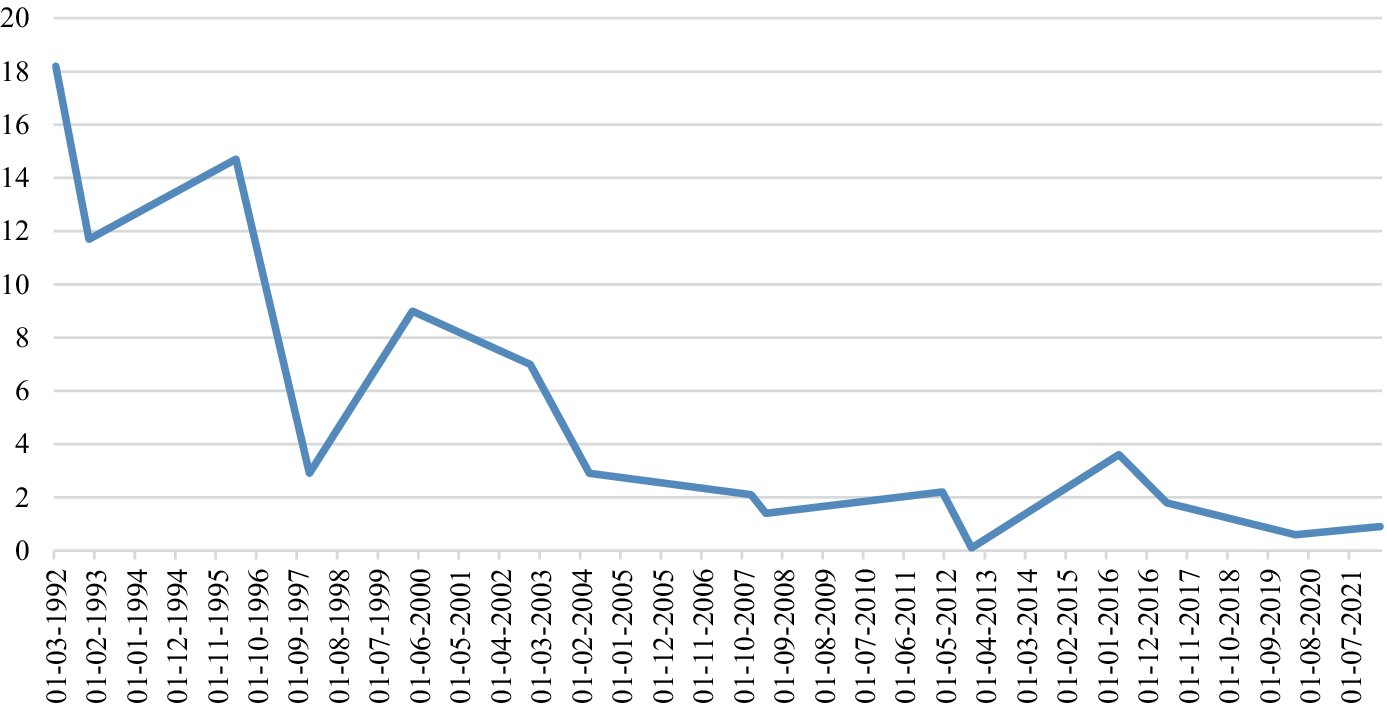
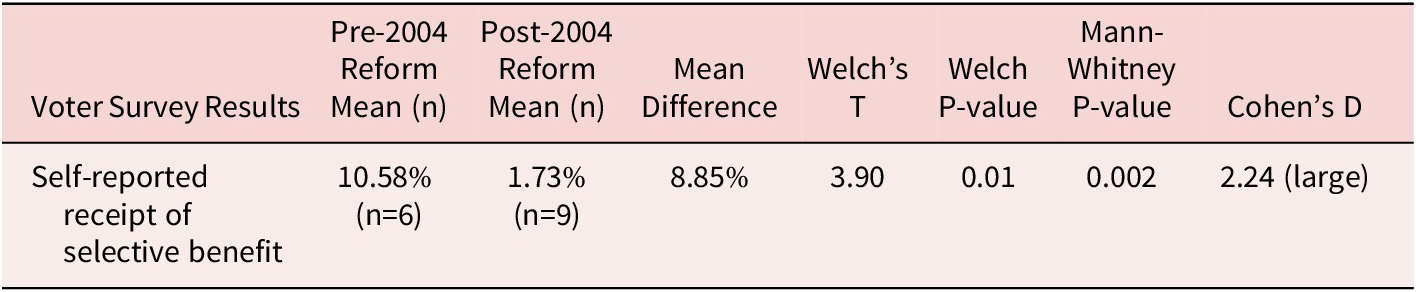


 Open access

