


 , so long as
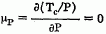 the size of the real-balance effect is not affected by the presence of costs. That is, if maintenance costs depend only on nominal units but not prices, maintenance costs have no effect on the real-balance effect.
 for rd and τ as well as δd does not significantly alter the results obtained. When income (y) is proxied for τ as is often done,
 is proxied for δd and rd is employed, the estimated equation for Δγ for the 1929–1939 period is


Crossref Citations

This article has been cited by the following publications. This list is generated based on data provided by Crossref.
Devine, James N.
1983.
Underconsumption, Over-Investment and the Origins of the Great Depression.
Review of Radical Political Economics,
Vol. 15,
Issue. 2,
p.
1.
Gordon, Cameron Elliott
2009.
Wojick, Paul
2018.
The ‘theoretical developments initiated by Haberler but named for Pigou’ do not provide sufficient grounds for rejecting ‘Keynes’s key theoretical proposition’.
Cambridge Journal of Economics,
Vol. 42,
Issue. 1,
p.
199.