

 and negative increments to
 would be zero also, but not necessarily. For instance, a firm might promise to make a repayment of principal to creditors which is greater than its accounting income in a. particular state-time combination. This would not excuse the firm from paying a corporate income tax.
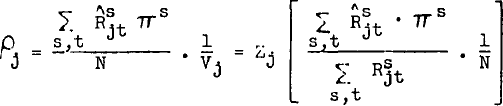
 , and if Vj and Zj are independent of leverage, the result is exactly analagous to MM's Proposition II. See “The Cost of Capital, Corporation Finance, and the Theory of Investment,” p. 158. Our variable Zj is thus directly analagous to MM's “capitalization rate” Pj
 , can be given by
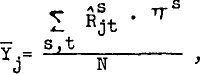 where πs is the probability of occurrence of a particular state combina.tion, and N is the number of time periods under consideration.
 ,
 would be a more precise indicator of what we normally mean by “maturity structure.” But the differences between the set of promised payments and the set of actual payments will normally be rare enough that the maturity structure of the two sets will be substantially the same.

Crossref Citations

This article has been cited by the following publications. This list is generated based on data provided by Crossref.
MYERS, STEWART C.
1967.
TAXES, CORPORATE FINANCIAL POLICY AND THE RETURN TO INVESTORS: COMMENT.
National Tax Journal,
Vol. 20,
Issue. 4,
p.
455.
Ben‐Shahar, Haim
1968.
THE CAPITAL STRUCTURE AND THE COST OF CAPITAL: A SUGGESTED EXPOSITION*.
The Journal of Finance,
Vol. 23,
Issue. 4,
p.
639.
MELNYK, Z. LEW
1970.
COST OF CAPITAL AS A FUNCTION OF FINANCIAL LEVERAGE*.
Decision Sciences,
Vol. 1,
Issue. 3-4,
p.
327.
Tepper, Irwin
1973.
REVEALED PREFERENCE METHODS AND THE PURE THEORY OF THE COST OF CAPITAL.
The Journal of Finance,
Vol. 28,
Issue. 1,
p.
35.
Kraus, Alan
and
Litzenberger, Robert H.
1973.
A STATE‐PREFERENCE MODEL OF OPTIMAL FINANCIAL LEVERAGE.
The Journal of Finance,
Vol. 28,
Issue. 4,
p.
911.
Garant, Jean‐Pierre
1974.
An Inquiry Into Bond Types Used By Canadian Firms.
Financial Review,
Vol. 9,
Issue. 1,
p.
24.
Lewellen, Wilbur G.
1975.
Some extensions of capital structure theory.
Journal of Business Research,
Vol. 3,
Issue. 1,
p.
13.
Litzenberger, Robert H.
and
Sosin, Howard B.
1977.
THE THEORY OF RECAPITALIZATIONS AND THE EVIDENCE OF DUAL PURPOSE FUNDS.
The Journal of Finance,
Vol. 32,
Issue. 5,
p.
1433.
Kim, E. Han
McConnell, John J.
and
Greenwood, Paul R.
1977.
CAPITAL STRUCTURE REARRANGEMENTS AND ME‐FIRST RULES IN AN EFFICIENT CAPITAL MARKET.
The Journal of Finance,
Vol. 32,
Issue. 3,
p.
789.
Myers, Stewart C.
1977.
Determinants of corporate borrowing.
Journal of Financial Economics,
Vol. 5,
Issue. 2,
p.
147.
Ofer, Aharon R.
and
Taggart, Robert A.
1977.
BOND REFUNDING: A CLARIFYING ANALYSIS.
The Journal of Finance,
Vol. 32,
Issue. 1,
p.
21.
Hite, Gailen L
1977.
Leverage, output effects, and the M-M theorems.
Journal of Financial Economics,
Vol. 4,
Issue. 2,
p.
177.
Sosin, Howard B.
1978.
NEUTRAL RECAPITALIZATIONS: PREDICTIONS AND TESTS CONCERNING VALUATION AND WELFARE.
The Journal of Finance,
Vol. 33,
Issue. 4,
p.
1228.
Haugen, Robert A.
and
Senbet, Lemma W.
1978.
THE INSIGNIFICANCE OF BANKRUPTCY COSTS TO THE THEORY OF OPTIMAL CAPITAL STRUCTURE.
The Journal of Finance,
Vol. 33,
Issue. 2,
p.
383.
Kim, E. Han
1978.
A MEAN‐VARIANCE THEORY OF OPTIMAL CAPITAL STRUCTURE AND CORPORATE DEBT CAPACITY.
The Journal of Finance,
Vol. 33,
Issue. 1,
p.
45.
Chen, Andrew H.
1978.
RECENT DEVELOPMENTS IN THE COST OF DEBT CAPITAL.
The Journal of Finance,
Vol. 33,
Issue. 3,
p.
863.
Nielsen, Niels Christian
1978.
On the financing and investment decisions of the firm.
Journal of Banking & Finance,
Vol. 2,
Issue. 1,
p.
79.
Rudolph, Bernd
1979.
Kapitalkosten bei unsicheren Erwartungen.
p.
126.
CHEN, ANDREW H.
and
KIM, E. HAN
1979.
Theories of Corporate Debt Policy: A Synthesis.
The Journal of Finance,
Vol. 34,
Issue. 2,
p.
371.
Masulis, Ronald W.
1980.
The effects of capital structure change on security prices.
Journal of Financial Economics,
Vol. 8,
Issue. 2,
p.
139.