


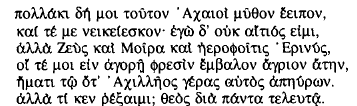
 at Il. iii 100 (repeated also at Il. vi 356 and xxiv 28) into
 he argued that it would be inappropriate for Menelaus, the speaker of these words, to excuse Paris.
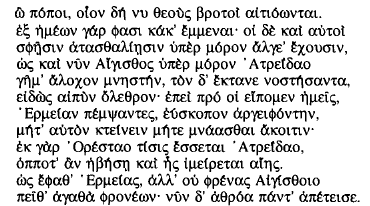
 Il. xi 695; xiii 634; xxii 418; Od. iii 207 = xvii 588; iv 693; vi 60; vii 166; xvi 86, 93; xviii 139, 143; xx 370; xxii 47, 314; xxiv 282, 352; cf. H.Ap. 67; H.Herm. 296; H. xv;
 Od. xviii 57; xix 88.

 Il. xi 695 (Nestor of the Epeans); cf. Od. iii 207; xvii 588; xx 370 (of the suitors); cf. also Hes. Op. 241;
 Od. xvi 86; xxiv 352 (of the suitors); cf. Hes. Op. 134;
 Od xxiv 282 (of the suitors). The same holds good of the expression

 at Od. xii 300 (of Odysseus' companions) and xxiv 458 (of the suitors). It is only in post-Homeric Greek that atasthalie and its cognates invariably designate the extreme form of presumptuousness involving open impiety, see e.g. Hes. Op 134, 241, 261; Th.164, 209, 515, 996; fr. 30.16 M-W; Thgn. 736, 749; Hdt. ii 111.2; iii.49.2, 80.4; vii 34.2; viii 109.3; ix 78.2; 116.1, of the epitaph of Archedike, quoted by Thuc. vi 59.3. Cf. n. 56.
 frequently appears in this connection, see Il. xxii 103

 (Hector of himself) = Od. ix 228 (Odysseus of himself). Cf. Od. ix 500

 (Odysseus of himself); Od. i 42–43
 Od. xxii 316
 (of the suitors; cf. also xxiv 458). Cf. also Il. iv 408–09.
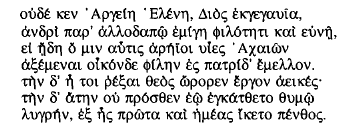
 as
 at xi 429 (cf. also iii 235, iv 91–2, xi 430 and 439) is in clear contrast to
 a description of Helen at xxiii 222, in that while the former clearly presupposes a premeditated action the latter does not.
 (Il. xvi 686–87). This is why his mistake is ascribed to ate, see

 ’,
 is never ascribed to Hector’, cf. below, n. 40; moreover, Hector is actually described as producing ate in others in Il. xviii 311–13 as well, see further n. 37. In view of this, it seems safer to regard ate as being usually caused by an external factor, whether a god, or a fellow-man, or wine.
 Od. iii 213; xvi 134;
 xxi 375; Od. xx 394; xxii 432.
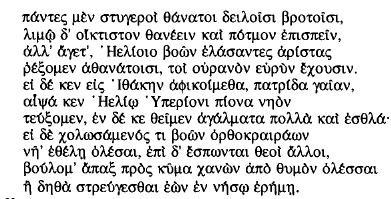
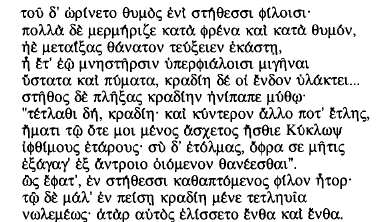
 when appearing in the psychological (rather than physiological) context these words are employed as functional synonyms which can easily replace each other in accordance with the given metrical conditions. See further


 vv. 255–56, Odysseus to Achilles;
 v. 495, Phoenix to Achilles;

 635–37, Ajax to Achilles, cf. also vv. 462–63. Characteristically, the expression ‘to yield to one's thumos’ also appears mainly in this book, see
 109–10, of Agamemnon;
 v. 598, of Meleager; cf. xxiv 42–43; Od. v 126.
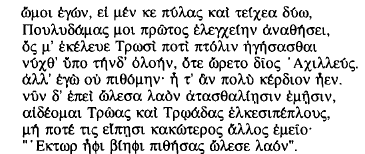
 v. 726); being an excellent warrior, he claims to excel all men in counsel as well; but the gods are not in the habit of granting all their gifts to one person. The characteristic features of atasthalie are already present in this rebuke; but this time Hector follows Polydamas' advice to summon the council and to discuss the plan of action, and the theme is dropped, only to emerge again in Iliad xviii. For the analysis of these books in the light of Hector's error see


 is a varia lectio of
 Note also that the error of Odysseus' companions is described at Od. xii 373 by means of the same verb

 that a similar language is used for describing Clytemnestra's crime at Od. xi 429

 and that the verb
 can take
 as a direct object, see Il. xx 153–54, cf. vii 45.

 Cf. Gaskin (n. 1) 12–13.
 ( Il. xi 403; xvii 90; xviii 5; xx 343; xxi 53, 552; xxii 98; Od. v 298, 355, 407, 464), could only have been created after the disappearance of the digamma, see
 (Il. 462; xiii 280); on the distinction between formulaic and individual expressions see e.g.

 Od. xi 104–05. In the rest of the Odyssey the same episode is interpreted through the atasthalie of Odysseus' companions and the ate of Odysseus himself.
 that is, not in accordance with the divine design—of these errors, mortals are the only authors.

 ’.

 be better than those who err and do wrong involuntarily
 Surely there is a great excuse
 to be made for a man telling a falsehood or doing an injury or any sort of harm to another, in ignorance
 And the laws are obviously far more severe on those who lie or do evil, voluntarily
 than on those who do evil involuntarily
 ’ (371e9–372a5); tr. B. Jowett.
 at v. 6. Cf. also
 at H.Del Ap. 67.


Crossref Citations

This article has been cited by the following publications. This list is generated based on data provided by Crossref.
Friedrich, Rainer
2011.
The Homer Encyclopedia.
2015.
BIBLIOGRAPHY.
Ramus,
Vol. 44,
Issue. 1-2,
p.
222.
Kotsopoulos, Dimosthenis
2022.
Organizational Energy Conservation Matters in the Anthropocene.
Energies,
Vol. 15,
Issue. 21,
p.
8214.
Skarbek-Kazanecki, Jan
2026.
Dylematy sprawiedliwości..