


Introduction
Child marriage constitutes a significant concern within global scholarly discourse (Batyra and Pesando Reference Batyra and Pesando2021; Lokot et al. Reference Lokot, Sulaiman, Bhatia, Horanieh and Cislaghi2021; Subramanee et al. Reference Subramanee, Agho, Lakshmi, Nazmul Huda, Joshi and Akombi-Inyang2022), policymaking circles (Psaki et al. Reference Psaki, Melnikas, Haque, Saul, Misunas, Patel, Ngo and Amin2021; Cordova-Pozo et al. Reference Cordova-Pozo, Anishettar, Kumar and Chokhandre2023), and international organizations (Freccero and Taylor Reference Freccero and Taylor2021; Kirana and Nisak Reference Kirana and Nisak2022). It is widely recognized as a serious violation of children’s rights, particularly regarding access to education, health, and protection from all forms of violence (United Nations General Assembly 1989). Data from the United Nations Children’s Fund (2023) and the United Nations Population Fund (Loaiza and Wong Reference Loaiza and Wong2012) consistently indicate that child marriage perpetuates cycles of poverty, exacerbates gender inequality, and increases the risk of gender-based violence. Nonetheless, in certain countries and communities, child marriage continues to be justified on the basis of tradition (Idriss Reference Idriss2022), religion (Baraie et al. Reference Baraie, Rezaei, Nadrian and Matlabi2024), or the desire to avoid social stigma (Gerbaka, Richa, and Tomb Reference Gerbaka, Richa, Tomb, Gerbaka, Richa and Tomb2021). These justifications are often expressed through claims of perceived benefits, such as preserving family honor or preventing illicit relationships (Olamijuwon and Odimegwu Reference Olamijuwon and Odimegwu2022; Rigoni Reference Rigoni2022). This situation engenders an epistemological tension between universal principles of child protection and assertions of cultural or religious relativism. Consequently, the debate extends beyond legal and moral considerations, posing a significant challenge for the global community in establishing a shared understanding of the minimum age of marriage that both safeguards children’s rights and respects cultural diversity and religious beliefs. This paradox underscores why child marriage remains a critical and urgent subject of academic inquiry within the global context.
Indonesia, as the country with the fourth-largest population globally (World Population Review Reference Review2026), continues to confront substantial challenges associated with the high prevalence of child marriage. The nation ranks among the top ten countries worldwide in terms of child marriage rates and holds the second-highest position in Southeast Asia (Hartarto et al. Reference Hartarto, La Arban, Wibowo and Utami2024). At the normative level, the state has demonstrated its commitment to eradicating this practice through Article 7 of the 2019 amendment to the Marriage Law, which establishes the minimum legal age for marriage at 19 years for both men and women (UU No. 16 Tahun 2019). This legislative measure aligns with internationally recognized standards for child protection. However, this regulation simultaneously creates a significant loophole via Supreme Court Regulation No. 5 of 2019, which permits parents or guardians to petition the court for marriage dispensation (PERMA No. 5 Tahun 2019). A policy designed to safeguard children is, however, subject to implementation through a permissive dispensation mechanism. Empirical data indicate that thousands of dispensations are granted annually,Footnote 1 justified on various grounds such as preserving family honor (Setiadi Reference Setiadi2021; Nabila, Roswiyani, and Satyadi Reference Nabila, Roswiyani and Satyadi2022), premarital pregnancy (Pakasi Reference Pakasi2019; Harvey et al. Reference Harvey, FitzGerald, Sauvarin, Binder and Humphries-Waa2022), and economic hardship (Rumble et al. Reference Rumble, Peterman, Irdiana, Triyana and Minnick2018; Dewi and Dartanto Reference Dewi and Dartanto2019). Within this context, the study of marriage dispensations in Indonesia is pertinent not only from the perspective of positive law but also as a means to explore the complex interplay among religious norms, state law, and the socio-cultural dynamics that influence judicial decision-making in Indonesia’s Religious Courts.
Central Java, a province in Indonesia, has witnessed a notably high number of marriage dispensation petitions in recent years across both urban and rural areas (Latifiani Reference Latifiani2019; S. Hidayat, Ghofur, and Baroroh Reference Hidayat, Ghofur and Baroroh2023). This phenomenon is influenced by multiple factors, including poverty, low levels of educational attainment, and the persistence of strong traditional values (Wijayanti Reference Wijayanti2020; Widyastari, Isarabhakdi, and Shaluhiyah Reference Widyastari, Isarabhakdi and Shaluhiyah2020). Paradoxically, despite the region’s active efforts to prevent child marriage through the Jo Kawin Bocah (Say No to Child Marriage) campaign (Arafah and Purwanto Reference Arafah and Purwanto2023; Rahmadani, Ibrahim, and Muhammad Reference Rahmadani, Ibrahim and Muhammad2024), Religious Courts in Central Java Province adjudicated 7,486 marriage dispensation cases in 2024 (Direktorat Jenderal Badan Peradilan Agama 2024). This situation necessitates a rigorous academic inquiry into whether the justifications provided in these judicial decisions align with the primary objective of child protection and conform to the principles of public interest (maṣlaḥah).
This study examines the relationship between child protection objectives and the invocation of maṣlaḥah in judicial reasoning concerning marriage dispensation cases before Religious Courts in Central Java, Indonesia. Although maṣlaḥah occupies a foundational role in Islamic jurisprudence, its interpretation and application within judicial decision-making vary according to contextual and institutional factors. Despite regulatory frameworks designed to protect children, courts continue to exercise considerable discretion in determining whether to grant marriage dispensations. These dynamics raise critical questions regarding how appeals to maṣlaḥah are constructed within judicial reasoning and how they shape the justification of marriage dispensation decisions. The study gives particular attention to how doctrinal references, family honor, social stigma, moral concerns, and child welfare are incorporated into judicial reasoning. In doing so, the study provides a critical analysis of the interaction among religious doctrine, legal reasoning, and social expectations in shaping judicial outcomes.
Previous research
Marriage dispensation in Indonesia constitutes a legal mechanism governed by Law No. 16 of 2019, which establishes the minimum marriage age at 19 years for both males and females. Nonetheless, Article 7, paragraph (2) permits exceptions for individuals below this age to marry upon obtaining a dispensation granted by the court (UU No. 16 Tahun 2019). For Muslim communities, this authority is conferred upon the Religious Courts in accordance with Law No. 3 of 2006 concerning the Religious Judiciary (UU No. 3 Tahun 2006). These courts possess jurisdiction to examine, adjudicate, and grant marriage dispensations based on the petitioners’ justifications (PERMA No. 5 Tahun 2019). In practice, this mechanism often generates controversy (Supraptiningsih Reference Supraptiningsih2021), as judicial decisions are frequently perceived as overly lenient in granting dispensations (Lahilote et al. Reference Lahilote, Miftah, Yuliatin and Hidayati2022; Efrinaldi, Jayusman, and Yenis Reference Efrinaldi, Jayusman and Yenis2023), which may undermine the fundamental objective of child protection (Nuruddin, Jannah, and Martini Reference Nuruddin, Jannah and Martini2023). This situation raises significant concerns regarding the consistency of Religious Court rulings in upholding the principle of child protection.
The issue of marriage dispensation in Indonesia has generated considerable scholarly debate among both national and international academics. Some researchers interpret this mechanism as a conciliatory measure that compromises core principles of Islamic teachings (Muzakki, Khaidarulloh, and Wahid Reference Muzakki, Khaidarulloh and Wahid2025), customary traditions (Suhardi Reference Suhardi2025), and legal pluralism (Horii Reference Horii2019), with the aim of addressing prevailing social realities. From this perspective, marriage dispensation is viewed as a pragmatic strategy intended to prevent fornication, reduce social stigma, or protect women who are already pregnant. Conversely, other scholars critique it as a provisional solution, contending that its purported benefits are temporary and may result in adverse long-term consequences (Susilowati, Suwartiningsih, and Siahaan Reference Susilowati, Suwartiningsih and Siahaan2023), including increased divorce rates (Cameron, Suarez, and Wieczkiewicz Reference Cameron, Suarez and Wieczkiewicz2023), domestic violence (Setiawan et al. Reference Setiawan, Wismayanti, Irmayani, Wardianti and Uddin2024), and structural poverty (Gunawan and Bahri Reference Gunawan and Bahri2023). Within the framework of Islamic jurisprudence, some scholars emphasize that the protection of children should be paramount (Y. Hidayat et al. Reference Hidayat, Machmud, Sadino, Lutfi and Maguchu2024; Takdir et al. Reference Takdir, Halide, Hardianto, Rusli, Erwin and De Vos2024), advocating that dispensations be granted only under genuinely exceptional circumstances (Nabilah et al. Reference Nabilah, Putra, Afroo, Nurjanah and Wahyuni2025). This discourse highlights the tension between a legal-formal approach that permits dispensations and a normative approach that prioritizes comprehensive child protection.
Research on marriage dispensation in Indonesia and the role of the Religious Courts can be categorized into several distinct typologies. Normative-juridical studies primarily analyze the provisions of marriage law (Hs and Pijoh Reference Hs and Pijoh2023), the procedures for obtaining dispensations (Wulandari and Paritkesit Reference Wulandari and Paritkesit2022), and judicial interpretations of relevant statutory regulations (Dede et al. Reference Dede, Fatoni, Kusmayanti and Afriansyah2021; Nidlom and Andrina Reference Nidlom and Andrina2021). These studies explore the interrelations among the Marriage Law, the Religious Courts Law, and the Compilation of Islamic Law. Socio-empirical research elucidates the social, economic, religious, and cultural factors motivating requests for marriage dispensation (Rana, Arifin, and Kurniawan Reference Rana, Arifin and Kurniawan2022; Barkah et al. Reference Barkah, Cholidi, Rochmiyatun, Asmorowati and Fernando2023; Harsono et al. Reference Harsono, Sutanto, Zuhroh, Arisanti and Erliana2024; Anggraini and Setiani Reference Anggraini and Setiani2025), including community perceptions and practices (Bukido et al. Reference Bukido, Haris, Rosyadi and Suleman2023; Amany, Sultan, and Syam Reference Amany, Sultan and Syam2023). Comparative legal analysis of marriage dispensation in Indonesia and other Muslim-majority countries indicates that a primary factor driving citizens to pursue underage marriage is the literal interpretation of religious doctrines, combined with the deeply rooted tradition of early marriage (Ernawati, Abdullah, and Subhan Reference Ernawati, Abdullah and Subhan2023; Ramadhani, Sakti, and Febriana Reference Ramadhani, Sakti and Febriana2023; Retnowulandari et al. Reference Retnowulandari, Wangga, Notoprayitno and Ahmad2024; Riyadi et al. Reference Riyadi, Remanda, Kasdi and Marsal2025). Finally, research grounded in gender and child protection frameworks assesses the impact of marriage dispensations on the welfare, health, and rights of girls (Arifin, Rodiyah, and Putri Reference Arifin, Rodiyah and Putri2020; Chusnida and Anggriawan Reference Chusnida and Anggriawan2022; Fadhli, Khairiyah, and Dewinda Reference Fadhli, Khairiyah and Dewinda2024; Rifqi et al. Reference Rifqi, Hilmy, Faizur Rohman and Imdadur Rohman2025). Although these typologies offer a relatively comprehensive overview, the epistemological foundations of maṣlaḥah reasoning – particularly as applied in marriage dispensation rulings by the Religious Courts in Indonesia – have received limited critical attention.
This study contributes to existing research by employing an analytical framework centered on the concept of pseudo-protection to examine decisions concerning child marriage dispensation cases. Rather than focusing solely on doctrinal interpretation, the study investigates how maṣlaḥah-based reasoning is articulated and operationalized within judicial decision-making. By integrating perspectives from Islamic legal thought and child protection discourse, the research explores how considerations such as family honor, social stigma, moral concerns, and child welfare are incorporated into the rationale underlying marriage dispensation decisions. Within this framework, the concept of pseudo-maṣlaḥah is introduced as a doctrinal lens for examining claims of public welfare, while pseudo-protection functions as an analytical category to identify patterns in which child protection is formally invoked but shaped by broader familial and social considerations. Through this approach, the study contributes to socio-legal scholarship by offering a conceptual framework for understanding the relationship among religious justification, judicial reasoning, and child protection in marriage dispensation cases. In doing so, it advances existing discussions in Islamic family law by conceptualizing pseudo-protection as an analytical category for examining judicial reasoning and provides insights into the interaction between legal doctrine, social expectations, and judicial practice in contemporary Indonesia.
From pseudo-maṣlaḥah to pseudo-protection
Within the corpus of Islamic legal thought, maṣlaḥah is recognized as a fundamental principle in legal determination (Al-Shāṭibī Reference Al-Shāṭibī2007). Broadly, the fuqahā’ (Islamic jurists) categorize maṣlaḥah into three primary types. Maṣlaḥah mu‘tabarah refers to interests explicitly acknowledged and supported by sharia texts – whether the Qur’an or the Sunnah – and is thus regarded as fully consistent with the higher objectives of Islamic law (maqāṣid al-sharī‘ah) (Al-Ghazālī Reference Al-Ghazālī2011). In contrast, maṣlaḥah mulghāh denotes interests rejected by the sharia, even if they may appear logically advantageous, because they contradict scriptural provisions or the principles of maqāṣid al-sharī‘ah (Al-Rāzī Reference Al-Rāzī2011). Meanwhile, maṣlaḥah mursalah pertains to interests neither explicitly affirmed nor negated in the texts but assessed through juristic reasoning (ijtihād) to preserve the public good (Opwis Reference Opwis2010). This classification suggests that, within classical Islamic legal thought, maṣlaḥah is understood not merely as a matter of pragmatic utility but also in relation to moral values, justice, and the broader objectives of Islamic law (Al-Būṭī Reference Al-Būṭī2018). By understanding these distinctions, jurists are better equipped to differentiate between competing claims of benefit in accordance with established principles of Islamic legal reasoning.
The concept of maṣlaḥah within Islamic legal theory is fundamentally defined by three essential conditions that function as its evaluative criteria. First, the identified interest must be consistent with the naṣṣ (scriptural texts) of the Qur’an and Hadith; it must not contradict the commands and prohibitions articulated in these primary sources (Khalīl Reference Khalīl2006). Second, the interest must promote the higher objectives of Islamic law (maqāṣid al-sharī‘ah), which include the protection of religion (ḥifẓ al-dīn), life (ḥifẓ al-nafs), intellect (ḥifẓ al-‘aql), lineage (ḥifẓ al-nasl), and property (ḥifẓ al-māl) (Bin Gharsah Reference Bin Gharsah2024). Classical jurists generally regarded interests inconsistent with these objectives as difficult to justify. Third, maṣlaḥah should not result in mafsadah (harm) that outweighs its benefits (Ishtiwi Reference Ishtiwi2024). These principles emphasize the importance of evaluating the long-term consequences of any action or policy. Nonetheless, several scholars have contended that the concept is susceptible to divergent interpretations and applications in judicial decisions, legal rulings, and fatwas (Afsaruddin Reference Afsaruddin and Boroujerdi2013; Sirry Reference Sirry2013; Ali Reference Ali2014). Building upon these discussions, this study employs the notion of pseudo-maṣlaḥah as a critical analytical lens for examining judicial reasoning.
The term “pseudo” originates from the Greek root psevðo, meaning false, sham, or spurious (Whitney Reference Whitney1895; Vassiliadou et al. Reference Vassiliadou, Gerhard-Krait, Fotiadou and Lammert2023). It is generally understood to denote an appearance that may obscure the true nature of an entity (Sorensen Reference Sorensen2002). In contemporary academic discourse, “pseudo” is frequently employed to critique concepts that assert authority despite ongoing contestation regarding their epistemic or methodological foundations (Fritze Reference Fritze2009; Sorial Reference Sorial2017). Within legal theory, the term is often used to describe claims of benefit whose underlying justifications remain disputed or insufficiently substantiated (Haarscher Reference Haarscher and Ribeiro2009). When combined with maṣlaḥah, the expression of pseudo-maṣlaḥah refers to claims of public welfare that may simultaneously serve protective, pragmatic, administrative, or institutional objectives. For the purposes of this study, pseudo-maṣlaḥah is employed as an analytical construct developed to examine contested claims of public welfare, rather than as a formally recognized category within classical Islamic legal theory. Epistemologically, in the framework adopted in this study, pseudo-maṣlaḥah refers to a contextually bounded application of the principle of istiṣlāḥ, particularly when appeals to maṣlaḥah afford comparatively less explicit attention to its relationship with the protection of life, religion, intellect, lineage, and property, thereby raising questions regarding the extent to which the claimed benefit aligns with established maqāṣid-based criteria (Bin Sattam Reference Sattam and Aziz2015). Sociologically, pseudo-maṣlaḥah may be observed when claims of maṣlaḥah are closely intertwined with social pressure, political considerations, or institutional constraints. These characteristics provide a basis for critically examining competing claims of public welfare within contemporary Islamic legal discourse.
This study employs pseudo-maṣlaḥah as a critical analytical framework to examine manifestations of pseudo-protection within judicial reasoning in cases involving marriage dispensations. Within the framework developed herein, pseudo-maṣlaḥah represents the doctrinal dimension of reasoning, whereas pseudo-protection denotes its observable expression in judicial decision-making. This concept elucidates how appeals to maṣlaḥah may serve as justificatory frameworks for decisions that prioritize specific social and moral concerns, while giving comparatively less attention to broader considerations related to child welfare and substantive justice. The present study investigates the extent to which familial, social, moral, and child-protection considerations shape the articulation of maṣlaḥah within judicial reasoning. Here, pseudo-protection refers to a pattern of judicial reasoning wherein the formal invocation of child protection and maṣlaḥah is preserved, yet the operative logic guiding decisions is shaped by factors extending beyond the child as an individual rights-holder. In this configuration, protection is not absent; rather, it is reconstituted through a selective engagement with doctrinal, moral, and legal considerations, frequently oriented toward addressing immediate familial and social concerns embedded within the case context. Within this framework, pseudo-protection can be understood as a mode of reasoning through which claims of protection are articulated and legitimized within judicial discourse. It underscores the tension between immediate social concerns and broader child-protection objectives as articulated in judicial decisions. Consequently, pseudo-protection offers an analytical category for examining how claims of protection through maṣlaḥah are constructed and operationalized in marriage dispensation decisions, where doctrinal legitimacy and social expectations converge in the production of judicial outcomes.
Research design and methods
The study context
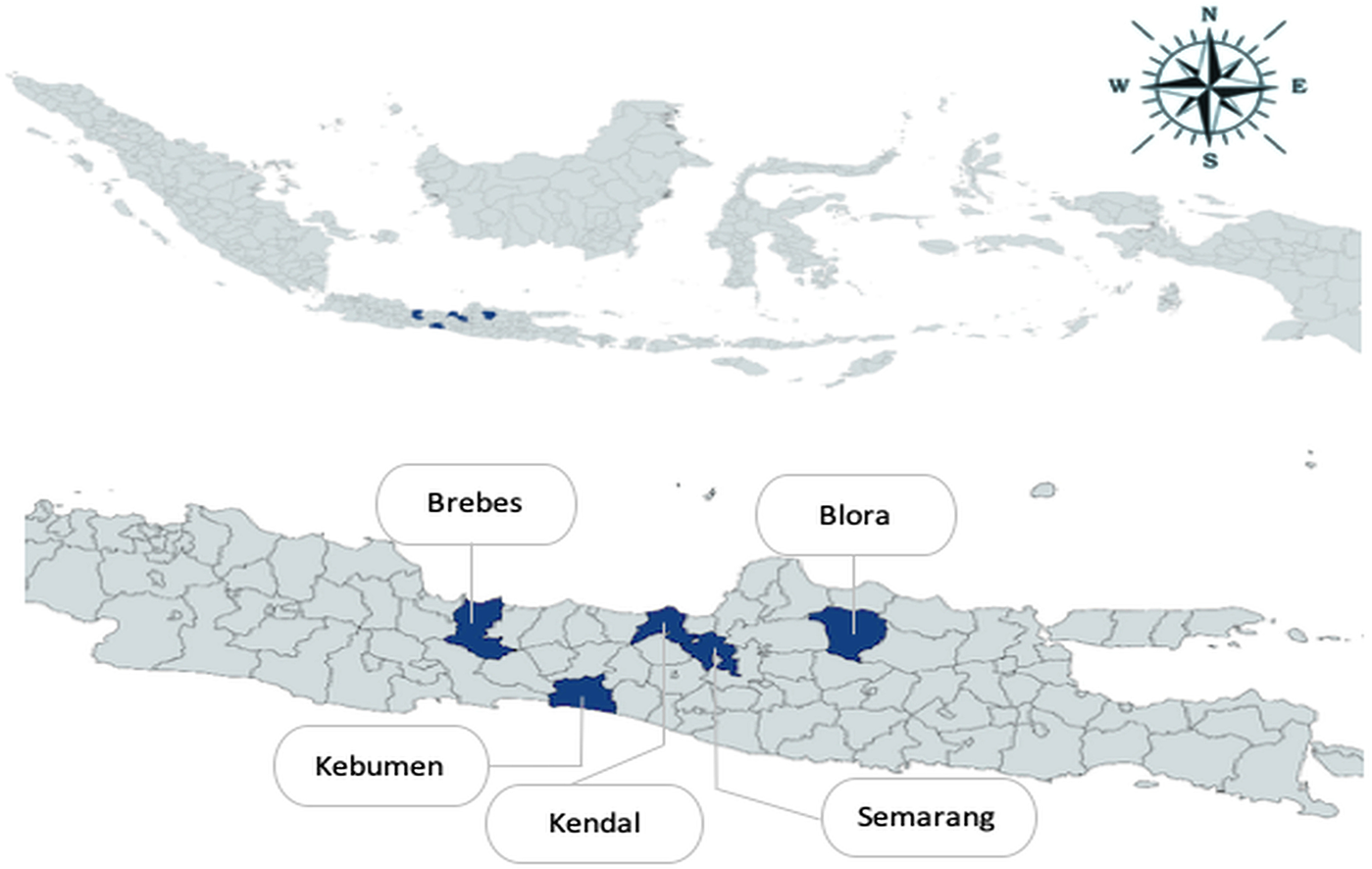
This study analyzes judicial decisions issued by the Religious Courts regarding marriage dispensations in Central Java Province, Indonesia (see Figure 1). The province was purposively selected based on empirical and contextual considerations. As previously noted, national data indicate that Central Java ranks among the provinces with the highest incidence of marriage dispensation cases in Indonesia, making it a particularly pertinent context for examining the implementation of child marriage dispensation practices and the judicial reasoning underpinning them. For practical reasons, the research focused on five courts located in Semarang (the provincial capital), Kendal (northern Central Java), Blora (eastern Central Java), Brebes (western Central Java), and Kebumen (southern Central Java). These courts were purposively chosen to represent diverse geographical and socio-cultural settings within the province, thereby enabling a more comprehensive examination of judicial practices related to marriage dispensation.
Map of the Study Area.
Source: Adapted from Google Maps, modified by the authors.

The selection of Central Java was not intended to yield a statistically representative sample of provinces, nor to increase the probability of obtaining findings that align with the study’s argument. Instead, the province was chosen as a theoretically relevant and information-rich context in which marriage dispensation practices occur with sufficient frequency to allow for a systematic analysis of judicial reasoning. Given the interpretative aims of this study, the analytical significance of this site lies in its ability to elucidate how legal reasoning and constructions of maṣlaḥah function within a jurisdiction where child marriage dispensations represent a prominent judicial practice. Consequently, the findings should be interpreted as analytically generalizable to theoretical propositions rather than statistically generalizable to the broader population of Religious Courts in Indonesia.
Research approach
This study employs Critical Legal Studies (CLS) as its methodological framework to critically analyze judicial reasoning in cases involving marriage dispensations. CLS goes beyond a strictly doctrinal examination of legal rules by understanding law as a socially situated practice influenced by wider ideological, cultural, and institutional forces (Hunt Reference Hunt1986). Instead of viewing judicial decisions as neutral applications of legal norms, CLS offers a perspective for exploring how legal reasoning is constructed, justified, and contested within particular social contexts (Kennedy Reference Kennedy1998). As Kennedy argues, ideology shapes adjudication by framing legal discourse and influencing interpretive options available to judges (Kennedy Reference Kennedy, Halley and Brown2002). Within this framework, marriage dispensation rulings issued by five Religious Courts in Central Java are examined as legal texts that may reflect not only statutory requirements but also broader moral, religious, and social considerations. The objective is not to determine whether judicial interpretations are doctrinally right or wrong, but to investigate how particular understandings of maṣlaḥah are mobilized in judicial reasoning and how they affect the justification of legal outcomes. Drawing on this approach, the study explores how claims of maṣlaḥah operate within judicial discourse and how they are used to justify granting child marriage dispensations. Particular attention is given to recurring reasoning patterns that emphasize certain social, moral, and religious concerns when evaluating the best interests of the child. By analyzing these patterns, the study explores the extent to which legal constructions of protection align with broader objectives of child welfare.
Data collection
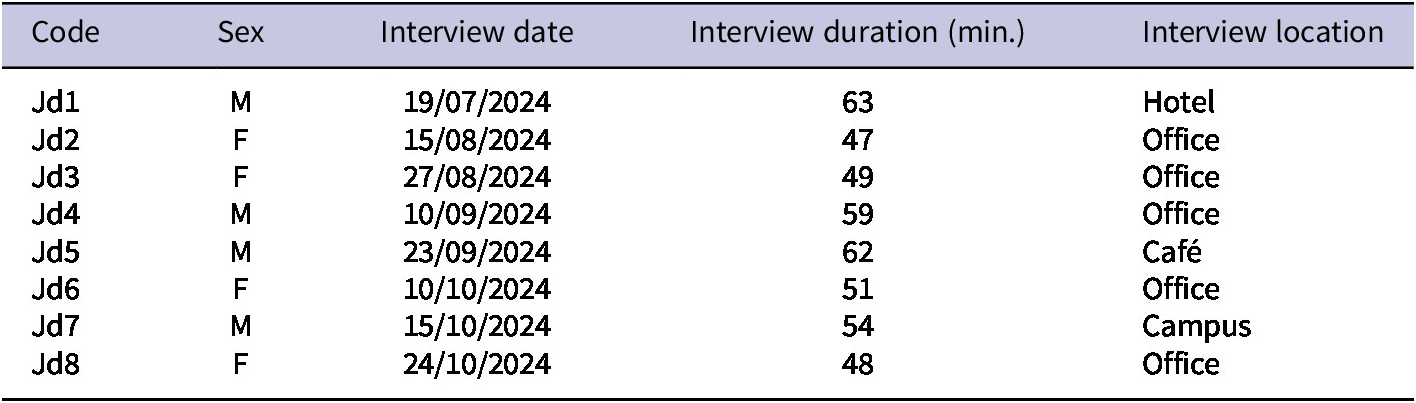
This study utilized three primary data collection methods: field observation, in-depth interviews, and document analysis. Initially, field observations were carried out at multiple Religious Courts. These observations sought to elucidate the social and institutional contexts of the Religious Courts, focusing on the internal processes involved in examining marriage dispensation petitions and the interactions among parties during court proceedings. Subsequently, in-depth interviews were conducted with eight judges from the Religious Courts who had direct experience handling marriage dispensation cases (see Table 1). These interviews aimed to investigate the judges’ personal and professional perspectives on the interpretation of maṣlaḥah, their normative and moral considerations, and the challenges they encountered when issuing rulings on child marriage dispensations. To ensure the confidentiality of the participants and to prevent potential conflicts of interest, the identities of the judges and the specific institutions at which they serve have been withheld.
Summary of Interview Data

Table 1. Long description
The table consists of five columns: Code, Sex, Interview date, Interview duration (min.), and Interview location. There are eight rows of data:
* Row 1: J d 1, M, 19/07/2024, 63, Hotel.
* Row 2: J d 2, F, 15/08/2024, 47, Office.
* Row 3: J d 3, F, 27/08/2024, 49, Office.
* Row 4: J d 4, M, 10/09/2024, 59, Office.
* Row 5: J d 5, M, 23/09/2024, 62, Café.
* Row 6: J d 6, F, 10/10/2024, 51, Office.
* Row 7: J d 7, M, 15/10/2024, 54, Campus.
* Row 8: J d 8, F, 24/10/2024, 48, Office.
The selection of interviewees employed a purposive sampling strategy designed to obtain informed judicial perspectives rather than to achieve statistical representativeness. Judges were chosen based on their direct experience in adjudicating marriage dispensation cases, ensuring that each participant possessed substantive engagement with the relevant legal issues. Although the sample size (n = 8) may appear limited, it is deemed adequate for qualitative research of this nature, as thematic saturation was reached during the interviews. Nonetheless, it is recognized that this selection approach may privilege dominant institutional perspectives and may not fully encompass dissenting or less conventional judicial viewpoints.
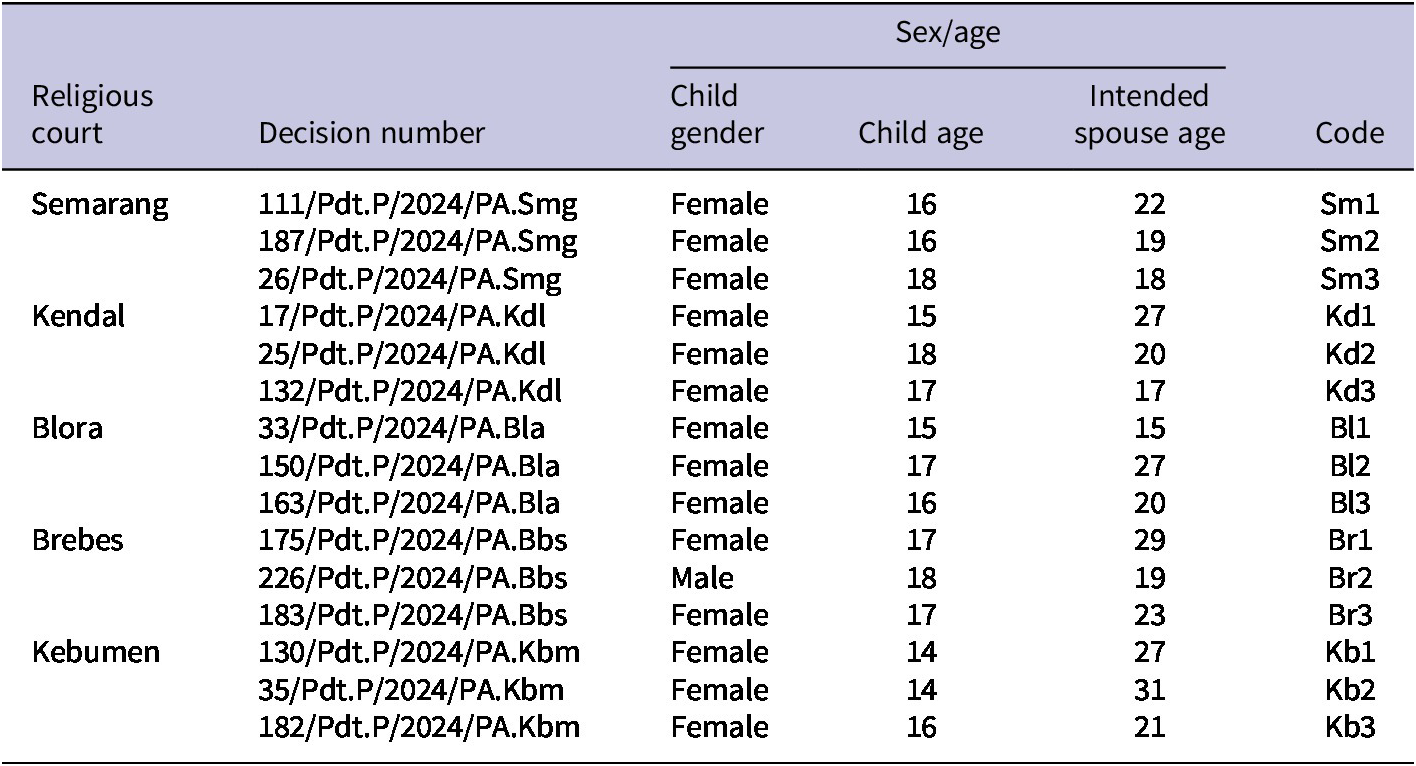
Finally, a document analysis was performed on fifteen court decisions issued by five Religious Courts in Central Java Province, all of which granted applications for marriage dispensation in 2024 (see Table 2). These selected rulings were obtained from two sources: directly from the courts, including through professional colleagues within the judiciary, and from the official Decision Directory website maintained by the Supreme Court of the Republic of Indonesia (Direktori Putusan Mahkamah Agung Republik Indonesia). The selection of court decisions was deliberately purposive, concentrating solely on cases in which applications for marriage dispensation were approved. The selected decisions were chosen to reflect variation in demographic and contextual characteristics relevant to marriage dispensation adjudication. This approach aimed to enable a comprehensive analysis of the reasoning patterns and normative justification utilized by Muslim judges in granting marriage dispensations.
Issuance of Marriage Dispensations Across Five Religious Courts

Table 2. Long description
The table is organized into six columns: Religious court, Decision number, Child gender, Child age, Intended spouse age, and Code.
* Semarang Court:
- Decision 111/Pdt.P/2024/PA.Smg: Female, age 16, spouse age 22 (Code Sm1).
- Decision 187/Pdt.P/2024/PA.Smg: Female, age 16, spouse age 19 (Code Sm2).
- Decision 26/Pdt.P/2024/PA.Smg: Female, age 18, spouse age 18 (Code Sm3).
* Kendal Court:
- Decision 17/Pdt.P/2024/PA.Kdl: Female, age 15, spouse age 27 (Code Kd1).
- Decision 25/Pdt.P/2024/PA.Kdl: Female, age 18, spouse age 20 (Code Kd2).
- Decision 132/Pdt.P/2024/PA.Kdl: Female, age 17, spouse age 17 (Code Kd3).
* Blora Court:
- Decision 33/Pdt.P/2024/PA.Bla: Female, age 15, spouse age 15 (Code Bl1).
- Decision 150/Pdt.P/2024/PA.Bla: Female, age 17, spouse age 27 (Code Bl2).
- Decision 163/Pdt.P/2024/PA.Bla: Female, age 16, spouse age 20 (Code Bl3).
* Brebes Court:
- Decision 175/Pdt.P/2024/PA.Bbs: Female, age 17, spouse age 29 (Code Br1).
- Decision 226/Pdt.P/2024/PA.Bbs: Male, age 18, spouse age 19 (Code Br2).
- Decision 183/Pdt.P/2024/PA.Bbs: Female, age 17, spouse age 23 (Code Br3).
* Kebumen Court:
- Decision 130/Pdt.P/2024/PA.Kbm: Female, age 14, spouse age 27 (Code Kb1).
- Decision 35/Pdt.P/2024/PA.Kbm: Female, age 14, spouse age 31 (Code Kb2).
- Decision 182/Pdt.P/2024/PA.Kbm: Female, age 16, spouse age 21 (Code Kb3).
This study deliberately concentrates on approved marriage dispensation applications, foregoing a comparative analysis of both approved and rejected cases. The rationale for this approach is not to elucidate differences in judicial outcomes but to investigate the justificatory reasoning employed by Muslim judges to legitimize the authorization of child marriage dispensations. The primary objective is not to quantify the prevalence of specific forms of judicial reasoning but to analyze how such reasoning is constructed and utilized in decisions granting marriage dispensations. Given that the central research question concerns how Muslim judges justify and legitimize child marriage dispensations through appeals to maṣlaḥah, approved cases represent the most analytically relevant material. Accordingly, the sampling strategy is analytical rather than statistical, with cases, courts, and interview participants selected for their potential to illuminate particular forms of legal reasoning and institutional practice. However, this methodological approach limits the study’s ability to assess whether alternative justificatory frameworks are employed in rejected applications.
Data analysis
Employing a case study methodology, the analysis was carried out in three distinct phases: data display, data reduction, and interpretation with conclusion drawing (Yin Reference Yin2009). During the data display phase, information gathered from field observations, in-depth interviews, and document analysis of judicial decisions was systematically organized into thematic categories that reflected the various forms of maṣlaḥah reasoning identified within the data. The subsequent data reduction phase involved selecting the most relevant information to the research focus, specifically examining how constructions of maṣlaḥah were articulated within judicial decision-making in marriage dispensation cases. Finally, the interpretation and conclusion-drawing phase applied the CLS framework to analyze how legal reasoning was constructed within judicial decisions and judges’ narratives. This phase aimed to identify recurring patterns of judicial reasoning, showing how invocations of maṣlaḥah aligned with broader principles of child protection. Through this interpretative process, the analysis explored how legal rulings shaped the understanding of protection and justified particular judicial outcomes in child marriage dispensation cases.
The analytical approach utilized in this study was interpretative rather than quantitative. Instead of quantifying the prevalence of specific forms of judicial reasoning, the analysis aimed to elucidate how such reasoning was constructed, justified, and employed in decisions granting marriage dispensations. Utilizing data derived from field observations, interviews, and court decisions – systematically categorized into distinct record types, namely observation notes, interview notes, and decision notes – the analysis identified recurring themes and explored how constructions of maṣlaḥah were articulated and applied within judicial discourse. Consequently, the findings should be interpreted as providing analytical insights into judicial reasoning and socio-legal practices within specific institutional contexts, rather than as statistically representative of all Religious Courts in Indonesia.
Results
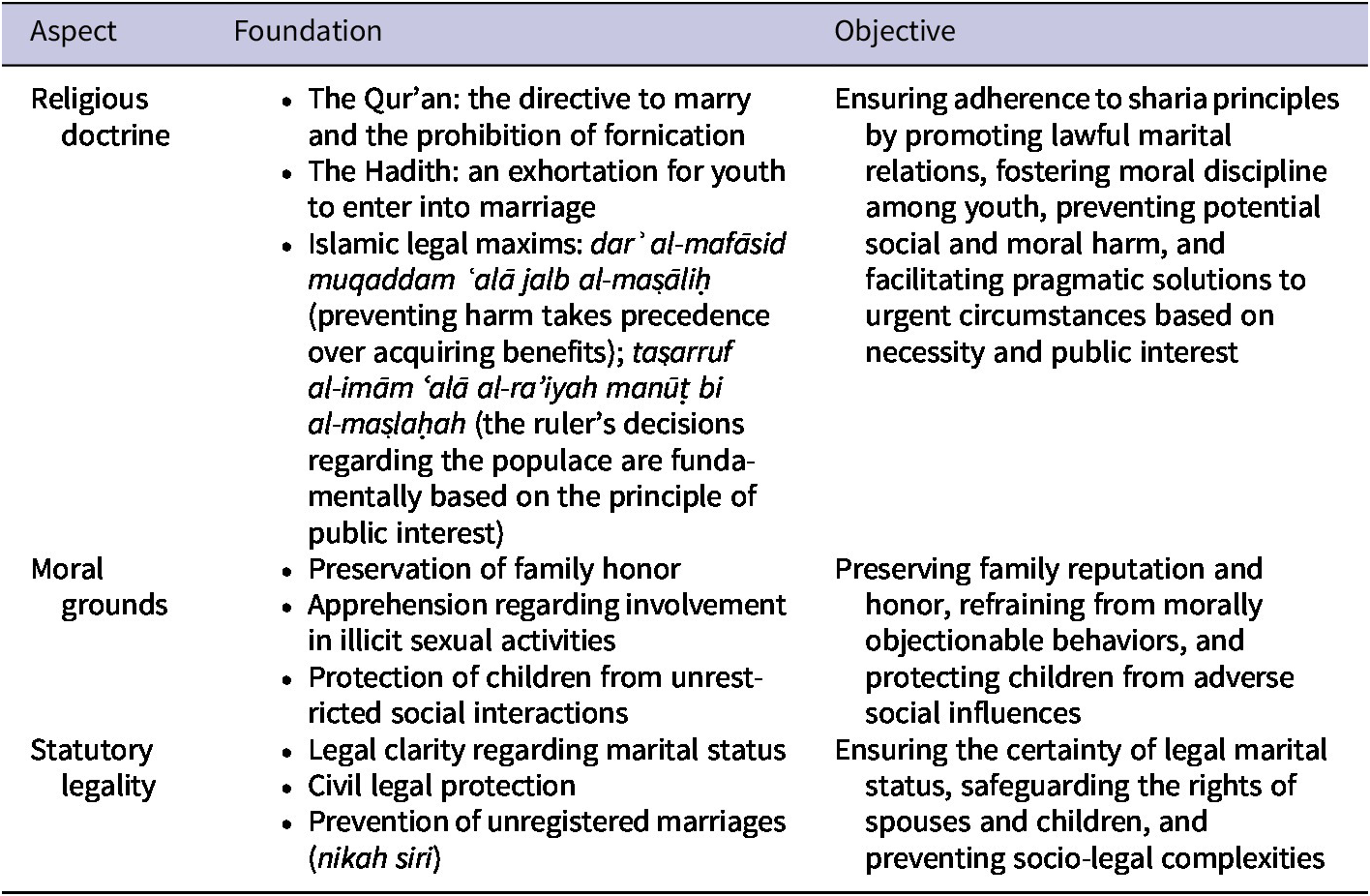
This study, based on field observations, interviews with judges, and an analysis of judicial decisions rendered by Religious Courts in five regions of Central Java Province, identified three primary dimensions of child protection considerations within the judicial reasoning of marriage dispensation cases: religious doctrine, moral grounds, and normative justification. Each dimension is founded on specific principles and serves distinct purposes, as summarized in Table 3.
Dimensions of Child Protection in the Context of Granting Marriage Dispensation

Table 3. Long description
The table is organized into three columns: Aspect, Foundation, and Objective.
* Religious doctrine aspect: The foundation includes the Qur’an (directives to marry and prohibition of fornication), the Hadith (exhortation for youth to marry), and Islamic legal maxims regarding preventing harm and the ruler’s decisions being based on public interest. The objective is ensuring adherence to sharia, promoting lawful relations, fostering moral discipline, and facilitating pragmatic solutions based on necessity.
* Moral grounds aspect: The foundation includes preservation of family honor, apprehension regarding illicit sexual activities, and protection from unrestricted social interactions. The objective is preserving family reputation and honor, refraining from morally objectionable behaviors, and protecting children from adverse social influences.
* Statutory legality aspect: The foundation includes legal clarity regarding marital status, civil legal protection, and prevention of unregistered marriages (nikah siri). The objective is ensuring certainty of legal marital status, safeguarding the rights of spouses and children, and preventing socio-legal complexities.
The findings indicate that judicial decisions granting dispensations for child marriage frequently grounded their assertions of maṣlaḥah in Qur’anic legitimacy, with particular emphasis on two principal themes: the command to marry and the prohibition of illicit sexual relations (zinā). Verses such as Q. al-Nūr (24):32 – “Marry off those among you who are single…” – and Q. al-Isrāʾ (17):32 – “Do not approach fornication; indeed, it is an abomination and an evil path” – are consistently cited in judicial rulings as religious evidence to substantiate the sharia foundation of their reasoning (Decision notes 2024). Within this framework, several judges conceptualize the command to marry as a preventive duty aimed at averting zinā, while the prohibition against approaching fornication serves as a religious justification for considering the granting of marriage dispensations as a means to fulfill both the command and the prohibition within Islamic teachings (Interview notes 2024).
In addition to the Qur’anic verses, the judicial rationale for granting marriage dispensations was also grounded in the Prophetic saying: “O young people, whoever among you is able to marry, let him marry, for it is more effective in lowering the gaze and safeguarding chastity. Whoever is unable, let him fast, for fasting serves as a restraint for him.” This Hadith was frequently cited by judges of the Religious Courts in Central Java in their rulings (Decision notes 2024). Document analysis indicates that the interpretation of this Hadith was employed to support claims of maṣlaḥah related to generational regulation and the moral protection of children. Within legal reasoning and socio-cultural contexts, minors involved in relationships with individuals of the opposite sex are often perceived as vulnerable to accusations of adultery (Horii Reference Horii2021). Consequently, judges regarded marrying them as a sharia-compliant measure to prevent greater moral corruption (Interview notes 2024). Thus, this Hadith was utilized as authoritative evidence to substantiate the view that early marriage serves as a preventive solution. This position is further underscored by the following statement:
In Islamic jurisprudence (fiqh), the presence of a guardian (walī) is a fundamental prerequisite for the validity of a marriage. When a marriage dispensation is sought, it is typically the guardians who submit petitions to the court. Consequently, if a young man and woman who have reached maturity (bāligh) – even if they are under the age of nineteen – express their willingness to marry and both sets of parents provide their consent, it becomes challenging for judges to deny the petition for dispensation. This position is grounded in the Qur’an and Hadith, which explicitly encourage marriage; accordingly, dispensation is regarded as a means to achieve maṣlaḥah (Jd1). The assessment of maturity extends beyond chronological age to encompass the individual’s social circumstances and environmental context. Rather than permitting participation in prohibited activities, it is preferable to grant dispensation. The scriptural basis is clear: the commandment to marry and the prohibition against illicit sexual relations. Thus, in this context, granting dispensation serves both to uphold religious mandates and to safeguard the familial honor. (Jd4)
In addition to the Qur’an and Hadith, the application of maṣlaḥah in judicial rulings – particularly those involving judges who grant marriage dispensations – is grounded in the principles of Islamic legal maxims (qawāʿid fiqhiyyah). Several maxims are frequently cited, including “preventing harm takes precedence over acquiring benefits” (Bl1, p. 20; Bl2, p. 23; Bl3, p. 25; Kb1, p. 10; Kb2, p. 12; Kb3, p. 12; Kd1, p. 12; Kd2, p. 9; Sm1, p. 17; Sm2, p. 17; Sm3, p. 18), and “rulings issued by the authority concerning the public are based on the principle of public interest” (Br1, p. 12; Br2, p. 11; Br3, p. 11; Kb2, p. 12; Kb3, p. 13). In rulings permitting such dispensations, Jd5 noted that these maxims are invoked to justify the position that marrying underage children – despite their not meeting the statutory age requirements established by the Marriage Law – constitutes a legitimate measure aimed at preventing greater harms, such as fornication, premarital pregnancy, or damage to family honor. Moreover, Jd8 emphasized that, under conditions of socio-moral necessity, the granting of marriage dispensation functions as a form of benefit, which is doctrinally justified within Islamic jurisprudence.
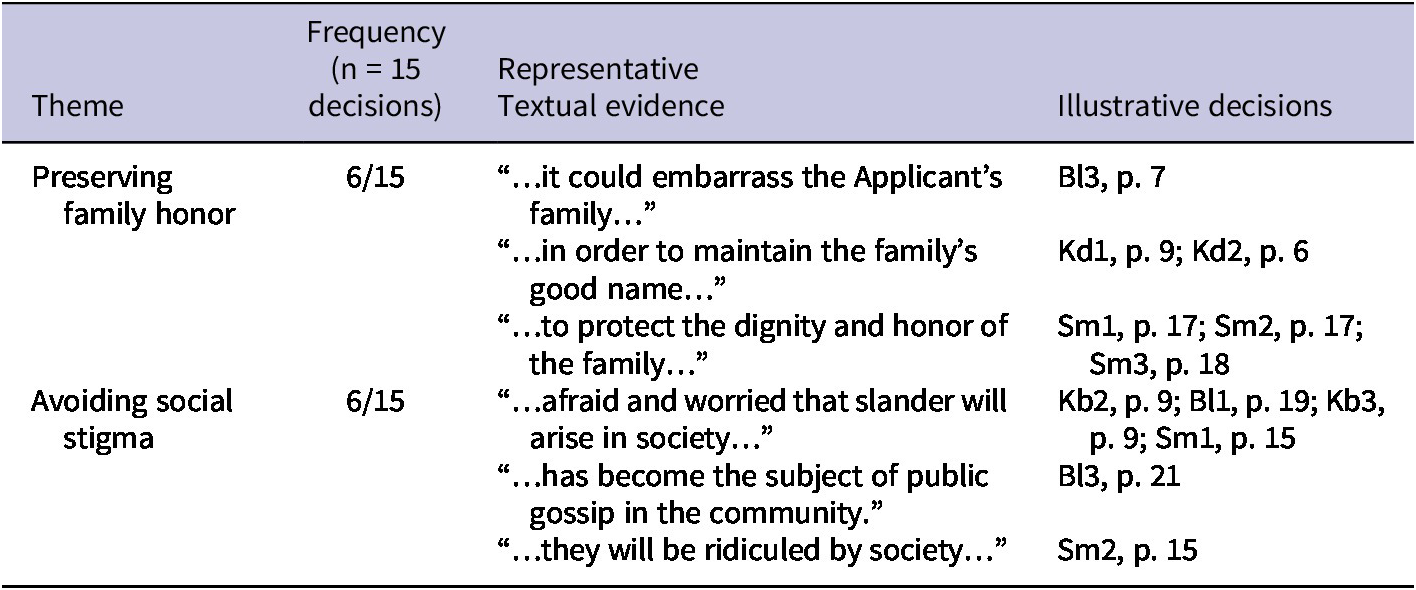
One of the primary considerations in the issuance of marriage dispensations is the influence of cultural norms aimed at protecting family honor and preventing social stigma (Decision notes 2024). These concerns are deeply ingrained within the social and cultural fabric of rural Indonesian communities, thereby shaping religious practices (HR et al. Reference Syamsuni, Rahman, Draman, Syamsiah and Asykur2025), gender conceptions (Dalimoenthe et al. Reference Dalimoenthe, Herlinawati, Ahmad, Clara, Widiyanti and Agung2023), and the preservation of cultural traditions related to marital conduct (Buttenheim and Nobles Reference Buttenheim and Nobles2009). Table 4 presents textual evidence demonstrating the frequent occurrence of considerations related to family honor and social stigma within the analyzed decisions. References to family honor appeared in six of the fifteen decisions, while concerns regarding social stigma were identified in an equal number of cases. These themes were articulated through mentions of preserving the family’s reputation, avoiding embarrassment, preventing slander, and mitigating community ridicule.
Textual Evidence Illustrating the Influence of Family Honor and Social Stigma on Decisions Concerning Marriage Dispensation

Table 4. Long description
The table consists of four columns: Theme, Frequency (n = 15 decisions), Representative Textual Evidence, and Illustrative Decisions.
* The first theme is Preserving family honor, with a frequency of 6/15. Evidence includes:
- ’...it could embarrass the Applicant’s family...’ (Decision Bl3, p. 7).
- ’...in order to maintain the family’s good name...’ (Decisions Kd1, p. 9 and Kd2, p. 6).
- ’...to protect the dignity and honor of the family...’ (Decisions Sm1, p. 17; Sm2, p. 17; Sm3, p. 18).
* The second theme is Avoiding social stigma, with a frequency of 6/15. Evidence includes:
- ’...afraid and worried that slander will arise in society...’ (Decisions Kb2, p. 9; Bl1, p. 19; Kb3, p. 9; Sm1, p. 15).
- ’...has become the subject of public gossip in the community.’ (Decision Bl3, p. 21).
- ’...they will be ridiculed by society...’ (Decision Sm2, p. 15).
A note at the bottom clarifies that frequencies represent the number of decisions where each theme was identified and that themes are not mutually exclusive.
Note: The frequencies represent the number of decisions in which each specific theme was identified. As the themes are not mutually exclusive, a single decision may encompass multiple themes.
Women are often regarded as the embodiment of familial honor; consequently, their conduct and social status substantially impact the family’s public reputation (Martin-Anatias Reference Martin-Anatias2019). According to Jd2 and Jd3, when a young girl is known or even suspected to be engaged in a romantic relationship, her family perceives an imminent threat to its honor. The potential for social stigma – such as being labeled a “wayward girl” or a “family incapable of safeguarding its children” – motivates parents to act promptly by arranging their daughters’ marriages, frequently at a very young age (Interview notes 2024). Within this context, marriage dispensation functions as a mechanism to preserve family dignity. This rationale is illustrated as follows:
Parents are typically hesitant to tolerate the social stigma that arises when their daughter is perceived to have a close relationship with a man. To prevent the family from becoming the subject of gossip and to protect its reputation, they often prefer to arrange their daughter’s marriage promptly. Within this context, marriage dispensation is considered as a form of maṣlaḥah that simultaneously addresses at least three key aspects: the preservation of family honor, the establishment of legal clarity regarding the daughter’s marital status, and the assurance of the legitimacy of the child in utero, with clear recognition of both parents. (Jd7)
In judicial decisions issued by Religious Courts, when a female minor is found to be pregnant despite being under the age of 19, as stipulated by the Marriage Law, judges generally expedite the approval of marriage dispensation requests (Bl1, Bl3, Kb2, Kb3, Kd3, Sm1, Sm2, Sm3). Moreover, even in the absence of pregnancy, judges often grant marriage dispensations leniently, justifying their decisions by emphasizing the importance of preserving family honor and protecting children from perceived promiscuity (pergaulan bebas) and premarital relationships (pacaran) (Bl2, p. 16; Br1, p. 9; Br3, p. 8; Kb1, p. 10; Kd1, p. 11; Kd2, p. 8). Within this context, early marriage is regarded as a preventive measure aimed at averting immoral behavior. During interviews, Jd4 and Jd6 argued that, without the “barrier” provided by a marital bond, minors are more likely to engage in premarital sexual activities and adopt permissive social behaviors. Jd2 and Jd5 noted that, in several cases involving marriage dispensation, parents anticipated that their children would assume greater domestic responsibilities through marriage, thereby shielding them from external temptations. In sum, according to Jd1 and Jd7, early marriage is constructed both as a moral safeguard and as a mechanism of social protection for the younger generation.
The statutory legality for granting marriage dispensation as a form of maṣlaḥah is founded upon three distinct rationales. First, it aims to establish legal clarity concerning marital status, thereby ensuring that the union is formally recognized and securing the attendant rights and obligations under the law. Empirical data derived from fieldwork indicate that applicants for marriage dispensations frequently invoke this rationale to persuade judges that proceeding with the marriage is preferable to postponing until the individuals attain the legally prescribed age (Observation notes 2024). Judicial decisions often give considerable weight to this argument, particularly in cases where the couple is already emotionally and socially bonded (Decision notes 2024). Second, the normative dimension pertains to the assertion that marriage dispensation confers civil legal protection. According to Jd2 and Jd6, such protections encompass a wife’s entitlement to financial support, a child’s inheritance rights, the legitimacy of lineage (nasab), and the safeguarding of joint marital property. Empirically, numerous parents petition for dispensation to ensure that their children – especially daughters – enter marriage with legal certainty (Observation notes 2024). In instances when underage marriages occur without dispensation, the civil status of the individuals involved becomes precarious, impacting issues such as the registration of a child’s birth, inheritance rights, and legal protection in the event of divorce. Interviews with judges of the Religious Court revealed their profound sense of responsibility to protect children entering marriage from legal vulnerability (Interview notes 2024).
The third normative foundation supporting the granting of marriage dispensation is the principle of maṣlaḥah, which seeks to prevent unregistered marriages (nikah siri). This practice remains prevalent, particularly in rural communities with strong religious traditions (Baihaqi et al. Reference Baihaqi, Tutik, Ahmad Musadad and Simun2024). Many families maintain that as long as the marriage contract adheres to Islamic law, the union is valid, even if it is not officially registered with the Office of Religious Affairs (Nisa Reference Nisa2018). However, according to Jd4 and Jd8, this practice engenders significant challenges, especially concerning civil administration, the civil rights of children, and legal protection for women. Consequently, as emphasized by Jd1 and Jd7, petitions for dispensation are often viewed as a compromise: the marriage may proceed, but through a formal legal channel that ensures its official recognition by the state. Our findings indicate that judges in the Religious Courts regard this issue with considerable seriousness. They expressed concern that if dispensation is denied, families will continue to conduct nikah siri without state oversight, thereby increasing the vulnerability of both children and women (Interview notes 2024). Thus, the granting of dispensation is positioned as a strategy to close the gap that facilitates unregistered marriages. This perspective is encapsulated in the following statement:
If a marriage is not officially registered, numerous rights – particularly those pertaining to the wife and child – cannot be guaranteed. The mechanism of marriage dispensation is employed to incorporate these unions into the formal legal framework, thereby ensuring protections related to maintenance, inheritance, and marital property (Jd3). Dispensation is considered essential because marriage conducted through nikah siri pose significantly increased risks. For example, a child may be born without a birth certificate, the wife’s legal status may become uncertain in the event of divorce, and inheritance rights may be compromised. Therefore, legalizing the marriage through dispensation is preferable to mitigate these adverse consequences. (Jd5)
Discussion
Claims of maṣlaḥah grounded in religious doctrine constitute an important rationale employed by judges in Religious Courts when granting marriage dispensations. The findings indicate that Qur’anic verses cited in these rulings are frequently invoked to address immediate familial and social concerns pertinent to the cases under consideration. Although these references draw upon established religious sources, their judicial application tends to emphasize the practical resolution of urgent circumstances – such as premarital relationships, pregnancy, family honor, and social stigma – rather than engaging extensively with broader considerations related to marital readiness and long-term child welfare (Barkah et al. Reference Barkah, Cholidi, Rochmiyatun, Asmorowati and Fernando2023; Mustopa Reference Mustopa2024). Within this context, the interpretation of Qur’anic verses in marriage dispensation cases appears oriented toward pragmatic problem-solving within specific social settings (Fauzi Reference Fauzi2023; Setiawan et al. Reference Setiawan, Wismayanti, Irmayani, Wardianti and Uddin2024). While these interpretations are grounded in authoritative texts, the decisions analyzed in this study devote comparatively less explicit attention to readiness criteria frequently discussed in Islamic legal discourse, particularly the concept of qādirīn, which denotes individuals possessing the financial (māliyyah), physical (badaniyyah), psychological (nafsiyyah), intellectual (aqliyyah), and social (ijtimā’iyyah) capacities deemed necessary for marriage (Al-‘Aqqād Reference Al-‘Aqqād2005; Al-Ghazali Reference Al-Ghazali and Farah2012; Novitasari et al. Reference Novitasari, Luth, Djumikasih and Chanifah2024). This pattern exemplifies what the present study conceptualizes as pseudo-protection: a scenario in which religiously grounded claims of maṣlaḥah are invoked to address immediate social concerns, while considerations pertaining to long-term child welfare receive comparatively less explicit attention within judicial reasoning.
The invocation of the Hadith encouraging youth to marry, especially within the context of granting marriage dispensation cases, exemplifies a pattern of interpretation characterized by particular hermeneutical emphases. Firstly, the Hadith explicitly addresses al-shabāb (youth) rather than al-aṭfāl (children), thereby referring to individuals who have attained forms of maturity that extend beyond biological puberty to include social, economic, intellectual, and psychological preparedness (Nikmatullah Reference Nikmatullah2023). Secondly, the Hadith stipulates the condition of al-bā’ah (capability), a requirement that receives comparatively less attention in judicial reasoning (T. Hidayat and Azahari Reference Hidayat and Azahari2020). In numerous rulings, concerns related to romantic relationships prominently feature among the considerations supporting the granting of marriage dispensations (Decision notes 2024). Thirdly, the alternative clause fa-ʿalayh bi al-ṣawm (then let him fast) is rarely referenced in the decisions examined, despite presenting fasting as a nonmarital mechanism of self-restraint. The relative absence of this alternative suggests that certain aspects of the Hadith receive greater emphasis than others in judicial reasoning (Luthfi et al. Reference Luthfi, Hamdani, Ruhiat, Adlimah and Solahuddin2023). These patterns suggest that maṣlaḥah-based reasoning drawing upon the Hadith may be understood as a form of pseudo-protection, particularly in cases involving girls who enter marriage at an early age and subsequently assume household responsibilities. In this regard, the findings highlight how a Hadith commonly understood as moral guidance may, in specific judicial contexts, be invoked in ways that place greater emphasis on immediate protective concerns than on broader considerations of preparedness, capability, and long-term welfare.
The application of Islamic legal maxims in the context of marriage dispensation exemplifies a broad interpretative approach, wherein claims of maṣlaḥah increasingly challenge alternative understandings of the objectives of Islamic law. The legal maxim “preventing harm takes precedence over obtaining benefits” is frequently invoked to justify the dispensation of child marriage through a simplified rationale: “zinā constitutes harm, whereas marrying off children constitutes a benefit” (Interview notes 2024). However, within Islamic legal theory, the concept of maṣlaḥah must be assessed hierarchically according to the categories of ḍarūriyyāt (necessities), ḥājiyyāt (needs), and taḥsīniyyāt (embellishments) (Thahir Reference Thahir2019). Child marriage, in fact, threatens higher-order benefits such as education, health, and child safety, all of which are classified under ḍarūriyyāt. Therefore, the issuance of marriage dispensations may generate tensions with hierarchical interpretations of maṣlaḥah (Ali Reference Ali2014; Nabilah et al. Reference Nabilah, Putra, Afroo, Nurjanah and Wahyuni2025). The judges’ interpretation of marriage dispensations for minors, grounded in the principle that “decisions enacted by the ruler concerning the population are based on the principle of public interest,” merits critical scrutiny. This approach effectively reconfigures the concept of maṣlaḥah, transforming it from a mechanism intended to protect children as legal subjects into a legal rationale that may legitimize practices causing long-term harm. Although the principle of maṣlaḥah is fundamentally oriented toward the public interest, its application in cases of marriage dispensation may engender tension between collective social concerns and the best interests of the child – a standard widely recognized in both international and national law (Wismayanti et al. Reference Wismayanti, O’Leary, Tilbury and Tjoe2019; Purwanti and Natalis Reference Purwanti and Natalis2025). These contradictions suggest that, within the context of child marriage dispensations, these legal maxims function less as critical analytical tools and more as normative justifications for prevailing practices.
Notwithstanding considerations grounded in religious doctrine, arguments invoking maṣlaḥah on moral grounds predominantly serve to justify exemptions permitting child marriage. At first glance, these arguments appear consistent with the concept of maṣlaḥah, as they ostensibly aim to prevent moral decline. However, from the analytical perspective advanced in this study, such reasoning may be characterized as a form of pseudo-protection. Child marriage does not inherently prevent promiscuity or zinā; rather, it frequently precipitates additional adverse outcomes, including divorce, depression, domestic violence, psychological harm, and posttraumatic stress disorder (Zara and Akbudak Reference Zara, Akbudak and Berger2023; Yadav, Chandel, and Hung Reference Yadav, Chandel, Hung and Uddin2024). More importantly, the moral legitimacy conferred through marriage dispensations often functions as a pragmatic strategy to obscure familial dishonor, rather than serving as a genuine protective mechanism for children (Gunawan and Bahri Reference Gunawan and Bahri2023). The maṣlaḥah invoked in these contexts tends to be short-term, primarily concerned with preserving family honor and avoiding social stigma, without adequate consideration of the child’s long-term welfare (Zuhriah et al. Reference Zuhriah, Fuadi, Sukadi and Ashari2024). This suggests that the purported protection is oriented more toward collective social morality and family reputation than toward the individual well-being of the child (Hermita, Rohani, and Suhatril Reference Hermita, Rohani and Suhatril2025). Moreover, claims of child protection often reflect gendered asymmetries (Cameron, Suarez, and Wieczkiewicz Reference Cameron, Suarez and Wieczkiewicz2023). As presented in Table 2, which presents the ages of girls granted marriage dispensations, the findings reveal patterns that may indicate gender-based disparities in the application of protective reasoning in marriage dispensation cases.
The gendered aspects of judicial reasoning are particularly evident in cases concerning premarital relationships or pregnancy, where issues related to family reputation and social expectations are predominantly articulated in reference to girls and young women. This trend is corroborated by interview data, with several judges noting that concerns about social propriety are more commonly associated with female children. Consequently, marriage dispensation is frequently framed as a protective measure, notwithstanding concerns regarding its potential long-term implications (Interview notes 2024). The recurrent use of such reasoning may raise questions regarding how judicial institutions reconcile child protection concerns with broader social and legal considerations. Several judges highlighted a tension between the formal legal criteria for granting marriage dispensations and the substantive objective of safeguarding children, suggesting that the frequent issuance of marriage dispensations may contribute to perceptions of inconsistency in enforcing the minimum marriage age. As noted by Jd2 and Jd6, the flexibility inherent in the legal framework allows parents to present compelling narratives that satisfy judicial requirements, even when the underlying circumstances cast doubt on the extent to which child-protection objectives are effectively achieved in practice. They noted:
Article 7(2) of Marriage Law No. 16 of 2019 does not explicitly define the scope of the term “urgent reason” (alasan mendesak), thereby generating interpretative ambiguity and legal uncertainty. In many cases, parents present their petitions to the court with an understanding of the commonly accepted legal rationale. They emphasize urgent circumstances, such as pregnancy or fear of zinā, to frame their cases in accordance with what is implicitly considered a valid justification (Jd2). Similarly, Article 15 of the Compilation of Islamic Law (Kompilasi Hukum Islam 1991) establishes minimum age requirements for marriage, however, it does not provide detailed criteria for exceptions. This omission creates significant legal ambiguity and generates tension between judges and the applicants’ parents during judicial proceedings. (Jd6)
From a normative standpoint, the maṣlaḥah claims associated with the mechanism of marriage dispensation reveal a complex dynamic. On one hand, arguments emphasizing the legal certainty of marital status, civil legal protection, and the prevention of nikah siri (unregistered marriage) suggest that both society and judicial authorities utilize marriage dispensation as a legal instrument to address gaps in social and legal vulnerabilities (Horii and Wirastri Reference Horii and Wirastri2022). In Indonesia, state legitimacy, achieved through the official registration of marriage, is regarded as ensuring the certainty of family identity, safeguarding civil rights, and protecting women and children from social stigma and juridical marginalization (Aditya and Waddington Reference Aditya and Waddington2021; Arifuddin Reference Arifuddin2024). On the other hand, this study finds that such normative claims are often reactive and formalistic rather than preventive and substantive. Marriage dispensation tends to be framed as an immediate response to the risks associated with early marriage practices rather than as a genuine effort to prevent child marriage itself (Sudirman, Umrah, and Surahman Reference Sudirman, Umrah and Surahman2023; Kafidhoh et al. Reference Kafidhoh, Asyari, Mutakin and Saujan2024). Consequently, normative legitimacy may inadvertently perpetuate social structures that remain permissive toward child marriage (Pakasi et al. Reference Pakasi, Hidayana, Van Der Kwaak and Benedicta2024), as legal-formal requirements are prioritized over considerations of psychological maturity, education, and reproductive health of children (Burgess et al. Reference Burgess, Jeffery, Odero, Rose-Clarke and Devakumar2022). Thus, the ostensibly beneficial normative claim remains paradoxical: while it mitigates administrative and civil vulnerabilities, it simultaneously reinforces the normalization of child marriage as a legally sanctioned practice.
This study offers a theoretical examination of the judicial application of maṣlaḥah in authorizing dispensations for child marriage, arguing that such application often constitutes a form of pseudo-protection. While the principle of maṣlaḥah in Islamic legal theory is fundamentally designed to safeguard essential human interests – such as life, lineage, and dignity – its implementation in this context paradoxically legitimizes practices that undermine these very objectives. Instead of fostering genuine welfare, the discourse of protection operates as a justificatory mechanism aimed at preserving social order or parental preferences, thereby obscuring the structural harm inflicted upon children. This tension underscores how maṣlaḥah functions both as a basis of normative authority and as a site of contestation within contemporary judicial reasoning. The study critiques the normative application of maṣlaḥah by advocating for a critical interpretation that emphasizes its substantive dimension. It demonstrates that the invocation of maṣlaḥah in judicial reasoning, as well as by parents and communities, tends to rely more heavily on religiosity, tradition, and social stigma than on the comprehensive protection of children’s rights (Sriono et al. Reference Sriono, Mashdurohatun, Kusriyah and Rofiq2023; Halimatusa’diyah and Triana Reference Halimatusa’diyah and Triana2024).
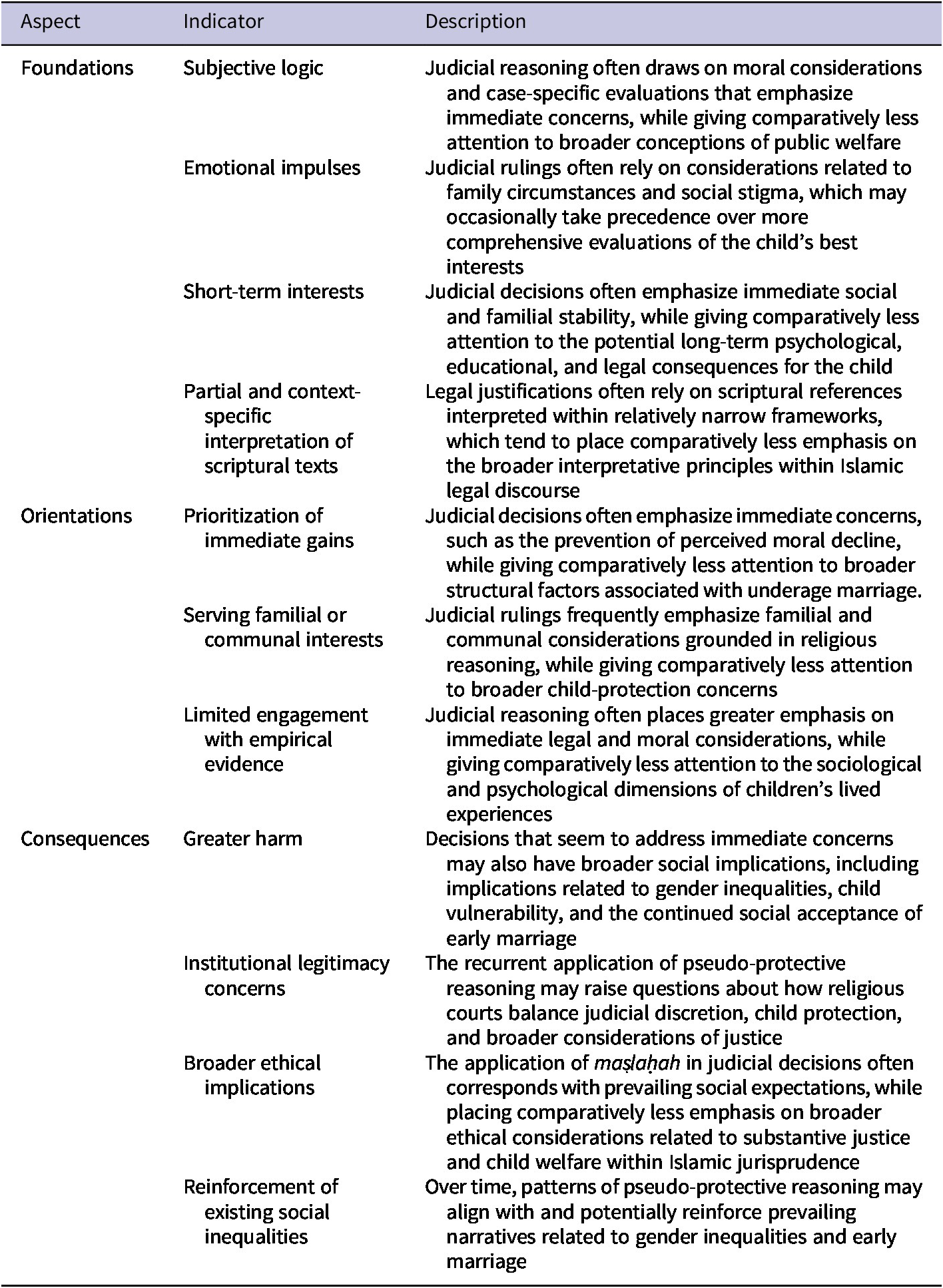
As demonstrated in Table 5, the concept of pseudo-protection serves not only as an analytical framework for interpreting judicial understandings of maṣlaḥah but also as an empirically observable pattern within judicial reasoning and its outcomes. The findings suggest that such reasoning may be linked to patterns of gender inequality and increased vulnerabilities among children, particularly girls. Empirical data from the analyzed cases indicate that female applicants are consistently younger than their male counterparts (see Table 2). Although all examined decisions formally invoked the best interests of the child as the legal basis for granting marriage dispensation, the findings presented in Table 4 show that judicial reasoning frequently relied on considerations of family honor and social stigma. References to preserving the family’s reputation, protecting family dignity, avoiding slander, and preventing social ridicule recurrently appeared across the decisions analyzed. While these considerations do not necessarily negate concerns for child welfare, they suggest that the protection sought extends beyond the child as an individual rights-holder to encompass broader familial and social interests. Consequently, the best interests of the child often function less as a substantive evaluative standard and more as a legal framework through which familial and community-oriented concerns are articulated. This divergence between the formal objective of child protection and the underlying justificatory logic may be understood as a central feature of what this study conceptualizes as pseudo-protection.
Pseudo-Protection in the Context of Child Marriage Dispensation

Table 5. Long description
The table is organized into three columns: Aspect, Indicator, and Description.
1. Foundations aspect includes four indicators:
* Subjective logic: Judicial reasoning emphasizes immediate moral concerns over broader public welfare.
* Emotional impulses: Rulings rely on family circumstances and social stigma rather than the child’s best interests.
* Short-term interests: Decisions focus on immediate stability over long-term psychological, educational, and legal consequences.
* Partial and context-specific interpretation of scriptural texts: Justifications use narrow frameworks that overlook broader Islamic legal principles.
2. Orientations aspect includes three indicators:
* Prioritization of immediate gains: Focuses on preventing perceived moral decline rather than structural factors of underage marriage.
* Serving familial or communal interests: Emphasizes religious reasoning for families over child-protection concerns.
* Limited engagement with empirical evidence: Prioritizes legal and moral considerations over sociological and psychological lived experiences.
3. Consequences aspect includes four indicators:
* Greater harm: Implications for gender inequality, child vulnerability, and social acceptance of early marriage.
* Institutional legitimacy concerns: Questions on how religious courts balance discretion with child protection.
* Broader ethical implications: The use of maslahah aligns with social expectations rather than substantive justice.
* Reinforcement of existing social inequalities: Patterns of reasoning may reinforce narratives of gender inequality.
From a doctrinal standpoint, the analysis of judicial decisions indicates that scriptural references are consistently employed with an emphasis on specific textual authorities. As demonstrated in Table 3 (first aspect) and supported by document analysis, all rulings reference Qur’anic verses, Hadith, and Islamic legal maxims to substantiate the granting of marriage dispensations (Decision notes 2024). However, these references tend to place comparatively less emphasis on broader criteria such as educational attainment, readiness for marriage, and long-term social well-being, as evidenced by observations that several girls granted marriage dispensations subsequently discontinued their education (Observation notes 2024). This suggests a potential tension between certain maqāṣid-based objectives articulated in Islamic legal scholarship and their practical application in judicial reasoning. Across the cases examined, these patterns imply that pseudo-protection may function as a justificatory framework through which familial and social concerns are expressed within religious legal reasoning, while structural considerations related to child welfare receive comparatively limited attention. Furthermore, the invocation of maṣlaḥah appears to afford minimal consideration to empirical aspects of the cases, including age disparities, gendered vulnerabilities, and issues of marital preparedness. In this context, such reasoning may also reflect broader socio-legal patterns associated with gender inequality and child marriage, albeit articulated through religiously grounded justificatory frameworks.
Field observations offer valuable insights into the manner in which adjudicative reasoning is embedded within broader social expectations surrounding marriage dispensation proceedings. In multiple instances, applicants’ parents reported that wedding dates had been scheduled and invitations distributed prior to the court’s ruling. They further emphasized that the denial of a marriage dispensation could have significant social and financial repercussions for the family’s reputation (Observation notes 2024). These accounts demonstrate that court proceedings are situated within preexisting social commitments and reputational concerns that extend beyond the strictly legal issues under consideration. Such evidence suggests that extralegal factors – such as family reputation, financial interests, and communal expectations – may influence the context in which judicial reasoning occurs (Troop Reference Troop2024). Rather than serving as direct determinants of judicial outcomes, these factors may be understood as components of the social milieu that shape case framing and the articulation of arguments within the courtroom (Vermeule Reference Vermeule2006). Within this framework, the concept of pseudo-protection may be interpreted as a mechanism through which socially embedded concerns are translated into legally cognizable reasoning. For instance, the invocation of maṣlaḥah provides a doctrinal vocabulary that articulates considerations of reputation, familial stability, and social acceptance in juridical terms. Consequently, judicial reasoning may be conceptualized as taking place within a negotiated space where legal doctrine, moral expectations, and social pressures converge in the formulation of marriage dispensation decisions.
It is essential to note that the judicial decisions analyzed in this study do not disregard considerations related to the principle of the best interests of the child. In numerous instances, judges explicitly invoke this principle through the use of the term “the best interests of the child” (kepentingan terbaik bagi anak) or implicitly reference it through expressions such as “the best solution for all parties involved” (solusi terbaik untuk semua pihak). These references pertain to child protection concerns, particularly regarding the avoidance of unregistered marriages, the prevention of premarital relationships escalating into zinā, and the safeguarding of the legal status of the child and family (Decision notes 2024). Such considerations may be interpreted as aligning with the principle of child welfare. However, the findings of this study suggest that these considerations are comparatively more oriented toward immediate protective concerns related to family honor and perceived social stigma rather than a comprehensive and long-term evaluation of the child’s well-being. Data from interviews further indicate that judicial conceptions of protection are commonly articulated in terms of moral safeguarding, social normalization, and the preservation of familial reputation (Interview notes 2024). Accordingly, the principle of the best interests of the child appears to be operationalized procedurally rather than as a substantive and holistic evaluative standard. This apparent gap between formal invocation and substantive application supports the use of pseudo-protection as an analytical framework for understanding the operation of maṣlaḥah-based reasoning in marriage dispensation cases.
Conclusion
This study argues that judicial reliance on maṣlaḥah in the granting of marriage dispensations may, in many cases, operate as a form of pseudo-protection. While such reasoning is commonly presented as an effort to safeguard children, the findings suggest that it may also lead to outcomes that raise concerns regarding the children’s longer-term welfare. Furthermore, claims invoking maṣlaḥah within honor-based cultural contexts tend to emphasize the preservation of family reputation and the avoidance of social stigma, while affording comparatively less emphasis to the child as an autonomous subject of protection. In this regard, the invocation of maṣlaḥah reveals a tension between formal legal reasoning and its substantive application. From a critical socio-legal perspective, this study contributes to the conceptualization of pseudo-protection as an analytical category for understanding how legal and religious justifications may simultaneously function as sources of legitimacy and as mechanisms through which broader social concerns are incorporated into judicial reasoning. The findings further suggest that the application of maṣlaḥah in marriage dispensation cases often reflects an accommodative approach to immediate social and familial considerations. This tension between formal legal objectives and judicial practice underscores the complexity of balancing child protection, social expectations, and religiously grounded legal reasoning in marriage dispensation cases.
The findings of this study offer several practical implications for addressing cases of child marriage dispensation. First, they highlight the potential benefits of contextualized religious education that fosters a more comprehensive understanding of maṣlaḥah, which may mitigate selective interpretations of religious arguments in debates surrounding child marriage. Second, educational institutions and community leaders could play a pivotal role in enhancing greater awareness of children’s rights and well-being within communities where early marriage remains socially normative. Third, the findings call for a reevaluation of the conceptualization of child protection within legal policy frameworks, particularly concerning the function of marriage dispensation as an exceptional legal mechanism and the necessity of child-centered procedures in adjudication processes. Fourth, the establishment of psychosocial support programs may serve as an effective strategy to assist children vulnerable to early marriage and its associated social pressures. Fifth, increased collaboration among religious courts, offices of religious affairs, educational institutions, and child protection agencies may facilitate a more comprehensive assessment of child welfare in cases involving marriage dispensation. More broadly, these implications contribute to ongoing discourse on strengthening child protection within Islamic family law, especially in Muslim-majority contexts where religious and legal considerations intersect in the regulation of child marriage.
This study acknowledges several limitations that should be considered when interpreting its findings. First, the data are derived from selected marriage dispensation decisions within a limited number of regions, which may not fully represent the diversity of social and cultural contexts of Indonesia. Second, the study primarily utilizes normative and discursive qualitative analysis, thereby constraining its capacity to deeply explore the lived experiences of children and couples involved in early marriage. Third, the lack of quantitative indicators, such as divorce rates or reproductive health outcomes among young couples, limits the breadth of the empirical analysis. Given these limitations, future research would benefit from adopting a multidisciplinary approach that integrates perspectives from Islamic law, psychology, and the sociology of law. Additionally, subsequent studies should incorporate the perspectives of children more directly, alongside those of parents, judges, and other relevant stakeholders, to provide a more comprehensive understanding of how maṣlaḥah is interpreted and experienced in practice. Such approaches may enhance the understanding of child marriage dispensation and inform future discussions concerning legal policy and child welfare within Islamic legal discourse.
Acknowledgments
The authors sincerely thank the reviewers and the editorial staff of the JLC for their insightful feedback and valuable suggestions, which significantly improved the quality of this manuscript. They also gratefully acknowledge the intellectual guidance and scholarly mentorship provided by Euis Nurlaelawati and Lena Larsen throughout the course of this research. Their constructive involvement and generous sharing of expertise have greatly contributed to the development and refinement of this study. Any views expressed herein, as well as any remaining limitations, are solely those of the authors.
Data availability statement
Replication materials for this article are available on the Journal of Law and Courts Dataverse at https://doi.org/10.7910/DVN/AVCRSE.
Competing interests
The authors declare that there are no potential conflicts of interest concerning the research, authorship, or publication of this article.
Financial support
This research received no specific grant from any funding agency in the public, commercial, or not-for-profit sectors


 Open access

