




1. Introduction
It is widely accepted that primary stress in English is co-determined by syntactic category: Nouns are stressed differently from verbs (e.g. Sherman Reference Sherman1975, Liberman & Prince Reference Liberman and Prince1977). Whereas most empirical work on English stress is on nouns, this paper will be concerned with verbs. Stress in English verbs is assigned to one of the last three syllables of the word, leading to three possible outcomes: for example, stress is final in contradíct, penultimate in astónish, and antepenultimate in récognise. Unlike many other languages, however, English does not have one clear set of rules that reliably assigns stress to any of these positions. Still, stress assignment is not random, in the sense that there are statistical regularities, none of which, however, is without exceptions. This begs the question of how speakers know which syllable is to be stressed in novel words, i.e. in words whose stress pattern cannot be part of the representation in the speaker’s Mental Lexicon.
There are several possibilities. One is that there exists a default stress pattern, which is assigned to unfamiliar words or to words that lack a lexically specified metrical structure (e.g. final stress in verbs). Another possibility is that speakers come to form generalizations about stress based on the words they know, which they will then use to assign stress to a novel or unfamiliar word. These generalizations, however, can be on different levels of abstraction and refer to different types of representations. For example, speakers might generalize over morphological structure, inferring that verbal prefixes are generally unstressed, and that primary stress tends to be on the first syllable of the root in these cases (as in refíll). Furthermore, they might generalize over the phonological structure of word-final syllables, inferring that superheavy final syllables attract stress. As an alternative, they might base stress assignment on a much lower-level generalization, basing their decision on analogy in phonotactic patterns among existing similar words in the Mental Lexicon. Empirically, determining the level of generalization that is relevant is notoriously difficult.
Most scholars nowadays reject the idea that English word stress is purely idiosyncratic. Current mainstream work in the field is dominated by formal phonological approaches which assume that stress assignment in English is mainly regulated by two types of structural factors: syllable weight and morphological complexity (e.g. Chomsky & Halle Reference Chomsky and Halle1968, Liberman & Prince Reference Liberman and Prince1977). For example, a common claim is that primary stress in morphologically simplex verbs falls on the final syllable if it is heavy (e.g. appéar) and on the penultimate otherwise (e.g. édit). Following recent empirical work (esp. Dabouis & Fournier Reference Dabouis, Fournier, Ballier, Jean-Michel Fournier and Yamada2023), however, these generalizations have come under increased scrutiny as it has become clear that they cannot easily accommodate the full range of variation that we find in large corpora such as the Cambridge English Pronouncing Dictionary (Jones Reference Jones2006). One case in point is historical prefixes such as be- or con- which are not “prefixes” in the strict sense but still show an effect (see already Chomsky & Halle Reference Chomsky and Halle1968: 94): For example, we find that vómit is regularly stressed on the first syllable whereas begét and commít both have final stress, despite their final syllables having the exact same structure. Part of the problem could be the methodology of pertinent surveys as they have long relied on what some have come to call convenience samples (Domahs, Plag & Carroll Reference Domahs, Plag and Carroll2014). Another potential cause for concern is that most of the generalizations that we find in the theoretical literature are largely based on disyllables, and that matters may be less straightforward in longer words where at least three different options are available. This makes verbs an interesting test case for the question about the level of generalization: To what extent do speakers form broader generalizations, based on morphological structure, and to what extent do they base stress on analogy only, that is, on the stress patterns of phonologically similar words?
The present study aims to address these issues on a broader empirical basis. Specifically, we will investigate stress assignment to English trisyllabic pseudo-verbs, on the basis of data from a production experiment with 50 native speakers of British English. Pseudo-verbs are needed because we are interested in productive generalizations which speakers extend to novel words, i.e. words for which they cannot rely on a pre-stored stress pattern. Trisyllables are interesting as most existing research is on disyllabic verbs. Therefore, our study is the first to systematically explore the interaction between structural factors (weight, prefixation) and analogy (recurrence of sounds and letters) during stress assignment to long verbs. In this regard, it also joins a growing list of studies that seek to assess the role of analogy in English stress assignment. To test this latter possibility, we will set an analogical computational algorithm – AML – to the task of predicting stress in the pseudo-verbs based on their phonetic and orthographic make-up.
The paper is structured as follows. We start by giving a brief review of current approaches to verb stress in English before introducing our research questions. This is followed by the methodology section, in which we give an overview of the datasets used in this study, introduce the AML algorithm, and describe the set-up of the analogical model. Results are presented in Section 4, followed by the discussion. We conclude by highlighting directions for future research in the area.
2. Theoretical Background
2.1. Weight, prefixation, length, and analogy
The first potential factor to be considered here is syllable weight. Standard accounts of English assume that stress assignment is determined in large part by properties of a syllable´s rhyme – the vowel and any following consonants (Chomsky & Halle Reference Chomsky and Halle1968, Hayes Reference Hayes1982). These units are seen as contributing syllable weight, a property that is relevant for stress in English (e.g. Carr Reference Carr2009). Light syllables are those with a single short vowel in the rhyme (e.g. [ɛ]). Heavy syllables, on the other hand, have a long or diphthongized vowel (e.g. [ɑː]), or a single short vowel followed by one single coda consonant (e.g. [ɪp]). Syllables that contain a long or diphthongized vowel followed by consonant (e.g. [ɑːm]) or a short vowel followed by a consonant cluster (e.g. [ənt]) are termed superheavy (e.g. Hayes, 1989). Verb-final syllables are claimed to exhibit a special behavior in this context, which is typically subsumed under the notion of extrametricality (Hayes Reference Hayes1982): most analyses consider the final consonant of verbs to be invisible to the stress-assigning mechanism. For English verbs, the claim is therefore that final syllables which contain a short vowel may be heavy only if they are followed by at least two consonants. Final syllables that contain a long vowel or diphthong, by contrast, count as heavy regardless of whether or not they are closed.
There are two possible ways in which syllable weight can influence stress assignment. One possibility is that stress placement depends on the structure of one particular syllable. In the case of English verbs, the structure of the final syllable is assumed to be decisive (see, for example, Burzio Reference Burzio1994, Hammond Reference Hammond1999, Hayes Reference Hayes1982). Specifically, the prediction is that the final syllable will be stressed if it is heavy (e.g. tormént, appéar). In this case, the remaining syllables may contain an unstressed full vowel, a reduced vowel, or, alternatively, they may have a secondary stress (Burzio Reference Burzio1994, Guion et al. Reference Guion, Clark, Harada and Wayland2003: 404). Otherwise, main stress is claimed to fall on the penult (as in édit or vómit). Moreover, weight interacts with word length: the patterns described so far hold largely only for short (i.e. disyllabic) verbs. Trisyllabic verbs with a heavy final syllable are claimed to be regularly stressed on the antepenult, except if their final syllable is a complete historical root (for example, éxercise, ánalyze, cómplicate, clárify vs. comprehénd, interséct, introdúce; see the formatives in Chomsky & Halle Reference Chomsky and Halle1968, Liberman & Prince Reference Liberman and Prince1977). Another possibility is that heavy syllables tend to attract stress (which is usually formalized in OT approaches as the “Weight-to-Stress” constraint), irrespective of their position within the word. In other words, the idea is that a prominent syllable will be preferentially stressed even in cases where it does not conform to the regular metrical pattern and/or is predicted by the pertinent rules of the language. Commonly, prominent syllables are those with long or low vowels or sonorant codas (Hayes Reference Hayes1995, Guion et al. Reference Guion, Clark, Harada and Wayland2003 for a discussion of typological evidence).
Beyond weight and length, stress may also be determined by a verb’s morphological structure. One case in point is prefixes. For English, prefixes are said to have stress-repelling properties (e.g. Fudge Reference Fudge1984). In other words, the expectation is that main stress never falls on the prefix, even if stress in this position would be predicted by competing factors such as syllable weight (e.g. *béset, Raffelsiefen Reference Raffelsiefen, Booij and van Marle1999). However, there is an ongoing debate about how to divide the lexicon into words whose stress is affected by morphology and those whose stress is not affected by morphology. This is in large part because there continues to be disagreement regarding the nature of morphological effects, and theories differ vastly in terms of how morphology is defined. For example, while reference to opaque morphological units has been made in the early generative literature (e.g. Chomsky & Halle Reference Chomsky and Halle1968), such words have come to be treated as monomorphemic words in subsequent work (e.g. Burzio Reference Burzio1994). This position has been challenged by work in the Guierrian tradition (e.g. Guierre Reference Guierre1979, Fournier Reference Fournier2007, Dabouis & Fournier Reference Dabouis, Fournier, Ballier, Jean-Michel Fournier and Yamada2023). One prominent example that is often cited in this context is historically prefixed verbs such as beget, converge, or relegate, which involve some combination of an opaque prefix (mostly historical prefixes such as con- that no longer are productive in present-day English) and a bound root (e.g. - verge). From a synchronic point of view, there is no productive morphology involved in these words, which is why they have often been treated on a par with genuinely monomorphemic verbs such as vomit. Specifically, opaque prefixes have often been excluded from phonological analyses on the grounds that they do not have a clear meaning and therefore defy the standard definition of the morpheme as a fully productive form-meaning pairing (e.g. Hammond Reference Hammond1999: 71). That said, work within the Guierrian school has revealed that historical prefixes such as be- or con- do pattern with fully transparent prefixes on a number of phonological characteristics, including vowel reduction in the initial pretonic position in closed syllables (Dabouis & Fournier Reference Dabouis and Jean-Michel2025a). With regard to primary stress placement, Dabouis and Fournier (Reference Dabouis, Fournier, Ballier, Jean-Michel Fournier and Yamada2023) report that initial stress is strongly dispreferred in disyllabic verbs that contain an opaque prefix (e.g. bewítch, submít). Crucially, in their corpus, effects of opaque prefixation were shown to override those of weight in 74 percent of prefixed verbs which have final stress despite their light final syllables (e.g. asséss, *ássess; condémn, *cóndemn; detách, *détach). The patterns reported in these studies have led the authors to advocate a less restrictive approach to the phonology-morphology interface that allows reference to semantically opaque or underspecified constituents.
Again, like syllable weight, opaque prefixation interacts with length: looking at the stress distributions in verbs with a bound base, Dabouis and Fournier (Reference Dabouis, Fournier, Ballier, Jean-Michel Fournier and Yamada2023) report that stress on an opaque prefix is more readily tolerated in long verbs than in disyllables (compare, for example, refér vs. récognize, cómplicate, démonstrate, súbjugate). This is particularly true of suffixed verbs, especially -ate, which make up a large part of long verbs in the lexicon.
There is, however, considerable leakage with regard to the generalization that prefixes repel stress, no matter how morphology is defined. An alternative is to take a processing-based perspective on stress assignment. To illustrate this, let us return to the example of English prefixes. Under a processing-based approach, whether or not the initial syllable in a (new) word receives the main stress might be determined not so much by its abstract morphological status (i.e. is it a prefix or not?) but by the extent to which it is recognized as such. On this view, individual prefixes differ in terms of how well they are recognized and parsed out in a given word by speakers, regardless of their synchronic status in the system, with potential implications for how the word is stressed. This approach is in line with earlier psycholinguistic work showing that, indeed, there is gradience in how language users process prefixed words in English (cf. esp. Wurm Reference Wurm2000). The degree of recognizability of a prefix can hence be quantified with the help of simple prefix ratios that take into account all words that start in a given string (termed “prefix likelihood” by Wurm; see also methodology section further below). Originally developed as a gradient measure for modeling morphological effects in the auditory processing of polymorphemic words, prefix likelihood ratios were shown to influence pseudo-word rejection times in a lexical decision experiment (Wurm Reference Wurm1997, Reference Wurm2000). Applying these measures to predict stress position in English pseudo-verbs, one might hypothesize that dis-, for example, should be relatively more likely to be recognized as a prefix in word-initial position compared to, say, re-, despite both prefixes being highly productive in present-day English – simply because words starting in <dis-> tend to be almost invariably prefixed, whereas there are relatively more words that start in <re-> where re- is not a prefix (as in real). Consequently, one should also expect relatively more word-initial stress in <re->-initial words compared to words starting in <dis->.
The continuing relevance of historical prefixes for synchronic stress assignment raises another, more fundamental question regarding the nature of the alleged prefix effects: to what extent are effects that have hitherto been interpreted as morphological in nature based on pure form, that is, recurrence of phonological strings – and if so, what is the role of other types of recurrence in the lexicon that are not specific to the word beginning, such as (bound) roots or suffixes? These might then be best described as an analogical effect. In this paper, we will discuss analogy as a process by which new words are stressed by analogy with existing, phonologically similar words in speakers’ Mental Lexica. While appeal to analogy has generally had a long tradition especially in the field of morphology, it has often been criticized for a lack of transparency and restrictions (see Bauer Reference Bauer2001: 75–97 for an overview of the limitations of (traditional) analogical approaches). Specifically, it was often left unclear exactly when and under what circumstances alleged analogies take effect, raising questions about the types of features that become relevant in a given context (e.g. semantic? morphological? phonological?), as well as the number of lexemes that are involved in the analogy. Computational analogical models address this criticism by systematically operationalizing notions such as “similarity” and “sets of relevant exemplars.” Importantly, they generate falsifiable hypotheses that can be tested in various ways, for example, in experiments or on corpus data. In this paper we will use the AML algorithm (Skousen Reference Skousen1989). The specifics of this model will be introduced in the methodology section.
Analogy-based approaches are part of a larger group of approaches – exemplar-based approaches – in which large-scale storage of individual occurrences of exemplars plays a prominent role (e.g. Bybee Reference Bybee2010). A key feature of exemplar-based approaches to linguistic categorization is that they reject the common distinction between regular and irregular items (Arndt-Lappe Reference Arndt-Lappe, Müller, Ohnheiser, Olsen and Rainer2015: 827). Instead, the claim is that all patterns emerge bottom-up from comparison over similar exemplars that are stored along with their properties in the lexicon, including, for example, their stress pattern. Consequently, linguistic patterns on this view are necessarily emergent and non-categorical: since classification of new input depends on the stored properties of pertinent exemplars (from now on referred to as “analogues”), the result may be different for each new target. Importantly, analogies are not necessarily always based on just one single lexeme: much more frequently analogues involve whole sets of words in the lexicon (commonly referred to as “analogical sets”). Behavior that is commonly described as “regular” or “rule-based” in other approaches arises exactly in those situations where analogues are particularly numerous. In this regard, analogy-based approaches offer one important theoretical advantage over deterministic approaches: both highly productive and more local, idiosyncratic patterns can be accounted for by one single mechanism.
However, the question of how lexical representations are best conceptualized in an analogy-based framework is still being fiercely debated in the literature. While in some analogical approaches it is assumed that similarity relations between words are largely based on symbolic features (e.g. Becker Reference Becker1990), others contend that analogical reasoning also involves recourse to more detailed and specific information than the symbolic features typically associated with rule-based grammars (e.g. Krott, Baayen & Schreuder Reference Krott, Baayen and Schreuder2001, Krott, Schreuder & Baayen Reference Krott, Schreuder, Baayen, Skousen, Lonsdale and Parkinson2002). In fact, there is a growing body of evidence that supports the relevance of such less abstract representations. Evidence of this kind mainly comes from studies on derivational morphology (e.g. Gagné Reference Gagné2001, Krott, Schreuder & Baayen Reference Krott, Schreuder, Baayen, Skousen, Lonsdale and Parkinson2002, Chapman & Skousen Reference Chapman and Skousen2005), but also from compound stress assignment (Plag, Kunter & Lappe Reference Plag, Kunter and Lappe2007, Arndt-Lappe Reference Arndt-Lappe2011). These studies have typically used features encoding the phonological (i.e. segmental and prosodic) shape of words as a basis for the computation of similarity (e.g. Eddington Reference Eddington2000 on stress assignment in Spanish; Chapman & Skousen Reference Chapman and Skousen2005, Arndt-Lappe Reference Arndt-Lappe2011), sometimes alongside features encoding relevant higher-order information (such as tense in Eddington’s study or the semantic relation between compound constituents in Arndt-Lappe’s study). While it is still an open question as to which types of features result in the best predictive power of a model, a common finding in these studies is that phonotactics-based models not only prove to be highly successful in modeling the pertinent phenomena, but sometimes even outperform traditional rule-based models that implement the structural cues held to be responsible in the literature (e.g. as in Arndt-Lappe’s study on compound stress in English).
This paper explores whether measures derived from an AML implementation are predictive of main stress position in English trisyllabic pseudo-verbs. In order to better understand the relation between traditional structural variables (such as prefixation and syllable weight) and AML measures, we will also compare models that use measures derived from the AML model with models that use the traditional structural variables to predict stress position. This will allow us to assess whether AML measures render the specification of morphological (i.e. prefix versus no prefix) and phonological structure (i.e. the weight configuration of all syllables in the word) dispensable for the prediction of stress position in English verbs.
2.2. Prior research and research questions
A general shortage of empirical studies is a notorious problem in many areas of phonological research. However, the last two decades have seen a surge of studies that seek to assess proposed generalizations against larger datasets, or novel words. Investigating stress placement in disyllabic pseudo-words, Guion et al. (Reference Guion, Clark, Harada and Wayland2003), for example, found that the position of stress was affected by the syllabic structure of both syllables, the syntactic category (i.e. noun vs. verb) of the new word, as well as the stress patterns of phonologically similar words. Specifically, nouns were less likely to take final stress than verbs, heavy syllables tended to attract stress, and the stress distribution among phonologically related words (elicited retrospectively from participants) was significantly related to the choice of stress position in the new words. While their study has been the only one so far to discuss the role of analogy in primary stress assignment to English verbs, effects of syllable weight (Ryan Reference Ryan2014, Turcsan & Herment Reference Turcsan, Herment, Mompean and Fouz-González2015, Ktori, Mousikou & Rastle Reference Ktori, Mousikou and Rastle2018, Dabouis & Fournier Reference Dabouis, Fournier, Ballier, Jean-Michel Fournier and Yamada2023) and syntactic category (Ktori, Mousikou & Rastle Reference Ktori, Mousikou and Rastle2018, Treiman et al. Reference Treiman, Rosales, Cusner and Kessler2020) have been replicated numerous times for English disyllables in both pseudo-word and corpus data. What is more, some studies have also demonstrated effects of prefixation (Ktori et al. Reference Ktori, Tree, Mousikou, Coltheart and Rastle2016, Treiman et al. Reference Treiman, Rosales, Cusner and Kessler2020, Dabouis & Fournier Reference Dabouis, Fournier, Ballier, Jean-Michel Fournier and Yamada2023), orthographic weight (Ktori, Mousikou & Rastle Reference Ktori, Mousikou and Rastle2018), and even onset weight in word-initial position (Kelly Reference Kelly2004, Ryan Reference Ryan2014, Treiman et al. Reference Treiman, Rosales, Cusner and Kessler2020), which contradicts the widely-held view that only syllable rimes contribute to weight. Interestingly, investigating the role of prefixation in English short (i.e. disyllabic) versus long verbs, Dabouis and Fournier (Reference Dabouis, Fournier, Ballier, Jean-Michel Fournier and Yamada2023) report that the stress-repelling effect of transparent prefixes extends also to opaque (i.e. semantically underspecified) prefixes. In long verbs the situation is slightly more complex. In trisyllables with -ate, the prefix is almost categorically stressed, whereas in non-suffixed trisyllabic verbs prefixes usually do not receive primary stress, just as in disyllables, even if less systematically so than in disyllables. When it comes to long words, however, the evidence is more sparse. Ernestus and Neijt (Reference Ernestus and Neijt2008) compare dictionary data to stress judgments elicited in a series of paper-and-pencil experiments but focus on the very specific question of the location of primary stress as affected by the syllables preceding the final three-syllable window. Domahs et al. (Reference Domahs, Plag and Carroll2014) and Moore-Cantwell (Reference Moore-Cantwell2020) both investigate the role of syllable weight in stress assignment in trisyllabic pseudo-words. While Cantwell finds an effect of the quality of the final nucleus (such that a final [i] pushes main stress leftwards to the antepenult, but not other vowels), Domahs and colleagues report that trisyllables with a heavy final syllable more generally show a strong preference for word-initial stress. While Moore-Cantwell finds no effects of syntactic category, Domahs et al. only look at nouns.
Turning to the computational modeling literature, analogical effects on stress assignment have not been discussed much. Pertinent studies have been conducted in Dutch (Daelemans, Gillis & Durieux Reference Daelemans, Gillis and Durieux1994, using TiMBL) and Spanish (Eddington Reference Eddington2000, with AML). In these studies, computational analogical models have been successfully employed to model stress assignment based on the phonemic make-up of the three word-final syllables as well as rudimentary grammatical information such as tense (in Eddington’s study). For English, Arndt-Lappe (Reference Arndt-Lappe2011) looked at stress assignment in English binominal compounds, comparing the performance of two analogical algorithms that were trained on different combinations of symbolic (categorical semantic and syntactic predictors) and low-level features (i.e. sounds and phonotactics). More recently, Arndt-Lappe et al. (Reference Arndt-Lappe, Schrecklinger and Tomaschek2023) and Plag et al. (Reference Plag, Arndt-Lappe, Seiler and Dabouis2026) modeled stress assignment in English using Naive Discriminative Learning (e.g. Baayen et al. Reference Baayen, Milin, Durdević, Hendrix and Marelli2011), with only orthographic bi- and trigram sequences as predictors of stress and no access to higher-level information about the morphological or phonological structure of words. They concluded that “neither directionality nor stratification need to be stipulated as a-priori properties of words or constraints in the lexicon” (Arndt-Lappe et al. Reference Arndt-Lappe, Schrecklinger and Tomaschek2023: 1).
Taken together, these studies suggest that the categories proposed in the literature – syllable weight, morphology, syntactic category and length – do matter when it comes to predicting word-level stress in English. That said, this brief review also suggests that these predictors do not apply in a categorical fashion. Rather, the situation is better characterized as a complex multitude of competing factors that probabilistically affect stress assignment (see Treiman et al. (Reference Treiman, Rosales, Cusner and Kessler2020) for a similar conclusion). The overall picture that emerges here is one where speakers know about statistical patterns in the lexicon, and they consider these patterns when making decisions about where to place the main accent in a (new) word. This begs the question of what exactly these patterns look like and how abstract they are. One possibility is that they are based on speakers´ knowledge of pertinent stress distributions in the lexicon, for example, across different vowel types and different morphological categories. At the same time, these effects might also be taken as a reflex of more fine-grained information that is being used during stress computation, in the form of specific segmental similarities (phonetics, orthography) between exemplars in the lexicon. These might then be best described as an analogical or exemplar-based effect. Assuming there is an intrinsic link between weight and stress in the lexicon (and between prefixation and stress), effects that have mostly been discussed under the header of “morphology” or “phonology” should emerge as a very natural consequence of the cooccurrence of different linguistic properties in the exemplars on which analogies are based. So far, however, the evidence for the use of such less abstract patterns in English stress assignment is limited (Guion et al. Reference Guion, Clark, Harada and Wayland2003, Plag et al. Reference Plag, Arndt-Lappe, Seiler and Dabouis2026).
In sum, we still need studies that systematically test the empirical adequacy of existing generalizations in long verbs. Besides this, we will test if analogy – the patterning of stress across segmentally similar forms in the lexicon – adds any explanatory power to the prediction of stress position above and beyond the structural factors studied here. This leads us to the following research questions for the present study:
RQ 1) Does syllable weight influence main stress placement in trisyllabic pseudo-words? If so, which syllables are most influential, and which syllables can attract stress based on their weight?
RQ 2) Do the prefixes in our experiment systematically repel stress? If so, is there a link between the degree of “segmentability” of the prefix (i.e. its likelihood of being recognized and parsed out as such in a semantically opaque new word) and its probability of being stressed (or not stressed)?
RQ 3) To what extent can the observed distributions be explained by specific segmental similarities (phonetics, orthography) between the target words and similar verbs in the lexicon beyond the more general effects of weight and prefixation?
3. Methodology
We carried out a production experiment in which participants had to pronounce trisyllabic pseudowords. The details of the experimental protocol are given below.
3.1. Participants
Fifty native speakers of British English ranging in age from 19 to 53 years took part in the research study (mean age: 29.02). They all were raised monolingual with English as their first language. The study was distributed evenly among male and female participants. Participants were recruited via the online platform Prolific. None of the participants reported any speech or hearing impairments. The data was collected and analyzed with respect to the rights of research participants regarding data protection and confidentiality. Informed consent was obtained from all participants prior to the start of the experiment. On average, the experiment lasted approximately 30 minutes, and participants received a compensation of £4.50.
3.2. Design and stimuli
The purpose of the production task was to assess the potential impact of three factors on stress assignment in the production of trisyllabic pseudoverbs. More specifically, the roles of the factors syllable structure, morphological complexity, and analogy were investigated.
Given their three-syllable window, trisyllabic words provide an excellent test case for analyzing extant claims regarding stress placement in English. Heavy (CVC) and light (CV) syllables were combined in three different constellations within the word to investigate the possible interaction between syllable weight and stress position during stress assignment. Additionally, the morphological status of the pseudo-words was varied such that one-third of the verbs were monomorphemic while the other two-thirds were prefixed. As a first approximation, we started out with a broad classification into productive (e.g. re-) and unproductive prefixes (e.g. ob-), following the classification proposed by Bauer, Lieber, and Plag (Reference Bauer, Lieber and Plag2013). They distinguished these two prefix classes based on their combinatorial possibilities: Productive prefixes are ones that can combine with free bases (e.g. re- in refill) and do so very often, whereas unproductive prefixes generally occur only with bound bases (e.g. sub -mit, ob-struct). Like all other syllable types, the syllabic structure of the prefixes was varied to tease apart the possible impacts of phonological vs. morphological factors.
The trisyllabic pseudo-words used as stimuli in the current study had two different types of syllable structure. Following the weight classification proposed by Domahs, Plag, and Carroll (Reference Domahs, Plag and Carroll2014), open syllables (CV; e.g. ba) were coded as light and closed syllables (CVC; e.g. bat) as heavy when they occurred in word-initial or word-medial position. However, this classification does not consider weight caused by phonological length, i.e., tenseness of the vowel. Some accounts base their discussion of syllable weight on a binary distinction between short (“lax”) and long (“tense”) vowels, classifying short vowels as light and long vowels as heavy, with many long or tense vowels surfacing as diphthongs (e.g. Hayes, Reference Hayes1982). Given that participants only had access to orthographic forms, these were designed in such a way as to elicit short vowel pronunciations. Items for which participants produced diphthongs were excluded from the dataset. Determining whether monophthongs are phonologically long is less straightforward because stressed vowels tend to be phonetically longer than unstressed ones. In a reading experiment like ours, this is a problem that mainly concerns the letter <a>, which can be realized as both phonologically long and short vowels that are close in quality: /æ/vs /ɑː/ (and for some varieties /a/vs /aː/).
To assess whether there is indeed a confound, we perceptually coded vowel length in a random sample of 50 pseudo-words produced by different speakers. We focused on vowels in open syllables in either the antepenultimate or penultimate position that had been coded as stressed and were spelled with <a> (e.g. CAborasp, PAmoltin, subMAtin, conTAsit). With only one case in which coders were unsure, all vowels were realized as short. Overall, then, we refrained from making categorical decisions on the phonological status of monophthongs in our coding.
The weight classification adopted here differs from Domahs and colleagues in one important respect: due to the assumed extrametrical status of final consonants in English verbs, syllables that occurred in the word-final position were defined as heavy if they ended in two coda consonants (CVCC, e.g. - bast). Light final syllables, on the other hand, ended in a single consonant (CVC, e.g. - bat). To avoid syllabifications of consonants as onset consonants of the following syllable, the only word-internal clusters which were selected are clusters that cannot form a well-formed branching onset. The experimental items were pre-read by two native speakers of English (BrE, AE) to test their pronounceability and status as possible verbs. One concern raised by one of the test readers was that some items did not look like English verbs but rather like nouns. However, this should not pose any problems since all verbs were disambiguated as verbs by presenting them in a sentential context (unlike in the test-reading where the words were read from a list).
The morphological status manipulation was intended to ascertain the extent to which the presence of prefixes in pseudo-verbs affects their phonetic realization. An important point to be stressed here is that the current investigation of morphological structures was restricted to prefixed verbs only. Other morphological categories (e.g. compounds, suffixes) were excluded from the present study on grounds of their distinct behaviors (especially suffixed verbs – either with stress-shifting or stress-preserving suffixes – whose effects have been shown to override those of (opaque) prefixes; please refer to Dabouis and Fournier (Reference Dabouis, Fournier, Ballier, Jean-Michel Fournier and Yamada2023) for a comprehensive description of different morphological categories). Here, we distinguished three categories: (1) non-prefixed (i.e. monomorphemic) verbs, (2) verbs with productive prefixes (e.g. de- , re-), and (3) verbs containing prefixes that are no longer productive (e.g. be- , ob-). Both Latinate and Germanic prefixes were included in the study. A complete list of the stimuli for this experiment is provided in Table 1.
Examples of pseudo-verbs in each condition (L = Light, H = Heavy)

Table 1. Long description
This table presents the pseudo-verbs used in each experimental condition, cross-tabulated by weight and prefixation. Rows represent the morphological status of the initial syllable (nonprefixed, unproductive prefixed, productive prefixed) and colums represent the weight configuration (LLH, LHL, HLL). Conditions are numbered. LLH nonprefixed (1): caborasp, pagovast, rucomest. LHL nonprefixed (2): tufontap, bocelpat, pamoltin. HLL nonprefixed (3): pendatip, lencatin, bontilap. LLH prefixed unproductive (4): becarost, emanult, amanost. LHL prefixed unproductive (5): secolpam, ebantoc, befoltip. HLL prefixed unproductive (6): contasit, obserat. LLH prefixed productive (7): precomult, depadest, remigust. LHL prefixed productive (8): rebaltin, deguspat, prenunsip. HLL prefixed productive (9): unpavin, disrupit, mispalip, submatin.
There were nine experimental conditions. Two to three items were used in each condition, making a total of 27 test items. The conditions were created on the basis of structure combinations found in the lexicon, which will be explained below. Conditions are numbered in Table 1 for convenience.
The analyses presented here are restricted to syllable structure combinations involving only one heavy syllable (H) and two light syllables (L). Thus, for each of the three word types described above, three conditions were created: words containing a heavy final syllable (LLH), a heavy penult (LHL), or a heavy antepenult (HLL). The first three conditions allowed us to examine the role of syllable weight on stress assignment, unconfounded by possible effects of morphological structure. In addition, conditions (1)–(3) provided a baseline against which to assess potential effects of morphological structure in conditions (4)–(9). Prefixed words with a heavy first syllable (conditions (6) and (9)) allowed us to test whether the prefix retracts stress to the root (e.g. subMAtin) or whether the heavy antepenult competes with the light penult for main stress (e.g. SUBmatin). In contrast, prefixed words with a heavy final syllable (conditions (4) and (7)) were used to test whether primary stress by default falls on the first syllable of the root (e.g. beCArost) or whether a heavy ultima competes for main stress (e.g. becaROST).
The structure of the stimuli in conditions (7)–(9) was identical to that used in conditions (4)–(6), except that the unproductive prefixes were replaced with productive ones (e.g. be- ca- rost (4) vs. de-pa-dest (7) for verbs of the structure LLH), thus allowing us to see whether there was a difference between words containing productive vs. unproductive prefixes.
There are some critical issues to be addressed here with regard to the construction of the experimental items. First, given that main stress placement in English has been shown to be affected by the stress patterns of phonologically similar words (e.g. Baker & Smith Reference Baker and Smith1976, Guion et al. Reference Guion, Clark, Harada and Wayland2003; discussed in more detail in Section 2.2), potential similarities to existing English words were avoided where possible. In particular, care was taken to ensure that the final two syllables of the experimental items did not rhyme with existing words (based on the OED, e.g. *onvelop ~ develop). Second, we tried to avoid using any graphemic combinations that could potentially be associated with specific pronunciation variants (i.e. full long vowel or diphthongal pronunciations, e.g. <y> is highly likely to be realized as [aɪ] rather than [ɪ] in -by-). Third, with regard to the segmental structure of the nonce words, we made sure that all experimental items respected the phonotactic constraints of English (we specifically avoided unlikely or unidiomatic structural combinations in the word-final consonant clusters used in conditions (1), (4), and (7)).
In addition to the experimental items, 27 filler items were included in the study. Unlike the test items, however, the filler items varied in length: mono-, bi-, and quadri-syllabic words (9 each) served as distractors. The idea here was to present participants with words of different lengths so as to avoid the repetition of identical prosodic structures (for a similar procedure, see Domahs et al. (Reference Domahs, Plag and Carroll2014: 69)). Again, the non-test pseudo-verbs were constructed following the phonotactic rules of English. However, neither the phonological nor the morphological constraints outlined above applied to the filler items. In fact, novel verbs of varying length, different morphological categories (e.g. suffixed verbs such as copromify), and different syllable types (e.g. verbs containing CVVC syllables such as teep) were added to the list in order to increase the diversity of structures in the stimulus set. All nonce words were disambiguated as verbs by embedding them in a syntactic context (to be discussed in more detail below).
Several steps were taken to mitigate many of the problems encountered by previous studies. First, it was important that all target words were produced in the same metrical frame (e.g. Hayes Reference Hayes1984, Kelly Reference Kelly1988, Kelly & Bock Reference Kelly and Bock1988, Kager Reference Kager1989, Baumann & Ritt Reference Baumann and Ritt2017, Matzinger, Ritt & Fitch Reference Matzinger, Ritt and Fitch2021).Footnote 1 The rhythmic context for the production of the target verbs was kept constant across trials by presenting the stimuli in a context where they were always preceded by a function word (always to, i.e. [tə]) and followed by an article (the [ðə] or a [ə]) which are typically realized as weak forms in this context. Second, it was necessary to control for the sentence position of the target words, thus allowing us to minimize the potential influence of post-lexical production processes (such as sentence prosody) on pronunciation. Prior research indicates that words before syntactic boundaries are subject to phrase-final lengthening, increased pitch and pitch range as well as the realization of a boundary tone (e.g. Conwell & Barta Reference Conwell and Barta2018, Baumann & Winter Reference Baumann and Winter2018). Therefore, all target words were presented in sentence-internal position, as exemplified below:
-
(1) He was extremely lucky to secolpam the destruction of Hurricane Catherina.
In this regard, our design differs from that used by Guion et al. (Reference Guion, Clark, Harada and Wayland2003) in which the target words were presented at the end of carrier sentences, thereby avoiding a potential confound between word-level stress and phrase-level prominence. Another issue concerns the relation between accentuation and focus. Specifically, words tend to receive focal stress in some contexts, for example, when preceded by focus-sensitive particles such as let alone or if not in the case of verbs (e.g. Gordon & Roettger Reference Gordon and Roettger2017, Baumann & Winter Reference Baumann and Winter2018). While it may be difficult, if not impossible, to predict or control the position of focal stress in isolated utterances, the effect of this factor was minimized by avoiding the use of explicit focus particles or constructions signaling contrast (e.g. not to __ but to__).
3.3. Procedure
All pseudo-words were embedded in carrier context sentences. The reason for this is twofold: first, to ensure a natural intonation, and second, to disambiguate the items as verbs. Participants were also explicitly instructed to regard them as verbs. Test items were randomized to avoid any effects of order of presentation. To facilitate the acceptance of the novel verbs, participants were provided with a short definition of each verb, each described in 15-20 words (see Schlücker & Plag Reference Schlücker and Plag2011 for a similar procedure). Both sentences were presented visually to the participants (font size 16, Times New Roman font). For each trial, participants were first presented with a short definition of the pseudo-word, followed by the target sentence which was marked in bold. An example of a definition of a novel verb and its corresponding context sentence is given below:
-
(2) If you caborasp something, you build something without anyone’s help.
He managed to caborasp a small cabin.
One additional advantage of this presentation format was that participants saw each target item twice, once in the definition and once in the target sentence. Importantly, they were instructed to read through the definition first before turning to the target sentence. They were then asked to read out the carrier phrase, in the way they would say it and consider most natural. They were also told to take their time and read each sentence including the nonce verb silently to themselves before reading it out loud. Additionally, they were asked not to change the words in the sentences they read. Participants were also encouraged to try again if they were not happy with their reading. The recording of their voice started automatically once the target sentence had appeared on the screen. When they had completed the recording, participants clicked a button to continue to the next trial.
The experiment was distributed online. Stimulus presentation and voice recording were controlled by experimental software (Labvanced; Finger et al. Reference Finger, Goeke, Diekamp, Standfoß and König2017). The use of a microphone or headset was recommended. At the beginning of the session each participant completed one training trial using non-test words to familiarize them with the procedure. In total, the experiment lasted approximately 35 minutes.
3.4. Data coding
All responses were transcribed according to their stress patterns by three trained raters. Interrater reliability (i.e. agreement between at least two raters) was 95 percent (with all three raters showing perfect agreement in 57 percent of cases). Each recording was listened to no more than three times. The identification of primary stress positions was based on perceptual cues to stress, such as perceived loudness, pitch, and relative duration. When a stress position could not be identified after listening three times, the item was discarded. For the most part, however, the identification of primary stress positions was rather unambiguous, largely due to the reduction of unstressed syllables to schwa syllables in English. Some of the words were produced with a segmental pattern different from that of the stimulus. In case the substitution did not alter the syllabic structure of the target word (e.g. catorasp instead of caborasp), the response was included in the analysis. If, however, the substitution did change the syllabic structure, the response was discarded. This included, for example, cases where subjects left out or added consonants (e.g. subsmatin rather than submatin) as well as cases where subjects did not produce a short vowel (i.e. they realized a full long vowel or a diphthong instead). If a participant made several attempts, only the final answer was counted.
Only responses displaying an unambiguous stress pattern (i.e. responses for which at least two of the three coders agreed in their ratings) were included in the analyses. Responses which violated the criteria for inclusion set out above were discarded. Also excluded were cases where a) the audio quality was very bad (i.e. noisy environment, etc.), b) the response contained reading errors, c) the target word was not produced in its carrier sentence, and d) cases where all three raters disagreed in their ratings, leading to the exclusion of 9.54 percent of all responses. In total, 1081 items were included in the final analysis.
3.5. AML – Coding and set-up
We used AML to predict stress in the pseudo-verbs. AML (short for: Analogical Modeling of Language) is a computational implementation of exemplar-based analogical theory that classifies novel input based on a training set (henceforth: lexicon). It has been quite successfully employed in the past to model a variety of linguistic phenomena especially in morphology (e.g. Arndt-Lappe Reference Arndt-Lappe2014 on suffix rivalry between -ity and -ness nominalizers) and phonology (e.g. Arndt-Lappe Reference Arndt-Lappe2011 on compound stress assignment).
AML basically performs a classification task. For each new word that is given to the algorithm as a test item, the model decides between different outcomes (in our case stress type) based on the distribution of these values among exemplars in the lexicon. Within the dataset, each item is represented as a vector of features. Our coding comprises 13 features, 12 of which represent the phonological form of the word. Specifically, each word was coded as a string of sounds that are grouped by syllable position, with each feature corresponding to a syllabic constituent (e.g. onset/nucleus/coda of the final, penult, etc. syllable). Another feature encodes the length of the word, measured in terms of the number of syllables it contains. The coding of items in the test and lexicon files is identical, except that exemplars in the lexicon file are also coded for the outcome category (i.e. stress type in our case, with the levels ante, pen, fin) on top of their phonological form and length. The basic format of the coding is exemplified in Figure 1 below. When presented with a novel item, AML algorithmically extracts a set of similar words from the lexicon that resemble the target in an informative way. Based on the distribution of stresses in this set, the stress pattern for the new word will be predicted. An exhaustive, technical description of AML´s functional architecture can be found in Skousen (e.g. Reference Skousen1989, Reference Skousen, Skousen, Lonsdale and Parkinson2002). The important point here is that the outcome is probabilistic, reflecting a majority choice among relevant exemplars. What this means in our concrete case is that for each pseudo-word in our test set AML gives a probability of each possible outcome being selected (i.e. the probabilities of antepenultimate, penultimate, and final stress being assigned).
Overall distribution of stresses in the experiment. All numbers represent absolute counts.

As a lexicon we used all verbs extracted from the English Cambridge Pronouncing Dictionary (Jones Reference Jones2006) that are longer than one syllable (N = 2,919). Very rare verbs and compounds were excluded. Importantly, each verb occurred only once in the lexicon file. In case the dictionary provided two or more pronunciation variants, we settled on the variant that was marked as the main pronunciation for British English. The 27 pseudo-verbs from the experiment served as the test set. All data were coded as strings of sounds, with vowels being replaced by orthographic vowels. The phonological coding was based on IPA transcriptions provided by Jones which were then converted into machine-readable DISC transcriptions (following the guidelines used for the CELEX Lexical Database, Baayen, Piepenbrock & Guilkers Reference Baayen, Piepenbrock and Guilkers1995; guidelines laid out in Burnage Reference Burnage1990). It is important to point out here that the coding of the phonological features was position-specific: Syllables were aligned by the right edge of the word, ensuring that onsets, nuclei, and codas of the final, penultimate, and antepenultimate syllables were always compared only with their respective counterparts in the same position. The coding is illustrated in Table 2. This was mainly due to two reasons: First, this type of alignment is more in line with traditional phonological approaches which rest on the assumption that stress is assigned from right to left (e.g. Hayes Reference Hayes1995), thus allowing us to compare the model´s predictions with previous claims from the formal literature about structural factors influencing stress assignment. Second, it allows the model to incorporate potential effects of position in the computation of similarity. If a syllable position was not occupied by a segment, it was coded as “=”. Empty spots were treated as valid feature values in the simulation. As mentioned above, vowel transcriptions were replaced by orthographic vowels. The rationale behind this decision was twofold: Apart from allowing us to test the role of orthography, using orthographic as opposed to phonetic vowel transcriptions has the added advantage that more detailed information about vowel quality (i.e. length and tenseness, generally taken to be major determinants of stress) is not available to the algorithm, thus making it harder for the model to arrive at its predictions. This is most desirable here, given that we want the model to remain largely unbiased by potential effects that occur on a higher level of structural representation (e.g. vowel length) than its pure phonemic make-up alone.
Example coding of the words “duplicate”, “improvise”, and “disbar”

Table 2. Long description
The table has eleven columns and three rows. Columns from left to right are labeled Stress, Oante, Nante, Cante, Open, Npen, Cpen, Ofin, Nfin, Cfin, and Length. The first row codes duplicate with ante stress, dj in Oante, u in Nante, equals sign in Cante, pl in Open, i in Npen, equals sign in Cpen, k in Ofin, a in Nfin, t in Cfin, and 3-syll in Length. The second row codes improvise with ante stress, equals sign in Oante, i in Nante, m in Cante, pr in Open, o in Npen, equals sign in Cpen, v in Ofin, i in Nfin, z in Cfin, and 3-syll in Length. The third row codes disbar with fin stress, equals sign in Oante, equals sign in Nante, equals sign in Cante, d in Open, i in Npen, s in Cpen, b in Ofin, a in Nfin, equals sign in Cfin, and 2-syll in Length. The equals sign indicates no segment present in that position.
An obvious question here is where to place syllable boundaries in word-medial positions. While the Jones Dictionary does provide syllabifications for each word, these are rather inconsistent. Therefore, all words were re-syllabified according to the Maximal Onset Principle as well as the principle of rising sonority in English onsets. Consonants were regularly assigned to the syllable onset (e.g. be.stir, where the dot indicates the syllable boundary), unless it would result in an illegal onset cluster in English (*co.nceive). In this case, any remaining segments were assigned to the coda of the preceding syllable (e.g. conceive would be divided as follows: con.ceive). Another issue to be addressed here is the presence of triphthongs in some words (e.g. “aɪə” in transpire). Sound sequences of three adjacent vowels were parsed as a diphthong followed by a regular vowel. For example, transpire was coded as /træn.spaɪ.ə/.
Given that some studies documented effects of word length (e.g. Ernestus & Neijt Reference Ernestus and Neijt2008, Dabouis & Fournier Reference Dabouis, Fournier, Ballier, Jean-Michel Fournier and Yamada2023), we also included length as a feature on top of the formal features, with the values 2-, 3-, and 4-syllables. With regard to the outcome category, all verbs in the lexicon set were coded for their stress type (i.e. as fin, pen or ante), which was taken directly from Jones.
Prior to running a simulation on the pseudo-words we tested the lexicon on itself. The parameters were set in such a way as to ensure that for each new item to be classified, its copy in the lexicon was excluded from the training set, also known in the AM literature as the “leave-one-out” procedure. This essentially allows us to simulate the classification of words that are treated as novel by the algorithm. Classification accuracy ranges between 84 percent for penultimate stress and 94 percent for antepenultimate stress, thus justifying its use as a valid measure of lexical support in the subsequent analyses. In a second simulation, we set AML the task of predicting stress in the pseudo-verbs based on the stress distribution in the dictionary database.
3.6. Statistical analysis
The production data was analyzed using generalized mixed-effects logistic regression. For the regression analyses we used the lme4 package (Bates et al. Reference Bates, Mächler, Bolker and Walker2015). We fitted logistic regression models with the position of stress as the response variable and weight, prefixation, and lexical support (analogy) as predictor variables. The weight variable takes one of three values (initial, medial, and final), specifying the position in the word that contains the heavy syllable. For example, initial means that the test item has a heavy first syllable, the final and penult syllables being both light (i.e. HLL). Prefixation and analogy, on the other hand, were coded numerically. Regarding the latter, we used the lexical support measures derived from AML which represent the predicted probabilities of antepenultimate stress being assigned to each pseudo-verb. With regard to prefixation, we calculated prefix likelihood scores for each individual prefix (this measure was adapted from Wurm (Reference Wurm2000)), giving the proportion of prefixed verbs among all verbs that start in a given letter string. To address the controversies raised in the literature regarding the morphological status of semantically opaque prefixes (see Section 2.1 for a discussion), we compared two types of scores. One score considers only instances of fully transparent prefixation (e.g. rephrase) in its prefix count. The other also treats cases of opaque prefixation (e.g. relegate) as “prefixed” in addition to fully transparent constructions. The morphological coding was based on all words starting in the pertinent prefix-like strings for which there was an entry in the Wikimorph database (Yarbro & Olney Reference Yarbro, Olney, Roll, McNamara, Sosnovsky, Luckin and Dimitrova2021); words were extracted with the help of a software tool created by the authors of this paper (Morph2Excel: Preidt et al. Reference Preidt, Sonja, Jakob, Anika, Lilly-Kristin, Charlie and Arndt-Lappe2024). Specifically, words were assigned to one of three morphological classes (noprefix, intransparent, transparent) based on morphological and etymological information provided by Wikimorph. If the word was broken down into Prefix + Verb (or alternatively, Prefix + Noun/Adverb, etc.), the word was coded as “prefixed”. Otherwise, Wikimorph’s etymology section was checked: If the prefix was listed there, the word was coded as “intransparent”. If the prefix was not listed there, the word was coded as “noprefix”. Each word was coded only once. For most words, however, the model returned multiple entries. In case the individual entries differed in their analyses, the transparent combination was chosen.
Prefix likelihoods can take on any value within a range from zero to positive infinity. Values above 1 indicate there are relatively more transparently prefixed than non-prefixed verbs among all verbs starting in a given letter string in the database. Conversely, values below one indicate a relatively higher proportion of non-prefixed verbs, and a score of one indicates perfect balance between the two. Values for the prefixes used in this study are listed in Table 3. They ranged from 0.062 (con-) to 44 (mis-) for the prefix count that only considers transparent structures and between 0.071 (ob-) to 44 (mis-) for the count that includes opaque structures on top of the fully transparent cases, averaging 4.852 and 6.27, respectively. Non-prefix-like strings (e.g. ca-) were coded as 0.
Prefix likelihood ratios for the prefixes used in this study. Score 1 includes only transparent forms in its prefix count; Score 2 treats both opaque and transparent forms as prefixed

Table 3. Long description
The table has three columns: Prefix, Score 1, and Score 2. From top to bottom, the prefixes and their values are as follows. mis- has 44 for both Score 1 and Score 2. un- has 22 for both. re- has 0.982 for Score 1 and 6.2 for Score 2. pre- has 0.773 for Score 1 and 5.5 for Score 2. sub- has 0.214 for Score 1 and 4.67 for Score 2. be- has 1.89 for Score 1 and 2.67 for Score 2. dis- has 1.02 for Score 1 and 2.54 for Score 2. con- has 0.0615 for Score 1 and 2.45 for Score 2. de- has 0.565 for Score 1 and 1.6 for Score 2. e- has 0.667 for Score 1 and 1.1 for Score 2. a- has 0.25 for Score 1 and 0.667 for Score 2. se- has 0.0833 for both. ob- has 0.0714 for both. The highest values are for mis- and un-, while the lowest are for ob- and se-.
First inspection of the score distributions reveals a strong positive skew: for both measures, the vast majority of transparency scores cluster toward the lower end of the scale near or below 1 (especially a-, e-, ob-, se-, and also con-, de-, pre-, re- if we consider only the fully transparent cases in the prefix count). At the same time, we also identify a few outliers extending the upper end of the scale, most notably un- (22) and mis- (44). For this reason, the ratios were logarithmically transformed. However, this type of transformation returns negative values for those scores that are below one. To avoid division by zero, we added 1 to both the nominator and the denominator before computing the logarithm. The resulting prefix likelihood scores were scaled and centered.
In a first round, we performed three separate analyses, one for each type of stress (i.e. antepenultimate, penultimate, and final) as the dependent variable. First we fitted a model with the three predictors and antepenultimate stress as the dependent variable. This variable had two levels, i.e. ante and no_ante, depending on the presence or absence of stress on this syllable. Moreover, to control for potential sources of random variation in the data, the test word and the participant ID were included as random intercepts. We will focus our discussion below only on the model for antepenultimate stress. Given the extremely small number of observations of final stresses in the experiment, virtually all non-antepenultimate stresses are penultimate stresses.
We started out with a regression model that included all three predictors as well as random intercepts for both word and participant. A series of models was then compared by removing and adding predictor variables to see if that improved the quality of the model – the AIC served as a measure of relative model quality here.
4. Results
4.1. Results 1: General trends and performance of the analogical model
The bar chart in Figure 1 gives a summary of the overall distribution of stresses in the data. We can see that antepenultimate stress clearly takes the lion’s share here, accounting for nearly two-thirds of all responses (64.6 percent), followed by penultimate stress, which makes up 31.5 percent of all responses. Final stress, on the other hand, is clearly in the minority, with just under 4 percent of items being stressed in this position.
Turning to AML’s predictions, penultimate stress emerges as the most frequent stress position, accounting for slightly less than half of all predictions (44 percent; see Figure 2). Final and antepenultimate stress are predicted at comparable rates, 26 percent and 30 percent, respectively. Comparing the model’s predictions with the overall stress distribution observed in the experiment shows that AML overpredicts both penultimate and final stress while underpredicting antepenultimate stress.
Distribution of stresses in the pseudo-verbs as predicted by AML.

We now take a closer look at AML’s probabilistic predictions. For each stress type, we tested for correlations between its observed value in the experiment and AML’s lexical support measure by means of a simple linear regression model which also included word and participant as random factors (using the glmer function in R). While for antepenultimate and penultimate stress this correlation turned out to be highly significant (both p <0.001), it failed to reach statistical significance in the case of final stress (p = 0.31), which is not surprising given the low number of observations in this subset of the data.
The six boxplots in Figure 3 plot the predicted probabilities of the different stress types for the dictionary data and the pseudo-words. The three upper panels represent the simulation in which the lexicon was tested on itself. The lower panels represent the simulation where stress position in the pseudo-verbs was predicted based on the stress distribution in Jones (Reference Jones2006).
Predicted probabilities of antepenultimate, penultimate, and final stress for (a) verbs in the dictionary data (upper panel) and (b) the pseudo-verbs (lower panel).

Figure 3. Long description
The upper panel displays three box plots for dictionary verbs. From left to right: the antepenultimate stress plot shows most values concentrated at 100 percent; the penultimate stress plot has a wide box near the top, indicating high predicted probability; the final stress plot also shows values clustered at 100 percent. The lower panel presents three box plots for pseudo-verbs. From left to right: the antepenultimate stress plot has a median near 25 percent and a box spanning from about 10 to 75 percent; the penultimate stress plot has a median near 50 percent and a box from about 25 to 75 percent; the final stress plot has a median near 50 percent and a box from about 25 to 75 percent. All plots use the y-axis labeled ‘Predicted probability of [stress type] stress (%)’ and the x-axis labeled ‘Observed stress’ with categories ‘ante’, ‘pen’, and ‘fin’.
The graphs show two things. First, the median predicted probabilities of the observed stress positions, represented by the black horizontal line in each graph, are much lower when the model is tested on the pseudo-words than when it is used to predict stress in the dictionary data. While for the latter the medians in the three boxplots are all close to – or equal to – 100 percent, they range between only 31 percent (antepenultimate stress) and 44 percent (penultimate stress) for the pseudo-words. Second, the model shows different degrees of variability and uncertainty for the two test sets. This is captured by the dimensions of the boxes, which represent the middle 50 percent of the data. As can be seen from their spread in the upper panel, there is little variation in terms of the probability of the correct stress position being predicted, which means that AML is very certain in its predictions for the dictionary data. Note that, among the three boxplots, the box for penultimate stress displays slightly greater variability: its interquartile range extends down to around 64 percent (compared to about 99 and 95 percent in the others), even though the median remains high. By contrast, AML shows substantially more variability when set on the pseudo-words, as is evidenced by the greater length of the boxes in the lower panel. For example, in the case of antepenultimate stress, we see that for 50 percent of the data the range of predicted probabilities is between 6 and 84 percent, and for penultimate stress it is between 22 and 67 percent. One reason for the model´s increased uncertainty here might be lower degrees of overlap in the segmental make-up between the verbs in the lexicon and the pseudo-verbs, in which case we would expect the model to have insufficient or even no data points to go by during classification.
To summarize this section, even though we find the expected correlation between AML’s lexical support measures and participants’ productions, very often the model not only fails to predict the attested output patterns but also shows great variability and uncertainty with regard to its predictions. This indicates that other factors might play a role as well in the determination of a word’s stress pattern beyond its formal similarity to other words in the lexicon. In the following we will model the stress assignment patterns obtained in our experiment as a function of both the lexical support measures derived from AML and the structural morphological and phonological variables described above.
4.2. Results 2: Regression analyses
Models that included all three predictors performed consistently better than those that tested only one or two of them. When tested in isolation, syllable weight turned out to be the strongest predictor of antepenultimate stress, followed by prefix likelihood and analogy. Among the models that used prefix likelihood as a predictor, those that included instances of opaque prefixation in their prefix count performed consistently better than those that did not.
Table 4 presents the best model for antepenultimate stress, with weight, prefix likelihood (using the ratio that includes both transparent and opaque forms in its prefix count), and analogy as predictors and random intercepts for both words and participants.Footnote 2 Odds ratios greater than one indicate an increase in the probability of the antepenultimate syllable being stressed. In contrast, odds ratios below one indicate a decrease in this likelihood. Figure 4 visualizes the results. The baseline is a non-prefixed item with a heavy first syllable (i.e. HLL).
Mixed-effects regression model for antepenultimate stress

Table 4. Long description
The table begins with four columns labeled Predictors, Odds Ratios, C I, and p. The first section lists fixed effects: Intercept with odds ratio 1.02, C I 1.01 to 1.02, p less than 0.001; Prefix likelihood with odds ratio 0.55, C I 0.55 to 0.55, p less than 0.001; Weight medial with odds ratio 0.40, C I 0.39 to 0.40, p less than 0.001; Weight final with odds ratio 3.11, C I 3.10 to 3.12, p less than 0.001; Analogy with odds ratio 1.03, C I 1.02 to 1.03, p less than 0.001. The next section, labeled Random Effects, lists sigma-squared 3.29, tau-zero-zero exp underscore subject underscore id 0.85, tau-zero-zero Word 1.18, I C C 0.38, N exp underscore subject underscore id 49, N Word 27, Observations 1081, and Marginal R-squared slash Conditional R-squared 0.298 slash 0.566. All values are presented in left-aligned rows, with bolded section headers for Random Effects.
The model shows significant main effects for all three variables. Looking at syllable weight first, we can see two things: first, words with a heavy medial syllable are significantly less likely to take antepenultimate stress compared to those with a heavy first syllable. The strongest effect here is shown by words with a heavy final syllable: as can be seen from both the coefficient table and the upper right panel in Figure 5, LLH words are significantly more likely to be stressed on the first syllable than those containing a heavy syllable in this position (i.e. HLL). Turning to prefixation, we observe a significant negative correlation between the log-transformed prefix likelihood scores and the probability of antepenultimate stress. In other words, a high probability that a given word-initial letter string serves as a prefix goes together with a low probability of first-syllable stress. With regard to our third predictor, analogy, the model shows the expected positive correlation between the lexical support measures derived from AML and antepenultimate stress. This means that AML’s predictions align nicely with what has been observed in the behavioral data: the more often a given item was stressed on the first syllable in the experiment, the higher the probability of first-syllable stress as predicted by AML for that item (see also upper left panel in Figure 4).
Partial effects plot for a mixed effects logistic regression model, predicting the probability of antepenultimate stress on the basis of lexical support as computed by AML (upper left panel), syllable weight (the levels “initial”, “medial”, “final” specifying which of the three syllables is heavy), and prefix likelihood (log-transformed, scaled, and centered). Participant and Word were included as random factors. In all panels, the y-axis represents the predicted probability of antepenultimate stress.

Figure 4. Long description
Top left panel: X-axis is Lexical support for ante stress (AML) from 0 to 100, Y-axis is predicted probability from 50 percent to 90 percent. The curve rises steeply then levels off, showing higher lexical support increases probability of antepenultimate stress. Top right panel: X-axis is Weight heavy syllable with categories initial, medial, final; Y-axis is probability from 50 percent to 90 percent. Dots show highest probability for final, intermediate for initial, lowest for medial. Bottom left panel: X-axis is Prefix Likelihood Score from negative 1 to 3, Y-axis is probability from 30 percent to 80 percent. The curve decreases, indicating higher prefix likelihood lowers probability of antepenultimate stress. All panels show predicted probabilities with confidence bands.
5. Discussion
This study set out to investigate primary stress assignment in English trisyllabic pseudo-verbs. Specifically, we looked at the roles played by prefixation, weight, and analogy (operationalized here as the recurrence of sounds and letters), allowing us to compare predictions derived at varying levels of abstraction. All three variables were found to be significant predictors of main stress in the production data. We asked three research questions, which we are now prepared to answer.
First, we wanted to know whether syllable weight influences main stress placement in trisyllabic pseudo-verbs. The answer to this question is clearly yes. At the same time, we also find that not all three syllables affect stress decisions in the same way, nor to the same extent: Verbs with a heavy last syllable (as in caborasp, precomult) were almost categorically stressed in antepenultimate position. Notably, this effect holds regardless of the morphological status of this syllable (i.e. whether it functioned as a prefix or not). Even so, the final syllable itself was least likely to receive the main stress. In other words, we find a situation where the structure of the final syllable is decisive for the choice of stress position, yet it does not carry the main stress. This pattern of results echoes earlier findings reported in a paper by Domahs, Plag and Carroll (Reference Domahs, Plag and Carroll2014) on stress assignment in trisyllabic pseudo-nouns. Moreover, these findings are compatible with Moore-Cantwell (Reference Moore-Cantwell2020), who found an effect of the quality of the final nucleus on the choice between antepenultimate and penultimate stress in long nouns, such that the final vowel affects the position of stress despite not attracting it to itself. Our results also provide some support for the idea that heavy syllables attract stress based on their weight. The preference for antepenultimate stress was more pronounced among verbs with a heavy syllable in this position compared to those containing a heavy penult, and a heavy ultima was never stressed. In this regard, the pattern of results reported here departs from research on English disyllables that has fairly consistently shown effects of stress attraction to heavy final syllables (Guion et al. Reference Guion, Clark, Harada and Wayland2003, Ryan Reference Ryan2014, Treiman et al. Reference Treiman, Rosales, Cusner and Kessler2020). Taken together, these findings indicate that while final stress seems to be the preferred choice in short verbs, it is strongly dispreferred in long verbs in favor of word-initial stress.
An important question that arises here is why there was so much antepenultimate stress in our experiment. Not only is this high rate of word-initial stress unexpected under the formal accounts outlined above, but it was, as will be further discussed below, also not predicted by AML. We suggest two possible explanations. One is that the class of verbs studied here – trisyllabic simplex verbs – is, in fact, not very common in English: if we consider the distribution of morphological forms in the lexicon, we find that there are hardly any long verbs in English that are morphologically simplex. Put otherwise, long English verbs tend to be complex: often they are suffixed, prefixed, or even both: Dabouis and Fournier (Reference Dabouis, Fournier, Ballier, Jean-Michel Fournier and Yamada2023) report that no less than 60 percent of all long verbs in the Cambridge Pronouncing Dictionary (which also served as a training lexicon in our simulation) are suffixed verbs, with suffixation being largely due to only three suffixes – -ate, -ify, -ise – all of which have been described as causing stress shift to the initial syllable. By contrast, long simplex verbs are extremely rare in the lexicon; the authors identify only sixteen such cases in the dictionary. In terms of their stress patterns, these verbs are roughly equally divided between antepenultimate and penultimate stress, and none of them has final stress. What is more, most of these verbs are very infrequent and arguably less likely to be known by speakers – examples include bamboozle, canoodle, finagle, malinger. Therefore, it might well be that the morphologically simplex pseudo-verbs in our experiment have in fact been modeled on complex trisyllabic verbs with word-initial stress – for example, verbs ending in -ate, even though none of our stimuli corresponded to this structure. Moving beyond verbs, another possibility is that the high proportion of antepenultimate stress in our data reflects a more general length effect: Cutler and Carter (Reference Cutler and Carter1987), for example, argue that there is a strong tendency toward Germanic word-initial stress among long English words in general.
There was, however, one notable exception to this overall trend toward antepenultimate stress, namely in words with an identifiable prefix. As expected, we observed a significant negative correlation between the prefix likelihood scores assigned to each individual prefix and its probability of being stressed, corroborating earlier findings of a stress-repellent effect of prefixes in disyllabic verbs (e.g. Kelly Reference Kelly2004, Ktori, Mousikou & Rastle Reference Ktori, Mousikou and Rastle2018, Treiman et al. Reference Treiman, Rosales, Cusner and Kessler2020). Specifically, word-initial letter strings with a high prefix likelihood generally showed a strong tendency to repel stress to the penult (with strings low on this score being more likely to be stressed vice versa), whereas strings displaying a more balanced distribution of morphological categories tended to show also more variation in the experimental data – examples here include re-, de-, be-, con-. This suggests that the morphological effects observed here are not just due to the synchronic productivity status of prefixes but are also in part mediated by other properties such as their segmentability and predictability in a certain position. Concretely speaking, we find that the more often a given word-initial letter string functions as a prefix in the lexicon, the more likely speakers will be to recognize it as such at the beginning of an unfamiliar word, with important implications for the way they stress that word. Interestingly, the best prediction results were achieved when opaque constructions were included alongside fully transparent ones in the prefix count. This is reminiscent of findings reported by Dabouis and Fournier (Reference Dabouis, Fournier, Ballier, Jean-Michel Fournier and Yamada2023) in a large-scale corpus-based study whereby opaque prefixed disyllabic verbs displayed a tendency to repel stress to a bound root. The authors interpreted this as evidence for opaque morphology and for the fact that it plays a role in stress assignment. The present findings support such an interpretation, as the differences observed here between individual prefixes emerge very naturally under a segmentation-based view, as a function of their degree of recurrence, independently of their synchronic status in the morphological system. On a more general level, this also lines up with the various strands of phonological, phonotactic, and psycho-linguistic evidence adduced by Dabouis and Fournier (Reference Dabouis, Fournier, Ballier, Jean-Michel Fournier and Yamada2023, Reference Dabouis and Fournier2025b) in favor of an analysis which treats historically prefixed words as complex and hence relevant to the phonology.
Our third question addressed the extent to which the observed distributions could be explained by specific segmental similarities (phonetics, orthography) shared between the target words and similar verbs in the lexicon. Our simulation with AML indicates that, beyond the more abstract categories (weight and prefixation), the choice of stress position in pseudo-verbs is also probabilistically conditioned by stress distributions among similar verbs in the lexicon. In our simulations we had AML predict stress in the pseudo-words based on information about their orthographic form (vowels) and their phonemic make-up (consonants only). When tested in isolation, we found that analogy performs only moderately as a predictor of stress in the pseudo-verbs, vastly underpredicting antepenultimate stress and overpredicting both penultimate and especially final stress. However, AML probabilities of antepenultimate stress turned out to be a very strong predictor of antepenultimate stress when combined with weight and prefixation in a mixed-effects regression model. Notably, the model with both types of information outperforms any other model that relies solely on one type of information (i.e. either weight/prefixation or analogy only). This suggests that stress in trisyllabic pseudo-verbs is best predicted by a combination of the distribution of similar verbs in the lexicon and more general effects like syllable weight and prefixation. All three factors uniquely contribute to the prediction of stress position in our data, but none of them influences the outcome in an all-or-none manner.
This takes us back to the overarching question posed at the start of this paper: what is the level of abstraction needed to model stress assignment, in terms of the features that characterize lexical representations? Our results suggest that both low-level and more abstract patterns play a role in determining stress position in English pseudo-verbs. The former involves similarities between words on the level of the individual segment – sounds, phonotactics, orthography. On a more abstract level, syllable weight and (transparent) morphology also have an important say in the matter. Overall, it seems that speakers use all kinds of information at their disposal to determine the stress patterns of unfamiliar verbs. One model compatible with our data is a statistical-learning approach to stress assignment, for example, that of usage-based phonology (e.g. Bybee Reference Bybee2010), which contends that phonological patterns and categories emerge bottom-up from generalization over stored exemplars in the Mental Lexicon. In this theory, linguistic generalizations are seen as organizational patterns that are shaped through input exposure and reflect the statistical regularities in the lexicon. For example, according to a statistical learning view, people come to internalize the relationships between stress and its various linguistic correlates in the input to which they are exposed. Importantly, on this view, any statistical regularity can be learned that is informative with regard to the problem at hand – in this case stress assignment. This could include knowledge not only about the statistical patterning of stress across segmentally similar forms, but also more abstract generalizations that speakers come to form about the distribution of stresses across different syllable types and morphological categories. Our experiments provide evidence for the relevance of both levels of representation.
It remains to be seen which of the stochastic, constraint-based, or analogical approaches is best suited to account for the complex stress patterns reported here. What emerged most clearly from our data is that stress is assigned to trisyllabic novel verbs in a non-categorical fashion. Future models should take account of this fact by allowing for multiple and potentially competing sources of information about stress. Moreover, it has become clear that an adequate model of stress assignment needs to refer to different levels of representation. Both strictly segmentally based analogical and generative approaches fail to capture all of the patterns reported here. We saw that stress in long verbs is in large part predictable from recurrent patterns in the lexicon. These patterns partly reflect both opaque and transparent morphological units but, notably, they also go beyond these categories. Further research is needed to tease apart these various influences and to see how and to what extent they condition each other. Methodologically, one strategy would be to pitch concrete phonotactic patterns derived from an analogical model against structurally identical controls in an experiment. While our analysis only looked at AML’s performance when used as a classifier, it would also be instructive to further analyze the output of the model, for example, in terms of analogical sets and feature combinations that AML deems relevant for classification. This kind of information can be extracted from the model using TrAML (Arndt-Lappe et al. Reference Arndt-Lappe, Plag, Koch and Krott2018), a graphical user interface that provides access to key model measures. Moreover, it would also be desirable to test features of varying degrees of abstraction in a future simulation study, extending the set of structures to include different syllable types and morphological categories. For example, future research might consider structures containing exclusively light syllables (i.e. LLL) or words containing super-heavy syllables (such as word-final -ate or -ise). Regarding prefixation, the present study was limited by using only a very small number of prefixes per condition, and no more than two words per prefix. Future replication studies might benefit from increasing the diversity of structures and including more items per prefix so as to minimize potential word-level effects. Moreover, while the present study zoomed in on prefixation, it might be worthwhile for future research to assess the effects of other types of recurrence in the lexicon, such as bound roots. Importantly, systematic testing of these features should also include variables not considered here, such as potential semantic contributions (or lack thereof) from the prefix and the base or the syntactic category of the target.
6. Conclusion
This study investigated the roles of weight, prefixation, and analogy in stress assignment to new trisyllabic verbs. All three factors were found to uniquely contribute to the prediction of stress position, though not necessarily in the ways predicted by the literature. The structure of the ultima influences stress in all positions, not just the final syllable, and prefixes were shown to repel stress even in the absence of any semantic cues and independently of their synchronic productivity status. Beyond this, our simulation with AML demonstrates that stress can be predicted based on formal recurrence only. Our findings make a strong case for the importance of multiple sources of information in English main stress assignment that span across different levels of abstraction.
Supplementary material
Supplementary materials for this article, including data frames and R scripts, are available on the OSF repository at the following link: osf.io/u9rdp/
Acknowledgments
Special thanks are also due to Marie Gabillet and audiences at the 21st Old World Conference in Phonology (Leipzig, 2024) and the 19th conference on Laboratory Phonology (LabPhon, Seoul, 2024), who provided feedback on earlier versions of this paper, as well as to our team of student assistants (Sonja Böker, Jakob Engel, Anika Petri, Till Preidt and Charlie Sloykowski) for helping us process and annotate the data.
We would also like to thank two anonymous reviewers for their constructive feedback, which helped to considerably improve this paper.
Funding
This research has sprung from the project English Root Stress across Frameworks (ERSaF), jointly funded by the Deutsche Forschungsgemeinschaft (DFG, grant 469696746, to Sabine Arndt-Lappe) and the Agence nationale de la recherche (ANR, ANR21FRAL000101, to Quentin Dabouis).
Competing interests
The authors declare that they have no competing interests.
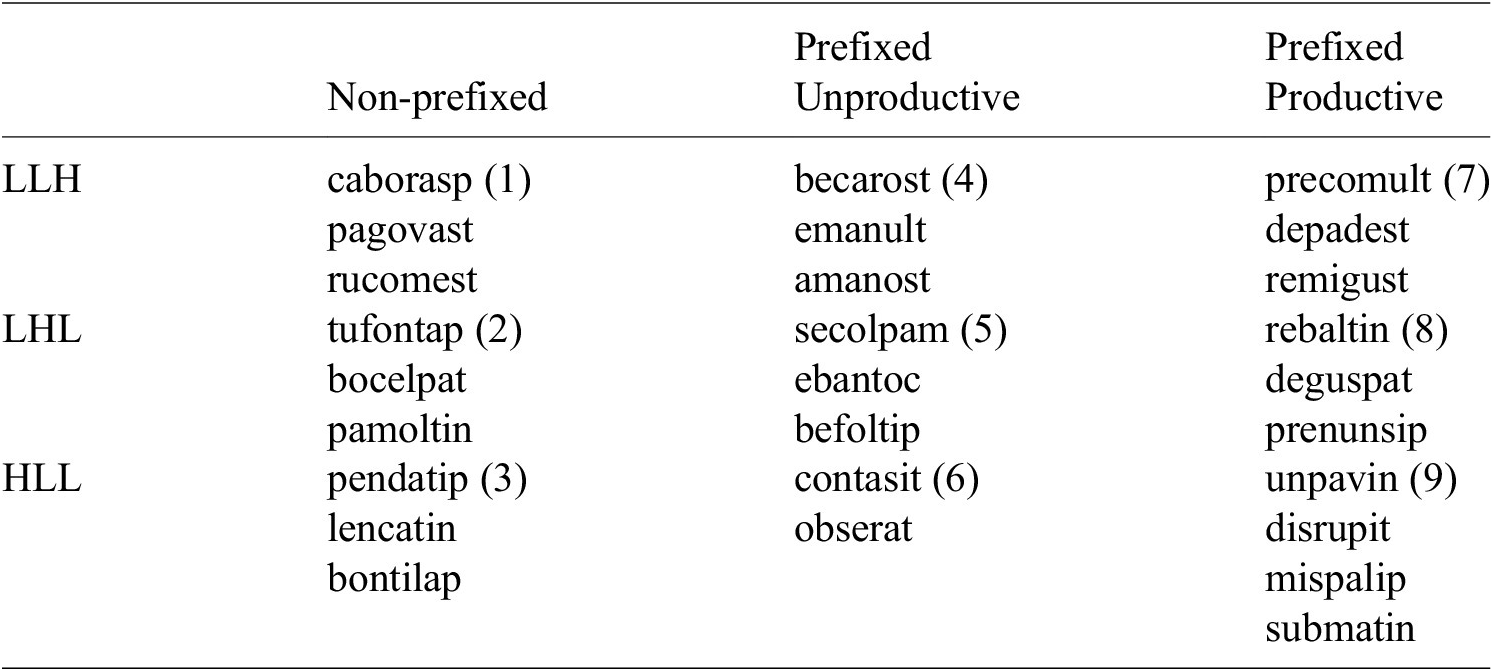
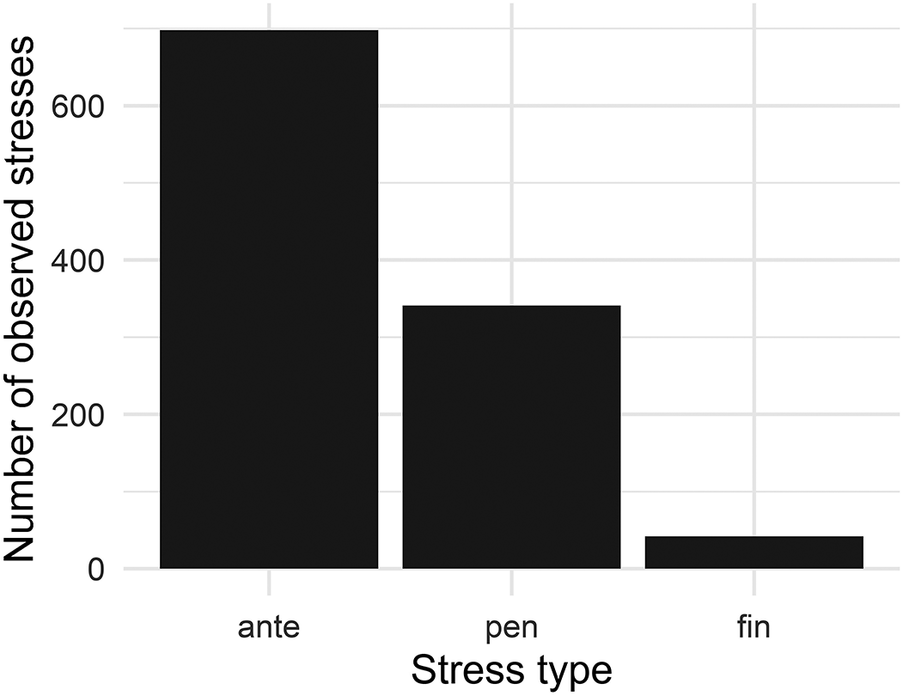

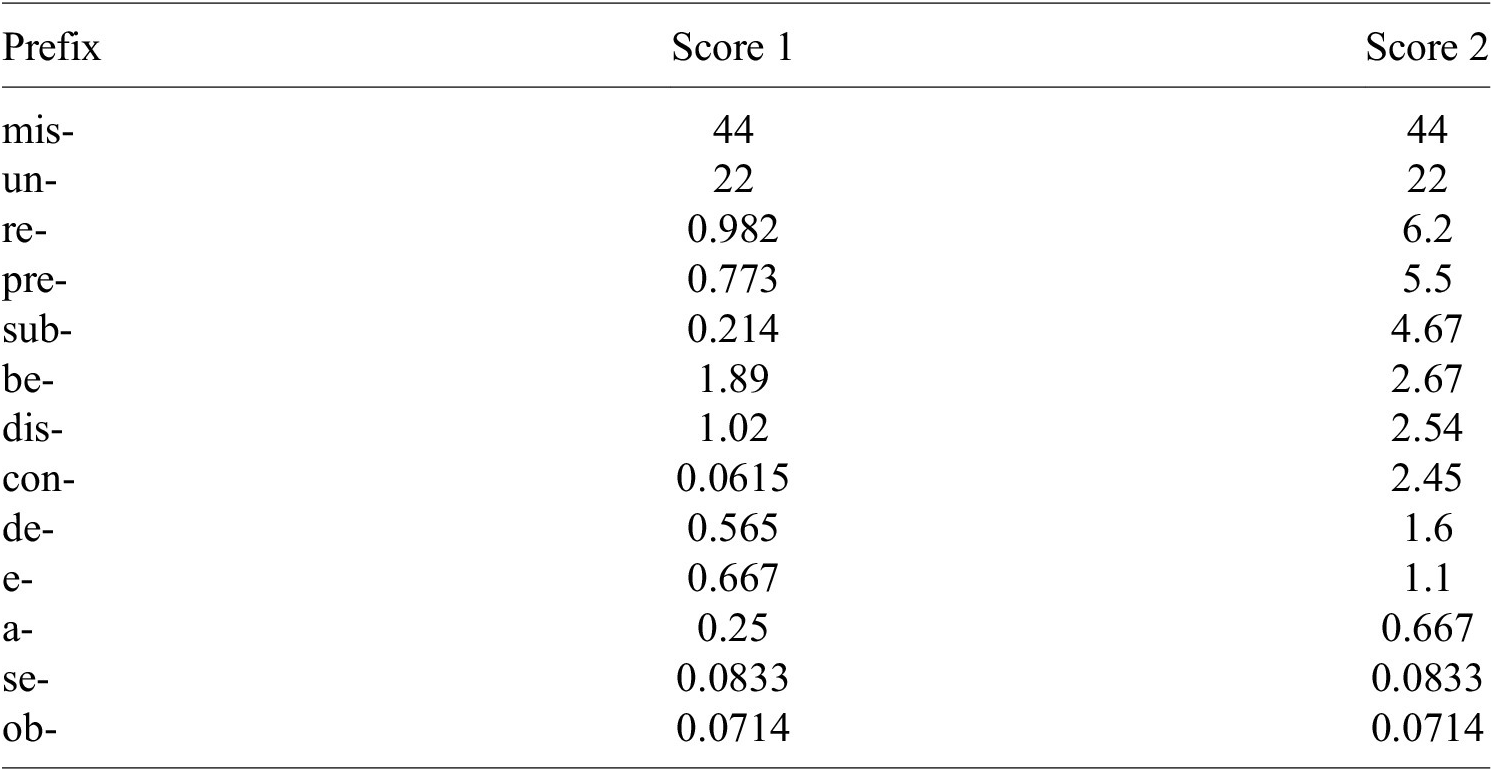
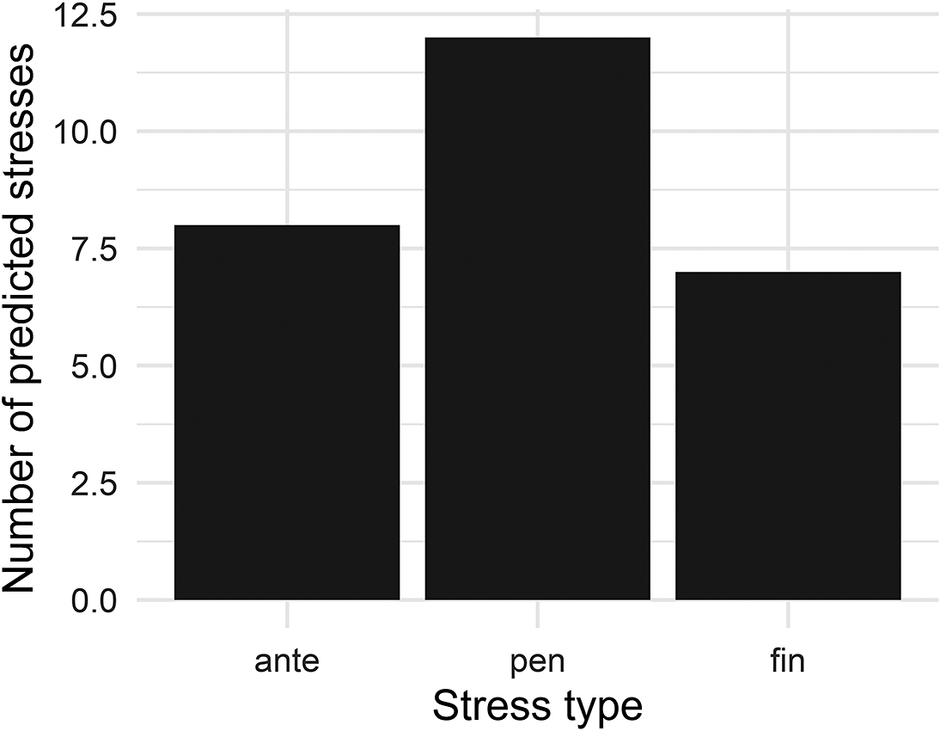

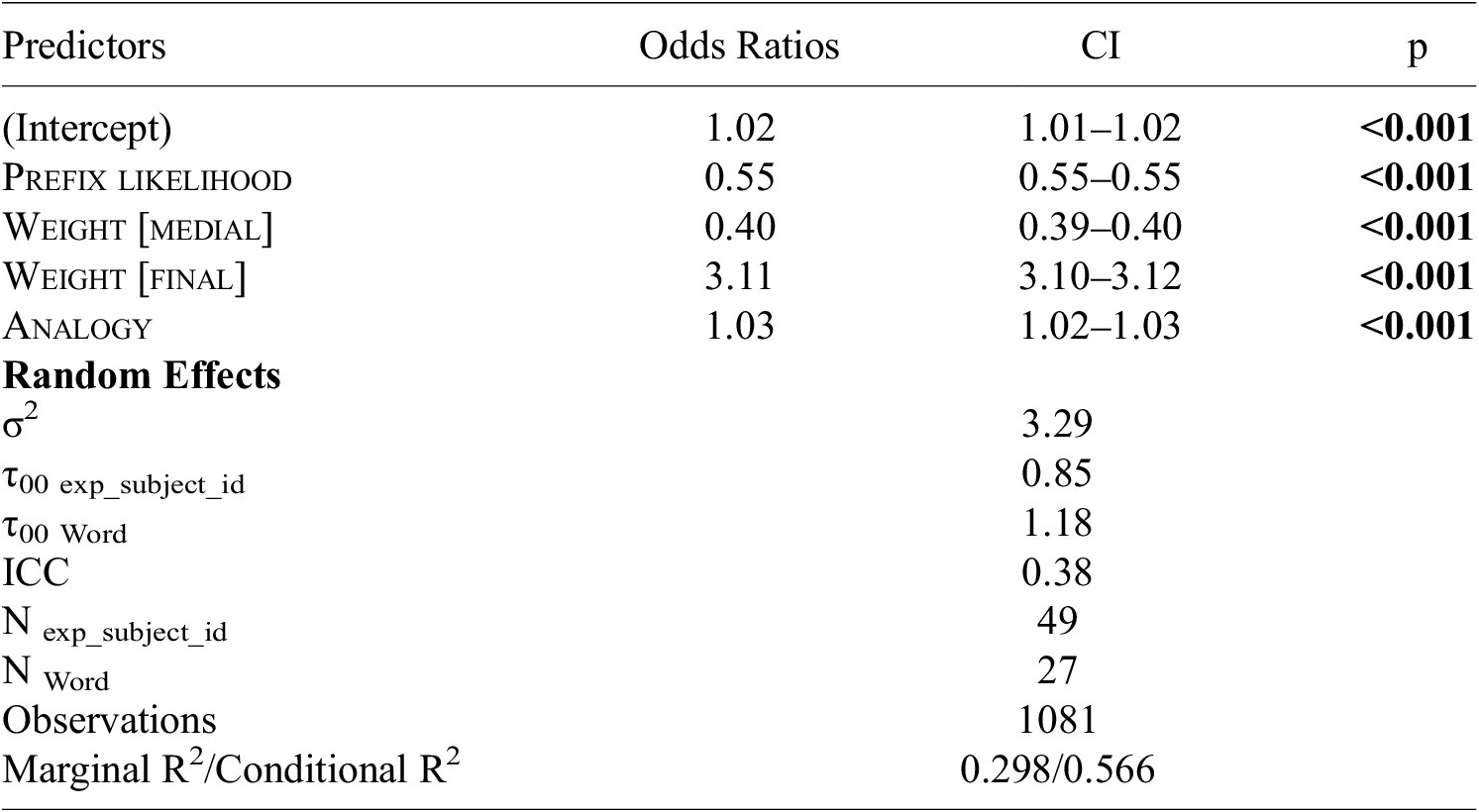
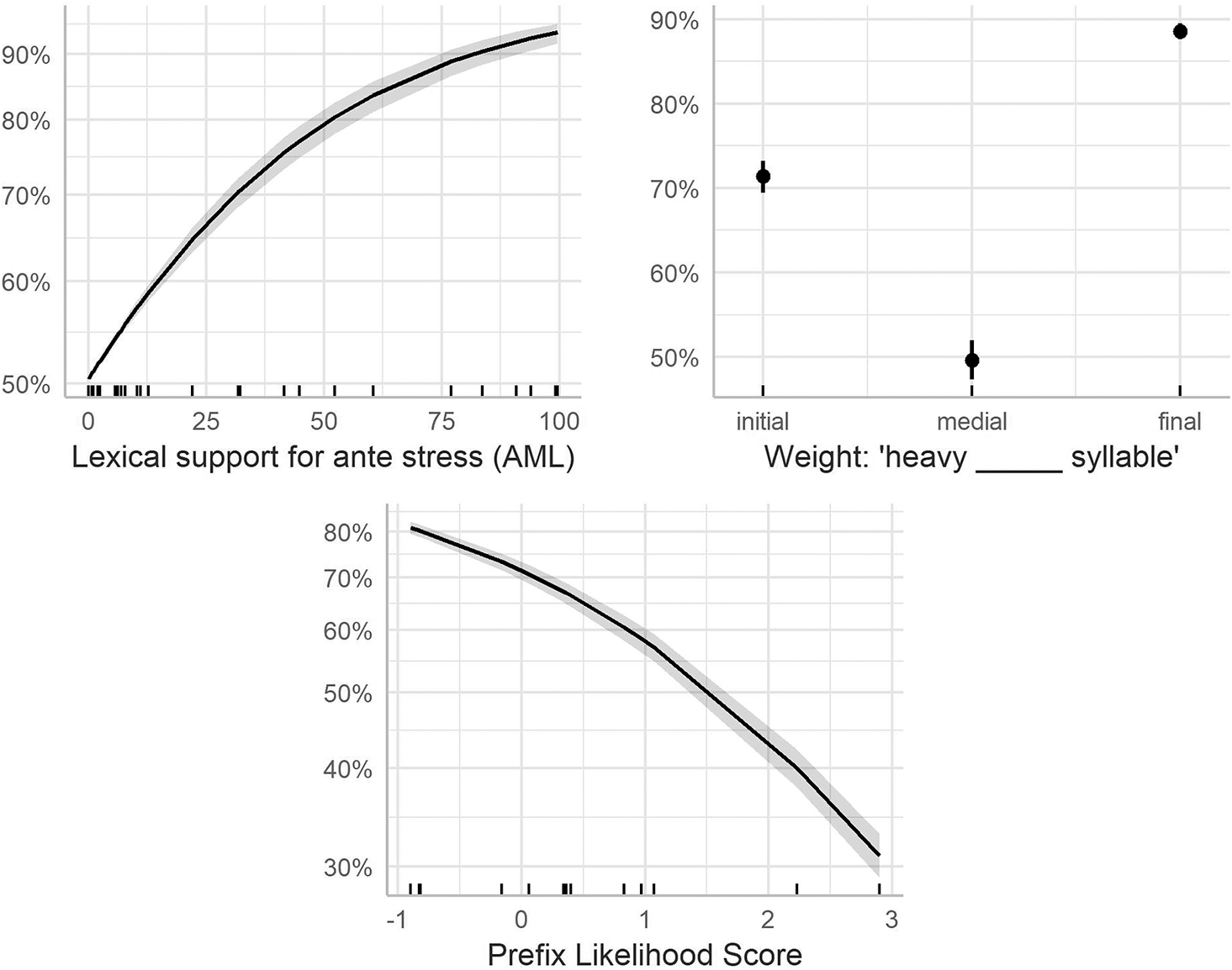

 Open access

