
Hostname: page-component-7b7567c8c-fvjsw Total loading time: 0 Render date: 2026-11-14T09:40:34.461Z Has data issue: false hasContentIssue false

Developing a Mini-Impact System for Measuring Silicon Wafer's Elastodynamic Response

Published online by Cambridge University Press:  05 May 2011

S. T. Jenq*
Affiliation:
Institute of Aeronautics and Astronautics, National Cheng Kung University, Tainan, Taiwan 70101, R.O.C.
T. S. Leu*
Affiliation:
Institute of Aeronautics and Astronautics, National Cheng Kung University, Tainan, Taiwan 70101, R.O.C.
Y. G. Su*
Affiliation:
Institute of Aeronautics and Astronautics, National Cheng Kung University, Tainan, Taiwan 70101, R.O.C.
J. S. Lee*
Affiliation:
Chung Sun Institute of Science & Technology, Taoyuan, Taiwan 325, R.O.C.
G. C. Hwang*
Affiliation:
Chung Sun Institute of Science & Technology, Taoyuan, Taiwan 325, R.O.C.
*
* Professor
** Assistant Professor
*** Graduate Assistant
**** Senior Engineer
Get access

Abstract

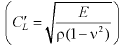
The purpose of this work is to study the dynamic mechanical response of silicon wafer subjected to low-velocity impact loading. Transient finite element analysis was utilized to obtain the numerical simulated result and was used to check against the experimental findings. Good relationship between each other was observed. A pair of polysilicon microsensors manufactured by the micro-fabrication technique was directly fabricated on the surface of silicon wafer so as to detect the impact induced dynamic strain. A series of low-velocity impact tests utilizing the home-made drop-weight mini-tower tester was conducted. These test results were used to examine the accuracy and adequacy of the current micro strain sensors for stress wave propagation measurements. It is concluded that the difference between the present measured wave speed and the one-dimensional longitudinal wave speed under conditions of plane strain were determined to be within 5.6% for the present low-speed impact problem. A maximum of 10.9% deviation between the test determined elastic modulus and a reference value (16) of 130 GPa was found based on a series of impact test results. In addition, a difference of 2% error was reported when we compared the test detected peak stress value after impact initiated (before wave is reflected from the boundary) and the corresponding numerical simulated response.

Information

Type
Articles
Copyright
Copyright © The Society of Theoretical and Applied Mechanics, R.O.C. 2005

Access options

Get access to the full version of this content by using one of the access options below. (Log in options will check for institutional or personal access. Content may require purchase if you do not have access.)

Article purchase

Temporarily unavailable
