


Introduction
The gut microbiota balance in children and adolescents is vital for their optimal health. These microorganisms are majorly involved in nutrient absorption, building up immunity to defend against gastrointestinal and degenerative illnesses later in life.(Reference Derrien, sophie and De1,Reference Moran-ramos, Lopez-contreras and Villarruel-vazquez2) Poor dietary habits at times of great growth and development may bring an imbalance of the digestive microorganisms that leads to dysbiosis, a condition recognised as a gateway for specific non-communicable diseases such as obesity, type 2 diabetes, and metabolic syndrome among the young population.(Reference Cho3–Reference Alou and Jean-Christophe Lagier5) Considering that dietary patterns are formed during childhood and adolescence, encouraging the consumption of gut-supportive and nutritionally adequate foods is essential for achieving good health in the short and long term.
Probiotic-fermented foods deliver health in many ways. Fermentation increases the bioavailability of vitamins and minerals.( Reference Iqbal, Alabbosh, Raheem, Ullah and Khan 6 , Reference Samtiya, Aluko, Puniya and Dhewa 7 ) It enhances protein and carbohydrate digestion.(Reference Adebo, Njobeh and Gbashi8–Reference Marco, Heeney and Binda10) Other benefits include helping the immune system,(Reference Pyo, Kwon and Jung11,Reference Marco, Sanders and Gänzle12) developing the brain,(Reference Porras-garcía, Fernández-Espada Calderón, Gavala-gonzález and Fernández-garcía13) and fighting infections.(Reference Pyo, Kwon and Jung11) Also, it has been found that fermentation decreases antinutrient factors, such as phytates, oxalates, tannins, and lectins, so that it may make those nutrients more available, which are very much required during fast growth among children and teenagers.(Reference Samtiya, Aluko, Puniya and Dhewa7,Reference Adebo, Njobeh and Gbashi8,Reference Jeyakumar, Lawrence, Rai, Singh, Pandey and Larroche14) Probiotic-fermented foods are widely consumed globally and have been associated with a range of health benefits. Kimchi, a Korean vegetable-based fermented food, has demonstrated anti-obesity and antioxidative properties.(Reference Park, Jeong, Lee and Daily15,Reference Song, Ang and Lee16) Tempeh, an Indonesian plant-based fermented protein, has been associated with cognitive function support and antidiabetic properties.(Reference Ahnan-Winarno, Cordeiro, Winarno, Gibbons and Xiao17,Reference Teoh, Chin, Chong, Ripen, How and Lim18) Natto, a Japanese fermented soybean product, contains bioactive compounds with reported anticancer and antibacterial activity.(Reference Wang, Chen and Tian19) Kefir, a fermented drink produced from kefir grains, generates bioactive compounds that enhance immune function.(Reference Vieira, Rosario and Lelis20) Dairy-based fermented products, such as yogurt, have also been shown to contribute to bone health.(Reference García-Burgos, Moreno-Fernández, Alférez, Díaz-Castro and López-Aliaga21,Reference Freitas, Floch, Ringel and Walker22) These benefits are consistent with evidence from observational studies and dietary surveys demonstrating that fermented food intake is positively associated with higher dietary quality and nutrient intake among adults,(Reference Yuan, Singer and Moore23–Reference Danielewicz, Morze, Staniewska, Aneta, Tomasz and Staniewski25) suggesting that similar associations may exist among younger populations.
While a growing body of evidence supports the health benefits of probiotic-fermented foods, most of this evidence derives from clinical trials examining the effects of probiotic supplements(Reference Rianda, Agustina, Setiawan and Manikam26–Reference Ligezka, Sonmez and Corral-frias28) rather than habitual dietary intake. As a result, there remains limited understanding of the types, amounts, and frequencies of probiotic-fermented food consumed as part of the everyday diet among children and adolescents. Furthermore, the extent to which regular probiotic-fermented food consumption is associated with dietary quality and nutrient intakes in the young population remains poorly characterised in the existing literature. This information is required to compare the present level of intake with that in studies where a health effect was demonstrated, and also whether any observed relationship between intake of probiotic-fermented food and diet quality extends to the younger population. Without such data, it is challenging to develop evidence-based dietary guidelines or effective nutrition interventions for children and adolescents.
This systematic review aimed to address the following research question: What are the consumption patterns of probiotic-fermented foods among individuals aged 2–24 years, and how are these patterns associated with dietary quality and nutrient intakes? Specifically, this review sought to determine: (1) what types are consumed more regularly or less frequently among different age populations; (2) in what quantities and how frequently; and (3) the relationship between fermented food intake, diet quality, and nutrient intake. Clinical research has demonstrated that probiotic-fermented food consumption offers a range of health benefits. However, it remains unclear whether these clinically established benefits are reflected in population-level dietary patterns, specifically whether habitual probiotic-fermented food consumption among children and adolescents is associated with improved diet quality and nutrient intakes. This review therefore aims to bridge this gap by synthesising evidence on consumption patterns and their dietary associations in younger populations. These findings advance culturally relevant dietary recommendation interventions that evaluate whether or not probiotic-fermented foods might advance as a nutrition-improving strategy among children and adolescents.
Method
This systematic review examines global dietary patterns of fermented probiotic foods and their association with diet quality, while adhering to the Preferred Reporting Items for Systematic Reviews and Meta-Analyses (PRISMA) 2020 guidelines.(Reference Page, Mckenzie and Bossuyt29) This review was registered in the International Prospective Register of Systematic Reviews database (PROSPERO) under registration number CRD42024502476 on January 27, 2024. The protocol has also undergone substantial amendment during the study. Originally, this systematic review included all age populations and was conducted from January 2024 to May 2025. After the supervisor’s review in September 2025, the population scope was narrowed to children, adolescents, and young adults aged 2–24 years to align with the doctoral research focus on adolescent populations. This update was applied in the October 2025 manuscript revision, and PROSPERO registration updating was done in December 2025. The final search took place on December 8, 2025, to make sure that the search would be up to date within three months of manuscript submission. The adjustment was based on doctoral research programme coherence, not on preliminary findings. Full protocol development is documented in PROSPERO. The review title was refined before submission to more precisely specify the population subgroup and primary outcomes; the research questions, eligibility criteria, and methodology remained unchanged. AI language tools were used to assist with language editing and manuscript formatting.
Search strategy and study screening
A comprehensive literature search was carried out in five electronic databases: Web of Science, Scopus, OVID Medline, ProQuest, and EBSCO Medline (CINAHL), covering publications up to May 9, 2025, and updated on 8 December 2025. Eligible studies were quantitative, published in English, and focused on:
-
1. Types of probiotic-fermented foods, as defined by the International Scientific Association for Probiotics and Prebiotics (ISAPP)(Reference Marco, Sanders and Gänzle12) and listed in global probiotic food databases.(Reference Zhao, Liu, Latta, Ma, Wu and Chen30)
-
2. Dietary patterns involving probiotic-fermented foods.
-
3. Associations between probiotic-fermented food consumption and diet quality.
The search strategy was purposely broad to ensure comprehensive identification of all relevant studies. We also included those with mixed-age populations that might report subgroup data for the target population. Search terms were combined involving concepts of: (1) Probiotic-fermented foods (e.g. ‘probiotic*’, ‘fermented food*’, ‘yogurt’, ‘kefir’, ‘kimchi’, ‘tempeh’, ‘fermented milk’); (2) Consumption or intake patterns (e.g. ‘consumption’, ‘intake’, ‘dietary pattern*’, ‘eating habit*’, ‘diet*’). No age-restriction terms were included in the search strategy to maximise sensitivity and avoid missing studies that might report relevant subgroup data. We limited the year from 2004–2025 as a starting point due to pivotal developments in probiotic research, including the FAO/WHO Expert Consultation (2001),(31) the Working Group on Guidelines for Probiotics (2002),( 32 ) and the first ISAPP meeting,(Reference Reid, Sanders and Gaskins33) which laid the foundation for standardised probiotic research. Complete search strategies for each database are provided in Appendix A. Screening was conducted using Covidence software and by email, with two reviewers (RN and HL) independently assessing each stage.
The eligibility criteria
Eligibility criteria were established a priori using the PICOS framework (Population, Exposure, Comparator, Outcome, and Study Design), which informed both the overarching research question of this review and the systematic guidance of study selection, as detailed below:
-
• Population: Studies involving healthy individuals aged 2–24 years, in line with WHO and the Indonesian National Population and Family Planning Board (BKKBN) classifications. Studies were included if they focused on children, adolescents, or young adults, or a broader population but presented a specific subgroup analysis with separate data for children and/or adolescents and/or young adults.
-
• Exposure: Included studies assessed consumption of probiotic-fermented foods, considering type, eating occasion, frequency, portion size, and diversity. Dietary intake was measured using validated tools such as 24-h dietary recalls, food records, or FFQs. Eligible food types were based on established probiotic food databases.(Reference Zhao, Liu, Latta, Ma, Wu and Chen30)
-
• Outcome: Studies were included if they examined consumption patterns of probiotic-fermented foods, including types of foods, frequency, and portion/serving size. Where available, associations with nutrient intake, such as macronutrient and micronutrient intake, and diet quality were also assessed. Diet quality was defined through dimensions such as diversity, adequacy, moderation, and balance, and measured using validated instruments such as the Healthy Eating Index (HEI), Diet Quality Indices (DQI), or inferred from detailed dietary intake data.(Reference Alkerwi34,Reference Miller, Webb, Micha and Mozaffarian35)
-
• Study Design: Included studies were cross-sectional, prospective, or retrospective cohort designs, as these best reflect real-world dietary patterns. Experimental studies were excluded due to controlled conditions that do not represent habitual intake. Qualitative studies were also excluded due to limitations in quantifying portion sizes and frequency.
Exclusion criteria
Exclusion criteria were applied consistently across all screening stages. At the title and abstract screening stage, studies were excluded if they were deemed irrelevant to the research topic based on the predefined eligibility criteria. This screening was conducted using Covidence systematic review software. Excluded materials included experimental studies, reviews, letters, editorials, abstracts without full text, commentaries, magazine articles, and non-empirical studies. Studies focusing solely on probiotic supplements, non-fermented probiotic food products, or probiotic strains without a fermented food context were omitted. Non-English publications and studies published before 2004 were excluded. Reasons for exclusion at the full-text stage are documented in the PRISMA flow diagram (Figure 1) with aggregate counts by primary exclusion reason.
PRISMA (Preferred Reporting Items for Systematic Reviews and Meta-Analyses) flow diagram of the screening process.

Figure 1. Long description
A flowchart illustrating the screening process for a systematic review. The process begins with studies from databases/registers totaling 11844, including OVID MEDLINE (4125), Scopus (3708), Web of Science (2874), PROQUEST (737), and EBSCO CINAHL (401). References removed total 2772, including 7 duplicates identified manually and 2765 duplicates identified by Covidence. Studies screened total 9072, with 8507 studies irrelevant excluded. Studies sought for retrieval total 565. Studies assessed for eligibility total 565, with 553 studies excluded for reasons including non-English (3), wrong outcomes (145), less recent data (22), retracted article (1), wrong exposure (4), wrong study design (13), full text unavailable (17), not providing valid instrument (19), not focus on probiotic fermented food (241), not providing detail measurements of portion or frequency of consumption (44), and wrong population (45). Studies included in review total 12.
Data extraction
Two reviewers independently extracted data using a standardised data extraction form developed in Microsoft Excel by the authors. Extracted information included:
(i) Author and publication year, (ii) Country and participant characteristics (including sample size), (iii) Study design, (iv) Type of probiotic-fermented food, and (v) Findings related to consumption patterns and associations with diet quality. Data were compiled in Excel, and discrepancies were resolved by a third reviewer.
Quality assessment
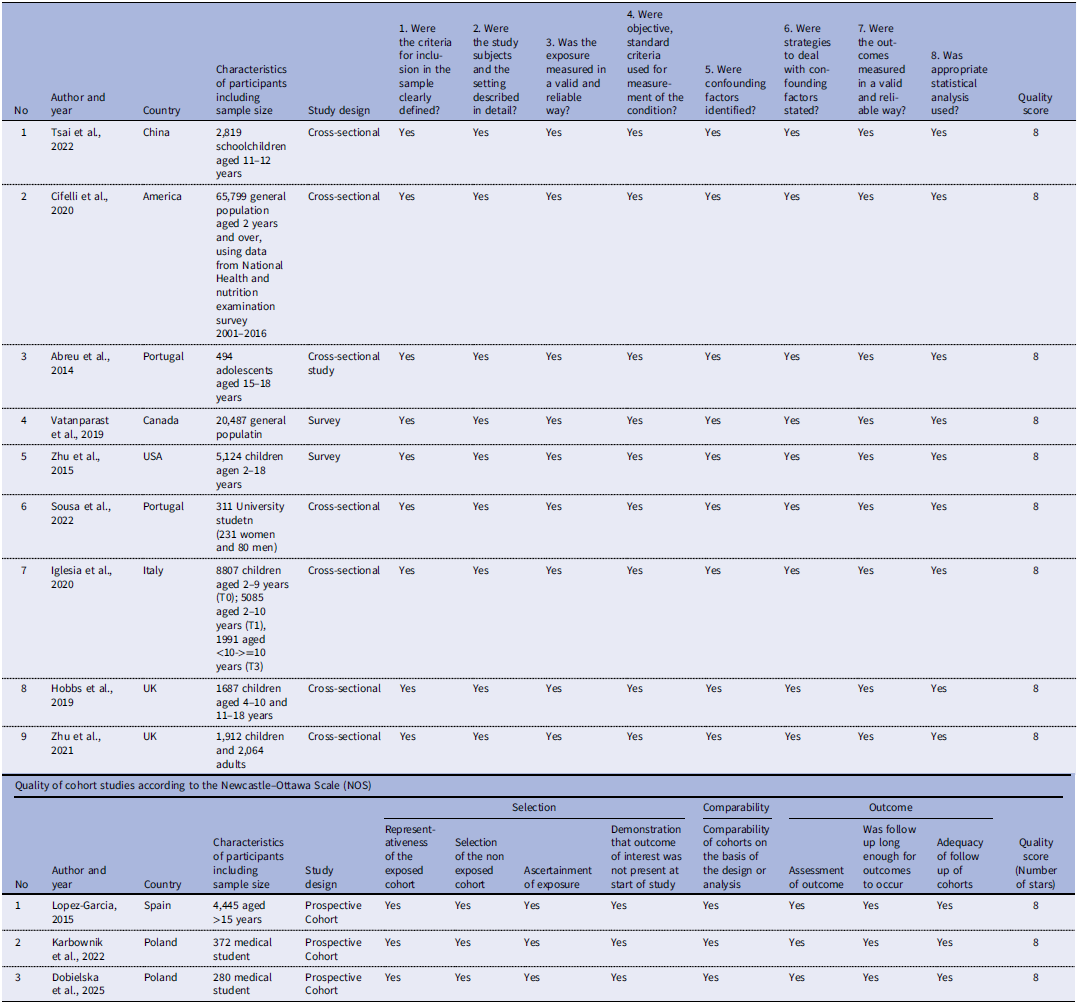
Study quality was independently assessed by two reviewers using the Joanna Briggs Institute (JBI) critical appraisal tool for cross-sectional studies,(Reference Moola, Munn, Tufanaru, Aromataris and Munn36) and the Newcastle–Ottawa Scale (NOS) for cohort studies.(Reference O’Connell and Peterson37) Cross-sectional studies scoring ≥5 ‘yes’ responses and cohort studies with ≥6 ‘stars’ were considered high quality. Detailed scores are provided in Appendix B.
Data synthesis
Included studies were synthesised using narrative methods and presented in summary tables (Tables 1 and 2) based on study characteristics, participant demographics, and outcomes. Study selection was documented via PRISMA flow diagram (Figure 1). Meta analysis was not appropriate due to substantial heterogeneity in study populations, type of probiotic-fermented food examined, dietary assessment methods, and outcome measures; therefore, narrative synthesis was employed. Findings are presented by type of probiotic-fermented food: dairy-based, soy-based, fruit-based, vegetable-based or other; then by participant category, for example, age group; finally, by consumption pattern information such as portion size and frequency, including mealtime. Consumption data were presented in the original units and formats reported by study authors (e.g. grams per day [g/day], servings per week [servings/week], percentage consuming, frequency categories), as measures varied substantially across studies and could not be meaningfully standardised. For papers that provided results for more than one age subgroup meeting our inclusion criterion, data were extracted and presented separately, thereby maintaining valuable detail on an age-specific basis. For dietary outcome measures, we extracted statistics as reported (correlation coefficients, regression coefficients, odds ratios, mean differences) without transformation. Formal publication bias assessment was not planned due to the narrative synthesis approach and anticipated limited number of studies. Missing data (e.g. SDs, CIs, specific subgroup data) were not imputed or calculated; we reported only statistics provided in original publications and noted data limitations where relevant. We did not contact study authors for additional data. Evidence linking fermented food consumption to diet quality was presented separately. Formal sensitivity analysis was not conducted; study quality was considered in the interpretation of findings.
Characteristics of the included studies

Table 1. Long description
Table 1 presents characteristics of 12 included studies. Studies were conducted in Spain, China, Portugal, USA, Canada, Italy, UK, and Poland. Study designs included nine cross-sectional and three prospective cohort studies. All studies examined dairy-based probiotic fermented foods, primarily yogurt. Sample sizes ranged from 280 to 65,799 participants
NR: Not Reported.
Summary of research studies on probiotic fermented foods and their impact on nutrient intake and diet quality

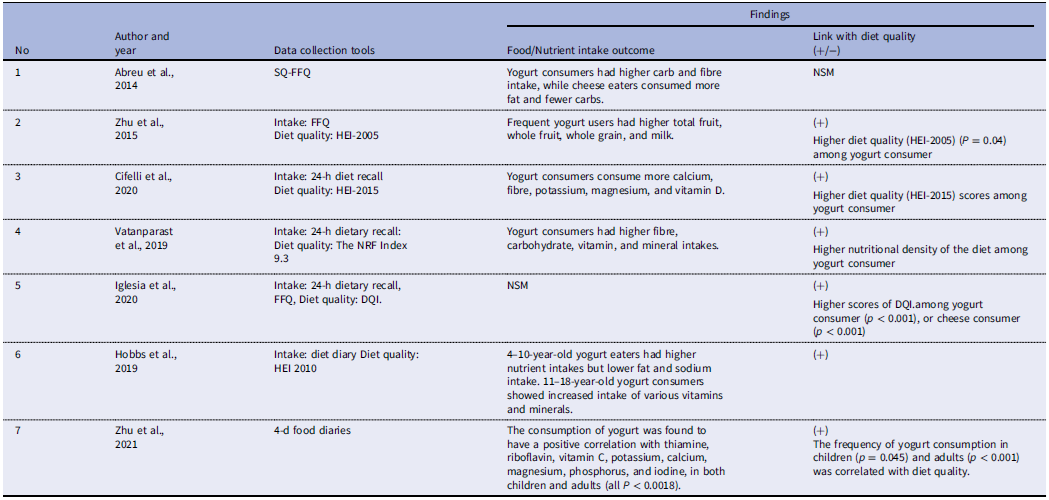
Table 2. Long description
Table 2 summarises findings from 7 included studies that examined dietary outcomes. Six studies reported positive associations between probiotic fermented food consumption and improved diet quality scores. Six studies reported associations with higher nutrient intakes, including calcium, fibre, vitamins and minerals
NSM: Not Specifically Measured.
Results
Study selection and characteristics of the included studies
This systematic review synthesised existing global evidence on consumption patterns of probiotic-fermented foods among young populations, including frequency of intake and portion sizes. Where reported, associations between probiotic-fermented food intake and overall diet quality.
From five databases, a total of 11,844 records published between 2004 and 2025 were identified. After removing duplicates, titles, and abstracts, 9,072 articles were screened, of which 8,507 were excluded as irrelevant. The remaining 565 full-text articles were assessed for eligibility, of which 12 studies met the inclusion criteria. The complete screening and selection process is presented in the PRISMA flow diagram (Figure 1).
Of the 12 included studies, 9 employed cross-sectional designs and three used prospective cohort designs, with sample sizes ranging from 280 to 65,799 participants (see Table 1). Eight studies were conducted in European countries: the UK,(Reference Hobbs, Givens and Lovegrove38,Reference Zhu, Jain, Holschuh and Smith39) Portugal,(Reference Abreu, Moreira and Moreira40–Reference Dobielska, Bartosik, Olczyk, Suława, Litwin, Parys and Karbownik42) Italy,(Reference Iglesia, Intemann and De Miguel-Etayo43) Spain,(Reference Lopez-Garcia, Leon-Muñoz, Guallar-Castillon and Rodríguez-Artalejo44) and Poland(Reference Karbownik, Mokros and Dobielska45); three in North American countries: Canada(Reference Vatanparast, Islam, Patil and Shamloo46) and the USA(Reference Cifelli, Agarwal and Fulgoni47,Reference Zhu, Wang, Hollis and Jacques48) ; and one in an East Asian country: China.(Reference Tsai, Lee and Chen49)
Quality assessment of the involved study
Quality appraisal revealed generally high methodological rigour across the included studies. For cross-sectional studies (n = 9), assessment using the JBI Critical Appraisal Checklist showed that all studies(Reference Hobbs, Givens and Lovegrove38–Reference Sousa, Baptista and Silva41,Reference Iglesia, Intemann and De Miguel-Etayo43,Reference Vatanparast, Islam, Patil and Shamloo46–Reference Tsai, Lee and Chen49) met all eight quality criteria (score 8/8). Cohort studies (n = 3) were evaluated using the NOS, with all of the three studies(Reference Dobielska, Bartosik, Olczyk, Suława, Litwin, Parys and Karbownik42,Reference Lopez-Garcia, Leon-Muñoz, Guallar-Castillon and Rodríguez-Artalejo44,Reference Karbownik, Mokros and Dobielska45) achieving the maximum score of 8 stars, demonstrating robust methodological quality in participant selection, comparability of cohorts, and outcome assessment (see Appendix B). We did not conduct a formal assessment of publication bias due to narrative synthesis and limited studies (n = 12).
Associations with diet quality
As shown in Table 2, six studies(Reference Hobbs, Givens and Lovegrove38,Reference Zhu, Jain, Holschuh and Smith39,Reference Iglesia, Intemann and De Miguel-Etayo43,Reference Vatanparast, Islam, Patil and Shamloo46–Reference Zhu, Wang, Hollis and Jacques48) have demonstrated positive relations between probiotic-fermented food consumption and diet quality. Additionally, six(Reference Hobbs, Givens and Lovegrove38–Reference Abreu, Moreira and Moreira40,Reference Vatanparast, Islam, Patil and Shamloo46–Reference Zhu, Wang, Hollis and Jacques48) of seven studies revealing the association with relevant nutrient intake have shown that higher intakes of probiotic foods were correlated with higher intakes of fruits and vegetables and better profiles of nutrients.
For example, Portuguese adolescents who consumed yogurt and cheese showed increased carbohydrate and fibre intake and reduced fat intake.(Reference Abreu, Moreira and Moreira40) Consistently, in the USA, yogurt consumers had higher intakes of calcium, fibre, potassium, magnesium, and vitamin D.(Reference Cifelli, Agarwal and Fulgoni47) Similarly, UK children who regularly consumed yogurt showed a higher intake of various vitamins and minerals.(Reference Hobbs, Givens and Lovegrove38) Collectively, these findings indicate that individuals who regularly consume probiotic-fermented foods tend to have healthy overall dietary patterns.
Probiotic-fermented food consumption pattern
All 12 studies examined dairy-based probiotic-fermented foods, with yogurt being the most frequently examined product. Two studies included a broader range of fermented foods, such as milk and vegetable-based probiotic-fermented foods, such as pickled cucumber,(Reference Dobielska, Bartosik, Olczyk, Suława, Litwin, Parys and Karbownik42,Reference Karbownik, Mokros and Dobielska45) pickling juice, sauerkraut, fermented vegetables.(Reference Dobielska, Bartosik, Olczyk, Suława, Litwin, Parys and Karbownik42)
Across studies, 30–50% of participants were classified as regular consumers (2–6 times per week), 20–45% as occasional consumers (<1–2 times per week), and 15–30% as daily consumers. Among yogurt consumers, daily intake varied considerably across studies and age groups, ranging from as low as 9.10 g/day in older Italian children( Reference Iglesia, Intemann and De Miguel-Etayo 43 ) to 150 ± 3 g/day among children and adolescent consumers in the USA,( Reference Cifelli, Agarwal and Fulgoni 47 ) with the majority of children consuming below the estimated minimum of 100 g/day associated with meaningful probiotic benefit.(Reference Gul and Durante-mangoni50,Reference Marole, Sibanda and Buys51)
Age-stratified consumption patterns
Early childhood (2–6 years)
A study conducted in Italy indicated that children aged 2–6 years consumed an average of 22.82 g/day of yogurt, with 0.55–4.5 g/day as mid-morning snacks and 3.7–15.4 g/day as afternoon snacks.(Reference Iglesia, Intemann and De Miguel-Etayo43) UK data indicated that among children aged 4–10 years, yogurt was consumed 14% at breakfast, 32% at lunch, and 18% at dinner.(Reference Hobbs, Givens and Lovegrove38) Mean yogurt intake in this population ranged from 19 ± 8 g/day in the lowest tertile (T1) to 98 ± 36 g/day in the highest tertile (T3).( Reference Hobbs, Givens and Lovegrove 38 ) In comparison, Canadian children aged 2–5 years consumed yogurt at a mean of 0.79 servings/day, equivalent to 138.25 g/day.(Reference Vatanparast, Islam, Patil and Shamloo46)
School age (7–12 years)
In China, 52% of children aged 11–12 never consumed yogurt, while 48% consumed probiotic drinks regularly.(Reference Tsai, Lee and Chen49) Italian boys aged 6–10 years consumed 11.15 g/day, and girls consumed 12.73 g/day, representing lower yogurt consumption compared to the younger age group. This declining trend continued, with even lower consumption observed in children older than 10 years.(Reference Iglesia, Intemann and De Miguel-Etayo43) Meanwhile, Canadian children (6–12 years) consumed 0.84 ± 0.01 servings/day (~147 g/day), with significant variation by age subgroups.(Reference Vatanparast, Islam, Patil and Shamloo46)
Early adolescence (13–15 years)
UK adolescents aged 11–18 years consumed 20 ± 8 g/day (T1) to 105 ± 36 g/day (T3), showing increased intake compared to younger children aged 4–10 years.(Reference Hobbs, Givens and Lovegrove38) This pattern was contrary to findings in Italian children, where yogurt and cheese consumption decreased with increasing age.(Reference Iglesia, Intemann and De Miguel-Etayo43)
Late adolescence (16–18 years)
Portuguese adolescents had a median yogurt intake of 55.57 g/day.(Reference Abreu, Moreira and Moreira40) While Canadian adolescents (13–18 years) consumed 0.75 servings/day (131.25 g/day).(Reference Vatanparast, Islam, Patil and Shamloo46) Spanish data revealed that 34.8% of adolescents never consumed yogurt, with only 28.9% consuming ≥1 serving daily.(Reference Lopez-Garcia, Leon-Muñoz, Guallar-Castillon and Rodríguez-Artalejo44) In the USA, infrequent consumers (68%, <1 time per week) were more likely to be adolescents aged 12–18 years (58%) compared to the younger group (2–11 years), suggesting declining consumption with age.(Reference Zhu, Wang, Hollis and Jacques48)
Young adulthood (>18–24 years)
A Polish study reported diverse fermented food consumption, including mean weekly consumption of cheese (173 g), soured milk (425.9 g), kvass and unpasteurised beer (52.4 g), pickled cucumber and pickling juice (72.8 g), sauerkraut (33 g), and fermented vegetables (7.6 g), alongside yogurt and kefir consumption.(Reference Karbownik, Mokros and Dobielska45) Among Portuguese university students, 58.6% consumed ripened cheeses 2–4 times/week, with 15.2% consuming them daily, while yogurt was consumed by 39.8% of students 2–4 times/week and 13.8% daily. Similarly, set yogurt was consumed by 34.1% of students 2–4 times/week and 8.4% daily.(Reference Sousa, Baptista and Silva41) Polish medical students reported a mean intake of 220.03 g/day of dairy-based fermented foods, including yogurt, kefir, sour milk, and sour cream.(Reference Dobielska, Bartosik, Olczyk, Suława, Litwin, Parys and Karbownik42)
Consumption adequacy relative to recommendations
Current guidelines recommend a daily probiotic intake of 107–109 colony-forming units (CFU) to confer health benefits,(Reference Marco, Sanders and Gänzle12,Reference Gul and Durante-mangoni50) a threshold estimated to be achievable through consumption of at least 100–200 g/day of yogurt,(Reference Marole, Sibanda and Buys51–Reference Baruah and Ray53) consistent with national food-based dietary guidelines across multiple countries, including the USA,( 54 ) Canada,( 55 ) Australia,( 56 ) and European nations,( 57 ) which specify standard yogurt serving sizes ranging from 125 to 200 g/day. Based on these recommendations, the review identified the following patterns:
Children: adequate portion sizes but low prevalence
The USA children aged 2–18 years reported a mean intake of 150 ± 3 g/day, exceeding recommended levels among consumers.(Reference Cifelli, Agarwal and Fulgoni47) Similarly, Canadian children reported adequate mean intakes, with those aged 2–5 years consuming 138 g/day and those aged 6–12 years consuming 147 g/day.(Reference Vatanparast, Islam, Patil and Shamloo46) These quantities surpass the estimated 100 g/day probiotic threshold.(Reference Marole, Sibanda and Buys51–Reference Baruah and Ray53) However, these adequate portion sizes were limited by the low population-level prevalence of yogurt consumption. In the USA, only 6.4% of children regularly consumed yogurt.(Reference Cifelli, Agarwal and Fulgoni47) In Canada, prevalence varied considerably by age group, with 46.9% of children aged 2–5 years and 29.5% of those aged 6–12 years consuming yogurt on any given day.(Reference Vatanparast, Islam, Patil and Shamloo46)
Adolescents: mixed adequacy and low prevalence
Among Canadian adolescents aged 13–18 years, average yogurt intake was 131 g/day, approaching recommended levels, though only 14% reported consumption.(Reference Vatanparast, Islam, Patil and Shamloo46) In contrast, Portuguese adolescents had a median intake of 55.57 g/day, representing just 30% of the minimum recommended amount.(Reference Abreu, Moreira and Moreira40) UK adolescents demonstrated variable portion sizes ranging from 20 ± 8 g/day to 105 ± 36 g/day across different consumption groups, with only the higher consumption group approaching adequate levels.(Reference Hobbs, Givens and Lovegrove38)
Young adults: adequate portion sizes and moderate prevalence
The Polish medical students’ average daily intake of 220.03 g of dairy-based fermented foods(Reference Dobielska, Bartosik, Olczyk, Suława, Litwin, Parys and Karbownik42) exceeded the recommendation,(Reference Marco, Sanders and Gänzle12,Reference Baruah and Ray53) suggesting adequate probiotic exposure among this population. This study also found lower consumption of pickled vegetables other than cucumbers and cabbage, averaging only 6.94 g per day.(Reference Dobielska, Bartosik, Olczyk, Suława, Litwin, Parys and Karbownik42) This pattern was similar with findings from the broader Polish population study, which also demonstrated relatively low consumption of fermented vegetables (7.6 g/week or approximately 1.1 g daily), sauerkraut (33 g/week or 4.7 g daily), and pickled cucumber (72.8 g/week or 10.4 g daily), while showing higher soured milk consumption averaging approximately 60.8 g per day (425.9 g weekly) alongside other fermented foods.(Reference Karbownik, Mokros and Dobielska45) Both Polish studies thus revealed a consistent trend of higher dairy-based fermented food consumption compared to vegetable-based fermented products among young adults. Regarding the frequencies, the Portuguese university students demonstrated that the majority consumed fermented dairy products 2–4 times weekly rather than daily, and only a minority reported daily intake (13.8–15.2% across different products), suggesting that most participants likely did not meet the recommended daily probiotic intake consistently.(Reference Sousa, Baptista and Silva41)
Nutrient intake and diet quality associations
Seven studies examined the relationship between probiotic-fermented food consumption and nutritional outcomes, consistently revealing positive associations:
-
• Macronutrient Intake
Consumers of probiotic yogurt demonstrated higher intakes of energy, protein, and fibre across multiple studies.(Reference Abreu, Moreira and Moreira40,Reference Vatanparast, Islam, Patil and Shamloo46) Portuguese adolescents who consumed yogurt and cheese had elevated carbohydrate and fibre intake, alongside reduced fat consumption, compared to non-consumers.(Reference Abreu, Moreira and Moreira40)
-
• Micronutrient Intake
In the USA, yogurt consumption was associated with significantly higher intakes of calcium, fibre, potassium, magnesium, and vitamin D.(Reference Cifelli, Agarwal and Fulgoni47) UK children and adolescents who consumed yogurt also had higher levels of essential vitamins and minerals.(Reference Hobbs, Givens and Lovegrove38) Additional findings from the UK indicated increased intake of thiamine, riboflavin, vitamin C, and minerals such as potassium, calcium, magnesium, phosphorus, and iodine among yogurt consumers.(Reference Zhu, Jain, Holschuh and Smith39) Canadian yogurt consumers similarly showed improved intake of fibre, vitamins, and minerals.(Reference Vatanparast, Islam, Patil and Shamloo46)
-
• Diet Quality
Six studies were conducted in which the standardised indices were used to assess overall diet quality. Significantly higher HEI scores among frequent yogurt consumers than non-consumers in American youth were reported (p = 0.04).(Reference Zhu, Wang, Hollis and Jacques48) Another US study indicated increased HEI scores for yogurt consumers.(Reference Cifelli, Agarwal and Fulgoni47) A higher DQI score among Italian children and adolescents who are regular consumers of either yogurt or cheese has been found, with a p < 0.001 for both groups.(Reference Iglesia, Intemann and De Miguel-Etayo43) A positive correlation between the frequency of consumption of yogurt and quality of diet has been found in two UK studies, one among children and another equivalent study on adults, with p = 0.001, p < 0.001, respectively.(Reference Zhu, Jain, Holschuh and Smith39) Canadian yogurt consumers showed higher nutritional density of their overall diet.(Reference Vatanparast, Islam, Patil and Shamloo46)
Discussion
To our knowledge, the present study is the first systematic review of existing global evidence on probiotic-fermented food consumption patterns among young people and examining its association with nutrient intakes and diet quality. Existing evidence syntheses in this field have predominantly focused on adult populations and examined health outcomes such as mortality risk,(Reference Paveljšek, Pertziger and Fardet58) or gastrointestinal wellbeing.(Reference Mukherjee, Farsi and Garcia-Gutierrez59) Individual cross-sectional studies have examined yogurt consumption and nutrient intake in specific countries,(Reference Hobbs, Givens and Lovegrove38,Reference Vatanparast, Islam, Patil and Shamloo46) but no systematic review has comprehensively addressed consumption patterns and their dietary association across this age group at a global scale. Across the included studies, yogurt emerged as the most consistently studied probiotic-fermented food, with consumption patterns varying considerably across countries and age groups, reflecting differences in food culture, dietary traditions, and food availability and accessibility. The included studies were predominantly from European nations, which should be considered when interpreting the generalisability of these findings to another global context.
Age-related consumption patterns and developmental considerations
The consumption patterns across the included studies consistently revealed a gap between actual probiotic-fermented food intake and the quantities estimated to confer meaningful health benefits. While no specific intake recommendation exists for probiotic-fermented food, international criteria classify foods as probiotics if they contain a minimum of 107 CFU per gram or millilitre.(Reference Gul and Durante-mangoni50) The Codex Alimentarius (CODEX STAN 243-2003), an international food standard established by the FAO and WHO, stipulates a minimum of 107 CFU per gram for yogurt starter cultures.(60) Yogurt intake of 125–250 g/day is estimated to provide 107–109 CFU, consistent with the national dietary guideline benchmarks from multiple countries,( 54 – 57 ) suggesting that achieving recommended probiotic intake through diet is feasible when yogurt is habitually consumed at adequate portion sizes.(Reference Gul and Durante-mangoni50,Reference Marole, Sibanda and Buys51)
In this review, consumption among the young population falls below the recommended levels. Eating a variety of probiotic-fermented foods daily might be a better way to reach the recommended levels. However, based on the most popular probiotic foods, like yogurt, the intake was considerably low. Italian children aged 2–6 years consumed only 22.82–31.75 g/day of yogurt,(Reference Iglesia, Intemann and De Miguel-Etayo43) which is insufficient to deliver the necessary beneficial bacteria.(Reference de Vrese, Schrezenmeir, Stahl, Donalies and Nevoigt61) In the UK,(Reference Hobbs, Givens and Lovegrove38,Reference Zhu, Jain, Holschuh and Smith39) children eat yogurt every day, between ¼ and ¾ cup (19–98 g) per day. These numbers are lower than those for children in the USA.(Reference Cifelli, Agarwal and Fulgoni47) Considering that regular probiotic intake has been linked to better digestive health, stronger immune systems, and improved nutrient absorption in young people,(Reference Salarkia, Ghadamli, Zaeri and Sabaghian Rad62,Reference Burton, Rosikiewicz and Pimentel63) these low consumption rates showed that many children would potentially be missing out on the benefits that could improve their health.
Beyond childhood, data from the adolescent population across multiple countries included in this review revealed a decline in probiotic-fermented food consumption with increasing age. This age-related decline is consistent with evidence from dietary surveys documenting a general deterioration in diet quality during the transition from childhood to adolescence.(Reference da Costa, Severo, Araújo and Vilela64) This condition is characterised by reduced consumption of nutrient-dense food and increased intake of energy-dense, nutrient-poor alternatives.(Reference Leal, de Assis and Hinnig65) The consistent decline observed across various countries in this review indicates that developmental factors may be influencing adolescent food choices away from probiotic foods. As teenagers grow up, their food choices change from being guided by their parents to being influenced by their friends.(Reference Salvy, de la Haye, Bowker and Hermans66) Their taste preferences also change to favour energy-dense, highly palatable foods.(Reference Freitas and Silva67) This change happens at the same time as the feeling of being healthy and invulnerable that comes with being a teenager. This makes foods that are marketed as healthy less appealing.(Reference Neumark-Sztainer, Story, Perry and Casey68,Reference Van Der, Jakstas, Van, Shrewsbury and Bucher69)
This review found that overall consumption patterns remain concerning. While yogurt consumers among Canadian children aged 2–12 years reported adequate mean intakes of 138–147 g/day, the overall prevalence of consumption remained low across all child age groups, ranging from 29.5% to 46.9%.(Reference Vatanparast, Islam, Patil and Shamloo46) Similarly, in Portugal,(Reference Abreu, Moreira and Moreira40) over 60% of adolescents consume yogurt below the median, which is still below the recommended daily intake. This low consumption is about 1/3–1/2 of a serving size, which is slightly less than the recommended amount of at least 1 serving per day or a minimum of 100 g per day. This is particularly concerning given that adolescence is a critical period for establishing lifelong dietary habits. It is important to acknowledge that while individual probiotic-fermented food items showed low consumption, total probiotic intake may be higher when multiple sources are consumed collectively throughout the day. However, none of the included studies assessed cumulative probiotic intake from diverse food sources, limiting our understanding of overall probiotic food consumption patterns among youth. Insufficient intake of probiotic foods during this stage may contribute to suboptimal nutrient intake, particularly for nutrients such as vitamin B, calcium, iron, and potassium, which are often lacking in adolescent diets.(Reference Barkhidarian, Roldos, Iskandar, Saedisomeolia and Kubow70,Reference Rianda, Suradijono and Setiawan71)
A Polish study has shown that people eat a variety of fermented foods such as cheese (173 g per week), soured milk (425.9 g), kvass, unpasteurised beer, pickled vegetables, and fermented drinks like yogurt and kefir.(Reference Karbownik, Mokros and Dobielska45) A separate study among Polish medical students revealed higher dairy-based fermented food consumption, averaging 220.03 g per day across yogurt, kefir, sour milk, and sour cream, though pickled vegetables other than cucumbers and cabbage remained low at only 6.94 g per day.(Reference Dobielska, Bartosik, Olczyk, Suława, Litwin, Parys and Karbownik42) This suggests that while medical students consumed substantial amounts of dairy-based fermented foods, the pattern of lower vegetable-based fermented food intake was consistent with the broader Polish population. Meanwhile, Portuguese university students demonstrated limited intake. There were 58.6% of students who consumed ripened cheeses 2–4 times weekly, while drinking yogurt was consumed by only 39.8% and set yogurt was consumed by 34.1%. The daily consumption for these foods is only 13.8% and 8.4%, respectively.(Reference Sousa, Baptista and Silva41) However, taking probiotic foods frequently does not ensure adequate intake of probiotics, as clinical trials demonstrating the health benefits typically employ daily doses of 109–1011 CFU.(Reference Hickson, D’Souza and Muthu72) It means that adequate intake of probiotics requires consistent consumption of substantial portions, generally 100–150 g daily of a probiotic product containing at least 106 CFU/ml. The Portuguese pattern of predominantly 2–4 times weekly consumption is particularly problematic because research on colonisation indicates that beneficial bacteria do not permanently establish in the gut; rather, continuous intake is necessary to maintain elevated levels.(Reference Sousa, Baptista and Silva41,Reference Derrien and van Hylckama Vlieg73)
Irregular consumption may not sustain the gut microbiota alterations associated with health outcomes documented in the intervention study. Without daily consumption of specific probiotic-rich foods in adequate quantities, the health benefits observed in control trials, including reduced gastrointestinal infections, improved immune response, and better metabolic outcomes(Reference Berman, Eichelsdoerfer, Yim, Elmer and Wenner74–Reference Sanders, Lenoir-Wijnkoop and Salminen76) are unlikely to be achieved in everyday life outside of clinical settings. Furthermore, considering most yogurt consumption among young people is below the recommended daily intake, diverse routine consumption of probiotic-fermented foods may contribute significantly towards meeting overall dietary recommendations or meeting the minimum number of live bacteria that people should consume.
Probiotic foods and nutritional outcomes: association with nutrient intake and diet quality improvements
Six of the seven studies demonstrated the association between probiotic-fermented foods and improved diet quality scores.(Reference Hobbs, Givens and Lovegrove38,Reference Zhu, Jain, Holschuh and Smith39,Reference Iglesia, Intemann and De Miguel-Etayo43,Reference Vatanparast, Islam, Patil and Shamloo46–Reference Zhu, Wang, Hollis and Jacques48) Six studies(Reference Hobbs, Givens and Lovegrove38–Reference Abreu, Moreira and Moreira40,Reference Vatanparast, Islam, Patil and Shamloo46–Reference Zhu, Wang, Hollis and Jacques48) showed associations with higher nutrient intakes. This pattern suggests that probiotic-fermented foods may serve as a marker of overall dietary patterns rather than only providing beneficial bacteria to consumers. Studies from Canada, the USA, Italy, and the UK all reported that consumers of probiotic yogurt and fermented foods had higher intakes of key nutrients compared to non-consumers. A study involving American adolescents who regularly consumed demonstrated higher total fruit, whole fruit, whole grain, and milk consumption, reflected in better HEI scores.(Reference Zhu, Wang, Hollis and Jacques48) A similar pattern was revealed from the US population, which showed that yogurt consumers had a higher intake of fibre, calcium, magnesium, potassium, and vitamin D.(Reference Cifelli, Agarwal and Fulgoni47) Furthermore, a greater proportion of yogurt consumers achieved the recommended intake levels than those who did not consume yogurt.(Reference Cifelli, Agarwal and Fulgoni47) Those are aligned with Canadian yogurt consumers demonstrating higher fibre, carbohydrate, vitamin, and mineral intakes according to the Nutrient-Rich Foods (NRF) Index 9.3.(Reference Vatanparast, Islam, Patil and Shamloo46) The UK data also showed a similar finding, showing that 4–10-year-old yogurt consumers had higher nutrient intakes and lower fat and sodium consumption. In addition, 11–18-year-old yogurt consumers showed increased intake of various vitamins and minerals but not necessarily reduced intake of less healthful nutrients.(Reference Hobbs, Givens and Lovegrove38)
Mechanisms underlying the associations
The relationship between probiotic-fermented food consumption and diet quality appears to be multifactorial. Several mechanisms may explain such associations:
-
1. Substitution effect: Fermented foods substitute for a less nutritious option it replaces. For example, yogurt replaces energy-dense snacks like chips or confectionery since it is a meal consumed in some countries; this improves dietary quality(Reference Dougkas, Minihane, Givens, Reynolds and Yaqoob77,Reference Panahi, Fernandez, Marette and Tremblay78)
-
2. Satiety and Macronutrient Composition: Fermented dairy products often contain higher levels of protein and fat, which may enhance satiety and reduce the likelihood of consuming less healthy foods.(Reference Fernandez and Marette79)
-
3. Health-Conscious Behavior: Individuals who consume probiotic-fermented foods may exhibit greater nutrition awareness and motivation to maintain a healthy lifestyle, predisposing them to broader dietary choices.( Reference Escobar-farfán, García-salirrosas, Guerra-velásquez, Veas-gonzález, Gómez-bayona and Gallardo-canales 80 ) Evidence from a population-based study specifically examining fermented dairy consumption supports this notion, finding that higher intakes of fermented dairy products were positively associated with greater health consciousness, better diet quality scores, and clustering of other positive dietary behaviours.(Reference Danielewicz, Morze, Staniewska, Aneta, Tomasz and Staniewski25)
Beyond these behavioural mechanisms, the nutritional composition of fermented foods itself may independently contribute to improving dietary quality. Probiotic-fermented foods from dairy products provide not only viable probiotic microorganisms, but also are rich in bioavailable micronutrients, including vitamins A, B1, B2, B3, B5, B6, B9, B12, and D, as well as calcium, phosphorus, potassium, magnesium, and zinc.(Reference Shah, Tarfeen, Mohamed and Song81–Reference Hadjimbei, Botsaris and Chrysostomou83) Acidity and fermentation change the amount of vitamins, while lactic acid is very important for calcium absorption, stopping harmful bacteria from growing, and intestinal secretion.(Reference García-Burgos, Moreno-Fernández, Alférez, Díaz-Castro and López-Aliaga21) It is also known that fermented probiotic foods made from plants have free amino acids, vitamins, soluble dietary fibre, and bioactive compounds.(Reference Owusu-kwarteng, Agyei, Akabanda, Atuna and Amagloh84)
The positive association between probiotic-fermented food consumption and higher nutrient intake observed across the included studies was predominantly driven by dairy-based probiotic foods, particularly yogurt. This finding is supported by an Australian study of children aged 8–10 years who consumed more than two servings of dairy had higher intakes of multiple nutrients and were more likely to meet recommendations.(Reference Rangan, Flood, Denyer, Webb and Marks85) Similarly, the South East Asian Nutrition Surveys (SEANUTS) II, involving 10,299 children aged 2–12 years, found that higher dairy consumption was associated with higher nutrient intake, particularly for vitamin A, B2, B12, D and calcium.(Reference Mikulic, Singh-povel, Ng, Tran and Tran86)
The association observed in this review may also be explained through gut-mediated biological mechanisms. Probiotic microorganisms delivered through fermented foods modulate gut microbiota composition, promoting the production of SCFAs, including acetate, propionate, and butyrate, through bacterial fermentation of dietary fibre.(Reference Koh, De Vadder, Kovatcheva-Datchary and Bäckhed87) SCFAs stimulate the release of satiety hormones, particularly glucagon-like peptide-1 (GLP-1) and peptide YY (PYY), which regulate appetite and energy intake.(Reference Chambers, Viardot and Psichas88) These hormonal signals may therefore contribute to more favourable dietary behaviours and food choice among habitual consumers of probiotic-fermented foods. Furthermore, the partial hydrolysis of lactose during yogurt fermentation improves its tolerability for individuals with lactase deficiency,(Reference Savaiano89) a condition prevalent among children and adolescents in Asian and African populations,(Reference Misselwitz, Butter, Verbeke and Fox90) thereby facilitating greater dairy intake and enhancing the bioavailability of key nutrients including calcium, vitamin D, and vitamin B12(Reference Marco, Heeney and Binda10) in populations where dairy consumption has traditionally been limited.
The public health implications are massive if fermented foods cluster with the consumption of other healthy dietary intakes. Promoting the intake of these foods can be an easy way to promote general dietary improvement. Studies in children have indicated that early introduction of such foods will assist in the accretion of better dietary habits.(Reference Iglesia, Intemann and De Miguel-Etayo43) Carrying this benefit into teenage and young adult years would also require a specific intervention since these age groups attain more autonomy in their food choices, thereby disrupting previously inculcated healthy patterns.
Limitation and strength
This review has several important limitations. First, restricting inclusion to studies published after 2004 may have excluded earlier relevant research. However, this cutoff was intentionally selected to align with the emergence of standardised probiotic definitions and guidelines, ensuring consistency in the studies reviewed. Second, the narrow diversity of probiotic foods examined represents a major limitation. Most studies focused exclusively on dairy-based products (primarily yogurt and cheese), limiting the capture of global probiotic-fermented food consumption, particularly traditional non-dairy fermented foods prevalent in Asian, African, and Latin American contexts. Furthermore, studies assessed individual probiotic food sources rather than cumulative daily intake, which may underestimate total probiotic exposure. Third, geographic bias is evident, with all included studies originating from high-income countries in North America and Europe; only two studies examined other regions, and neither captured traditional non-dairy fermented food consumption. The absence of data from Southeast Asia, Latin America, and other regions with rich fermented food traditions limits generalisability. Fourth, included studies lacked specificity regarding probiotic strains, yogurt subtypes, and cheese varieties, and microbial composition was not assessed as a factor that may influence the associations observed.
Regarding review methodology, the population scope was refined to 2–24 years following doctoral supervision guidance and was transparently documented in PROSPERO. One included study(Reference Lopez-Garcia, Leon-Muñoz, Guallar-Castillon and Rodríguez-Artalejo44) involved participants aged 15 years and older with no subgroup data specific to young adults. This study was retained for its unique contribution of yogurt consumption pattern data from Spain, and findings should be interpreted with caution. The search was restricted to English-language publications, and substantial heterogeneity across studies precluded meta-analysis synthesis. Although inclusion was not restricted to any specific dietary quality index, eligible studies predominantly employed the HEI, DQI, and NRF, as few studies using other validated indices assessed probiotic-fermented food consumption, limiting the breadth of dietary quality assessments in this review. Publication bias remains a potential limitation.
Future research should address several key gaps identified in this review. Studies examining traditional non-dairy fermented foods in culturally diverse populations, particularly in Southeast Asia, Latin America, and sub-Saharan Africa, are needed to improve the generalisability of findings. Longitudinal and interventional designs are essential to establish the directionality of the observed associations. Comprehensive dietary assessment capturing cumulative probiotic intake from multiple food sources, alongside the use of diverse and culturally validated dietary quality indices, would provide a more accurate picture of probiotic exposure and its dietary associations in younger populations. Finally, mechanistic studies examining gut microbiome changes and SCFA production in response to habitual probiotic-fermented food consumption would advance understanding of the biological pathways underlying these associations.
Despite these limitations, this is the first systematic review focusing specifically on probiotic-fermented food consumption among youth ages 2–24 years, employing rigorous PRISMA methodology.
Conclusion
A systematic review of 12 studies was conducted to provide a broad overview of the consumption pattern for probiotic-fermented foods among children, adolescents, and young adults. Some clear patterns were observed about the type of foods being consumed and demographic trends in intake. Yogurt happens to be the main probiotic-fermented food that has been brought under study. There is an absence of traditional non-dairy fermented foods from Asia, Africa, and Latin America in the literature.
The consistent association between probiotic consumption and improved nutrient intake across diverse populations suggests a robust relationship. Consumption frequency was similarly inadequate, with most populations consuming probiotic-fermented foods occasionally, typically a few times per week, rather than daily. Across all countries observed, adolescents consistently demonstrated lower consumption levels than younger children, with the most marked decline observed among older adolescents aged 12–18 years. This age-related decline is particularly concerning given that adolescence represents a critical period for the consolidation of dietary habits that tend to track into adulthood. Insufficient probiotic-fermented food consumption during this formative stage may therefore have lasting implications for long-term dietary quality, nutrient adequacy, and gut health outcomes.
Several critical gaps limit understanding of global consumption patterns. The exclusive focus on dairy-based probiotics means consumption of traditional non-dairy fermented foods remains undocumented, despite their importance in many cultures. Future research should broaden its scope to include non-dairy fermented foods, incorporate populations from underrepresented regions such as Southeast Asia, Africa, and Latin America, and develop standardised tools for cross-cultural dietary assessment. Longitudinal studies are also needed to track consumption trends over time and identify effective, culturally appropriate interventions to support probiotic food intake during adolescence. Furthermore, most included studies employed cross-sectional designs, limiting causal inference. Although three prospective cohort studies provided some evidence of temporal associations, longitudinal interventional studies are needed to definitively establish the directionality of the observed associations between probiotic-fermented food consumption and dietary quality outcomes.
Data availability statement
The data presented in this study are available upon request from the corresponding author.
Acknowledgements
The authors acknowledge the institutional support of Griffith University, Australia, and the Faculty of Public Health, Mulawarman University, Indonesia.
Author contributions
R. N., H. L., E. S., F. A., and H.P. designed the research; R.N. and H.L. conducted the systematic literature search and performed the quality assessment and data extraction; R.N, E.S, F.A, and H.P. critically reviewed the manuscript; all authors contributed to writing and reviewing the manuscript and read and approved the final manuscript.
Financial support
This research received financial support for the first author (R.N) from the Griffith University International Postgraduate Research Scholarship (GUIPRS) and Australian Government Research Training Program (RTP) Scholarship.
Competing interests
The authors declare that there are no conflicts of interest.
AI declaration
AI language tools were used to assist with language editing and manuscript revision. All scientific content, data analysis, and conclusions remain the sole responsibility of the authors.
Appendices
Search strategy tables

Appendix A Long description
A table with 100 rows and 5 columns. The columns are labeled Did, N 1, Bucket, and Bucket.1. The table lists various search terms and strategies for identifying studies on probiotic-fermented foods and consumption patterns. Each row contains a unique identifier (Did), a numerical value (N 1), and two categories (Bucket and Bucket.1). The table includes a mix of search terms related to probiotic-fermented foods and consumption patterns, with some rows grouped under specific headings. Notable trends include the use of specific food items like yogurt, kefir, kimchi, and tempeh, as well as terms related to consumption and dietary patterns.
Quality of cross-sectional studies according to the JBI Critical Appraisal Checklist

Appendix B Long description
The table presents the quality assessment of cross-sectional studies using the JBI Critical Appraisal Checklist. It includes 9 rows and 9 columns. The columns are labeled as No, Author and year, Country, Characteristics of participants including sample size, Study design, and 8 criteria for quality assessment. Each row lists details for a specific study, including the author, country, participant characteristics, study design, and responses to the 8 criteria. Each criterion is marked as Yes or No. The studies listed are from various countries including China, America, Portugal, Canada, USA, and UK. The table aims to evaluate the quality of these studies based on predefined criteria.




 Open access

