


 be the set of recursive functions computable by machines using at most t(x) computation steps on argument x, for all but finitely many inputs x. We call t a name for the complexity class
 . This turns out not to be the case: The “gap theorem” ([2], [3]) implies that for every recursive h there exists a recursive t such that
 . However, if we restrict our attention to names from a certain subclass of the recursive functions, then we can indeed uniformly increase the size of our
 -classes. Informally, we call a recursive function t “honest” if some machine computes t(x) in roughly t(x) steps for each argument x. (A precise definition is given in Definition 1 below.) Then according to the “compression theorem” [1], there exists a single recursive function h such that, for every honest t,
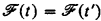 .

Crossref Citations

This article has been cited by the following publications. This list is generated based on data provided by Crossref.
van Emde Boas, P
1978.
Some applications of the McCreight-Meyer algorithm in abstract complexity theory.
Theoretical Computer Science,
Vol. 7,
Issue. 1,
p.
79.
Case, John
1983.
Pseudo-extensions of computable functions.
Information and Control,
Vol. 56,
Issue. 1-2,
p.
100.
SEIFERAS, Joel I.
1990.
Algorithms and Complexity.
p.
163.
Jacobs, Barry E.
2010.
Recursion Theory and Computational Complexity.
p.
29.