





Introduction
Although there has been a long-standing belief within US Hispanic communities that Spanish proficiency is an important component for claiming in-group identity (Shenk Reference Shenk2007; Urciuoli Reference Urciuoli, Niño-Mircoa and Rothman2008; Sanchez, Chavez, Good, & Wilton Reference Sanchez, Chavez, Good and Wilton2012; Zentella Reference Zentella, Alim, Rickford and Ball2016; Blitvich Reference Blitvich, Evans, Jeffries and O’Driscoll2019; Tseng Reference Tseng2021; Howard & Pagan Reference Howard and Pagan2025), a new wave of language panic has been spreading since late 2020. According to Cashman (Reference Cashman2009:57), who draws from Cameron’s (Reference Cameron1995) notion of moral panics, a language panic occurs when ‘a language issue is suddenly foregrounded in public discourse and discussed in an obsessive, moralistic and alarmist manner’. While on the surface they may seem to be about language, Hill (Reference Hill, González and Melis2001) asserts that, at their core, language panics are really about race. More specifically, she argues that language panics have the same function as moral panics (e.g. immigration, youth crime, truancy, etc.) in that the discourse reinforces hegemony and the subordination of minoritized communities.
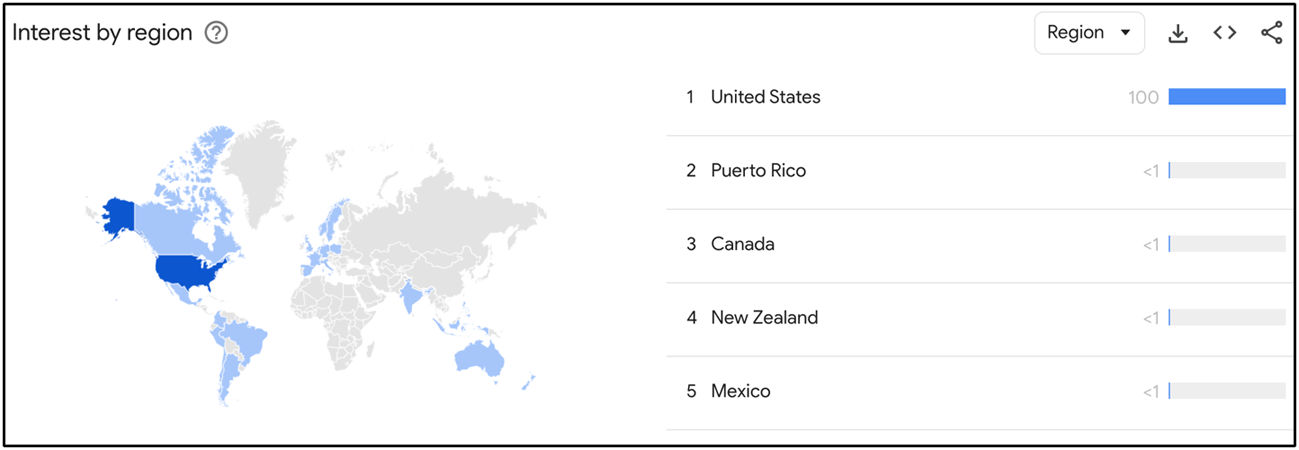
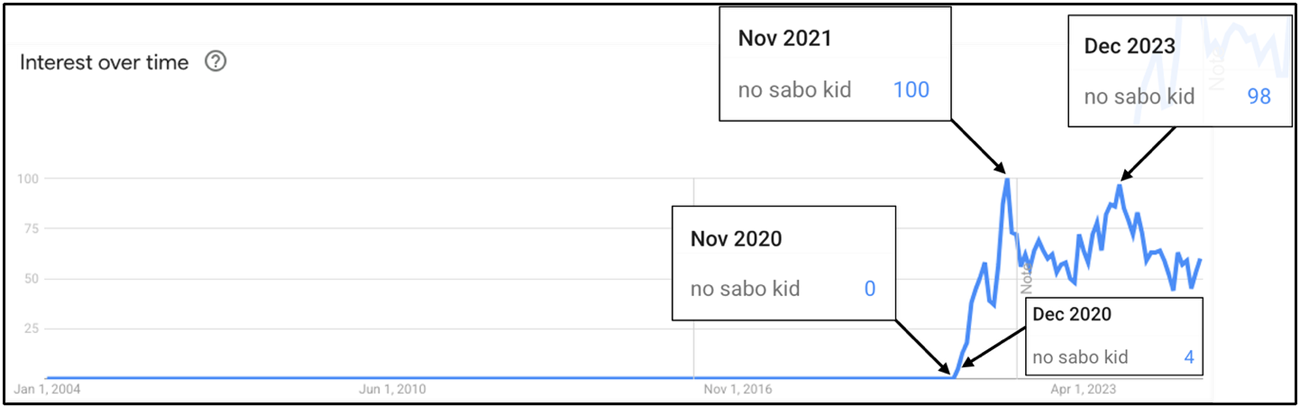
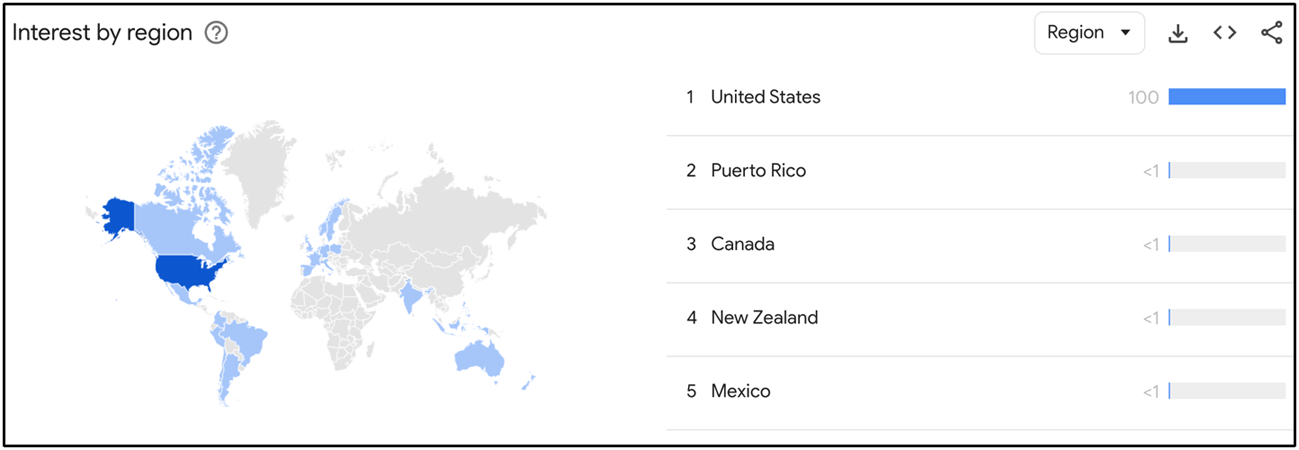
The current language panic has largely been spreading among US Hispanic communities through mass and social media. In this case, the preoccupation centers on language shift of younger generations from Spanish to English. Specifically, the term ‘no sabo kid’ has emerged to refer to US Hispanics who are either not fluent in Spanish, do not speak it ‘perfectly’, or do not speak it at all (Stransky, Donnelly, Stonick, Dominguez, & Pascual y Cabo Reference Stansky, Donnelly, Stonick, Dominguez, Sánchez-Muñoz and Retis2022; Callesano Reference Callesano2023; Martínez Reference Martínez2023; PBS NewsHour 2024). It is widely used as an in-group pejorative term to ethnolinguistically gatekeep who can claim Hispanic identity, which makes it the latest iteration in a long line of pejorative labels that denigrate the linguistic and cultural mixing of US Hispanics (Zentella Reference Zentella, Alim, Rickford and Ball2016; Christiansen Reference Christiansen2025; Christoffersen Reference Christoffersen2026).Footnote i Although the history and propagation of the ‘no sabo kid’ label is not yet fully understood, it appears to have spread online through social media (Stransky et al. Reference Stansky, Donnelly, Stonick, Dominguez, Sánchez-Muñoz and Retis2022; Callesano Reference Callesano2023). Figure 1 provides a Google Trends timeline of ‘no sabo kid’ search queries from January 2004 to June 2025. The y-axis measures search popularity from 0 (not enough data) to 100 (peak popularity). Initial searches began in December 2020 (search interest = 4) with peaks occurring in November 2021 and December 2023. This trajectory suggests that the term originated sometime in 2020, making its emergence a recent phenomenon and one that has garnered sustained search interest since then. Furthermore, as Figure 2 shows, it mostly appears to be a US-based phenomenon.
Google Trends search interest timeline for ‘no sabo kid’ (January 2004–June 2025).
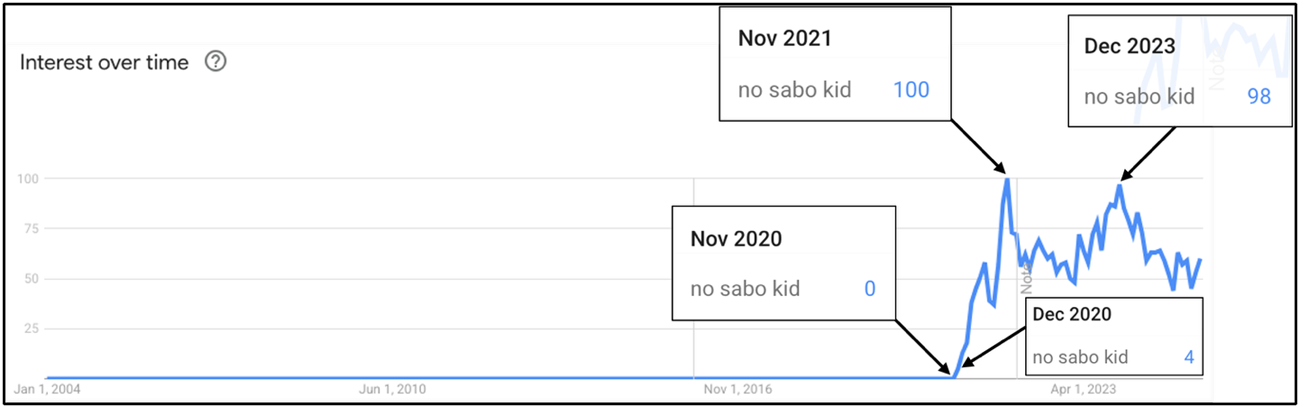
Figure 1 Long description
Interest over time. Callouts: Nov 2020, no sabo kid, 0. Dec 2020, no sabo kid, 4. Nov 2021, no sabo kid, 100. Dec 2023, no sabo kid, 93. Horizontal axis: time, from 2004 to 2025. Vertical axis: interest over time, from 0 to 100. Single line series for no sabo kid. Trend description: values stay near 0 from 2004 through most of 2020. A rise begins in late 2020, reaching 4 at Dec 2020. A peak occurs at Nov 2021 with 100. Another labeled high point occurs at Dec 2023 with 93. After Dec 2023, the line shows repeated rises and falls while remaining above the earlier near-0 baseline through 2025.
Google Trends search interest by region (January 2004–June 2025).
Although many discursive strategies sustain language panics, language shaming has been prominent in targeting ‘no sabo kids’. While shaming has a wide range of culturally specific functions (Lo & Fung Reference Lo, Fung, Duranti, Ochs and Schieffelin2011), language shaming involves ‘(social) media campaigns or face-to-face interactions that deride, disparage or demean particular ways of using language’ (Piller Reference Piller2017). That is, shaming is another tool of linguistic subordination, which Piller (Reference Piller2017) argues ‘may result in low self-esteem, a lack of self-worth and social alienation’ for the targeted groups and individuals. Indeed, both mass media reports (e.g. Martínez Reference Martínez2023; PBS NewsHour 2024) and empirical work on social media (Stransky et al. Reference Stansky, Donnelly, Stonick, Dominguez, Sánchez-Muñoz and Retis2022; Callesano Reference Callesano2023) have observed how shame plays a role in how US Hispanics experience, engage with, and contest the label. It should be noted though that this language shaming is paradoxical. Many who shame ‘no sabo kids’ for their supposed linguistic deficiencies presumably want them to speak more and ‘improve’ their Spanish and see shaming as a means to motivate them. However, previous research has demonstrated links between language shame, linguistic insecurity, and avoidance (Goble Reference Goble2016; Tseng Reference Tseng2021; Molina Reference Molina2024), all of which can promote language shift (for an overview, see Ravindranath Abtahian & McDonough Quinn Reference Abtahian, Maya, Hildebrandt, Jany and Silva2017). That is, the shaming of ‘no sabo kids’ may backfire by resulting in language shift.
To critically interrogate this paradox, the following case study analyzes a mediated performance (Bell & Gibson Reference Bell and Gibson2011) of language shaming on the popular Spanish-language reality courtroom show Caso Cerrado ‘Closed Case’. More specifically, the conflict between the show’s star judge, Ana María Polo, and a witness, Luna, centers the tension between Spanish language maintenance and language shift to English within US Hispanic communities. By employing discourse analysis, I demonstrate how this tension is performed through morally charged manifestations of language ideologies, shaming, and stylization of two personae (i.e. ‘no sabo kid’ and ‘Hispanic mother’). Furthermore, I contextualize the episode in this current wave of in-group language panic, thereby highlighting the role of mediated performances in reproducing hegemonically ideological representations of speakers.
Language ideologies in the United States
Language ideologies are beliefs, conceptualizations, and feelings about languages, varieties, practices, and their speakers that are held by an individual or society (Woolard & Schieffelin Reference Woolard and Schieffelin1994; Kroskrity Reference Kroskrity and Duranti2004). According to Woolard (Reference Woolard and Stanlaw2021), language ideologies manifest through talk and/or behavior, are morally and politically charged, are linked to social categories and concepts, and influence linguistic structure and social relations. For example, the one nation–one language ideology refers to the belief that only one language should be spoken in a nation-state (e.g. Fuller & Leeman Reference Fuller and Leeman2020). In the United States, Pavlenko (Reference Pavlenko2002) details how the linking of English monolingualism to national identity occurred with the coalescence of Americanization, Anglicization, and Anglo-Saxonization between 1880-1924. Through public discourse and policy (i.e., talk and behavior), immigrants were pressured to culturally and linguistically assimilate to prove their loyalty and patriotism to America, showcasing how this coercion was morally and politically motivated. More recently, Fuller & Leeman (Reference Fuller and Leeman2020) highlight a micro-level manifestation of this ideology in the case of Aaron Schlossberg, a New York lawyer who berated Spanish-speaking staff in a Manhattan restaurant in 2018. His anti-Spanish tirade is also an illustrative example of the different features of language ideologies: (a) demands that the employees only speak English and threats to call Immigration and Customs Enforcement (talk and behavior); (b) feelings of moral outrage and panic that caused him to publicly express his beliefs (morally and politically charged representation); (c) assumptions that the Spanish-speaking employees were undocumented and receiving welfare (linking of social categories and concepts); and (d) the attempt to silence a non-English language by a minoritized population in a public space (influence linguistic structure and social relations). In other words, Schlossberg’s outburst was a small-scale version of language panic tied to the English-only movement in the US.
In fact, in the US it is not enough for immigrants to just speak English, but they must also speak it ‘perfectly’ and without influence from their other language(s). This expectation demonstrates the convergence of monoglossic and standard language ideologies: that is, languages are discrete entities whose boundaries should remain separable, there is one correct variety of a language, and deviation from it should be eliminated (e.g. Fuller & Leeman Reference Fuller and Leeman2020). For example, the US education system frequently perpetuates appropriateness-based approaches onto Hispanic students, by which their bilingual practices are viewed as deficient and monolingual language standards are utilized to assess them in both English and Spanish classes (Flores & Rosa Reference Flores and Rosa2015). However, Rosa & Flores (Reference Rosa and Flores2017:628) note that ‘racialized subjects are perpetually perceived as linguistically deficient even when engaging in language practices that would likely be legitimized or even prized were they produced by white speaking subjects’. These raciolinguistic ideologies point to essentialism, the belief that certain characteristics are inherent to everyone of a particular identity (e.g. Fuller & Leeman Reference Fuller and Leeman2020). An example of essentialism described by Fuller & Leeman (Reference Fuller and Leeman2020) involves the 2018 case of a US Border Patrol agent who detained Ana Suda and Martha Hernandez in a small town in Montana. Upon hearing them speak to each other in Spanish at a convenience store the agent, Paul O’Neill, asked them questions about their origin and demanded to see identification. When they asked him why, he responded, “I saw that you guys are speaking Spanish which is very unheard-of up here”. His answer demonstrates how speaking Spanish is strongly associated with Hispanic identity, which he used to profile them as undocumented immigrants.
Language ideologies can also become so hegemonic that they are even reproduced by affected minoritized communities against their own members. For example, some Spanish speakers in the US hold negative attitudes toward code-switching (Anderson & Toribio Reference Anderson and Toribio2007; Rangel, Loureiro-Rodríguez, & Moyna Reference Rangel, Loureiro-Rodríguez and Irene Moyna2015) and US Spanish (Licata Reference Licata2023; Regan & Martinez Reference Regan and Martinez2023), which are rooted in the monoglossic view that Spanish should remain separate from English. Some also believe in an essentialist link between Spanish and Hispanic identities, by which higher Spanish proficiency is viewed as crucial for claiming in-group authenticity, a finding that has been demonstrated through analyses of interviews (Shenk Reference Shenk2007; Urciuoli Reference Urciuoli, Niño-Mircoa and Rothman2008; Tseng Reference Tseng2021) and online discourse (Blitvich Reference Blitvich, Evans, Jeffries and O’Driscoll2019; Christiansen Reference Christiansen2025), in addition to experimental work (Sanchez et al. Reference Sanchez, Chavez, Good and Wilton2012; Howard & Pagan Reference Howard and Pagan2025). These two language ideologies are the underpinnings behind the emergence of discourse surrounding the concept of a ‘no sabo kid’.
Indexicality, enregisterment, and stylization
While variationist sociolinguistics establishes how linguistic variants correlate with both macro-social factors and socially meaningful (local) groups, linguistic anthropological concepts have been useful in accounting for social meaning and speaker agency. For example, Silverstein’s (Reference Silverstein2003) notion of indexical order highlights how a variant can not only become an index of a particular social group (i.e. first-order), but also as an index of specific characteristics of that social group (i.e. second-order). As these social meanings are continuously (re)evaluated in discourse, new meanings and new orders of meaning can emerge in successively shifting indexical fields, that is, networks of social meanings whose ties are ideological (Eckert Reference Eckert2008). When multiple indexical linguistic (and non-linguistic) features become associated with one another, the process of enregisterment (Agha Reference Agha2003, Reference Agha2007) creates a semiotic repertoire that is distinct and differentiable from other registers, social groups, identities, and/or genres (Johnstone Reference Johnstone2016). This process is also involved in the emergence of ‘characterological figures’ (Agha Reference Agha2007) or ‘personae’ (D’Onofrio Reference D’Onofrio2020), which are real or imagined embodiments of an ideological archetype that is socially relevant to a community, such as the ‘roadman’ in the UK (Ilbury Reference Ilbury2024) and ‘white girl’ in the US (Slobe Reference Slobe2018).
Having knowledge of enregistered varieties and personae allows speakers to convey and understand stylization, which is the employment of (non-)linguistic signs that deviate from those expected in the communicative context to express social meaning (Coupland Reference Coupland2001, Reference Coupland2007). In building on work by Rampton (Reference Rampton1995, Reference Rampton1999), Coupland (Reference Coupland2001, Reference Coupland2007) outlines a list of defining features of stylization. For example, speakers utilize indexical features to project a given genre, identity, or persona, and these indexical features are well-known to the listener to facilitate conveying the intended social meaning. Because of this, stylization introduces an additional layer of context and reflexivity into the current communicative situation, by which speaker’s and listeners’ identities, perspectives, and values are continuously (re)evaluated. Furthermore, the stylized utterances are often creative, emphatic, and hyperbolic performances of the genre, identity, or persona. Given that indexicality, enregisterment, and stylization are frequently evoked in ‘high’ or ‘staged’ performance (Bell & Gibson Reference Bell and Gibson2011), previous research has demonstrated their utility in understanding sociolinguistic variation in this domain (e.g. Coupland Reference Coupland2001; Johnstone Reference Johnstone2011; Carroll Reference Carroll2013; Pratt & D’Onofrio Reference Pratt and D’Onofrio2017; Elordui Reference Elordui2022). For example, Johnstone (Reference Johnstone2011) analyzed how morning show DJs from a local radio station in Pittsburgh stylized enregistered features. More specifically, the discourse analysis of two comedic skits demonstrates how stylization can index multiple social identities within one performance, and that listeners’ interpretation will depend on their recognition of these social meanings.
We can also illustrate indexicality, enregisterment, and stylization with the two personae identified in the present study: ‘Hispanic mother’ and ‘no sabo kid’. With respect to the latter, this label has recently emerged as a socially meaningful group within US Hispanic communities. In term of enregistered features, the phrase ‘no sabo kid’ itself is iconic (Irvine & Gal Reference Irvine, Gal and Kroskrity2000) of how they allegedly speak: (a) sabo is an overregularization of sé, the first-person singular form of the present indicative for the verb saber ‘to know’ that occurs in child language acquisition (Clahsen, Aveledo, & Roca Reference Clahsen, Aveledo and Roca2002), and (b) no indicates negation. This is to say, the core feature of the ‘no sabo kid’ persona is that they either do not know Spanish or have fossilized, child-like competence in the language. In both cases, the persona is imagined as uttering no sabo ‘I do not know’ when addressed in Spanish. As the name suggests, they are often portrayed as children and teenagers (Stransky et al. Reference Stansky, Donnelly, Stonick, Dominguez, Sánchez-Muñoz and Retis2022). Callesano’s (Reference Callesano2023) analysis of #nosabokid TikTok videos identified several additional enregistered features, including the use of code-switching, and English influence in phonetics and the lexicon. A thematic analysis of the videos found that low levels of Spanish proficiency, essentialism of Spanish proficiency for claiming Hispanic identity, and presumed gaps in lexical knowledge were also used to stylize ‘no sabo kids’. That is, if they do speak Spanish, it is with heavy influence from English.
Drawing from Velázquez’s (Reference Velázquez2009, Reference Velázquez2013) research on maternal agency perception in Spanish language maintenance, the other persona identified in this study is that of a ‘Hispanic mother’. While Velázquez (Reference Velázquez2009) reported that all bilingual mothers in her study expressed a desire for their children to speak Spanish, they differed on their language ideologies about bilingualism. These included monoglossic ideologies, essentialism, and instrumentalist discourse that framed bilingualism as a resource for gaining a competitive edge in the labor market. In particular, one mother, Carmen Mena, reproduced standard language ideology by claiming that she spoke ‘correct’ varieties of both English and Spanish. This was likely because she was professionally successful in her native Juarez, Mexico before moving to El Paso and earning a university degree there. Furthermore, she expressed negative attitudes toward code-switching, stating that people who engage in this bilingual language practice lack education. This strong belief in monoglossic ideologies was the underpinning for prohibiting code-switching in her house, which she herself did not adhere to in interviews with Velázquez. This linguistic rule is a manifestation of family language policy (FLP), which King (Reference King, Wei, Hua and Simpson2023:44) describes as ‘what family members believe about language(s) and language learning, how family members interact with each other, and what family members attempt to do with language, at times through explicit planning, management, or decision-making’. That is, part of FLP is deciding and enforcing what language(s) can be spoken by other family members in specific spaces. Velázquez’s research also documents the relationship between language maintenance policies and ethnic/linguistic pride (2009), and how mothers conceptualized languages and speakers in their community using metaphors, metonyms, referential strategies, and expressions of deixis (2013). While the stylization of ‘Hispanic motherhood’ may not utilize all these strategies, especially given the heterogeneity of ideologies, it is likely that a portrayal may draw from some of them.
Taken together, these two personae are conceptualized through language practices and ideologies that circulate within US Hispanic communities. On the one hand, we have a child who either does not speak Spanish or engages in bilingual language practices that are deemed ‘impure’, and on the other, we have a mother attempting to promote ethnolinguistic pride and language abilities through strict FLP. That is, the real-life manifestations of these two personae may come into conflict within numerous Hispanic households in the US, and therefore the present study examines how their mediated stylized performances may have contributed to an ongoing wave of language panic.
Data and method
The data come from episode #19-2535, entitled ‘Haters’ (E. Skiadas, personal communication, March 19, 2025), of the Spanish-language reality courtroom TV series Caso Cerrado (henceforth CC).Footnote ii The show was produced by the American Spanish-language network Telemundo from 2001 to 2019. According to a recent press release, the executive vice president of streaming at NBCUniversal Telemundo Enterprises described CC as ‘one of Hispanic media’s most iconic franchises with enduring fandom and new audiences discovering the courtroom drama via viral moments across digital and social platforms. With more than 26 million dedicated fans and nearly 100 million average monthly views on social media, the demand for this iconic series continues to grow’ (NBC Universal News Group 2025). This quote underscores the cultural reach of CC within US Hispanic communities.
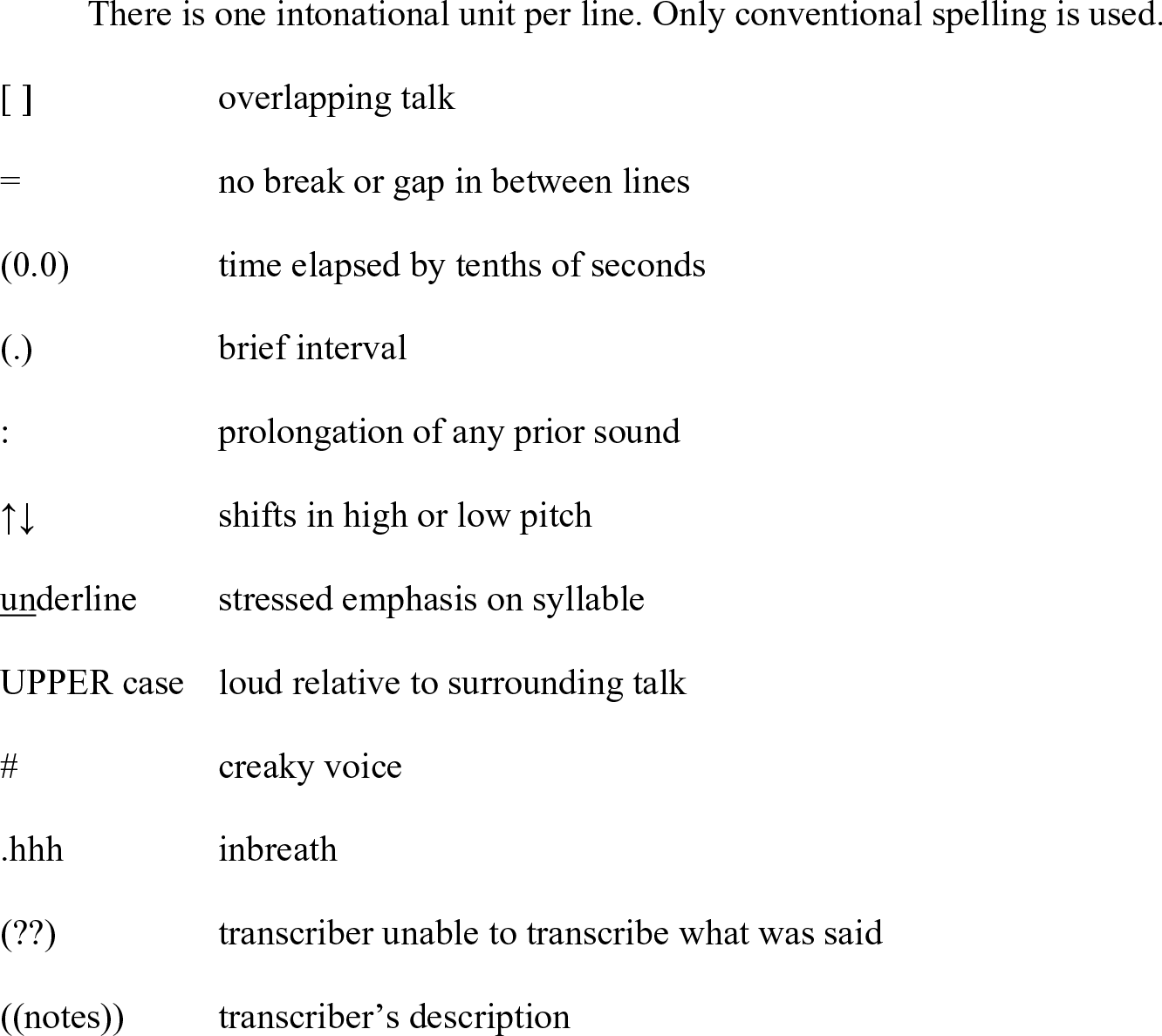
The entire episode was posted to CC’s YouTube page on December 11, 2023. Data were collected through direct review of the episode in its entirety. First, notes were taken about moments in which language ideologies and stylization were expressed. These fragments were then transcribed using Jefferson’s (Reference Jefferson and Lerner2004) conventions, which are provided in the appendix. Using discourse analysis, expressions of language ideologies (Fuller & Leeman Reference Fuller and Leeman2020), discursive strategies of shaming (Lo & Fung Reference Lo, Fung, Duranti, Ochs and Schieffelin2011), and stylization (Coupland Reference Coupland2001, Reference Coupland2007) were identified in the transcriptions. The analysis is contextualized with additional data from media appearances of CC’s star judge (Carrasco Reference Carrasco2019; De La Vega Reference De La Vega2023; Hinojosa Reference Hinojosa2025) and publicly available TikTok videos from one the episode’s participants (la moon de caso cerrado 2022a,b). The following subsections present an overview of the reality courtroom TV genre, the history of CC, and the episode’s case.
Caso Cerrado and the reality courtroom TV genre
According to Kozinn (Reference Kozinn2015), reality courtroom TV is a genre that emulates the small claims court, the part of the US judicial system that hears cases involving mundane situations. They are heard by a judge or lawyer who weighs the evidence presented by the plaintiff and defendant before rendering a verdict. Plaintiffs and defendants that participate on these shows sign a contract to enter arbitration. Unlike small claims courts, these two parties receive financial incentives for their appearances, and the production company pays the plaintiff any awarded damages.
The arbitrators in these cases are former judges or lawyers who headline TV shows bearing their names. As detailed by Kozinn (Reference Kozinn2015), these legal professionals were often discovered by TV producers for their unique style on the judicial bench, which they then exaggerate on television. Indeed, in contrast to small claims courts that abide by the law, legal procedure, and precedent, the standards of justice and fairness on reality courtroom TV programs also depend on the peculiarities of their star judge. This is to say, reality TV judges use their courtroom stage to reinforce their judicial philosophy through mediated performances.
The host of CC is Ana María Polo (henceforth AMP). Born in Havana, Cuba in 1959, her family emigrated to Miami, Florida when she was two years old. After spending her childhood and adolescence in Puerto Rico, AMP returned to Miami, earning a bachelor’s degree in political science from Florida International University and a law degree from the University of Miami. She practiced family law for more than twenty years before Telemundo cast her in CC’s forerunner, Sala de Parejas ‘Couples’ Room’ in 2001. In 2005, AMP convinced the network to rebrand the show CC after one of her catchphrases: he dicho, caso cerrado ‘I have spoken, case closed’. The show ran for a total of nineteen seasons of thirty-minute episodes before ending in 2019 when AMP’s contract expired (Hinojosa Reference Hinojosa2025).
CC is characterized by many of the features of reality courtroom TV series discussed in Kozinn (Reference Kozinn2015), but it also deviates from the genre. For example, only a minority of cases involved real-life arbitration, while the rest were written by a group of producers who were inspired by larger societal trends, online discourse, and real-life cases (Carrasco Reference Carrasco2019). This creative license allowed CC to go beyond small claims cases to include elements of a talk show; as AMP explained on a podcast interview, “this is not really a court show, it is conflict resolution where we talk about everything, because we talk about everything, every type of conflict about humanity, [and] intimate problems” (De La Vega Reference De La Vega2023). That said, AMP also described the entertainment constraints of the show, which meant catering to the audience’s desire to see ‘weird’ cases, as these were the episodes that garnered high ratings (Hinojosa Reference Hinojosa2025). However, in the same interview she revealed that for every three or four ‘weird’ cases she would also hear a ‘serious’ or ‘sentimental’ one that “dealt with more political issues, and issues of human value, and human justice”, which she insisted on to maintain balance in the show. This motivation to explore larger societal issues whenever possible was the throughline of AMP’s judicial platform.
The case in ‘Haters’
This episode involves a plaintiff, Viviana, seeking $10,000 in damages from the defendant, Lizbeth. According to the lawsuit, Viviana was a small business owner in Houston, Texas, and hired Lizbeth on the condition that she spoke English. One day while Lizbeth was working, a teenage customer, Luna, entered the store wanting to buy some jewelry. During the exchange Lizbeth briefly switched to Spanish before going back to English. The code-switch provoked a strong reaction from Luna, who demanded that Lizbeth speak English because they were in the US. When Luna continued to escalate the situation, Lizbeth completely switched to Spanish, saying that she was going to teach Luna a lesson, forcibly ejecting her from the store. This exchange was included as evidence in the trial, since it had been recorded by an unnamed person as part of the #NoSpanishChallenge social media trend. The video went viral, causing Viviana’s store to receive online backlash that led to a drop in sales.
Although Lizbeth’s supposed lack of English proficiency was the impetus of the trial, it was in fact Luna’s behavior during the service encounter that quickly became its focus. Another video made by Luna was brought into evidence, in which she talks to her followers about why she participated in the #NoSpanishChallenge. She says it was “super funny” and adds in a more serious tone that “this also proves a point that you need to learn English if you’re going to live in America” (Caso Cerrado 2023, 7:43–7:46). That is, in both videos Luna perpetuates the one nation–one language ideology. It is important to note, however, that this episode was likely recreated by the CC producers based on a real-life situation, as Luna recounted on her personal TikTok account (la moon de caso cerrado 2022a,b) that she was hired to play the role on the show. She claims that this was a common practice for the show when the real litigants were undocumented.
Language ideologies, shaming, and stylization in the CC episode ‘Haters’
Once the case moves to witness testimony, Luna is called first on behalf of the plaintiff. Extract (1) presents the first exchange between AMP and Luna during her testimony.
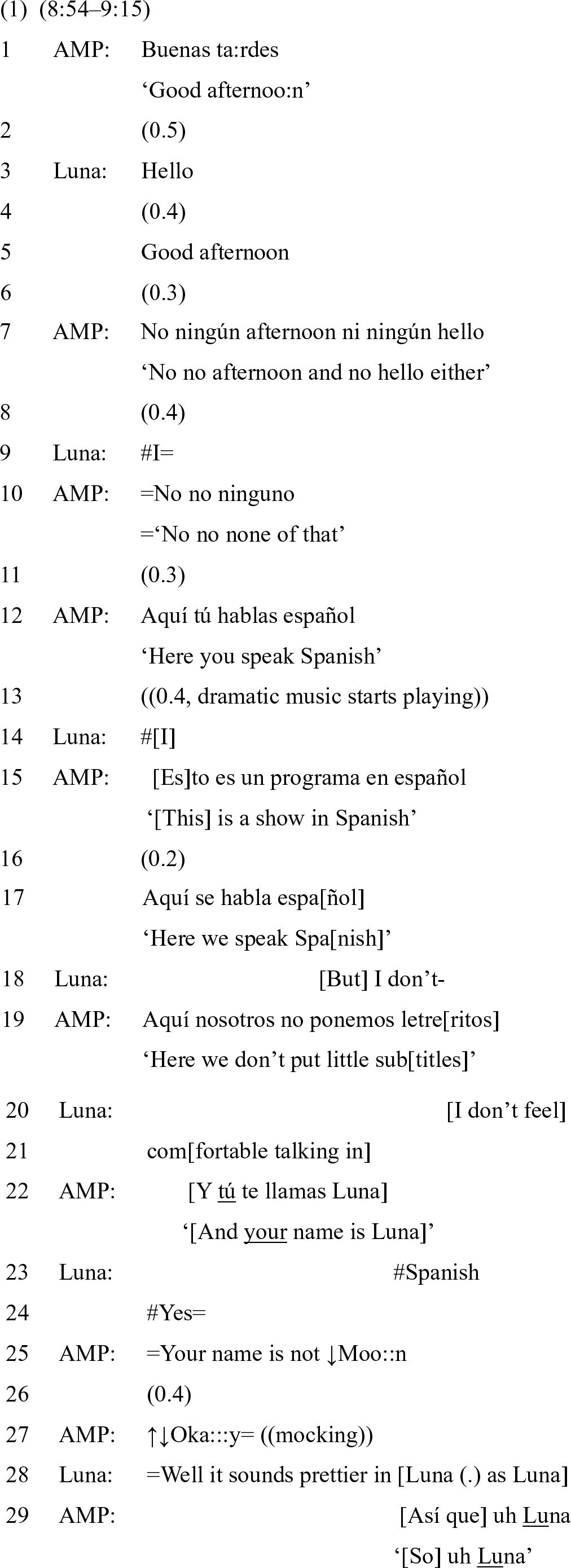
While AMP greets Luna in Spanish, Luna only responds back in English (lines 3–5) because she does not feel comfortable speaking in Spanish (lines 20–21). In that moment Luna is the physical manifestation of the ‘no sabo kid’ persona through her appearance (a teenager), behavior (refusal to speak Spanish), and talk (linguistic insecurity about speaking Spanish).
For her part, AMP’s response begins her stylization of the ‘Hispanic mother’ persona through her appearance (middle-aged woman), behavior (enforcing FLP by reprimanding and shaming a teenager), and talk (insistence on Spanish being spoken). In lines 7–19 she expresses monoglossic ideologies by insisting that only one language be spoken in her courtroom. She also implicitly reproduces essentialism by articulating an indexical link between Luna’s Hispanic-origin name and the ability to speak Spanish in lines 22–27. AMP’s beratement exemplifies the behavior noted by Lo & Fung (Reference Lo, Fung, Duranti, Ochs and Schieffelin2011:174), in that ‘by conducting shaming episodes in which they [adults] perform strong negative assessments of a child’s behavior, elders thus uphold their moral duty to enforce societal norms’. That is, engaging in (language) shaming can also be seen as the stylization of an enregistered feature of motherhood more generally, while the enforcement of a Spanish-only FLP can be read as specifically stylizing Hispanic motherhood. Additionally, AMP’s FLP and implied displeasure of code-switching mirrors the attitudes and behavior expressed by the bilingual mother Carmen Mena from Velázquez (Reference Velázquez2009). What is more, AMP, like Carmen Mena, disregards her own stated FLP by code-switching in lines 25–27, in this case to mock Luna, a behavior that was observed multiple times in the episode.Footnote iii
Extract (2) shows how AMP escalates her language shaming of Luna.
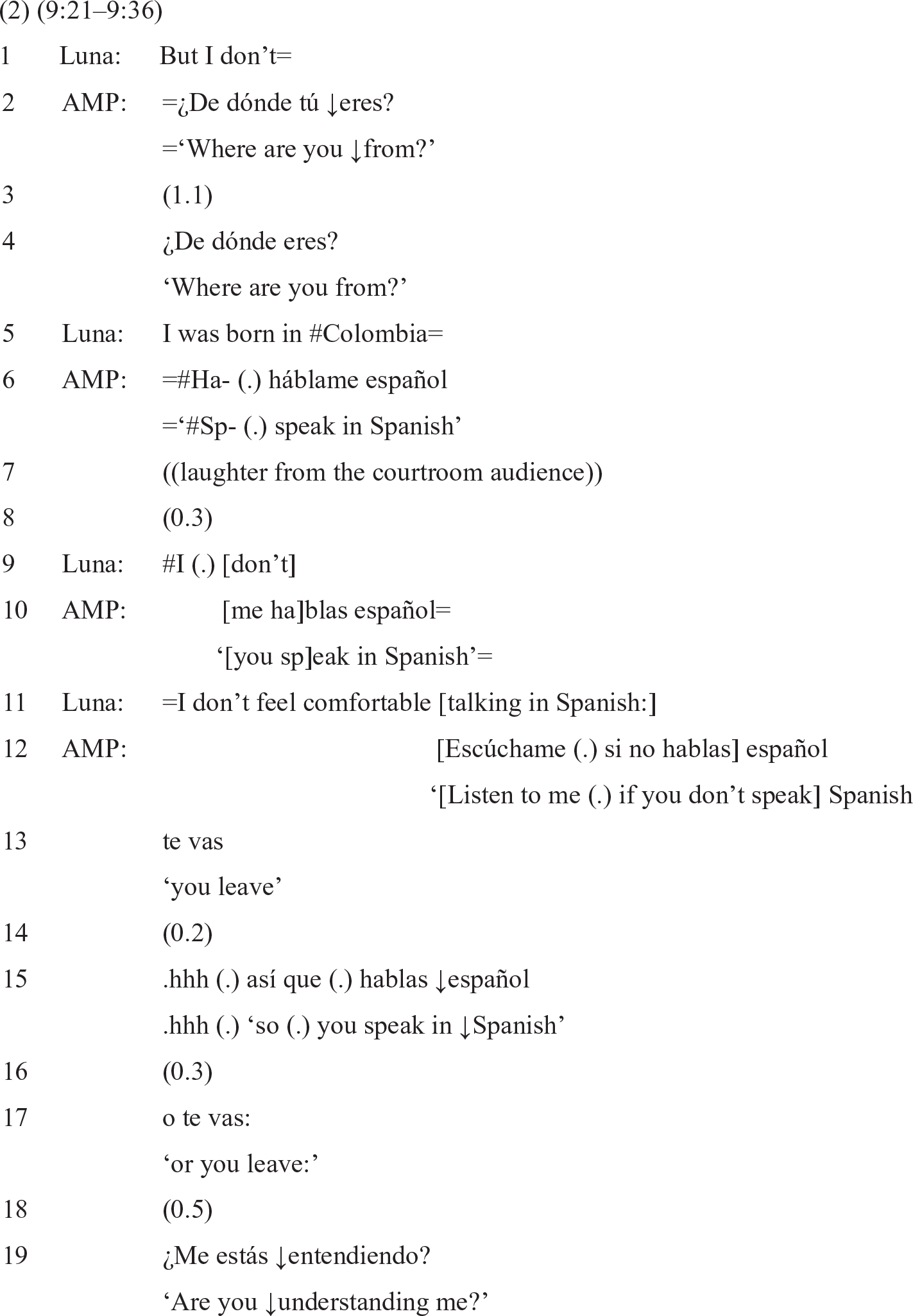
She begins to interrogate Luna by asking her where she is from (lines 2–4). When Luna responds, in English, that she was born in Colombia (line 5) we have two distinct reactions in succession. First, AMP’s reaction is a continued insistence of her FLP (line 6), but with an additional layer of implied essentialism: since Luna was born in Colombia, she should be able to speak Spanish. This (re)evaluation of new contextual layers is something that continuously occurs in high performance as it is a key feature of stylization (Coupland Reference Coupland2001, Reference Coupland2007; Bell & Gibson Reference Bell and Gibson2011).
In the following turn (line 7) the at-home audience can hear laughter from the courtroom audience. This reaction may have been encouraged by the production team, given that Kozinn (Reference Kozinn2015) detailed how in-studio audiences are encouraged to react in ways that reinforce the judge’s stance. In this case, audience members validate AMP’s language shaming of Luna by participating as bystanders, which demonstrates how shaming episodes can involve multiple parties (Lo & Fung Reference Lo, Fung, Duranti, Ochs and Schieffelin2011). Although Luna continues to express linguistic insecurity about speaking in Spanish (line 11) she is issued an ultimatum by AMP in lines 12–19 that she must abide by the FLP or she will be dismissed from the courtroom. This escalation signals an intensification of the shaming episode that speakers can employ in the face of resistance from the targeted individual (Lo & Fung Reference Lo, Fung, Duranti, Ochs and Schieffelin2011), and functions as adding to AMP’s stylization.
After more stern warnings from AMP that Luna should not try the #NoSpanishChallenge in her courtroom, the judge further reproduces monoglossic and essentialist ideologies, which she pairs, ironically, with one nation–one language.
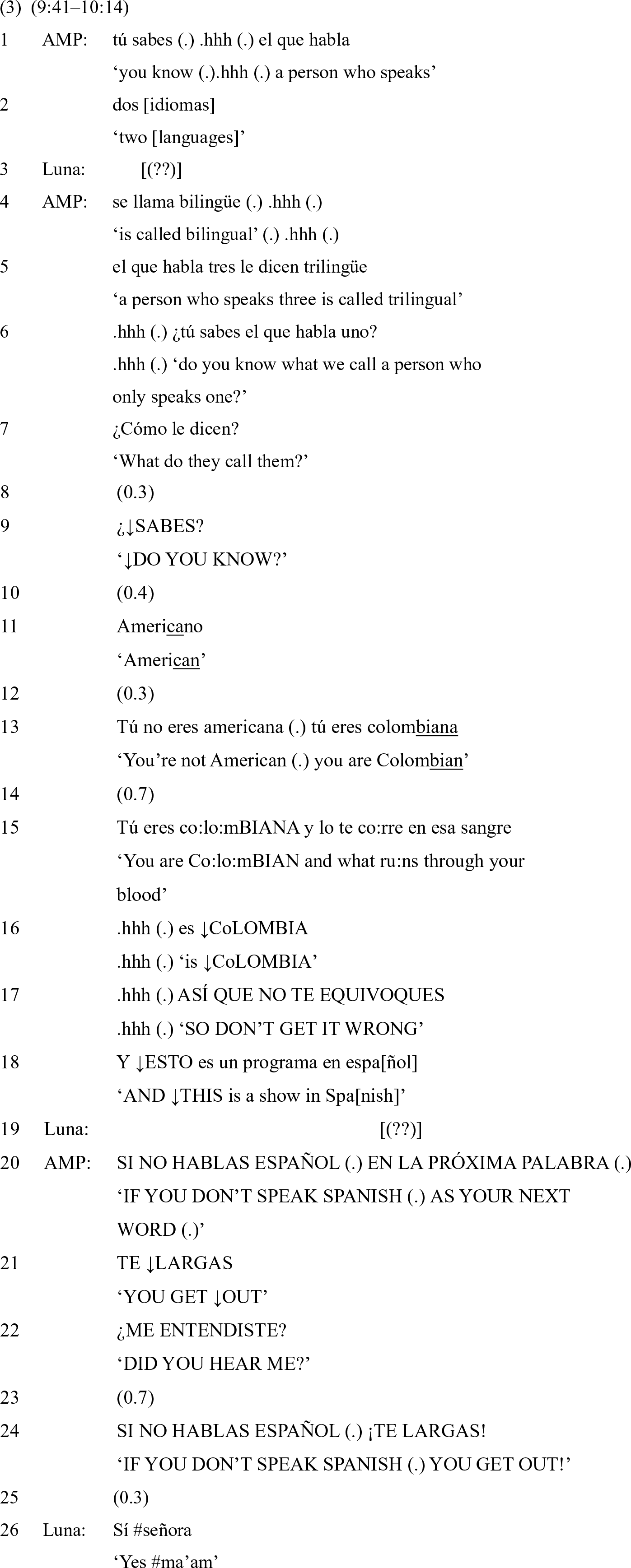
In extract (3) AMP equates monolingualism with American national identity (lines 6–11), and by extension retroactively excludes multilingualism as a possibility for Americans (lines 1–5). This is to say, AMP reproduces, perhaps inadvertently, the very ideology that she scolds Luna for perpetuating during her service encounter with Lizbeth. In lines 15–16 AMP fully articulates her essentialist ideology that had been somewhat implicit in extracts (1) and (2). She begins this turn by repeating that Luna is Colombian and then employs a metaphorical expression of blood as origin (Simó Reference Simó2011), specifically that her birth country supposedly runs through her veins. Through this metaphor AMP links monoglossic and essentialism ideologies together: Luna should be able to speak perfect Spanish because she was born in Colombia and is thus, at her core, a Spanish speaker. This is especially noteworthy given Velázquez’s (Reference Velázquez2013) finding that Spanish-speaking mothers’ metaphor usage reflected hegemonic language ideologies, which signals how AMP’s use of the blood as origin metaphor could be another instance of stylization. Extract (3) concludes with AMP’s repeated threat to eject Luna from the courtroom if she does not linguistically comply (lines 20–24), and Luna acquiesces (line 26) in face of continued escalation.
Extract (4) is a continuation of the exchange immediately after Luna switches to Spanish, with AMP now questioning her about the #NoSpanishChallenge video.
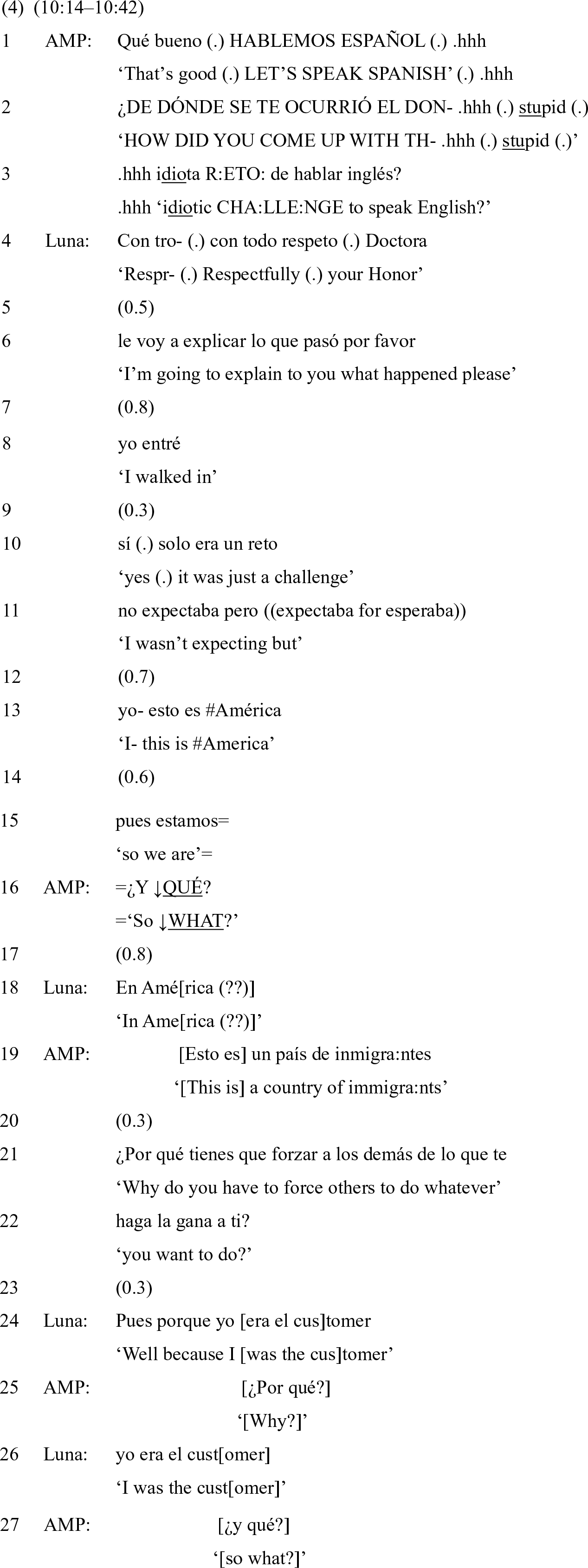
During this part of the exchange, Luna tries to repeat her stance that in America people should speak English, but she either does not complete the thought (lines 13–15) or is interrupted by AMP (lines 16–19). Indeed, in extract (4) it becomes clear that Luna’s speech rate is slower when speaking Spanish than English, due to the presence of several pauses (lines 5, 7, 9, 12, 14) and disfluent false starts (lines 4, 13). Additionally, she does not provide the same level of detail about the service encounter as she did in her English social media posts that were entered into evidence. Altogether, Luna appears to be stylizing lower proficiency in Spanish, which is an enregistered feature of the ‘no sabo kid’ persona (Callesano Reference Callesano2023). Additionally, there are two other enregistered variants in her speech that point to this stylization: (a) the innovative Spanish adaptation of an English word ‘expect’ in expectaba (cf. esperaba) in line 11, and (b) the use of code-switching in el customer (cf. el/la cliente) in lines 24 and 26. This is to say, Luna continues to stylize the ‘no sabo kid’ persona when she switches to Spanish.
At this juncture, it is reasonable to ask if Luna’s speech in extract (4) is a case of stylization of the ‘no sabo kid’ persona or if this is simply how she speaks Spanish. On her publicly available TikTok page, Luna made a video in Spanish in which she explains her role in the CC episode (la moon de caso cerrado 2022a). In that video there is a higher level of fluency with more clauses in each intonational unit, and she uses circumlocution during a communication breakdown instead of code-switching or innovatively adapting an English word. Although she does use the English word challenge, it appears to be a borrowing from English, as multiple participants used this word during the episode. This is to say, Luna is capable of remaining in Spanish in spontaneous discourse for an extended period. Furthermore, in the English-language version of the video she also explains that “when I show up, I’m not supposed to speak in Spanish, and I’m refusing to speak in Spanish, because, supposedly I am this really mean little girl who wants to do really mean things” (la moon de caso cerrado 2022b, 1:54–2:07). As she was hired to play the role, this admission likely points to coaching she received from the production crew, which is common practice for the genre (Kozinn Reference Kozinn2015). Altogether, her ability to speak in a monolingual Spanish mode, coupled with possible stage direction, suggest that her portrayal on CC was likely stylized.Footnote iv
AMP also stylizes Luna as a ‘no sabo kid’ when she reports her speech, which can be found in extract (5).
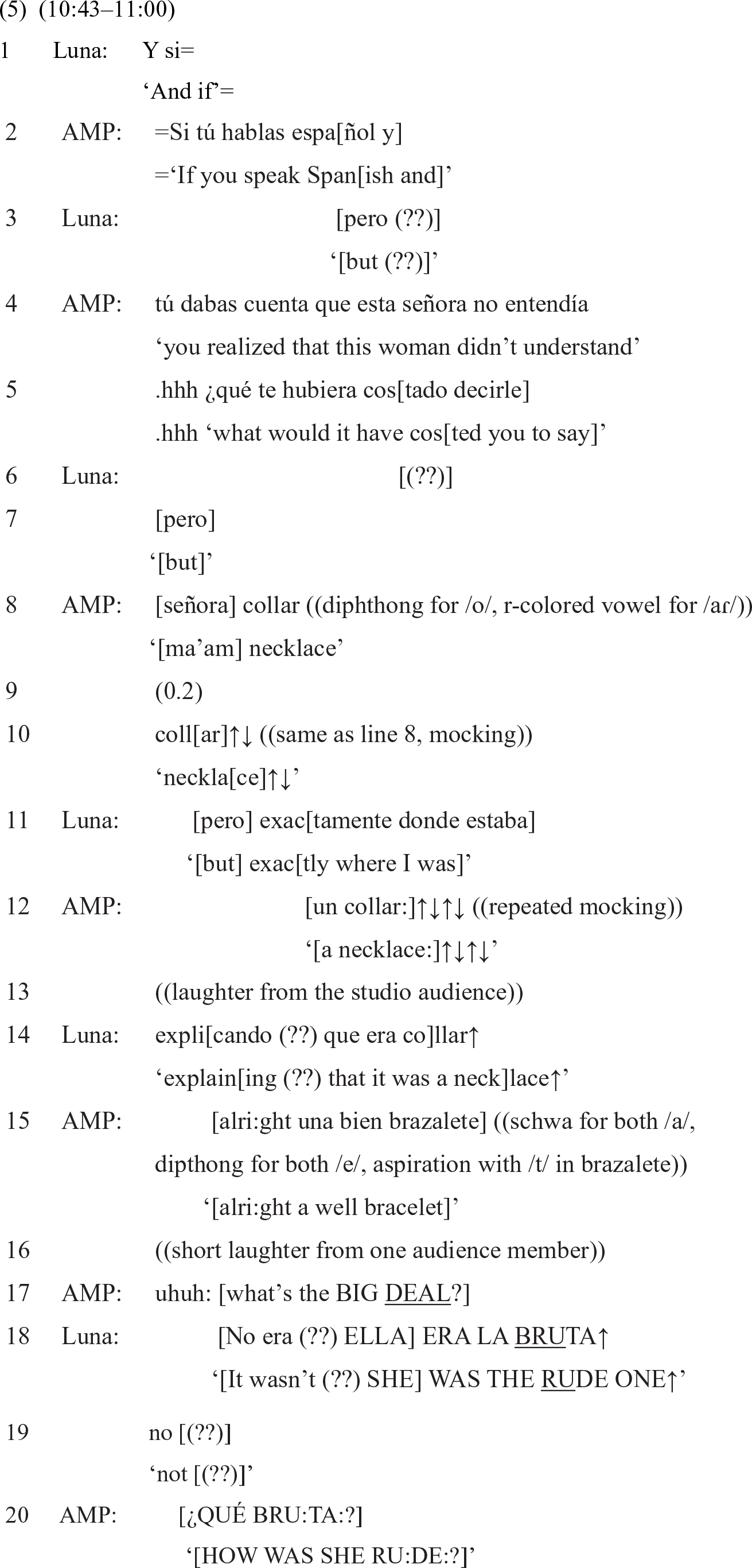
In lines 7–15 AMP stylizes Luna interacting with Lizbeth using several notable features. Firstly, verb phrases are absent, the adverb bien ‘well’ is used ungrammatically to modify the noun brazalete ‘bracelet’, and code-switching is employed with ‘alright’ (cf. pues). Phonetically speaking, AMP uses English-influenced features, all of which were identified in the corpus of stylized #nosabokid TikTok videos (Callesano Reference Callesano2023). She produces the word collar ‘necklace’ (lines 8, 10, 12) with diphthongization of <o> (/o/ → [oi̯]) and an r-colored vowel in <ar> (/aɾ/ → [ɚ]). The word brazalete ‘bracelet’ (line 15) exhibits centralized vowels for the two <a>’s (/a/ → [ə]), diphthongization for the two <e>’s (/e/ → [ei̯]), and increased aspiration of <t> (/t/ → [tʰ]). This stylization adds to AMP’s language shaming as it demeans Luna’s alleged way of speaking Spanish by highlighting perceived linguistic deficits caused by influence from English.
However, it is important to note that, apart from code-switching, the linguistic features that AMP stylizes were not present in Luna’s speech during the episode. That is, AMP’s phonetic stylization of Luna is a manifestation of her raciolinguistic ideologies (Flores & Rosa Reference Flores and Rosa2015; Rosa & Flores Reference Rosa and Flores2017), since her perception of Luna’s speech was guided more by social information than Luna’s actual linguistic production. More specifically, AMP claims later in the episode that Luna has “been here for two years and she already forgot Spanish, her mother tongue” (11:19–11:23), before proceeding to mock her again through more English-influenced stylization (11:23–11:30).Footnote v AMP hears English influence since she perceives Luna as a young Hispanic who is supposedly rejecting her Colombian heritage and identity by linguistically and culturally assimilating to US society, despite Luna demonstrating throughout the episode that she understands Spanish and is capable of speaking it. By shaming her for supposedly losing her ‘pure’ and ‘perfect’ Colombian variety, AMP also implicitly criticizes other US Spanish speakers who may not speak like monolinguals from their countries of origin due to influence from English.
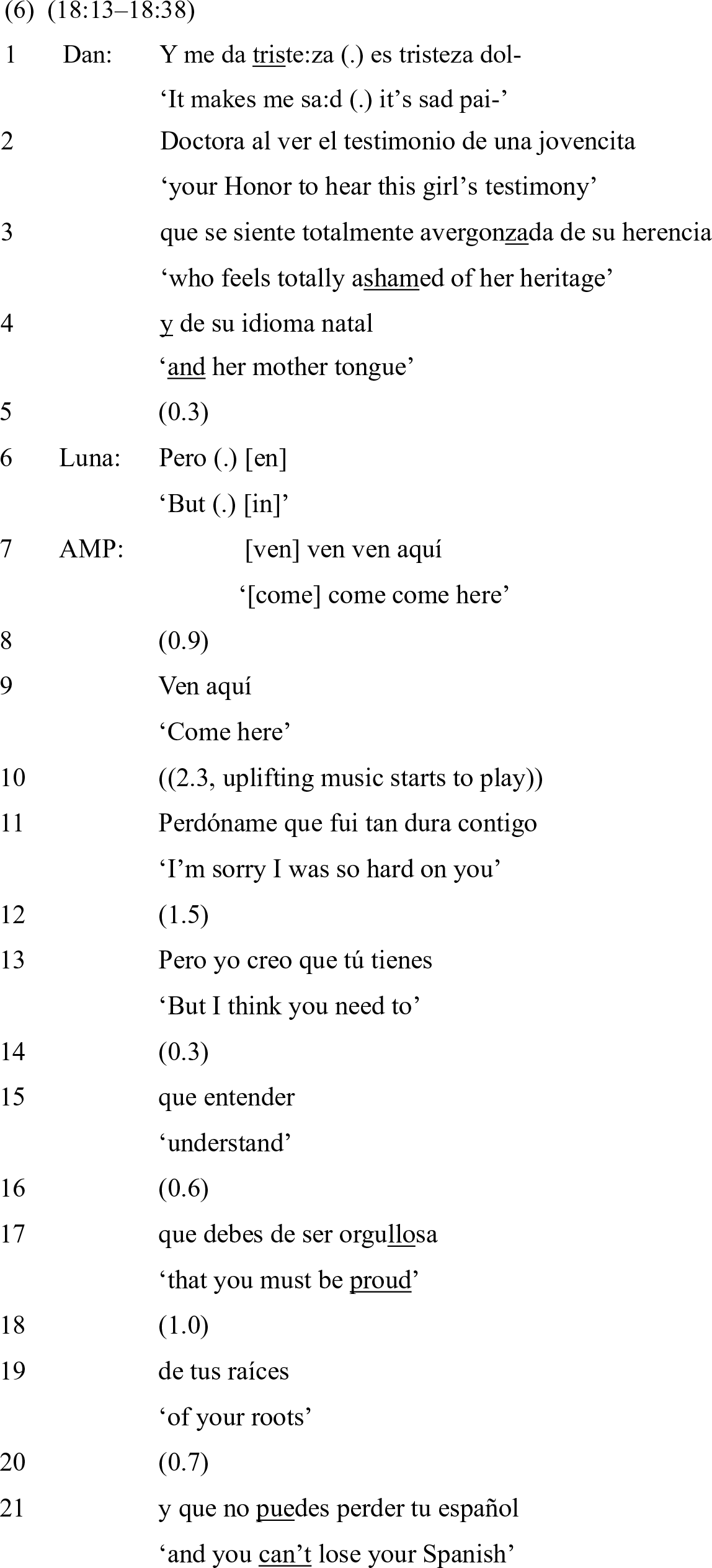
After some additional back-and-forth between AMP and Luna, the trial moves to calling two more witnesses: (a) Luna’s brother, Jonathan, who explains that Luna was bullied at school for being Latina and a Spanish speaker, and (b) a professor of religious studies at Florida International University, Daniel Álvarez, who was summoned due to his knowledge of five languages. In extract(6) we see the conclusion of Daniel’s testimony (‘Dan’ in the transcription), followed by a reconciliation between AMP and Luna.
As lines 1–5 demonstrate, AMP is not alone in reproducing essentialism: Daniel’s stance links Luna’s heritage with the Spanish language and expresses sadness toward Luna’s supposed rejection of both. As Lo & Fung (Reference Lo, Fung, Duranti, Ochs and Schieffelin2011) note, multiparty shaming is a common practice, in which other participants support the initiator in their effort to change the target’s behavior. In this case, Daniel’s discursive strategy is to express disappointment in Luna’s behavior, as opposed to AMP’s strategy of anger and outrage.
However, the crux of the exchange is the resolution of the earlier drama between AMP and Luna, in which the judge emotionally apologizes to her while still maintaining her essentialist pedagogical message in lines 13–21. To reinforce her lesson of the importance of Spanish language maintenance, AMP draws from her biography to hold herself up as an example of someone who resisted linguistic assimilation in the US. Specifically, she frames Spanish as instrumental in her professional success by stating, in Spanish, “if today I am a well-known and respected person by thousands from countries in the entire world, it wasn’t because of my English, it was because of my Spanish” (18:47–18:55). This instrumentalist discourse frames bilingualism as an economic resource and was a language ideology expressed by some bilingual mothers in Velázquez (Reference Velázquez2009). An even more explicit stylization of Hispanic motherhood comes when AMP tells Luna in Spanish “my mother always told me ‘keep your language, you never know when you are going to need it’” (18:57–19:02). By emphasizing that she is passing down a lesson from her own mother AMP adds gravitas to the performance of educating Luna, as well as the in-studio and at-home audiences, on the importance of resisting the one nation–one language ideology that contributes to the typical US pattern of language shift by the third generation. The use of multiple timeframes, from AMP’s past lesson from her mother to the importance of Spanish for Luna’s future, is also a frequent discursive strategy found in shaming episodes (Lo & Fung Reference Lo, Fung, Duranti, Ochs and Schieffelin2011). The production team’s inclusion of AMP’s long pauses between intonational units, uplifting music, and audible clapping from the courtroom audience all signal to the at-home audience that they too should believe what AMP is telling Luna.
As Velázquez (Reference Velázquez2009:82) concludes in her study of bilingual mothers in El Paso, ‘those households where the mother perceived herself as having an active role in her children’s linguistic development and also perceived both Spanish and a bilingual/biethnic identity as desirable for her children’s future were also households where children were expected to speak Spanish at home and where more opportunities for linguistic development were present’. In extract (6), and throughout the episode, AMP stylizes maternal agency by setting the Spanish-only FLP and engaging in language shaming, all in service to promote Luna’s Spanish language maintenance and Hispanic ethnic identity. Although Luna does not speak during this stylized mother-daughter heart-to-heart talk, there are several cues that signal Luna’s acceptance of AMP’s message: (a) approaching the bench at AMP’s beckoning, (b) holding AMP’s hands while she gives her speech, (c) close-up shots with tears in her eyes, and (d) nodding her head and smiling when AMP finishes her lesson. After this reconciliation, the episode concludes with a resolution between the plaintiff and defendant, with AMP dismissing the case and suggesting that they record a social media post with Luna about the #NoSpanishChallenge’s ugliness to create better publicity for the store.
Discussion and conclusion
This case study analyzed an episode of the popular Spanish-language reality courtroom TV show Caso Cerrado as a mediated performance (Bell & Gibson Reference Bell and Gibson2011) of the family dynamics surrounding Spanish language maintenance versus shift within US Hispanic communities. Specifically, the two central participants, Luna and AMP, stylize the ‘no sabo kid’ and ‘Hispanic mother’ personae, respectively, and in doing so they perpetuate hegemonic language ideologies (i.e. essentialist, monoglossic, raciolinguistic, and one nation–one language). Their stylization is achieved through their behavior, talk, physical appearances, discursive strategies, and employment of specific linguistic features that are indexical of English influence. The following discussion expounds on the way these stylized features created a mediated performance that likely contributed to the rise in ‘no sabo kid’ discourse online, and it also critically interrogates the paradox of language shaming.
As Lo & Fung (Reference Lo, Fung, Duranti, Ochs and Schieffelin2011:174) state, ‘shaming episodes rest on the premise that words are highly powerful and that, by speaking certain words, you can cause others to feel certain kinds of emotions’. The main objective of AMP’s performance of language shaming was for Luna to only speak Spanish and embrace her Hispanic identity. AMP utilizes several strategies of shaming as a discursive and social practice: (a) adult to child discourse, (b) enforcement of societal norms, (c) emotionally charged talk, (d) intensification in the face of defiance, (e) participation from other adults, and (f) framing the behavior and its consequences across time contexts. These strategies contribute to the stylization of a ‘Hispanic mother’ and overall, the performance is ideologically underpinned by expressions of hegemonic language ideologies. That is, AMP perpetuates essentialism (i.e. Luna must speak Spanish because she is Colombian), a monoglossic view of language (i.e. she must only speak Spanish, and it must be devoid of influence from English), and raciolinguistic ideologies (i.e. AMP’s perception of Luna’s speech was guided by perceiving her as an English-dominant speaker, not by her actual speech production) throughout the shaming exchange. Furthermore, and ironically, she inadvertently reproduces the one nation–one language ideology when she socially erases bilinguals from American society (i.e. ‘Americans are monolingual’ from extract (3)). These expressions of language ideologies and language shaming also display all the characteristics of language panic (Cashman Reference Cashman2009). These include an obsessive preoccupation with Luna’s refusal to speak Spanish, a morally charged insistence that she must speak Spanish because she is Colombian, and an alarmist stance that loss of Spanish language proficiency equals loss of heritage and identity.
Altogether, the genre of reality courtroom TV allowed AMP and her production team to carefully craft this mediated performance for US Hispanic communities. As was previously stated, AMP’s mission was for CC to delve into larger societal issues through ‘serious’ and ‘sentimental’ cases (De La Vega Reference De La Vega2023; Hinojosa Reference Hinojosa2025). As the star of reality courtroom TV show, AMP had the prerogative to implement her personal sense of justice and to curate cases that would give her the platform to transmit her pedagogical messages. While this case appears to be based on a real-life situation (la moon de caso cerrado 2022a,b), AMP and the hired actors together staged a high performance that created a Spanish language maintenance versus shift tableau that displayed the problems of today’s US Hispanic youth. Altogether, their performances highlight how stylization can creatively display hyperbolic representations of known personae through enregistered features, which in turn introduces multiple layers of context that are re-evaluated throughout the exchange (Coupland Reference Coupland2001, Reference Coupland2007). In this case, stylization was a key strategy in the mediated performance of ‘no sabo kid’ language shaming.
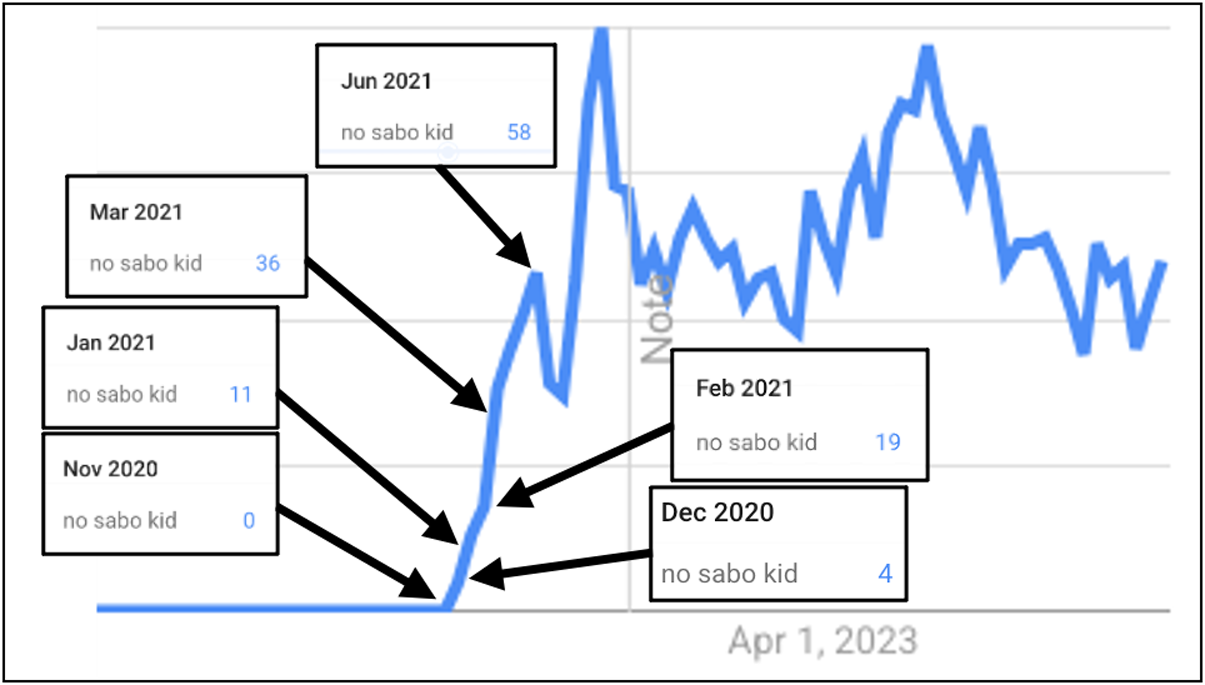
Throughout this article, I have referred to how both AMP and Luna were drawing from enregistered features of the ‘no sabo kid’ persona to index Luna’s supposed linguistic deficits, given that many of the features employed have been identified in previous research (Stransky et al. Reference Stansky, Donnelly, Stonick, Dominguez, Sánchez-Muñoz and Retis2022; Callesano Reference Callesano2023). However, it is worth restating that empirical work and the search queries timeline from GoogleTrends (Figure 1) have suggested that discourse about this persona only began circulating in late 2020 and early 2021. Given that Daniel referred to President Donald Trump during his testimony (16:24–16:36), it must have been filmed sometime between 2017 and 2019, when the show stopped production. From my own digital ethnographic project on how US Spanish speakers are represented on social media, I became aware of ‘Haters’ in 2021 through memes that utilized clips and images from the episode. Indeed, an online user-generated meme database has documented the history of the meme’s emergence (Know Your Meme 2022), claiming that the episode began to go viral in February 2021 on Twitter (currently known as ‘X’) and YouTube, before quickly spreading to TikTok in March 2021.
To contextualize the episode’s virality vis-à-vis the emergence of ‘no sabo kid’ discourse, a more detailed timeline from Google Trends is provided in Figure 3.
Google Trends search interest timeline for ‘no sabo kid’ (January 2019–June 2025).
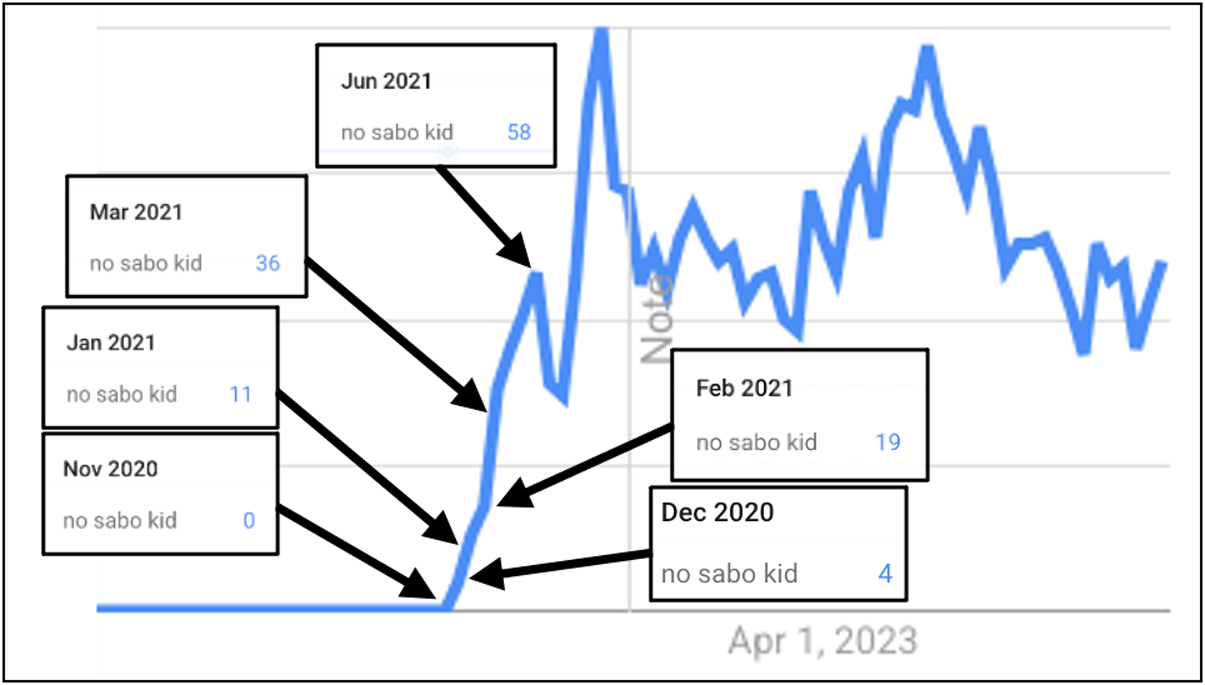
Figure 3 Long description
Insufficient visual information to describe this element accurately.
During filming it is likely that AMP and Luna stylized linguistic and non-linguistic features that index English-dominant Spanish speakers in the US but possibly had not yet become enregistered onto the ‘no sabo kid’ persona. However, once the episode aired sometime in 2021, I argue that their performance may have been interpreted by some viewers as portraying a ‘no sabo kid’. Through re-interpretation, which is a key feature of stylization (Coupland Reference Coupland2001, Reference Coupland2007), these semiotic features that index English-dominance likely gained an n + 1st indexical value once the episode entered an online environment that was rapidly propagating this new raciolinguistic label, as Luna was the personification of this emerging persona. Indeed, my own analysis employs this n + 1st indexical value given that I analyzed the episode well after ‘no sabo kid’ Google inquiries peaked. In short, this episode appears to have been a pivotal popular culture moment in shaping ‘no sabo kid’ discourse, but future research should examine its (online) reception to empirically gauge its impact on awareness and propagation of this socially meaningful persona within US Hispanic communities.
At this juncture, the paradox of the CC’s mediated performance, as well as the larger ‘no sabo kid’ language panic, should be critically questioned: language shaming whose aim is to promote language maintenance may in fact accelerate language shift. Previous research has long documented the link between Spanish language proficiency and US Hispanic identity, in that those who are more proficient are often perceived (or claim to be) more ‘authentic’ (Shenk Reference Shenk2007; Urciuoli Reference Urciuoli, Niño-Mircoa and Rothman2008; Sanchez et al. Reference Sanchez, Chavez, Good and Wilton2012; Zentella Reference Zentella, Alim, Rickford and Ball2016; Blitvich Reference Blitvich, Evans, Jeffries and O’Driscoll2019; Tseng Reference Tseng2021; Howard & Pagan Reference Howard and Pagan2025; Christiansen Reference Christiansen2025). For some US Hispanics, not living up to these linguistic standards rooted in monoglossic and essentialist ideologies can fester into negative feelings of linguistic insecurity and shame (Goble Reference Goble2016; Tseng Reference Tseng2021). To alleviate these feelings, some speakers may choose to stop speaking Spanish or not speak it as often, which can lead to language shift (Ravindranath Abtahian & McDonough Quinn Reference Abtahian, Maya, Hildebrandt, Jany and Silva2017), thereby impacting its linguistic vitality in the US. For example, mass media reports about how speakers are contesting and reclaiming the ‘no sabo’ label have included discussions about the negative effects of linguistic insecurity and language shaming on Spanish language maintenance with targeted individuals (e.g. Delgadillo Reference Delgadillo2022; Flores & Brown Reference Flores2023; PBS NewsHour 2024). Indeed, when writing about language panics Cashman (Reference Cashman2009:61) notes, ‘the ordinary, routine belittling of Spanish in general or the local varieties of Spanish in particular may influence speakers’ attitudes about whether Spanish is worth maintaining’.
On the mediated stage, AMP shames Luna not only for refusing to speak Spanish, but also for how she speaks the language when she does, even though the linguistic features AMP chooses to stylize were not present in Luna’s speech. This shaming is done despite Luna’s repeated expressions of linguistic insecurity about speaking in Spanish. Although the episode has an outcome in which Luna switches to Spanish, accepts AMP’s motherly advice about the importance of Spanish for Hispanic identity, and reconciles with her, this performance greatly simplifies the complexities of language and family dynamics. In doing so, the episode may create unrealistic expectations for viewers who wish to emulate AMP to achieve a similar outcome within their own communities and households, which is important considering CC’s wide cultural reach in Spanish-speaking communities (NBCUniversal News Group 2025).
In short, through language shaming, expressions of hegemonic language ideologies and stylization the CC episode ‘Haters’ elevates the mundane (i.e. FLP in Hispanic households) into high performance (i.e. interrogation of a ‘no sabo kid’) to transmit AMP’s pedagogical message of the importance of Spanish language maintenance in the US for preserving Hispanic identities. Because of CC’s strong cultural impact, AMP likely gave voice to many Spanish-speaking families in the US who saw the dynamics in their household on public display. Although the intention behind this mediated performance was undoubtably to promote Spanish language maintenance, it likely reinforced, as well as shaped, emerging discourse of language panic and shaming of ‘no sabo kids’. However, future research is needed to determine the long-term impact of this mediated performance, in addition to how the ‘no sabo kid’ label is affecting the ethnolinguistic vitality trajectory of Spanish in the US.
Acknowledgments
For feedback on earlier presentations of this work, I would like to thank the audience members of the 11th International Workshop on Spanish Sociolinguistics and Maríe Irene Moyna. A special thanks to Enrique (Kike) Rodríguez for assistance in reviewing the transcriptions and their translations. Any remaining errors are my own.
Appendix: Transcription conventions, based on Jefferson (Reference Jefferson and Lerner2004)
 [video]

 Open access

