





Introduction
Linguistic variation has long provided sociolinguists with a window into how social hierarchies are produced, sustained, and reimagined in everyday life. Central to this enterprise is how linguistic forms acquire social value and become unevenly distributed, giving rise to the constructs of prestige, standardness, and class.Footnote 1 In variationist work, prestige is typically understood as “overt prestige,” the socially recognized value attached to forms associated with the standard and institutional authority (Labov, Reference Labov and Labov1972c; D’Arcy & Tagliamonte, Reference D’Arcy and Tagliamonte2010; Meyerhoff, Reference Meyerhoff2018:236). The standard denotes historically and ideologically constituted norms linked to education, governance, and mobility (Peters, Reference Peters, Schreier, Hundt and Schneider2019). Social class is treated as a multidimensional position, operationalized through occupation, education, and wealth as proxies indexing differential access to these norms (Labov, Reference Labov2001; Meyerhoff, Reference Meyerhoff2018:179). Much canonical modeling of how variation becomes stratified along these constructs, especially in the Labovian tradition, defined here specifically as his comprehensive model of sociolinguistic variation that depends crucially on socioeconomic factors (Labov, Reference Labov2001), is grounded in Western, largely Anglophone societies, particularly North America and Europe (Labov, Reference Labov2001). As Labov himself later noted, his foundational work was not intended as a claim “that class stratification of linguistic variables, measured by occupation, education and income, would be found everywhere in the world” (Labov, Reference Labov2016:586). Nonetheless, this Western anchoring has been widely critiqued (Adli & Guy, Reference Adli and Guy2022; Nagy & Meyerhoff, Reference Nagy, Meyerhoff, Nagy and Meyerhoff2008; Smakman & Heinrich, Reference Smakman and Heinrich2015; Stanford, Reference Stanford2016; Stanford & Preston, Reference Stanford, Preston, Stanford and Preston2009), alongside growing scholarship on prestige, class, and social meaning in non-Western and postcolonial contexts (Chand, Reference Chand2010a; Haeri, Reference Haeri1996; Chs. 5–6).
Subsequent work has built on and extended these models by demonstrating that the social meanings attached to linguistic variables are neither uniform nor portable, but are continually reworked as language circulates across regions, institutions, and historical moments. Studies of English in postcolonial, multilingual, and transnational settings in particular show that forms associated with prestige or standardness in one context may acquire different, or even contradictory, values elsewhere (Chand, Reference Chand2010a; Gonzales et al., Reference Gonzales, Ivy, Harry, Judy and Karina2026; Stanford, Reference Stanford2016). Against this backdrop, the central question is not simply whether classical sociolinguistic patterns persist outside their original Western sites of formulation, but how linguistic prestige and social order are actively recomposed as English moves through diverse sociopolitical and institutional frameworks. Addressing this question requires attention to contexts where multiple ideas of prestige intersect and where the alignment between language, class, and standardness is historically multitiered and contested (Satyanath, Reference Satyanath2022).
Hong Kong provides such a context. Shaped by colonial history, globalization, and sustained multilingualism, it is a city in which uniform notions of “prestige” and “class” cannot be presupposed (“Background” section)—a city where notions of “standard” and “nonstandard” are less straightforward (Satyanath, Reference Satyanath2022). This study approaches the problem through an analysis of the sociolinguistic variable (r)—or the realization of the phoneme /r/ in syllable coda position (commonly termed “postvocalic (r)” in the variationist literature) (Chand, Reference Chand2010a:1)—a variable whose variants have been historically linked to different and competing standards of English rather than to a single prestige norm. In this paper, (r) is operationalized as a variable realized through rhoticity/r-fulness (e.g., car [kɑɹ], fourth [fɔɹθ], historically associated with standardness and institutional prestige in most varieties of American English) and non-rhoticity/r-lessness (e.g., car [kɑː], fourth [fɔːθ], historically associated with elite, educational, and colonial prestige in British and postcolonial varieties) (Groves, Reference Groves2011; Hansen Edwards, Reference Hansen Edwards2016). Crucially, these two linkages reflect distinct historical standardization trajectories: While rhoticity became the overt standard in North America (Becker, Reference Becker2014), non-rhoticity was exported globally through British colonial education and administration (Bolton, Reference Bolton2000). These variants have therefore acquired distinct and sometimes competing prestige meanings across Englishes worldwide (cf. “Background” section), and they continue to reorganize, or destabilize, linguistic stratification in contexts like Hong Kong, where the notion of a single, unified “standard English” has increasingly become untenable.
Hong Kong provides a particularly strategic site for such an inquiry. Few contexts compress within a single metropolis such a unique, dense layering of linguistic histories: British English entered Hong Kong as a colonial prestige variety or “style” tied to governance and elite mobility; American English later accrued value through media, higher education, and global commerce, and some (international) secondary and primary schools; Cantonese indexes local belonging, while Putonghua has gained authority through Mainland China’s political–economic influence. In this largely trilingual ecology (alongside minority languages such as Filipino, Indonesian, and Urdu), English is both indispensable and contested. It is a linguistic resource of mobility and aspiration, but also a site of ideological tension. Recent studies have shown that Hong Kong university students now express near-equal preference for British- and American-style English, with the latter gaining ground as a model of global modernity (Hansen Edwards, Reference Hansen Edwards2016). Simultaneously, local English-related practices featuring variable (r)-lessness, partly arguably linked to the dominant language Cantonese, which traditionally lacks syllable coda (r), often enregistered as “Hong Kong English” and “Kongish” (Wong & García, Reference Wong and García2025), are increasingly recognizable and evaluable. Often dismissed as “nonstandard,” such forms are also reinterpreted as authentic and locally meaningful within broader Cantonese–English translanguaging practices (Gonzales, Reference Gonzales2025). With British, American, and local norms coexisting, prestige in Hong Kong operates across contested, overlapping “indexical fields” (Eckert, Reference Eckert2008:453; Agha, Reference Agha2003), where accents carry distinct legitimacies.
Amid these overlapping linguistic ideologies, prestige is being redefined through how speakers negotiate the social values attached to English. To understand this process, it is instructive to return to one of sociolinguistics’ most enduring diagnostic variables related to prestige: syllable coda (r). Importantly, this variable has never followed a single global trajectory. Across North America, Europe, and Asia, rhoticity has indexed upward mobility, institutional authority, local authenticity, or resistance depending on historical moment and sociopolitical context. New York City represents one well-documented trajectory among many. Since Labov’s (Reference Labov1966, Reference Labov and Labov1972c) study, (r) has served as a diagnostic variable for examining how linguistic differentiation becomes socially meaningful. Replications and extensions of this work have shown that the relationship between rhoticity and prestige is durable but plastic: In New York, rhoticity shifted from a marked prestige target to a generalized urban norm (Fowler, Reference Fowler1986; Guy, Reference Guy2018; Mather, Reference Mather2012), while in Boston, locally rooted non-rhoticity remained socially valued despite national standardization pressures (Levy, Reference Levy2009). Studies in the UK, Singapore, India, and China (Kwek, Reference Kwek2018; Tan & Gupta, Reference Tan and Gupta1992; Li, Reference Li2019) further demonstrated that (r) indexed different social values depending on competing standards, colonial histories, and mobility frameworks, showing that “prestige” is organized locally and is moderated by other variables (e.g., affect, education) (c.f. “Background” section for discussion).
This cross-contextual variability underscores why (r) remains theoretically valuable. It provides an empirical test of how “prestige,” if even relevant, may operate within a plural indexical field. Drawing on four years of ethnography, this study situates this variable within Hong Kong’s contemporary retail ecology, where large, multi-brand mall complexes have supplanted traditional department stores as the city’s dominant sites of consumption and social stratification (Ho, Reference Ho2010), within a neoliberal context and linguistic marketplace (Bourdieu, Reference Bourdieu and Biggart2002:280) where market pressures and the pursuit of upward mobility shape how ways of speaking, including (r), are evaluated and used as commodified skills. If prestige in Hong Kong is organized through competing standards rather than a single hierarchy, then the social meanings of (r) must be interpreted from a local insider perspective, instead of being imposed from earlier Euro-American models. Identifying such meanings therefore requires going beyond distributional patterns to examine how (r) is evaluated, rationalized, and ideologically framed by speakers and listeners, and how it circulates within broader indexical fields of English in Hong Kong (Gonzales et al., Reference Gonzales, Ivy, Harry, Judy and Karina2026:2; Eckert, Reference Eckert2008). A comprehensive account of (r) thus demands analysis of how its social meanings are produced, circulated, and strategically leveraged in interaction, not simply where it appears. Against this backdrop, the paper asks:
1. How is syllable coda (r) variably realized across Hong Kong’s mall hierarchy, and to what extent does its distribution reflect structured social and stylistic differentiation comparable to the stratification observed in previous studies?
2. What social meanings attached to rhotic and nonrhotic variants enable their mobilization in speech, and how do such meanings allow speakers and listeners to leverage (r) variation in Hong Kong’s postcolonial, multilingual, and neoliberal context?
Background
Rhoticity and prestige
Research on syllable coda (r) has long been concerned with prestige, but a comparative synthesis of (r) studies shows that prestige is neither uniform nor stable. Instead of indexing a single social meaning, rhoticity participates in complex, shifting indexical fields that vary across regions, historical periods, and political economies. Findings from some studies across North America, Europe, and Asia show that while (r) is consistently involved in stratification, the direction of prestige (r-fullness, or r-1, vs. r-lessness, or r-0), the social groups who lead it, and the pathways of change vary systematically across space and time.
In North America, rhoticity is most often associated with supra-local or institutional prestige, though this association has shifted historically. Early evidence from the US South shows that r-lessness once indexed elite plantation and urban authority (McDavid, Reference McDavid1948), but this pattern inverted over the twentieth century as rhoticity spread inland and became associated with modernization and standardness (Labov, Reference Labov1972b; Wolfram & Schilling, Reference Wolfram and Schilling2015). New York City provides the most detailed documentation of this transformation. In the early-to-mid twentieth century, elite and vernacular speech were largely non-rhotic, with rhoticity functioning as a marked, supra-local feature associated with General American norms (Labov, Reference Labov1966; Trudgill, Reference Trudgill1974). Its concentration in careful speech and lower-middle-class hypercorrection suggests overt prestige indexing professionalism and mobility (Labov, Reference Labov1966; Reference Labov2006:150–151, 318). Labov’s (Reference Labov and Labov1972c) department store study subsequently demonstrated that rhoticity patterned with store prestige and increased under stylistic monitoring, establishing rhoticity as an overtly prestigious target. Later replications (Fowler, Reference Fowler1986; Guy, Reference Guy2018; Mather, Reference Mather2012) made evident that this prestige norm was not restricted to elites: Rhoticity increased across classes and generations, approaching community-wide dominance as linguistic constraints weakened (Becker, Reference Becker2014). Over time, rhoticity diffused across the speech community and became institutionalized as the unmarked standard. Crucially, the fact that both rhoticity and r-lessness have been associated with prestige at different historical moments makes it difficult to attribute social value to any inherent phonetic or cognitive property of either variant. Instead, the rise of rhoticity reflects historically specific processes of standardization, social mobility, and institutional circulation through which particular groups and institutions came to legitimize rhotic speech. However, the broader US history of (r) is more complex than a simple reversal. Rhoticity persisted in large inland and Scots–Irish-influenced regions, enabling later standardization (Baugh & Cable, Reference Baugh and Cable1993:378; Wolfram & Schilling, Reference Wolfram and Schilling2015), while Southern patterns remained heterogeneous and stratified by race and region (Feagin, Reference Feagin, Edmondson, Feagin and Mülhäusler1990; Wolfram & Schilling, Reference Wolfram and Schilling2015; Baranowski, Reference Baranowski2007:77–78). Its eventual dominance was further reinforced by dialect leveling, urbanization, and media standardization, with Midwest-based broadcasting norms enregistering rhotic speech as the least regionally marked (Costa & Serra, Reference Costa and Serra2022).
Outside New York, evidence from North America further demonstrates that the relationship between rhoticity and prestige is neither uniform nor inevitable. In Eastern New England, rhoticity has expanded as a marker of education, mobility, and nonlocal orientation (Nagy, Reference Nagy2018; Nagy & Irwin, Reference Nagy and Irwin2010; Stanford et al., Reference Stanford, Severance and Baclawski2014), though stable mixed systems persist in Boston neighborhoods where r-lessness retains local authority (Levy, Reference Levy2009). In African American English or Language, rhoticity correlates with middle-class status and broader integration (McLarty et al., Reference McLarty, Jones and Hall2019; Myhill, Reference Myhill1988), demonstrating that prestige operates through community-specific hierarchies instead of through a single national norm. Similar patterns of contingency are evident outside North America. In Scotland, strengthened rhoticity is associated with middle-class status and upward mobility in some contexts (Dickson & Hall-Lew, Reference Dickson and Hall-Lew2017; Lawson et al., Reference Eleanor, Scobbie and Stuart‐smith2011), while in others, r-reduction spreads among younger speakers without being framed as low prestige (Stuart-Smith, Reference Stuart-Smith2007). These varied contexts show that rhoticity encodes competing meanings, from locality and mobility to prestige and differentiation, demonstrating that its social meanings are historically contingent.
Studies from Asia further demonstrate the complexity of (r) indexicality. In Singapore, rhoticity is consistently linked to education and socioeconomic advantage, even as related phenomena (e.g., intrusive (r)) are stigmatized, producing an internally differentiated prestige system (Tan & Gupta, Reference Tan and Gupta1992; Tan, Reference Tan2012; Kwek, Reference Kwek2018). In Delhi English in India, elite speakers maintain Received Pronunciation (RP)-aligned r-lessness, while younger speakers increasingly adopt American-style rhoticity (Chand, Reference Chand2010b), creating competing prestige orientations within the same speech community. In the Chinese mainland, near-categorical rhoticity is argued to reflect L1 transfer instead of prestige (Li, Reference Li2019), illustrating that (r) is complex and varies by local context; in this case, rhoticity appears not to function as a prestige variant. Across these Asian settings, prestige appears to be pluricentric and internally differentiated, that is, distributed across multiple English norms, often linked to schooling, media, and transnational orientation instead of having a single nexus.
The studies altogether demonstrate that syllable coda (r) is best understood as a prestige-sensitive variable whose valuation is repeatedly reconfigured as English circulates across regions and social systems. Crucially, this variation reflects shifting constellations of social meanings within locally specific indexical fields, motivating a context-specific investigation of how prestige operates in English in Hong Kong.
Social meanings of syllable coda (r): what we know and what to expect
A comparative review of (r) literature shows that frequently appearing meaning clusters can be identified across contexts, reflecting heuristic tendencies instead of fixed or exhaustive meanings that go beyond “prestige” discussed in the “Background” section. First, rhoticity (r-1) is often associated with mobility, education, and supra-local orientation, appearing in contexts such as New York, Boston, Edinburgh, Singapore, and Delhi as a resource for indexing upward movement or global alignment. Second, non-rhoticity (r-0) is frequently linked to locality, tradition, or community alignment, as seen in the US South, the Lower East Side, Boston neighborhoods, African American communities, and elite RP-oriented domains. However, this association is not uniform: In some contexts, most notably in RP and historically British-oriented elite domains, r-0 has also indexed institutional prestige, education, and high social status. This apparent contradiction underscores that r-0 participates in multiple, sometimes competing indexical orders, including both local affiliation and traditional elite prestige depending on the sociolinguistic setting.
Individual studies show that both r-0 and r-1 variants participate in multiple, sometimes competing meanings, shaped by historical reversals, neighborhood contrasts, and generational shifts. For example, in Eastern New England, rhoticity is associated with younger speakers, higher education, and nonlocal orientation, while also reflecting ongoing change and regional differentiation between Boston and New Hampshire, indicating that its social meaning is tied to shifting patterns of mobility, identity, and place (Nagy & Irwin, Reference Nagy and Irwin2010). Altogether, these patterns position (r) as a context-sensitive variable whose social meanings are locally configured and dynamically shifting, making it necessary to examine how these indexical tendencies are rearticulated in specific sociolinguistic settings.
In Hong Kong’s postcolonial marketplace, where British, American, and local orientations intersect, (r) therefore occupies an unstable but typologically expected semiotic position. The patterns reviewed suggest that rhoticity may signal American cosmopolitanism, that is, a way of speaking that sounds international and modern instead of local or traditional, and that is often associated with being young, globally connected, and easy to understand. On the other hand, non-rhoticity may evoke British-educated refinement or local authenticity, mirroring the coexistence of competing norms observed in Singapore and Delhi (C. Chand, Reference Chand2010b; Kwek, Reference Kwek2018; Tan & Gupta, Reference Tan and Gupta1992). Hong Kong research already reflects this plurality: Hansen Edwards (Reference Hansen Edwards2016) showed that younger, more media-exposed Hong Kong English majors display American English features such as rhoticity, with the degree of use conditioned by individual accent preferences (e.g., British vs. American) and levels of American media influence.
Interactional studies further clarify how these meanings are activated in practice. Work on accommodation and audience design in Hong Kong shows that speakers attune stylistic repertoires to audience composition, stance, and gendered expectations, instead of simply reproducing class categories (Gonzales, Reference Gonzales2025; Gonzales et al., Reference Gonzales, Ivy, Harry, Judy and Karina2026). Phonological and perceptual research situates this flexibility within the city’s multilingual scene: Some features trace to Cantonese influence (Deterding et al., Reference Deterding, Wong and Kirkpatrick2008) and become socially meaningful only once they are ideologically circulated and evaluated (Chau, Reference Chau2024). As shown in previous literature, the social meanings of (r) emerge within locally specific indexical fields shaped by ideology, interaction, and social positioning, where evaluations of (r) are filtered through race, age, and class, such that identical phonetic cues may be heard as professional, foreign, authentic, or aspirational depending on speaker category (Hu & Lindemann, Reference Guiling and Lindemann2009).
The methodological implication is that social meaning in Hong Kong cannot be modeled only through linguistic structure, because syllable coda (r), henceforth (r), operates within a field where meanings are repeatedly reinterpreted through interaction, ideology, and social positioning, influenced by many factors other than structure and prestige. In particular, the coexistence of competing prestige models (e.g., American rhoticity and British non-rhoticity) means that (r) cannot be assigned a stable social value a priori, but must be empirically examined within its local indexical field. This motivates the present three-study design of this paper.
Study 1: how (r) is produced: rapid anonymous survey
Data collection
Production data were collected via a rapid anonymous survey (Labov, Reference Labov1966) adapted to Hong Kong’s mall-based retail environment, which enables naturalistic yet comparable data collection under minimal observer effect. As in the department store studies (“Background” section), employees, not customers, were targeted, holding occupational class relatively constant while varying workplace prestige to test alignment with institutional status. This design isolates socio-spatial prestige as the primary variable. Because Hong Kong lacks US-style department stores, a pre-fieldwork ranking task with 20 residents established socio-spatial stratification, providing a locally validated measure of “prestige.” Malls were classified as upper, middle, or lower tier based on ≥75% agreement or mean ranking (hereafter referred to as the “class” variable, which consistently denotes mall status instead of individual socioeconomic class). This yielded five upper-tier sites (IFC Mall, Pacific Place, K11 Art Mall, YOHO Mall II, and New Town Plaza), three middle-tier sites (SOGO, Langham Place, and Landmark North), and three lower-tier sites (Kornhill Plaza/AEON Kornhill, Panda Place, and Dragon Centre) (Appendix D), across which approximately 450 retail units were sampled (Figure 1).
Hong Kong mall locations of focus.

Figure 1 Long description
The map displays mall locations in Hong Kong categorized by class and region. Mall classes are indicated by colors: upper (green), middle (orange) and lower (red). Regions are marked with symbols: Hong Kong Island (circle), Kowloon (triangle) and New Territories (square). Specific malls include Landmark North, YOHO Mall II, Panda Place, Dragon Centre, IFC Mall, Pacific Place, Langham Place, K11 Art Mall, SOGO, Kornhill Plaza/AEON Kornhill and New Town Plaza. The map uses latitude and longitude coordinates for positioning.
Two waves of fieldwork (July 2024; July 2025), approved by the Survey and Behavioral Research Ethics Committee (SBRE-23-0984), were conducted by four trained research assistants (Table 1). Given differences in their visible identities and speech (accent, rhoticity), these profiles were documented in advance, with perceived accent and rhoticity calibrated impressionistically prior to data collection.
Interviewer/fieldworker profile

Table 1 Long description
Columns list alias, sex, age, ethnicity or race, nationality, perceived accent, perceived level of rhoticity in production with a rank, and wave of field work. Lily is female in her 20s, White, American, with perceived accent General American English, and rhoticity high ranked 1, in wave 1. Rene is female in her 20s, Black, British, with perceived accent Multicultural London English, and rhoticity low ranked 4, in wave 1. Bryce is male in his 20s, Asian or Hong Konger, Chinese, with perceived accent Received Pronunciation, and rhoticity average to low ranked 3, in wave 1. Heather is female in her 20s, Asian or Hong Konger, Chinese and American, with perceived accent General American English, and rhoticity high ranked 2, in wave 2.
Following Labov’s (Reference Labov1972a) protocol, assistants posed as customers and elicited fourth floor twice from retail employees: once casually, then through emphatic repetition to prompt more careful speech, operationalizing stylistic variation by systematically varying attention to speech within the same interaction. Throughout the analysis, this repetition task corresponds to the “style” variable, serving as a direct proxy for casual versus careful speech. Elicitation used six equivalent question frames, with question type included as a covariate to control for framing effects on (r) production (see “Data analysis” subsection).
1. Excuse me, could you tell me which level/(floor) has _______?
2. Where can I find the _______ ?
3. Is the _______ section on this level? (here, the section is actually on the fourth floor) Which level has the _______ (store)?
4. Excuse me, where is the _______?
5. Which location is _______?
6. How can I find _______?
Fieldworkers were instructed to minimize their own (r) use where possible, although several elicitation frames necessarily contained syllable coda (r) (e.g., where, floor). In these cases, fieldworkers were trained to produce prompts consistently and neutrally across interactions to limit accommodation effects. After each interaction, they recorded tokens and impressionistic demographics out of sight to preserve low-obtrusion conditions and mitigate the observer’s paradox. To control for interviewer effects, perceived interviewer accent was included as a fixed effect and participant ID as a random intercept (see “Data analysis” subsection). Interviewer rhoticity was not modeled separately due to collinearity with accent and nationality and the lack of acoustic measures, allowing interviewer variation to be controlled without unstable estimates.
Each encounter yielded up to four tokens of (r) (two casual, two careful), coded impressionistically as [r-1] (rhotic), [r-0] (non-rhotic), or NA (not elicited). Rhoticity was defined as perceptible syllable coda constriction (e.g., /foːr/), while vocalization, lengthening, schwa insertion, or deletion (e.g., /foː/, /foːə/) were coded as non-rhotic. NA was assigned when speakers produced alternative descriptors without (r) (“level,” “G/F,” “basement,” “service counter”) or when tokens were inaudible. NA tokens were excluded from analysis, but the interaction was retained: If a speaker produced only one to three analyzable tokens, these were preserved and entered into all statistical models (e.g., r-1, r-0, NA, NA). This procedure maximizes usable data while maintaining comparability with Labovian token-based analyses.
Although (r) is analyzed as a binary contrast (rhotic vs. non-rhotic) for comparability, rhoticity is gradient, yielding intermediate tokens that even trained coders classify inconsistently (Kendall et al., Reference Kendall, Vaughn, Farrington, Gunter, McLean, Tacata and Arnson2021; Yaeger-Dror et al., Reference Yaeger-Dror, Kendall, Foulkes, Watt and Johnson2009). To address this, assistants cross-checked coding, jointly reviewed uncertain tokens using field recordings (discarded afterward), and resolved cases by consensus with the author. Tokens lacking agreement were excluded, ensuring only robustly interpretable cases entered the dataset.
The final dataset includes 2,348 tokens (539 rhotic, 23%; 1,518 non-rhotic, 64.7%; 291 NA, 12.4%), representing 587 employees (one interaction each). Most NA tokens stem from “level” replies (instead of “floor”) common in Hong Kong malls. Demographics (perceived gender, ethnicity, age, accent, shop type, mall tier) were coded impressionistically from observable cues, following rapid anonymous survey practice (Labov, Reference Labov and Labov1972c; Mather, Reference Mather2012). These classifications reflect fieldworkers’ perceptions, a common but inherently limited approach in this method, and no self-reported demographic data were collected.
Coding was conducted in real time and checked against recordings where available. Accent was coded perceptually (American-, British-, Hong Kong-oriented, undetermined) based on salient phonetic features in Hong Kong English (Hansen Edwards, Reference Hansen Edwards2016), explicitly excluding syllable coda (r) to reduce circularity. Because accent classification is holistic, some circularity regarding fieldworkers’ expectations of “British” or “American” speech influencing rhoticity perception remains possible (McGowan, Reference McGowan2015); therefore, accent was included as a control variable (Vaughn, Reference Vaughn2019). While impressionistic coding and retail noise limit precision, especially for age, ethnicity, and fine phonetics, these constraints are inherent to rapid anonymous surveys (Mather, Reference Mather2012), which prioritize ecological validity and comparability with foundational rapid anonymous survey methods (Mather, Reference Mather2012).
Data analysis
Rhoticity was analyzed descriptively (percentages, counts) and modeled in R (R Core Team, 2025) using a Bayesian mixed-effects logistic regression (r-1 vs. r-0) to estimate how linguistic, social, and situational factors condition (r) production. A Bayesian framework was adopted to accommodate unbalanced predictors through regularization and partial pooling, stabilize sparse cells, and generate full posterior distributions, which is well suited to the dataset’s uneven structure and enables probabilistic interpretation of effects. For each parameter, I report the posterior median, 89% credible interval (McElreath, Reference McElreath2020:88), probability of direction (pd), effective sample size (ESS), and  ${\hat{\text R}}$, allowing probabilistic evaluation of effect direction and reliability. Fixed effects were organized into six blocks: (1) linguistic conditioning (coda environment, (r) order × style); (2) situational context (mall class coded upper/middle/lower, mall floor as proxy for foot traffic and noise × style); (3) perceived speaker demographics (role, age, gender, ethnicity, accent × style); (4) interviewer demographics (race, gender, accent, ethnicity × style) to model accommodation; (5) interactions between mall class and perceived demographics (mall class × age, gender, ethnicity, role) to capture intersections of macroeconomic hierarchy and identity; and (6) random intercepts for participant, interviewer, mall, store, and question, accounting for clustering at speaker, fieldworker, venue, and lexical levels. This hierarchical structure accounts for multilevel dependencies inherent in field-based sociolinguistic data. All fixed effects and the intercept were assigned weakly informative Student-t priors (df = 3, mean = 0, scale = 2.5). Models were fitted in brms (cmdstanr backend; five chains, 30,000 iterations, thinning = 2). Diagnostics indicated excellent convergence (
 $\hat{\text R}$ = 1.00; ESS ≥ 500) (Levshina, Reference Levshina, Schützler and Schlüter2022). Effects are interpreted via medians and pd (e.g., pd = 0.81 indicates 81% posterior support for a directional effect).
Results: the stratification of English (r) in Hong Kong
Frequency distributions: overview
Patterns of English (r) in Hong Kong reveal minimal phonological conditioning but clear social and spatial differentiation. Overall rhoticity is low (≈ 26%) and varies little by factors such as coda presence, (r)-order, or formality (c.f. Appendix A for Distribution of rhotic variants (raw and percentage) by key model variables). In contrast, social context exerts a strong influence: rhoticity increases with mall prestige (13% → 34%) and occupational role (accounting 21% < sales 26% < service 33% < management 38%).
Younger and male speakers are more rhotic than older and female ones (29% vs 20%; 36% vs 24%), while self-identified “Hong Kongers” are least rhotic (15%) compared to “Asian-Other” or “American-accented” participants. At the site level, elite downtown malls such as IFC (43%) and SOGO (43%) register the highest rates, whereas local centers like Dragon Centre (15%) and Panda Place (5%) anchor the non-rhotic end.
Bayesian model
Bayesian modeling (see model results in Appendices B and C) sharpens these patterns. Structural predictors (coda, style, (r)-order) show negligible effects (pd ≈ 0.50–0.70), confirming weak phonological and stylistic conditioning compared to patterns observed in previous studies (“Labovian conditioning”) (Fowler, Reference Fowler1986; Labov, Reference Labov1966; Mather, Reference Mather2012). The dominant predictor is participant accent: American-accented speakers are overwhelmingly rhotic (median = 10.88, CI 7.35–14.52, pd = 1.00). Age shows a modest negative slope (median = −0.08, pd = 0.94), and the only robust interaction showed differences in (r) across style (casual vs. careful) that varied by occupational role (median = −1.34, pd = 0.96). Random effects reveal substantial individual (SD = 6.0) and mall-level (SD = 1.82) heterogeneity, underscoring that (r) is socially and spatially patterned rather than phonologically driven.
Table 2 translates these into posterior probabilities. Accent exerts the strongest direct effect (100%, American +). Age (94%, younger +) and occupational role (96%, service +) also robustly favor rhoticity. Mall class (81%, upper +) and interviewer ethnicity (80%, American +) show moderate effects, linking rhoticity to cosmopolitan retail spaces (e.g., IFC, SOGO) (c.f. Studies 2 and 3 for discussion). The tendency to increase rhoticity in careful speech (i.e., style-shifting) is most highly concentrated among service workers (96%) and younger speakers (92%). For mall class-based modulation, only participant ethnicity (84%) is credible: Hong Kongers show increasing rhoticity with mall prestige, whereas Mainlanders display a different pattern.
Summary of Bayesian results
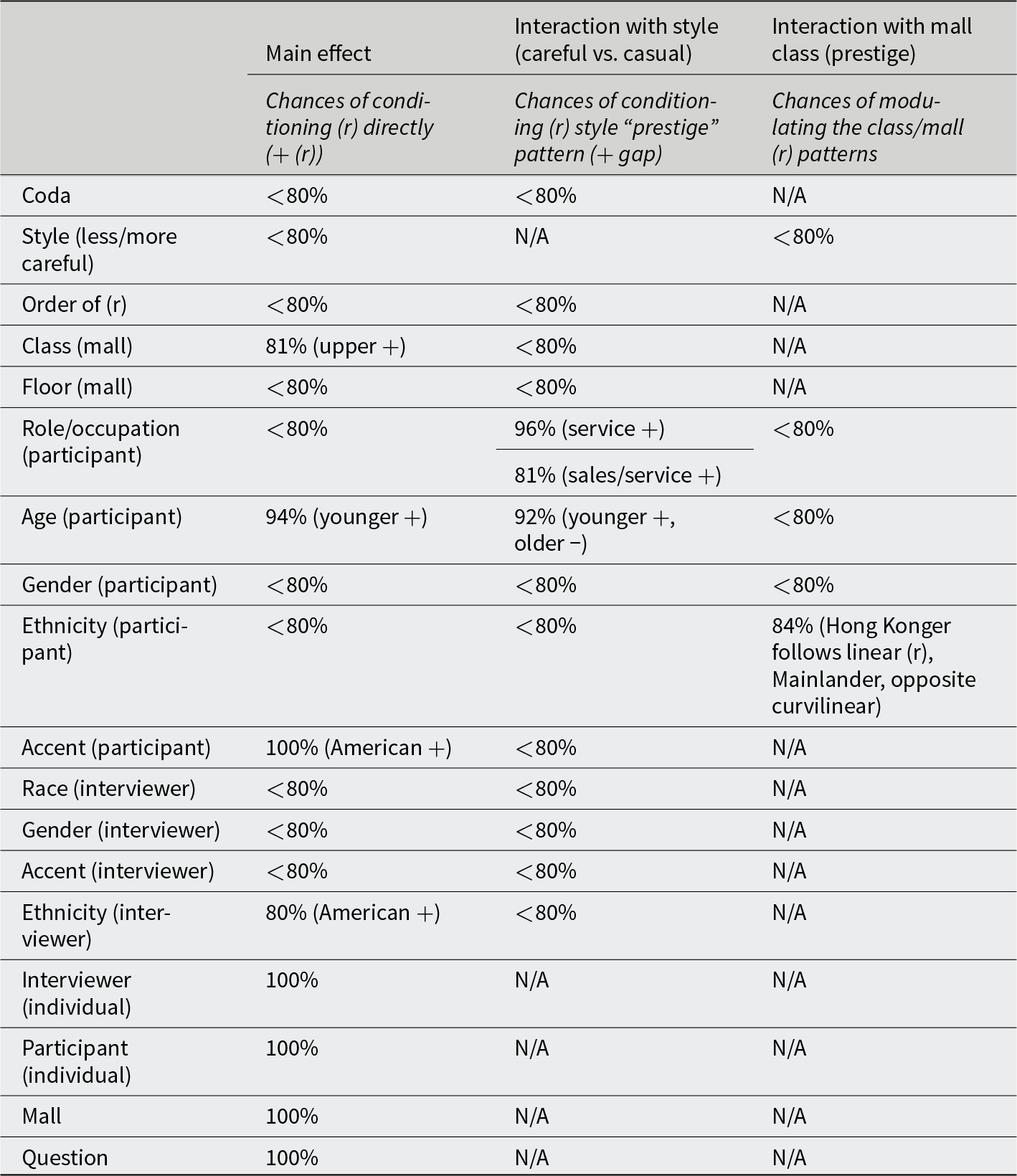
Table 2 Long description
Posterior probabilities in percent are listed for each predictor across three columns: main effect, interaction with style described as careful versus casual, and interaction with mall class described as prestige. For the main effect, accent of participant is 100 percent with American marked positive; interviewer, participant, mall, and question are each 100 percent; age is 94 percent with younger marked positive; class of mall is 81 percent with upper marked positive; and ethnicity of interviewer is 80 percent with American marked positive. For interaction with style, role or occupation of participant is 96 percent with service marked positive, and age is 92 percent with younger marked positive and older marked negative; coda, order of r, class of mall, floor of mall, gender of participant, ethnicity of participant, and interviewer race, gender, accent, and ethnicity are each below 80 percent. For interaction with mall class, ethnicity of participant is 84 percent with Hong Konger described as following linear r and Mainlander described as opposite curvilinear; style is below 80 percent, role or occupation is below 80 percent, age is below 80 percent, and gender is below 80 percent. Several predictors are not modeled for some columns, including coda, order of r, class of mall, floor of mall, accent of participant, and interviewer characteristics for the mall class interaction, and multiple individual-level rows for both interaction columns.
N/A = not modeled.
Notes: Posterior probabilities (%) that each predictor increases the (1) main effect, (2) interaction with style, or (3) interaction with mall class; <80% = negligible. Signs mark effect direction.
Flattened structural conditioning and absence/decline of stylistic effects found in previous studies
The Hong Kong results show a weak stylistic and phonological conditioning that structured Labov’s (Reference Labov1966, Reference Labov and Labov1972c) New York hierarchy. Predictors that robustly stratify (r) in New York City studies, e.g., speech style, coda position, and their interaction, display little systematic differentiation here (Tables 2 and 3, Appendices C and D), with all posterior probabilities falling below 80%, indicating an absence of the ordered heterogeneity expected under foundational models of stylistic stratification (e.g., Labov, Reference Labov1966, Reference Labov and Labov1972c). Table 3 and Appendix D illustrate this minimal differentiation, showing a mere 2-3% difference between casual and careful speech, and virtually no contrast across coda position and token order.
Distribution of rhoticity tokens by coda by style

Table 3 Long description
Counts and percentages of non-rhotic and rhotic tokens are given by coda and style, with totals for each row. For coda, absent and style, less careful, non-rhotic is 374 at 74.4 percent and rhotic is 129 at 25.6 percent, total 503. For coda, absent and style, more careful, non-rhotic is 346 at 72.5 percent and rhotic is 131 at 27.5 percent, total 477. For coda, present and style, less careful, non-rhotic is 413 at 75.5 percent and rhotic is 134 at 24.5 percent, total 547. For coda, present and style, more careful, non-rhotic is 385 at 72.8 percent and rhotic is 144 at 27.2 percent, total 529.
Style (casual vs. careful) yields no reliable effect (median = 0.33, pd = 0.55; Appendix D): speakers do not shift toward a more rhotic “prestige” form under greater attention to speech. Coda position also offers no conditioning (median = −0.01, pd = 0.50), with rhoticity equally likely in syllables with and without a following coda, and only marginal differences across the first and second fourth-floor tokens (≈ 64% chance of effect, Appendix D). The interaction between coda position and style (casual vs. careful), strongly stratified in both New York and Boston, likewise shows limited evidence of meaningful influence in Hong Kong (median = −0.33, pd = 0.60). These model-based results are summarized comparatively in Table 2, which shows that stylistic and phonological predictors consistently fall below the 80% threshold across all three modeled outcomes ((r) realization, prestige-style rhoticity, and class-/mall-based stratification).
These results demonstrate that structural, prestige-based differentiation is not as robust as in New York City studies: (r) shows only minimal association with phonological position or elicited formality, producing a broadly uniform pattern across casual and careful speech. Interviewer-related factors (race, accent, ethnicity) similarly exhibit weak effects, indicating limited accommodation to interlocutor identity. While some subgroup effects emerge (c.f. following section), the overall pattern suggests that listener-linked indexical expectations were not strong organizers of variation.
Social and interactional stratification: accent, age, occupational role, and interviewer cues
While structural and stylistic conditioning appear weak, a second layer of differentiation emerges at the social and interactional level, where speakers’ social characteristics and location and interlocutor variables exert measurable influence on (r) realization. Here, the Bayesian models identify several variables, particularly accent, age, occupational role, and interviewer ethnicity, as contributing salient effects (Table 2, c.f. corresponding descriptive distributions in Appendix D). The participant’s accent provides the clearest differentiation (median = 10.88, pd = 1) (Table 4). Speakers perceived as having an American accent display the highest rates of rhoticity (70.7%), whereas those perceived as Hong Kong-accented (23.5%) align more closely with British non-rhotic norms (14.9%). These pronounced gaps align with Bayesian predictions (Appendix D) and comparative summaries (Table 2), establishing accent as the most robust social predictor.
Distribution of rhoticity tokens by speaker/participant perceived ethnicity via accent

Table 4 Long description
Counts and percentages of rhoticity tokens are listed by perceived ethnicity via accent, with columns for non-rhotic, rhotic, and total. British has 40 non-rhotic at 85.1 percent and 7 rhotic at 14.9 percent, total 47. American has 27 non-rhotic at 29.3 percent and 65 rhotic at 70.7 percent, total 92. Hong Konger has 1383 non-rhotic at 76.5 percent and 424 rhotic at 23.5 percent, total 1807. Other has 68 non-rhotic at 61.8 percent and 42 rhotic at 38.2 percent, total 110.
While accent marks one dimension of differentiation, a parallel pattern arises across Hong Kong’s retail and social landscape: Social differentiation appears most clearly in mall class, which shows a statistically salient effect on rhoticity (median = 1.15, pd = 0.81) in the mall-ecology model (Table 2, Appendix D). Like what was observed in Labov’s original study, participants in lower-tier malls produce noticeably less (r) than those in middle- and upper-tier sites, where rhoticity occurs somewhat more frequently (Table 5). Descriptively, rhoticity rises from 13.2% in lower-class malls to 27.8% in middle-class malls and 33.6% in upper-class malls: a 20-point difference between the extremes. This gradient mirrors the positive Bayesian estimate for mall class in Appendix D, even as interaction terms with style and role remain below threshold, indicating that class operates as a stable contextual constraint instead of a stylistically modulated one.
Distribution of rhoticity tokens by mall class

Table 5 Long description
Counts and percentages of non rhotic and rhotic tokens are listed by mall class, with a total for each class. Lower mall class has 493 non rhotic tokens at 86.8 percent and 75 rhotic tokens at 13.2 percent, total 568 at 100 percent. Middle mall class has 453 non rhotic tokens at 72.2 percent and 174 rhotic tokens at 27.8 percent, total 627 at 100 percent. Upper mall class has 572 non rhotic tokens at 66.4 percent and 289 rhotic tokens at 33.6 percent, total 861 at 100 percent.
Age contributes a further, though more nuanced, dimension of variation. The main effect of age (median = −0.08, pd = 0.94) shows that younger speakers favor rhotic variants, while older speakers more often use r-less forms (Table 6), likely indicating change in apparent-time. Although the probability falls just below the most conservative evidential threshold of 95% chance (in frequentist paradigms), this pattern aligns with regional tendencies toward Americanized pronunciation reported in other Hong Kong English studies (Hansen Edwards, Reference Hansen Edwards2016). The descriptive data in Table 6 show a monotonic decline. This gradient strengthens the interpretation of the Bayesian result as a change-in-apparent-time trend.
Distribution of rhoticity tokens by coda by age

Table 6 Long description
Counts and percentages of non rhotic and rhotic tokens are listed by age group, with a total column for each row. Ages 20 to 29 have 422 non rhotic at 70.6 percent and 176 rhotic at 29.4 percent, total 598 at 100 percent. Ages 30 to 39 have 626 non rhotic at 71.6 percent and 248 rhotic at 28.4 percent, total 874 at 100 percent. Ages 40 to 49 have 407 non rhotic at 79.6 percent and 104 rhotic at 20.4 percent, total 511 at 100 percent. Ages 50 plus have 55 non rhotic at 90.2 percent and 6 rhotic at 9.8 percent, total 61 at 100 percent.
The interaction between age and style (casual vs. careful) (median = −0.04, pd = 0.92) provides finer resolution (Fig. 2 and Appendix D). While the magnitude of these stylistic differences is much smaller than the primary social effects discussed earlier, among those aged ≤39, rhoticity increases in more careful speech (the second fourth floor production), showing an emerging awareness of (r) as a prestige-linked form. In Appendix D, this amounts to a 3-to-4-point increase in rhoticity under careful speech for younger speakers. Those aged 40–49 exhibit the opposite pattern, using less (r) in careful speech, perhaps reflecting a generation socialized under British-influenced norms where non-rhoticity indexed formality. Here, careful speech reduces rhoticity by roughly 2 points (Appendix D). Speakers aged 50 and above show minimal stylistic contrast, suggesting that sociolinguistic awareness of (r) as a prestige cue is most dynamic among younger cohorts. These descriptive contrasts align with the near-threshold Bayesian interaction estimate, indicating that stylistic meaning is age-stratified across the community. These age results altogether suggest a generational restructuring of stylistic meaning, consistent with a slow, ongoing shift from British to North American prestige orientations.
Distribution of rhoticity tokens by age-group and style.

Occupational role further differentiates production patterns, but not straightforwardly. The strongest contrast appears in the interaction between style (casual vs. careful) and occupational role (sales vs. service) (median = −1.34, pd = 0.96) in the interactional-parameter model (Appendix D, summarized in Table 2): Service staff show the largest gap between careful and casual styles (Appendix D and Figure 3). Descriptively, service staff increase rhoticity from 28.9% in casual speech to 36.8% in careful speech (an 8-point shift), while sales staff show only a 2-point shift (25.4% → 27.3%) (Appendix D). Although this 8-point stylistic shift is modest compared to the large gaps driven by accent or mall class, this suggests heightened sensitivity to the communicative demands of customer-facing interaction.
Distribution of rhoticity tokens by occupation and by style.

Accounting staff show minimal stylistic variation (median = −0.53, pd = 0.81). This is consistent with the lower interactional salience of speech in back-office roles (Appendix D shows a change of only ∼1 point). Management shows no significant difference from other groups, implying that linguistic prestige performance is distributed more along lines of service exposure than occupational rank. These descriptive differences help explain why the Bayesian style × role interaction reaches high posterior probability despite weak main effects of role itself.
Turning to the interviewer variables, a modest effect of interviewer ethnicity emerges (median = 2.43, pd = 0.80). Participants produce somewhat more (r) when speaking to American interviewers (Table 7). This suggests that the American social type may weakly activate an orientation toward a more rhotic target. In contrast, interviewer race categories (White, Black, and Asian) fall below the 80% chance threshold, a reversal of the US pattern where racial perception often dominates (Wright, Reference Wright2023). This contrast implies that in Hong Kong, national-linguistic identity rather than racial categorization structures the relevant indexical expectations: Speakers seem to attune to the linguistic persona associated with “American,” “British,” or “Hong Kong” interlocutors rather than to racialized embodiment per se.
Distribution of rhoticity tokens by interviewer ethnicity

Table 7 Long description
Counts and percentages of non-rhotic and rhotic tokens are listed by interviewer ethnicity, with totals for each group. For American interviewers, non-rhotic is 423 at 53.4 percent and rhotic is 369 at 46.6 percent, total 792 at 100.0 percent. For British interviewers, non-rhotic is 587 at 88.8 percent and rhotic is 74 at 11.2 percent, total 661 at 100.0 percent. For Hong Konger interviewers, non-rhotic is 508 at 84.2 percent and rhotic is 95 at 15.8 percent, total 603 at 100.0 percent. Totals differ across interviewer ethnicities, ranging from 603 to 792.
Crucially, American-triggered rhoticity does not pattern with style. The interaction between interviewer ethnicity and style (casual vs. careful) is weak (median = 0.4, pd = 0.64), and rhoticity rises only marginally from 45.1% (casual) to 48.2% (careful) in American-interviewer sessions: a 3.1-point difference. The descriptives and statistical models reveal that style (careful/casual) does not consistently influence rhoticity, regardless of who is conducting the interview. This suggests that sounding American seems to be completely separate from speaking formally. Instead of signaling high social status or careful speech (Labov, Reference Labov1966), using the (r) sound primarily highlights an American orientation when that context is relevant. This “global/American” meaning essentially suppresses the others meanings associated with careful or high-status speech within (r)’s indexical field, meaning speakers can align themselves with American culture without sounding deferential or overly formal. This pattern holds true even in sessions with Hong Konger interviewers, which show moderate rhoticity (15.8%; Table 7), consistent with subtle accommodation toward a locally intermediate norm and with near-zero Bayesian contrasts for Hong Konger interviewer effects (Appendix D).
Ethnolinguistic trajectories and divergent prestige orientations
Patterns of rhoticity differ systematically across ethnolinguistic groupings, pointing to divergent trajectories of prestige alignment within Hong Kong’s English ecology. Among Hong Konger-presenting participants, (r) use increases monotonically across mall class: Those recorded in upper-tier malls exhibit noticeably higher rates than those in middle- and lower-tier venues (Table 8). Rhoticity rises from 4.6% in lower-tier malls to 12.7% in middle-tier malls and 21.0% in upper-tier malls, a 16-point increase across the class hierarchy (Table 8). This stratification suggests that rhoticity retains prestige value in Hong Kong, but given the negligible differences in rhoticity across casual and careful styles discussed earlier, it does not appear to function as a marker of monitored accuracy. Instead, as shown in Study 2, listeners consistently evaluate rhotic speech in terms of clarity, education, and articulacy, while Study 3 shows that speakers link (r) to international schooling, communicative competence, and workplace demands. Together, these findings indicate that rhoticity indexes cosmopolitan fluency and global mobility, aligning with the communicative demands of high-end, English-medium service encounters.
Distribution of rhoticity tokens by class, perceived ethnicity, and rhoticity

Table 8 Long description
Counts and percentages of rhoticity tokens are listed by class and perceived ethnicity, with columns for non-rhotic, rhotic, and total. In the lower class, Asian (Unspecified) has 344 non-rhotic and 64 rhotic out of 408 total, Hong Konger has 145 non-rhotic and 7 rhotic out of 152, and Mainlander has 4 non-rhotic and 4 rhotic out of 8; Asian (Other) totals 0 with percentages shown as NaN for non-rhotic and rhotic. In the middle class, Asian (Unspecified) has 307 non-rhotic and 154 rhotic out of 461, Hong Konger has 138 non-rhotic and 20 rhotic out of 158, and Mainlander has 8 non-rhotic and 0 rhotic out of 8; Asian (Other) totals 0 with NaN percentages for non-rhotic and rhotic. In the upper class, Asian (Other) has 1 non-rhotic and 7 rhotic out of 8, Asian (Unspecified) has 327 non-rhotic and 217 rhotic out of 544, and Hong Konger has 244 non-rhotic and 65 rhotic out of 309; Mainlander totals 0 with NaN percentages for non-rhotic and rhotic. Rows with total 0 display NaN percentages in the non-rhotic and rhotic columns.
NaN, not a number.
This monotonic descriptive gradient corresponds closely to the Bayesian class effect (median = 1.15, pd = 0.81; Appendix D) and is summarized in Table 2 as one of the few predictors with a meaningful probability of conditioning (r) realization.
Asian-unspecified-presenting speakers (e.g., Filipino-, Indonesian-, other South- or East-Asian-presenting) exhibit an amplified class gradient. In upper-tier malls, they reach ∼80% rhoticity, compared with ∼20% among Hong Konger-presenting speakers in similar settings. Table 8 shows a rise from 15.7% (lower-tier) to 33.4% (middle-tier) to 39.9% (upper-tier), which is a 24-point increase, substantially steeper than for Hong Kongers. This sharper gradient explains why ethnicity modulates class stratification in the Bayesian summary (Table 2), even though the interaction between mall class and participant ethnicity in Appendix D falls below the threshold: The mall class effect is robust but unevenly distributed.
Mainlander-presenting speakers show a discontinuous pattern: balanced variation in lower-tier malls (50%, 4/8) but categorical non-rhoticity in middle-tier malls (0%, 0/8), with no upper-tier cases. It is important to note, however, that token counts for both the Mainlander and Asian (Other) categories are exceptionally low; therefore, while Bayesian modeling suggests differences across ethnicity and this type of modeling accounts for low, uneven frequencies in the calculation of the pd value, these findings would be best interpreted as tentative. With this limitation in mind, the contrast may point to mid-tier malls as potential sites of norm enforcement. This may reflect orientations shaped by Mainland English education, where British-oriented norms have historically circulated in formal curricula and exams, even as American English gains visibility in media and training. Practitioner accounts note that Chinese high school textbooks have traditionally favored British English (Liu, Reference Liu2015), that People’s Education Press materials in the early 2000s were explicitly British-oriented (Cooper, Reference Cooper2022), and that “in China they teach British English,” often depending on exam targets (Child, Reference Child2023), alongside tension with students’ American-leaning media preferences (Polly-Phasia, 2025). In this mixed framework, non-rhoticity may function as a safer, institutionally legible choice in evaluative spaces. Avoidance of (r) may also distance speakers from Putonghua-associated erhua or intrusive (r), often stigmatized as “Chinese-accented.” Thus r-lessness operates at the intersection of local and Western indexical fields, avoiding Mandarin-linked stigma while aligning with institutionally authorized norms. These distinct trajectories explain why ethnicity (84%) is the only social variable credibly modulating mall class-based stratification in the model (Table 2): Mall class shows a general positive effect, but its realization differs.
Overall, it seems that mall class serves as a shared prestige cue, but ethnolinguistic positioning shapes how it is read and enacted. Hong Konger-presenting speakers show a linear increase in rhoticity with mall prestige, consistent with local service norms linking English to competence. Asian-unspecified speakers (e.g., Filipino-, Indonesian-, other South- or East-Asian-presenting) follow an amplified version of this pattern (Salonga, Reference Salonga and Tupas2015). Mainlander-presenting speakers seemingly appear to diverge, avoiding (r) in mid-tier malls but using it more in lower-tier ones, suggesting a potential heightened sensitivity to evaluative contexts. Given associations with Putonghua erhua and intrusive (r), rhoticity may carry local risk in authority-linked settings shaped by British-oriented schooling traditions. Model results support this: No interaction between participant accent and style (casual vs. careful) or participant ethnicity and style (casual vs. careful) emerges, and the strong main effect of participant accent (median = 10.88, pd = 1.00) indicates that (r) is patterned more by ethnolinguistic positioning than by momentary stylistic carefulness.
Spatial-ecological stratification and contextual reanchoring of (r)
The mall-level data reveal pronounced contrasts in rhoticity that, at first glance, appear to reflect straightforward differences in clientele and service orientation. The highest rates occur in Hong Kong Island’s luxury and business complexes (Appendix D), that is, SOGO (43.10%), K11 Art Mall (40.4%), IFC Mall (42.9%), and Pacific Place (32.4%), where English functions as the principal medium of service and a visible index of cosmopolitan competence (c.f. discussion of “cosmopolitan” argument in Studies 2 and 3).
In these sites, rhoticity seems to form part of a recognizable international service register, associated with clarity, warmth, and professional polish. At the opposite end, Sha Tin New Town Plaza Phase 3 (0%), Panda Place (5.4%), and AEON Kornhill (9.8%) exhibit little to no (r), despite some serving comparatively affluent local shoppers. English in these environments appears to be primarily transactional, and fine-grained phonetic variation seems to carry less social consequence.
Across all sites, these contrasts aggregate into a spatial-ecological gradient decreasing systematically from the Island’s commercial core through Kowloon’s mid-tier retail zones (Langham Place 19.8%, Dragon Centre 14.8%) to the New Territories’ suburban complexes (YOHO Mall II 18.7%, Landmark North 23.2%, Sha Tin 0–11%, Tsuen Wan 5.4%) (Fig. 4). The pattern holds even within short geographic distances, indicating that the social conditioning of (r) in Hong Kong aligns less with demographic region or residence than with the communicative ecology of particular retail environments. Viewed historically, this configuration amounts to a reversal of colonial linguistic geography. The spatial data provides a crucial macro-level visualization of this “prestige reversal”: The Central-Admiralty-Causeway Bay corridor, which was once the administrative heart of British non-rhotic authority, now produces the most rhotic English in the territory. Viewed from a postcolonial lens, the shift suggests a reanchoring of social value within the contemporary linguistic marketplace: Rhoticity indexes the pragmatic virtues of confidence and intelligibility demanded by globally oriented service workplaces instead of the emblematic prestige once associated with colonial British norms. The geographic distribution, therefore, is a direct visualization of the shifting political economy of English in the city.
Distribution of rhoticity tokens on a map of Hong Kong.

Figure 4 Long description
The map displays rhoticity percentage (% /r/ use) across Hong Kong malls, with latitude and longitude axes. Malls are marked with circles of varying sizes, indicating rhoticity levels. Larger circles represent higher rhoticity. Key locations include Landmark North (Sheung Shui), YOHO Mall II (Yuen Long), New Town Plaza Phase 1 and 3 (Sha Tin), Panda Place (Tsuen Wan), Dragon Centre (Sham Shui Po), Langham Place (Mong Kok), K11 Art Mall (Tsim Sha Tsui), IFC Mall (Central), Hysan Place (Causeway Bay), SOGO (Causeway Bay) and Pacific Place (Admiralty). A color gradient from blue to red indicates rhoticity percentage, with red showing higher values. The map highlights a concentration of higher rhoticity in the central and southern areas of Hong Kong.
Two directional continua further underscore the ecological basis of the pattern and directly advance the argument that English (r) is now governed by a market-driven linguistic economy. A north–south gradient (Sheung Shui 23% → Yuen Long 19% → Sha Tin 0–11% → Kowloon 15–20% → Island 32–43%) mirrors Hong Kong’s long-standing economic orientation toward the southern harbor districts, where global-facing commerce and English service interaction are most concentrated.
A weaker east–west asymmetry (western-central ≈ 40% > eastern ≈ 10%) further reinforces this interpretation. The highest rhoticity clusters in the western-central harbor corridor, that is, Central (IFC Mall), Admiralty (Pacific Place), and Causeway Bay (SOGO) (≈40%), the same districts that historically concentrated colonial administration, finance, and international trade. Post-decolonization, these areas retained their elite status by shifting from British administration to global finance, luxury consumption, tourism, and transnational service labor. This transition altered the spatial linguistic prestige: while colonial authority once favored British non-rhotic norms, these same districts now reward globally legible, mobile varieties of English tied to rhotic pronunciation. The spatial clustering of (r) in these corridors thus reflects a reorientation of prestige from colonial administration toward neoliberal commercial exchange. Altogether, these spatial trends strengthen the view that rhoticity is tied to the city’s economic and interactional geography: its distribution visibly maps the contours of Hong Kong’s neoliberal linguistic marketplace, where the value of (r) is shaped by circuits of international exchange and global service demands. Intermediate malls such as Landmark North (23%), YOHO Mall II (19%), and Langham Place (20%) exemplify this mediation. Each accommodates overlapping publics, that is, Mainland visitors, suburban professionals, and youth consumers, whose linguistic expectations vary across encounters. The moderate and fluctuating (r) rates observed here likely reflect accommodation to shifting audiences, balancing local and international norms within a single, dynamic speech economy.
Study 2: how (r) is perceived: matched-guise experiment
Data collection
In the September 2024 matched-guise experiment, listeners completed a single-word social evaluation task on words with and without rhoticity. On each trial, they heard one token and immediately provided spontaneous adjectives, inferred the speaker’s occupation or background, rated the likelihood that the speaker worked in Central, and estimated age and social class. These judgments were collected for all items, though only target words (i.e., words with (r)) entered the analysis of rhoticity effects. The task lasted 15–20 minutes and was designed to elicit implicit social perceptions. Stimuli centered on controlled manipulation of (r): Each participant believed they were hearing multiple speakers, but all critical items were produced by a single talker (seven listeners heard a male talker; five heard a female talker). The male stimuli were produced by Bryce and the female stimuli by Lily, two of the fieldworkers in the mall study (c.f. demographic information in Study 1, Data collection section), both of whom were selected following author-led pretesting because they could reliably and convincingly produce both rhotic and non-rhotic realizations across repeated tokens. Using a single talker per condition controls for voice quality while isolating (r) as the key variable.
Five lexical items (port, fear, clear, bird, word) were recorded in rhotic and non-rhotic guises and presented to all listeners, enabling within-subject comparison of minimally differing variants. Although bird and word involve stressed schwa (the BURR set), which William Labov (Reference Labov1966, Reference Labov1972b) excluded from the envelope of variation in his New York City study due to their distinct historical and distributional behavior, they were retained here. Subsequent work has shown that this exclusion was not uniformly adopted, with several foundational studies including stressed schwa and finding it to strongly favor rhoticity (e.g., Nagy & Irwin, Reference Nagy and Irwin2010). As this study does not assume a single normative constraint, and given that these environments remain variably rhotic and socially interpretable in Hong Kong English amid competing American and British norms, both vowel- and schwa-conditioned contexts are included to test whether (r) evaluations generalize across phonological environments. Fillers (feel, clean), recorded by auxiliary speakers, created a credible multi-speaker design; pilot testing and post-task comments confirmed the disguise’s effectiveness.
The final set comprised 109 tokens: 87 targets (80%) and 22 fillers (20%), comparable to Lawrence (Reference Lawrence2014), where fillers masked manipulation rather than balanced proportions. Guided by pilot evidence of listener fatigue, fillers were used selectively to reduce transparency while keeping the task manageable. They varied in lexical content and voice to enhance validity and obscure the study’s focus. Both male and female voices were included to avoid anchoring meaning to a single speaker and to enhance ecological validity, given gender sensitivity in perceptual evaluation (Hay et al., Reference Hay, Warren and Drager2006; Labov, Reference Labov2001; Gonzales et al., Reference Gonzales, Ivy, Harry, Judy and Karina2026:30–32). Rhoticity order was counterbalanced (seven r-1 > r-0; five r-0 > r-1), and trials were fully randomized, with pseudo-randomization preventing consecutive tokens from the same speaker or variable.
The listener sample (n = 12) was small but sociolinguistically diverse: participants were aged 18–30 (mostly early twenties), predominantly Hong Kong Chinese/Cantonese (9), alongside Filipino (2) and Pakistani (1) listeners; 8 were women and 4 were men; 9 identified as middle class, with 3 identifying as lower-upper class; 10 were university students and 2 were young professionals.
The modest sample size was intentional. The task was an interpretive, exploratory probe to capture the meanings attached to (r) variants, meaning subgroup patterns are not statistically representative. The study thus prioritizes depth and interpretability over representativeness, mapping perceptual tendencies later contextualized through interview data.
Data analysis
Adjective responses from the matched-guise experiment were analyzed qualitatively through word-cloud comparisons. All adjectives were standardized, lowercased, stripped of whitespace, and consolidated into canonical forms (e.g., educated/well-educated; American/American-sounding). This normalization ensures comparability across responses while preserving core semantic distinctions. Separate word clouds were generated for rhotic (r-1) and non-rhotic (r-0) guises, and, where relevant, by listener class or age, with more frequent descriptors shown in larger, bolder text to highlight the lexical fields most strongly associated with each variant.
How do listeners perceive the kinds of people who use—or avoid—(r)?
Listeners’ social evaluations of syllable coda rhoticity reveal how (r) variation in Hong Kong English goes beyond meanings of standardness or prestige as classically modeled (Labov, Reference Labov1966; Trudgill, Reference Trudgill1974). The perception word cloud from the matched-guise experiment (Fig. 5) provides qualitative context for the earlier quantitative findings, where accent (100%), age (94%), and ethnicity (80%) exerted the strongest effects on (r) realization. The two sets of results, however, do not fully align. While the quantitative model points to a strong “American” effect, listeners’ qualitative evaluations include relatively fewer explicit mentions of “American” or “foreign,” implying that rhoticity is not primarily interpreted as necessarily “American” but as indexing clarity, neutrality, education, and middle-class professionalism, captured in high-frequency terms such as educated, neutral, middle-class, articulate, clear, and intentional. These descriptors clearly align with longstanding prestige-associated qualities but are not frequently framed through overt metalinguistic labels such as “correct.” Instead of an abandonment of prestige, these findings reveal a shift toward a reconfigured register where interactional competence and professional persona supersede explicit codification as the primary benchmarks of status. Although the term “cosmopolitan” itself is not frequently lexicalized in the responses, clusters of descriptors such as educated, articulate, international, and clear could be interpreted as second-order indexical cues (Silverstein, Reference Silverstein2003) that point to socially recognized personae associated with globally mobile, professionally valued forms of English, potentially enregistered at a higher (n + 1st) order. At the same time, following Gao and Forrest (Reference Gao and Forrest2023), the absence of explicit “cosmopolitan” labeling may reflect not the loss of this meaning, but the indexical under-specification of the variable: Such associations may only become salient under particular contextual conditions (e.g., workplace or evaluative settings), which are not fully instantiated in the matched-guise stimuli. In this respect, (r) may function as an “off-the-shelf” stylistic resource whose indexical values are selectively activated, reweighted, or reinterpreted across contexts, instead of as a stable marker of a single social type.
Word cloud (rhotic vs. non-rhotic).

Figure 5 Long description
The title reads Rhotic versus non-rhotic. The plot is divided into two panels side by side. The left panel is labeled non-rhotic and the right panel is labeled rhotic. The horizontal axis represents the speaker gender index, extending from male speaker on the left to female speaker on the right. The vertical axis represents the speaker evaluated, extending from male speaker at the bottom to female speaker at the top. A legend at the bottom indicates the speaker evaluated axis maps to a gradient from male speaker through to female speaker. In the non-rhotic panel, word labels are distributed across a wider vertical and horizontal spread, with notable clustering toward the upper left area. Terms such as upper-class, confident, British, working-class and broad appear in this region, suggesting evaluations skew toward male-evaluated and upper to lower class associations. The distribution of points is relatively spread, with some density in the upper left and sparser coverage toward the right side of the panel. In the rhotic panel, word labels cluster more centrally and toward the middle to upper portion of the plot. Terms such as middle-class, neutral, older, clear, educated and articulate appear prominently near the center. The distribution in the rhotic panel is denser around the mid-range of both axes compared to the non-rhotic panel, with fewer points near the extremes. Across both panels, the majority of plotted terms fall within the mid-range of the horizontal axis rather than at the male or female extremes, indicating that most evaluations are associated with mixed or neutral gender speaker types. The rhotic panel shows greater central clustering while the non-rhotic panel shows more dispersed distribution with terms appearing at more varied positions along both axes.
Similarly, notions such as standard, correct, or prestigious are not strongly foregrounded in participants’ explicit descriptions. This does not mean that prestige is absent; instead, prestige-related meanings appear to be mediated through associated social and interactional descriptors (Fig. 5). Both (r) variants are associated with classed and educated social personae, although the specific associations differ across variants. Rhoticity is linked with descriptors such as neutral, clear, articulate, and international, alongside references to nonlocal or cosmopolitan orientations (e.g., American, Scottish, Outer-Circle English). Non-rhoticity, by contrast, is more strongly associated with descriptors such as British, local, Hong Kong, and upper-class, as well as with terms such as pretentious and boarding-school. These patterns suggest that rhoticity may index communicative clarity and international mobility, whereas non-rhoticity more often indexes British-associated and locally rooted forms of status and authenticity. The prominence of rhoticity in globally oriented commercial contexts (commonly found in upper-tier malls) in the quantitative analysis (Tables 5 and 6) broadly aligns with these qualitative associations.
While the sample is highly imbalanced (nine middle-class vs. three lower-upper-class listeners), meaning these specific descriptive contrasts are informative but not generalizable, Figure 6 nevertheless suggests a difference in between how the nine middle-class participants and the three lower-upper-class participants in the study organize the social meanings of (r). The middle-class listeners produce denser and more overtly evaluative responses, especially around class, professionalism, Britishness, and international orientation, whereas the lower-upper-class listeners describe both variants in relatively more neutral terms centered on education, fluency, and speech quality. Among the nine middle-class listeners, rhoticity is associated with meanings such as clear, neutral, articulate, and international, while non-rhoticity is linked with upper-class, British, local, and pretentious identities. The three lower-upper-class listeners, by contrast, associate rhoticity more with neutrality, educational background, and linguistic competence, and non-rhoticity with both prestige-related (upper-class, prestigious) and locality-related (regional, working-class) meanings. These responses show subgroup variability within the broader qualitative patterns identified earlier: The middle-class listeners draw sharper contrasts between the variants through opposing social associations (e.g., international and middle-class for rhoticity vs. British and upper-class for non-rhoticity), whereas the lower-upper-class listeners show less clear opposition between the variants, associating both more consistently with education-, fluency-, and competence-related meanings (e.g., rhotic: neutral, articulate, private-school-educated; non-rhotic: well-educated, prestigious, fluent, standard).
Word cloud (rhotic vs. non-rhotic ×class).

Figure 6 Long description
Rhoticity by listener class. A two by two word cloud layout compares perceptions of rhotic and non-rhotic speech by middle-class and lower upper-class listeners. The x-axis represents association strength, ranging from negative to positive, with no units shown. The y-axis is not explicitly labeled but reflects listener class and rhoticity. For middle-class listeners, non-rhotic speech is associated with terms like ′upper class,′ ′british,′ and ′pretentious,′ while rhotic speech is linked to ′middle class,′ ′clear,′ and ′neutral.′ For lower upper-class listeners, non-rhotic speech is associated with ′upper class′ and ′well-educated,′ whereas rhotic speech trends toward ′neutral′ and ′working class.′ The scale from minus 1 to 1 indicates the strength of association, with prominent terms reflecting stronger associations. This visualization highlights how different listener classes perceive rhotic and non-rhotic speech, with middle-class listeners drawing sharper contrasts between the variants.
Similarly, though limited by the uneven age split (10 younger students vs. two older professionals), Figure 7 suggests that the 10 younger student participants pattern differently from the two older professional participants in the study in how they attach social meanings to (r) variation. The younger listeners produce denser and more socially differentiated evaluations, particularly around class, prestige, and international orientation. For the younger listeners, rhoticity is associated with meanings such as neutral, articulate, international, white, East-Coast-American, finance-worker, and native-English-speaker, whereas non-rhoticity is linked with upper-class, confident, local (Hong Kong), British, Chinese, foreign, and pretentious meanings. The variants therefore form a relatively social contrast for these younger listeners, with rhoticity clustering around neutrality, articulation, and international orientation, and non-rhoticity clustering around British-, local-, and class-related associations.
The older listeners, by contrast, produce less densely differentiated evaluations, weaker opposition between the variants, and more internally inconsistent associations (e.g., middle-class vs. upper-middle-class, younger vs. older, Outer-Circle-English vs. native-speaker). Their evaluations rely more on broad occupational and communicative descriptors such as student, professional, and unclear, including internally mixed combinations such as professional but unclear.
Word cloud (rhotic vs. non-rhotic × age).

Figure 7 Long description
The scatter plot titled ′Rhoticity by listener age′ illustrates evaluations of rhotic and non-rhotic speech by older and younger listeners. The x-axis represents speaker evaluation, ranging from negative to positive, without specific units. The y-axis categorizes listeners into older and younger groups. Rhoticity refers to the pronunciation of the ′r′ sound. Each point represents a word or trait evaluated by listeners. The plot is divided into four sections: older listeners with non-rhotic speech, younger listeners with non-rhotic speech, older listeners with rhotic speech and younger listeners with rhotic speech. The color gradient from blue to red indicates negative to positive evaluations. Younger listeners associate rhotic speech with neutral and articulate traits, while non-rhotic speech is linked to upper-class and confident traits. Older listeners show less differentiation. The plot suggests younger listeners have more socially differentiated evaluations, with rhotic speech clustering around neutrality and articulation and non-rhotic speech around class-related associations.
Figure 8 suggests that the 10 non-service sector participants pattern differently from the other two service sector participants in the study in how they organize the social meanings of (r) variation. The two service-sector listeners evaluate rhoticity primarily through functionalist and neoliberal meanings centered on communicative competence and employability, whereas the 10 non-service listeners attach denser and more socially stratified associations to both variants. Among the service listeners, rhoticity is associated with descriptors such as neutral, articulate, native-English-speaker, and private-/public-school-educated, foregrounding linguistic competence and educational background. Multicultural meanings are also present, which could index cosmopolitanism. The non-service listeners, by contrast, associate rhoticity with meanings such as middle-class, older, clear, international, and well-educated, indicating a broader set of social and prestige-related associations. Evaluations of non-rhoticity show a similar divide. The two service listeners associate non-rhotic speech with well-educated, regional, working-class, and fluent meanings, linking the variant simultaneously to education, locality, and accessible professionalism. The 10 non-service listeners, by contrast, associate non-rhoticity with upper-class, British, local, professional, pretentious, and formal meanings, reflecting greater orientation toward traditional prestige hierarchies and symbolic social distinction.
Word cloud (rhotic vs. non-rhotic × occupation).

Figure 8 Long description
A two-panel scatterplot of word labels titled Rhoticity by listener occupation. Words are positioned according to two axes. The horizontal x-axis is labeled speaker gender, running from male speaker on the left to female speaker on the right. The vertical y-axis is labeled speaker age, running from older speaker at the bottom to younger speaker at the top. Word labels are distinguished by variant: rhotic terms appear in one style and non-rhotic terms in another, as indicated by the legend. The plot is divided into four quadrants by a central cross. The upper region is labeled non-rhotic and the lower region is labeled rhotic along the left side. The left half is labeled service listener and the right half is labeled non-service listener across the top. In the service listener and non-rhotic quadrant, prominent terms include well-educated, regional, working-class, upper-class, fluent, second-language-learner and urban standard. These terms cluster toward the center and upper portion of that quadrant. In the service listener and rhotic quadrant, prominent terms include neutral, articulate, native-English-speaker, private-school-educated, public-school-educated and lower-middle-class. These cluster near the center of that quadrant. In the non-service listener and non-rhotic quadrant, prominent terms include upper-class, British, local, professional, pretentious and formal. These terms are spread across the upper right area. In the non-service listener and rhotic quadrant, prominent terms include middle-class, older, clear, international, well-educated and confident. These cluster toward the center-right and lower-right area of the plot. Overall, service listener terms concentrate near the center of the axes, while non-service listener terms are more widely distributed across both quadrants.
Study 3: how (r) is rationalized: semi-structured interview
Data collection
To elicit deeper ideological reasoning and to triangulate findings from production and matched-guise data, semi-structured interviews were conducted in September 2025. These interviews employed a stimulated-recall format to anchor reflection in participants’ own speech. This independent sample consisted of eight participants aged 19–85 across a wide social-class range (one low-class [12.5%], four middle-class [50%], three high-class [37.5%]). Pronunciation patterns were similarly varied: Based on the limited available tokens in the interview data, five participants (62.5%) were more consistently non-rhoticFootnote 2 (r-0-leaning) in their realizations, while three (37.5%) were more consistently rhotic (r-1-leaning). These judgments were made by the interviewers (Set 1: Lily and Rene; Set 2: Heather) during and immediately after the interviews. None were recruited from the mall production component, ensuring independence from earlier datasets.
Each interview began with a production task in which participants read the sentence “Where is the fourth floor?” Their production (rhotic or non-rhotic) served as an anchor for subsequent metalinguistic discussion, linking observed behavior to explicit reasoning. Participants were then asked a structured set of questions designed to elicit explicit ideological reasoning about (r), English-learning histories, and perceived social meanings:
1. You pronounced fourth floor with/without /r/. Why do you think you did that?
2. How and when did you learn English?
3. Does anything in your linguistic or educational background influence your /r/ pronunciation?
4. Some people say “car,” others say “ca.” What are the “vibes” or characteristics associated with each?
5. My findings show that more sales clerks in high-class malls pronounce /r/. Why do you think that happens?
6. I also found that speakers on the Hong Kong Island side (e.g., IFC, Pacific Place) use /r/ more often. Why might this geographical difference exist?
7. Lululemon staff tend to have American accents and often pronounce /r/. Why do you think this is?
8. Do you use /r/ differently in casual versus emphatic contexts?
9. Other follow-up or clarifying questions as necessary.
Data analysis
The interview datasets were used as supplementary qualitative evidence, providing ideological context and speaker-level reflections that help interpret how listeners and speakers understand the social meanings of (r).
When speaker–listener indexical fields of (r) diverge: the why
The study has shown several cases where production and perception diverge. The following sections examine and discuss, through new data collected in Study 3, three seeming “mismatches” between Studies 1 and 2: the “American accent” effect, elite speech and prestige inversion, and the weak presence of Labovian style-shifting amid enduring stylistic perception.
Explaining “American” accent effect amidst de-Americanized perception
Quantitative analyses indicate that speaker accent is the most robust predictor of rhoticity: American-accented speakers are almost categorically rhotic, clustering in Hong Kong’s most international commercial spaces such as IFC, SOGO, and Pacific Place. However, perceptual findings point to a seemingly contradictory pattern. While younger listeners still explicitly associate rhotic voices with being East-Coast-American or white, listeners overall predominantly evaluate them as educated, clear, and articulate. Instead of an irreconcilable disconnect, this pattern is better understood as a shift across indexical orders: Category-level associations in production (American-accented speech) are reinterpreted through higher-order social meanings in perception.
Nancy’s account captures the social mediation that reconciles the “contradiction.” As (1) shows, while her rhoticity originates in American linguistic input, it indexes educational access and transnational literacy rather than national affiliation. Her emphasis on “education,” “foundation,” and learning English “outside of [her] local school” frames (r) not as deliberate imitation but as an embodied outcome of unequal linguistic access, a semiotic trace of mobility and privilege that signals the capacity to navigate both local and global linguistic domains.
Similar framings recur among other participants, such as Sally and Heather, who associate (r) with international schooling, middle-class, and liberal meanings. These narratives together show how the historically American phonetic source of (r) has been ideologically re-entextualized within Hong Kong’s prestige economy: Rhoticity appears to function less as an imitation of an external norm and more as a marker of participation in a locally meaningful order of professional competence and mobility.
(1)Because of my education? … I used to have this NET teacher—Native English Teacher—who spoke perfect English, perfect. So I guess I was influenced by her. I used to watch a lot of YouTube videos online—American YouTube.… I went to a local school, right? I wasn’t supposed to be speaking English like that.… That’s how I’ve been speaking English my entire life.… I think it’s because of my foundation, like, I learned English outside of my local school—that’s what made the difference. (Nancy, 20-25, upper/middle)
As Gao and Forrest (Reference Gao and Forrest2023) suggest, this trend does not mean the original “American” associations of the accent are disappearing. Instead, it indicates indexical underspecification, that is, the quality of a phonetic feature being open to multiple meanings instead of tied to a single, rigid meaning. The data supports this view. Even though speakers who use modern rhoticity (pronouncing the “r” sound after vowels) sound distinctly American on a surface level, listeners do not primarily associate this style with American identity. Instead, they perceive it as a marker of clarity, high education, and professionalism. Public commentary from online forums like Reddit helps capture this shift. One user explicitly says, “We don’t speak in an American accent tho [though],” before reframing the rhotic accent as “just an ‘international school accent’” (Sir_Sxcion, 2025). Another commenter notes that “even English-speaking students in the IB-programme in St Paul Co-Ed speak with an American accent,” (fordville, 2025a), but the subsequent discussion contrasts this not with a local Hong Kong accent, but with a British one, as students who move to the UK may “unlearn the intl [international] accent and try to adopt a British one” (fordville, 2025b). In other words, the relevant contrast is not simply American versus British, but international versus British: “American-sounding” rhoticity is reanalyzed as a globally mobile, institutionally elite style instead of a direct claim to Americanness.
Overall, this dynamic reflects how a phonetic variant originally tied to the United States is adopted locally and transformed into a symbol of a globalized lifestyle. When we look at the combined evidence from speech production, listener perception, interviews, and public discussions, we see that the baseline association with “Americanness” is never completely wiped away; however, it takes a backseat, allowing the accent to be reinterpreted as a sign of international schooling, global mobility, and professional capability.
Why some upper-class participants speak one way but admire another
Rhoticity in Hong Kong English peaks precisely in the sites where “elite prestige” is thought to be performed. Quantitatively, (r) realization rises sharply with mall class and reaches approximately 40% in IFC, SOGO, and Pacific Place, particularly among managerial and service-oriented staff. But the perception data diverge from this distribution. Adjectival responses link rhoticity not primarily to refinement or class distinction, but to educated middle-class status and communicative articulateness. This apparent mismatch might be better conceptualized as a consequence of the tension between two prestige systems: Rhoticity is valued as a sign of achieved, global, professional competence, while non-rhoticity remains valued as a sign of inherited, traditional elite distinction. Non-rhoticity remains linked to inherited, traditional prestige because it is historically tied to Britishness, elite schooling, and established class distinction. Rhoticity, by contrast, is increasingly linked to achieved, global prestige because it is heard as learnable, marketable, internationally mobile, and professionally useful. This creates a prestige split: Upper-class speakers may produce rhoticity in outward-facing commercial contexts because it indexes modern professional competence while continuing to admire non-rhoticity because it indexes a more established legacy of elite distinction.
Interview data illuminate the persistence of this misalignment and negotiation. Throughout a reading task, Samuel (2) consistently omitted (r), later rationalizing:
(2)I think this is more in habit… The way they teach English didn’t focus too much on the exact pronunciation, so I just learned the word as I remember it.… The first one [rhotic] will be pronounced more properly … maybe from a more native English speaker.… The second one [non-rhotic] is not as native. (Samuel, 55–60, upper class)
Samuel’s appeal to “habit” naturalizes r-lessness as the unmarked “local” norm, presenting non-rhoticity as a trait acquired through earlier schooling and ordinary language socialization. His explicit characterization of the rhotic form as “more properly” pronounced and as coming from “a more native English speaker” reveals the corresponding side of the prestige split. Even with his own non-rhotic speech, he assigns rhoticity a form of recognizable linguistic authority associated with nativeness, correctness, and global English competence. Through Samuel’s experience, the disconnect between speech production and evaluation can be clarified: Local elite schooling sustains non-rhoticity as an inherited, automatic standard. Rhoticity, by contrast, operates as an explicitly recognized, mobile form of currency tied to outward-facing communicative value. When he adds that “shops in high-class malls will try to hire staff with more native English speaking,” he articulates a lingering colonial division of linguistic labor: Rhotic English serves outward-facing commerce and international exposure, while r-less English, although, “not as native” (Simon) continues to index local meanings. His commentary indicates a coexistence of two distinct kinds of prestige: local/inherited prestige vs. global/mobile/aspirant prestige.
Katie represents a contrasting orientation shaped by global markets and pragmatic professionalism. Reflecting on hiring and media stereotypes and rhoticity, she explains:
(3)Companies in higher-class malls may choose someone who speaks better languages … spend more effort to find higher-education employees.… American accent is easier to pick up.… In Hong Kong dramas, when they want to build a ‘fancy girl,’ they exaggerate the (r) … people think if you pronounce the (r) more, you sound more privileged—it’s a stereotype. (Katie, 25-30, middle class)
Katie’s comments reveal a reorientation in how rhoticity is valued within Hong Kong’s contemporary linguistic marketplace, highlighting how a Bourdieusian linguistic marketplace operates under neoliberal conditions, where linguistic value derives from marketable skills instead of inherited prestige. For her, the presence of (r) does not signal inherited “class” and “proper” prestige but functions as a pragmatic emblem of communicative skill and professional competence. When she notes that “American accent is easier to pick up,” rhoticity becomes a learnable and marketable feature, that is, a resource aligned with accessibility, global exposure/prestige, and employability instead of indexing social pedigree. Likewise, her observation that television dramas exaggerate (r) to construct the image of a “fancy girl” exposes the residue of mediatized associations between rhoticity and privilege (c.f. Valley girl). By labeling this as “a stereotype,” Katie rejects such display-based meanings and reframes (r) as a tool of effective service communication (e.g., “stylistic bricolage”) (Eckert, Reference Eckert2012) and practicality (c.f. Excerpt 3).
These overlapping orientations reflect the underspecified nature of the indexical field. Rhoticity serves as a site of semiotic flux, where traditional inherited prestige and “professional competence” (aspirant, global prestige) are differentially recruited depending on the speaker’s stance. As both accounts show, the lower-upper-class and middle-class participants in this study may produce rhoticity while maintaining an ideological admiration for r-lessness because these forms operate within distinct but overlapping prestige frameworks. Rhoticity functions as a fluid linguistic currency for the global marketplace, whereas non-rhoticity endures as a prestige ideal rooted in colonial hierarchies, indexing “being rooted” and inherited legitimacy. This patterning can be further interpreted through Labov’s (Labov, Reference Labov1972a:320) classic indicator-marker-stereotype trichotomy: Rhoticity appears to operate less as a classic “marker” tied to stylistic monitoring, and more as a feature whose meanings circulate at higher indexical orders, approaching stereotype-like interpretations in perception despite relatively weak stylistic differentiation in production. Higher-end, luxurious shopping environments witness high rates of rhotic production, yet listeners interpret the variant as an index of professional competence and cosmopolitanism. The coexistence of these orientations reveals a multitiered postcolonial order in which speakers navigate two prestige systems simultaneously: one modern, instrumental, international, and mobile; the other historical, symbolic, and “traditional” (Katie, interview). This dynamic allows rhoticity to expand within elite commercial spaces even as non-rhoticity continues to be admired as a legacy form of elite distinction.
Why speakers in general style-shift less, but listeners still hear style
Quantitatively, (r) shows weak stylistic conditioning between casual and careful speech, with no significant increase in rhoticity across styles or coda positions. Despite this flat production profile, listeners associate rhoticity with intentionality, articulacy, education, professionalism, and internationality, and non-rhoticity with formal, pretentious delivery. This asymmetry suggests distinct indexical orders: At a lower level, rhoticity appears as nondeliberate and accommodative, whereas at a higher level, listeners interpret it as a deliberate signal of competence. This interpretive leap occurs partially because nondeliberate rhotic use tends to characterize successful, internationally oriented individuals, prompting listeners to reinterpret social stratification and media exposure as intentional polishing.
Interview data clarify that speakers do not intentionally scale up rhoticity in careful registers. Younger speakers treat the variant as an already-acquired repertoire, while others find it too low in salience to monitor. For instance, Nancy explains her rhoticity in fourth floor, escalator, and 40 not to mimic traditional, inherited prestige, but as an automatic habit, noting “because I know how to use my tongue” and “maybe for habit.” She traces this foundation to an American-accented “native-English” teacher who “spoke perfect English,” YouTube, out-of-school learning, and international-school peers, confirming that “they’ve never corrected me” and that acquisition occurred through exposure instead of corrective monitoring. Amy validates this from the opposite perspective, noting that because “R is never widely discussed,” speakers “never get to pay attention to that.” Consequently, task-based style-shifting remains weak because the feature is either completely habitual or lacking the metalinguistic salience required for real-time modification, meaning that even under pressure to speak in a “more standard way,” speakers “never consider that variable to be part of the standard English.”
Style meanings persist because these repertoires involving (r) tend to be observed in these upper-end settings and then ideologically rationalized to be structurally stratified. Amy folds rhoticity into a broader ideology of “polished” English, claiming that luxury, upper-end mall clerks undergo pronunciation training where they learn that “to sound, like, high class, you have to say the R.” She also reported to have witnessed a geographic “recruitment bias” where Hong Kong Island branches select staff with a “higher English level” who can “pronounce that post-vocalic R” to project a “professional, high class” image to international clients. Nancy similarly attributes high-end mall rhoticity to “better education,” linking the Central district to “bigger companies” from “the western side of the world” and identifying Lululemon’s rhotic, American-accented staff as a strategy to project “a specific image” that is “more international.”
These accounts explain why careful, prestigious, and deliberate meanings remain attached to rhoticity despite the lack of a systematic increase in rhoticity during careful speech. Labov’s (Reference Labov1972a) distinction between markers and stereotypes applies well to this pattern by separating production-based style-shifting from overt social recognition. In production, (r) shows weak marker-like behavior, being unconditioned by attention to speech, while demonstrating a strong stereotype-like force in perception through explicit links to articulateness, professionalism, education, and international competence (Labov, Reference Labov1972a:320). This apparent mismatch indicates an asymmetrical access point within a single indexical field. Rhoticity enters a speaker’s repertoire through exposure, habit, accommodation, or institutional sorting, and subsequently registers to listeners as polished, globally oriented English.
Concluding remarks
This study examined how syllable coda (r) is produced and interpreted within Hong Kong’s contemporary English-speaking ecology, focusing on its distribution across the mall hierarchy and the social meanings attached to its variants. The findings show that although (r) continues to pattern systematically, the axes of stratification have shifted: Overall rhoticity remains low but increases with mall prestige, occupational exposure, youth, and accent, clustering in elite Island malls and service-oriented roles where English mediates global consumption. Phonological and stylistic conditioning, central to previous sociolinguistic studies (e.g., Fowler, Reference Fowler1986; Labov, Reference Labov1966, Reference Labov and Labov1972c) in the Labovian tradition, are negligible at the community level, indicating weak style-based self-monitoring and a reorientation of variation toward spatial and socio-institutional prestige rather than carefulness, even though small but theoretically meaningful stylistic variation persists among specific subgroups. Perceptual evidence reveals similarly plural meanings: Word-cloud descriptors show that rhoticity evokes clarity, education, and middle-class status, while non-rhoticity indexes Britishness, formality, sounding pretentious, and authenticity; the younger and middle-class listeners of this study draw sharper social distinctions between rhotic and non-rhotic speech, while the older and lower-upper-class listeners show weaker differentiation in the social meanings attached to the two variants and rely more on broad communicative, educational, and occupational descriptors.
Three patterns emerge across datasets: (1) weak stylistic control despite persistent perceptions of appearing deliberate (though retained among specific service and youth groups); (2) elite production of rhoticity alongside ideological loyalty to r-lessness; and (3) a de-Americanized reading of (r) as clarity and being articulate and professional, together revealing a prestige system distributed across overlapping colonial, local, and cosmopolitan centers. These “mismatches” represent a divergence across indexical levels: Distributional patterns in production do not map directly onto perception but are instead rearticulated through higher-order social meanings during listener evaluation.
Viewed against the broader comparative record on English (r), the Hong Kong findings align with a well-documented pattern in which rhoticity remains prestige-sensitive but is re-embedded in locally specific economies of “capital” or value. Across regions, prior work shows that (r) repeatedly reorganizes itself around dominant institutional sites—for example, elite schooling, service economies, media circulation, or urban mobility—instead of tracking a single, invariant class hierarchy (Kwek, Reference Kwek2018; Tan & Gupta, Reference Tan and Gupta1992; Becker, Reference Becker2009). The Hong Kong data extend this pattern by showing that while structured heterogeneity persists, its primary axis in this context is not strictly defined by stylistic self-monitoring or class-based attention to speech. Instead, rhoticity increasingly indexes spatial, ethnic, neoliberal, and cosmopolitan orientations, clustering in elite commercial zones and service roles where English functions as a medium of global exchange and market participation. These findings reveal a movement across indexical orders (Silverstein, Reference Silverstein2003), wherein lower-order phonetic or geographic associations, such as “American-accented” speech, are reinterpreted through higher-order social meanings of professionalism, clarity, mobility, and “cosmopolitanism.” This context-specific configuration aligns with recent studies from Singapore, Delhi, Edinburgh, and Boston (Satyanath, Reference Satyanath2022), suggesting a global shift where prestige is increasingly indexed through market participation and circulation instead of adherence to a singular, Western-centric “standard.”
More broadly, the study contributes to sociolinguistic theorization of variation, indexicality, and prestige by showing how prestige operates as a circulating ideology of value in a late-capitalist, multilingual setting. In Hong Kong, rhoticity’s meaning of communicative competence and professional clarity reflects the same kind of semiotic flexibility observed cross-contextually in the literature: Variants are inoculated with social meaning through their uptake in specific institutional, generational, and interactional domains within the local context. Following contemporary works (Gao & Forrest, Reference Gao and Forrest2023), this flexibility may be understood as a form of indexical underspecification, whereby variables retain earlier associations while remaining open to new, context-dependent meanings that are selectively foregrounded in use and interpretation. This supports a view of prestige as plural and continually renegotiated. More specifically, Hong Kong’s linguistic marketplace is structured by neoliberal dynamics in which language functions as an individual, market-mediated resource, instead of a reflection of inherited standardness. At the same time, the Hong Kong case suggests a repositioning within Labov’s (Reference Labov1972b) indicator-marker-stereotype continuum, alongside a decoupling of production and perception: While (r) shows weak marker-like behavior in production, its meanings persist and even intensify at higher indexical orders, approaching stereotype-like interpretations in perception. By tracing how syllable coda (r) is locally re-entextualized within Hong Kong’s linguistic marketplace, the study positions the city not as an outlier or derivative case, but as an analytically central site for understanding how social meaning, inequality, and globalization are co-produced through variation in the twenty-first century.
Supplementary material
The supplementary material for this article can be found at https://doi.org/10.1017/S0954394526100726.
Competing interests
The author declares none.
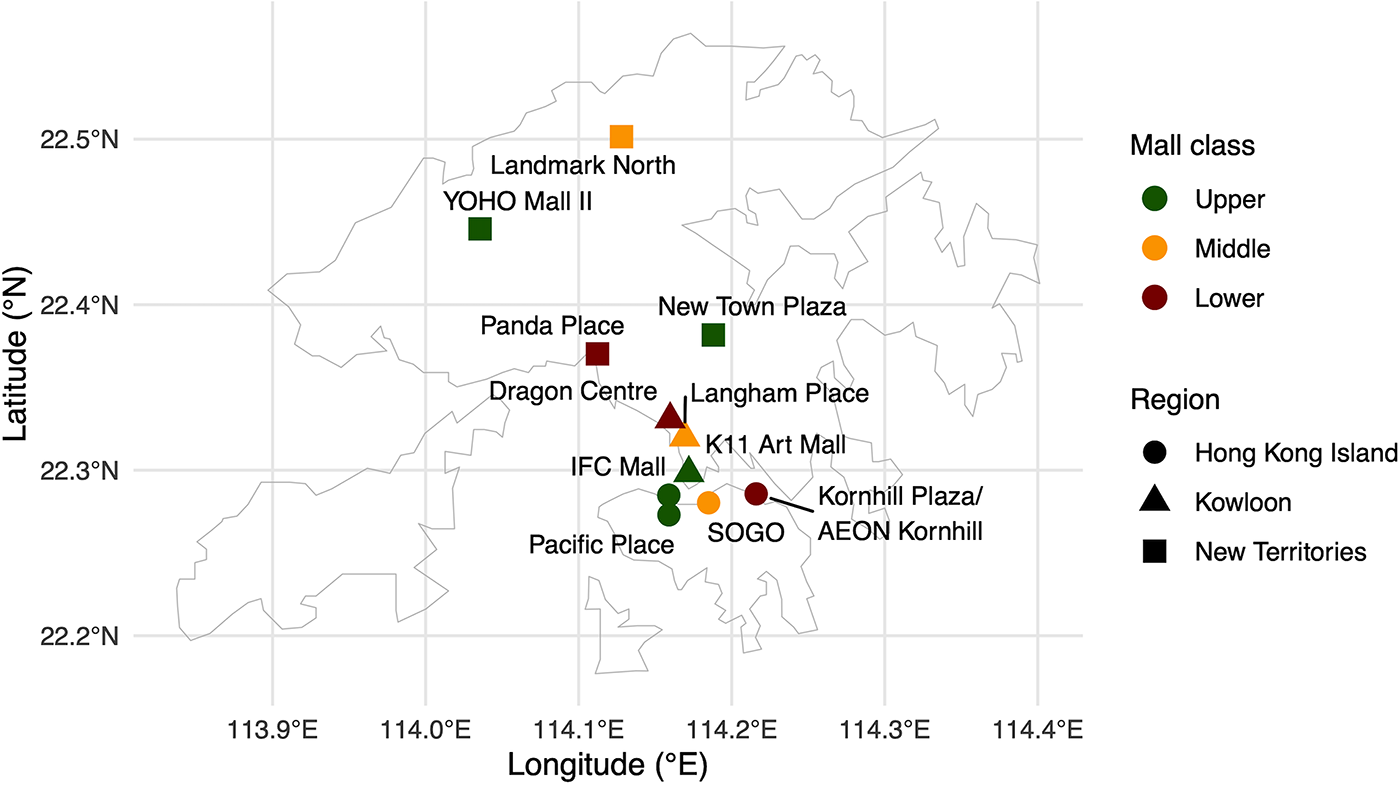


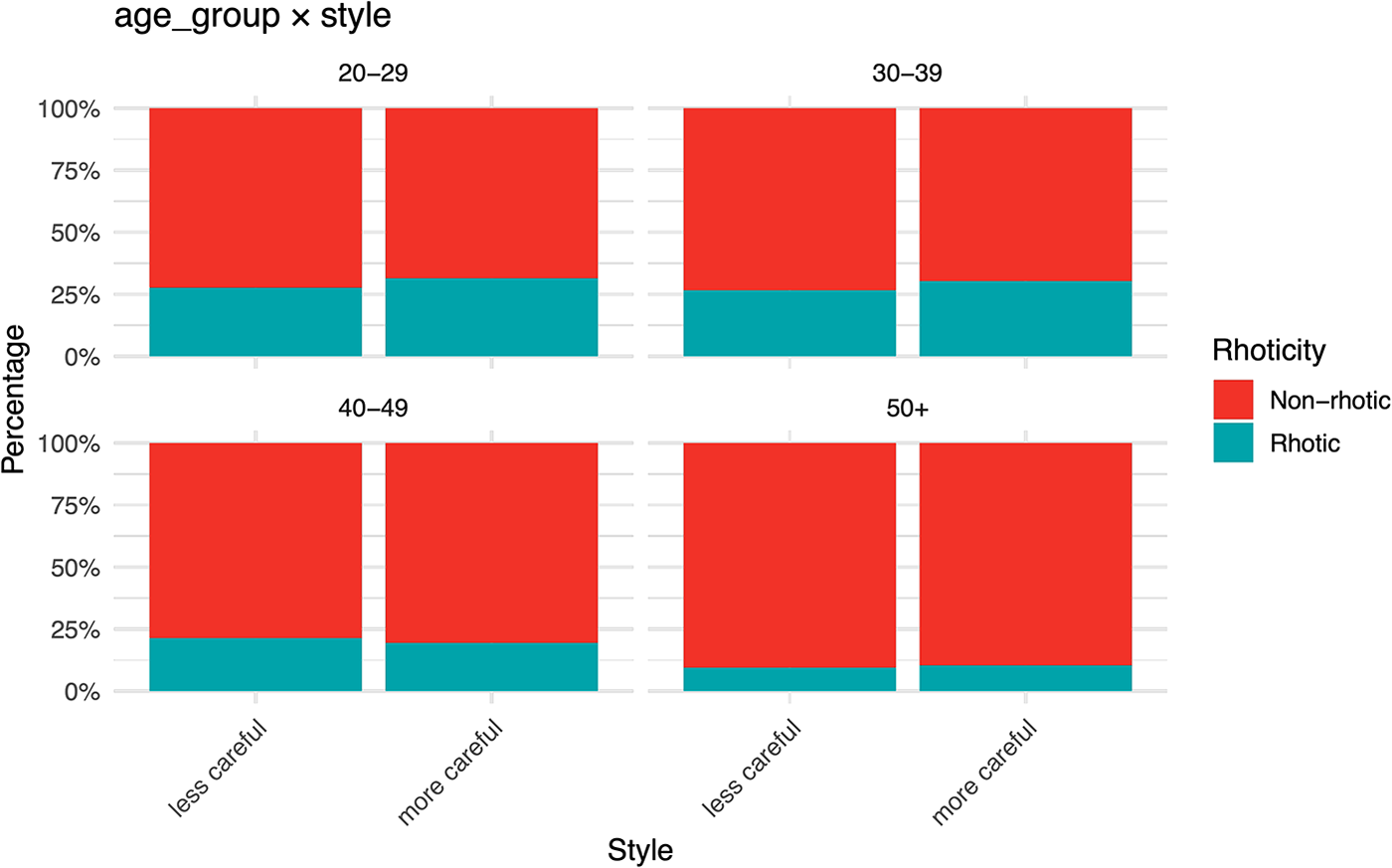
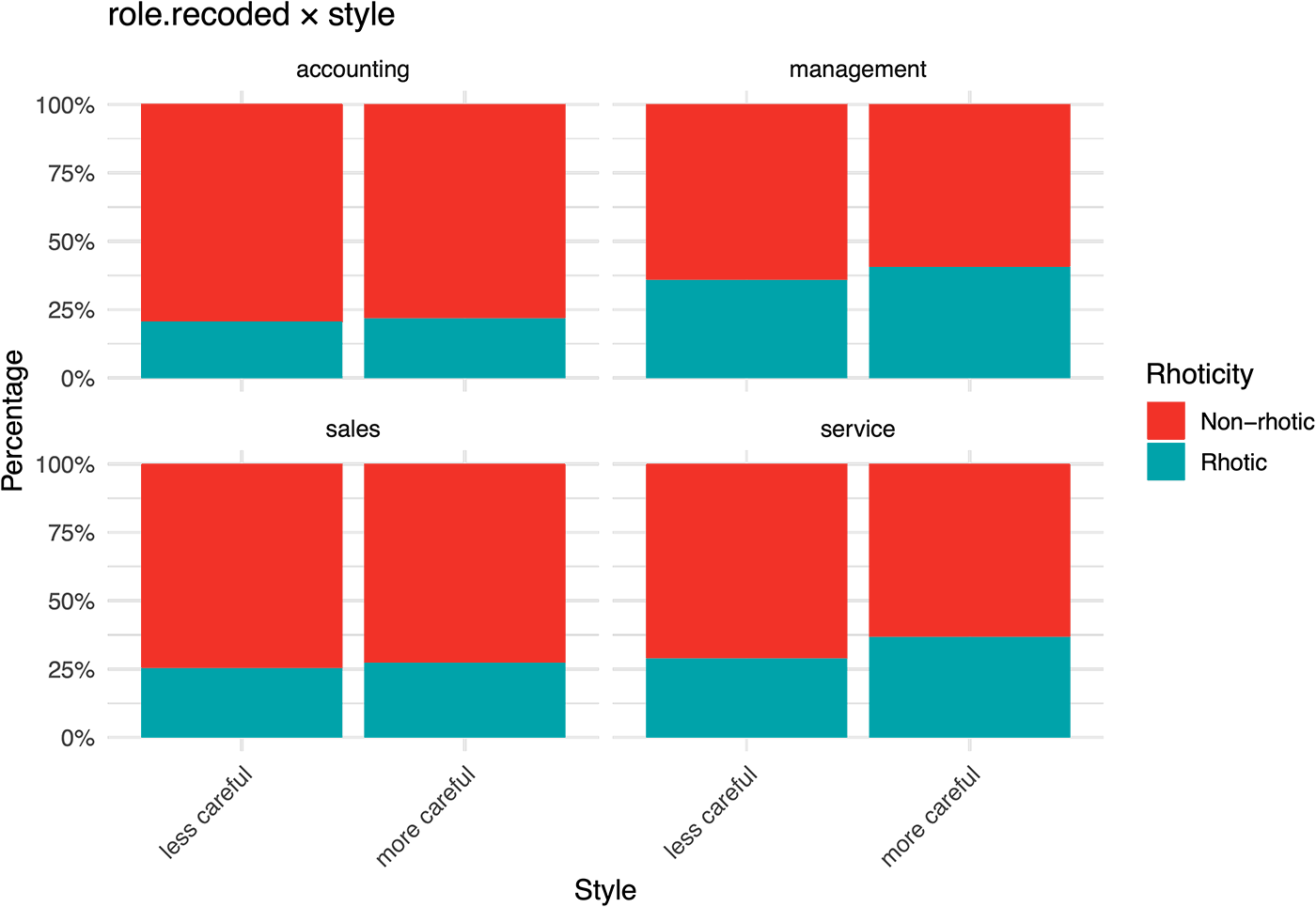


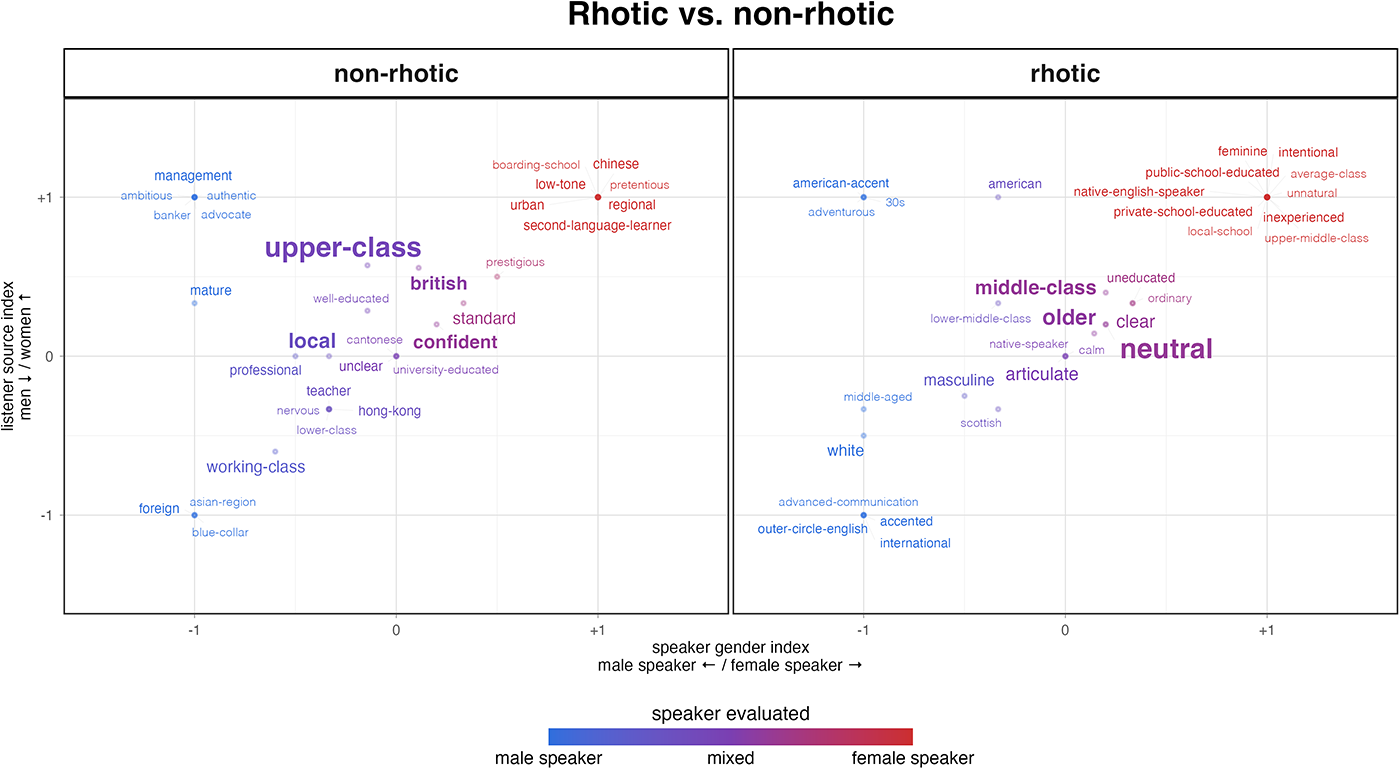


 Open access

