



No CrossRef data available.
Article contents
Alternations i/e and u/o in South Dravidian
Published online by Cambridge University Press: 22 April 2026
Extract
With the help of the work so far done in comparative Dravidian studies, it is possible to reconstruct the following phonemes for Proto-Dravidian (PDr.).
Consonants: 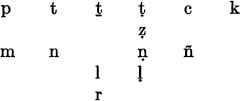
Vowels: 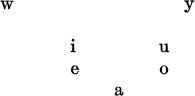
Information
- Type
- Research Article
- Information
- Copyright
- Copyright © 1958 by Linguistic Society of America
References
1 Languages: PDr. Proto-Dravidian; PSDr. Proto-South-Dravidian; SDr. South Dravidian; Ta. Tamil; Ma. Malayāḷam; Ka. Kannaḍa; Tu. Tuḷu; Te. Telugu; Kim. Kolami; Nk. Naiki; Pj. Parji; Go. Gondi (by Trench): GoA. Adilabad dialect of Gondi described by Burrow and Bhattacharya (quoted in Emeneau's Kolami, a Dravidian language); Kur. Kurukh; Mlt. Malto; Brah. Brahui; Kui and Kuvi are not abbreviated.
For bibliography, see Emeneau, Dravidian kinship terms, Lg. 29.339, fn. 1 (1953); also Lg. 21.184, fn. 1 (1945). The following recent publications should be added to the list: T. Burrow and S. Bhattacharya, The Parji language, a Dravidian language of Bastar (London, 1953); M. B. Emeneau, Kolami, a Dravidian language (UCPL 12; Berkeley and Los Angeles, 1955).
The following works cited in the article belong to various schools of Sangam literature in Old Tamil, which have not been definitely dated but can be placed roughly between the 3rd century b.c. and the 4th century a.d.: Aiŋk. = Aiŋkuṟuṉūṟu; Kalit. = Kalittokai; Kṟḷ. = Tirukkuṟaḷ; Tirikaṭu. = Tirikaṭukam; Tolk. = Tolkāppiyam; Patiṟ. = Patiṟṟuppattu; PN = Puṟanāṉūṟu; Parip. = Paripāṭal.
[-ṟ-] in all the South Dravidian languages is a reflex of PDr. *ṯ in intervocalic position. A voiced alveolar trill originally, it subsequently fell together with the alveolar flap r in all the South Dravidian languages except Toda, where r and ṟ still contrast (information from Emeneau). ẓ is a voiced retroflex spirant in Old Tamil (also in some dialects of Modern Tamil), Old Malayāḷam, Old Kannada, and also probably in Old Telugu (inscriptional). A tilde in Telugu is the symbol used here for the traditional ardhānusvāra, which, in classical Telugu, was phonemically zero after long vowels, and after short vowels a nasal phone homorganic with the following stop and freely alternating with zero.
This paper represents a small part of the research done during the year 1955–56 at the University of California, Berkeley, under a fellowship from the Rockefeller Foundation. The paper was originally presented at a Seminar in Historical Linguistics in the fall of 1955, and has since been improved. I am indebted to M. B. Emeneau for his suggestions and comments, and for his kindness in placing his personal library on Dravidian at my disposal. I am also grateful to William Jacobsen for a number of useful comments during the preparation of this paper in its original form.
1a The diphthongs ai̭ and au̯, are not treated as unit phonemes here, since they can be structurally interpreted as *ay and *aw in Proto-Dravidian. *y and *w pattern with the other sonorants, such as n, l, r. For instance, the Common Dravidian word for ‘hand’, written kai̯ in the literary languages, can be phonemicized for Proto-Dravidian as *kay, patterning with the other CVC bases, e.g. *koy ‘to cut, reap’, *cal ‘to go’.
2 Extended types are forms where the suffix is longer than simple V, e.g. PDr. *kil-ay ‘to cry’; *kal-anku ‘to be disturbed, as water’.
3 Throughout this paper, the etymological boundary is marked by a hyphen, so as to show the root and the derivative suffix elements separately in each language and thus to facilitate comparison and reconstruction. The hyphen has no phonemic value.
4 PSDr. *-a = -a in Tamil, Malayāḷam, Kannaḍa, and Telugu; *-ay = -ai in Tamil, -a/-ay in Telugu, -e, -a/-ay in Malayāḷam, -e in Kannada and Tuḷu.
5 Of the two columns under Ta. & Ma., the first shows the reflexes before *-i/*-u/zero, the second the reflexes before *-a; similarly for the two columns under Te. & Ka. In the discussion that follows, I use a single square bracket [to mark off a following environment.
6 If we follow the Prague School, *X and *Y are descriptively archiphonemes, with *X representing *i/e and *Y representing *u/o. It is arbitrary whether these archiphonemes are written *i *u or *e *o. It does matter historically, however, whether *X and *Y represent *i *u or *e *o, since our choice indicates the direction of the phonetic change that resulted in the loss of phonemic contrast. See Henry M. Hoenigswald, Sound change and linguistic structure, Lg. 22.140, §4.a (1946).
7 Bishop Robert Caldwell, Comparative grammar of the Dravidian languages 3 136–7 (London, 1913); Linguistic survey of India 4.288; K. V. Subbaiah, A primer of Dravidian phonology, Indian antiquary 38.160 (1909); T. N. Sreekanthaiya, The mutation of i u e and o in Kannada, Proceedings and transactions of the Eighth All-India Oriental Conference 769–800 (Mysore, 1935).
8 T. Burrow, Dravidian studies II, BSOS 10.289–97, esp. 291 ff.
9 Bh. Krishnamurti, The history of vowel-length in Telugu verbal bases, JAOS 75.247–8 (1955).
10 Alfred Master, Indo-Aryan and Dravidian III, BSOAS 12.342 ff. See also L. V. Ramaswami Aiyar, Quarterly journal of Mythic Society 20.448 ff.
11 T. Burrow, Dravidian studies VI, BSOAS 12.132–47.
12 For a detailed discussion of this development, see Sreekanthaiya 783–97; Burrow, Dravidian studies II 296–7; G. S. Gai, Historical grammar of Old Kannada 5–6 (Poona, 1946).
13 For Modern Tamil, see R. P. Sethu Pillai, Tamil literary and colloquial, Journal of oriental research 2.6–8 (1937–38). For Kannada, see Sreekanthaiya 780–1, 797–8.