
Hostname: page-component-7b7567c8c-mnklg Total loading time: 0 Render date: 2026-11-12T09:53:21.821Z Has data issue: false hasContentIssue false

Deleting digits

Published online by Cambridge University Press:  03 February 2017

Ioulia N. Baoulina
Affiliation:
Department of Mathematics, Moscow State Pedagogical University, Krasnoprudnaya str. 14, Moscow 107140, Russia e-mail: jbaulina@mail.ru
Martin Kreh
Affiliation:
Department for Algebra and Number Theory, University of Hildesheim, Samelsonplatz 1, 31141 Hildesheim, Germany e-mail: kreh@imai.uni-hildesheim.de
Jörn Steuding
Affiliation:
Department of Mathematics, Würzburg University, Emil-Fischer-Str. 40, 97074 Würzburg, Germany e-mail: steuding@mathematik.uni-wuerzburg.de

Extract

Core share and HTML view are not available for this content. However, as you have access to this content, a full PDF is available via the 'Save PDF' action button.

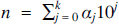
We consider here the positive integers with respect to their unique decimal expansions, where each n ∈ ℕ is given by for some non-negative integer k and digit sequence αkα k-1 … α 0. With slight abuse of notation, we also use n to denote αkα k-1 … α 0. For such sequences of digits (as well as for the numbers represented by the corresponding expansions) we write x ⊲ y if x is a subsequence of y, which means that either x = y or x can be obtained from y by deleting some digits of y. For example, 514 ⊲ 352148. The main problem is as follows: Given a set S ⊂ ℕ, find the smallest possible set M ⊂ S such that for all s ∈ S there exists m ∈ M with m ⊲ s.

Information

Type
Articles
Copyright
Copyright © Mathematical Association 2017
