



No CrossRef data available.
Article contents
A pair correlation hypothesis and the exceptional set in Goldbach's problem
Published online by Cambridge University Press: 26 February 2010
Extract
In 1973, Montgomery [12] introduced, in order to study the vertical distribution of the zeros of the Riemann zeta function, the pair correlation function

where w(u) = 4/(4 + u2) and γjj = 1, 2, run over the imaginary part of the nontrivial zeros of ζ(s). It is easy to see that, for T → ∞,
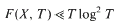
uniformly in X, and Montgomery [12], see also Goldston-Montgomery [7], proved that under the Riemann Hypothesis (RH)

uniformly for X ≤ T ≤ XA, for any fixed A > 1. He also conjectured, under RH, that (1) holds uniformly for Xε ≤ T ≤ X, for every fixed ε > 0. We denote by MC the above conjecture.
MSC classification
Information
- Type
- Research Article
- Information
- Copyright
- Copyright © University College London 1996
References
1.Baker, R. C. and Harman, G.. Diophantine approximation by prime numbers. J. London Math. Soc. (2), 25 (1982), 201–215.CrossRefGoogle Scholar
2.Davenport, H.. Multiplicative Number Theory, 2nd ed. (Springer Verlag, 1980).CrossRefGoogle Scholar
3.Gallagher, P. X. and Mueller, J. H.. Primes and zeros in short intervals. J. reine angew. Math., 303/304 (1978), 205–220.Google Scholar
4.Goldston, D. A.. Linnik's theorem on Goldbach numbers in short intervals. Glasgow Math. J., 32 (1990), 285–297.CrossRefGoogle Scholar
5.Goldston, D. A.. On Hardy and Littlewood's contribution to the Goldbach conjecture. Proc. Amalfi Conf. Analytic Number Theory, Bombieri, E.et al., editors (Universita di Salerno, 1992), 115–155.Google Scholar
6.Goldston, D. A.. An exponential sum over primes. Number Theory with an Emphasis on the Markoff Spectrum, Pollington, A. D. and Moran, W., editors (Marcel Dekker Inc., 1993), 101–106.Google Scholar
7.Goldston, D. A. and Montgomery, H. L.. Pair correlation of zeros and primes in short intervals. Analytic Number Theory and Dioph. Probl., Adolphson, A. C.et al., editors (Birkhäuser Verlag, 1987), 183–203.Google Scholar
8.Hardy, G. H. and Littlewood, J. E.. Some problems of “Partitio Numerorum”, V: a further contribution to the study of Goldbach's problem. Proc. London Math. Soc. (2), 22 (1924), 46–56.CrossRefGoogle Scholar
9.Heath-Brown, D. R.. Gaps between primes, and the pair correlation of zeros of the zetafunction. Acta Arith., 41 (1982), 85–99.CrossRefGoogle Scholar
10.Kaczorowski, J.Perelli, A. and Pintz, J.. A note on the exceptional set for Goldbach's problem in short intervals. Mh. Math., 116 (1993), 275–282; corrigendum, 119 (1995), 215–216.CrossRefGoogle Scholar
11.Languasco, A. and Perelli, A.. On Linnik's theorem on Goldbach numbers in short intervals and related problems. Ann. Inst. Fourier, 44 (1994), 307–322.CrossRefGoogle Scholar
12.Montgomery, H. L.. The pair correlation of zeros of the zeta function. Proc. A.M.S. Symp. Pure Math., 24 (1973), 181–193.CrossRefGoogle Scholar
13.Montgomery, H. L.. Topics in Multiplicative Number Theory. Springer Lecture Notes, 227 (Springer, 1971).CrossRefGoogle Scholar
14.Perelli, A. and Pintz, J.. On the exceptional set for Goldbach's problem in short intervals. J. London Math. Soc. (2), 47 (1993), 41–49.CrossRefGoogle Scholar
15. B. Saffari and R. C. Vaughan. On the fractional parts of x/n and related sequences II. Ann. Inst. Fourier, 27 (1977), 1–30.CrossRefGoogle Scholar