

Introduction
From my parents’ house, you can see Albania.
Born and raised in the southeastern tip of Italy, in the Apulia region – the heel of the boot – on the Adriatic coast, I grew up with a view dominated by a narrow strip of water called the Strait of Otranto. Measuring just 72 km, the strait separates Apulia from Albania, Italy from the Balkans, and, in a broader sense, Western from Eastern Europe. Growing up at this gateway to the West, I quickly became aware of the arbitrariness of borders and nations.
Growing up in the 1990s – a pivotal decade for Albanian migration flows – I witnessed Italy’s transformation from a nation of emigration to one of immigration. Southern Italy, historically framed through the Southern Question (Gramsci Reference Gramsci and Hoare1978), became the gateway to Italy, Europe, and the West. Long before becoming a high-class tourist destination, Apulia frequently appeared in national and international media because of the landings.
In May 2022, while living in Naples – the former capital of the Kingdom of the Two Sicilies – I became involved in the activities of Scugnizzo Liberato, a self-organised cultural space housed in a former juvenile prison reopened through occupation by students, activists, and residents of the transcultural neighbourhood of Montesanto. Among a variety of initiatives, Scugnizzo Liberato hosts the Uè Fest – Underground Etcetera Festival, a grassroots Mediterranean festival of comics and illustrations held annually since 2017. The festival is part of a broader network of underground comics and activist spaces in Southern Italy, including Ca.Co.FEST in Bari and Crack! Festival at the historic Forte Prenestino squat in Rome.
During the 2022 edition of Uè Fest, I participated as discussant for the presentation of Jepi Jora (Il Galeone, 2021), a graphic novel by Claudia Romagnoli (known artistically as Croma) about the 1991 landing of the Vlora ship in Bari. Jepi Jora narrates the story of a fictional 9-year-old Albanian girl who grows up in Rome. Croma, who was also 9 years old during the landing and watched it on television from her family’s home in Molise, approached the story ‘loaded with shame and humility for the history of colonisation attempts made by my country’.Footnote 1 The graphic novel tackles issues of gender, transnational belonging, and the Southern Question, connecting migration to broader reflections on activism and self-organisation.
During the following edition of Uè Fest (2023), I met Renald Hysi, an Italian-Albanian writer and activist promoting his latest work, L’invasione degli extraterroni: un’autobiografia contro ogni confine, Becco Giallo (Hysi and Rapa Reference Hysi and Rapa2023), illustrated by Elena Rapa. The graphic novel draws heavily on Hysi’s personal experiences, including his arrival in Apulia at the age of 8 after crossing the Adriatic by boat in 1997. Hysi’s narrative critically examines the institutional exclusion of migrants in Italy, focusing on the bureaucratic challenges of obtaining citizenship under laws rooted in Italy’s colonial past (Hawthorne Reference Hawthorne2022). Referring to the work of Gramsci – himself of Arbëresh descentFootnote 2 – and his Southern Question, Hysi identifies as an extraterrone, a term blending extraterrestre (alien), extracomunitario (non-EU foreigner), and terrone, a slur historically used to stigmatise Southern Italians as subalterns (Dickie Reference Dickie1999; Wong Reference Wong2006; Giuliani Reference Giuliani, Giuliani and Lombardi-Diop2013).
This neologism highlights both the liminal position of Southern Italy within national narratives and its resonance with the othering of migrants. The term captures a hybrid subjectivity able to unsettle binaries such as local/stranger and emigration/immigration (Sayad Reference Sayad, Martiniello and Rath2010). As I argue throughout this article, the figure of the extraterrone functions as a countermemory not only of migration but also of Italian nationalism itself. Positioned simultaneously within and at the margins of the national community, it embodies forms of belonging that exceed nationalist frameworks. In this sense, it also resonates with the position of the Meridione: marginalised, liminal, yet constitutive of Italianity (Panico Reference Panico, Cherchi and Pau2024b).
Despite their different positionalities, Hysi and Croma both challenge narratives of Italian homogeneity through the lens of Albanian migration. Their graphic novels connect questions of migration, gender, belonging, and the Southern Question, portraying Southern Italy not only as a geographical periphery but also as a privileged site from which to rethink Italian identity. Taken together, these works mobilise the memory of Albanian migration to produce countermemories (Foucault Reference Foucault2012) capable of challenging dominant narratives of nationhood and belonging (Göttsche Reference Göttsche2019).
These graphic novels are particularly significant because they illuminate a relationship that has occupied a central place in transnational and postcolonial studies of Italy (Lombardi-Diop and Romero Reference Lombardi-Diop and Romero2012; Giuliani Reference Giuliani2019; Burdett and Polezzi Reference Burdett and Polezzi2020; Bassi et al. Reference Bassi, Polezzi and Riccò2023): the Italian-Albanian connection. On the level of cultural production, this relationship has been explored most notably through literature (Bond and Comberiati Reference Bond and Comberiati2023) but has received comparatively little attention in comics studies. This absence is particularly striking because comics allow us to move beyond narrative alone and engage directly with the circulation, remediation, and reproduction of images.
As we will see throughout the article, one of the defining features of Albanian migration to Italy in the 1990s – especially in the case of the Vlora landing – was its mediation through visual culture. The arrival was among the first migratory events to be broadcast live on Italian television, generating a repertoire of images that became deeply embedded in Italian cultural memory and were subsequently reproduced across cinema, television, journalism, and public commemorations. The multiple lives of these images across different media intersect directly with questions of memory. The two graphic novels can be read as instances of remediation (Erll and Rigney Reference Erll and Rigney2009; Zucconi Reference Zucconi2013; Zucconi et al. Reference Zucconi, Zucconi and Aboujieb2018), revisiting and reworking archival and media memories through graphic narration. In this sense, they also exemplify what Montani (Reference Montani2022) defines as an ‘intermedial imagination’, assembling heterogeneous visual archives into new forms of historical sense-making.
Assuming the broader framework of transnational Italian comics, two observations informed my decision to analyse these works. The first concerns the relatively limited attention paid to Albania within studies of transnational Italian comics (Spadaro Reference Spadaro2023), both regarding migration from Albania and Italy’s colonial involvement in the Balkans. I argue instead that Albanian migration has been pivotal in activating postcolonial memories within contemporary Italy, with Albania continuing to function as a ‘recurring obsession’ of Italian nationalism (Mai Reference Mai2003, 77). Moreover, the experience of Albanian migration offers a privileged perspective from which to examine the hierarchisation of memories and forms of marginalisation within Italian history, connecting the Southern Question, migrations, and other histories of racialisation. As I discuss later, the two graphic novels mobilise multidirectional memories (Rothberg Reference Rothberg2009) in the grey zones of the nation-state, challenging narratives of homogeneity that depend upon the erasure of minority memories.
A second absence shaping this analysis concerns the limited attention devoted to contemporary underground and grassroots comics production. As Comberiati and Spadaro note, transnational Italian comics have increasingly moved ‘from the underground to everywhere’ (Comberiati and Spadaro Reference Comberiati and Spadaro2023, 191; see also Chute Reference Chute2017) while Spadaro (Reference Spadaro2020) describes the ongoing canonisation of the underground. Yet this process risks obscuring the persistence of grassroots scenes – particularly in Southern Italy – where comics continue to operate at the intersection of artistic production and political activism. As Bindi (Reference Bindi2019) argues, underground does not simply mean clandestine but refers to specific regimes of visibility. This distinction closely parallels the dynamics of visibility and invisibility that characterise migrant experiences and the forms of countermemory developed by the works analysed here.
This relationship between aesthetics, memory, and political practice within these underground networks is explored in the section titled ‘Underground, etc.’. Here, the notion of artivism raises important questions for memory studies and the activism/memory nexus (Rigney Reference Rigney2018; Gutman et al. Reference Gutman, Wüstenberg, Dekel, Murphy, Nienass, Wawrzyniak and Whigham2023), since the case discussed here does not involve a social movement explicitly organised around the recovery of a suppressed past. Nevertheless, these graphic novels intervene in the public arena of memory by challenging dominant representations of migration, belonging, and the nation.
This part of the article draws on interviews conducted with Renald Hysi and Croma, conversations with Elena Rapa and festival activists, analyses of fanzines and self-published materials, and my own participant observation at Uè Fest.
This is followed by an analysis of the two graphic novels through visual, thematic, and critical discourse analysis, guided by the conceptual axes outlined in the theoretical framework.
Coming from a background rooted in social movements, I was particularly interested in the impact of these comics within contemporary underground production networks grounded in self-organisation and shaped by anti-capitalist, anti-sexist, and anti-racist practices, especially in an era marked by the resurgence of far-right nationalist projects.
This article is meant as a contribution to recognise these non-institutional, non-academic networks of activism as vital venues for encounters, art, and collective reclamation of non-hegemonic memories – existing outside the frameworks of the nation-state and its narratives. Their success depends on the resistance of grassroots self-organisation and people who are committed to that.
Theoretical and historical framework
Transnational Italian comics as countermemories of the nation
This article is situated within the growing field of Transnational Italian Comics, a body of scholarship that examines how graphic narratives challenge nationally bounded understandings of Italian culture, identity, and belonging. Emerging at the intersection of migration studies, postcolonial studies, and comics scholarship, this field has highlighted the capacity of comics to represent experiences that exceed the linguistic, cultural, and territorial borders of the nation-state (Spadaro Reference Spadaro2020; Mandolini Reference Mandolini2022; Comberiati and Spadaro Reference Comberiati and Spadaro2023; Mangiavillano Reference Mangiavillano2023; Pezzotti and Ricatti Reference Pezzotti and Ricatti2023; Spadaro and Stamboulis Reference Spadaro, Stamboulis, Spadaro and Comberiati2026).
Rather than proposing a comprehensive overview of the field, I approach transnational comics as a particularly productive site for investigating the relationship between memory and national narratives. As several scholars have noted, graphic narratives are especially suited to representing experiences marked by mobility, multilingualism, and cultural negotiation (Merino Reference Merino2010; Zanettin Reference Zanettin2015; Mickwitz Reference Mickwitz2019; Appleton Reference Appleton2021; Kelp-Stebbins Reference Kelp-Stebbins2022; Kauranen et al. Reference Kauranen, Löytty, Nikkilä and Vuorinne2023; Ebesu Reference Ebesu2024). Their multimodal nature allows different temporalities, geographies, languages, and perspectives to coexist within the same narrative space.
Two concepts are particularly relevant to the present analysis: fragmentation and translation. Migration and transnationality have often been described through these categories, which challenge coherent understandings of language, identity, and belonging. In the context of comics, translation should be understood not only as a linguistic operation but also as a broader cultural and epistemological practice through which subjects navigate different symbolic worlds (Zanettin Reference Zanettin2015; Mangiavillano Reference Mangiavillano2023).
The notion of fragmentation is equally significant. As Bindi (Reference Bindi2019) and Raffaelli (Reference Bindi and Raffaelli2021) argue in their reflections on underground comics and visual cultures, fragmentation concerns not only narrative form but also bodies, memories, and social histories that resist incorporation into homogeneous national frameworks. This perspective is especially useful for understanding the relationship between memory and countermemory. As scholars of comics have observed, graphic narratives have often functioned as vehicles for the representation of marginalised experiences, offering alternative accounts of histories excluded from dominant public narratives (Mickwitz Reference Mickwitz2019; Santos Reference Santos2019; Ebesu Reference Ebesu2024). Their formal openness allows different voices, temporalities, and perspectives to coexist without necessarily being reconciled into a single interpretative framework.
Questions of authorship also occupy a central position within Transnational Italian Comics scholarship, particularly as a question of positionality. As Comberiati and Spadaro (Reference Comberiati and Spadaro2023) have observed, refugee comics are often produced from the perspective of the receiving country, since they are frequently authored by journalists, humanitarian workers, or individuals involved in NGO rescue operations.
This issue acquires particular significance in the Italian context, where representations of migrants have historically been shaped by humanitarian discourses deeply entangled with the colonial myth of the italiani brava gente (decent Italians) and with broader attempts to disavow historical responsibility (Del Boca Reference Del Boca and Braude2024). As several scholars have shown, narratives of solidarity and hospitality can coexist with paternalistic forms of representation that reproduce asymmetrical relations between those who speak and those who are spoken for (Giuliani and Panico Reference Giuliani and Panico2022).
At the opposite end of the spectrum, many migratory comics belong to the productive field of autobiographical graphic novels, being authored by migrants or second-generation subjects themselves. The historical importance of these narratives – particularly in producing political memories of marginalised and racialised communities – cannot be underestimated (Mickwitz Reference Mickwitz2019; Ebesu Reference Ebesu2024). Yet, as we will see, they may also risk confining migrant and second-generation authors to a primarily testimonial role, interpellating them only to recount their personal histories and memories of migration.
Rather than treating these positions as mutually exclusive, I propose approaching the two graphic novels through a blurred and transnational dimension of memory (De Cesari and Rigney Reference De Cesari and Rigney2014). From this perspective, migration becomes not simply an object of representation but a privileged point of observation from which to narrate the nation itself. The gaze articulated by transnational subjectivities is neither fully internal nor fully external; rather, it inhabits the unstable space between these categories, making visible histories, exclusions, and forms of memory that nationalist narratives tend to obscure (Salerno and Violi Reference Salerno and Violi2021).
This perspective is particularly relevant to the present article because the two graphic novels analysed here emerge from markedly different positions. While Hysi narrates experiences closely connected to his own migratory trajectory, Croma approaches Albanian migration from a position external to that experience but explicitly concerned with questions of historical responsibility, memory, and solidarity. The contrast between these positions does not simply concern representation; it reveals different ways of constructing countermemories capable of challenging dominant narratives of Italian identity.
Bari, August 1991: From the Southern other to the Albanian other
On August 8, 1991, the port of Bari in Southern Italy – chosen by Mussolini as the launching point for Italy’s commercial and colonial expansion towards the BalkansFootnote 3 (Basciani Reference Basciani2022) – witnessed the arrival of the overloaded ship Vlora. Carrying approximately 20,000 people fleeing Albania’s post-communist instability, the ship became one of the most iconic events in contemporary Italian migration history, turning symbolically Italy in a country of immigration than of emigration (Bond et al. Reference Bond, Bonsaver and Faloppa2015). Recorded by local television and broadcast live on national media (Pesole Reference Pesole and Giuliani2015), the arrival rapidly acquired a symbolic significance exceeding the event itself. As Fusco (Reference Fusco and Fusco2021) argues, the Vlora became a prototype for the new media narrative surrounding immigration. Terms such as ‘invasion’, ‘exodus’, and ‘wave’ increasingly dominated public discourse, contributing to the racialisation of Albanians and to the consolidation of a migration crisis narrative that would shape Italian debates for decades.
The arrival of the Vlora is frequently remembered – particularly in the commemorative activities surrounding its thirtieth anniversary in 2021 – as a moment exemplifying the solidarity and welcoming spirit of Italians in contrast to contemporary racism (Dammacco Reference Dammacco2021). This narrative is especially pronounced in representations of Southern Italians, often portrayed as more open and empathetic because of their own histories of marginalisation and emigration (Polizzi Reference Polizzi2022). Yet beneath this celebratory memory lies a more ambivalent history, deeply entangled with nationalism, border regimes, and internal hierarchies of belonging.
Scholars have analysed the ‘mirrored representations’ (King and Mai Reference King and Mai2002) linking Italy and Albania across both colonial and postcolonial attitudes. These dynamics respectively emerged through Italy’s attempts to dominate Albania, culminating in Mussolini’s invasion in 1939, and were later reactivated through the Albanian migrations of the 1990s.
This convergence of historical ties and the sense of solidarity towards the little brothers from Albania – echoing colonial-era representations that positioned Albanians as closer to Italians than African colonial subjects (Giuliani Reference Giuliani, Giuliani and Lombardi-Diop2013) – combined paternalism with proximity. It contributed to a self-representation of Italians, and particularly Southern Italians, as generous, fraternal, and welcoming. As such, it resonates with what Del Boca (Reference Del Boca and Braude2024) identifies as the enduring myth of the italiani brava gente, a trope portraying Italians as benevolent colonisers while obscuring the asymmetrical power relations and colonial legacies embedded within these encounters.
At the same time, Albanian migration became the primary external figure around which a renewed national identity was constructed. As Mai (Reference Mai2003, 88) argues, ‘the external other, replacing the Southern Italian as the internal other, was dangerous because it reminded Italy of its own Southern past of poverty, emigration, and brigandage’. This shift should not be understood as a simple substitution. Rather, Albanian migration reactivated and transformed pre-existing structures of otherness within Italian national culture. If Southern Italy had historically functioned as the nation’s internal other, the emergence of large-scale migration repositioned the South as border, gateway, and guardian of the nation. The management of migration thus became one of the mechanisms through which older and newer hierarchies of belonging were reorganised.
This dynamic became particularly visible in Bari itself. Following the arrival of the Vlora, thousands of migrants were confined within the Stadio della Vittoria before being deported. Beyond the emergency itself, the stadium became an early laboratory for practices of segregation, detention, and migration management later incorporated into Italy’s border regime (Esposito et al. Reference Esposito, Ornelas and Arcidiacono2015). Significantly, these developments occurred in Southern Italy, a region historically represented as peripheral and backward, yet increasingly central to the governance of mobility. As Polizzi (Reference Polizzi2022, 79) notes, the South became a crucial site for the ‘management and differential inclusion of people, places and labour force’, anticipating developments later generalised at national and European levels.
The gradual disappearance of Albanian migration from public debate should not be interpreted as the resolution of these dynamics. On the contrary, the relative integration of Albanians into Italian society – facilitated in part by their increasing perception as ‘whiter’ than newer migrant groups (King and Mai Reference King and Mai2002) – contributed to obscuring both the discrimination they experienced and their role in reshaping Italian understandings of race, belonging, and national identity. Albanian migration therefore occupies a peculiar position within contemporary Italian memory culture: simultaneously foundational and forgotten.
Recent scholarship has begun to address these types of entanglements. Drawing on Rothberg’s (Reference Rothberg2009) critique of competitive memory, Bellin and Bartolini’s (Reference Bellin and Bartolini2024) collective work explores the overlapping histories of Italian marginalisation through the notion of multidirectional forgetting. Their intervention is particularly relevant to the Italian context, where collective memory frequently oscillates between the denial of colonial responsibility and narratives of national victimhood rooted in the Southern Question, mass emigration, and other experiences of subalternity (Panico Reference Panico2024a). As a result, memories are often positioned as mutually exclusive rather than relational.
The Albanian case complicates this logic. It intersects with memories of colonial expansion, Southern marginalisation, mass emigration, border violence, and contemporary racism without being reducible to any of them. Rather than replacing one memory with another, Albanian migration reveals how different histories of exclusion become articulated through changing configurations of otherness. In this sense, multidirectional memory provides a useful framework not because it dissolves differences between historical experiences but because it allows us to analyse how they enter into relation, transformation, and negotiation.
This perspective is particularly productive for the analysis of Jepi Jora and L’invasione degli extraterroni. The two graphic novels do not simply recount migration histories. Rather, they activate a constellation of interconnected memories – Albanian migration, Southern Italian marginalisation, historical emigration, and the arrival of new migrant communities after the 1990s – while challenging narratives of national homogeneity. In doing so, they move beyond the logic of competitive memories and reveal the entanglements of privilege, responsibility, and exclusion that continue to shape contemporary Italian memory cultures.
Underground, etc.: On memory artivism in Southern Italy and beyond
‘When I presented my graphic novel at the Ca.Co. festival in Bari, I felt that I finally brought Jora back home’, stated Croma during our conversation.
The Ca.Co.FEST – Cartoons and Comics Festival based in Bari, the same city of arrival of the Vlora – has been held for over a decade at the Ex Caserma Liberata, a former military barracks occupied with the aim of reclaiming abandoned public spaces and fostering practices of self-organisation and collective sociality.
As previously mentioned, Ca.Co.FEST is part of a broader network of underground comic festivals, alongside Uè Fest in Naples and Crack! Fest in Rome. More than simply spaces devoted to comics, these festivals emerge from political and cultural experiences rooted in self-organised social centres and autonomous movements.
Due to their history of marginalisation within the national project, self-organised spaces in Southern Italy – particularly in peripheral cities such as Naples and Bari – have long functioned as hubs of reclaimed welfare, social services, and collective autonomy in contexts marked by the uneven presence of the state. However, this autonomy should be understood as inherently conflictual: rather than replacing the state, it exposes its inadequacies while simultaneously demanding greater social rights and resisting forms of intervention perceived as disciplinary or repressive (Piperno Reference Piperno and Meridiani2014).
Both Croma and Renald Hysi – as well as their characters, Jora and the literary Renald – are deeply rooted in these histories of self-organisation and, more broadly, in anti-capitalist, anti-sexist, and anti-racist political cultures. Their involvement in activist networks pushes further the boundaries of their intervention in the arena of collective memory. Not only through writing but also through distribution, public presentations, and active participation in grassroots festivals, their comics can perform the function of countermemory (Foucault Reference Foucault2012), challenging dominant narratives and official histories.
This perspective also allows us to situate these experiences within broader debates on memory activism (Rigney Reference Rigney2018; Gutman et al. Reference Gutman, Wüstenberg, Dekel, Murphy, Nienass, Wawrzyniak and Whigham2023). Rather than understanding memory activism exclusively as the action of movements explicitly organised around the recovery of suppressed pasts, the present case suggests a broader perspective. These networks do not mobilise around a single historical event. Yet they intervene in public memory by creating spaces in which alternative narratives of migration, belonging, and national identity can circulate. In this sense, memory activism emerges not only through commemorative practices but also through cultural production, self-organisation, and the occupation of physical and symbolic spaces, calling attention to the broader entanglements between memory-making and political action.
This intention challenges the very definition of underground, a concept that extends beyond the status of the publishing house and encompasses a broader political, ethical, and existential orientation. As Valerio Bindi (Reference Bindi2019), co-founder of the Crack! Festival, argues, self-production represents ‘a voluntary and decisive inability to adapt to normalised life, to work, and to the time of production’ (11). The practice of self-production therefore constitutes an explicitly anti-capitalist position, challenging both market logics and dominant regimes of productivity.
Drawing on Rancière, Bindi reinterprets the notion of the aesthetic not in relation to beauty but as a form of life in which artwork, artist, and audience remain inseparable from material conditions and lived experience. Art emerges through relational processes and not as an autonomous object detached from social reality. In this sense, underground aesthetics, especially when applied to comics, reject canonical ideals of beauty as ‘whole and well-crafted’, privileging instead the representation of ‘suffering, deviant and mutated bodies’ (22).
This point is particularly relevant to the present article because fragmentation is not only one of the defining formal features of comics but also one of the central ways in which transnational memories become representable. As discussed in the theoretical framework, fragmentation here refers not simply to narrative structure but also to bodies, languages, memories, and subjectivities that resist incorporation into homogeneous national frameworks. The visual language of comics allows these fragments to coexist without being fully reconciled, making visible experiences of migration, exclusion, and belonging that remain difficult to articulate through linear narratives.
Finally, Bindi’s reflection offers a productive way to rethink the notion of the underground itself. The underground is not clandestine; rather, it is what remains visible yet systematically overlooked, a mondo sotterraneo existing in plain sight while being rendered socially invisible. This distinction resonates strongly with the experiences of migrants discussed throughout this article. Much like migrant lives, underground cultural production occupies a paradoxical position between visibility and invisibility, recognition and marginalisation. The fragmented form of the graphic novel and the subterranean condition of underground cultures thus provide a particularly fertile space through which fragmented experiences and suffering bodies involved in migration, exclusion, and belonging can be narrated.
From this perspective, the experiences conveyed in the two graphic novels are distinct, even though they both fall under the umbrella of the underground. While Jepi Jora emerges from self-production networks and small-scale independent publishing, L’invasione occupies a more ambiguous position, situated at the intersection of activist circuits and politically engaged mainstream publishing. Their trajectories differ, yet both reveal how underground cultures function less as a publishing category than as a political and cultural form of collective life.
Jepi Jora was published in 2021 by the small independent publisher Il Galeone, a one-person publishing project that strongly believed in the projectFootnote 4. Its circulation was largely managed by Croma herself, alongside the networks of self-production in which both author and publisher were involved. Underground festivals played a crucial role in this process. As Croma puts it, their significance lies in ‘giving everyone the opportunity to be there with their self-productions, with their things, to set up a booth, to feel on the other side’.
These festivals were also spaces of artistic, political, and personal formation. Croma recalls returning to drawing after years spent doing different jobs, motivated by her involvement in the Crack! Festival. Moreover, as an internal migrant from a Southern region who moved to Rome at a young age, she found a sense of belonging through self-production and activist networks. This trajectory resonates strongly with that of Jora, who struggles to find her place in the city amid mistrust, sexism, and xenophobia until she encounters a collective running a ciclofficina (bicycle workshop). Through this solidaristic experience of self-production, Jora’s dream of owning a bicycle becomes possible.
The bicycle functions as a recurring metaphor throughout the graphic novel. Defined as a ‘feminist, partisan and proletarian means of transport’ (p. 220), it symbolises both freedom of movement and the possibility of autonomy within the grey areas of a racist national state. Each chapter opens with a different bicycle component accompanied by an explanation of its function and significance.
This narrative device recalls the theme of fragmentation discussed earlier: Jora’s identity, memories, and sense of belonging emerge through a gradual process of assembly and repair. The bicycle thus becomes both a material and narrative structure through which fragmented experiences are recomposed.
Coming from a small production and underground circuit, Jepi Jora nevertheless crossed the boundaries separating underground and mainstream cultural spaces. In 2022, the graphic novel was selected for the annual Robinson prize of La Repubblica, eventually reaching the final shortlist. While the thirtieth anniversary of the Vlora undoubtedly contributed to renewed public interest, the graphic novel’s success was largely driven by readers rather than institutional recognition. This movement across cultural boundaries reflects one of the central tensions of underground production: the search for autonomy from market logics while simultaneously intervening within broader public debates. As Croma observes, unlike official comics festivals, underground spaces remain places where ‘you know you won’t find cosplay; you know you’ll find, precisely, comrades, militants, activists (…) these are still crucial, critical outposts’.
A different trajectory characterises L’invasione degli extraterroni. Published by BeccoGiallo, one of Italy’s most important publishers of politically engaged and refugee comics, the graphic novel nonetheless emerged through activist networks and relationships forged outside conventional editorial circuits.
Initially, Hysi approached the publisher with a screenplay centred on the 2016 refugee crisis and the Balkan route. Such a project would have aligned more closely with refugee comics and graphic journalism. More importantly, it would have complicated conventional understandings of authorship and positionality, since Hysi’s own migratory background would have informed the narration of a different migratory experience. Rather than reproducing a simple opposition between internal and external perspectives, the project would have revealed how migrant subjectivities can generate alternative gazes on migration itself.
Croma (2021). Jepi Jora, p. 127.

It was the publisher, however, who encouraged Hysi to draw on his own experience and develop an autobiographical narrative. This decision reveals different layers in the editorial process: on the one hand, it underscores the importance of positionality in L’invasione, offering a first-person perspective on Albanian migration. On the other, it highlights a tendency within editorial spaces to interpellate migrants and second-generation authors primarily as witnesses of their own histories, while overlooking their broader political engagements and their capacity to activate multidirectional memories. Hysi himself initially considered Albanian migration an ‘untimely subject’, no longer perceived as urgent within the Italian public sphere when compared to more recent migration crises. Yet it is precisely this apparent untimeliness that becomes productive within the graphic novel, allowing Albanian migration to re-emerge as a forgotten but foundational chapter in contemporary Italian memory.
The collaboration between Hysi and illustrator Elena Rapa also emerged from activist networks. The two met years earlier through political activities connected to the former social squat XM24 in Bologna, where both participated in a serigraphy workshop. Their collaboration was therefore rooted not only in professional affinities but also in shared experiences of political engagement.
Croma (2021). Jepi Jora, p. 129.

Croma (2021). Jepi Jora, p. 139.

Croma (2021). Jepi Jora, p. 137.

Figure 4. Long description
A grid of 64 hand-drawn, minimalist portraits arranged in an 8 by 8 layout. Each portrait is a white silhouette or line drawing against a solid black square background. The faces exhibit a wide variety of features, hairstyles, and expressions, including:
* Row 1: Faces with short hair, glasses, and varying chin shapes. Some look directly forward while others are in profile.
* Row 2: Includes individuals with long flowing hair, a person with a prominent mustache, and several with sharp, angular jawlines.
* Row 3: Features diverse hair textures, including wavy and spiked styles, and different head tilts.
* Row 4: Shows several individuals wearing glasses, some with round frames and others with rectangular ones.
* Row 5: Displays a mix of masculine and feminine features with varying degrees of facial detail.
* Row 6: Focuses on different perspectives, with some faces turned 45 degrees and others in full profile.
* Row 7: Includes portraits with more elaborate hairstyles and distinct facial shadows.
* Row 8: The bottom row concludes with a variety of expressions ranging from neutral to contemplative.
The art style is consistent throughout, using bold black and white contrast with no gray tones, emphasizing geometric shapes and simple lines to define human identity.
Hysi and Rapa (Reference Hysi and Rapa2023). L’invasione, p. 14.

Figure 5. Long description
A single-panel comic strip depicts a packed crowd of characters, including humans and anthropomorphic animals like bears and cats, all facing right and appearing to push against one another. The characters are dressed in various styles of clothing, some carrying bags or books. In the foreground on the left, a bear-like character looks frustrated, while in the center, a human man with a mustache and a cat-like character appear to be shouting. To the right, a bear in a hat carries a stack of books. Above the crowd, two speech bubbles contain text in Italian. The left bubble says PRESTO, MUOVETEVI! which translates to Quick, move! The right bubble says NON SPINGERE! which translates to Don’t push! Several small objects, including a book, a coin, and a wallet, are shown flying through the air above the heads of the crowd, indicating the intensity of the scramble. The drawing style uses heavy ink lines and cross-hatching for shading.
Hysi and Rapa (Reference Hysi and Rapa2023). L’invasione, p. 17.

Figure 6. Long description
The comic page is divided into one large upper panel and two smaller panels at the bottom right.
Main Panel:
At the top left, a large, close-up profile of a young boy looks out over a coastal scene. A rectangular label at the top center reads LUNGOMARE DI VALONA, ALBANIA (“Valona seafront, Albania”). The scene shows a body of water with a small boat docked at a pier. On the right side, a dense crowd of people with bags and bundles is gathered on a rocky shore. Two speech bubbles above the crowd contain the text LEVIZNI SHPEJTI! and QETESOHU! with corresponding footnotes at the bottom reading *PRESTO MUOVETEVI! (“Move quickly!”) and **NON SPINGERE! (“Don’t push!”). Two narrative boxes on the left side contain Italian text reflecting on the character’s past at age 8 and the feeling of helplessness in disorganized lines.
Bottom Left Inset Panel:
A small boy with a wide smile and markings on his forehead waves to others, carrying a sack. A speech bubble reads VI ASPETTO DAVANTI! A DOPO! (“I’ll wait for you ahead! See you later!”).
Bottom Right Inset Panel:
A close-up of a character with an open mouth, appearing to shout or cry out. A speech bubble reads DOVE CREDI DI ANDARE?! (“Where do you think you’re going?!”).
The page numbers 16 and 17 are visible at the bottom center.
Despite being published by a major house, L’invasione circulated largely through self-organised spaces and underground festivals, confirming once again that underground refers not simply to modes of publication but also to broader practices and political orientations. The graphic novel’s trajectory reveals how the boundaries between underground and mainstream can be crossed in both directions.
In this sense, the works of Croma and Renald Hysi – and the broader context of underground comic festivals – can be understood through the lens of what Spadaro (Reference Spadaro2023) defines as ‘comics-based artivism’. Here, comics operate as vehicles of translation, connecting different publics, political struggles, and memory communities. The medium’s fluidity allows Albanian migration to resonate with contemporary debates on citizenship, racialisation, feminism, and border regimes, activating multidirectional constellations of memory rather than isolated narratives.
Croma explicitly describes her decision to write about Albanian migration as a way of opening discussions on contemporary migration. During presentations of Jepi Jora, conversations about the Vlora frequently evolved into broader reflections on current border politics and racism. Particularly significant was the reception of the graphic novel among Albanian-descendant readers. Invited to participate in Baba Yaga Fest (2024), a festival dedicated to Eastern European art and storytelling, Croma encountered young Albanian women who recognised aspects of their own experiences in Jora’s story. For an author concerned about her ‘right to speak’ about a place she had never directly experienced, these encounters became an important moment of dialogue across different positionalities.
Hysi’s artivist practice operates in at least three interconnected directions. First, it addresses the Italian public, confronting what could be described as enduring ‘epistemologies of ignorance’ (Alcoff Reference Alcoff, Shannon and Tuana2012) surrounding Albania and migration. Second, it engages with Albanian-Italian communities and their cultural production. Third, it connects with contemporary political and cultural activism in Albania itselfFootnote 5. His intervention therefore moves simultaneously across Italian, diasporic, and Albanian public spheres.
The graphic novel has proven particularly resonant among second-generation Albanian readers in Italy, functioning as a bridge between the generation that migrated and the one born after migration. In this sense, L’invasione contributes not only to forms of transgenerational memory but also to what Hirsch (Reference Hirsch2001, Reference Hirsch2008) conceptualises as postmemory, through which later generations establish affective and imaginative relationships with experiences they did not directly live, often through family stories and visual archives. As a ‘son of migration’, Hysi positions the graphic novel between Italy and Albania, between first and second generations, and between the diaspora and the political realities of both countries.
Ultimately, the artivist practices embodied by Croma and Hysi do not simply seek recognition for marginalised memories. Rather, they create spaces in which different histories, subjectivities, and political struggles can encounter one another, challenging narratives of national homogeneity and activating forms of countermemory that emerge from transnational and liminal positions. In this sense, both works move beyond binary oppositions such as Italian and Albanian, citizen and foreigner, emigration and immigration, opening a space for the relational subjectivities discussed throughout this article. As Hysi himself puts it: ‘Albania and Italy, I would deconstruct both’.
Drawing the nation otherwise
‘Non dimenticare’: Remediating personal and collective memories of migration
In many ways, the history of immigration debates and representations in Italy began with the image of the Vlora (Caliandro Reference Caliandro2016). The extensive visual archive documenting the arrival of the ship has permeated Italian collective memory through photography, television, cinema, documentary, and advertising productionFootnote 6 (Mai Reference Mai2005). As discussed in the introduction, both Jepi Jora and L’invasione degli extraterroni can be read as instances of remediation (Erll and Rigney Reference Erll and Rigney2009). Rather than simply reproducing archival images, they reassemble and reinterpret them through the specific affordances of the comics medium (Kelp-Stebbins Reference Kelp-Stebbins2022). Following Montani’s (Reference Montani2022) notion of immaginazione intermediale, this process can be understood as a montage of heterogeneous visual memories that generates new ways of seeing the past.
Both graphic novels intervene in this archive, reworking memories of Albanian migration through graphic narratives that move between personal recollection, family histories, and collective remembrance rooted in media representations.
The memory of migration is particularly central in Jepi Jora. Designed in what Croma defines as a ‘synthetic aesthetic’, characterised by thick black lines and a strong contrast between fullness and emptiness, the graphic novel follows a non-linear timeline in which the protagonist’s return journey to Albania in 2011 constantly intertwines with memories of her childhood. Throughout the first half of the narrative, references to the landscapes of rural Albania evoke specific sounds, smells, and emotions connected to her early life. These recollections are accompanied by the recurring injunction non dimenticare (‘do not forget’) (p. 40), initially voiced by family members and gradually transformed into a personal mantra. What begins as a familial recommendation becomes an intimate reflection on belonging, estrangement, and the impossibility of preserving an unaltered connection to one’s place of origin.
The centrality of memory is reinforced through the graphic novel’s structure. Jora’s story begins with the decision of her family to send her to Italy through Butan, a family friend who announces the opening of the port in Durazzo and offers to accompany her across the Adriatic. Yet from the opening pages the reader also knows that, 20 years later, Jora is retracing the same route in the opposite direction. Her bicycle journey across Southern Italy towards Bari creates a constant dialogue between departure and return, childhood and adulthood, remembrance and re-signification.
The mirroring of the two journeys across the Adriatic Sea provides one of the graphic novel’s most significant visual strategies. When adult Jora ship sailed, Bari is represented from the sea, reversing the perspective through which the arrival of the Vlora entered Italian public memory. Rather than observing migrants from the shore – and thus assuming a state-centred and nationally bounded perspective – the reader is invited to look at Italy from the position of arrival itself. This relocation of the gaze recalls what bell hooks (1992) conceptualised as an oppositional gaze: yet the perspective articulated here is not simply external to Italy. Jora’s position is already shaped by 20 years of life, memories, relationships, and experiences within the country. The visual reversal therefore does not replace an Italian gaze with an Albanian one; rather, it relocates the point of observation to a transnational subjectivity situated across both sides of the Adriatic (Salerno and Violi Reference Salerno and Violi2021; Bond and Comberiati Reference Bond and Comberiati2023). Italy appears simultaneously as a place of arrival and departure, belonging and estrangement.
The contrast between the two vessels reinforces this operation. The clean and orderly ferry carrying Jora back to Albania is juxtaposed with the memory of the overcrowded and deteriorating Vlora. The ship appears as a dark silhouette emerging from an almost entirely white page, emphasising its overwhelming visual presence while simultaneously evoking the iconic media images that saturated Italian television during the 1990s. In preparing the graphic novel, Croma not only drew on her childhood memories of seeing the Vlora on television but also worked extensively with photographic archives and footage of the ship itself. The visual archive of the Vlora is thus remediated through a graphic form that simultaneously recalls official documentation and personal memory, reassembling them into a new configuration capable of producing different forms of historical understanding.
Here, the injunction non dimenticare gradually expands beyond the sphere of personal memory. Recalling the crossing, Jora remembers ‘her own desire and that of 20,000 others in the same place’ (p. 135). Individual recollection thus gives way to a collective dimension. The following double-page spread presents a mosaic of anonymous faces of Vlora’s passengers, arranged in small squares reminiscent of identification photographs.
The composition evokes both individuality and collectivity. On the one hand, the format recalls bureaucratic systems of identification, documentation, and registration – elements that profoundly shape migrant lives. On the other, it restores singularity to people who were frequently represented as an anonymous mass within media discourses. The mosaic simultaneously evokes the intimacy of individual lives and the forced proximity produced by the crossing itself, transforming the collective image of the Vlora into a constellation of distinct yet interconnected stories.
A similar memory operation structures L’invasione degli extraterroni, although through a different aesthetic register and a different mechanism of identification offered to the reader. The graphic novel adopts a denser black-and-white style that, according to Rapa, ‘recalls twentieth-century Albanian visual traditions’ and introduces memory through another form of mirroring. The narrative opens with Renald waiting in an Italian tribunal in 2016 while attempting to obtain citizenship after almost 20 years of residence. The frustrations produced by the bureaucratic process trigger a flashback to the port of Valona in 1997, where Renald, his mother, and his brother waited to board a ship to ItalyFootnote 7.
The visual parallel between the tribunal and the port is striking. Despite representing radically different situations, both spaces operate through mechanisms of exclusion and differential inclusion (Mezzadra and Neilson Reference Mezzadra and Neilson2013). The port embodies the precariousness of migrants’ lives, while the tribunal represents the institutional regulation of their exclusion. Through this mirrored composition, the graphic novel reveals the continuity between border and citizenship regimes. Migration does not end upon arrival but persists through the bureaucratic management of inclusion and exclusion. In both scenes, migrants appear as an indistinct crowd, anonymised by the systems that classify, de-humanise, and contain them. Yet Renald’s family – emerging from a personal and familial archive of memory – simultaneously stands out from and blends into the collective mass, embodying the tension between individual experience and historical process that structures the graphic novel as a whole.
Animal imagery, a vital narrative device in comics (Chaney Reference Chaney2011), further reinforces these dynamics of remediation and memory-making. In L’invasione, smugglers are represented as wolves and dogs, emphasising relations of violence and domination through animal figures. As Hysi explained during our interview, the choice was partly inspired by the legacy of Spiegelman’s Maus. Yet rather than categorising entire groups, animalisation serves to soften a narrative rooted in difficult childhood memories while preserving its emotional intensity. In this sense, the device can also be read as reflecting a child’s attempt to make sense of threatening social relations through familiar symbolic forms. As scholars working at the intersection of comics and memory studies have noted in relation to Maus and its legacy (Hirsch Reference Hirsch2001; Merino Reference Merino2010), animal figures can function simultaneously as mediators of traumatic memory and as visual strategies through which difficult experiences become narratable.
Animal imagery performs a different function in Jepi Jora. Here animals appear as protective presences – or numi tutelari – accompanying the protagonist throughout her journey. Rather than suggesting danger, they create a porous boundary between human and non-human worlds, emphasising Jora’s particular sensitivity to multiple forms of belonging and perception. Much like the transnational perspective that structures the graphic novel, these figures move across boundaries that are usually presented as fixed, connecting different spaces, memories, and forms of life.
In both graphic novels, animals become visual mediators through which experiences of migration, fear, care, and remembrance are translated into graphic form. They contribute to the construction of memory not simply by illustrating events but by providing symbolic frameworks through which personal and collective experiences can be perceived, narrated, and remembered.
If memory provides the narrative trigger for both graphic novels, media constitute the space through which these memories circulate, become visible, and enter the public sphere, as we will see in the next section.
‘(Non) è la Rai’: Media, migration, and the politics of looking
The postcolonial relationship between Italy and Albania has long been mediated through television. Due to geographical proximity and the asymmetrical cultural relationship between the two countries, Italian broadcasting occupied a central role in the Albanian imaginary both during and after the communist period. As several scholars have observed (Mai Reference Mai2003; Pesole Reference Pesole and Giuliani2015), Italian television contributed to constructing Italy as a space of prosperity, freedom, and modernity, producing a powerful imaginary that accompanied the migratory flows of the 1990s.
Yet the same medium that contributed to producing the desire for Italy would later transform Albanian migrants into objects of observation.
This mediated dimension of migration is particularly evident in both graphic novels. Before departure, Jora is frequently portrayed watching Italian television from Albania, while Renald and his brother spend their childhood watching Italian cartoons. Long before crossing the Adriatic, Italy is already present in their lives as an image, a language, and a promise. Television thus functions as a bridge connecting the two shores of the Canale d’Otranto, anticipating the physical crossing that follows.
The arrival of migrants at Italian ports abruptly reversed the direction of the gaze. The people who had consumed Italian television suddenly became its protagonists. Through extensive media coverage, Albanian migrants were represented as suffering bodies crowded onto ships, exhausted by travel, and exposed to the gaze of the receiving society. As Zucconi (Reference Zucconi2013) argues, these repeated ‘iconographies of pain’ drew upon a longer visual archive of sacred representations of suffering, mobilising emotional responses grounded in pity and compassion.
In the context of arrivals at Apulian ports, media portrayals of migrants disembarking from overcrowded ships contributed to their dehumanisation in ways that oscillated between paternalism and criminalisation. Albanian migrants became the protagonists of the same broadcasts that had once sold them the ‘Italian dream’. This process recalls Susan Sontag’s (Reference Sontag2013) reflections in Regarding the Pain of Others, where the reduction of subjects to suffering bodies risks transforming them into objects of observation rather than agents of their own histories. Such representations limit possibilities for self-representation and autonomy, centring instead the gaze of the observer – typically located within the receiving society – who is encouraged to identify not with the migrant, but with the position of witness, helper, or saviour (Giuliani and Panico Reference Giuliani and Panico2022).
The media’s focus on the physical condition of arriving passengers – the visible signs of hunger, thirst, and exhaustion – played a central role in shaping public perceptions of Albanian migration, beginning with the images of the Vlora. Initially represented as vulnerable little brothers of the colonial era, Albanians were later increasingly portrayed as dirty, infectious, and potentially dangerous. This shift reflects a racialised discourse in which ‘dirtiness’ functions as a symbolic degradation of whiteness (Lombardi-Diop Reference Lombardi-Diop, Lombardi-Diop and Giuliani2013), contributing to the stigmatisation of Albanian migrants and anticipating the moral panics that would characterise the following decade.
Both graphic novels engage critically with this visual archive, highlighting the ambivalent position of migrants within media narratives, suspended between compassion, paternalism, and criminalisation.
This tension emerges clearly in Jepi Jora. Rather than reproducing some of the most iconic and degrading images associated with Albanian arrivals, Croma deliberately avoids depicting Jora and Butan among the migrants confined in the Stadio della Vittoria. Instead, the graphic novel imagines their escape towards Rome. This narrative choice restores agency to the protagonists and refuses to reduce them to passive objects of observation. By avoiding the spectacularisation of suffering, the graphic novel intervenes critically in a visual archive that has often relied on migrant vulnerability as a source of emotional identification and paternalistic recognition.
Television nevertheless remains central to Jora’s understanding of Italy. In a significant sequence, she watches Non è la Rai, one of the most emblematic entertainment programmes of the 1990s. Populated by dozens of young women singing and dancing carefree, the show became a symbol of the media culture associated with Berlusconi’s Italy and its promises of prosperity, consumption, and individual success. In a mirrored panel, Jora’s father is shown watching the same programme from Albania, imagining for his daughter the forms of well-being and social mobility promised by television.
The juxtaposition creates a powerful visual bridge across the Adriatic. Television becomes a shared space through which father and daughter remain connected despite separation. At the same time, it reveals how migration is shaped by mediated imaginaries. The Italy imagined through television is not simply a destination but a fantasy of modernity and possibility that accompanies both migrants and those left behind.
The importance of this bridge is also reflected in the media landscape of the period. As Pesole (Reference Pesole and Giuliani2015) notes, during the years of peak Albanian migration, broadcasters such as Telenorba developed programmes specifically directed at Albanian audiences, ranging from information campaigns to entertainment shows. These initiatives often sought to complicate or counterbalance the excessively idyllic image of Italy – and, in particular, Southern Italy – that circulated across the Adriatic, producing a transnational counter-narrative.
If Jepi Jora foregrounds television as a bridge connecting the two shores of the Adriatic, L’invasione degli extraterroni reveals the more ambivalent dimensions of that mediation. Television not only remains a space of connection but also becomes one of the dispositifs through which migrants are transformed into objects of representation, exposed to a gaze oscillating between compassion, paternalism, and criminalisation.
Hysi and Rapa (Reference Hysi and Rapa2023). L’invasione, p. 78.

Figure 7. Long description
The comic consists of four panels arranged in a two-by-two grid.
* Top-left panel: A close-up of a television screen showing three anthropomorphic animal characters. A cat-like character on the right holds a microphone toward a bear-like character in the center who is speaking animatedly. A smaller character stands on the left. A caption box below reads: “Mio padre seguiva dall’Albania tutti i notiziari italiani che parlavano degli sbarchi” (“My father watched from Albania all the Italian news broadcasts that talked about the landings”).
* Top-right panel: The same television screen is shown with heavy horizontal static lines and a R E W 0:10 indicator in the top right corner, suggesting a V H S recording being rewound. The caption box below reads: “Era riuscito a registrare lo spezzone di quella trasmissione” (“He had managed to record that segment of the broadcast”).
* Bottom-left panel: A wide shot shows a man sitting in an armchair in a dark room, facing the glowing television screen. He holds a remote control. The caption box above him reads: “Per settimane la rivede in loop” (“For weeks, he watched it on loop”).
* Bottom-right panel: A similar wide shot where the room is even darker, with the man still sitting in the armchair, leaning his head on his hand while watching the screen. The caption box above reads: “Quella era l’unica notizia che aveva avuto di noi dalla nostra partenza” (“That was the only news he had received about us since our departure”).
Hysi and Rapa (Reference Hysi and Rapa2023). L’invasione, pp. 144-145.

Figure 8. Long description
The illustration is divided into several symbolic zones.
* On the left, a large character in profile looks through a small handheld lens toward the center.
* At the top center, a hopper filled with spheres marked with religious and ideological symbols (such as the crescent and star, and gender symbols) pours a dark liquid onto a globe. A text box above it reads: For example, the intolerance created towards metics changes subject but persists because it is functional to deviate from the structural problem.
* In the top right background, a ship is sinking in a dark, turbulent sea under a starry sky.
* In the bottom right, a large structure resembling a monument has a text box that reads: The most hated nationality in Italy before the Albanians? Italians, obviously, North against South, Savoy against Bourbons. In the 90s we both entered with straight legs, winning the podium for a decade. September 11, 2001, Twin Towers, was the event that ousted us.
* In the center, the Earth is being splashed by the dark liquid from above while several airplanes fly toward it, surrounded by smoke and small projectile-like objects.
* The bottom foreground features a swirling cosmic or mechanical landscape with small spheres and rectangular blocks marked with symbols like I N M.
Croma (2021). Jepi Jora, p. 102.

Following his arrival in Italy, Renald is detained with his family in a temporary reception centre established in a former convent in Lecce. It is there that a crew from the national broadcaster RAI arrives looking for people to interview in the aftermath of the sinking of the Kater i Radës (Leogrande Reference Leogrande2011). Because of his familiarity with Italian television and his ability to speak the language, Renald is selected to appear on camera.Footnote 8
The scene condenses many of the contradictions surrounding media representations of Albanian migration. On the one hand, television appears as a space of connection: Renald’s father, who remained in Valona, watches the interview and finally receives news about his family. The same medium that had previously introduced Italy into Albanian homes now allows migrants to communicate across borders. On the other hand, the scene reveals that this mediation is never neutral: Renald enters the public sphere only insofar as his story can be incorporated into a broader narrative of tragedy, suffering, and humanitarian concern.
Significantly, it is through the tears of the journalist interviewing him that Renald learns about the disaster of the Kater i Radës. The reporter’s emotional response highlights the ambivalence of humanitarian representation. Compassion for migrant suffering coexists with a media environment that, throughout the 1990s, contributed to the construction of Albanians as a social threat. The same media system that mourned the dead would soon participate in the criminalisation of the living.
By revisiting these scenes, both graphic novels expose the central role of television in shaping the memory of Albanian migration. More than a simple instrument of communication, television appears as a space where desires, fears, stereotypes, and forms of belonging are continuously negotiated. Through remediation, the graphic novels recover these mediated memories and relocate them within the experiences of those who originally appeared only as objects of representation.
‘Voi extracomunitari mi state più simpatici dei terroni’: Translated memories and fragmented identities of multiple Italies
As discussed in the theoretical framework, multilingualism in transnational comics challenges the tendency to understand language through nationally bounded frameworks, foregrounding instead processes of translation, negotiation, and cultural encounter (Mangiavillano Reference Mangiavillano2023). In both Jepi Jora and L’invasione degli extraterroni, language becomes a privileged site through which memories, identities, and narratives of national belonging are fragmented and reassembled.
In Jepi Jora, Italian and Albanian coexist throughout the narrative, thanks to the collaboration between Croma and two Albanian language consultants. Particular attention is dedicated to reproducing the linguistic specificities of the mountainous region from which Jora originates, challenging homogenising representations of Albania often circulating within Italian public discourse. Albanian contributes to the construction of a credible narrative world while simultaneously producing moments of estrangement for Italian readers confronted with a language that remains partially opaque.
More significantly, language functions as a repository of familial and cultural memory. It becomes one of the means through which Jora maintains a connection to a place she simultaneously remembers and reimagines. This dynamic also shapes the Italian used throughout the graphic novel, which frequently reproduces Albanian expressions and syntactical structures. Phrases such as ‘You can bend an Albanian as you can bend a mountain’, spoken by Jora’s mother, produce a hybrid linguistic space that is neither entirely Albanian nor entirely Italian. The result is a language that simultaneously conveys cultural specificity, reflects the experience of inhabiting multiple worlds, and introduces a subtle estrangement into the reading experience.
While Jepi Jora stages translation across the Adriatic, L’invasione degli extraterroni further complicates this picture by exposing the linguistic fractures internal to Italy itself. Alongside Italian and Albanian, Hysi devotes considerable attention to the Salentino dialect spoken in the small village where he spent his first years after migration. In this peripheral context, particularly among working-class communities, standard Italian cannot be taken for granted and may even be perceived as distant or hostile. Dialect and Italian constantly overlap, blurring the boundaries between linguistic registers and challenging assumptions of national homogeneity.
It is through this mixture of languages that Renald first encounters racism, despite the self-absolving representations of Southern Italy as inherently welcoming because of its own history of marginalisation. Beyond the term Albanese itself, frequently used as an insult during the 1990s, he is addressed through local expressions such as latuerno (troublemaker) (p. 89), malota (cockroach) (p. 101), or mucculone Albanese (Albanian crybaby) (p. 91).
Rather than confirming narratives of Southern solidarity, L’invasione captures the moment in which a historically marginalised region began to activate xenophobic forms of exclusion in order to distinguish itself from newcomers and claim a more secure place within the national community. In this sense, the graphic novel illustrates the workings of what Rothberg (Reference Rothberg2009) describes as competitive memory, whereby previous experiences of marginalisation become mobilised not to create solidarity but to reinforce new hierarchies of belonging (Panico Reference Panico2024a). The hostility experienced by Renald is inseparable from the broader media environment of the period, marked by the hyper-visibility of crimes attributed to Albanians and by narratives that transformed migrants into objects of fear and resentment, particularly within peripheral and economically fragile contexts.
Despite arriving with a strong familiarity with Italian, Renald gradually acquires a marked Southern accent together with local dialect expressions. The significance of this process becomes fully visible when his family migrates again, this time from Puglia to the Marche region. Moving northwards reveals a paradox already embedded within Italy’s linguistic landscape. Differences in accent, dialect, social norms, and everyday practices expose the limits of narratives of national homogeneity. Through successive migrations, Renald comes to inhabit multiple margins simultaneously, revealing the internal fractures through which Italianity itself is produced and negotiated.
This realisation culminates in one of the pivotal scenes of the graphic novel. Confused by his accent, a northern Italian peer initially identifies him as a Southerner and insults him as a terrone. Upon discovering his Albanian origins, however, the boy immediately revises his judgement: ‘I like you extracomunitari better than the terroni’ (p. 110).
The scene condenses multiple histories of exclusion into a single encounter. The opposition between foreigner and citizen is suddenly complicated by the hierarchy separating Northern and Southern Italy. Confronted with this paradox, Renald develops the notion of the extraterrone, a term combining extracomunitario and terrone while simultaneously destabilising both categories, evoking an alien invasion represented with a sci-fi visual imaginary.
Abdelmalek Sayad (Reference Sayad2004) famously described migration as a condition of double absence, whereby migrants find themselves suspended between the country of origin and the receiving society. Renald’s self-identification as an extraterrone suggests a further complication of this framework. I argue that the concept points towards a condition of triple absence, in which multiple migrations intersect. Renald crosses not only the administrative border of the Italian nation-state but also the symbolic border separating Northern and Southern Italy. As a consequence, he is positioned simultaneously outside Albania, outside the imagined national community, and outside the dominant narratives through which Italianity itself is constructed. The figure of the extraterrone therefore reveals how migration intersects with pre-existing internal hierarchies, producing forms of exclusion that cannot be adequately understood through a simple binary between origin and destination.
Yet this condition should not be understood solely as a deficit. As the graphic novel repeatedly suggests, the instability of the extraterrone also generates a privileged point of observation from which national identities can be questioned and deconstructed. Rather than resolving these tensions, the extraterrone inhabits them. Produced through successive acts of linguistic, cultural, and territorial translation, this subjectivity exposes the fractures concealed by narratives of national homogeneity and reveals Italy itself as a fragmented and contested space.
‘Questa Italia che si scopre oggi razzista’: Multidirectional memories and implicated subjectivities
The multidirectional dimension of both graphic novels emerges through their capacity to place Albanian migration in dialogue with other histories of exclusion, marginalisation, and mobility that have shaped Italian society. Rather than presenting migration as an isolated experience, Jepi Jora and L’invasione degli extraterroni connect it to memories of internal migration, colonialism, gender violence, labour exploitation, and contemporary racism. These connections do not erase the specificity of different experiences; rather, they reveal how different histories of marginalisation become entangled within the same social and national space.
This dynamic is particularly evident in Jepi Jora through the character of Dario, one of Jora’s classmates and later aggressors. Dario is described as ‘born and raised in Borgata Gordiani, but the child of migrations and journeys of hope’ (p. 56), the son of Southern Italian migrants who arrived in Rome during the great internal migrations of the postwar decades. The graphic novel thus places side by side two different histories of mobility: the migration of Southern Italians and the arrival of Albanian migrants in the 1990s.
Yet shared histories of marginalisation do not automatically generate solidarity. Dario repeatedly directs racist and sexist violence towards Jora, attempting to secure a position of relative inclusion within the national community through the exclusion of someone perceived as even more marginal. In this sense, the graphic novel exposes the competitive dynamics discussed earlier: previous experiences of exclusion become disconnected from the recognition of contemporary forms of racism and inequality. Rather than producing identification, memories of marginalisation can be mobilised to reinforce new hierarchies of belonging.
The question of belonging is further complicated through Jora’s experience as a migrant woman. Throughout the graphic novel, she encounters patriarchal violence in multiple forms. She is harassed at school, exiled by her father from Albania because of her sexual behaviour, and forced into a gendered and racialised labour market in which she begins working as a domestic worker at a very young age. Significantly, the graphic novel does not use these experiences to construct Albania as exceptionally patriarchal or culturally backwards. On the contrary, Croma repeatedly situates patriarchal violence within broader social structures that cut across national boundaries. Jora’s father reacts to the news of his daughter’s sexuality according to expectations that, as the author suggests, could be found ‘in Molise or in some small villages in Northern Italy’ as much as in Albania’.
The patriarchal violence Jora encounters in Italy acquires more specific connotations. The graphic novel explicitly connects gendered violence to class privilege and colonial memory through the sexual harassment perpetrated by the wealthy sons of the family for whom she works, described as ‘arrogant, sly, violent, obsessive, still with the mentality of old colonizers’ (p. 106). The reference is particularly significant because it links the possession of women to the possession of land, revealing the persistence of colonial imaginaries within contemporary relations of gender and power.
The multidirectional framework becomes even more explicit in the representation of racialised labour hierarchies. This emerges most clearly when the graphic novel shifts its attention to the agricultural landscapes of Apulia. During her bicycle journey back towards Albania, Jora crosses territories characterised by large-scale agricultural production dependent on migrant labour. The visual composition is particularly revealing: while Jora is represented in movement, crossing the landscape on her bicycle, the workers she observes appear largely static, immobilised within the space of agricultural labour. Her gaze is simultaneously one of proximity and distance. She recognises a condition of marginalisation that resonates with her own experience, yet she also confronts forms of racialisation and exploitation that position these workers differently within the Italian labour market.
The significance of this scene lies not only in the presence of migrant communities that arrived in Italy after the Albanian migrations of the 1990s but also in its geographical setting. As discussed earlier, Southern Italy – and Apulia in particular – occupies a liminal position within the national imagination: historically marginalised, yet increasingly central to the management of borders, mobility, and labour. The same region that functioned as a gateway for Albanian migration now hosts forms of exploitation directed primarily at newer racialised migrant communities (Avallone Reference Avallone2017). The graphic novel thus activates a multidirectional relationship between different migratory histories while revealing the persistence of Southern Italy as a crucial site for the differential inclusion and exclusion of labour.
A similar process unfolds in L’invasione degli extraterroni through the experiences of Renald’s family. Upon arriving in Italy, his father – formerly a playwright – works first in the agricultural fields of Apulia and later in factories in the Marche region, while his mother becomes a caregiver for elderly Italians. The downward social mobility experienced by the family reveals the gap between the promises associated with migration and the realities of integration within a racialised and gendered labour market.
The caregiving scenes are particularly revealing. The same elderly Southern Italians who depend on migrant labour recall Albania through the language of empire and conquest. In one sequence, an old man nostalgically remarks: ‘Albania? We had conquered it to invade Greece. It was all ours. We could have won the war’ (p. 87). Colonial memory thus reappears within the intimate space of everyday care, revealing how imperial imaginaries continue to shape contemporary social relations. The scene is especially significant because it places colonial nostalgia alongside the dependence on migrant labour that structures the old man’s everyday life.
The graphic novels ultimately connect these different histories to a broader reflection on Italy’s past as a country of mass emigration. One of the most powerful passages in Jepi Jora explicitly juxtaposes historical Italian emigration with contemporary racism:
‘This little migrant Italy, hungry, measured, and selected; this exploited, discriminated, ghettoized Italy; this little Italy, now forgetful, sanitized, self-righteous; unsettled, frightened (…) this little Italy that now discovers itself racist’ (pp. 80–85).
Rather than presenting Italian emigration as evidence of a naturally welcoming national character, the passage exposes the tensions between memories of departure and contemporary practices of exclusion. Neither the recollection of Italian emigration nor the longer history of Southern marginalisation automatically generates empathy towards migrants. On the contrary, both can become detached from present responsibilities and transformed into self-absolving narratives.
It is precisely against this tendency that both graphic novels operate. By connecting Albanian migration to histories of Southern marginalisation, colonialism, gendered violence, labour exploitation, and emigration, they challenge competitive frameworks of remembrance and reveal the multiple entanglements through which contemporary Italy has been shaped.
Conclusion: On untimely points of observation
In October 2024, the Italian government inaugurated new migrant detention centres in Albania, extending the externalisation of border control beyond the territorial boundaries of the nation-state. Beyond the eventual failure of the operation, the initiative demonstrated how, more than 30 years after the arrival of the Vlora, Albania remains a recurring presence in Italian political discourse. The contemporary relevance of Jepi Jora and L’invasione degli extraterroni lies precisely in their ability to show that Albanian migration is far from an ‘untimely subject’. Rather, following Nietzsche, its untimeliness resides in its capacity to unsettle dominant narratives of the present and open alternative ways of imagining the future.
Through the memory of Albanian migration, both graphic novels reactivate a broader constellation of histories: Italian colonialism, Southern marginalisation, mass emigration, contemporary racism, gender violence, and border regimes. Rather than treating these histories as competing memories, they place them in dialogue, revealing the multiple entanglements through which contemporary Italy has been shaped. Their intervention therefore exceeds the important task of offering more nuanced representations of migration. It ultimately challenges homogeneous representations of Italy itself.
This challenge emerges particularly clearly through the position occupied by Southern Italy. Neither simply victim nor perpetrator, neither fully outside nor fully inside the national project, the South appears as a liminal space where experiences of marginalisation coexist with participation in the management of borders, labour, and exclusion. The histories recalled by the graphic novels therefore invite readers not only to remember differently but also to reflect on their implication within contemporary inequalities.
Such a perspective is embodied by the protagonists themselves. Through their multiple crossings – between Albania and Italy, South and North, belonging and exclusion – Jora and Renald destabilise fixed understandings of identity. At the end of her journey, Jora reflects: ‘I no longer know what my land is, my language, my borders. I am a foreigner everywhere, I am free everywhere’ (p. 205). Her refusal of stable definitions resonates with the broader challenge posed by the graphic novel to national, ethnic, and gendered categories of belonging.
A similar operation structures Renald’s experience as an extraterrone. In one of the most significant scenes of the graphic novel, his failed attempt to obtain Italian citizenship becomes an encounter with the very figures who symbolise the imagined community of the nation. Confronted by Camillo Cavour, Renald is reminded of the contingent and constructed nature of national belonging. Cavour himself remarks: ‘Meno male nous avons fait l’Italia avant de conoscerla’ (p. 136).Footnote 9 The multilingual joke is revealing: the architect of Italian unification appears already traversed by the linguistic and cultural hybridity that nationalist narratives seek to conceal.
The graphic novel’s response to this paradox is neither nostalgia nor the search for a more authentic identity. Instead, it embraces multiplicity. Reflecting on his condition, Renald ultimately rejects the logic of absence and loss that structures both nationalism and xenophobia: ‘In the end, despite the challenges, we are fortunate. We are not alone, and we have more than one place to call home’ (p.140).
Questioning both the coherence of Italian identity and the representation of Southern Italy as a static internal periphery, Jepi Jora and L’invasione degli extraterroni open a perspective on a transnational Italy – and a transnational South – that remains unfinished. In this scenario, the future is still to be written – and drawn.
Data availability statement
The data supporting this study consist of original analyses of published graphic novels and semi-structured interviews conducted with artists and activists. The full interviews are not publicly available.
Acknowledgements
The author would like to thank the artists and activists who generously agreed to be interviewed and shared their insights. Special thanks to Claudia Romagnoli (Croma) and Renald Hysi; to the artist Elena Rapa and editor Andrea Settis Frugoni (Barta Comics) for their support and availability; and to Salvatore Cosentino for his close reading and valuable comments from within the festival organising networks. Gratitude is also extended to the underground comics collectives and festival organisers whose work continues to inspire critical reflections on memory, comics, and self-organisation: the Crack! Festival at Forte Prenestino (Rome); the Ca.Co Festival at the Caserma Occupata in Bari; and especially the organising committee of the Uè Fest, the Nadir collective, and the entire community of Scugnizzo Liberato in Naples, for welcoming me into the subterranean world of underground comics as a space of resistance and dissence against multiple border regimes.
Funding statement
This research received no specific grant from any funding agency in the public, commercial, or not-for-profit sectors.
Competing interests
The author declares no competing interests.
Ethical statement
All participants involved in this research gave their informed consent to participate in the study and to have the data collected through interviews used for academic purposes. The interviews were conducted with full transparency regarding the aims and scope of the research. Participants were made aware that excerpts from the interviews could be quoted in the final publication, and they explicitly agreed to this use. The research followed non-extractive and ethically engaged practices, with a strong commitment to feminist and decolonial methodologies.
Statement on AI use
The author used generative artificial intelligence tools for limited English-language editing and proofreading. All substantive content, analysis, and conclusions are the author’s own.
Carla Panico (CES, University of Coimbra) is an early-career scholar in postcolonial studies. Her doctoral research focused on the intersections between the Southern Question, colonialism, and Italian emigration. In recent years, her work has also focused on colonial memory, both in academic research and public engagement, including peer-reviewed publications on memory, race, and the Southern Question and contributions to public debate on decolonization.

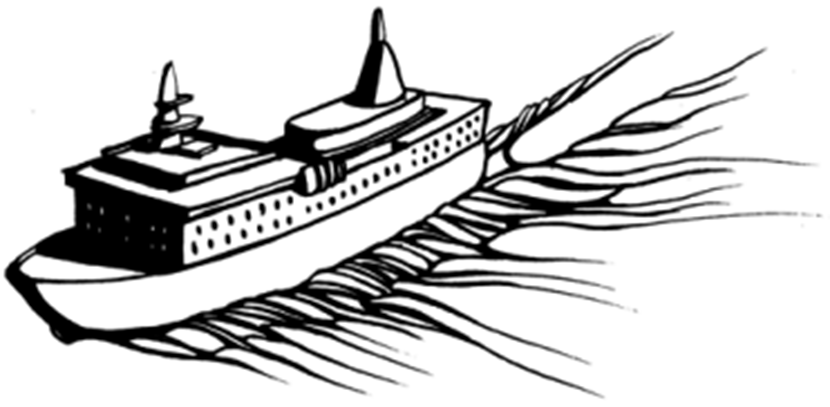
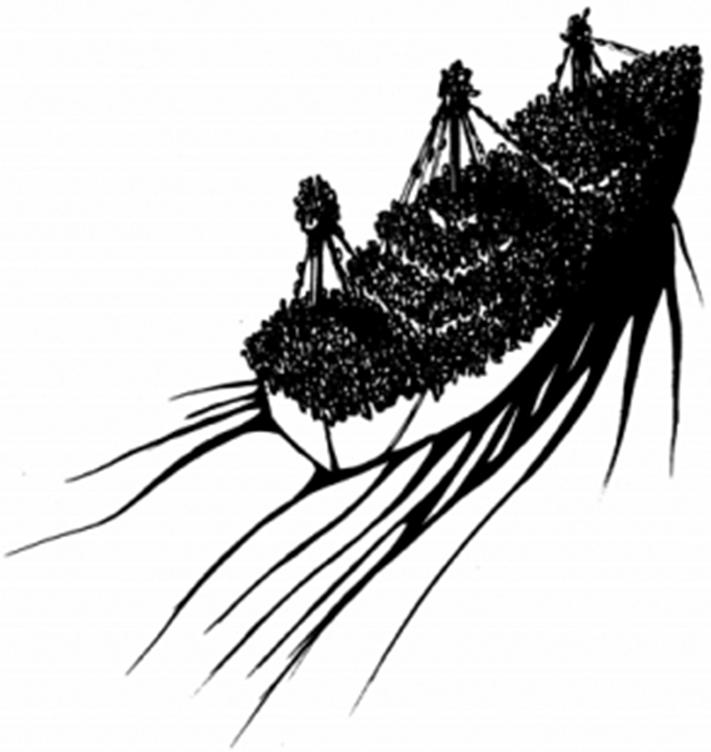


 Open access

