
Hostname: page-component-7b7567c8c-2n9c9 Total loading time: 0 Render date: 2026-11-15T08:08:40.196Z Has data issue: false hasContentIssue false

Molecular perspective of MoS2/Co unsupported catalyst using computer assisted TEM simulations

Published online by Cambridge University Press:  22 February 2012

Manuel Ramos*
Affiliation:
Departamento de Física y Matemáticas, IIT –UACJ Cuidad Juárez, México, 32310.Materials Research and Technology Institute, UT-El Paso, El Paso TX.
Joseph Serrano-Matos
Affiliation:
Departamento de Química, Universidad Metropolitana, San Juan, PR.
Eduan Martinez-Soto
Affiliation:
Departamento de Química, Universidad Metropolitana, San Juan, PR.
Brenda Torres
Affiliation:
Materials Research and Technology Institute, UT-El Paso, El Paso TX.
Gilles Berhault
Affiliation:
IRCELYON, CNRS – University of Lyon, Villeurbanne, 69100, France.
Domingo Ferrer
Affiliation:
Microelectronics Research Laboratory, UT-Austin, Austin TX.
José Rurik Farias-Mancilla
Affiliation:
Departamento de Física y Matemáticas, IIT –UACJ Cuidad Juárez, México, 32310.
Russell R. Chianelli
Affiliation:
Materials Research and Technology Institute, UT-El Paso, El Paso TX.
*
*Corresponding author: 450 Ave. Del Charro, Cd. Juárez, Chihuahua. IIT-UACJ, Edificio G Cubículo-A301. E-mail address: manuel.ramos@uacj.mx, maramos1@utep.edu
Get access

Abstract

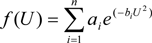
Understanding the morphology of catalytically active materials has been approached successfully in past decades using field electron microscopy in scanning and transmission modes. In this respect, some simulated TEM measurements for unsupported promoted molybdenum di-sulfide (MoS2/Co) provided some insights about molecular structure in those catalytic layered transition metal sulfides (LTMS). However, due to poor resolution, lack of color enhancement, and other factors, sections of those materials observed under TEM do not resolve the structure by itself; in particular about the localization of cobalt atoms for promoted MoS2 unsupported catalyst. This work concludes an epitaxial growth of MoS2 slabs over (111)-Co9S8 crystallographic plane, with a stacking degree size of 6 slabs. Results presented in here are obtained using experimental HRTEM and TEM simulations using the multi-slice method with a slice thickness of 25 Å and projected potential$f(U) = \sum\limits_{i = 1}^n {a_i e^{(- b_i U^2)} } $, where ai and bi are coefficients to be determined.

Information

Type
Articles
Copyright
Copyright © Materials Research Society 2012

Access options

Get access to the full version of this content by using one of the access options below. (Log in options will check for institutional or personal access. Content may require purchase if you do not have access.)

Article purchase

Temporarily unavailable
