


Radical opposition movements peaked in the early twentieth century before declining, though right- and left-wing radicalism is resurgent (Beissinger Reference Beissinger2022; Caiani Reference Caiani2019). Sociologists describe these ebbs and flows as “parabolas” that shift “from institutional conflict to enthusiastic peaks of contention, to ultimate collapse” (Tarrow [Reference Tarrow1994] Reference Tarrow2011, 212). Yet existing research on moderation and radicalization centers more proximate causes, such as shifts in political opportunity structures or political learning. This research overlooks how radicalism unfolds over time through the interactive dynamics between states and opposition movements. It also cannot explain the peaks and troughs of twentieth-century radicalism. Why do movements that once sought to overthrow a regime later accept its rules, and why do they return to confrontation after periods of accommodation? This article is a theory-building study that develops a longitudinal, path-dependent account of moderation and radicalization, using comparative process tracing to explain how temporal dynamics structure these outcomes across different political contexts.
I make two arguments. First, I treat twentieth-century colonial rule as a confounding variable that shaped both the creation of exclusionary states and the formation of radical opposition movements. Colonial administrations, and later the states that inherited their institutions, limited the political influence of native populations by treating them as subjects to be managed rather than as citizens (Chatterjee Reference Chatterjee2004). Many colonial subjects formed opposition groups to challenge the political order and drew on broad coalitions of disaffected people to support their cause, thus introducing factionalism between moderates and radicals into their movement organizations. By contrast, where colonial rule was absent, radical opposition was less likely to emerge during early state formation. Opposition groups that formed were typically more moderate, and any radical groups that emerged tended to do so well after independence.
Second, I argue that state inclusion and exclusion shift opposition strategies through a single core mechanism: the factional balance of power. When states enact policies to further include or exclude opposition actors, they can shift the balance of power between factions within opposition groups, leading them to moderate or radicalize in response. For example, the arrest of a moderate leader can strengthen the opposing radical faction. In the short term, outcomes vary significantly based on how state actions support or limit the ability of one faction to push internally for their preferred responses to the regime.
Over time, distinct patterns of opposition behavior become discernible between postcolonial and noncolonized societies. In postcolonial societies, states generally excluded radical opposition, initially fueling further radicalization. In response, most regimes accelerated repression, weakening or eliminating radical factions while strengthening moderate ones. Yet tensions between moderates and radicals persisted; limited liberalization drew moderates into institutions that constrained real change, breeding disillusionment and sparking renewed radicalism. Conversely, where colonial rule was limited or absent, tracing shifts in the factional balance of power was less useful because opposition groups were less radical in their aims and had narrower internal divides. If radical opposition emerged later, it was often due to external influence from imperial powers or regional spillover. In these cases, responses to regime actions can still be explained by shifts in factional balances of power, even if the long-term trajectory would not follow the same pattern as in colonized societies. Thus, colonial institutions established patterns of exclusion and opposition that persisted after independence, structuring the incentives of both states and their organized opponents and conditioning how the latter responded to episodes of repression or limited political openings.
I support this argument through a dual strategy that (1) illustrates the role of colonialism in the formation of radical opposition, with brief case studies of its presence and absence in Palestine and Turkey, and (2) utilizes case comparisons of the Society of Muslim Brothers in Egypt and the Iraqi Communist Party. These strategies help to move beyond the literature’s narrow focus on Islamists and demonstrate the theory’s generalizability to other opposition groups. Using longitudinal process tracing, I track state–opposition contention over long periods of time for each of these movements. I draw on 96 semistructured interviews and extensive participant observation, including roundtable discussions and meetings, collected between 2021 and 2024 during fieldwork trips to Turkey (where many Egyptian Islamists live in exile), Iraq, and Palestine, as well as the United Kingdom, the United States, and Canada.
This article contributes to several important debates. First, it links disparate scholarship on modernization theory, authoritarian durability, and Islamist moderation. It starts from the premise that although authoritarian rulers are primarily responsible for decisions to coerce and repress, they nonetheless govern through colonial-era institutions originally built to privilege socioeconomic elites and sideline nationalist challengers. Modernization theorists and practitioners reinforced these structures by directing resources to elites and sidelining mass movements, thus narrowing the political arena and fostering radical opposition. Later, after repression limited the efficacy of radicalism, moderate opposition actors sought to engage in regime-led institutions—often created due to external state pressures (McFaul Reference McFaul2004). This engagement reinforces, rather than challenges, authoritarianism by limiting confrontation and legitimizing regime-directed institutions (Boix and Svolik Reference Boix and Svolik2013; Gandhi and Lust-Okar Reference Gandhi and Lust-Okar2009)—mirroring the way civic associations can incidentally uphold authoritarianism (Jamal Reference Jamal2009; Mattingly Reference Mattingly2019; Riley Reference Riley2005; Tezcür Reference Tezcür2010).
Second, the reintroduction of temporality helps to recast Islamism as one ideological variant of opposition to colonialism alongside leftism and nationalism. This analytical approach helps to move beyond a public discourse that is Islamophobic, Western-centric, and imperialist (Hurd Reference Hurd2015; Kundnani Reference Kundnani2014; Mahmood Reference Mahmood2006; Mamdani Reference Mamdani2004). These public debates have had at least some influence on studies of Islamist moderation, stemming from the “growing cohesiveness from political science centered around the democratic peace thesis and a growing interdisciplinary consensus that western human rights need to be granted and enforced around the world” (Cox Reference Cox2013, 643) and the belief that the perpetuation of political science as a discipline “will only prosper if liberal democracy thrives” (Keohane Reference Keohane2009, 363). This normative approach risks reproducing the very dynamics it critiques, whereby scholars “manifestly politically committed to anti-imperialism nevertheless remain epistemologically committed to imperialism” (Provitola and Steinmetz-Jenkins Reference Provitola and Steinmetz-Jenkins2015; emphases in original), even incidentally. The longitudinal and cross-ideological approach adopted here offers a corrective to these trends by shifting the focus from a postcolonial ethic to a postcolonial analysis (Sabaratnam Reference Sabaratnam2013).
Finally, the article illustrates the enduring tension between radicals’ desire for change and moderates’ desire for self-preservation (El-Ghobashy Reference El-Ghobashy2005) by tying political science theories of moderation to literature from sociology that examines the ebbs and flows of contention (Koopmans Reference Koopmans, Snow, Soule and Kriesi2004; Tarrow [Reference Tarrow1994] 2011). By tracking the extent to which opposition groups, and especially different factions within groups, engage in anti-system activity over time, we can better understand the contemporary struggle of organizations to control increasingly radical youth elements within their ranks. This approach thus identifies the historical origins of the contemporary proliferation in nonhierarchical movements and the rejection of existing parties and organizations (Hassan Reference Hassan2024; Schwedler Reference Schwedler2022; Yom Reference Yom2014).
Literature Review
State–opposition relations in nondemocracies are shaped by the extent to which an authoritarian regime can maintain dominance and a challenger can innovate (De Vries and Hobolt Reference De Vries and Hobolt2020). In these authoritarian contexts, regimes have several strategies to maintain dominance. Inclusion and exclusion represent perhaps the broadest strategies: an inclusionary strategy provides space for opposition actors to engage formally or informally with the political system by legalizing engagement in electoral politics or providing access to state institutions (Gandhi Reference Gandhi2008), and an exclusionary strategy instead seeks to reduce the capacity of opposition groups to participate through proscription or repression (Svolik Reference Svolik2012).
Existing research on moderation focuses heavily on the innovation dimension of political change, in contrast to emphasizing incumbent dominance, and relies on normative conceptualizations that center the commitment of opposition groups toward democratic and pluralistic principles. This conceptual confusion may be a legacy of earlier moderation literature focused on opposition actors in strong centralized democracies: by embracing democracy and pluralism, they increased their chances of transforming the state in their desired image. By contrast, opposition actors today often contest weaker, less centralized, and authoritarian states that develop “a fickle, limited, and less transparent political opening in their national political context” (Wuthrich and Ciftci Reference Wuthrich and Ciftci2022, 324–25). In the latter environments, opposition actors have two tasks: challenging the dominance of the regime and presenting innovative alternatives to it. Thus, in addition to assessing opposition support for democracy and pluralism, scholars must also examine the opposition’s commitment to working against, not through, state-sanctioned institutions.
Consequently, I conceptualize moderation in relational terms, focusing on the extent of anti-state attitudes among opposition actors. Conceptualized relationally, moderation is the process by which an actor shifts preferences toward a more gradual approach to reform, whereas radicalization is the process by which an actor shifts preferences toward thorough and relatively swift reorientation of the political system. Though the desire for swift and thorough change does not require violence, armed force is essential for staving off reactionary and counterrevolutionary responses (Clarke Reference Clarke2023). Opposition to authoritarian regimes takes several forms: exit, everyday forms of resistance, institutional action, nonviolent action, or violent action (Schock Reference Schock2005, 13). Radicalization typically involves increased use of everyday forms of resistance, nonviolent direct action, and violent action, including violent unarmed action (Kadivar and Ketchley Reference Kadivar and Ketchley2018), whereas moderation involves moving away from these actions toward institutional strategies. Conceptualized this way, radicalization embodies a range of tactics and strategies aimed at reducing the dominance of the regime.
What, then, explains why opposition actors oscillate between moderation and radicalization over long periods? Existing debates typically examine proximate causes in opposition behavior and focus heavily on Islamists. The literature’s central argument is that inclusion of opposition actors, and especially Islamists, leads to their moderation (Schwedler Reference Schwedler2006; Wickham Reference Wickham2004). A related argument, that exclusion leads to radicalization (Brooke and Nugent Reference Brooke and Nugent2020; Hafez Reference Hafez2003), is more contested. More recently, scholars have argued that moderation can lead to radicalization (Bashirov and Lancaster Reference Bashirov and Lancaster2018; Brocker and Künkler Reference Brocker and Künkler2013) and that exclusion can lead to moderation (al-Anani Reference al-Anani2016; Cavatorta and Merone Reference Cavatorta and Merone2013; Grewal Reference Grewal2020). These contradictions are illustrated in figure 1.
Islamist Moderation Literature

Figure 1 Long description
The table has two columns at the top labeled Inclusion and Exclusion. The leftmost row labels are Moderation and Radicalization. In the top left cell under Inclusion and Moderation, the heading is Inclusion-Moderation with authors Ashour (2009), Bermeo (1992), Buehler (2013), Schwedler (2006), Wickham (2004), and Yadav (2010). The top right cell under Exclusion and Moderation is headed Exclusion-Moderation with authors al-Anani (2016), Cavatorta and Merone (2013), Grewal (2020), and Larkin and Nasarsa (2021). The bottom left cell under Inclusion and Radicalization is headed Inclusion-Radicalization with authors Bashirov and Lancaster (2018), Brocker and Künkler (2013), and Fahmi (2020). The bottom right cell under Exclusion and Radicalization is headed Exclusion-Radicalization with authors Abd-Allah (1983), Brooke and Nugent (2020), and Hafez (2003).
Diverse Cases

Table 1 Long description
The table has three columns and four rows. The first column lists attributes: Ideology, External state support, and Social base. The second column, labeled Muslim Brothers (Egypt), lists: Islamist for ideology, None for external state support, and Broad for social base. The third column, labeled Iraqi Communist Party, lists: Communist for ideology, Soviet Union for external state support, and Narrow for social base. Each attribute is aligned horizontally for direct comparison between the two groups.
A broader theory emerges when the Islamist moderation literature is situated in sociological work on social movements, radicalization, and political learning, and when longer time horizons are explicitly incorporated. First, foundational scholarship on social movements emphasizes that movements pass through cycles or phases of mobilization, institutionalization, and decline, though these cycles or phases are rarely linear and include reversals between accommodation and confrontation (Tarrow [Reference Tarrow1994] 2011; Tilly Reference Tilly2004). Moderation, then, should not be understood as a short-term response to state strategy or as an end point, but as a temporary equilibrium within broader cycles of contention.
Second, factionalism and internal contestation can further complicate the picture. Radical flank theory shows how competition between radicals and moderates within an organization can shape key outcomes: radical actions can increase repression or challenge the leadership’s legitimacy, and moderates sometimes benefit (but sometimes suffer) from the radicals’ disruptive actions; in either case, the presence of radicals can shape patterns of state repression which, in turn, can reshape internal group dynamics (Davenport Reference Davenport2016). Yet radical flank theory has primarily been applied to short-term dynamics, focusing mostly on whether radical escalation leads to further repression or concessions in its immediate aftermath and, likewise, whether it improves or worsens the position of moderates shortly afterward. More attention must be paid to how radical flanks persist or fragment over time, and how repeated experiences with repression shape and reshape internal dynamics. Taken together, factionalism and heterogeneity, and the dynamism they produce, can critically shape how different actors within groups moderate or radicalize in response to state actions and to each other (Schwedler Reference Schwedler2006; Wagemakers Reference Wagemakers2020).
Third, heterogeneity in experiences and interactions with other political actors leads opposition actors to adapt (Bermeo Reference Bermeo1992; Grewal Reference Grewal2020; Levitsky and Way Reference Levitsky and Way2010; Wickham Reference Wickham2004). More recent research (Blaydes, Hamzawy, and Sallam Reference Blaydes, Hamzawy and Sallam2022; Heydemann Reference Heydemann, Heydemann and Lynch2024) suggests that exogenous shocks (like international intervention, regional protest waves, or economic crises) and endogenous processes (leadership turnover or cumulative experience with repression) can drive reappraisal, during which movements develop heuristics to better assess their environment and avoid “irrational, reactive, and potentially destructive” behavior (Davenport Reference Davenport2016, 44). These learning processes differ across factions. Moderates may interpret repression as a sign that radicalism is counterproductive, while radicals may view the same episode as evidence that institutions cannot be trusted. Far from resolving internal tensions, learning often deepens factional divides.
Fourth, like much research conducted in the social sciences (Pierson Reference Pierson, Rueschemeyer and Mahoney2003), the Islamist moderation literature primarily assumes short time horizons centered in the late and post–Cold War era. Yet, for much of the twentieth century, Global South countries were typically far less stable, centralized, and democratic than those in Europe. In the Middle East and North Africa, anti-colonial movements prioritized self-determination and turned to debates over democracy more intensely only after the 1967 Arab–Israeli War (Kazziha Reference Kazziha, Brown and Shahin2013). Moreover, the meaning of democracy has changed over time as a result of colonial (and postcolonial) influences in Global South countries (Barkawi and Laffey Reference Barkawi and Laffey1999). More generally, scholarly inattentiveness to the full range of actors affected by inclusion and exclusion “treatments”—and the fact that regimes reapply treatments over time at different intensities, resulting in downstream “reactions and counteractions” (Collier and Collier Reference Collier and Collier1991)—suggests that moderation and radicalization warrant temporally longitudinal examination.
Relatedly, a growing body of research emphasizes the importance of legacy effects, showing how formative political experiences, like exposure to repression, can shape political attitudes and organizational behavior long after the original conditions have changed. For example, recent research demonstrates how authoritarian legacies persist across generations, influencing political attitudes beyond moments of regime change (Neundorf and Pop-Eleches Reference Neundorf and Pop-Eleches2020). The legacies of repression can be reactivated, transformed, or blunted across contexts (Ruggeri, Balcells, and Justino Reference Ruggeri, Balcells and Justino2025). Other scholarship demonstrates that external intervention compounds these legacies by restructuring internal factional dynamics: in the Palestinian and Iraqi Kurdish cases in particular, American intervention generated elite polarization and divergence between political leaders and their publics, ultimately producing authoritarian conditions within movements (El Kurd Reference El Kurd2020a). These dynamics interacted with the repression legacies produced by sustained occupation and colonial exclusion to shape how opposition movements developed over time (El Kurd Reference El Kurd2020b). Thus, early experiences with repression structured how actors interpreted later moments of political openings or repression. As a consequence, scholars must identify the organizational mechanisms through which these legacy effects operate.
Finally, inclusion and exclusion have important causal consequences for moderation and radicalization, but theories should engage alternative explanations beyond state-centric attributes, including how ideological doctrine might contribute to radicalism (Bélanger Reference Bélanger2021; Clubb and McDaid Reference Clubb and McDaid2019; Richardson Reference Richardson2006), how external state sponsors support and shape nonstate actor behaviors (Byman Reference Byman2005; Salehyan, Gleditsch, and Cunningham Reference Salehyan, Gleditsch and Cunningham2011; Tamm Reference Tamm2016), and how social support bases shape political preferences and behaviors (Lipset Reference Lipset1983; Moore Reference Moore1966). An implicit logic of state-centric theories is that they cut across these factors. Moreover, the factional dynamics noted above likely mediate these other factors, given that authoritarian regimes typically reward or punish behaviors based on the threats they pose rather than on identity (Ash and Mazur Reference Ash and Mazur2025; Belge and Sinanoğlu Reference Belge and Sinanoğlu2022). Selective repression by a regime can weaken certain factions while empowering others (El Kurd Reference El Kurd2020b), cutting across an organization with a shared ideology, external sponsor, or support base. It is also worth noting that colonialism and exclusion precede the formation of opposition organizations, suggesting that the establishment of social bases of support is also crucially tied to those factors.
Existing literature explains important dimensions of opposition behavior, from strategic moderation to factional competition and radical flank effects. It also recognizes that legacies of repression and authoritarian rule shape political attitudes and polarization long after the initial episodes of state violence. Yet the literature stops short of specifying how historical organizational arrangements interact with later episodes of inclusion and exclusion to generate recurrent cycles of moderation and radicalization. While repression can polarize movements and inclusion can empower moderates, it remains unclear why different ideological movements repeatedly experience similar oscillations over extended periods. By drawing on sociological work on social movements and radicalization and linking colonial origins, authoritarian durability, and shifts in factional power, the theory developed here offers a unified framework for understanding these long-run, path-dependent dynamics.
The Colonial Origins of Radical Opposition
Colonial rule produced states oriented toward extraction, elite brokerage, and coercion rather than broad participation (Herbst Reference Herbst2000; Mamdani Reference Mamdani1996). Postcolonial rulers inherited and adapted institutions for their own purposes, often prioritizing control over inclusion (Brownlee Reference Brownlee2007; Levitsky and Way Reference Levitsky and Way2010; Slater Reference Slater2010). Colonialism is not merely a historical backdrop but a causal driver of state formation and authoritarian durability across much of Africa and West Asia. Consequently, I treat colonialism as a confounding variable that simultaneously generated exclusionary state institutions and radical opposition groups. Only by analyzing how colonialism set in motion radical opposition and exclusionary states can scholars uncover long-term patterns in state–opposition contention and account for the endogeneity inherent in the feedback loops between regime strategies and opposition behavior.
The first path-dependent process connects colonial administration to the creation of authoritarian states. Two common features of colonial administrations had significant consequences for the nature of postcolonial states: prioritization of select socioeconomic elites and violent authoritarianism. Colonial authorities constructed ruling institutions that “buttressed direct and indirect modes of colonial rule … to inhibit solidaristic and nationalist institutions inclined toward independence that could threaten their rule” (Wyrtzen Reference Wyrtzen2022, 254). This ensured sufficient buy-in from aligned socioeconomic elites in the upper middle classes—who were sometimes permitted to participate in semidemocratic institutions (Lee and Paine Reference Lee and Paine2024)—and the sidelining of challengers in the middle and lower classes. Colonizers reinforced this dynamic with violent repression against any opposition that formed among the latter groups: “We have seen how the [colonial] government’s agent uses a language of pure violence. The agent does not alleviate oppression or mask domination. He displays and demonstrates them with the clear conscience of the law enforcer, and brings violence into the homes and minds of the colonized subject” (Fanon Reference Fanon1961, 4).
Postcolonial state leaders inherited these coercive and exclusionary institutions. Because decolonization in Africa and West Asia often occurred through negotiation or “derelict decolonization” (Lemke and Carter Reference Lemke and Carter2016), the same socioeconomic elites elevated during the colonial period usually took control of the colonial administration. In theory, the goal was to eventually incorporate dissidents into these systems (Huntington Reference Huntington1968; Rostow Reference Rostow, Raskin and Fall1967); however, the rise of radical groups posed an existential challenge and led regimes to utilize their coercive capacities to repress demands for change. These unpopular oligarchic regimes fell to coups by military officers that garnered middle-class support, resulting in consolidated authoritarian republics that similarly co-opted or repressed remaining opposition groups (Hinnebusch Reference Hinnebusch, Hinnebusch and Gani2019, 55). Subsequently, police training programs, often American led, “served as the enforcement arm” for these regimes, helping to modernize their repressive apparatuses to track down “subversives” pursuing social justice and change (Kuzmarov Reference Kuzmarov2012, 9). Consequently, colonial patterns of exclusion persisted into the postcolonial era.
The second path-dependent process links colonial rule to the proliferation of radical opposition. Colonialism restructured local economies to serve the interests of the metropole, increasing exploitation and dismantling traditional social networks and political institutions (Blaut Reference Blaut1989; Patnaik and Patnaik Reference Patnaik and Patnaik2021). In the Middle East, it was “in these structural changes all the important radical parties and movements, including the Muslim Brethren, the Communists, the Ba’th, the Free Officers, the Arab Nationalists, the Algerian Fellaghas, and the Palestinian Fedayeen, had their roots” (Batatu Reference Batatu1983, 2–4). Radical opposition thus emerged from the combination of broad structural changes and coercion experienced under foreign domination. Importantly, not all actors within colonized society were radical. Nationalist elites often pursued limited reform rather than revolutionary change, though they were “violent in their words and reformists in their attitudes” (Fanon Reference Fanon1961, 22).
Thus, colonial rule generated exclusionary states and radical opposition whose trajectories became mutually reinforcing, conditioning how later episodes of inclusion or exclusion (“treatments”) affected organizations. Regimes regularly undertook treatments in the form of arrests, proscription, or legalization, producing heterogenous effects across leaders, factions, prospective recruits, and the social base or constituency of opposition groups. Over time, these downstream “reactions and counteractions” (Collier and Collier Reference Collier and Collier1991) created feedback loops that shaped whether and how opposition actors moderated or radicalized. The next section develops this logic by examining how inclusion and exclusion, as treatments, operate in colonial and postcolonial contexts to produce these heterogenous downstream effects.
A Theory of the Factional Balance of Power
Opposition movements almost always contain moderate and radical factions that strongly disagree over strategy and differ in their risk acceptance. These internal divisions are critical to explaining shifts in moderation and radicalization strategies over time. Consequently, the theory centers the faction as the primary unit of analysis.
The theory centers on shifts in the factional balance of power. Changes in state strategies—for example, through repression, proscription, or inclusion—alter the political opportunity structure and shift the relative capacity of factions. When states exclude or repress moderate leaders, radical factions gain legitimacy and organizational space; likewise, when radicals are repressed, the moderates gain a similar advantage. When states include opposition actors, moderate factions typically gain strength and legitimacy, marginalizing radicals. Consequently, when groups reassess their options after an episode of inclusion or exclusion, the faction that emerges with the upper hand can work to change the group’s strategy toward confrontation or accommodation.
Yet these interactions unfold iteratively, creating feedback loops between state and opposition behaviors over time. Repeated episodes of exclusion, usually in the form of repression, were typical in colonial and postcolonial authoritarian states. Only in the late twentieth century did authoritarian regimes experience external pressures to pursue political liberalization; even then, inclusion was partial and repression remained present in many contexts. Likewise, despite aspirations of democratization during the Arab Spring in 2011, regimes have since dropped any democratic pretexts and stabilized authoritarian forms of rule once again (Aras and Falk Reference Aras and Falk2016). The remainder of the theory takes into consideration these macropolitical influences to identify four patterns in the shifting factional balance of power, situating the competing explanations in figure 1 within a broader temporal context.
Exclusion-Radicalization
Under colonial rule, states excluded opposition actors, instead prioritizing socioeconomic elites. Beyond this general policy of exclusion, states undertook particular instances or “episodes” of exclusion in which they arrested a leader, proscribed an organization, attacked protestors, and so forth, reinforcing the opposition’s marginalization. These shocks forced debates within opposition organizations over appropriate responses to regime behavior. Internal debates helped to activate or exacerbate these underlying factional tensions, which were shaped by the internal balance of power within these groups (Gumuscu Reference Gumuscu2023, 62). These debates often took the form of in-person meetings to decide whether to confront the regime or to de-escalate. Given the anger and indignation that regime policies elicited from opposition actors, radical factions often pushed for direct action in response.
Still, moderates sometimes succeeded in maintaining calm, especially if the repression had more negative consequences for the radical factions than the moderate ones. Yet because regimes repeated repressive actions, it became increasingly difficult for moderates to justify caution or inaction. Despite significant pressure from moderate factions, exclusion led to an overall state of radicalization in the short term, wherein the dominant strategy of groups was to confront the regime through destabilizing protests or violence.
Exclusion-Moderation
In time, continued repression led most radical factions to escalate action against regimes. The consequence was almost always violent confrontation, triggering severe regime repression. Although regimes are rarely successful at killing or exiling every activist, they are quite effective at reducing groups’ capacity to function openly. Repression was most consequential for radical factions because they were the first to be targeted due to their direct involvement in confrontation. They were also more likely to struggle in reconstituting themselves and recruiting supporters after confrontation failed.
Where repression succeeded, moderate factions reestablished the organization at home or in exile, even if in a limited fashion. Moderate leaders made concerted efforts to gain control over new or surviving membership through tightened recruitment and socialization practices. In the medium term, then, exclusion usually led to moderation of the “original” group. This development echoes the more established literature in sociology on cycles of protest: as cycles wind down, “exhaustion and polarization spread, and the initiative shifts to elites and parties” who seek opportunities to work “within the system” (Tarrow [Reference Tarrow1994] 2011, 212). In conceptual terms, moderates worked to eliminate radical activity aimed at ending regime dominance.
However, radicalism almost always reemerged, often from the remnants of the radical factions and with some basis in their radical ideas. The survival of radicalism, even in weak forms, portended future confrontation with the moderated group.
Inclusion-Moderation
Though exclusionary strategies were effective, regimes often replaced them with inclusionary ones to avoid the high costs of repression (Frugé Reference Frugé2019), to counter other domestic foes (Staniland Reference Staniland2021), to confine dissent (Magaloni Reference Magaloni2006; Schedler Reference Schedler2013), and especially to respond to international calls for political liberalization (McFaul Reference McFaul2004). Moreover, regimes that preferred to exclude opposition actors were unlikely to include them while they remained radical. In general, opposition groups that were included in politics for any sustained period of time were already moderate—that is, dominated by a moderate faction, even if some remnants of a radical faction remained.
If groups are already moderate when included, their continued moderation is hardly surprising. Moderate leaders, citing the futility of confrontation, have seen negotiations, national fronts, or elections in competitive authoritarian settings as opportunities to continue oppositional activity with lower stakes. Inclusion thus led to further moderation by channeling oppositional energy into institutions that reinforced, not eroded, regime dominance. Any remaining radicals tended to be suspicious of these institutions and either rejected them or set important limits on the extent to which they were willing to engage in them.
In most cases, opposition groups were initially successful in utilizing inclusive institutions to their advantage, but these gains rarely lasted. Regimes either successfully co-opted movement leaders, rendering them ineffective, or returned to exclusion when challengers used institutions to their benefit. Moderates, having invested significant energy in these institutions, prioritized their continued participation in them. This preference further moderated their ideology by centering the inclusionary institutions as meaningful ends rather than the means to achieving political change (Hamid Reference Hamid2014). Opposition actors thus embraced democratic institutions but avoided directly challenging regime dominance. Consequently, they achieved limited gains through these intentionally restricted institutions.
Inclusion-Radicalization
Inclusion, particularly in authoritarian contexts, limits change and opens paths back to radicalization. Perceptions that a regime has failed to open space for true opposition and that opposition groups have not maintained a genuine challenge to the regime can galvanize a new generation of activists because such perceptions result in the disaffection of wide swaths of the population and especially youth. There are several reasons why disaffection might lead to radical activism. High levels of education with few opportunities often pave the way to engaging in opposition (Gambetta and Hertog Reference Gambetta and Hertog2016; Ives and Breslawski Reference Ives and Breslawski2022; Nielsen Reference Nielsen2017; Qutami Reference Qutami2021). Historically, global anti-colonialist and anti-imperialist movements relied on connections of youth and students across countries (Nabulsi and Takriti Reference Nabulsi and Takriti2016); consequently, youth activists “often anchor processes for radical change for the broader society” (Abu Samra and Qutami Reference Abu Samra and Qutami2020, 3). In short, the inclusionary period—and specifically its farcical nature, as perceived by the opposition—led members of the opposition group, its constituency, and prospective recruits to recognize the failure of these institutions to effect change.
The result is the return of radical ideas and radical actors to the political scene to pursue alternative means of challenging regime dominance. Yet youth members and surviving radicals cannot effortlessly recreate radical factions or new radical groups given that they are typically “unorganized, divided, and without resources” (Gumuscu Reference Gumuscu2023, 1). Moreover, periods of inclusion dampen the spirit of revolutionary ideas, making it difficult for radicals to recruit. This contemporary swing toward radicalism will likely be accompanied by exclusion, as many authoritarian regimes have accelerated repressive activity over the last decade (Rak Reference Rak2022; Repucci Reference Repucci2020).
Summary
On its own, each of the four theories posits a relationship that captures part of the trajectory of opposition groups. My theory introduces temporality to remedy these contradictions by contextualizing each existing theory’s place in time, identifying the foundational role of the colonial period in initiating this trajectory and exploring how various actors, through the lens of factions, are affected in each subsequent period.
Centering factions thus provides a parsimonious way to link state actions to the internal decision-making processes of opposition groups. It explains why similar groups might respond differently to state actions and why different groups exhibit similar trajectories over time. Instead of treating moderation and radicalization as linear transformations, this approach shows how shifts in factional influence produce recurring changes in opposition strategy.
Research Design
The research design combines within-case process tracing and cross-case comparison to capture how cycles of inclusion and exclusion unfold in different political contexts. The empirical sections begin with a brief overview of the variation in colonial experiences and where radical opposition emerged. This overview situates the broader universe of cases and clarifies the scope of the argument.
I then turn to two primary cases. I first examine the Society of Muslim Brothers in Egypt as an initial plausibility probe. Using this case, I developed the theory inductively, iterating between evidence and theory while working to “revise causal propositions after discarding old assumptions and uncovering new mechanisms from interviews and archives” (Yom Reference Yom2015, 617). I selected the Muslim Brothers because Islamists have been among the most powerful opposition actors in the Middle East and North Africa (Schwedler Reference Schwedler2011), and the Muslim Brothers have had an outsized influence on the trajectory of Islamism across the world. Moreover, scholars have made the case that all four hypothesized relationships summarized in figure 1 appear plausible in this case (al-Anani Reference al-Anani2016; Brooke and Nugent Reference Brooke and Nugent2020; Campagna Reference Campagna1996; Wickham Reference Wickham2004), making it a strong candidate for theory refinement.
To establish external validity, I compare the Muslim Brothers to the Iraqi Communist Party (ICP). I rely on a diverse-case selection strategy, in which I select cases “that represent the full range of values characterizing … a particular X/Y relationship” (Seawright and Gerring Reference Seawright and Gerring2008, 300). In this instance, the goal is to examine whether the specific relationships between inclusion and exclusion cycles (X) and moderation or radicalization (Y) hold across cases that exhibit “maximum variance along relevant dimensions” (300)—namely, the alternative explanations outlined at the end of the Literature Review section above and illustrated in table 1: ideology, external state sponsorship, and social base of support. Despite this variation, both groups emerged under twentieth-century British colonization, allowing for meaningful comparison of the consequences of inclusion and exclusion for their moderation and radicalization.
Whereas the Muslim Brothers were Islamist, without external state sponsors, and maintained a broad support base, the ICP was communist, strongly backed by the Soviet Union, and had a relatively narrower, though still influential, urban and working-class support base. The diverse case design prioritizes variation while holding constant enough shared structural context (namely, early twentieth-century colonialism in the Middle East) to allow for valid comparisons. This follows an extensive literature that shows how groups and collectives with very different ideologies might respond similarly to changes in political opportunity structures (Krause Reference Krause2017; Pearlman Reference Pearlman2011). Thus, this comparison evaluates whether variation in ideology or other factors alter the main argument put forth that moderation and radicalization are primarily shaped by shifts in the factional balance of power.
Second, I supplement this comparison by briefly exploring two additional cases that vary in their experience of colonialism: political opposition in Palestine and Turkey. Whereas Palestinian opposition emerged in an intense and violent colonial context, Turkey did not experience colonialism and experienced a different trajectory in state–society relations. These cases represent shadow and extreme-value comparisons (Seawright and Gerring Reference Seawright and Gerring2008, 297–98), enabling assessment of whether variation in colonial intensity conditions how inclusion and exclusion shape opposition after independence.
Because the theory centers on the long-term, path-dependent effects of colonialism and on the iterative feedback loops between state strategies and opposition responses, longitudinal process tracing is essential (Krause Reference Krause2017). This approach allows for the observation of reactions and counterreactions (Collier and Collier Reference Collier and Collier1991), thus accounting for endogeneity in state–opposition relations. This design tests not only the hypothesized causal relationships but also their cyclical nature over time and the centrality of the factional balance-of-power mechanism.
I gathered two forms of data that correspond to different time periods. In the colonial and early postcolonial time periods, I primarily rely on available primary sources, some collected from archives during fieldwork, and secondary sources. In the analysis covering the later and more contemporary periods, I rely on these sources as well as on 96 semistructured interviews with activists, along with reflections from observation and limited participant observation, including multiple roundtables, a conference, and other less formal interactions. Of the 96 interviews, 30 relate to the Iraq case, 26 to the Egypt case, and 40 to the Palestine case, conducted through a combination of in-country fieldwork and interviews with activists in the diaspora. In addition, numerous conversations with activists and area experts in Kuwait, Jordan, Qatar, Czechia, and Egypt further informed my interpretation of events.
To mitigate bias in interview sampling, which relied primarily on snowball recruitment, I used several strategies to ensure heterogeneity across factions. I began by consulting area experts familiar with sampling issues who could recommend initial contacts across factions. From these initial nodes, I used snowball sampling while deliberately seeking variation rather than density around any one network or identity (e.g., age cohorts or home towns). Respondents themselves frequently directed me to individuals who held contrasting views, including those with whom they disagreed. More than once, interviewees referred me—unprompted—to people I had already interviewed, suggesting I had reached key clusters of activists. Interviews were conducted in Arabic, and quotations from them and from other non-English sources have been translated into English by the author unless indicated otherwise. With few exceptions, interviewees are kept anonymous in this manuscript for security concerns (see the online appendix).
Colonialism, Radicalism, and Exclusionary States
To ground the theory in observable patterns of opposition behavior in the Middle East and North Africa, this section offers a brief historical overview of how varying intensities of colonial rule generally shaped the emergence or absence of radical opposition. Across the region, intense forms of colonial rule tended to produce radical opposition movements. In places like Algeria, Palestine, and Morocco, colonial administrations violently subjugated native populations that, in response, formed various rebel groups and revolutionary organizations. Though the National Liberation Front (Front de libération nationale, FLN) was by far Algeria’s most consequential opposition group, several radical organizations preceded it, including the Star of North Africa in 1926.
By contrast, radical opposition typically did not emerge—or did so much later—in states that experienced limited or no colonial rule, as in Turkey, Iran, and the Gulf monarchies. The modern state of Iran was consolidated in 1925, though pluralistic politics emerged earlier through the Constitutional Revolution, which had, by 1907, established a parliament and constitution. Yet intensified oppositional politics did not emerge until 1941 with the emergence of the leftist Tudeh Party, which only developed a mass, radical base in 1945. In the Gulf, the Dhofar Liberation Front was founded in the 1960s and sought to separate from Oman; notably, this occurred well after the independence of Oman and resulted from the direct influence of neighboring South Yemen.
In the remainder of this section, brief explorations of opposition formation in Palestine and Turkey represent extreme cases illustrating the consequences of colonialism across a range of colonial intensities. Their purpose is to clarify how colonial rule, or its absence, structures the opportunity space in which opposition movements form and, subsequently, what forms of opposition groups emerge.
Absence of Colonialism in Turkey
Modern Turkish society was never colonized. Turkey, a republic founded officially in 1923 after the collapse of the Ottoman Empire, was relatively less exclusionary than colonial and postcolonial regimes, especially because the early republic sought to consolidate a unified national identity (Feroz Reference Feroz1993; Findley Reference Findley2010). Though political competition was constrained and repression was used—including several interventions by the military in the latter half of the century—the goal of the earliest regimes, given a lack of a strong national bourgeoisie, was statist (Keyder Reference Keyder1987), as it regularized competition within electoral institutions and unions. Relative to many colonized societies, then, Turkey was less exclusionary.
Given the limited exclusion, radical opposition remained relatively weak and only organized much later. For example, left- and right-wing radical groups engaged in violence only beginning in the 1970s and did not sustain their violence, with many of their adjacent elements reintegrated into electoral institutions later on (Gümrükçü Reference Gümrükçü2023; Samim Reference Samim1981). Even at the height of the opposition’s power in Turkish politics during the 1980s, the opposition was relatively moderate when compared with colonized contexts, as it sought to reform institutions rather than overthrow the government altogether.
The Kurdish opposition in Turkey is an exception that underscores the rule. The country faced rebellion from separatists in Kurdistan beginning with the Sheikh Said rebellion in 1925, only two years after the republic’s founding (Olson Reference Olson1989). The repression of the rebellion and the ethnic and economic marginalization of Kurdish populations led to the emergence of the Kurdistan Workers’ Party (Partiya Karkerên Kurdistanê, PKK), a national liberation organization, in the 1970s. The PKK argued that the Turkish state’s “internal colonization” of the Kurdish provinces led to significant exclusion and marginalization and espoused a radical ideology to counter it (Marcus Reference Marcus2007). Yet this radicalism stems from a territorially and ethnically distinct region whose experience diverges sharply from the rest of Turkey, underscoring the broader pattern that mass radical opposition emerges where there is significant exclusion.
Aside from the Kurds, opposition in Turkey developed primarily within institutional channels. Islamist movements that rose in the 1970s created political parties—not mass opposition organizations—and sought to contest elections and reform the Turkish government (White Reference White2002). Leftist organizations, many of which originated before the founding of the republic, sought to “legalize themselves,” which ultimately led to them becoming “an appendage of ‘national progress’” (Samim Reference Samim1981, 63)—indicating their relatively moderate essence. In short, the absence of colonialism resulted in a less exclusionary state and the formation of less radical opposition.
Intense Colonialism in Palestine
In Palestine, colonial intensity was extremely high. During the British Mandate (1920–47), the British colonial powers violently suppressed dissent and carried out collective punishment against Palestinians, including their decimation of male leadership among Palestinians following the 1936–39 riots (Anderson Reference Anderson2019). By the time of the British withdrawal from Palestine in 1947, the power of Zionist militias far outstripped that of the Palestinians. Subsequently, Zionist forces violently displaced over 750,000 Palestinians, representing half the native population, and violently targeted those attempting to return or carry out reprisals against Israel from bordering areas (Morris Reference Morris1997). Moreover, the newly founded state of Israel inherited and maintained British colonial institutions that used racialized logics to label subjects as loyal or suspicious (Berda Reference Berda2022). By contrast, Palestinians who remained within the borders of the newly proclaimed Israeli state after 1948 were granted citizenship, though they suffered from significant discrimination (Lustick and Berkman Reference Lustick, Berkman and Rouhana2017); the most radical form of resistance among this population included participation in the Israeli Communist Party (Beinin Reference Beinin1990).
As the theory predicts, Palestinians responded to displacement and exclusion by developing radical opposition organizations aimed at dislodging the nascent Israeli state. Between 1948 and 1956, resistance remained fragmented and weakly organized with only episodic support from Arab regimes (Abu Iyad and Rouleau Reference Abu and Rouleau1981; Kazziha Reference Kazziha1975). By the late 1950s, however, important youth-led organizations such as the Palestinian National Liberation Movement (Fatah) and Arab Nationalist Movement emerged, driven by disillusionment with Arab state inaction. When the Palestine Liberation Organization (PLO) was created in 1964 as an umbrella organization meant to incorporate multiple facets of Palestinian society, it was initially viewed skeptically by the armed groups as a tool of the Arab League (Abu Samra Reference Abu Samra2020; Krause Reference Krause2017). After their relative success in the 1968 Battle of Karameh, the armed factions consolidated power within the PLO and transformed it into radical and independent nationalist organization, though this had the consequence of consolidating and intensifying interfactional competition.
Despite early success, the PLO and its armed factions suffered major defeats, most notably their expulsion from Jordan in 1971 and from Lebanon in 1982. Loss of sanctuary in 1971 triggered a profound reassessment: movement leaders concluded that armed struggle alone could not achieve liberation and adopted the Ten Point Program in 1974, marking a cautious shift toward diplomacy that many guerillas rejected. As a former member of a radical group told me, “a fighting national authority is what we thought we were getting, not entry into negotiations.”Footnote 1 When the 1982 Israeli invasion of Lebanon decimated the PLO’s forces and expelled it from Lebanon, its leadership sought out US mediation, signaling a deepening commitment to negotiation (Sayigh Reference Sayigh1997, 564). By the early 1990s, PLO leader Yasser Arafat had begun secret talks with Israeli officials, culminating in the 1993 Oslo Accords and the creation of the Palestinian Authority.
Decades of displacement and repression transformed the Palestinian national movement from a radical armed struggle into a diplomatic project centered on negotiation. What began as an organization dominated by armed factions became one committed to institutionalized engagement with the international system. Oslo represented a “tactic that turned into a long-term strategy,”Footnote 2 as some leaders decided “to endear themselves to the US”Footnote 3 at the expense of the movement’s goals. The PLO’s moderation resulted in a cataclysmic shift in the locus of radical opposition away from the organization and toward Islamists and alienated youth in Palestine—including organized armed groups in the West Bank (Mehvar and Khdour Reference Mehvar and Khdour2023)—as well as toward Palestinians in the diaspora with historic ties to the PLO who developed radical left-leaning organizations.Footnote 4 Radicalism, instead of being eliminated, was redistributed across Palestinian society after the PLO’s moderation.
Summary
The experiences of Turkey and Palestine highlight how colonial intensity shaped the opportunity structure in which opposition formed, setting the stage for intragroup contests that determined whether movements moderated or radicalized. Yet these macrolevel conditions alone cannot explain when and how movements oscillate between moderation and radicalization. To evaluate the theory’s claim about the central role of shifting balances of power between factions, the next two sections compare the Muslim Brothers in Egypt to the Iraqi Communist Party—two very different opposition groups operating in similar structural environments.
The Society of Muslim Brothers in Egypt
In Egypt, British colonialism and, after 1923, the nominally independent state maintained a general policy of exclusion that limited popular participation in politics. The Society of Muslim Brothers was founded in 1928 as an Islamic revivalist movement in Egypt that capitalized on anti-imperialist sentiment toward the British, who backed a Christian missionary movement and benefited from fruitless infighting among large landowners and commercial elites (Wickham Reference Wickham2013, 21–22). As the Brothers became explicitly political in the 1930s, they were barred from parliament and subject to severe regime crackdowns.
The Society’s responses varied over time. Like its charismatic founder, Hasan al-Banna, the Society’s strong urban and professional support bases had reformist tendencies. However, many rank-and-file members advocated for revolutionary change, fueling competition between moderates and radicals that shaped the organization’s internal struggles (al-Anani Reference al-Anani2016, 53). Consequently, pressures to moderate or radicalize were primarily shaped by shifting factional balances of power.
A regime crackdown in 1938 is a case in point. As the Society popularized its anti-British and pro-Palestinian sentiments through protests, the regime arrested several members. Al-Banna toned down regime criticism in Society newspapers and forbade protests, signaling accommodation with the status quo (El-Awaisi Reference El-Awaisi1998). On the surface, this response suggests a move toward more moderate policies by the group. Al-Banna and other moderate leaders were not arrested, permitting them to assert control and limit further radical behavior.
Yet as the theory predicts, the balance of power did shift in favor of the radicals. The muted external response masked the massive internal struggle that erupted: though some radicals were dismissed, it was evident that “the radical approach was gaining support” within the Society (Lia Reference Lia1998, 251). To manage radical momentum, al-Banna (Reference al-Banna1939) undertook several tasks: (1) he explained the reasoning for the Society’s careful approach in a “Special Comprehensive Report” and began to “purge the ranks” of radicals with “suspicious aims”; (2) he sent representatives to district offices to ensure obedience and threaten dismissal for disobeying; and (3) he created the Secret Apparatus, the Society’s paramilitary wing, though his goal was to keep the radical elements busy and controlled (Cook Reference Cook2012; Salwen Reference Salwen2012), not to turn the Brothers into an armed force (El-Awaisi Reference El-Awaisi1998, 119). Despite these actions, radicalism did not abate over the subsequent months and years, even under martial law following the launch of World War II: “[F]eeling remained so high that the issue had another airing in 1940, which caused more defections” (Mitchell Reference Mitchell1993, 18–19). Several other episodes of exclusion in the 1930s and 1940s triggered similar internal dynamics, such as the brief arrests of Hasan al-Banna and then his second in command, Ahmed Sukkari, in 1941 (Lia Reference Lia1998, 262–63) and the closing down of the Society’s headquarters in 1942 (Mitchell Reference Mitchell1993, 27–33). These examples highlight the centrality of shifting factional balances of power to the outcomes of moderation and radicalization.
Though the Society avoided confrontation with the regime due to the advantages of the moderate leadership, the radicals gained significant momentum and were slowly tipping the balance of factional power in their own favor. Between 1945 and 1948, the radicalism of Muslim Brothers, though not officially sanctioned by their leadership, reached its peak and resulted in the assassination (allegedly by a Brother) of the prime minister and, subsequently, of Hasan al-Banna. The mass incarceration of the Brothers and permanent closure of Society headquarters in 1948 punctuated the regime’s repressive response (Mitchell Reference Mitchell1993, 43–51).
Although repression in the 1940s initially strengthened the radical faction, intensified crackdowns in 1948 and again in 1954 under Abdel Nasser curtailed radical activities, clearing the path for moderates—both inside and outside prison—to dominate the Society (Wickham Reference Wickham2013, 28). While a number of radical and violent organizations did break away from the group at this time, they had relatively little impact on the actions of the still-popular Society and its base; moreover, in time, some of these groups would eventually experience moderation as well (Ashour Reference Ashour2007; Reference Ashour2009).
Though repression had initially empowered the radical faction, the sharp crackdown on radicals shifted power back toward moderates. This cycle matches the pattern theorized above and inaugurated a period of moderate dominance that lasted until at least the 1990s.
From Inclusion-Moderation to Inclusion-Radicalization
The moderation of the Brothers opened up the door for their inclusion in politics. Inclusion initially led to an increase in moderation by providing the Society with an opportunity for formal participation. Yet the decision to participate, and the restrictions associated with it, fostered internal conflict between factions and, ultimately, a move back toward radicalization.
President Anwar al-Sadat permitted the release of the Muslim Brothers from prison in the mid-1970s, after two decades in prison and exile, to counter rising leftist influences in Egypt. The Society, dominated by a moderate faction that eschewed confrontation with the regime, shifted its attention to questions of Islam’s role in Egyptian national identity, thus prioritizing identity politics and diffusing contestation of the regime’s authoritarianism and devastating neoliberal reforms (Sallam Reference Sallam2022). Despite this rapprochement, they were only permitted to organize indirectly in universities and through professional syndicates initially. It was not until the 1980s, under President Hosni Mubarak, that they were permitted to stand for elections—albeit under the banner of other groups, and not officially as members of the Muslim Brothers.
This limited form of inclusion did not stop the Muslim Brothers from working hard to “build consensus” with the regime, signaling their willingness to accept the dominance of the regime and play within the limits set by it (El-Mikawy Reference El-Mikawy1999). Instead of actively contesting power, the Society rebuilt the organization. Yet in rebuilding the organization, the Brothers recruited young, already politicized students in the universities who had evaded the Society’s traditional socialization processes, creating the basis for a new factionalism (Zollner Reference Zollner2009, 49). A member who joined in this period mentioned their “rebellious streak,” as they were far less socialized into the Brothers’ milieu than recruits from traditional mosque networks;Footnote 5 another who joined two decades later confirmed the continuity of this trend: “[D]isobedience of the leaders was much more common in the university.”Footnote 6
These “rebellious” cohorts represented early forms of a new radicalism in the Society. When relations between the Society and regime soured in the late 1980s and led to a massive crackdown before elections in 1995 (Campagna Reference Campagna1996; Wickham Reference Wickham2013, 77–79), a two-decade-long tension within the Society was publicized: the radical members made a bid for legal recognition with the state by forming the Wasat (“Centrist”) Party, effectively calling the bluff of the regime (and the moderate leadership) about building “consensus.” The regime, of course, denied their petition (al-Anani Reference al-Anani2016, chap. 9).
The crackdown and rejection of the petition caused radicals to direct anger at both the regime and the Society’s leadership, triggering another cycle of interfactional tensions. A midlevel leader told me that the Society “had been crushed” in 1995 and “kept a low profile,” mainly working to reassert internal order;Footnote 7 another argued that radicals did not understand the need to preserve the organization and to “continue to work with what [they] had” in terms of opportunities, rather than provoking the regime.Footnote 8
Over the following two decades, several instances of regime repression resulted in interfactional confrontation, though one example best tests the theory: the 2005 election crackdown. Domestic and international pressure led the regime to revise election laws but ultimately led to a massive crackdown on all opposition: over a thousand activists, including members of the Society, were arrested and at least a dozen killed by polling violence. Yet the Society managed to win 20% of seats and became the most powerful opposition in parliament. The Brothers downplayed their success. The regime, however, saw its success as a significant threat to its rule, unleashing a new campaign of repression against the group. The group’s ability to meet, organize, and publish was curbed, and radical members who were arrested spent extensive time in jail between 2005 and 2010, strengthening the grip of the moderates within the organization (Wickham Reference Wickham2013, 124). On the surface, it appears that their participation in politics, and the subsequent crackdowns on the group, strengthened the moderates.
Yet a closer examination of the Society’s internal dynamics tells a different story, one that indicates a sharp rise in the power of the radical faction. After the 1995 crackdown, the radical faction within the Society rapidly redeveloped, as those joining were strongly shaped by their discontent with the experience of the Wasat Party, the Second Palestinian Intifada that began in 2000, and the US invasion of Iraq in 2003. Two radical Brothers from different cities in Egypt referenced the activation of networks of students established during the Second IntifadaFootnote 9 and referred to the Iraq invasion as a “second politicizing event”; by contrast, one leader referred to them as “risk takers” or “rebellious.”Footnote 10 These networks proved beneficial again in 2004, when the Kefaya (“Enough!”) movement was launched by a broad Egyptian opposition against governmental corruption. These consecutive events signaled an unprecedented opening in Egypt’s political space: one radical Brother indicated that “the energy had changed” by 2005 and highlighted networks established by radical youth with other, non-Islamist activists outside the Society leadership’s purview.Footnote 11 Multiple younger Brothers pointed out that an entire “parallel street” existed online—outside the grasp of the regime or the Society’s leadership—in which individuals across ideological and geographical boundaries could discuss their visions for Egypt’s future.Footnote 12
By contrast, the Society’s leadership “did not really try to oppose Mubarak and this was the beginning of their failure; instead of joining the opposition, they opposed it. … They were just out of touch and didn’t take advantage of the opportunity they had in 2005.”Footnote 13 Indeed, during the Kefaya movement, the Society’s leadership, torn between fear of abandonment by its base because of inaction and fear of the regime, requested permission from the regime to protest. Once denied, they cautiously organized their own protests, avoided chanting anti-regime slogans, and signaled that protests were symbolic only (Wickham Reference Wickham2013, 110–11). They also stood for elections in 2007 and 2010 despite calls from radical Brothers and the broader Egyptian opposition to boycott; predictably, the regime arrested hundreds of members during elections in 2007 and 2010 (Carnegie Endowment for International Peace 2008; Farag Reference Farag2012; Inter-Parliamentary Union 2007).
The episode highlights the theory’s strengths: though inclusion in an authoritarian political system resulted in further moderation of the Society’s approach, it also initiated a backlash from radicals who wanted to “do anything except stay attached to formal politics”Footnote 14 and who bemoaned the leadership’s “obsession of working within the limits set by the state, even after the revolution.”Footnote 15 At the start of the Egyptian Revolution on January 25, 2011, the leaders were unaware and skeptical that it could be a trap: “Of course we were concerned. Who are these people in the street?”Footnote 16 The radicals, of course, had clear answers: “[I]t was just us. We worked with various other councils and friends we knew, the same people we organized with when the Intifada happened.”Footnote 17
To reinforce the idea that the group remained moderate through this period, the leadership agreed to engage in negotiations with Mubarak, though they eventually backed out, forcing him from office in February 2011. The Brothers would go on to win elections in 2012 but struggled to develop an Islamic constitution, leading to popular discontent. This ushered in a wave of protests and, ultimately, a military coup in late July 2013. In the weeks that followed, thousands of Brothers were imprisoned, and many were massacred or died at the hands of the new military regime. Others were exiled to Turkey, Qatar, or London, where internal feuds emerged.
The events that followed serve to reinforce the theory. For many radicals, “dismantling the deep state”Footnote 18 in Egypt is a priority. Although the Society and its members have not turned to armed confrontation formally (Fayed Reference Fayed2016), violence did occur after the 2013 coup in areas of Egypt that were strongholds for the Society (Brooke and Nugent Reference Brooke and Nugent2020). Meanwhile, multiple radicals who left the organization intimated that the Society’s leadership was privately negotiating with the regime in hopes that the regime, which has spent years vilifying the group, would allow them to return.Footnote 19
The Iraqi Communist Party
The British colonial mandate in Iraq provoked sharp responses from the emerging radical intelligentsia and Iraq’s lower economic classes that struggled against British transformations of economic relations (Batatu Reference Batatu1978). This narrow social base, centered on disenfranchised workers, increased the potential for radicalism; yet the Iraqi Communist Party (ICP), formalized in 1934, followed the pattern of many colonial-era opposition groups by incorporating moderate and radical elements from the middle and lower classes.
Established under “Comrade Fahd,” the ICP transformed into a “highly organized and centralized party, with local committees gradually covering the country” by 1944 (Franzén Reference Franzén2011, 38). In 1959, the group had 25,000 active members and at least half a million supporters in a country of seven million people (Batatu Reference Batatu1983), including minority ethnic and religious groupings and women (Bashkin Reference Bashkin2012; May Reference May, Abrams, Adelman, Aleksiun, Aridan, Baskin, Baskind and Behar2021). From its inception, a significant debate existed over whether to ally with the national bourgeoisie in pursuit of a socialist state.
Like Egypt, Iraqi opposition movements were largely excluded from politics, evidenced by the brutally repressive response of the regime to national uprisings in 1948 and 1952, through which the Communist Party bolstered its radical credentials. Additionally, the regime undertook specific episodes of exclusion against the party, leading to a series of internal struggles between moderate and radical factions.
A crackdown in the 1950s is a case in point: imprisoned leader Hamid Uthman called for armed confrontation, while Salam Adil’s moderate faction advocated for the establishment of a national front that incorporated the national bourgeoisie. Although the front won seats in the June 1954 elections, it was soon banned (Ismael Reference Ismael2008, 53–54); Uthman escaped prison, ousted Adil, and called for the overthrowing of the regime, but failed absent full party backing (57). This competition between moderates and radicals continued after Abdul-Karim Qasim’s 1958 coup, as the ICP’s good relationship with the new regime eventually soured. The ICP responded by intensifying demonstrations and, according to the memoir of Najim Mahmoud, a radical who would later lead a breakaway group from the ICP, prepared for a coup: “[The party] began to study the possibility of armed confrontation with the authorities, even though this study was not serious, given that the party leadership did not fully imagine the inevitability of confrontation. But the intense class struggle forced the party leadership to make urgent preparations” until “the party leadership left the study of this plan with the communist officers at the last minute because they were not prepared for such a dangerous historical task,” leading them to not only stifle the plan but to report it to Qasim as a coup plot by “adventurers” (Mahmud Reference Mahmud1980). As Batatu (Reference Batatu1978, 908) notes, “[c]learly the hard-liners had succeeded in asserting themselves in the councils of the party.”
The ascendancy of the radicals did not last through the 1960s, paving the way for the return of exiled moderates who blamed their rivals for reckless actions and sought accommodation with the Ba’th regime, in line with the USSR’s “August Line” that urged cooperation with nationalist leaders (World Marxist Review 1964). Ideology and external state sponsorship—two alternative explanations offered above—shaped this moderate line, though my theory’s emphasis on factions is still more insightful: though party leaders accepted Soviet ideas about gradual and peaceful transition to socialism, pressure from radicals meant that party leaders “made haste to add that ‘the question of violence is for us a question … determined by the behavior of the enemy’” (Batatu Reference Batatu1978, 751). Despite their rhetorical attempts to sustain support, this moderate line incensed many already disillusioned radicals, who left the ICP and formed the Communist Party–Central Leadership (ICP–CL) in 1966, which attempted further uprisings in 1968 before being crushed (Franzén Reference Franzén2011, 181). As Hassan Akif (interviewee I-9), a longtime ICP politburo member, summarized, the radicals thereafter “ceased to be more than a collective”Footnote 20 and retreated to Kurdistan.
Colonialism produced Iraq’s most powerful radical movement, but repeated episodes of exclusion and repression generated internal division that ultimately left the moderate faction dominant.
From Inclusion-Moderation to Inclusion-Radicalization
As the moderate leadership worked to retain control of the party after its radical outbursts in the 1960s, internal squabbles remained. Throughout the 1970s, as the right wing of the Ba’th took power, the ICP’s old guard insisted on working within the Ba’th-led National Front of progressive groups. While their participation permitted them room to operate openly in Iraq, they faced constant repression, including torture and even the death of several cadres in the late 1970s. Calls for armed confrontation began to emerge from radicals, though the leadership continued to resist these until the party was effectively forced into exile by 1979. Yet even in exile, the leadership of the Central Committee barely struck a confrontational tone against the Ba’th (Ismael Reference Ismael2008, 182–84).
Only in 1981, after mediation from the Soviets between the remaining radicals and the moderate leadership, did the party’s Central Committee agree to take up arms against the regime from their refuge in Kurdistan. By this point, the party had been severely reduced in capacity, completely severed from its support bases throughout Iraq, and forced into exile throughout the region and the world. The move toward armed struggle in 1981 hardly constituted a meaningful radicalization: a party member who fought in Kurdistan noted that “after the 1981 Central Committee meeting, we decided to use armed means because there weren’t many other options” and that “the [party] leadership was mostly in Europe.” He called the experience “turmoil,” noting that they “had little direction in Kurdistan” and “didn’t have much of a way to keep [them]selves up because of the blockade [on the region].”Footnote 21
The party’s moderation was most evident following its Fourth Congress in 1985 and Fifth Congress in 1993 when the Central Committee “transformed the Party from a Marxist-Leninist party into a mild, social democratic one” (Ismael Reference Ismael2008, 292–308). Though some older party members told me that this move was primarily to make contemporary language accessible to the Iraqi masses after the USSR’s demise,Footnote 22 other former Communists scoffed, insisting that this was a consequence of their move toward more “reactionary” politicsFootnote 23 and that the party’s remaining members “are liberals—or maybe even less [progressive] than liberals.”Footnote 24
The sanctions placed on Iraq devastated the country and the US invasion in 2003 obliterated any remaining economic and social infrastructure, instituted an intensely divisive political system that bred corruption among elites, and left much of the population, including the massive bubble of youth, disaffected. After the invasion and removal of Saddam Hussein’s regime, the ICP supported the US-imposed ethnosectarian power-sharing (muhasasa) arrangement, though it recognized at the time that this divisive structuring would be detrimental to the party’s interests and vision for the country.Footnote 25 In a July 2003 statement, the ICP “enthusiastically welcomed the end of Saddam Hussein’s brutal dictatorship” but cautioned that “joy was marred for weeks by fear of reverting to the old system, as history has taught people to be cautious and suspicious of both Saddam Hussein and his regime, on the one hand, and the United States, on the other” (ICP-Central Committee 2003). The party wavered; it was concerned about the US occupation of Iraq but also desired to be involved in politics, even though the party’s influence was negligible (Inter-Parliamentary Union 2005).
In theoretical terms, the ICP had been included in politics after 2003 and was already quite moderate, working primarily through elections and parliamentary politics to advance secular and liberal, though not especially radical, policies. It went on to engage in elections in 2010, 2014, and 2018. Though it was not successful in garnering support in the earlier elections, it was part of a winning coalition in 2018 known as Saairoun (“Moving Forward”). Given that the ICP won no seats in the 2010 and 2014 elections, the party decided to shift tactics in 2018 and joined forces with the Sadrists, a party based on the populist Shia movement led by Muqtada al-Sadr. The decision to form the alliance and the alliance’s eventual victory in securing a plurality of seats (54 seats, or 16%) took many by surprise. Yet the ICP gained only two of the seats while boosting the overall success of the Sadrists (Robin Reference Robin2018).
The choice to join Saairoun and the events that followed bolster the theory. It showed the party’s commitment to the system, made clear its inability to bring about change, and resulted in the voicing of anger from leftist radicals inside and outside the group. The ICP’s secretary general, Raed Fahmi, justified the decision based on the Sadrists’ and the party’s shared interest in challenging the lack of justice and social security in the country, which he attributed to capitalism.Footnote 26 A young ICP member from Nasiriyya told me that the decision came after an internal vote, though the majority of dissenting voices were from among the youth.Footnote 27 In contrast, one interviewee deeply familiar with the party said the decision resulted from “the right-wing nature of the ICP,”Footnote 28 and nearly all the party dissidents that I interviewed agreed that it was the culmination of a reactionary turn in the party’s approach.Footnote 29 An old communist who left the party in the 1970s said that the party “hasn’t changed at all—it’s still Stalinist, willing to make deals with anyone, especially the bourgeoisie. It hasn’t changed in 60 years.”Footnote 30 Many younger members left the group as a result.
A simultaneous set of protests throughout the 2010s further highlights the radicalization of youth within, and adjacent to, the party. Protests led by networks of disaffected youth, women, and working-class Iraqis (Ali Reference Ali2021; Alshamary Reference Alshamary2020; Jabar Reference Jabar2018; Yassine Reference Yassine2020) followed a broader regional pattern of protest mobilization occurring beyond the efforts of key organizations (Steinert-Threlkeld Reference Steinert-Threlkeld2017). The ICP had only some involvement in the protests, at least officially. One communist, now a young member of the politburo, argued that the party’s younger members—though not the party itself—did play a role in the protests in 2015 by helping to organize “‘Tansiqiyyat Mustamiroon’—the tansiqiyyah [coordination committee] of the protests that included democratic madanis, Sadrists, and communists.”Footnote 31 A young leftist organizer, who considered joining the party in the early 2010s but ultimately chose not to, noted that “this isn’t just a generational issue; even the few young people in the party could not work with other leftists.”Footnote 32 Whereas it had historically been central to protests in Iraq, an expatriate deeply familiar with the party quipped that “the ICP is now just playing politics and the communist label is purely cosmetic.”Footnote 33 Efforts to rebuild a youth constituency failed amid pervasive sectarian and tribal identification: “[N]obody looked at themselves as Iraqi” but instead as Sunni, Shia, or Kurdish, “belonging to this tribe or following that leader.”Footnote 34
With a small presence and limited radical legacy, the ICP and communist ideas more generally have had relatively little effect on youth organizing. This was the case during the 2019 Tishreen uprising, a youth-led revolution confronting corruption, poverty, unemployment, and political paralysis (Al-Rikabi Reference Al-Rikabi2019). One interviewee engaged in the protests and close to party youth recalled a story describing how out of touch they were with youth: “[D]uring Tishreen, a lecture was given by an old communist about the Paris Commune; two teenagers nearby asked, ‘What the heck is a commune?’”Footnote 35 A young ICP member agreed that youth “downplayed their communist identity.” The young communists have separated themselves from the ICP because “there’s a very clear line between what’s governmental and what’s on the street. In Iraq, the government is completely removed from the street, as if they don’t know what’s happening.”Footnote 36 Importantly, in response to popular pressure, the ICP did boycott elections in 2021 that followed the uprisings. Yet the party continues to operate primarily in the realm of electoral politics.
The party’s moderation after the 1970s permitted its inclusion in politics in the post-Saddam era, and its experiences in parliament only furthered this moderation by leading it to prioritize parliamentary politics over other tactics. While the party has worked hard to remain relevant in the streets, radicals—including former party members and would-be recruits—are instead opting to work outside the realm of parliamentary politics and as part of a broader antiestablishment movement that opposes all official parties, including the ICP.
Conclusion
This study shows that colonialism decisively shaped the trajectory of state strategies of inclusion or exclusion and the resulting patterns of moderation and radicalization among opposition actors. It reintroduces temporality into the study of moderation and radicalization by treating colonialism as a critical juncture and situating conflicting theories in clear temporal sequence. By leveraging rare insights from participant observation and unique data from interviews with three significant opposition groups in the Middle East, I show that moderation and radicalization follow cyclical patterns shaped by evolving struggles between radical and moderate factions.
The results have important implications for future research. They indicate that many regimes are returning to exclusionary approaches, prompting renewed radicalization among opposition actors. As noted, many societies have seen ruling regimes (re)turn to authoritarian tactics over the last decade (Rak Reference Rak2022; Repucci Reference Repucci2020). Yet scholars should not assume that today’s tensions will mirror the ones that erupted a century ago for two reasons. First, opposition organizations are no longer operating in the midst of vibrant anti-colonial movements in which a wide array of actors confront the state. Second, the absence of colonial powers reduces incentives for radicalism, even though the presence of corrupt, elitist, and neoliberal regimes has resulted in widespread disaffection. The nature of radicalism reflects the different realities of the two eras: whereas the presence of colonizers provided a pretext for violence against them, radicals today reject ruling regimes but sometimes opt for nonviolent (or violent unarmed) action.
The shift away from violent radicalism may be a consequence of technological advancement—especially social media, which has had countervailing impacts that complicate the typical divide between regimes and their opponents. On the one hand, social media has encouraged increasingly “connective” action that permits disenfranchised and rebellious individuals to organize protests at relatively low costs—that is, without developing social group identity, membership ties, and ideology typical of hierarchical organizations that define “old school” collective action (Abbas et al. Reference Abbas, Fahmy, Ayad, Ibrahim and Ali2022; Bennett and Segerberg Reference Bennett and Segerberg2013). On the other hand, young radical activists’ rejection of autocratic regimes and moderated opposition group leaders has produced loose, nonhierarchical, and antiestablishment networks in places like Turkey, Iraq, Lebanon, and Algeria. While these movements are relatively less vulnerable to decapitation, they struggle to transform their anger and demands into actionable solutions due to a lack of decision-making structures and an inability to coordinate tactical innovation (Tufekci Reference Tufekci2017; Yom Reference Yom2014). Moreover, the proliferation of social media provides regimes with more opportunity to surveil or target opposition actors (Gunitsky Reference Gunitsky2015) and to counteract anti-regime messaging with demobilizing mis- and disinformation, sometimes thought of as “computational propaganda” (Woolley and Howard Reference Woolley and Howard2017).
Finally, the results indicate that opposition groups are faced with a catch-22: while radical action is highly costly and invites repression, moderate action typically fails to dislodge regimes and alienates young recruits. States face a parallel dilemma: repression can reduce radical challenges, but only temporarily; as I have shown, continuous discontent breeds renewed radicalism. Though states have occasionally managed to curb discontent temporarily, they face an uphill battle as populations grow and inequality deepens.
Supplementary material
To view supplementary material for this article, please visit http://doi.org/10.1017/S1537592726105015.
Acknowledgments
The author would like to sincerely thank Biff Parker-Magyar, Marsin Alshamary, Taylor Boas, Reva Dhingra, Sarah Mohamed, Olivia Woldemikael, Jacob Kripp, and Rich Nielsen for thoughtful, in-depth commentary on several versions of this article. He also acknowledges support from the Massachusetts Institute of Technology’s Center for International Studies, Boston University’s Society of Fellows, the Institute for Humane Studies, and the Middle East Initiative at Harvard Kennedy School, as well as generous feedback at several workshops and conferences.

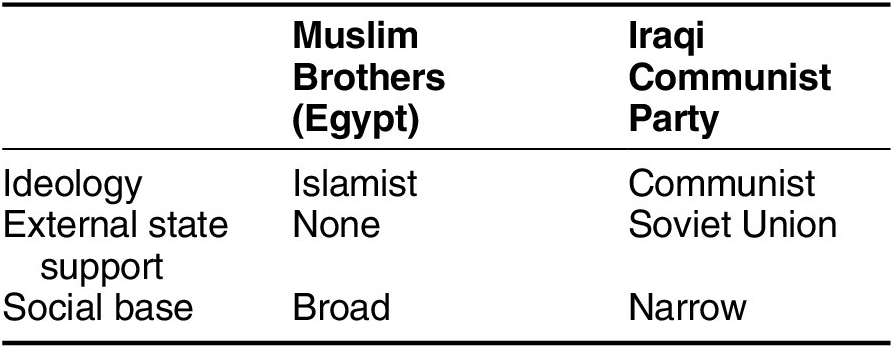


 Open access

