

Hostname: page-component-7b7567c8c-7pwfn Total loading time: 0 Render date: 2026-11-16T14:16:06.185Z Has data issue: false hasContentIssue false

Discussion on the D-Thesis

Published online by Cambridge University Press:  14 March 2022

J. W. Swanson*
Affiliation:
University of Massachusetts

Extract

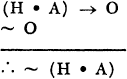
Reanimated for the contemporary literature in the writings of Quine ([15]), [16]) and Kuhn [7], the conventionalism of Duhem [2] and Poincaré [12] has emerged in the last few years as one of the genuinely interesting topics in the philosophy of science. The theory in question—let us follow Grünbaum [3] in calling it the D-thesis, after its founder, Pierre Duhem—claims three things: (1) a single scientific hypothesis H is never disconfirmable in isolation from its fellow; (2) every single hypothesis H of science presupposes, explicitly or implicitly, the support of a conjunction A = A, • A2 • … • Am of auxiliary assumptions or hypotheses; (3) the failure of an observational consequence of H in face of contradictory evidence disconfirms only the conjunction of H and A, not H alone—i.e. establishes only ∼ (H • A). The logical picture is as follows:

Information

Type
Research Article
Copyright
Copyright © Philosophy of Science Association 1967

Access options

Get access to the full version of this content by using one of the access options below. (Log in options will check for institutional or personal access. Content may require purchase if you do not have access.)

Article purchase

Temporarily unavailable