

Introduction
South Korea introduced subsidies for ice-class and icebreaking vessel development in 2025 as part of a broader national policy priority on Arctic maritime shipping. This constituted the first substantial state-level commitment to supporting commercial shipbuilding within the Arctic context (Chambers, Reference Chambers2026; Humpert, Reference Humpert2025; Jang, Reference Jang2025). One rationale for this strategic shift toward the development of Arctic sea routes was South Korea’s established position as a key player in Arctic shipping (Ji, Reference Ji2025). The country’s shipyards had already achieved significant advances in the design and construction of ice-going vessels from the mid-2000s through the early 2010s, well pre-dating sustained official interest in Arctic maritime industries. This industrial success was closely linked to Russia’s hydrocarbon development projects. Possessing the world’s longest Arctic coastline – approximately 24,150 km, or about 53% of the Arctic Ocean’s total – Russia holds vast offshore and onshore oil and gas reserves in the region. However, Russian shipyards have historically focused on fulfilling the requirements of the Russian Navy, leaving limited capacity for the construction of specialised commercial vessels needed for Northern Sea Route (NSR) development. Although Russia has pursued the development of its domestic civilian shipbuilding industry, it remains at a significant competitive disadvantage relative to the leading Asian producers that dominate the global market: China, South Korea, and Japan. This primacy can be attributed to various factors, such as production costs, technological capabilities, and shipyard reputations based on established track records (Tulyakova, Gregova, & Dengov, Reference Tulyakova, Gregova and Dengov2017). Hence, Russia has turned to foreign cooperation to support Arctic hydrocarbon extraction and transport, with South Korean shipbuilders emerging as key partners due to their advanced capabilities in high-value-added vessel construction (Krasnozhenova, Kulik, Chistalyova, Eidemiller, & Karabushenko, Reference Krasnozhenova, Kulik, Chistalyova, Eidemiller, Yu Eidemiller and Karabushenko2021).
One of the most consequential outcomes of this partnership was the Yamal Project, Russia’s second liquefied natural gas (LNG) development after Sakhalin-2 and its first large-scale LNG project located in the Arctic. Its commercial viability depended on year-round LNG transport to premium Asian markets, yet extensive icebreaker escort requirements posed significant cost and operational challenges. A major breakthrough came from South Korea’s Daewoo Shipbuilding & Marine Engineering (DSME; now Hanwha Ocean), which developed the world’s first icebreaking LNG carriers capable of independent operation in Arctic conditions: the Yamalmax Arc7 vessels. These carriers, which were developed in collaboration with Aker Arctic (now Railo Technology), Russian research institutes, and other foreign partners, allowed independent operations in level ice of up to 2.1 m and featured a double-acting icebreaking system that enabled astern navigation in heavy ice conditions (Rowlands, Reference Rowlands2017; J. Choi, Hanwha Ocean Principal Researcher, personal communication, 16 December 2025). The vessels were also built to extreme-cold specifications designed to withstand outside air temperatures as low as −52°C (Mitsui O.S.K. Lines, 2019a). Beginning in 2017, DSME’s successful delivery of the Arc7 fleet marked a critical industrial turning point and proved central to the project’s commercial success (Henderson, Reference Henderson2021, p. 11; Henderson & Yermakov, Reference Henderson and Yermakov2019, p. 28; Humpert, Reference Humpert2017, Reference Humpert2021; Snyder, Reference Snyder2020).
This article explores how South Korean shipyards, especially DSME, became pivotal suppliers of icebreaking vessels for Russian Arctic hydrocarbon projects. The Yamal LNG Arc7 carrier program serves as the central case. It asks why South Korean firms were able to deliver technologically demanding, high-specification ice-class vessels at scale for Russian projects, despite the severe technical challenges posed by Arctic navigation and the additional geopolitical pressures associated with international sanctions following Russia’s annexation of Crimea in 2014 and its invasion of Ukraine in 2022. To address this question, a triangular empirical perspective is applied, encompassing South Korean shipbuilders, Japanese shipping and industrial firms, and Chinese financial and operational actors. While other companies, including the French oil major Total and the engineering firm Technip, also played important roles, this article focuses on how collaboration among Asian actors, often portrayed as political and industrial competitors, enabled the commercialisation of Arctic LNG shipping.
While the scholarly literature recognises South Korea’s technological and commercial importance in Arctic shipbuilding, no study has examined the country’s polar shipbuilding industry as a distinct case or its specific role in Russia’s Arctic resource projects. A few existing studies touch on the subject only briefly within broader analyses of South Korea’s Arctic engagement or maritime industrial policy, mostly noting the importance of close state–private sector collaboration as a defining feature of South Korea’s industrial success. Bennett (Reference Bennett2014a, p. 888) argues that although state relations with chaebol – large family-owned business groups such as Samsung, Hyundai, and Daewoo – weakened following the 1997 Asian financial crisis, the continuation of state–corporate linkages has facilitated alignment between political and commercial interests in the Arctic, enabling South Korea to project technological and logistical power in the region. Similarly, Tonami (Reference Tonami2016, p. 82) attributes South Korea’s Arctic economic activities to its enduring long-term partnerships with chaebol. Zhuravel (Reference Zhuravel2016, p. 100) also highlights South Korea’s chaebol-dominated economic system, backed by the state, as a key driver of shipbuilding and shipbuilding-related technology development. Young (Reference Young, Kim and Kim2014, p. 241) likewise contends that while Korea’s state–private partnerships may be limited to specific issues, they nonetheless constitute an important avenue of engagement between Arctic and non-Arctic states.
Early instances of economic cooperation between South Korea and Russia can be traced to the 1990s, when South Korean firms such as Hyundai Shipping and Chun Kyung Shipping formed joint ventures with Russian companies including SOVFRACHT and FESCO to use the Trans-Siberian Railway and explore opportunities in shipbuilding, port construction, and resource imports (Bennett, Reference Bennett2014a, p. 892). It has been suggested that South Korea’s success in securing shipbuilding contracts for Russian Arctic projects following the imposition of Western sanctions in 2014 demonstrates that Seoul leveraged its “special relationship” with Moscow to gain a competitive advantage in the global shipbuilding market (Tonami, Reference Tonami2016, p. 85). Other scholars emphasise Russia’s reliance on foreign partners to access advanced technologies unavailable domestically, identifying South Korea as a key supplier of high-quality components, materials, and engineering expertise (Reutov & Cherkashin, Reference Reutov and Cherkashin2014). In this view, South Korean shipbuilders played a central role in sustaining Russia’s Arctic LNG projects, particularly as builders of icebreaking LNG carriers. Following the 2014 Russo-Ukrainian conflict, South Korean shipyards, along with other Asian partners, emerged as important substitutes for Western technology, enabling Arctic energy projects to proceed despite sanctions (Shagina, Reference Shagina and Buchanan2021, p. 196).
With respect to competition in Arctic-related commercial shipbuilding, South Korea has been identified as a major player in the field. Bhagwat and Khalturinskaya (Reference Bhagwat and Khalturinskaya2023) emphasise that Zvezda Shipyard, located in Bolshoy Kamen in the Russian Far East, faces significant structural and technological constraints in substituting for South Korean builders in specialised commercial shipbuilding, with production capacity limited to approximately five vessels per year. Despite Russia’s adoption of more protectionist shipbuilding policies in the aftermath of the 2014 annexation of Crimea, Novatek received an exemption from the Russian government permitting the procurement of critical components for ice-class LNG tankers from foreign suppliers. Reutov and Cherkashin (Reference Reutov and Cherkashin2014) observe that South Korea has been concerned about the emergence of potential competitors and has therefore remained cautious with respect to shipbuilding-related technology transfer to Russia. At the same time, they argue that “a certain openness of the Republic of Korea to the idea of transferring its own technology is explained by the fact that Seoul considers such projects as an opportunity to gain access to Russian oil and gas projects” (Reutov & Cherkashin, Reference Reutov and Cherkashin2014).
Chinese shipyards have been identified as major candidates to fill this gap following the withdrawal of South Korean shipbuilders due to the sanctions regime against Russia. However, Beijing has remained cautious due to concerns over secondary sanctions, while Russian officials remain wary of excessive dependence on China (Bhagwat & Khalturinskaya, Reference Bhagwat and Khalturinskaya2023, pp. 116–119). Moreover, China continues to face notable technological and infrastructural constraints in polar shipbuilding (Wang, Tian, Yang, & Zhu, Reference Wang, Tian, Yang, Zhu and Yang2023). India, Iran, and Türkiye have also been identified as potential partners (Kapoor, Reference Kapoor2024, p. 37; Caymaz, Reference Caymaz2024). In particular, Iran is likely to show limited concern regarding secondary Western sanctions, as it has been subject to extensive sanctions for many years (Bhagwat & Khalturinskaya, Reference Bhagwat and Khalturinskaya2023, pp. 116–119).
While many studies situate South Korea’s shipbuilding within the context of Arctic market competition, some scholars, such as Guo (Reference Guo, Kim and Kim2014, p. 420), have emphasised trilateral Asian cooperation in Arctic development. DSME received a major order for nine LNG carriers for the Yamal LNG project from a joint venture between Japan’s Mitsui O.S.K. Lines (MOL) and China Shipping Development Company, illustrating how Asian industrial collaboration supports Arctic resource transport. Bennett (Reference Bennett2014b, p. 73) similarly observes that China, Japan, and South Korea are interested in the Arctic primarily as an economic space offering alternative shipping routes, rather than as a geopolitical battleground. Some scholars, however, caution against overstating the Arctic market’s importance for South Korea. Moe and Stokke (Reference Moe and Stokke2019) argue that despite Korea’s technological leadership and landmark contracts such as Yamal LNG, the South Korean government’s interest in Arctic business prospects has remained relatively restrained. They point to limited government involvement in Arctic shipping and shipbuilding, as well as modest participation in Arctic Council initiatives and Polar Code negotiations.
The South Korean shipbuilding industry has historically developed under strong state leadership, with government intervention persisting during periods of crisis to stabilise a strategically important sector. As a result, its competitiveness is often understood through state–chaebol relations. This article challenges the applicability of this interpretation in the specific context of Russian Arctic hydrocarbon projects. It argues that the expansion and success of South Korean shipyards’ involvement in these projects cannot primarily be explained by sustained state support. Instead, it critically assesses the extent and timing of state intervention and identifies alternative factors underlying South Korean shipbuilders’ prominent role in the Russian Arctic. The argument is made that government engagement in this domain was indirect and sequential, emerging largely after firm-led technological and commercial pathways had already been established. It also makes the point that South Korean shipbuilders’ competitive advantage was embedded in a transnational East Asian industrial configuration involving Japan and China as complementary actors. South Korean firms supplied advanced shipbuilding and systems integration capabilities, Japanese firms contributed critical operational experience, shipping management, and cold-region engineering expertise, and Chinese actors played an important role in project financing and risk absorption following the imposition of the Western sanctions regime against Russia. This pattern of cooperation enabled Arctic LNG shipping to become commercially viable despite geopolitical fragmentation and sanctions. The article thus reframes Arctic industrial development as a transnational and multi-actor process, in which Asian economies simultaneously competed and collaborated through commercially motivated risk-sharing arrangements.
Complex interdependence provides a useful framework for explaining South Korean shipyards’ involvement in Russian Arctic hydrocarbon development. Rather than treating the state as a unitary actor driven primarily by security considerations, the framework draws attention to the differentiated and sector-specific character of interstate relations under conditions of deep economic interdependence (Keohane & Nye, Reference Keohane and Nye1973, Reference Keohane and Nye2012). In the Russian Arctic, cooperation was spearheaded not directly by the South Korean state but by its major shipbuilding firms, which participated in extensive transnational networks. Such diffusion of authority beyond the state has also been emphasised in scholarship on structural power and private authority in international political economy (Hall & Biersteker, Reference Hall and Biersteker2002; Strange, Reference Strange1996).
In particular, the persistence of the Yamal LNG project despite the sanctions imposed after 2014 reflected the embedded position of Korean shipbuilders within a complex interdependent network of actors involved in Arctic energy development, including stakeholders in Japan and China. The transnational industrial linkages sustained continuity in cooperation despite sanctions and diplomatic tensions, complicating realist assumptions regarding unitary states and the primacy of security concerns (Waltz, Reference Waltz1979, Reference Waltz2000).
Although cooperation largely stalled after 2022 due to comprehensive sanctions and intensifying geopolitical tensions, the South Korean Arctic policy has continued to demonstrate interest in Russian Arctic-related commercial opportunities in the shipbuilding sector (Ministry of Oceans and Fisheries of Korea, 2022). Furthermore, recent instability in the Middle East and concerns surrounding the Strait of Hormuz have once again heightened South Korean interest in Arctic shipping routes and Russian Arctic energy development as potential alternatives for long-term energy security and supply diversification (Dmitrenko, Reference Dmitrenko2026; Kim, Reference Kim2026; Tingstad, Reference Tingstad2026). This suggests that, despite political disruption, the structural incentives underpinning Arctic engagement have not disappeared entirely. Under conditions of complex interdependence, “policy becomes the outcome of an immense swirl of forces” (Gourevitch, Reference Gourevitch1978, p. 893). These theoretical insights help explain the involvement of South Korean shipbuilders in Russian Arctic hydrocarbon projects.
A qualitative case approach – based on complex interdependence – is adopted here to examine how non-state actors, notably industrial actors from South Korea, have shaped Arctic LNG shipping and governance through technological innovation and industrial cooperation with other Asian countries. The Yamal LNG project is selected as a critical case due to its pioneering and experimental role in enabling year-round Arctic navigation through the deployment of Arc7 icebreaking LNG carriers. The case study was developed through a combination of primary and secondary data sources. Primary data consists of semi-structured interviews with principal researchers from South Korea’s major shipbuilding companies – Hanwha Ocean, Samsung Heavy Industries, and HD Korea Shipbuilding & Offshore Engineering/Hyundai Heavy Industries – conducted between June and December 2025. The secondary data sources included journal articles, policy analyses from energy research institutes, industry publications on LNG shipping and Arctic operations, media reports, and corporate websites. Such an approach allows for an in-depth exploration of the complex interactions between technology, industry, and geopolitics.
Samsung heavy industries and South Korea’s first icebreaking vessels
Samsung was the first South Korean shipbuilder to demonstrate explicit interest in developing commercial icebreaking vessels for Arctic operations. This move occurred within a broader shift toward firm-led technological upgrading and market expansion in South Korean shipbuilding. The industry, which grew rapidly from the 1970s onward under state-led, chaebol-focused policies (Bennett, Reference Bennett2014a), had evolved into a dense and highly integrated cluster by the 1990s. As the industry matured, state support for shipyards diminished (Lee, Reference Lee2024). Research and development became primarily corporate-driven, and government involvement was largely confined to crisis management and restructuring (Organisation for Economic Co-operation and Development [OECD], 2015). Within this context, Korean shipbuilders gradually extended their activities into the high-value-added Arctic shipbuilding market.
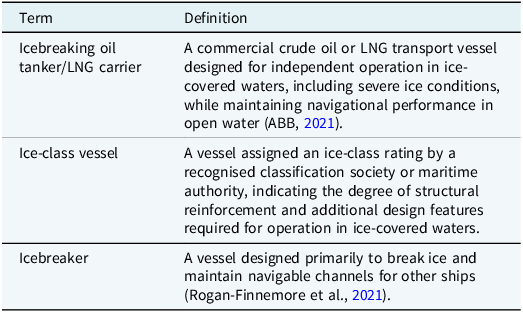
Samsung entered into the niche market following independent market research conducted in the mid-1990s, which identified emerging demand linked to Arctic resource development amid growing international interest in the region (Chae, Reference Chae2010; anonymous researcher from Samsung Heavy Industries, personal communication, 29 August 2025). These expectations were reinforced in the early 2000s, when the rapid expansion of Russian oil exports through the Baltic Sea sharply increased demand for ice-class tankers, prompting South Korean shipbuilders to invest in relevant technologies (Kim, Reference Kim2010, p. 3). From 2000 onward, Samsung actively pursued the development of icebreaking tanker designs (Kim, Reference Kim2007). Key ice-going vessel terms used in this article are summarised in Table 1.
Definitions of icebreaking oil tankers/LNG carriers, ice-class vessels and icebreakers

Table 1. Long description
A table defining terms related to ice-going vessels. The table has two columns: Term and Definition. It contains three rows with the following data: Row 1: Term, Icebreaking oil tanker/LNG carrier; Definition, A commercial crude oil or LNG transport vessel designed for independent operation in ice-covered waters, including severe ice conditions, while maintaining navigational performance in open water. Row 2: Term, Ice-class vessel; Definition, A vessel assigned an ice-class rating by a recognized classification society or maritime authority, indicating the degree of structural reinforcement and additional design features required for operation in ice-covered waters. Row 3: Term, Icebreaker; Definition, A vessel designed primarily to break ice and maintain navigable channels for other ships.
At the time, the commercial feasibility of such ventures remained uncertain (Kim, Reference Kim2007), and domestic expertise and infrastructure related to polar operations were limited (Lee et al., Reference Lee, Lee, Jeong, Lee, Kim, Lee, Kim, Hong, Won, Heo, Shin, Jin, Jang and Park2005, p. 204). Dedicated policy support for polar shipbuilding was also absent (anonymous engineers from major shipyards, personal communications, 17 July 2025; 29 August 2025; 2 September 2025). Under these constrained circumstances, Samsung advanced Arctic vessel development through close collaboration with foreign partners possessing specialised ice-model testing facilities and technical expertise. In 2005, the company developed the world’s first bidirectional icebreaking tankers capable of year-round operation in the Arctic without icebreaker escort, based on the Double-Acting Ship (DAS) concept (Kim, Reference Kim2008). Key partners of the project included Aker Arctic, which developed the DAS concept, as well as ABB, ConocoPhillips, the National Research Council Canada, Russia’s Central Marine Research and Design Institute (CNIIMF), and the Krylov Shipbuilding Research Institute (ABB Marine & Ports, 2012). The resulting 70,000 DWT Arctic shuttle tanker Vasily Dinkov and its two sister vessels, the first icebreaking vessels constructed by a South Korean shipyard, were delivered to Sovcomflot between 2007 and 2009 and contributed to a significant reduction in crude oil transportation costs from Russian Arctic fields (Chae, Reference Chae2010; Riviera Newsletters, 2008).
Samsung further expanded its Arctic portfolio into offshore drilling with the delivery of the Stena DrillMAX drillship in 2007, which was engineered for operations in extreme environmental conditions (Kim, Reference Kim2007). This project subsequently led to additional orders from Stena, including the world’s first drillship designed for Arctic operations, Stena IceMAX, ordered in 2008 and launched in 2011 (World Maritime News, 2019). While Samsung did not secure the major ice-class LNG carrier contracts for the Yamal LNG project, it was later selected as a technological partner for Arctic LNG 2 in 2019.
DSME and the world’s first icebreaking LNG carriers
Samsung’s success in the Russian Arctic was followed by DSME, which emerged as the most significant firm in the history of South Korean Arctic shipbuilding. By the early 2000s, DSME had become the world’s leading builder of LNG carriers, including ice-strengthened LNG carriers designed to navigate ice-covered seas via icebreaker-maintained channels. The company produced more ice-class LNG carriers than the combined output of shipyards ranked second through tenth globally in both tonnage and number of vessels constructed, excluding small vessels under 100 m in length (Choi, personal communication, 17 July 2025). As a result, DSME’s LNG carriers were well known in Northern Europe and surrounding regions. This was driven largely by repeated orders from BW Group, a Singapore-based maritime conglomerate with strong Norwegian ties following its 2003 acquisition of Bergesen. When Gazprom began exploring development of the Shtokman gas field in the Barents Sea in the early 2000s, BW Group became very interested in the project. Anticipating demand, DSME invested heavily in Arctic LNG–related research and development, including floating production units and LNG carriers.
A critical technological breakthrough occurred in 2007, when DSME demonstrated that its core product, membrane-type LNG carriers built under licence from France’s Gaztransport & Technigaz (GTT), could operate safely in ice-covered waters. This finding challenged prevailing assumptions within the global LNG shipping industry, which had long held that only self-supporting cargo tank designs, such as the Moss system developed primarily by Japanese firms, were suitable for polar conditions (Cho, Reference Cho2007; Mitsubishi Heavy Industries, 2010, p. 2). The Moss system’s spherical cargo tanks are structurally independent of the ship’s hull, providing reduced sloshing effects – the violent movement of LNG inside partially filled tanks – and enhanced stability under severe sea states (United Nations Economic Commission for Europe [UNECE], 2019). In contrast, membrane containment systems consist of thin metallic membranes supported by insulation and the ship’s inner hull structure. While this design allows more efficient use of space, it has raised concerns regarding its suitability for harsh operating settings. In this context, DSME’s innovative adaptation of membrane technology for Arctic operations laid the technological foundation for the purpose-built icebreaking LNG carriers later deployed in the Yamal LNG project, whose stakeholders ultimately selected the membrane containment concept (Aker Arctic Technology Inc., 2017).
DSME pursued a deliberate strategy of discretion in developing icebreaking vessel technologies in order to maximise commercial advantage (Choi, personal communication, 16 December 2025). The firm sought to avoid drawing attention to its research activities, fearing that increased visibility might attract competitors. It did not even wish to integrate these efforts into government-supported policy frameworks, as doing so would require disclosure of proprietary technologies. The government also saw no reason to intervene in DSME’s Arctic business activities during this period. LNG carrier sales were treated as a commercial matter led by private firms, and projects generally advanced before third parties, including the state, were aware of them. The political context surrounding the sale of icebreaking LNG vessels to Russia differed significantly at the time. Government interest in the Arctic region was limited, and prior to 2014 there were no broad international sanctions affecting industrial cooperation with Russia (Choi & J. Ahn, Hanwha Ocean Principal Researchers, personal communications, 16 December 2025). Unlike earlier phases of industrial development, when the government sometimes provided investment support or credit at the ship-ordering stage (Ministry of Foreign Affairs of Korea, 2005), no such involvement occurred in the Yamal LNG project (Choi, personal communication, 17 July 2025).
Media reports on DSME’s meetings with high-level Russian delegations explicitly noted that consultations with the South Korean government were bypassed (Kang, Reference Kang2007), underscoring the absence of state involvement. This pattern persisted as DSME’s cooperation with Russia deepened. In 2009, Russia’s state-owned United Shipbuilding Corporation (USC) formed an 80–20 consortium with DSME to manage the Zvezda shipyard’s expansion and co-develop icebreaker supply vessels, offshore installations, and tankers (Henderson & Yermakov, Reference Henderson and Yermakov2019, p. 27; Reuters, 2010). In this context, Russian Prime Minister Vladimir Putin met privately with DSME’s chief executive, Nam Sang-tae, and expressed strong support for DSME’s participation in Russia’s resource development projects (Lee, Reference Lee2009).
Although the Korea Development Bank (KDB) had been DSME’s majority shareholder following the government-led restructuring of the firm after the collapse of the Daewoo Group in the aftermath of the 1997–1998 Asian Financial Crisis, as part of broader efforts to stabilise key industrial sectors, state involvement was largely confined to financial restructuring and ownership oversight rather than direct operational management. In 2002, the European Community (EC) initiated dispute settlement proceedings at the World Trade Organization (WTO), alleging that Korea’s post-crisis restructuring measures for its shipbuilding industry, particularly state-directed financial support provided through government-controlled financial institutions, constituted trade-distorting subsidies. The WTO, however, rejected the EC’s principal claims (World Trade Organization, 2005).
Although DSME’s icebreaking LNG vessel technologies were initially developed for the Shtokman project, that project was later suspended by Gazprom and its international partners due to the U.S. shale gas boom, which sharply reduced global gas prices. In 2012, DSME withdrew from the Zvezda joint venture, probably because of the collapse of Shtokman (Fortescue, Reference Fortescue2019). DSME subsequently gained an opportunity to redeploy its technological capabilities when Russia decided to proceed with the Yamal LNG project. According to Hanwha Ocean’s principal researcher Choi, Korea’s STX was at one point regarded as the most serious potential competitor to DSME in Russian Arctic shipbuilding, particularly after acquiring Norway’s Aker Yards, including the Helsinki Shipyard, as well as a majority stake in Aker Arctic (personal communication, 16 December 2025; Rhee, Reference Rhee2008). In 2010, STX developed an icebreaking shuttle LNG carrier and a large icebreaking container carrier (Shipbuilding, Reference Shipbuilding2010). STX also established a joint venture with Russia’s USC to develop icebreakers and engaged in discussions with Novatek on LNG carrier development (Enŏji Deilli, 2011). While STX positioned itself as a prospective major player in Russian Arctic shipbuilding, these ambitions were undermined by the global financial crisis of 2008, which severely disrupted the company’s operations. Despite government-led stabilisation efforts, the company entered restructuring and bankruptcy proceedings by 2013. In 2014, DSME outbid six competitors – including Samsung Heavy Industries, Hyundai Heavy Industries, and STX Offshore & Shipbuilding (now K Shipbuilding) in Korea; Mitsubishi Heavy Industries and Kawasaki Heavy Industries in Japan; and Russia’s United Shipbuilding Corporation (Hine, Reference Hine2013) – and secured all shipbuilding contracts for the fifteen Arc7 ice-class LNG carriers required for Yamal LNG, with a combined contract value of approximately USD 4.8 billion.
In July 2017, the Christophe de Margerie – the first of the Yamalmax class fleet and named after the former Total CEO – undertook its inaugural voyage. The vessel loaded LNG at the Snøhvit LNG terminal in Norway and sailed via the NSR to Boryeong, South Korea, marking the first unescorted transit of the route by a commercial LNG carrier (TotalEnergies, 2017). Following initial trials, DSME’s vessels were found to exceed their original design expectations. While Novatek initially planned to operate the Arc7 carriers without icebreaker escort only during the summer navigation season, the vessels were later found to possess substantially greater icebreaking capability than anticipated. In certain conditions, their performance even surpassed that of Russia’s Arktika-class nuclear-powered icebreakers (Humpert, Reference Humpert2021b) due to their greater displacement (Choi, personal communication, 16 December 2025). Moreover, ice conditions proved lighter than forecast in some years, particularly relative to conservative projections issued by Rosatomflot, which had a commercial interest in maintaining demand for escort services (Moe, Andreeva, & Gunnarsson, Reference Moe, Andreeva and Gunnarsson2024, p. 138). These factors extended the eastward navigation season for Yamal LNG beyond the conventional Arctic window (Yermakov & Yermakova, Reference Yermakov and Yermakova2021) and reconfigured the project’s logistics strategy, which had initially relied heavily on westbound shipments via European transshipment hubs and the Suez Canal toward Asian markets during periods of limited NSR accessibility.
In January 2021, three Arc7 ice-class LNG carriers transited the NSR without icebreaker assistance. The Christophe de Margerie departed from Sabetta on the Yamal Peninsula in Russia’s Arctic region, followed by Nikolay Yevgenov. Around the same time, Nikolay Zubov completed a voyage in the opposite direction, traveling from Dalian, China, to Sabetta (Chen et al., Reference Chen, Kern, Li, Hui, Ye and Cheng2022). Despite operational challenges, these voyages demonstrated the technical feasibility of near-year-round Arctic LNG shipping, with icebreaker support needed only during the most demanding winter conditions (Moe et al., Reference Moe, Andreeva and Gunnarsson2024, p. 138). While westbound shipments toward Europe have remained dominant in the project’s trade flows, the share of eastbound cargoes to Asia via the NSR grew steadily up (Yermakov & Yermakova, Reference Yermakov and Yermakova2021) until the disruptions triggered by the 2022 Russian invasion of Ukraine.
DSME’s successful technological innovation validated the feasibility of Arctic LNG shipping and paved the way for Russia’s subsequent Arctic LNG 2 project, for which additional contracts to build membrane-type icebreaking LNG carriers were awarded to DSME and Samsung (GTT, 2020; Posiēt, Reference Posiēt2023). For Arctic LNG 2, second-generation Arc7 ice-class LNG carriers were designed with higher installed propulsion power, approximately 51 MW (three 17 MW Azipod units), compared with about 45 MW in the earlier Yamal LNG vessels, enhancing operability in heavy ice (Natural Gas World, 2021). Furthermore, as Arctic LNG exports scaled up, cooperation extended to logistics infrastructure. In 2020, DSME and Novatek signed a contract to build two large floating LNG storage units for use as offshore transshipment hubs near Murmansk and the Kamchatka Peninsula, with the projects involving investment and cooperation from MOL and the Japan Bank for International Cooperation (JBIC) (Humpert, Reference Humpert2020b).
Following the imposition of comprehensive sanctions against Russia in 2022, South Korea–Russia industrial collaboration in the Arctic was substantially disrupted. Orders for Arc7 carriers originally intended for Arctic LNG 2 were cancelled after payment failures linked to sanctions, and DSME withdrew from some contracts (Humpert, Reference Humpert2022). Samsung, which was selected as a technology partner for the Arctic LNG 2 project, suspended production of blocks and equipment for 10 of the 15 Arc7 ice-class LNG carriers contracted with the Zvezda Shipbuilding Complex after delivering components for the first five vessels (Ovcina Mandra, Reference Ovcina Mandra2024).
However, the sanction-related cancellation of Russian orders had relatively limited effects on Korean shipyards. In fact, the share prices of major Korean shipbuilders increased amid expectations that Europe would place additional LNG carrier orders as it sought to reduce reliance on Russian pipeline gas (Shen, Reference Shen2022). While South Korea had previously exhibited greater vulnerability to Russian Arctic contracts during periods of downturn in the global shipbuilding market, the post-sanctions recovery of LNG demand reduced Korea’s dependence on Russian orders and increased the asymmetry within the relationship.
By contrast, Russia faced substantially greater adjustment costs due to its dependence on South Korean shipbuilding expertise and technological capacity. Amid sanctions, Russia has sought to pursue domestic construction of Arc7 carriers; however, only one vessel, Aleksey Kosygin, has been assembled at Zvezda to date. Progress on subsequent ships has remained limited, reflecting ongoing sanctions-related constraints on access to critical technologies, including LNG containment systems and advanced propulsion equipment (Humpert, Reference Humpert2026).
Russia also has limited alternative partnership options in a sector heavily dominated by South Korean companies. While China’s Hudong-Zhonghua Shipbuilding has sought to develop Arc7 LNG carriers, South Korean shipyards retain a significant technological advantage (Choi, Reference Choi2023; Humpert, Reference Humpert2020a). Major Japanese firms that participated in the Yamal LNG bidding process have long struggled to remain competitive in the market (Chung & Kobayashi, Reference Chung and Obayashi2018); Mitsubishi Heavy Industries has explored withdrawing from LNG carrier construction (Corbett, Reference Corbett2020), while Kawasaki Heavy Industries has considered broader restructuring of its shipbuilding business, including the possibility of exit (Tsukimori, Reference Tsukimori2016). Although Japan has recently sought to revitalise its LNG shipbuilding sector, challenging the long-standing dominance of Korean competitors is likely to prove difficult (Choi, Reference Choi2026). Under these conditions, the partnership with Korean shipyards constitutes a significant factor in the successful execution of Russian Arctic LNG projects.
From the perspective of complex interdependence theory, the case demonstrates the asymmetrical nature of vulnerability interdependence within Arctic industrial networks. The sanctions regime revealed Russia’s greater vulnerability, as it possessed fewer technological alternatives and faced significantly higher adjustment costs. South Korean firms, by contrast, retained access to diversified global markets and replacement demand, allowing them to adapt more effectively to geopolitical disruption. As long as South Korea retains its technological and commercial advantage in the niche sector, a future resumption of Arctic cooperation with Moscow is likely to occur under conditions more favorable to Korean firms.
Another major development in recent years has been the acquisition of DSME by Hanwha Group, one of South Korea’s leading defence and industrial conglomerates. For many years, the Korean state sought to divest its stake in DSME. Notably, in 2013, Rosneft was reported to have explored acquiring a controlling stake in DSME (Bae, Reference Bae2013); however, no formal offer materialised, and the South Korean government signalled its unwillingness to permit the transfer of a strategically important defence-related firm to a foreign entity (Kim, Reference Kim2013). In 2019, the government attempted to privatise DSME by transferring control to Hyundai Heavy Industries, but the merger was blocked by the European Commission on antitrust grounds over concerns that it would significantly reduce competition in the global market for large LNG carriers (European Commission, 2022). The state ultimately succeeded in privatising DSME in 2022, when Hanwha Group acquired a controlling stake from the KDB and related public entities and renamed the company Hanwha Ocean (Lee, Reference Lee2022).
Hanwha has pursued international expansion in the shipbuilding sector, notably through the acquisition of the U.S.-based Philly Shipyard. This move aligns with the South Korean government’s proposed “MASGA” (Make American Shipbuilding Great Again) initiative, which seeks to support the revitalisation of the U.S. shipbuilding industry through bilateral industrial cooperation (Ahn, Reference Ahn2026). While South Korea has expressed strong interest in becoming an industrial partner in Arctic development – including the potential supply of icebreaking LNG carriers for prospective Alaskan LNG projects – the United States has thus far prioritised partnerships with Canada and Finland through the Ice Pact initiative (Lee, Reference Lee2025; Martina, Reference Martina2024).
There have also been important developments beyond the Russian Arctic context. In 2025, Hyundai secured a contract to build a methanol-fueled icebreaker for the Swedish Maritime Administration (Rybski, Reference Rybski2025). Korean shipyards have also sought to position themselves at the technological frontier of emerging nuclear propulsion pathways. Notably, Hyundai invested in the U.S.-based SMR developer TerraPower as part of a strategic collaboration focused on manufacturing capacity and supply-chain development for advanced reactor technologies (Hakirevic Prevljak, Reference Hakirevic Prevljak2025a, Reference Hakirevic Prevljak2025b). These developments suggest that South Korean shipbuilders continue to strengthen their position as major stakeholders in Arctic shipping through technological innovation and transnational industrial linkages, despite the slowdown in cooperation with Russia after 2022.
Evaluating South Korea’s policies in Arctic shipbuilding
An analysis of policy documents and initiatives of relevant ministries reveals that, in the specific context of the Russian Arctic, the role of the South Korean state was limited or absent across major milestones in the development of polar shipbuilding. Responsibility for polar shipbuilding policy in South Korea involves two major ministries with overlapping mandates. The Ministry of Industry holds jurisdiction over shipbuilding and industrial policy, while the Ministry of Oceans and Fisheries – previously part of the Ministry of Land, Transport, and Maritime Affairs until 2013 – is the primary ministry responsible for polar affairs. The earliest policy initiatives explicitly aimed at supporting commercial polar shipbuilding emerged from the Ministry of Industry, largely from an export-promotion perspective. Importantly, these initiatives followed, rather than preceded, firm-led commercial success.
This shift occurred after Samsung secured icebreaking tanker contracts from Russia’s Sovcomflot in 2005. In 2006, the ministry selected Samsung’s icebreaking tankers as one of the country’s “Top 10 New Technologies,” recognising their commercial and economic potential (Kwak, Reference Kwak2006); the vessels also received the IR52 Jang Young-Shil Award for technologies with strong overseas prospects (Skipsrevyen, 2008). These assessments of export competitiveness were followed by limited forms of policy support. In 2007, the Korean Intellectual Property Office (KIPO), under the Ministry of Industry, designated icebreaker technologies as a priority area for securing core industrial capabilities, citing Samsung’s bidirectional icebreaking tanker design and calling for “bold” investment in icebreaking vessel R&D to reduce reliance on foreign technologies and sustain competitive advantage (Korean Intellectual Property Office, 2007). Two years later, the ministry funded a five-year research project focused on Arctic route operation safety and cryogenic evaluation methods for ice-going vessels, led by Korea Maritime and Ocean University and the Korea Research Institute of Ships and Ocean Engineering (O, 2014). Such state support, however, came too late to shape early technological breakthroughs, which had already been achieved through firm-level investment and experimentation (anonymous engineers from major shipyards, personal communications, 17 July 2025; 2 September 2025; 16 December 2025).
A notable example is the domestic ice-tank testing facility at KRISO, which secured initial funding from the Ministry of Industry in 2006 (Ministry of Commerce, Industry, and Energy of Korea, 2006). The facility was intended to strengthen national capabilities in polar vessel R&D, including support for the country’s first research icebreaker, RV Araon, which began construction in the same year at HJ Heavy Industries (formerly Hanjin Heavy Industries) (Kang, Reference Kang, Kim and Kim2014). This funding represented the ministry’s earliest explicit reference to polar shipbuilding within its policy initiatives and reflected an emerging ambition to develop domestic polar industrial capacity. In contrast to most overseas ice tanks, which employ elongated basins optimised for resistance and propulsion testing, the KRISO ice tank adopted a rectangular layout to better support manoeuvrability experiments and offshore structure research (Cho, Lee, Lee, Yum, & Jang, Reference Cho, Lee, Lee, Yum and Jang2021). With the facility’s completion in 2009, South Korea was established as the seventh country worldwide to possess an ice-tank testing facility for ships (Kim et al., Reference Kim, Lee, Lee, Nam, Yun, Jeong, Kim, Shin, Seo, Jeong, Jin, Kim, Seo, Seo, Kim, Kim, Choe, Lee, Heo and Jeong2016, p. 180).
Although the facility became operational in 2010, its practical impact remained constrained by persistent technological and experiential gaps relative to long-established ice-tank facilities overseas (Yeo, Reference Yeo2016, p. 260; anonymous engineers from major shipyards, personal communications, 2 September 2025; 31 October 2025). Effective ice-tank operation requires many years of accumulated experimental data to develop reliable testing protocols (Safer, Reference Safer2017; Wilkman & Leviskä, Reference Wilkman and Leiviskä2013). This temporal gap suggests that even once relevant policies are formulated and implemented, a considerable delay may elapse before they translate into practical competitiveness for private industry, particularly in the technically demanding field of polar shipbuilding. By comparison, leading countries in the field, such as Russia, Japan, Canada, Finland, and Germany, began establishing ice-tank facilities several decades prior to South Korea and have operated their latest generation of such facilities since the 1980s (Kim & Choi, Reference Kim and Choi2008).
At the time South Korean firms first entered the Arctic commercial shipbuilding market and achieved major technological milestones, state interest in the Arctic region and the NSR remained limited and was largely focused on Antarctica. Early polar policy documents from the early to mid-2000s framed shipbuilding primarily in relation to Antarctic scientific research rather than Arctic commercial activity (National Science and Technology Commission of Korea, 2002, p. 3; 2006, pp. 28–29). While these initiatives supported the construction of South Korea’s first polar research icebreaker, they did not translate into meaningful support for commercial Arctic shipbuilding.
More systematic governmental engagement in the Arctic region began to emerge after South Korea’s first participation in meetings of the Arctic Council as an ad hoc observer in 2008 (Kim, Reference Kim2015, p. 265). South Korea’s acquisition of a permanent observer status in 2013 coincided with DSME’s early contracts for Arc7 LNG carriers for the Yamal LNG Project (Yamal, Reference Yamal2013). The firm’s participation in the Yamal LNG project subsequently became a focal point of attention for the administrations of Park Geun-hye and Moon Jae-in, with Arctic commercial shipbuilding occupying a prominent place in South Korea’s Arctic policy agenda (Covery, Reference Covery2023; Ministry of Oceans and Fisheries of Korea, 2019, 2021; Republic of Korea, 2013). The first Arctic Master Plan emphasised shipbuilding under two of its four strategic pillars. One called for collaboration in ship safety and marine environmental protection, specifically targeting the development of ice-class container ships and LNG carriers, as well as associated materials, alongside efforts to establish national safety standards for polar vessels in preparation for the Polar Code. The other linked shipbuilding technologies to sustainable Arctic economic activities (Republic of Korea, 2013). During this period, the Park administration sought to support DSME’s involvement in the Yamal LNG project, signing a memorandum of understanding with France’s Total. Later, the government publicly stated that such state-led diplomatic efforts helped DSME secure the Yamal contract (Korea Trade-Investment Promotion Agency, 2014). In 2014, the South Korean government invited DSME to accompany its delegation to the Arctic Circle Assembly in Reykjavik, reflecting efforts to integrate the company into the state’s official activities within the international arena of Arctic development (Ministry of Foreign Affairs of Korea, 2014).
The second comprehensive Arctic policy document published in 2019 placed even greater emphasis on shipbuilding, specifically in the Russian Arctic (Ministry of Oceans and Fisheries of Korea, 2019). This focus aligned with the Moon administration’s broader Russia-oriented “New Northern Policy,” adopted in 2017, which prioritised cooperation across multiple Arctic-related sectors, including shipbuilding. Orders for Russian icebreaking LNG vessels also contributed significantly to the recovery of South Korean shipyards following the severe downturn caused by the 2014–2015 oil price collapse (Chung & Obayashi, Reference Chung and Obayashi2018; Gronewold, Reference Gronewold2018), further drawing state attention to Arctic shipbuilding. In 2018, President Moon’s first official public engagement of the year was a visit to DSME’s Okpo shipyard, where he praised the construction of the world’s first icebreaking LNG carriers for the Yamal project and declared that “becoming a maritime power remains a national aspiration that cannot be abandoned,” notwithstanding the prolonged crisis in the domestic shipbuilding industry caused by the downturn in the global maritime economy (Koo, Reference Koo2018; Yoon, Reference Yoon2018).
Following the full-scale invasion of Ukraine in 2022, South Korea, which had not previously imposed formal sanctions, joined the coordinated sanctions regime against Russia. Seoul’s polar policy subsequently reclassified Russia as a “potential cooperation partner.” Nevertheless, references to shipbuilding in the Russian context continued to appear in the First Basic Plan for the Promotion of Polar Activities (2023–2027) (Kim, Reference Kim2023). The policy document also highlights interest in developing small modular reactor (SMR)-related technologies for NSR navigation and for the polar operation of offshore floating platforms (Ministry of Oceans and Fisheries of Korea, 2022). The persistence of South Korean policy interest in technological and commercial engagement in the Russian Arctic, despite growing geopolitical tensions and sanctions, reflects complex interdependence theory’s emphasis on the absence of a clear hierarchy among issue areas.
Facing Chinese and Japanese competition: the limits of South Korean support for Arctic shipbuilding
Increased political visibility did not translate into substantial financial or institutional support, particularly amid concerns over sanctions against Russia. Even after DSME’s technological success enabled additional Arctic LNG 2 orders for DSME and Samsung, South Korea’s state-owned banks remained reluctant to provide financing, citing the risk of U.S.-led sanctions following Russia’s invasion of Ukraine (Wi, Reference Wi2020). The limited role of the South Korean government in Russian Arctic energy projects becomes apparent when compared with the strategies of China and Japan, its principal shipbuilding competitors. South Korea holds no equity stakes in either the Yamal LNG or Arctic LNG 2 projects, whereas China has secured stakes in both and Japan in Arctic LNG 2, albeit with reduced participation following the imposition of sanctions. Furthermore, South Korean shipping companies have little presence in NSR operations, which are dominated by Japanese and Chinese firms with strong state backing. MOL served a significant role in Yamal LNG as an experienced LNG carrier operator.
The company has also developed close ties with China’s shipbuilding industry. Since 2013, MOL has assigned LNG carrier technical experts to support Hudong-Zhonghua Shipbuilding (Owen, Reference Owen2018), facilitating China’s entry into the LNG shipbuilding market. In 2017, MOL and COSCO jointly awarded contracts for four conventional LNG carriers for the Yamal LNG project to Hudong-Zhonghua, bypassing more established South Korean shipbuilders. In a subsequent public statement, MOL emphasised its intention to continue leveraging its relationships with COSCO and Hudong-Zhonghua for future projects (Mitsui O.S.K. Lines, 2019b). Japan’s concerns over South Korea’s dominance in the sector were likewise evident in the WTO dispute proceedings it initiated against South Korea in 2018 over alleged state subsidies and financial support measures for the Korean shipbuilding industry (World Trade Organization, 2020).
China has persistently sought to tie Yamal LNG financing to the procurement of Chinese equipment (Kommersant, Reference Kommersant2016). This approach may help explain why contracts for onshore modular units for Yamal LNG were awarded to Chinese firms. In 2017, China Offshore Oil Engineering Company (COOEC) signed a contract for core LNG plant modules, describing it as the largest overseas project in its history. Chinese state-owned media later attributed this outcome to optimised construction planning and cost reductions, claiming that Chinese firms had “broken the long-standing monopoly” of South Korean companies in LNG module construction (Zhongguo Nengyuan Bao, 2017). Regardless of these narratives, it is evident that South Korean firms are disadvantaged in securing contracts in the Russian Arctic due to limited state backing. Citing supportive industrial policies and financial guarantees from state-owned banks, Hudong-Zhonghua expressed confidence in its ability to compete against Korean shipbuilders in Arctic LNG 2 (Eiterjord, Reference Eiterjord2020).
Beyond Arctic projects, China and Japan maintain deeper structural ties with Russia in upstream energy markets. China has developed extensive industrial and political partnerships with Russia, while Japan has long participated in Russian energy projects, most notably Sakhalin I and II. In contrast, South Korea has comparatively limited experience in state-level upstream energy cooperation with Russia and lacks the diplomatic leverage to support its firms in Arctic energy projects to the same extent.
South Korea’s risk aversion and Arctic market development
South Korea’s policy environment is characterised by frequent policy changes, which have detrimentally affected the coherence and continuity of Arctic- and shipbuilding-related policy approaches (Ørgaard Rasmussen, Reference Ørgaard Rasmussen2025, p. 23; Ryoo, Reference Ryoo2025; Tonami, Reference Tonami2016, pp. 87–89). In addition, bureaucratic risk aversion and weak interministerial coordination have made it difficult to secure sustained support for high-risk, long-term innovation projects, particularly across changes in government (Park, Reference Park2021; anonymous engineer from a major shipyard, personal communication, 16 December 2025). For instance, the designation of polar shipbuilding under the administration of Lee Myung-bak within the “17 new growth engine” framework in 2009 remained at a broad planning stage and was not carried forward under subsequent administration (Han, Reference Han2016; KBS World, 2009). In 2023–2024, under the Yoon Suk-yeol administration, South Korea implemented substantial cuts to public R&D spending, including an approximately 70 percent reduction in the polar research budget, which led to the suspension of multiple Arctic research projects (Kim, Reference Kim2023). Compared to China’s policy environment, in which the state invests consistently in strategic industries over long time horizons, it may be argued that South Korea’s lack of policy continuity places its shipbuilders at a structural disadvantage.
Institutional fragmentation and multi-layered administrative procedures have also complicated the policy environment (anonymous engineer from a major shipyard, personal communication, 16 December 2025). While KRISO operates under the Ministry of Oceans and Fisheries, funding for the ice-tank facility had to be secured through the Ministry of Industry, creating coordination and budgeting challenges. In 2015, the Korea Arctic Research Consortium (KoARC) was established under the Korea Polar Research Institute (KOPRI) to promote cooperation among government, industry, and research institutions, including shipbuilding. Yet its practical impact remained limited due to budgetary constraints and inter-institutional coordination problems (Kim & Paek, Reference Kim and Paek2017, pp. 124–134). The shipbuilding professionals also highlighted the difficulties of navigating bureaucratic procedures when seeking state support for new R&D projects with uncertain profitability. For example, proposals advanced in 2016 by KoARC’s shipbuilding division to support the development of icebreaking container vessels failed to gain traction for nearly a decade, with funding secured only in 2025 under the Lee Jae-myung administration, which placed strong emphasis on the development of the NSR (Kim et al., Reference Kim, Lee, Lee, Nam, Yun, Jeong, Kim, Shin, Seo, Jeong, Jin, Kim, Seo, Seo, Kim, Kim, Choe, Lee, Heo and Jeong2016; Ministry of Oceans and Fisheries of Korea, 2025). Recognising these challenges, the South Korean government has sought to provide more timely support to the industry by streamlining its internal approval processes; for example, in 2025 it exempted an AI-driven autonomous vessel research program from the standard feasibility study requirement to strengthen the country’s efforts to lead in Arctic maritime shipping and shipbuilding (Kim, Reference Kim2025; Song, Reference Song2025).
Explaining South Korean shipbuilders’ achievements in the Russian Arctic: early mastery of membrane-type technology
A key source of DSME’s advantage was the unanticipated suitability of its core LNG technologies for operation in ice-covered waters. This capability can be traced to strategic choices made in the early 1990s, when DSME became the first South Korean shipbuilder to adopt membrane-type LNG containment technology. At the time, spherical Moss-type containment was widely treated as a conservative, high-reliability option, and Japanese builders built a strong track record around Moss designs. As Korean shipbuilders entered the LNG carrier market, they initially sought access to Japanese technological know-how. However, competitive constraints, both internationally and within South Korea, including Hyundai’s acquisition of exclusive control of the domestic Moss licence, led Korean shipbuilders to pursue alternative technological trajectories in LNG carrier construction (Academy of Korean Studies, n.d.; Hyundai Heavy Industries Group, 2022, p. 310). Membrane containment systems, which lacked a clear incumbent advantage at the time, became a strategic alternative. Later breakthroughs enabled membrane systems to achieve safety standards comparable to Moss technology while offering greater cargo capacity, making Korean-led membrane designs the market standard for LNG carriers (Chung & Kobayashi, Reference Chung and Obayashi2018; Jung, Reference Jung2020; Sohn, Chang, & Song, Reference Sohn, Chang and Song2009). DSME’s pioneering mastery of this technology proved critical for Arctic applications, both in technical terms and in building durable relationships across the LNG carrier ecosystem.
Transporting LNG under severe Arctic conditions – such as from the Yamal peninsula – is highly challenging and poses major engineering issues, particularly with respect to risks such as sloshing and ice collision (Offshore Energy 2019; TotalEnergies Lubmarine, 2017). DSME’s reliance on the NO96 membrane system rather than the Mark III system adopted by some competing shipyards provided safety advantages for Arctic-capable vessel development. The NO96 system’s use of Invar, a material with extremely low thermal contraction, and its coupler-based, spring-like stress absorption structure made it better suited to withstand hull deformation and thermal stress in severe ice conditions (Choi, personal communication, 16 December 2025; Ki, Choi, Park, & Han, Reference Ki, Choi, Park and Han2017; Park & Kim, Reference Park and Kim2022). DSME’s Arctic capabilities emerged primarily from firm-led foresight, innovation, and strategic decision-making, rather than from targeted state support, at a time when the South Korean government lacked both the interest in and the institutional capacity to engage with Arctic commercial shipbuilding.
Firm-led industrial networks and transnational Arctic shipbuilding cooperation
The Yamal LNG case challenges state-centric accounts by highlighting firms, rather than governments, as the primary drivers of transnational cooperation. The South Korean government was not involved in the negotiations with the Russian government; instead, private firms cultivated these relationships independently. To secure Arctic-related orders, DSME pursued targeted strategies to embed itself within Russian professional and institutional networks. The firm actively presented its icebreaking LNG carrier technologies at Russian industry conferences and expanded cooperation with domestic research institutes (Choi, personal communication, 17 July 2025). Certification by Russian technical authorities was a prerequisite for market access, as foreign technologies required approval from domestic institutions such as CNIIMF, which was authorised by the Russian Ministry of Transport to issue Ice Certificates (American Bureau of Shipping, 2009). DSME developed the Arc7 LNG carriers in cooperation with three Russian institutes, including CNIIMF and the Krylov State Research Centre, ensuring regulatory acceptance and operational legitimacy.
Long-term client relationships further shaped South Korean success in Arctic shipbuilding. Samsung’s entry into icebreaking tanker construction was facilitated by its prior relationship with ConocoPhillips, whose endorsement helped overcome initial scepticism from Sovcomflot (Chae, Reference Chae2010; Samsung Heavy Industries Blog, 2011). Similarly, DSME’s collaboration with BW Group in ice-strengthened LNG carrier construction provided early exposure to Arctic LNG demand associated with Russia’s offshore gas projects, allowing the firm to prepare technologically well in advance. More broadly, a sustained record of project execution and operational performance was central to building credibility for South Korean firms within Russian industrial and political circles. In DSME’s case, this standing was reflected in high-level political support, including direct backing from Putin, and corporate endorsement through cooperation with Rosneft on developing an Arctic high-technology shipbuilding cluster (Kyŏngje, Reference Kyŏngje2007; Lee, Reference Lee2009; Rosneft, 2013). It is also notable that in 2006, Samsung constructed Russia’s first offshore gas production platform, Lunskoye-A, for the Sakhalin-2 project. Although Japan’s Mitsui & Co. and Mitsubishi Corporation participated in the Gazprom-led consortium – originally led by Shell, which was compelled to sell a majority stake to Gazprom in 2006 and remained a junior partner until its exit following Russia’s invasion of Ukraine in 2022 – the South Korean government did not take part (Ko, Reference Ko2021). These examples suggest that the privileged position of the South Korean shipbuilding industry in Russian Arctic hydrocarbon projects emerged primarily from the long-term accumulation of corporate reputational capital rather than from direct state-to-state diplomatic support.
In a longer-term perspective, South Korean shipbuilders’ success in the Russian Arctic rested on decades of international technological development and cooperation undertaken long before the South Korean government became actively engaged in Arctic affairs. For instance, the icebreaking vessels developed by Samsung and DSME built upon Finnish innovations derived from extensive experience in Baltic Sea and Arctic ice conditions. Japan also played a pioneering role, particularly through its leadership in ice-class shipbuilding, steel production, LNG carrier operations, and international NSR research initiatives such as the International Northern Sea Route Programme (INSROP) (Kitagawa, Reference Kitagawa2001). These earlier efforts in icy-sea shipping, characterised by industrial collaboration between Asian and Arctic partners, helped establish the technological pathways and operational models that contributed to the successful development of the Arc7 fleet for the Yamal LNG project.
Transnational shipbuilding cooperation: finance, sanctions, and risk-sharing among “rivals”
A defining constraint for DSME’s engagement in the Russian Arctic was the extreme financial and geopolitical uncertainty surrounding large-scale Arctic energy projects. The cancellation of the Shtokman project in 2012 underscored the vulnerability of Arctic investments and represented a significant setback after substantial firm-level R&D expenditure. Similar risks emerged in the Yamal LNG project after the imposition of U.S. and EU sanctions on Russia in 2014, which forced Western banks to withdraw and threatened the project’s financial viability.
Project continuation became possible only through transnational risk-sharing in which the three East Asian partners, together with France and other states, assumed complementary roles. Chinese financial institutions provided capital when Western financing receded, while Japanese and Chinese actors contributed operational and technical capabilities. Given Sovcomflot’s limited experience in LNG shipping, Novatek partnered with established operators such as Japan’s MOL. Chinese shipping entities also acquired equity stakes through joint ventures with multiple shipowners involved in Yamal LNG shipping (Mitsui O.S.K. Lines, 2017; Urbasos Arbeloa, Reference Urbasos Arbeloa2024). Japanese engineering firms, including JGC and Chiyoda, contributed critical project-execution expertise, drawing on prior experience in extreme environments such as the Sakhalin-1 project (Chiyoda Corporation, n.d.). Japanese steel producers also played an essential role. The first Arc7 vessel relied exclusively on steel plates supplied by Japan’s Nippon Steel, owing to the firm’s technological excellence in specialised Arctic-grade steel (Jung, Reference Jung2014) and its existing Russian and French classification certifications. Such certifications were mandatory requirements that South Korean firms had not yet fulfilled (News1, 2014). In 2014, South Korea’s Dongkuk Steel entered a technology cooperation agreement with Japan’s JFE Steel to produce thick steel plates for the Yamal LNG project (Korea Iron & Steel Association, 2014). Dongkuk Steel was subsequently selected as the first supplier among three major South Korean steel companies participating in the project (Hwang, Reference Hwang2014).
The Yamal LNG case thus reveals a form of market-driven cooperation among East Asian actors often portrayed as strategic rivals. Shared interests in NSR development and Arctic resource access (Argüello & Rafaly, Reference Argüello and Rafaly2023), combined with the pursuit of commercial profit, encouraged forms of market-based risk-sharing rather than state-coordinated cooperation. Chinese investment, together with Japanese technical and operational capabilities, was critical to the project’s success, without which South Korean shipbuilders may not have had the opportunity to deploy their technologies at scale. At the same time, South Korean firms’ technological risk-taking contributed to the success of projects in which Chinese and Japanese actors had significant financial stakes. Thus, the performance of South Korean shipbuilders in the Russian Arctic cannot be explained primarily through state-led Arctic strategy or diplomatic leverage. Rather, it emerged through transnational industrial networks shaped by both cooperation and competition under conditions of mutual dependence (Genest, Reference Genest1996).
Conclusion
The Arc7 icebreaking LNG carriers developed by Korean shipyards, most notably DSME, fundamentally altered prevailing assumptions about Arctic maritime transport. Through the Yamal LNG project, these vessels demonstrated that near year-round LNG delivery along the NSR is commercially feasible without continuous icebreaker escort. In this sense, Korean shipyards did not merely supply vessels to an existing project; they actively reshaped the commercial and operational parameters of Arctic LNG development.
This article has shown that the success of South Korean shipbuilders in Russian Arctic hydrocarbon projects cannot be adequately explained by the conventional emphasis on state–private partnerships in South Korea’s political economy. Contrary to the dominant interpretation, government involvement in Arctic shipbuilding emerged only at a later stage, following firm-led demonstrations of commercial feasibility. While the Korean shipbuilding industry has benefited from the legacy of earlier industrial policy and broad-based forms of state support, including disputed crisis interventions, such measures proved insufficient to shape outcomes in Arctic projects. The state lacked the capacity to assess risks and address key challenges facing its firms in the Arctic, including technological constraints, geopolitical volatility, and environmental uncertainty, such as highly unpredictable sea-ice conditions.
Situated within the framework of complex interdependence theory, the case highlights South Korean shipbuilders as pioneering actors in Arctic energy logistics. It also demonstrates how East Asian actors, linked through reciprocal economic and technological interdependence, cooperated despite broader strategic rivalries and largely beyond formal state channels. Chinese capital, Japanese technical and operational expertise, and South Korean shipbuilding technology functioned as complementary inputs, complicating narratives that frame the Arctic as a site of great-power competition and underscoring the continued relevance of firm-centred explanations in Arctic political economy.
At the same time, the conditions underpinning this cooperation have changed fundamentally. Following the expansion of sanctions after Russia’s 2022 invasion of Ukraine, South Korean–Russian shipbuilding cooperation has effectively ceased. Seoul’s Arctic engagement has shifted toward alignment with U.S. and allied partners. State interest in Arctic shipping routes and related technologies also intensified following the global energy crisis associated with the 2026 conflict involving Iran. It is also noteworthy that the increased importance of Russian energy for East Asian countries during the resulting supply shortages revealed deeper forms of vulnerability interdependence among states connected to Russian Arctic energy projects. These developments illustrate how geopolitical shocks can rapidly reconfigure the balance between firm agency and state constraints, while also altering relationships of asymmetrical interdependence among states.
Ultimately, this study suggests that accounts of Arctic industrial development should move beyond state-centric explanations and treat firms as autonomous strategic actors capable of shaping markets, technological trajectories, and cross-border production networks under conditions of high uncertainty. The experience of South Korean shipyards in the Russian Arctic indicates that technological leadership and commercial foresight are not simply derivative of government strategy; rather, they can emerge through firm-led investment decisions, organisational learning, and transnational knowledge infrastructures that operate ahead of – or independently from – public policy. Future research should therefore theorise more explicitly how shifting geopolitical and regulatory constraints (including sanctions regimes and allied industrial alignment) reconfigure the distribution of agency between states and firms in Arctic shipbuilding and assess whether adaptive, commercially driven forms of cooperation can persist – or be reconstituted – within an increasingly fragmented global order.
Acknowledgments
Portions of this manuscript were edited for grammar using an artificial intelligence–based language assistance tool. The tool was used solely for language polishing and did not contribute to the research design, analysis, or substantive content.
Further acknowledgements are omitted for double-blind peer review.
Competing interests
The author declares that there are no known competing financial interests or personal relationships that could have appeared to influence the work reported in this paper.
Ethical standards
The authors assert that all procedures contributing to this work comply with the ethical standards of the relevant national and institutional committees on human experimentation and with the Helsinki Declaration of 1975, as revised in 2008.

 Open access

