




No CrossRef data available.
Constraining Lyman continuum escape using Machine Learning
Published online by Cambridge University Press: 08 May 2018
Abstract
Core share and HTML view are not available for this content. However, as you have access to this content, a full PDF is available via the 'Save PDF' action button.
The James Webb Space Telescope (JWST) will observe the rest-frame ultraviolet/optical spectra of galaxies from the epoch of reionization (EoR) in unprecedented detail. While escaping into the intergalactic medium, hydrogen-ionizing (Lyman continuum; LyC) photons from the galaxies will contribute to the bluer end of the UV slope and make nebular emission lines less prominent. We present a method to constrain leakage of the LyC photons using the spectra of high redshift (z ≳ 6) galaxies. We simulate JWST/NIRSpec observations of galaxies at z =6–9 by matching the fluxes of galaxies observed in the Frontier Fields observations of galaxy cluster MACS-J0416. Our method predicts the escape fraction fesc with a mean absolute error Δfesc ≈ 0.14. The method also predicts the redshifts of the galaxies with an error 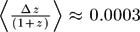 $\left\langle \frac{\Delta z}{(1+z)}\right\rangle \approx 0.0003$.
Information
- Type
- Contributed Papers
- Information
- Proceedings of the International Astronomical Union , Volume 12 , Symposium S333: Peering towards Cosmic Dawn , October 2017, pp. 254 - 258
- Copyright
- Copyright © International Astronomical Union 2018
References
Castellano, M., Amorín, R., Merlin, E., Fontana, A., McLure, R. J., Mármol-Queraltó, E., Mortlock, A., Parsa, S., Dunlop, J. S., Elbaz, D., et al. The astrodeep frontier fields catalogues-ii. photometric redshifts and rest frame properties in abell-2744 and macs-j0416. Astronomy & Astrophysics, 590: A31, 2016.Google Scholar
Ferland, G. J., Porter, R. L., Van Hoof, P. A. M., Williams, R. J. R., Abel, N. P., Lykins, M. L., Gargi, Shaw, Henney, W. J., & Stancil, P. C., The 2013 release of cloudy. Revista mexicana de astronomía y astrofísica, 49 (1): 137–163, 2013.Google Scholar
Gnedin, Nickolay Y. & Kaurov, Alexander A. Cosmic reionization on computers. ii. reionization history and its back-reaction on early galaxies. The Astrophysical Journal, 793 (1): 30, 2014.CrossRefGoogle Scholar
Gunn, James E. & Peterson, Bruce A. On the density of neutral hydrogen in intergalactic space. The Astrophysical Journal, 142: 1633–1641, 1965.Google Scholar
Hartley, B. & Ricotti, M. Modelling reionization in a bursty universe. MNRAS, 462: 1164–1179, October 2016.CrossRefGoogle Scholar
Ivezić, Željko., Connolly, Andrew J., VanderPlas, Jacob T., & Gray, Alexander. Statistics, Data Mining, and Machine Learning in Astronomy: A Practical Python Guide for the Analysis of Survey Data. Princeton University Press, 2014.Google Scholar
Izotov, Y. I., Orlitová, I., Schaerer, D., Thuan, T. X., Verhamme, A., Guseva, N. G. & Worseck, G. Eight per cent leakage of Lyman continuum photons from a compact, star-forming dwarf galaxy. Nature, 529: 178–180, January 2016.Google Scholar
Jensen, H., Zackrisson, E., Pelckmans, K., Binggeli, C., Ausmees, K. & Lundholm, U. A Machine-learning Approach to Measuring the Escape of Ionizing Radiation from Galaxies in the Reionization Epoch. ApJ, 827: 5, August 2016.CrossRefGoogle Scholar
Jones, T. A., Ellis, R. S., Schenker, M. A. & Stark, D. P. Keck Spectroscopy of Gravitationally Lensed z ~= 4 Galaxies: Improved Constraints on the Escape Fraction of Ionizing Photons. ApJ, 779: 52, December 2013.Google Scholar
Kohavi, Ron et al. A study of cross-validation and bootstrap for accuracy estimation and model selection. In Ijcai, volume 14, pages 1137–1145. Stanford, CA, 1995.Google Scholar
Leethochawalit, N., Jones, T. A., Ellis, R. S., Stark, D. P. & Zitrin, A. Absorption-line Spectroscopy of Gravitationally Lensed Galaxies: Further Constraints on the Escape Fraction of Ionizing Photons at High Redshift. ApJ, 831: 152, November 2016.Google Scholar
Lotz, J. M., Koekemoer, A., Coe, D., Grogin, N., Capak, P., Mack, J., Anderson, J., Avila, R., Barker, E. A., Borncamp, D., Brammer, G., Durbin, M., Gunning, H., Hilbert, B., Jenkner, H., Khandrika, H., Levay, Z., Lucas, R. A., MacKenty, J., Ogaz, S., Porterfield, B., Reid, N., Robberto, M., Royle, P., Smith, L. J., Storrie-Lombardi, L. J., Sunnquist, B., Surace, J., Taylor, D. C., Williams, R., Bullock, J., Dickinson, M., Finkelstein, S., Natarajan, P., Richard, J., Robertson, B., Tumlinson, J., Zitrin, A., Flanagan, K., Sembach, K., Soifer, B. T., & Mountain, M. The Frontier Fields: Survey Design and Initial Results. ApJ, 837: 97, March 2017.Google Scholar
Mitra, S., Choudhury, T. R. & Ferrara, A. Cosmic reionization after Planck. MNRAS, 454: L76–L80, November 2015.Google Scholar
Tibshirani, Robert. Regression shrinkage and selection via the lasso. Journal of the Royal Statistical Society. Series B (Methodological), pages 267–288, 1996.Google Scholar
Vanzella, E., de Barros, S., Vasei, K., Alavi, A., Giavalisco, M., Siana, B., Grazian, A., Hasinger, G., Suh, H., Cappelluti, N., Vito, F., Amorin, R., Balestra, I., Brusa, M., Calura, F., Castellano, M., Comastri, A., Fontana, A., Gilli, R., Mignoli, M., Pentericci, L., Vignali, C., & Zamorani, G. Hubble Imaging of the Ionizing Radiation from a Star-forming Galaxy at Z=3.2 with fesc>50%. ApJ, 825: 41, July 2016.Google Scholar
Zackrisson, E., Rydberg, C.-E., Schaerer, D., Östlin, G. & Tuli, M. The Spectral Evolution of the First Galaxies. I. James Webb Space Telescope Detection Limits and Color Criteria for Population III Galaxies. ApJ, 740: 13, October 2011.Google Scholar
Zackrisson, E., Inoue, A. K. & Jensen, H. The Spectral Evolution of the First Galaxies. II. Spectral Signatures of Lyman Continuum Leakage from Galaxies in the Reionization Epoch. ApJ, 777: 39, November 2013.Google Scholar
Zackrisson, E., Binggeli, C., Finlator, K., Gnedin, N. Y., Paardekooper, J.-P., Shimizu, I., Inoue, A. K., Jensen, H., Micheva, G., Khochfar, S., & Dalla Vecchia, C. The Spectral Evolution of the First Galaxies. III. Simulated James Webb Space Telescope Spectra of Reionization-epoch Galaxies with Lyman-continuum Leakage. ApJ, 836: 78, February 2017.CrossRefGoogle Scholar
 You have Access