Attention-deficit/hyperactivity disorder (ADHD) is a common neurodevelopmental disorder (NDD) (Polanczyk, de Lima, Horta, Biederman, & Rohde, Reference Polanczyk, de Lima, Horta, Biederman and Rohde2007, Reference Polanczyk, Willcutt, Salum, Kieling and Rohde2014). Although the exact causes of ADHD remain unclear, advances in quantitative and molecular genetic methods demonstrate that genetic factors play a crucial role in its etiology. In this narrative review, we briefly outline the clinical presentation and epidemiology of ADHD and summarize insights from recent genetic research, focusing on studies from the past 5–10 years, and particularly genome-wide association studies (GWAS) and downstream analyses. By highlighting converging evidence from twin and family studies with recent molecular genetic approaches, we illustrate how genetic risks contribute to the development of ADHD across different definitions, ages, sex, and comorbidities. Finally, we discuss implications and future directions, highlighting areas where further genetic research is needed.
Clinical diagnosis
ADHD is characterized by developmentally inappropriate symptoms of inattention and/or hyperactivity/impulsivity. Based on current diagnostic criteria using the Diagnostic and Statistical Manual of Mental Disorders (DSM-5) (APA, 2013), six inattention and/or six hyperactivity/impulsivity symptoms must be present for at least 6 months, before age 12, and impair function across multiple settings (e.g. home and school). The International Classification of Diseases (ICD-11) (WHO, 2018) includes the same symptoms and criteria, except that the number of symptoms and age-of-onset are not specified (Posner, Polanczyk, & Sonuga-Barke, Reference Posner, Polanczyk and Sonuga-Barke2020).
The first descriptions of clinically-significant attention deficits were published in the late 1700s (Martinez-Badía & Martinez-Raga, Reference Martinez-Badía and Martinez-Raga2015). These early descriptions contain many features of ADHD (e.g. inattention and fidgeting), although hyperactivity was first formally described in 1932 (Faraone et al., Reference Faraone, Asherson, Banaschewski, Biederman, Buitelaar, Ramos-Quiroga and Franke2015; Lange, Reichl, Lange, Tucha, & Tucha, Reference Lange, Reichl, Lange, Tucha and Tucha2010). ADHD first appeared in DSM-II and ICD-9. Currently, DSM-5 (APA, 2013) and ICD-11 (Posner et al., Reference Posner, Polanczyk and Sonuga-Barke2020) recognize three ADHD presentations: predominantly hyperactive/impulsive, predominantly inattentive, and a combined presentation.
Both pharmacological and non-pharmacological treatments are used to manage ADHD. Pharmacological treatments can be categorized into stimulant (methylphenidate and amphetamine-derivatives) and non-stimulant (atomoxetine, guanfacine, and clonidine) drugs, both of which increase extracellular levels of catecholamines (Golmirzaei et al., Reference Golmirzaei, Mahboobi, Yazdanparast, Mushtaq, Kamal and Hamzei2016). Stimulants are typically the first-line recommended drug treatment and have been shown to be effective in children and adults across several meta-analyses (Faraone & Buitelaar, Reference Faraone and Buitelaar2010; Moriyama, Polanczyk, Terzi, Faria, & Rohde, Reference Moriyama, Polanczyk, Terzi, Faria and Rohde2013). Non-stimulants are typically used when stimulants are ineffective, contra-indicated, or have intolerable side-effects (Faraone, Biederman, & Mick, Reference Faraone, Biederman, Spencer and Aleardi2006b). Non-pharmacological treatments include behavioral management, psychoeducation, neurocognitive, and dietary interventions, which have all shown promise in individual studies, but only modest effects in meta-analyses (Thapar & Cooper, Reference Thapar and Cooper2016). The multimodal treatment of ADHD study (MTA Cooperative Group, 1999) found that methylphenidate, alone or with psychosocial treatment, was the most effective at reducing ADHD symptoms. For more detailed information about treatments, see Faraone et al. (Reference Faraone, Asherson, Banaschewski, Biederman, Buitelaar, Ramos-Quiroga and Franke2015); Posner et al. (Reference Posner, Polanczyk and Sonuga-Barke2020); and Thapar and Cooper (Reference Thapar and Cooper2016).
Epidemiology
ADHD is common worldwide, with meta-analyses reporting prevalence of 5–7% in children and adolescents (Polanczyk et al., Reference Polanczyk, de Lima, Horta, Biederman and Rohde2007, Reference Polanczyk, Willcutt, Salum, Kieling and Rohde2014; Willcutt, Reference Willcutt2012). Despite a public perception that ADHD is being increasingly diagnosed, a meta-analysis reported relatively stable prevalence estimates between 1985 and 2012 (Polanczyk, Willcutt, Salum, Kieling, & Rohde, Reference Polanczyk, Willcutt, Salum, Kieling and Rohde2014). Although prevalence estimates vary by geographic location, with the highest prevalence observed in North America, followed by Europe, meta-analyses suggest that much of this variability is due to differences in study characteristics, assessment tools, diagnostic criteria, and availability of services (Polanczyk et al., Reference Polanczyk, de Lima, Horta, Biederman and Rohde2007, Reference Polanczyk, Willcutt, Salum, Kieling and Rohde2014). The fact that ADHD is prevalent across the world reinforces why inclusion of genetic diversity, currently lacking in ADHD genetic research, is critical for equity in outcomes and progress.
ADHD is often persistent, with around 15% of affected children continuing to meet full diagnostic criteria by early adulthood and an additional 50–70% continuing to experience impairing symptoms (Caye et al., Reference Caye, Swanson, Thapar, Sibley, Arseneault, Hechtman and Rohde2016; Faraone et al., Reference Faraone, Biederman and Mick2006a). Remittance of symptoms with age, particularly hyperactivity/impulsivity, is one reason for the lower prevalence of ADHD in adults, which is estimated at 2.5% (Michielsen et al., Reference Michielsen, Semeijn, Comijs, van de Ven, Beekman, Deeg and Kooij2012; Simon, Czobor, Bálint, Mészáros, & Bitter, Reference Simon, Czobor, Bálint, Mészáros and Bitter2009). However, current prevalence is likely underestimated (Ginsberg, Quintero, Anand, Casillas, & Upadhyaya, Reference Ginsberg, Quintero, Anand, Casillas and Upadhyaya2014), as ADHD in adults only recently became recognized (Asherson & Agnew-Blais, Reference Asherson and Agnew-Blais2019; Franke et al., Reference Franke, Michelini, Asherson, Banaschewski, Bilbow, Buitelaar and Reif2018). In childhood, ADHD is more common in males than in females, with a 4:1 ratio observed in clinical studies, whereas sex differences in adults are minor (Faraone et al., Reference Faraone, Asherson, Banaschewski, Biederman, Buitelaar, Ramos-Quiroga and Franke2015).
Observational studies have linked several potential risk factors to ADHD, including pre- and peri-natal factors, exposure to toxins and pollutants, dietary factors, and psychosocial adversities (Faraone et al., Reference Faraone, Banaschewski, Coghill, Zheng, Biederman, Bellgrove and Wang2021). However, it remains unclear whether these factors are causal or may in part, or fully, be confounded by genetic factors. For example, smoking during pregnancy was postulated to be a causal risk factor for offspring ADHD, but family-based studies strongly suggest that the association is better explained by unmeasured familial confounding, where shared genetic factors increase both the risk of maternal smoking during pregnancy and offspring ADHD (Langley, Heron, Smith, & Thapar, Reference Langley, Heron, Smith and Thapar2012; Skoglund, Chen, D'Onofrio, Lichtenstein, & Larsson, Reference Skoglund, Chen, D'Onofrio, Lichtenstein and Larsson2014; Thapar et al., Reference Thapar, Rice, Hay, Boivin, Langley, van den Bree and Harold2009). In contrast, putative risk factors such as low birth weight, low family income in early life, and severe psychosocial deprivation, show evidence of associations with ADHD even after accounting for shared familial factors (Hultman et al., Reference Hultman, Torrång, Tuvblad, Cnattingius, Larsson and Lichtenstein2007; Larsson, Sariaslan, Långström, D'Onofrio, & Lichtenstein, Reference Larsson, Sariaslan, Långström, D'Onofrio and Lichtenstein2014; Stevens et al., Reference Stevens, Sonuga-Barke, Kreppner, Beckett, Castle, Colvert and Rutter2008).
ADHD is frequently comorbid with other psychiatric and somatic disorders throughout the lifespan; however, the pattern of comorbidity changes across development (Franke et al., Reference Franke, Michelini, Asherson, Banaschewski, Bilbow, Buitelaar and Reif2018). The most prevalent childhood-onset psychiatric comorbidities are other NDDs, such as autism spectrum disorders (ASDs) and learning disorders, as well as externalizing conditions including oppositional defiant disorder (ODD) and conduct disorder (CD) (Franke et al., Reference Franke, Michelini, Asherson, Banaschewski, Bilbow, Buitelaar and Reif2018; Giacobini, Medin, Ahnemark, Russo, & Carlqvist, Reference Giacobini, Medin, Ahnemark, Russo and Carlqvist2018; Taurines et al., Reference Taurines, Schmitt, Renner, Conner, Warnke and Romanos2010). Mood and anxiety disorders are common comorbidities across the lifespan, (Giacobini et al., Reference Giacobini, Medin, Ahnemark, Russo and Carlqvist2018; Taurines et al., Reference Taurines, Schmitt, Renner, Conner, Warnke and Romanos2010) whereas substance use disorders (SUDs) and personality disorders become more prevalent during adulthood (Franke et al., Reference Franke, Michelini, Asherson, Banaschewski, Bilbow, Buitelaar and Reif2018; Taurines et al., Reference Taurines, Schmitt, Renner, Conner, Warnke and Romanos2010). A recent systematic review concluded that obesity, sleep disorders, and asthma are well-documented somatic comorbidities of ADHD in adulthood (Instanes, Klungsøyr, Halmøy, Fasmer, & Haavik, Reference Instanes, Klungsøyr, Halmøy, Fasmer and Haavik2018). Current research also supports an increased risk of diabetes, hypertension, certain autoimmune and inflammatory disorders, infections, migraine, and epilepsy in children, adolescents, and adults with ADHD (Akmatov, Ermakova, & Bätzing, Reference Akmatov, Ermakova and Bätzing2019; Bertelsen, Larsen, Petersen, Christensen, & Dalsgaard, Reference Bertelsen, Larsen, Petersen, Christensen and Dalsgaard2016; Chen et al., Reference Chen, Hartman, Haavik, Harro, Klungsøyr, Hegvik and Larsson2018; Cortese et al., Reference Cortese, Sun, Zhang, Sharma, Chang, Kuja-Halkola and Faraone2018; Hegvik, Instanes, Haavik, Klungsøyr, & Engeland, Reference Hegvik, Instanes, Haavik, Klungsøyr and Engeland2018; Nielsen, Benros, & Dalsgaard, Reference Nielsen, Benros and Dalsgaard2017; Salem et al., Reference Salem, Vivas, Cao, Kazimi, Teixeira and Zeni2018). Increased mortality rates in ADHD have been reported in studies based on nation-wide register data in Denmark and Sweden. Although the observed absolute risk was small (0.3–0.5%), the relative risk of premature death in ADHD was found to be substantially higher than in the general population and appeared largely explained by unintentional injuries and suicide (Dalsgaard, Østergaard, Leckman, Mortensen, & Pedersen, Reference Dalsgaard, Østergaard, Leckman, Mortensen and Pedersen2015; Sun et al., Reference Sun, Kuja-Halkola, Faraone, D'Onofrio, Dalsgaard, Chang and Larsson2019). Notably, pharmacological treatment may reduce the risk of many negative outcomes associated with ADHD (Faraone et al., Reference Faraone, Banaschewski, Coghill, Zheng, Biederman, Bellgrove and Wang2021).
Quantitative genetic studies of ADHD
Quantitative genetic research (e.g. family and twin studies) provides convincing evidence that genetic factors are important in ADHD (Faraone & Larsson, Reference Faraone and Larsson2018). Early family studies found that first-degree relatives of children with ADHD had 4-to-5-fold higher risk of ADHD, compared to relatives of controls (Biederman et al., Reference Biederman, Faraone, Keenan, Benjamin, Krifcher, Moore and Steingard1992; Faraone et al., Reference Faraone, Biederman and Monuteaux2000b). Such findings were recently extended in a large population-based register study (N = 1 656 943), showing that full siblings of individuals with clinically-diagnosed ADHD had an 8-fold increased risk of ADHD. Notably, the risk of ADHD in monozygotic (MZ) twins was increased 70-fold, whereas the risk in dizygotic (DZ) twins was no higher than that in full siblings (Chen et al., Reference Chen, Brikell, Lichtenstein, Serlachius, Kuja-Halkola, Sandin and Larsson2017). The greatly increased ADHD risk in MZ twins, who are genetically identical, compared to DZ twins, who share on average 50% of their segregating genes, is a well-replicated finding. Meta-analyses of twin studies (with the largest including 75 studies and 166 826 twin pairs) converge on heritability (h 2) estimates of 70–80% and provide limited evidence for shared family environmental contributions (Burt, Reference Burt2009; Nikolas & Burt, Reference Nikolas and Burt2010; Polderman et al., Reference Polderman, Benyamin, de Leeuw, Sullivan, van Bochoven, Visscher and Posthuma2015). Meta-analyses also suggest that heritability is similar for inattentive and hyperactive/impulsive symptom dimensions, with 50–80% of genetic influences shared across dimensions (Nikolas & Burt, Reference Nikolas and Burt2010). Although family studies have found ADHD risk to be somewhat higher in relatives of females with ADHD, compared to relatives of affected males (Faraone et al., Reference Faraone, Biederman, Mick, Williamson, Wilens, Spencer and Zallen2000a; Martin, Taylor, & Lichtenstein, Reference Martin, Walters, Demontis, Mattheisen, Lee, Robinson and Neale2018b; Taylor et al., Reference Taylor, Lichtenstein, Larsson, Anckarsäter, Greven and Ronald2016), more than two decades of twin studies have provided limited support for differential heritability of ADHD by sex (Polderman et al., Reference Polderman, Benyamin, de Leeuw, Sullivan, van Bochoven, Visscher and Posthuma2015).
It should be noted that the majority of twin studies rely on North American and European samples. In a meta-analysis spanning 50 years of twin research (2748 studies, 17 804 traits), less than 6% of studies were based on South American, African, or Asian samples (Polderman et al., Reference Polderman, Benyamin, de Leeuw, Sullivan, van Bochoven, Visscher and Posthuma2015). Thus, many conclusions from twin research may not extend to other populations. For example, a recent study of ADHD traits in Chinese adolescent twins found smaller genetic and larger shared environmental influences compared to previously reported estimates in North American and European populations (Zheng, Pingault, Unger, & Rijsdijk, Reference Zheng, Pingault, Unger and Rijsdijk2020), highlighting the necessity of collecting samples from diverse populations and suggesting that the contribution of environmental influences to ADHD may vary by societal and contextual factors.
Estimates from twin studies are also moderated by factors such as age and assessment method (Freitag, Rohde, Lempp, & Romanos, Reference Freitag, Rohde, Lempp and Romanos2010). For example, in contrast to the stable and high heritability of ADHD found in meta-analyses of twin studies across childhood and early adolescence (Bergen, Gardner, & Kendler, Reference Bergen, Gardner and Kendler2007), considerably lower estimates (30–54%) have been reported in adults (Brikell, Kuja-Halkola, & Larsson, Reference Brikell, Kuja-Halkola and Larsson2015; Dick, Viken, Kaprio, Pulkkinen, & Rose, Reference Dick, Viken, Kaprio, Pulkkinen and Rose2005; Ehringer, Rhee, Young, Corley, & Hewitt, Reference Ehringer, Rhee, Young, Corley and Hewitt2006). Such differences appear to be partly driven by rater effects, with studies relying on self-ratings or different raters within a twin pair showing lower heritability (30–40%), compared to studies relying on a single rater (Kan et al., Reference Kan, Dolan, Nivard, Middeldorp, van Beijsterveldt, Willemsen and Boomsma2013, Reference Kan, van Beijsterveldt, Bartels and Boomsma2014; Merwood et al., Reference Merwood, Greven, Price, Rijsdijk, Kuntsi, McLoughlin and Asherson2013). When estimated from multiple informants or clinical diagnoses, the reported heritability of ADHD is high (70–80%), independent of age (Brikell et al., Reference Brikell, Kuja-Halkola and Larsson2015). Measurement can also impact heritability estimates (Freitag et al., Reference Freitag, Rohde, Lempp and Romanos2010). Most ADHD scales only assess the negative end of the ADHD symptom distribution, leading to potential contrast effects (i.e. exaggerated differences between twins) and skewed symptom distributions, which may artificially inflate heritability and hamper detection of shared environmental effects (Derks, Dolan, & Boomsma, Reference Derks, Dolan and Boomsma2004). Twin studies using scales that assess the full continuum of ADHD symptoms may be less affected by contrast effects, whereas the evidence for better capturing the shared environment is mixed (Ebejer et al., Reference Ebejer, Medland, van der Werf, Wright, Henders, Gillespie and Duffy2015; Hay, Bennett, Levy, Sergeant, & Swanson, Reference Hay, Bennett, Levy, Sergeant and Swanson2007; Peng et al., Reference Peng, Grant, Heath, Reiersen, Mulligan and Anokhin2016; Polderman et al., Reference Polderman, Derks, Hudziak, Verhulst, Posthuma and Boomsma2007).
Notwithstanding these methodological considerations, a large body of twin research has informed our conceptualization of ADHD in numerous ways. Several twin studies suggest that the development of ADHD is influenced by both stable genetic factors and the emergence of new genetic factors from childhood to adulthood (Chang, Lichtenstein, Asherson, & Larsson, Reference Chang, Lichtenstein, Asherson and Larsson2013; Kuntsi, Rijsdijk, Ronald, Asherson, & Plomin, Reference Kuntsi, Rijsdijk, Ronald, Asherson and Plomin2005; Larsson, Lichtenstein, & Larsson, Reference Larsson, Lichtenstein and Larsson2006; Rietveld, Hudziak, Bartels, van Beijsterveldt, & Boomsma, Reference Rietveld, Hudziak, Bartels, van Beijsterveldt and Boomsma2004). For example, a longitudinal assessment of 8395 8–16 year old twins showed that although both baseline symptoms and the change in hyperactive/impulsive symptoms over time were largely explained by genetic factors (90% and 81% h 2 respectively), only 40% of the genetic factors were shared between the two timepoints (Pingault et al., Reference Pingault, Viding, Galéra, Greven, Zheng, Plomin and Rijsdijk2015). Twin studies also provided early evidence that ADHD is best viewed as the extreme end of a continuum of traits in the general population, by showing evidence for a strong genetic link between ADHD symptoms above a diagnostic threshold and subthreshold symptoms in the general population (Larsson, Anckarsater, Råstam, Chang, & Lichtenstein, Reference Larsson, Anckarsater, Råstam, Chang and Lichtenstein2012; Levy, Hay, McStephen, Wood, & Waldman, Reference Levy, Hay, McStephen, Wood and Waldman1997). Moreover, a recent study of nearly 28 000 twins estimated the genetic correlation (r g) between clinically-diagnosed ADHD and parent-rated ADHD symptoms at 0.56 and reported that 89% of this association could be attributed to genetic factors (Taylor et al., Reference Taylor, Martin, Lu, Brikell, Lundström, Larsson and Lichtenstein2019). Twin and family studies have also elucidated the etiology underlying several cognitive and neurobiological features associated with ADHD (for reviews on current understanding of the neurobiology of ADHD, see Faraone et al., Reference Faraone, Banaschewski, Coghill, Zheng, Biederman, Bellgrove and Wang2021; Miranda, Cox, Alexander, Danev, & Lakey, Reference Miranda, Cox, Alexander, Danev and Lakey2020). ADHD or ADHD traits share genetic factors with various executive functions such as reaction time variability and response inhibition (Crosbie et al., Reference Crosbie, Arnold, Paterson, Swanson, Dupuis, Li and Schachar2013; Kuntsi et al., Reference Kuntsi, Wood, Rijsdijk, Johnson, Andreou, Albrecht and Asherson2010, Reference Kuntsi, Pinto, Price, van der Meere, Frazier-Wood and Asherson2014; Michelini et al., Reference Michelini, Cheung, Kitsune, Brandeis, Banaschewski, McLoughlin and Kuntsi2021; Tye, McLoughlin, Kuntsi, & Asherson, Reference Tye, McLoughlin, Kuntsi and Asherson2011) as well as brain-based electroencephalographic (EEG) measures (McLoughlin, Palmer, Rijsdijk, & Makeig, Reference McLoughlin, Palmer, Rijsdijk and Makeig2014; Michelini et al., Reference Michelini, Cheung, Kitsune, Brandeis, Banaschewski, McLoughlin and Kuntsi2021; Tye et al., Reference Tye, McLoughlin, Kuntsi and Asherson2011, Reference Tye, Rijsdijk, Greven, Kuntsi, Asherson and McLoughlin2012, Reference Tye, Rijsdijk and McLoughlin2014). Also, there is some evidence that MZ twins discordant for ADHD show subtle differences in various brain metrics, including total caudate volume (Tistarelli, Fagnani, Troianiello, Stazi, & Adriani, Reference Tistarelli, Fagnani, Troianiello, Stazi and Adriani2020) and that unaffected siblings of ADHD cases show structural brain differences intermediate to those observed in cases and controls (Bralten et al., Reference Bralten, Greven, Franke, Mennes, Zwiers, Rommelse and Buitelaar2016; Greven et al., Reference Greven, Bralten, Mennes, O'Dwyer, van Hulzen, Rommelse and Buitelaar2015). Together these studies support the brain-based, neurodevelopmental etiology of ADHD and that genetic factors which underpin clinically relevant ADHD are largely the same as those influencing variation in ADHD population traits.
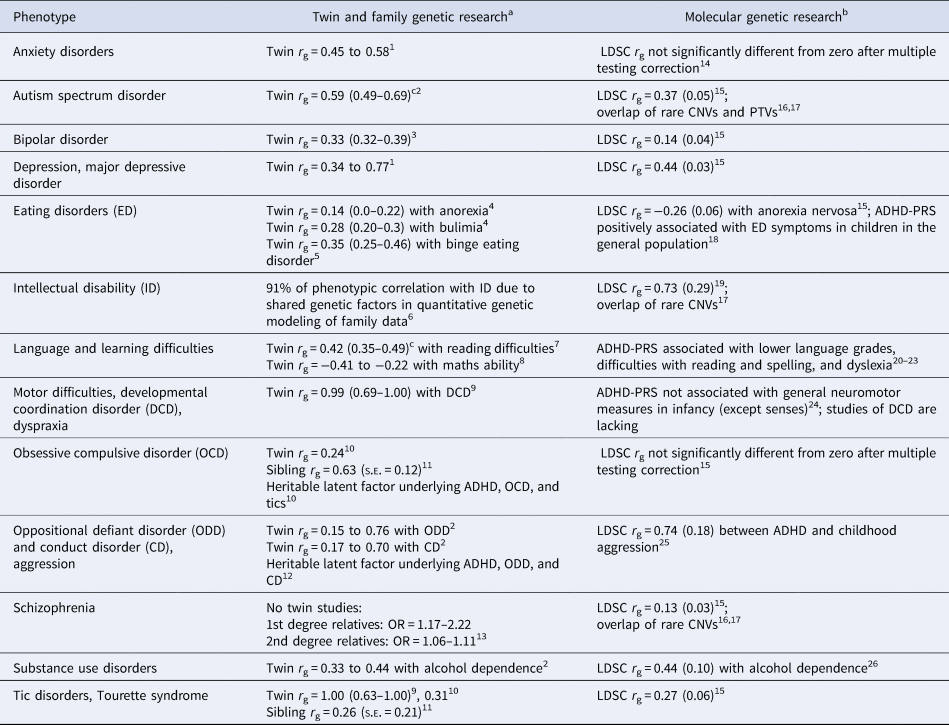
Finally, twin and family studies strongly suggest that comorbidity in ADHD is partly explained by genetic factors shared with other disorders (see Table 1), as highlighted by recent reviews (Andersson et al., Reference Andersson, Tuvblad, Chen, Du Rietz, Cortese, Kuja-Halkola and Larsson2020; Tistarelli et al., Reference Tistarelli, Fagnani, Troianiello, Stazi and Adriani2020). Among childhood-onset disorders, most research has focused on ASD and ODD/CD, which both show considerable genetic overlap with ADHD (Andersson et al., Reference Andersson, Tuvblad, Chen, Du Rietz, Cortese, Kuja-Halkola and Larsson2020; Tistarelli et al., Reference Tistarelli, Fagnani, Troianiello, Stazi and Adriani2020). ODD/CD traits appear more strongly genetically correlated with hyperactivity/impulsivity (Hur, Reference Hur2015; Wood, Rijsdijk, Asherson, & Kuntsi, Reference Wood, Rijsdijk, Asherson and Kuntsi2009), whereas learning difficulties appear more closely genetically linked with inattentive symptoms (Greven, Harlaar, Dale, & Plomin, Reference Greven, Harlaar, Dale and Plomin2011, Reference Greven, Kovas, Willcutt, Petrill and Plomin2014; Liu, Li, Viding, Asherson, & Pingault, Reference Liu, Li, Viding, Asherson and Pingault2019; Wadsworth, DeFries, Willcutt, Pennington, & Olson, Reference Wadsworth, DeFries, Willcutt, Pennington and Olson2015). Twin studies on the associations of ADHD with anxiety and depression indicate moderate genetic correlations reported as early as preschool (Chen et al., Reference Chen, Ji, Wang, Lichtenstein, Larsson and Chang2016; Cole, Ball, Martin, Scourfield, & Mcguffin, Reference Cole, Ball, Martin, Scourfield and Mcguffin2009; Michelini, Eley, Gregory, & McAdams, Reference Michelini, Eley, Gregory and McAdams2015; Rydell, Taylor, & Larsson, Reference Rydell, Taylor and Larsson2017). Among later onset comorbidities, quantitative genetic research shows clear genetic links with substance misuse (Capusan, Bendtsen, Marteinsdottir, Kuja-Halkola, & Larsson, Reference Capusan, Bendtsen, Marteinsdottir, Kuja-Halkola and Larsson2015; Derks, Vink, Willemsen, van den Brink, & Boomsma, Reference Derks, Vink, Willemsen, van den Brink and Boomsma2014; Edwards & Kendler, Reference Edwards and Kendler2012; Skoglund, Chen, Franck, Lichtenstein, & Larsson, Reference Skoglund, Chen, Franck, Lichtenstein and Larsson2015). Although there is less research for eating disorders, bipolar disorder, and schizophrenia, available evidence does support a genetic overlap with ADHD (Capusan et al., Reference Capusan, Yao, Kuja-Halkola, Bulik, Thornton, Bendtsen and Larsson2017; Larsson et al., Reference Larsson, Rydén, Boman, Långström, Lichtenstein and Landén2013; Song et al., Reference Song, Bergen, Kuja-Halkola, Larsson, Landén and Lichtenstein2015; Yao et al., Reference Yao, Kuja-Halkola, Martin, Lu, Lichtenstein, Norring and Larsson2019). In a meta-analysis of 31 independent twin studies, genetic correlations between ADHD and externalizing (0.49 [0.37–0.61]), internalizing (0.50 [0.39–0.69]), and neurodevelopmental (0.56 [0.47–0.66]) traits were of similar magnitude and largely consistent across age, measurement scales, and raters (Andersson et al., Reference Andersson, Tuvblad, Chen, Du Rietz, Cortese, Kuja-Halkola and Larsson2020). Furthermore, emerging evidence from multivariate twin and family studies suggests that ADHD loads strongly onto a general genetic psychopathology factor. After accounting for this general factor, ADHD remains genetically associated with a specific neurodevelopmental factor, whereas genetic links to externalizing and internalizing psychopathology are considerably attenuated, supporting the neurodevelopmental etiology of ADHD (Du Rietz et al., Reference Du Rietz, Pettersson, Brikell, Ghirardi, Chen, Hartman and Kuja-Halkola2020; Lahey, Van Hulle, Singh, Waldman, & Rathouz, Reference Lahey, Van Hulle, Singh, Waldman and Rathouz2011; Pettersson, Anckarsäter, Gillberg, & Lichtenstein, Reference Pettersson, Anckarsäter, Gillberg and Lichtenstein2013, Reference Pettersson, Larsson and Lichtenstein2015). Although twin and family studies addressing non-psychiatric comorbidity in ADHD are sparse, genetic correlations with somatic and neurological conditions such as asthma, epilepsy, and obesity (twin r g = 0.20–0.30) are weaker than those between ADHD and other psychiatric disorders (Brikell et al., Reference Brikell, Ghirardi, D'Onofrio, Dunn, Almqvist, Dalsgaard and Larsson2018; Chen et al., Reference Chen, Hartman, Kuja-Halkola, Faraone, Almqvist and Larsson2019; Holmberg, Lundholm, Anckarsäter, Larsson, & Almqvist, Reference Holmberg, Lundholm, Anckarsäter, Larsson and Almqvist2015; Mogensen, Larsson, Lundholm, & Almqvist, Reference Mogensen, Larsson, Lundholm and Almqvist2011).
Summary of the evidence for shared genetics risks between ADHD and common comorbid psychiatric and neurodevelopmental phenotypes

CNVs: copy number variants; LDSC: linkage disequilibrium score correlation; PRS: polygenic risk scores; r g: twin or SNP-based genetic correlation; OR: odds ratio; s.e.: standard error; CIs: confidence intervals.
a A note about the evidence presented for twin/family genetic associations: results of genetic correlation are obtained from quantitative genetic modeling in twin- and/or extended family studies. Genetic correlations from published meta-analyses are presented preferentially, followed by ranges of estimates obtained from prior published reviews. Otherwise single study estimates are presented with 95% CIs/s.e., where available. When no twin studies are available, associations from large-scale family co-aggregation studies including multiple relative types are presented.
b A note about the evidence presented for common variant associations: results of the largest available genetic correlation analyses using LDSC are presented preferentially and where such analyses are not available, then available PRS results are summarized.
c Meta-analytic estimate (95% CI), estimated in the cited study.
References: 1(Martin et al., Reference Martin, Taylor and Lichtenstein2018a); 2(Andersson et al., Reference Andersson, Tuvblad, Chen, Du Rietz, Cortese, Kuja-Halkola and Larsson2020); 3(Song et al., Reference Song, Bergen, Kuja-Halkola, Larsson, Landén and Lichtenstein2015); 4(Yao et al., Reference Yao, Kuja-Halkola, Martin, Lu, Lichtenstein, Norring and Larsson2019); 5(Capusan et al., Reference Capusan, Yao, Kuja-Halkola, Bulik, Thornton, Bendtsen and Larsson2017); 6(Faraone, Ghirardi, Kuja-Halkola, Lichtenstein, & Larsson, Reference Faraone, Ghirardi, Kuja-Halkola, Lichtenstein and Larsson2017); 7(Daucourt, Erbeli, Little, Haughbrook, & Hart, Reference Daucourt, Erbeli, Little, Haughbrook and Hart2020); 8; (Greven, Kovas, Willcutt, Petrill, & Plomin, Reference Greven, Kovas, Willcutt, Petrill and Plomin2014); 9(Lichtenstein, Carlström, Råstam, Gillberg, & Anckarsäter, Reference Lichtenstein, Carlström, Råstam, Gillberg and Anckarsäter2010); 10(Pinto et al., Reference Pinto, Monzani, Leckman, Rück, Serlachius, Lichtenstein and Mataix-Cols2016); 11(Mathews & Grados, Reference Mathews and Grados2011); 12(Tuvblad, Zheng, Raine, & Baker, Reference Tuvblad, Zheng, Raine and Baker2009); 13(Larsson et al., Reference Larsson, Rydén, Boman, Långström, Lichtenstein and Landén2013); 14; (Purves et al., Reference Purves, Coleman, Meier, Rayner, Davis, Cheesman and Eley2020); 15(Cross-Disorder Group of the PGC, 2019); 16(Williams et al., Reference Williams, Franke, Mick, Anney, Freitag, Gill and Faraone2012); 17(Gudmundsson et al., Reference Gudmundsson, Walters, Ingason, Johansson, Zayats, Athanasiu and Stefansson2019); 18(Yao et al., Reference Yao, Kuja-Halkola, Martin, Lu, Lichtenstein, Norring and Larsson2019); 19(Niemi et al., Reference Niemi, Martin, Rice, Gallone, Gordon, Kelemen and Barrett2018); 20(Rajagopal et al., Reference Rajagopal, Ganna, Coleman, Allegrini, Voloudakis and Grove2020); 21(Gialluisi et al., Reference Gialluisi, Andlauer, Mirza-Schreiber, Moll, Becker, Hoffmann and Schulte-Körne2019); 22(Verhoef et al., Reference Verhoef, Demontis, Burgess, Shapland, Dale, Okbay and St Pourcain2019); 23(Gialluisi et al., Reference Gialluisi, Andlauer, Mirza-Schreiber, Moll, Becker, Hoffmann and Schulte-Körne2020); 24(Serdarevic et al., Reference Serdarevic, Tiemeier, Jansen, Alemany, Xerxa, Neumann and Ghassabian2020); 25(Demontis et al., Reference Demontis, Walters, Rajagopal, Waldman, Grove, Als and Børglum2021); 26(Walters et al., Reference Walters, Polimanti, Johnson, McClintick, Adams, Adkins and Agrawal2018).
In summary, quantitative genetic studies have demonstrated that the heritability of ADHD is high and of similar magnitude across ADHD symptom dimensions, severity, sex, and development, and that genetic liability for ADHD is shared with neurodevelopmental, psychiatric, and somatic comorbidities.
Molecular genetic studies of ADHD
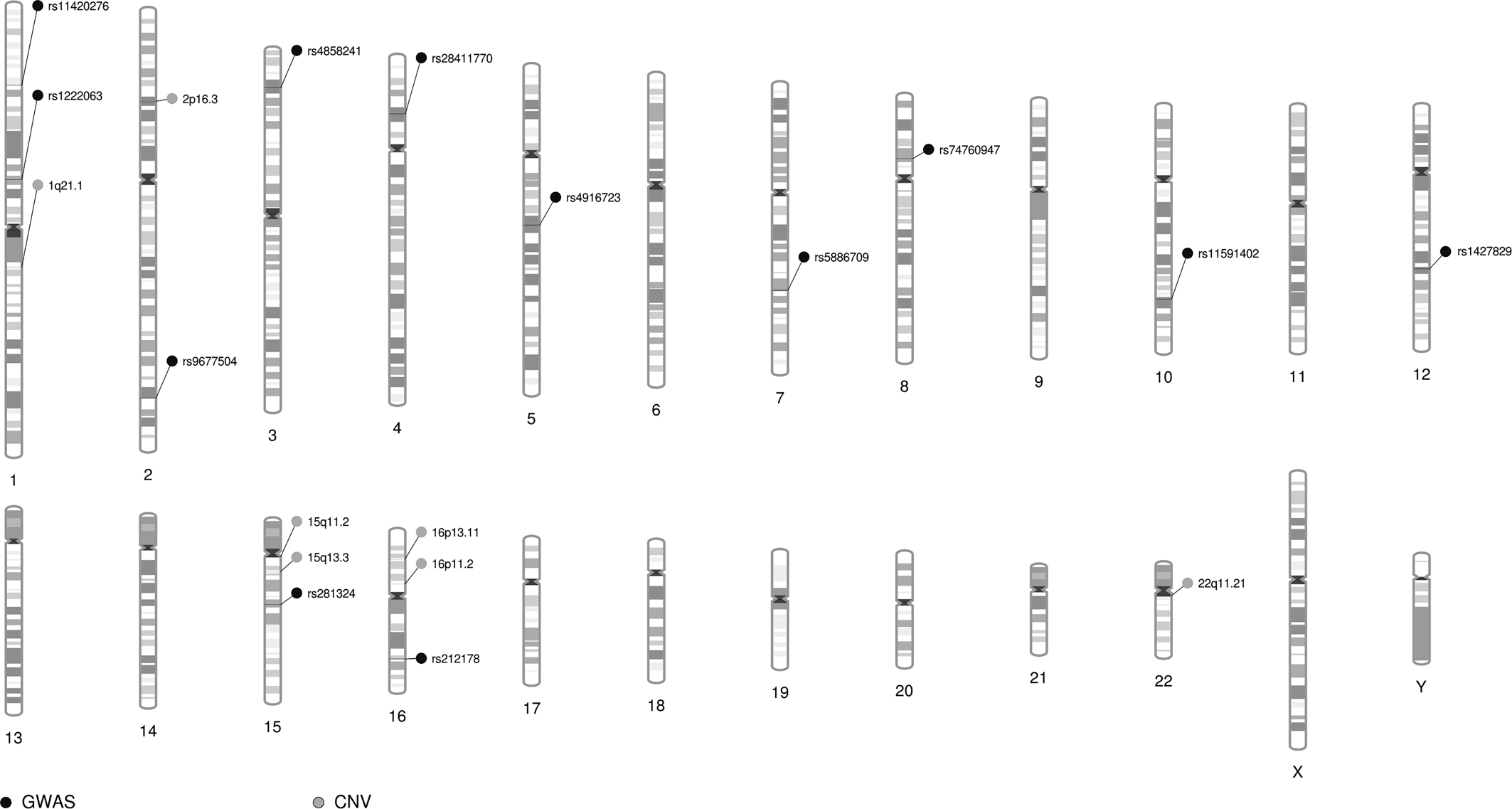
Advances in genotyping technology in the past two decades have greatly improved our understanding of the genetic architecture of ADHD (i.e. the number, allele frequencies, and locations of risk variants). Initial molecular genetic studies of ADHD focused on hypothesis-driven candidate gene and linkage approaches, with limited replication of results (Hawi et al., Reference Hawi, Cummins, Tong, Johnson, Lau, Samarrai and Bellgrove2015), similarly to other psychiatric disorders (Sullivan, Reference Sullivan2017). This literature and potential candidates that emerged (e.g. dopaminergic genes) has been extensively reviewed previously (e.g. Faraone & Larsson, Reference Faraone and Larsson2018; Thapar, Langley, Owen, & O'Donovan, Reference Thapar, Langley, Owen and O'Donovan2007) and this review focuses on more recent genome-wide studies. Initial ADHD GWAS (Neale et al., Reference Neale, Lasky-Su, Anney, Franke, Zhou, Maller and Faraone2008, Reference Neale, Medland, Ripke, Asherson, Franke and Lesch2010; Stergiakouli et al., Reference Stergiakouli, Hamshere, Holmans, Langley, Zaharieva, Hawi and Thapar2012) demonstrated important insights into the polygenic architecture of ADHD, but were under-powered to detect common risk variants at the established genome-wide significance level (p < 5 × 10⁻⁸). The first common genetic variants robustly associated with ADHD were recently identified through a large international collaborative effort led by the Psychiatric Genomics Consortium (PGC) and the Lundbeck Foundation Initiative for Integrative Psychiatric Research (iPSYCH) (Demontis et al., Reference Demontis, Walters, Martin, Mattheisen, Als, Agerbo and Neale2019). This GWAS of 20 183 individuals with ADHD and 35 191 controls implicated variants in 12 independent regions across the genome, many of which are located in/near genes involved in neurodevelopmental processes (e.g. DUSP6 and FOXP2); see Fig. 1. There was little evidence to support a role for the most widely-studied candidate genes. These GWAS results showed partial replication (with significant sign concordance) using three different independent cohorts with self-reported ADHD or ADHD traits. Although the top loci each explained only a small proportion of phenotypic variance, the total estimated contribution from common risk alleles to variance in ADHD [i.e. the single-nucleotide polymorphism (SNP)-based heritability] was 21.6% (s.e. = 0.014), indicating that with growing GWAS sample sizes additional common risk variants will be identified. Efforts are ongoing to increase the sample size for the next international GWAS meta-analysis to confirm these findings and discover more loci. Characterization of the genomic signal revealed that ADHD risk variants impact regulatory elements specific to the central nervous system and located in evolutionarily-constrained genomic regions, i.e. genes that are particularly intolerant to loss-of-function mutations. Furthermore, ADHD genetic risk variants are shared with those implicated in lower total intracranial volume (r g = −0.23, s.e. = 0.06) (Klein et al., Reference Klein, Walters, Demontis, Stein, Hibar, Adams and Franke2019), further supporting its classification as a brain-based disorder. Although the latest GWAS represents a significant advance in our understanding of ADHD common variant genetics, one important limitation is that 96% of the individuals included are of European ancestry and data are lacking for individuals from other ancestries (Demontis et al., Reference Demontis, Walters, Martin, Mattheisen, Als, Agerbo and Neale2019). The genetic correlation between ADHD in individuals of Han Chinese and European ancestries was previously estimated as 0.39 (s.e. = 0.15) (Yang et al., Reference Yang, Neale, Liu, Lee, Wray, Ji and Wang2013), suggesting that only a portion of common variants will extend to non-European ancestries.
Locations of genomic loci robustly-associated with risk of ADHD diagnosis. GWAS, genome-wide association study; top variants from the largest ADHD GWAS (index SNPs are shown) from Demontis et al. (Reference Demontis, Walters, Martin, Mattheisen, Als, Agerbo and Neale2019). CNV, copy number variants implicated in ADHD, based on Gudmundsson et al. (Reference Gudmundsson, Walters, Ingason, Johansson, Zayats, Athanasiu and Stefansson2019). Visualization made using PhenoGram (Wolfe, Dudek, Ritchie, & Pendergrass, Reference Wolfe, Dudek, Ritchie and Pendergrass2013).

Other recent GWAS, focusing on different definitions or groups of individuals with ADHD, demonstrate high genetic correlations between: (a) ADHD in childhood and persistent ADHD in adulthood (r g = 0.81, s.e. = 0.11) (Rovira et al., Reference Rovira, Demontis, Sánchez-Mora, Zayats, Klein, Mota and Ribasés2020), (b) ADHD population traits and clinical diagnosis (r g = 0.97, s.e. = 0.21) (Demontis et al., Reference Demontis, Walters, Martin, Mattheisen, Als, Agerbo and Neale2019), and (c) ADHD in males and females (r g = 1.22, s.e. = 0.13) (Martin et al., Reference Martin, Walters, Demontis, Mattheisen, Lee, Robinson and Neale2018b). Notably, although very high, the genetic correlation between child and adult ADHD is not as high as across childhood ADHD cohorts (Rovira et al., Reference Rovira, Demontis, Sánchez-Mora, Zayats, Klein, Mota and Ribasés2020). Although the genetic correlation is also moderately high (r g = 0.65, s.e. = 0.11) between clinically-diagnosed ADHD and self-reported ADHD in a population sample of adults taking part in personal genetic testing via 23andMe, there are also clearly phenotypic differences (e.g. in educational attainment) across these definitions of ADHD (Demontis et al., Reference Demontis, Walters, Martin, Mattheisen, Als, Agerbo and Neale2019).
Genetic correlations have also been seen with numerous additional phenotypes (see Table 1). Among psychiatric disorders, the strongest genetic correlations are with major depressive disorder and ASD, with more modest genetic correlations with other disorders (e.g. schizophrenia and bipolar disorder) (Cross-Disorder Group of the PGC, 2019). Genomic structural equation modeling shows that ADHD clusters with ASD, as well as Tourette syndrome and aggression (Cross-Disorder Group of the PGC, 2019; Waldman, Poore, Luningham, & Yang, Reference Waldman, Poore, Luningham and Yang2020). ADHD is also strongly genetically correlated with lower age at birth of first child (r g = −0.61, s.e. = 0.04), lower educational attainment (r g = −0.53, s.e. = 0.03), smoking (r g = 0.48, s.e. = 0.06), insomnia (r g = 0.42, s.e. = 0.06), and higher body mass index (r g = 0.26, s.e. = 0.03) (Demontis et al., Reference Demontis, Walters, Martin, Mattheisen, Als, Agerbo and Neale2019). Recent studies also suggest that the dopaminergic system may be a shared mechanism underlying ADHD and obesity, sleep problems, asthma, and migraine (Instanes et al., Reference Instanes, Klungsøyr, Halmøy, Fasmer and Haavik2018; Mota et al., Reference Mota, Poelmans, Klein, Torrico, Fernàndez-Castillo, Cormand and Arias Vásquez2020).
Polygenic risk score (PRS) analyses have yielded significant insights into ADHD. Although PRS studies explain only a small proportion (~5.5%) of the phenotypic variance of ADHD case status (Demontis et al., Reference Demontis, Walters, Martin, Mattheisen, Als, Agerbo and Neale2019), they are a useful tool for hypothesis testing (e.g. testing for association between individual genetic risk burden and clinical features, comorbidity, and long-term outcomes, as well as mediation or gene-by-environment interaction). In general, PRS studies support twin and genome-wide correlation analyses, demonstrating shared genetic risks across ADHD diagnosis and population traits measured using different instruments, raters (parent- v. self-report), and at different ages (Burton et al., Reference Burton, Wright, Shan, Xiao, Dupuis, Goodale and Crosbie2019; Groen-Blokhuis et al., Reference Groen-Blokhuis, Middeldorp, Kan, Abdellaoui, van Beijsterveldt, Ehli and Boomsma2014; Martin, Hamshere, Stergiakouli, O'Donovan, & Thapar, Reference Martin, Hamshere, Stergiakouli, O'Donovan and Thapar2014; Riglin et al., Reference Riglin, Leppert, Langley, Thapar, O'Donovan, Davey Smith and Thapar2020b; Ronald, de Bode, & Polderman, Reference Ronald, de Bode and Polderman2021), as well as many other psychiatric and brain-based traits, including autistic symptoms, cognitive difficulties, depression, anxiety, risk-taking, alcohol use, and smoking (Du Rietz et al., Reference Du Rietz, Coleman, Glanville, Choi, O'Reilly and Kuntsi2018; Martin et al., Reference Martin, Taylor and Lichtenstein2018a; Ronald et al., Reference Ronald, de Bode and Polderman2021). In the general population, ADHD-PRS captures a wide range of psychiatric outcomes, which can be partly summarized by a general factor of childhood psychopathology (Brikell et al., Reference Brikell, Larsson, Lu, Pettersson, Chen, Kuja-Halkola and Martin2020; Riglin et al., Reference Riglin, Thapar, Leppert, Martin, Richards, Anney and Thapar2020c).
Studies have also examined the impact of ADHD-PRS on outcomes in clinical ADHD samples. Collectively, they suggest that PRS do not just capture risk for ADHD diagnosis but may also be a marker of phenotypic severity in individuals with ADHD, showing association with a wide range of comorbid phenotypes, including CD (Demontis et al., Reference Demontis, Walters, Rajagopal, Waldman, Grove, Als and Børglum2021; Hamshere et al., Reference Hamshere, Langley, Martin, Agha, Stergiakouli, Anney and Thapar2013), irritability/emotional dysregulation (Nigg et al., Reference Nigg, Karalunas, Gustafsson, Bhatt, Ryabinin, Mooney and Wilmot2020; Riglin et al., Reference Riglin, Eyre, Cooper, Collishaw, Martin, Langley and Thapar2017), severity of clinical profile (Vuijk et al., Reference Vuijk, Martin, Braaten, Genovese, Capawana, O'Keefe and Doyle2020), executive function difficulties (working memory, inhibitory control, and response variability) (Chang, Yang, Wang, & Faraone, Reference Chang, Yang, Wang and Faraone2020; Nigg et al., Reference Nigg, Gustafsson, Karalunas, Ryabinin, McWeeney, Faraone and Wilmot2018; Vainieri et al., Reference Vainieri, Martin, Rommel, Asherson, Banaschewski, Buitelaar and Kuntsi2021), and SUDs (i.e. alcohol and cannabis use disorders) (Wimberley et al., Reference Wimberley, Agerbo, Horsdal, Ottosen, Brikell, Als and Dalsgaard2020). PRS studies also suggest that late-onset ADHD may differ in etiology from childhood-onset ADHD, but studies so far are inconclusive because of small sample sizes (Asherson & Agnew-Blais, Reference Asherson and Agnew-Blais2019). The largest-to-date PRS study of sex differences found that males and females with ADHD do not differ significantly in terms of polygenic burden (Martin et al., Reference Martin, Walters, Demontis, Mattheisen, Lee, Robinson and Neale2018b).
In addition to the role of common (>1% minor allele frequency) genetic risk variants in ADHD described above, rare variants (<1% frequency) also contribute to ADHD. Studies of rare chromosomal alterations indicate that ADHD is frequently associated with known genetic syndromes (e.g. 22q11.2 deletion syndrome and Williams syndrome) (Scerif & Baker, Reference Scerif and Baker2015). ADHD is also associated more generally with large, rare deletions or duplications of DNA, known as copy number variants (CNVs) (Williams et al., Reference Williams, Zaharieva, Martin, Langley, Mantripragada, Fossdal and Thapar2010, Reference Williams, Franke, Mick, Anney, Freitag, Gill and Faraone2012), particularly those that have previously been implicated in other NDDs (Gudmundsson et al., Reference Gudmundsson, Walters, Ingason, Johansson, Zayats, Athanasiu and Stefansson2019); see Fig. 1. There is also preliminary evidence implicating de novo CNVs, i.e. variants not inherited from biological parents (Lionel et al., Reference Lionel, Crosbie, Barbosa, Goodale, Thiruvahindrapuram, Rickaby and Scherer2011; Martin et al., Reference Martin, Hosking, Wadon, Agha, Langley, Rees and Thapar2020). Evidence is currently mixed as to whether large, rare CNVs are associated with traits of ADHD in the general population (Guyatt et al., Reference Guyatt, Stergiakouli, Martin, Walters, O'Donovan, Owen and Gaunt2018; Martin et al., Reference Martin, Tammimies, Karlsson, Lu, Larsson, Lichtenstein and Magnusson2019). Results indicate that previously implicated neurodevelopmental CNVs are associated with diagnosed ADHD, whereas other large, rare CNV regions are implicated in more broadly-defined ADHD symptoms (Martin et al., Reference Martin, Tammimies, Karlsson, Lu, Larsson, Lichtenstein and Magnusson2019). Although the evidence collectively implicates these large structural variants in ADHD, further research is needed to uncover the specific genetic risks and biological mechanisms that are being disrupted. To this end, a recent paper integrated data from 11 published studies of CNVs in ADHD with existing biological databases and identified a credible list of 26 high confidence genes, enriched for expression in brain tissue and showing converging evidence from common variant analyses, which should be prioritized for further investigation (Harich et al., Reference Harich, van der Voet, Klein, Čížek, Fenckova, Schenck and Franke2020).
A recent large exome sequencing study of 4378 individuals with ADHD implicated rare protein-truncating variants intolerant to mutation as being important for ADHD, but without identifying specific genes or mutations (Satterstrom et al., Reference Satterstrom, Walters, Singh, Wigdor, Lescai, Demontis and Daly2019). Interestingly, this group of very rare variants was indistinguishable from variants implicated in ASD. Thus, evidence from quantitative genetics, together with common and rare variant studies, demonstrates that genetic risks implicated in ADHD are also implicated in other neurodevelopmental and psychiatric phenotypes. Large whole-genome sequencing studies of ADHD are currently lacking, but as samples grow, sequencing will enable examination of the role of structural variants that are not captured by microarrays (Trost et al., Reference Trost, Engchuan, Nguyen, Thiruvahindrapuram, Dolzhenko, Backstrom and Yuen2020), such as variable number tandem repeats, which have shown promise in candidate gene work (e.g. the DRD4 7-repeat) (Faraone, Doyle, Mick, & Biederman, Reference Faraone, Doyle, Mick and Biederman2001; Li, Sham, Owen, & He, Reference Li, Sham, Owen and He2006; Nikolaidis & Gray, Reference Nikolaidis and Gray2010).
Implications and future directions
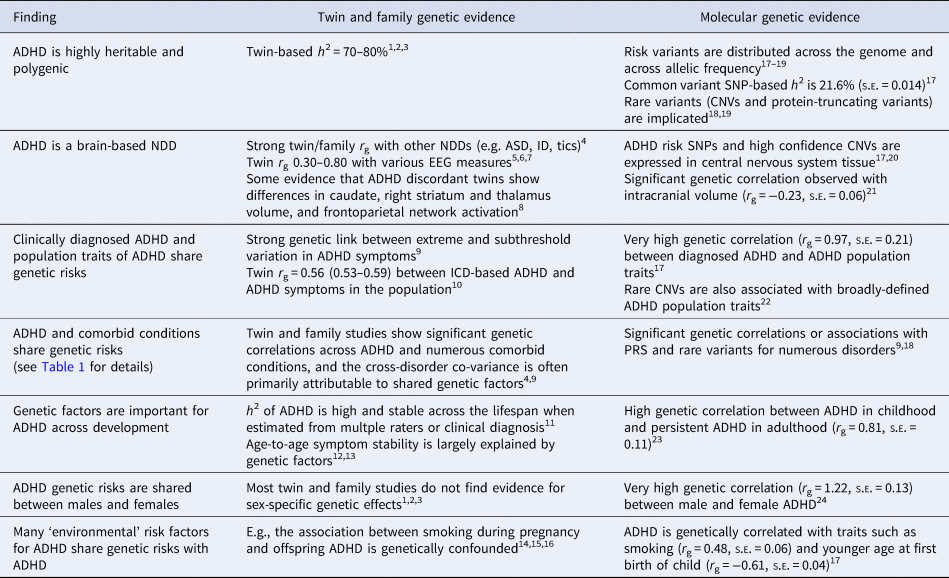
There is a high degree of convergence from quantitative and molecular genetic approaches, yielding important insights into ADHD. Table 2 summarizes these robust findings based on large-scale studies, meta-analyses, and reviews. The successes of ADHD genome-wide approaches in the past few years have paved the way for further discovery and understanding of the genetic architecture of ADHD, while validating its categorization as a brain-based NDD.
Summary of robust converging findings from twin/family and molecular genetic ADHD research

Note: The studies highlighted in this table are based on large-scale data analyses, meta-analyses and other reviews, which collectively support this converging evidence from twin/family and molecular genetic studies. Although for some of these findings, individual studies may exist that do not support the finding, the majority of well-powered studies do converge to support the findings.
h 2, twin or single-nucleotide polymorphism (SNP)-based heritability; CNVs, copy number variants; PRS, polygenic risk scores; r g, twin or SNP-based genetic correlation; ASD, autism spectrum disorder; EEG, electroencephalogram; ID, intellectual disability; NDDs, neurodevelopmental disorders.
References: 1(Faraone & Larsson, Reference Faraone and Larsson2018); 2(Nikolas & Burt, Reference Nikolas and Burt2010); 3(Polderman et al., Reference Polderman, Benyamin, de Leeuw, Sullivan, van Bochoven, Visscher and Posthuma2015); 4(Andersson et al., Reference Andersson, Tuvblad, Chen, Du Rietz, Cortese, Kuja-Halkola and Larsson2020); 5(McLoughlin et al., Reference McLoughlin, Palmer, Rijsdijk and Makeig2014); 6(Tye et al., Reference Tye, Rijsdijk, Greven, Kuntsi, Asherson and McLoughlin2012); 7(Tye, Rijsdijk, & McLoughlin, Reference Tye, Rijsdijk and McLoughlin2014); 8(Tistarelli et al., Reference Tistarelli, Fagnani, Troianiello, Stazi and Adriani2020); 9(Martin et al., Reference Martin, Taylor and Lichtenstein2018a); 10(Taylor et al., Reference Taylor, Martin, Lu, Brikell, Lundström, Larsson and Lichtenstein2019); 11(Brikell et al., Reference Brikell, Kuja-Halkola and Larsson2015); 12(Bergen et al., Reference Bergen, Gardner and Kendler2007); 13(Chang et al., Reference Chang, Lichtenstein, Asherson and Larsson2013); 14(Thapar et al., Reference Thapar, Rice, Hay, Boivin, Langley, van den Bree and Harold2009); 15(Langley et al., Reference Langley, Heron, Smith and Thapar2012); 16(Skoglund et al., Reference Skoglund, Chen, D'Onofrio, Lichtenstein and Larsson2014); 17(Demontis et al., Reference Demontis, Walters, Martin, Mattheisen, Als, Agerbo and Neale2019); 18(Gudmundsson et al., Reference Gudmundsson, Walters, Ingason, Johansson, Zayats, Athanasiu and Stefansson2019); 19(Satterstrom et al., Reference Satterstrom, Walters, Singh, Wigdor, Lescai, Demontis and Daly2019); 20(Harich et al., Reference Harich, van der Voet, Klein, Čížek, Fenckova, Schenck and Franke2020); 21(Klein et al., Reference Klein, Walters, Demontis, Stein, Hibar, Adams and Franke2019); 22(Martin et al., Reference Martin, Tammimies, Karlsson, Lu, Larsson, Lichtenstein and Magnusson2019); 23(Rovira et al., Reference Rovira, Demontis, Sánchez-Mora, Zayats, Klein, Mota and Ribasés2020); 24(Martin et al., Reference Martin, Walters, Demontis, Mattheisen, Lee, Robinson and Neale2018b).
Quantitative and molecular genetic research clearly demonstrates that ADHD diagnosis represents the extreme end of continuously distributed symptoms in the population. This poses a challenge for defining ADHD, with further research needed to determine how and when ADHD symptoms lead to impairment and the need for clinical intervention. However, this finding also highlights an opportunity to leverage already existing studies of ADHD symptoms in large population samples to understand the genetics of ADHD, with ongoing research to this end [e.g. EAGLE consortium (Middeldorp et al., Reference Middeldorp, Hammerschlag, Ouwens, Groen-Blokhuis, Pourcain, Greven and Boomsma2016), Spit for Science (Burton et al., Reference Burton, Wright, Shan, Xiao, Dupuis, Goodale and Crosbie2019)].
There are many unresolved issues in ADHD genetics that will require larger sample sizes. For example, do shared genetic risks between ADHD and comorbid conditions (Table 1) (Anttila et al., Reference Anttila, Bulik-Sullivan, Finucane, Walters, Bras and Duncan2017; Demontis et al., Reference Demontis, Walters, Martin, Mattheisen, Als, Agerbo and Neale2019) result from shared phenotypic factors (e.g. cognitive deficits) and/or is an additional trait contributing to both phenotypes? Which (if any) specific genetic risk factors are unique to ADHD? Analyses of secondary phenotypes such as dimensional behavioral and cognitive traits may help answer some of these questions. Other unresolved issues include determining why males are more likely than females to be diagnosed with ADHD during childhood/adolescence, understanding the influence of genetic risks on persistence and remittance patterns, and whether late-diagnosed ADHD is biologically the same condition as early-onset ADHD. Identifying causal risk factors for ADHD and establishing the mechanisms leading to negative outcomes has proven challenging and has primarily been done using twin and family data thus far. However, rapid advances in methods using measured genetic variants to evaluate causality (e.g. Mendelian randomization) (Davey Smith & Hemani, Reference Davey Smith and Hemani2014) offer future research opportunities for ADHD. Mendelian randomization approaches have so far been used to study putative causal relationships between ADHD and phenotypes including SUD, depression, educational attainment, childhood obesity, and coronary artery disease, with results supporting a potentially causal effect of ADHD genetic risk on these outcomes, with limited evidence for the reverse relationship (Leppert et al., Reference Leppert, Riglin, Dardani, Thapar, Staley, Tilling and Stergiakouli2019; Riglin et al., Reference Riglin, Leppert, Dardani, Thapar, Rice, O'Donovan and Thapar2020a; Treur et al., Reference Treur, Demontis, Smith, Sallis, Richardson, Wiers and Munafò2021). More research is also needed to clarify the role of environmental risk factors and gene-by-environment interactions in ADHD. This will be particularly important when genetic studies begin the much-needed inclusion of diverse ancestries in order to ensure equity of research outcomes and clinical benefit in ADHD, but also to improve prediction accuracy and understanding of biology (Peterson et al., Reference Peterson, Kuchenbaecker, Walters, Chen, Popejoy, Periyasamy and Duncan2019). Environmental variables will be particularly relevant in this context, given interplay of ethnocultural and environmental risk factors for mental health. Large-scale, well-powered gene-by-environment studies including genetically diverse samples will be an important step in identifying novel paths to prevention and treatment.
Emerging findings from studies of rare variants hold promise for future implementation of genetic testing for a subgroup of individuals with ADHD. Genetic testing is occasionally offered to families with children who have severe intellectual disability or ASD. Given that some of the same rare CNV loci and genetic mutations have been implicated in ADHD (Gudmundsson et al., Reference Gudmundsson, Walters, Ingason, Johansson, Zayats, Athanasiu and Stefansson2019; Satterstrom et al., Reference Satterstrom, Walters, Singh, Wigdor, Lescai, Demontis and Daly2019), genetic testing could offer insights and helpful clinical information to families with children with ADHD, if appropriately combined with genetic counseling. However, the complexity of ADHD etiology warrants caution in the interpretation of genetic results. Also, given how common ADHD is, further research is needed to identify a subgroup of individuals who might benefit most from targeted genetic testing and counseling.
A major goal of genomic research is to understand the underlying biology of a disorder to develop new therapeutics and improve outcomes. Existing data point to possible biological mechanisms (Faraone et al., Reference Faraone, Asherson, Banaschewski, Biederman, Buitelaar, Ramos-Quiroga and Franke2015) but large-scale GWAS and forthcoming whole-genome sequence data will undoubtedly aid in this endeavor. For example, the latest ADHD GWAS (Demontis et al., Reference Demontis, Walters, Martin, Mattheisen, Als, Agerbo and Neale2019) implicated DUSP6, a gene that may play a role in synaptic dopamine levels, which are targeted by stimulant medication; further investigation of this gene is therefore warranted. As more ADHD risk loci are discovered, methods will be required to parse out the functional variants in associated loci and functionally characterize their effects. Various types of quantitative trait loci (expression, protein, and methylation) as well as gene expression data will be essential to these efforts (Breen et al., Reference Breen, Li, Roth, O'Donnell, Didriksen, Dolmetsch and Edenberg2016). Capitalizing on approaches that can mine possible therapeutic targets from genome-wide data has already proved promising for ADHD (Hegvik et al., Reference Hegvik, Waløen, Pandey, Faraone, Haavik and Zayats2019). In addition to identifying novel targets for therapeutics, understanding the role of genetic variation in treatment response to current medications is urgently needed (Jensen et al., Reference Jensen, Arnold, Swanson, Vitiello, Abikoff, Greenhill and Hur2007). Thus far, pharmacogenomic studies of treatment response in ADHD have had little success and progress has been hampered by limited sample sizes. Only two small (n < 200) GWAS of methylphenidate response have been published so far (Mick, Neale, Middleton, McGough, & Faraone, Reference Mick, Neale, Middleton, McGough and Faraone2008; Pagerols et al., Reference Pagerols, Richarte, Sánchez-Mora, Rovira, Soler Artigas, Garcia-Martínez and Ribasés2018). There is preliminary evidence that ADHD-PRS may be associated with response to stimulant treatment (Zhong et al., Reference Zhong, Yang, Su, Qian, Cao, Chang and Yang2020), however this needs replication. Given that ADHD medication has been associated with positive effects across a range of outcomes (Chang et al., Reference Chang, Ghirardi, Quinn, Asherson, D'Onofrio and Larsson2019), large-scale research efforts aimed at understanding the biological underpinnings of treatment efficacy and tolerance are urgently needed.
Conclusion
Following on from decades of quantitative and early molecular genetic (e.g. linkage) studies, recent advances in genotyping technology and bioinformatics methods have rapidly increased understanding of the genetic risk factors for ADHD in the past 5–10 years. In the near future, as larger and more diverse samples become available with the facilitation of large consortia such as the PGC and growing national biobanks linked to health records, an increasing number of loci associated with ADHD will undoubtedly be detected. Implementation of state-of-the-art bioinformatics will allow us to pinpoint causal variants and understand causal relationships between comorbid conditions and risk factors. These are necessary steps toward understanding the biology of ADHD and developing better interventions and treatments to improve the outcomes for individuals with ADHD and their families.
Acknowledgements
We would like to thank the Chairs of the PGC ADHD Working Group (Prof Barbara Franke and Dr Ben Neale) for their feedback on an early draft of this paper.
Financial support
IB was supported by The Swedish Brain Foundation. CB was supported by the Canadian Institute of Health Research. NRM was supported by the European Community's Horizon 2020 Programme (H2020/2014–2020) under grant agreement no. 667302 (CoCA) and by funding for the Dutch National Science Agenda NeurolabNL project (grant 400-17-602). JM was supported by a Sêr Cymru II COFUND Fellowship from the Welsh Government (grant no. 663830 – CU189).
Conflict of interest
All the authors report no conflicts of interest.