Introduction
The transition from school to higher education is associated with a steep rise in the incidence of mental health problems, and these are seriously disruptive to students' education and emotional development (The Royal College of Psychiatrists, 2003). Female students are at high risk of eating disorders (EDs), particularly bulimia nervosa (BN) (Sell & Robson, Reference Sell and Robson1998). This distressing condition causes significant impairment (Simon et al. Reference Simon, Schmidt and Pilling2005). Cognitive-behavioural therapy (CBT) is the treatment of choice (NICE, 2004) and early intervention improves outcome (Reas et al. Reference Reas, Williamson, Martin and Zucker2000). However, most young people with EDs do not access effective treatment (Hoek & van Hoeken, Reference Hoek and van Hoeken2003). In many areas, the availability of CBT is limited. Usually, young people prefer self-help to conventional health care for mental health problems (Oliver et al. Reference Oliver, Pearson, Coe and Gunnell2005). In BN, shame commonly acts as a barrier to help-seeking. Moreover, student mobility between term-time and holiday addresses disrupts treatment (Treasure et al. Reference Treasure, Schmidt and Hugo2005). To overcome these barriers and engage young people with BN in effective treatment without delay or disruption, new ways of service delivery need to be identified. Computerized CBT may be able to bridge this gap.
CBT delivered by interactive CD-ROMs or the internet is effective in the prevention of EDs in student and community populations (Taylor et al. Reference Taylor, Bryson, Luce, Cunning, Doyle, Abascal, Rockwell, Dev, Winzelberg and Wilfley2006; Jacobi et al. Reference Jacobi, Morris, Beckers, Bronisch-Holtze, Winter, Winzelberg and Taylor2007; Paxton et al. Reference Paxton, McLean, Gollings, Faulkner and Wertheim2007) and has shown promise in the treatment of BN, binge eating disorder (BED) and partial syndromes (Carrard et al. Reference Carrard, Rouget, Fernandez-Aranda, Volkart, Damoiseau and Lam2006; Shapiro et al. Reference Shapiro, Reba-Harrelson, Dymek-Valentine, Woolson, Hamer and Bulik2007 b; Schmidt et al. Reference Schmidt, Andiappan, Grover, Robinson, Perkins, Dugmore, Treasure, Landau, Eisler and Williams2008). E-mail has been used to support manual-based self-help for BN or BED (Ljotsson et al. Reference Ljotsson, Lundin, Mitsell, Carlbring, Ramklint and Ghaderi2007). As yet there has been no randomized controlled trial (RCT) of internet-based CBT (iCBT) in the treatment of BN.
The main aim of this study was to evaluate the efficacy of iCBT (Williams et al. Reference Williams, Aubin, Cottrell and Harkin1998), supplemented with e-mail support, among students with BN or eating disorder not otherwise specified (EDNOS) against a waiting list control. The main hypothesis was that iCBT would be superior to waiting list on eating disorders and other outcomes. The subsidiary aim of the study was to evaluate the effectiveness of immediate delivery of iCBT compared with delayed treatment, mimicking the experience of patients in the National Health Service (NHS). Previous work suggests that waiting for treatment leads to poor engagement and treatment retention (Schmidt et al. Reference Schmidt, Andiappan, Grover, Robinson, Perkins, Dugmore, Treasure, Landau, Eisler and Williams2008). The subsidiary hypotheses therefore were that the group that received delayed iCBT would have poorer up-take of treatment, use fewer iCBT sessions and would not ‘catch up’ with the ‘immediate’ iCBT group in terms of improvement.
Method
Participants
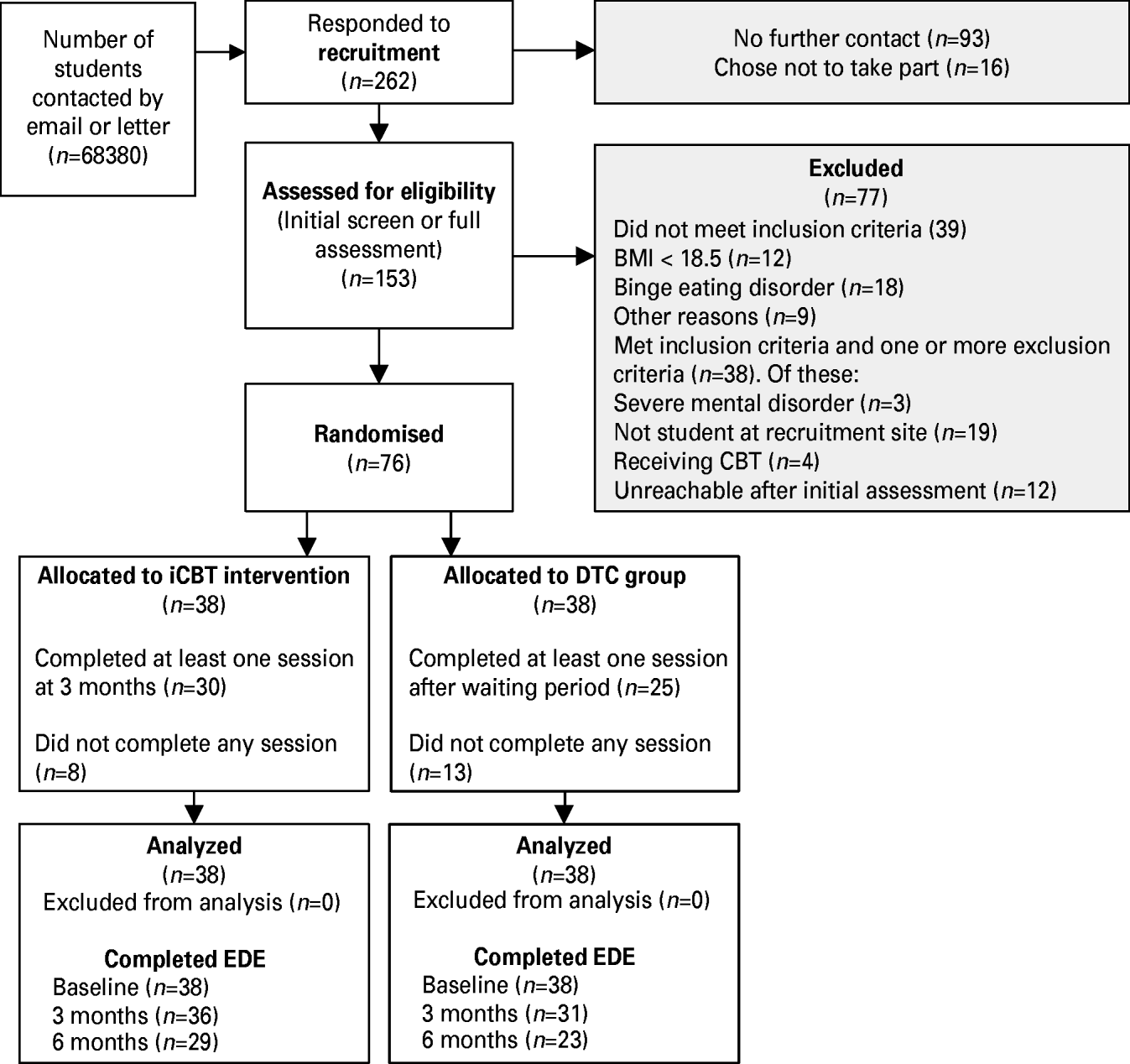
Participants were recruited from six higher education institutions (HEIs) in London between December 2005 and January 2007. Ethical approval for the study was obtained from the joint research ethics committee of the Institute of Psychiatry and the South London and Maudsley NHS Foundation Trust and the ethics committees of participating HEIs. Potential participants were drawn from a pool of approximately 68 380 students (see Fig. 1). Based on information from four of the six institutions we estimated that approximately two-thirds of all students (n=45 000) were female across all six institutions. Recruitment was through university e-mail addresses, supplemented with posters and pamphlets, and in one institution (the Laban Centre) by letters sent to the students' university mail boxes. It is uncertain what proportion of students who received the recruitment e-mail/letter read it, making it difficult to estimate the number of people who constituted our pool for recruitment.
Participants flow through study of internet-based cognitive behaviour therapy (iCBT) for bulimia nervosa (BN).

Respondents were sent an information sheet and on further contact offered telephone assessment. All potential participants, following assessment and prior to randomization, were offered a meeting to introduce them to the iCBT treatment and to obtain informed consent. Participants who preferred not to meet face-to-face were introduced to iCBT over the telephone and the consent form was sent by post.
Students who met DSM-IV criteria for BN or EDNOS were eligible for participation. EDNOS was defined as recurrent episodes of binge eating and/or compensatory behaviours that occurred less than 24 times during the previous 3 months or an ED where the abstinence period between episodes was greater than 2 weeks. This included cases with purging disorder (Keel, Reference Keel2007). We did not specify any minimum number of binge or purge episodes as an inclusion criterion. However, where these behaviours occurred less than once a week, a clinician reviewed all the person's ED symptoms (e.g. including other compensatory behaviours such as food restriction and exercise and cognitive symptoms such as weight/shape concerns) to decide whether this was a clinically significant case warranting inclusion. There were only two such cases in the study. Exclusion criteria were: insufficient English to use the treatment, a diagnosis of BED (because of concerns that this group has a high placebo response; Jacobs-Pilipski et al. Reference Jacobs-Pilipski, Wilfley, Crow, Walsh, Lilenfeld, West, Berkowitz, Hudson and Fairburn2007), a body mass index (BMI)<18.5 kg/m2, currently receiving CBT, major mental disorders requiring different intervention (e.g. psychosis), pregnancy, serious physical illness or ED-related high medical risk (e.g. severe hypokalaemia). Antidepressant medication was not an exclusion criterion, provided the dose was stable.
Intervention and study groups
iCBT
Overcoming Bulimia Online (Williams et al. Reference Williams, Aubin, Cottrell and Harkin1998) is a cognitive-behavioural interactive multimedia treatment program. It consists of eight sessions, combining cognitive-behavioural, motivational and educational strategies. The content of the eight sessions has been described in detail elsewhere (Schmidt et al. Reference Schmidt, Andiappan, Grover, Robinson, Perkins, Dugmore, Treasure, Landau, Eisler and Williams2008). Each session requires about 45 min at the computer. Sessions have to be worked through in sequence. Workbooks and ‘homework’ accompany each session. Anxiety management exercises are provided on CD and as downloads. Embedded self-assessment tools provide patients with feedback on their progress. Participants accessed the program over the internet at any time using a personal password. They were supported in their use of the online package by e-mails by two cognitive-behavioural therapists with ED experience. Their remit was to support and encourage participants to use the package. Therapists sent e-mails once every 1–2 weeks and responded to any e-mails received.
iCBT group
Participants in this group started treatment immediately after randomization. They were encouraged to complete the program over 8–12 weeks, but they continued to have access to the online sessions for 24 weeks. Therapist support focused on the first 3 months and tailed off during follow-up.
Waiting List/Delayed Treatment Control Group (WL/DTC)
Participants in this group waited 3 months providing a control for the iCBT group, to allow testing of our main efficacy hypothesis. Participants in this group received iCBT after 3 months, thus becoming a DTC group, mimicking the experience of assessment and then waiting list, inherent to many specialist ED services, and allowing testing of our subsidiary hypotheses.
Assessments and measures
Assessments were conducted by telephone interview (Rohde et al. Reference Rohde, Lewinsohn and Seeley1997) and questionnaires (completed online) at three time points: baseline, 3 months and 6 months.
Interview-based measures
The Structured Clinical Interview for DSM-IV (SCID) was given at baseline to determine co-morbidity. Version 12 of the Eating Disorder Examination (EDE; Fairburn & Cooper, Reference Fairburn, Cooper, Fairburn and Wilson1993) was completed at all three time points. The EDE is a widely used, standardized, semi-structured interview that assesses ED psychopathology and has good psychometric properties when used with adult populations. It can generate ED diagnoses based on DSM-IV criteria. Assessors received training in the EDE and the SCID to ensure reliable use.
Self-report measures
The Hospital Anxiety and Depression Scale (HADS; Zigmond & Snaith, Reference Zigmond and Snaith1983) and the World Health Organization Quality of Life scale brief version (WHOQOL-BREF; The WHOQOL Group, 1998) are widely used and well-validated self-report questionnaires.
Primary and secondary outcomes
The primary outcomes were the EDE-Global (EDE-G) score and frequencies of the two key bulimic symptoms, bingeing and vomiting at 3 and 6 months. The secondary outcomes were the EDE subscale scores, the proportion of patients in remission from bingeing, vomiting and purging, and the HADS and the WHOQOL-BREF scores.
Proposed sample size
When the trial commenced there were no pilot data using the EDE as an outcome measure after iCBT. Therefore, the power calculation was based on remission rates from self-induced vomiting assessed by questionnaire in a pilot study of a CD-ROM version of the iCBT programme used here (Bara-Carril et al. Reference Bara-Carril, Williams, Pombo-Carril, Reid, Murray, Aubin, Harkin, Treasure and Schmidt2004). Remission from vomiting rather than bingeing was chosen as the basis for the power calculation, as the present study includes participants who do not binge. It was assumed that 67% in the iCBT group (as in the pilot study) and 29.8% in the waiting list group would be in remission from vomiting at 3 months. To detect such an effect with a power of 80%, a sample size of 26 patients per group would be required using a two-sided χ2 test at a significance level of 5%. Applying an attrition correction factor of 1/(1−a), where the attrition to follow-up rate is a=0.20, a total of 62 participants would be needed.
Randomization, blinding and protection against bias
An independent statistician in the Clinical Trials Unit (CTU) at the Institute of Psychiatry generated the randomization codes. Randomization was stratified by diagnosis and recruitment site. Treatment assignment codes were contained in a computerized randomization database held in the CTU, which concealed the sequence until groups were assigned. The unique identification code for each participant was provided to the statistician and a random group allocation then returned by e-mail. Outcome assessments were conducted by an assessor who was blind to treatment allocation. Participants were reminded at the beginning of each assessment not to reveal their treatment allocation to the assessor. To test the successfulness of the blinding, assessors were asked to guess the treatment group of the participant after the 3 months assessment. Treatment allocation was guessed correctly in 69% of cases; that is, blinding was not completely successful.
Statistical analysis
The trial was analysed using general linear mixed models (GLMMs; Brown & Prescott, Reference Brown and Prescott2006) to assess changes in the outcome scores over time (baseline, 3 and 6 months) between the two treatment groups (iCBT and WL/DTC). For each variable a GLMM was used, with time and group as fixed factors and an unstructured covariance matrix. A mixed model with an unstructured covariance structure allows unequal variances and covariances (correlations) between repeated measures. Unlike repeated-measurement ANOVA, a GLMM model allows the analysis of all data in the presence of missing values.
The main interest of this study was the change in differences between the iCBT and WL/DTC groups, between baseline and 3 months, because the WL/DTC group received treatment after 3 months. For this reason a planned contrast was tested for each outcome score to assess the change in the mean difference between the two groups between baseline and 3 months' time points. A contrast of this type is equivalent to a test for an interaction between group and time for the baseline and 3 months' measurements. A greater improvement in the iCBT group in comparison with the control group would result in a significant negative b regression coefficient (=decrease in the change score) for all variables except for quality of life subscales, where a positive b coefficient means greater improvement. Following a significant effect of time, post-hoc pairwise comparisons were made for the primary outcome variables to explore the nature of the differences.
Positively skewed data were log-transformed (e.g. bingeing, vomiting and purge episodes) to achieve an approximate normal distribution of the residuals. To account for the multiple testing of 14 contrasts, a Simes' improved Bonferroni method was applied (Simes, Reference Simes1986). To assess the changes between two observations of binary outcome variables, a McNemar test was used (Siegel & Castellan, Reference Siegel and Castellan1988). Exact non-parametric statistics were used to test these binary variables because of the small sample size and often low prevalence of events. All analyses were based on the intention-to-treat principle and carried out using SPSS for windows version 15.0 (SPSS Inc., USA).
Results
Patient flow
Fig. 1 is the CONSORT diagram describing the flow of participants through the study.
Baseline characteristics
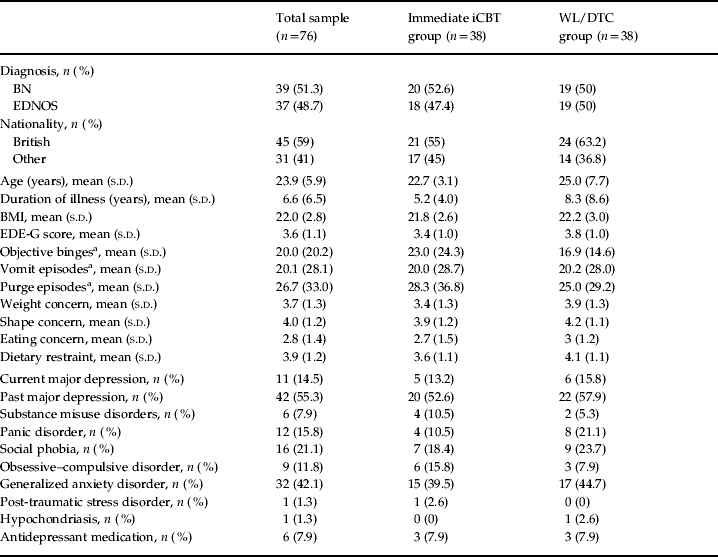
There were no imbalances between the two groups at baseline on any of the sociodemographic or clinical characteristics (see Table 1). Only one participant was male. Just over half of the sample met full DSM-IV criteria for BN, the remainder had EDNOS. Five of the EDNOS participants reported only purging behaviours and no objective binge-eating episodes at baseline. Half of the sample had not been diagnosed with an ED prior to entering the study. Seventy-two per cent had not previously received any form of psychological treatment. Co-morbidity was high, most commonly with generalized anxiety disorder.
Baseline demographics and clinical characteristics of the sample

iCBT, Internet-based cognitive-behavioural therapy; WL/DTC, waiting list/delayed treatment control; BN, bulimia nervosa; EDNOS, eating disorder not otherwise specified; BMI, body mass index; EDE-G, Eating Disorder Examination Global; s.d., standard deviation.
a Number of binges, vomit and purge episodes in the previous month.
Treatment outcomes
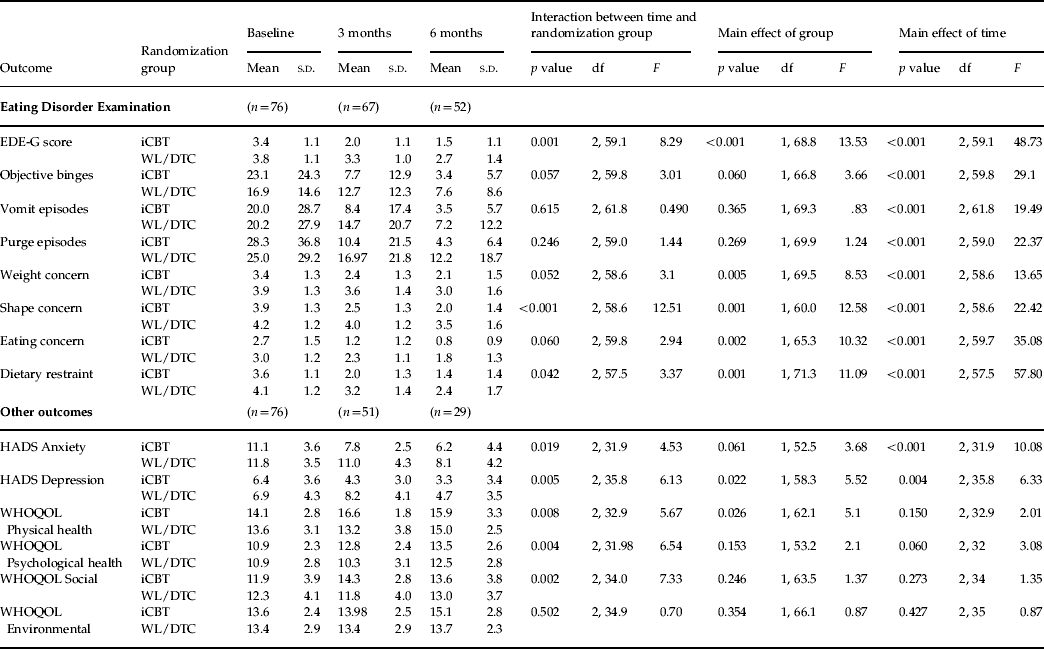
Table 2 shows the results of the linear mixed model analysis for different EDE variables and other outcomes. There were significant interactions between randomization group and time for the EDE-G score and the EDE subscales of weight and shape concern and dietary restraint and a similar trend for bingeing and the EDE subscale of eating concern. This indicates that the group differences differed significantly between the different time points. Likewise, there were significant overall group×time interactions for HADS depression and anxiety and for three out of four subscales of the WHOQOL-BREF. (A completer analysis, of those who had completed four or more computer sessions, yielded similar results. Details can be obtained from the authors.)
Means, standard deviations and results of the linear mixed effects analysis
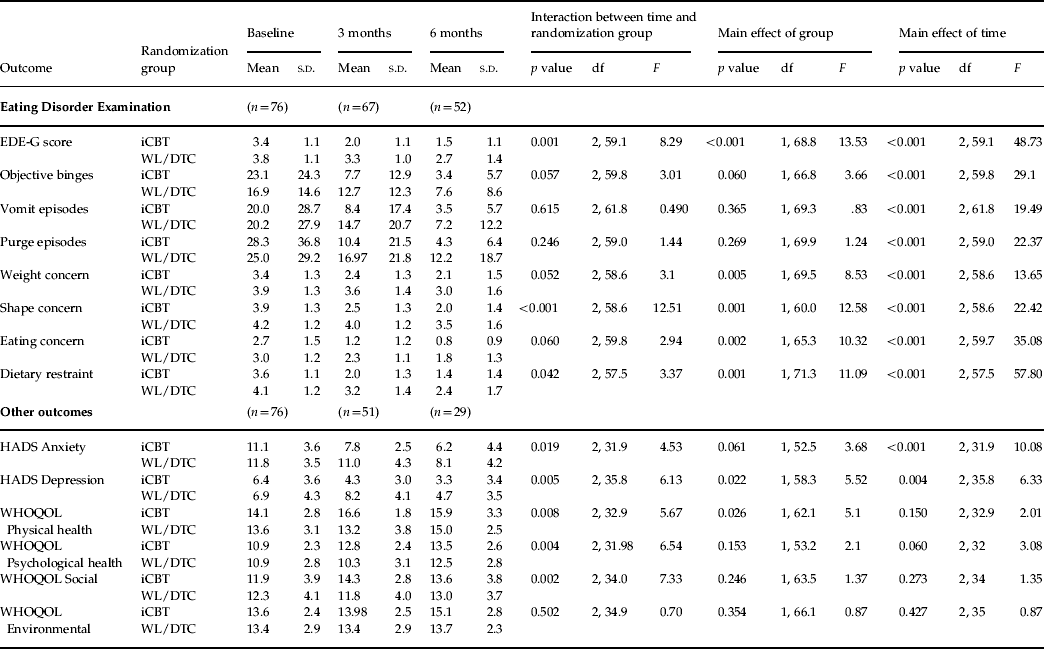
EDE-G, Eating Disorder Examination Global; iCBT, internet-based cognitive-behavioural therapy; WL/DTC, waiting list/delayed treatment control; HADS, Hospital Anxiety and Depression Scale; WHOQOL, World Health Organization Quality of Life scale; df, degrees of freedom; s.d., standard deviation.
Main hypothesis outcomes
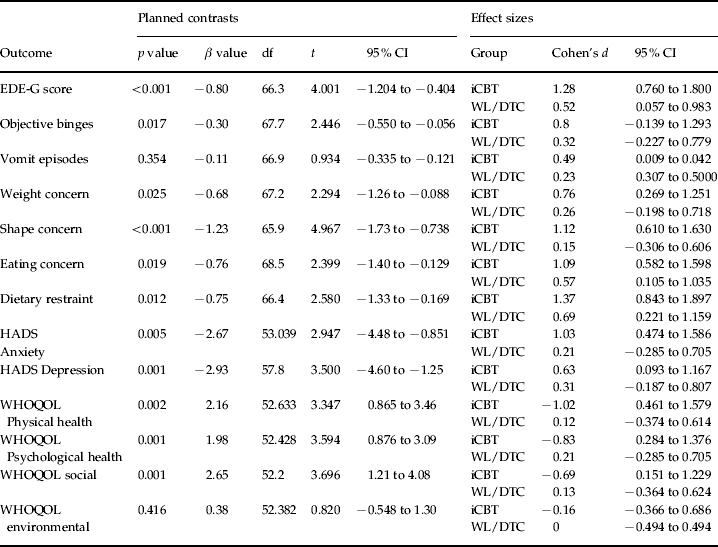
Table 3 shows the results of the planned contrast analysis and Cohen's (Cohen, Reference Cohen1988) effect sizes for the change in all the outcomes from baseline to 3 months for each group. Planned contrast analysis showed that differences between the iCBT and the WL/DTC groups increased significantly from baseline to 3 months on two of the three primary outcome variables (i.e. the EDE-G score and binge eating) and on the secondary outcome variables of EDE subscale scores, HADS anxiety and depression and three out of four WHOQOL-BREF subscales. On all of these variables the iCBT group showed a greater improvement than the WL/DTC group at 3 months, that is after the treatment period in the iCBT group and the waiting period in the WL/DTC group. All significant contrasts remained significant after Simes' improved Bonferroni correction for multiple testing.
Results of planned contrasts analysis and effect sizes (Cohen's d) of the change scores from baseline to 3 months. The planned contrasts assess the changes in difference between the two groups from baseline to 3 months
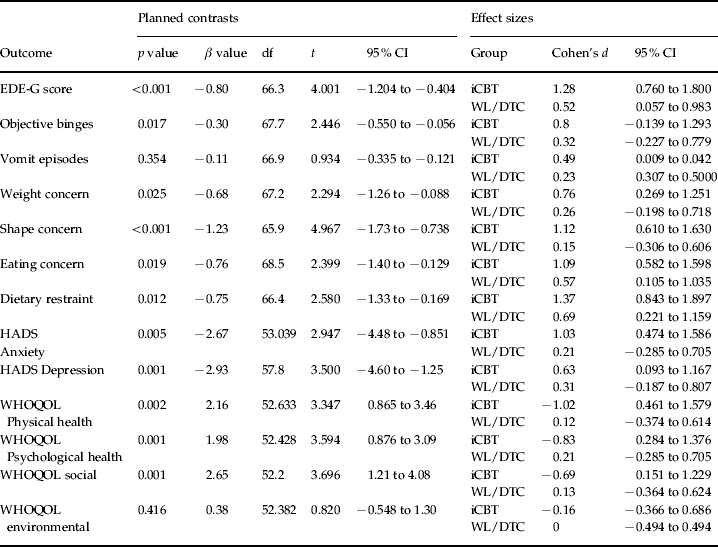
EDE-G, Eating Disorder Examination Global; iCBT, internet-based cognitive-behavioural therapy; WL/DTC, waiting list/delayed treatment control; HADS, Hospital Anxiety and Depression Scale; WHOQOL, World Health Organization Quality of Life scale; df, degrees of freedom; CI, confidence interval.
Pairwise comparisons are reported for the primary outcome variables only. On the EDE-G score, there were significant improvements in both groups at 3 months (iCBT p<0.001; WL/DTC p<0.001). On episodes of binge eating, pairwise comparisons showed that there was a significant improvement in both groups at 3 months (iCBT p<0.001; WL/DTC p=0.011). On episodes of vomiting, pairwise comparisons showed that there was a significant improvement in the number of vomit episodes in both groups at 3 months (iCBT p<0.001; WL/DTC p=0.010).
Subsidiary hypothesis outcomes
Pairwise comparisons showed that on the EDE-G scores, between 3 and 6 months there was a significant improvement for the WL/DTC group (p=0.003), who by then had had iCBT, but not for the immediate iCBT group (p=0.161), who by then were in follow-up. However, the iCBT group showed a significantly larger improvement at 6 months than the WL/DTC group (p=0.006).
On episodes of binge eating, pairwise comparisons showed that there was significant improvement between 3 and 6 months for both groups (immediate iCBT p=0.035; WL/DTC p=0.007). At 6 months there was still some evidence of a larger improvement in the immediate iCBT group than in the WL/DTC group (p=0.072). On vomiting episodes, pairwise comparisons showed that there was a significant improvement between 3 and 6 months in the WL/DTC group (p=0.007) and the iCBT group had a similar trend (p=0.065). There were no significant differences at 6 months between the two groups (p=0.419).
Abstinence rates, change in diagnoses and clinically significant change
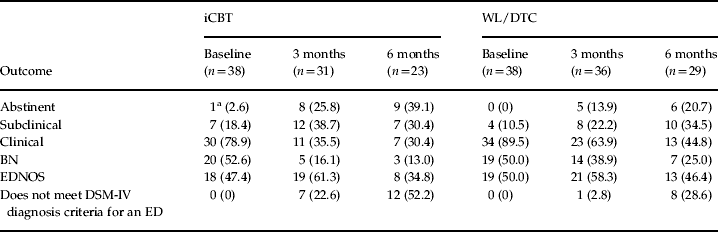
Table 4 shows the proportions of participants in each group who are abstinent, subclinical or clinical from bingeing, vomiting and laxative use combined at the different time points and also the proportions in the diagnostic categories of BN, EDNOS or no diagnosis for an ED using DSM-IV criteria. For these analyses, clinical and subclinical categories were grouped into one and also BN and EDNOS. Pairwise comparisons using a McNemar test revealed a significant improvement on abstinence rates in the iCBT group at 3 months (p=0.039) and this was maintained at 6 months. There was a similar trend in the DCT group at 3 months (p=0.063) that was maintained at 6 months. In terms of diagnosis, iCBT had a significant improvement at 3 months (p=0.016) and the change was maintained at 6 months. WL/DCT did not have a significant improvement at 3 months (p=1.000) but the improvement became significant at 6 months, after treatment (p=0.016). All the analyses were not significant after correction for multiple testing.
Abstinence rates and eating disorder diagnoses over the course of the study
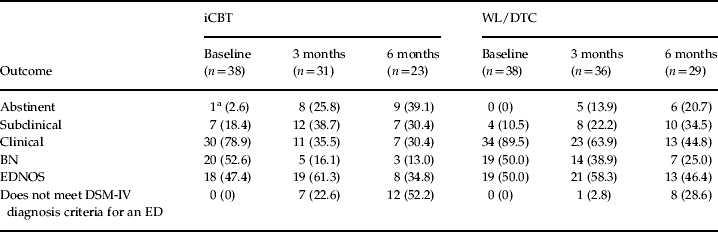
iCBT, Internet-based cognitive-behavioural therapy; WL/DTC, waiting list/delayed treatment control; BN, bulimia nervosa; EDNOS, eating disorder not otherwise specified.
Values given as n (%).
Definitions for categories are as follows: Clinical: episodes of bingeing and vomiting or laxative use occurred, on average, twice a week in the past month. Subclinical: episodes of bingeing, vomiting and/or laxative use occurred, on average, less than twice a week. Abstinent: No objective binges, episodes of vomiting and laxative use in the past month.
a This patient used other compensatory methods (such as extreme food restriction, fasting and overexercise).
Treatment uptake, adherence and use of e-mail support
In the immediate iCBT group, 78.9% started treatment compared to 65.8% in the WL/DTC group, a non-significant difference. In participants who completed at least one session, the mean number of sessions completed in both groups was very similar [iCBT: 5.5 (s.d.=2.5) and 5.3 (s.d.=2.5)]. The mean time spent by the therapists on providing e-mail support, per participant, was 45 (s.d.=33.2) min. This includes time checking online symptom scores and maintaining a record of contact. Adverse events were assessed directly through participants' e-mail responses and through a feedback questionnaire at the end of treatment. No significant adverse events were reported.
Discussion
The main hypothesis was confirmed: supported iCBT produced significantly greater reductions compared to 3 months waiting list in two out of three primary outcomes (EDE-G score and binge eating episodes), in all other ED variables, affective symptoms and quality of life. These gains were maintained or continued to improve during the follow-up period.
At 3 months, the WL/DTC group showed some changes on the ED outcomes. This contrasts with previous studies, which found no change in BN patients waiting for treatment (Treasure et al. Reference Treasure, Schmidt, Troop, Tiller, Todd, Keilen and Dodge1994). The process of diagnosis or confirmation of an ED by entering the study may have motivated some participants to change their eating-related behaviours while waiting for iCBT. However, their lack of improvement or deterioration on the affective and quality of life outcomes at 3 months suggested that these initial changes in ED symptoms were unlikely to be sustainable. This contrasts with the changes in the group that received iCBT immediately, where improvements in ED symptoms took place simultaneously with improvements in affective symptoms and quality of life.
The subsidiary hypotheses were also broadly confirmed. Uptake of iCBT was (non-significantly) poorer in the WL/DTC group. At 6 months, significant differences between the group that received immediate iCBT and the WL/DTC group persisted on two out of three primary outcomes, with poorer outcomes for delayed iCBT at this point. The WL/DTC group mimicked the usual clinical process of assessment followed by a waiting list before treatment. The poorer outcomes in this group highlight the benefit of iCBT in providing immediate access to effective treatment.
The abstinence rates from bulimic behaviours of those who completed the assessments were 25.8% at the end of iCBT and 39.1% at follow-up. Over half of the 6-month assessment completers in the iCBT group (52.2%) no longer met diagnostic criteria for an ED. However, it should be noted that the absolute numbers were small.
These figures compare well with those found in studies of manual-based guided CBT self-help (20% to 40% at end of treatment and follow-up respectively) and most studies of face-to-face CBT of bulimic-type ED (30% to 50%) (NICE, 2004; Perkins et al. Reference Perkins, Murphy, Schmidt and Williams2006; Shapiro et al. Reference Shapiro, Berkman, Brownley, Sedway, Lohr and Bulik2007 a; Wilson et al. Reference Wilson, Grilo and Vitousek2007; Sánchez-Ortiz & Schmidt, Reference Sánchez-Ortiz, Schmidt, Grillo and Mitchell2010), although a recent large study of extended CBT for all ED individuals who were not markedly underweight had even better outcomes (Fairburn et al. Reference Fairburn, Cooper, Doll, O'Connor, Bohn, Hawker, Wales and Palmer2009).
Abstinence rates and other outcomes in the present study were much better than in an earlier RCT by our group testing a CD-ROM based version of Overcoming Bulimia without therapist guidance in BN and EDNOS patients referred to a specialist ED service (Schmidt et al. Reference Schmidt, Andiappan, Grover, Robinson, Perkins, Dugmore, Treasure, Landau, Eisler and Williams2008). The reasons for this are likely to include a more optimal delivery of the intervention in the present study, although differences in study populations cannot be ruled out. A recent non-randomized study of supported iCBT for BN found that 22.6% of participants were abstinent from bingeing and vomiting at post-treatment assessment (Fernandez-Aranda et al. Reference Fernandez-Aranda, Nunez, Martinez, Krug, Cappozzo, Carrard, Rouget, Jiménez-Murcia, Granero, Penelo, Santamaría and Lam2008). These rates are broadly comparable to those found in our study, although our abstinence criterion was more stringent.
Qualitative feedback obtained from participants through face-to-face interviews indicated that they liked iCBT because of its flexibility (Sánchez-Ortiz et al. Reference Sánchez-Ortiz, Munro and Schmidt2007). Participants completed a mean of just over five online sessions. This compares well with adherence in other studies of self-help treatments in BN (Schmidt et al. Reference Schmidt, Andiappan, Grover, Robinson, Perkins, Dugmore, Treasure, Landau, Eisler and Williams2008). Much of the information was also in the accompanying workbooks and some participants used these instead of some online sessions. Furthermore, the ongoing improvement following iCBT suggests that participants continued to work on their difficulties even if they no longer used the online sessions.
This is the first RCT of computer-based CBT treatment for bulimic disorders with guidance by a clinician. The idea that clinician guidance improves the outcomes of iCBT is supported by studies of manual-based self-care in BN (Perkins et al. Reference Perkins, Murphy, Schmidt and Williams2006) and depression (Gellatly et al. Reference Gellatly, Bower, Hennessy, Richards, Gilbody and Lovell2007). Like people with depression, those with BN often suffer from poor motivation and therapist guidance may help to reduce this. Of note, clinician guidance in the present study was provided by specialists with expertise in both ED and CBT.
Clinician guidance was provided by e-mail, amounting to less than one hour on average of clinician time per participant. The study fits with existing evidence that computerized CBT interventions can be efficacious with minimal support (Marks et al. Reference Marks, Kenwright, McDonough, Whittaker and Mataix-Cols2004; Carlbring et al. Reference Carlbring, Gunnarsdottir, Hedensjo, Andersson, Ekselius and Furmark2007; Proudfoot et al. Reference Proudfoot, Ryden, Everitt, Shapiro, Goldberg, Mann, Tylee, Marks and Gray2004).
A report from the UK ED charity beat (beating eating disorders) found that only 15% of patients felt their general practitioner (GP) understood their ED, or knew how to help them (beat, 2009). GPs themselves often have a sense of ‘not doing a good job’ for their eating disordered patients because of lack of training and lack of suitable interventions available to them (Currin, Reference Currin2006). Thus, alternative routes of delivering care for EDs, such as BN and related disorders, should be considered. Offering iCBT through reputable self-help organizations such as beat would allow people with bulimia and related disorders to access effective treatment and bypass primary care. However, primary care health professionals, including those working in student health services, should be empowered to deliver an efficacious low-cost treatment at the first point of access, avoiding the need to refer to specialist services, as has been suggested for other common mental disorders (Centre for Economic Performance, 2006). Our findings suggest that immediate access improves outcomes, probably harnessing the initial motivation to change. Moreover, the study suggests that students and possibly other high-risk groups for EDs (e.g. athletes), many of whom are not currently presenting through traditional health service channels, can be engaged in efficacious treatment over the internet. This raises the potential for outreach work to deliver effective secondary prevention.
The study has significant strengths and some limitations. This is the first RCT of iCBT for EDs. Participants were able to access treatment rapidly, largely anonymously, and use it with a degree of flexibility that other interventions do not offer. A novel means of recruitment was used that attracted a population, the majority of whom had not received psychological help for their ED. The study used reliable and valid interview measures for assessment and also used blind assessments. The number of participants retained in treatment was acceptable. A larger sample size would have been desirable; however, the study was adequately powered to address the primary outcomes. Maintaining blinding would have been ideal but proved impossible. The inclusion of an internet-based attention placebo control condition would have been desirable but was beyond the budget of this study. The results may not generalize to all bulimic-type ED patients as students may be more willing and able to use an internet-based intervention. However, the results may be generalizable to the many people with BN or EDNOS who do not seek treatment through conventional routes (Fairburn et al. Reference Fairburn, Welch, Norman and O'Connor1996).
Further research should address the efficacy and effectiveness of iCBT in different populations (e.g. including those with BED) and different settings of care (e.g. primary or specialist), in comparison to face-to-face CBT for bulimic disorders and with a longer follow-up. iCBT has the potential to provide an accessible and cost-effective intervention in non-specialist settings as part of a stepped care model for BN and EDNOS.
Acknowledgements
This project was supported by a grant from the South London and Maudsley NHS Foundation Trust's Research and Development Fund. V. Sánchez-Ortiz was supported by a Mexican Government Ph.D. scholarship from CONACyT (Consejo Nacional de Ciencia y Tecnología) and by a grant from the National Institute for Health Research Biomedical Research Centre (Institute of Psychiatry, King's College London). We thank the students who took part in the study and the counselling services in participating HEIs. We also thank Dr M. Yoshioka for help with data collection.
Declaration of Interest
C. Williams is one of the developers of the treatment package Overcoming Bulimia Online used in this trial and receives royalties for this (Trial Registration: ISRCTN07388346).