





Undernutrition remains one of the most significant threats to child survival, growth and development worldwide, contributing to approximately 45 % of deaths among children under 5 years of age and affecting millions through conditions such as stunting and wasting(Reference Black, Victora and Walker1–Reference Victora, Adair and Fall3). According to the most recent Joint Child Malnutrition Estimates produced by UNICEF, the WHO and the World Bank, approximately 150·2 million children under 5 years of age were stunted and 42·8 million were wasted globally in 2024, including 12·2 million children experiencing severe wasting(2). Wasting is associated with a markedly increased risk of mortality and remains a major contributor to preventable child deaths among children under 5 years of age(Reference Black, Victora and Walker1,Reference Olofin, McDonald and Ezzati4,5) . More broadly, maternal and child undernutrition continues to be responsible for a substantial proportion of global child morbidity and mortality and is associated with impaired physical growth, cognitive development and long-term health outcomes(Reference Black, Victora and Walker1). The burden of undernutrition is highly concentrated in fragile and crisis-affected contexts, where conflict, displacement, economic instability and climate-related shocks disrupt food systems, health services and livelihoods and significantly increase the risk of child malnutrition(6,7) .
In humanitarian and crisis-affected contexts, the delivery of nutrition and health services is frequently constrained by damaged infrastructure, shortages of trained health personnel, insecurity and population displacement(Reference Spiegel, Karadag and Blanchet8–Reference Onvlee, Kok and Buchan10). These conditions weaken health system infrastructure, reduce the availability of trained health personnel and disrupt service delivery, thereby limiting the capacity of facility-based health systems to provide preventive and therapeutic interventions(Reference Bogale, Scambler and Mohd Khairuddin9,Reference Truppa, Yaacoub and Valente11) . As a result, many nutrition programmes rely on community-based platforms to extend the reach of services beyond health facilities and into affected communities(12). Community health workers (CHW), volunteers, peer counsellors and community groups are mobilised to provide services such as infant and young child feeding (IYCF) counselling, nutrition education, screening for acute malnutrition and referral to treatment services(Reference Bridge and Lin13,Reference Werner, Kak and Herbst14) .
In this review, community-based approaches refer to interventions delivered partially or fully outside formal health facilities through community-level actors, structures or platforms, including CHW, community volunteers (CV), peer counsellors, care groups, women’s groups and decentralised outreach services. Understanding the effectiveness of these approaches across intervention types and outcome domains is important for informing policy, programme design and future investments in community-based nutrition systems. Although preventive and treatment interventions are often evaluated separately in the literature, humanitarian nutrition programmes commonly combine prevention, early identification, referral, treatment, counselling and follow-up through integrated community delivery platforms(5). Evidence remains fragmented limiting understanding of how integrated community platforms contribute to improved nutrition outcomes.
None of the existing systematic reviews identified in our search matches our review question directly. Existing reviews either focus on specific populations, intervention types or settings or assess broader nutrition interventions without specifically examining community-based approaches across humanitarian contexts. Few reviews synthesise evidence across both preventive and treatment interventions delivered through community-based platforms in fragile and emergency settings. In this review, we capture the base of evidence about community-based nutrition interventions in emergencies for use by humanitarian practitioners. We cover all emergency settings in low- and middle-income countries (LMIC) – both disaster and fragile and conflict affected (FCA) – and we cover all populations, community-based approaches and nutrition issues. We catalogue the evidence into an evidence map that reveals which combinations of interventions and outcomes have a cluster of evidence v. which have evidence gaps, and we synthesise the evidence where there are clusters.
Methods
Protocol and registration
The protocol for this review was registered (https://osf.io/ch9yv/files/qacvt) on Open Science Framework using the PRISMA-P template(Reference Liberati, Altman and Tetzlaff15) in August 2022 and updated in December 2024 and March 2025. This systematic review was conducted in multiple stages. A larger team of authors began this review in 2022. The FHI 360 Institutional Review Board reviewed the protocol and made a non-human-subjects determination on 8 August 2022. Although the document screening was complete and data extraction begun, the work stalled in 2023 due to competing work demands. The team resumed the work in late 2024, updating the protocol on OSF and conducting an updated search. However, in early 2025, FHI 360 let go three of the four original authors due to the closure of USAID and the termination of most USAID grants and contracts. One author continued the work on a voluntary basis together with the remaining FHI 360 author.
Data sources and search strategy
With the assistance of the FHI 360 reference librarian, we searched the following indexes: PubMed, Scopus, Global Health, Academic Search Premier, CINAHL Plus with Full Text, Education Full Text, ERIC and PsycINFO. We hand-searched twenty-six websites listed in Supplemental Table 1. Using Citation Chaser, we gathered the titles and abstracts for the references from the included studies.
Our search strategy required the title or abstract to include at least one term each from five categories to seek studies that: (i) occurred in emergency settings and (ii) evaluated or tested (iii) a programme or intervention (iv) focused on nutrition (v) using community-based approaches. The full 2024 search string is presented in Supplemental Table 2. We included documents published from 2010 through 2024 indexed as of 22 December 2024. We restricted the time frame to capture newer evidence. To account for prior research, we summarise the most relevant included systematic reviews below. We limited language to English and excluded dissertations.
When we updated the search in late 2024, we broadened the search strategy based on relevant articles we found later that were missed by the first search, and we ran the search for the entire 2010 to 2024 period.
Screening and selection
All search returns were downloaded first to Endnote, which removed duplicates from across indexes, and then imported to Covidence. Duplicates from the first search were removed by Covidence. Two independent reviewers screened each title and abstract for relevance. A third reviewer helped to resolve conflicts. For full text review, two independent reviewers reviewed each document and resolved conflicts through mutual agreement. We retained the screening results from the first search.
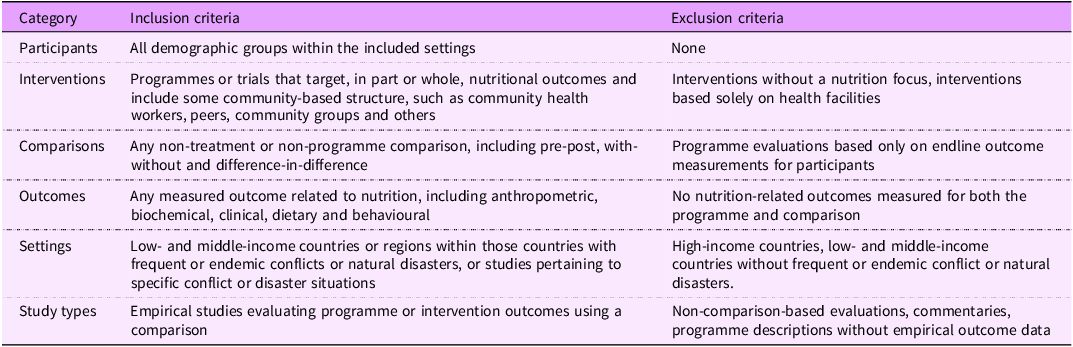
Table 1 presents the inclusion criteria using the participants, interventions, comparisons, outcomes, settings, study design (PICOS + S) framework.
Eligibility criteria based on participants, interventions, comparisons, outcomes, settings and study design (PICOS + S)

Table 1. Long description
A table with six rows and three columns detailing inclusion and exclusion criteria for various categories. The categories are Participants, Interventions, Comparisons, Outcomes, Settings, and Study types. Each category has specific inclusion and exclusion criteria listed. For Participants, all demographic groups within the included settings are included, with no exclusion criteria. Interventions include programmes targeting nutritional outcomes with community-based structures, excluding those without a nutrition focus or based solely on health facilities. Comparisons include any non-treatment or non-programme comparison, excluding evaluations based only on endline outcome measurements. Outcomes include any measured outcome related to nutrition, excluding those without nutrition-related outcomes for both programme and comparison. Settings include low- and middle-income countries with frequent or endemic conflicts or natural disasters, excluding high-income countries and those without such conflicts or disasters. Study types include empirical studies evaluating programme or intervention outcomes using a comparison, excluding non-comparison-based evaluations, commentaries, and programme descriptions without empirical outcome data.
Data extraction and analysis
We coded data from the included primary studies into Excel. Both authors reviewed the extracted data for all studies. One author (XX) created the categories for both interventions and outcomes and mapped the data to those categories. We analysed data in Excel using pivot tables and graphs and produced an evidence map. Given substantial heterogeneity in intervention designs, outcome definitions, implementation models and study methodologies, we synthesised findings narratively.
Critical appraisal
One author (XX) conducted critical appraisal of all included primary study documents using the Critical Appraisal Skills Program checklists for randomised controlled trials (RCT)(16) and for cohort studies(17) adapted to focus on the questions related to validity and methodology. Based on the answers to the checklist questions, each document was assigned a summary confidence rating of strong, moderate or weak. No documents were excluded based on critical appraisal.
Results
Selection
Figure 1 presents the Preferred Reporting Items for Systematic Reviews and Meta-Analyses (PRISMA) diagram reporting the search and screening results. The two index searches, the website searches and the bibliographies returned 4438 references, of which 747 were duplicates between the two index searches and removed by Covidence. After title and abstract screening, 159 documents were passed to full text review. Of those, fifty-three documents including thirty-nine primary study documents and fourteen systematic reviews were included for this review.
PRISMA flow diagram of literature search and study selection for community-based emergency nutrition interventions. Flow diagram illustrating the identification, screening, eligibility assessment and inclusion of studies in this systematic review according to PRISMA guidelines. Records were identified through electronic database searches, website searches and citation tracking. The figure summarises the number of records identified, duplicates removed, records screened, full-text articles assessed for eligibility and studies included in the final review. PRISMA, Preferred Reporting Items for Systematic Reviews and Meta-Analyses; LMIC, low- and middle-income countries.

The thirty-nine primary study documents report findings from thirty-three separate interventions, which we count and label as the studies in our analysis. In some cases, one study is reported across multiple documents. For example, one document reports the primary evaluation findings and the other cost–benefit analysis(Reference Alvarez Morán, Alé and Charle18,Reference Rogers, Martínez and Morán19) . Another example is when authors publish separate articles for different categories of nutrition outcomes(Reference Komakech, Emerson and Cole20,Reference Komakech, Emerson and Cole21) . For data extraction, we extracted outcomes from all documents for a study into a single record. However, we critically appraise each document separately.
In a few cases, we separate findings from a single document into separate studies. These are cases where the document reports findings for interventions implemented in multiple countries with separate findings reported for each country. For example, Tylleskär et al.(Reference Tylleskär, Jackson and Meda22) report the trial results for an intervention with antenatal and post-delivery breast-feeding counselling delivered by peers in both Burkina Faso and Uganda.
Table 2 presents all the included primary studies with descriptions of the interventions and information about settings, displacement and community types, studied intervention duration, outcomes measured and critical appraisal findings.
Characteristics of included studies

Table 2. Long description
A table comparing characteristics of included studies with various interventions and outcomes. The table has 38 rows and 8 columns. Column headers are Study, Intervention and comparison, Setting, Displacement and community type, Duration, Outcomes measured, Critical appraisal findings, and DOI. Row 1: Study, Did 9; Intervention and comparison, Community-based intervention for mental health; Setting, Rural; Displacement and community type, Refugees; Duration, 6 months; Outcomes measured, Mental health outcomes; Critical appraisal findings, Low risk of bias; DOI, 10.1000/example1. Row 2: Study, N 1; Intervention and comparison, Nutritional support for children; Setting, Urban; Displacement and community type, Internally displaced persons; Duration, 12 months; Outcomes measured, Nutritional status; Critical appraisal findings, Moderate risk of bias; DOI, 10.1000/example2. Row 3: Study, Bucket; Intervention and comparison, Water sanitation and hygiene promotion; Setting, Peri-urban; Displacement and community type, Refugees; Duration, 18 months; Outcomes measured, Health outcomes; Critical appraisal findings, High risk of bias; DOI, 10.1000/example3.
FCA, fragile and conflict affected; MDD, minimum dietary diversity; MMF, minimum meal frequency; MAD, minimum acceptable diet; CRCT, cluster randomised controlled trials; MUAC, mid-upper arm circumference; RCT, randomised controlled trials; SAM, severe acute malnutrition; WHZ, weight-for-height z-score; MUAC, mid-upper arm circumference; EBF, exclusive breast-feeding; CHW, community health worker; IYCF, infant and young child feeding; FCA, fragile and conflict affected; HDDS, household dietary diversity score; HFIAS, household food insecurity access scale; MDD, minimum dietary diversity; MMF, minimum meal frequency; MAD, minimum acceptable diet; iCCM, Integrated Community Case Management; BF, breast-feeding; EIBF, early initiation of breast-feeding; HAZ, height-for-age z-score; ISSSF, introduction of solid, semi-solid or soft foods; RUTF, ready-to-use therapeutic food; TISSSF, timely introduction of solid, semi-solid or soft foods; WAZ, weight-for-age z-score; WFA, weight-for-age.
Source: Authors’ data.
Study characteristics
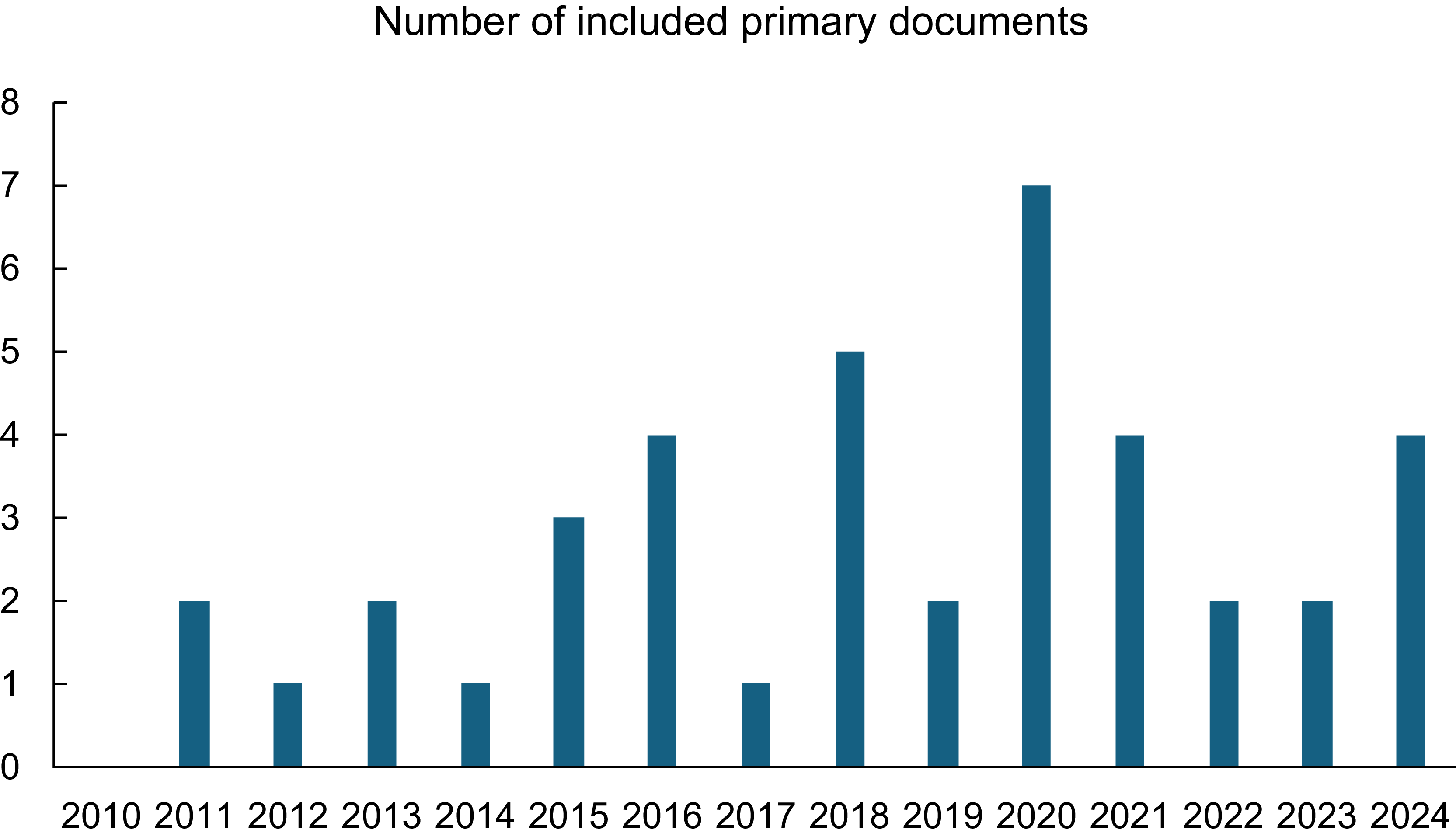
As seen in Figure 2, the publication of studies over the review period generally shows an increasing trend. The drop in the most recent years might be partially explained by the lag in indexing and partially explained by effect of the pandemic on ongoing and new evaluations.
Publication years of included primary study documents. Distribution of included primary study documents by publication year from 2010 to 2024. The figure illustrates temporal trends in publication of evidence related to community-based nutrition interventions in humanitarian and emergency settings in low- and middle-income countries. Source: Authors’ analysis.

The studies in this review were conducted across twenty countries, including thirteee in Africa, five in Asia and two in the Middle East. As shown in Table 3, seventeen of the thirty-three studies took place in emergency settings affected by both disaster and conflict. Seven studies took place in fragile-and-conflict-affected-only settings, and nine took place in disaster-only settings. The supplemental information provides the exact definitions we used for these categories. Only four studies took place in settlements (Somalia, Jordan, Uganda and Kenya).
Number of included studies by type of emergency setting

Table 3. Long description
A table categorizing studies by emergency settings and disaster types. The table has three columns: Country or within-country regional settings, Fragile and conflict affected (FCA), Non-FCA, and Total studies. It has three rows: Acute or chronic disasters, Non-disaster, and Total studies. Row 1: Acute or chronic disasters, Fragile and conflict affected (FCA) 17, Non-FCA 9, Total studies 26. Row 2: Non-disaster, Fragile and conflict affected (FCA) 7, Non-FCA 0, Total studies 7. Row 3: Total studies, Fragile and conflict affected (FCA) 24, Non-FCA 9, Total studies 33.
Source: Authors’ data.
Interventions by categories
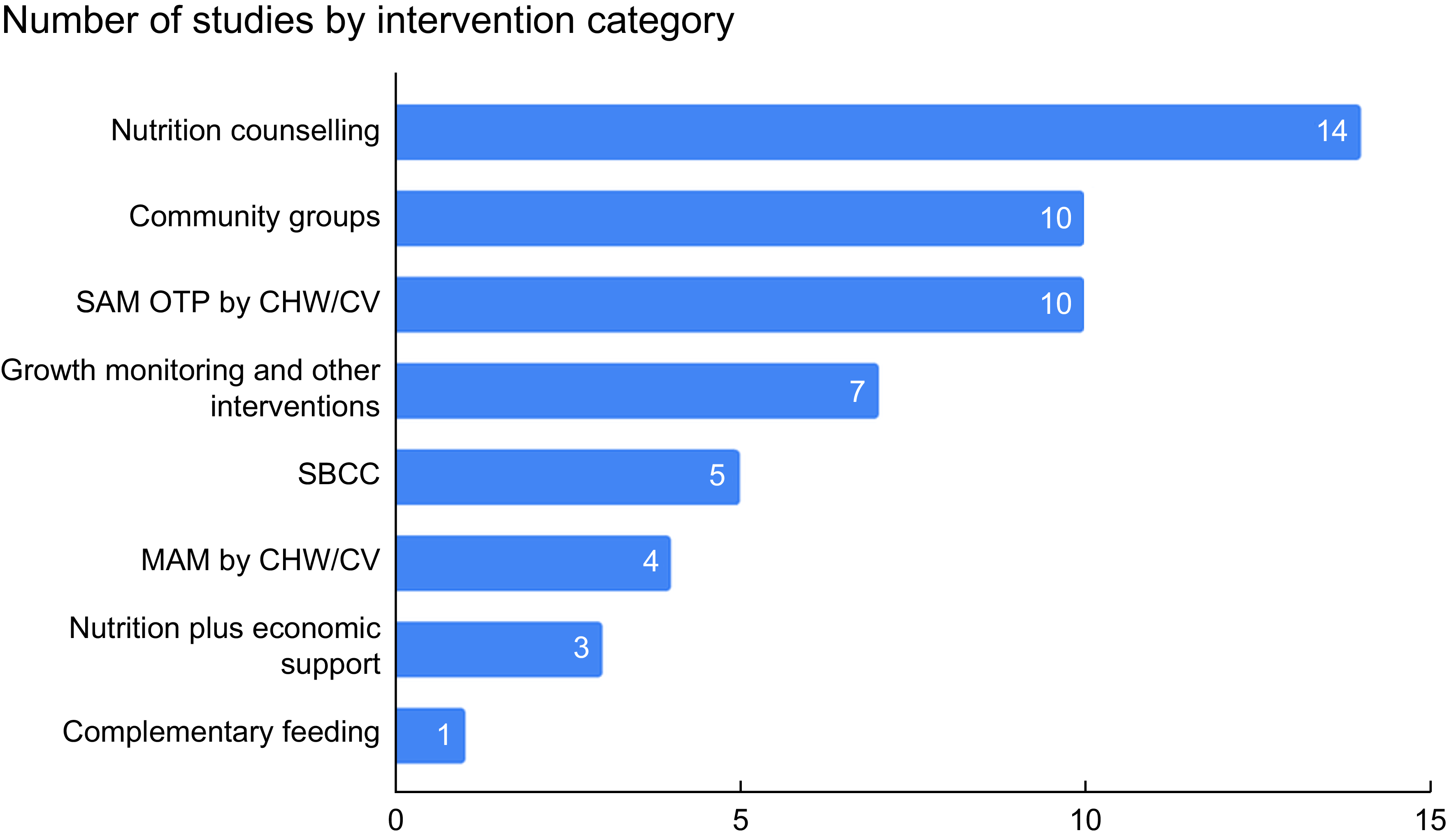
Figure 3 illustrates the prevalence of evidence across eight categories of community-based nutrition interventions. These categories include six preventative approaches – community group-based nutrition platforms, nutritional counselling and interpersonal support, social behaviour change communication (SBCC) and mass media, growth monitoring and screening and preventative health actions, complementary feeding support and nutrition plus economic or livelihood support – and two treatment approaches – severe acute malnutrition (SAM) outpatient treatment by CHW or CV and moderate acute malnutrition (MAM) treatment by CHW and CV. In the prevention categories, the most evidence is for the community groups (n 10) and nutritional counselling (n 14) interventions with some studies presenting evidence for both. Seven studies examine growth monitoring interventions. In the five studies covering SBCC approaches, SBCC approaches are combined with other intervention categories, primarily nutrition counselling.
Number of studies providing evidence for each nutrition intervention category. Distribution of included studies across eight categories of community-based nutrition interventions. Categories include community group-based nutrition platforms, nutritional counselling and interpersonal support, social and behaviour change communication (SBCC) and mass media, growth monitoring and screening and preventive health actions, complementary feeding support, nutrition plus economic or livelihood support, severe acute malnutrition (SAM) treatment delivered by community health workers (CHW) or community volunteers (CV) and moderate acute malnutrition (MAM) treatment delivered by CHW or CV. MAM, moderate acute malnutrition; OTP, outpatient therapeutic programme.

On the treatment side, there are ten studies providing evidence on SAM interventions and only four on MAM interventions, where three of those four cover both SAM and MAM.
Interventions by structures
Nineteen studies examine interventions that used pre-existing community-based health structures, and nineteen studies examine new community-based structures set-up as pilots or trials for the purpose of the study. Five of the interventions used a combination of structures. That means that a large part of the evidence base for community-based nutrition programmes in emergency settings relies on interventions that were pilots or trials rather than programmes at scale.
Outcomes by categories
Figure 4 presents the prevalence of evidence by outcome domain. The six outcome categories are nutritional status and anthropometric outcomes (e.g. weight, length, stunting), IYCF practices (e.g. exclusive breast-feeding (EBF)), treatment and clinical outcomes for wasting (e.g. weight-for-height z-score (WHZ) and mid-upper arm circumference (MUAC)), programme performance and coverage (e.g. cure ratio, defaulter ratio), dietary intake and food security and household outcomes (e.g. household dietary diversity score (HDDS), household food insecurity access scale (HFIAS)), and knowledge and behaviour and caregiver capacity (e.g. breast-feeding knowledge). IYCF practices are the most frequently assessed outcome (n 15), followed by nutritional status and anthropometric outcomes (n 12) and treatment and clinical outcomes for wasting (n 10). Programme performance and coverage outcomes are also moderately represented (n 8), while fewer studies assess knowledge, behavioural and caregiver capacity outcomes (n 6), and only a limited number examine dietary intake, food security and broader household-level outcomes (n 4). This distribution indicates a strong evaluation focus on proximal outcomes, particularly feeding practices and treatment effectiveness, while more distal and nutrition-sensitive outcomes remain comparatively underexplored.
Number of studies providing evidence for each outcome category. Distribution of included studies according to six nutrition outcome domains: nutritional status and anthropometric outcomes; infant and young child feeding (IYCF) practices; treatment and clinical outcomes for wasting; programme performance and coverage outcomes; dietary intake, food security and household outcomes; and knowledge, behaviour and caregiver capacity outcomes. Examples of outcomes within these domains include exclusive breast-feeding (EBF), minimum dietary diversity (MDD), minimum meal frequency (MMF), minimum acceptable diet (MAD), weight-for-height z-score (WHZ), mid-upper arm circumference (MUAC), household dietary diversity score (HDDS) and household food insecurity access scale (HFIAS).

Evidence map
The prevalence of evidence across interventions and outcomes is summarised by the evidence map in Figure 5. The map, like the figures above, counts a study in every category that applies to it. The map shows two concentrations of existing evidence for community-based nutrition interventions in emergency settings. One concentration is evidence on the effects of community group interventions and nutrition counselling interventions on nutritional status and anthropometric outcomes plus IYCF practices, as seen by the darker cells in the upper left corner of the map. The second concentration of evidence measures the effects of SAM and MAM treatment by CHW or CV on clinical outcomes and programme performance and coverage, as seen by the darker cells in near the bottom middle of the map. The most evidence for any one intervention–outcome pair is nine studies. There are important gaps in evidence for the effects of community group, nutrition counselling and SBCC interventions on dietary, food security and household outcomes and on knowledge, behaviour and caregiver capacity outcomes. In this upper right corner of the evidence map, the most studies in any cell are four. As noted above, there is limited evidence on complementary feeding and nutrition plus economic support. It is also notable that there are only two studies the measure the effect of SAM and MAM treatment on nutritional status and no studies that measure the effect of SAM and MAM treatment on any other outcomes, such as knowledge, behaviours and capacity, that are not treatment or coverage/performance outcomes.
Evidence map for community-based nutrition interventions and nutrition outcome domains in humanitarian settings. Evidence map illustrating the distribution and concentration of evidence across community-based nutrition intervention categories and nutrition outcome domains. Darker cells indicate greater concentrations of evidence and represent a larger number of studies evaluating a specific intervention–outcome combination. Cell shading intensity corresponds to the number of studies contributing evidence to each intervention–outcome category. CHW, community health worker; CV, community volunteer; SBCC, social and behaviour change communication; SAM, severe acute malnutrition; MAM, moderate acute malnutrition; IYCF, infant and young child feeding.

Figure 5. Long description
The table titled ‘Evidence map for community-based nutrition interventions across outcome domains’ presents data on the number of studies evaluating different community-based nutrition intervention categories and their outcomes. The table has 8 rows and 7 columns. The rows represent different community-based nutrition intervention categories: Nutrition counselling, Community groups, SAM OTP by CHW/CV, Growth monitoring and other interventions, SBCC, MAM by CHW/CV, Nutrition plus economic support, and Complementary feeding. The columns represent different nutrition outcome domains: IYCF practices, Nutritional status and anthropometric outcomes, Treatment and clinical outcomes for wasting, Programme performance and coverage outcomes, Dietary intake, food security and household outcomes, and Knowledge, behaviour and caregiver capacity outcomes. Each cell contains a number indicating the concentration of evidence, with darker shades representing a larger number of studies. Notable values include 9 studies on Community groups for Nutritional status and anthropometric outcomes, and 9 studies on Nutrition plus economic support for Treatment and clinical outcomes for wasting.
The evidence map demonstrates an imbalance in outcome assessment across intervention types. Preventive interventions are more commonly evaluated using behavioural and IYCF-related outcomes, whereas treatment interventions are primarily assessed using clinical recovery and programme performance indicators. Figure 6 shows the study numbers, as labelled in Table 2, for each cell of the evidence map.
Study identification numbers corresponding to intervention–outcome combinations shown in the evidence map. Study identification numbers correspond to the included studies listed in Table 2 and indicate the evidence contributing to each intervention–outcome category combination presented in Figure 5. This figure facilitates identification of studies contributing to evidence clusters and evidence gaps. CHW, community health worker; CV, community volunteer.

Critical appraisal
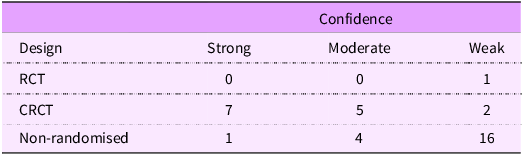
Table 4 shows the prevalence of study documents by evaluation design category and confidence in findings. Among the included studies, there is only one RCT, fourteen cluster RCT (CRCT) and twenty-one non-randomised studies. Note the total is not 33, because some studies are reported across multiple documents, sometimes using different analytical methods.
Prevalence of study documents by evaluation design and confidence in findings

Table 4. Long description
A table categorizing study documents by design and confidence levels. The table has four rows and five columns. The columns are labeled Design, Strong, Moderate, and Weak. The rows are labeled RCT, CRCT, and Non-randomised. Row 1: RCT, Strong 0, Moderate 0, Weak 1. Row 2: CRCT, Strong 7, Moderate 5, Weak 2. Row 3: Non-randomised, Strong 1, Moderate 4, Weak 16.
RCT, randomised controlled trial; CRCT, cluster randomised controlled trial.
Source: Authors’ data.
Synthesis findings
Table 5 presents the primary findings, as highlighted by study authors, for each of the included primary studies. The table repeats the description of the intervention from Table 2 and describes the comparison used for each evaluation along with the quoted findings. Based on the narrative main findings emphasised by the authors in Table 5, we find that all eight of the analyses with strong confidence estimate statistically significant effects as hypothesised, where sometimes the hypothesised effect is non-inferiority. Eight of the nine analyses with moderate confidence in findings find statistically significant effects as hypothesised. Thirteen of the nineteen analyses with weak confidence in findings find statistically significant effects as hypothesised. For this analysis, we focused on final outcomes if the main findings include both intermediate and final outcomes. It is encouraging that the analyses with greater confidence in findings generally find community-based nutrition interventions to be effective.
Primary study findings

Table 5. Long description
Panel A: Table listing primary studies with columns for intervention description, comparison, and quoted findings. Panel B: Summary of findings confidence levels, showing strong, moderate, and weak confidence estimates. Panel C: Results indicating statistically significant effects as hypothesised for different confidence levels.
MDD, minimum dietary diversity; MMF, minimum meal frequency; MAD, minimum acceptable diet; MUAC, mid-upper arm circumference; CHW, community health worker; EBF, exclusive breast-feeding; SAM, severe acute malnutrition; IYCF, infant and young child feeding; iCCM, Integrated Community Case Management; HDDS, household dietary diversity score; HFIAS, household food insecurity access scale; CMAM, community-based management of severe acute malnutrition; WHZ, weight-for-height z-score; BF, breast-feeding; DRC, Democratic Republic of the Congo; EIBF, early initiation of breast-feeding; ISSSF, introduction of solid, semi-solid or soft foods; HAZ, height-for-age z-score; OTP, outpatient therapeutic programme; RUTF, ready-to-use therapeutic food; TISSSF, timely introduction of solid, semi-solid or soft foods; WAZ, weight-for-age z-score; WFA, weight-for-age.
Source: Authors’ data.
For the synthesis here, we concentrate on the two evidence clusters shown in the evidence map: community group and nutrition counselling intervention effects on nutritional status and IYCF practices and CHW and CV treatment of acute malnutrition effects on clinical outcomes and performance and coverage.
Cluster 1: Community group and nutrition counselling intervention effects on nutritional status and IYCF practices
The community group and nutrition counselling interventions studied generally produced improvements in IYCF practices. For example, the PROMISE-EBF trial evaluated antenatal and postnatal home-based breast-feeding counselling delivered by trained peer counsellors, demonstrating substantial increases in EBF prevalence(Reference Tylleskär, Jackson and Meda22). Similarly, a large-scale multi-component intervention in Ethiopia combining interpersonal communication, community mobilisation, agricultural linkages and mass media showed significant improvements in complementary feeding practices and dietary diversity(Reference Kim, Nguyen and Yohannes23). A participatory community-based intervention using group-based nutrition education and positive deviance approaches also demonstrated measurable improvements in child growth, including reductions in stunting and underweight(Reference Kang, Kim and Sinamo24). A care group model providing peer-led nutrition education and social support to caregivers similarly demonstrated improvements in complementary feeding practices and in some child growth outcomes(Reference Komakech, Emerson and Cole20,Reference Komakech, Emerson and Cole21) .
However, despite strong and consistent improvements in behavioural outcomes, effects on anthropometric outcomes remain mixed and context-dependent. While some interventions integrating intensive counselling and community engagement demonstrate significant gains in growth indicators(Reference Kim, Nguyen and Yohannes23,Reference Kang, Kim and Sinamo24) , others report limited or no measurable impact on nutritional status. For example, a large-scale integrated behaviour change intervention showed improvements in IYCF practices without significant changes in stunting or other anthropometric indicators(Reference Kim, Rawat and Mwangi25). Similarly, a study of an integrated counselling and cash transfers intervention found no impact on child growth or household food security despite improved knowledge and practices(Reference Ali, Flacking and Sulaiman26), and an integrated care group approach produced improvements in IYCF practices alongside deterioration or no improvement in nutritional status in food-insecure settings(Reference Ndungu and Tanaka27). These findings reinforce that interventions focused on knowledge and practices alone are insufficient to achieve consistent improvements in nutritional status where structural constraints persist.
Cluster 2: CHW and CV treatment of acute malnutrition effects on clinical outcomes and performance and coverage
Treatment interventions delivered by CHW/CV represent the most concentrated body of evidence, particularly for clinical outcomes and programme performance. Studies consistently demonstrate that community-based management of acute malnutrition is effective when delivered by trained CHW using simplified and decentralised models. For example, a trial in Mali evaluating outpatient treatment of uncomplicated acute malnutrition delivered by CHW using simplified admission and treatment protocols found improved recovery rates and increased coverage compared to standard facility-based care(Reference López-Ejeda, Charle-Cuéllar and Samake28). Similarly, a trial in Kenya assessed task-shifting of treatment to community health volunteers and showed higher recovery rates, reduced defaulting and improved cost-effectiveness(Reference Donfouet, Daniel and Wilunda29). A integrated protocol combining MUAC-based admission criteria and simplified treatment approaches demonstrated improvements in both recovery and coverage(Reference Maust, Koroma and Abla30), and another study of outpatient treatment of SAM by CHW or health facilities measured non-inferior outcomes and improved continuity of care compared to a solely facility-based model(Reference Alvarez Morán, Alé and Charle18).
However, not all studies report uniformly positive effects. A trial comparing CHW-delivered treatment to standard facility-based care found no significant differences in key programme performance indicators, suggesting non-inferiority rather than superiority(Reference Hussain, Habib and Ariff31). Another study reports variability in recovery rates or limited statistical differences between the intervention and control groups despite improvements in coverage(Reference Charle-Cuéllar, Lopez-Ejeda and Toukou Souleymane32). These findings indicate that while the overall evidence for CHW and CV treatment interventions is positive, outcomes may vary depending on implementation quality, context and health system capacity.
Cost-effectiveness
Three of the included studies in this review produced separate cost-effectiveness analyses, all of which measured the costs of community-based interventions for treating malnutrition. For Bangladesh, Puett et al. (2013)(Reference Puett, Sadler and Alderman33) show that integrating community-based management of severe acute malnutrition (CMAM) into an existing CHW-delivered community health and nutrition programme was dramatically more cost-effective than standard inpatient treatment, achieving a cost of only US$26 per disability-adjusted life year averted compared with US$1344 for inpatient care, while also reducing household treatment costs by approximately sixfold. For Mali, Rogers et al. (2018)(Reference Rogers, Martínez and Morán19) demonstrate that integrating the treatment of uncomplicated severe acute malnutrition into the Integrated Community Case Management (iCCM) platform through CHW reduced both caregiver time and out-of-pocket expenditures and achieved lower costs per child treated and recovered compared with outpatient facility-based care, particularly when adequate programme coverage was achieved. More recently, Ilboudo et al. (2024)(Reference Ilboudo, Donfouet and Wilunda34) find that integrating the treatment of MAM into routine iCCM services through CV in Kenya outperformed routine facility-based treatment across all major cost-effectiveness indicators, including costs per disability-adjusted life year averted, per child treated and per child recovered. Collectively, these studies provide compelling evidence that integrated, community-based approaches to acute malnutrition treatment can cost effectively deliver positive clinical and coverage outcomes.
Systematic review findings for community-based nutrition
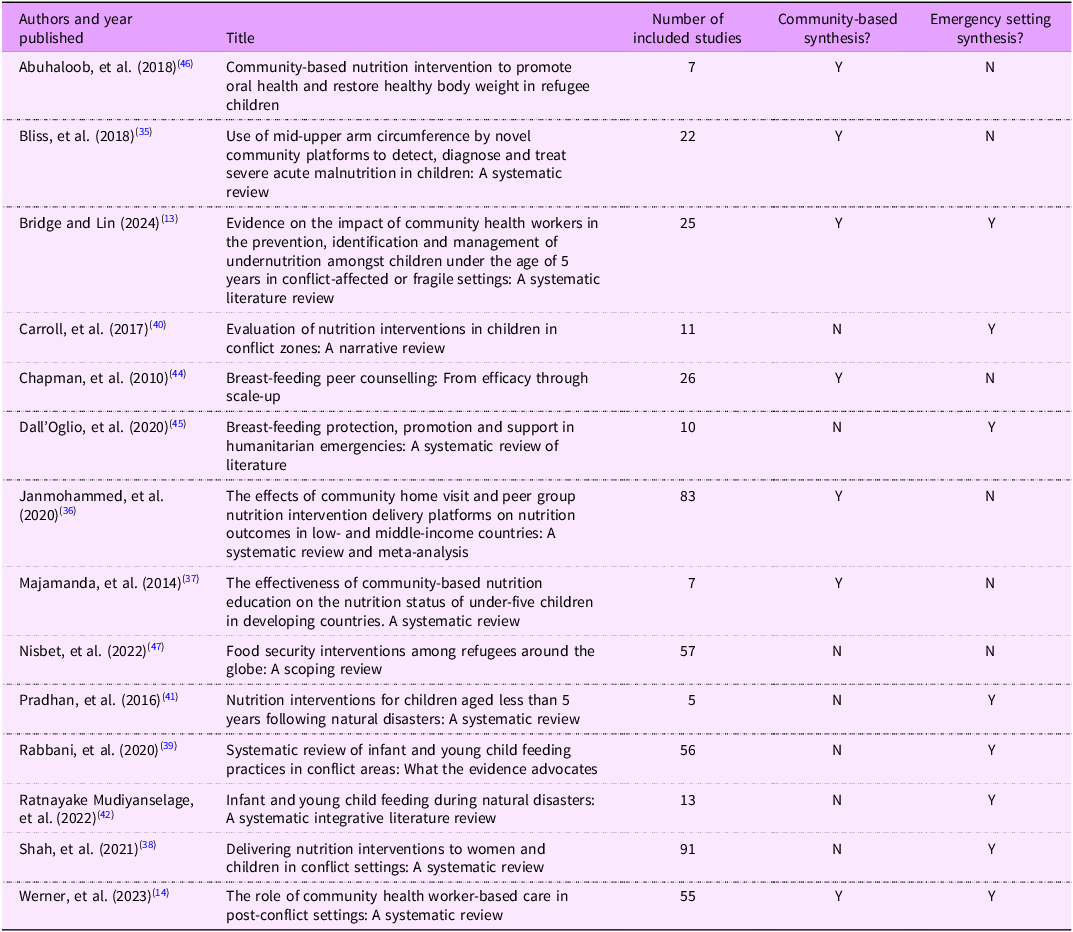
Table 6 lists the included systematic reviews that overlap with our review question. The table shows whether the review provides synthesis specifically for community-based interventions or specifically for some or all emergency settings. There are two reviews that do both, but one limits the interventions to CHW, the populations to children under 5 years and the settings to FCA(Reference Bridge and Lin13), and the other is not limited to nutrition interventions(Reference Werner, Kak and Herbst14). The fourteen reviews fall roughly into five groups.
Characteristics of included systematic reviews

Table 6. Long description
The table has five columns: Authors and year published, Title, Number of included studies, Community-based synthesis?, and Emergency setting synthesis?. It contains 14 rows, each representing a different systematic review. The columns detail the authors and publication year, the title of the review, the number of studies included, and whether the review provides synthesis specifically for community-based interventions or emergency settings. Notable reviews include those by Abuhaloob et al. (2018), Bliss et al. (2018), and Bridge and Lin (2024), among others. The table highlights the overlap and focus areas of these reviews, indicating whether they address community-based interventions, emergency settings, or both.
Source: Authors’ data.
Three reviews explore community-based nutrition interventions in LMIC generally. Bliss et al.(Reference Bliss, Lelijveld and Briend35) review evaluations of the use of MUAC by community platforms and report that community-level screening can support earlier identification and treatment of severe acute malnutrition. Janmohamed et al.(Reference Janmohamed, Sohani and Lassi36) review home visit and peer group interventions for nutrition and find that such interventions are associated with improvements in maternal feeding practices and child nutrition outcomes. Majamanda, et al.(Reference Majamanda, Maureen and Munkhondia37) review community-based nutrition education interventions and report that all included studies measure some improvement in at least one nutritional status outcome for under-five children.
There are five reviews that cover nutrition and IYCF interventions in FCA(Reference Shah, Padhani and Als38–Reference Carroll, Lama and Martinez-Brockman40) and disaster(Reference Pradhan, Dhital and Subhani41,Reference Ratnayake Mudiyanselage, Davis and Kurz42) settings, but none provides separate synthesis for the effectiveness of community-based interventions. Shah, et al. report that most of the interventions in their included studies were delivered through community-based approaches, but their review finds very little analysis of intervention coverage or effectiveness. They do identify advocacy and social mobilisation as a facilitator for nutrition programme delivery. Rabbani et al.’s review is primarily a scoping review of current IYCF practices and only includes one evaluation of a community-based approach, which is included in this review(Reference Fänder and Frega43). Carroll et al. find that nutrition interventions for children in conflict zones are generally effective but do not identify any community-based platforms. Pradhan et al. include five studies in their review of nutrition interventions for children younger than five in natural disasters in LMIC. They find there is evidence of moderate effectiveness of the various interventions, but none employ community-based approaches. Mudiyanselage et al. review studies of IYCF during natural disasters across high-income and LMIC. They find a few studies that identify the support of community and family networks as a facilitator for maintaining breast-feeding during disasters.
The two reviews focusing on CHW interventions in FCA settings reveal generally positive evidence. Bridge and Lin(Reference Bridge and Lin13) find evidence that community-level actors contribute to the prevention, identification and management of undernutrition among children under 5 years of age. Werner et al.(Reference Werner, Kak and Herbst14) find that CHW interventions across health domains in FCA settings can effectively address treatment gaps increasing availability and accessibility of health care, especially through iCCM interventions.
Two reviews focus exclusively on breast-feeding. The Chapman et al. (2010) review of breast-feeding peer counselling programmes primarily in high-income countries finds improvements in breast-feeding initiation, exclusivity and duration when trained peer counsellors provided structured support to mothers(Reference Chapman, Morel and Anderson44) Dall’Oglio et al. (2020) review evaluations of all types of breast-feeding protection, promotion and support programmes in humanitarian emergencies. Among the ten included studies, there is evidence of improved breast-feeding outcomes and IYCF practices, along with improved knowledge, but they do not group the findings by community-based approaches.(Reference Dall’Oglio, Marchetti and Mascolo45)
Two reviews look at refugee populations. Abuhaloob et al.(Reference Abuhaloob, Carson and Richards46) find seven studies of community-based interventions to improve oral health among refugee children, of which two take place in LMIC but do not find statistically significant results. Nisbet et al.’s(Reference Nisbet, Lestrat and Vatanparast47) review of all food security interventions among refugees does not synthesise intervention effectiveness.
Discussion
A clear structural pattern emerges from the evidence. Community-based preventive interventions, particularly community groups and nutrition counselling, generally improved IYCF practices and caregiver behaviours, but anthropometric effects were inconsistent. By contrast, CHW and CV delivery of uncomplicated acute malnutrition treatment generally achieved outcomes comparable with facility-based care and, in several studies, improved coverage, continuity or cost-effectiveness. Because prevention and treatment studies used different endpoints, the main evidence gap is not whether community delivery can work, but whether benefits are connected and sustained across prevention, identification, treatment and recovery.
Comparison with existing evidence
The treatment findings are consistent with previous reviews showing contributions of community-level actors to prevention, identification and management of undernutrition in fragile and conflict-affected settings(Reference Bridge and Lin13), improved access through CHW-based care(Reference Werner, Kak and Herbst14) and earlier identification through community MUAC screening(Reference Bliss, Lelijveld and Briend35). This review adds an important qualification: humanitarian evidence is concentrated in recovery, programme performance and coverage, while sustained nutritional status, diet, caregiver outcomes and relapse remain sparsely assessed.
Reviews of community nutrition education, home visits and peer-group platforms in LMIC report improvements in feeding practices and, in some settings, nutritional status(Reference Janmohamed, Sohani and Lassi36,Reference Majamanda, Maureen and Munkhondia37) . Our review similarly found more consistent effects on IYCF practices than anthropometry. This does not imply that community prevention is ineffective; rather, included studies show that improved knowledge and practices may not overcome food insecurity, disease burden and other structural constraints, as illustrated by interventions that improved practices without improving growth or household food security(Reference Kim, Rawat and Mwangi25–Reference Ndungu and Tanaka27).
Earlier humanitarian reviews documented extensive community delivery but generally did not isolate the effect of the community platform and noted limited evidence on effectiveness or coverage(Reference Shah, Padhani and Als38–Reference Ratnayake Mudiyanselage, Davis and Kurz42). A review of breast-feeding support in emergencies also report improved breast-feeding and IYCF outcomes without consistently separating findings by delivery platform(Reference Dall’Oglio, Marchetti and Mascolo45), while much peer-counselling evidence derives from non-humanitarian settings(Reference Chapman, Morel and Anderson44). The evidence map therefore clarifies both where community-based evidence is concentrated and where the pathway remains unevaluated.
Evidence published after the prespecified search period was not included in the evidence map or synthesis, but it provides useful context for interpreting our findings. A 2025 systematic review covering ninety-three studies in twenty-five conflict-affected countries found that integrating nutrition interventions with health and immunisation services did not significantly reduce wasting, although it was associated with lower odds of underweight and, to a lesser extent, stunting(Reference Khan, Carducci and Muralidharan48). More recent studies also point to the importance of looking beyond whether treatment is delivered successfully. In Somalia, children with uncomplicated SAM treated through community iCCM+ had recovery rates similar to those treated through facility-based OTP (89 % and 91 %, respectively), while the community model was associated with a shorter treatment period(Reference Bollemeijer, Majer and Ndung’u49). In Yemen, the longer-term picture was less reassuring: among children discharged after recovery from complicated SAM, 45 % met the criteria for SAM again at 9 months, compared with 14 % of matched community controls. The risk remained higher across follow-up after adjustment for other factors (incidence rate ratio 2·57; 95 % CI 1·11–5·93)(Reference Al Amad, Raja’a and Algendari50). Taken together, these studies suggest that integration and decentralisation can improve how services are delivered, but they do not necessarily translate into sustained nutritional recovery. They also reinforce the importance of following children beyond discharge rather than relying on recovery at programme exit as the main measure of success.
Interpreting the prevention–treatment disconnect
The apparent separation between prevention and treatment should be interpreted cautiously. Humanitarian programmes often combine counselling, community mobilisation, screening, referral and treatment, whereas evaluations assess only one component or outcome domain. The evidence–map disconnect is therefore partly an evaluation disconnect. It limits understanding of whether benefits at one stage carry forward, for example, whether improved feeding practices reduce subsequent risk or whether recovery is sustained after discharge. The review does not show that adding components improves outcomes; it shows that connected pathways have rarely been evaluated together.
Implications for humanitarian nutrition systems
The findings support community delivery as a credible component of humanitarian nutrition systems while highlighting conditions for scale. Nineteen included interventions used pre-existing community structures and nineteen used structures established for the study, with five using both; much evidence therefore derives from pilots or trial-specific arrangements. Studies decentralising uncomplicated acute malnutrition treatment to CHW or CV generally maintained or improved recovery, coverage or continuity, including non-inferiority to facility-based delivery(Reference Alvarez Morán, Alé and Charle18,Reference López-Ejeda, Charle-Cuéllar and Samake28,Reference Donfouet, Daniel and Wilunda29,Reference Hussain, Habib and Ariff31,Reference Charle-Cuéllar, Lopez-Ejeda and Toukou Souleymane32) . Scale-up should embed community cadres within defined roles, training, supportive supervision, referral pathways and workload arrangements, particularly where workforce capacity is constrained(Reference Bogale, Scambler and Mohd Khairuddin9–Reference Truppa, Yaacoub and Valente11).
Decentralisation is also operationally dependent on functioning supply and referral systems. Simplified or combined protocols can bring care closer to households(Reference López-Ejeda, Charle-Cuéllar and Samake28,Reference Maust, Koroma and Abla30) , but community treatment requires therapeutic commodities, basic assessment equipment and referral for complications. No included study evaluated stock-outs or last-mile supply performance, making these implementation evidence gaps rather than demonstrated determinants of effect. At-scale programmes should therefore monitor commodity availability, referral completion and service interruptions alongside outcomes, with coordination arrangements defining responsibility for supervision, referral, reporting and replenishment, consistent with WHO guidance(5).
The evidence map also exposes a monitoring gap. Preventive programmes mainly measure behavioural and IYCF indicators, while treatment programmes mainly measure clinical and performance indicators. Only four included studies assessed dietary intake, food security or household outcomes; only two assessed treatment effects on nutritional status; and none assessed caregiver knowledge, behaviour or capacity alongside treatment. Monitoring should retain core indicators but add selected bridging outcomes such as referral completion, feeding practices during treatment, post-discharge nutritional status and relapse where feasible, allowing programmes to assess whether immediate gains are sustained.
Strengths and limitations
A principal strength is the systematic mapping of intervention type against outcome domain, which makes evidence concentrations and gaps explicit. Limitations include restriction to English-language publications, possible publication bias, less tightly aligned inclusion of systematic reviews because none matched all primary-study criteria, incomplete reference capture through Citation Chaser, which retrieved an estimated 60–70 per cent of the references in the included documents, judgement in some eligibility decisions and substantial heterogeneity that precluded quantitative pooling and limits generalisability. Publications after the prespecified search window are cited only as external context and were not incorporated into the Results or evidence map.
Implications for policy, programming and future research
The practical implication is not simply that programmes should become ‘more integrated’; many already combine several components. The priority is functional continuity across prevention, early identification, referral, treatment and follow-up. Implementing agencies should establish explicit referral and counter-referral pathways, defined post-treatment follow-up, supportive supervision and linked monitoring. Governments, coordination bodies and donors should embed effective community-delivery models in protocols, financing, supervision, referral and supply arrangements rather than rely on parallel pilot structures. These are system-design recommendations; the review does not establish that bundling additional interventions improves anthropometric outcomes.
Three research priorities follow. First, community-based wasting treatment studies should extend beyond discharge to measure sustained nutritional status, relapse, feeding practices and caregiver capacity. Second, preventive evaluations should measure dietary intake, food security and nutritional status alongside knowledge and IYCF practices. Third, pragmatic studies should test connected models at scale and report workforce requirements, supervision, referral performance, commodity continuity, cost, equity and fidelity alongside effectiveness. Research should determine which forms of integration add value, for whom and under which humanitarian conditions.
Conclusions
Community-based nutrition platforms can extend essential nutrition services in humanitarian settings. Evidence is strongest for improving IYCF practices through preventive approaches and for decentralising uncomplicated acute malnutrition treatment without compromising treatment performance, with gains in coverage and cost-effectiveness in some settings(Reference Rogers, Martínez and Morán19,Reference Puett, Sadler and Alderman33) . Evidence is substantially weaker on sustained nutritional status, relapse, dietary and household outcomes and on whether benefits persist across the prevention–treatment–recovery continuum.
The priority is therefore to move from isolated interventions towards connected community-based pathways: prevention and screening linked to timely referral and treatment; treatment linked to appropriate feeding and other support; and discharge linked to structured follow-up and rapid re-entry to care when deterioration occurs. Agencies should strengthen these pathways and monitor sustained outcomes; governments, coordination bodies and donors should create the policy, financing, supervision, referral and supply conditions for delivery at scale; and researchers should test these models under real-world emergency conditions. The key next step is not more components, but stronger continuity, system embedding and evidence on sustained impact.
Supplementary material
For supplementary material accompanying this paper visit https://doi.org/10.1017/S1368980026103759.
Data availability statement
The data supporting the findings of this study are available from the corresponding author upon request.
Acknowledgements
The authors acknowledge the support of former FHI 360 staff, including Morgan Rees, Chris Odell and Carol Manion, for their contributions during various phases of the search strategy development, data collection and review process. The authors specially thank the FHI 360 Crisis Response and Resilience Department for the technical inputs and the support provided to Alessandro Iellamo in completing the research and preparation of the manuscript for publication.
Author contributions
Author ANB contributed conceptualisation, data curation, methodology, investigation, formal analysis and writing (original draft, review and editing). Author AI contributed data curation, methodology, investigation, formal analysis and writing (original draft, review and editing).
Financial support
FHI 360 funded the level of effort of both authors, and the persons acknowledged above during the time these individuals were actively employed by FHI 360. FHI 360’s Crisis Response and Resilience Department, specifically, funded Alessandro Iellamo’s work throughout the conduct of the review and preparation of the manuscript and also supported the publication of the manuscript. Annette Brown contributed her time voluntarily for all work on the review conducted from February 2025 until present. No restricted external funding was received for this study.
Competing interests
The authors declare no conflicts of interest.
Ethical standards
The FHI 360 Institutional Review Board reviewed the protocol and determined the study to be non-human-subjects research.








 Open access

