1 Introduction
This article explores the usefulness of audiovisual translation techniques for the enhancement of second language (SL) capabilities, and specifically presents a novel mediation-based strategy (following the Common European Framework of Reference for Languages (CEFR)’s terminology (Council of Europe, 2001)) as a technology-based revival of an old didactic method, which dates back to the seventeenth – nineteenth centuries. Although it has not been demonstrated that technology-based practices are superior to traditional ones in absolute terms (and whether they ever will be remains uncertain), they are widely accepted these days by the different agents involved in formal SL learning (e.g. policy makers, practitioners, software developers, the students themselves). Computers, mobiles and other electronic devices are used extensively in modern society for multiple purposes, including information retrieval and learning. In this sense, interaction with these devices is generally found to be attractive and engaging, since they provide a flexible, proactive and exploratory context for the development of capabilities and skills, including communicative language competences. The literature is full of experimental publications (Granger, Hung & Petch-Tyson, Reference Granger, Hung and Petch-Tyson2002; Blake, Reference Blake2013, among many others) presenting the affordances observed in groups of students using technological equipment and tools, in aspects that are recognized as making an impact in SL learning (such as learner-centredness and autonomy; metacognition and self-regulation; prolonged exposure to the object of study [here the SL]; participation in cooperative and collaborative projects; and working with multimodal materials), and how they can be achieved through the integration of innovative technology and methodology.
“Computer assisted language learning” is an umbrella term for all technology-based “learning objects” for SLs, which range from dedicated software to elements coming from seemingly distant domains. This is the case with audiovisual translation (AVT) used as an SL didactic resource. Numerous studies have shown the benefits of the different AVT modes in the language classroom, particularly with regard to the use of subtitling, both intralingual and interlingual and – to a lesser extent – dubbing and audio description (Talaván, Reference Talaván2013; Ibáñez & Vermeulen, Reference Ibáñez and Vermeulen2014). Various software programs designed to support the practice of AVT in SL learning contexts have been developed as part of European projects, such as ClipFlair (Sokoli, Reference Sokoli2015) and this field of study is advancing steadily.
In this article, the application of a translation-based strategy, Collaborative Reverse Subtitling (CRS), is used to assess its validity as a powerful didactic resource for the enhancement of written production capabilities in English. Collaborative AVT to Improve Language skills (CATIL) was a research project undertaken with English as a second language (ESL) students of the Universidad Nacional de Educación a Distancia (UNED), within the framework of its Program of Research Networks for Teaching Innovation: The Development of Pilot Projects for the Adaptation of Teaching to the European Area Projects, undertaken on a yearly basis to promote didactic (and technological) innovation within the academic community. The CATIL project was set up by a number of ESL teachers of the of the ATLAS research group (Applying Technology to LAnguageS: http://atlas.uned.es/), and designed and carried out during the academic year 2013–2014 with a group of first year students from the English Studies degree at UNED. What follows is a description of these processes and the major findings in relation to the efficiency of the use of CRS for the enhancement of the writing capabilities of SL students in a collaborative distance learning context.
2 Theoretical framework
For centuries translation was part of the major methods both for teaching and assessing a student’s command of an SL, although, in the last century, it gradually lost relevance in both. As is well known, in the past emphasis was given to a large extent to learning grammar rules and vocabulary mechanically, doing translations and rewriting sample sentences. Furthermore, the sentences that were translated or written by the students were mere examples of grammatical points and usually had little relationship to real world needs (Richards & Rodgers, Reference Richards and Rodgers2001). After this period, the Grammar-Translation Method lost popularity quickly, the lowest point being the times of the Communicative Approach, where interaction was both the means and the goal of SL learning (Savignon, Reference Savignon2000). However, defenders of the use of translation techniques in the SL classroom have never disappeared completely, given that some learners have a strong preference for establishing links between their own mother tongue and the new lexis and structures of the target language. This situation started to change again in the last couple of decades, as a number of experts in language didactics considered translation techniques to be potentially useful for the development of certain capabilities related to the communicative use of the language (Cook, Reference Cook2010). Thus, authors such as Hurtado (Reference Hurtado1999) claimed that, while undertaking translation-based activities, learners are both encouraged to consider form and meaning as one, and given an opportunity to enhance two communicative language processes in parallel, namely, reading comprehension and written production. According to them, as far as writing is concerned, the use of translation as a didactic resource helps learners to select register and style, sequence ideas, connect propositions, sentences and paragraphs, emphasize new information, develop spelling and learn to guide the reader through the message.
A number of benefits of effective translation-based activities in the SL classroom can be found in the 90s literature, such as Kobayashi and Rinnert (Reference Kobayashi and Rinnert1992) and Kern (Reference Kern1994), including designs involving the use of mechanisms such as metacognition and self-regulation and, of course, short, communicative working texts. Recent research on the use of translation in the SL classroom shows that it also helps to enhance both vocabulary and grammar (Källvist, Reference Källvist2004), to encourage learners’ intercultural exploration (Takimoto & Hashimoto, Reference Takimoto and Hashimoto2011), as well as developing textual and cultural awareness (Károly, Reference Károly2014). If the aim of language teaching is to help the learner become multilingual and intercultural – able to mediate between different languages and cultures – it seems clear that there are no more ideological impediments to introduce translation into the classroom, especially if the translation activities are based on real-life situations and involve the development of transferable skills, such as interpersonal skills, teamwork, meeting deadlines, problem solving and decision making (King, Reference King2000).
Additionally, and more recently, the incorporation of translation/mediation as one of the central competences of proficient language users by the CEFR (Council of Europe, 2001) has given translation the necessary official support to be reconsidered by more SL teachers, materials developers and practitioners in general. However, it should be noted that although the number of publications dealing with the use of translation in the language classroom has increased significantly since the 1980s, only a few of them report on controlled empirical research. It should also be noted that authors like Källvist (Reference Källvist2004) still state that there is little conclusive empirical evidence either for or against the use of translation activities in the SL classroom.
Today the range of translation-based strategies and techniques has multiplied and improved with the arrival and consolidation of computing technology and related disciplines such as AVT and Machine Translation and its various modalities (Human Assisted Machine Translation, Machine Assisted Human Translation, etc.). Pym (Reference Pym2011) adds that technology is altering “the very nature of the translator’s cognitive activity, social relations and professional standing”. From here it is easy to infer that if technology has revolutionized translation, translation-based language learning could not remain the same. Thus, for example, the pedagogical use of AVT in the form of subtitling (as an active task on the part of the students) turns the activity of translation into an efficient, attractive and comprehensive didactic tool (Talaván, Reference Talaván2013). In AVT, the student has to deal with three different codes (aural, textual and visual) and thus, the working context (video within a technological setting) becomes rich, authentic and realistic. Besides, subtitling includes the development of transferable skills, namely digital ones, since it needs to be undertaken using a specialized computer program, a subtitle editor.
The results of the studies performed so far in the field of AVT and language learning reveal that the use of subtitling as an active task enhances, above all, listening comprehension (Williams & Thorne, Reference Williams and Thorne2000; Talaván, Reference Talaván2010), vocabulary acquisition (Bravo, Reference Bravo2008; Lertola, Reference Lertola2012), pragmatic awareness and intercultural learning (Incalcaterra, Reference Incalcaterra2009; Borghetti, Reference Borghetti2011) and writing skills (Talaván & Rodríguez-Arancón, Reference Talaván and Rodríguez-Arancón2014). The present study will complement and expand the latter because it deals with the improvement of written production skills in collaborative settings.
It is evident that subtitling is a complex and exciting AVT mode with specific goals and challenges that is receiving increasing attention, even more so if we focus on accessibility issues and language learning (Díaz Cintas, Reference Díaz Cintas2012). There are different types of subtitling according to the end user and purpose of the activity, and all of them could be used as didactic resources in the SL environment (Talaván, Reference Talaván2013), depending on the main educational goal and the specific learning context. The sheer flexibility of this technique implies endless possibilities for the SL learner.
Most of the studies mentioned above deal with interlingual subtitling in its standard form (L2– first language) (L1) while the present study turns to reverse subtitling (L1–L2) in order to explore its possibilities for SL education, expanding the field further. Specifically, in the present paper, the use of CRS – the group creation of written subtitles in an SL from an aural source text in the users’ mother tongue – is reintroduced (only mentioned so far in Talaván & Rodríguez-Arancón (Reference Talaván and Rodríguez-Arancón2014), where it is presented as combined with translation skills development) and its potential as an SL technique is explored.
The collaborative element in CRS follows Vygotsky’s (Reference Vygotsky1978) views about the social nature of learning, which is specified in his Zone of Proximal Development theory. Often, collaborative learning is used generically to cover the various types of activities that involve joint intellectual effort by students alone or students and teachers (Smith & MacGregor, Reference Smith and MacGregor1992). Broadly speaking, such activities include group projects, collective written tasks, joint problem solving, debates and study teams. Collaborative translation up until now has been mostly used as a technology-based technique where multiple participants work together on the same document simultaneously, sharing a computer assisted translation interface with specific group work and communication tools. Furthermore, collaborative translation has also been used incipiently in the context of SL learning with rather positive results for the development of communicative capabilities in the written modality (Chang & Hsu, Reference Chang and Hsu2011).
As for the potential relevance of undertaking the reverse subtitling activity collaboratively as opposed to individually, it should be remembered that since the second half of the 20th century, a number of learning theories emerging from Social Constructivism (Vygotsky, Reference Vygotsky1978) support the notion that knowledge and skills, including language and verbal communication, develop largely through student interaction. The concept of collaborative learning (Dillenbourg, Reference Dillenbourg1999), which dates back to times before computers existed, has developed and diversified greatly with general pedagogies like problem-based learning, project-based learning and specifically computer-based learning paradigms like Computer Mediated Communication, Computer Supported Collaborative Learning, and Collaborative Networked Learning, to name but a few. All of the above share the underlying idea that engaging together in a common activity is the most efficient way to achieve a shared learning goal. However, Web 2.0 tools and the novel social use of software such as subtitling editors (see collaborative online initiatives such as AMARA-Universal SubtitlesFootnote 1 ) arguably enable learners to be particularly motivated and self-confident throughout the activity. Although the technological context is more demanding and requires more responsibility on the part of the learners, they profit from the flexibility and inherently proactive nature of this type of learning environment and also from the combination of social interaction and metacognitive reflection present.
Hence, given the considerable volume of evidence of the benefits of collaboration and, to a lesser (but promising) extent, of translation-based techniques for SL learning, together with the availability of free, robust and user-friendly subtitling software (with high-quality freeware, such as Aegisub Footnote 2 ), the CATIL project was launched to take one step further in this line of research and explore the suitability of CRS for the development of writing skills in a SL learning technology-based setting.
3 Research goals and methodology
The main research question underlying this study was whether CRS would be able to develop writing skills in ESL students who had no previous knowledge of general translation skills and had not used AVT as a didactic resource previously; a secondary research question regarded the role of collaborative learning in this scenario. The research methodology used followed a mixed-method approach (Robson, Reference Robson2002), where the main data collection tools were writing production pre- and post-tests (language assessment), initial and final questionnaires, and general teacher observation throughout the experiment. Production tests consisted of basic written tests, asking the students to write two essays belonging to different genres, and they were assessed using a rubric designed for this purpose. Attention was paid to maximize the reliability and validity of the results, not only via triangulation of data collection tools but also via the use of assessment rubrics, by both teachers and students.
Regarding the questionnaires, their design and characteristics are inspired by Cohen, Manion and Morrison (Reference Cohen, Manion and Morrison2007), who provide information on the format and application of tests, surveys and questionnaires in research environments in order to optimize their possibilities in the subsequent retrieval of data that can be correlated with other results. The pre-questionnaire was aimed at gathering the necessary information to describe the student sampleFootnote 3 . As for the final questionnaire, the questions contained therein had to do with the project outcome and, specifically, with the students’ perception of their own SL learning process, and the subtitling and collaborative experiencesFootnote 4 .
Finally, observation as a data collection tool was designed so as to obtain a detailed description of the project that could complement and support the data gathered both from the questionnaires and from the language assessment tests. Thus, observation was undertaken both directly (monitoring the work in the forums on an everyday basis) and indirectly, by assessing the work of the subgroups based on the final representative videos. Direct observation was performed by all the teachers involved in the project, so triangulation was present once more, this time from the point of view of the observers.. Indirect observation took place in terms of the assessment of the final subtitles (per subgroup and per video), performed by two teachers using the same rubric specially designed to this end.
The CATIL project ran for a period of ten weeks during the second semester of the academic year 2013–2014. A group of 34 ESL students from the first year of the degree in English Studies at UNED (Inglés Instrumental II) was divided into five working subgroups of six to eight mixed volunteers, and asked to subtitle collaboratively, within their groups, two short (edited) video clips of approximately two minutes each. The general aim of CATIL was to promote ESL learning among distance university students through CRS, using the in-house e-learning platform aLF and specific audiovisual software, such as video players and the subtitling editor Aegisub. Within this context, the main research goal was the enhancement of written production skills using a guided subtitling activity and, secondarily, exploring the dynamics of undertaking such an activity collaboratively, in order to gain insights on the social, metacognitive and transfer mechanisms that are activated in collective study (a rather controversial issue, under the constructivist perspective, preliminarily explored in the context of the CONTACT (Collaborative Network for Translation and Adaptation) project (Talaván, Bárcena & Villarroel, Reference Talaván, Bárcena and Villarroel2014)).
3.1 Resources
The resources used in CATIL were the aLF e-learning platform (as the usual space for study and communication between students and their teachers, containing study materials, forums, etc. (Read, Ros, Pastor, Hernández & Rodrigo, Reference Read, Ros, Pastor, Hernández and Rodrigo2010)) and, specifically, the video clips and the specific subtitling software. Students worked with their own computers at home, where they visualized the videos, used the software provided to insert the corresponding subtitles and accessed the virtual platform both to receive instructions from the teaching team (consult the chronogram, enter the working subgroup they had been assigned to, etc.) and use the forum to ask methodological, technical and administrative questions related to the project.
Both videos were taken from the Spanish film Todo es mentira (Fernández Armero, 1994) (trans. Everything is a lie), which was selected on the basis of its genre (an easy-to-watch light comedy) and because it is composed of many short self-contained scenes, very much in the line of a sit-com episode (easy to watch in a decontextualized way). The edited videos were sequenced in terms of their difficulty (so that the students could work with the easiest one first), but their selection followed the same cognitive and attitudinal criteria. The criteria for the scenes ensured both full attention and an amenable disposition on the part of the students: less than two-minutes long, self-contained (requiring no previous knowledge about the characters, the plot or the context), with few characters (no more than four in each video, to simplify issues unrelated to the learning activity), humorous, and containing relevant language. For example, the first video had two different settings (a supermarket and a dining room) and presented shorter and simpler sentences than the second one, which had a single setting (a book-presentation party) but did have longer dialogue interventions and more complicated language.
In order to subtitle the videos, students were asked to use Aegisub, which is freeware developed primarily for fansubbers or movie and TV series lovers, who provide subtitles on the internet for free and on their own initiative (Muñoz Sánchez, Reference Muñoz Sánchez2006). Aegisub was selected, firstly, on the basis of its free availability and also because it has a very intuitive and versatile interface, which can be used in different ways, from simple and fast to thorough and detailed, as required. A user guide and an installation file were provided in the project’s virtual community space and a forum was opened specifically for questions regarding the access and use of this program.
3.2 Participants
The project was made up of a teaching team of six and 68 subjects: 34 volunteered to form part of the experimental group (EG) and the other 34 were randomly selected among the rest of Inglés Instrumental II (English language II) students to form the control group (CG). The CG followed the normal course, and so differed from the EG in that they did not complete any AVT activities, although they performed extra tasks (some of them collaborative) that made use of general translation as a didactic resource in a technological context for the same period of time. The EG and the CG were both taught in a similar way (e.g. they used audiovisual materials and technological support), but the EG participated in this extra project that made use of the independent variable CRS, as the central didactic resource to work on the activities proposed.Footnote 5
It should be noted that all subjects were students from an English Studies degree who had never undertaken a translation course before. In order to confirm their lack of translation experience, they were asked about it as part of the registration process. All participants confirmed that they had not studied or practised translation before.
The members of the teaching team had different roles in the project, the main ones being supervising and guiding the performance of the different working subgroups, answering the queries asked by the students in the forums and assessing the students’ work.
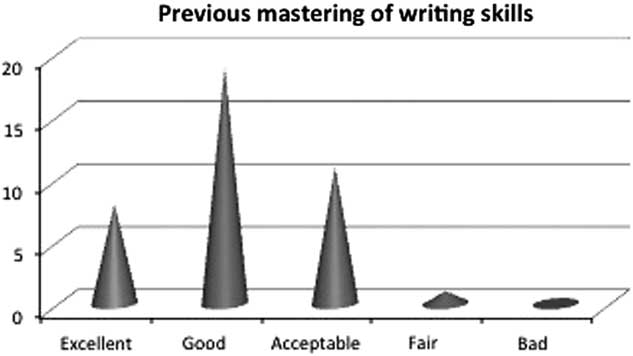
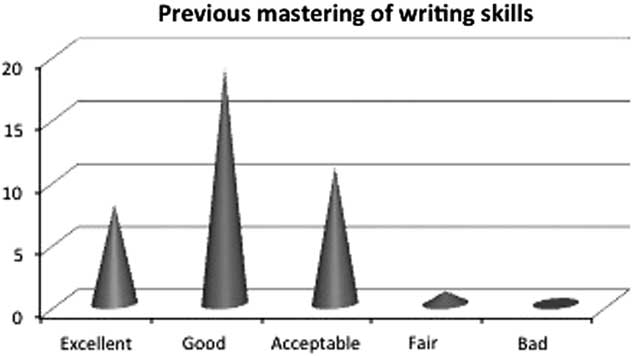
A pre-questionnaire was passed to the EG, the actors of the project, so as to characterize the sample according to aspects that might prove to be significant in the subsequent analysis of the project results: age, gender, origin, native language, level of English, familiarity with the use of audiovisual materials and subtitles, and previous experience in collaborative projects. The results of the pre-questionnaire showed that they were 27 women and seven men, most of them native speakers of Spanish (among whom four were bilingual: Spanish and Catalan native speakers)Footnote 6 . Three students were native Romanian speakers (a Romanic language, closer to Spanish than to English) and one was a native Polish speaker. Regarding linguistic background, an additional datum was that 30 of the students were learning or had learnt another language other than English. As for perception of their own English level, all of the students except one had positive thoughts. The students declared that their level of oral comprehension in English was average or poor. However, when asked about their writing skills in the language, their response was more positive, as can be seen in Figure 1.
Self-perception of English writing skills.
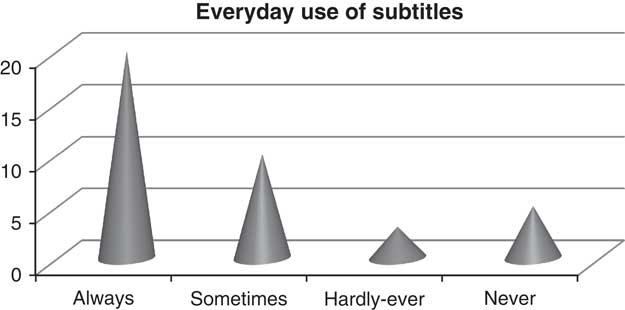
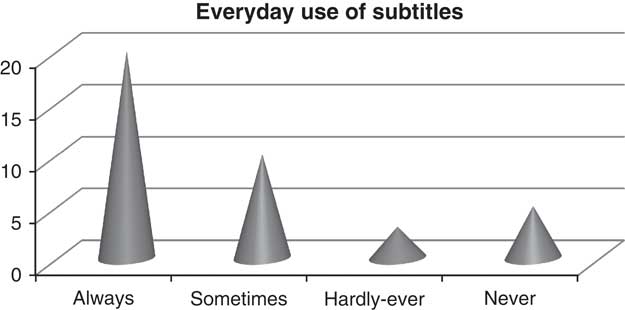
With regard to the students’ previous experience of and contact with subtitling, a key distinction needs to be made between them as users of subtitles and as producers of subtitles. For the former, 87% of students declared that they used subtitles to watch films in a foreign language and 13% had never or very rarely used them. Regarding frequency, the majority of participants, who declared that they watched audiovisual material with the assistance of subtitles, said that they did so, on a regular basis, as shown in Figure 2.
Frequency of use of subtitles to consume audiovisual material.
When asked whether they used subtitles in their mother tongue or in the foreign language, 83% of the students indicated that their main tendency was to use English subtitles, which is a relevant starting point, given that this was the language they would need to use to create the subtitles for the project. Regarding their previous experience in creating their own subtitles, the majority had never created them (78%), and only 22% had, at some time previously, attempted to undertake subtitling.
Since this project was carried out online and its goals were related to the use of computing equipment, a relevant question for analysing the participants’ profile was related to their level of computer skills. This question was answered satisfactorily by most students (98%). Hence, the subjects involved could be said to have computer skills at “user level”. This was expected to facilitate the procedural development of the project. Finally, regarding the subjects’ background knowledge of and experience with collaborative projects, it is remarkable that, being first year university students, more than 56% of them had already taken part in this type of projects before. This is probably due to the fact that collaborative work was an option within their main course (Inglés instrumental II).
3.3 Procedures
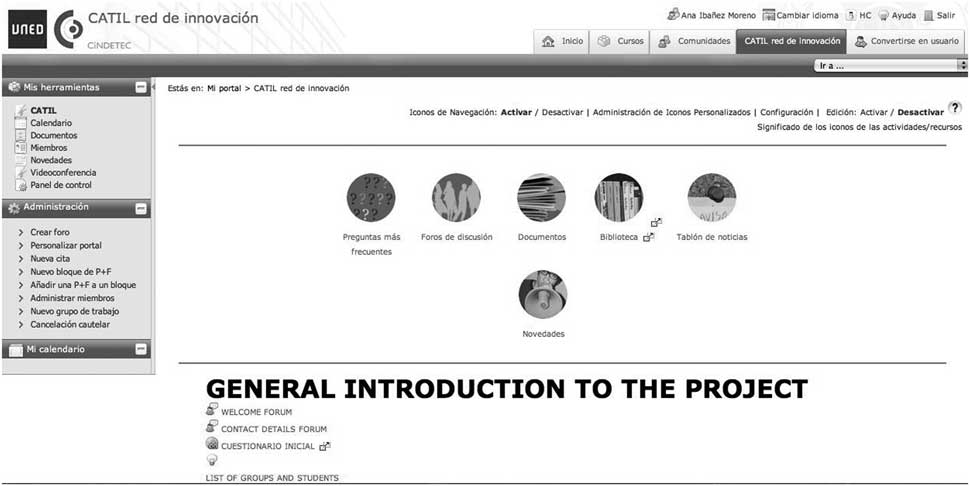
The EG students had to sign up voluntarily for the project and, once admitted, were given access to a virtual community space in the aLF platform CATIL, created ex profeso for the occasion. There, they had the opportunity to become familiar with the procedures they were about to engage in, express any doubts, and communicate informally with the teachers and peers through the forum (an important phase discussed in Read, Bárcena, Talaván & Jordano, Reference Read, Bárcena, Talaván and Jordano2011). Figures 3 and 4 show what the students saw when they entered this virtual community.
The top part of CATIL virtual community space.
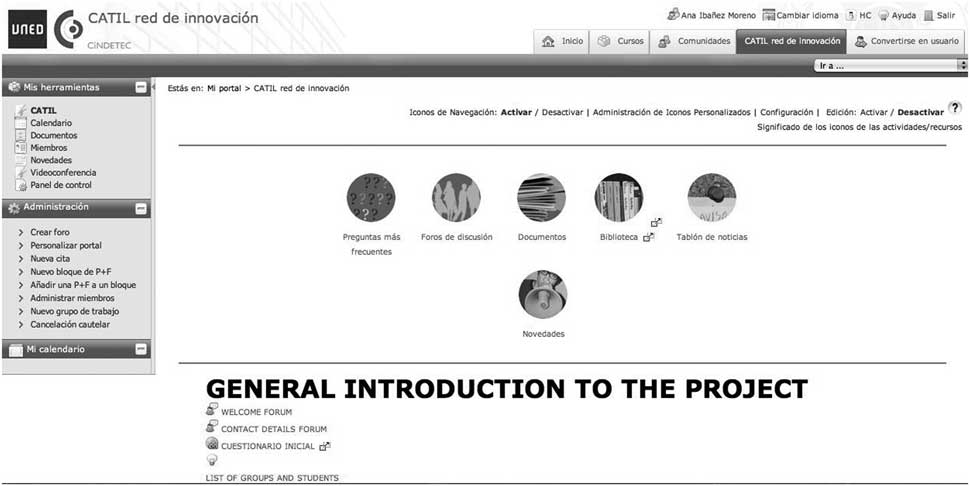
The bottom part of CATIL virtual community space.

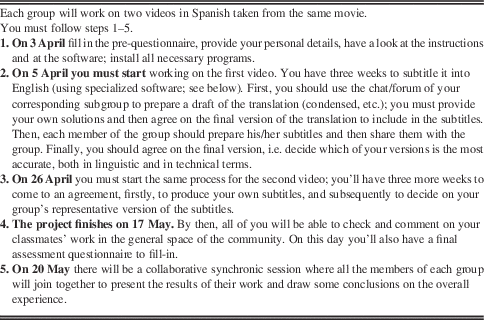
Secondly, after the subjects of the EG had been divided manually into five working subgroups by the teaching team, all the participants were given access to their own subgroup community, where they also found a number of useful resources for information and communication. Once there, they were asked to follow the guidelines explained in the general community, an extract of which is reproduced in Table 1.
Extract from the project guidelines

Teachers participated both as consultants and community managers, solving the students’ technical, methodological and administrative problems/doubts, coaching them and prompting them to continue working. The work with the videos followed the chronogram in Table 1. At the end of the project, there were 68 subtitled versions (34 per video; two per student) uploaded in the community and ten top videos (one per subgroup for each video) with the highest scored subtitles made available in the general community so that the rest of the subgroups could have access to the top proposals.
4 Data analysis
The quantitative data analysis of the CATIL project was undertaken following two different procedures: correlation studies and the distribution of average marks, in order to counteract the subjectivity typically associated with both linguistic and educational research and, hence, to maximize the reliability of the conclusions derived from the analysis.
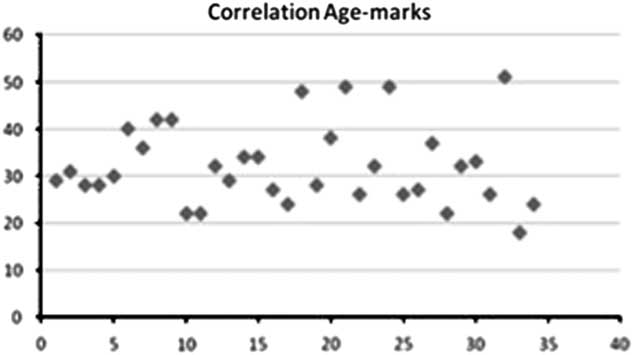
Correlation studies were used to confirm the existence of a relationship among different variables. In this sense, it is pertinent to recall Cohen, Manion and Marrison’s warning (Reference Cohen, Manion and Morrison2007: 531): “Do not assume that correlations imply causal relationships”, that is to say, if there is not reasonable evidence about such a possibility, the existence of the correlation must not be assumed to imply a real dependency. That is why, in this case, only a selection of expectable rapports was analysed as a sample. In order to characterize these correlations, Pearson’s coefficient was used, a statistical reference that measures the linear rapport between two different continuous variables (Peña & Romo, Reference Peña and Romo1997). This coefficient uses values from −1 to 1, in such a way that when its value is close to −1, the correlation is inverse (when one variable increases, the other diminishes), and when it is close to 1, the correlation is direct (when one variable increases, so does the other). However, when the values obtained for the coefficient are close to 0, it means that the correlation does not exist. All situations are equally evidential, given the fact that they reveal the existence or non-existence of a direct relationship between the behaviours of the variables under study. In the present research, the correlation was considered, initially, between the results of the pre-test and some of the items included in the questionnaire (aspects that described the sample and might have some degree of relevance when confronted with the results of the tests), such as age, level of studies, and previous practice using audiovisual material. It was discovered that there was no relevant rapport between the student sample and the results obtained in the test, given the fact that the coefficients were close to 0. Hence, it could be concluded here that this lack of dependency between the results of the tests and the type of subjects undertaking them makes the final conclusions of the research more general and representative of the standard SL student population (in distance learning institutions). An example of this lack of correlation can be seen in Figure 5, where the results of the pre-test are correlated with student age producing acoefficient value of −0.4.
Example of the non-correlation of variables.
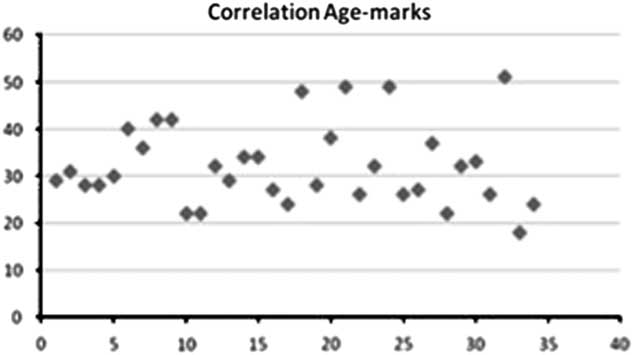
Given these correlation studies, it is possible to infer that the tests (and the results obtained from them) are not dependent on the subjects’ characteristics (so the final results may be easier to extrapolate).
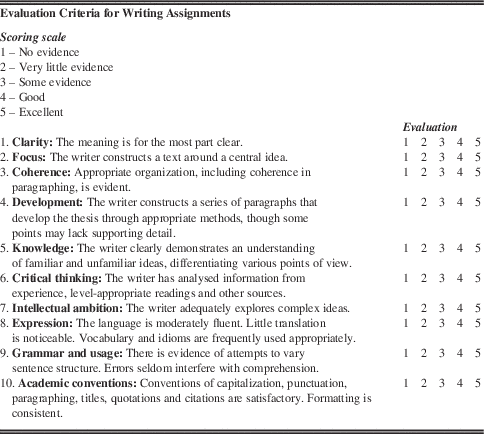
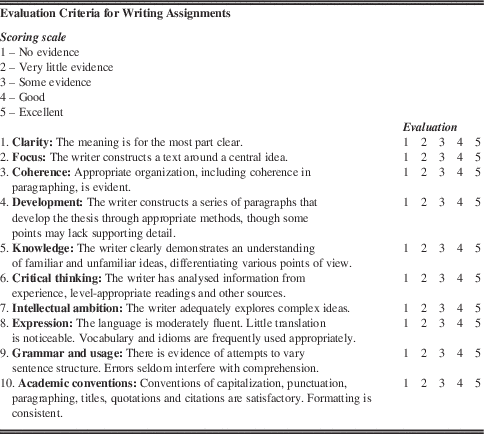
The second analysis procedure focused on the distribution of average marks, that is, the degree to which the average marks of both groups had increased after the experiment. All the tests were assessed by two different members of the teaching team, so as to provide a greater degree of objectivity to the assessment (the average mark was then calculated, being the difference between both marks never greater than two points). Table 2 shows the assessment rubric used for this purpose.
Assessment rubric used for the tests
All subjects were expected to have improved anyhow, since students in both groups kept learning in similar ways in a technological setting. The only difference was that of the reverse subtitling variable performed by the EG. In this sense, it is important to assess whether the standard deviation diminishes in the post-test in both groups, as is expected when there is evidence of relevant global improvement. In Table 3, a contrastive representation of the average marks of the pre-test and post-test and the standard deviations of both groups can be observed.
Mark distribution and standard deviation

As can be inferred from the previous data, there is a major improvement in the EG, when compared with the (more modest) advance in the CG. It is evident that the learning experience has influenced writing skills development in the EG, while the CG members have improved at a slower pace, as expected. Hence, one can clearly infer that there is a direct cause–effect relationship between the reverse subtitling process and the improvement of written production. These results are complemented by the correlation studies described above, and also by the evidence of the qualitative data provided below (obtained both from questionnaires and observation), which will avoid subjectivity and allow the present results to reach a sufficient level of scientific validity.
5 Discussion
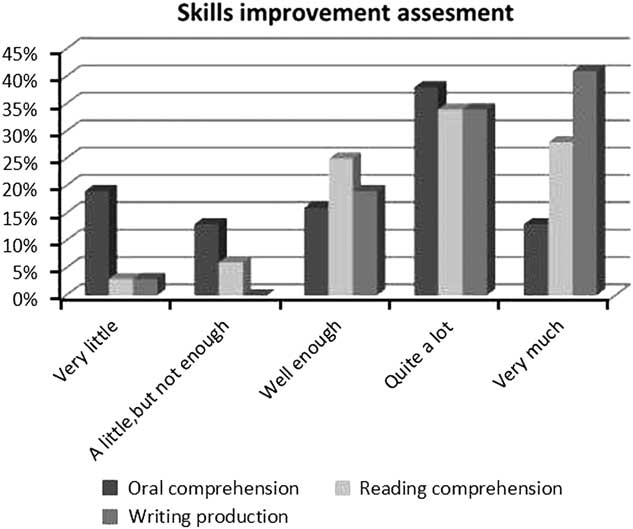
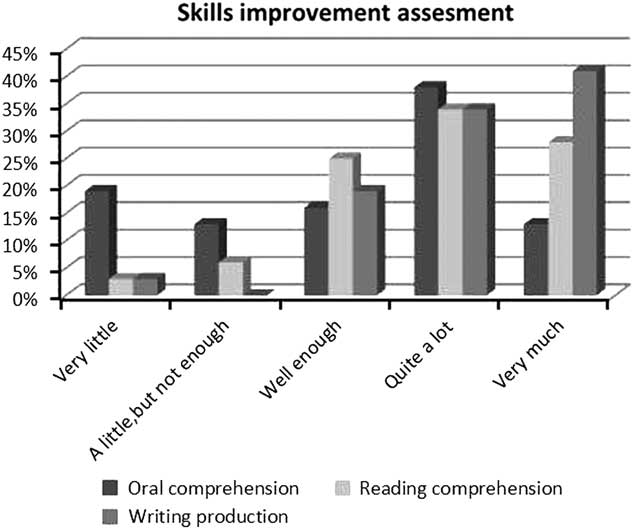
Looking at the subjects’ assessment of their improvement in terms of the various SL skills that were at stake in the project, Figure 6 shows how students distinctively assessed the validity of CRS to improve writing production skills, over oral and reading comprehension, as expected. This confirms the aforementioned quantitative data.
Students’ assessment of their SL improvement through CRS.
Furthermore, it should be noted that while in the initial questionnaire the students indicated that they were more confident about their writing in English (and reading, although this process is obviously epiphenomenal in the subtitling activity) than about their oral comprehension in this language, in the final questionnaire they reported a considerable improvement in non-oral specific aspects. Of these, the students highlighted (1) the increase of self-confidence in the use of the English language; (2) the development of a certain degree of awareness or introspection, both about the nature of real communication in an SL and about themselves as learning individuals; (3) the acquisition of common phrases, idiomatic expressions and colloquial words (particularly those which are not often found in textbooks); and (4) the improvement of fluency and SL production speed; over (5) the acquisition of new lexical terms; and (6) grammatical structures, which scored the lowest.
In accordance with these reports, a general improvement was identified regarding the more functional aspects revealed at discourse level (e.g. internal cohesion, coherence), rather than the more formal organizational aspects at sentential level (e.g. morphosyntactic accuracy). Interestingly, despite the translation aspect of the subtitling activity undertaken, its fundamentally communicative nature, together with the structure of the videos and the interface of the software arguably enabled a gradual detachment from mother tongue structures, which rendered the final texts more natural and “native-like”. Furthermore, the students showed evidence of having internalized important writing skills related to information extraction, interpretation and management, by gradually improving their written comprehension, idea organization and expressive synthetization.
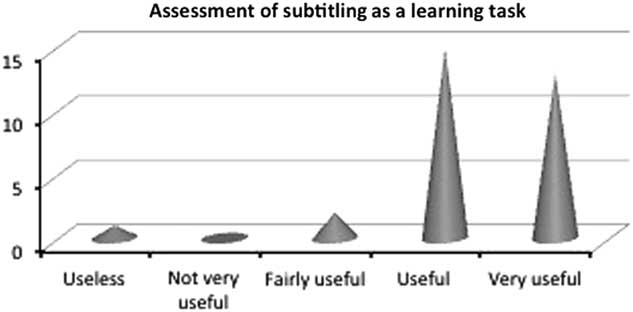
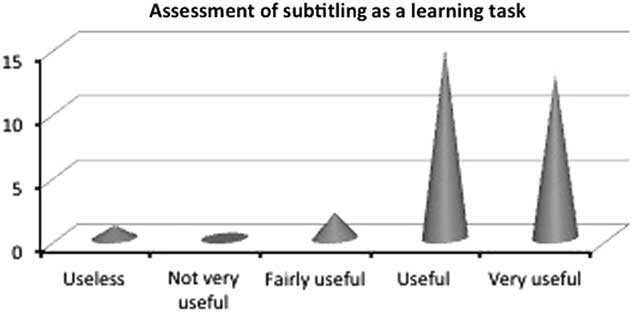
When asked about the determining factors of the usefulness of the subtitling activity for ESL learning, students selected: (1) the authenticity of the materials; (2) the creative side of the activity; and (3) the technology-based setting (mainly the subtitling software for its user-friendliness and the asynchronous communication tools, such as the chat and the forums in the aLF platform, whose use was considered to be sufficiently dynamic, yet flexible). This positive feedback is reconfirmed in the students’ highly positive evaluation of subtitling as a learning activity, as shown in Figure 7.
Subjects’ assessment of subtitling as an SL learning activity after the experiment.
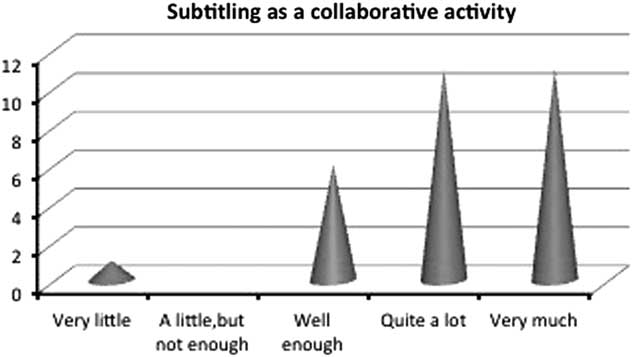
Another section of the final questionnaire was related to CATIL as a collaborative experience. As already mentioned, this was not the first collaborative piece of work for more than half of the researched population. The students had not been asked for their interest in collaborative projects before the experiment (on the assumption that registration was itself a sign). However, as shown in Figure 8, the level of acceptability for this type of collaborative activity by students, once the experiment had finished, was remarkable.
Subjects’ assessment of the project as a whole.
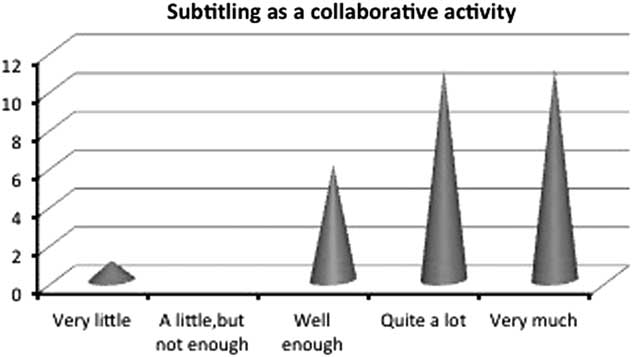
These results were interpreted positively as they reinforced a fundamental aspect of language learning (collaboration) and, in that sense, the project presented in this article provides evidence of the various social, cognitive, metacognitive and epistemological affordances for language students within a multimodal translating scenario which incorporates collective work stages. The nature of learning is that of a socially mediated process. Therefore, successful learning occurs when social interaction produces cognitive development, i.e., there is a fundamental dynamic internalization of language from the interpsychological to the intrapsychological level. The rise of collaborative learning practices in a general sense, partly as a result of the prominence of Social Constructivism, challenges the prevailing detailed and strictly structured learning/teaching methods (Lowych & Pöysä, Reference Lowych and Pöysä2001; Palincsar, & Herrenkohl, Reference Palincsar and Herrenkohl2002). The authors argue that the emergent processes and outcomes in collaborative learning settings like the one presented here are greatly determined by the joint activity and interaction of the participants (under the close supervision of a teacher or instructor, who becomes “the guide on the side, rather than the sage on the stage” (King, Reference King1993)). This learning modality is particularly engaging and fruitful for SL students, despite the small problems that may occur when undertaking the collaborative activities (such as lack of synchronization, member drop-out, and different levels of engagement and participation). Thus, the social approach helps the group members make the most of the work, both collectively and individually, in a way that is more powerful and engaging than any problems that they may have to overcome in the process, caused by themselves or their peers.
In a section of the questionnaire, students were specifically asked to rate the different aspects of the collaborative study. Their assessment (from highest to lowest) was: (1) the personal opportunity to contribute to subgroup discussion and to provide feedback to peers therein; (2) own reflection and self-correction after subgroup discussion; (3) peer feedback and comments; and (4) teacher guidance and assistance with epistemological, methodological, administrative and technical queries throughout the project. In these four (closed) questions, the option that was selected the most by the subjects as a whole was the second from the top (on a scale from 1 to 5) for the four items, so there was little difference in the subjects’ impressions, which were in general highly positive.
Teacher observation confirmed the previous discussion in the students’ dedication to the project (which revealed a high level of commitment and genuine interest in the activity) and the opinions expressed by them, mostly in the forums, but also retrieved from the final open question contained in the post-questionnaire. Forum participation oscillated between high (in groups 2, 3 and 4 with over 100 messages posted) and very high (in groups 1 and 5 with up to 259 messages). English was used as the vehicular language about 70% of the time (this is far higher than in the common forums present in the online virtual community corresponding to the subject they were studying at the time). One aspect worth emphasizing here is that the majority of the messages were about the activity itself (questions and opinions about tricky translational pairs, discrepancy with a peer’s contribution, etc.). The technical and the methodological forums received most messages at the beginning of the experiment, when the students felt unsure about the location, access and use of the tools and resources, and the deadlines of the different stages. There were very few students who did not follow the chronogram, which added to the general proactive and friendly atmosphere.
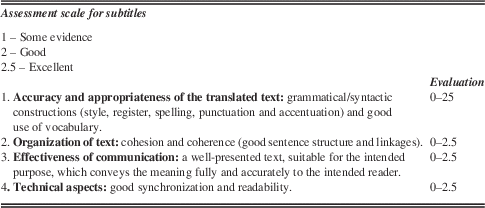
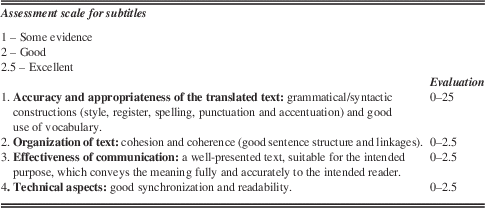
As for the final videos, they were evaluated following the CEFR’s B1 criteria, since this was the level of the ESL course that the students were undertaking at the time. Table 4 shows the assessment rubric used (both by students and teachers) to evaluate the final subtitled products.
Assessment rubric used for the subtitles
a. Students should provide a complete and accurate translation of the source text without omissions, additions or distortions.
b. Students should aim to provide a text which reads like an authentic piece of writing in the target language.
c. Students should display good awareness of intercultural differences and be able to express these well.
d. Illegibility and incoherence will be penalized, and extremely good global internal and external construction may be given one extra point.
Each of the five subgroups managed to select the best subtitles produced by its members, according to the teachers. This shows again that the activity had enabled the students to apply their metacognition, which is considered to be a highly useful learning mechanism for adults. The teachers were satisfied with the overall results of the experiment, considering the students’ initial level of English, the lack of familiarity with the subtitling activity and other circumstances (such as the rather busy study period during which the experiment took place). There was a significant total coincidence in the lowest and the highest scored criteria in all five subgroups, the lowest being “accuracy and appropriateness of the translated test”, which received an average of 6.5 points (out of 10), as opposed to “organization of the text”, which received an average of 9 (out of 10) and was the highest scored criterion. This makes sense given that all of the subjects were ESL students who had not studied translation. All evaluation sheets (corresponding to the final videos selected to represent each group) were uploaded to the platform by the teaching team and made available to the corresponding subgroups, together with different congratulatory/encouraging remarks about the work performed during the project, the quality of their final outcome and the progress obtained.
6 Conclusion
This article presents research work that explored the efficiency of CRS as an activity for the enhancement of writing skills in an SL context and the dynamics of undertaking such an activity collaboratively. It was undertaken in the form of a teaching project that was designed and carried out with a group of first year Spanish distance university students of ESL.
The outcome of the project, the subtitled videos produced by the subjects, and the various analysis and procedures applied to the learning process (in the form of tests, questionnaires, etc.) confirm that the experiment produced the expected results in the subjects under study, i.e. they improved their written production in a substantial way. It should be emphasized that it is the discursive aspects of the process, such as coherence, cohesion and idea structuring that underwent a remarkable improvement, while more formal linguistic aspects, like spelling, grammar, register and style, did not experience such noticeable progress (lexical retrieval strategy and detachment from mother tongue structure, however, were seen to improve as a result of the above). This is coherent with the nature of the subtitling activity, which, unlike some types of written translation, is inherently communicative and functional. Furthermore, the structure of videos in scenes and dialogue interventions, and the layout of the software interface promote a strong focus on aspects such as information extraction (working top down, from overall messages to precise information items), semantic condensation, expressive synthetization and idea organization (discrimination, prioritization and sequentiation). These properties are at the core of the specification of the CEFR for written production at B1 (the level of the subject and of the majority of the participants), since their impact in the overall quality of writing (their contribution to textual intelligibility, comprehension, message transmission, reader’s empathy, readability, etc.) is considerably superior to other issues such as linguistic accuracy and correctness.
Finally, it was particularly relevant for the authors of this article to observe for the first time how students showed evidence of appreciating the collaborative study context they were in. In the past, the authors have published extensively on the dependency of distance university students on teacher guidance and corrections rather than peer feedback, and their strong preference for receiving rather than providing feedback, both of which are at the core of collaboration. While the subjects of CATIL appreciated their own written production work and individual metacognitive episodes, these were closely followed by peer feedback and, finally, teacher guidance and assistance, which used to be the most valued aspect in previous didactic projects.
Therefore, this research can be argued to be successful both in providing scientific evidence in favour of the usefulness of AVT in the form of CRS for the development of written productive competence, and in revealing an unprecedented motivation and willingness in the ESL student population to engage in initiatives involving subtitling (as a technology-based translation technique), authentic language, audiovisual materials and collaborative work. Both methodological and technological progress in the fields of learning and translation are slowly but steadily combining to widen and improve the possibilities for the effective development of SL competences. Projects like the one presented in this article provide evidence of different social, cognitive, metacognitive and epistemological affordances for language students when their visual and aural levels are integrated with their writing level within a multimodal translating scenario that combines individual and collective working. Further research and classroom use are required for continued revisiting of the old methods, and for consolidating and refining the new findings.