1. Introduction
Collaborative learning has been gaining popularity for several affordances considered conducive to student learning, including encouraging engagement, promoting higher-order thinking skills, and improving the retention of knowledge (Brown, Reference Brown2008; Johnson, Johnson & Smith, Reference Johnson, Johnson and Smith1998). It involves the joint intellectual efforts of learners as they mutually search for understanding, explore available information, produce meaning, and create a product. Deeply rooted in the sociocultural theory of learning (Vygotsky, Reference Vygotsky1978), collaboration allows learners to construct knowledge through interactions in social contexts. Language-learning research has consistently shown that tasks that involve collaborative work encourage learners to reflect on their language use and provide opportunities for learners’ mutual feedback and knowledge construction to emerge (Dobao & Blum, Reference Dobao and Blum2013; Kim & McDonough, Reference Kim and McDonough2008; Watanabe & Swain, Reference Watanabe and Swain2007).
Another rising trend in education is the integration of technological applications into learning environments. The multiplicity of technology attributes as well as the various ways of integrating them into collaborative work have presented wide possibilities for interplay between learning and technology. The research area of computer-supported collaborative learning (CSCL) has emerged during the past two decades to explore the extent to which technology integration assists collaborative learning and the meaning-making process (Stahl, Koschmann & Suthers, Reference Stahl, Koschmann, Suthers and Sawyer2006). The scope of CSCL research spans from online to on-site settings, including the potential of the Internet to connect geographically remote people in innovative ways synchronously and asynchronously (Stahl et al., Reference Stahl, Koschmann, Suthers and Sawyer2006) and the way software applications support face-to-face collaborative learning (Crook, Reference Crook1994; Gutiérrez, Reference Gutiérrez2006; Lin, Chan & Hsiao, Reference Lin, Chan and Hsiao2011). CSCL has also explored the availability of Internet resources to facilitate collaborative discussions between learners (Stahl et al., Reference Stahl, Koschmann, Suthers and Sawyer2006). However, studies on such Internet-based collaborative pedagogy are mostly situated in science classrooms (Kuiper, Volman & Terwel, Reference Kuiper, Volman and Terwel2009; Petra, Jaidin, Perera & Linn, Reference Petra, Jaidin, Perera and Linn2016; Raes, Schellens, De Wever & Vanderhoven, Reference Raes, Schellens, De Wever and Vanderhoven2012). Limited attention has been paid to how Internet resources can enrich language learners’ face-to-face collaborative learning experiences.
The current study addresses the gaps in CSCL research by exploring the role of Internet support in collaboration between language learners and the extent to which online resources assist them in the meaning-making process. As this study is situated in a language-learning setting, online resources refer to any website or online tool that learners may find useful in support of their writing process, concept understanding, and language use (e.g. online dictionaries, discussion forums, etc.). To see possible impacts of Internet resources on learner interaction patterns, participants worked on a task in pairs in both conditions, with and without Internet support. Their collaborative discourse was examined. Currently, around 70% of CSCL studies have focused on the analysis of textual data in asynchronous or synchronous online settings (Jeong, Hmelo-Silver & Yu, Reference Jeong, Hmelo-Silver and Yu2014); less research has focused on the analysis of face-to-face interactional data. This study also addresses this gap by focusing on learners’ face-to-face interactions in terms of the dynamics of scaffolding and their collaborative discourse. The two concepts will be elaborated upon in the literature review.
2. Literature review
2.1 Scaffolding
Scaffolding was first defined by Wood, Bruner and Ross (Reference Wood, Bruner and Ross1976) as a “process that enables a child or novice to solve a problem, carry out a task or achieve a goal which would be beyond his unassisted efforts” (p. 90). The assistance a teacher or an expert gives to a student or a novice is critical for their accomplishment, and it has the potential to facilitate learners to progress in their zone of proximal development (ZPD). ZPD was conceptualized by Vygotsky (Reference Vygotsky1978) as the learning space in which an individual obtains assistance and support from others to move to a higher level of performance. The six features of scaffolding include drawing learners’ attention to the desired version of a task, reducing the complexity of a task, motivating and engaging learners, highlighting critical features of a task, reducing the chance of failure, and providing learners with ideal models of required actions. By offering leading questions, showing how a problem can be solved, initiating the solution, or providing necessary hints, teachers or experts can help learners reach a higher level of performance when they encounter difficulties. On the other hand, many have argued that scaffolding also occurs among peers in collaboration (Bull et al., Reference Bull, Shuler, Overton, Kimball, Boykin and Griffin1999; Crook, Reference Crook1994; Donato, Reference Donato, Lantolf and Appel1994). Peer interaction provides a venue for learners to engage in dialogue and create scaffolding when they have difficulties or differing perspectives. Crook (Reference Crook1994) also stated that collaborations typically involve “equitable levels of expertise among the participants” (p. 150), so members in a pair are both non-experts who need to work together and provide mutual assistance to discover ways of completing a task or solving a problem. Conflicts and negotiation may result in the construction of new conceptual structures and knowledge. Therefore, working collaboratively provides a forum in which peer-to-peer scaffolding can emerge.
In addition, as stated in Hannafin and Land (Reference Hannafin and Land1997), “Scaffolding … is not limited solely to student-student and teacher-student interactions. Rather, technology-enhanced environments often provide the conceptual scaffolding and means (resources, tools) to promote personal and individual reflection” (p. 194), so the construct of scaffolding can be further expanded to include technological applications, including educational software and Internet resources (Bruce, Reference Bruce1997; Mavrou, Lewis & Douglas, Reference Mavrou, Lewis and Douglas2010; Peters, Weinberg, Sarma, & Frankoff, Reference Peters, Weinberg, Sarma and Frankoff2011). Technological scaffolding can be seen in features of computer technologies that serve as mediational tools among face-to-face collaborating learners (Gutiérrez, Reference Gutiérrez2006; Lund, Reference Lund2008). For example, in language learning settings, Mavrou et al. (Reference Mavrou, Lewis and Douglas2010) and Gutiérrez (Reference Gutiérrez2006) acknowledged that the presence of notification cues and hints in educational software encourages collaborating learners’ language discussions and negotiations as well as helping behaviors such as providing explanations, which help learners co-construct language-related knowledge. Researchers also found that the design of collaborative-oriented digital systems, such as a shared display screen that shows collaborating learners’ integrated work during a joint task, promotes mutual interactions and discussions, contributing to more effective knowledge construction in collaborations (Chung, Lee & Liu, Reference Chung, Lee and Liu2013; Nussbaum et al., Reference Nussbaum, Alvarez, McFarlane, Gomez, Claro and Radovic2009). Contextualized in a technology-supported learning setting, this study focuses on peer scaffolding as well as technology scaffolding (particularly Internet sources) during collaboration. The concept of scaffolding is closely related to collaborative discourse.
2.2 The structure of collaborative discourse
Effective collaboration involves the joint intellectual efforts of learners as they explore available information. Researchers have indicated that the most significant indication of effective collaboration is learners’ attempts to establish mutual understanding and shared knowledge (Crook, Reference Crook1994; Roschelle & Teasley, Reference Roschelle, Teasley and O’Malley1995). Such mutual understanding can be achieved through several discourse patterns such as turn-taking, collaborative completion, repairs, narration of intentions, elaboration of ideas, and knowledge convergence upon a solution. Studies in language learning collaboration suggest that mutual understanding can be achieved through collective scaffolding, which include collective co-construction (incorporation of each other’s utterances), requests for assistance, questioning competing forms, jointly managing components of the problem, and other- or self-correction (de Guerrero & Villamil, Reference de Guerrero and Villamil2000; Donato, Reference Donato, Lantolf and Appel1994; Foster & Ohta, Reference Foster and Ohta2005). Studies on collaborative writing tasks also documented learners’ several collaborative patterns that support their shared tasks. De Guerrero and Villamil (Reference de Guerrero and Villamil2000) found that learners supported their joint task with “scaffolding mechanism” (p. 64) through mutual engagement, discussions on differing opinions, explanation, modeling, and the establishment of shared focus and intention.
With a micro-level analysis of learner interactive discourse, Storch (Reference Storch2001) identified certain linguistic features as collaborative discourse such as first-person plural pronouns (e.g. we, us) and the presence of metatalk, which is learners’ metalinguistic discussion about grammatical and lexical choices (Swain, Reference Swain, Cook and Seidlhofer1995). The metalinguistic understanding of how language shapes and creates meaning in written and spoken contexts has proven to be a pedagogical tool that greatly facilitates language learning (Swain, Reference Swain and Byrnes2006). It can include language definitions (e.g. word choices and collocations) and function of features (e.g. personal pronouns, tense, and prepositions). Studies have adopted the construct of metatalk to analyze teachers’ talk to understand how they help learners explore language meanings in writing (Myhill & Newman, Reference Myhill and Newman2016) and peer-to-peer talk to investigate learners’ verbalized strategies to solve problems in language-focused tasks (Ishii, Reference Ishii2011).
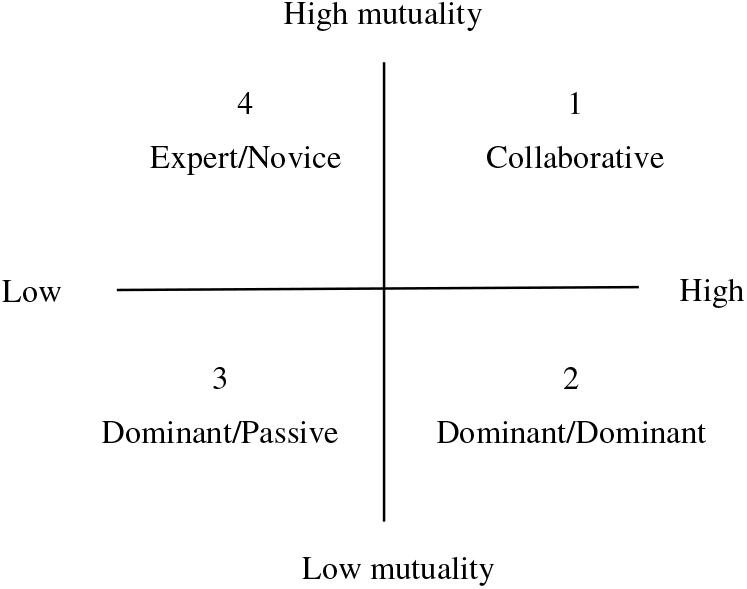
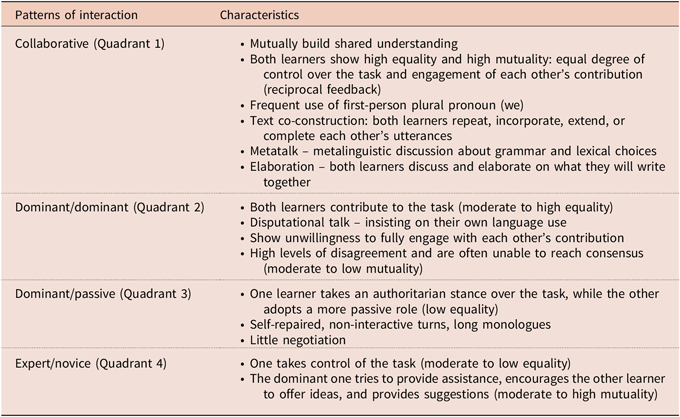
Apart from collaborative discourse, Storch (Reference Storch2002a, Reference Storch2002b) also documented other patterns of interaction when examining pair interaction patterns among English-as-a-second-language (ESL) adult learners who worked on writing tasks. The study focused on equality (the degree of control or authority over a task), mutuality (the level of collaborators’ engagement with each other’s contributions), as well as linguistic features to analyze learners’ interaction. Four patterns of interaction were identified: collaborative (high equality, high mutuality), dominant/dominant (high equality, low mutuality), dominant/passive (low equality, low mutuality), and expert/novice (low equality, high mutuality) (see Figure 1; Storch Reference Storch2002a). Table 2 explicates the distinctive interactional characteristics of each pattern with studies reviewed in the literature; the patterns are used as the analytical tool in this study. Among the four patterns, collaborative and expert/novice patterns were identified as “collaborative-oriented” and considered conducive to language learning and knowledge transfer (Storch, Reference Storch2001, Reference Storch2002a, Reference Storch2002b; Watanabe & Swain, Reference Watanabe and Swain2007). The dominant/dominant and dominant/passive situations, in which over-authoritarian stance was observed, were considered harmful to effective collaboration.
Storch’s framework of four patterns of interaction (Storch, Reference Storch2002a)

2.3 Internet resources as a support for meaning-making processes
The multiplicity and diversity of online information create a powerful learning environment (Chang et al., Reference Chang, Liu, Lee, Chen, Hu and Lin2011; Greene & Azevedo, Reference Greene and Azevedo2010). Internet resources have been acknowledged as an important source of scaffolding for their potential to assist learning and knowledge construction in learners’ immediate environments (Kim & Hannafin, Reference Kim and Hannafin2011; Larson-Guenette, Reference Larson-Guenette2013; She et al., Reference She, Cheng, Li, Wang, Chiu, Lee, Chou and Chuang2012). For instance, in a language learning setting, online resources such as online dictionaries and language learning websites help language learners expand knowledge, improve accuracy (Hughes, Reference Hughes2013; Peters et al., Reference Peters, Weinberg, Sarma and Frankoff2011), be exposed to other cultures (Larson-Guenette, Reference Larson-Guenette2013), and broaden the scope of their learning through alternative ways of learning (Bruce, Reference Bruce1997). Situated in a collaborative learning context, online resources allow learners to engage in interactive talk in the meaning-making process through exploring diverse resources online to interpret and compare different concepts (Kuiper et al., Reference Kuiper, Volman and Terwel2009; Stahl et al., Reference Stahl, Koschmann, Suthers and Sawyer2006; Suthers, Reference Suthers2005). Hannafin and Land (Reference Hannafin and Land1997) also noted that this meaning-making process evolves as learners reflect on their understanding and express their agreement or disagreement on certain online information. Currently, most studies on the benefits of online resources for language learning focused on individual (Hughes, Reference Hughes2013; Larson-Guenette, Reference Larson-Guenette2013; Peters et al., Reference Peters, Weinberg, Sarma and Frankoff2011) rather than collaborative learning settings. Empirical studies on interaction patterns among collaborating language learners and Internet resources are scant, leaving a research gap in the field. Therefore, the main research question in this study is, what is the nature of language learner interactions with Internet resources and how can Internet resources assist collaborating learners in the meaning-making process?
3. The present study
3.1 Research design
This classroom-based case study was conducted in two classes enrolled in a freshman English course at a national university in southern Taiwan. In accordance with Storch (Reference Storch2002a, Reference Storch2002b), this case study focuses on an in-depth analysis of learner dialogic interactions to examine their collaborative patterns. This is a one-semester compulsory course, aiming to improve intermediate English-as-a-foreign-language (EFL) students’ language proficiency. Students meet for a two-hour session and a one-hour session each week for a total of three hours. The study was conducted over three sessions for each class during normal class time in the middle of the semester, during which the researcher assumed the role of instructor. This study explores how learners interact with each other with the support of online resources. Learners’ interactions were examined as they engaged in a collaborative writing activity in pairs in two settings: they first constructed a text in English without Internet support, and in the next session they constructed another text with Internet support. In the Internet-supported setting, students could use any online resources available (e.g. online dictionaries, public forums, or online mind-mapping tools) to support their language use and help organize their ideas. The comparative nature of the methodology allowed the researcher to identify changes in interaction patterns and the dynamics of scaffolding that might be impacted by Internet support. The writing task in the study was integrated into their regular curriculum as a writing assignment. The primary data set was the video recordings of learners’ interactions across the two settings and a stimulated recall interview with each pair.
3.2 Participants
Two freshman English classes, a total of 56 students (28 pairs), participated in this study. The class instructor indicated that the two classes had comparable intermediate-level English proficiency. The participants were male (65%) and female (35%) native speakers of Mandarin. Among them, around 80% majored in science (primarily engineering and medical studies) and the rest in humanities (history, economics, and politics). Following previous studies exploring learner interaction patterns (Gutiérrez, Reference Gutiérrez2006; Storch, Reference Storch2002a), this study adopted a self-selected pairing arrangement based on participants’ familiarity with each other.
3.3 Data collection
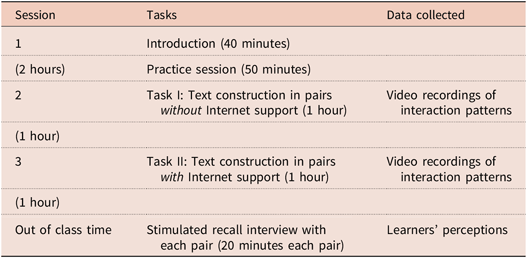
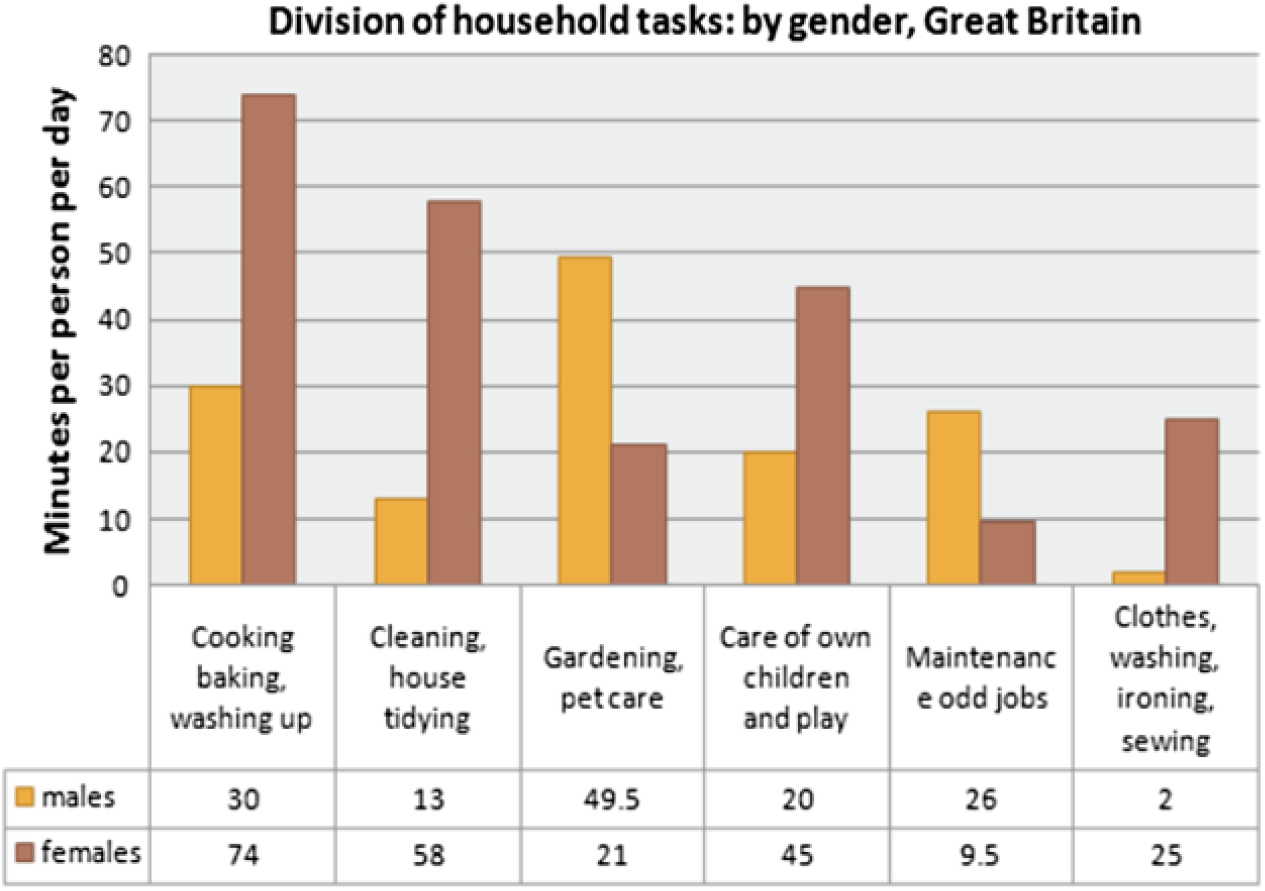
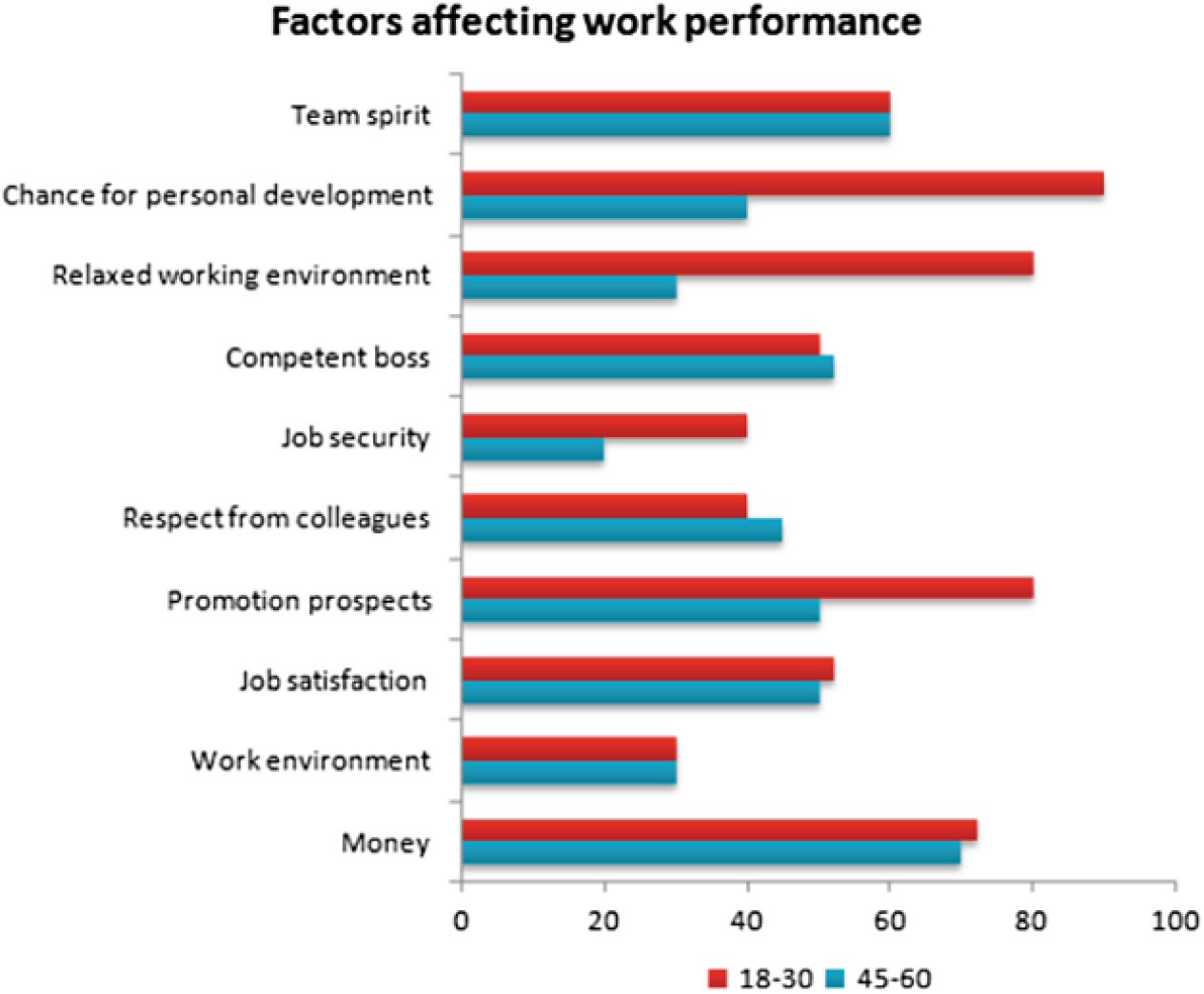
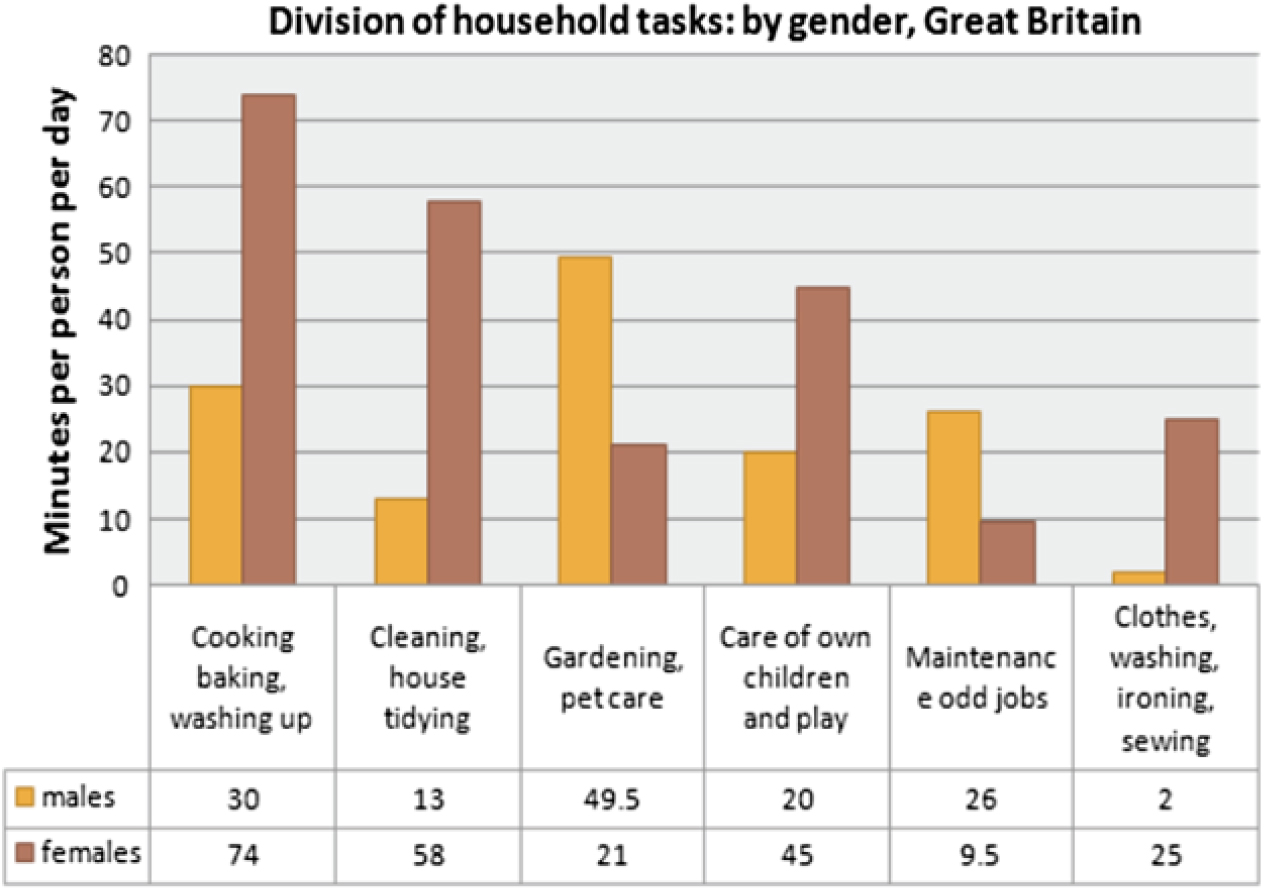
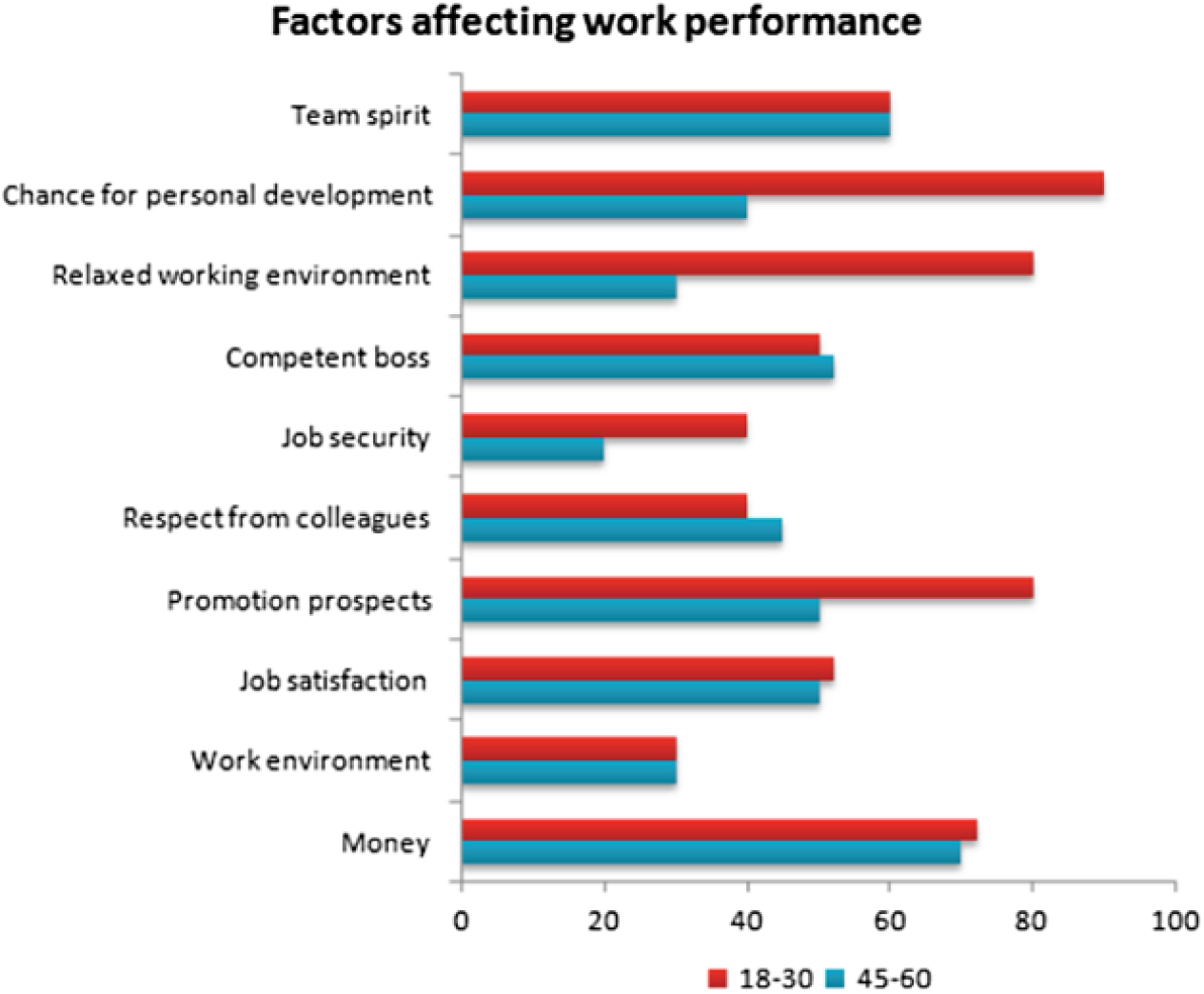
Table 1 shows the time frame of the data collection procedure. In session 1, the researcher introduced the collaborative writing task to familiarize students with such a writing mode. The introductory session was followed by a practice session, in which students practiced writing a 150-word essay in pairs. The actual writing tasks began in session 2. Students co-constructed a 150-word essay in pairs in response to a prompt (see Appendix A Footnote 1 ) without the support of online resources. In session 3, students co-constructed another 150-word essay to another prompt (see Appendix B Footnote 2 ) with the support of online resources in a computer lab, where two students in a pair shared a computer for online search. The prompts were adopted from a global English test (IELTS), which is also the English graduation benchmark in this university. Students were asked to analyze the information in a chart and interpret it. The language difficulty of the two prompts is intermediate level according to the Flesch–Kincaid readability test. In both settings, students wrote in paper-and-pencil mode, following their usual in-class writing mode in this course. Each pair’s writing process in both settings was video-recorded with individual devices. A follow-up 20-minute stimulated recall interview was conducted with each pair out of class time. In the interview, their writing product and video recordings were used as stimuli for them to further elaborate their experiences and the challenges they encountered. The participants viewed particular moments chosen by the researcher and answered questions about their thinking processes and intentions during those moments. Sample questions included, “In what way do you think the online information helped you when you constructed this sentence?” and “What made you change the word use?”
Time frame of the data collection procedure

3.4 Data analysis
The transcripts of the participants’ interactions in the two settings were the main sources of data. The video recordings allowed the researcher to note down students’ contextual/behavioral information (e.g. writing, checking online, pauses). Storch’s (Reference Storch2002a) framework of learners’ patterns of interaction was used to identify and examine participants’ interaction patterns. The data analysis procedures comprised three steps: identifying patterns of interaction, identifying emerging interactional characteristics, and documenting impact of Internet use.
First, based on distinctive interactional characteristics identified in the literature (Crook, Reference Crook1994; Donato, Reference Donato, Lantolf and Appel1994; Foster & Ohta, Reference Foster and Ohta2005; Roschelle & Teasley, Reference Roschelle, Teasley and O’Malley1995; Storch, Reference Storch2001, Reference Storch2002a; Wegerif & Mercer, Reference Wegerif and Mercer1996), and summarized in Table 2, the researcher identified the participants’ patterns of interaction in both settings as collaborative, dominant/dominant, dominant/passive, and expert/novice, visualized as Figure 1. A second reviewer, also professionally trained in data coding, was given randomly selected transcripts to identify the pairs’ patterns of interaction. To ensure the reliability of coding, disagreements were identified and discussed until 100% agreement was reached. In a second step, the researcher documented emerging interactional characteristics in the second setting (with Internet support) for each pair. This step helped to understand the differences in the way the participants built shared understandings across the two settings. Third, the researcher conducted a member-checking technique in the post-task stimulated recall interview with each pair to confirm the causes of the changes in their interaction characteristics (e.g. the scope of language discussions). The process thus documented changes that may have been caused by the support of the Internet.
Distinctive characteristics of each pattern of interaction

4. Results
This study explores the nature of collaborating learners’ interactions with the support of online resources and how the resources can assist the learners in the meaning-making process. The results present changes in the participants’ overall interaction patterns across the two settings and emerging characteristics with the support of the Internet.
4.1 Shifts in interaction patterns across the two settings
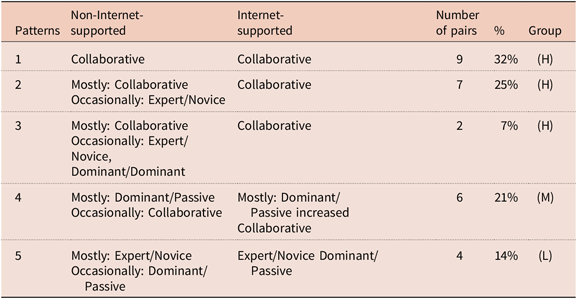
Five distinctive shifts in patterns of interaction were identified among the 28 pairs across the two settings, as shown in Table 3. They are arranged in accordance with the degree of collaborative orientation displayed (pattern 1 the most collaborative and pattern 5 the least). Over half of the pairs displayed collaborative patterns in both settings. In pattern 1 (nine pairs) and pattern 2 (seven pairs), the participants were predominantly collaborative in both settings. In pattern 3 (two pairs), they were predominantly collaborative with occasional non-/less collaborative scenarios and became fully collaborative with Internet support. Pairs in these patterns were further categorized as the “high collaboration group (H),” in which collaborative orientation was demonstrated predominantly compared to those in other patterns. In the less collaborative pattern, pattern 4, six pairs primarily exhibited a dominant/passive pattern but grew more collaborative subsequently and were labelled as the “moderate collaboration group (M).” The four pairs in pattern 5, who started with a mainly expert/novice and dominant/passive pattern and became even more non-collaborative, were labelled as the “low collaboration group (L).”
Shifts in interaction patterns across the two settings among the 28 pairs

Note. H = high collaboration group; M = moderate collaboration group; L = low collaboration group.
An overview of the primary pattern of interaction across two settings shows that most of the pairs either maintained or grew more collaborative-oriented with Internet support except for the L group. Observed themes are discussed and illustrated with representative excerpts (Chinese is translated into English in italics).
4.2 Emerging collaborative characteristics
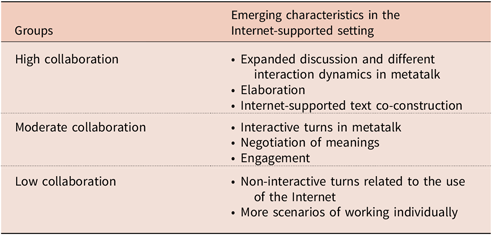
Table 4 summarizes the collaborative characteristics that emerged when they had Internet support for the three groups. The changes in the participants’ collaboration characteristics caused by Internet use are discussed in detail as follows.
Collaborative characteristics that emerged with Internet support

4.2.1 High collaboration group
These 18 pairs demonstrated a highly collaborative pattern of interaction with several collaborative characteristics displayed repeatedly in both settings: text co-construction, metatalk, reciprocal feedback, narration of intention, and elaboration of ideas. They were actively engaged and showed high equality and mutuality, except for occasional non-collaborative patterns in pattern 2 and 3. There was considerable metatalk that focused on lexical knowledge, such as meanings, spellings and uses. With Internet support, the learners engaged in a wider range of activities, such as expanded metatalk, elaboration, and Internet-supported text co-construction.
Expanded metatalk
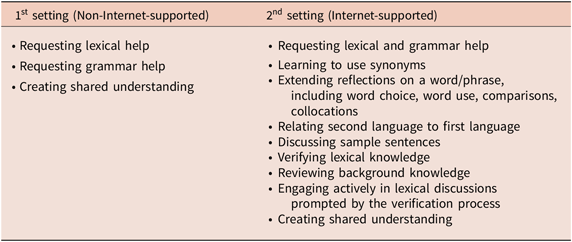
Among the collaborative characteristics, metatalk made up the largest proportion of each pair’s conversation. Therefore, the most evident differences in learners’ interaction across the two settings were observed in metatalk. The differences included (1) the scope of the content, (2) the dynamics of the peers’ scaffolding and interactions, and (3) the effectiveness of discussion. Table 5 summarizes the differences in the scope of metatalk across the two settings.
The differences in the scope of metatalk across the two settings

In the setting without Internet support, learners’ metatalk mostly focused on lexical and grammatical discussion. Unsuccessful attempts to solve language difficulties led to breakdowns in their conversation. However, when they had access to online resources such as dictionaries and public discussion forums, the content of metatalk became extensive. Apart from lexical and grammatical discussion, the most frequently observed theme was the attempt to learn to use synonyms found in online dictionaries to avoid word repetition (see Excerpt 1). Hua and Fen managed to find a synonym for “abilities” online to complete the sentence.
Learning to use synonyms

Also, extended reflections on synonyms, antonyms, collocations, pronunciations, and even L1–L2 relation were observed as they tried to use them in their writing (see Excerpt 2). Provided with sample sentences in the dictionaries, learners were also engaged in the analysis of sentence structure as they tried to apply it in their writing. In addition, when learners verified their linguistic knowledge with online resources, they indicated that the process effectively helped them review what they had learned before (see Excerpt 3) and prompted active brainstorming on proper word choices and use (see Excerpt 4).
Extended reflections on words/phrases (L1–L2 relation)

Review of background knowledge

Active brainstorming prompted by the verification of lexical knowledge

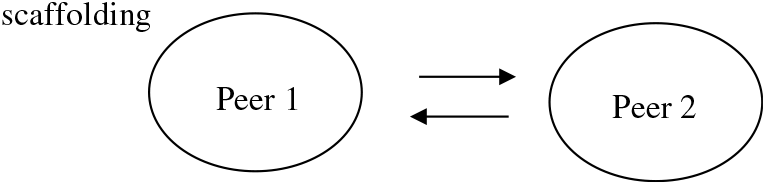
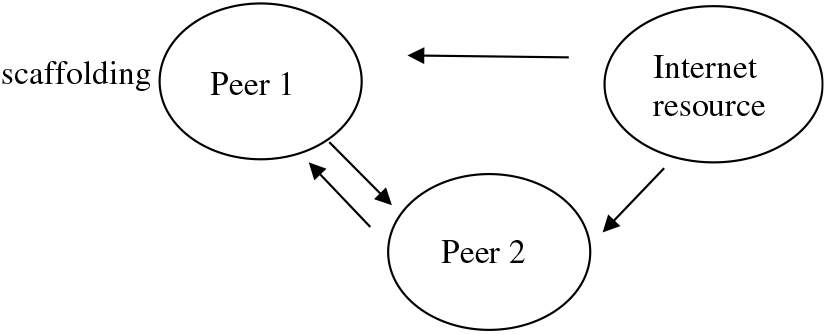
Excerpt 3 shows how their background knowledge was activated. Mu-Fan searched for a synonym for “city” (line 55) and found the word “urban,” and Yang gave affirmative feedback. Immediately afterwards he noticed its antonym in the dictionary and recalled the word “rural” (line 56) by saying rural is the countryside, yeah. With the Internet information as scaffolding, Yang was able to extend his reflection on a word and recall a related word. In Excerpt 4, when Mu-Fan and Yang verified their knowledge of the word “affect” with the dictionary, they were engaged in brainstorming (affect, influent, effect, and influence) as they attempted to reach accuracy. In this setting, learners had access to multiple sources of scaffolding – their peers and the Internet. The two types of scaffolding became blended and mutually strengthened as their interactions progressed. Figure 2 illustrates the mutual scaffolding between peers in the first setting. Figure 3 presents the scaffolding in the second setting, where Internet resources scaffolded the learners and prompted more collaborative characteristics, encouraging greater interaction between the peers.
The dynamics of scaffolding of collaborative pairs without Internet support

The dynamics of scaffolding of collaborative pairs with Internet support

Also, language difficulties were more effectively solved. With the Internet, when learners encountered difficulty solving language problems, the unsuccessful attempts yielded misunderstandings, inaccurate language decisions, or unanswered metatalk. Breakdowns in conversations occurred. With the support of Internet resources, most of the requests in metatalk discussion were more effectively addressed. Online search and elaborated discussions on language use helped the learners obtain satisfactory answers to their questions. There were also fewer long pauses caused by language difficulty in the conversation.
Elaboration
Elaboration is a form of discussion in which learners extend their ideas on what they will write together. The participants reported that the access to online resources stimulated brainstorming, contributing to the elaboration of ideas in writing. They searched for related information when they brainstormed for ideas. Although most of them could elaborate on their ideas together in both settings, some contributed to this process more actively with the support of online resources. In Excerpt 5, Shu-Hao and Shi-Yu were brainstorming about “income and family.” The phrase “make ends meet” that they found online stimulated the elaboration of ideas as they tried to incorporate them into their writing (lines 14, 15).
Elaboration of ideas prompted by online resources

Internet-supported text co-construction
Text co-construction is where both learners repeat, incorporate, extend, or complete each other’s utterances. It occurred in both settings, but more frequently when they had Internet support. In Excerpt 6, Fen and Hua obtained useful information in a public discussion forum Yahoo Answers (line 39) to complete a sentence (line 40). Provided with rich information, both learners were more willing to try to use alternative words and complex sentence structures.
Internet-supported text co-construction

4.2.2 Moderate collaboration group
The six pairs in the moderate collaboration group primarily exhibited a dominant/passive pattern across the two settings with plentiful monologues and self-directed turns. However, more collaborative activities were observed when they had Internet support, which signified their emerging collaborative pattern. Those activities included interactive turns in metatalk, negotiation of meanings, and learner engagement.
Interactive turns in metatalk
When the dominant peer took control of the Internet search, the conversation remained non-interactive and authoritarian and the passive peer remained passive. As Lin et al. (Reference Lin, Chan and Hsiao2011) noted, when learners are not given the chance to operate the computer, some tend to withdraw their attention from a task, especially for passive or less proficient peers. However, this pattern was countered when the passive peer was in charge of online information search. As they became the information provider, they assumed a more active role in their conversation, as exemplified in Excerpt 7. Lee appeared passive while Ding dominated the discussion, leaving little space for interactive conversation. With Internet support, a two-way discussion pattern was observed, signified by higher turn interactivity and shared control of the task. In lines 34, 36, 42, Lee became more active when he adopted the role of information provider to help Ding complete the sentence (line 43). Their metatalk became interactive with reciprocal turns (request-answer). Lee became more involved by contributing to the text construction.
Interactive turns

Negotiation of meanings
For this group, the occurrence of negotiation of meaning was initially rare. With the emergence of interactive turns, negotiation of meaning was more likely to occur as the passive/less proficient peer was able to verify his lexical knowledge with online resources and contribute to the language discussions. Excerpt 8 shows their discussion of the phrase “promotion prospect,” which Ding mistakenly interpreted as “winning people’s respect.” Lee challenged Ding’s idea in lines 46, 48 and 50, but was uncertain about its exact meaning. He then verified his knowledge and was able to negotiate the meaning with Ding (line 52), which helped Ding reach a clearer understanding.
Negotiation of meanings

Learner engagement
With the unbalanced equality over a task, the passive peers in the moderate collaboration group usually appeared disengaged. Their role seemed to be limited so they either kept silent or gave phatic utterances (e.g. “mm” or “yeah”) in response to the dominant peers’ ideas. With the development of collaborative characteristics shown in interactive turns and negotiation of meanings, the participants grew more engaged in the task. As they reported, the role as the information provider enabled them to feel “active” and engaged in metatalk. The engagement was also observed during information search, when both peers focused on the computer display and studied the information together.
4.2.3 Low collaboration group
The low collaboration group was the smallest of the three groups (four pairs). They primarily displayed less/non-collaborative patterns across the two settings. Their non-interactive pattern can perhaps be explained by the individual’s personality or their large language proficiency gap, which held them back from making contributions to language discussions. The characteristics displayed in the two settings included the expert/novice pattern, difficulties in mutual understanding, non-interactive turns and individual working pattern, which occurred sequentially. As the passive/lower proficient peers were usually not confident speaking English, initially, the dominant/higher proficient peers would attempt to involve their partner by asking questions and eliciting ideas (expert/novice pattern). When interaction seemed difficult, the non-interactive turns took over and finally developed into an individual rather than a collaborative working mode. Access to the Internet did not seem to change this pattern; instead, they were engaged in individual online search without sharing information with each other. Internet support in this case seemed to function as a personal language support tool, rather than to encourage interactive metatalk or collaboration. In Excerpt 9, Chang-Yi (passive, lower proficient) looked up some words in a dictionary without sharing any information with Kao (dominant, higher proficient), who was fully engaged in his own online search and writing. Kao’s self-directed one-way conversation left Chang-Yi out of the conversation and the task.
Non-interactive pattern

5. Discussion
Overall, most of the pairs either maintained or grew more collaborative oriented with the support of online resources except for the low collaboration group, which maintained their low interactive pattern. The results indicate that the access to Internet support might possibly foster certain collaborative characteristics among learners of varied collaboration orientation; on the other hand, learners’ collaboration predisposition may also play a role in influencing their interactions with Internet support. These are elaborated as follows.
5.1 Collaborative characteristics among learners of varied collaboration orientation
For the high collaboration group, the interactions with online resources prompted learners’ active thinking in several areas such as lexical discussion, idea elaboration, knowledge review, knowledge verification, and the application of knowledge. These active thinking activities demonstrate learners’ “IPS [information problem solving] skill” (Brand-Gruwel, Wopereis & Walraven, Reference Brand-Gruwel, Wopereis and Walraven2009: 1207). With such skill, learners integrate and elaborate online information to build relevance with their prior knowledge, so that they can reach a deeper understanding of the information. The current study shows that this skill developed as learners navigated online resources, as reported by the participants that the access of online resources facilitated their higher-order thinking. Also, some participants’ extensive online searches demonstrated a good command of new literacy skills, or Web literacy (Chang et al., Reference Chang, Liu, Lee, Chen, Hu and Lin2011; Leu, Kinzer, Coiro & Cammack, Reference Leu, Kinzer, Coiro, Cammack, Ruddell and Unrau2004), with which they effectively located, synthesized, and communicated online information to create a shared understanding. The quality of their collaboration was thus further enhanced by the presence of such problem-solving skill and Web literacy in their expanded metatalk. On the other hand, the expanded scope of metatalk is the result of multiple scaffolding, where learners had access to multiple sources of scaffolding from peers and online resources. The dynamic flow among peer-to-peer and peer-to-computer interactions produced interconnected scaffolding. As Bull et al. (Reference Bull, Shuler, Overton, Kimball, Boykin and Griffin1999) observed, a well-functioning collaborating group in a computer-mediated setting is maintained by mutual scaffolding involving peers and computers. The participants in the study interacted vibrantly with multiple online resources and their peers to build shared understanding and elaborate their ideas. This finding is also consistent with a previous study that focuses on language learners’ dynamic mutual interactions among peers and online resources as they engaged in the meaning-making process in writing, termed as “multi-directional scaffolding” (Hsieh, Reference Hsieh2017: 126). This type of interaction facilitates learners to co-construct a shared understanding during problem-solving. The current study goes beyond the scope to discuss learners’ changes in collaborative orientation and highlights that learners’ collaborative predisposition can influence their use of online resources to support their interactions.
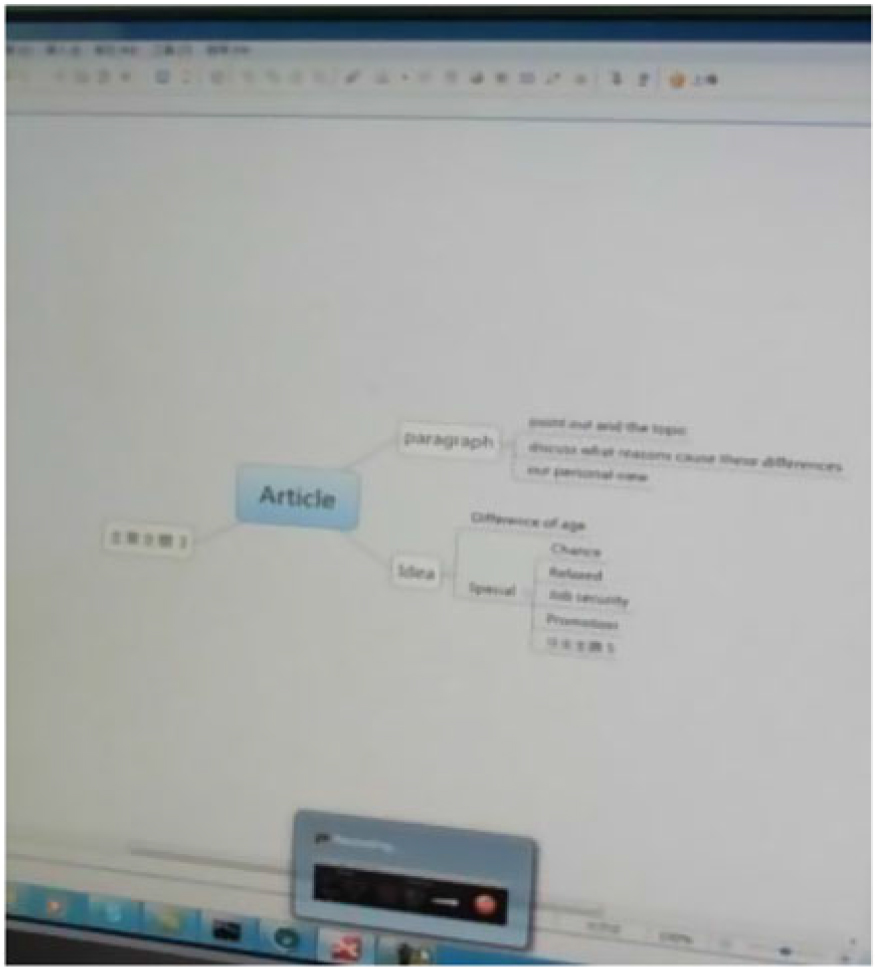
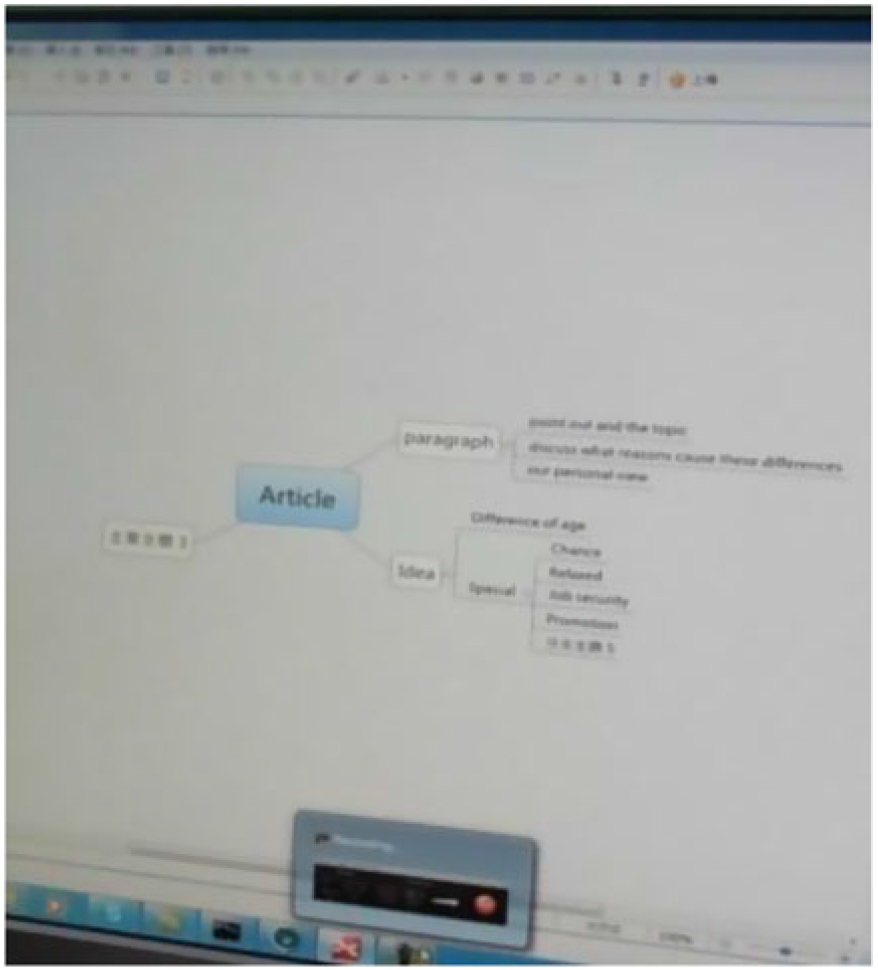
For the moderate collaboration group, the unbalanced weight of authority seemed to be countered to varied extents by the availability of online resources, depending on the extent to which they utilized the Internet as a mediational and engaging tool. Passive peers adopted a more active role in discussion, making the dominant peers less authoritarian. The online language support mediated learners’ negotiation of language decisions and reduced the dominant/passive or dominant/dominant scenarios that might have derived from language proficiency gaps or language decision conflicts. Consistent with previous studies, online resources could be a mediational tool, particularly for less proficient peers in collaborative learning (Lund, Reference Lund2008; Mavrou et al., Reference Mavrou, Lewis and Douglas2010). The shifts in interaction pattern in this study illustrated the value of Internet support. Moreover, reading and discussing information together helped the participants, especially passive peers, stay engaged in their task, which was crucial in their movement toward a more collaborative pattern. For instance, one pair’s use of a mind-mapping tool, “XMind” (see Figure 4), enhanced their engagement in building shared understanding as they visualized their elaboration of ideas. Group members stay “task-engaged” (Crook, Reference Crook1994: 162) when they are attentive to the computer display, and, according to Chung et al. (Reference Chung, Lee and Liu2013), this is when they are more likely to generate higher levels of discussion.
Visualization of ideas: XMind
Another value of online support is the promotion of learner autonomy (Greene & Azevedo, Reference Greene and Azevedo2010). The access to multiple representations of information (e.g. visualization) could potentially accommodate different learning needs and facilitate learners to progress in their ZPD. Hobrom (Reference Hobrom2004) noted that learners’ ability to navigate online resources to accommodate their specific needs reinforces learner autonomy. In this study, the participants reported that they greatly benefited from using online resources because they could find resources to address their individual inquiries at all stages in the process (brainstorming, negotiating, writing, etc.). This allowed them to follow their own pace and develop their own ways of collaborating with each other, which enabled them to develop ownership of their joint work.
As for the low collaboration group, the issue of the imbalance between computer–learner and learner–learner interaction (Dillenbourg, Baker, Blaye & O’Malley, Reference Dillenbourg, Baker, Blaye, O’Malley, Reimann and Spada1996) was always a concern. Learners may depend heavily on the Internet for immediate feedback rather than seeking input from their partner, greatly impeding learner–learner mutual interactions. In this group, online resources supported each peer individually, without promoting interactive turns and discussions. Thus, Internet support seemed to play a minimal role in fostering learner interactions; rather, it triggered more non-collaborative behaviors and an individual working pattern. Such a scenario can be attributed to the lack of peers’ modeling and coaching (Brown, Collins & Duguid, Reference Brown, Collins and Duguid1989) in an expert/novice pair configuration. The “expert” peer in a collaboration could be encouraged to actively provide explicit modeling to encourage the “novice” peer to be more involved in problem-solving. In the current study, although the expert peers attempted to elicit ideas from the novice peers, they failed to provide scaffolding by modeling idea construction (e.g. by verbalizing how they constructed the outline of the writing) and information searching strategy (e.g. by explicitly sharing where to locate useful information and how to use it in writing). However, the “scaffolding provision” ability among learners does not form naturally. Instead, it entails the development of learners’ self-regulatory skills, which is the ability to strategically adjust their own as well as their peer’s learning and cognitive process in a problem-solving context (Järvelä et al., Reference Järvelä, Kirschner, Panadero, Malmberg, Phielix, Jaspers, Koivuniemi and Järvenoja2015). This is a critical skill in an ideal collaborative setting where group members “regulate their collective activity” (Järvelä et al., Reference Järvelä, Kirschner, Panadero, Malmberg, Phielix, Jaspers, Koivuniemi and Järvenoja2015: 128), which is known as shared regulation. Group members would have the awareness of their collective knowledge, how the shared group work is functioning, as well as cognitive strategies that help group members understand difficulties or solve problems in a shared task. Undeniably, such development of shared regulation needs to be facilitated in collaborative activity design and assisted by an instructor.
5.2 Collaboration predisposition is indicative of interaction patterns in the Internet-supported setting
Research advocating the benefits of technology has suggested that the integration of computer use in the classroom helps increase collaborative patterns in group work (Bradley, Lindström & Rystedt, Reference Bradley, Lindström and Rystedt2010; Gutiérrez, Reference Gutiérrez2006; Lund, Reference Lund2008). The results of the study suggested a mixed result in terms of integrating the Internet in support of learners’ interactions. The extent to which Internet access supported collaborative patterns could be influenced by learners’ collaboration predisposition. The highly interactive nature of high collaboration pairs allowed them to effectively use online resources to support their mutual scaffolding and discussions. Therefore, Internet support made them even more collaborative. On the contrary, Internet support may have had a more limited role in encouraging collaborative behavior in the low collaboration group. The lack of interaction between participants in this group (which could possibly be explained by their language proficiency) kept them from having effective mutual discussions at the onset, which in turn caused their individual use of the Internet, reducing their interactions.
6. Conclusion
This study explored the nature of learner interactions with Internet support and how access to online resources can assist collaborating learners in the meaning-making process in the context of a collaborative writing activity. The findings show that access to online resources may foster a variety of interaction characteristics among learners of varied collaboration orientation. Online resources provided a source of scaffolding that promoted active thinking. In addition, the access to multiple sources of scaffolding enabled their dynamic flow of scaffolding for highly collaborative learners. For less collaborative learners, online resources functioned as a mediational tool that assisted learners’ language discussions and negotiations. Online information presented in varied modalities also sustained learners’ engagement, encouraging the emergence of a collaborative pattern. Among non-collaborative learners, on the contrary, online resources may decrease peer interactions. Therefore, the findings also suggest that learners’ collaboration predisposition may influence the way they used online resources to support their interaction. The more collaborative they were, the greater extent to which they may utilize online resources to support their interaction and collaboration, and vice versa.
The current study has some limitations that should be acknowledged. First, the study was situated in a specific instructional context, a college-level writing class, so the findings might not be directly applicable to other learning contexts. Also, the study did not explore other possible variables that may come into play when the Internet is integrated into collaborative learning. For example, learners’ Web literacy (Web searching, reading, and evaluating skills) (Kuiper et al., Reference Kuiper, Volman and Terwel2009) was not critically examined. Learners are more likely to effectively construct knowledge through Web search when they have adequate Web literacy, and vice versa. Other variables such as learners’ language proficiency and task design were not examined in the study. In addition, although the study exclusively focuses on any interaction pattern changes caused by the use of the Internet, the findings might still be influenced by the order in which the learners worked in a non-Internet-supported and an Internet-supported setting (effect of practice). Future studies could explore the differences in their interactions across the two settings when learners work in an Internet-supported setting prior to the non-Internet-supported setting. The alternation of the order allows the researcher to see if the effects of practice impact their collaborative patterns in the second setting. The interplay shown in the study, therefore, should not be seen as a rigid causal link, but as one piece of the big picture of the relation between learner interaction and Internet support.
Pedagogically, the interplay between learners’ collaborative patterns and their use of online resources may inform teachers seeking to integrate the Internet to enhance their students’ collaborative learning. Given that learners’ collaborative predisposition is critical in affecting the efficacy of the integration of Internet support, teachers can help learners establish collaborative interaction patterns prior to assigning them to the Internet-supported collaborative work. According to Kim and McDonough (Reference Kim and McDonough2008), engaging students in discussions about the advantages of group work is the foremost step to the development of their collaborative pattern. The provision of modeling of interactions and collaborative dialogues (Bull et al., Reference Bull, Shuler, Overton, Kimball, Boykin and Griffin1999) is also an essential element to prime learners for a collaborative learning mode. During collaborative work, teachers should monitor the occurrence of non-collaborative patterns so that necessary adjustments to learners’ pairing or intervention could be made. Besides the establishment of collaborative orientation, to maximize the benefits of online resources to students’ learning, Hughes (Reference Hughes2013) suggested that formal information literacy instruction should be provided to equip students with the skills to effectively locate and critically synthesize useful information to help their writing process. Teachers can demonstrate how online resources can potentially help to mediate their language discussions and establish a shared understanding.
Acknowledgements
I would like to express my gratitude to the instructor of the freshman English course, Mr Hsieh Meng Zong, for arranging the classroom setting for this study. I also thank the students who participated in this study. My thanks also go to the editor and anonymous reviewers for their comments and suggestions on earlier versions of this manuscript.
Ethical statement
In this study, institutional regulations were adhered to in the study design and data collection procedures. Signed consent was sought from study participants and all data were anonymized at the source. The author declares that there is no conflict of interest.
Appendix A
Appendix B
About the author
Dr Yi Chin Hsieh is a lecturer in the Language and Communication Centre at Nanyang Technological University, Singapore. Her current research focuses on knowledge construction and scaffolding dynamics among learners, technology incorporation into language classroom, and peer feedback in an English-for-specific-academic-purposes (ESAP) course.
Author ORCIDs
Yi Chin Hsieh, 0000-0003-1078-0146