1. Introduction
Proficiency assessments are an essential requirement for language education centres, both at individual and institutional levels. For individuals, learning a language requires regular assessments so that learners and teachers can focus on specific areas upon which to train. For institutions, there is a growing demand to group learners homogeneously in order to set adequate teaching objectives and methods. The design and organization of language assessment tests are labour intensive and thus costly. In this context, automatic essay assessment may appear as a solution.
Automating assessment is conducted with automatic essay scoring systems (AES). Initially grounded in rule-based approaches (Page, Reference Page1968), more modern systems rely on probabilistic models based on natural language processing (NLP) tools exploiting learner corpora (Meurers, Reference Meurers, Granger, Gilquin and Meunier2015). Some of these models depend on the identification of linguistic features used as predictors of writing quality. In second language (L2) studies, features belong to three dimensions: complexity, accuracy and fluency (Housen, Kuiken & Vedder, Reference Housen, Kuiken and Vedder2012; Ortega, Reference Ortega2009; Wolfe-Quintero, Inagaki & Kim, Reference Wolfe-Quintero, Inagaki and Kim1998). Some of these features operationalize complexity and act as criterial features in L2 language (Hawkins & Filipović, Reference Hawkins and Filipović2012). They help build computer models for error detection and automated assessment and, by using model explanation procedures, their significance and effect can be measured. Recent work on identifying criterial features has been fruitful, as many studies have addressed many types of features. However, to the best of our knowledge, few studies have tried to test features of several dimensions within a single model (Tack, François, Roekhaut & Fairon, Reference Tack, François, Roekhaut and Fairon2017; Volodina, Pilán & Alfter, Reference Volodina, Pilán, Alfter, Papadima-Sophocleous, Bradley and Thouësny2016) to investigate how they compare.
In addition, many of the developed models use features that quantify text items on the syntagmatic axis. For instance, the type-token ratio computes the number of tokens in relation to other elements of the syntagmatic chain. This approach relies on categorizing linguistic forms distinctly without relating them to possible substitutes in the same position and with the same language function, thus ignoring the relationships that exist between forms on the paradigmatic axis. The way learners select forms of a specific function is not captured in current feature collection methods. Form variations of a given linguistic function (Ellis, Reference Ellis1994) need to be accounted for, and a solution may be found in operationalizing the notion of microsystem (Gentilhomme, Reference Gentilhomme1979; Py, Reference Py1996).
Our proposal is to use a machine learning approach to test criterial features of many dimensions within a single model. The purpose is to provide answers on their respective importance. We also test new functional features that capture functional variations within single linguistic microsystems.
2. Theoretical background
2.1 A multidimensional set of “criterial features”
Initiated with the Threshold project (van Ek & Trim, Reference van Ek and Trim1998) and increasingly active in recent years, research on criterial features has focused on linking linguistic properties to L2 proficiency and to the levels of the Common European Framework of Reference for Languages (CEFR). However, since the CEFR descriptors used by examiners are not explicitly linked to any linguistic properties at any of the six levels, the research on criterial features aims at identifying these properties (Hawkins & Buttery, Reference Hawkins and Buttery2010).
Among the three components of L2, complexity includes absolute linguistic complexity that focuses on quantitative features – that is, “the number of discrete components that a language feature or a language system consists of, and as the number of connections between the different components” (Housen et al., Reference Housen, Kuiken and Vedder2012: 24). The two authors further divide linguistic complexity into system and structure complexity.
There are two main approaches in the identification of criterial linguistic features for proficiency. The first one falls into the structure category endorsed by projects like the English Profile project (O’Keeffe & Mark, Reference O’Keeffe and Mark2017) or the Global Scale of English project (de Jong & Benigno, Reference de Jong and Benigno2017). Relying on quantitative methods applied to learner corpora (including errors), specific grammatical or lexical forms and syntactic patterns have been mapped to specific CEFR levels, forming the original definition of criterial features. The second approach falls into the systemic category of complexity as it focuses on the learners’ L2 system as a whole. It relies on global measurements in texts and provides information on the range, size, and variety of different forms and structures. The literature abounds with such metrics, starting with the ubiquitous type-token ratio. With the advent of computational methods applied to learner corpora (Granger, Kraif, Ponton, Antoniadis & Zampa, Reference Granger, Kraif, Ponton, Antoniadis and Zampa2007), many types of system complexity metrics have been put to the test as criterial features.
The first group of metrics includes lexical complexity metrics. These measures are based on word counts, lexicons and reference corpora. They were tested as predictive features of learner levels in terms of usage and properties (Crossley, Salsbury, McNamara & Jarvis, Reference Crossley, Salsbury, McNamara and Jarvis2011; Lu, Reference Lu2012).
The second group of measures corresponds to syntactic complexity. By applying pattern extraction, phrases of different types are detected and counted, giving insight in terms of properties and usage (Chen & Zechner, Reference Chen and Zechner2011; Khushik & Huhta, Reference Khushik and Huhta2020; Lan, Lucas & Sun, Reference Lan, Lucas and Sun2019; Lu, Reference Lu2010). The results of the research showed that correlations exist between CEFR levels and certain features (Lu, Reference Lu2010, Reference Lu2014).
Semantic and pragmatic features were also tested in studies including cohesion (Crossley, Kyle & McNamara, Reference Crossley, Kyle and McNamara2016; Crossley & McNamara, Reference Crossley and McNamara2012) and semantic measurements based on reference corpora (Kyle & Crossley, Reference Kyle and Crossley2015). Errors, or negative properties of interlanguage, were also tested. Ballier et al. (Reference Ballier, Gaillat, Simpkin, Stearns, Bouyé and Zarrouk2019) showed that error-tag frequencies could be used as potential proficiency predictors.
As studies became more elaborate, the question of the relative importance of features of all dimensions was raised. Some tools have been developed for the creation of complexity metrics datasets of various dimensions (Chen & Meurers, Reference Chen and Meurers2016). Syntactic and lexical complexity metrics were combined (Arnold, Ballier, Gaillat & Lissòn, Reference Arnold, Ballier, Gaillat and Lissòn2018; Ballier & Gaillat, Reference Ballier and Gaillat2016) as well as semantic measures (Venant & d’Aquin, Reference Venant and d’Aquin2019). Some experimental designs also combined syntactic, lexical, discourse and error features in the form of metrics (Vajjala, Reference Vajjala2018) or properties such as part of speech (POS) and n-grams (Garner, Crossley & Kyle, Reference Garner, Crossley and Kyle2019; Yannakoudakis, Briscoe & Medlock, Reference Yannakoudakis, Briscoe and Medlock2011) or edit distance between erroneous segments and their corresponding target hypothesis (Tono, Reference Tono2013). All these efforts bore fruit for the research community, and learner data challenges (the ACL Building Educational Applications workshop series) helped foster techniques and modelling beyond the learner corpus research community. For example, a shared task was organized at the CAp18 conference on artificial intelligence in France. A dataset including lexical, readability and syntactic complexity metrics was provided to competitors to predict CEFR levels of French first language (L1) writings in English. Competitors added other features such as n-grams and spelling errors to compute their models (Ballier et al., Reference Ballier, Canu, Petitjean, Gasso, Balhana, Alexopoulou and Gaillat2020).
The results of all these studies show that, in spite of their benefits, other complexity measures are required for the characterization of proficiency levels. Since the CEFR adopts a functional approach, a line of investigation might reside in identifying system metrics that also inform on specific functional structures, as pointed out by Biber, Gray, Staples and Egbert (Reference Biber, Gray, Staples and Egbert2020). One way of approaching the issue could be through the notion of microsystems.
2.2 Microsystems in learners
Microsystems are part of the structure complexity construct. They tap into functional complexity because they are composed of several constructions grouped according to functional proximity. Microsystems can be defined as families of competing constructions in a single paradigm. First introduced by Gentilhomme (Reference Gentilhomme1979) with personal pronouns in native French, the notion was cross-examined with that of interlanguage (Py, Reference Py1980). Py (Reference Py1980) argued that a microsystem makes it possible to view language as an unstable equilibrium. Interlanguage microsystems take several shapes, including that of autonomous sets of elements. Gentilhomme (Reference Gentilhomme1980) describes learner microsystems as unexpected uses of forms that are evidence of systemic acquisitional processes. Learners develop microsystems that are unstable and transitory in nature (Py, Reference Py2000). In terms of syntax, it is possible to illustrate this process with the paradigmatic interactions between forms of the same linguistic function but of different semantic implications.
The article microsystem composed of a, the or Ø (“zero article”) can provide a base for illustrating this view. (For a description of Ø, see, for instance, Depraetere & Langford, Reference Depraetere and Langford2012.) Let examples (1), (2) and (3) contrast the uses of the in three samples from the Education First-Cambridge Open Language Database (EFCAMDAT) corpus (Geertzen, Alexopoulou & Korhonen, Reference Geertzen, Alexopoulou and Korhonen2014):
-
(1) “Ladies and Gentlemans, My flat was robbed the previous evening. In coming back at my home, I saw that the window was broken.” (EFCAMDAT writing ID: 2498)
-
(2) “What do you think about positive discrimination in the companies?” (EFCAMDAT writing ID: 569744)
-
(3) “Why the gender’s discrimination is still a problem in our society?” (EFCAMDAT writing ID: 579779)
The use of the article might be expected in (1) due to the associative anaphora linking flat and window. However, the is unexpected in (2) and (3) due to misunderstandings of the generic values of companies and gender’s discrimination. In examples (2) and (3), Ø is in paradigmatic competition with the (Depraetere & Langford, Reference Depraetere and Langford2012: 91–93). Learners use articles with variability, which constitutes an unstable microsystem. As learners use forms and constructions to perform certain speech acts linked to specific language functions, microsystems can be seen as an attempt to operationalize systematic form-function variations (Ellis, Reference Ellis1994: 135). Evidence of this process has been examined through the use of it, this and that in Gaillat (Reference Gaillat2016).
To capture the variability within microsystems, our proposal is to create metrics that measure the importance of each construction in relation to its counterparts within a given text. Single measures could thus encapsulate the internal variations of multivariable microsystems. This approach would bridge the gap between structure and system complexity. Microsystem metrics offer an insight into the evolution of linguistic functions at systemic level across categories such as articles, modal auxiliaries, tenses and nouns. We take these grammatical areas to be representative of potential interlanguage grammar rules in construction and analyse written productions through these lenses.
To the best of our knowledge, the literature on criterial features does not include heuristics based on microsystems, nor does it report many studies testing many metrics as criterial features of many dimensions. Our approach includes the definition of some microsystems that are used for specific language functions such as determination or the expression of modal possibility. Our experimental design exploits machine learning algorithms to classify learner writings with many types of metrics, including specifically designed microsystem metrics.
Our research aims are (1) to assess many complexity metrics as potential criterial features (Hawkins & Filipović, Reference Hawkins and Filipović2012) and (2) to investigate the significance of microsystem metrics as criterial features within the broad spectrum of complexity metrics.
3. Methods
3.1 Corpora
The data used for modelling and measuring the correlation between learner levels and microsystems consist of the Spanish and French L1 subsets of the EFCAMDAT, an 83-million-word corpus collected and made available by Cambridge University and its partner, the organization Education First. This corpus is made up of learner writings in English and rated by humans. It was annotated with metadata such as learner level, nationality but also, for some texts, errors and POS tagging. The levels that were assigned to learners are based on the levels from Education First’s online school, Englishtown, with ratings ranging from 1 to 16. Learner levels thus had to be mapped onto CEFR levels. Levels 1–3 correspond to the A1 level and level 16 to the C2 level, as indicated in Geertzen et al. (Reference Geertzen, Alexopoulou and Korhonen2014). Data were selected and manipulated independently of the participation of the Cambridge and Education First research teams.
In our study, 49,817 texts written by 8,851 French and Spanish learners were downloaded from the database. This textual data runs across all Englishtown writing topics and CEFR levels. Tables 1 and 2 give the breakdown for each L1.
The EFCAMDAT French dataset

The EFCAMDAT Spanish dataset

To test the validity of our models on external data, we used the CEFR-ASAG corpus (Tack et al., Reference Tack, François, Roekhaut and Fairon2017), a collection of short answers to open-ended questions, written by French L1 learners of English and graded with CEFR levels. It consists of 712 texts written by different learners in response to three questions. We used a balanced sample of 299 texts.
3.2 Features
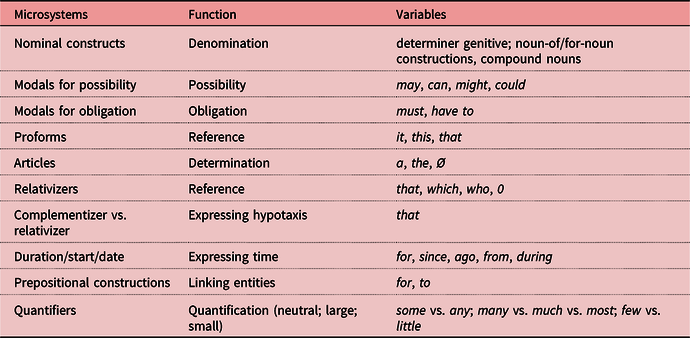
We created new functional metrics based on the notion of microsystems (see section 2.2). We assume that microsystems are sets of competing constructions (some being more likely for natives, others more prone to be L1-like). Based on intuition, Table 3 provides a list of other potential functional microsystems identified by two expert English teachers and linguists. For instance, the nominal microsystem includes three constructions that learners find difficult. They may use genitive constructions instead of noun + preposition + noun or compound noun constructions. Similarly, other substitutions may be observed among the can, may, might, could modals used to express epistemic and radical possibility. Regarding that, it has been noticed that confusions occur between the relativizer forms. We also specified a type of error linked to the confusion between the relativizer and complementizer functions.
Learner microsystems and their variables

Note. Relative pronoun 0 is not included in the operationalization of the program as the detection of the non-existent tokens remains an obstacle.
The microsystems include variability in grammaticality: some of the substitutions among the aforementioned constructions are just semantic differences in the case of modal auxiliaries; others jeopardize grammaticality (which versus who for animate antecedents). The weighting of the parameters of these different constructions is beyond the scope of this paper.
Finding a method to quantify variability in microsystems at text level could help to measure the importance of specific linguistic functions in L2 systems. To operationalize microsystems, we added a set of metrics relying on paradigmatic relations between forms of similar functions (i.e. microsystem variables as defined in Table 3). For each microsystem x (e.g. “modals for possibility”), the frequency of occurrence ƒ of each variable i (e.g. “may”) in this microsystem was computed within each text j (see Eq. 1a). In addition, a ratio was computed for each variable i relative to all n variables of the microsystem (see Eq. 1b). The absolute and relative microsystem features were computed as follows:
 $$M{S_A}({x_{ij}}) = {f_{ij}}M{S_A}({x_{ij}}) = {f_{ij}}\underline {M{S_A}({x_{ij}}) = {f_{ij}}} $$
 $$M{S_A}({x_{ij}}) = {f_{ij}}\;\;M{S_R}({x_{ij}}) = {f_{ij}}/\sum\limits_{k = 1}^n {{f_{kj}}} $$
where
x = the microsystem
n = the total number of variables in microsystem x
i = the i-th variable in the set of n variables
j = the j-th text (learner writing)
fij = the frequency of occurrence of variable i in text j
The microsystem ratios reflect the variations in the proportions of one variable over its paradigmatic competitors. Microsystem features are computed within each writing separately.
The L2 Syntactic Complexity Analyzer (L2SCA) tool (Lu, Reference Lu2010) was modified in order to capture specific linguistic forms belonging to specific microsystems. The program proceeds in two stages. First, it extracts the constructions used in the microsystems and, second, it calculates ratios that operationalize the microsystems. The Tregex module of Stanford CoreNLP (Manning et al., Reference Manning, Surdeanu, Bauer, Finkel, Bethard and McClosky2014) was used to retrieve constructions including nouns, modal auxiliaries, articles, proforms, relativizers and complementizers. For illustration’s sake, we focus on the microsystem of proforms. The Penn Treebank tagset used for the program does not have a specific tag for proforms, so that the this proforms were retrieved with the following Tregex patterns:

 $$\hskip-70pt{\rm{prf}}_-{\rm{this2}} = '/\left[ {{\rm{t}}|{\rm{T}}} \right]{\rm{his}}/ \gt {\rm{NN}} = {\rm{n1}}'$$
Pattern (1) identifies all this that are tagged as DT (determiner) and that are the rightmost descendents of noun phrase (NP) constituents. Pattern (2) identifies all this immediately dominated by a noun (NN).
The evaluation of the extractions of all the forms specified in microsystems is outside the scope of this paper. Nevertheless, it must be mentioned that most forms are captured with patterns relying on their POS tags (see Appendix 1). It may be argued that evaluating their extraction relates to evaluating POS tagging in learner corpora (accuracy results above 95%). Several papers have established a high level of accuracy in POS tagging learner English (see (Huang, Murakami, Alexopoulou & Korhonen, Reference Huang, Murakami, Alexopoulou and Korhonen2018; van Rooy & Schafer, Reference van Rooy and Schafer2003). The analysis of proforms is not based on the identification of the tag, and previous works support its reliability (Gaillat, Reference Gaillat2016: 183–196). The extraction of this forms was evaluated by applying distinctive patterns on 2,853 occurrences in the Wall Street Journal subset of the Penn Treebank corpus (Marcus, Santorini & Marcinkiewicz, Reference Marcus, Santorini and Marcinkiewicz1993). All this proforms were accounted for.
As a result of the extraction process, 51 constructions were incorporated as variables in 29 microsystem metrics (see Appendix 1 for a list of microsystem metrics, their variables and Tregex extraction patterns). The modified version of L2SCA is called L2SCA_microsystem.Footnote 1 It also includes the same indices as L2SCA.
In addition to these microsystem features, several other types were extracted and used to compute metrics. The feature types encompass lexical, syntactic, semantic and discourse complexity as well as accuracy. (See Appendix 2 for a list of all the implemented metrics and the tools used to compute them.) In total, 767 different features were extracted and merged into one dataset to input into the classification models.
3.3 Statistical analysis
There were three aims in this statistical analysis:
-
1. Test the utility of the novel microsystem features over existing features
-
2. Compare feature importance
-
3. Build a prediction model for future learners.
We implemented this analysis through a machine learning (ML) approach. In principle, an ML analysis relies on observations recorded in a computer model. In our experiments, the observations are made up of the features of the texts linked to their CEFR levels, and their statistical relationships are computed by applying a specific mathematical function – that is, a model. The model is subsequently used to predict CEFR levels in new observations of features. The analysis performed for each of the three aforementioned aims is summarized as follows. Analysis (see Code in Appendix 3) was performed using R Version 3.6 through the {glmnet}(Friedman, Hastie & Tibshirani, Reference Friedman, Hastie and Tibshirani2010) and {caret} packages (Kuhn, Reference Kuhn2008).
3.3.1 Testing the utility of the microsystem features
In order to test the efficacy of our novel microsystem variables, we built three classification models: (i) using 687 features from previous research, as explained in section 4.2, as a baseline; (ii) adding the 51 microsystem variables introduced in this paper along with 29 microsystem ratios; and (iii) adding the 51 microsystem variables introduced in this paper along with 12 interactions (see Appendix 3) involving variables of the same microsystems.
Using dataset (i) we compared multinomial logistic regression, ensemble random forests, linear discriminant analysis, k-nearest neighbours, Gaussian naive Bayes, support vector machine and decision tree classifier. We found the optimal classification model for (i) and applied this model to each set of features (ii) and (iii). We report on the precision, recall, F1 score (F1 = harmonic mean of precision and recall; i.e.
 $2 \times {{precision \times recall} \over {precision + recall}}$
), and balanced accuracy (balanced accuracy = average of sensitivity and specificity; i.e.
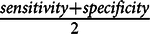 ${{sensitivity + specificity} \over 2}$
) of each model. Results are presented for each of the six learner classes and overall by micro-averaging over the classes to take account of different class sizes. Models were run using fivefold cross-validation to allow for testing with multiple random splits of the data. After running these models, results were macro-averaged across cross-validation folds.
Once the model is used to predict learner level in the test set, we perform an error analysis. We define the error group as a three-level categorical variable – that is, 0 if classification is correct, 1 if classification is one level lower or higher, 2 if classification is two or more levels lower or higher. A one-way analysis of variance is then used to test whether there are mean differences in each feature according to the error group, adjusting for multiple testing across 767 total features, and taking only those p values of < 0.05/767 to be statistically significant.
3.3.2 Comparing microsystem feature importance
A second analysis used multivariable logistic regression, a classifying method for categorical data, to investigate the relative importance of the 51 new microsystem variables and their 29 ratios across learner levels. We split the data based on learner levels (A, B and C) and ran separate logistic regressions on these data using only the microsystem variables. We report on the strongest positive and negative associated features in terms of their Wald test statistic or z score for each level – that is, A2 versus A1, B2 versus B1 and C2 versus C1. A positive association suggests the feature is more common in advanced learners; a negative association suggests the feature is less common in advanced learners. We report on the odds ratios of the features to explore how much the use of a feature increases the odds of being an advanced learner.
3.3.3 Building a classification model for future learners
Although the optimal model found using all features in section 4.2.1 will allow classification of future learners, using over 700 features will also likely overfit to the EFCAMDAT sample data. Therefore, we employed a feature selection algorithm, in particular elastic net regression (Zou & Hastie, Reference Zou and Hastie2005), which conducts dimension reduction and prediction simultaneously. Elastic net regression is a useful classifying method for modelling the relationship between a binary response variable
 $Y$
and a large number of potential features
 ${X_1}, \cdots ,{X_P}$
. The regression model used is
 $$ln\left( {{{{\pi _i}} \over {1 - {\pi _i}}}} \right) = {\beta _0} + {\beta _1}{x_1} + \cdots + {\beta _p}{x_p} + \in $$
where
 $\pi = P\left( {Y = 1} \right)$
,
 ${\beta _0},{\beta _1}, \cdots {\beta _p}$
are regression coefficients and
 $i = 1, \cdots ,n$
observations are available. In cases where the number of predictors
 $P$
is bigger than
 $n$
, some form of model selection or dimension reduction is required. Penalized regression is one such tool that shrinks the coefficients with several types of penalty available. The elastic net combines two common penalized regression approaches: (i) the least absolute shrinkage and selection operator (LASSO) (Tibshirani, Reference Tibshirani1996) and (ii) ridge regression (Hoerl & Kennard, Reference Hoerl and Kennard2000). This is useful because the LASSO allows for automatic feature selection by shrinking coefficients of some variables to 0, while the ridge regression penalty excels where features are heavily correlated – which is likely the case for linguistic features.
Fivefold cross-validation was used to repeatedly test performance across multiple splits of the data. The performance metrics – precision, recall, F1 score and balanced accuracy – were calculated in each fold and summarized using their macro-average (i.e. simply taking the average of the five precision, recall, F1 and balanced accuracy metrics) and standard deviation.
3.4 Data for evaluation
To evaluate the models we applied a twofold strategy. First, we used a subset of the EFCAMDAT dataset as an internal test set and, second, we used the CEFR-ASAG external dataset to test the validity of the model and its resistance to overfitting. We used this corpus as it was made up of small writings and was challenging for the dataset on which we had trained our model. The mean of ASAG texts was 157.62 tokens per writing (SD = 81.66) distributed over the six levels, a value typically associated with A1 in our data. Whereas our corpus is heavily biased towards A1, the ASAG corpus has a majority of B1 writings.
3.4.1 Internal validation
The internal test set was sourced randomly from 25% of the EFCAMDAT dataset, resulting in 12,454 texts. Among the seven model types tested, the optimal classification performance in the testing dataset was found using multinomial logistic regression.
3.4.2 External validation
The external test set was made up of 299 short texts. It was built with the same feature extraction process described in section 3.2 and run on the CEFR-ASAG corpus texts. First, the optimal classification model from (i) was used to classify with all the features as in (i) and (ii) (see section 3.3.1). Second, following Occam’s razor principle and to avoid overfitting (capturing non-generalizable features), an elastic net method was applied, including feature dimensionality reduction.
4. Results and feature analysis
4.1 Testing the utility of the microsystem features
4.1.1 Classification of all six CEFR levels
Among the seven model types tested, the optimal classification performance in the testing dataset was found using multinomial logistic regression. The classifier using previously developed features achieved 80% balanced accuracy. Using the additional microsystem variables along with their ratios increased performance to 82%, which translated to an extra 249/12,454 writings correctly classified. Full results are given in four tables in Appendix 4. It includes classification performance, the confusion matrix and detailed comparisons with and without microsystem features. One comment about confusions is that they mostly occur with adjacent classes. A closer examination shows that many writings tend to be classified in the lower adjacent class. Note that the appendix only includes one of multiple confusion matrices from cross-validation.
We performed an error analysis in those 12,454 test essays – 10,159 were correctly classified, 1,865 misclassified one level higher/lower error, and 430 misclassified two or more levels higher/lower error. From ANOVA, 469 out of 767 features show mean differences between these two groups, indicating which of the features are associated with errors. The top 10 of these are shown in Table 3 in Appendix 4.
4.1.2 Comparing microsystem feature importance
The second analysis of the internal testing protocol relied on the logistic regression model and aimed at investigating the relative importance of microsystem variables across the aggregated A, B and C CEFR levels. We measured the impact of microsystem features in each level. There are two types of features. Figures 1, 2 and 3 (available as supplementary material) show features that indicate occurrences of specific variables and others (with the MS prefix) that show microsystems composed of specific variables. The figures show the strongest features of each level in terms of z score.
Results regarding the A level (Figure 1) reveal four significant microsystems. Nominal constructions (i.e. prepositional, genitive and compound constructions) relative to each other appear to be significant predictors of the A2 level as opposed to the A1 level. The obligation microsystem composed of modals have to and must also appears as a significant predictor of A2. Likewise, the duration microsystem (based on for and ago) as well as the quantification microsystem (based on quantifiers much, most and many) both show preference for A2 rather than A1 writings. As the microsystems implement forms of a specific language function, these results may indicate that writings are likely to implement the nominal, obligation, duration and quantification functions as a first step in their progress. Even more so as A1 tasks are mostly with the present tense, so that for/since/ago is probably not tested at this stage.
Results (Figure 2) show that the B level is influenced by two microsystems. The determination microsystem tends to be indicative of the B1 level. The quantification microsystem with most and many appears to be indicative of the B1 level too. This trend is to be compared with that of the A level, in which the quantification microsystem is favoured in A2. The level adjacency may indicate that the quantification language function appears and consolidates between A2 and B1 levels. In functional terms, B learners seem to be developing their proficiency by implementing determination and quantification language functions. The B2 level tends to appear as these microsystems stabilize in terms of variable proportions.
For level C writings (Figure 3), the proform microsystem and several specific constructions appear to be significant. The proform microsystem tends to predict C1 as learners overuse this compared with it and that, whereas the microsystem tends to predict C2 as learners increase the relative importance of that. This microsystem suggests the onset of anaphoric and deictic reference processes, which corresponds to more complex discourse. With higher discourse complexity, learners tend to increase their use of referential expressions, leading to variability in the proform microsystem. The modals should and will also appear to be significant. This may indicate more elaborate discourse in writing as learners diversify their stance in terms of epistemic or radical modality.
4.2 Building a classification model for future learners
4.2.1 Logistic regression model for classification using all features
In order to test the validity of the logistic regression model trained on the EFCAMDAT dataset, the same model was used to classify a dataset built from the CEFR-ASAG corpus. Classification according to the six CEFR levels showed poor results, with 51% balanced accuracy in the ASAG data.
There are several reasons for the loss in balanced accuracy between the two datasets. First, performance in test data randomly taken from the training data is always optimistic, because the test and train sets are very similar. Conversely, the CEFR-ASAG corpus corresponds to shorter contexts and different tasks than the EFCAMDAT corpus. Second, the ASAG data have few A1 writings (∼16%), whereas the EFCAMDAT has approximately 40%. This lack of calibration between class populations is not reflected in the model, leading to errors.
4.2.2 Elastic net modelling EFCAMDAT data with feature selection
To limit overfitting and improve classification on external data, we used an elastic net regression model on the EFCAMDAT training set. This method is a classifying algorithm that comes with the benefit of including feature dimensionality reduction (i.e. feature selection). The elastic net model fitted in 178 minutes using a MacBook Pro with 8 GB of memory. Using just 44 features, classification showed 75.0% balanced accuracy (CI [74.3, 75.8], p < 0.001) and 59.2% (CI [53.4, 64.8], p < 0.001) on the EFCAMDAT and CEFR-ASAG test sets respectively (see tables in Appendix 4 Part B). Compared with the logistic regression model, the elastic net regression model showed lower performance on the EFCAMDAT test set but, most importantly, it improved performance on the CEFR-ASAG test set showing context adaptability.
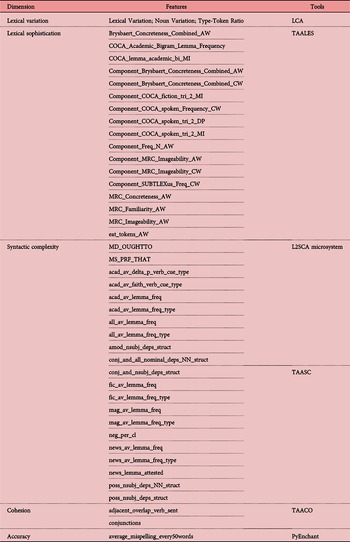
The elastic net modelling method combines regression with feature selection. In other terms, it employs methods to not only compute best fit for all data points but also remove non-significant features. In doing so, it combines the smallest set of features for the best classification. In the EFCAMDAT regression model, 44 features are combined. The features encompass several linguistic dimensions. Table 4 shows how features are distributed according to their linguistic dimensions.
Combined features for best model classification with elastic net

Among the microsystem features presented in section 3, the proform microsystem based on that appears to be significant when combined with other lexical, syntactic, accuracy and pragmatic features. The modal ought to, in its raw frequency, is conjointly significant with the other features. This suggests that sophisticated grammatical markers could be used as criterial features for lexical sophistication.
5. Discussion
The performance in classification of the logistic regression and the elastic net models shows comparable results to those obtained in other studies applying L2 English proficiency classification. To the best of our knowledge, all studies use test sets extracted from the same corpora as their training sets. Likewise, we tested our models internally and best results showed 82% balanced accuracy on the 6-point CEFR scale with a logistic regression model. We even obtained 95% balanced accuracy on a 2 beginner-and-advanced scale, which can be useful for large-scale automated groupings of students above and below the B1/B2 border. In comparison, Vajjala (Reference Vajjala2018) reported 73.2% balanced accuracy on a TOEFL subset categorized according to a 3-point scale. Crossley, Kyle, Allen, Guo and McNamara (Reference Crossley, Kyle, Allen, Guo and McNamara2014) reported 55% on another TOEFL subset on a 5-point scale, and Tack et al. (Reference Tack, François, Roekhaut and Fairon2017) reported 53% balanced accuracy on the ASAG corpus with a 5-point scale.
Error analysis in the confusion matrix of the logistic regression model revealed a substantial number of errors between proficiency levels including non-adjacent class errors. Significant differences are mainly due to errors related to word frequencies and syntactic patterns (complex nominals and verb phrases). Regarding frequencies, some learners may have written an unexpected number of words for their level. Regarding syntactic patterns, the complex nominal (CN1) feature includes nouns plus adjective, possessive, prepositional phrase, relative clause, participle, or appositive. This broad variety of structures may create noise in the model. For instance, learners of different levels may use the relative clause structure, leading to ambiguities in classification.
Compared with the logistic regression presented in this paper, all the aforementioned studies showed the advantage of limiting the number of features and increasing their potential for generalization. Our logistic regression model relies on a large array of features, which makes it prone to overfitting. After reducing dimensionality with the elastic net method presented in this paper, the model classified 75% of the data correctly. This result compares well with the aforementioned performance rates.
In order to measure the potential for generalization of our models, we tested the trained models on external data. The logistic regression model showed signs of overfitting as the balanced accuracy on external data dropped from 81% to 51%. Conversely, the elastic net model showed a higher ability for generalization with a 59.2% balanced accuracy on external data. These results show that external validation of models is a necessary step in order to assess the fit of a model and the significance of its features. This appears as an essential step to include in further studies, and it shows the importance of open access to data sources.
In terms of feature significance, our approach was twofold. The first research question was to assess a large array of complexity metrics as potential criterial features. Based on a dataset of 767 metrics and 49,817 observations, an elastic net method helped identify a limited set of significant features. It is important to stress that it is the combination of features that supports the results. In other terms, it would be incorrect to isolate each of the 44 features and give them independent significance. The feature selection showed that it was mostly lexical and syntactic features that supported best classification. These findings are in line with several studies (Crossley et al., Reference Crossley, Salsbury, McNamara and Jarvis2011; Kyle & Crossley, Reference Kyle and Crossley2015; Lu, Reference Lu2014; Vajjala, Reference Vajjala2018).
A caveat is in order at this stage. The models were trained mainly on short texts, with a scarcity of data at specific CEFR levels. The models may be sensitive to variations due to differences in instruction tasks, implying the use of some microsystems versus others. Consequently, microsystems and other features may not be captured in sufficient numbers in some classes, leading to unclear boundaries between classes.
The second research question was to investigate the significance of new microsystem metrics as criterial features. We tested these features as part of a multinomial logistic regression model. Each microsystem operationalizes the paradigmatic relations of competing constructions in learners. The results show that microsystem features contribute to improving CEFR level prediction, albeit to a small extent. The results suggest a series of learning stages. The ratios of nominal constructions relating two nouns, the ratios of modals linked to obligation and the ratios of quantifiers all appear to be indicative of the A level. Concerning the B level, ratios of quantifiers including most, many, little and few, as well as ratios including determiners a, the and Ø, show significance. This suggests that learners introduce quantification between the A2 and B1 levels and that determination starts occurring in significant proportions at B1. The C level shows the proform microsystem as significant as well as specific modals such as should and will. As discourse complexifies, learners introduce language constructions with higher semantic complexity. Learners construct referential processes by including deictic and anaphoric constructions, and they increasingly take stances as they use deontic and epistemic modality devices. Some features may be subject to task effects – for example, the use of modal will in A1 (see section 4.1.2).
In the context of language teaching, microsystem features might appear very informative. Microsystems contrast forms that compete with each other in the minds of learners. Using them could prove to be fruitful in iCALL systems, providing formative feedback based on simple, clear, elaborated manageable units (Shute, Reference Shute2008). Microsystems are operationalized as simple limited sets of items that are clearly organized according to linguistic functions (Biber et al., Reference Biber, Gray, Staples and Egbert2020). They could be used to build automated feedback on specific language functions as Saricaoglu (Reference Saricaoglu2019) shows with causal explanations. In addition, the approach could augment the drive towards data-driven learning as the system feeds from a corpus to guide learning (Boulton, Reference Boulton, Thorne and May2017).
6. Conclusion
In this paper, we have reported a supervised learning approach for the classification of learner writings in English according to the six CEFR proficiency levels. Our hypothesis concerned the use of linguistic metrics in the determination of CEFR levels. First, we assessed the significance of many complexity metrics as potential criterial features in proficiency. The models show that a combination of lexical, syntactic, accuracy and pragmatic features helps predict CEFR levels. Among all feature types, lexical and syntactic features appear to be very important. In this respect, frequency information extracted from reference corpora favours prediction. Unlike previous research, our study also provides additional external validation with the ASAG corpus. We tested the portability of the models across corpora with different topics and prompts and showed that some features help with model generalization.
For the second research question, we investigated the significance of newly designed microsystem metrics as criterial features. These metrics are based on learner-specific paradigms including competing constructions. Specific functional features that function paradigmatically have proved to influence the perception of learner writing proficiency by human annotators. Analysis of the results suggests that some microsystems are connected to acquisitional stages operationalized in terms of levels. The study maps specific constructions to levels in functional terms.
Results are also encouraging as part of the development of an AES protype.Footnote 2 The project includes an NLP pipeline built upon several state-of-the-art tools measuring lexical, semantic, syntactic, accuracy and pragmatic complexity. The system provides two services: CEFR-level prediction and complexity metric extraction. It relies on the Docker technology, which makes it deployable as a cloud service (Sousa et al., Reference Sousa, Ballier, Gaillat, Stearns, Zarrouk, Simpkin and Bouyé2020).
Understanding foreign language acquisition is a long path that involves many dimensions. With experience, language teachers acquire these dimensions intuitively in order to assess and train their students. However, processing students’ productions is slow and variable. The research presented here should be seen as a way to invent new tools to assist teachers who would benefit from easy-to-use analytical tools that objectivize the progress of their learners.
Supplementary material
To view supplementary material referred to in this article, please visit https://doi.org/10.1017/S095834402100029X Note: All appendices and figures are available for download from the IRIS database under the authors’ names (see https://www.iris-database.org).
Acknowledgements
With the financial support of the French Ministry for Europe and Foreign Affairs and the French Ministry of Higher Education, Research and Innovation and the Irish Research Council as part of PHC Hubert Curien Ulysses 2019 (ref 43121RJ).
Ethical statement
The authors declare no conflict of interest regarding the publication and their involvement in other roles. All the documented research was conducted according to the EU’s GDPR act. This material is the authors’ own original work. It has not been previously published elsewhere, nor is it currently being considered for publication elsewhere. The authors present truthful and complete results of their work. All sources used are appropriately cited in the article. All authors have been involved in substantial work for this paper and will take public responsibility for its content.
About the authors
Thomas Gaillat is a lecturer in linguistics at the Université Rennes 2 in France where he also teaches English for specific purposes. His publications cover linguistic questions intersecting the domains of natural language processing (NLP), corpus linguistics and statistics.
Andrew Simpkin received a PhD degree in statistics at the National University of Ireland (NUI), Galway in 2011. His research interest includes longitudinal and functional data analysis, with applications to sensor technology.
Nicolas Ballier currently teaches at Université de Paris (formerly Paris Diderot) in the Faculty of Humanities and Societies. His current research questions automatic approaches to learner data and the learnability of linguistic data by neural networks.
Bernardo Stearns works as a research associate at the NUI Galway, Ireland, and as a member of the Data Science Institute. He has experience converting NLP research into application prototypes. His main research interest lies between human–computer interaction and NLP applied in learning analytics.
Annanda Sousa is currently a PhD candidate at NUI Galway, Ireland. Her research investigates approaches to apply multimodal emotion detection for children with autism. She has worked on European research projects applying NLP for different areas such as finance and language learning.
Manon Bouyé is a PhD candidate at the Université de Paris. Her work focuses on plain language and on the dissemination of legal knowledge for the general public. Her other research interests include the popularization of specialized discourses, English for academic purposes, as well the exploration of machine learning methods for the humanities.
Manel Zarrouk is a lecturer at Institut Galilée, Université Paris 13, where she teaches computer science. Her research interests include semantic web, emotion/sentiment/opinion mining, linked data, data analytics and decisional computer science and management.
Author ORCIDs
Thomas Gaillat, http://orcid.org/0000-0003-3433-6533
Andrew Simpkin, http://orcid.org/0000-0002-4975-444X
Nicolas Ballier, http://orcid.org/0000-0003-2179-1043
Bernardo Stearns, https://orcid.org/0000-0001-9377-8572
Annanda Sousa, https://orcid.org/0000-0002-0388-3641
Manon Bouyé, http://orcid.org/0000-0002-4526-0151
Manel Zarrouk, http://orcid.org/0000-0002-8160-5671