1 Introduction
Information and communication technologies (ICTs) are developing at an exceptional pace, resulting in substantial changes for higher education institutions as online technologies enrich pedagogical delivery methods. Institutions are adopting online learning both for distance education programmes and for campus-based courses (Arinto, Reference Arinto2013; Stein, Shephard & Harris, Reference Stein, Shephard and Harris2011). Several are making partial course content publicly available as open courseware (OCW) or introducing massive open online courses (MOOCs) to a wider audience. Irrespective of format, they need to develop and employ appropriate methods to assure the quality of online learning. Failure to do so or “rushing to get online” usually results in online practices that just replicate conventional classroom environments, delivering inadequately designed courses through instructors who have no prior experience or training in online teaching (Bates & Sangrà, Reference Bates and Sangrà2011; Baran, Correia & Thompson, Reference Baran, Correia and Thompson2011). Bypassing such groundwork may result in resistance to online teaching by faculty, perceiving difficulties in transition from traditional face-to-face (F2F) to online methods and in adapting to this somewhat novel and unusual environment that requires adoption of new technologies and pedagogies.
It is claimed that individuals are a major barrier to the acceptance of online teaching and learning (Albion, Tondeur, Forkosh-Baruch & Peeraer, Reference Albion, Tondeur, Forkosh-Baruch and Peeraer2015; Stein et al., Reference Stein, Shephard and Harris2011). Since implementing such changes to teaching inherently relies upon instructors’ support and involvement, it is crucial that they are equipped with the knowledge, skills and qualifications to effectively integrate into and adapt online technologies for teaching. Bates and Sangrà (Reference Bates and Sangrà2011) give the absence of thorough understanding of pedagogies and learning theories as a primary reason for faculty resistance to online teaching. Switching from face-to-face to online teaching necessitates new roles and competencies for instructors, regardless of discipline.
Professional development (PD) is key to assisting online instructors in adopting new pedagogies, evaluating these new roles, gaining the required competencies and reconstructing their teacher persona within an online environment (Baran & Correia, Reference Baran and Correia2014: 96). “Teacher identity” and “teacher self” are considered to be “the core of teacher learning, shaping and shaped by the actions teachers take, their dialogue and reflections” (White & Ding, Reference White and Ding2009: 347), and should be embraced by instructors along with their new roles and competencies in online environments (Comas-Quinn, Reference Comas-Quinn2011).
Transition to online teaching requires advanced levels of instructor training and support (Bates, Reference Bates2000). Many universities offer support and skills training in the form of informal learning environments, mentoring, in-service training or structured certificate programmes. This study examines a Turkish state university’s online faculty development programme for language instructors, reflecting upon participants’ expectations, readiness and satisfaction.
1.1 The changing roles of online instructors
Changing faculty roles during the shift from traditional face-to-face to online teaching have been deliberated on by several researchers (Anderson, Rourke, Garrison & Archer, Reference Anderson, Rourke, Garrison and Archer2001; Berge, Reference Berge1995, Reference Berge2001; Goodyear, Salmon, Spector, Steeples & Tickner, Reference Goodyear, Salmon, Spector, Steeples and Tickner2001; Guasch, Alvarez & Espasa Reference Guasch, Alvarez and Espasa2010; Laurillard, Reference Laurillard2002; Smith, Reference Smith2005). Online roles are mainly categorised as pedagogical, managerial, social, technical and instructional, and include instructional design, course management, instruction, facilitation, research, collaboration, coordination, guidance and interaction.
The adoption of new strategies and skills to create an effective teaching presence for successful teaching and learning is essential, irrespective of discipline, and certainly applies to online language teaching. Although online language teaching used to be relatively understudied (Stickler & Hampel, Reference Stickler and Hampel2007), the past decade has witnessed increased research on the roles and responsibilities of online language instructors (Baumann, Shelley, Murphy & White, Reference Baumann, Shelley, Murphy and White2008; Comas-Quinn, Reference Comas-Quinn2011; Comas-Quinn, de los Arcos & Mardomingo, Reference Comas-Quinn, de los Arcos and Mardomingo2012; Dooly, Reference Dooly2009; Guichon, Reference Guichon2009; Guichon & Hauck, Reference Guichon and Hauck2011; Kubanyiova, Reference Kubanyiova2009; White & Ding, Reference White and Ding2009).
In 2003 White referred to the “unfamiliar” roles, responsibilities and skills required for successful distance teaching, and listed three areas unfamiliar to language instructors new to online teaching: online communication/interaction (how to communicate/interact with distance learners; how to orient online learners); online teaching awareness/skills (keeping informed about online education, adoption of new roles, support/training needs); and the scale of the processes for planning, development and delivery of online language teaching. Applying an orchestra metaphor, Felix (Reference Felix2003) compared the online instructor to “a good conductor” facilitating, guiding and sharing the control and ownership of the music with the players. Hauck and Stickler (Reference Hauck and Stickler2006) stated that successful online tutor needed to combine/adapt different roles of teacher, administrator, trouble-shooter, and co-learner; consider different styles of teaching; and develop new e-teaching skills.
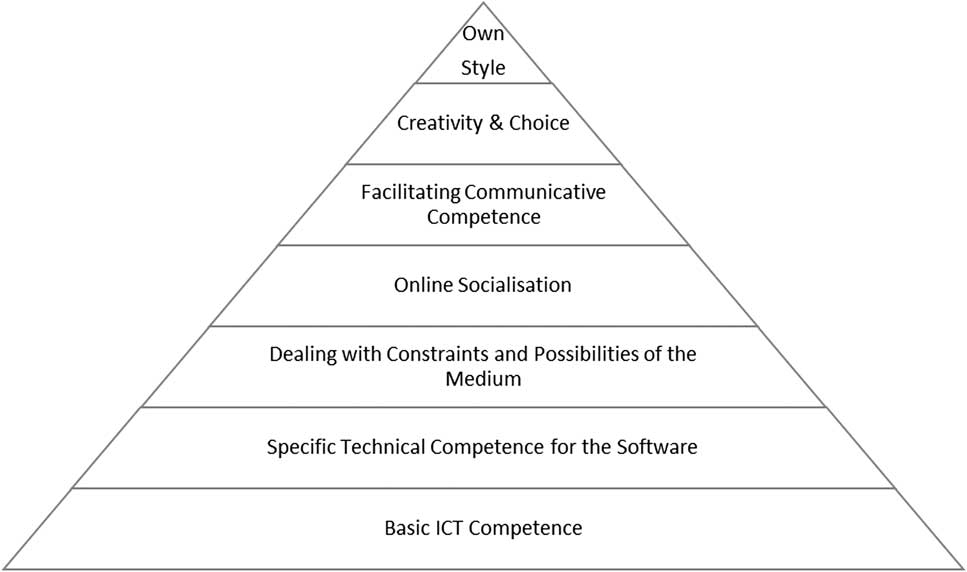
Dedicated higher education practitioners have contributed to the online-teaching literature (e.g. Baumann et al., Reference Baumann, Shelley, Murphy and White2008; Comas-Quinn, Reference Comas-Quinn2011; Ernest & Hopkins, Reference Ernest and Hopkins2006; Guichon, Reference Guichon2009; Hauck & Stickler, Reference Hauck and Stickler2006), indicating that language instructors require additional skillsets in online environments compared to other subject matter instructors. Emphasising their importance and interrelationship, Hampel and Stickler structured these skills within a pyramid (Figure 1) in 2005, where:
The most general skills form a fairly broad base to an apex of individual and personal styles. The lower levels are necessary before a higher level skill can come to fruition – the most wonderful creativity would be wasted if the tutor lacks the skill to connect with the students. (2005: 316)
Skills pyramid for language instructors

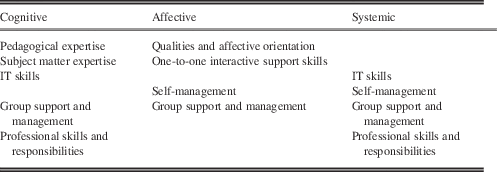
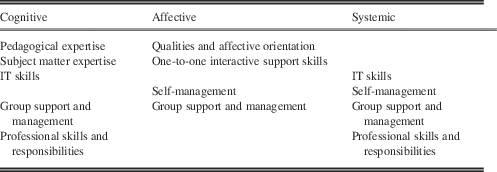
On the other hand, Baumann et al. (Reference Baumann, Shelley, Murphy and White2008) plotted their study’s outcomes for identifying skill requirements for online language teaching within Tait’s (Reference Tait2000) three-tiered framework defining the functions of learner support in distance education (Table 1).
Tutor skill categories within Tait’s Framework (Baumann et al., Reference Baumann, Shelley, Murphy and White2008: 384)
Examining the impact of blended learning introduced on a distance language learning course, Comas-Quinn (Reference Comas-Quinn2011) emphasised the importance of pedagogical understanding of online learning, and of instructors’ acknowledging their new roles and responsibilities, which might not come naturally to them. Hence, it is crucial to raise or enhance online instructors’ awareness, knowledge and experience through training and PD.
1.2 PD for online teaching
Irrespective of discipline, repositioning from central information source to coach, facilitator, guide, or mentor, online faculty are expected to plan, design, coordinate and manage course activities where learners take responsibility for and control their learning (Anderson et al., Reference Anderson, Rourke, Garrison and Archer2001). To perform these new roles, and create an “online teacher persona”, instructors need to adopt new pedagogies, review their new roles and gain new competencies (Baran & Correia, Reference Baran and Correia2014), and support through PD is vital to prepare them. More than mere technology instruction, where participants learn a digital platform or tool, such programmes should provide better understanding of emerging pedagogies, integrating technology, digital competences and different approaches to learning, so that positive attitudes towards online teaching are developed, and new views of teaching and learning are cultivated (Bates & Sangrà, Reference Bates and Sangrà2011; Comas-Quinn, Reference Comas-Quinn2011; Thompson, Chuang & Sahin, Reference Thompson, Chuang and Sahin2007).
Stickler and Hampel’s (Reference Stickler and Hampel2007) practical study examined a training programme for new online tutors. It pointed to inadequacies of training instructors only in the technical application of online tools specific to language instruction, emphasising the significant differences between traditional classroom and online language teaching not only from a materials design and task performance perspective but also pedagogically. Stickler and Hampel suggested a two-stage programme consisting of (a) online tutorial, training and activities “covering both technology and pedagogy and raising social and affective aspects of online tutoring”, and (b) assistance via helpdesk, mentoring and peer support (2007: 83). Comas-Quinn (Reference Comas-Quinn2011) also underlined the importance of a reconceptualisation of both teacher and learner roles, rather than mere technical mastery of technological tools for the efficient use of synchronous and asynchronous tools in supporting language learning.
PD is critical for online instructors so they can understand online pedagogies and teaching, adopting new roles through skills acquisition for teaching via online media, and is strongly linked to the quality of online education. Feist (Reference Feist2003) examined PD activities preferred by Canadian online instructors, reporting that participants preferred immediately usable PD opportunities, included integrated follow-up that fit their schedules, matched their learning styles, focused on curriculum, guided by leaders/managers, and included accessible support.
There are studies that are specific to language instruction with regard to key competencies developed through training and PD that focus on potential discipline-specific challenges. They indicate all-embracing initiatives with course design, content, pedagogy, technology, and second language acquisition theories for instructors to learn online pedagogies (Cutrim-Schmid, Reference Cutrim-Schmid2010; Guichon, Reference Guichon2009; Hampel, Reference Hampel2006; Peters, Reference Peters2006), as well as those studies that indicate the importance of acquiring different skillsets and competencies (Compton, Reference Compton2009; Hampel & Stickler, Reference Hampel and Stickler2005).
Based on earlier studies, Baran and Correira (2014) proposed a PD framework for online teaching with three support levels: teaching support incorporating technology, pedagogy, content design and development enriched by workshops, showcases, training programmes or one-on-one assistance; community support fostering collaboration focusing on collegial learning groups, peer support and communities of practice; and organisation support emphasising organisational culture, support and recognition. Such a “holistic” approach to PD “emphasi[s]es both the importance of the whole and the interconnectedness of its parts” (Baran & Correira, 2014: 97), and assists online instructors to adopt new environment-specific roles, skills and competencies. Well-planned, high-quality PD is imperative for improved and sustained quality in online teaching and learning, provided that it meets the academic and instructional requirements of online instructors. Satisfying instructors’ expectations with regard to PD initiatives, and their readiness to teach online, are crucial in the design and improvment of PD programmes.
1.3 e-readiness and e-satisfaction
Faculty readiness for online teaching and learning refers to their interest and willingness to prepare, design, deliver and facilitate courses in online environments (Hoppe, Reference Hoppe2015). Understanding faculty readiness for online teaching is critical for evaluating online course effectiveness at instructor and institutional levels. Some studies specify ICT competencies, technology access and resources as readiness factors with other dimensions including individual competency, motivation, self-directed learning, self-efficacy and learner control (Stephen, Mutula & Brakel, Reference Stephen, Mutula and Brakel2006; Watkins, Leigh & Triner, Reference Watkins, Leigh and Triner2004; Yurdugül & Sırakaya, Reference Yurdugül and Sırakaya2013) along with ICT competencies and access to technology (Ilgaz & Gülbahar, Reference Ilgaz and Gülbahar2015). Associated with learning principles, readiness inherently relates to learning experience satisfaction. Gunawardena and Duphorne (Reference Gunawardena and Duphorne2001) identified significant correlation between learner readiness and learner satisfaction where participants more positive about their readiness for an academic computer conference found it more satisfying.
Online learners’ satisfaction is key in determining the effectiveness and quality of online education. Examining learner satisfaction helps researchers to understand the process, as well as gauging the success of the programme, instructor, technologies and methods used, and also overall design and implementation. Garrison and Anderson consider the appeal to teachers and students as the “driving force within evaluation policies”, and sound evaluation comprises measures of satisfaction (Reference Garrison and Anderson2003: 92). Satisfaction can be defined as determining learner feedback, reflections or attitudes towards a course/programme (Feasley & Olgren, Reference Feasley and Olgren1998). The literature indicates many factors potentially affecting satisfaction including motivation, interaction, support, course material, perceived self-efficacy, confidence, and learner characteristics (Gunawardena & Duphorne, Reference Gunawardena and Duphorne2001; Palmer & Holt, Reference Palmer and Holt2009; Swan, Reference Swan2001), technological competencies (Machado, Reference Machado2007) and attitudes towards e-learning (Ilgaz & Gülbahar, Reference Ilgaz and Gülbahar2015).
This current study examines online language instructors’ expectation, readiness and satisfaction regarding an in-house PD programme reflecting on participants’ self-reports. Findings should aid online instructors in managing their transition from face-to-face to online learning, along with improving the quality of their online tuition as a result of understanding current practices. This study seeks answers to three research questions:
-
1. What are the technological and pedagogical readiness and the perceived competencies of language instructors for online teaching?
-
2. Is there a significant relationship between e-readiness, perceived online competencies and satisfaction levels of language instructors who have attended e-Tutor?
-
3. What areas of training and support do language instructors need for smooth transition to online teaching?
2 Methodology
2.1 Context: e-Tutor
A Turkish state university recently integrated online technologies into teaching and learning processes to improve the quality of on-campus learning and because it wished to commence fully online degree programmes. Online teaching activities are coordinated centrally, while also delivering structured online PD supported by one-to-one assistance. A compulsory prerequisite for all faculty members wishing to teach online, e-Tutor was originally designed to provide prospective online instructors with essential pedagogical, technological and administrative know-how/skills for efficient online teaching, based on concepts of Technological Pedagogical Content Knowledge (TPCK); conceptualisation of the knowledge base teachers require for teaching efficiently with technology (Mishra & Koehler, Reference Mishra and Koehler2006).
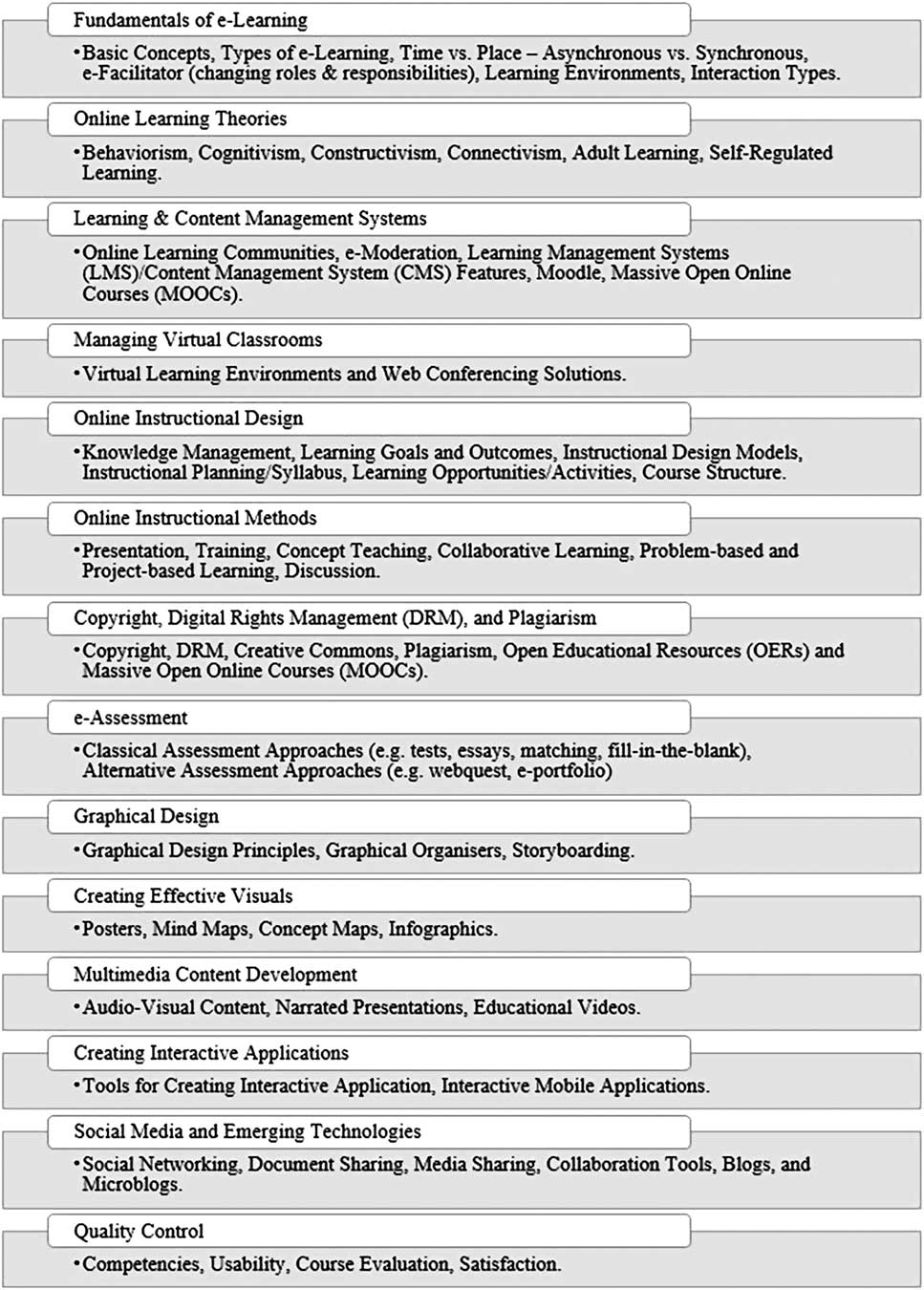
e-Tutor instils fundamental e-learning concepts, processes, tools for classroom management and e-content creation. Consisting of fourteen modules (Figure 2), e-Tutor combines synchronous and asynchronous technologies through wide-ranging materials and LMS features (e.g. handouts, narrated presentations/videos, audio, interactive activities, e-portfolio artefacts, other Web source links) to ensure learner engagement, supported by 60-minute virtual and practical face-to-face classes.
Content: e-Tutor

e-Tutor is based on two concepts. First, participants experience being online learners prior to becoming online tutors. This familiarity with “the other side of the screen” is expected to help them reflect on their online-learner experience and make inferences for their own instruction. Second, e-Tutor follows a hands-on approach. This is also the main assessment line where participants are expected to construct their own e-course as a compact project involving e-syllabus preparation, course design, course material preparation, and LMS integration spread across fourteen modules. The ultimate aim is to certify participants as prepared, equipped, and asserted to start their own online classes with complete course design and instructional materials checked, feedback provided, and improvements incorporated throughout the program (Rapp, Gülbahar & Adnan, Reference Rapp, Gülbahar and Adnan2016). e-Tutor was also adapted under an international project to support qualifying university educators in teaching online as an OER under Creative Commons License.Footnote 1
2.2 Research design
As a “convergent parallel” (Creswell & Plano Clark, Reference Creswell and Plano Clark2011) mixed-methods study, this research provides detailed assessment of an online PD programme for online teaching, based on participant reflections, using quantitative and qualitative methods of inquiry.
Mixed-method studies “involve[s] the collection, analysis, and integration of quantitative and qualitative data in a single or multiphase study” (Hanson, Creswell, Plano Clark, Petska & Creswell, Reference Hanson, Creswell, Plano Clark, Petska and Creswell2005: 224). The core principle is to gain better understanding of the problem by mixing quantitative and qualitative datasets. Advantages and added-value over quantitative or qualitative approaches are listed by many researchers including triangulation to enhance the study’s credibility, complementarity to counterbalance weaknesses of both approaches, and expansion to allow for using one method to shape and improve the other, or to instigate further research (Creswell, Reference Creswell2002; Hesse-Biber, Reference Hesse-Biber2010).
This mixed-methods study will “take a macro-picture of a system” established for training instructors to teach online from multiple perspectives “to enhance and enrich the meaning of a singular perspective” (Creswell, Klassen, Plano Clark & Smith, Reference Creswell, Klassen, Plano Clark and Smith2011: 6). Qualitative data will provide in-depth information about the context and reflections of participants through excerpts, whereas quantitative data will provide descriptive information and highlight relationships among variables, if any, through statistical analysis.
2.3 Participants
Language instructors from a Turkish state university enrolled in e-Tutor for spring semester 2015, and 73 from 80 successfully completed the programme. Data collection was a two-step process, whereby 64 participants took part in the first iteration, and 41 in the second. The researcher then identified 37 individual participants who responded to both surveys, and paired the collected data. These 37 language instructors are the current study’s subjects.
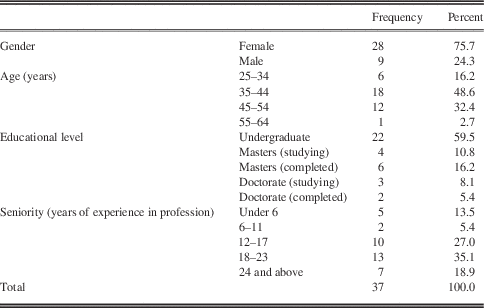
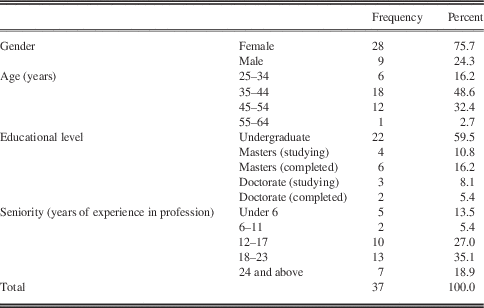
Participant demographics in Table 2 show “frequency” as the number of respondent participants and “percent” as the percentage representation of the respondent population.
Participant demographics
In mixed-methods studies, quantitative and qualitative data are collected either concurrently or sequentially, depending on the method. Data collection involves “gathering both numeric information (e.g. on instruments) as well as text information (e.g. on interviews) so that the final database represents both quantitative and qualitative information” (Creswell, Reference Creswell2002: 21).
In the current study, quantitative and qualitative data were collected through closed and open-ended questions of an ‘e-Learning Readiness and Expectation Questionnaire for e-Tutors’ (e-LREQ) and a ‘Satisfaction Questionnaire for e-Tutors’ (e-LSQ), both developed by Gülbahar (Reference Gülbahar2012) based on previous research (e.g. SLOAN-C, 2012; University of Oxford, 2012; Volk & Keller, Reference Volk and Keller2010), and educational technology field experts’ opinions. e-LREQ has 23 Likert-type questions valued between “1– Strongly Disagree” and “5– Strongly Agree” under two dimensions; e-Readiness/RE1, and e-Competency/RE2, including two open-ended questions on how participants plan to implement the knowledge and skills gained from e-Tutor, and also their expectations. e-LSQ has 32 Likert-type questions valued between “1– Hardly Ever” and “5–Almost Always” under five dimensions; Training Programme in General/S1, Learning Objectives/S2, Course Content/S3, Teaching and Learning Process/S4, and e-Assessment/S5. High scores indicate higher levels of satisfaction. e-LSQ includes ten open-ended questions for more in-depth examination of participants’ reflections. Reliability of both questionnaires was tested using Cronbach’s Alpha (α). Values indicated a high level of internal consistency for all dimensions of both questionnaires (Table 3).
Internal consistency measurement

2.4 Data analysis
The current study simultaneously collected and analysed quantitative and qualitative data, with equal priority. The data analysis included merging quantitative numerical data with qualitative script data, enabling collective reporting of findings in the conclusion. Analysis of quantitative and qualitative data was conducted separately, and combined during the interpretation of findings.
Descriptive and inferential statistics were used to analyse quantitative data via SPSS v.20.0 statistical analysis software. Data normality was assessed using a Kolmogorov-Smirnov test due to limited data numbers. A Pearson correlation coefficient test was used to examine relationships between questionnaire dimensions, based on average scores for each dimension per participant. The Wilcoxon-Mann-Whitney test was used to determine significant differences between variables of participant gender, age, educational level, and seniority. Non-parametric testing was preferred because there were relatively few subjects under each category and variable. Categories were reduced to two under each variable, increasing subject numbers in each category. Finally, regression analysis was used for prediction.
Content analysis was used to analyse the qualitative data gathered from open-ended questions. According to Patton, “organizing and simplifying the complexity of data into some meaningful and manageable themes or categories is the basic purpose of content analysis” (Reference Patton1987: 150). Qualitative content analysis is more than word counting; it is more about deep inspection of the language to classify substantial texts into categories representing similar meanings (Weber, Reference Weber1990). The conventional approach was preferred, where data revealed categories and themes instead of predetermining them. Accordingly, the process included (a) coding, (b) theme-finding, (c) organising themes and codes, and (d) describing and interpreting of findings (Yıldırım & Şimşek, Reference Yıldırım and Şimşek1999). To reveal pertinent concepts and relations to explain and describe the data, participants’ responses were assessed word-by-word to derive codes (Miles & Huberman, Reference Miles and Huberman1994), highlighting “key thoughts”. Simultaneously, the researcher made initial analysis notes, which led to emergence of codes as key thought representations. An external code check was conducted by another researcher, and original codes were revised where necessary, sorted into themes, and both codes and themes rearranged, classified and defined. Representative examples were chosen from the text, and findings defined and interpreted accordingly. An open-coding approach was applied, with data fragmented analytically into discrete parts, examined, and compared for similarities and differences.
3 Findings
The findings cover readiness, perceived competencies and expectations of entrant online tutors, and their satisfaction with e-Tutor. Quantitative findings are shown primarily with emphasis highlighting results of descriptive statistics with bracketed mean values, correlation between dimensions, and comparison of readiness, competency, and satisfaction levels according to variables. Findings from qualitative analysis enhance quantitative findings, adding voice to the participants (coded R1 to R37) by including significant excerpt statements.
3.1 Quantitative analysis
3.1.1 Readiness
Descriptive analysis indicates a high level of technological readiness in terms of equipment, access and basic computer/Internet proficiency. Most participants have basic Internet skills (
 $\overline{x} $
=4.46) and personal computers with Internet connection (
 $\overline{x} $
=4.49). Although many have the basic skills to operate computers (
 $\overline{x} $
=4.32), they define themselves as barely computer literate (
 $\overline{x} $
=3.73).
3.1.2 Competencies
Participants are unsure about their level of competence for online teaching. Highest-scored items relate to general instructor roles and competencies, regardless of teaching medium with no particular emphasis on online technologies, like communicating effectively with students (
 $\overline{x} $
=3.97), and providing efficient feedback to their students (
 $\overline{x} $
=3.95). Other competencies include using communication tools, designing learning activities, assessment activities, and ethical considerations; yet, figures reduce when technology is added. Lowest-scoring items involve developing compact e-course content in different formats (
 $\overline{x} $
=3.05), the creation of different format e-course content (i.e. text, audio, video) (
 $\overline{x} $
=3.11) and the effective use of virtual classroom management system (
 $\overline{x} $
=3.16).
3.1.3 Satisfaction
Positive reflections indicate participants’ overall programme satisfaction. The highest score regarding the training programme in general is the primary notion behind e-Tutor: equilibrium of technology literacy, content knowledge and pedagogical knowledge for successful e-learning (
 $\overline{x} $
=4.41). Although most participants appreciate e-Tutor’s e-teaching and content knowledge (
 $\overline{x} $
=3.89) balance, few appreciate its connection to effective e-tutoring (
 $\overline{x} $
=3.16), which should instigate enhancements to e-Tutor.
Participants are generally content with e-Tutor’s set learning objectives and compliance with the programme’s general aim (
 $\overline{x} $
=4.24), and find it clear, understandable (
 $\overline{x} $
=4.08) and focused on real-life skills (
 $\overline{x} $
=4.00); yet, fewer perceive these objectives as compliant with their prior knowledge, skills and motivation levels (
 $\overline{x} $
=3.76).
Participants are mostly satisfied with e-Tutor’s overall course content, i.e. it is consistent with its learning principles (
 $\overline{x} $
=4.19), covers important subjects (
 $\overline{x} $
=4.16), has varied instructional materials (
 $\overline{x} $
=4.14), and is compliant with learning objectives (
 $\overline{x} $
=4.11). The texts and presentations are regarded as compatible with their knowledge levels (
 $\overline{x} $
=4.27). Participants are generally content with asynchronous activity (
 $\overline{x} $
=4.00) amounts, yet synchronous activities are deemed not quite sufficient (
 $\overline{x} $
=3.51).
For teaching and learning process, highest-scoring items involve instructors’ performance, with emphasis on supportive roles of “guide”, ”moderator” (
 $\overline{x} $
=4.46), and immediate feedback provision (
 $\overline{x} $
=4.22). Lowest scores relate to infrastructure where 50% considered it an obstacle to reaching their goals (
 $\overline{x} $
=3.22). This should be interpreted alongside readiness findings indicating lack of office computer (27%), and anecdotal information where participants attempted to use weak-signal campus Wi-Fi despite repeated instruction to cable-connect.
Assessment activities in e-Tutor were generally scored lower compared to other dimensions, although with a mean of 3.90, which is satisfactory. Participants were content with the recommended e-assessment techniques (
 $\overline{x} $
=4.00) and the measurability of programme objectives (
 $\overline{x} $
=3.97) yet thought that e-Tutor provided only sufficient e-assessment activities (
 $\overline{x} $
=3.81). The lower satisfaction rates for e-assessment practices may be due to the demanding hands-on assessment techniques used throughout e-Tutor, which is unconventional compared to tests or short-answer questions.
3.1.4 Correlation analysis
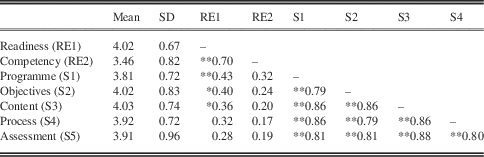
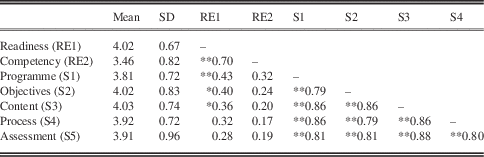
Based on average scores, relationships between the dimensions of both questionnaires were calculated for each dimension per participant. Table 4 shows correlation analysis results, mean values and standard deviation, conducted using the Pearson correlation coefficient for all dimensions of both questionnaires.
Mean, standard deviation and correlation values
N: 37
* Correlation significant at 0.05 level (2-tailed)
** Correlation significant at 0.01 level (2-tailed)
Analysis results indicate strong, positive relationships between each questionnaire’s dimensions, and moderate positive relationships among dimensions of both. The Readiness dimension of the e-LREQ has a positive relationship with all dimensions of the e-LSQ, yet its correlation with Learning Objectives (S2) (r =0.401, p<.01) and Course Content (S3) (r =0.361, p<.01) dimensions is moderately positive compared to other dimensions with weaker positive correlation. Findings indicate a significant relationship between individual readiness and satisfaction scores. Contrastingly, perceived e-competency has a much weaker positive relationship with satisfaction scores.
The Wilcoxon-Mann-Whitney test examined differences between dimensions based on age, gender, seniority and level of education. A non-parametric approach was preferred due to limited sample numbers of groups per category. All category variables were balanced against two categories. Analysis indicated no significant difference for age (44 years or below/45 years or above), gender (female/male), and work experience (17 years or less/18 years or more). Nonetheless, results indicate significant differences based on level of education (undergraduate/graduate) (Table 5).
Wilcoxon-Mann-Whitney test statistics for education variable

a Not corrected for ties
Analysis indicates significant difference for perceived competency (RE2; U=75; p=.006), general course satisfaction (S1; U=108; p=.077) and learning objectives (S2; U=112; p=.098) for undergraduate or graduate level at 0.10 level. Participants with the graduate degree score higher under perceived competency, general course satisfaction and learning objectives dimensions compared to undergraduate degree holders. This evidence leads to the conclusion that language instructors with graduate degrees are more likely to consider themselves competent for e-learning, and be more satisfied with the course and its learning objectives.
3.1.5 Regression analysis
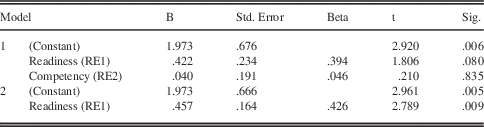
The Kolmogorov-Smirnov test showed no significant difference from normal distribution for mean scores calculated for five of seven dimensions (D(37)=.191/.200/.200/.131/.200, p>.05). Table 6 shows regression analysis results from examining impact of Readiness (RE1) and Competency (RE2) on general Satisfaction from Programme total (S1).
Regression analysis for readiness, competency and programme satisfaction
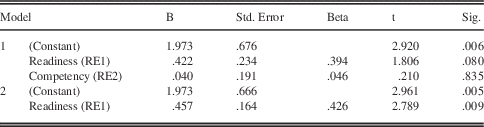
The first model with S1 dependent variable and RE1 and RE2 independent variables indicates no impact on Competency (RE2) and minor impact on Readiness (RE1) with a significance level of 0.10. The second model examines the impact of RE1 on S1 by dismissing RE2, and shows the positive impact of RE1 on S1 with a significance level of 0.05. It can be concluded that e-readiness positively predicts satisfaction from a PD programme, and faculty members with regular access to and sufficient knowledge and skills for technology tend to be more satisfied with e-Tutor.
3.2 Qualitative analysis
3.2.1 Expectancies
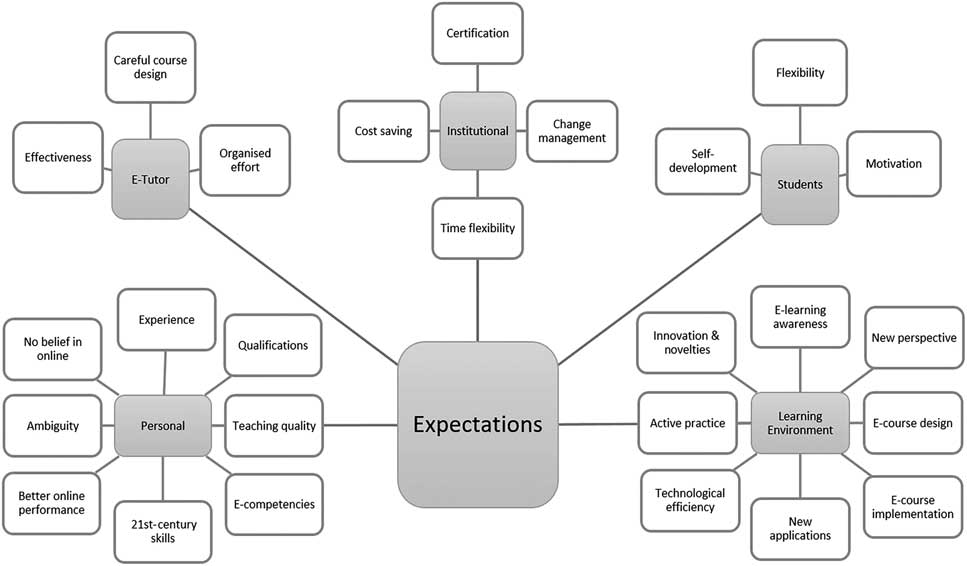
Participants answered two open-ended e-LREQ questions on expectations from e-Tutor categorised under five themes: Institutional, Students, e-Tutor (running the course), Personal, and Learning Environment (Figure 3). Well-designed PD programmes are vital for potential online instructors facing new roles and competencies. Participants stressed the need for ‘controlled’ and ‘well-organised’ learning environment within e-Tutor to be ‘efficient’.
Expectations: Themes and codes

The Institutional aspect of e-Tutor was particularly emphasised by participants since teaching languages online was an enforced management strategy. They explicitly stated being obliged “to get a certificate” (R11, R14, R23). There was some ambiguity (“in fact I don’t know what to expect, we’ll see what the future brings”) (R18), and some disapproved of distance learning (“I don’t believe in distance learning”) (R17). Conversely, many acknowledged ever-increasing use of online technologies in education, emphasising “change is a must” (R16), and organisations must manage it efficiently. Most expected to gain new perspectives about this “new phase in education”, becoming more familiar with “novelties in the technological world”: “To keep up with the times, I should be aware and capable of exploiting new methods, techniques and tools” (R32).
Some participants “walked in their students’ shoes”, stating learners’ expectations as flexibility, motivation, and self-development. Distance learning’s prominent affordance, flexibility of time and space, was noted as “advantage[s] [e]specially for students since they can reach lessons whenever and wherever they want” (R15). Using online technologies was expected to “increase access to learning opportunities and flexibility for students” (R27). Instructors believed that students were familiar with technology, and technology in learning environments would stimulate engagement. Another expectation was “to use new technolog[ies]…[to] catch up with students” (R7). Learning new technologies, tools and applications was an important trigger for some participants to “promote [their] teaching using different online learning techniques” (R1).
Participants were well-aware of the need for enhancing competencies to teach online. Many expected to “improve professional skills in harmony with latest educational trends” (R27), to “learn as much as possible about e-learning, and how to e-teach languages” (R3), and to advance teaching practices using different twenty-first-century online technologies: “This is the new trend in teaching. I don’t want to fall behind” (R9). Parallel with programme objectives, they expected to gain knowledge and skills about efficient design and implementation of electronic courses, to enhance traditional roles and competencies for online learning, and to actively practise what they learnt: “How can we adapt our professional practice from teaching face-to-face, to virtual learning environments?” (R10).
3.2.2 Using what is learnt
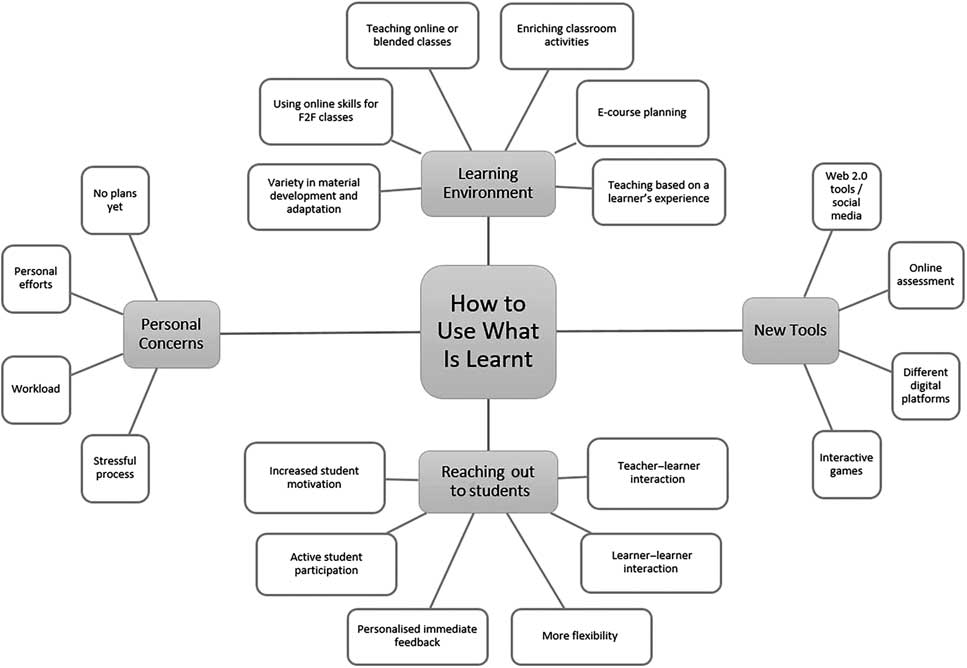
Participants were asked how they planned to implement the skills gained from using e-Tutor. Opinions focused on four themes: Personal Concerns; Learning Environment; Reaching out to Students; New Tools (Figure 4).
Using new skills: Themes and codes
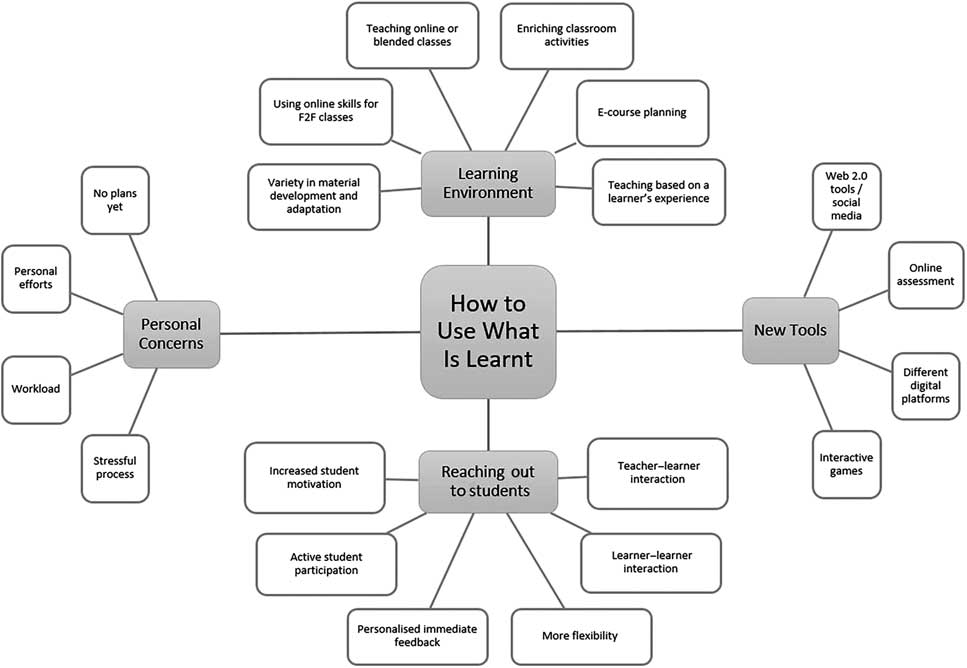
Certain participants had concerns about using their new skills, which was perceived as stressful personal effort, compounded by an extensive teaching workload. Some had no plans for using their new-found skills due to limited (or non-existent) knowledge about online technologies or their application in teaching and learning environments. Yet, they emphasised the potential of e-Tutor in guiding them effectively. Parallel to e-Tutor expectations, many emphasised reaching out to students through such technologies, underlining its active role in enhancing teacher–learner interaction, and strengthening interaction among learners: “I love using technology in class and believe it improves interaction, reduces obstacles, provides higher motivation for the new digital native generation... Students may lead the course if [the] lecturer will permit... They can moderate the class…” (R1).
Feedback suggests that flexibility, the initial notion behind distance learning technologies, was emphasised from learners’ perspective: “more time to improve students’ skills outside of the traditional learning environment. This is also a chance to reach students who avoid school or cannot attend for serious reasons.” (R15).
Participants believed they would use their new knowledge and skills in reforming and enriching learning environments, adding variety to development/adaptation of instructional materials: “With the expansion of online education, it is imperative that I should be ready to facilitate this type of learning for the students providing all types of venues and resources for them to excel academically. I plan to implement my skills in both distant (online) classes and blended courses if the opportunity presents” (R27). Using online skills in traditional classes was considered a bonus, providing opportunities to apply skills in creating effective face-to-face, online, or blended learning environments with varied classroom activities: “I have used technology in class for a while, and plan to enrich activities and materials using different digital platforms.” (R1).
Creating enriched learning environments requires new tools, and many participants highlighted the significance of Web 2.0 tools, social software, online assessment tools, interactive games, and digital platforms in teaching and learning environments.
One primary objective of e-Tutor is to impart understanding from an online-learner’s standpoint: Online tutors as online learners helps experience the other side of the screen before instructing online: “First I will learn the required information as a student, so I can understand students’ needs better and apply these to my course.” (R15).
3.2.3 Satisfaction
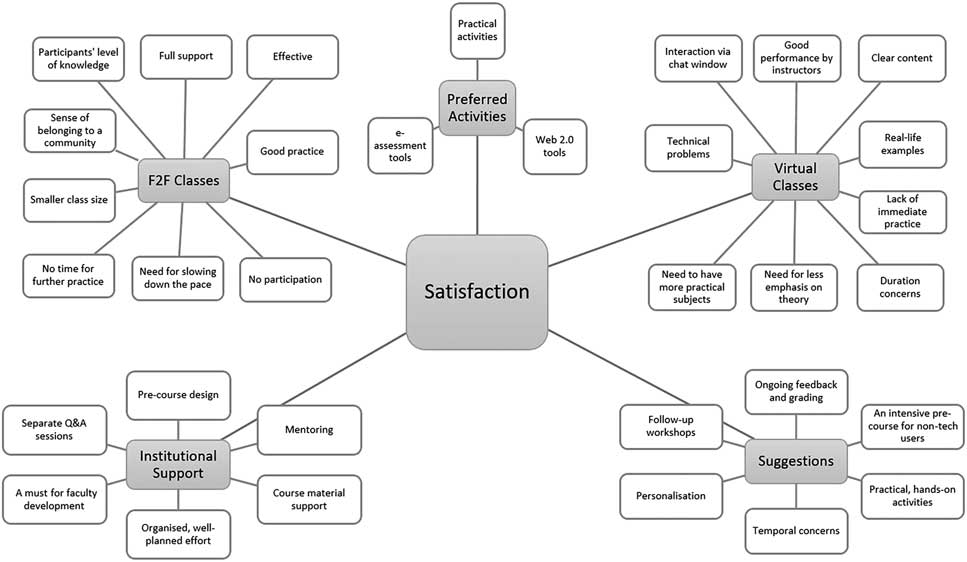
e-LSQ included ten open-ended questions for detailed reflection on the extent of satisfaction. Responses were categorised under five themes (Figure 5): face-to-face classes; virtual classes; institutional support; preferred activities; suggestions.
Satisfaction: themes and codes
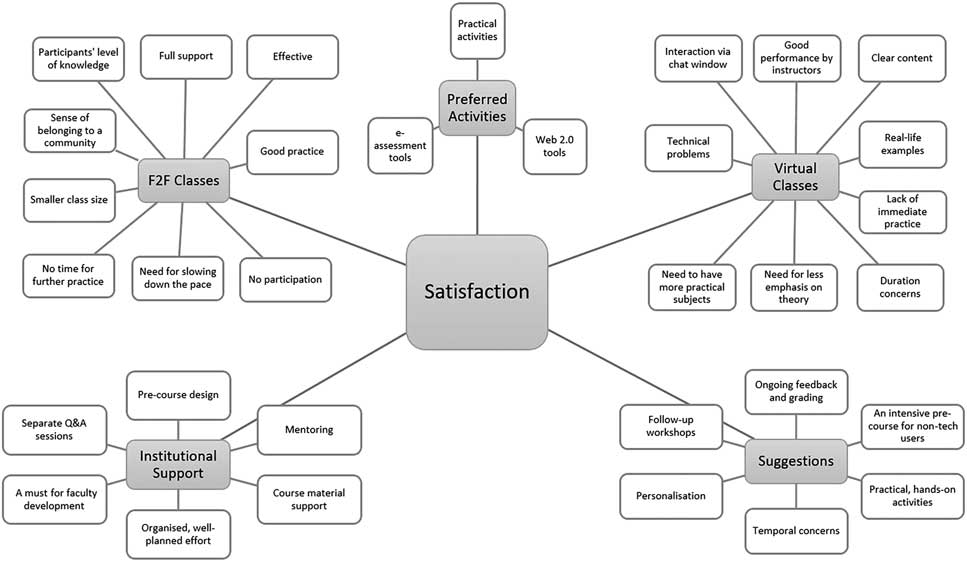
e-Tutor is a PD programme delivered mostly through virtual classes and asynchronous activities, plus face-to-face practice sessions. Participant responses gave an account of the pros and cons of face-to-face and virtual classes. Virtual classes were mainly considered informative and efficient, with clear content, real-life examples, and satisfactory instructor performance. One criticism was “superabundant” emphasis on theoretical topics as fundamentals of e-learning, online learning theories, and instructional design. Despite the importance of pedagogical understanding of online learning, participants largely wished to leap straight to more practical topics, preferring technology emphasis over theoretical learning: “I really support online teaching and learning. But as a potential online instructor, I want practice with technology rather than theory” (R20), preferring “self-study theoretical materials” (R4).
Wanting more practical topics and opportunities for hands-on, real-world experience was reiterated, and the lack of immediate practice opportunities was frequently raised, underlining concerns about temporal matters: “We couldn’t find chances for immediate practice in virtual classes. I felt we’re racing against time” (R4). The one-hour duration of virtual was considered mostly adequate, yet insufficient for some practical topics: “Virtual classes were enjoyable up to one hour; yet, when longer, I became distracted...only missing element was lack of immediate practice. It would be better to immediately practice what we learnt” (R3). Over 40% of participants did not attend supplementary face-to-face sessions for further practical experience either because they felt they were proficient or, mainly, due to timing issues since e-Tutor was conducted during the academic year. Face-to-face class attendees enjoyed being guided by instructors, particularly in relation to the application of digital tools. Another issue was the “sense of belonging to a community” (R24) through physically meeting other learners and instructors: “I think face-to-face sessions were essential to absorb the programme, but timing didn’t allow me to participate... I felt somewhat detached” (R21).
Eighty language instructors enrolled in e-Tutor of whom 37 were study participants. Hence, although 40% of participants did not attend face-to-face classes, there were several crowded sessions, which highlights another issue: the variation in participants’ prior knowledge and proficiencies. It was mentioned that “instructors failed to respond to each learner individually and immediately due to crowd” (R35), which might have affected face-to-face session efficiency. The originality of the topics covered made it difficult for many participants to keep up, so “having face-to-face sessions particularly for such topics with small groups in different sections” (R26) was suggested. Participants requested increased personalisation to address prior knowledge and skill differentials, and suggesting additional activities and modules, and intensive pre-courses for non-technology users: “I wish it was more customised… Our needs and interests were similar, yet technological proficiency varied” (R21).
Technological proficiency variances naturally influenced the most challenging and most preferred topics. Participants familiar with digital technologies or online teaching/learning had no particular difficulties “due to past experience” (R27), but many found creating digital artefacts and coping with LMS daunting: “[I] had difficulties technically, and had to get assistance” (R4). Almost all participants unquestionably preferred practical topics (e.g. social media, e-assessment, graphics design) underlining their “didactic value and worth” (R7). E-portfolio artefacts to construct their own e-courses were considered “exceptionally valuable” since “it is exact replica of what we’ll do when we start teaching online” (R3). One rather theoretical topic was highly favoured: copyright issues and ethics in online teaching. Besides central areas of this module as digital rights management or fair use, OERs and MOOCs were deemed useful additional tools for effective preparation of online and on-campus courses.
Leaders of online teaching and learning, instructors are sometimes alone in this challenging environment; hence, continuous institutional support was emphasised, and in particular, organised, structured institutional support was sought within this organisational initiative. Also emphasised was need for well-planned pre-course orientation. Although the initial meeting with enrolled learners was face-to-face (recorded for re-watching), participants wished for more comprehensive orientation pre-training where “expectations from the participants were put forward in a more obvious and clear manner” (K13).
Intensive basic information technologies pre-training was expressly stated for instructors lacking technological proficiency, delivered either separately (preferably face-to-face) ‘for colleagues using computers merely for entering exam marks’ (R10) or integral within a more adaptive, individualised programme: ‘It should respond to all proficiency levels. Detailed, long-term programme with more face-to-face sessions for non-technology users; yet it would be not practical for you’ (R21). Practicality would be challenging from a temporal aspect. Time-related concerns were stressed through suggestions regarding timing, allocating more practice time in an elongated process: “Timing should be right. It was tiring to attend properly while we have classes during the academic year. Winter or summer breaks may be better choice for timing” (R4). Programme duration and class timing may be problematic for participants’ personal and professional schedules, and this should be considered.
Institutional support also included continuous assistance during and after training for e-course content and instructional material preparation. Similarly, participants advocated the university’s distance education centre foster their sense of belonging, continuing support beyond e-Tutor through peer support, coaching or mentoring: “We should continue with some kind of support after e-Tutor, maybe peer coaching, mentoring, or regular meetings” (R24). Participants’ programme improvement suggestions were largely institutional, appealing for “little follow-up workshops, seminars, refresher training and short classes” (R23), specifically “for introducing a new application or a new technology for instructors” (R20). Mentoring/coaching were mentioned throughout for purposes of practicality and increased online teaching efficiency.
4 Discussion
According to Bates (Reference Bates2000), provision of comprehensive, systematic professional support for faculty members helps to surpass specific problems in online teaching initiatives. Teaching with online technologies places instructors in a novel, unusual context involving different roles, responsibilities, and competencies. PD is critical, helping them to learn and adopt new roles through new pedagogies (Baran & Correia, Reference Baran and Correia2014; Bates, Reference Bates2000).
Reflecting on an online teaching PD programme, this study’s findings indicate a significant relationship between individual readiness and satisfaction. Analyses show that e-readiness positively predicts satisfaction with e-Tutor, and faculty members with sufficient knowledge, skills and regular access to appropriate technologies tend to be more satisfied, as seen in open-ended question responses. Similarly, Beqiri, Chase and Bishka (Reference Beqiri, Chase and Bishka2009) indicate higher satisfaction levels for learners with adequate ICT competencies and positive attitudes towards online technologies. Likewise, Pena and Yeung (Reference Pena and Yeung2010) noted learner satisfaction decreased comparative to ICT competency levels.
Ally’s (Reference Ally2011) suggestion to allocate more time and give more emphasis on learner preparation before online teaching is perhaps the remedy. Regarding technological readiness, many participants consider prior knowledge and experience pertinent in setting the learning pace. Despite the existence of e-Tutor’s orientation phase, participants desire more comprehensive pre-course support, suggesting additional training for the technologically inexperienced. Another solution may involve examining the integration of processes to recognise prior learning, considering participants’ prior knowledge, skills and motivation levels. The aim would be to re-construct e-Tutor to be more adaptive to different knowledge and skill levels, following different paths to the same target through varied materials and exercises.
This current study shows participants’ awareness of the need for enhancing their competence to teach online and for advancing teaching methodology using different twenty-first century online technologies, yet they are unsure about online teaching competency requirements. They feel there is ambiguity concerning online roles and competencies while they are confident about the universal roles and competencies of language instructors regardless of teaching medium. As instructors’ awareness and acknowledgement of new roles and responsibilities might not come naturally, it is vital to comprehend the whole process (Comas-Quinn, Reference Comas-Quinn2011). PD should assist instructors to enhance their awareness, knowledge and experience for online teaching. Participants’ e-Tutor expectations are similar to those for most PD programmes: to explore online teaching/pedagogies, enhance traditional roles and competencies for online environments, and actively practise what is learnt through real-life applications. Likewise, Feist (Reference Feist2003) lists “immediately usable PD opportunities” among PD activities preferred by instructors in addition to “fitting” and “being in sync” with their schedule. This study’s participants also stressed time-related concerns since programme duration and class timing may be problematic given participants’ professional schedules. Similarly, Ottenbreit-Leftwich, Glazewski, Newby and Ertmer (Reference Ottenbreit-Leftwich, Glazewski, Newby and Ertmer2010) stress instructors’ willingness to take part in only directly relevant PD activities due to time limitations, particularly part-time instructors. A possible solution is the online initiative of the Open University: one-day PD events on specific topics of relevance to specific groups where the “short duration of the event enhances a sense of presence and can help to create an intense and stimulating development experience” (Campbell Reference Campbell2016: 1).
Yet, this is not the case for initial training. “Becoming an online language instructor is an ongoing process” (Stickler & Hampel, Reference Stickler and Hampel2007: 83), and short-duration (and one-time) introductory PD programmes provide limited support for novice online instructors. Preference over a PD activity including follow-up procedures is also emphasised by Feist (Reference Feist2003). Participants repeatedly asserted the need for follow-up events like peer support, workshops, structured mentoring, creating online learning and support communities or arranging online instructor exchanges for technical or pedagogical issues. Several researchers examined the positive impacts of mentoring on improving and sustaining instructors’ perceptions and vision about using technology for instruction at various educational levels (Kopcha, Reference Kopcha2012; Thompson et al., Reference Thompson, Chuang and Sahin2007). Hampel and Stickler (Reference Hampel and Stickler2005) also refer to Barker (2002) on peer exchange/mentoring for staff development, exemplifying the Open University’s continued tutor peer support/mentoring. Such actions contribute to the notion of community, as also reflected by the current study’s participants. Campbell (Reference Campbell2016) stresses the role of peer interaction and reflection in the success of online PD. Likewise Lu, Todd and Miller (Reference Lu, Todd and Miller2011) indicate the benefits of technology-focused learning communities for faculty PD. Baran et al. (Reference Baran, Correia and Thompson2011: 436) stress “incorporating collaborative work groups, community building, and group discussions into PD programs and sustaining their continuity to provide instructors with “communities of practice and thus transform their teaching by socially constructing their knowledge and practices”.
It is gradually becoming recognised that transition from face-to-face to online teaching entails new roles and competencies for instructors, irrespective of discipline (e.g. Anderson et al., Reference Anderson, Rourke, Garrison and Archer2001; Berge, Reference Berge1995; Baumann et al., Reference Baumann, Shelley, Murphy and White2008; Comas-Quinn, Reference Comas-Quinn2011). Studies also indicate that language instructors require discipline-specific additional skillsets for online teaching, (Guichon, Reference Guichon2009; Hampel & Stickler, Reference Hampel and Stickler2005; Hauck & Stickler, Reference Hauck and Stickler2006). Baran et al. also underline enabling instructors to “transform their existing pedagogies to the online environment” within the “limitations and affordances of online technologies” (2011: 436) from critical analysis of online instructors’ roles and competencies. Many researchers mention online instructors’ “guiding” role such as orienting learners within this novel learning environment (White, Reference White2003), guiding student learning (Baran et al., Reference Baran, Correia and Thompson2011) like a “good conductor” (Felix, Reference Felix2003). In this current study, participants’ assessment of e-Tutor instructors also focuses on their supportive role as “guide”, based on their experience as online learners, having recognised the value of online instructors guiding, facilitating, moderating, interacting, communicating, and providing personalised feedback.
Also reflected is the need for balanced technology literacy, content knowledge and pedagogical knowledge for successful e-learning, the primary objective of e-Tutor as framed within TPCK (Koehler & Mishra, Reference Koehler and Mishra2009), emphasising teachers’ need for pedagogically effective use of new technologies. The highest-scored items by participants of the study, the equilibrium of technology literacy, content knowledge and pedagogical knowledge for successful e learning all form the primary notion behind e-Tutor. Peters (Reference Peters2006) also suggests propagating techno-pedagogical components throughout PD programmes instead of delivering them as stand-alone modules. Likewise, Whyte (Reference Whyte2011) echoes the advice from Hubbard and Levy (Reference Hubbard and Levy2006) that pedagogical and technological training should be integrated in PD initiatives.
Establishing well-structured, comprehensive and personalised PD programmes with complementary pre/post events such as orientation, peer support or mentoring is key to preparing instructors to teach online. Additionally, they require introduction to new pedagogies, how to integrate technologies into learning environments, skills in reviewing their current practices and adopting new roles and competencies, and help in becoming efficient, positive and aware online instructors.
5 Conclusion
While the current study echoes voice of entrant online language instructors in transition to online teaching and makes inferences for high-quality PD programmes, it is confined to a Turkish state university context and relies on self-reported participant data. Needs or priorities within other higher education institutions or contexts may differ from those of this study’s participants. These differences might be explored further within alternative educational settings to obtain a more in-depth understanding of specific teaching and learning outcomes. It might also be useful to employ different methods such as video-stimulated reflection, once entrant online instructors have started teaching online, in order to evaluate online teaching sessions for reflective practice and PD (Cutrim-Schmid, Reference Cutrim-Schmid2011; Guichon, Reference Guichon2009).
Nonetheless, it is evident that efforts regarding higher-quality online education demonstrate the clear need to focus on the changing roles, competencies and additional skillsets of prospective online instructors. They face unique challenges that should be tackled through efficient PD programmes, in-service training opportunities, additional courses within pre-service teacher training, and graduate degree programmes.
Regardless of delivery form, and beyond mere technology training, these practices are more effective and add greater value when centred on better understanding of online pedagogies and technologies, the creation of powerful and dynamic learning environments that integrate online technologies, the acquisition of digital competencies, including discipline-specific methods and techniques, and providing instructors with opportunities to develop novel ideas for teaching with a positive attitude.
Assistance provided to online instructors in new roles should not be limited to structured PD and/or training programmes, since they need to develop a sense of belonging in, what is for them, a new and unfamiliar environment. It is equally important to support structured training activities with formal and informal peer support, mentoring, coaching, and meetings focusing on adaptation to this new environment so as to provide learners with an efficient and enjoyable high-quality learning experience.
Supplementary material
To view supplementary material for this article, please visit https://doi.org/10.1017/S0958344017000106