A considerable amount of research on task-based language teaching and learning (TBLT) has examined the extent to which task characteristics and task sequencing, particularly manipulations of task complexity, can promote second language (L2) learning. The most utilized framework for this line of empirical study, the cognition hypothesis of L2 development (e.g., Robinson, Reference Robinson and Robinson2001a, Reference Robinson2001b, Reference Robinson2007, Reference Robinson, Pütz and Sicola2010, Reference Robinson2011), and corresponding triadic componential framework (e.g., Robinson & Gilabert, Reference Robinson and Gilabert2007) and SSARC (simplify, stabilize-automatic-restructure, complexify) model (Robinson, Reference Robinson, Pütz and Sicola2010), operationalizes task complexity as the cognitive demands placed on learners (e.g., task complexity as cognitive complexity; for an alternative viewpoint on task complexity, see Skehan’s limited capacity model; e.g., Skehan, Reference Skehan1996, Reference Skehan1998, Reference Skehan2009). Although the cognition hypothesis makes predictions regarding the effect of modifying cognitive complexity on learner production in terms of fluency, accuracy, and linguistic complexity presumably for all domains of language development, research to date has been limited to L2 grammar, lexis, and, most recently, pragmatics. Despite progress in understanding how manipulating task complexity may increase learning opportunities such as language-related episodes (LREs) and even L2 development for these aforementioned areas, we have yet to explore if and how the predictions of the cognition hypothesis apply for learners’ attending to and development of L2 phonetics/phonology. Even though grammar-focused research has demonstrated that incidental focus-on-form episodes in task-based classrooms do include episodes focused on pronunciation and phonetic/phonological form (e.g., Ellis, Basturkmen, & Loewen, Reference Ellis, Basturkmen and Loewen2001; Loewen, Reference Loewen2005), it is still unknown whether manipulating task complexity can (a) positively impact accuracy of phonetic form (as it has been shown to do for grammatical form) during task completion and (b) lead to increased pronunciation-focused LREs, a specific learning opportunity considered to be an instantiation of learner reflection on language form that has been linked to linguistic development (Baralt, Reference Baralt, Baralt, Gilabert and Robinson2014). Footnote 1
The present study extends research on the role of task complexity in TBLT and L2 development to the understudied realm of L2 pronunciation, focusing on the effects of manipulating task complexity in relation to the occurrence of pronunciation-focused LREs and the accuracy of English learners’ L2 Spanish vowel production during dialogic face-to-face information gap tasks. This experiment provides initial evidence that specific task complexity manipulations (+/- few elements) may confer some benefits for improved accuracy of L2 pronunciation as they have often been shown to do for other aspects of L2 acquisition. Footnote 2
BACKGROUND
The Role of Attention in Task-Based Approaches to L2 Learning
Much like the larger field of L2 research (e.g., Schmidt, Reference Schmidt1990, Reference Schmidt and Robinson2001), task-based researchers hold that learners must be encouraged to attend to form within meaning-based task interaction (Ellis, Reference Ellis2003; Long, Reference Long, Hyltenstam and Pienemann1985, Reference Long1998, Reference Long2015; Long & Norris, Reference Long, Norris and Byran2000; Robinson, Reference Robinson2001b, Reference Robinson2011; Skehan, Reference Skehan1998). The use of tasks is believed to mimic real-life language use and prepare learners for task completion outside of the L2 classroom. For this reason, within task-based methods, learners are directed to making form-meaning connections using theoretically based task design principles. Additionally, when learners notice the gap between their own interlanguage production and the target language during meaning-based interaction, they are encouraged to negotiate meaning, reformulate their hypotheses, and change their output production (Long, Reference Long, Ritchie and Bjatia1996; Swain, Reference Swain, Cook and Seidlhofer1995, Reference Swain and Hinkel2005).
One common manifestation of learner attention to form during meaning-based dyadic task-based interaction is the production of LREs, what Swain and Lapkin (Reference Swain, Lapkin, Bygate, Skehan and Swain2001) have operationalized as instances in which learners “talk about language they are producing, question their language use, or other- or self-correct their language production” (p. 104). As Baralt (Reference Baralt, Baralt, Gilabert and Robinson2014) explains, LREs “are a conscious reflection on language that emerges from learners’ collaborative task-based work . . . making them an effective way to operationalize learning opportunities” (p. 103). Importantly, and as pointed out by a reviewer, not all instances of reflection on form are captured in LREs. Thus, although they are a common measure appropriate for this dyadic task-based context, LREs, as with any methodological choice, are not without limitations. In this study, we examined the extent to which task complexity, as defined by Robinson (Reference Robinson and Robinson2001a), influences the incidence of pronunciation-related LREs.
The Cognition Hypothesis and Task Complexity
The link between awareness of form within meaning-based interaction and L2 development is a central tenet of the cognition hypothesis (Robinson, Reference Robinson and Robinson2001a, Reference Robinson2001b, Reference Robinson2007, Reference Robinson, Pütz and Sicola2010, Reference Robinson2011). The hypothesis and corresponding triadic componential framework (Robinson & Gilabert, Reference Robinson and Gilabert2007) and SSARC model (Robinson, Reference Robinson, Pütz and Sicola2010) offer a theoretical foundation for maximizing L2 learning through the manipulation of cognitive task demands and subsequent sequencing of tasks according to cognitive complexity. Theoretically, the hypothesis states that tasks should be designed and sequenced according to each task’s cognitive complexity, or the “attentional, memory, reasoning, and other information processing demands imposed by the structure of the task on the language learner” (Robinson, Reference Robinson2001b, p. 29). The basic theoretical premise of the cognition hypothesis is that learners should complete tasks that are increasingly more complex in order to foster L2 development and thereby prepare learners for real-world task performance. Increasing task complexity along certain task dimensions is hypothesized to bring about predictable changes both in learner production (moving from fluency to a focus on accuracy and complexity) and in interactional features (operationalized here as LREs), ultimately leading (at least in theory) to advances in L2 production (see review in Jackson & Suethanapornkul, Reference Jackson and Suethanapornkul2013).
The triadic componential framework elucidates, among other things, specific task factors to be modified so that versions of tasks can be more or less cognitively demanding. For example, along resource-dispersing dimensions, tasks are designed to encourage learners to focus on fluency, or meaning; having planning time to complete a task (+planning time) is seen as less cognitively demanding (i.e., less complex) than not having planning time (-planning time). Along resource-directing dimensions, task modifications are designed to encourage a focus on accuracy and complexity, or form; learners who complete a task with few items (+few elements) have a less cognitively demanding task as compared to those who complete a task with many items (-few elements). Finally, the SSARC model specifies the sequence in which task versions (more or less complex) can be completed to maximize L2 learning opportunities (see also Baralt, Gilabert, & Robinson, Reference Baralt, Gilabert and Robinson2014, for recent research on task sequencing). Together, the cognition hypothesis, triadic componential framework, and SSARC model specify how tasks may be designed and sequenced to encourage learners’ awareness of certain linguistic targets within meaning-based task completion and, ultimately, to promote L2 development. Outcomes can be accounted for using general accuracy or fluency measures or, of particular relevance for the current study, accuracy measures of a specific L2 structure. Given the extensive range of studies investigating the predictions of the cognition hypothesis and the specific focus of the current study, we restrict our discussion to research that has investigated the effects of task complexity on incidence of LREs and/or accuracy development of specific L2 targets in the face-to-face mode.
Task Complexity and LRES
Studies testing the cognition hypothesis have often found relationships between task complexity and learner-produced LREs when task-based interaction has focused on specific grammar structures (Baralt, Reference Baralt, Baralt, Gilabert and Robinson2014; Kim, Reference Kim2009, Reference Kim2012; Révész, Reference Révész2011) and pragmatic moves (Kim & Taguchi, Reference Kim and Taguchi2015) in the face-to-face mode. For example, Baralt (Reference Baralt, Baralt, Gilabert and Robinson2014) found that English-speaking learners of Spanish produced more LREs and demonstrated more development of the past subjunctive in face-to-face task sequences containing more complex tasks (+reasoning) than in those containing simpler tasks (-reasoning). Révész (Reference Révész2011) and Kim (Reference Kim2009, Reference Kim2012) examined manipulations of +/- few elements as well as reasoning, finding higher LRE production in the more complex task conditions for English conjoined clauses (Révész, Reference Révész2011) and question development (Kim Reference Kim2009, Reference Kim2012). Footnote 3 Finally, Gilabert, Barón, and Llanes (Reference Gilabert, Barón and Llanes2009) manipulated cognitive complexity (-here-and-now, +reasoning, and -few elements) in narratives, information-gap map, and decision-making tasks and found relationships between task complexity and learners’ production of LREs focused on morphosyntax and lexis, among other interactional features, though results differed according to task type.
Most recently, Kim and Taguchi have examined the acquisition of pragmatics from the lens of the cognition hypothesis. In their 2015 investigation, they examined a potential link between task complexity (+reasoning demands), what they coined as pragmatic-related episodes (“PREs”; p. 4), and development of request expressions for English L2 learners, finding that more complex tasks led to more PREs and sustained gains in knowledge of request making on the delayed posttest.
Task Complexity and L2 Accuracy of Specific Targets
Studies have also examined potential links between task complexity and L2 accuracy of specific targets. For instance, Révész (Reference Révész2009) found a relationship between task complexity (-here-and-now) and learners’ development of English past progressive during interaction with a researcher in a laboratory setting. Baralt (Reference Baralt2013) similarly found a link between task complexity (+reasoning) and learners’ development of Spanish past subjunctive when learners interacted with a researcher in an experimental context in the face-to-face mode (this relationship was not found for computer-mediated interaction). Examining learner-learner task-based interaction, Kim and Tracy-Ventura (Reference Kim, Tracy-Ventura and Robinson2011) and Kim (Reference Kim2012) found that more complex tasks (Kim & Tracy-Ventura: +reasoning; Kim: +reasoning and -few elements) led to greater development of the English past tense and English question formation, respectively. Baralt (Reference Baralt, Baralt, Gilabert and Robinson2014) found learner-learner interaction to lead to greater LREs and greater accurate use of the Spanish past subjunctive when learners interacted in task sequences that were more complex (complex-complex-simple or complex-simple-complex) in a classroom setting. As mentioned earlier, Kim and Taguchi (Reference Kim and Taguchi2015) have extended this line of work to the development of L2 pragmatics, finding task complexity (+reasoning) to relate to L2 English learners’ development of request expressions, at least on delayed posttests.
Thus, when reviewing the literature on task complexity and LREs and/or accuracy of specific L2 targets, there is considerable evidence that increasing task complexity can lead to learners’ attending to (Baralt, Reference Baralt, Baralt, Gilabert and Robinson2014; Gilabert et al., Reference Gilabert, Barón and Llanes2009; Kim, Reference Kim2009, Reference Kim2012; Révész, Reference Révész2011) and accurate use of grammatical structures (Baralt, Reference Baralt2013; Kim, Reference Kim2012; Kim & Tracy-Ventura, Reference Kim, Tracy-Ventura and Robinson2011; Révész, Reference Révész2009) and pragmatics (Kim & Taguchi, Reference Kim and Taguchi2015). To date it is unexplored as to whether or not task complexity may offer similar benefits for L2 pronunciation.
Acquisition of L2 Pronunciation
Pronunciation—broadly conceived of as “the ways in which speakers use their articulatory apparatus to create speech” (Derwing & Munro, Reference Derwing and Munro2015, p. 2)—is an area of L2 development in which learners’ linguistic abilities are known to often not reach nativelike levels (Bongaerts, Reference Bongaerts and Birdsong1999; Moyer, Reference Moyer1999). The present study focuses specifically on one aspect of pronunciation—segmental production—and uses acoustic measures to account for patterns in and changes to the pronunciation of individual segments during task completion. Previous research has indicated that, despite well-established difficulties in ultimate attainment in phonology, acquisition of specific consonants and vowels appears possible even by adult learners (Flege, Reference Flege1987; Flege, Takagi, & Mann, Reference Flege, Takagi and Mann1995), although results differ between specific segments and are influenced by factors such as learner individual differences, language pairings, and other linguistic factors such as lexical frequency (Munro & Derwing, Reference Munro and Derwing2008). Still, accuracy in segmental production has been shown to be important to learners’ comprehensibility (Issacs & Trofimovich, Reference Issacs and Trofimovich2012; Saito, Trofimovich, & Issacs, Reference Saito, Trofimovich and Issacs2015) and accentedness (Saito et al., Reference Saito, Trofimovich and Issacs2015).
Given previous support for the assertion of the cognition hypothesis that greater task complexity can encourage greater accuracy, in this study, we explore whether more complex tasks encourage greater segmental accuracy, operationalized here as the production of vowel segments with acoustic properties that are closer to the properties of native speakers’ vowel productions. As previously reviewed, this hypothesis rests on the contention that greater task complexity encourages more attention to form. In pronunciation-related literature, attention to phonetic form—typically approached through the lens of explicit instruction, training, and/or feedback—has been shown to be an important factor in L2 pronunciation development. However, only sparingly and/or indirectly has task-based research specifically focused on learners’ attention to, or awareness of, phonetic form.
The Role of Attention in L2 Pronunciation Development.
Pronunciation-based intervention studies have shown that, in general, training, instruction, and/or corrective feedback positively facilitate learners’ production of L2 sound segments. For instance, Bradlow, Pisoni, Akahane-Yamada, and Tohkura (Reference Bradlow, Pisoni, Akahane-Yamada and Tohjura1997) found that training Japanese listeners to identify particular English segments (i.e., /r/ and /l/) resulted in improvement in the subjects’ production of these segments as rated by American English listeners. Similarly, Saito and Lyster (Reference Saito and Lyster2012a, Reference Saito and Lyster2012b) showed that drawing learners’ attention to pronunciation features through recasts facilitated pronunciation development with regard to the targetlike segmental production of English /ɹ/ and /æ/ by Japanese learners. More broadly, a recent meta-analysis by Lee, Jang, and Plonsky (Reference Lee, Jang and Plonsky2015) demonstrated that pronunciation instruction is effective and beneficial for learners across proficiency levels, and larger effect sizes were found for studies incorporating corrective feedback (given on the part of the treatment provider—a teacher, researcher, teacher-researcher, or computer) than for studies that did not include feedback. Taken together, these findings provide support for the notion that learners’ attending to pronunciation encourages improvement in production and embolden TBLT researchers to investigate whether tasks could be used to encourage such attention to pronunciation within meaning-based interaction.
Within TBLT, however, relatively few studies have specifically examined attention to L2 pronunciation, although several studies have acknowledged and/or accounted for learners’ attending to phonological form within the context of a larger study. For instance, 17% of episodes of negotiation between Bitchener’s (Reference Bitchener2004) English as a second language (ESL) learner-learner dyads completing two different communicative tasks were focused around pronunciation, and learners modified nearly 70% of the pronunciation problems that were signaled. Similarly, García Mayo (Reference García Mayo, Housen and Pierrard2005) showed that learners both self- and other-correct pronunciation during task-based interaction with other learners. In her study, of 33 repair utterances, five focused on phonological form; three of these were self-corrected, and two were other-repaired. Finally, Bueno-Alastuey’s (Reference Bueno-Alastuey2013) investigation of synchronous voice-based computer-mediated communication between mixed proficiency ESL learner-learner and learner-native speaker dyads showed that LREs focused on phonetic form constituted an average of 40% of all LREs produced during the completion of a two-way information exchange task: 40% for same-first language (L1; Spanish) learner-learner dyads, 35% for different-L1 (Spanish-Turkish) learner-learner dyads, and 49% for learner-native speaker dyads.
To our knowledge, the only previous study to date to specifically focus on attention to phonological form during interactive tasks as defined, broadly speaking, within TBLT literature is Sicola (Reference Sicola2008) who, in her investigation of intermediate-level ESL learners, used an interactive map task similar to the present study’s to necessitate accurate production of the interdental fricative /θ/ (i.e., the “th” sound in thought or threw) for successful task completion. Sicola examined (a) whether learners drew each other’s attention to phonological form using corrective feedback during interaction encouraged by this task, (b) whether learners modified their production of /θ/ as a result of corrective feedback, and (c) whether these modifications resulted in more targetlike /θ/ realizations. Sicola’s results showed that the learners used various strategies, such as pausing or rising intonation, to make their production of /θ/ more salient to their partners, provided a variety of corrective feedback types to one another, and, overall, modified their production of /θ/ in a targetlike direction in a majority (i.e., 65%) of cases.
The present study continues this line of research by examining whether the manipulation of task factors—specifically task complexity as operationalized following the cognition hypothesis—impacts incidence of pronunciation-focused LREs and accuracy in phonetic production during task completion. We selected Spanish vowels (see following subsections) as the target form and seek to determine whether the manipulation of cognitive complexity in tasks designed to make segmental (vowel) accuracy essential for successful task completion encourages learner-generated pronunciation-related LREs and accuracy in the production of L2 Spanish vowels.
Vowels in English and Spanish.
Spanish vowels were chosen as the target structure given that targetlike production of Spanish vowels is a notable pronunciation challenge facing English-speaking L2 learners of Spanish (Schwegler, Kempff, & Ameal-Guerra, Reference Schwegler, Kempff and Ameal-Guerra2010). The Spanish vowel system is comprised of five monophthong vowels: the high front vowel /i/, mid-front /e/, low central /a/, mid-back /o/, and high back /u/. Spanish vowels are generally considered to be quite stable in the sense that few dialectal differences in Spanish vocalic production have been noted (although see Willis, Reference Willis2005, Reference Willis2008) and little to no variation is expected between vowels in stressed and unstressed contexts (see, however, Cobb & Simonet, Reference Cobb and Simonet2015; Menke & Face, Reference Menke and Face2010). General American English, in contrast, contains approximately 14 to 15 vowels (e.g., Giegerich, Reference Giegerich1992; Ladefoged, Reference Ladefoged2006), and although Spanish and English share several vocalic phonemes (i.e., /i e o u/), no Spanish vowel is identical to any English vowel (Hualde, Reference Hualde2005). English /i/, for example, is produced in a lower position than Spanish /i/ and glides upward (Stockwell & Bowen, Reference Stockwell and Bowen1965); English /u/ is generally produced in a more fronted position than Spanish /u/ (Bradlow, Reference Bradlow1995); and English /e/ and /o/ tend to diphthongize (e.g., tame [teɪm] or tote [toʊt]). Additionally, Spanish has one low central vowel (/a/), whereas English has two: /æ/ (e.g., tat) and /ɑ/ (e.g., tot). English vowels also tend to be longer in duration than Spanish vowels, and English is known for the systematic reduction and centralization of vowels in unstressed positions (i.e., to schwa, [ə]; Ladefoged, Reference Ladefoged2006). Finally, dialectal variation in English vowel production is widely documented. English-speaking learners of Spanish, then, not only need to acquire the reduced (as compared to English) vocalic inventory of Spanish but also the differing phonetic/acoustic properties of Spanish vowels that reflect differences in position (i.e., higher/lower, more fronted/backed), duration, and variation by linguistic context. In the present study, we focus on accuracy in terms of vowel quality (i.e., position) and focus our analysis on vowels produced in stressed contexts.
L2 Spanish Vowels.
Previous empirical work on L2 Spanish vowels has examined vowel quality, vowel quantity (i.e., duration), tendency to diphthongize, and differences in quality and quantity on the basis of stress context (e.g., Cobb & Simonet, Reference Cobb and Simonet2015; Díaz & Simonet, Reference Díaz and Simonet2015; Elliott, Reference Elliott1997; Menke, Reference Menke2010; Menke & Face, Reference Menke and Face2010; Simoẽs, Reference Simoẽs1996). Given the focus of the present study, we restrict our review to those studies that explore development in L2 Spanish vowel quality and, more specifically, to those that employ acoustic measures to track production and development.
Using formant measurements (which index vowel height and frontness/backness) to quantify production, Menke and Face (Reference Menke and Face2010) examined Spanish vowel production during reading by 60 English-speaking learners at various levels of study and found that lower level learners (i.e., learners in their fourth semester of study) demonstrated significant difficulty in producing targetlike Spanish vowels, whereas advanced learners (i.e., Spanish majors and PhD students) produced vowels with nativelike formant values. Specifically, for lower-level learners, front vowels /i/ and /e/ were produced in a significantly lower and more backed position than those of the more advanced learner groups and the native speakers. Additionally, the back vowel /u/ was produced in a more fronted, English-like position by lower-level learners and a more backed (Spanish-like) position by more advanced learners. Overall, formant values for the advanced learners were similar to values found for six native speakers, and the acoustic space for these learners’ vowels overlapped the space found for the native speakers.
Menke’s (Reference Menke2010) cross-sectional examination of the development of Spanish vowels by native English-speaking learners in one of two immersion settings, a one-way (foreign language) or two-way (bilingual) immersion program, revealed that differences between the vowel spaces of learners in the two-way program and the native speakers decreased over time, whereas differences between the vowel spaces of learners in the one-way program and the native speakers increased. Nevertheless, the vowel space of all learners in Menke’s study was larger—especially on the high-low dimension—than the vowel space of the native speakers, again suggesting influence of the L1 (English) in the production of Spanish vowels.
Finally, Cobb and Simonet’s (Reference Cobb and Simonet2015) analysis of vowel productions of 15 female Spanish speakers (five intermediate learners, five proficient learners, and five native speakers) revealed the greatest differences between learner levels in the production of /u/: The intermediate learners produced /u/ in a more fronted (i.e., more English-like) position, whereas advanced learners produced /u/ very far back in the vowel space. Footnote 4
Taken together, studies of L2 Spanish vowel production suggest that English-speaking learners of Spanish tend to move toward more targetlike production of vowels as learner level or experience increases and that the back vowels, especially /u/, seem to present the most common and persistent problems for learners. The present study adopts similar acoustic measurement techniques to examine if and how manipulations of task complexity, previously shown to encourage learner attention to and accuracy in other linguistic domains, affect incidence of pronunciation-related LREs and accuracy of L2 Spanish vowel production during task completion.
PRESENT STUDY
To investigate the impact of manipulating task complexity on L2 pronunciation, the present study was guided by the following research questions: In a dyadic information-gap map task designed to make accurate vowel pronunciation task essential, to what extent do cognitive task demands affect (a) occurrence of pronunciation-focused LREs and (b) accuracy in the pronunciation of vowels in L2 Spanish performance? Following predictions of the cognition hypothesis and considering results from previous research, our hypotheses were as follows: There will be (a) greater incidence of pronunciation-focused LREs in the more complex tasks and (b) greater accuracy in the pronunciation of Spanish vowels in the more complex task.
METHOD
Participants and Research Site
Participants were 34 students (23 females, 11 males; M age = 18.7 years, SD = 0.7 years) from four intact Spanish Grammar in Context courses (a third-year course that serves as a bridge between basic language courses and content courses [i.e., literature, culture, and linguistics courses taught in the target language]) at a large Midwestern university. Of these, six participants reported being native or heritage speakers of Spanish; their data were excluded from the present analysis as were the data from their interlocutors (i.e., four L2 learners). For four additional learners, only one task version (i.e., either simple or complex) was successfully recorded; their data were also excluded. The remaining 20 participants were all L1 English-speaking learners of Spanish. Responses to a background questionnaire revealed participants had been studying Spanish for an average of 6.5 years (Min = 3 years; Max = 15 years), and two had studied abroad (one student for 3 months, the other for 7 weeks). Footnote 5
Procedure and Materials
Data collection took place during regularly scheduled class time. Students chose a partner and were provided with the study materials (i.e., sets of maps) and instructions. During the first task, participants were told that they had been hired as tour guides in the Spanish city of Toledo and that their job started the next day. Unfortunately, the maps that the tour company had given them to prepare for the tour were incomplete: One partner in each pair received a map with the route of the tour indicated by arrows and with all tour stops numbered but with no names for any locations (Version A); the other partner of each pair received a map with names of all locations throughout the city but no tour route nor stop numbers (Version B; see Appendix A for examples of both versions). Participants had to “call” their partners to help each other complete the missing portions of their maps. After completing the first task, participants were told that the company had decided to give them an additional route but had made the same mistake again. Pairs had to follow the same procedure to complete their maps for the new route through a new part of the city; this time, the information given to each participant (i.e., Version A or Version B) was switched. The tasks were designed to make accuracy in the production of Spanish vowels more task essential through the use of minimal pair street names in which the only difference between nearby streets was the vowel in stressed position (e.g., Calle C o pa “Copa Street” and Calle C a pa “Capa Street”).
One set of maps comprised the simple task (see Appendix A), whereas the other set of maps comprised the complex task (Appendix B). Task complexity was manipulated according to Robinson’s (Reference Robinson2001b, Reference Robinson2007) resource-directing variable +/-few elements: The simple map had +few elements in that the route had fewer stops (i.e., seven total) and the map contained fewer extraneous elements such as extra streets or landmarks not included on the tour; the complex map can be characterized as having -few elements in that the route had more stops (i.e., 11 total), and the map contained many more streets and additional landmarks not on the tour. Révész (Reference Révész2014) signaled the importance of providing independent evidence of the validity of the manipulations of constructs such as cognitive complexity when investigating cognitive models of TBLT. We follow Baralt’s (Reference Baralt2013) employment of participants’ retrospective estimation of time on task (as well as a posttask rating) as an independent indication of cognitive load: During the study, actual time on task was measured, and, in a posttask questionnaire, participants judged the difficulty of each task (on a scale from 1 “very easy” to 5 “very difficult”) and estimated their time spent on each task, providing independent measures of task complexity. Footnote 6 Table 1 presents these results. It should be noted that participants were not made aware prior to task performance that they would be asked to assess task duration. As Block, Hancock, and Zakay’s (Reference Block, Hancock and Zakay2010) meta-analysis showed, in retrospective assessments such as those utilized in the present study, greater cognitive load is associated with an increase in the subjective-to-objective duration ratio (also included in Table 1). Paired samples t tests confirmed a statistical difference between the simple and complex tasks with respect to actual time on task, t(19) = -6.07, p < .001, d = -2.09; estimated time on task, t(19) = -6.19, p < .001, d = 1.94; and learner rating of task difficulty, t(19) = -6.53, p < .001, d = -1.64, with large effect sizes for all comparisons using Plonsky and Oswald’s (Reference Plonsky and Oswald2014) SLA-specific scale. However, a paired ratio t test revealed no significant difference and a small effect size in the subjective-to-objective duration ratio between simple and complex tasks, t(19) = -.41, p = .683, d = 0.15.
Mean time on task (actual and participant-estimated) and perceived difficulty of simple and complex tasks with standard deviations (in parentheses)

Note. Subj = subjective; obj = objective.
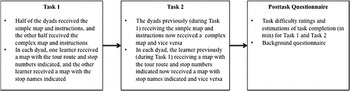
To eliminate the potential confound of order of tasks and task complexity, half of the dyads performed the simple task first, whereas the other half performed the complex task first; task version (i.e., A or B described in the previous paragraph) was also counterbalanced across dyads. During task completion, participants were recorded individually directly onto desktop computers using Sanako SLH-07 head-mounted microphones and the software Sanako Study (Sanako Corporation, 2013); recordings were sampled at 32 kHz. Following the completion of the two map tasks, participants completed the previously mentioned exit and background questionnaires. A visual summary of the study procedure is provided in Figure 1.
Visual schematic of study procedure.

Coding
LRE Coding.
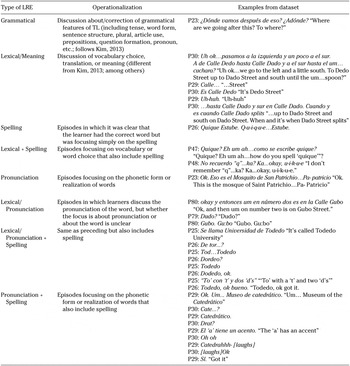
Recordings of the learner-learner interactions were transcribed and coded for occurrence and type of LRE. Table 2 presents the types of LREs encountered in the data, their operationalization, and an example from the data.
LRE type, operationalization, and examples

Note. TL = target language.
Acoustic Analysis.
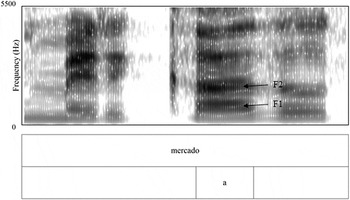
To measure pronunciation accuracy with regard to the production of vowels in L2 Spanish, the present analysis examined the formant structure of the Spanish vowels produced during interaction. This analysis focused on the production of vowels in stressed position and was limited to those vowels occurring between occlusive/approximant consonants (e.g., /p t k b d ɡ/) or between one of these consonants and a pause. Each vowel token was isolated, and first and second formant (F1 and F2, respectively) measurements were taken from the midpoint of each production using a script in Praat (Boersma & Weenink, Reference Boersma and Weenink2014). The settings included a window length of 0.025 s for all tokens and five formants estimated under 5500 Hz for females and under 5000 Hz for males. The F1 (see Figure 2) provides information regarding the vowel’s production along the height dimension (i.e., the higher the F1 value, the lower the production of the vowel within the vocal tract), whereas the F2 provides information regarding the production along a front-back dimension (i.e., the higher the F2 value, the more fronted the production of the vowel). Each token was also coded for vowel type (i.e., /i e a o u/).
Production of Spanish word mercado “market” by one of the Spanish native speakers; figure shows the first and second formants (F1 and F2)—which index vowel height and frontness/backness, respectively—for the stressed vowel /a/.

To account and control for potential formant structure differences based on varying vocal tract sizes between speakers (i.e., especially of different sexes), all vowel productions were normalized using the speaker-intrinsic, vowel-extrinsic Lobanov method within the NORM suite (Thomas & Kendall, Reference Thomas and Kendall2012), which is a web-based interface to the vowels package for the statistical software R. The Lobanov method in NORM uses each unique speaker’s raw vowel measurements to calculate a normalized formant measurement for each vowel based on the mean and standard deviation for that formant throughout the speaker’s vowel system.
To be able to comment on the targetlike-ness (i.e., accuracy) of vowel productions, data were also elicited from two female English-Spanish bilingual native Spanish speakers (one from Southern Spain, one from Argentina) who were instructors of Spanish from the same institutional context as the L2 learners. These native Spanish speakers were audio-recorded completing the same tasks as the learners, and their vowel productions (n = 101) underwent the same acoustic analysis and normalization process. The native speaker data are not included in the statistical analyses but rather are used to provide a visual bilingual native speaker baseline to aid in interpreting learner productions (i.e., whether differences observed in learner productions by task constitute movement in a nativelike direction).
Statistical Analysis.
To answer the first research question (i.e., the extent to which cognitive complexity affects learner production of pronunciation-focused LREs), simple descriptive statistics were calculated for each LRE type documented. Then, to control for the differences in time on task between the simple and complex tasks, a rate of LRE production by dyad per minute was calculated, and the mean rate of pronunciation-related LRE production between the simple and complex tasks was compared using a paired samples t test. To answer the second research question (i.e., the extent to which cognitive complexity affects accuracy in the pronunciation of vowels in L2 Spanish performance), descriptive statistics were calculated for the F1 and F2 measurements taken for each vowel production. Because observations were not independent (i.e., each participant produced several tokens of each vowel) and because participants contributed an unequal number of each vowel, separate linear mixed models were generated for each vowel to examine the relationship between vowel quality (i.e., F1 and F2; the dependent variables) and task complexity (simple vs. complex), treating participant and token as random intercepts. These models included task order as an additional fixed effect to determine whether vowel quality was influenced by the order in which tasks were completed (i.e., simple-complex vs. complex-simple). We acknowledge that running this number of distinct models increases the likelihood of a Type I error. However, we decided that this was favorable to just two models (i.e., one for F1 and one for F2) because it facilitates the comparison of vowel quality for each individual vowel across categories of each fixed effect (e.g., /i/ in simple vs. complex task, /e/ in simple vs. complex task) as opposed to a comparison of vowel quality across vowels and categories of each fixed effect (e.g., /i/ in relation to /e/ in simple vs. complex task, /i/ in relation to /a/ in simple vs. complex task).
RESULTS
LREs
Participants’ LRE productions during the simple and complex tasks were categorized as one of the eight LRE types listed and detailed in Table 2. Table 3 presents the findings for the number of each LRE type produced overall by learners during the simple and complex tasks; LRE types in the shaded columns refer to those categories that are related to pronunciation.
Overall number, percentage, and type of LREs produced during completion of simple and complex tasks

Note. Pron = Pronunciation; Spell = Spelling. The shaded columns refer to LRE types that are related to pronunciation.
Overall, there was greater incidence of LREs produced during completion of the complex task (n = 155) than during completion of the simple task (n = 102). LREs were distributed similarly across LRE types during the simple and complex tasks, lexis-focused and pronunciation-focused LREs being the two most common LRE types produced during both; however, pronunciation-focused LREs were highest during the simple task and lexis-focused LREs were highest during the complex task.
Focusing specifically on pronunciation-related LREs (the shaded columns in Table 3), it will be recalled that a rate of LRE production (i.e., LRE/min) was calculated; this choice was made to reduce the influence of a potential confound of time on task and task complexity. Table 4 presents the mean rate of pronunciation-related LRE production during the simple and complex tasks.
Mean rate (LRE/min by dyad) and standard deviation (in parentheses) of pronunciation-related LREs produced during completion of simple and complex tasks

Note. Pron = Pronunciation; Spell = Spelling; LRE = language-related episode. The shaded columns refer to LRE types that are related to pronunciation.
Our first research question inquired as to whether task complexity would impact learners’ production of pronunciation-related LREs. As can be seen in Table 4, pronunciation-related LREs were produced at a higher rate during the simple task (i.e., 0.70 LRE/min) than during the complex task (i.e., 0.46 LRE/min). A paired samples t test revealed that these differences were not significant and the effect size was relatively small, t(11) = 1.73, p = .112, d = 0.52.
Pronunciation Accuracy
To examine whether accuracy of phonetic form was impacted by task complexity manipulations, the pronunciation of L2 Spanish vowels was investigated. As a reminder, the target phonetic context for vowels examined in this study was in stressed position between stop phonemes or between a stop phoneme and a pause. Vowels in target contexts (N = 1,079) were isolated and analyzed acoustically along two dimensions: height (F1) and frontness-backness (F2). A total of 139 vowel tokens were excluded from the analysis due to production phenomena that interfered with accurate formant measurements (e.g., creaky voice, background noise); thus, the final vowel dataset consisted of 940 tokens. The findings presented in this section are based on normalized formant measurements.
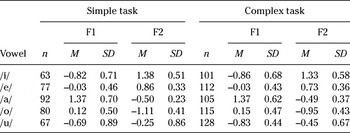
Table 5 presents the findings for production of each vowel by task complexity condition.
Descriptive statistics of overall normalized F1 and F2 values for vowels by task type (simple and complex)

The mean formant values presented in Table 5 reflect tongue position in the oral cavity. Along the high-low dimension (i.e., F1), a lower value indicates a higher tongue position, whereas a higher value indicates a lower tongue position. Along the front-back dimension (i.e., F2), a lower value indicates tongue position that is in a more backed position, whereas a higher value indicates tongue position that is more fronted in the oral cavity.
As presented in Table 5, learners’ production of /a/, on average, is strikingly similar during the simple and complex tasks. Their production of /i/ is similarly comparable regardless of the complexity of the task. For /e/, learners’ productions are similar across tasks on the high-low dimension (i.e., F1) but are more fronted (i.e., have a higher F2) during the simple task than during the complex task. For /o/, learners’ productions are comparable with regard to F1 but differ with regard to F2: Productions of /o/ are more backed during the simple task than during the complex task. Finally, learners’ productions of /u/ are slightly higher and more backed during the complex task than the simple task.
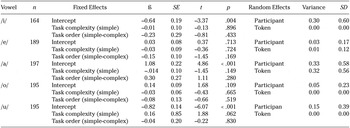
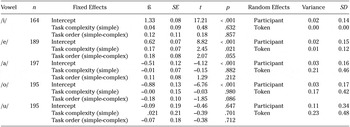
To statistically examine the relationship between vowel quality (i.e., F1 and F2) and task complexity, we used multilevel modeling. Two linear mixed effects analyses were performed for each of the five Spanish vowels (/i e a o u/) using the lmerTest package (Kuznetsova, Brockhoff, & Christensen, Reference Kuznetsova, Brockhoff and Christensen2016) in R (R Core Team, 2016)—the first with normalized F1 values as the dependent variable and the second with normalized F2 values as the dependent variable. For each model, task order (simple-complex or complex-simple) and task complexity (simple or complex) were included as fixed effects, and participant and token were included as random intercepts. Visual inspections of residual plots were conducted to confirm normality of residuals for each model. The findings for the models for each vowel with normalized F1 values as the dependent variable are presented in Table 6, and the findings for the models with normalized F2 values as the dependent variable are presented in Table 7.
Summary of linear mixed-effects statistics for models predicting normalized F1 values

Note. Reference categories indicated in parentheses.
Summary of linear mixed-effects statistics for models predicting normalized F2 values

Note. Reference categories indicated in parentheses.
Table 6 shows that, along the F1 (vertical or height) dimension, there were no significant effects for task order or task complexity for any vowel. Table 7 shows that, along the F2 (horizontal or front-back) dimension, learners produced /e/ with significantly higher normalized F2 values during the simple task than during the complex task, indicating a more fronted /e/ production on the simple task and a more backed production during the complex task.
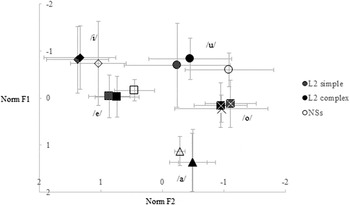
Although the findings for /e/ along the F2 dimension indicate an effect of task complexity on vowel production, they do not tell us whether participants’ productions of this vowel are more accurate or nativelike during the complex task than the simple task. It will be recalled that two bilingual native speakers of Spanish completed the map task to provide a native Spanish vowel baseline for comparison. Figure 3 provides a vowel chart or plot of the acoustic space for learners for the simple and complex tasks separately, as well as for the native speakers for the simple and complex tasks combined in order to interpret the direction of effect (i.e., more or less accurate or nativelike) of the difference in /e/ production between the simple and complex tasks.
Plot of vowel space for L2 learners during simple task, L2 learners during complex task, and native speakers (NSs; simple and complex tasks combined).

In a vowel plot like that depicted in Figure 3, vowels are arranged both vertically and horizontally to provide a visual reference point of tongue position in the oral cavity. The vertical (i.e., F1) dimension corresponds to tongue height, with low vowels positioned toward the bottom of the figure and high vowels positioned toward the top. The horizontal (i.e., F2) dimension corresponds to tongue frontness or backness, with front vowels positioned toward the left of the figure and back vowels positioned toward the right. As can be seen in Figure 3, learners’ productions of /e/ were more backed during the complex task than the simple task, which constitutes movement in a nativelike direction (i.e., is more similar to the native speakers’ average /e/ productions). It is also interesting to note that, although not significant, many of the other descriptive differences observed in vowel formant averages between the simple and the complex tasks (i.e., Table 5) represent movement toward more nativelike vowels in the complex task (e.g., for /i/ and /u/ along the F2 dimension and for /o/ along F1 and F2). It should be recognized, however, that much individual variation existed in vowel production. As the error bars in Figure 3 indicate, speakers’ productions of the vowels varied widely; we will return to this issue in the “Discussion” section.
DISCUSSION
The present study aimed to investigate whether the predictions of the cognition hypothesis (e.g., Robinson Reference Robinson2001b, Reference Robinson2007), especially with regard to task complexity manipulations and their effect on learner production and attention to form, extend to L2 pronunciation outcomes. The cognition hypothesis predicts that greater task complexity will encourage greater incidence of interactional features and, in turn, greater accuracy. Support for these predictions has been found with regard to grammatical (e.g., Baralt, Reference Baralt2013; Kim, Reference Kim2012) and pragmatic (Kim & Taguchi, Reference Kim and Taguchi2015) targets. The present study investigated these predictions with regard to pronunciation and, specifically, segmental (vowel) production, which was made more task essential by employing a map task that involved navigating streets with names comprised of vocalic minimal pairs.
To examine incidence of interactional features, LREs were counted and labeled according to focus, and a rate of pronunciation-related LRE production (i.e., LRE/min) was calculated. It was shown that pronunciation-related LREs were produced at a higher rate during the simple task than the complex task, although the difference in mean rates was not statistically significant and the effect of task complexity condition was small. Thus, with respect to the first research question, the predictions of the cognition hypothesis were not borne out: There were no statistical differences in incidence of interactional features (operationalized as LREs) in simple versus complex tasks.
These results contrast with those studies reviewed previously that have explored the cognition hypothesis’s predictions using grammar-focused LREs, all of which found evidence supporting greater reflection on form during complex tasks than during simple tasks. Such differences in results could point to a fundamental difference between grammatical and pronunciation targets with regard to attention to form and the role of task complexity. For example, whereas grammatical targets often have specific forms that can many times be described in metalinguistic “rules,” a phonetic target necessarily refers to a variable and gradient range of production possibilities (e.g., a variety of /a/ productions fall within a native speaker range) and requires precise (but typically subconscious) physical modification of articulators to produce. Additionally, although it has been shown that explicit instruction and training are beneficial to pronunciation learning, more communicative approaches to language teaching often fail to incorporate explicit pronunciation training into the foreign language classroom (Pennington & Richards, Reference Pennington and Richards1986); in fact, pronunciation training was not a part of the basic language curriculum of the institutional context examined in this study. Thus, learners may be less familiar with verbally reflecting on phonetic form than they are for other targets. In the future, alternative conceptualizations of attention to form should be used to explore whether task complexity may, in fact, encourage greater attention to phonetic form but in a manner that is not accounted for by LREs.
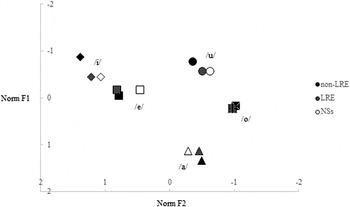
Given that we adopted LREs as instantiations of reflection on form (and despite not finding the hypothesized results for task complexity effects on learner reflection on pronunciation), we wondered whether the present dataset could provide specific evidence that, in fact, reflection on phonetic form during the completion of the present tasks actually led to modifications in a targetlike direction (as Sicola, Reference Sicola2008, found for modifications made after corrective feedback). Previous research has suggested that learner-learner dyads do provide corrective feedback regarding pronunciation to each other and that signaled pronunciation problems are more often modified than unmodified in learner-learner interaction (e.g., Bitchener, Reference Bitchener2004; Sicola, Reference Sicola2008). Nevertheless, several studies have pointed to an advantage for learner dyads with mixed L1s (as opposed to shared L1s) such that negotiation regarding pronunciation is more likely to move toward a targetlike form and away from learners’ respective L1s (e.g., Jenkins, Reference Jenkins2000; Long & Porter, Reference Long and Porter1985; Sicola, Reference Sicola2008). Our participants all shared English as their L1, and the pronunciation targets under investigation are segments that largely exist (but with phonetic differences) in English. Thus, it would be reasonable to suspect that attention to (vowel) phonetic form during interaction could, in fact, lead to movement toward the shared L1 (English) form and away from the Spanish vowel target. To preliminarily explore whether attention to form as accounted for by LREs did, in fact, encourage targetlike pronunciation modification, we compared vowels produced during pronunciation-related LREs to all other vowels produced during the task-based interaction (regardless of task complexity). Figure 4 presents a plot of the vowel space that compares learners’ productions of vowels during pronunciation-related LREs to those produced at other times (i.e., not during LREs). The native speakers’ vowel averages are included as well as baseline reference points.
Vowel plot for L2 learners’ productions in the context of a LRE and in a non-LRE context, as compared to native speaker (NS) vowel productions.

As can be observed in Figure 4, in general, all vowels produced during pronunciation-related LREs are more similar to the native speakers’ vowel averages than vowels produced in non-LRE contexts. These preliminary findings suggest that, despite sharing a L1, the negotiation between learner-learner pairs in our study and the resulting reflection on form during interaction encouraged targetlike modifications in L2 vowel production.
With regard to segmental accuracy and whether the predictions of the cognition hypothesis hold for L2 pronunciation targets (Research Question 2; conceived of as more nativelike vowel production measured acoustically), learners’ pronunciation was found to be significantly more targetlike in the complex task for the vowel /e/ along the F2 or front-back dimension. That is, during the complex task, learners’ /e/ productions were realized in a more backed, Spanish-like position than in the simple task. The pronunciation of other Spanish vowels (i.e., /i/, /o/, /u/) also appeared to trend toward more nativelike realizations (Figure 3) during the complex tasks, but these differences were not statistical. These results suggest that some of the predictions of the cognition hypothesis (i.e., greater accuracy in more complex tasks), shown frequently for accuracy on specific grammatical structures, may also extend to pronunciation, although not equally across all segments studied.
Previous studies have shown that recasts in L2 pronunciation can be effective in encouraging more targetlike production (and perception) of L2 sounds (e.g., Saito, Reference Saito2013; Saito & Lyster, Reference Saito and Lyster2012a, Reference Saito and Lyster2012b). Interpreted in light of the present results, we suggest that perhaps tasks, learner negotiation, and (pronunciation) form-focused interaction during tasks also provide opportunities for pronunciation learning, or at least restructuring. The present study, of course, focused only on one specific acoustic correlate of vowel production (i.e., formant structure as an index for vowel quality); future research would benefit from the exploration of other aspects of vowel production (e.g., duration, English-speaking learners’ tendency toward diphthongization) as well as other (e.g., perceptual or ratings-based) measures of accuracy.
It is a limitation of this study that few individual difference factors—especially that of L2 proficiency—were accounted for during data collection, especially considering the individual variation observed in Figure 3. It is well known that individual characteristics of interactional partners can affect the interactive moves and language produced during interaction (e.g., Bueno-Alastuey, Reference Bueno-Alastuey2012, Reference Bueno-Alastuey2013; Kim & McDonough, Reference Kim and McDonough2008; Leeser, Reference Leeser2004; Mackey, Oliver, & Leeman, Reference Mackey, Oliver and Leeman2003; Pica, Lincoln-Porter, Paninos, & Linnell, Reference Pica, Lincoln-Porter, Paninos and Linnell1996; Porter, Reference Porter1983; Sato & Lyster, Reference Sato, Lyster and Mackey2007; Varonis & Gass, Reference Varonis and Gass1985). Nevertheless, the issue of L2 proficiency in this context is complicated by the fact that many common methods of measuring L2 proficiency for use in empirical research (e.g., cloze tests; Tremblay, Reference Tremblay2011) do not account for pronunciation abilities, and it is well attested anecdotally and empirically that grammatical knowledge or proficiency does not always correspond with pronunciation abilities (see Solon, Reference Solon2013, for a discussion of proficiency measurements for L2 phonetic/phonological research). It is interesting to note that the participant who made some of the most dramatic modifications in segmental accuracy between the simple and complex tasks had been studying Spanish for 6 years and was interacting with a learner who had been studying Spanish much longer than the group’s average (i.e., 14 years as compared to the group average of 6.5 years). This example, though singular, offers support for the idea that interaction between mixed proficiency learner dyads, and subsequent linguistic outcomes, may differ in key ways from that of matched proficiency dyads and that learner proficiency level is an important factor to consider. Future research that explores the relationship between task factors, interactional features, and pronunciation should carefully consider and account for learner proficiency levels.
Although the present study offers initial evidence of positive effects of task complexity manipulations for segmental accuracy, our knowledge of the effect of tasks on learner pronunciation and of the relevance of the predictions of the cognition hypothesis to issues of phonetic/phonological performance and learning would also benefit from future studies that investigate other types of tasks, such as monologic tasks or tasks that require longer or different types of production (e.g., narration, decision making; see Gilabert et al., Reference Gilabert, Barón and Llanes2009, regarding differences in the impact of task complexity manipulations on interactional moves by task type), that include different manipulations of task complexity, and/or that measure pronunciation performance in other ways, including other phonetic/acoustic measures or, for example, through comprehensibility or intelligibility ratings. Additionally, when examining learner attention to form, measurements of attention and cognitive processing can and should be triangulated (e.g., using stimulated recall or think-aloud protocols). Future studies may also want to address the issue of the effect of the interlocutor, as the differences in vowel accuracy and/or the effect of LREs may differ when learners complete tasks with native or heritage speakers (see Solon, Reference Solon and Gurzynski-Weissin press) or more or less advanced learners than with learners from their same proficiency level (e.g., Bowles, Toth, & Adams, Reference Bowles, Toth and Adams2014; Bueno-Alastuey, Reference Bueno-Alastuey2013; Mackey et al., Reference Mackey, Oliver and Leeman2003; Varonis & Gass, Reference Varonis and Gass1985, among many others). Finally, investigations into the effect of mode are also warranted, as it is possible that pronunciation targets interact differently with mode (i.e., face-to-face vs. computer-mediated) than do grammatical targets or more general performance measures. For example, Bueno-Alastuey’s (Reference Bueno-Alastuey2013) examination of synchronous computer-mediated communication found rates of pronunciation-related LREs (i.e., 35–49% depending on the characteristics of the interlocutors) similar to those observed for the face-to-face interaction in the present study even though pronunciation was not a specific focus of the task completed by her participants. The present study, thus, sets the stage for much future work examining the relationships between task complexity, learner attention to form, and pronunciation.
CONCLUSION
Corroborating the predictions of the cognition hypothesis, previous research has demonstrated that the manipulation of task complexity can lead to increased reflection on form and accuracy, often explored with regard to specific grammatical targets. The present study extended the scope of research on the cognition hypothesis and examined whether such predictions extend to specific pronunciation targets. Investigating reflection on L2 pronunciation as well as the production of L2 Spanish vowels by native English-speaking learners during task completion, the results of the present study indicated that greater task complexity did not lead to a higher rate of production of pronunciation-related LREs but did encourage greater accuracy for one segment (/e/). The results of the present study make an important first step in connecting previous research on the role of task factors to L2 learning at the phonetic and phonological level.
APPENDIX A
SAMPLE MAPS (SIMPLE VERSION)
Version A

Version B

APPENDIX B
SAMPLE MAPS (COMPLEX VERSION)
Version A

Version B