





Violence against women remains a critical global public health issue, as well as a grave violation of human rights. 1 Among the various forms of violence against women, intimate partner violence (IPV) is the most prevalent, occurring within intimate relationships and affecting millions of women worldwide. 2 The World Health Organization (WHO) defines IPV as ‘behavior within an intimate relationship that causes physical, sexual, or psychological harm, including acts of physical aggression, sexual coercion, psychological abuse, and controlling behaviors’. 1 Globally, approximately a quarter (25.8%) of women aged 15–49 years who have been in a relationship report having experienced physical and/or sexual IPV at least once in their lifetime. 1 IPV is also a major contributor to female homicides, with intimate partners responsible for approximately 38–40% of cases. Reference Stöckl, Devries, Rotstein, Abrahams, Campbell and Watts3 Beyond its immediate physical consequences, IPV has profound and long-lasting effects on women’s mental, sexual and reproductive health, and imposes substantial social and economic burdens that exacerbate gender inequalities. 4
IPV is a well-established risk factor for mental disorders, with both acute and long-term consequences. Exposure to IPV may affect mental health through multiple biological, psychological and social pathways. In addition to activating chronic stress responses and dysregulating endocrine and immune systems, IPV may involve coercive control, fear, humiliation, loss of autonomy, social isolation and reduced access to support, all of which can contribute to depression, anxiety, post-traumatic stress disorder and other mental health conditions. Reference Beydoun, Beydoun, Kaufman, Lo and Zonderman5–Reference Campbell7 However, IPV is not a uniform experience; it varies in type, timing and specific impact on mental health. Different types of IPV, including emotional, physical, sexual and economic abuse, may exert distinct psychological effects. The timing of IPV exposure, including lifetime, past-year, pregnancy, postpartum and perinatal exposure, may further shape mental health outcomes.
Understanding these associations is particularly important for women at different life stages, including women in general as well as during pregnancy, postpartum and across the perinatal period. Pregnancy and postpartum are recognised as periods of heightened vulnerability to mental disorders. Reference Islam, Broidy, Baird and Mazerolle8 IPV during these stages has been linked to increased risks of perinatal depression, anxiety and substance use disorders, alongside adverse reproductive health outcomes such as unintended pregnancies, sexually transmitted infections and obstetric complications. Reference Islam, Broidy, Baird and Mazerolle8,Reference Yu, Jiang, Bao, Xu, Yang and Shen9
Despite increasing recognition of IPV’s impact on mental health, existing systematic reviews have provided only a partial understanding of these associations. A previous systematic review and meta-analysis published in 2012 primarily focused on the association between IPV and depression in adult women, Reference Beydoun, Beydoun, Kaufman, Lo and Zonderman5 whereas a more recent systematic review and meta-analysis, covering studies up to November 2020, synthesised evidence on a broader range of mental health outcomes related to IPV. Reference White, Sin, Sweeney, Salisbury, Wahlich and Montesinos Guevara10 However, these studies have largely focused on broad associations, with limited exploration of how different types and timings of IPV affect specific mental disorders across distinct life stages. Addressing this gap through a comprehensive evaluation of these dynamics is essential to improve our understanding of the relationship between IPV and mental health across different stages of life.
Aims of the study
To fill this knowledge gap, this systematic review and meta-analysis aimed to address the following research questions.
-
(a) What is the association between IPV and mental health outcomes among women across different life stages, including women in the general population, pregnant women, postpartum women and perinatal women?
-
(b) Do these associations differ according to IPV timing, including lifetime, past-year, during pregnancy, postpartum and perinatal exposure?
-
(c) Do these associations vary by IPV type, including emotional, physical, sexual and economic IPV?
Answering these questions may improve understanding of how IPV is associated with women’s mental health across diverse contexts and life stages, thereby informing future research and public health strategies aimed at reducing the mental health burden associated with IPV among women.
Method
This systematic review and meta-analysis was conducted and reported in accordance with the standards of Preferred Reporting Items for Systematic Reviews and Meta-Analyses (PRISMA) guideline. Reference Page, McKenzie, Bossuyt, Boutron, Hoffmann and Mulrow11 The protocol had been registered with the PROSPERO (protocol number: CRD420250655976).
Search strategy and selection criteria
A comprehensive literature search was conducted across three English (PubMed, Embase and MEDLINE) and three Chinese (China National Knowledge Infrastructure, Wanfang Data and CQVIP) bibliographic databases. The search aimed to identify all observational studies (including cross-sectional, case–control and cohort studies) published from 1 January 1980 to 13 June 2024, that investigated the associations between IPV and mental disorders. The search strategy was a combination of terms related to IPV (e.g. ‘intimate partner violence’, ‘domestic violence’ and ‘spousal abuse’), mental disorders (e.g. ‘schizophrenia’, ‘depression’, ‘bipolar’, ‘anxiety’ and ‘eating disorder’) and women (e.g. ‘women’ and ‘female’), with no restrictions on language or geographic region. The detailed search strategies for each database are provided in Supplementary Table 1.
Studies were eligible for inclusion if they assessed the associations between any type of IPV and mental disorders among women (biological sex) aged 15 years and older. Studies investigating violence against women in contexts other than IPV, such as workplace violence or witnessing violence, were excluded. Studies focusing exclusively on male victims, same-sex, transgender or other marginalised groups were also excluded. In this study, we included five types of mental disorders: schizophrenia, depression, bipolar disorder, anxiety and eating disorders, based on previous studies demonstrating an association between IPV and these disorders in women. Reference Beydoun, Beydoun, Kaufman, Lo and Zonderman5,Reference White, Sin, Sweeney, Salisbury, Wahlich and Montesinos Guevara10,Reference Ratanatharathorn, Quan, Koenen, Chibnik, Weisskopf and Slopen12,Reference Yu, Nevado-Holgado, Molero, D’Onofrio, Larsson and Howard13 Studies included in the meta-analysis were required to report findings using risk ratios, hazard ratios or odds ratios, thus providing a binary outcome for mental disorders and a categorical measurement of IPV (typically binary). The reference group in these studies consisted of those who had not been exposed to IPV. In cases where multiple articles reported data from the same study, the article with the most comprehensive results or the largest sample size was retained. However, when different types of IPV or mental disorders from the same study were reported in separate articles, all relevant articles were included.
Two investigators (T.H. and H.Z.) independently screened all titles and abstracts, and assessed the full texts of potentially relevant articles for eligibility based on the selection criteria for final inclusion.
Data extraction and quality assessment
Using a preconceived and standardised data extraction form, data were independently extracted from the included articles by two investigators (T.H. and H.Z.) and checked by a third investigator (Z.L.). The first data extraction commenced on 5 December 2024, and the process continued until 11 February 2025. The extracted information included the title, first author, publication year, investigation year, study location, World Bank region 14 (high-income countries (HICs) and low- and middle-income countries (LMICs), with the latter including low-income, lower middle-income and upper middle-income countries), study design (cross-sectional, case–control and cohort), sample sources (community-based, health-facility-based, community and health-facility-based), sample size, age of participants (range, mean or median), measurement of IPV, definition of IPV, measurement of mental disorders, risk estimates (risk ratios, hazard ratios or odds ratios) of outcomes and corresponding 95% confidence intervals.
Our conceptual framework of associations between IPV and mental disorders is shown in Fig. 1. According to our data extraction strategy, each individual article could have contributed multiple estimates (i.e. data points) corresponding to women’s different life stages, IPV timings, IPV types or mental disorders. Women were categorised into four groups based on different life stages: women in the general population, pregnant women, postpartum women and perinatal women (including both pregnant and postpartum women). Women in the general population referred to women who were not specifically classified as pregnant, postpartum or perinatal women in the original studies. IPV timings were classified into five categories: lifetime IPV, past-year IPV, IPV during pregnancy, postpartum IPV and perinatal IPV. In this study, IPV types were categorised into three forms: (a) specific single types, including emotional, physical, sexual and economic IPV, where exposure to any single type was compared with individuals not exposed to that specific type; (b) combined two types of IPV, denoted as ‘+’ (e.g. physical + sexual IPV), where the presence of either type was considered exposure to IPV; and (c) total IPV, defined as encompassing at least emotional, physical and sexual IPV (with or without economic IPV). If all three types (emotional, physical and sexual IPV) were measured, the presence of any one type was considered exposure to total IPV, compared with individuals who were not exposed to any of these types. For each study included in our analysis, we classified IPV based on the specific definition and types reported in that study. For mental disorders, various forms of depression (e.g. depression, depressive episode and depressive symptoms) were grouped under the category of depression. Similarly, different forms of anxiety (e.g. anxiety, anxiety disorders and anxiety symptoms) were classified as anxiety. Eating disorders, including both ‘eating disorder’ and ‘disordered eating’, were categorised under eating disorders.
Conceptual framework of associations between intimate partner violence and mental disorders. IPV, intimate partner violence.

Fig. 1 Long description
The diagram presents a conceptual framework of the associations between intimate partner violence (IPV) and mental disorders across different stages of women’s life span. It includes emotional, physical, sexual, and economic IPV and distinguishes IPV exposure by timing, including lifetime IPV, past-year IPV, IPV during pregnancy, postpartum IPV, and perinatal IPV. The framework covers women in the general population, pregnant women, postpartum women, and perinatal women, with the timeline beginning at age 15 and extending across pregnancy and postpartum periods. The mental disorders considered include depression, anxiety, and eating disorders. Arrows illustrate different periods of IPV exposure across women’s life stages and their associations with mental disorders.
The quality assessment was conducted with the Newcastle–Ottawa Scale (NOS) for cohort and case–control studies, with a maximum score of nine stars. Reference Wells, Shea, O’Connell, Peterson, Welch and Losos15 The studies were evaluated across three domains: selection, comparability and outcome/exposure. The assigned scores categorised study quality as follows: good (NOS ≥ 7 stars), fair (NOS 4–6 stars) and poor (NOS ≤ 3 stars). For cross-sectional studies, an 11-item checklist recommended by the Agency for Healthcare Research and Quality (AHRQ) was employed. Reference Rostom, Dubé, Cranney, Saloojee, Sy and Garritty16 Items were scored as 0 for ‘no’ or ‘unclear’ responses, and 1 for ‘yes’. The quality of the articles was classified as low quality (0–3), moderate quality (4–7) and high quality (8–11). Reference Hu, Dong, Chen, Liu, Ma and Liu17 The quality assessment was conducted by two investigators (Z.L. and J.Z.).
Statistical analysis
Pooled effect estimates of mental disorders associated with IPV
In the included studies, only odds ratios and risk ratios were reported. Because most of the effect estimates were odds ratios, a formula was used to convert risk ratios into odds ratios whenever possible:
 $OR_{ij}={RR_{ij}\times (1-P_{i}) \over 1-RR_{ij}\times P_{i}}$
 $SE_{ln ({OR_{ij}})}=SE_{ln ({RR_{ij}})}={ln (UC_{ij})-ln (LC_{ij}) \over 3.92}$
 $OR_{95\% CI,ij}=e^{ln ({OR_{ij}})\pm 1.96\times {SE_{ln ({OR_{ij}})}}}$
where OR ij is the point estimate of the odds ratio from each study i and data point j; RR ij is the point estimate of the risk ratio from each study i and data point j; P i is the study-specific prevalence of outcome among the unexposed group; ln is the natural log; SE is the standard error; LC ij is the lower confidence limit and UC ij is the upper confidence limit of the 95% confidence interval. Detailed methods are provided in the Methods section of the Supplementary Material.
Following established methodologies and guidances, Reference Borenstein, Hedges, Higgins and Rothstein18,Reference Deeks, Higgins and Altman19 a random-effects meta-analysis model using the restricted maximum likelihood (REML) method was employed to evaluate the effect estimates for the association between IPV and mental disorders (provided at least two studies were available). Pooled odds ratios with corresponding 95% confidence intervals were reported for all data point categories, stratified by women’s life stage, IPV timing, IPV type and mental disorder. When odds ratios were presented at a subgroup level within samples, we pooled them using a random-effects meta-analysis model (REML method) before analysis. Reference Hughes, Bellis, Hardcastle, Sethi, Butchart and Mikton20 The I2 -statistic was utilised to assess heterogeneity among the pooled studies, with an I 2-value greater than 50% indicating significant heterogeneity. Reference Higgins, Thompson, Deeks and Altman21 To evaluate publication bias, funnel plots were visually inspected for all data point categories, and Begg-Mazumdar and Egger tests were conducted when a sufficient number of studies (at least ten) were included in the meta-analysis. Reference Begg and Mazumdar22,Reference Egger, Davey Smith, Schneider and Minder23 Sensitivity analyses were performed with the leave-one-out method when at least two studies were available, in which a meta-analysis was conducted for each subset of studies, leaving one study out at a time. Subgroup analyses were performed to examine variations in the association between IPV and mental disorders across World Bank regions (HICs versus LMICs), study designs (cross-sectional versus cohort) and sampling sources (community-based versus health-facility-based versus community and health-facility-based).
Credibility and grading criteria of each pooled analysis
A credibility assessment for each pooled analysis was conducted by two investigators (Z.L. and J.Z.). Based on data derived from our analyses (including p-values, I 2-statistic, 95% confidence intervals, small study effects, excess significance bias, 95% prediction interval and largest study significance), we classified each pooled analysis as either convincing (class 1), highly suggestive (class 2), suggestive (class 3), weak (class 4) or non-significant (class not significant), following the evidence classification criteria outlined in Supplementary Table 2. Reference Xie, Fan, Luo, Li, Zhang and Hu24,Reference Liu, Meng, Tian, Cao, Fan and Wu25
Additionally, we assessed the quality of evidence for each pooled analysis with the Grading of Recommendations, Assessment, Development and Evaluation (GRADE) system, categorising them as ‘high’, ‘moderate’, ‘low’ or ‘very low’. Reference Guyatt, Oxman, Akl, Kunz, Vist and Brozek26 The GRADE approach initially classifies all observational studies as low-quality evidence. Five of the eight GRADE criteria can reduce confidence in the effect estimates and lead to downgrading: risk of bias, inconsistency across studies, indirectness of evidence, imprecision and publication bias. Three criteria, however, may enhance confidence and lead to upgrading: a substantial effect size without plausible confounders, a dose–response relationship and the absence of plausible residual confounding that would affect inferences regarding the exposure effect.
Disagreements in the stages of review, data extraction and quality assessment for both the original studies and pooled analyses were resolved through discussion until a consensus was reached.
All statistical analyses were conducted with R, version 4.4.2, on Windows 11 (R Foundation for Statistical Computing, Vienna, Austria; https://www.r-project.org/). Statistical tests were two-sided, and p-values less than 0.05 or 95% confidence intervals that did not include 1.00 were considered statistically significant.
Results
Study selection and characteristics
We initially identified 7326 bibliographic records through electronic database searches (Fig. 2(a)). After removing 1964 duplicates and 4665 irrelevant records based on title and abstract screening, we examined the full texts of 697 articles. Finally, a total of 82 articles, comprising 67 cross-sectional studies, 14 cohort studies and 1 case–control study, were included in our systematic review and meta-analysis, covering 140 286 women and 209 data points on mental disorders (156 for depression, 43 for anxiety, 4 for comorbidity of depression and anxiety, and 6 for eating disorders). These 82 articles were conducted across 31 countries (Fig. 2(b)), with the majority originating from HICs (n = 29, 35.37%) and lower middle-income countries (n = 22, 26.83%). The USA (n = 18, 21.95%) and Ethiopia (n = 12, 14.63%) accounted for the largest number of studies. Of the included studies, 41 were health-facility-based (50.00%), 36 were community-based (43.90%) and 5 were conducted in both community and health facility settings (6.10%). Most of the studies were published in or after 2010 (n = 76, 92.68%). Mental health outcomes in the included studies were assessed using symptom scales, diagnostic interviews or medical records, and mainly reflected current/recent symptoms, probable disorders or existing diagnoses. Quality assessment using the NOS and the AHRQ criteria revealed that 34 studies (41.46%) were rated as good/high quality, and 48 studies (58.54%) were rated as fair/moderate quality. Detailed characteristics and quality assessments of the included studies can be found in Supplementary Tables 3–7.
PRISMA flow diagram of screening and selection process and geographical location of the 82 included articles reporting the associations between intimate partner violence and mental disorders. (a) PRISMA flow diagram of screening and selection process. As some studies involved multiple population groups, the studies involving women in the general population, pregnant women, postpartum women and perinatal women are not additive to the total number of included studies in this systematic review and meta-analysis. (b) Geographical location of the 82 included articles reporting the associations between intimate partner violence and mental disorders. For the World Bank income classification see: https://datatopics.worldbank.org/world-development-indicators/the-world-by-income-and-region.html. CNKI, China National Knowledge Infrastructure; HIC, high-income countries; LMIC, low- and middle-income countries; PRISMA, Preferred Reporting Items for Systematic Reviews and Meta-Analyses; WHO, World Health Organization.

Pooled and stratified estimates of mental disorders associated with IPV
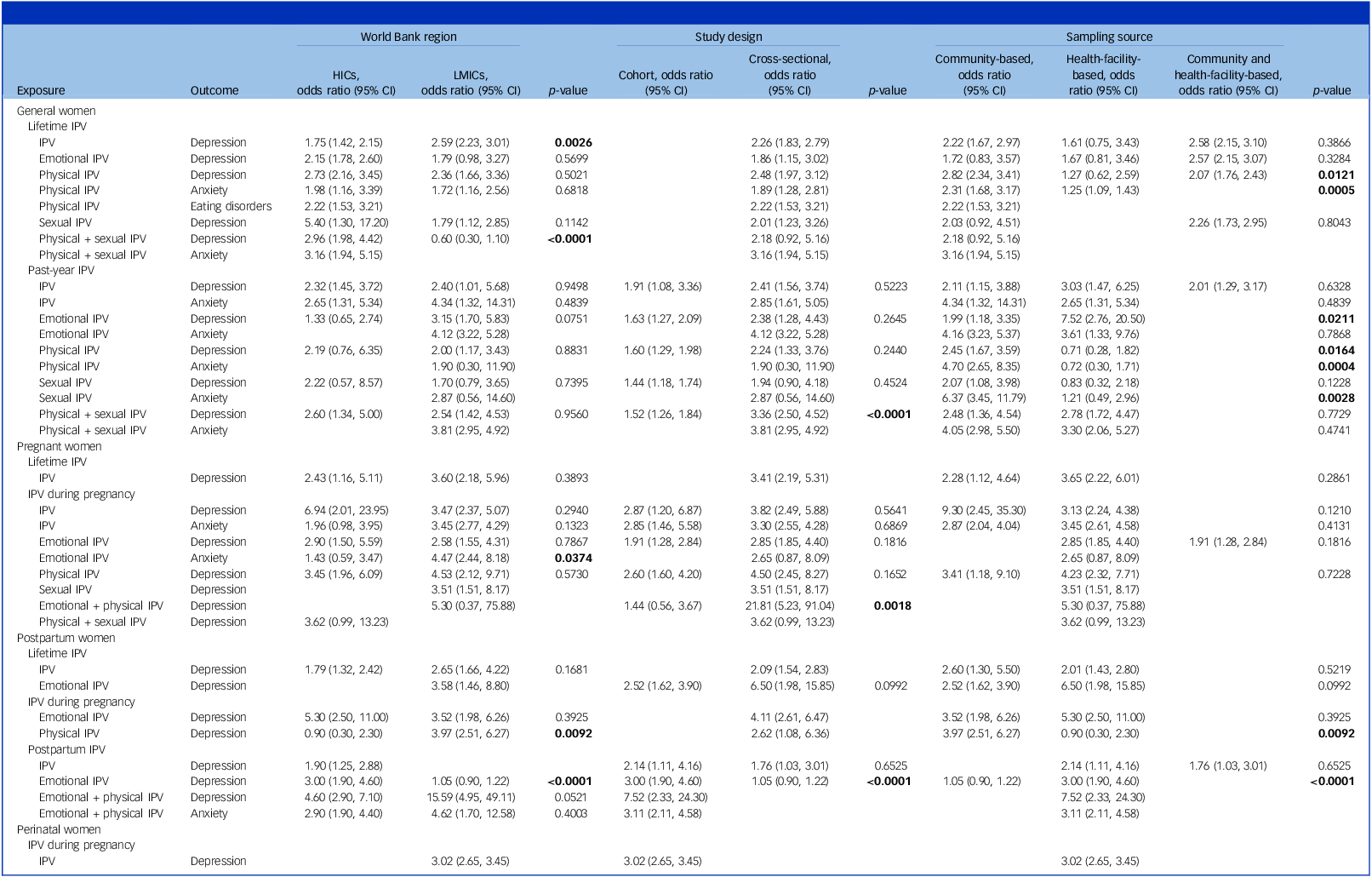
Figure 3 presents a forest plot for the association between IPV and mental disorders among women in the general population, pregnant women, postpartum women and perinatal women. For each exposure–outcome pair with two or more studies, the pooled odds ratio is displayed, whereas for those with only one study, the reported odds ratio from the original study is shown. The forest plot includes odds ratios with 95% confidence intervals, I 2-values, p-values and credibility assessment results. The quality assessment for each pooled analysis based on the GRADE criteria can be found in Supplementary Table 8. Subgroup analysis by World Bank region, study design and sampling source for association between IPV and mental disorders are shown in Table 1.
Forest plot of the associations between intimate partner violence and mental disorders among women in the general population, pregnant women, postpartum women and perinatal women. IPV is presented by total IPV, combined two types and specific single subtypes. Total IPV refers to the measurement of at least emotional, physical and sexual IPV (with or without economic IPV). Combined two IPV types were denoted as ‘+’ (e.g. physical + sexual IPV), where the presence of either type was considered exposure to IPV. In the outcomes, ‘Depression + Anxiety’ refers to the comorbidity of depression and anxiety. Odds ratios were pooled only when at least two studies were available for each exposure–outcome category. Credibility: convincing (class 1), highly suggestive (class 2), suggestive (class 3), weak (class 4) and non-significant. GRADE, Grading of Recommendations, Assessment, Development, and Evaluation; IPV, intimate partner violence.

Fig. 3 Long description
The forest plot presents associations between intimate partner violence (IPV) and mental disorders among women in the general population, pregnant women, postpartum women, and perinatal women. IPV exposure is categorized by timing, including lifetime IPV, past-year IPV, IPV during pregnancy, postpartum IPV, and perinatal IPV, and by IPV type, including emotional, physical, sexual, and combinations of IPV types. Mental health outcomes include depression, anxiety, eating disorders, and comorbid depression and anxiety. For each exposure–outcome association, the figure reports the number of studies and, where applicable, credibility class, GRADE assessment, pooled odds ratio with 95% confidence interval, heterogeneity (I²), and p-value. Point estimates and 95% confidence intervals are displayed graphically in the forest plot.
Subgroup analysis of associations between intimate partner violence and mental disorders by World Bank region, study design and sampling source

Table 1 Long description
The table presents subgroup analyses of associations between intimate partner violence (IPV) and mental disorders among women in the general population, pregnant women, postpartum women and perinatal women. Rows are organized by population group, IPV timing, IPV type and mental disorder. Columns present results stratified by World Bank region (high-income and low- and middle-income countries), study design (cohort and cross-sectional) and sampling source (community-based, health facility-based and both). Data are presented as odds ratios with 95% confidence intervals, with corresponding p-values indicating differences between subgroups. Bold p-values indicate statistically significant subgroup differences (p < 0.05).
HICs, high-income countries; LMICs, low- and middle-income countries; IPV, intimate partner violence. Bold values indicate statistically significant subgroup differences (p < 0.05).
The association between IPV and mental disorders among women in the general population
Lifetime IPV
The pooled analysis for lifetime IPV and subtypes revealed significant associations with various mental disorders among women in the general population. A notable association was observed between lifetime IPV and depression (odds ratio 2.26, 95% CI 1.83–2.79, p < 0.0001; class 1; moderate). Lifetime emotional IPV also showed a significant association with depression (odds ratio 1.86, 95% CI 1.15–3.02, p = 0.0115; class 4; very low). Additionally, lifetime physical IPV was associated with depression (odds ratio 2.48, 95% CI 1.97–3.12, p < 0.0001; class 2; low), anxiety (odds ratio 1.89, 95% CI 1.28–2.81, p = 0.0015; class 4; very low) and eating disorders (odds ratio 2.22, 95% CI 1.53–3.21, p < 0.0001; class 3; moderate), with eating disorders showing low heterogeneity (I2 = 7.2%). Lifetime sexual IPV showed significant associations with depression (odds ratio 2.01, 95% CI 1.23–3.26, p = 0.0049; class 4; low). The lifetime combined physical + sexual IPV was not statistically significant for depression, whereas it showed association with anxiety (odds ratio 3.16, 95% CI 1.94–5.15, p < 0.0001; class 3; moderate), with low heterogeneity (I2 = 0). For single studies, the evidence indicated that lifetime IPV was significantly associated with eating disorders (odds ratio 3.85, 95% CI 1.12–13.32), whereas emotional IPV was not. Lifetime sexual IPV was associated with anxiety (odds ratio 13.30, 95% CI 4.30–46.50). Combined types of lifetime IPV, such as emotional + physical IPV, and emotional + sexual IPV, did not yield significant results in most cases. Subgroup analysis of lifetime IPV exposure across World Bank regions revealed regional differences in its associations with mental disorders among women in the general population. Lifetime IPV was strongly associated with depression in both HICs and LMICs, with the association more pronounced in LMICs than in HICs (p = 0.0026). However, lifetime combined physical + sexual IPV were more significantly associated with depression in HICs (p < 0.0001). Subgroup analysis by sampling source showed higher odds ratios in community-based studies.
Past-year IPV
The pooled results for past-year IPV also indicated significant associations with mental disorders among women in the general population. IPV exposure in the past year was significantly associated with depression (odds ratio 2.36, 95% CI 1.61–3.45, p < 0.0001; class 3; very low) and anxiety (odds ratio 2.85, 95% CI 1.61–5.05, p = 0.0003; class 3; low). For past-year emotional IPV, the pooled estimate also showed a link with depression (odds ratio 2.26, 95% CI 1.32–3.84, p = 0.0027; class 4; very low) and anxiety (odds ratio 4.12, 95% CI 3.22–5.28, p < 0.0001; class 1; low), with the latter showing a low heterogeneity (I2 = 0). Moreover, past-year physical IPV was significantly associated with depression (odds ratio 2.14, 95% CI 1.38–3.32, p = 0.0006; class 3; very low), but did not show a significant association with anxiety. Past-year sexual IPV was not significantly associated with either depression or anxiety. The past-year combined physical + sexual IPV exhibited a significant association with depression (odds ratio 2.54, 95% CI 1.62–4.00, p < 0.0001; class 3; very low) and anxiety (odds ratio 3.81, 95% CI 2.95–4.92, p < 0.0001; class 2; low), with anxiety showing low heterogeneity (I2 = 0). For single studies, past-year emotional IPV, sexual IPV and combined physical + sexual IPV exhibited varying degrees of association with comorbidity of depression and anxiety. Another combined type of past-year IPV, emotional + physical IPV, was significantly associated with depression (odds ratio 3.24, 95% CI 2.08–5.03) and eating disorders (odds ratio 3.90, 95% CI 2.10–7.10). Subgroup analysis by study design showed a higher odds ratio for the association between combined physical + sexual IPV and depression in cross-sectional studies. Subgroup analysis by sampling source indicated a higher odds ratio for past-year emotional IPV associated with depression in health-facility-based studies (p = 0.0211), whereas community-based studies showed higher odds ratios for past-year physical IPV and sexual IPV.
The association between IPV and mental disorders among pregnant women
Lifetime IPV
Pooled analysis from seven studies demonstrated a strong association between lifetime IPV and depression among pregnant women (odds ratio 3.41, 95% CI 2.19–5.31, p < 0.0001; class 2; low). Single studies found significant associations between lifetime physical IPV (odds ratio 1.75, 95% CI 1.04–2.93) and emotional IPV (odds ratio 3.08, 95% CI 2.23–4.25) and depression among pregnant women.
IPV during pregnancy
The pooled analysis of IPV during pregnancy revealed significant associations with depression (odds ratio 3.59, 95% CI 2.48–5.20, p < 0.0001; class 2; very low) and anxiety (odds ratio 3.27, 95% CI 2.60–4.10, p < 0.0001; class 1; moderate) among pregnant women. Emotional, physical and sexual IPV during pregnancy were all associated with depression during pregnancy, with odds ratios ranging from 2.68 to 4.09. Single-study evidence showed no significant association between economic IPV during pregnancy and depression, but suggested an association between physical IPV during pregnancy and anxiety (odds ratio 9.17, 95% CI 3.22–26.10) among pregnant women. Combined emotional + physical IPV (odds ratio 3.12, 95% CI 1.27–7.68) and physical + sexual IPV (odds ratio 2.62, 95% CI 1.14–6.01) during pregnancy were also significantly associated with anxiety among pregnant women. Combined emotional + economic IPV during pregnancy were associated with depression among pregnant women (odds ratio 6.16, 95% CI 1.48–25.58). The subgroup analysis revealed a significant association between emotional IPV during pregnancy and anxiety in LMICs (p = 0.0374) among pregnant women, whereas no significant effect was observed in HICs.
The association between IPV and mental disorders among postpartum women
Lifetime IPV
Lifetime IPV was found to be associated with depression (odds ratio 2.09, 95% CI 1.54–2.83, p < 0.0001; class 3; moderate), with a low heterogeneity (I2 = 20.81%) among postpartum women. Lifetime emotional IPV was also associated with depression among postpartum women (odds ratio 3.58, 95% CI 1.46–8.80, p = 0.0054; class 4; moderate). A significant association between lifetime combined physical + sexual IPV and postpartum depression could be found, despite the wide confidence interval (odds ratio 3.46, 95% CI 2.34–18.55).
IPV during pregnancy
Emotional IPV, physical IPV, sexual IPV and combined physical + sexual IPV during pregnancy were all significantly associated with depression among postpartum women, with odds ratios ranging from 2.57 to 4.11. Emotional IPV during pregnancy exhibited a pooled odds ratio for depression of 4.11 (95% CI 2.61–6.47, p < 0.0001; class 2; moderate), with low heterogeneity (I2 = 0). Additionally, single studies indicated that emotional IPV, physical IPV and sexual IPV during pregnancy were also associated with anxiety among postpartum women.
Postpartum IPV
The pooled results showed a significant association between postpartum IPV and depression (odds ratio 1.90, 95% CI 1.25–2.88, p = 0.0025; class 4; low) among postpartum women, with low heterogeneity (I2 = 0). Combined emotional + physical IPV during the postpartum period was significantly associated with depression (odds ratio 7.52, 95% CI 2.33–24.30, p = 0.0008; class 3; moderate) and anxiety (odds ratio 3.11, 95% CI 2.11–4.58, p < 0.0001; class 2; moderate) among postpartum women. For single studies, postpartum total IPV and emotional IPV was associated with anxiety among postpartum women. Postpartum physical IPV was significantly associated with postpartum depression, whereas sexual IPV was not.
Perinatal IPV
For perinatal IPV, a single study provided evidence that it was significantly associated with postpartum depression (odds ratio 3.10, 95% CI 1.60–5.90).
The association between IPV and mental disorders among perinatal women
IPV during pregnancy showed an association with perinatal depression (odds ratio 3.02, 95% CI 2.65–3.45, p < 0.0001; class 1; moderate). For perinatal IPV, both emotional IPV and sexual IPV were associated with depression among perinatal women, whereas physical IPV was not.
The funnel plot, along with the Begg-Mazumdar and Egger tests, revealed no evidence of publication bias. Detailed results from the single studies included in the meta-analysis, as well as the forest plot, funnel plot and sensitivity analysis results for each meta-analysis, are provided in Supplementary Table 9.
Discussion
This systematic review and meta-analysis of 82 articles involving 140 286 women revealed a significant increase in the risk of mental disorders among those exposed to IPV. The findings indicate that IPV is associated with depression, anxiety and eating disorders, although the magnitude of the associations differs according to IPV timing, IPV type and women’s life stage. In most cases, mental disorders were found to be more than twice as common among women who experienced IPV compared with those who did not. These findings highlight the importance of recognising the mental health burden associated with IPV, and the need for further research on effective prevention and support strategies.
Previous studies have indicated that the global understanding of IPV against women has been disproportionately shaped by studies from high-income locations. Reference White, Sin, Sweeney, Salisbury, Wahlich and Montesinos Guevara10 Investment in IPV research remained limited in many LMICs. Reference Temmerman27 However, this systematic review revealed a growing body of studies from low- and lower middle-income countries, suggesting that IPV and its association with mental health are gaining more attention in these areas. However, studies from low-income countries were predominantly from Africa, with most of them focusing on Ethiopia. This highlights the need for further study in other low-income countries to better understand the scope of IPV and mental disorders. In addition, mental disorders examined in most studies were primarily depression and anxiety. Previous research has identified several other mental disorders associated with IPV, such as schizophrenia, substance use disorder and attention-deficit hyperactivity disorder. Reference Ratanatharathorn, Quan, Koenen, Chibnik, Weisskopf and Slopen12 However, studies in these area remain scarce, future research should expand to include other psychiatric conditions.
The pooled analysis in this study highlighted the far-reaching effects of IPV on the mental health of women across various life stages. The perinatal period, consisting of pregnancy and the postpartum period, is a critical and vulnerable period in a woman’s life stage. Notably, lifetime IPV appeared to be significantly damaging among pregnant women, with depression being nearly three times more likely in pregnant women who have experienced IPV compared with their non-exposed counterparts. Lifetime IPV was also associated with postpartum depression. The hormonal fluctuations and physiological changes that characterise pregnancy, combined with the increased vulnerability to stress during this time, likely contribute to the exacerbated mental health risks; furthermore, given that the postpartum period is a time of adjustment to motherhood, exposure to IPV exacerbates these conditions, contributing to a cycle of mental health distress. Reference Saraswat, Wal, Rashmi, Wal, Pal and Roohi28 The stress and trauma associated with IPV during pregnancy can also increase the likelihood of adverse pregnancy outcomes, such as preterm birth, low birth weight and even maternal morbidity, all of which have been documented in previous studies. Reference Miller and McCaw29,Reference Guo, Wan, Wang, Wang, Tousey-Pfarrer and Liu30 In addition, IPV-related mental health burden during the perinatal period may have wider implications for maternal morbidity and mortality, including increased risks of suicidal ideation, suicide attempts and self-harm, which should be further examined in future research. Reference Carlisle, Whyte, Saunders, McManus, Oram and Howard31,Reference Dillon, Hussain, Loxton and Rahman32 Therefore, it is essential to prioritise the mental health of perinatal women, recognising the significant impact of IPV during this critical period. Reference Corkery-Hayward, Minhas, Kaul, Kassaye and Keynejad33
The analysis of IPV exposure over different time frames revealed that lifetime IPV and past-year IPV were both linked to mental health. Specifically, past-year IPV and lifetime IPV may exhibit different short-term and long-term effects on mental health. A previous study on recent and past trauma suggested that recent trauma may have distinct psychological and behavioural effects, including higher anxiety, poorer lifestyle habits, problematic alcohol use and emotional eating. Reference Hermes, Fogelman, Seo and Sinha34 In contrast, lifetime IPV tends to reflect a longer-term, cumulative burden, which can still have significant consequences on mental health, but may be less immediate in its effect. Reference McFarlane35 Consequently, it is crucial to address both recent and lifetime IPV exposure in mental health interventions, recognising the distinct psychological challenges they pose at different stages. Importantly, IPV during pregnancy stands out as a particularly potent factor for increasing mental disorder risks. Depression and anxiety among pregnant women exposed to IPV during pregnancy were found to be almost three times more likely, compared with their non-exposed counterparts. Various types of IPV during pregnancy have also been linked to postpartum depression. The anatomical and physiological changes in women during pregnancy, such as alterations in haematology, the lungs, cardiovascular system and abdomen, make women more vulnerable to trauma, which can pose a life-threatening risk to both the mother and fetus. 36 Overall, the pregnancy emerges as a critical window in which measurements to prevent or mitigate IPV could have a more significant positive impact on women’s mental health and overall well-being.
Different types of IPV, including physical, sexual, emotional and economic abuse, each have distinct impacts on women’s mental health. Our findings demonstrated that physical IPV, especially when it occurred throughout a woman’s lifetime, has significant associations with mental disorders (depression, anxiety and eating disorders). The direct physical harm caused by an intimate partner often leads to both immediate and long-term psychological consequences, such as scarring, fear and a sense of vulnerability. Reference Edhammer, Petersson and Strand37 The physical trauma inflicted through IPV also leads to chronic pain, which can be a persistent reminder of the abuse, further contributing to depressive or anxiety symptoms. Reference Wiseman, Foster and Curtis38 Furthermore, the combination of physical and sexual IPV was found to have a particularly strong impact on anxiety, regardless of the stage of life. Sexual IPV, as a violation of a woman’s personal autonomy, leads to profound psychological trauma and has been found to increase the odds of either depression or anxiety. Reference Campbell7 The psychological effects of sexual violence, which include feelings of shame, guilt and a loss of control, can be devastating and long-lasting. Reference Aakvaag, Thoresen, Wentzel-Larsen, Dyb, Røysamb and Olff39 For postpartum women, emotional IPV during pregnancy was found to affect mental health. Women in the postpartum period may be vulnerable to mental health challenges because of a dramatic drop in oestrogen and progesterone, sleep deprivation and struggles with identity. Reference Saraswat, Wal, Rashmi, Wal, Pal and Roohi28 Emotional IPV may further contribute to psychological distress through feelings of worthlessness, fear, anxiety and depression. These findings highlight the complex and multifaceted nature of IPV’s effects on women’s mental health, emphasising the need for comprehensive support that addresses the different types of violence experienced.
Subgroup analysis based on World Bank regions revealed important differences in how IPV affected mental health across various income and education levels. Lifetime IPV was strongly linked to depression among the general women in both HICs and LMICs, with a particularly stronger link in LMICs. HICs exhibited a lower effect of lifetime IPV on depression, likely because of stronger healthcare infrastructure and mental health services, which may contribute to better treatment access and outcomes. Reference Yang, Dung, Thach, Phong, Phu and Phu40 However, lifetime physical + sexual IPV was found to have the most significant association with depression in HICs. Women in HICs may experience heightened psychological distress because of greater social awareness of gender-based violence and higher expectations placed on women’s roles in society. Reference Milner, Kavanagh, Scovelle, ONeil, Kalb and Hewitt41 A higher educational level often correlates with greater awareness of gender equality and women’s rights, which may lead to stronger feelings of anger, powerlessness and frustration when exposed to sexual violence. Reference Tarzia, Henderson-Brooks, Baloch and Hegarty42 Subgroup analysis also indicated that emotional IPV during pregnancy had a stronger association with anxiety among pregnant women in LMICs. For subgroup analysis based on sampling source, community-based studies generally showed stronger associations for physical and sexual IPV, whereas health-facility-based studies tended to report stronger associations for emotional IPV. These differences may reflect variations in participant characteristics, healthcare-seeking behaviour and the severity of IPV experienced by women recruited from different settings. These differences highlighted the importance of culturally sensitive approaches to IPV prevention, which account for varying perceptions of violence and available resources across different socioeconomic contexts.
The root causes of IPV lie in systemic power imbalances and unequal social relationships. Reference Chester and DeWall43 It is evident that no country is on track to eliminate violence against women in the public and private spheres by the 2030 Sustainable Development Goal target date. 44,Reference Sardinha, Yüksel-Kaptanoğlu, Maheu-Giroux and García-Moreno45 Addressing IPV requires a multifaceted approach that involves not only improving legal and healthcare services, but also addressing the underlying gender inequalities that perpetuate violence. Social and cultural norms that condone or trivialise violence against women need to be challenged, and education on healthy relationships and gender equality should be integrated into public health programmes. 1 Furthermore, mental health services must be accessible and responsive to the specific needs of IPV survivors, especially during critical life stages such as pregnancy and postpartum periods. Training healthcare professionals in ethical, survivor-centred care may further improve support for IPV survivors. Reference Mohammadi, Sheikhasadi, Mahani, Taheri, Sheikhbardsiri and Abdi46 Understanding regional differences in the associations between IPV and mental health may help inform future research and public health strategies addressing the mental health burden of IPV worldwide.
To our knowledge, this systematic review and meta-analysis is the first to synthesise evidence for the associations between different timings and types of IPV and mental disorders among women in the general population, pregnant women and postpartum women. A key innovation of this study lies in its stratification across women’s different life stages, IPV timings and IPV types. By stratifying by women’s life stages, we can observe how IPV affects mental health at various points in a woman’s life, especially the vulnerable perinatal period. Stratification by IPV timing allows us to assess how the timing of IPV exposure influences short-term and long-term mental health outcomes, whereas stratification by IPV type enables us to explore the differential effects of various forms of IPV on mental health.
This study also has several limitations that may contribute by the heterogeneity between study estimates. First, causal inference was limited because many included studies were cross-sectional and did not clearly establish whether IPV preceded the mental health outcomes. Therefore, the pooled associations should not be interpreted as causal effects. Second, definitions of IPV exposure and mental health outcomes varied across studies, with outcomes ranging from self-reported symptoms and screening-scale results to clinical or record-based diagnoses; therefore, the findings should be interpreted as associations with broader mental health outcomes rather than incident clinical disorders. In addition, the predefined outcome categories did not cover all important mental health conditions. Third, the majority of IPV exposures were self-reported and may have been affected by recall or reporting bias. Fourth, although many risk estimates were adjusted for potential confounders, the adjusted covariates varied across studies, and some studies did not provide adjusted estimates. Fifth, for intimate partner relationships, there was no clarification regarding whether these were same-sex or heterosexual relationships. This may be relevant because previous studies have reported differences in IPV exposure and mental health burden across sexual orientation groups. Reference Roberts, Austin, Corliss, Vandermorris and Koenen47,Reference Swiatlo, Kahn and Halpern48 There is also a lack of data on the frequency and severity of specific types of IPV and whether these lead to physical harm. Furthermore, when categorising IPV in our analysis, variations in IPV forms and definitions meant that past-year IPV measured during pregnancy was defined as IPV during pregnancy, which could introduce bias into the results. These limitations highlight the need for greater standardisation in IPV research. Work to support such standardisation is already underway, with many studies now using consistent measurement and analytical approaches. 1
In conclusion, this systematic review and meta-analysis identified the pervasive effects that IPV can have on mental health among women across the life course, particularly during pregnancy and postpartum. Women exposed to IPV were found to be more likely to experience mental disorders such as depression, anxiety and eating disorders, with varying effects across the IPV timing, IPV type and life stage. Special attention should be given to the significant impact of past-year IPV and IPV during pregnancy on mental health in women. It is essential to adopt tailored prevention and intervention strategies based on the different types of IPV to better protect women’s well-being. Future studies should focus on standardising IPV measurement methods and exploring additional mental health outcomes. Addressing the root causes of IPV and improving access to mental health services are critical steps in mitigating the long-term psychological burden on women worldwide.
Supplementary material
The supplementary material is available online at https://doi.org/10.1192/bjp.2026.10865
Data availability
All data generated or analysed during this study are included in this article and supplementary materials.
Acknowledgements
We are grateful for the support of all of the investigators and participants. Artificial intelligence was not used in the research or writing of this paper.
Author contributions
P.S. designed the study. Z.L., T.H., H.Z. and J.Z. contributed to the literature review and data extraction. Z.L. conducted statistical analyses and prepared the first draft. J.Z., S.S. and J.W. reviewed and edited the manuscript, with comments from P.S. Z.L. and P.S. have accessed and verified the data. All authors interpreted results, commented on drafts of the paper and approved the final version. The corresponding author had full access to all the data in the study and had final responsibility for the decision to submit for publication.
Funding
This research received no specific grant from any funding agency, commercial or not-for-profit sectors.
Declaration of interest
None.




 Open access


eLetters
No eLetters have been published for this article.