

Introduction
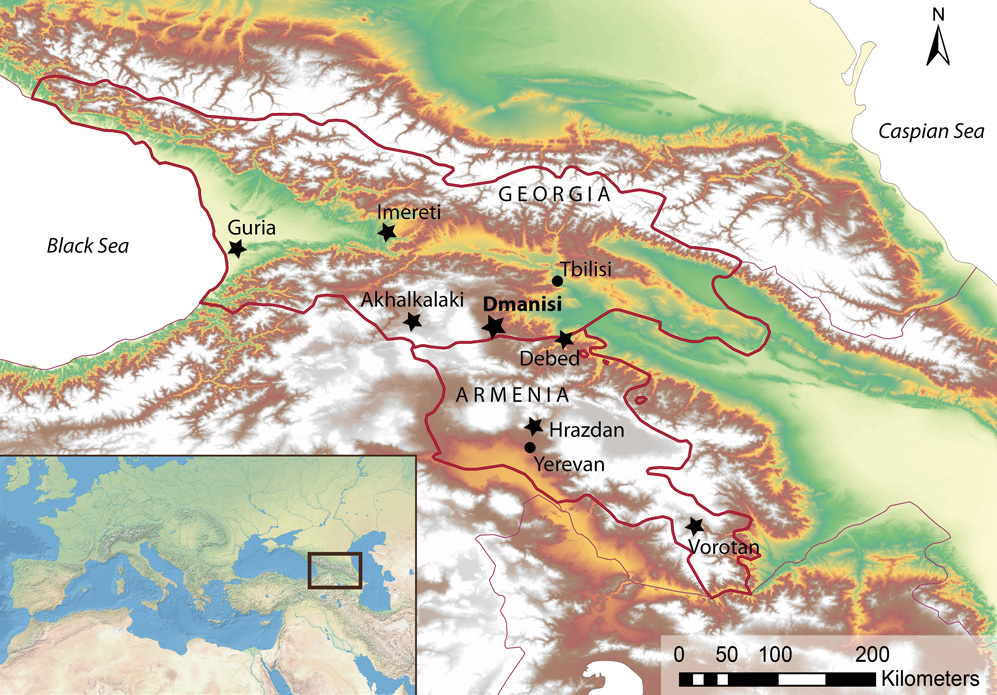
Geographical setting of the study areas mentioned in the text.

With 1.8-million-year-old evidence of human presence documented at the fossil site of Dmanisi in the Republic of Georgia, the southern Caucasus represents a key region for studying early human evolution and expansion out of Africa and onto the Eurasian continent. The area also provides a long record of human occupation throughout the Palaeolithic. The pace and causes of human colonisations during the Early Pleistocene, however, remain a matter of debate: for example, whether in one or several migratory waves from Africa into new Eurasian environments, as well as the later expansions of Neanderthals and anatomically modern humans. Climate change is considered to be a major factor driving hominin evolution and dispersal, because climate modulates the availability of resources directly or indirectly through its influence on vegetation, landscape physiography and animal distribution.
To understand the influence of environmental factors on early humans, an international workshop was convened at the National Museum of Georgia in Tbilisi, 15–20 October 2013. The aim of the meeting was to exchange and discuss the latest scientific results from the southern Caucasus (Figure 1) with regard to early human evolution, range expansions and technological developments against the backdrop of environmental change over the last two million years. More than 40 researchers from varied scientific fields presented their research in 23 oral and 18 poster contributions held over three sessions. In this short contribution, we review some of the key evidence presented and discussed.
Dmanisi: the first 'Out of Africa'—what do we know and what do we want to know?
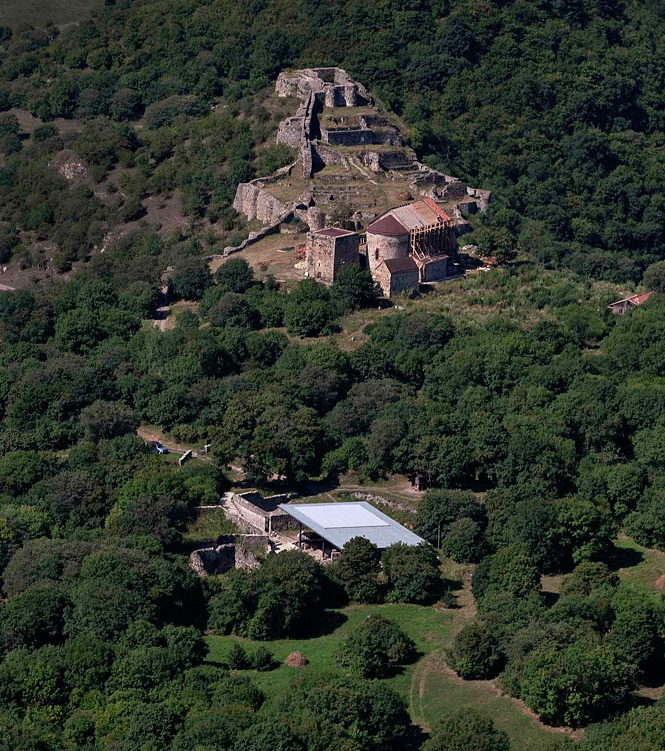
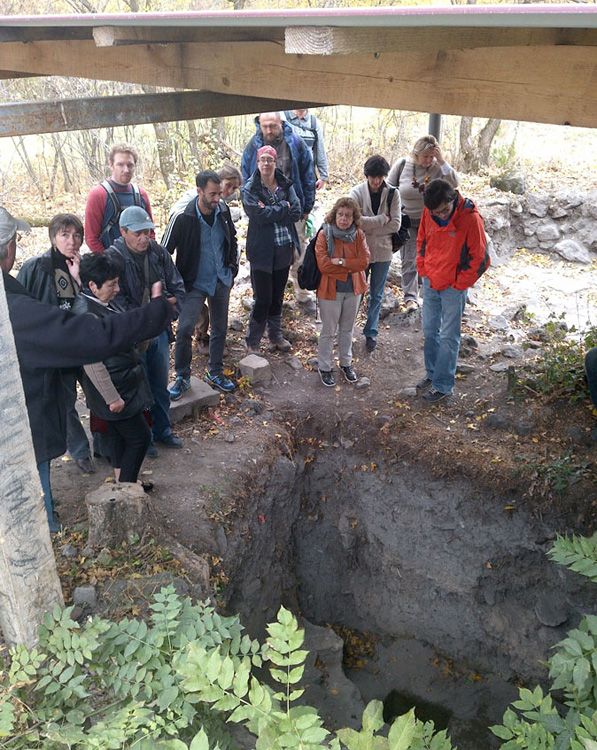
The fossil hominin site of Dmanisi (Figures 2 & 3) has produced a growing collection of over 60 cranial and post-cranial human remains including at least five individuals ranging in age from juvenile to older adult; most recently Lordkipanidze et al. (2013) have presented a completely preserved Early Pleistocene adult cranium from Dmanisi. These morphologically diverse remains of early Homo show affinities with African fossils and suggest that we should expect intraspecific variability in early hominins. This discovery has ramifications not only for a more streamlined classification of the early hominin lineage, but also for continuity of species across continents. Taphonomic studies of the mammalian fauna, as well as analyses of lithic artefacts and tool use, shed further light on these first inhabitants of Dmanisi. The results demonstrate how the Dmanisi hominins contradict earlier assumptions about how the first migrants out of Africa should appear. In fact, they were physically small, had small brains and made use of stone tools. On the one hand, stone tools may have been necessary for protection (animal dens attest to the contemporaneous use of the site by both hominins and carnivores, implying a high chance of confrontation; Bruch & Reference Lordkipanidze, Ponce De León, Margvelashvili, Rak, Rightmire, Vekua and Zollikofer.Lordkipanidze 2013: 29). On the other hand, evidence for modification of the fauna through cut marks, hammer-stone marks and notches is much rarer than carnivore modification and supports the interpretation that hominins had early access to carcasses. Whether hunted or power scavenged, the fauna were also exploited for their marrow and skins (Bruch & Reference Lordkipanidze, Ponce De León, Margvelashvili, Rak, Rightmire, Vekua and Zollikofer.Lordkipanidze 2013: 55–56). Nonetheless, plant resources probably played a considerable role compared to meat consumption (Bruch & Reference Lordkipanidze, Ponce De León, Margvelashvili, Rak, Rightmire, Vekua and Zollikofer.Lordkipanidze 2013: 45).
Overview of the Dmanisi fossil site with excavation area in the foreground.

Reid Ferring led the tour of Dmanisi.

Palaeoenvironmental studies based on Dmanisi's small mammalian fossils suggest an open, steppe environment, with the presence of wooded areas in the vicinity. Climatic conditions inferred from palaeoherpetological data confirm an environment more arid than present, especially during summer. This would support the development of more open landscapes than are present today (Bruch & Reference Lordkipanidze, Ponce De León, Margvelashvili, Rak, Rightmire, Vekua and Zollikofer.Lordkipanidze 2013: 19). Since the palaeoenvironmental context of the Dmanisi hominins cannot be clarified using on-site proxies alone (e.g. Messager et al. 2010), attention has turned to a wider spatial frame.
Early Pleistocene environmental changes in the southern Caucasus
Recent work on reconstruction of the climate and vegetation in Georgia and Armenia during the time of early human expansion into Eurasia has focused on three study areas in the southern Caucasus with the aim of achieving a regional correlation of the environmental setting in time and space.
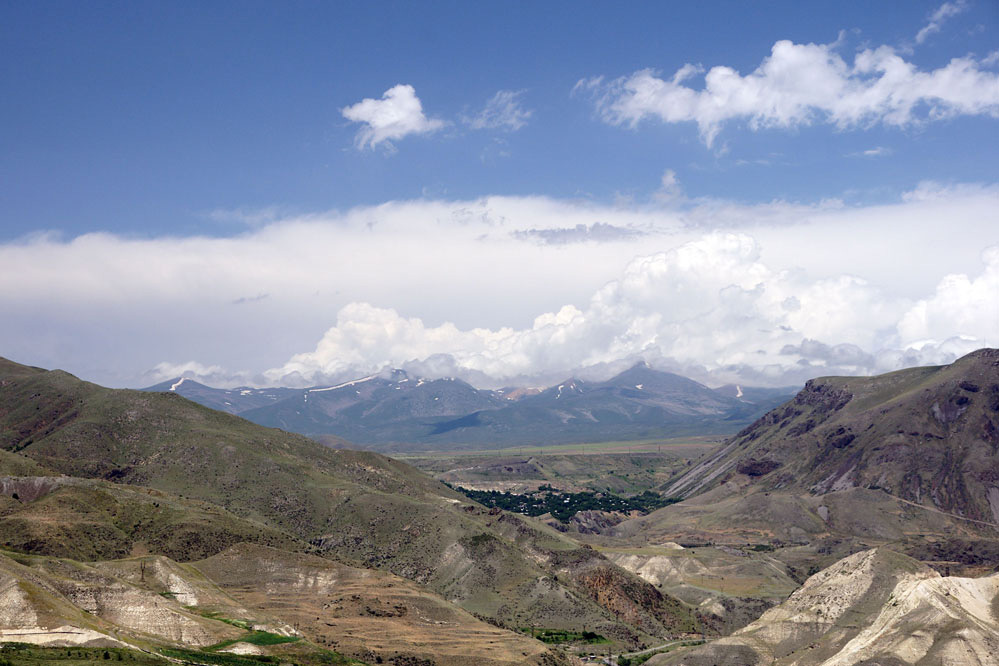
Diatomite sections in the Vorotan Basin, southern Armenian highlands. Figures 4–6 show the high variability of landscapes in the southern Caucasus (photograph: A. Gonschior).

In the Vorotan Basin of southern Armenia (Figure 4), lake sediments provide detailed information on environmental changes during the late Early Pleistocene within a well constrained stratigraphic context. Results based on pollen, macroflora and insect fossils document a clear vegetation response to orbitally forced global climatic changes. Open vegetation was present during the less pronounced climatic cycles, and broad-leaved deciduous forests expanded during very warm and humid phases.
Based on the precise age control gained in the Vorotan Basin, the results serve as a reference for correlation with the other two regions where investigations have only recently begun. In western Georgia (Figure 5), the stratigraphic correlation and age determination will serve as a foundation for the ongoing analyses of vegetation and climate history of the Pleistocene (Bruch & Reference Lordkipanidze, Ponce De León, Margvelashvili, Rak, Rightmire, Vekua and Zollikofer.Lordkipanidze 2013: 41).
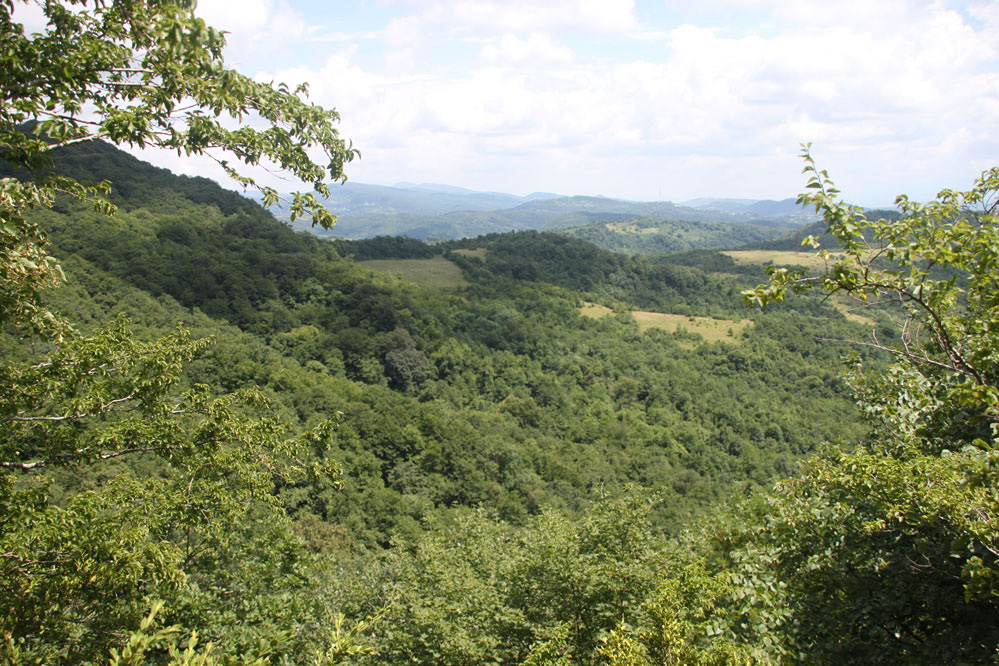
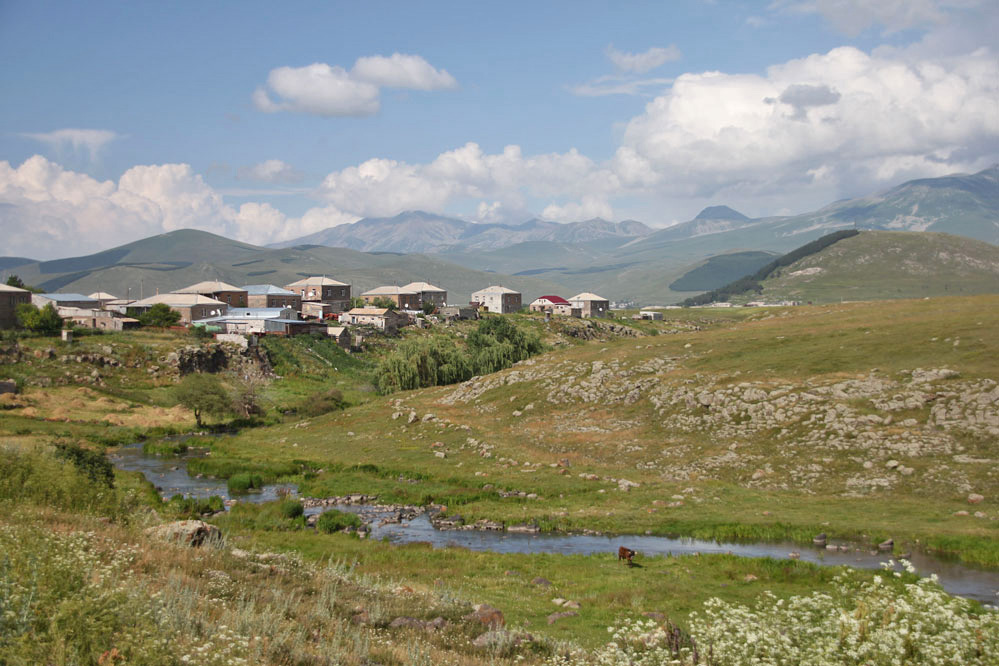
Palaeoenvironmental information from a third study area in southern Georgia (Figure 6) is based mainly on the large mammalian fauna of Akhalkalaki. A quantitative ecological analysis using the eco-profiles of large herbivores shows the future potential of this method (Bruch & Reference Lordkipanidze, Ponce De León, Margvelashvili, Rak, Rightmire, Vekua and Zollikofer.Lordkipanidze 2013: 35). Its positive correlation with the first palynological data from the area, as well as with the spectrum of large mammalian fauna from Dmanisi, shows promise (Bruch & Reference Lordkipanidze, Ponce De León, Margvelashvili, Rak, Rightmire, Vekua and Zollikofer.Lordkipanidze 2013: 43).
Warm-temperate broad-leaved forests of the western Georgian lowlands.

Javakhetian highlands, southern Georgia, near Akhalkalaki.

Based on these results, it will be possible to extrapolate the distribution of forests and mosaic landscapes in the southern Caucasus for the different climatic phases of the Early Pleistocene in more detail. Especially pronounced warm phases like MIS 31 caused a remarkable expansion of mosaic landscapes, offering a great variety of habitats with increased availability and diversity of plant and animal resources. Those environmental settings might have been particularly favourable for human occupation, expansion and cultural development.
The southern Caucasus Palaeolithic: occurrence or co-occurrence of Neanderthals and the first anatomically modern humans?
The southern Caucasus also provides insight into the Middle and Upper Palaeolithic periods and, in particular, the timing and reconstruction of the palaeoenvironmental habitats in which Neanderthals and modern humans survived. From the Imeretian region of central Georgia, to the Debed, Hrazdan and Vorotan river valleys of Armenia, there is a growing body of evidence documenting human occupation from the early Middle to latest Upper Palaeolithic which underscores the high potential for future research. Researchers have identified the very early development of Middle Palaeolithic technology suggesting that local adaptation and not diffusion was responsible for this innovation (Bruch & Reference Lordkipanidze, Ponce De León, Margvelashvili, Rak, Rightmire, Vekua and Zollikofer.Lordkipanidze 2013: 15, 27). Furthermore, both Neanderthals and early modern humans made use of high altitude sites, which shows a high degree of behavioural flexibility (Bruch & Reference Lordkipanidze, Ponce De León, Margvelashvili, Rak, Rightmire, Vekua and Zollikofer.Lordkipanidze 2013: 15, 39). Benchmark studies of environmental parameters have been conducted on a local scale, with a vegetational reconstruction based on charcoal from the Azokh Cave (Bruch & Reference Lordkipanidze, Ponce De León, Margvelashvili, Rak, Rightmire, Vekua and Zollikofer.Lordkipanidze 2013: 17), as well as on a broader scale, with regional environmental models based on large and small mammal bones from several archaeological sites (Bruch & Reference Lordkipanidze, Ponce De León, Margvelashvili, Rak, Rightmire, Vekua and Zollikofer.Lordkipanidze 2013: 61).
Reflecting on the material presented at the workshop, the final discussion centred on the question of how to improve knowledge of the environmental context of Dmanisi on the one hand, and for the Middle and Upper Palaeolithic sites on the other. The discussants concluded that environmental data are crucial, not only with regard to archaeological sites directly, but also in a more regional context, in order to understand the variability of early human environments in space and time. While new quantitative methods should be applied to available data, especially for on-site reconstructions, additional new proxies are needed in order to expand these studies. In this regard, the relevance of non-pollen palynomorphs was explicitly mentioned. Larger scale analyses should be based on the correlation of well dated materials, taking into account both the diverse landscape of the southern Caucasus and the high variability of climate during the Pleistocene, to understand the important and multifaceted role of the southern Caucasus as a refuge during climatically less favourable times, as a source for new populations (e.g. Bermúdez de Castro & Martinón-Torres 2013) and as a hub for human expansions within Eurasia.
Acknowledgements
The meeting was jointly organised and funded by the National Museum of Georgia (http://www.museum.ge), the ROCEEH Research Centre 'The role of culture in early expansions of humans' of the Heidelberg Academy of Sciences and Humanities (http://www.roceeh.net), and the project 'Early Pleistocene Environmental Changes in Southern Caucasus' funded by the Volkswagen Foundation (http://www.roceeh.net/team/pd-dr-angela-bruch/research/early-pleistocene-environmental-changes-in-southern-caucasus/).