Introduction
According to some estimates, nanotechnology developments have the potential to create industries that will employ approximately six million people and have a US$3 trillion market by 2020 (Roco, Reference ROCO2011). Currently, more than one hundred thousand tons of NPs are produced each year (Makarov, Reference MAKAROV2014). The term ‘nanomaterial’ refers to a natural, incidental or manufactured material containing 50% or more of unbound, aggregated or agglomerated NPs with one or more external dimensions in the size range of 1-100 nm (European Commission, 2013). NPs are increasingly used in biology and medicine as contrast agents in magnetic resonance imaging (Weinstein et al., Reference WEINSTEIN, VARALLYAY, DOSA, GAHRAMANOV, HAMILTON, ROONEY, BRONWYN, ROONEY, MULDOON and NEUWELT2010), as bactericidal agents (Ahrari et al., Reference AHRARI, ESLAMI, RAJABI, GHAZVINI and BARATI2015), for targeted drug delivery and in various disease treatments (Wahajuddin and Arora, 2012). NPs are used to examine the tomography of neoplasms and thrombi (Liu et al., Reference LIU, QIAN, AN, CHANG, JU and TENG2014; Pan et al., Reference PAN, CARUTHERS, SENPAN, YALAZ, STACY, HU, MARSH, GAFFNEY, WICKLINE and LANZA2011). The number of works with the keyword ‘nanoparticle’ has increased more than 6-fold over the last 10 years and has exceeded 143,000 references (www.hcbi.nlm.nih/gov).
The unique applications for NPs are largely determined by their extraordinary biological properties. Their small size, ability to penetrate tissues and organs and high surface area (Barbu et al., Reference BARBU, MOLNAR, TSIBOUKLIS and GORECKI2009; Dominguez et al., Reference DOMINGUEZ, SUAREZ-MERINO and GONI-DE-CERIO2014) result in previously unknown biological effects, and these characteristics allow fundamentally new and unparalleled technologies to be developed.
Understanding the properties of NPs has resulted in special interest in using NPs for livestock breeding. They could potentially be used as sources of trace elements (Miroshnikov et al., Reference MIROSHNIKOV, YAUSHEVA, SIZOVA and MIROSHNIKOVA2015), feeding in ovo (Sawosz et al., Reference SAWOSZ, PINEDA, HOTOWY, HYTTEL, SAWOSZ, SZMIDT, NIEMIEC and CHWALIBOG2012), to optimise the intestinal microflora of animals (Fondevila et al., Reference FONDEVILA, HERRER, CASALLAS, ABECIA and DUCHA2009), as immunostimulants (Wang et al., Reference WANG, WANG, YE, TAO and DU2011), growth stimulants (Yausheva et al., Reference YAUSHEVA, MIROSHNIKOV, SIZOVA, MIROSHNIKOVA and LEVAHIN2015) to improve feed efficiency (Wang et al., 2004; Reference WANG, WANG, LI, DU, TAO, YE and HE2012; Reference WANG, WANG, DU, LI, TAO, YE, HE and CHEN2014), reproductive ability (Safa et al., Reference SAFA, MOGHADDAM, JOZANI, DAGHIGH and JAN MOHAMMADI2016) and reduce the harmful effects of mycotoxins in poultry (Kim et al., Reference KIM, KIM, LEE, CHOI, LEE, KANG and CHA2012).
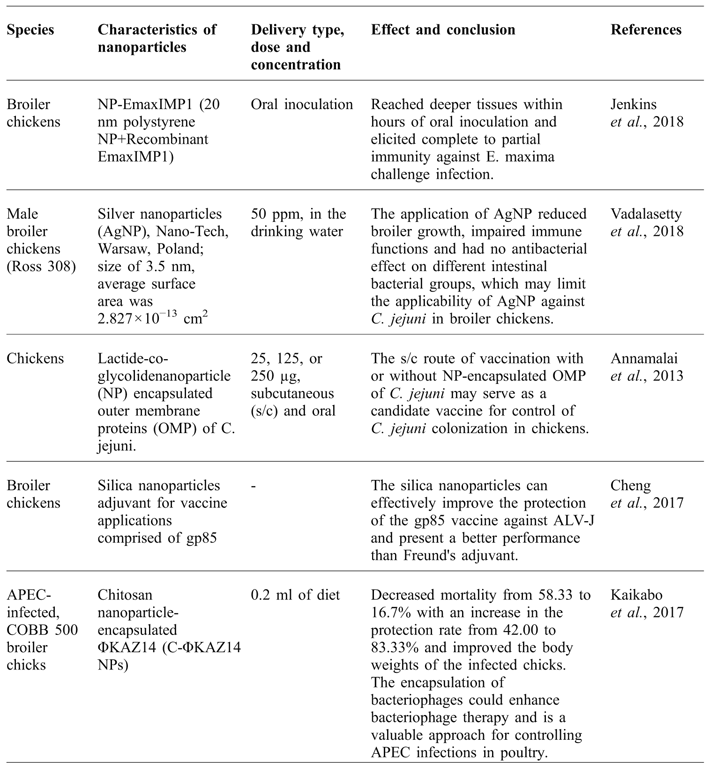
One increasing area of NP use is veterinary medicine. NPs are expected to be widely used as antibiotics in the future (Wang et al., Reference WANG, HU and SHAO2017) as they have a wide range of antibacterial properties against Gram-positive and Gram-negative bacteria. For example, gold (Au) NPs suppress Staphylococcus spp. colonisation, and silver (Ag) NPs have antimicrobial activity against E. coli and Pseudomonas aeruginosa (Pineda et al., Reference PINEDA, CHWALIBOG, SAWOSZ, LAURIDSEN, ENGBERG, ELNIF, HOTOWY, SAWOSZ, GAO, ALI and MOGHADDAM2012a; Ramalingam et al., Reference RAMALINGAM, PARANDHAMAN and DAS2016). Other developments include using silica NPs to improve vaccine protection (Cheng et al., Reference CHENG, WEN, WANG, HAO, CHENG, LIU, ZHAO and LIU2017), polyrhodanine NPs to fight against Newcastle disease in poultry (Nazaktabar et al., Reference NAZAKTABAR, LASHKENARI, ARAGHI, GHORBANI and GOLSHAHI2017) and AuNPs to diagnose influenza in birds (Emami et al., Reference EMAMI, MADANI, REZAYAT, GOLCHINFAR and SARKAR2012). It is thought that the use of NPs will allow livestock products to be produced more efficiently (Verma et al., Reference VERMA, SINGH and VIKAS2012).
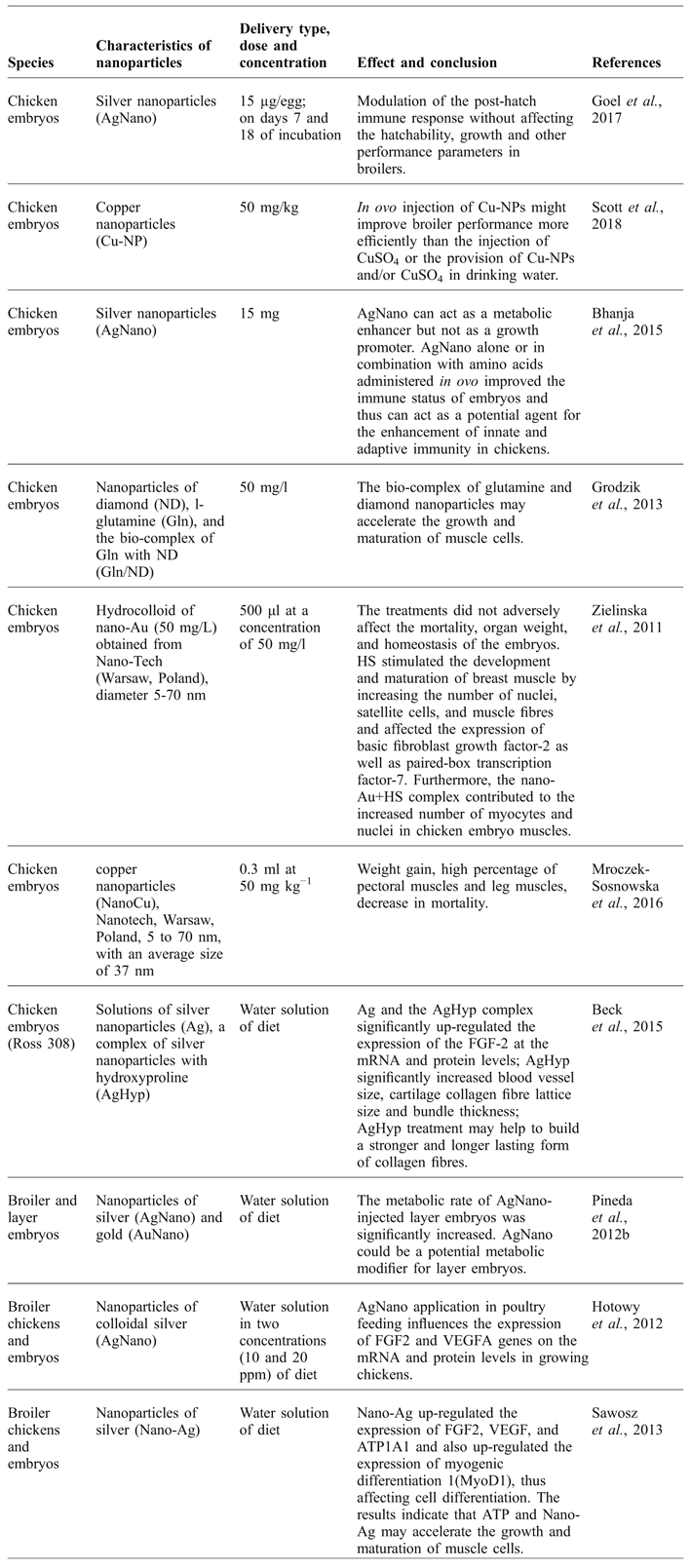
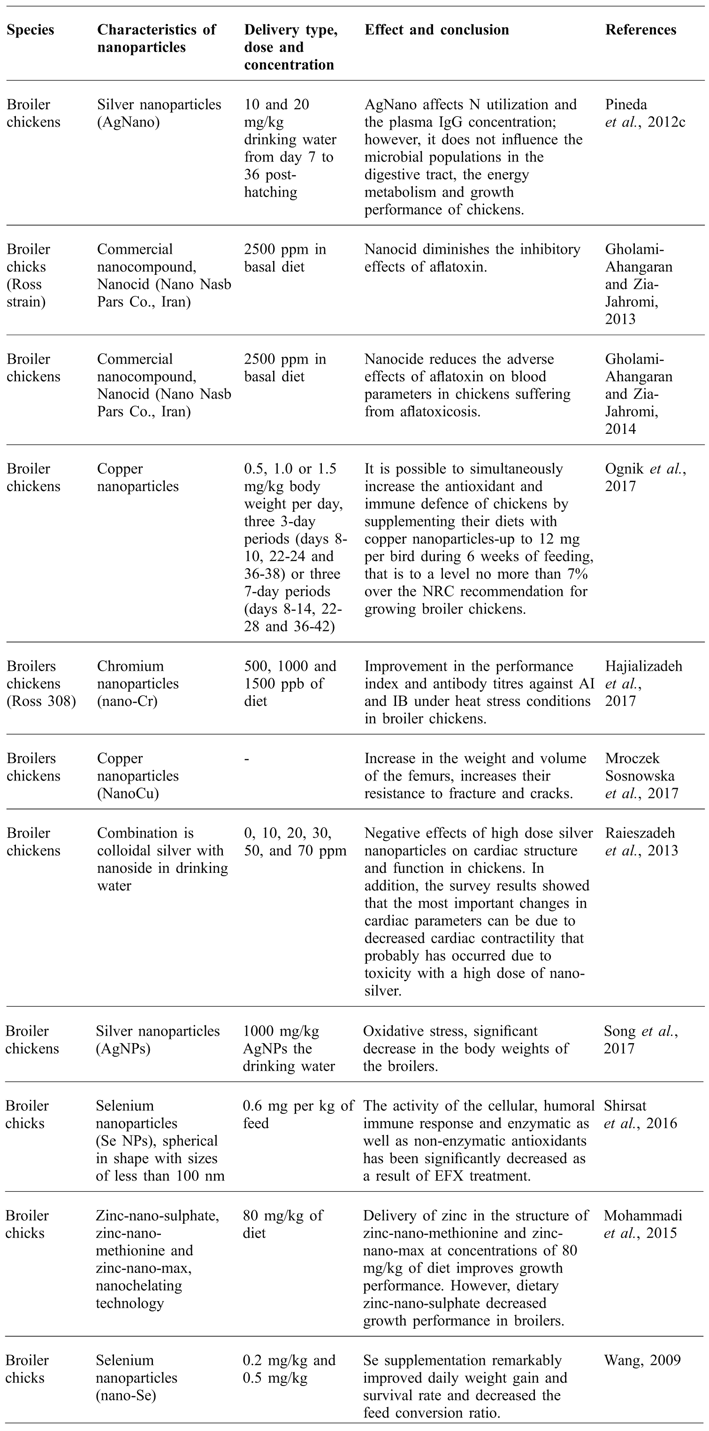
The following review is devoted to assessing the current situation and future prospects of using NPs as sources of important metals in poultry nutrition (Tables 1, 2 and 3).
The use of nanoparticles in ovo injection and nutrition.

The use of nanoparticles in nutrition.

The use of nanoparticles in vaccination and treatment.

Use of trace-element NPs
The preparation of NPs is one method to increase the bioavailability of food components (Rein et al., Reference REIN, RENOUF, CRUZ-HERNANDEZ, ACTIS-GORETTA, THAKKAR and DA SILVA PINTO2013; Raspopov et al., Reference RASPOPOV, TRUSHINA, GMOSHINSKIĬ and KHOTIMCHENKO2011). The desire to use metal NPs is based on their lower toxicities in comparison with those of traditional trace-element sources. For example, ferumoxytol (Feraheme®, AMAG Pharmaceuticals, Inc., Cambridge, MA, USA), which contains ultra-small superparamagnetic iron oxide (USPIO) NPs, was approved by the US Food and Drug Administration (FDA) (US Department of Health and Human Services, 2011) as an iron-replacement therapy for patients with chronic kidney disease (Kowalczyk et al., Reference KOWALCZYK, BANACH and RYSZ2011) and magnetic resonance imaging is indirectly used for various applications (Weinstein et al., Reference WEINSTEIN, VARALLYAY, DOSA, GAHRAMANOV, HAMILTON, ROONEY, BRONWYN, ROONEY, MULDOON and NEUWELT2010).
A number of studies have shown the superiority of developed NP preparations over mineral salts and organic forms for feeding poultry. A comparison of selenium NPs with some selenium compounds (sodium selenite, selenomethionine, methylselenocysteine) shows that NPs have significantly lower acute, short-term and sub-chronic toxicities (Zhang et al., Reference ZHANG, WANG and XU2008b; 2011; Zhang, Reference ZHANG2009) and greater efficiency for increasing selenoenzyme generation (Wang et al., Reference WANG, ZHANG and YU2007). Selenium NPs appear to be more effective than either sodium selenite and selenomethionine for increasing the activity of glutathione S-transferase (GST) (Zhang et al., Reference ZHANG, WANG, PENG and TAYLOR2008a), which ultimately determines their use as trace-element sources. The high efficiency of selenium NPs in animal nutrition allows increases in the growth rates and feed conversion rates of chickens (Zhou and Wang, Reference ZHOU and WANG2011; Jin et al., Reference JIN, LIU, TENG and FU2016).
References exist for the use of other trace elements for feeding poultry, including iron (Nikonov et al., Reference NIKONOV, LAPTEV, FOLMANIS, FOLMANIS, KOVALENKA, LAPTEV, EGOROV, FISININ and TANANAEV2011), chromium (Zha et al., Reference ZHA, ZENG, CHU, MAO and LUO2009), zinc (Zhao et al., Reference ZHAO, LI, ZHANG, LIU, ZHANG, DING, WANG, SHEN, MIN and HAO2016), copper (Ognik et al., Reference OGNIK, STĘPNIOWSKA, CHOLEWIŃSKA and KOZŁOWSKI2016) and antagonist metals (Miroshnikov et al., Reference MIROSHNIKOV, YAUSHEVA, SIZOVA and MIROSHNIKOVA2015). High absorption in the intestine and low excretion with faecal matter allows a reduction in the amounts of minerals added to the diet of animals. In China, this has been shown to reduce environmental pollution (Tang et al., Reference TANG, XU, RONG, JIN, LIU and LI2016).
Use of trace-element NPs in ovo feeding
Trace-element NPs are promising for creating a feeding reserve in chicks before they begin eating feed by means of in ovo feeding (Uni and Ferket, 2003). Studies have shown that NPs of zinc, copper, and selenium are not harmful to embryos, and can be used to improve the post-natal performance of broilers (Joshua et al., Reference JOSHUA, VALLI and BALAKRISHNAN2016; Wang et al., Reference WANG, WANG, YE, TAO and DU2011) and increase hatchability (Bakyaraj et al., Reference BAKYARAJ, BHANJA, MAJUMDAR and DASH2012).
In ovo injections of Cu-NPs can more efficiently increase broiler chicken productivity than CuSO4 injections (Scott et аl., 2018) and improve the mechanical strength of bone tissue, preventing weak bones often seen in broiler chickens (Mroczek-Sosnowska et al., Reference MROCZEK-SOSNOWSKA, ŁUKASIEWICZ, ADAMEK, KAMASZEWSKI, NIEMIEC, WNUK-GNICH, SCOTT, CHWALIBOG and SAWOSZ2017), Ag-NPs affect the morphology of the pectoral muscles (Sawosz et al., Reference SAWOSZ, PINEDA, HOTOWY, HYTTEL, SAWOSZ, SZMIDT, NIEMIEC and CHWALIBOG2012). Others (Huang et al., Reference HUANG, CHEN, HSU and CHANG2009) have confirmed the potential of NPs to increase the mineral density of bone tissue.
The more multifaceted action of NP trace elements from mineral salts (Wang, Reference WANG2009; Sizova et al., 2016b; Hajializadeh et al., Reference HAJIALIZADEH, GHAHRI and TALEBI2017) and organic compounds has been demonstrated, which is due to the mechanisms of action in poultry (Mohammadi et al., Reference MOHAMMADI, GHAZANFARI, MOHAMMADI-SANGCHESHMEH and NAZARAN2015; Scott et al., Reference SCOTT, VADALASETTY, ŁUKASIEWICZ, JAWORSKI, WIERZBICKI, CHWALIBOG and SAWOSZ2018).
NP mechanisms of action in poultry
Birds have always been in contact with NPs, and this interaction has been proven by data that show 1 m3 of atmospheric air contains up to 1 million suspended particles with diameters ranging from 0.001 to 1000 μm. Fresh and salt water contain 5-6 million particles per dm3, and soil contains the most significantly dispersed systems (Yushkin, Reference YUSHKIN2007; Kravchyshyn, Reference KRAVCHYSHYN2010).
Close contact with natural NPs during their long evolution has allowed birds to adapt to these conditions. Natural NPs (nanoclays, organic matter in soil, lipoproteins and exosomes) are often biocompatible and do not affect animals and humans (Stanley, Reference STANLEY2014). By introducing synthetic trace-element NPs into feed, the bird's evolutionarily formed response is obtained. Synthetic preparations of NPs affect the physiological and productive features of birds differently compared to mineral salts and organic forms. These effects are determined by the absorption mechanisms of trace elements and changes in metabolism caused by intake of NPs. In addition to the absorption of the ionic form of a mineral from metal NPs (Choi and Choy, Reference CHOI and CHOY2014; Baek et al., Reference BAEK, CHUNG, YU, LEE, KIM, OH, LEE, PAEK, LEE, JEONG, CHOY and CHOI2012), a significant portion enter the body in an unchanged form (Oberdörster et al., Reference OBERDÖRSTER, MAYNARD, DONALDSON, CASTRANOVA, FITZPATRICK, AUSMAN, CARTER, KARN, KREYLING, LAI, OLIN, MONTEIRO-RIVIERE, WARHEIT and YANG2005; Jain et al., Reference JAIN, REDDY, MORALES, LESLIE-PELECKY and LABHASETWAR2008).
Other mechanisms exist for the cellular absorption of metal NPs in comparison with soluble forms (Aslam et al., Reference ASLAM, FRAZER, FARIA, BRUGGRABER, WILKINS, MIRCIOV, POWELL, ANDERSON and PEREIRA2014). Iron in complex aggregates can be absorbed by endocytosis in the cells lining the intestine, e.g. ferritin, which comes from plants. Ferritin can contain several thousand ferric atoms (Harrison and Arosio, Reference HARRISON and AROSIO1996; Liu and Theil, Reference LIU and THEIL2005) and soybean ferritin has ~800 ferric atoms (Ragland et al., Reference RAGLAND, BRIAT, GAGNON, LAULHERE, MASSENET and THEIL1990). The transport mechanism of metal NPs is similar and is implemented through endocytosis (Aslam et al., Reference ASLAM, FRAZER, FARIA, BRUGGRABER, WILKINS, MIRCIOV, POWELL, ANDERSON and PEREIRA2014). The intensity of the absorption process is lower in comparison with that of ionic forms, but this is an advantage that allows microelemental NPs to be considered as alternatives to mineral salts.
The relatively slow release of iron from NPs and its low availability for intestinal microflora (Pereira et al., Reference PEREIRA, ASLAM, FRAZER, SCHMIDT, WALTON, MCCARTNEY, GIBSON, ANDERSON and POWELL2015) may be an advantage in preventing the generation of iron removal systems, which are observed after the absorption of therapeutic doses of soluble iron (Hurrell, Reference HURRELL2011; Lomer et аl., 2012) and generally limit the iron intake in the body. This phenomenon is partially due to the lower metal-binding capacity of enterocytes after the introduction of NPs in comparison with that of ions (Pereira et al., Reference PEREIRA, MERGLER, FARIA, BRUGGRABER, ASLAM, POOTS, PRASSMAYER, LONNERDAL, BROWN and POWELL2013).
Differences between nano and ionic iron preparations are observed during the systemic transfer of an element within an organism. Thus, along with the ferroportin-mediated transfer (Latunde-Dada et al., Reference LATUNDE-DADA, PEREIRA, TEMPEST, ILYAS, FLYNN, ASLAM, SIMPSON and POWELL2014), which is similar to that of the ionic forms of iron, some NPs are involved in transformation through macrophages. This is the main distinguishing feature of the mechanism of action of nanoform, trace-element preparations from that of their analogues.
The intake of metal NPs in the body, regardless of the route of administration, is accompanied by an increase in the number of macrophages (Yu et al., Reference YU, LAU, THOMAS, JEROME, MARON, DICKERSON, HUBELL and GIORGIO2012; Hamrahi-Michak et al., Reference HAMRAHI-MICHAK, SADEGHI, HAGHIGHI, GHANBARI-KAKAVANDI, RAZAVI-SHESHDEH, NOUGHABI and NEGAHDARY2012). The activation of macrophages is accompanied by the synthesis of nitric oxide (NO), and as a consequence, an increase in arginine in the liver. Arginine exchange is closely related to the proliferation of monocytes and lymphocytes through the synthesis of polyamines and protein (Suchner et al., Reference SUCHNER, HEYLAND and PETER2002). References in the literature indicate that the activation of arginine metabolism is connected to the development of inflammatory and oxidative stresses (Huang et al., Reference HUANG, TSAI and LIN2008; Mostafavi-Pour et al., Reference MOSTAFAVI-POUR, ZAL, MONABATI and VESSAL2008).
In addition, the exchange of an entire group of trace elements (Fe, Cu, etc.) is closely related to NO (Weiss et al., Reference WEISS, WERNER-FELMAYER, WERNER, GRÜNEWALD, WACHTER and HENTZE1994). For example, iron affects the expression of inducible NO synthase 2 (Dlaska and Weiss, Reference DLASKA and WEISS1999). NO-induced transcription of Fpn1 reduces the cellular iron content (Nairz et al., Reference NAIRZ, SCHLEICHER, SCHROLL, SONNWEBER, THEURL, LUDWICZEK, TALASZ, BRANDACHER, MOSER, MUCKENTHALER, FANG, BOGDAN and WEISS2013) and iron content is reduced by macrophages (Fritsche et al., Reference FRITSCHE, DLASKA, BARTON, THEURL, GARIMORTH and WEISS2003). In turn, NO is formed due to the oxidation of the terminal guanidine nitrogen atom on L-arginine (L-Arg). This determines the close relationship between the NO production and arginine intake. The formation of physiological levels of NO from arginine may have an indirect positive effect on the productivity of animals (Yausheva et al., Reference YAUSHEVA, MIROSHNIKOV, KOSYAN and SIZOVA2016), as it is known to have an anti-inflammatory role in the gastrointestinal tract (Li et al., Reference LI, YIN, LI, KIM and WU2007).
As result of a whole complex of biochemical transformations, the introduction of trace- element NPs (Fe, Cu, etc.) into poultry feed is accompanied by an increase in arginine content in the liver (Sizova et al., Reference SIZOVA, MIROSHNIKOV, YAUSHEVA and POLYAKOVA2015; Yausheva et al., Reference YAUSHEVA, MIROSHNIKOV, SIZOVA, MIROSHNIKOVA and LEVAHIN2015). This may be a consequence of more broiler growth compared with that achieved with feeding mineral salts (Sizova et al., Reference SIZOVA, KOROLEV, MAKAEV, MIROSHNIKOVA and SHAKHOV2016a).
Arginine is a factor that regulates growth in young animals (Flynn et al., Reference FLYNN, MEININGER, HAYNES and WU2002; Wu et al., Reference WU, KNABE and KIM2004). The growth-enhancing effects of L-Arg are associated with a change in the balance of the energy consumed and used for fat burning and a decrease in the production of white fat. L-Arg stimulates mitochondrial biogenesis and the production of brown adipose tissue (McKnight et al., Reference MCKNIGHT, SATTERFIELD, JOBGEN, SMITH, SPENCER, MEININGER, MCNEAL and WU2010) et al., 2010). Previously, (Fouad et al., Reference FOUAD, EL-SENOUSEY, YANG and YAO2013) broiler chickens (Cobb 500) showed a decrease in the weight of the abdominal adipose tissue and circulating lipids with dietary L-arginine supplements. The results of studies where the productivity of broiler chickens was increased with additional feeding of arginine NPs (Faddah et al., Reference FADDAH, ABDEL BAKY, AL-RASHEED, AL-RASHEED, FATANI and ATTEYA2012) confirm the importance of activating the arginine synthesis and may explain the positive effect of trace-element NPs.
However, the use of NPs in feeding is associated with a number of side effects, including the development of oxidative compounds (Møller et al., Reference MØLLER, JACOBSEN, FOLKMANN, DANIELSEN, MIKKELSEN, HEMMINGSEN, VESTERDAL, FORCHHAMMER, WALLIN and LOFT2010; Manke et al., Reference MANKE, WANG and ROJANASAKUL2013; Song et al., Reference SONG, LV, SHEIKHAHMADI, UERLINGS and EVERAERT2017) and stimulation of apoptosis (Sizova et al., Reference SIZOVA, MIROSHNIKOV, POLYAKOVA, LEBEDEV and GLUSHHENKO2013). For the safe use of NPs in poultry nutrition, new forms are being designed and coated with inert substances, and the size of the NPs is being optimised (Yang et al., Reference YANG, KUANG, ZHANG, AGUILAR, XIONG, LAI, XU and WEI2015) Additional work on the creation of ‘green’ metal NPs from plants is promising (Kuppusamy et al., Reference KUPPUSAMY, YUSOFF, MANIAM and GOVINDAN2016; Siddiqi et al., Reference SIDDIQI, UR RAHMAN and HUSEN2016). However, the potential problems with NPs should be considered in detail.
Potential threats of using NPs in poultry nutrition
Further developments of nanotechnology for animal husbandry are aimed at improving the livestock feeding efficiency (Hill and Li, Reference HILL and LI2017), minimising losses from animal diseases and converting animal by-products into high-value-added products (Sekhon, Reference SEKHON2014). However, the prospects of using nanotechnology in livestock are constrained by the difficulty in predicting their nanotoxicology (Bondarenko et al., Reference BONDARENKO, JUGANSON, IVASK, KASEMETS, MORTIMER and KAHRU2013; Scott et al., Reference SCOTT, VADALASETTY, ŁUKASIEWICZ, JAWORSKI, WIERZBICKI, CHWALIBOG and SAWOSZ2018). A decrease in growth intensity and immunosuppression in the presence of Ag-NPs (Ahmadi and Kurdestany, Reference AHMADI and KURDESTANY2010; Vadalasetty et al., Reference VADALASETTY, LAURIDSEN, ENGBERG, VADALASETTY, KUTWIN, CHWALIBOG and SAWOSZ2018) as well as a decrease in myocardial contractility and increase in the internal diameter of the left ventricle (Raieszadeh et al., Reference RAIESZADEH, NOAMAN and YADEGARI2013) have been observed in chickens. Most likely, Ag-NPs increase ROS (reactive oxygen species) production and interrupt ATP synthesis, leading to DNA damage and cell cycle arrest at the G2/M phase (Asharani et al., Reference ASHARANI, LIAN WU, GONG and VALIYAVEETTIL2008), thus inducing apoptosis (Park et al., Reference PARK, YI, KIM, CHOI and PARK2010; Song et al., Reference SONG, LV, SHEIKHAHMADI, UERLINGS and EVERAERT2017). Feeding Mo-NPs and MoO3-NPs induced an increase in serum aminotransferase activity, oxidative stress, anaemia, and capillary-trophic insufficiency in rats (Sizova et al., 2016b). Pro-oxidant signs, such as increases in the activities of the antioxidant enzymes glutathione reductase and catalase, were seen in Eisenia fetida when Mo-NPs were introduced into the soil (Lebedev et al., Reference LEBEDEV, YAUSHEVA, GALAKTIONOVA and SIZOVA2016). Penetrating into the cell, Cu-NPs and Zn-NPs can accumulate, contributing to the excessive production of intracellular ROS, damaging lysosomal membranes, activating caspase-3 and caspase-7, and resulting in apoptosis (Sizova et al., Reference SIZOVA, MIROSHNIKOV, POLYAKOVA, LEBEDEV and GLUSHHENKO2013; Lu et al., Reference LU, ZHANG, ZHANG, LIU, WANG, SHANG, WU, DONALDSON and WANG2015). ZnO-NPs, in doses customarily added to animal feed, changed the indices of haematology and blood chemistry, altered the expression and activity of hepatic CYP enzymes, and induced pathological changes in liver and kidney tissues of rats (Tang et al., Reference TANG, XU, RONG, JIN, LIU and LI2016). This is the basis for taking special measures to control NPs. Thus, in the USA, guidelines on the use of NPs in feeds have been adopted (https://www.fda.gov/downloads/AnimalVeterinary/GuidanceComplianceEnforcement/GuidanceforIndustry/UCM401508.pdf). The European Food Safety Authority (EFSA) has produced a guidance document explaining the data that must be provided for the NPs to be included in feed (Antunović et al., Reference ANTUNOVIĆ, BARLOW, CHESSON, FLYNN, HARDY, JANY, JEGER, KNAAP, KUIPER, LARSEN, LOVELL, NOERRUNG, SCHLATTER, SILANO, SMULDERS and VANNIER2011). Products containing NPs should be labelled accordingly (Linsinger et al., Reference LINSINGER, CHAUDHRY, DEHALU, DELAHAUT, DUDKIEWICZ, GROMBE, VON DER KAMMER, LARSEN, LEGROS, LOESCHNER, PETERS, RAMSCH, ROEBBEN, TIEDE and WEIGEL2013). Concerns about nanoscale structures in food and feedstuffs have resulted in the implementation of a number of international research projects on the issue, including the NanoRelease Food Additive (NRFA; Szakal et al., Reference SZAKAL, ROBERTS, WESTERHOFF, BARTHOLOMAEUS, BUCK, ILLUMINATO and ROGERS2014a). Further research is needed to define safe NPs that can enter the market (FAO and IFIF, 2010; Belluco et al., Reference BELLUCO, GALLOCCHIO, LOSASSO and RICCI2016.).
Further developments in the synthesis and use of NP feed additives are impossible without detailed studies on toxicity. Artificial trace-element NPs produced according to certain requirements can be viewed as a relatively safe. The basis for this statement is the current practice of including metal NPs in foods (Johnston et al., Reference JOHNSTON, GRINDROD, DODDS and SCHIMITSCHEK2008; Chaudhry et al., Reference CHAUDHRY, SCOTTER, BLACKBURN, ROSS, BOXALL, CASTLE, AITKEN and WATKINS2008; Augustin and Hemar, Reference AUGUSTIN and HEMAR2009) and medicine and maximum permitted doses. In particular, for internal use, iron NPs in a bolus dose of 0.16 mmol of Fe/kg of body weight can be used (Neubert et al., Reference NEUBERT, WAGNER, KIWIT, BRÄUER and GLUMM2015).
Controlling the turnover of metal NPs as feed additives is not simple. The evaluation of NPs in feed are complex and multifaceted (Szakal et al., Reference SZAKAL, ROBERTS, WESTERHOFF, BARTHOLOMAEUS, BUCK, ILLUMINATO and ROGERS2014a; Reference SZAKAL, TSYTSIKOVA, CARLANDER and DUNCAN2014b). This has been shown by studies conducted by ten laboratories from countries in the European Union, USA and Canada when the size and concentration of NPs (polyvinylpyrrolidone-stabilised AgNPs) in the homogenates of chicken meat were determined (Weigel et al., Reference WEIGEL, PETERS, LOESCHNER, GROMBE and LINSINGER2017).
Conclusions and future prospects
The mechanisms of action of artificial trace-element NPs in birds differ from those of those in their ionic forms, and these mechanisms determine the differences on the positive effect and influence of NP preparations on immunity and other important characteristics in breeding birds. Therefore, interest in NP sources of trace elements has increased significantly over the last two decades. Initially, NP preparations were created for humans and further work was then carried out to create preparations of NP antagonist metals for combined feeding of NPs with amino acids. Regarding the design of trace-element NPs, the development of safe uses for NPs in poultry nutrition seems promising and can be achieved by coating NPs with inert substances, optimising their size, and creating ‘green’ versions from plants.
However, the potential use of nanotechnology in livestock is constrained by the difficulty of predicting the toxic properties of NPs. Thus, special measures must be taken to control NPs for use in livestock. Meanwhile, only NPs that are synthesised the controlled physical and chemical characteristics (size, surface modification and concentration) can be used to achieve maximum productive results without toxic effects.