Adverse experiences in childhood, such as physical abuse, sexual abuse, and neglect are relatively common (Gilbert et al., Reference Gilbert, Widom, Browne, Fergusson, Webb and Janson2009; Stoltenborgh, Bakermans-Kranenburg, & van IJzendoorn, Reference Stoltenborgh, Bakermans-Kranenburg and van IJzendoorn2013) and have been repeatedly linked to the development of mental health difficulties across epidemiological and clinical samples (e.g., Edwards, Holden, Felitti, & Anda, Reference Edwards, Holden, Felitti and Anda2003; Sroufe, Egeland, Carlson, & Collins, Reference Sroufe, Egeland, Carlson and Collins2009). Early adverse experiences are frequently reported by people who are suffering from mental health disorders (Green et al., Reference Green, McLaughlin, Berglund, Gruber, Sampson, Zaslavsky and Kessler2010; Kessler et al., Reference Kessler, McLaughlin, Green, Gruber, Sampson, Zaslavsky and Williams2010) and consistently predict the onset of psychopathology, including depression (Bernet & Stein, Reference Bernet and Stein1999), anxiety (Hovens et al., Reference Hovens, Wiersma, Giltay, Van Oppen, Spinhoven, Penninx and Zitman2009), psychosis (Larkin & Read, Reference Larkin and Read2008), eating disorders (Kong & Bernstein, Reference Kong and Bernstein2009), substance abuse, and borderline personality disorders (Caspi et al., Reference Caspi, Houts, Belsky, Goldman-Mellor, Harrington, Israel and Moffitt2014; Green et al., Reference Green, McLaughlin, Berglund, Gruber, Sampson, Zaslavsky and Kessler2010; Parker, Reference Parker1979, Reference Parker1983; Scott, Smith, & Ellis, Reference Scott, Smith and Ellis2010). However, despite this predisposition, not every person who reports adverse childhood experiences develops psychopathology, which implies individual differences in susceptibility to early adversity (Belsky & Pluess, Reference Belsky and Pluess2009; Caspi et al., Reference Caspi, Houts, Belsky, Goldman-Mellor, Harrington, Israel and Moffitt2014).
The diathesis-stress model (Rosenthal, Reference Rosenthal1963; Monroe & Cummins, Reference Monroe, Cummins and First2015) seeks to explain how people might respond differently to the same adverse experiences and suggests that people have, to different degrees, vulnerabilities for developing psychopathology. According to the principles of stress sensitization (involving distal stress as the initial stimulus), childhood adverse experiences can create vulnerabilities in our development, which means that more vulnerable individuals are thus more likely to develop psychopathology when faced with adversity in adulthood (Post, Leverich, Xing, & Weiss, Reference Post, Leverich, Xing and Weiss2001). However, the exact mechanisms that are responsible for this predictive relationship between trauma and psychopathology remain a topic of debate.
Mechanisms that are known to emerge from early caregiving relationships and influence later psychological difficulties include behavioral factors such as interpersonal difficulties (e.g., overly controlling, unassertive, emotionally distant estrangement from others) and avoidant coping strategies (e.g., avoidance and self-destructive behaviors; see a critical review by Whiffen & MacIntosh, Reference Whiffen and MacIntosh2005).Footnote 1 Other proposed mechanisms are genetic factors (e.g., difficult temperament that impedes healthy development in adverse environments; Pluess & Belsky, Reference Pluess and Belsky2010) and specific neurobiological factors related to emotion regulation capacities in the brain (e.g., McCrory, De Brito, & Viding, Reference McCrory, De Brito and Viding2012; Read, Os, Morrison, & Ross, Reference Read, Os, Morrison and Ross2005). More specifically, adaptations to early experiences of heightened stress that lead to an increased risk of psychopathology may be represented by differences at the neurobiological level (e.g., atypical development of the hypothalamic-pituitary-adrenal axis stress response), which are indicated by structural differences in the corpus callosum, cerebellum, and prefrontal cortex and functional differences in regions implicated in emotional and behavioral regulation, including the amygdala and anterior cingulate cortex.
In addition, many have emphasized cognitive factors such as beliefs, schemas, mental representations of significant figures, or internal working models that further explain how adverse experiences lead to psychopathology (e.g., Bowlby, Reference Bowlby1988; Robinson & Gordon, Reference Robinson and Gordon2011; Young, Reference Young1994); for empirical support see Shah and Waller, (Reference Shah and Waller2000) and Valiente, Romero, Hervas, and Espinosa, Reference Valiente, Romero, Hervas and Espinosa2014). Cognitive factors are particularly relevant for clinical practice, and cognitions that are explicitly targeted in many evidence-based psychotherapies have been shown to be malleable, so they have been established as mechanism for change (McCarthy, Caputi, & Grenyer, Reference McCarthy, Caputi and Grenyer2017; Solé, Jiménez, Martinez-Aran, & Vieta, Reference Solé, Jiménez, Martinez-Aran and Vieta2015). Therefore, in this paper, we will focus specifically on the role of cognitive mediators, defined as internalized messages about oneself and events happening around oneself that result from adverse childhood experiences (Coates & Messman-Moore, Reference Coates and Messman-Moore2014), regardless of theoretical or therapeutic framework (e.g., schemas, beliefs, appraisals, interpretations, or pathogenic beliefs).
Conceptual models regarding the etiology of psychopathology, including cognitive and psychodynamic theories (e.g., Hopelessness Theory: Abramson, Metalsky, & Alloy, Reference Abramson, Metalsky and Alloy1989; Rose & Abramson, Reference Rose, Abramson, Cicchetti and Toth1992; Cognitive Theory: Beck, Reference Beck1967; Beck, Rush, Shaw, & Emery, Reference Beck, Rush, Shaw and Emery1979; Relational Theory: Blatt, Wein, Chevron, & Quinlan, Reference Blatt, Wein, Chevron and Quinlan1979; Schema Theory: Young, Reference Young1994; Attachment Theory: Bowlby, Reference Bowlby1988; Kenny, Moilanen, Lomax, & Brabeck, Reference Kenny, Moilanen, Lomax and Brabeck1993) have implicated cognitive vulnerability as a particular diathesis for psychopathology. More specifically, Rose and Abramson (Reference Rose, Abramson, Cicchetti and Toth1992) proposed a developmental pathway by which negative events in childhood, particularly maltreatment, could contribute to the development of negative cognitive styles, which, in turn, increase individuals’ vulnerability to developing hopelessness and depression. Similarly, Young (Reference Young1994), who integrated the work of Beck et al. (Reference Beck, Rush, Shaw and Emery1979) and Bowlby (Reference Bowlby1988), proposed that specific early maladaptive schemas (EMSs) develop during childhood via interpersonal interactions and form a template that guides the interpretation of later experiences. For example, negative experiences during early childhood could lead to the development of early maladaptive schemas, defined as different mental representations of the individual's previous experiences regarding oneself and one's relationship with others (Bortolon, Seillé, & Raffard, Reference Bortolon, Seillé and Raffard2017; Young, Klosko, & Weishaar, Reference Young, Klosko and Weishaar2003), which may contribute to the development and maintenance of psychopathology (Bortolon et al., Reference Bortolon, Seillé and Raffard2017).
Moreover, the notion of internal representations in object relations theory, a psychodynamic perspective represented by Fairbairn, (Reference Fairbairn1963) and Kernberg (Reference Kernberg1995) amongst others, suggests that psychopathology can be understood as reflecting maladaptive mental images of significant figures (especially the parents) that are formed early in life in response to negative interactions taking place within the family. These mental images serve as templates (or “scripts”) for later interpersonal relationships. The level of psychopathology is determined by the degree to which these maladaptive object-relations, as carried in memory, are enacted in identifications or repeated in action. For example, if you internalized a mental image of your parents as being harsh and judgmental, you might instead become a self-critical person and feel that you can never live up to other people's (or your own) standards (Luyten & Blatt, Reference Luyten and Blatt2013). A related conceptualization of cognitive processing is described in the theory of attachment, which proposes that early relationships between children and their caregivers shape the development of children's internal working models of the self and of others (Bowlby, Reference Bowlby1988). Working models can be viewed as cognitive schemas that reflect a person's sense of self-worth and expectations about the emotional responsiveness of significant others. For instance, children who experience warmth and consistency in childhood will develop a working model of the self as lovable and of others as loving and reliable. In contrast, a child who experiences adversity may develop a working model of the self as shameful and of others as untrustworthy, abusive, or unresponsive to their emotional needs.
In a similar vein, Control-mastery Theory, an integrated cognitive-psychodynamic-relational theory of how psychopathology develops and how psychotherapy works (Silberschatz, Reference Silberschatz and Silberschatz2005; Weiss, Reference Weiss1993), posits that early adverse experiences are internalized as conscious or unconscious “pathogenic beliefs.” These emotion-laden, powerful convictions about self and others are unconditional, generalized, and automatic, and they cause severe emotional distress (Silberschatz, Reference Silberschatz and Silberschatz2005; Weiss, Reference Weiss1993). Thus, from this cognitive perspective, processes by which people interpret, recall, and organize these negative childhood experiences are the crucial paths that connect their negative childhood experiences to later psychopathology (Ingram, Reference Ingram2003; Joormann, Reference Joormann2006; Lazarus, Reference Lazarus1991; Lazarus, Delongis, Folkman, & Gruen, Reference Lazarus, Delongis, Folkman and Gruen1985; Lazarus & Folkman, Reference Lazarus and Folkman1984).
Another explanation for why certain people develop subsequent psychopathology is provided by the cognitive concept of centrality. If a trauma is seen as a central turning point in a person's life, it is also likely to be seen as a central part of his or her identity (Berntsen & Rubin, Reference Berntsen and Rubin2006), so it is more likely to result in psychopathology. This implies that maladaptive attributions may contribute to psychopathology both directly and through the event's importance to identity formation (Reiland, Reference Reiland2017) and underscore the cognitive and narrative factors in the progression of trauma (Barton, Boals, & Knowles, Reference Barton, Boals and Knowles2013).
Although these clinical and theoretical writings are important and helpful, it is also important to examine possible cognitive factors empirically to illuminate their role in the development and course of psychopathology more clearly. Once identified, these cognitive vulnerabilities could be targeted in assessments, therapeutic strategies, and preventive treatment. While other reviews of empirical studies on cognitive factors in the maltreatment-psychopathology literature have been conducted (e.g., Briere & Jordan, Reference Briere and Jordan2009; Edalati & Krank, Reference Edalati and Krank2016; Liu, Reference Liu2017), these have usually been limited by the examination of one specific type of disorder. Given the large variation of adverse childhood experiences and cognitive factors that lead to a range of psychopathology outcomes, a comprehensive review that encompasses the breadth of this topic is warranted.
Increasingly advanced statistical techniques allow researchers to draw more rigorous conclusions about the explanatory mechanisms in the relationship between childhood adversity and adult psychopathology. Mediation analysis enables direct and indirect pathways between early exposure and subsequent outcomes to be tested, thereby formally quantifying theoretical mechanisms (Hayes, Reference Hayes2013). Several reviews of the literature on the mechanisms that link trauma and psychopathology have appeared in recent years (e.g., McCrory et al., Reference McCrory, De Brito and Viding2012; Whiffen & MacIntosh, Reference Whiffen and MacIntosh2005). However, these reviews did not employ systematic approaches to retrieve and appraise the available empirical literature, so their conclusions may incur considerable bias. The current review complements the existing literature by providing an empirical understanding of how cognitive factors mediate the relationship between early adverse experiences and subsequent psychopathology in both clinical and nonclinical populations. Our objectives were to (a) provide a systematic review and exhaustive qualitative synthesis of the empirical evidence for the mediating role of cognitive factors in the link between a broad range of adverse childhood experiences and adult psychopathology and (b) evaluate the quality of this evidence by assessing the relative strength of the methodological features of the studies pertinent to explaining the adversity–psychopathology link.
More specifically, we attempted to increase the generalizability of the existing research findings in the following ways: (a) extending beyond diagnostic criteria by exploring adult psychopathology more broadly, including both standard measures of depression and anxiety and other transdiagnostic symptoms that are relevant to psychotherapy patients more generally (e.g., self-harm, general functioning, and interpersonal problems); (b) including all types of possible adverse childhood experiences, regardless of whether these were labeled as trauma or abuse or simply as negative parenting style; (c) examining these symptoms, on a large spectrum of severity, in community as well as clinical adult populations; and (d) including all measures of cognitive mediators irrespective of theoretical model, hypotheses, or researcher allegiance. In other words, we adopted a bottom-up transtheoretical approach rather than a top-down theory-specific perspective of cognitive factors. Based on suggestions from previous research, a particular focus in this review is on methodological issues and limitations.
Methods
Given the complexities of searching a large, disparate literature base, a number of steps were taken to ensure that the search was systematic. First, operational definitions were developed to identify and clarify constructs of interest. Adverse childhood experiences were defined broadly as negative childhood experiences, including sudden, unexpected discrete events, such as the death of a parent (type I trauma; Terr, Reference Terr1991), and prolonged, repeated interpersonal trauma, such as chronic maltreatment and adverse parenting (type II trauma; Terr, Reference Terr1991). Because negative parenting practices and childhood maltreatment may exist on a continuum (Alloy et al., Reference Alloy, Abramson, Gibb, Crossfield, Pieracci, Spasojevic and Steinberg2004), we have included various types of developmental experiences in this review including abuse (physical, psychological, and/or sexual), neglect, and over-controlling parenting. The maltreatment may have occurred over different periods and to varying degrees (Cawson, Wattam, Brooker, & Kelly, Reference Cawson, Wattam, Brooker and Kelly2000) within the person's childhood (<18 years old), regardless of when it was reported. Mediation was conceptualized as follows: mediators (M) are third variables to help understand the relationship between independent (X) and dependent (Y) variables, or more specifically, “the generative mechanisms through which the focal independent variable is able to influence the dependent variable of interest” (Baron & Kenny, Reference Baron and Kenny1986, p. 1773). Cognitive mediators were conceptualized as internalized messages about oneself and events happening around oneself that result from the adverse childhood experiences (Coates & Messman-Moore, Reference Coates and Messman-Moore2014). We considered all reported mediators regardless of theoretical or therapeutic framework (e.g., schemas, pathogenic beliefs) that was presented in the study. Both positive and negative cognitive mediators were included in the study. Adult psychopathology was defined in the broadest sense and included all types of psychopathology experienced in adulthood (≥18 years old), either specifically linked to certain psychiatric disorders (e.g., depression or anxiety) or reflecting more general symptoms commonly related to impaired daily functioning in patients presenting for treatment (e.g., rumination, self-harm, interpersonal conflict).
Inclusion and exclusion criteria
The studies that were included in this review reported on empirical investigations that were published in English-language, peer-reviewed journals. This review excluded book chapters, dissertations, and clinical or theoretical papers on the topic. Studies concerning both diagnostic and dimensional measures of mental health disorders were considered eligible because there is evidence that clinical symptoms exist on a continuum with normal experiences (e.g., Williams, Bucci, Berry, & Varese, Reference Williams, Bucci, Berry and Varese2018). Studies that examined pathology in childhood or adolescence but not in adulthood were excluded (n = 30; see narrative overview of Lee & Hoaken, Reference Lee and Hoaken2007). Empirical papers that reported on schema processes that were operationalized in an assessment of behavior were excluded (n = 5; e.g., compensation and avoidance strategies in Sheffield, Waller, Emanuelli, Murray, & Meyer, Reference Sheffield, Waller, Emanuelli, Murray and Meyer2009). Empirical papers that reported on the analyses of cognitive mediators combined with other types of mediators but did not report on statistical results for the cognitive mediator alone (n = 3; e.g., Smyth, Gardner, Marks, & Moore, Reference Smyth, Gardner, Marks and Moore2017) were also excluded.
Databases were searched according to the established search terms and inclusion and exclusion criteria. Truncation symbols were used to search for all possible forms of a certain search term. Search terms included variations on the terms for (a) adverse childhood experiences: (negative parenting experienc*, negative childhood experienc*, adverse parenting experienc*, adverse childhood experienc*, maltreatment, trauma*, neglect, abuse); (b) Mediation: (mediat*); (c) Cognitive: (appraisal, cognit*, belief*, schema*), and (d) Adult psychopathology: (psychopathology, pathology, symptom*, anxiety, depress*, aggress*).
The search was conducted on abstracts of peer-reviewed journals with “AND” entered into the advanced search strategy to link the different categories of search terms (a, b, c, and d). This means that 192 (8 × 1 × 4 × 6) separate searches were conducted for all of the variations of the terms for adverse childhood experiences: (a) mediation, (b) type of cognitive mediator, (c) psychopathology outcome. The University's online library was used to conduct the searches within the following databases: Child Development & Adolescent Studies, ERIC, Global Health, PsycARTICLES, and PsycINFO. The search included all empirical papers that had been published by February 2018. Examination of the reference lists of eligible studies and a forward search was carried out in addition to the database search. For a detailed description of all 192 search combinations, see Appendix A.
Systematic search results
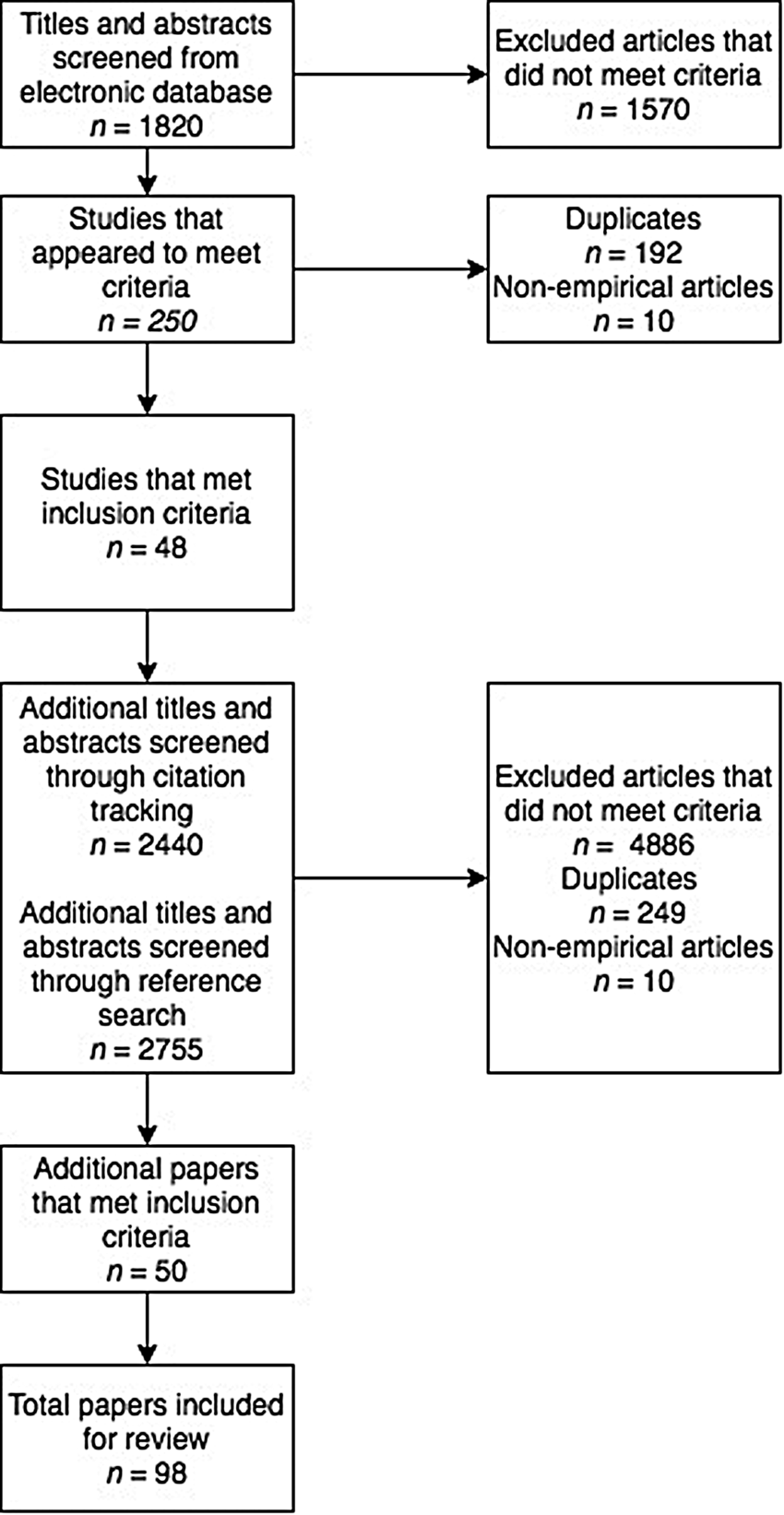
The systematic search of 192 different combinations of search terms, identified a total of 1,820 published journal articles that included all of the search terms in their abstract. A total of 250 studies appeared to meet the inclusion criteria, 192 of which were duplicates; therefore, they were excluded. The remaining 58 studies were read in full. Of these, ten articles reported on clinical or theoretical models rather than original empirical studies, so they were excluded. Forty-eight empirical papers were examined in detail and were included in the review. Citation and reference tracking of these 48 identified studies resulted in an additional 50 empirical studies that met the inclusion criteria and were included in the review.
The final review consists of 98 studies (see Appendix B for a full list of all references cited in the reviewed studies) that examined the mediating effect of cognitive factors on the relationship between adverse childhood experiences and adult psychopathology, which will be discussed in the remainder of this manuscript. See Figure 1 for a schematic representation of the results at each stage of the systematic search procedures.
Flow chart for the systematic literature search.

This literature search was conducted twice by the second author, and all steps of the systematic search were repeated by the first author to double check the accuracy of the search findings. These three systematic searches identified the same set of 98 empirical studies to be included in this review. The whole research team examined full texts to agree on the final papers to be included in the review, with excellent levels of agreements (100%). Information about selection procedures, adjustments for potential confounders, data collection methods, withdrawals and drop-outs, and statistical analyses used to test mediation was extracted and integrated by using a narrative approach. The mediation results of each study were examined to determine if full, partial, or no mediation was found. Although Andrew Hayes (Reference Hayes2013) presents a compelling argument for dropping such a distinction from discussions of mediation, we felt the distinction would provide a more detailed picture of the nature of each study's findings than a simple reporting of the significance or effect sizes, which were not consistently reported in each study. Since so many of the included studies (both more recent as well as older studies) used this full/partial/no mediation framework, we decided to stay in line with the reporting mechanism of the majority of the studies in the interest of clarity and objectivity.
In line with previous reviews of mediational studies (e.g. Williams et al., Reference Williams, Bucci, Berry and Varese2018), we expected the identified studies to report on multiple mediation analyses per study, including cognitive and other types of mediators or multiple related cognitive mediators. In order to keep this review of 98 studies as clear and concise as possible, the cognitive mediation findings discussed in this manuscript are categorized per study. An appendix is provided for readers who are interested in the complete overview of every full and partial cognitive mediation finding for each of the 98 studies. A meta-analysis was not conducted due to the high heterogeneity of the putative mechanisms and the independent and dependent variables across studies as well as the inconsistent reporting of indirect effects.
Quality assessment
Following methodological recommendations from the Preferred Reporting Items for Systematic reviews and Meta-Analyses (PRISMA; Liberati et al., Reference Liberati, Altman, Tetzlaff, Mulrow, Gøtzsche, Ioannidis and Moher2009), a component approach to quality assessment was employed. Quality of included papers was assessed by the second author using the Effective Public Health Practice Project Tool (EPHPP; Thomas, Ciliska, Dobbins, & Micucci, Reference Thomas, Ciliska, Dobbins and Micucci2004). This initial quality assessment was checked by the first author, and discrepancies were discussed until consensus was reached. The following domains were included in the assessment and rated as “strong,” “moderate,” or “weak”: selection procedures, study design, confounders, data collection methods, withdrawals and dropouts, and mediation analysis.
The study's selection procedures were judged as being strong when a sample was very likely to be representative of the target population and the study had a participation rate over 80%, moderate when a sample was somewhat likely to be representative of the target population and had a 60–79% participation rate, and weak when there was a different response rate or it was not stated. For study design, studies received a strong rating when the design was longitudinal or included a healthy control group; a moderate rating was assigned to cohort analytic, case-control, cohort, or interrupted time series studies, and all other designs or studies where designs were not stated received a weak rating. For confounders, studies received a strong rating when they controlled for more than one confounder, moderate when they controlled for one confounder, and weak when confounders were not controlled for. The quality of the data collection methods was judged as follows. A weak rating was given when there was no demonstration of evidence for the validity and reliability of the measure used in the study or if only reliability was described and no information about validity given. The criterion for a moderate rating was that the study included validity data. Studies that used tools that were both valid and reliable were rated as strong. Because three different concepts were operationalized in each study (the measures of trauma, cognitive mediation, and psychopathology), three categories of data collection methods per study were reported. For withdrawals and dropouts, studies received a strong rating when they had a follow-up rate of > 80% of participants, a moderate rating when they had a follow-up rate of 60–79%, and a weak rating when this was lower or not reported. Withdrawals and dropouts was judged as not applicable when a study only used one measurement wave.
Lastly, the mediation approach was assessed in terms of its relative statistical strength. Regression methods where mediation was inferred from the data (e.g., Baron & Kenny, Reference Baron and Kenny1986) rather than based on direct statistical observation (Hayes, Reference Hayes2009), without further testing of the indirect effect, were rated as weak. Studies that reported on an additional Sobel test to determine indirect effects received a moderate rating. A strong rating was given to analyses that reported explicit estimations for direct and indirect effects, including structural equation modeling (SEM; e.g., Ullman & Bentler, Reference Ullman and Bentler2012) or PROCESS in the SPSS statistical package (e.g., Hayes, Reference Hayes2012; Preacher & Hayes, Reference Preacher and Hayes2004) with bootstrapped estimation of indirect effects. In line with Williams et al.'s (Reference Williams, Bucci, Berry and Varese2018) review of mediation factors in the development of psychosis, the “blinding” domain was not included in our quality assessment.
Results
Study Characteristics
During the last three decades, cognitive mediation of the adversity–psychopathology link has been examined by a wide range of researchers across the world. The publication dates for this study ranged from 1989 (Zemore & Rinholm, Reference Zemore and Rinholm1989) to 2018 (Gong & Chan, Reference Gong and Chan2018). Notably, most of the studies were conducted in English-speaking countries including the United States (n = 45; 46%), the UK (n = 11; 11%), Canada (n = 5; 5%), and Australia (n = 5; 5%), with a small number of studies from Israel (n = 5; 5%), Portugal (n = 5; 5%), Spain (n = 4; 4%), Turkey (n = 4; 4%), Iran (n = 3; 3%), Italy (n = 2; 2%), Norway (n = 2; 2%), the Netherlands (n = 2; 2%), Pakistan (n = 1; 1%), France (n = 1; 1%), China (n = 1; 1%), Sweden (n = 1; 1%), and Korea (n = 1; 1%). This means that our review findings most likely generalize to American and European people. See Appendix C in the supplemental materials for an overview table of the characteristics and mediation results of the 98 reviewed studies. Appendix E in the supplemental materials provides a detailed overview of the quality assessments of the 98 studies. A narrative review of the study characteristics and their relative qualities is provided below that describes the study designs, the types of childhood adversity, psychopathology, and cognitive mediators that were examined and the reported mediation analyses.
Study design
Given that experimental studies of adverse childhood experiences are not feasible or ethical (see Gershoff et al., Reference Gershoff, Goodman, Miller-Perrin, Holden, Jackson and Kazdin2018), no studies reported the use of randomized controlled trials. However, a number of studies were well designed. For example, 11 studies (11%) included a (healthy) control group (e.g., Appiah-Kusi et al., Reference Appiah-Kusi, Fisher, Petros, Wilson, Mondelli, Garety and Bhattacharyya2017). Although the majority of the studies used cross-sectional designs (n = 86; 88%), 12 studies used longitudinal designs; therefore, they were able to assess for withdrawals and dropouts. These longitudinal designs provided a picture of long-term influences, with periods ranging from 10 weeks apart (i.e., Hankin, Reference Hankin2005) to follow-up measurements 2.5 years later (i.e., Alloy et al., Reference Alloy, Abramson, Gibb, Crossfield, Pieracci, Spasojevic and Steinberg2004; Gibb, Alloy, Abramson, Rose, Whitehouse, & Hogan, Reference Gibb, Alloy, Abramson, Rose, Whitehouse and Hogan2001b; Spasojević & Alloy, Reference Spasojević and Alloy2002). In total, 20 studies received a strong rating for study design, and one study received a moderate rating (van Harmelen et al., Reference van Harmelen, de Jong, Glashouwer, Spinhoven, Penninx and Elzinga2010). Thirty-two studies appropriately controlled for confounders in their analysis. Regarding the predictor, outcome, and mediator variables, some researchers improved the validity of their findings by using multiple instruments to assess constructs (e.g., Brown, Selth, Stretton, & Simpson, Reference Brown, Selth, Stretton and Simpson2016; Carr & Francis, Reference Carr and Francis2009).
The statistical power of the analyses can be assumed to be sufficient, given that the sample sizes used in the reported mediation analyses were generally large, ranging from 36 (Matos, Ferreira, Duarte, & Pinto-Gouveia, Reference Matos, Ferreira, Duarte and Pinto-Gouveia2015) to 5,614 (Sachs-Ericsson, Verona, Joiner, & Preacher, Reference Sachs-Ericsson, Verona, Joiner and Preacher2006). That being said, it is possible that the analyses in the three studies with the smallest sample sizes, 46 (Van Buren & Weierich, Reference Van Buren and Weierich2015), 45 (Hoffart Lunding & Hoffart, Reference Hoffart Lunding and Hoffart2016), and 36 (Matos, Ferreira, Duarte, & Pinto-Gouveia, Reference Matos, Ferreira, Duarte and Pinto-Gouveia2015), were underpowered. Overall, the study findings seem to be most generalizable to nonclinical levels of psychopathology. The majority of studies reported on nonclinical samples (n = 73; 74%), a small number of studies reported on clinical samples (n = 19; 19%), and yet others reported on both clinical and nonclinical samples (n = 6; 6%). A total of 32,365 participants were included in the study. Of these, 28,514 were nonclinical participants (students or general community) and 3,851 were clinical patients. The clinical populations were observed in general outpatient clinics (n = 21; 21%), in an inpatient clinic (n = 1; 1%; Hoffart Lunding & Hoffart, Reference Hoffart Lunding and Hoffart2016), or in both inpatient and outpatient clinics (n = 3; 3%; Hardy et al., Reference Hardy, Emsley, Freeman, Bebbington, Garety, Kuipers and Fowler2016; Steel, Sanna, Hammond, Whipple, & Cross, Reference Steel, Sanna, Hammond, Whipple and Cross2004; Valiente et al., Reference Valiente, Romero, Hervas and Espinosa2014).
With respect to selection procedures, the majority of studies (n = 89; 91%) received a weak rating: 80 of these 89 studies did not report how many people were approached to participate, whereas the other nine did report how many participants were approached but used a nonrepresentative sample. Four studies received a moderate rating for selection procedures, and five studies received a strong rating. Although there is a possibility of sample bias, it should be noted that the results of the nine studies that sought to control bias were identitical to the results of the studies that received a weak rating.
Types of childhood adversity
The reviewed studies reflect a wide spectrum of assessed early adverse experiences with specific terms and related measures. These early adverse experiences were classified in different types of maltreatment including abuse, neglect, and adverse parenting.Footnote 2 First, some studies referred to the overarching term of maltreatment (n = 20; 20%) and included subcategories of unspecified maltreatment (n = 13; 65% of all studies that investigated maltreatment); emotional maltreatment (n = 5; 25%); and psychological maltreatment (n = 2; 10%). A large proportion of studies narrowed in on abuse (n = 44; 45%) and included subcategories of general abuse (n = 10; 23% of studies investigating abuse); verbal abuse (n = 2; 5%); sexual abuse (n = 21; 48%); physical abuse (n = 9; 20%); emotional abuse (n = 16; 36%); and psychological abuse (n = 1; 2%), and some of these studies investigated multiple types of abuse. Some studies referred to another form of maltreatment, neglect (n = 10; 10%), with the subcategories unspecified neglect (n = 9; 90% of all studies investigating neglect) and physical and emotional neglect (n = 1; 10%). Other studies focused on maltreatment, specifically by parents (n = 24; 24%), and its subcategories of parenting style (n = 4; 17% of all studies that investigated parenting); negative parenting (n = 4; 17%); dysfunctional family environment/parenting (n = 3; 13%); overprotection (n = 2; 8%); parental bonding (n = 2; 8%); parental criticism (n = 2; 8%); parental alcoholism (n = 1; 4%); permissive and authoritarian parenting (n = 1; 4%); maternal rejection (n = 1; 4%); father–daughter relationship (n = 1; 4%); parental indifference (n = 1; 4%); overcontrolling parenting (n = 1; 4%); and parental representations (n = 1; 4%). Whereas a minority of studies assessed for trauma (n = 6; 6%), with subcategories unspecified trauma (n = 5; 83% of studies that investigated trauma) and interpersonal trauma (n = 1; 17%). Other categories included sexual victimization (n = 1; 1%); early adverse events (n = 2; 2%); shaming (n = 5; 5%); and attachment (n = 1; 1%).
The most commonly used measure of early adversity was the Childhood Trauma Questionnaire (CTQ; Bernstein et al., Reference Bernstein, Stein, Newcomb, Walker, Pogge, Ahluvalia and Zule2003; n = 32; 33%), which is the most widely used retrospective measure of adverse childhood experiences (Tonmyr, Draca, Crain, & MacMillan, Reference Tonmyr, Draca, Crain and MacMillan2011). Other frequently used scales included the Lifetime Experiences Questionnaire (LEQ; Valenzuela & Sachdev, Reference Valenzuela and Sachdev2007; n = 10; 10%) and the Parental Bonding Instrument (PBI; Parker, Tupling, & Brown, Reference Parker, Tupling and Brown1979; n = 14; 14%). Of the 127 different measures that were used to assess childhood adversity, 61 received a strong rating because they showed evidence of both validity and reliability. Overall, the reviewed studies reflect a wide spectrum of assessed early adverse experiences, with specific terms and related measures. Therefore, it seems appropriate to draw conclusions about the effects of maltreatment more generally rather than those of a specific adverse experience per se.
Types of psychopathology
As outcome variables, multiple types of psychopathology were assessed. The largest diagnostic categories were depression (n = 41; 42%); anxiety (n = 15; 15%); eating pathology (n = 13; 13%); and posttraumatic stress disorder (PTSD) (n = 9; 9%). Other forms of psychopathology symptoms that were assessed by several researchers included interpersonal problems (n = 8; 8%); personality disorders (n = 5; 5%); psychotic symptoms (n = 6; 6%)Footnote 3; general distress (n = 5; 5%) or psychological problems (n = 4; 4%); and destructive behaviors including self-harm and aggression (n = 5; 5%).
A total of 146 different measures were used to assess adult psychopathology in the reviewed studies; of these, 77 received a strong rating because they showed evidence of both validity and reliability. Of the 41 studies that assessed psychopathology of depression, 63% (n = 26) used the Beck Depression Inventory (BDI; Beck, Steer, & Brown, Reference Beck, Steer and Brown1996). The most frequently used anxiety measure was the State–Trait Anxiety Inventory (STAI; Spielberger, Reference Spielberger and I. B. Weiner & W. E. Craighead2010; n = 6; 40% of all studies assessing anxiety). The most used measure of interpersonal problems was the Conflict Tactics Scale-Revised (CTS-R; Straus, Hamby, Boney-McCoy, & Sugarman, Reference Straus, Hamby, Boney-McCoy and Sugarman1996; n = 4; 50% of all studies assessing interpersonal problems). Of the measures that assessed various eating pathologies, the Eating Disorder Inventory was most frequently used (EDI; Garner, Olmstead, & Polivy, Reference Garner, Olmstead and Polivy1983; n = 3; 23% of studies assessing eating pathology). Psychopathology measures were different in each study that examined trauma or PTSD, which made comparing findings more challenging. The wide range of meaures used to tap into different psychopathologies suggests that the overall results of this review are independent of specific measures and likely give a valid picture of the development of common psychopathology of depression, anxiety, eating disorders, and PTSD.
Types of cognitive mediators
In line with our conceptualization of cognitive factors, identified cognitive mediators reflected mostly negative aspects of these beliefs (89 studies looked at negative mediators; 91%), for example, cognitive styles (e.g., Gibb, Alloy, Abramson, & Marx, Reference Gibb, Alloy, Abramson and Marx2003; Gibb, Alloy, Abramson, Rose, Whitehouse, Donovan, et al., Reference Gibb, Alloy, Abramson, Rose, Whitehouse, Donovan and Tierney2001a; McGinn et al., Reference McGinn, Cukor and Sanderson2005), negative core/internalized beliefs (Coates & Messman-Moore, Reference Coates and Messman-Moore2014; Harris & Curtin, Reference Harris and Curtin2002; Shah & Waller, Reference Shah and Waller2000), students’ dysfunctional attitudes and negative attribution styles (Whisman & Kwon, Reference Whisman and Kwon1992), evaluative beliefs (Valiente et al., Reference Valiente, Romero, Hervas and Espinosa2014), pathogenic beliefs (Silberschatz & Aafjes-van Doorn, Reference Silberschatz and Aafjes-van Doorn2017), and early maladaptive schemas (Nia, Sovani, & Forooshani, Reference Nia, Sovani and Sarami Forooshani2014). On the other hand, eight studies (8%) looked at positive cognitive mediators such as positive automatic thoughts (Gibb, Benas, Crossett, & Uhrlass, Reference Gibb, Benas, Crossett and Uhrlass2007), self-esteem (Dodge Reyome, Ward, & Witkiewitz, Reference Dodge Reyome, Ward and Witkiewitz2010), adaptive cognitive-emotional regulation strategies (Huh, Kim, Lee, & Chae, Reference Huh, Kim, Lee and Chae2017), and self-forgiveness and hope (Kaye-Tzadok & Davidson-Arad, Reference Kaye-Tzadok and Davidson-Arad2017). The most commonly reported specific cognitive mediators were maladaptive/negative schemas (n = 31; 32% of studies); shame (n = 8; 8%); negative core beliefs (n = 8; 8%); self-criticism (n = 5; 5%); hopelessness (n = 3; 3%); self-blame (n = 2; 2%); and negative inferential style (n = 2; 2%).
These cognitive mediators were assessed by using various scales. Of all the 124 measures of cognitive factors, 64 received a strong rating. Although it is unclear whether these different terms reflect the same cognitive construct, comparability of mediation results was enhanced by the fact that all cognitive measures were reported in two or more different studies. The most commonly used scales were the Young Schema Questionnaire-Short Form (YSQ-SF; Young & Brown, Reference Young, Brown and Young1994; n = 12; 12% of studies) and the Young Schema Questionnaire (YSQ; Young & Brown, Reference Young, Brown and Young1994; n = 10; 10% of studies), which were used to identify maladaptive schemas/negative schemas (YSQ-SF: n = 9; 29% and YSQ: n = 8; 26% of studies that assessed schemas) or negative core beliefs (YSQ-SF: n = 3; 38% of studies that assessed core beliefs; YSQ: n = 2; 25% of studies that assessed core beliefs).
Types of mediation analyses
Various types of mediation analyses were used to establish mediation. Of all 98 studies, 48 studies reported on SEM or process analyses and thus received a strong rating. Despite its controversy, Baron & Kenny (Reference Baron and Kenny1986) was used frequently (n = 39; 40%), not only in previous decades (Whisman & Kwon, Reference Whisman and Kwon1992) but also more recently (Appiah-Kusi et al., Reference Appiah-Kusi, Fisher, Petros, Wilson, Mondelli, Garety and Bhattacharyya2017; Silberschatz & Aafjes-van Doorn, Reference Silberschatz and Aafjes-van Doorn2017). Notably, the results of the more recently published papers could be seen as being more robust because they usually employed another method to detect mediation alongside the Baron and Kenny method, e.g., hierarchical regression, PROCESS software, bootstrapping (Hayes, Reference Hayes2013). The studies that used SEM to assess mediation were all relatively recent, published in the year 2012 or later, except for the study by Benas and Gibb (Reference Benas and Gibb2008). Studies that used the Sobel test were published between 2005 (McGinn et al., Reference McGinn, Cukor and Sanderson2005) and 2017 (Kaye-Tzadok & Davidson-Arad, Reference Kaye-Tzadok and Davidson-Arad2017).
Many studies tested multiple mediational relationships (multiple relationships in one SEM model or multiple separate regressions), so they reported multiple findings. Some studies examined different types of mediations (the mediation of cognitive factors as well as behavioral or affective factors). Other studies examined multiple cognitive mediators, so they reported on multiple analyses. This means that our sample of identified mediation analyses far exceeds the study sample of 98, so it likely gives a fair picture of the findings in this field. In the following sections, the cognitive mediation results are categorized per study.
Study results
All the individual full and partial cognitive mediation findings for each of the 98 studies are reported in Appendix C of the supplemental materials. Despite the differences in examined cognitive mediators and types of mediation analyses used, the vast majority of studies reported a significant mediation (95%; of which 83% reported full mediation). The 12 studies with the strongest (longitudinal) study designs all concluded that cognitive variables mediate the relationship between early adverse experiences and psychopathology in adulthood, with only one exception (Hoffart Lunding & Hoffart, Reference Hoffart Lunding and Hoffart2016). Appendix D in the supplementary materials provides a detailed overview of the mediation results per category of adverse childhood experiences, psychopathology, and sample population.
Types of adverse childhood experiences
The results of studies of different types of adverse childhood experiences consistently found significant mediation between childhood adversity and adult psychopathology. For the studies on overall maltreatment, 20 studies reported significant mediation (95%). Regarding more specific types of adverse childhood experiences, all ten studies that reported on neglect found significant mediation. Of the 44 studies that assessed childhood abuse, 42 studies found significant mediation. For negative parenting, 20 of the 24 studies reported a mediating effect.
Types of psychopathology
The review of studies that examined a wide range of psychopathology indicated that nearly all showed cognitive mediation between childhood adversity and adult psychopathology. Of the 41 studies that reported on depression, 93% (38 studies) found significant mediation. All 15 studies that examined anxiety found significant mediation, except for one study that reported no significant findings (Harter & Vanecek, Reference Harter and Vanecek2000). All thirteen studies that reported on eating pathology reported significant mediation. Notably, all nine studies that reported on PTSD reported full mediation. This suggests that cognitive factors played a mediating role regardless of type of developed psychopathology in adulthood.
Sample type
The significant mediating role of cognitive factors appeared consistent across clininal and community samples. Of the studies reporting on clinical samples, 17 studies (89%) found significant mediation. Of the studies reporting on nonclinical samples (n = 68), only 3 studies reported no mediation at all (4%). All of the studies that reported on both clinical and nonclinical samples found significant cognitive mediation. Taken as a whole, the results of this review show that cognitive factors play a substantial role in mediating the relationship between adverse experiences in childhood and later psychopathology across different adverse childhood experiences, psychopathologies, and in both nonclinical and clinical samples.
Discussion
Adverse childhood experiences lead to the development of psychopathology in adulthood for some but not others. Beliefs, schemas, or internal working models are posited to play an important role in explaining how adverse experiences may lead to psychopathology (Bowlby, Reference Bowlby1988; Young, Reference Young1994). The objectives of this paper were to (a) provide a systematic review and exhaustive qualitative synthesis of the empirical evidence for the mediating role of cognitive factors in the link between the broad range of adverse childhood experiences and adult psychopathology, and (b) evaluate the quality of this evidence by assessing the relative strength of the methods used to explain the adversity–psychopathology link.
The systematic literature search identified 98 empirical studies conducted in the last three decades in the target area, suggesting that cognitive mediation of the adversity–psychopathology link has been a popular area of research across the world. The majority of these studies were conducted in the USA and Europe and recruited people with nonclinical levels of psychopathology. Many high-quality controlled, large sample, and longitudinal studies were identified. Several cognitive factors appear to be involved in the relationship between childhood adversity and psychopathology. In line with our conceptualization of cognitive factors, identified cognitive mediators reflected mostly negative aspects of these beliefs. Overall, the reviewed studies reflected a wide spectrum of assessed early adverse experiences, with specific terms and related measures. Therefore, it seems appropriate to draw conclusions about the influence of maltreatment more generally rather than that of a specific adverse experience per se. Many studies tested multiple mediational relationships (multiple relationships in one SEM model or multiple separate regressions) and therefore reported multiple findings. This means that our sample of identified mediation analyses far exceeds the study sample of 98, likely creating a fair picture of the findings in this field.
Results of studies of different types of adverse childhood experiences consistently found significant mediation between childhood adversity and adult psychopathology. Similarly, the mediating role did not appear to differ among the type of developed psychopathology in adulthood, although studies mostly focused on common psychopathology such as depression, anxiety, eating disorders, and PTSD. Although the vast amount of studies were done with nonclinical populations, the significant mediating role of cognitive factors appeared to be consistent across clinical and community samples.
Overall, the vast majority of studies reported a significant mediation effect (95%; of which 83% full mediation) despite the difference in examined cognitive mediators and types of mediation analyses used. These significant mediations were not just reported in lower quality studies but were also found by studies with high-quality ratings, suggesting that cognitive variables mediate the relationship between early adverse experiences and psychopathology in adulthood. Arguably, this consistentency in results across different psychopathologies and types of early adverse experiences as well as different types of cognitive mediators speaks to the robustness and validity of the findings. Therefore, cognitive mediators likely play an important role in understanding why, following adverse childhood experiences, certain people develop psychopathology and others do not.
Theoretical context
Given that similar results were observed for various types of cognitive mediators, it is possible that the many different versions of cognitive factors that have been assessed in these mediational studies overlap with each other. The similar findings might indicate the larger construct of cognitive mediators in general, operationalized in different ways, or it might reflect the fact that these studies actually measure the same cognitive construct, but researchers are assigning different theoretical labels to this construct.
In line with the psychodynamic and cognitive theories and theories of centrality that implicate cognitive vulnerability as a particular diathesis for psychopathology, the results of our review support the hypothesis that how people experience and internalize adverse experiences—their beliefs or narratives about their traumas—plays a critical role in predicting subsequent psychopathology. For example, the results support the concept of internal working models proposed by Bowlby (Reference Bowlby1988) and are also consistent with the control-mastery model that the effects of trauma on later psychopathology are mediated by pathogenic schemas (Weiss, Reference Weiss1993). Moreover, the findings of the review also support the more recent theory on centrality of traumatic events, showing that maladaptive attributions may contribute to psychopathology indirectly through the event's importance to identity formation (Reiland, Reference Reiland2017).
Empirical context
In line with previous empirical findings, our review of mediation studies confirmed the basic connection between adverse childhood experiences and subsequent development of common psychopathology symptoms. Moreover, the results are consistent with previous reviews of cognitive factors in the maltreatment-psychopathology literature that focused on the examination of specific types of disorders (e.g., Briere, & Jordan, Reference Briere and Jordan2009; Edalati, & Krank, Reference Edalati and Krank2016; Liu, Reference Liu2017).
The broad scope of the review highlighted several gaps in the empirical literature. First, although the 98 studies appear to reflect a broad range of adverse childhood experiences (e.g., neglect, physical and emotional abuse) that reflect chronic maltreatment (persistent traumatic experiences from which the child cannot escape, such as growing up in a dysfunctional family or being raised by a depressed or anxious parent), the adverse experiences that may be seen as “type I trauma” (sudden, unexpected discrete events; Terr, Reference Terr1991), were underrepresented. It is possible that the six studies that measured trauma more generally included these types of incidents in childhood. However, given that type I trauma (also called “shock trauma”) is relatively common (Silberschatz, Reference Silberschatz2008), this type of sudden adverse childhood experience seems to have been under-reported in the reviewed empirical literature. Moreover, the general concept of childhood adversity might also include other forms of traumatic events (e.g., natural disasters, medical issues) that are unrelated to family relationships and have not been explicitly addressed in any of the measures of adverse childhood experiences in the reviewed empirical literature.
Second, it is also noteworthy that some common psychological disorders were not represented in the empirical mediation studies. For example, despite the large percentage of studies on depression (n = 41; 42%), none of the studies reported on bipolar disorder, which is relatively common (3–5% of the population). It is possible that the cause of bipolar disorder is deemed to be biological, so cognitive factors might be deemed to be less relevant in its development. However, research suggests that bipolar disorder develops as a consequence of a combination of genetic factors and cognitive style, which means that cognitive processes following adverse childhood experiences might determine whether or not people end up developing symptoms (Leahy, Reference Leahy2007). Another psychopathology that was not represented in any of the 98 reviewed papers was obsessive-compulsive disorder (OCD). None of the mediation studies that reported on anxiety (n = 15; 15%) appeared to include OCD symptomatology despite the fact that stressful life events are known to play a role in the pathogenesis of OCD (Adams et al., Reference Adams, Kelmendi, Brake, Gruner, Badour and Pittenger2018). It is possible, that no empirical studies have been conducted specifically on OCD because of its relatively low lifetime prevalence in the general population (2.3%; Ruscio, Stein, Chiu, & Kessler, Reference Ruscio, Stein, Chiu and Kessler2010).
Our review also highlighted several gaps in the empirical literature about the cognitive mediators. For example, guilt-laden beliefs were not explicitly assessed in any of the empirical mediation studies. Also, other mediators (e.g., shame) were described as cognitive processes in the respective studies despite the fact that these processes also include a physical and affective component. Furthermore, although cognitive factors could be considered within different theories of psychopathology development (e.g., early maladaptive schema theories, psychodynamic object-relations theories), the vast majority of operationalized cognitive mediators reflected a cognitive-behavioral therapy framework. The Pathogenic Belief Scale (Silberschatz & Aafjes-van Doorn, Reference Silberschatz and Aafjes-van Doorn2017) was a notable exception, as it is based on an integrated cognitive-psychodynamic-relational framework.
Limitations
Several limitations to some of the reviewed studies were noted during the quality assessment of the studies (e.g., unexamined confounders). Arguably, the most significant limitation was that many studies (88%) adopted a cross-sectional design, which does not elucidate the direction of causal effects. These cross-sectional studies ask participants to report events from their past, which risks biased estimates of longitudinal parameters (Maxwell & Cole, Reference Maxwell and Cole2007). Some researchers (e.g., Maxwell, Cole, & Mitchell, Reference Maxwell, Cole and Mitchell2011) have argued that cross-sectional paths (in the absence of reliable estimates regarding prospective relationships within the same variable) provide limited information about prospective paths. Others have argued that cross-sectional data can provide useful information about causal links (Pearl, Reference Pearl2009; see also the cross-sectional mediation analysis by Rudy, Kerns, & Turk, Reference Rudy, Kerns and Turk1988). Putting aside debates about the validity of cross-sectional mediation, it should be noted that the results of the studies that did use longitudinal designs (12%) were consistent with the results reported in cross-sectional studies.
Second, many studies used measures of adverse childhood experiences based on retrospectively recalled perceived negative childhood experiences. Although some question the validity of retrospective measurements, Brewin, Andrews, and Gotlib (Reference Brewin, Andrews and Gotlib1993) concluded their extensive literature review arguing that retrospective recollections of adversity, although not perfect, are for the most part quite accurate. Some cognitive mediators may have significant overlap with neuropsychological, behavioral, and emotional mediators (e.g., Williams et al., Reference Williams, Bucci, Berry and Varese2018), implying that further research on the unique contribution of cognitive processes is necessary. In other words, the current results do not rule out that other factors might also provide useful explanatory mechanisms in the association between childhood adversity and adult psychopathology.
Third, most studies relied solely on self-report measures, which increases the possibility of shared method variance and can thereby artificially inflate correlations between the variables assessed. Self-report ratings of internalized beliefs might be particularly problematic because they measure only those beliefs of which people are consciously aware. It could be argued that many cognitive factors are at least in part unconscious (e.g., Silberschatz, Reference Silberschatz and Silberschatz2005). For example, self-report measures are incapable of capturing unconscious internalized beliefs, which could be an important cognitive mediator. Future studies should address this limitation by using observer-rated scales and interviews.
Moreover, the results of most literature reviews, including this one, might have been affected by the “file drawer problem,” where certain competently designed studies remain unpublished because of a bias against publishing null findings (Ioannidis, Reference Ioannidis2005; Liberati et al., Reference Liberati, Altman, Tetzlaff, Mulrow, Gøtzsche, Ioannidis and Moher2009). Arguably, including evidence from unpublished or non-peer-reviewed studies could have reduced the possible publication bias by including gray literature that is not controlled by commercial publishers (as suggested in the systematic review guidelines by Siddaway, Wood, & Hedges, Reference Siddaway, Wood and Hedges2019). However, publication bias might be less of a concern in the area of developmental research, where correlational findings (even without significant mediations) still result in publications (e.g., Gershoff, et al., Reference Gershoff, Goodman, Miller-Perrin, Holden, Jackson and Kazdin2018). Moreover, in this systematic review, we deemed it important that the systematic search would be replicable by others in the future in that they would identify the exact same 98 studies if they were to repeat the same search. Therefore, the identification of relevant empirical studies was purely based on systematic procedures of literature searches that are widely available in academic search engines, without the need for personal favors or idiosyncratic professional correspondences, that might or might not have provided additional information to us as reviewers, depending on timing and the mood of individual researchers. While a publication bias should be considered within any systematic review, the large number of studies conducted in this field, the existence of findings that confirm the null hypotheses (e.g., Hutchinson, Krippner, & Hutchinson, Reference Hutchinson, Krippner and Hutchinson1988), and the fact that studies of higher quality showed similar findings to lower quality studies suggest that it is unlikely that a publication bias would have significantly influenced the findings of the current review.
Furthermore, with respect to the external validity of the findings, several points need to be considered. Although we need to be careful about generalizing our findings to other non-Western groups, there were studies conducted in other cultures, and their results were consistent with those from the present study. The populations in the studies are representative of mainstream adult mental health services with respect to age, pathology, and gender balance. The majority of the studies involved patients with mild to moderate mental health problems, consistent with the severity of problems of patients seen in primary care mental health services (Barkham, Gilbert, Connell, Marshall, & Twigg, Reference Barkham, Gilbert, Connell, Marshall and Twigg2005; Haaga, Reference Haaga2000), so the results might not generalize to more severe patient samples. A related limitation is that most studies categorized their patient sample into different diagnostic criteria; however, they did not report on other patient differences that might play a role in the size and nature of the mediation such as gender, age, and cultural background. Future research could explore why certain people develop depression and others develop anxiety or PTSD following a negative childhood experience by examining how they internalized these experiences and attributed their trauma to external, internal, stable trait, or flexible state factors.
Clinical implications
Negative childhood experiences are unarguably traumatic for any child independent from their effect on psychopathology development. However, the empirical research suggests that it is most likely the internalization of a negative experience in the form of pathogenic cognitive processes that allows negative childhood experiences to have far-reaching negative consequences. Our comprehensive review encompassing the breadth of this topic illustrated the large variation of negative childhood experiences and cognitive factors that lead to a range of psychopathology outcomes.
The relationship between adverse childhood experiences and PTSD was fully mediated by cognitive factors in 100% of the included studies on this topic, whereas in other disorders, internalized beliefs might be only part of the explanation of why pathology develops. One important clinical implication is that clinicians and researchers should evaluate not only evidence of early traumatic experiences but also whether the person developed negative internalized beliefs based on these adverse experiences. Identifying pathogenic beliefs might help victims of early maltreatment and abuse understand the interrelationships between their adverse experiences and potential symptoms. This suggests that the centrality of an adverse experience in a person's identity, i.e., how meaningful an event was in a person's life (Berntsen & Rubin, Reference Berntsen and Rubin2006), could be a salient target for treatment efforts (Reiland & Clark, Reference Reiland and Clark2017).
Using one of the many reported measures of internalized beliefs (e.g., the Young Schema Questionnaire; Young & Brown, Reference Young, Brown and Young1994 or the Pathogenic Beliefs Scale; Silberschatz & Aafjes-van Doorn, Reference Silberschatz and Aafjes-van Doorn2017) might make patients more aware of the agency they have in the way they interpret these experiences and how they might be able to reduce their negative influence by working to change negative internalized beliefs and building on their positive internalized beliefs. These cognitive mediating variables are of great significance to clinicians who, in this managed-care era, are under pressure to offer targeted individualized interventions that provide effective relief in the shortest time possible.
Summary
The results of the studies that we reviewed strongly support the mediating role of negative internalized beliefs on the relationship between perceived negative childhood experiences and subsequent common psychopathology symptoms in adulthood. The consistency of the findings suggest that a broad range of cognitive variables should be considered when treating patients with traumatic childhood experiences in primary care treatment settings, as change in these factors could potentially be beneficial. Thus, in order to help adult patients, it is important to assess the patient's cognitive processes rather than solely the presence of adverse childhood experiences. Internalized beliefs resulting from these adverse childhood experiences are unique to each patient, and they might determine whether patients end up developing psychopathology or not. Since there were larger subgroups of mediators (e.g., shame, early maladaptive schemas), quantitative meta-analyses of these studies could be an appropriate next step for future research. Finally, future research employing larger samples sizes, longitudinal design, and more complex modeling techniques could contribute to the development of more effective treatment through supporting a better understanding of the causal pathway from early trauma to the development of psychopathology.
Supplementary Material
The supplementary material for this article can be found at https://doi.org/10.1017/S0954579419001317.
Financial Support
No funding for this study was provided. No funding sources influenced the study design, collection, analysis, interpretation of the data, writing the manuscript, or the decision to submit the paper for publication.
Conflict of Interest
All authors declare that they have no conflicts of interest.
Role of Contributors
All authors contributed to and have approved the final manuscript. K. A. developed the systematic search design, wrote the initial outline and edited the manuscript. C. K. conducted the systematic literature review under the supervision of K. A., checked the references, and wrote parts of the detailed manuscript. G. S. identified the gap in the literature and the need for this review and made significant edits to the manuscript at several stages of the process.