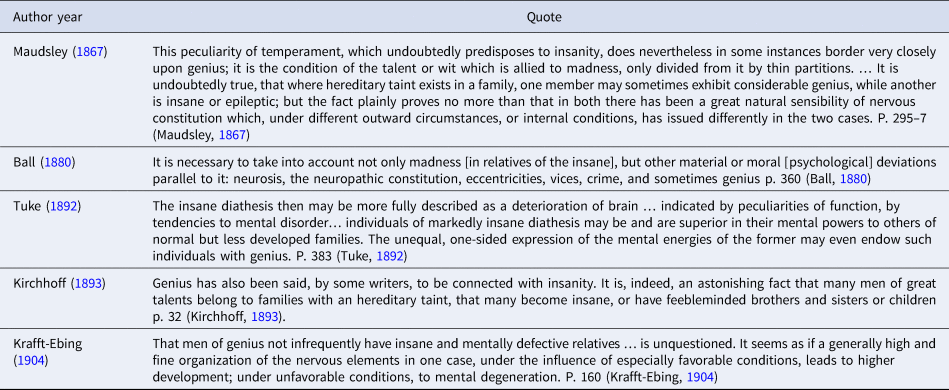
The idea that a predisposition to ‘madness’ and genius are closely inter-related can be traced back to ancient times (Ourtani, Reference Ourtani2021) but became particularly popular during the romantic movement in the mid- to late nineteenth century (Becker, Reference Becker2001; Lombroso, Reference Lombroso1896; Madden, Reference Madden1833). As shown in Table 1, alienists in the nineteenth and early twentieth centuries often observed that geniuses occurred at higher than expected rates in the families of individuals with mental illness. In recent decades, a large empirical literature has sought to evaluate the validity of these observations (Kaufman, Reference Kaufman2014; Kinney & Richards, Reference Kinney, Richards, C, P, P and A2019; Kyaga, Reference Kyaga2014; Ourtani, Reference Ourtani2021). One of the first such studies, published over 70 years ago, concluded ‘The geniuses and their families show a much higher incidence of psychosis and psychoneurosis than the average population (Juda, Reference Juda1949) p. 307.’
Selected historical quotes about the familial relationship between genius and insanity

Attempts to evaluate the link between creativity and the familial liability to psychiatric illness have utilized a variety of methodologic approaches including family history assessments of creative writers (Andreasen, Reference Andreasen1987), the frequency of relatives of the psychiatrically ill listed in ‘Who's Who’ (Karlsson, Reference Karlsson1970) or publishing books (Karlsson, Reference Karlsson1984), direct assessment of the relatives of psychiatric patients using creativity scales (Kinney et al., Reference Kinney, Richards, Lowing, LeBlanc, Zimbalist and Harlan2001; Richards, Kinney, Lunde, Benet, & Merzel, Reference Richards, Kinney, Lunde, Benet and Merzel1988), national registries to determine rates of psychiatric illness in family members of university professors (Parnas, Sandsten, Vestergaard, & Nordgaard, Reference Parnas, Sandsten, Vestergaard and Nordgaard2019) or a broader set of potential creative professions (Kyaga et al., Reference Kyaga, Lichtenstein, Boman, Hultman, Långström and Landen2011, Reference Kyaga, Landén, Boman, Hultman, Långström and Lichtenstein2013) and polygenic risk scores for schizophrenia and bipolar in creative individuals (Power et al., Reference Power, Steinberg, Bjornsdottir, Rietveld, Abdellaoui, Nivard and Stefansson2015).
To investigate this question further, we present a study in a Swedish national sample with eight notable methodologic features. First, we assess aggregate genetic risk using family-genetic risk score (FGRS) based on rates of illness in 1st–5th degree relatives, correcting for cohabitation effects (Kendler, Ohlsson, Sundquist, & Sundquist, Reference Kendler, Ohlsson, Sundquist and SundquistIn press; Kendler, Ohlsson, Sundquist, & Sundquist, Reference Kendler, Ohlsson, Sundquist and Sundquist2021a, Reference Kendler, Ohlsson, Sundquist and Sundquist2021b). Second, rather than examining one or a few psychiatric disorders [typically schizophrenia (SZ), bipolar disorder (BD) and/or major depression (MD)], we explore ten conditions: MD, Anxiety Disorders (AD), Obsessive-Compulsive Disorder (OCD), BD, SZ, Anorexia Nervosa (AN), Alcohol Use Disorder (AUD), Drug Use Disorder (DUD), ADHD and Autism Spectrum Disorder (ASD). Third, rather than examining solely putatively ‘creative’ occupations postulated a priori, we take a hypothesis-free approach, examining all 59 managerial and educated occupational classes available through Statistics Sweden. Fourth, rather than relying on self-report occupations, we utilize objectively assigned occupations. Fifth, individuals of high educational attainment (EA) are over-represented in most ‘creative’ professions (e.g. artist, author, professor), and EA is both substantially influenced by genetic factors (Branigan, McCallum, & Freese, Reference Branigan, McCallum and Freese2013) and inversely associated with a variety of health outcomes including psychiatric disorders (Eide & Showalter, Reference Eide and Showalter2011; Escott-Price et al., Reference Escott-Price, Bracher-Smith, Menzies, Walters, Kirov, Owen and O'Donovan2019; Peyrot et al., Reference Peyrot, Lee, Milaneschi, Abdellaoui, Byrne, Esko and Kloiber2015). Therefore, to unconfound genetic influences on ‘creativity’ and EA, we control for the genetic potential for EA in all analyses. Sixth, to determine the degree to which the impact of genetic risk factors on selection into certain occupations is mediated through the development of the relevant psychiatric illness itself, we present our results both uncontrolled and controlling for the onset of the relevant disorder prior to occupational choice. Seventh, to determine if the selection into occupations is influenced by exposure to psychiatric illness in close relatives, we examine whether occupations with an elevated genetic liability to given disorders have a greater than expected concentration of affected first-degree family members, with whom close contact is likely, rather than more distant relatives. Finally, previous analyses of this question have typically utilized standard effect sizes, often odds ratios. To increase interpretability, we developed a more natural ‘effect size’ – the % elevation of the familial-genetic risk score for a particular disorder in members of a given profession compared to individuals affected with that disorder.
Methods
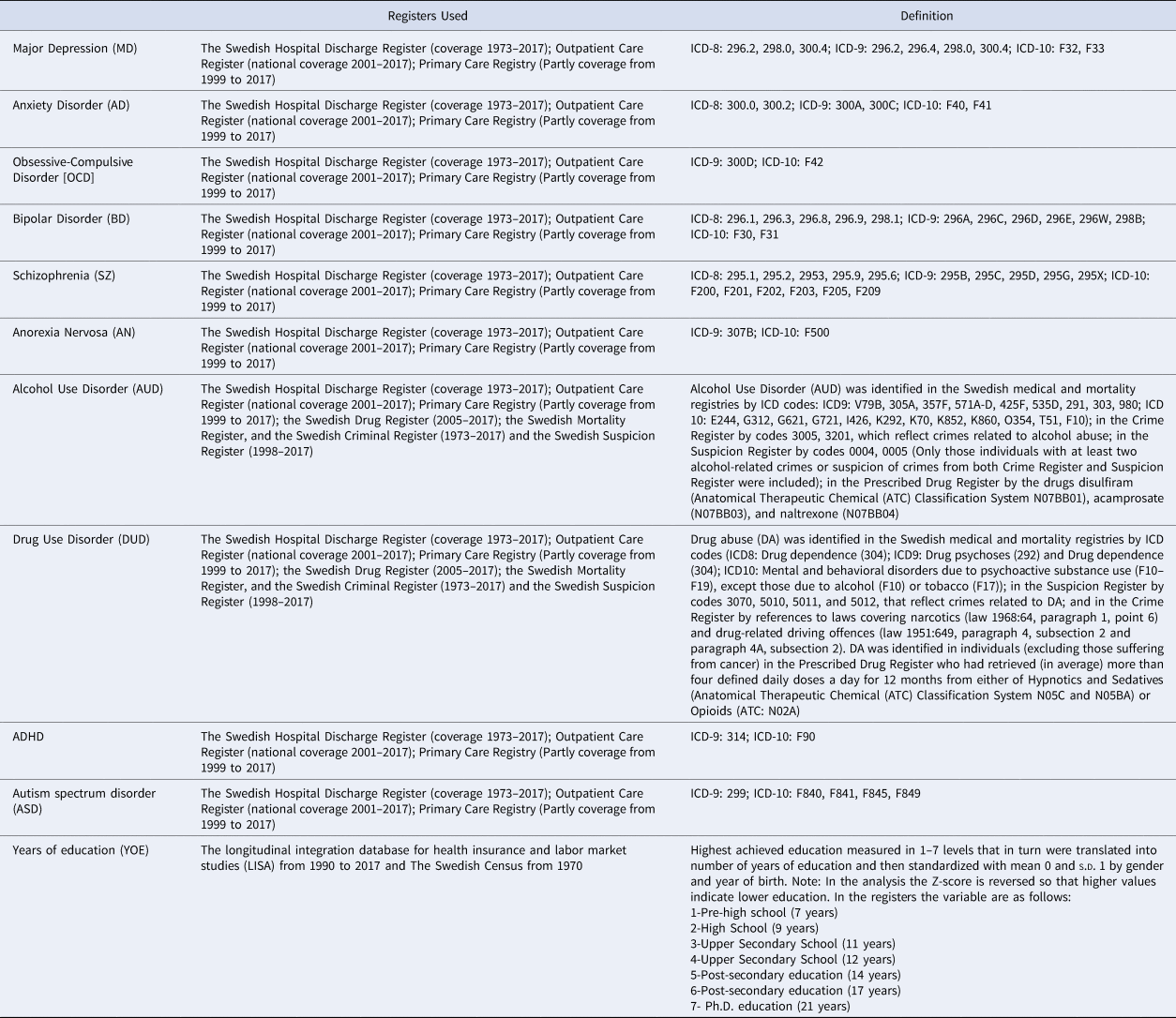
We collected information on individuals from Swedish population-based registers with national coverage linking each person's unique personal identification number which, to preserve confidentiality, was replaced with a serial number by Statistics Sweden (see Appendix 1, Table 1 for a description of the relevant registries). We secured ethical approval for this study from the Regional Ethical Review Board in Lund (No. 2008/409 and later amendments). Our database consisted of all individuals born in Sweden to parents themselves born in Sweden. Furthermore, we required that they had an occupation recorded in the Swedish Occupation Register sometime between 2014 and 2018. The occupations in the register are reported according to the Swedish Standard Classification of Occupations (SSYK, 2012) (‘SSYK 2012,’) (see Appendix 1, Table 1). SSYK 2012 is intended to cover all jobs on the Swedish labor market for which salary or other compensation is paid. The classification is divided into ten broad occupational fields that are subdivided into occupational groups (3-digits) with subgroups (4-digits) that reflect further details of their occupation. For the purpose of our study, we focus on individuals in two of these fields; Managers and individuals in Occupations requiring advanced education. In the database, we also included an individual familial genetic risk score (FGRS) for years of education and the above-noted ten disorders. The FGRSs were based on registrations of the disorder among 1st to 5th degree relatives to the proband. In the database, the first date of registration for each of the ten disorders was considered. For our definitions of the 10 disorders, and our variable years of education, see Table 2. Diagnoses were based on information from the Hospital Discharge Register, Outpatient Care and Primary Care Registries from the years 1973 to 2017 and applied without a hierarchy so the relatives with multiple diagnoses could contribute to multiple FGRS. For a detailed definition of the FGRS, (see appendix 1, Table 3). Briefly, we first calculated the morbid risk for the phenotype in 1st through 5th degree relatives based on age at first registration. Thereafter, we transformed the binary trait into an underlying liability distribution and calculated the mean Z-score for relatives with and without the trait. For 1st degree relatives, we also multiplied the z-score with a factor designed to control for cohabitation effects. Within each type of relative, we the had the sum of the individual z-scores and the weighted number of individuals which were then further weighted by their genetic resemblance to the proband. For each proband, we summed the two components across all groups of relatives and used the quotient, which was then multiplied by a shrinkage factor to take account of the number of relatives of the proband. To ensure that the FGRS would be comparable across disorders, we initially standardized them using year of birth and county of residence, into a z-score with mean = 0 and s.d. = 1.
Definitions of the ten disorders studied in the report and our measure of years of education

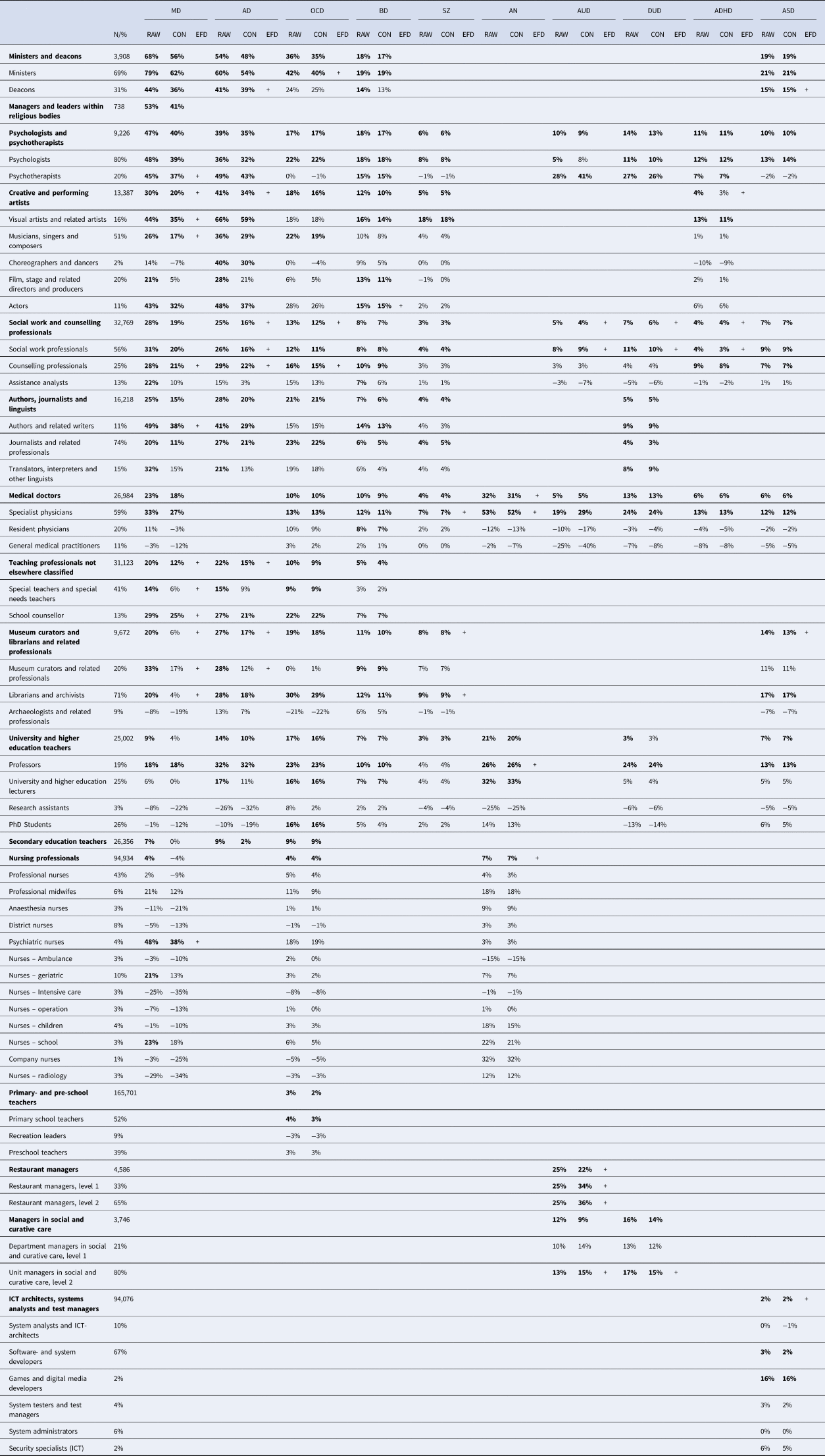
The Standardized Family Genetic Risk Score For Ten Psychiatric and Substance Use Disorders in the 3-Digit Occupational Codes That Contained a Chance-Correction Significant Elevation in at least One Score and the Main 4-Digit Subgroups within the 3-Digit Codes

Bold = significantly higher (Bonferroni corrected) than mean FGRS.
Con, controlling for onset of the relevant psychiatric/substance use disorder before achieving the occupation, that is the possible causal link from occupation to disorder; NEC, Not elsewhere Classified; EFD, statistical excess of the relevant psychiatric/substance use disorder in first-degree relatives; MD, Major Depression; AD, Anxiety Disorders; OCD, Obsessive-Compulsives Disorder; BD, Bipolar Disorder; SZ, Schizophrenia; AN, Anorexia Nevrousa; AUD, Alcohol Use Disorder; DUD, Drug Use Disorder; ASD, Autism Spectrum Disorder.
We first calculated the mean FGRS for individuals registered with each of the 10 disorders. Second, we controlled for the effect of education on FGRSs by regressing out the FGRS for education on the FGRSs for our disorders, employing a linear regression model and using the residuals in the remaining analyses (adjusted FGRS). Third, with a t test we calculated a p value for the difference between the mean adjusted FGRS for all ten disorders in individuals within the 59 occupations at the 3-digit level of the SSYK-code and the overall mean FGRS (i.e. 0). We further analyzed the occupational groups that had a significant higher mean value (using a Bonferroni corrected p value for 59 comparisons). Fourth, we calculated the ratio and 95% CIs (Motulsky, Reference Motulsky2014) for the mean adjusted FGRS within each significantly associated occupational 3-digit group and the mean FGRS for individuals with the disorder. To assess the direct effect of FGRS on occupational choice, we then excluded individuals registered with the disorder prior to entering the occupation. Furthermore, in order to test the hypothesis that individuals did not choose the occupation because individuals had a close relative registered with the disorder, we compared the average number of 1st degree relatives with the disorder among individuals in the occupation with individuals with the same FGRS but not in the same occupation. We replicated the analysis among subgroups of occupations (4-digit code) for the occupations that were significant at the 3-digit level, again using a Bonferroni corrected p values. All analyses were done using SAS 9.4 (SAS Institute, Reference SAS Institute2012).
Results
Our sample (N = 1 137 354) consisted of individuals with one of the 59 relevant occupational codes as determined by Statistics Sweden from 2014 to 2018. They were 55.4% female, with a mean (s.d.) Year of Birth of 1970 (12). Table 3 provides the wide variation in sample sizes of individuals with the various 3 and 4 digit occupational codes used in these analyses.
Three-digit occupational codes
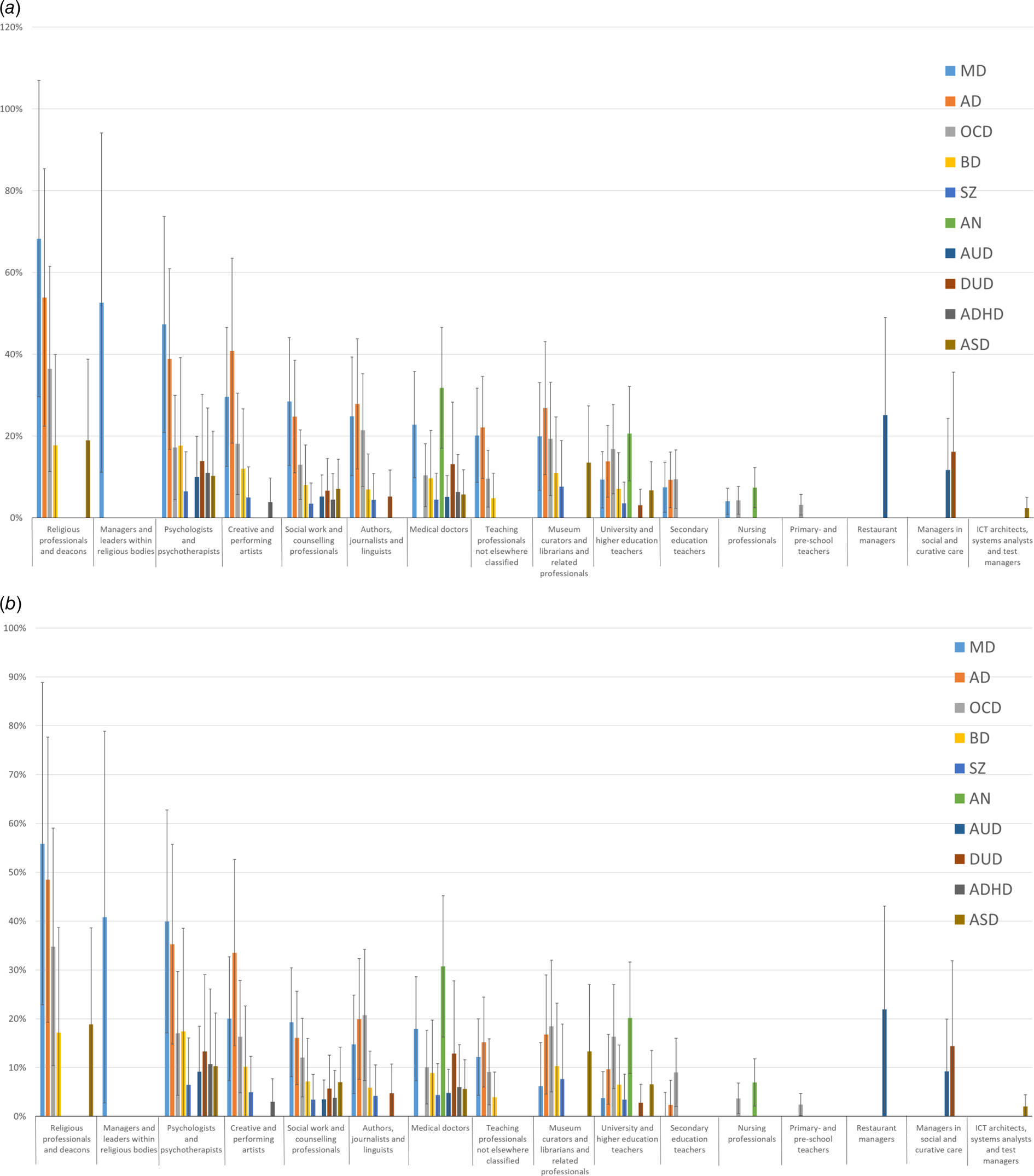
Sixteen of the 59.3-digit occupational codes (27%) had significantly elevated rates of FGRS for one or more disorders (Fig. 1a, Table 3). Appendix table 4 lists the 43.3-digit occupational codes that demonstrated no significant elevations of risk which includes, for example, ‘managing directors and chief executives,’ ‘legal professionals,’ ‘mathematicians, actuaries and statisticians,’ and ‘marketing and public relations professionals.’
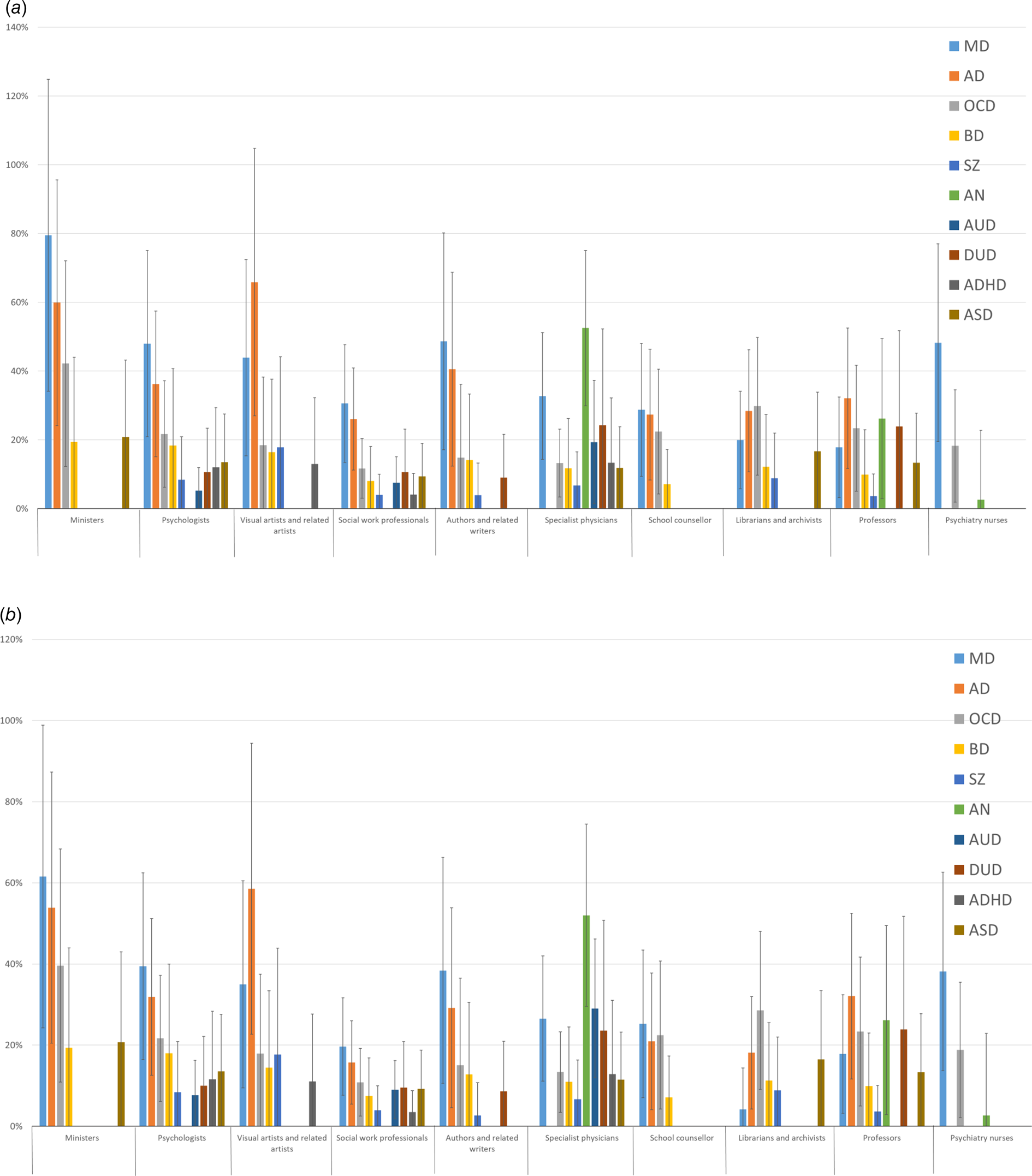
(a) The standardized Family Genetic Risk Scores (FGRS), with 95% Confidence Intervals, are seen on the Y-axis for the 16.3-digit Occupational Code Groups from the Swedish Standard Classification of Occupations contained in the two superordinate categories of (i) Managers and individuals in (ii) Occupations requiring advanced education that demonstrated significantly increased FGRS scores one or more of the ten disorders considered: Major Depression (MD), Anxiety Disorders (AD), Obsessive-Compulsive Disorder (OCD), Bipolar Disorder (BD), Schizophrenia (SZ), Anorexia Nervosa (AN), Alcohol Use Disorder (AUD), Drug Use Disorder (DUD), ADHD and Autism Spectrum Disorder (ASD). The X-axis includes a description of each of the Occupational codes. For color codes for each of these disorders, see the right margin of the figure. Only those FRGS that are statistically significant after Bonferroni correction are depicted. By standardized, we mean that an FGRS depicted reflects the percent elevation of the familial-genetic risk score for a particular disorder in members of a given profession compared to individuals affected with that disorder. For example, the score of 68% for Ministers/Deacons on the FRGS for MD means that, members of that occupation, in aggregate, controlling for relevant covariates, have an FGRS score 68% as large as what would be found for individuals affected by MD. For specific values of results in this figure, see Table 3. (b) The results presented are identical to those depicted in (a) with one exception. All FGRS are calculated controlling for the onset of the relevant psychiatric/substance use disorder before achieving the occupation, that is controlling for the possible pathway genes → disorder → occupation pathway. For specific values of results in this figure, see Table 3.

Four of the 16 positive occupational groups tied with the most wide-spread elevations of FGRS with 9 disorders each: ‘Psychologists and psychotherapists,’ ‘Social work and counseling professionals,’ ‘Doctors’ and ‘University and higher education teachers.’ ‘Authors, journalists, and linguists’ had significantly elevated FGRS for 7 disorders while ‘Creative and performing artists’, ‘Ministers and deacons’ and ‘Museum curators and librarians’ had elevated risks for 5 disorders each. The disorders with the most frequent significant elevations of FGRS were MD and OCD (both 12 occupations) followed by AD and BD (9 occupations each) and SZ (7 occupations). ASD was significantly associated with elevated FGRS for 6 occupations, DUD and ADHD 5, AUD 4 and AN 3. Turning to the overall magnitude of the evaluations of genetic risk when significant, they were generally highest for MD followed by AD and OCD, then BD, AN, ASD, DUD with AUD and SZ having the lowest significant mean elevations.
Four trends are noteworthy. First, nearly all of the professions with elevated genetic risk for psychopathology fell into 4 categories: religious, helping (social workers, doctors, nurses, psychologists), creative (e.g. artists, authors) and educational/scholarly.
Second, the two main classical creative occupations – artists and authors – did not stand out in our analyses. They did not have the highest level of genetic risk for any of the disorders examined as the most elevated genetic risk for MD, AD, OCD and ASD was seen for ministers and deacons. Third, nearly all occupations with any risk elevations, had elevated genetic risk for the three internalizing disorders (MD, AD and OCD) and BD. Most such occupations, but not ministers, deacons or other teachers, had modest elevations of SZ risk and some had elevated risks for the three externalizing disorders of AUD, DUD and ADHD, in particular psychologists, social workers, authors, doctors and university professors. Fourth, several disorders have relatively unique patterns of elevations. AN risk was only elevated for doctors, university professors and nurses. ASD was especially elevated in ministers, curators/librarians, teachers, doctors, and information and communications technology architects.
Raw four-digit occupational codes
Table 3 and Fig. 2a present results for those 4-digit specific occupations which stood out within the broader 3-digit categories for their elevated rates of genetic risk. Ministers and visual artists had the highest average genetic risk for MD and AD, respectively, while BD risk was most elevated for ministers and psychologists and SZ risk in visual artists. The highest genetic risk for both OCD and ASD was seen in ministers and librarians, with the highest FRGS scores for DUD and AN in professors and specialist physicians. Specialist physicians, psychologists and social workers had elevated risks for the broadest range of disorders.
(a) The standardized Family Genetic Risk Scores (FGRS), with 95% Confidence Intervals, are seen on the Y-axis for the 10 4-digit Occupational Code Subgroups from the Swedish Standard Classification of Occupations contained in two superordinate categories (i) Managers and individuals in (ii) Occupations requiring advanced education) that had the most pronounced elevation of FGRS. For specific values of results in this figure, see Table 3. (a) The results presented are identical to those depicted in (a) with one exception. All FGRS are calculated controlling for the onset of the relevant psychiatric/substance use disorder before achieving the occupation, that is controlling for the possible pathway genes → disorder → occupation pathway. For specific values of results in this figure, see Table 3.

Pathways from genetic risk to occupational choice
We next examined the degree to which the pathway from genetic risk to occupational was mediated through the development of the relevant disorder. That is, for MD, to what degree does the FGRSMD→ Occupation path takes the form of FGRSMD→ Major Depression→ Occupation? As seen in Table 3 and Figs 1b and 2b, the decline in FGRS scores for the various occupations, when controlling for this pathway, was greatest for MD and AD, with minimal impact on rarer disorders (e.g. BD, SZ, AN). For MD and AD, the decline was typically moderate, but occasionally substantial (e.g. secondary education teachers).
Second, we explored whether exposure to affected close relatives could drive occupational choice (Table 3). We found such evidence in only 18 of the 73 comparisons, 7 of which were seen with genetic risk for MD and AD and 2 each for AN, AUD, ADHD and ASD. Three professions had evidence for such effects for two disorders: creative and performing artists for MD and AD, social work and counseling professionals for MD and AD, and museum curators and librarians for AD and SZ. No such effects were seen for any disorder for psychologists and psychotherapists. But an excess of cases of AN was seen in close relatives of doctors and nurses.
Discussion
Our goal was to apply several novel methods to clarify further an old question within the field of psychiatry: the relationship between family genetic risk for psychiatric illness and creativity. Based on the results here presented, which defined creativity by occupation, we would draw five major conclusions.
First, professions widely considered to reflect creativity, especially within the 3 digit codes of ‘creative artists’ and ‘authors,’ were among those with statistically significant elevations of FGRS. Indeed, using the more refined 4-digit codes, the professions of visual artists, actors and authors stood out for their elevated level of genetic risk.
Second, the disorders for which these creative professions had the highest genetic risk were MD, AD and OCD. While family genetic risks for both BD and SZ were elevated, the magnitude of those elevations were considerably more modest.
Third, we found only modest support for the common belief that that alcohol and drug use disorders are associated with creativity. More specifically, we found no evidence for an elevated FGRSAUD in creative artists or authors, in contrast to significant but modest increases were seen in psychologists, social workers, and physicians. However, authors but not creative artists, showed a small, but significant increases in FGRSDUD, as did psychologists, social workers, doctors, and professors.
Fourth, the elevations in genetic risk for psychiatric disorders, were not unique to these ‘creative’ professions. Indeed, the largest elevations were seen in the single 3-digit occupation code of ministers and deacons with elevations in three ‘helping’ professions (psychologists, social workers and doctors) modestly higher and somewhat more wide-spread than seen in the creative professions. Several of the teaching/academic professions also had elevated family-genetic risks, albeit typically of lower magnitude that seen for creative artists and authors. It can be argued that aspects of the work of religious, helping and teaching professionals involve creativity. Indeed, in one study of genetic links between creative professions and genetic risk for mental illness, creative professions were defined as scientific and artistic occupations (Kyaga et al., Reference Kyaga, Landén, Boman, Hultman, Långström and Lichtenstein2013). There are many possible approaches to the definition of the creative professions (see below) and we cannot adjudicate that issue here. However, our a priori approach here, in line with most studies in the prior literature, has been to limit the definition of creative professions to the traditional artistic fields.
Fifth, our results raise questions about the etiology of the relationship between family-genetic risk for psychiatric disorders and occupational choice. We suggest three plausible pathways: (i) genes→ temperament → occupation, (ii) genes → disorder → occupation and (iii) exposure to psychiatrically ill relatives → occupation. While many discussions of this topic implicitly assume the first pathway, we tried to estimate empirically the importance of the second and third pathways.
Correcting for individuals whose onset of disorder occurred prior to occupational choice, so that choice might have resulted from their illness experiences, attenuates the genetic influences moderately for AD and MD but had little impact on the rarer disorders. Genetic risk for AD and MD remained, on average, higher than those seen for other disorders. We also tested an excess rate of illness in first-degree relatives as an index of individuals whose decision to enter particular occupations was influenced by close contact with affected relatives. Our expectation that this would occur particularly in the ‘psychological’ helping professions, as suggested by prior literature (Farooq, Lydall, Malik, Ndetei, & Bhugra, Reference Farooq, Lydall, Malik, Ndetei and Bhugra2014), was not supported. While our methods for evaluating pathways ii and iii are imperfect, our findings suggest that the first pathway is in most cases the most important, with the second contributing especially for AD and MD and the third having mainly minor impacts.
Our results can be usefully put into the context of some of the large literature on this question. Our findings are most closely related to those of (Kyaga et al., Reference Kyaga, Lichtenstein, Boman, Hultman, Långström and Landen2011, Reference Kyaga, Landén, Boman, Hultman, Långström and Lichtenstein2013) who used Swedish population samples in which they examined four self-reported occupations of which they pre-defined three as creative (Visual artists, nonvisual artists, and university teachers) and in their first study one as controls (accountants). We focus mainly on their larger second study (Kyaga et al., Reference Kyaga, Landén, Boman, Hultman, Långström and Lichtenstein2013) in which they examined SZ, BD, MD, AD, AUD/DUD and AN as found in hospital and specialist registries, in first through third-degree relatives and found elevated risks for SZ, BD and AN in only first-degree relatives of their creative professions, broadly replicating their earlier findings. Despite substantial differences in methods, we confirmed elevated family-genetic risk for BD and SZ in creative artists and authors but differed in our finding stronger elevations for genetic risk for MD and AD in creative occupations, and showing, in a wide array of ‘control’ occupations that such increased risks were not restricted to a priori chosen ‘creative’ professions. A likely explanation of differences in our results for AD and MD is our inclusion in our study of nationwide primary care data (Sundquist, Ohlsson, Sundquist, & Kendler, Reference Sundquist, Ohlsson, Sundquist and Kendler2017) which they did not examine. More than 80% of all cases of MD and AD ascertained in Swedish medical records are present only in primary care data (Sundquist et al., Reference Sundquist, Ohlsson, Sundquist and Kendler2017). By contrast, our results for MD replicated findings of a substantially higher risk for MD in the first-degree relatives of authors attending the Iowa Writer's Workshop (Andreasen, Reference Andreasen1987).
While we found increased FGRSSZ levels in creative artists and authors, the increases were very modest and do not support prior claims of a strong genetic link between SZ and creativity (Juda, Reference Juda1949; Karlsson, Reference Karlsson1970, Reference Karlsson1984) although is compatible with the modest-sized effects seen using polygenic risk scores (Power et al., Reference Power, Steinberg, Bjornsdottir, Rietveld, Abdellaoui, Nivard and Stefansson2015). Our findings for BD risk were somewhat more robust are consistent with the prior positive findings of Richards (Richards et al., Reference Richards, Kinney, Lunde, Benet and Merzel1988) and Power (Power et al., Reference Power, Steinberg, Bjornsdottir, Rietveld, Abdellaoui, Nivard and Stefansson2015). We also replicate, albeit with modest signals, prior results showing elevated risk for SZ and BD in relatives of university professors (Parnas et al., Reference Parnas, Sandsten, Vestergaard and Nordgaard2019).
Limitations
Six major limitations of this work should be considered. First, it relies critically on the validity of the registry diagnoses in Sweden. These have been extensively evaluated across many, but not all, of our diagnosis and generally performed well (Ekholm et al., Reference Ekholm, Ekholm, Adolfsson, Vares, Osby, Sedvall and Jonsson2005; Kendler, Ohlsson, Lichtenstein, Sundquist, & Sundquist, Reference Kendler, Ohlsson, Lichtenstein, Sundquist and Sundquist2018; Lichtenstein et al., Reference Lichtenstein, Bjork, Hultman, Scolnick, Sklar and Sullivan2006; Ludvigsson et al., Reference Ludvigsson, Andersson, Ekbom, Feychting, Kim, Reuterwall and Olausson2011; Rück et al., Reference Rück, Larsson, Lind, Perez-Vigil, Isomura, Sariaslan and Mataix-Cols2015; Sellgren, Landen, Lichtenstein, Hultman, & Langstrom, Reference Sellgren, Landen, Lichtenstein, Hultman and Langstrom2011; Sundquist et al., Reference Sundquist, Ohlsson, Sundquist and Kendler2017). Of particular note, the validity of both the AD and MD diagnosis from our primary care data, where the majority of cases have been identified, has been supported by its prevalence, sex ratio, sibling and twin correlations and associations with well-documented psychosocial risk factors (Kendler et al., Reference Kendler, Ohlsson, Lichtenstein, Sundquist and Sundquist2018; Sundquist et al., Reference Sundquist, Ohlsson, Sundquist and Kendler2017).
Second, the FGRS, while entirely different from the polygenic risk scores derived from Genome-Wide Association Studies, does assess, via risk for disorders in various classes of relatives, an aggregate genetic risk correcting for cohabitation effects. The broad validity of this method has been supported in prior publications (Kendler et al., Reference Kendler, Ohlsson, Sundquist and SundquistIn press; Kendler et al., Reference Kendler, Ohlsson, Sundquist and Sundquist2021a, Reference Kendler, Ohlsson, Sundquist and Sundquist2021b) and in simulations summarized in appendix 1 Figures 1–4. Third, despite our large population, sample sizes in individual occupational categories were often modest and our estimates of FGRS known with only moderate accuracy. Therefore, some of our negative findings may reflect type II statistical errors.
Fourth, as noted above, there are a variety of plausible definitions of ‘creative professions’ and we emphasized the approach most often taken in the prior literature on mental illness and creativity, focusing on artistic occupations. A recent literature search on creative occupations will turn up a number of references to the so-called ‘creative class’ articulated by Richard Florida (Florida, Reference Florida2014). Florida's influential definition of the creative class are based primarily on economic terms – those individuals who simulate economic development (Florida, Reference Florida2014). It is much broader than most definitions used in prior studies relating creativity to risk of mental illness. Florida's broad definition of the creative class would include many of those wherein we find elevated genetic risk for psychopathology but many where we do not.
Fifth, we did not examine every single occupational code in Sweden as the loss of power would be great due to an increased multiple testing burden. Furthermore, most of the occupations commonly considered creative in the prior literature on risk for mental illness are seen in the upper two categories that we examine here. However, in appendix 2, we present results for the remaining 88 occupations not examined in these analyses. A range of occupations demonstrated elevated levels of FGRS for psychiatric disorders but revealed little pattern except for a modest excess of helping professionals. For example, of the five occupations with a significantly increased risk for BD, three were helping professions: social work and religious associate professionals, health care assistants and personal care workers in health services.
Finally, our main analyses made no attempt to correct for the comorbidity of our disorders in relatives. To evaluate what kind of impact comorbidity might have on our findings, we chose two pairs of disorders with, respectively, modest to moderate and high levels of comorbidity: (i) BD and SZ and (ii) MD and AD. We began by applying a diagnostic hierarchy algorithm we have published on previously for BD and SZ (Kendler et al., Reference Kendler, Ohlsson, Sundquist and Sundquist2021a) that assigns a single diagnosis to comorbid cases based on the total number and recency of lifetime diagnoses (appendix 1 table 5). We then applied that hierarchy and an identical one for MD and AD to all of relatives and generated FRGS for the four disorders with hierarchies. We then compared those scores with those obtained in our original analyses obtaining the following Pearson correlations: BD + 0.99, SZ + 0.97, MD + 0.78; AD + 0.73. Finally, in table 6 in appendix 1, we recalculated our main analyses across occupations for these two pair of disorders with the applied hierarchies and compared those with our original findings. Only modest changes were seen, suggesting that our overall results were not highly sensitive to patterns of psychiatric comorbidity.
Conclusions
In accord with clinical observations made over the last 150 years (Table 1), creative occupations were associated with significantly elevated genetic risk for a range of psychiatric disorders. However, contrary to these earlier reports, this association was stronger with the less severe internalizing disorders of MD and AD than with ‘insanity’ (aka psychotic illnesses like SZ and BD.) Furthermore, the association was not unique to creative occupations as similar or even greater elevations of risk for psychiatric disorders were seen in relatives of religious, helping and teaching professions. A modest proportion of these associations, especially for MD and AD, may arise from a genetic risk → disorder → occupational choice pathway. Contrary to expectation, choosing occupations because of exposure to psychiatrically ill close relatives appeared to explain little of the observed associations.
Supplementary material
The supplementary material for this article can be found at https://doi.org/10.1017/S0033291722001349.
Acknowledgements
Silviu Bacanu Ph.D. performed the simulations of the Family Genetic Risk Score described in appendix 1.
Financial support
This project was supported by NIH grants R01AA023534 and R01DA030005 and the Swedish Research Council as well as Avtal om Läkarutbildning och Forskning (ALF) funding from Region Skåne.
Conflicts of interest
None of the authors have any conflicts of interest to declare.
Ethical standards
The authors assert that all procedures contributing to this work comply with the ethical standards of the relevant national and institutional committees on human experimentation and with the Helsinki Declaration of 1975, as revised in 2008. We secured ethical approval for this study from the Regional Ethical Review Board in Lund (No. 2008/409 with later amendments).
Informed consent
Informed consent was not obtained from individual participants included in the study.
Location of where work was done
Lund University, Virginia Commonwealth University.