Introduction
On the Mahafaly Plateau in SW-Madagascar, agriculture production is limited by low and erratic rainfall, low soil fertility, and frequent droughts (Anonymous, 2017). At present, no organic or chemical amendments are used in traditional agriculture. Low productivity combined with limited access to external resources leads to regular occurrence of famine, food insecurity, and out-migration (Anonymous, 2011). Dietary diversification can be used to combat hunger. A positive relationship between farm production diversity and dietary diversity is plausible, because much of what smallholder farmers produce is consumed at home (Hawkes and Ruel, Reference Hawkes and Ruel2008). The importance of vegetables has been stressed by NGOs because they may play an important role in overcoming micronutrient deficiencies and provide opportunities to enhance household income (Palada et al., Reference Palada, Kalb and Lumpkin2006).
Recently, in the littoral zone bordering the Mahafaly Plateau, cultivation of vegetables has been promoted as groundwater from wells is accessible for irrigation, even in the dry season, and cattle manure is easily available as a soil amendment, as it remains widely unused in traditional cattle impoundments. Vegetables are generally sensitive to environmental extremes as it is the case in this area with high temperature, limited soil moisture, salinity, and low soil fertility. Under similar conditions in the arid tropics, organic soil amendments have been applied to improve fertility and enhance nutrient availability to vegetables (La Pena and Hughes, Reference La Pena and Hughes2007). Application of soil amendment in conjunction with row cover or shading has been reported to enhance vegetable yields (Nair and Ngouajio, Reference Nair and Ngouajio2010). Shading may have a critical effect on plant growth as it modifies soil and air temperature, light intensity, humidity, and air movement (Soltani et al., Reference Soltani, Anderson and Hamson1995). Positive results on the effectiveness of amendments and organic wastes to restore soil quality in salt-affected soils have also been reported (Badar et al., Reference Badar, Zamir, Batool, Yaseen, Kaleem, Mushtaque, Khurshid, Khalid, Altaf and Hasan2015; Diacono and Montemurro, Reference Diacono and Montemurro2015), and it is well known that charcoal application can improve the physical and chemical characteristics of sandy tropical soils (Glaser et al., Reference Glaser, Lehmann and Zech2002; Steiner et al., Reference Steiner, Teixeira, Lehmann, Nehls, Macêdo, Blum and Zech2007). In SW-Madagascar, charcoal waste is locally available from unused remains of material sold for cooking.
Carrot (Daucus carota L.) and onion (Allium cepa L.) are of high demand by local communities and particularly by tourist hotels in SW-Madagascar. Currently, these vegetables are shipped across the ocean from Toliara town where the supply is also insufficient (Daou, Reference Daou2008; Gildas Dosy, Reference Gildas Dosy2007; Rijarimamy, Reference Rijarimamy2011), which makes local vegetable production promising. Some innovative farmers therefore started to grow onion in home gardens, but their limitations to production are not well understood. At present no soil amendments are used, and seedlings often die at early growth stages leading to poor stand densities.
Major problems for vegetable cultivation are low seed quality, lacking use of locally available soil amendments, seasonal strong winds (Ratovonamana et al., Reference Ratovonamana, Rajeriarison, Roger and Ganzhorn2011), and low cultivar resistance to heat and salinity, particularly in onion which is sensitive to salt level (Shannon and Grieve, Reference Shannon and Grieve1998). Carrot germination and seedling growth could also be affected by water deficit which may have more negative effects than soil salinity (Schmidhalter and Oertli, Reference Schmidhalter and Oertli1991).
This study was undertaken to (i) assess the effects of manure and charcoal amendments, shading, and seed quality on carrot and onion yield under field conditions of SW-Madagascar and (ii) identify possible strategies to overcome salinity effects on plant growth and productivity.
Materials and Methods
Study area
The study was conducted in 2013 and 2016 in the village of Efoetse (24°4.3’ S, 43°42’ E, 10 m asl) in the littoral (coastal) zone of the Mahafaly Plateau in SW-Madagascar. The local climate is semi-arid with rains lasting from December to April producing an average annual precipitation of 360 mm (Anonymous, 2014) and a mean annual temperature of ∼24°C. The soil at the experimental site was a poorly developed Calcaric Regosol (Hillegeist, Reference Hillegeist2011), with a sandy texture (92% sand, 4% silt, 4% clay), pH 8.3, and 0.94% Corg, 0.08% N, 15.6 mg·kg−1 P (Bray II), 140 mg·kg−1 K, CEC of 5.1 meq·100 g−1, and an electrical conductivity (EC) of 0.49 mS·cm−1. Erratic, destructive rainfall events, combined with high temperatures during the rainy season, produce a challenging environment for seedling establishment, and only the dry, cool season (April–October) is suitable for growing vegetables.
Field experiments on carrot and onion production
Field experiments were undertaken at the beginning of the dry season from 2013 until 2016 (May 10, 2013, May 27, 2016). Because of damage caused by cyclones and strong winds (in 2015), and experimental errors in the setup of shading materials (in 2014), only data from 2013 and 2016 were analyzed and reported in the present paper.
Experimental fields were situated near local wells to facilitate irrigation. Irrigation water was drawn from wells whose water had an EC of 7.65 mS·cm−1.
Field experiments were arranged in a completely randomized design with 4 replications. Plots measured 2 × 1.5 m in 2013 and 2 × 2 m in 2016, with 1 m distance in-between the plots. Each plot was split in 2 parts, with a 0.5 m distance in between (Appendix 1), one-half was shaded and the other unshaded, resulting in a split plot design with subplots of 1.5 m2 in 2013 and 2 m2 in 2016 (Appendix 1).
The study was part of the participatory SuLaMa project (www.sulama.de) that supported local farmers to enhance their income from crop and vegetable production and to reduce pressure on the natural environment by using locally available solutions. In this context multi-annual, factorial experiments were conducted to enhance vegetable production. In 2013, treatments consisted of a control without manure (C), manure at 40 t·ha−1 (M), charcoal at 10 t·ha−1 (CC), and manure at 40 t·ha−1 mixed with charcoal at 10 t·ha−1 (M+CC). In 2016, treatments included seed lots from Antananarivo with (TA+) and without manure (TA−), and seed lots from Toliara with (TT+) and without (TT−) manure applied to soil surface at 20 t·ha−1. The manure used during all experiments was taken from local cattle impoundments and had C:N ratios of 19 (2013) and 28 (2016). Charcoal used in 2013 consisted of particles ≤2 cm in size, obtained as waste material from locally produced charcoal kilns, originating mainly from Tamarind (Tamarindus indica L.) trees. Amendments were added and mixed into the top soil layer (0–15 cm) three days before sowing in 2013 and one week before sowing in 2016.
Shade treatment consisted of a roof made from locally available materials (agave plants for mats and woods for slats) that allowed about half of the sunlight to pass through and were easily removable for watering. Shading heights were 50 cm above the soil in 2013. Because data from the 2015 experiment were lost due to damage caused by strong winds, in 2016, shading height was set at 25 cm above the soil to allow more resistance against storm effects.
In each subplot, seed were sown at 20 cm between rows. Plots were irrigated twice daily (early morning and late afternoon), with a total of 13.3 L·m−2·day−1, an equivalent of 400 mm per month. Seeds for both crops were purchased in the nearby town of Toliara (TT) and additionally from the capital Antananarivo “TA,” 930 km to the north) for the 2016 field experiment. The variety of seeds used in all experiment were cv. Nantaise for carrot and cv. Red Creole for onion.
Vegetable harvest took place in July and October 2013 and in August and November 2016 for carrot and onion, respectively. At harvest, fresh biomass was determined separately for above-ground biomass (leaves) and below-ground biomass (roots for carrots and bulbs for onion). Samples were dried in a convective oven at 65°C until weight constancy for dry matter (DM) determination. To assess treatment and irrigation effects on soil properties, soil samples (0–15 cm) were taken after the 2013 harvest for analysis of pH (KCl), Corg, N, P, K, CEC, and EC according to standard methods for comparison to pre-treatment soil conditions.
Seed germination experiments
Before the onset of each field experiment, seed germination tests were conducted under moist paper towels for 14 days. Seeds from Antananarivo were purchased from a certified retailer (Agrivet), and locally available seeds were bought from informal shops in Toliara. As a result of the poor germination of seeds from Toliara after the first seed germination experiment test, subsequently all seeds from Toliara were also bought from certified retailers.
Due to poor establishment of plants in the 1st experimental year (2013), in the 2nd year 2014 effects of seed origin, water quality, and hydro-priming on seed germination index (GI) and germination rate, and seedling emergence rate were tested under field and laboratory conditions.
Separately from the main field experiment an additional experiment was conducted on carrot and onion production. Seed lots “TT” were purchased in Toliara; seed lots “GE” were brought from Germany. For priming we used tap water with an EC of 0.68 mS·cm−1 and for irrigation well water from the village of Efoetse with an EC of 7.03 mS·cm−1. Seed were sown in sandy soil placed in 12 cm diameter pots, which were placed under shade at minimum/maximum temperatures of 22.1/40.1°C and watered twice daily. The soil used in pots was from the site of the first field experiment in 2013. Pots were arranged in a completely randomized design with 4 replications, with 50 seed sown in each pot. Numbers of emerged seed were recorded every day after sowing (DAS) until 21 DAS, when a stable emergence percent was reached. A seeding was considered to have successfully emerged when cotyledons appeared above the soil surface.
A second laboratory experiment comprised the same factors as the first, but a priming treatment was added to the salinity factor, and the trial was conducted in a room at minimum/maximum temperatures of 22.1/24.3°C on paper towels. As a priming treatment, seed were submerged in saline or tap water for 48 h and dried for 6 h before starting the germination test (Brocklehurst and Dearman, Reference Brocklehurst and Dearman1983; Cantliffe and ElBalla, Reference Cantliffe and ElBalla1994; Harris et al., Reference Harris, Joshi, Khan, Gothkar and Sodhi1999). One hundred seeds were placed in each paper towel with 4 replicates. Towels were regularly moistened by spraying with tap or saline water and germinated seed counted daily until 21 DAS. A seed was considered to have successfully germinated when the cotyledon was visible. Both germination experiments comprised seed origin and water quality as treatment factors.
Data analysis
Due to differences in treatments and types of analyses treatment effects in each year were analyzed separately with R, ver. 3.3.2 (R Core Team, 2016). Effects of treatments on plant yield and on soil properties were analyzed using Linear Mixed Effects Models with the nlme procedure in R (https://CRAN.R-project.org/package=nlme). Treatments were treated as fixed and plots as random factors. Significant interactions between treatments were used to explain results. Effects of irrigation on soil properties were determined with a t-test and treatment effects on germination parameters with ANOVA. Normality of residuals and homogeneity of variance of all data groups were assessed using Shapiro-Wilk and Levene tests. The formula of Gupta (Reference Gupta1977) and Menkir and Larter (Reference Menkir and Larter1985) was used to calculate seed germination and seedling emergence indices. The higher the index, the more vigorous was the seed lot.
Results
Treatment effects on carrot and onion yields and on soil properties
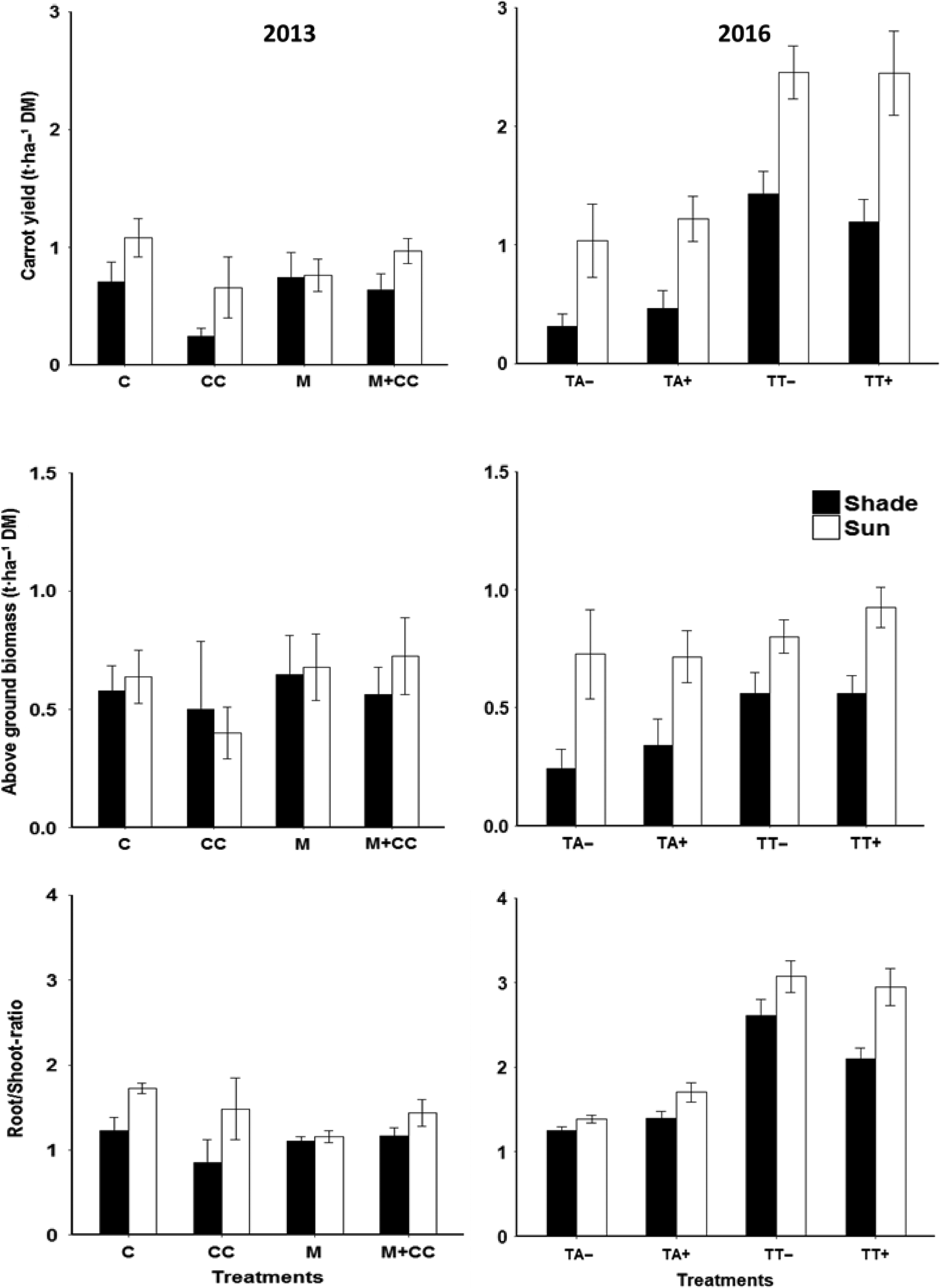
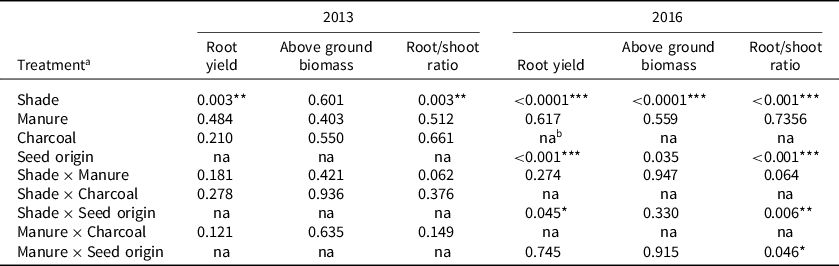
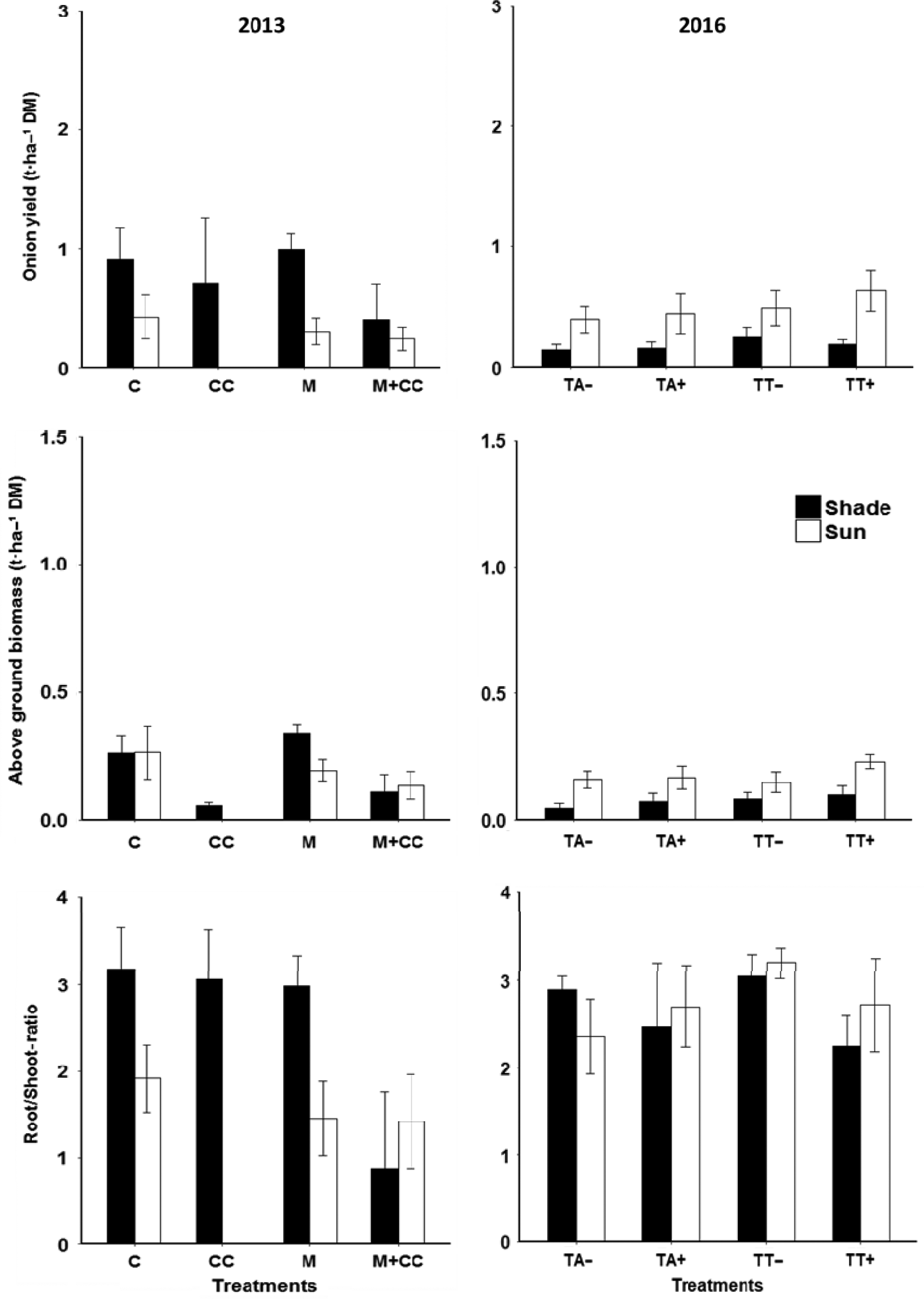
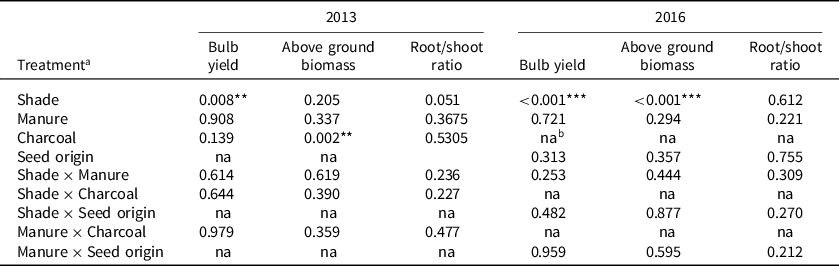
Carrot yields ranged from 0.24 to 2.76 t·ha−1 DM, and the yields were higher in 2016 than in 2013. In both years, manure neither affected carrot yields nor shoot/root-ratios (Figure 1, Table 1). Shading affected carrot yields and shoot/root-ratios in both years. Carrot grew better in full sunlight, with the highest yield in 2016 for carrot seed from Toliara (Figure 1). Charcoal did not affect carrot yield in 2013, but seed origin affected carrot growth and shoot/root-ratio in 2016, with highest yields obtained from seed from Toliara. There were significant interactions between shading and seed origin for carrot yields and shoot/root-ratio. Significant interactions also occurred between manure and seed origin for carrot shoot/root-ratio in 2016 (Table 1). Onion yields ranged from 0.15 to 0.99 t·ha−1 DM across treatments and years, with yields in 2013 being slightly higher than in 2016 (Figure 2). Manure did not affect onion bulb yields. Charcoal decreased onion above ground biomass in 2013, but other measures were not affected. Seed origin did not affect onion yield. The effect of shading on onion yields was significant in both years. No significant interactions between factors were found for onion (Table 2).
Interaction effects of light condition (shade, sun) and soil fertility treatment on carrot yield in 2013 and 2016 in a field experiment (n = 4) in SW-Madagascar. Abbreviations for soil fertility treatments are C, control; M, manure; CC, charcoal; TA−, carrot seed lot of “Antananarivo” without manure; TA+, carrot seed lot of “Antananarivo” with manure; TT+, carrot seed lot of “Toliara” with manure; TT−, carrot seed lot of “Toliara” without manure. Error bars indicate ± one standard error of the mean (n = 4). DM, dry matter.

F-probabilities of treatment effects on carrot yields and on root/shoot ratio in a field experiment in SW-Madagascar (n = 4)

*,**,***Significant at the 0.05, 0.01, and 0.001 probability levels, respectively.
a Year not considered as factor because most variables used across years (amount of manure, charcoal, seed origin) were different.
b na, variable not applicable.
Onion yield data in 2013 and 2016 in a field experiment (n = 4) in SW-Madagascar. C, control; M, manure; CC, charcoal; TA+, onion seed lot of “Antananarivo” with manure; TA−, onion seed lot of “Antananarivo” with manure; TT+, onion seed lot of “Toliara” with manure. TT+, onion seed lot of “Toliara” without manure. Error bars indicate ± one standard error of the mean (n = 4). DM, dry matter.

F-probabilities of treatment effects on onion yields and on root/shoot ratio in a field experiment in SW-Madagascar (n = 4)

*,**,***Significant at the 0.05, 0.01, or 0.001 probability level, respectively.
a Year was not considered as a factor because most variables used across years (amount of manure, charcoal, seed origin) were different.
b na, variable not applicable.
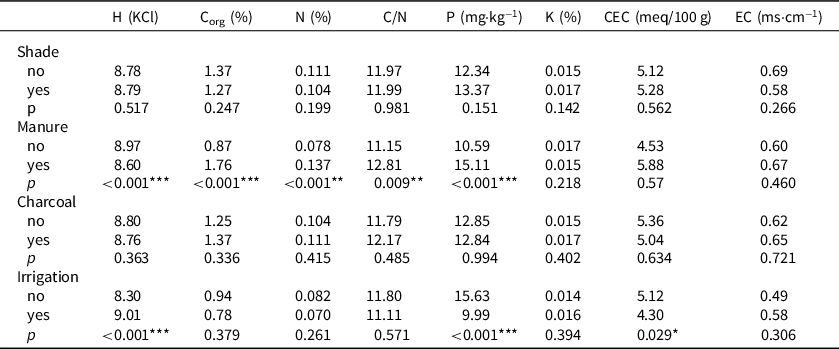
Application of manure increased soil Corg, N, P, and C/N ratio (Table 3) and irrigation increased soil pH, but decreased available P and CEC.
Means of soil parameters and effects of manure, charcoal, shade, and irrigation on soil properties, after the first season of field experiment in SW-Madagascar (2013, n = 4)

*,**,***Significant at the 0.05, 0.01, or 0.001 probability levels, respectively.
Effects of salinity and priming on seed germination of carrot and onion
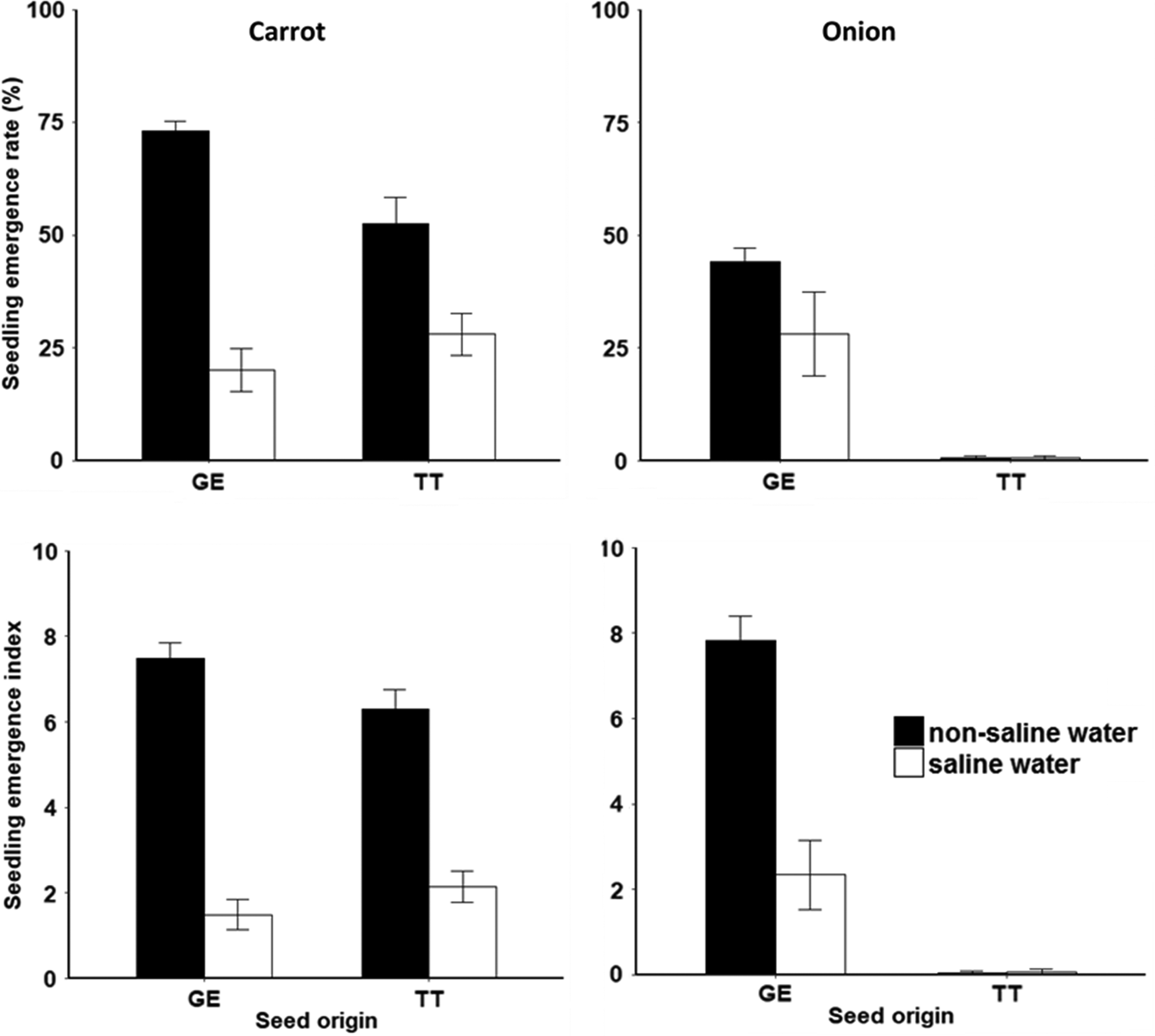
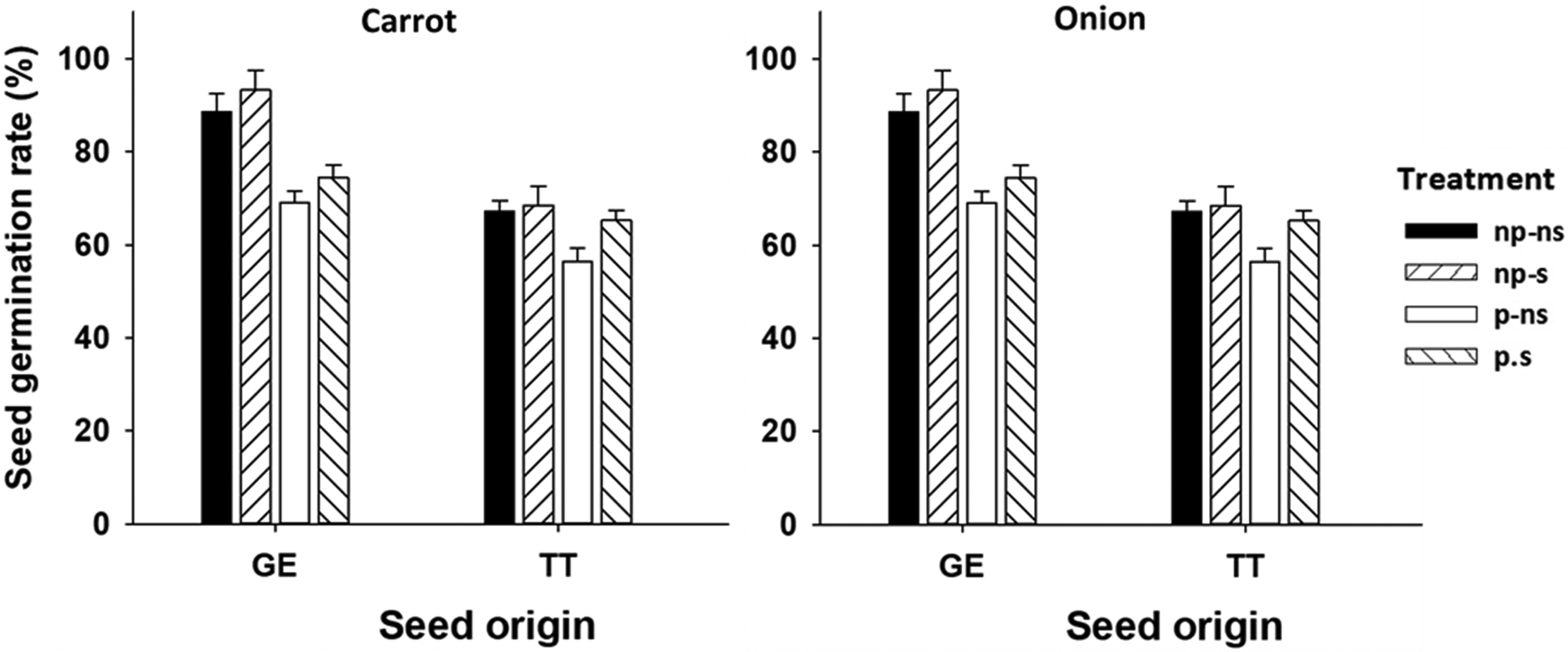
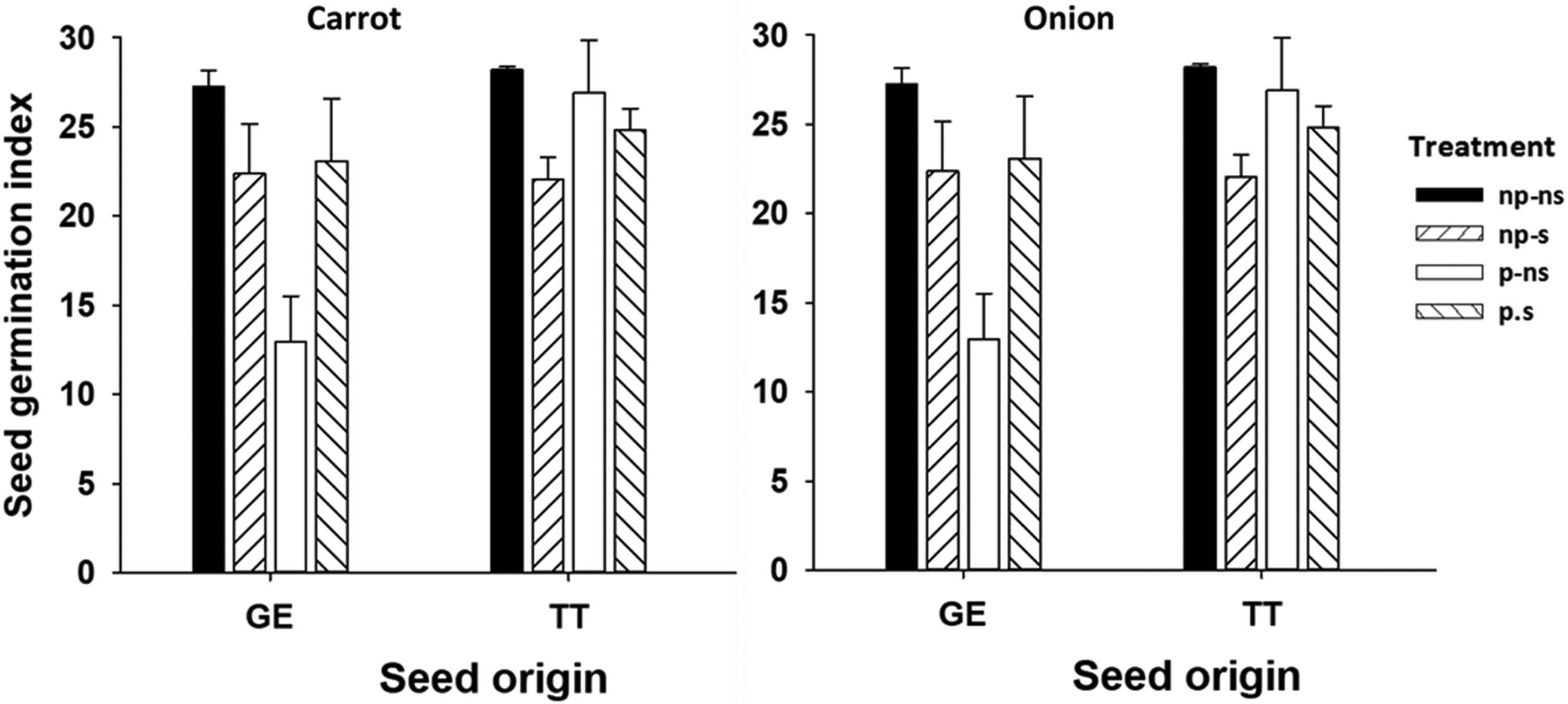
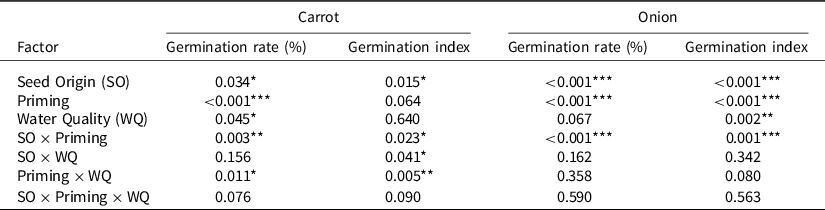
Seedling emergence of both species was affected by water quality, except for germination rate (GE) of onion (Table 4, Figure 3). Seed origin mattered for both GI and GE of onion, but not carrot. Emergence rate was highest for seed from Germany, and differences in performance between seed origins were more apparent in onion. Significant interactions occurred between seed origin and water quality in both species; performance of seed from Germany was more affected by saline water than those from Toliara (Table 3). Unprimed seeds germinated better than primed ones (Table 4, Figures 4 and 5), and unprimed seeds treated with saline water yielded the highest germination rate in all experiments. Seed origin affected germination rate (Table 5) with seed from Germany having the highest germination rate (Figure 4). Seed from Toliara responded better to priming than those from Germany; germination rate of seed from Germany declined due to saline priming. Water quality affected germination rate of carrot but not onion. Interactions between water quality and priming were significant for carrot but not onion. In both species, unprimed seed treated with non-saline water had the highest GI (Figure 5). Seed lots reacted differently to interactions of priming and saline water. Priming with saline water negatively affected seed from Germany, it enhanced germination of seed from Toliara (Figure 5).
F-probabilities of effects of seed origin, water quality, and interactions on seedling emergence rates and indices of carrot and onion seed lots sown in sand substrate under shaded field conditions (n = 4) in a field experiment in SW-Madagascar

*, **, *** Significant at the 0.05, 0.01, or 0.001 probability level, respectively.
Seedling emergence rates and indices of carrot and onion seed treated with saline and non-saline water and germinated in sand substrate under shaded field conditions in SW-Madagascar in 2014. GE, seed lots of Germany; TT, seed lots of “Toliara”. Error bars indicate ± one standard error of the mean (n = 4).

Germination rate of carrot and onion seed with priming and water quality factors in a seed germination experiment in SW-Madagascar in 2014. GE, seed lots of Germany; TT, seed lots of “Toliara”; np, not primed; p, primed; ns, non-saline water; s, saline water. Error bars indicate ± one standard error of the mean (n = 4).

Germination indices of carrot and onion seed with priming and water quality factors in a seed germination experiment in SW-Madagascar in 2014. GE, seed lots of Germany; TT, seed lots of Toliara; np, not primed; p, primed; ns, non-saline water; s, saline water. Error bars indicate ± one standard error of the mean (n = 4).

F-probabilities of effects of seed origin, water quality, and interactions on seed germination rate and germination index of carrot and onion seed (n = 4) in a field experiment in SW-Madagascar

*, **, ***Significant at the 0.05, 0.01, or 0.001 probability levels, respectively.
Discussion
Across years, application of manure did not enhance crop yields even though the applied rate was high. This is in contrast to studies from similar agro-environments in sub-Saharan Africa (Bationo and Buerkert, Reference Bationo and Buerkert2001) and many other drylands worldwide. However, depending on its C:N ratio, activity of micro- and macro-organisms, temperature, and moisture, the manure may be only slowly mineralized. In 2016, however, manure application at 20 t·ha−1 increased carrot yield, even with a higher C:N ratio compared to the manure applied in 2013. This may due to the time of manure application before sowing, which, in contrast to the first year, allowed mineralization before crop establishment. A high C:N ratio of manure can lead to N immobilization that may retard plant growth (Chrystal et al. Reference Chrystal, Smith, Monaghan, Hedley and Horne2016). In contrast, early application of manure may allow for mineralization and thus release of nutrients, especially N (through ammonification and nitrification) for plants at early growth (Sørensen and Jensen, Reference Sørensen and Jensen1995). Another important factor could be the type of manure used during the two field experiments. It was collected from the same local cattle compound but in different years. For example, different animals (poultry, sheep, or goat) may have stayed in the enclosure which might have influenced the N release pattern (Azeez and Van Averbeke, Reference Azeez and Van Averbeke2010). Under other conditions carrots responded well to manure application (Ahmed et al., Reference Ahmed, Sambo, Arunah and Odion2014; Kumar and Venkatasubbaiah, Reference Kumar and Venkatasubbaiah2016), but effectiveness of manure on yields also depends on crop species (Kaswan et al., Reference Kaswan, Yadav, Jakhar, Kumawat and Kumar2017).
Under other conditions, soil application of charcoal improved crop yields even if effects vary widely (Agegnehu et al., Reference Agegnehu, Bass, Nelson and Bird2016; Martinsen et al., Reference Martinsen, Mulder, Shitumbanuma, Sparrevik, Børresen and Cornelissen2014). In this study, charcoal did not enhance plant yield, instead, it decreased onion above-ground biomass. Charcoal may cause a short-term negative effect on plant yield in particular on temperate soils (Biederman and Harpole, Reference Biederman and Harpole2013; Borchard et al., Reference Borchard, Siemens, Ladd, Möller and Amelung2014; Kloss et al., Reference Kloss, Zehetner, Wimmer, Buecker, Rempt and Soja2014). Lacking charcoal effects on vegetables grown on alkaline soils confirm results of Ingold et al. (Reference Ingold, Al-Kindi, Jordan, Dietz, Schlecht and Buerkert2015). They also support the results of a study conducted with the same soil, where charcoal application decreased feeding activity of soil fauna compared with an unamended soil indicating low organic matter decomposition and nutrient availability (Andriamparany et al., Reference Andriamparany, Opgenoorth, Andrianarimisa, Brandl, Buerkert, Hanisch and Fricke2013).
In both years, plant yields under shade were lower than in unshaded control treatments, except for onion in 2013. At 50% shade, our results agree with studies on vegetable crops that reported better performances when uncovered, or with not more than 30% shade (Caiyong et al., Reference Caiyong, Riyuan and Guangwen2008; Richards et al., Reference Richards, Edney, Yorio, Stutte, Sisko and Wheeler2005). Average daily radiation, registered by our weather station in Efoetse, decreased gradually during the dry season (from 250 W·m−2 in March to 170 W·m−2 in July). Shading effects on onion yields differed between years. In the first year, shaded onion yields were higher than unshaded ones. This difference may be related to the sowing date in 2013 which was at the beginning of the dry season, when temperature and solar radiation were still relatively high.
Apart from cultivation of few local varieties of Brassicaceae, vegetable farming is still a new concept in the littoral zone of the Mahafaly Plateau. Seeds for commercial vegetable production are not yet locally available and have to be purchased from outside. Certification schemes of vegetable seed are weak in Madagascar (Randrianatsimbazafy, Reference Randrianatsimbazafy2012), and seed quality varies depending on production and storage conditions. Our results showed that seed origin affected seedling emergence rate and final yields. Certified seed from Germany performed better in the germination test while under field conditions seed from Toliara yielded highest. In Petri dishes, germination rates were similar for the different origins except for onion seed from Toliara, where some seed lots showed very low germination. Seed sold in Toliara came from Madagascar’s capital Antananarivo and time of transport and storage conditions may play a role in germination under field conditions. It is known that onion seed deteriorates quickly under tropical conditions (Grubben and Dentonm, Reference Grubben and Dentonm2004). The superior performance of seed from Germany was no surprise but seed from Antananarivo, with better quality and storage condition, were expected to perform better in the field than those purchased in Toliara. Our results showed that seed origin affected final yields but only for carrot. For onion, only the seedling emergence was affected by seed origin. Differences in seed germination rate under controlled conditions and seed emergence rate in the field may vary considerably (Steiner et al., Reference Steiner, Grabe and Tulo1989) as under field conditions, seed may be exposed to different factors that limit performance. In this case, seed vigor may have affected seedling performance. In our study, seed quality did not affect onion final yield.
Several experiments have been undertaken to determine effects of seed quality on seedling growth in onion. Despite differences in seedling performance at initial plant development, plant vegetative growth and yields were not affected by seed quality (Ellis, Reference Ellis1988, Reference Ellis1992; Rodo and Marcos-Filho, Reference Rodo and Marcos-Filho2003). One reason seems to be that the influence of seed vigor on plant performance in the field occurs during the initial development and diminishes over time as plants reach maturity (Rodo and Marcos-Filho, Reference Rodo and Marcos-Filho2003), which may explain lack of effects of seed quality on onion yields in our experiment.
It may be that the onion and carrot varieties sold in Toliara were not well adapted to the rough environmental conditions of SW-Madagascar as they were produced in the country´s highlands where the climate and soils are different. The cv. Nantaise is more adapted to temperate zones, whereas cvs. Kuroda and Tropical Nantes may be more suitable for tropical or subtropical areas (Rubatzky et al., Reference Rubatzky, Quiros and Simon1999). The onion cv. Red Créole is likely better adapted to semi-arid conditions (Al-Harbi et al., Reference Al-Harbi, Hegazi, Alsadon and El-Adgham2002). Timely availability of quality seed, adapted to the local agro-climatic conditions, is important.
Salinity can have a major influence on seed germination, particularly for short duration vegetable crops (Miyamoto et al., Reference Miyamoto, Piela and Petticrew1985; Shannon and Grieve, Reference Shannon and Grieve1998). In the present study, salinity affected germination of carrot and onion, except for onion germination rate. Such effects are generally caused by osmotic effects (Welbaum et al., Reference Welbaum, Tissaoui and Bradford1990) that may change certain enzymatic or hormonal activities, decrease absorption of water (Kaveh et al., Reference Kaveh, Nemati, Farsi and Jartoodeh2011), and vary among and within species (Kim et al., Reference Kim, Nguyen, Jeong, Nguyen, Hong and Lee2013). Onion seems to be highly sensitive to salinity, especially during early seedling stages (Shannon and Grieve, Reference Shannon and Grieve1998). In our study, the GI for onion was affected but not the final germination percent (GE). Miyamoto et al. (Reference Miyamoto, Piela and Petticrew1985) reported that poor carrot seedling emergence appeared to be caused by post-germination problems associated with salt accumulation at the soil surface that cause hypocotyl mortality.
Soil salinity levels in our study area were low compared to those reported from other arid and semi-arid areas (1.6 to 1.9 mS·cm−1; Bagayoko, Reference Bagayoko2012 and 5 to 45 mS·cm−1; Al-Busaidi et al., Reference Al-Busaidi, Buerkert and Joergensen2014). There was no change in soil salinity in our experiment after 1 cropping season, but there was a significant increase in pH which might reduce P availability. If continuous irrigated cultivation with salt-rich water is used, soil salinity must be monitored and strategies to improve salinity tolerance such as ridge planting and application of organic amendments should be employed.
In contrast to previous studies (Cuartero et al., Reference Cuartero, Bolarin, Asins and Moreno2006; Nasri et al., Reference Nasri, Kaddour, Mahmoudi, Baatour, Bouraoui and Lachaâl2011; Oliveira et al., Reference Oliveira, Steiner, Zuffo, Zoz, Alves and Aguiar2019), our data show that seed priming with saline or non-saline water did not improve germination rate of carrot and onion. Poor priming time, suboptimal temperature, or interactions with our experimental treatments may have disguised priming effects (Castañares and Bouzo, Reference Castañares and Bouzo2018; Soltani and Soltani, Reference Soltani and Soltani2015; Tian et al., Reference Tian, Guan, Zhou, Yu, Li and Lou2014).
Our results also indicated that treatment with saline water increased germination rate, but not the other germination parameters (GI, seedling emergence rate), which is in line with the results of Panuccio et al. (Reference Panuccio, Jacobsen, Akhtar and Muscolo2014) who investigated the effect of saline water on seed germination and early growth of the halophyte quinoa (Chenopodium quinoa Willd). Positive effects of salinity on seed germination rate have been reported for other vegetables (Cantliffe et al., Reference Cantliffe, Shuler and White1977).
More than 50% shade during the dry season would not be advisable for onion and carrot production in this area. Use of manure with a lower C/N ratio than in our study, of quality seed, and of low salinity water for irrigation may contribute to overcome current production constraints for these vegetables.
Acknowledgments
The authors acknowledge funding by the German Federal Ministry of Education and Research (BMBF) through the project “Participatory Research to Support Sustainable Land Management on the Mahafaly Plateau in South-Western Madagascar, SuLaMa” (No. 01LL0914C). We thank Dr. Katja Brinkmann for her support of this work.
Supplementary material
To view supplementary material for this article, please visit https://doi.org/10.1017/S001447972000040X