Introduction
When the author Don DeLillo (1936-) was asked ‘Do you have any idea what made you a writer’? his reply was ‘I have an idea but I'm not sure I believe it. Maybe I wanted to learn how to think. Writing is a concentrated form of thinking. I don't know what I think about certain subjects, even today, until I sit down and write about them’.Footnote 1 It would seem that writing for DeLillo is a way of figuring out his thought process which in affect shapes his practice. Similarly, this is how I came to view my archival work at The National Archives, U.K., and how I specifically viewed the process of incorporating archives in Creative Workshops (for the academic and public sectors). It was the act of developing and delivering various workshops that prompted me to ask: can we, like the creative practitioners we engage with, be truly creative? And if so what could this look like?
This idea has not sprung from nowhere, indeed it seems most topical and persistent. Most art librarians, archivists or para-professionals would acknowledge that we develop activities, such as workshops, as part of the day-to-day work we do but do we think of ourselves as ‘creative professionals’, like the ones we engage with? At the most recent ARLIS U.K. and Ireland Annual Conference 2018, various papers implicitly referenced creativity when developing workshops and initiatives to engage with creative arts students and/or arts communities.Footnote 2 Leading U.K. art librarian and previous Chair of ARLIS U.K. and Ireland, Pat Christie, explicitly outlined the creativity of art and design librarians, particularly with the University of the Arts London's, Creative Attributes Framework.Footnote 3 Here I draw this idea to the surface by exploring what this could mean in theoretical and practical terms from a particular perspective. Rather than solely focusing on the kind of attributes and activities we as archivists, art and design librarians, and related paraprofessionals develop and deliver to engage with creative sectors, I will reflect on my own practice-based approach with intersections of archival theory, education, history and the visual arts.
Definitions of creativity
Simply defining creativity as being ‘inventive’ or ‘imaginative’ as in the Oxford English dictionary seems rather limiting. There are many definitions of creativity, and it seems to depend entirely on context. Dr. Will Pooley, a social and cultural historian specialising in popular culture and folklore in France since 1789, with an interest in creative histories, asserts that: ‘I don't have a definition of creativity’.Footnote 4 Pooley seems to suggest that, to define it, one would have to pick one definition rather than acknowledge the ‘many intellectual roots’ as highlighted by Professor Josie McLellan at the Creative Histories Conference at Bristol University in 2017.Footnote 5 Instead, he suggests, creativity is in the doing, and being creative is an active verb. Drawing Don DeLillo back to the fore, this echoes his approach to writing, a creative practice which, shapes his thinking.Footnote 6 In similar but separate territories, The National Archives, U.K., has defined in their digital strategy (2017–19) an idea of the disruptive archive:
‘Many of the ideas about archives, what they are, what they do and how they do it, stem from the physical nature of the records […] it is about disrupting established archival practices we know when handling paper records. It sees evidential value of rich media content like websites, datasets, computer programs, even neural networks as records’.Footnote 7
It is in this idea of the disruptive archive where I see a link with creativity. This innovative idea sees all kinds of possibilities when we adjust the mind-set from paper archives to digital. The premise is about reflecting and changing how we think and approach a set of problems and work around it. Reflecting on our own approach to problems is important because it helps us recognise how that initial approach is already embedded in the different kinds of solutions we find.
It is also paramount to recognise that the archive, library and museum sectors and professions, have undergone many changes over the years. We need to stay current and even evolve as the professions change. As Roy Clare, CBE, acceded, museums have been ‘perceived’ to become more like ‘attractions’ as there is this continual need to engage with audiences that they want to grow and retain rather than simply adhering to the traditional curatorial role of ‘looking after collections’.Footnote 8 Though the word ‘attraction’ may be debatable, this is equally applicable to the library and archive profession. Certainly, as Jeff James, Val Johnson, and Isobel Hunter of The National Archives, U.K. emphasised, the archive sector's vision has evolved and it is ‘an exciting time in archives’ through various initiatives developed to ‘enrich peoples’ lives’ and ‘change the way people think about archives’.Footnote 9 Certainly, my role in developing collection knowledge and expertise through research on original artworks, photographs, and documentary archival sources at The National Archives extends to developing ways to engage with different audiences using archives through workshops, talks, and other projects or initiatives. By being creative, we can demonstrate our relevance to the audiences we wish to engage with. However, what does creativity look like on a practical level?
Development of Creative Workshops
I have focused specifically on developing Creative Workshops that involve engaging different user groups with archives. We know that there are many opportunities to engage with different types of people within the creative arts and other disciplines by using object-based learning initiatives. These workshops are used within special collections and archives in higher education (such as the University of Arts, London), and in the museum and archive sectors to demonstrate value and complement other learning activities within a structured curriculum or a prescribed learning matrix.Footnote 10 There are many different ways to present these kinds of workshops just as there are different kinds of learning achieved by participants from within and outside the higher education sector.Footnote 11 My focus is on what creativity could look like when developing these workshops.
When I first started to think about and develop Creative Workshops, I started with the premise of getting participants to use archives in non-traditional ways (moving away from how to search and use archives for information). The workshops were therefore very distinct from the Postgraduate Archival Skills Training workshops The National Archives, U.K. already offered as part of their academic learning programme.Footnote 12 As part of developing these offerings, I was thinking about what participants get out of using archives in the traditional ways, and seeing if I could get them interested in using archives in other ways.
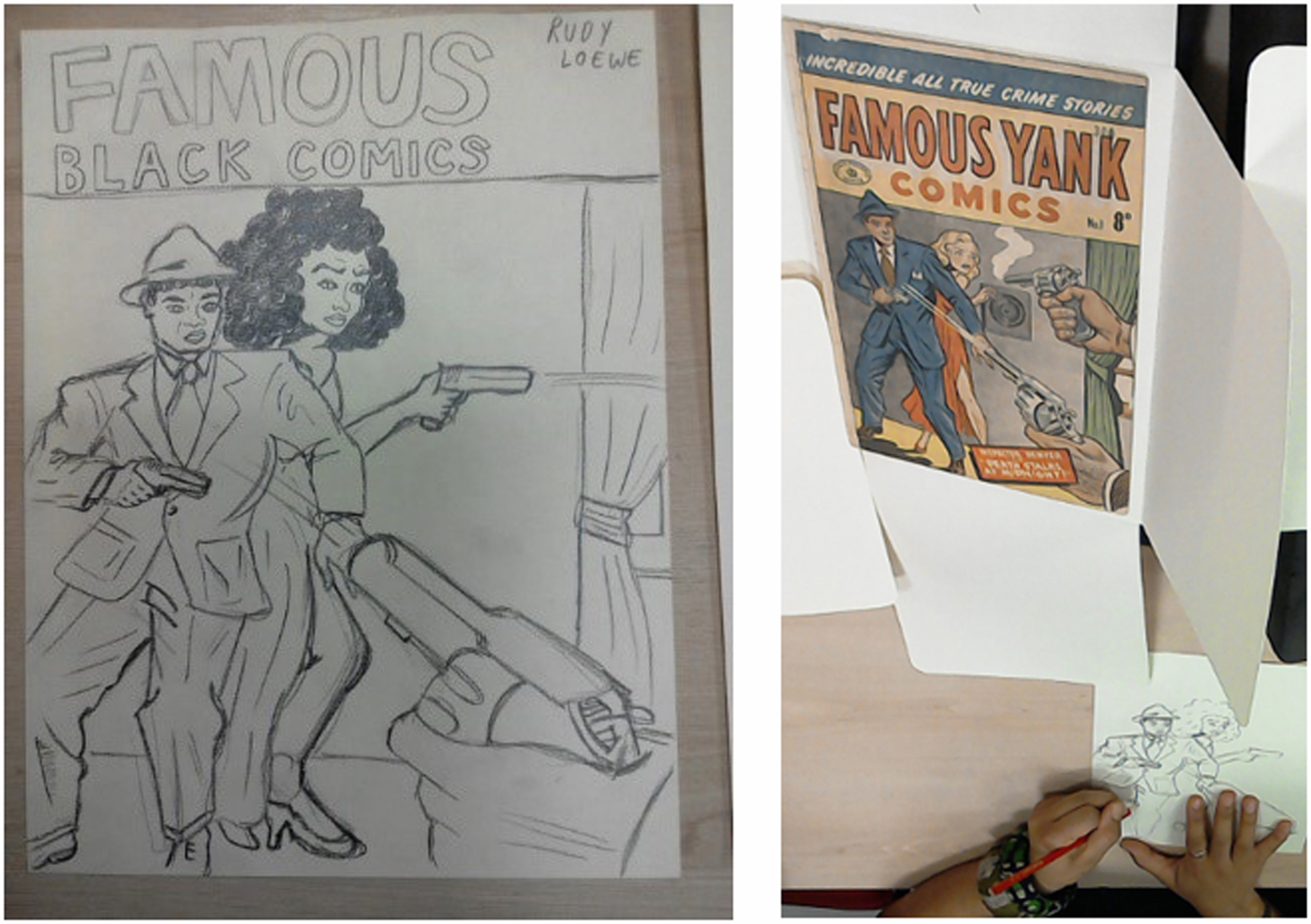
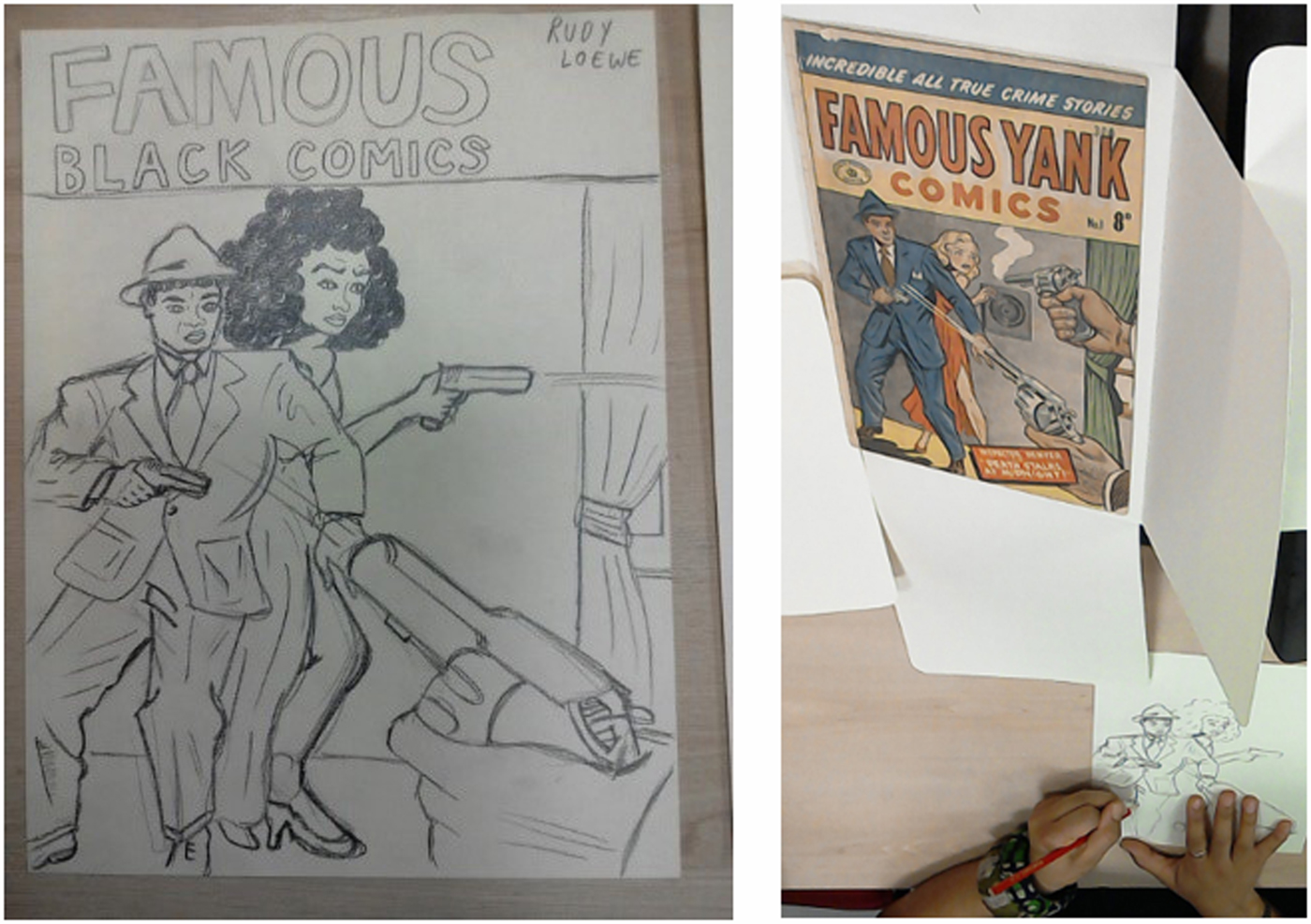
Initially, the workshops were very basic in structure and format. The focus was getting participants to look and interact with archives. The first Creative Workshops I developed were using archives in drawing workshops – participants were tasked with a number of different drawing activities using a selection of archives.Footnote 13 Another drawing workshop involved an invited community comic book group from South London. The format was informal and conversational and the day included a behind-the-scenes tour, presenting to participants a selection of documents and exploring themes through focused discussions. We discussed their experiences using archives and collaboratively agreeing on completing one activity based on the selection of documents. The different artists used drawing to respond to the selection of documents – for instance, the queer black visual artist Rudy Loewe used a selection of characters from the comic book cover Famous yank comics and inversed them with different characters of colour to challenge social and cultural norms of the 1950s.
Rudy Loewe's drawing of Famous yank comics. Photographs by the author with artist's permission.
My approach to these Creative Workshops has evolved. This was partly driven by the potential of different learning outcomes as well as the desire to get students to use archives in various ways, such as a tool or platform for critical thinking. One format I devised was a series of tasks for the participants – they would learn by carrying out the tasks and then reflect on why and how they approached different tasks in different ways. This was based on the concept of Korb's experiential learning cycle and how participants can learn through their reflection of experience.Footnote 14
The workshop Using archives for creative practice (April 2017) targeted students in higher education and creative practitioners with the goal of encouraging them to use a selection of archives in the creative process.Footnote 15 I devised a series of activities in which participants looked at archives and generated questions that would be answered as part of a structured process. The participants used these initial questions to explore different avenues of responses. This culminated in developing individual ideas based around their disciplines, for instance, a piece of creative writing, a collage, or an initial mind map of ideas.
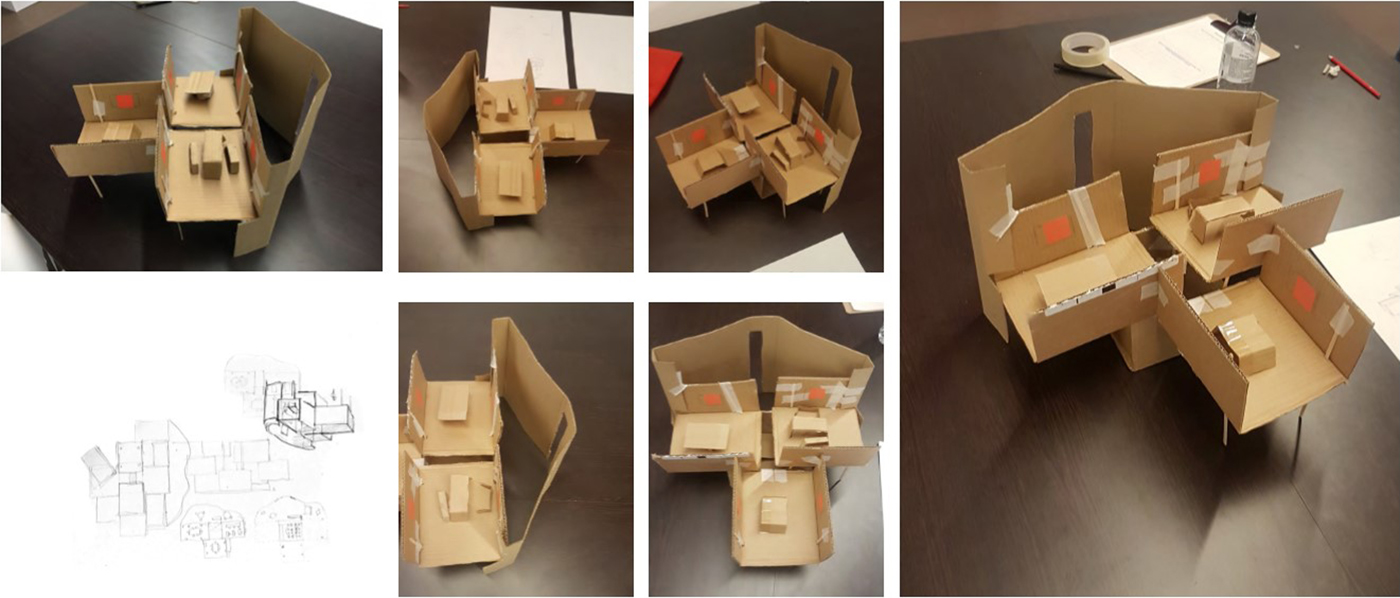
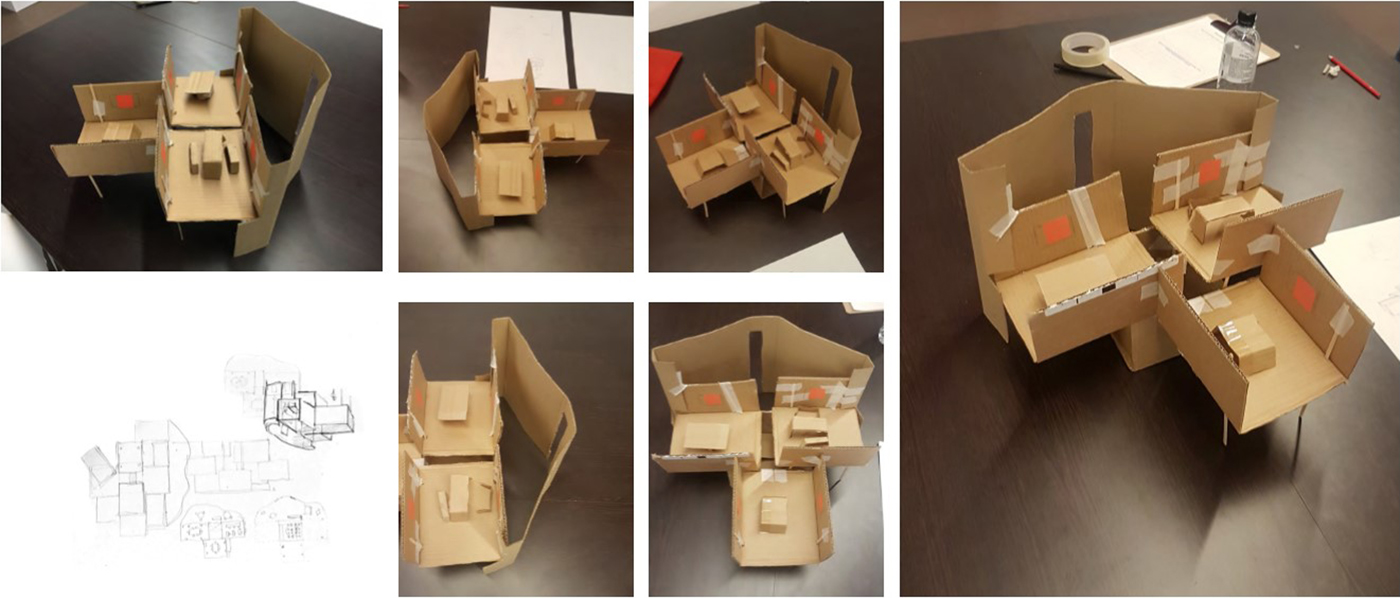
Similarly, I devised an Imagined archives day workshop (February 2018) for students from the Architecture MArch degree at Kingston University to complement teaching on domestic material culture delivered by the course leader. The workshop was split into two parts. The first included a behind-the-scenes tour, an interactive document display and a short presentation on archives. The second part of the day involved giving the students a creative brief: students had to discuss and work through a series of activities in groups, culminating in a concept of what their ‘imagined archive’ would be – based on what they had seen earlier in the day. Once they decided on a concept, each group built a prototype model. The day ended with the groups sharing what they had learned, and how this fed into their final prototype designs.
Workshop with Unit 2 2017–2018, MArch Architecture, Department of Architecture, Kingston School of Art, Kingston University. Unit Tutor: Tom Coward, Director AOC Architecture Ltd. Student group: Rigas Potiropoulos, Anthony Elvin, and Gassim Abdeldaim. Photographs by Tom Coward.
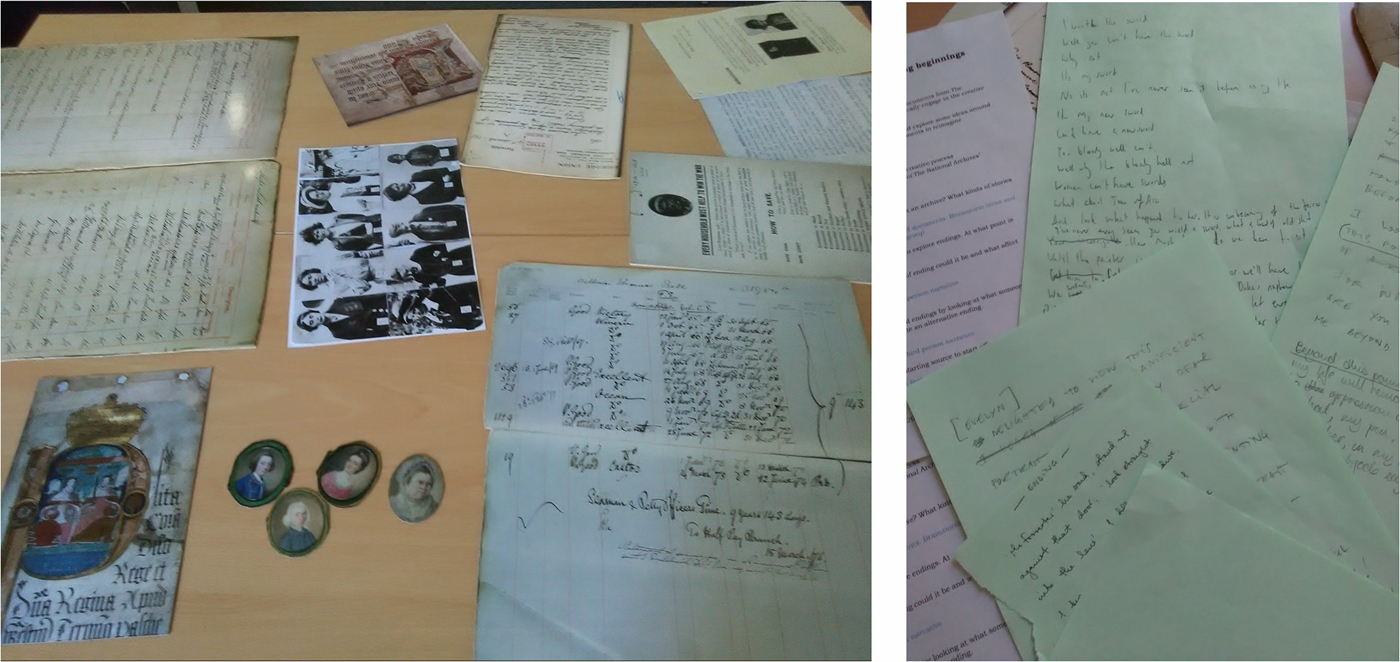
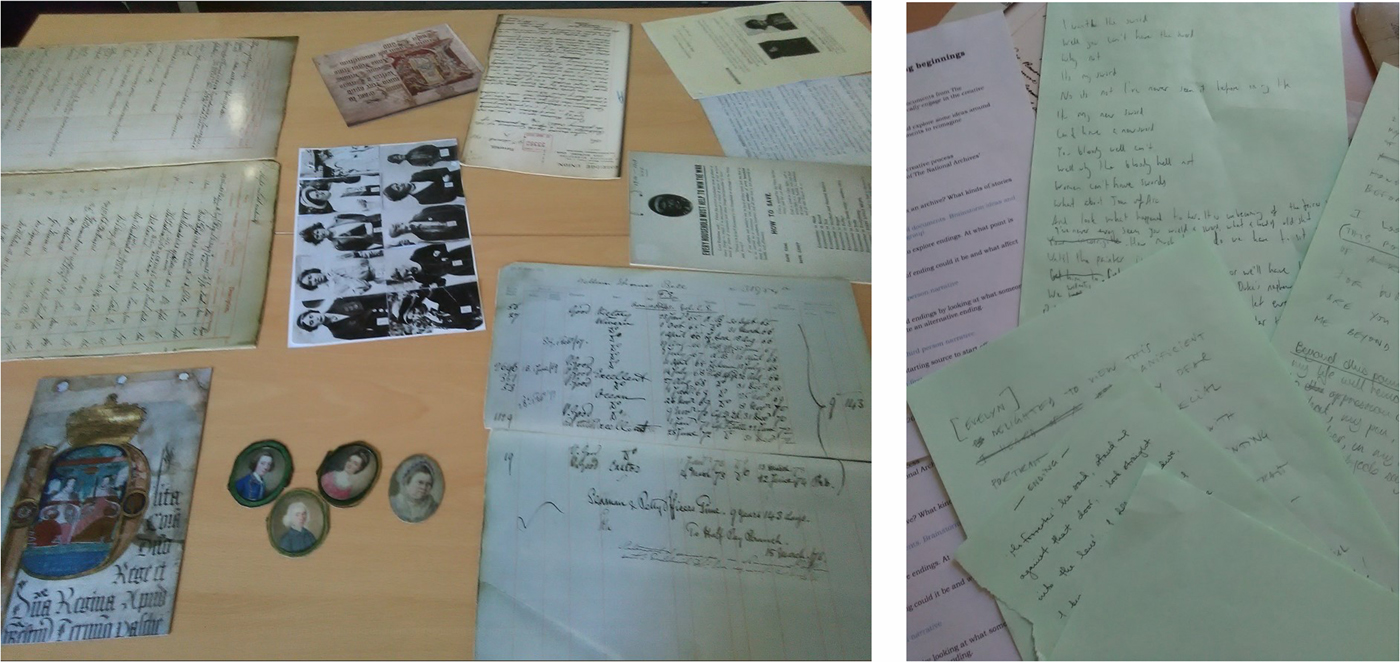
More recently, as part of the TECHNE Sensing endings congress at Roehampton University (June 2018), I devised and delivered a creative writing activity workshop Exploring endings, reimagining beginnings.Footnote 16 I asked TECHNE students to choose a facsimile document and, through a series of tasks, to develop different narrative beginnings and endings. The students shared their writing, and reflected how liberating it was to use archives to develop their critical and imaginative skills, outside of their formal learning within the university context.
Creative writing activity workshop Exploring endings, reimagining beginnings, 25 June 2018. Example of facsimile documents and the writings produced by students. Photographs by the author.
Through developing these Creative Workshops I have established four common components:
1. Appropriate use of archives – how are the archives included so they are an integral part of the workshop?
2. Potential learning aims and outcomes – processed-based journey for participants; using archives to challenge or provoke productive discussions.
3. Based on audience ‘needs’ – what do they want or need to develop – what could they develop?
4. Effective use of resources – keep activities simple and participant-centred; allow for discussion time and consider tweaking and reusing existing material
The development of these Creative Workshops is based on an iterative approach where workshop ideas can be continually developed based on different audiences’ needs. In this approach you can include participant feedback and your own reflection to shape and refine future workshops. This approach considers the process of development as part of the entire workshop delivery. The work undertaken in the development and planning phase can also be used for later dissemination and shared with the wider profession for further reflection and discussion on pedagogical practices.
There are invariably limitations around this approach as it requires you, to a certain extent, to continually develop and deliver workshop ideas. This may not be practical because of lack of resources and the competing demands of other work commitments. However, it is possible to create very simple workshops with little resources that can then be tweaked, developed and repurposed once the initial concept of the workshop has been established. Suggesting new pilot workshops is a good strategy if there is a lack of institutional buy-in. Positive feedback can encourage staff and institutional support (particularly if your pilot project involves staff to test ideas at the concept stage).
There are ample benefits to being creative and in finding practical solutions in developing workshops through an iterative approach. By altering one's mind-set, you are making the most of the resources, challenging yourself, and being self-reflective – which is necessary to grow and develop your own work interests and practice. In many ways, you are gaining new knowledge as you develop workshops for different audiences and user groups.
It is also beneficial for the wider arts community you wish to engage with. Approaching archives from a different stance may pique interest and is a way to engage creative practitioners who may not initially be drawn to archives or special collections, particularly if you relate it to their practice-based research. This may also expose archives to other potential collaborative opportunities through newly developed networks, encounters and discussions. Developing Creative Workshops is an intellectually stimulating way to use archives within a practical framework to engage participants in new and interesting ways.
Conclusion
Being creative is a useful and essential part of many aspects of archival work. Developing Creative Workshops (in the archive, library, and museum sectors) is integral not only because the profession has undergone many changes and as archivists we need to continually show that we meet audiences’ needs and that we attempt to diversify user groups through public and academic engagement with archival collections.
It is the very act of developing Creative Workshops that has prompted me to reflect how I am being creative. It is a way of thinking about the ‘doing’, and reflecting on how I approach my work that feeds into my thinking process on how to get people to engage with archives. Therefore, it is a form of active problem solving that can be applied to other aspects of my archival work. Taking an iterative approach to Creative Workshops has meant the way I have approached the development of these workshops has evolved over time.
I have no doubt this will continue to evolve as I develop more workshops in the future, according to the needs and expectations of different users of The National Archives. Invariably there are limitations to this approach (lack of resources and time constraints), however, the benefits to the creative arts community who participate in workshops are worthwhile and positive feedback and results outweigh any obstacles and limitations.
In memoriam Wyndham Harwood Thomas (1938–2018).