Antimicrobial exposure leads to emergence and dissemination of multidrug-resistant organisms (MDROs).Reference Marston, Dixon, Knisely, Palmore and Fauci 1 However, an increasing number of paleontological studies have demonstrated that antimicrobial resistance predates clinical antimicrobial use.Reference Santiago-Rodriguez, Fornaciari and Luciani 2 – Reference Pawlowski, Wang and Koteva 4 Antimicrobial resistance genes have been identified in the gut microbiome of several 11th- to 16th-century a.d. mummies. Using 16 rRNA gene sequencing and whole-metagenome shotgun sequencing, putative resistance to β-lactamases, aminoglycosides, macrolides, vancomycin, and even synthetic antimicrobials, such as quinolones, was identified. Sequences that were associated with multidrug efflux pumps were also detected.Reference Santiago-Rodriguez, Fornaciari and Luciani 2 , Reference Santiago-Rodriguez, Fornaciari and Luciani 3 The presence of antimicrobial resistance genes in these ancient humans, which pre-date the modern antimicrobial era, suggests that the presence of MDROs may not always be associated with the selective pressure caused by exogenous antimicrobial use.
In the more recent past, numerous longitudinal studies, which collected serial rectal or nasal samples, have shown an association between antimicrobial exposure and MDRO acquisition. However, in the great majority of these studies, a proportion of patients acquired an MDRO who were never exposed to antimicrobials from the time of enrollment to when MDRO acquisition was detected. For example, in a cohort of 318 nursing home residents in whom serial rectal surveillance culture were collected every 3 months for up to 12 months, 137 were not exposed to antimicrobials. Among these, 44 (32%) acquired an MDRO. These patients had not been exposed to antimicrobials for an average of 203 days prior to acquisition.Reference D’Agata, Varu and Geffert 5
To quantify the proportion of patients not exposed to antimicrobials among those who acquired an antimicrobial-resistant bacteria (ARB), a systematic review and meta-analyses were conducted among studies that identified ARB acquisition with a focus on the subset of patients not exposed to antimicrobials. Strict criteria for ARB acquisition were defined and required collection of serial surveillance swabs, with ARB acquisition defined as negative baseline swab for ARB and at least 1 positive subsequent follow-up swab with the same ARB type. The study was restricted to gram-negative bacteria and enterococci resistant to 1 or more antimicrobial.
Methods
Study registration
The protocol for the systematic review and meta-analysis is registered on PROSPERO (CRD42017073996), https://www.crd.york.ac.uk/PROSPERO. The protocol is in accordance with the Preferred Reporting Items for Systematic Review and Meta-Analysis Protocols (PRISMA-P) guidelines (see Supplementary Material A for PRISMA checklist).Reference Moher, Shamseer and Clarke 6
Search strategy
The search strategy was developed and tested through an iterative process by an experienced medical information specialist (B.S.) in consultation with the review team. The complete search strategies are presented in Supplementary Material B online. The strategy was peer-reviewed by another senior information specialist prior to execution using the PRESS Checklist (K.C.; Supplementary Material C online).Reference McGowan, Sampson and Salzwedel 7 We searched Ovid MEDLINE, including Epub ahead of print and in-process and other nonindexed citations, Embase, and Ovid’s evidence-based medicine reviews, which includes the Cochrane Library and the American College of Physicians’ Journal Club. All searches were performed on July 24, 2017. Our strategies utilized a combination of database-specific vocabulary (eg, “beta-lactam resistance” and “carrier state”) and key words (eg, “ESBL,” “colonization,” and “incidence”). The search strategy was conservative to make certain that relevant articles were not missed: all synonyms available from Ovid Embase, as part of the controlled vocabulary, known as Emtree, were included, even if rarely used. Vocabulary and syntax were adjusted across databases. 8 We limited results to English and publication dates between January 1, 2000, and the search on July 24, 2017. In addition to the structured database searches, we hand-searched the bibliographies of on-topic systematic reviews to identify additional citations. The search strategy focused on antimicrobial resistance among gram-negative bacteria and enterococci and did not include Staphylococcus aureus.
Eligibility criteria and study selection
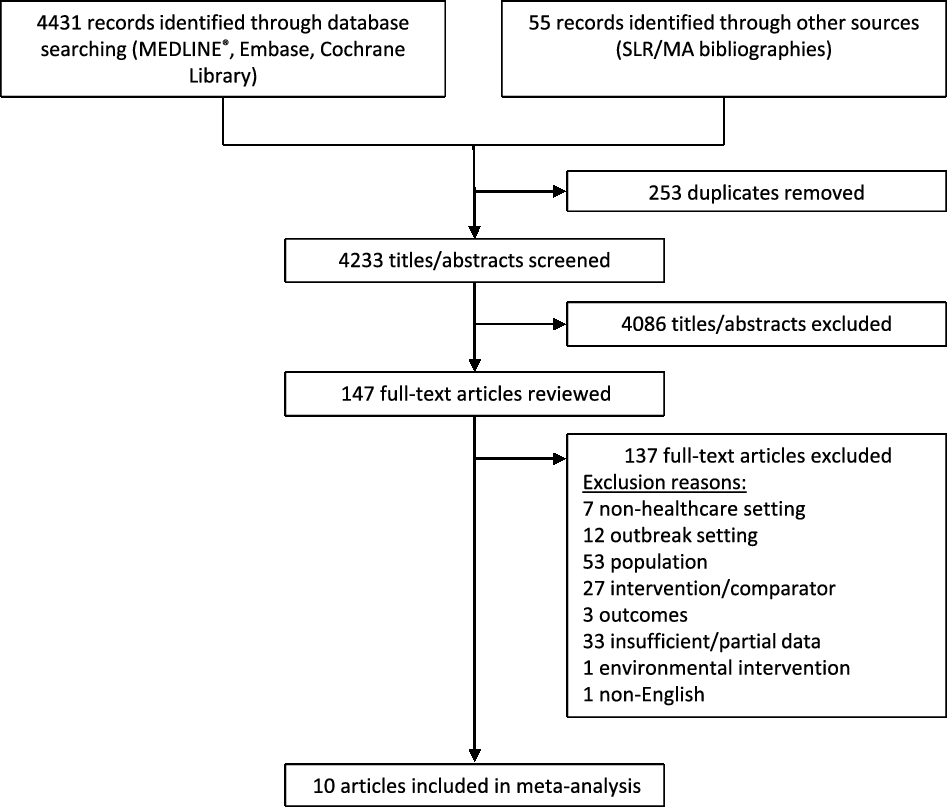
Two independent reviewers screened titles and abstracts to identify potentially relevant articles. Eligible studies met all of the following inclusion criteria: (1) adult patients (aged ≥18 years) of any health status in medical or community settings who were not colonized with an ARB at the time of study enrollment (2) assessed acquisition of ARB colonization over the study period as defined by a negative baseline sample (at any site) followed by at least 1 positive follow-up sample with the same ARB type, and (3) reported data on the number of patients exposed and not exposed to antimicrobials between time of admission and up to acquisition, discharge, death or end of study. Studies that reported antimicrobial exposure as defined daily doses or only means were not included. Only studies performed in an endemic setting were included because the transmission dynamics of ARB acquisition differ during outbreak settings. Conference abstracts, animal-only, and opinion pieces were excluded. We also excluded studies that identified patients by infection status rather than colonization, studies pertaining to ARB acquired during travel, animal to human transmission, and acquisition among healthcare workers. Studies that involved an intervention aimed at reducing transmission, such as contact precautions or environmental decontamination, were not included because risk of acquisition could differ irrespective of antimicrobial exposure. We did not restrict the search by study design; case-control studies, cohort studies, and randomized controlled trials (RCTs) were all eligible. We retrieved any potentially relevant articles in full-text form and they were independently reviewed by 2 reviewers before formal inclusion in the systematic review. Disagreements were resolved by discussion between the 2 independent reviewers, or by a third independent reviewer not involved in the data collection process when consensus could not be reached (F.W., R.M., and C.D.). Reasons for exclusion are presented in the PRISMA flow diagram (Fig. 1).
Flow diagram for selection of studies included in systematic review and meta-analysis.

Data extraction and quality assessment
Details from included articles were collected using a standardized data extraction template. We extracted data on the years of study publication and enrollment, study design, total sample size (excluding patients who were colonized at baseline), number of patients with and without a new ARB acquisition by antimicrobial exposure status, setting, duration, types of ARBs, screening site, frequency of swab collection, percent of all patients on antibiotics during study, median duration of follow-up for patients who acquired an ARB (with and without antibiotic exposure), and duration of antibiotic use among patients who acquired an ARB. Data extraction was performed by one reviewer, and an additional independent reviewer checked for data accuracy (R.M. or F.W.). We performed risk of bias assessments in duplicate using the Quality in Prognosis Studies (QUIPS) tool, as recommended by Cochrane for prognostic factor studies.Reference Hayden, van der Windt, Cartwright, Cote and Bombardier 9 The Cochrane risk of bias tool and NewCastle Ottawa Scale were not used because this was not a comparative study. The QUIPs tool is more appropriate for prognostic studies, which may vary in study design (eg, 1 arm of an RCT) and are not limited to nonrandomized studies.
Statistical analysis
The aim of our statistical analysis was to provide a pooled estimate of proportions based on all available evidence. We calculated summary estimates and 95% confidence intervals (CIs) with random effects models to account for heterogeneity. We weighted studies based on the inverse variance. We characterized heterogeneity using the I 2 statistic. We interpreted 2-tailed P ≤ .05 as statistically significant. We performed all calculations using Comprehensive Meta-Analysis version 3 software.Reference Borenstein, Hedges, Higgins and Rothstein 10 For studies reporting zero events, a zero-cell continuity correction factor of 0.5 was applied.Reference Higgins and Green 11
In our primary analysis, we estimated the proportion of patients who were not exposed to antimicrobials among those who acquired an ARB over the study duration. As part of this analysis, we categorized each study as either occurring in an intensive care unit (ICU) setting or a setting outside of the ICU (non-ICU). We evaluated subgroups stratified by ICU or non-ICU study setting because we anticipated antimicrobial exposure varying in relation to where the study was conducted. To further assess potential sources of heterogeneity, we conducted sensitivity analyses within our individual ICU and non-ICU subgroups by focusing our analyses on studies specific (1) to acquisition of multidrug-resistant gram-negative bacteria (2) studies where the number of patients who acquired an ARB (with and without antibiotic exposure) was >30.5 (median value among all included studies), and (3) studies with prospective designs.
Results
The database search strategy identified 4,431 records. Were identified an additional 55 records by manually searching the reference lists of on-topic systematic reviews. After removing duplicates, there were 4,233 unique citations for title and abstract screening, of which 147 were retrieved for full-text review. Upon review of the full texts, 10 studies were determined to meet the eligibility criteria and were included in the meta-analysis.Reference Arvaniti, Lathyris and Ruimy 12 – Reference Pasricha, Koessler and Harbarth 21 A flow diagram of study identification and selection is presented in Figure 1.
Study and patient characteristics
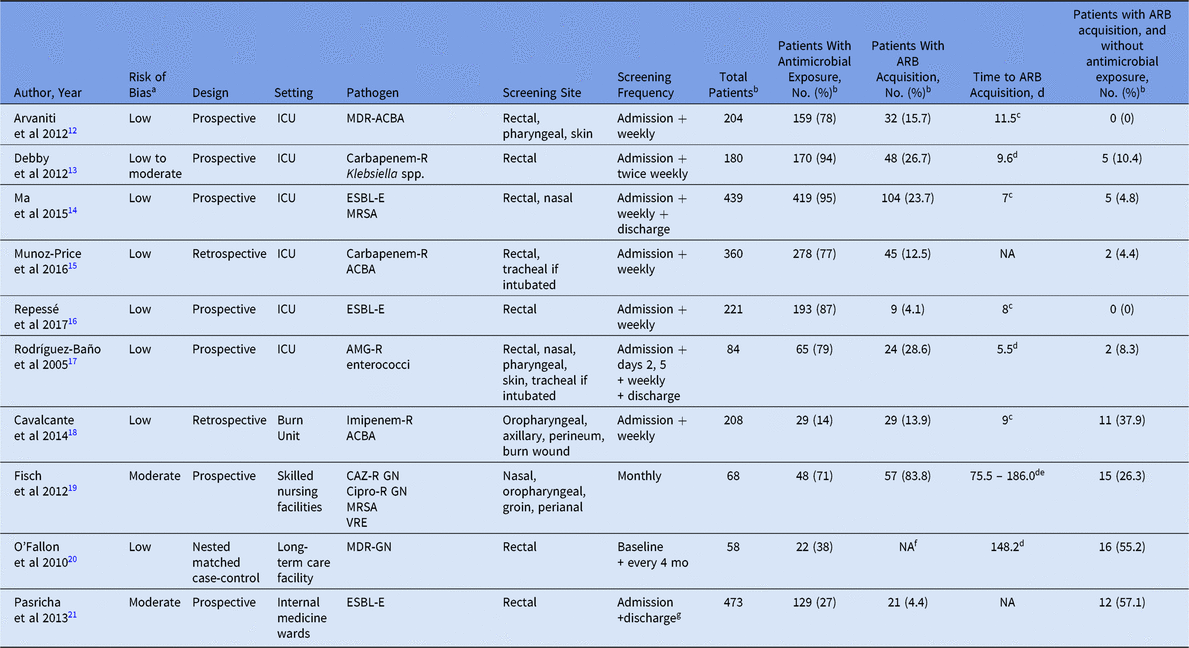
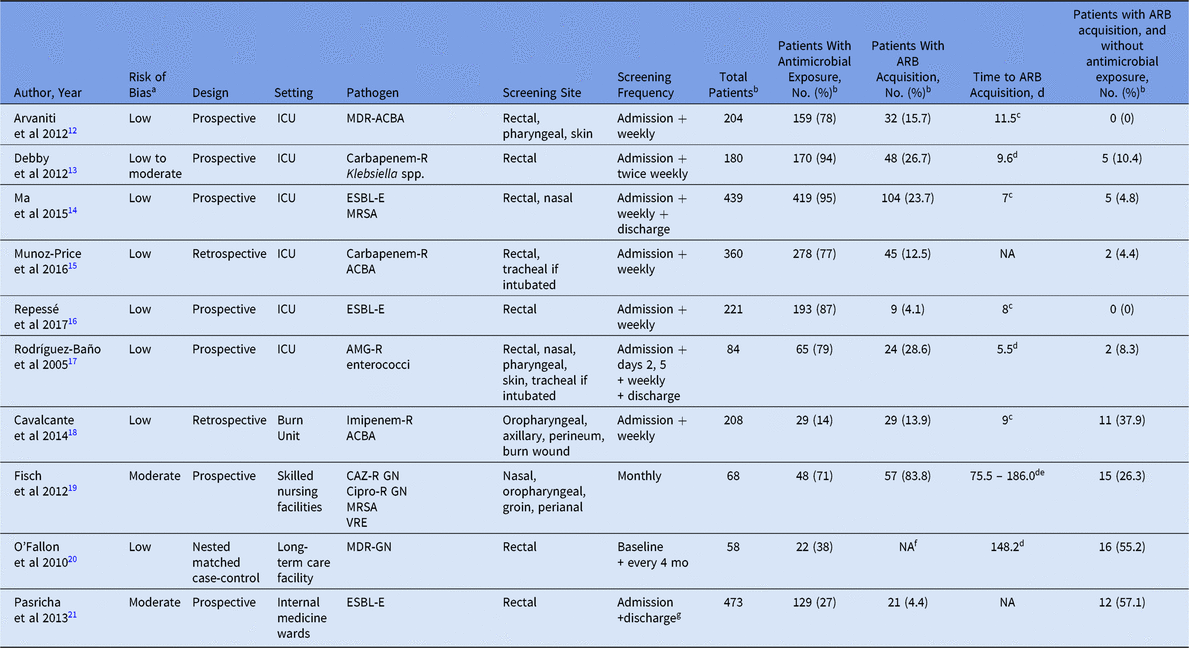
A summary of study and patient characteristics of the 10 included studies is presented in Table 1. All of the studies selected for comparison in the meta-analysis were observational,Reference Arvaniti, Lathyris and Ruimy 12 – Reference Pasricha, Koessler and Harbarth 21 and most studies (7 of 10 studies) followed patients prospectively.Reference Arvaniti, Lathyris and Ruimy 12 – Reference Ma, Wu and Li 14 , Reference Repesse, Artiguenav and Paktoris 16 , Reference Rodriguez, Ramirez and Muniain 17 , Reference Fisch, Lansing and Wang 19 , Reference Pasricha, Koessler and Harbarth 21 Most studies were considered to have a low risk of bias as per the QUIPs tool for bias assessment (Supplementary Material D online).Reference Hayden, van der Windt, Cartwright, Cote and Bombardier 9 Furthermore, 6 studies were conducted exclusively in ICU settings.Reference Arvaniti, Lathyris and Ruimy 12 – Reference Rodriguez, Ramirez and Muniain 17 Also, 4 studies were conducted in non-ICU settings including a skilled nursing facility, a long-term care institution, an internal medicine ward, and a burn unit.Reference Cavalcante Rde, Canet and Fortaleza 18 – Reference Pasricha, Koessler and Harbarth 21 Although burn units can be considered similar to ICU setting, the study was included in the non-ICU group given the low percentage of antimicrobial use (14%).Reference Cavalcante Rde, Canet and Fortaleza 18 The most common screening site was the rectum.Reference Arvaniti, Lathyris and Ruimy 12 – Reference Rodriguez, Ramirez and Muniain 17 , Reference O’Fallon, Kandel and Schreiber 20 , Reference Pasricha, Koessler and Harbarth 21 Screening was more frequent in the ICU studies with swabs for ARB detection taken on a weekly basis, at minimum.Reference Arvaniti, Lathyris and Ruimy 12 – Reference Rodriguez, Ramirez and Muniain 17 In non-ICU studies, the frequency of swab collection varied from weekly to every 4 months.Reference Cavalcante Rde, Canet and Fortaleza 18 – Reference Pasricha, Koessler and Harbarth 21 Duration of follow-up was only reported for 5 studies and ranged from 8 to 11 days among ICU studies and 9 days to 12 months for non-ICU studies.Reference Ma, Wu and Li 14 , Reference Repesse, Artiguenav and Paktoris 16 , Reference Cavalcante Rde, Canet and Fortaleza 18 , Reference O’Fallon, Kandel and Schreiber 20 , Reference Pasricha, Koessler and Harbarth 21 Although colonization pressure increases the risk of ARB acquisition, only 3 studies reported values; therefore, colonization pressure was not included in the analyses.Reference Arvaniti, Lathyris and Ruimy 12 , Reference Debby, Ganor and Yasmin 13 , Reference Cavalcante Rde, Canet and Fortaleza 18 In Arvaniti et al,Reference Arvaniti, Lathyris and Ruimy 12 the median calculated weekly colonization pressure was 25.6% (interquartile range, 9.3%–47.8%).Reference Arvaniti, Lathyris and Ruimy 12 When comparing patients who acquired colonization of an ARB to those who remained ARB negative, the colonization pressure was reported as 14% versus 15%, respectively, in Cavalcante et alReference Debby, Ganor and Yasmin 13 and 32.3% versus 27.4%, respectively, in Debby et al.Reference Cavalcante Rde, Canet and Fortaleza 18 Although the study was restricted to gram-negative bacteria and enterococci that were resistant to 1 or more antimicrobial and did not include Staphylococcus aureus, our search strategy identified 2 studies that also included patients with methicillin-resistant S. aureus, in addition to the bacteria of primary interest.Reference Ma, Wu and Li 14 , Reference Fisch, Lansing and Wang 19
Summary of Study and Patient Characteristics
Note. ACBA, Acinetobacter spp; AMG, aminoglycosides; ARB, antimicrobial-resistant bacteria; CAZ, ceftazidime; CIPRO, ciprofloxacin; ESBL-E, extended-spectrum β-lactamase-producing Enterobacteriacae; GN, gram-negative; ICU, intensive care unit; MDR, multidrug resistant; MRSA, methicillin-resistant Staphylococcus aureus; NA, not available; R, resistant; VRE, vancomycin-resistant enterococci.
a Assessed in duplicate using the Quality in Prognosis Studies (QUIPS) tool.
b Excludes patients identified as colonized at admission.
c Median time to acquisition.
d Mean time to acquisition.
e Mean time to acquisition was reported separately for each organism under investigation. The range of mean times to acquisition is provided.
f The number of cases who acquired ARB colonization is fixed based on matched control design, and is not indicative of underlying epidemiology.
g Reported median length of hospital stay for patients who acquired ARB was 12.1 d.
Patients not exposed to antimicrobials among those who acquired an ARB
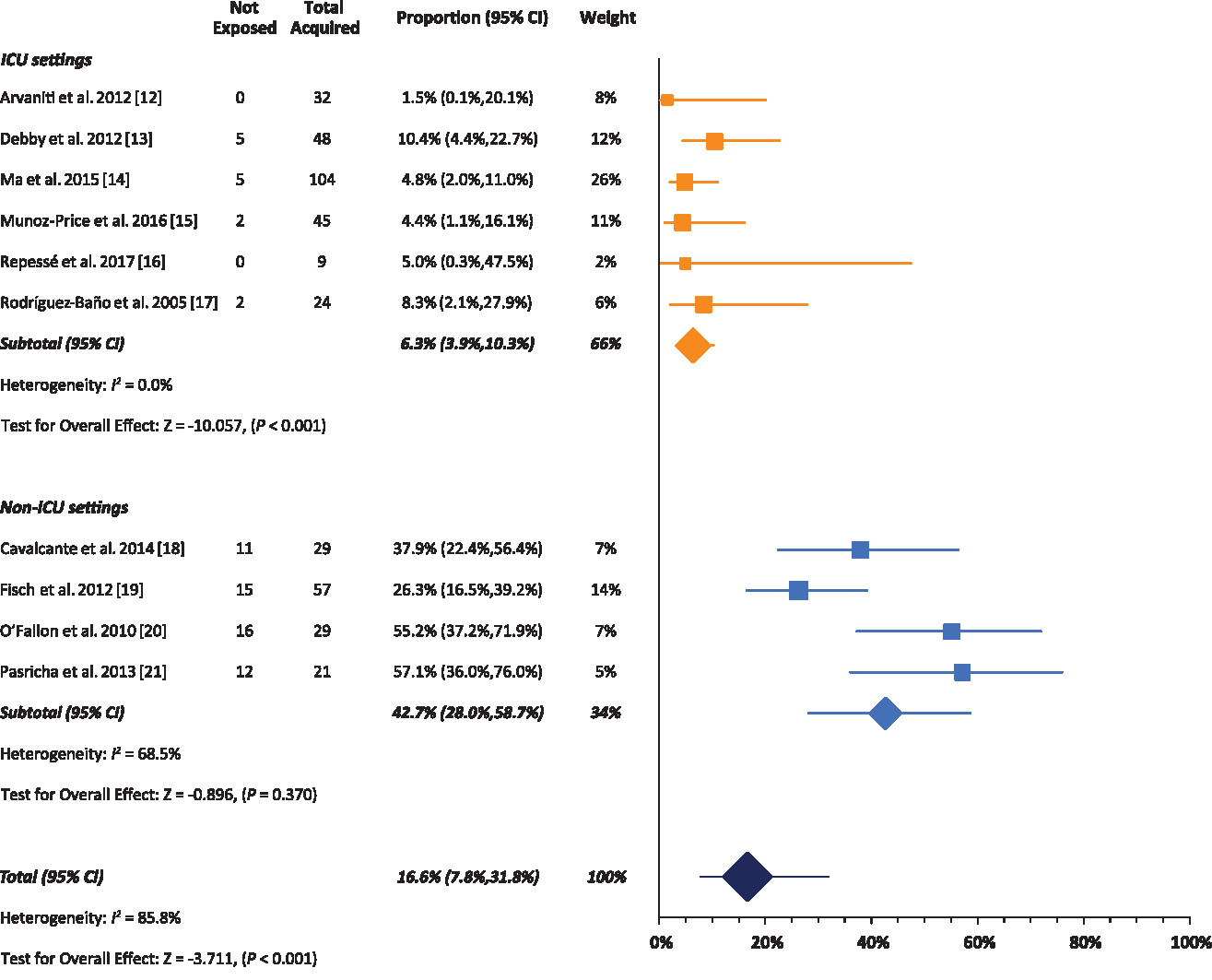
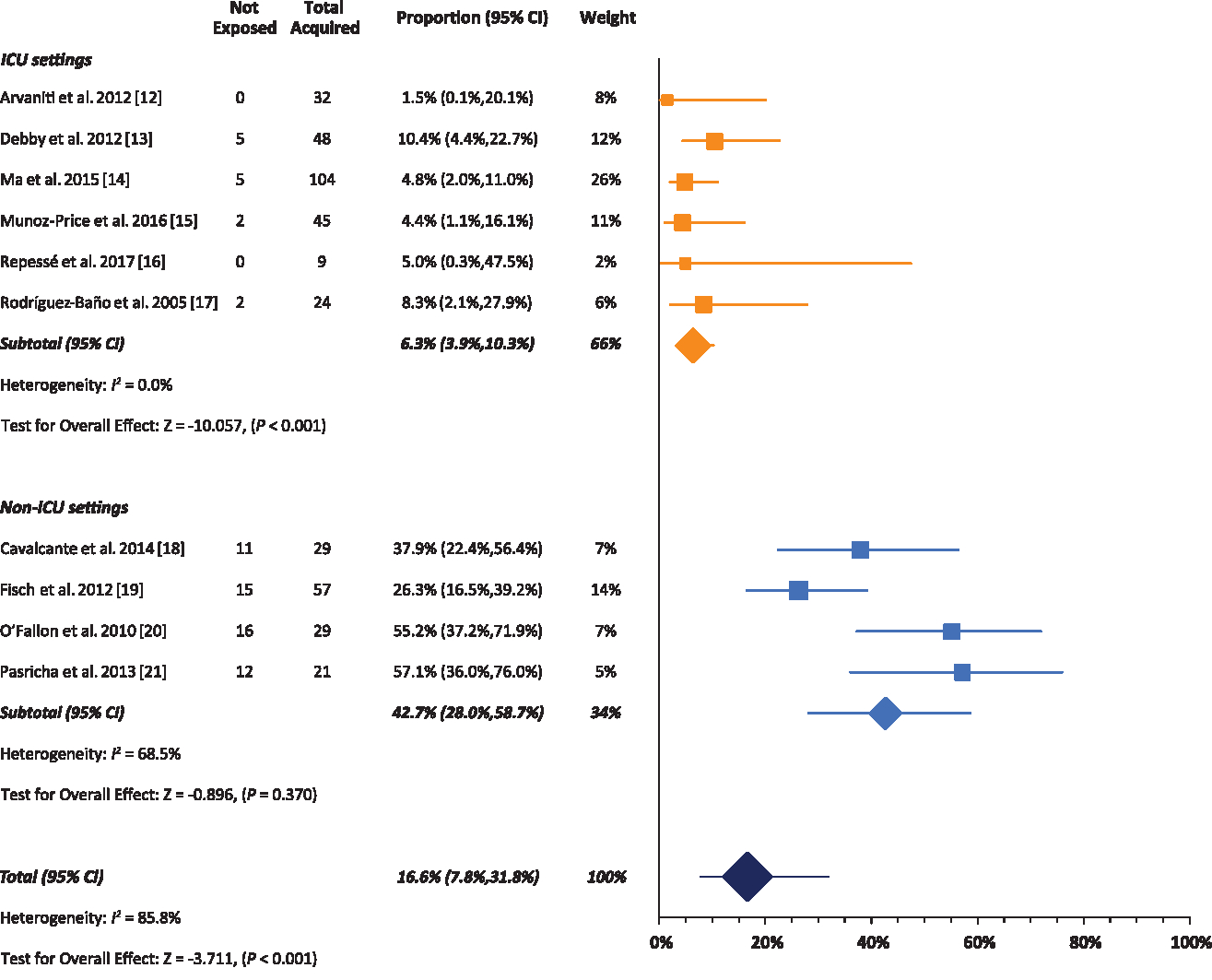
As shown in Figure 2, the overall summary estimate for the proportion of patients who were not exposed to antimicrobials among those who acquired an ARB was 16.6% (95% CI, 7.8%–31.8%; P < .001; 10 studies) and ranged from 0% to 57.1%. There was considerable heterogeneity (I 2 = 85.8%). When only studies conducted in the ICU were considered, the proportion of patients who were not exposed to antimicrobials among those who acquired an ARB was 6.3% (95% CI, 3.9%–10.3%; P < .001; 6 studies), and no heterogeneity was observed (I 2 = 0.0%). When only non-ICU studies were considered, the proportion of patients who were not exposed to antimicrobials among those who acquired an ARB was 42.7% (95% CI, 28.0%–58.7%; P = .37; 4 studies). Heterogeneity in the meta-analysis of the non-ICU subgroup was high (I 2 = 68.5%), though it was numerically lower than when all studies were analyzed cumulatively.
Forest plot showing the proportion of patients who acquired an antimicrobial-resistant bacteria (ARB) and were not exposed to antimicrobials, stratified by intensive care unit (ICU) and non-ICU settings. Individual studies are represented by squares centered on the point estimates of the studies. The area of the squares represents the weight accorded to each study in the meta-analysis. The weights are based on inverse variance where studies with more precision are given more weight, and vice versa. Horizontal bars denote 95% confidence intervals. Diamonds represent the pooled subgroup estimates for ICU (orange) and non-ICU settings (light blue), as well as the overall effect estimate across both settings (dark blue).
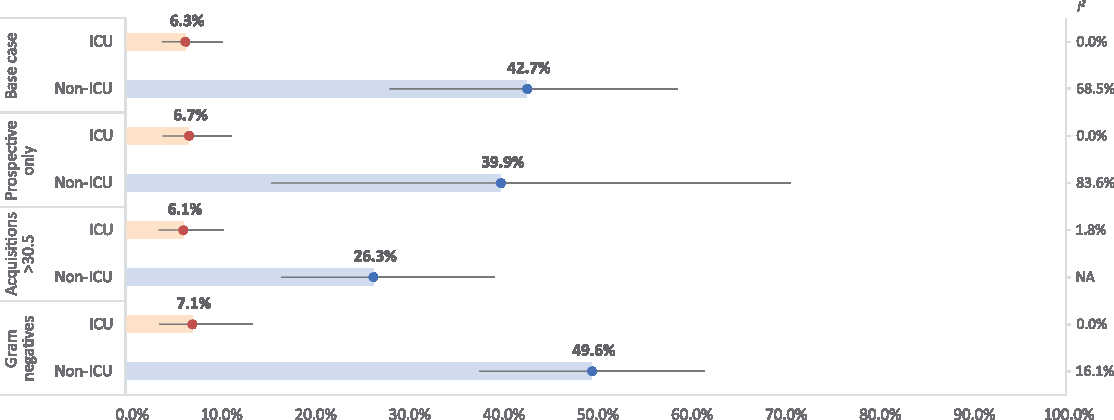
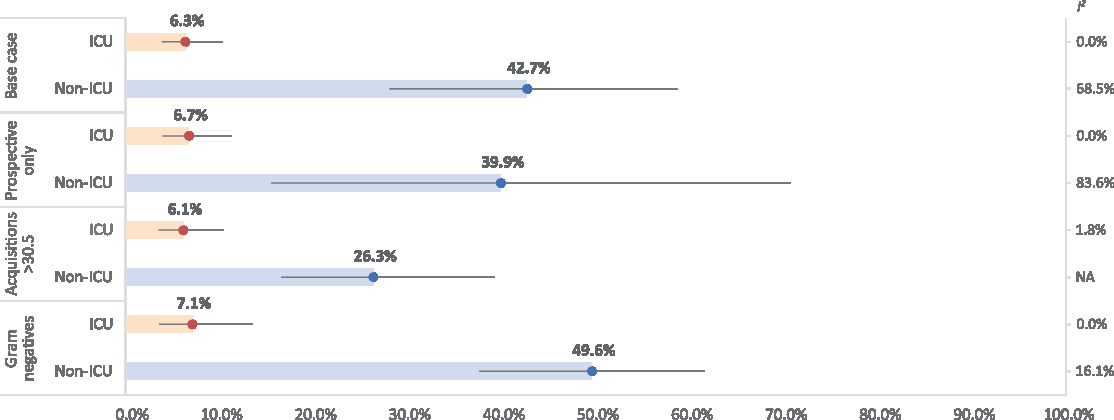
In the sensitivity analyses, when the pool of studies was limited exclusively to antimicrobial-resistant gram-negative bacteria, total number of ARB acquisitions >30.5, and prospective designs, the pooled estimates remained relatively consistent across the ICU subgroup and were consistently lower than the pooled estimates in the non-ICU subgroup. The proportion of patients who were not exposed to antimicrobials among those who acquired an ARB ranged from 6.1% to 7.1% (vs 6.3% in primary analysis) in the ICU subgroup, and from 26.3% to 49.6% (vs 42.7% in primary analysis) in the non-ICU subgroup (Fig. 3).
Sensitivity analyses for the proportion of patients who acquired an antimicrobial-resistant bacteria (ARB) and were not exposed to antimicrobials, stratified by intensive care unit (ICU) and non-ICU settings. Sensitivity analyses from top to bottom include (1) all eligible studies (base case) (2) only studies with prospective designs (3) only studies with >30.5 patients who acquired an ARB, and (4) only studies that considered gram negative ARB. The circles represent the pooled estimate for each subgroup analysis. Orange bars represent the ICU subgroup and blue bars represent the non-ICU subgroup. Horizontal lines denote 95% confidence intervals. Heterogeneity for each analysis is characterized by the I 2 statistic.
Discussion
A systematic review and meta-analysis were conducted to determine the proportion of patients who were not exposed to antimicrobials and acquired an ARB, during the period between a negative baseline screening culture and a positive follow-up culture for ARB. Overall, 16.6% of patients who acquired an ARB were not exposed to antimicrobials (range, 0–57.1%). When the analyses were restricted to ICU settings or non-ICU settings, 6.3% and 42.7% of patients who acquired an ARB were not exposed to antimicrobials, respectively. The lower proportion of acquisition events among ICU studies compared to non-ICU studies may be due to different durations of follow-up and different transmission dynamics of ARB between these 2 settings.
Several explanations for ARB acquisition among patients not exposed to antimicrobials are plausible. First, a healthy gut microbiome provides resistance against colonization by exogenous pathogens, including ARB.Reference Pamer 22 , Reference Buffie and Pamer 23 It is well recognized that antimicrobial exposure leads to dysbiosis of the gut microbiome and loss of this colonization resistance, thereby increasing the risk of ARB acquisition.Reference Pamer 22 – Reference Becattini, Taur and Pamer 24 However, numerous other factors can cause dysbiosis of the microbiome. Several nonantimicrobial medications, including proton pump inhibitors, laxatives, and nonsteroidal anti-inflammatory agents, have all been shown to cause alterations in the structure of the microbial composition of the gut.Reference Ticinesi, Milani and Lauretani 25 – Reference Le Bastard, Al-Ghalith and Grégoire 27 Age and diet also affect the microbiome.Reference Cho and Blaser 28 , Reference Yatsunenko, Rey and Manary 29 Thus, these nonantimicrobial factors may be contributing to ARB acquisition, as a result of loss of colonization resistance. Future studies will need to fully characterize the impact of these nonantimicrobial factors on ARB acquisition. Second, horizontal gene transfer between gut commensals may have contributed to endogenous acquisition, even in the absence of antimicrobial exposure.Reference van Schaik 30 Lastly, biocides, chemical preservatives and metals in the food chain and environment may have coselected for antimicrobial resistant genes.Reference Chandan, Bengtsson-Palme, Kristiansson and Joakim Larsson 31
A recent nested case-control study addressed risk factors associated with acquisition of MDROs among nursing home residents who were not exposed to antimicrobials from 1 month prior to enrollment and throughout the study period.Reference D’Agata, Varu and Geffert 5 Serial surveillance cultures were obtained every 3 months for up to 12 months. Among the 137 residents who were not exposed to antimicrobials, 32% acquired an MDRO, including multidrug-resistant gram-negative bacteria, methicillin-resistant Staphylococcus aureus (MRSA), vancomycin-resistant enterococci. Independent risk factors associated with acquisition included receiving medications affecting the gastrointestinal tract, such as laxatives and gastric acid reducers, which supports the role of a dysbiotic gut microbiome in ARB acquisition. Interestingly, in a subset analysis of only MRSA acquisition of MRSA, which predominantly colonizes the nares and not rectum, these gut microbiome–altering medications were not associated with MRSA acquisition. Other risk factors included more frequent visits from healthcare workers and the presence of pressure ulcers, which require greater contact with healthcare workers, supporting the role of cross transmission in MDRO acquisition through contaminated healthcare workers.Reference D’Agata, Varu and Geffert 5 This study was not included in the current meta-analyses because it was published after the search was conducted.
This study had several limitations that warrant discussion. First, the study was restricted to endemic settings. Studies focusing on outbreaks were not included because the transmission dynamics differ. Studies evaluating the impact of infection prevention interventions, such as hand hygiene and contact precautions, were also excluded since the intervention could impact acquisition, irrespective of antimicrobial exposure. Second, our definition of ARB acquisition does not exclude the possibility that blooming of previously colonizing ARB may explain several acquisition episodes. However, regardless of the underlying biologic events responsible for ARB detection, our definition of acquisition is clinically relevant and widely used in epidemiological studies. Third, the high values of heterogeneity (I 2 ) reported in the overall pooled analyses and non-ICU subgroup should be interpreted with caution because they are likely an artifact of meta-analyzing proportions rather than relative effect measures such as the odds ratio.Reference Mills, Jansen and Kanters 32 I 2 was developed as a measure to assess heterogeneity of relative effects, not proportions. I 2 statistics tend to be inherently higher for proportions, given the variance of a proportion is typically less than the variance of a relative effect.Reference Mills, Jansen and Kanters 32 In addition, heterogeneity in the transmission dynamics of ARB among the different settings of the non-ICU studies, which varied from long-term care facilities to medical wards, could have contributed to greater heterogeneity. Fourth, the search strategy was restricted to antimicrobial-resistant gram-negative bacteria and enterococci, although 2 studies, which met the inclusion criteria, also included MRSA isolates in their analyses. Thus, results cannot be generalized to MRSA or other types of ARB. Fifth, in some of the included studies, the sampling frame was not adequately described or rates of attrition were high. Future studies would be strengthened by a better understanding whether the recruited samples were representative of the underlying populations and reduced loss to follow-up. Lastly, antimicrobial exposure can have long-lasting effects on the microbiome with persistent dysbiosis even after the antimicrobial is discontinued.Reference Dethlefsen, Huse, Sogin and Relman 33 Thus, remote antimicrobial exposure, not documented in the included studies, may have led to a greater risk of ARB acquisition.
Although it is irrefutable that antimicrobial exposure leads to the emergence and spread of ARB, the results of this study demonstrate that a subset of patients can acquire ARB in the absence of antimicrobial exposure. Further research is needed to characterize the factors contributing to MDRO acquisition among persons not exposed to antimicrobials.
Supplementary material
To view supplementary material for this article, please visit https://doi.org/10.1017/ice.2019.208
Acknowledgments
We thank medical information specialists Becky Skidmore and Kaitryn Campbell for assistance with the search strategy. We thank and Corinne Duperrouzel, Sydney Whitney, and Alicia Grima for assistance with study selection, data extraction, and quality assessment.
Financial support
This work was supported by the National Institute of Health (NIAID grant no. K24 AI119158 to E.M.C.D.) and the Agency for Healthcare Quality and Research (grant no. R18 HS021666 to E.M.C.D).
Conflicts of interest
R.K.M. and F.R.W. were employees of Cornerstone Research Group at the time this study was conducted. C.C. is an employee and shareholder of Cornerstone Research Group. Cornerstone consults for various pharmaceutical, medical device, and biotechnology companies.