In paediatric pulmonary hypertension, progressive changes in the pulmonary vascular bed result in increased pulmonary vascular resistance and elevated pulmonary arterial pressure. Without treatment, the disease leads to right ventricular dysfunction, right ventricular failure, and death. In recent years, survival has improved with pharmacologic advances, but paediatric pulmonary hypertension remains a serious chronic health condition with physical and psychosocial burdens affecting the quality of life of patients and families.Reference Mullen, Andrus and Labella1 Poor growth is a documented problem in children with pulmonary hypertension and right ventricular dysfunction,Reference Ploegstra, Ivy and Wheeler2 but the scope of abnormalities in body composition, such as lean mass and fat mass, is not known.
Dual-energy X-ray absorptiometry is a low-radiation technique that can measure whole-body and regional lean and fat mass. Dual-energy X-ray absorptiometry has been used to describe abnormalities in body composition in other paediatric chronic diseases, including complex single-ventricle heart diseaseReference Avitabile, Leonard and Zemel3–Reference Foster, Kalkwarf and Shults8 but has not been described in paediatric pulmonary hypertension. Leg lean mass by dual-energy X-ray absorptiometry has been used as a surrogate for skeletal muscle as most skeletal muscle is located in the legs.Reference Avitabile, Goldberg and Leonard4 Importantly, skeletal muscle deficits and dysfunction have been described in adults with pulmonary hypertension, in association with worse performance on the 6-minute walk test of functional capacity.Reference Bauer, Dehnert and Schoene9 Skeletal muscle deficits have not been reported in children with pulmonary hypertension despite risk factors including inadequate nutrition, vitamin D deficiency,Reference Duvall, Pikman and Kantor10 deconditioning,Reference Zijlstra, Ploegstra and Vissia-Kazemier11 chronic inflammation,Reference Haddad, Zaldivar and Cooper12–Reference Reid, Lännergren and Westerblad14 low cardiac output, hypoxemia,Reference Franssen, Wouters and Schols15–Reference Barbosa, Ferreira and Arakaki17 and treatment with certain medications. The relationship between muscle deficits and functional outcomes in paediatric pulmonary hypertension patients is unknown. Therefore, the objectives of this study were to characterise skeletal muscle mass (as indicated by leg lean mass Z-score by dual-energy X-ray absorptiometry) and muscle strength in paediatric pulmonary hypertension patients, to identify risk factors for muscle deficits, and to explore the associations between muscle deficits, 6-minute walk test parameters, and other markers of functional status.
Materials and methods
Study patients
Pulmonary hypertension patients aged 8–18 years were prospectively enrolled in a cross-sectional study from 2018 to 2020. Eligible patients had a diagnosis of pulmonary hypertension in World Health Organization diagnostic Group 1, 2, or 3 (pulmonary arterial hypertension, pulmonary hypertension due to left heart disease, and pulmonary hypertension due to lung disease and/or hypoxia) and World Health Organization functional class I or II. Exclusion criteria included pregnancy, functional class III or IV, single-ventricle physiology, moderate to severe chronic kidney disease (stage 3 or greater), severe hepatic impairment (transaminases greater than 2 times the upper limit of normal), and significant developmental delay or inability to comply with verbal English instructions in order to complete study procedures. Fully informed, written consent was obtained from the parent/legal guardian of patients <18 years and of patients 18 years of age. In addition, age-appropriate informed assent was obtained from patients <18 years. This study was approved by the Children’s Hospital of Philadelphia Institutional Review Board (#18-014930).
Study procedures
Pulmonary hypertension characteristics
World Health Organization diagnostic group, functional class, medications, most recent haemoglobin and brain-type natriuretic peptide levels, and data from last echocardiogram and cardiac catheterisation were extracted from the medical record. Right ventricular systolic function was assessed by tricuspid annular plane systolic excursion Z-score.Reference Koestenberger, Ravekes and Everett18 Standard of care 6-minute walk tests were performed according to American Thoracic Society guidelines.19 Patients walked at their own pace to cover as much distance as possible in 6 minutes along a 45-m course marked at 1-m intervals in a level hospital corridor. Heart rate and oxygen saturation were measured continuously by non-invasive pulse oximetry (Nelcor Oximax N-65, Minneapolis, MN). Resting and exertional cardiac output and stroke volume were monitored by bio-impedance (Osypka Medical ICON, Berlin, Germany) and indexed to body surface area.
Anthropometry and pubertal development
Anthropometric measures were obtained in light clothing with shoes and hair adornments removed. Weight (0.1 kg) was measured using a digital electronic stand-on scale (Scaltronix, White Plains, New York, United States of America). Height and sitting height (0.1 cm) were measured using a wall-mounted stadiometer (Holtain, Croswell, Crymych, United Kingdom) and used to calculate leg length (leg length = height − sitting height). Pubertal status (Tanner stage) was determined via a validated self-assessment questionnaire.Reference Morris and Udry20
Dual-energy X-ray absorptiometry
Whole-body lean and fat mass (kg) were measured with a Hologic Horizon fan-beam densitometer (Marlborough, MA, United States of America) in array mode (software version 13.5). Scans were acquired with standard supine positioning techniques with patients wearing scrubs as uniform fabric minimises scan variability. A urine pregnancy test was performed prior to the test in female study patients. Whole-body lean mass was calculated as fat-free mass minus bone mineral content. Whole-body lean mass may not be a true representation of muscle mass as it also includes organ mass, vasculature, interstitial space, and other components; therefore, lean mass measured in the subregions of the legs was used as a measure of skeletal muscle.Reference Avitabile, Goldberg and Leonard4 Calibration was performed daily with a hydroxyapatite phantom and weekly with a whole-body phantom. Coefficients of variation ranged from 1 to 4%.Reference Burnham, Shults and Semeao21
Muscle strength testing
Forearm strength of the right and left hand was measured with a handgrip dynamometer (Takei, Tokyo, Japan).Reference Dougherty, Schall and Rovner22 Hand dominance was determined by asking which hand the participant used to hold a pencil. The participant stood upright with the shoulder adducted holding the dynamometer, not touching the trunk. The handle was adjusted to the hand size of the participant, and no extra body movement was allowed during testing. For each hand, three maximal effort trials lasting 4–5 seconds interspersed with 60-second rests were carried out. The highest value (“maximal forearm strength”) was retained for analysis. Lower extremity strength (knee and ankle) was assessed using the Biodex Multi-Joint System 3 Pro (Biodex Medical Systems, Inc, Shirley, NY, United States of America).Reference Lee, Wetzsteon and Zemel23 For the knee, peak quadriceps muscle torque (ft-lbs) was measured in knee flexion and extension. Patients sat with their thighs at an angle of 110° to the trunk. The tested knee was positioned at 90° flexion, and the mechanical axis of the dynamometer was aligned with the lateral epicondyle of the knee. The trunk and both thighs were stabilised with belts and the knee range of motion was 90° (90°–0° of flexion). Each participant performed 10 concentric contractions at 120°/s (flexion and extension) of both sides, and the highest value was recorded. For the ankle, peak calf muscle torque (ft-lbs) in dorsiflexion and plantarflexion were measured in triplicate with the foot placed in 20° of plantar flexion, and the highest value was recorded.Reference Lee, Wetzsteon and Zemel23,Reference Leggin, Neuman and Iannotti24 Peak muscle torque was adjusted for patient age.
Heath-related quality of life
The Pediatric Cardiac Quality of Life Inventory was administered to patients and parents. Total scores were generated from the sum of disease impact and psychosocial impact subscores with higher scores (maximum 100 points) representing better health-related quality of life.Reference Marino, Shera and Wernovsky25
Physical activity questionnaire
The Physical Activity Questionnaires for Children and Adolescents were self-administered. These 7-day recall instruments are valid and feasible measures that assess moderate to vigorous physical activity via queries of structured and leisure physical activities.Reference Crocker, Bailey and Faulkner26–Reference Kowalski, Crocker and Kowalski28 The five-point scoring scale was used to generate a final summary score from the means of the activity scores. Average scores >3 are reported in healthy populations.Reference Crocker, Bailey and Faulkner26
Laboratory studies
Quantification of circulating 25 (OH) vitamin D was performed by high performance liquid chromatography tandem mass spectrometry.Reference Saenger, Laha and Bremmer29 Vitamin D deficiency was defined as serum level less than 20 ng/mL.Reference Ross30
Statistical analyses
Growth and body composition variables were converted to Z-scores (standard deviation scores). The 2000 Centers for Disease Control and Prevention growth charts were used to calculate sex-specific Z-scores for height, weight, and body mass index relative to age.Reference Ogden, Kuczmarski and Flegal31 Data from >2000 healthy, typically developing children from multiple ethnic groups, aged 5–19 years, enrolled in the Bone Mineral Density in Childhood Study,Reference Zemel, Kalkwarf and Gilsanz32,Reference Kalkwarf, Zemel and Gilsanz33 a multicentre longitudinal dual-energy X-ray absorptiometry study, were used to compare growth Z-scores in pulmonary hypertension patients to a contemporary cohort. These reference data were also used to calculate sex- and race-specific bone and leg lean mass Z-scores relative to age using the LMS method in the pulmonary hypertension patients. Body composition measures are highly correlated with height [r = 0.95 and 0.56 for the correlations of height with whole-body lean and fat mass, respectively, in the reference patients (p < 0.0001 for both)], and pulmonary hypertension physiology is associated with impaired linear growth.Reference Ploegstra, Ivy and Wheeler2 Therefore, leg lean mass Z-scores were further adjusted for leg length Z-score.Reference Zemel, Leonard and Kelly34
Data from a previously described cohort of >700 healthy reference patients (aged 5–30 years) from the greater Philadelphia area were used to convert the handgrip strength data to sex-, race-, and age-specific Z-scores using the LMS method.Reference Burnham, Shults and Dubner5–Reference Foster, Kalkwarf and Shults8,Reference Cole35
Continuous variables were expressed as mean ± standard deviation or median (interquartile range), if not normally distributed. Differences in continuous variables (e.g., height, body mass index, and body composition Z-scores) between pulmonary hypertension patients and the reference sample were assessed using one-sample Student’s t-test. Analyses within the pulmonary hypertension group included correlations between leg lean mass Z-score and continuous variables (e.g., tricuspid annular plane systolic excursion and indexed pulmonary vascular resistance) assessed by Pearson’s or Spearman’s rank correlations (if not normally distributed), and comparisons of Z-scores according to categorical variables (e.g., pulmonary hypertension diagnostic group and functional class). Multiple linear regression was performed to test the effect of change in leg lean mass Z-score or muscle strength (independent variables) on 6-minute walk distance (dependent variable). All analyses were conducted using Stata 16.1 with two-sided tests of hypotheses and a p-value <0.05 as the criterion for clinical significance.
Results
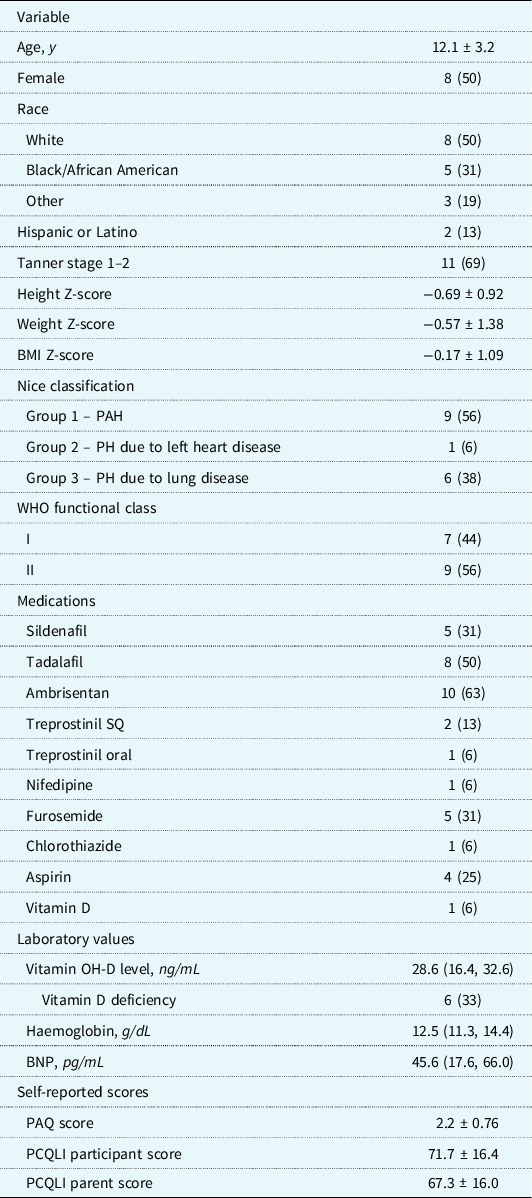
The demographic, anthropometric, and clinical characteristics of the 16 patients (mean 12.1 ± 3.2 years, 50% female) who met inclusion criteria are detailed in Table 1. Compared with the reference sample, pulmonary hypertension patients had lower height Z-scores [−0.69 ± 0.92 versus 0.16 ± 0.85 (p = 0.002)] and weight Z-scores [−0.57 ± 1.38 versus 0.35 ± 0.83 (p = 0.02)]. Body mass index Z-scores did not differ between pulmonary hypertension patients and the reference data [−0.17 ± 1.09 in pulmonary hypertension versus 0.32 ± 0.87 in reference population (p = 0.09)].
Demographic, anthropometric, and clinical characteristics of patients
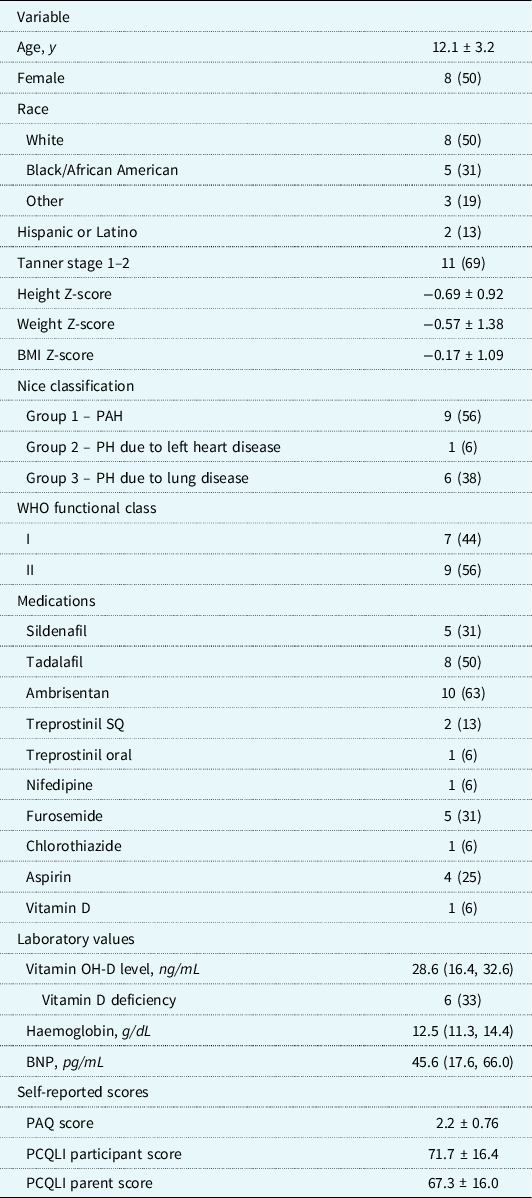
Categorical variables are expressed as percentages.
Continuous variables are expressed as median (interquartile range) or mean ± standard deviation.
BMI = body mass index; BNP = brain natriuretic peptide; PAH = pulmonary arterial hypertension; PAQ = Physical Activity Questionnaire; PCQLI = Paediatric Cardiac Quality of Life Inventory PH = pulmonary hypertension; SQ = subcutaneous; WHO = World Health Organization; y = year.
The majority of patients (56%) had pulmonary arterial hypertension (diagnostic Group 1). There were seven (44%) patients in functional class I and nine (56%) patients in functional class II. Patients described low levels of physical activity with mean physical activity questionnaire score of 2.2. There was no correlation between participant-reported and parent-reported quality of life scores (r = 0.3, p = 0.24), but the lack of association may have been driven by one participant with significant discrepancy between participant-reported (40.6) and parent-reported (86.9) quality of life scores. When this participant’s scores were excluded, there was a positive correlation between parent and participant scores (r = 0.65, p = 0.009).
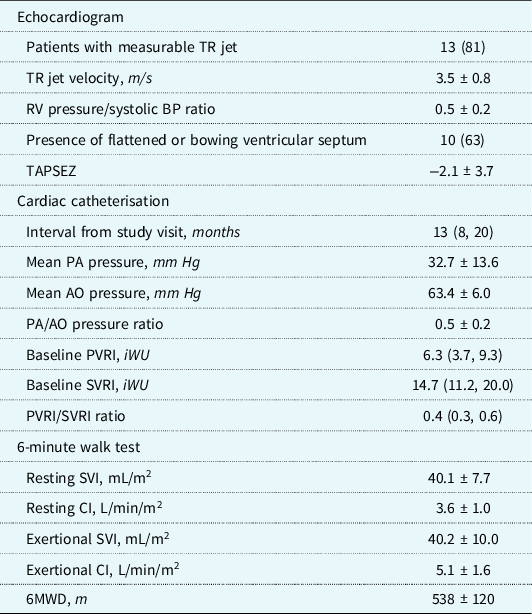
Standard of care cardiac testing is described in Table 2. Overall, the cohort had subsystemic right ventricular pressure by echocardiogram with low tricuspid annular plane systolic excursion Z-score (−2.1 ± 3.7). Cardiac catheterisation confirmed subsystemic pulmonary artery pressure and median indexed pulmonary vascular resistance of 6.3 indexed Wood units (interquartile range 3.7, 9.3). Patients demonstrated excellent functional capacity with mean 6-minute walk distance of 538 ± 120 metres.
Standard of care cardiac testing
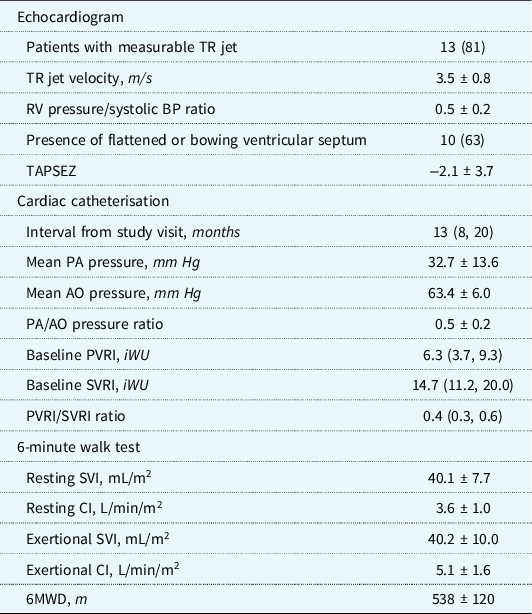
Categorical variables are expressed as percentages.
Continuous variables are expressed as median (interquartile range) or mean ± standard deviation.
AO = aorta; BP = blood pressure; CI = cardiac index; iWU = indexed Wood units; L/min/m2 = litres per minute per square metre; m = metres; mL/m2 = millilitre per square metre; mmHg = millimetres of mercury; m/s = metres per second; PA = pulmonary artery; PVRI = indexed pulmonary vascular resistance; RV = right ventricular; SVI = stroke volume indexed; SVRI = indexed systemic vascular resistance; TAPSEZ = tricuspid annular plane systolic excursion Z-score; TR = tricuspid regurgitation; 6MWD = 6-minute walk test distance.
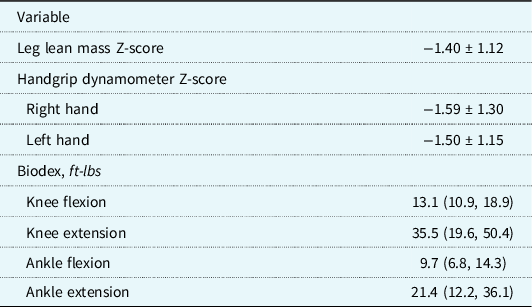
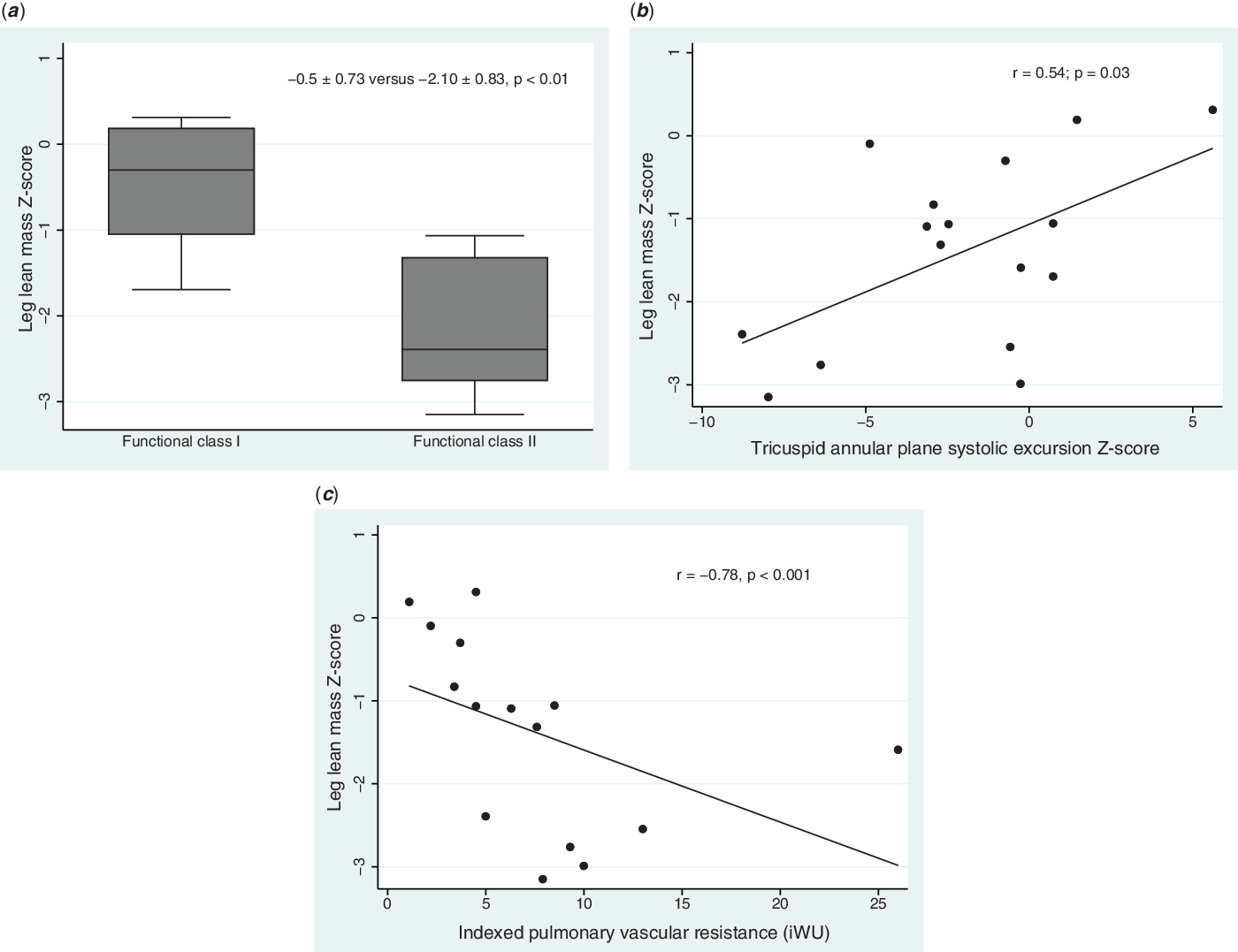
Patients’ skeletal muscle assessment is detailed in Table 3. Leg lean mass Z-scores were substantially lower in pulmonary hypertension patients compared with reference data (−1.40 ± 1.12 versus 0.0 ± 0.9, p < 0.001). There were positive associations between leg lean mass Z-score and height, weight, and body mass index Z-scores (Spearman’s correlations: height Z-score r = 0.80, p < 0.001; weight Z-score 0.69, p = 0.004; body mass index Z-score 0.51, p = 0.046). Among pulmonary hypertension patients, leg lean mass Z-score was similar in patients with pulmonary arterial hypertension (diagnostic Group 1) versus those with pulmonary hypertension due to left heart disease or lung disease (diagnostic Groups 2 or 3) (−0.99 ± 1.11 in Group 1 versus −1.93 ± 0.95 in Group 2 or 3, p = 0.09). Leg lean mass Z-score was significantly lower in those in functional class II versus I (−2.10 ± 0.83 versus −0.50 ± 0.73, p < 0.01) (Fig 1a). Leg lean mass Z-score was positively associated with right ventricular systolic function assessed by tricuspid annular plane systolic excursion Z-score (r = 0.54 for Pearson’s correlation, p = 0.03) and negatively associated with indexed pulmonary vascular resistance (r = −0.78 for Spearman’s correlation, p < 0.001) (Fig 1b and c). Leg lean mass Z-score was not associated with medication, haemoglobin, brain natriuretic peptide, vitamin D level, presence of vitamin D deficiency, right ventricular/pulmonary artery pressure by echocardiogram or cardiac catheterisation, or quality of life scores.
Skeletal muscle assessment
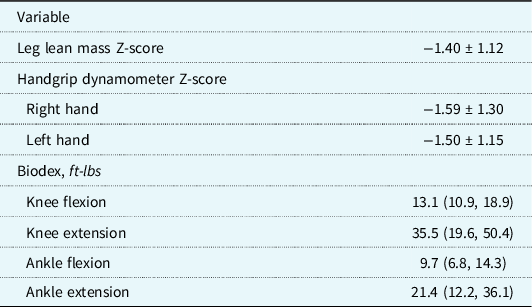
Continuous variables are expressed as median (interquartile range) or mean ± standard deviation.
ft-lbs = foot-pounds.
Leg lean mass Z-score is associated with markers of disease severity – World Health Organization functional class (a), right ventricular function by tricuspid annular plane systolic excursion Z-score (b), and cardiac catheterisation-confirmed indexed pulmonary vascular resistance (c).

Forearm strength Z-score was also significantly lower in pulmonary hypertension patients compared to reference patients (left: −1.50 ± 1.15 versus 0.0 ± 1.0, p < 0.001; right: −1.59 ± 1.30 versus 0.0 ± 1.0, p < 0.001). Lower maximal forearm strength was associated with the use of subcutaneous treprostinil (−2.68 ± 0.71 versus −1.09 ± 0.93, p = 0.04), higher mean pulmonary artery pressure (r = −0.58, p = 0.02), and higher indexed pulmonary vascular resistance (r = −0.60, p = 0.02). Maximal forearm strength was similar between the two functional classes (−1.69 ± 0.94 in functional class II versus −0.77 ± 0.98 in functional class I, p = 0.07). Forearm strength was not associated with pulmonary hypertension diagnostic group, other medications, laboratory values, or right ventricular systolic function by tricuspid annular plane systolic excursion.
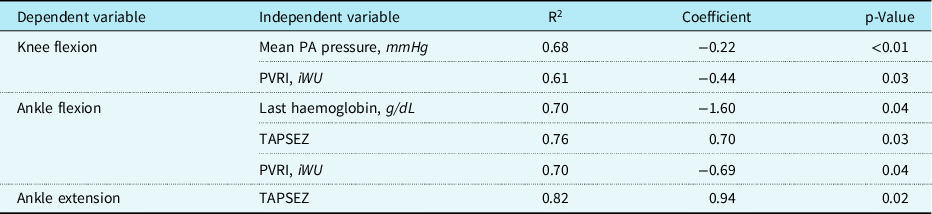
Lower extremity strength, adjusted for age, was associated with the clinical characteristics demonstrated in Table 4.
Clinical characteristics associated with lower extremity strength (adjusted for age)
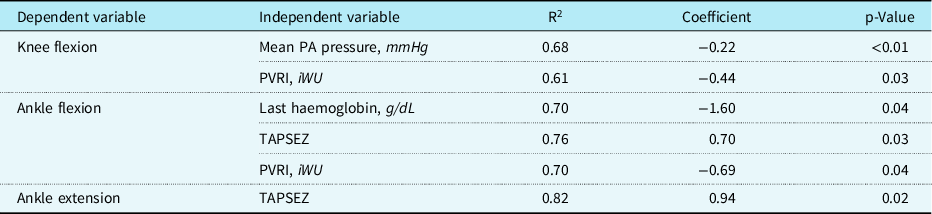
g/dL = grams per decilitre; iWU = indexed Wood units; mmHg = millimetres of mercury; PA = pulmonary artery; PVRI = indexed pulmonary vascular resistance; TAPSEZ = tricuspid annular plane systolic excursion Z-score.
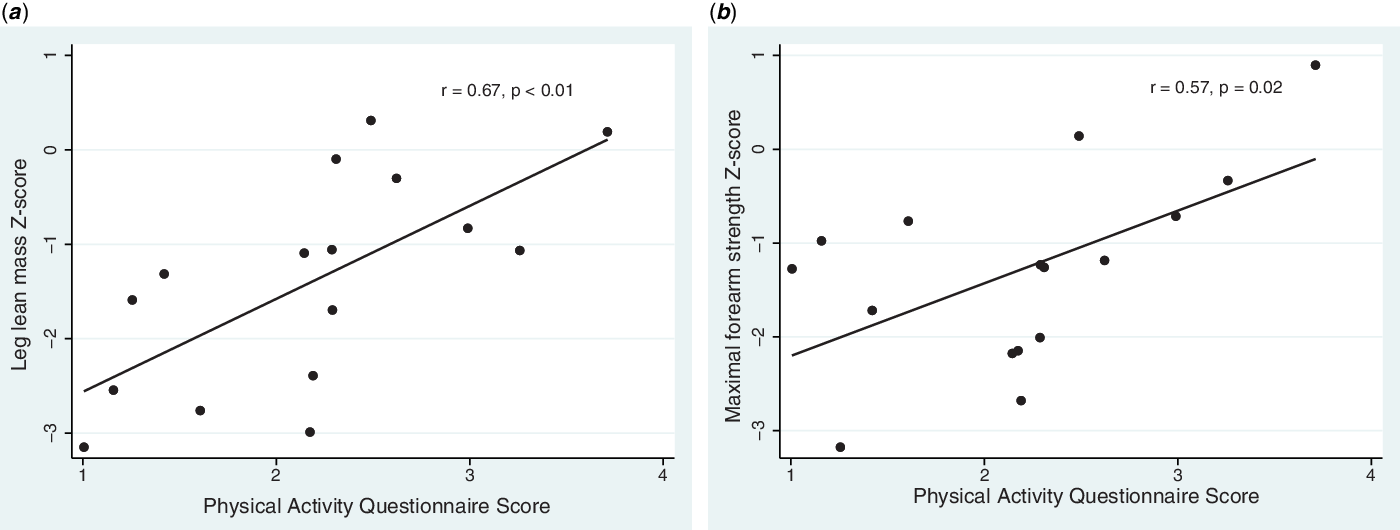
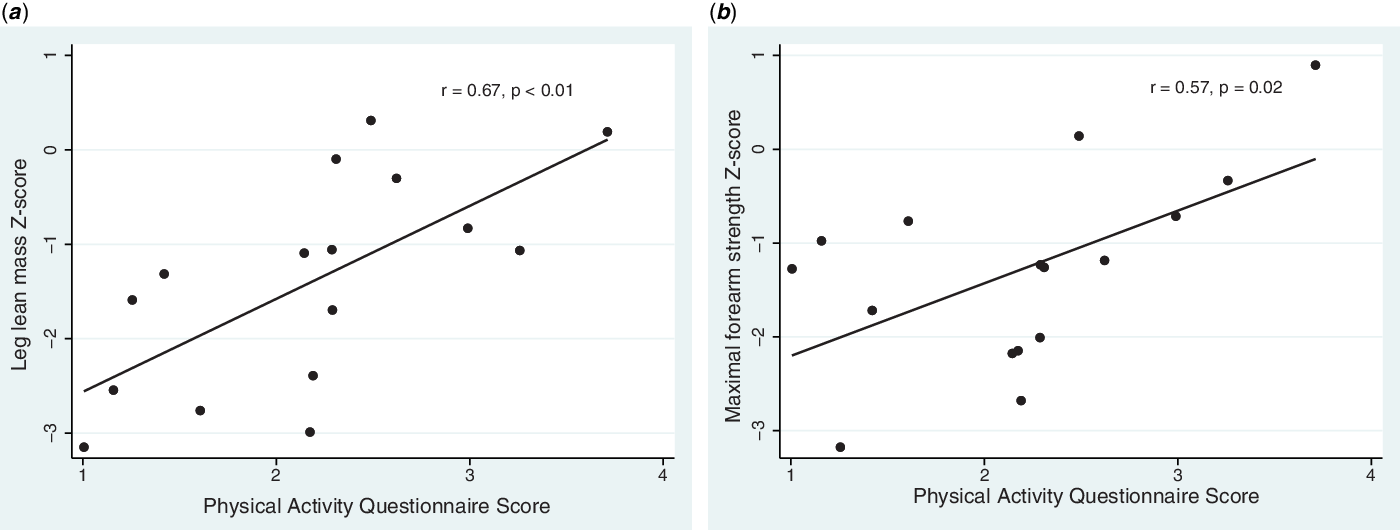
Both leg lean mass Z-score and maximal forearm strength were associated with physical activity questionnaire score [(leg lean mass Z-score: r = 0.67, p < 0.01, maximal forearm strength: r = 0.57, p = 0.02); Fig 2a and b]. Lower extremity strength, adjusted for age, was also associated with physical activity questionnaire score (knee flexion: R2 = 0.64, p = 0.01; knee extension: R2 = 0.65, p = 0.02; ankle flexion: R2 = 0.72, p = 0.03).
Leg lean mass Z-score (a) and maximal forearm strength (b) are positively associated with self-reported physical activity questionnaire score.
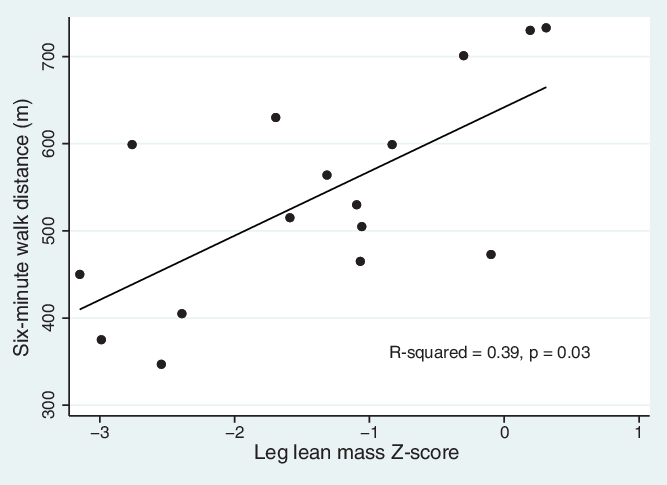
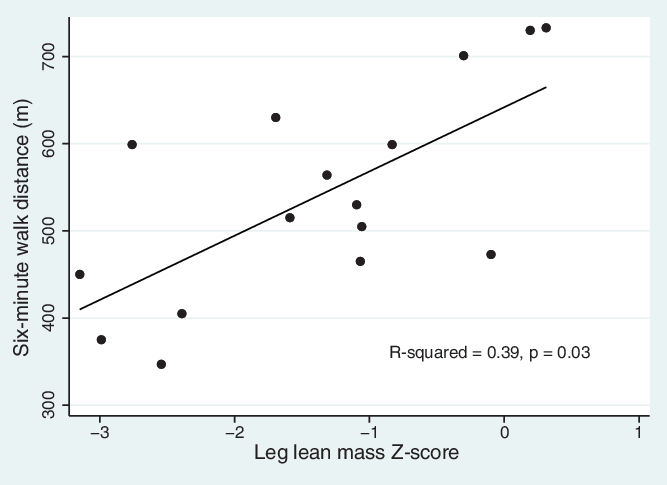
When physical activity questionnaire score was held constant, leg lean mass Z-score independently predicted 6-minute walk distance [(R2 = 0.39, p = 0.03), Fig 3]. Neither maximal forearm strength nor body mass index Z-score predicted 6-minute walk distance.
Six-minute walk distance is positively associated with leg lean mass Z-score.
Discussion
This is the first study to describe marked deficits in skeletal muscle mass and muscle strength in youth with pulmonary hypertension. Muscle deficits were associated with markers of disease severity including functional class, tricuspid annular plane systolic Z-score, and indexed pulmonary vascular resistance. Leg lean mass and muscle strength were better in those with higher self-reported physical activity scores, but leg lean mass Z-score predicted 6-minute walk test distance independent of activity level. This study highlights the marked abnormalities in body composition that may occur with serious, life-long cardiopulmonary illness. Our study generates important questions regarding the impact of muscle deficits on functional status in paediatric pulmonary hypertension and supports future study of interventions to improve body composition in this population.
Growth impairment is a marker of disease severity in paediatric chronic disease. Impaired growth has been reported in registry studies of paediatric pulmonary arterial hypertension patients.Reference Ploegstra, Ivy and Wheeler2,Reference Moledina, Hislop and Foster36–Reference Ploegstra, Zijlstra and Douwes38 In a retrospective analysis of 601 patients pooled from 4 prospective paediatric pulmonary arterial hypertension registries, median height was at the 26th percentile and 27% of the cohort had height below the 5th percentile. Abnormalities in body mass index were less severe with median body mass index at the 41st percentile and 17% of the cohort with a body mass index below the 5th percentile. Impaired growth was associated with disease severity and duration, but catch-up in height correlated with clinical improvement,Reference Ploegstra, Ivy and Wheeler2 highlighting the importance of anthropometric assessment in this population. In our small cohort including pulmonary hypertension patients from diagnostic Groups 1, 2, and 3, we also demonstrated median height Z-score of −0.69 (equivalent to the 25th percentile) and median body mass index Z-score of −0.17 (equivalent to the 43rd percentile), which differs from the current United States population in which up to 20% of youth are obese with a body mass index percentile >95th.Reference Hales, Carroll and Fryar39
Our findings show that weight, height, and body mass index are not sufficient to detect abnormalities in body composition. Dual-energy X-ray absorptiometry has been used to describe precise abnormalities in lean and fat mass associated with adverse clinical outcomes in multiple chronic diseases of youth. We observed deficits in leg lean mass that were more severe than deficits in anthropometric measures. We previously described whole-body and leg lean mass deficits in children with single-ventricle CHD after the Fontan palliation.Reference Avitabile, Leonard and Zemel3 Interestingly, body mass index Z-score was not different between Fontan and reference patients despite the marked lean mass deficits. Similarly, we did not observe differences in body mass index between pulmonary hypertension and the reference sample in this study. Dual-energy X-ray absorptiometry-derived lean mass has functional implications: it is an important predictor of pulmonary function in adolescents with cystic fibrosisReference Calella, Valerio and Thomas40,Reference Calella, Valerio and Brodlie41 and is associated with disease severity in chronic kidney diseaseReference Foster, Kalkwarf and Shults8 and Crohn’s disease.Reference Lee, Lewis and Shults42 Additionally, poor upper extremity muscle strength by handgrip dynamometer is an important disease characteristic in sickle cell disease.Reference Dougherty, Schall and Rovner22,Reference Dougherty, Bertolaso and Schall43 Similar to these other patient groups, recognition of muscle deficits in paediatric pulmonary hypertension is a critical first step to determine the effects of body composition abnormalities on patient-specific outcomes.
In our previous study of children with single-ventricle heart disease, we demonstrated that leg lean mass deficits were more severe than whole-body lean mass deficits.Reference Avitabile, Leonard and Zemel3 Since the measurement of whole-body lean mass also includes organ mass, vasculature, interstitial space, and other components, we hypothesised that the whole-body measurement may be confounded by organomegaly or oedema, a particular concern in cardiac populations with heart failure, like Fontan physiology and pulmonary hypertension. Furthermore, exercise performance was significantly associated with leg lean mass Z-score, but not whole-body lean mass Z-scores in that group,Reference Avitabile, Goldberg and Leonard4 suggesting that leg lean mass may provide a more accurate representation of metabolically active lean mass and can be used as a surrogate for skeletal muscle. The current study supports this principal as leg lean mass Z-score could predict 6-minute walk distance in paediatric pulmonary hypertension patients, but body mass index Z-score could not.
Skeletal muscle dysfunction is associated with exercise intolerance in adult pulmonary hypertension patients.Reference Bauer, Dehnert and Schoene9 Skeletal muscle contraction augments pulmonary blood flow at the initiation of upright exercise in the normal circulation,Reference Guyton, Douglas and Langston44 but skeletal myopathy may critically limit that mechanism. Impaired skeletal muscle oxygen extraction, high anaerobic enzyme profile, decreased angiogenesis, and decreased muscle contractility have been described in adult pulmonary hypertension patients.Reference Breda, de Albuquerque and Jardim45–Reference Tolle, Waxman and Systrom48 Forearm muscle strength is worse in adult pulmonary hypertension patients compared with control patients, and worse forearm strength is associated with worse 6-minute walk distance.Reference Bauer, Dehnert and Schoene9 We are the first to demonstrate low leg lean mass Z-score and handgrip strength in association with lower 6-minute walk distance in children with pulmonary hypertension, suggesting that skeletal muscle evaluation may be an important addition to the risk stratification and functional assessment of these patients.Reference Abman, Hansmann and Archer49,Reference del Cerro, Abman and Diaz50
Skeletal muscle atrophy progresses in the setting of physical inactivity.Reference Jackman and Kandarian51–Reference Trappe, Trappe and Gallagher53 Children with pulmonary hypertension engage in less moderate to vigorous physical activity assessed by triaxial accelerometer compared to peers,Reference Zijlstra, Ploegstra and Vissia-Kazemier11 but the relationship between physical activity and lean mass in paediatric pulmonary hypetension had not been previously described. This is the first study to report the association between self-reported physical activity scores and leg lean mass in paediatric pulmonary hypertension. The Physical Activity Questionnaire scores of pulmonary hypertension patients in our study were lower than in a population of children with CHD in whom median Physical Activity Questionnaire score was 2.6 (interquartile range 1.9–3) and was significantly related to accelerometer-derived measures of physical activity.Reference Voss, Dean and Gardner54 In the current study, we demonstrated better muscle mass and strength in those with higher activity scores. These findings are similar to our longitudinal study in paediatric Crohn’s disease in which lean mass and muscle strength were positively associated with time spent in moderate to vigorous physical activity by triaxial accelerometer and negatively associated with increasing clinical disease activity.Reference Moledina, Hislop and Foster36 The causal relationships between leg lean mass, physical activity, and functional status (i.e., 6-minute walk distance) in paediatric pulmonary hypertension cannot be inferred from the current cross-sectional analysis. Low leg lean mass Z-score may be a marker of disease severity or an independent target that can be improved. More symptomatic paediatric pulmonary hypertension patients may engage in less physical activity and, therefore, acquire less lean mass. Alternatively, patients with less lean mass may find exercise more difficult and engage in less regular physical activity due to exertional symptoms, fear, or lack of self-efficacy. Future longitudinal studies should explore the mechanisms of interaction between physical activity, leg lean mass, and disease progression in paediatric pulmonary hypertension.
There were several limitations to this study. Some of the associations between disease-specific characteristics and leg lean mass Z-score were directionally consistent but did not reach statistical significance, possibly due to lack of statistical power with our small sample size. The cross-sectional design did not allow us to assess the effect of pulmonary hypertension treatment or change in functional class (either worsening or improvement) on leg lean mass. We only included less symptomatic patients in functional class I and II. More symptomatic patients with advanced disease likely have more severe lean mass deficits and could benefit most from interventions to improve lean mass. Future studies should include pulmonary hypertension patients with advanced functional class. Finally, this study included participant-reported physical activity scores. Although the scores were positively associated with leg lean mass Z-score, future studies will be strengthened by the use of wearable activity monitors to measure physical activity in association with lean mass deficits.
In conclusion, we found marked deficits in leg lean mass (a surrogate for skeletal muscle) and muscle strength in children and adolescents with pulmonary hypertension. Deficits were associated with disease severity and functional status. Patients with higher levels of reported physical activity had less severe deficits. Future studies should focus on the mechanisms underlying these associations in order to design effective interventions, such as exercise rehabilitation programmes, to improve lean mass and functional status in youth with pulmonary hypertension.
Acknowledgements
The authors have no acknowledgement to report.
This research was funded by a Children’s Hospital of Philadelphia Metabolism, Growth, and Development Research Affinity Group Pilot Grant (C.A).
The authors have no conflict of interest to report.
The authors assert that all procedures contributing to this work comply with the ethical standards of the relevant national guidelines on human experimentation of the Belmont Report and with the Helsinki Declaration of 1975, as revised in 2008, and have been approved by the institutional committee of the Children’s Hospital of Philadelphia.