Implications
Halophytic forages are increasingly important for the livestock industry because of the increase in saline land. Economic and environmental factors have led to an increased use of salt-tolerant plants around the world in small ruminant production. The effect of saltbush or salt intake on sheep reproduction is reviewed. In females, exposure to salt intake during pregnancy induces hormonal changes, which can affect the offspring via a mechanism called fetal programming. These adaptive responses of sheep to salt or saltbush exposure give a great potential to the use of saltbush in animal production systems.
Introduction
Saltbush and other salt-tolerant plants are important fodder for small ruminants in salt land areas. The effect of the ingestion of saltbush, containing large concentrations of sodium chloride salt, on the physiology and reproductive biology of sheep is not fully understood. Nevertheless, recent studies have revealed some potential advantages of the use of saltbush in sheep production. This paper reviews the effect of saltbush or salt intake (defined as a percentage of sodium chloride) on sheep reproduction. First, we summarize the economic and environmental factors that have led to an increased use of salt tolerant plants around the world in small ruminant production. Then, we discuss the effect of saltbush or salt ingestion on feed intake, cognizant of the important role of nutrition in reproduction. We address the effect of salt and saltbush intake on the reproductive capacity of males and females. For the female, we describe the hormonal changes induced by salt intake during pregnancy. In the last section, after briefly introducing the concept of fetal programming, we review the modifications of the offspring born from ewes exposed to salt or saltbush during pregnancy. In conclusion, we discuss the potential use of saltbush in animal production systems and the need for future research to better understand the adaptive responses of sheep to salt or saltbush exposure.
Why are sheep fed plants containing high salt concentration?
The past management of land and climatic changes, alone or acting together, have led to the accumulation of excessive salts in land and water, a phenomenon named salinity. At sufficient levels, salinity impacts on human and natural assets such as plants, animals, aquatic ecosystems, infrastructure, water supplies and agriculture. In 2000, it was estimated that the total global area of salt-affected soils (soils containing high concentrations of soluble salts and/or exchangeable sodium that inhibit plant growth and have an electrical conductivity of 4 dS/m or more) exceeded 8 million km2 (3.1% of the total land surface), an area that extends over every continent except Antarctica (Martinez-Beltran and Manzur, Reference Martinez-Beltran and Manzur2005). Salinity is one of the most devastating forms of land degradation and is an increasing problem in agriculture worldwide, especially in Australia, which is one of the saltiest continents on earth (Ghassemi et al., Reference Ghassemi, Jakeman and Nix1995). Salinity occurs through natural (weathering of parent materials containing soluble salts or deposition of oceanic salt carried in wind and rain) or human-induced processes (land clearing and replacement of perennial vegetation with annual crops and irrigation schemes). There are three major types of salinity, groundwater-associated salinity, transient salinity and irrigation salinity. Groundwater salinity occurs when shallow-rooted pastures and annual crops replace native vegetation with deep roots. The consequent rise of groundwater levels brings up soluble salts stored in the soil. Over time, the top 1 m of soil becomes salinized and saturated with water (waterlogging). In Australia, it is estimated that 57 000 km2 of agricultural and pastoral zones are affected by salinity, induced by saline groundwater and shallow water tables. Furthermore, 2.5 million km2 are affected by transient salinity, a type of salinity resulting from low rainfall (Rengasamy, Reference Rengasamy2006).
Salinization of agricultural land creates economic and environmental land use problems (Masters et al., Reference Masters, Norman and Dynes2001). The rehabilitation of saline land for profitable agriculture is highly dependent on the salinity of the site, the economics of revegetation and, importantly, the appropriate plant species used for revegetation. Saltbush (Atriplex spp.) is the most common halophytic shrub grown on saltland. Saltbush has three main characteristics that may limit its use (i) low digestibility (∼54%) and low energy (Norman et al., Reference Norman, Freind, Masters, Rintoul, Dynes and Williams2004), (ii) anti-nutritional compounds such as oxalates (6.2%) and total phenols (1.36%; Abu-Zanat et al., Reference Abu-Zanat, Ruyleb and Abdel-Hamid2004) and (iii) high salt content, with ∼25% dry matter (DM) of NaCl (Norman et al., Reference Norman, Freind, Masters, Rintoul, Dynes and Williams2004). In addition to high amounts of NaCl, saltbush also contains high levels of other minerals such as potassium (3.6%), magnesium (0.8%) and sulfur (0.4%). Despite these factors, saltbush can be grazed and has the potential to be a valuable source of protein (18% crude protein (CP)) and vitamin E, both beneficial for sheep (Norman et al., Reference Norman, Freind, Masters, Rintoul, Dynes and Williams2004; Pearce et al., Reference Pearce, Masters, Smith, Jacob and Pethick2005). The complex composition of saltbush makes the interpretation of results somewhat difficult when the plant is fed to sheep. A systematic approach aiming at understanding the role of sodium chloride salt in saltbush has been taken by different groups by developing a model in which sheep are fed a diet supplemented with salt (high-salt diet containing 5% to 20% NaCl; Meyer and Weir, Reference Meyer and Weir1954; Wilson, Reference Wilson1966c; Wilson and Hindley, Reference Wilson and Hindley1968; Hemsley et al., Reference Hemsley, Hogan and Weston1975; Masters et al., Reference Masters, Rintoul, Dynes, Pearce and Norman2005; Blache et al., Reference Blache, Grandison, Masters, Dynes, Blackberry and Martin2007b; Digby et al., Reference Digby, Masters, Blache, Blackberry, Hynd and Revell2008; Chadwick et al., Reference Chadwick, Vercoe, Williams and Revell2009a, Reference Chadwick, Vercoe, Williams and Revell2009b and Reference Chadwick, Vercoe, Williams and Revell2009c). Unfortunately, very few studies have compared the effect of both the saltbush plant itself and high salt on the reproductive physiology of sheep. Before addressing the specific effect of the ingestion of salt on the reproductive capacity of sheep, the effects of salt on voluntary feed intake needs to be considered, because of the importance of the interactions between feed intake and reproduction (Blache et al., Reference Blache, Chagas and Martin2007a).
High-salt intake and feed intake in non-pregnant sheep
Ingestion of salt (sodium chloride) in water or food, as salt added to the diet or while grazing saltbush, has an impact of the feed intake and water intake of sheep, and on the hormonal control of both energy balance and salt and water balance. The level of intake of salty feed is influenced by both salt content and the quality of the feed (Wilson, Reference Wilson1966a, Reference Wilson1966b and Reference Wilson1966c). Feed intake is depressed when animals consume around 60 g of salt per day, and as salt concentrations increase further, the intake of feed further decreases (Wilson, Reference Wilson1966c; Wilson and Hindley, Reference Wilson and Hindley1968; Masters et al., Reference Masters, Rintoul, Dynes, Pearce and Norman2005; Blache et al., Reference Blache, Grandison, Masters, Dynes, Blackberry and Martin2007b). However, the magnitude of the depression of intake is dependent on the type of feed (halophytic plants or constituents of diets with salt added) and is reduced more with the higher quality and digestibility of feed and greater moisture content in the leaves (halophytic plants). In addition, in sheep, access to fresh water improves the intake of halophytic plants such as Atriplex (saltbush) and Kochia (bluebush) (Wilson, Reference Wilson1966b; Wilson and Hindley, Reference Wilson and Hindley1968). In fact, the daily sodium intake is related to voluntary water consumption with a ratio of sodium chloride intake to total water intake comprised between 1.8% and 2.2% (Wilson, Reference Wilson1966b). In the field, sheep grazing saltbush can consume up to 200 g of NaCl per day (Wilson, Reference Wilson1966b). The depression of intake and the associated reduction in body weight (BW) while grazing saltbush can be reduced with supplementation with a quality low-salt pasture, hay or with grain, such as barley (Warren et al., Reference Warren, Bunny and Bryant1990; Hopkins and Nicholson, Reference Hopkins and Nicholson1999; Franklin-McEvoy, Reference Franklin-McEvoy2002; Pearce et al., Reference Pearce, Masters, Friend, Rintoul and Pethick2002). However, even when supplements are given, the diet of sheep grazing saltbush will often contain ∼15% NaCl. In addition to the decrease of intake, sheep consuming high salt in their drinking water (<1.5% NaCl), or receiving a daily oral dose of salt solution (40 g NaCl, 25% w/v solution 160 ml of distilled water), increase their water consumption, presumably in an attempt to increase the urinary excretion of sodium (Wilson and Dudzinski, Reference Wilson and Dudzinski1973; Hamilton and Webster, Reference Hamilton and Webster1987). However, a salt concentration of 2% or greater ingested from drinking salty water alone is associated with a severe reduction in food intake and possibly death (Peirce, Reference Peirce1957; Potter, Reference Potter1963 and Reference Potter1968; Wilson, Reference Wilson1966c; Wilson and Dudzinski, Reference Wilson and Dudzinski1973; Hamilton and Webster, Reference Hamilton and Webster1987). The different sensitivity of feed intake to ingestion of salt either from food or drinking water might be due to different responses of the digestive system of sheep to salt diet and salty water.
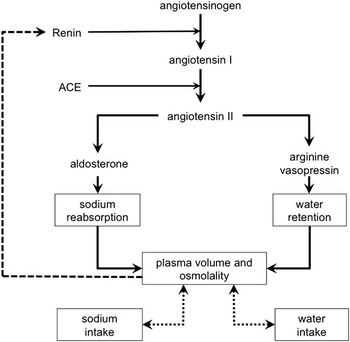
Regardless of the source of salt, sheep can tolerate salt because of the adaptive capacity of their kidney function (Potter, Reference Potter1963 and Reference Potter1968). Potassium and chloride concentrations in plasma both significantly increase in response to increased salt intake, while calcium and magnesium are reduced, at least in sheep (Potter et al., Reference Potter, Walker and Forrest1972). Plasma potassium increases were associated with reduced secretion of corticosteroids and the increase of plasma chloride might be a reflection of greater rumen chloride concentrations as observed previously in non-pregnant sheep drinking 1.3% saline water (Potter et al., Reference Potter, Walker and Forrest1972). Sodium and chloride ions can be excreted at a greater rate following ingestion of high salty water by (i) an increase in glomerular filtration rate and filtration fraction without any pronounced change in renal plasma flow (Potter, Reference Potter1968), (ii) a reduction of reabsorption of sodium chloride in individual nephrons of the sheep kidney and (iii) an increase in water retention. The regulation of the salt and water balance is under the control of the renin-angiotensin system (RAS), a system that comprises hormones such as renin, angiotensin I and II, aldosterone-controlling sodium retention and arginine vasopressin (AVP)-controlling water reabsorption (see Figure 1 for details). When excess salt is consumed, plasma osmolality is increased which has a negative feedback on aldosterone, decreasing concentrations to promote sodium excretion. Furthermore, the increase in plasma osmolality increases water intake and osmoreceptors send a signal to the pituitary gland to increase AVP. In addition, the RAS has an effect on cardiovascular function. Briefly, aldosterone action on sodium retention induces an increase in plasma volume, which is usually accompanied by high blood pressure. Moreover, the increase in blood pressure is also due to vasoconstriction induced by angiotensin independently of its effect on the kidney function (August, Reference August2000).
The renin-angiotensin system is responsible for the maintenance of salt and water balance. Renin catalyses the conversion of angiotensinogen into angiotensin I which is converted by Angiotensin-converting enzyme (ACE) into angiotensin II. Angiotensin II controls the secretion of aldosterone, which stimulates sodium retention and arginine vasopressin (AVP) that stimulates water reabsorption by the kidney. Plasma volume and plasma osmolality control salt appetite and drinking behavior. High-salt intake leads to change in both plasma volume and osmolality, which exert a negative feedback on the secretion of renin. Ultimately, high-salt consumption induces a decrease in aldosterone concentration, which reduces sodium reabsorption and increases sodium excretion. High-salt intake does not induce change in AVP plasma concentration, if the intake of fresh water is sufficient to maintain a salt and water balance (Cowley et al., Reference Cowley, Skelton and Merrill1986).

High-salt intake and wool and meat production
High-salt diets have a positive effect on wool production. Wool growth is increased in non-pregnant sheep fed high-salt diets (Hemsley et al., Reference Hemsley, Hogan and Weston1975; Masters et al., Reference Masters, Rintoul, Dynes, Pearce and Norman2005) and wool production is increased in offspring born to ewes fed high salt during pregnancy and lactation (either a pelleted diet containing added salt or saltbush; Chadwick et al., Reference Chadwick, Vercoe, Williams and Revell2009c). Wool production is further increased if the offspring were grazing saltbush compared to normal pastures (Chadwick et al., Reference Chadwick, Vercoe, Williams and Revell2009c). The mechanisms behind the effect of high salt on wool production are unclear. The consumption of high salt increases the rate of passage of nutrients because of the associated increase in water intake. The high water intake could result in lower percentage of protein degradation by microorganisms in the rumen thus more protein is readily available for wool growth. Furthermore, Chadwick et al. (Reference Chadwick, Vercoe, Williams and Revell2009c) hypothesized that sodium may be directly involved with wool growth because they observed a strong correlation between plasma sodium of the ewe at day 130 of gestation and fleece weight, however the mechanisms responsible for this direct action of sodium are unknown.
Meat quality is also thought to be affected by high salt consumption. The ingestion of a high-salt load from the consumption of halophytes, saltbush and barley supplement or saline water reduces the fat content of the carcass (Walker et al., Reference Walker, Potter and Jones1971; Kraidees et al., Reference Kraidees, Abouheif, Al-Saiady, Tag-Eldin and Metwally1998; Pearce et al., Reference Pearce, Pethick and Masters2008). This decrease in fatness can be explained by the reduced fermentation of organic matter in the rumen and lower absorption of volatile fatty acids associated with the consumption of a high-salt diet (Hemsley et al., Reference Hemsley, Hogan and Weston1975). The sheep fed saltbush and barley supplement could then have a decreased energy availability, which in addition to the higher energy requirements to process salt (Arieli et al., Reference Arieli, Naim, Benjamin and Pasternak1989) would decrease the availability of energy for lipogensis. Sheep fed saltbush and barley supplement have also a higher proportion of lean meat compared to controls (Pearce et al., Reference Pearce, Pethick and Masters2008). Lean muscle deposition is driven by a higher protein-to-energy ratio available in the diet (Searle et al., Reference Searle, Graham and Donnelly1982; Campbell et al., Reference Campbell, Tavener and Curic1984; Campbell, Reference Campbell1988), so, as described above, the increased rate of passage and protein available in response to salt intake could explain the associated increase in lean meat (Hemsley et al., Reference Hemsley, Hogan and Weston1975). It has to be noted that the pH or the color of meat or any eating quality attributes were not modified by feeding saltbush and barley supplement (Pearce et al., Reference Pearce, Pethick and Masters2008).
High-salt intake and reproductive capacity of the male sheep
In males, there is limited data available on the effects of high salt on reproduction. High dietary salt diet (3.5% and 5% NaCl for 6 to 8 weeks) reduced testis mass and spermatogenesis in male golden spiny mice (Acomys russatus) but not in spiny mouse (Acomys cahitinus; Wube et al., Reference Wube, Haim and Fares2009). The difference between the two species could be explained by the adaptation to different environments; a desert environment for A. russatus and a Mediterranean environment for A. cahitinus, presumably resulting in different renal capacities in the two species. To our knowledge, there are no data on other mammals, including production animals. However, salt intake could decrease the reproductive capacity of rams because of its action on the RAS system (Leung and Sernia, Reference Leung and Sernia2003). Components of the RAS, can influence male reproductive capacity including sperm maturation and expulsion, although an effect on fertility is presently unclear (Leung and Sernia, Reference Leung and Sernia2003). For example, shortly before puberty, testicular renin, angiotensin converting enzyme (ACE) and angiotensin increase concomitantly with plasma gonadotropins suggesting that these components of the RAS are important for puberty and male reproduction (Hohlbrugger et al., Reference Hohlbrugger, Schweisfurth and Dahlheim1982; Parmentier et al., Reference Parmentier, Inagami, Poschet and Desclin1983; Speth et al., Reference Speth, Daubert and Grove1999).
High-salt intake and reproductive capacity of the female sheep
Exposure to salt in drinking water has a more dramatic effect on the reproductive success of ewes than ingestion of salt in the diet. Ewes exposed to 1.3% total salts or 0.9% sodium chloride in drinking water before mating, on occasions, failed to conceive (Peirce, Reference Peirce1968) although no further studies support this result which may have been due to the small number of animals used in the study. However, concentrations of sodium chloride up to 1.3% in drinking water causes distress at parturition in some ewes (not defined by the author; however possibly a result of hormonal disturbances, i.e. progesterone concentrations) which results in complicated births (Peirce, Reference Peirce1968; McIntosh and Potter, Reference McIntosh and Potter1972; Potter and McIntosh, Reference Potter and McIntosh1974). The susceptibility of pregnant ewes to salt water ingestion increases with age and/or multiple births (Potter and McIntosh, Reference Potter and McIntosh1974). Concentrations of salt in drinking water, as low as 1.3%, can cause neonatal mortalities in lambs (30% to 50% of lambs born to ewes drinking salty water; Peirce, Reference Peirce1968; McIntosh and Potter, Reference McIntosh and Potter1972; Potter and McIntosh, Reference Potter and McIntosh1974). The reason for these lamb deaths is not known. The effect of drinking saline water containing 1.3% sodium chloride on pregnant ewes is associated with changes in progesterone (particularly those carrying twins) and electrolyte concentrations of blood plasma but the biological significance of the association is not clear.
In contrast to pregnant ewes drinking saline water, pregnant ewes fed a high-salt diet during gestation can maintain their pregnancy, and the lambs are born within normal measures of weight and crown-to-rump length (Meyer and Weir, Reference Meyer and Weir1954; Digby et al., Reference Digby, Masters, Blache, Blackberry, Hynd and Revell2008; Chadwick et al., Reference Chadwick, Vercoe, Williams and Revell2009a). Feeding of ewe lambs from weaning through pregnancy with diets containing sodium chloride (0.5% to 13.1%) had no major adverse effects on their growing and fattening performance or their breeding capacity (Meyer and Weir, Reference Meyer and Weir1954). Similarly, in a recent study, feeding pregnant ewes with high-salt diets (lupin and barley grain, 13% NaCl, 18.8 CP (% of DM; Digby et al., Reference Digby, Masters, Blache, Blackberry, Hynd and Revell2008) from the time of conception until parturition, did not compromise reproductive efficiency (Digby et al., Reference Digby, Masters, Blache, Blackberry, Hynd and Revell2008). Lambs born of ewes fed high-salt diet (13% NaCl) had a normal crown-to-rump length, birth weight and a similar survival rate as lambs born of ewes fed a diet containing typically standard levels of salt (0.5% NaCl; Digby et al., Reference Digby, Masters, Blache, Blackberry, Hynd and Revell2008). In addition, the high-salt diet was equally well tolerated during pregnancy in maiden ewes and multiparous ewes, regardless of the number of lambs borne (Digby et al., Reference Digby, Masters, Blache, Blackberry, Hynd and Revell2008; Chadwick et al., Reference Chadwick, Vercoe, Williams and Revell2009a).
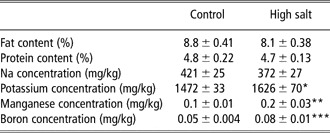
Ingestion of salt in the diet during lactation had no effect on lamb survival when the amount of salt in the diet was lower than 13.1% (Meyer and Weir, Reference Meyer and Weir1954). Similarly, the addition of large amounts of sodium chloride to the ewes’ rations did not affect gains of the lambs (Meyer and Weir, Reference Meyer and Weir1954). Milk from ewes exposed to a high-salt diet had a normal fat and protein composition and no increase in Na concentration, but had increased concentrations of potassium, manganese and boron (Digby et al., Reference Digby, Masters, Blache, Blackberry, Hynd and Revell2008; Chadwick et al., Reference Chadwick, Vercoe, Williams and Revell2009a; Table 1). It has to be noted that lamb mortality and birth weight of lambs were not affected by feeding pregnant ewes a high-salt diet (14% NaCl) or grazing ewes on saltbush (Chadwick et al., Reference Chadwick, Vercoe, Williams and Revell2009a). The pregnancy success rate and the lamb mortality illustrate that ewes are able to adequately regulate salt and water balance, and adapt metabolically to the challenges associated with the high ingestion salt for their diet.
Milk composition for ewes fed a high-salt diet (13% NaCl) or a control diet (0.5% NaCl) during pregnancy: fat and protein data (Digby et al., Reference Digby, Masters, Blache, Blackberry, Hynd and Revell2008), mineral concentrations (Chadwick et al., Reference Chadwick, Vercoe, Williams and Revell2009a)

*P < 0.05, **P < 0.01, ***P < 0.001 for comparisons with their respective control treatments.
High-salt intake and endocrinology of the pregnant ewe
Pregnant ewes fed high-salt diets are faced with physiological ‘conflicts’ in the activation of the RAS. Pregnancy is characterized by sodium retention and increased extracellular volume necessary for the maintenance of the mother and growth of the fetus (Davison and Lindheimer, Reference Davison and Lindheimer1989). In contrast to the response of RAS to high-salt intake during pregnancy, the RAS of humans is substantially activated with both increased plasma renin activity and plasma angiotensin II concentrations (Blackburn, Reference Blackburn2003). In addition, aldosterone concentrations increase and cause an increase in blood volume resulting in high sodium absorption and water retention, a response in opposition with the described effect of high intake of salt (see above). Similarly, despite the increase in plasma volume, blood pressure falls during normal pregnancy (Wilson et al., Reference Wilson, Morganti, Zervoudakis, Letcher, Romney, Von Oeyon, Papera, Sealey and Laragh1980); another physiological response oppose to that induced by high intake of salt. These physiological ‘conflicts’ result in the specific activation of the RAS in response to high-salt intake during pregnancy. In humans, sodium loading during normal pregnancy results in an increase in BW, plasma volume and sodium excretion (Brown et al., Reference Brown, Nicholson and Gallery1988). Furthermore, plasma renin activity, as well as plasma and urinary aldosterone are significantly suppressed during salt loading and pregnancy. It has also been shown in rats that high sodium intake during pregnancy (0.9% or 1.8% in water) results in a reduction of plasma renin activity and aldosterone concentration. However, there is no decrease in blood pressure essential during pregnancy at 0.9% NaCl (Beausejour et al., Reference Beausejour, Auger, St-Louis and Brochu2003). In contrast, an intake of 1.8% NaCl results in an increase in systolic blood pressure which is similar to rabbits where dietary sodium loading during pregnancy increases the mean arterial pressure (Milton et al., Reference Milton, Lee, Calvin and Oakes1983). This salt-induced hypertension during pregnancy represents a threat to the health of both mother and fetus.
In pregnant ewes fed salt, the regulation of salt and water balance is achieved through a decrease in plasma renin activity, which in turn lowers the production of angiotensin II and the secretion of aldosterone (Digby et al., Reference Digby, Masters, Blache, Blackberry, Hynd and Revell2008; Chadwick et al., Reference Chadwick, Vercoe, Williams and Revell2009a), but does not involve a concomitant effect on AVP. Plasma concentrations of AVP do not increase, despite high-salt ingestion and the water-retaining requirements of pregnancy, possibly because the ewes had free access to fresh water. In this case, the ewes were able to increase their water consumption above normal levels (Hamilton and Webster, Reference Hamilton and Webster1987; Meintjes and Olivier, Reference Meintjes and Olivier1992). Water consumption increased nearly twofold in early pregnancy in ewes fed the high-salt diet. The high intake of water could also explain the limited response in aldosterone because of the dilution of sodium in the rumen.
The decline in aldosterone concentrations was probably the most important adaptive mechanism that allowed the ewes to successfully complete pregnancy while consuming a high-salt diet. When pregnant ewes were fed the control diet, aldosterone concentrations increased as pregnancy progressed. The higher aldosterone resulted in increased water reabsorption in the kidneys, and thus extracellular fluid increased as part of a normal pregnancy. When pregnant ewes were fed the high-salt diet, the mechanism of increased aldosterone concentration was apparently not required as the high-salt ingestion triggered an increased water intake, which may have sufficiently increased extracellular volume to reach the ‘target’ level for a pregnant ewe. Therefore, pregnant ewes fed high salt are likely able to avoid complications such as hypertension (Rafestin-Oblin et al., Reference Rafestin-Oblin, Couette, Barlet-Bas, Cheval, Viger and Doucet1991) or neonatal mortalities (Potter and McIntosh, Reference Potter and McIntosh1974) by reducing their plasma aldosterone below the concentration in control animals.
In addition to the changes of the RAS system, ingestion of salt during pregnancy could have metabolic consequences (Digby et al., Reference Digby, Masters, Blache, Blackberry, Hynd and Revell2008). Ingestion of high salt decreases both insulin and leptin concentrations through a specific and unknown mechanism independent of changes in feed intake or BW (Digby et al., Reference Digby, Masters, Blache, Blackberry, Hynd and Revell2008). For example, the decrease in insulin concentrations was not associated with low glucose levels (Digby et al., Reference Digby, Masters, Blache, Blackberry, Hynd and Revell2008). The role and importance of those changes in some metabolic hormones in the mother are not understood.
Salt intake affects the concentrations of plasma progesterone, a hormone with a critical role during pregnancy. High concentrations of progesterone in early gestation are beneficial to embryo survival (Parr, Reference Parr1992) but a rapid decline in progesterone is essential to the onset of parturition (Rurak, Reference Rurak2001). Elevated progesterone levels were observed in twin-bearing ewes that consumed salty water (Potter and McIntosh, Reference Potter and McIntosh1974) while progesterone concentrations throughout pregnancy were not affected by the consumption of a high salt in the diet in single-bearing ewes (Digby et al., Reference Digby, Masters, Blache, Blackberry, Hynd and Revell2008). However, the increase in plasma progesterone in pregnant ewes drinking water containing 1.3% sodium chloride, particularly those carrying twins, could be due to changes in the metabolic clearance of progesterone via the liver and associated drop of food intake. In non-pregnant sheep, feed intake is inversely related to plasma progesterone concentrations probably because of changes in hepatic portal blood flow and the resulting clearance rate of progesterone (Williams and Cumming, Reference Williams and Cumming1982; Parr et al., Reference Parr, Davis, Miles and Squires1993a and Reference Parr, Davis, Miles and Squires1993b).
Fetal programming during intra–utero exposure to salt
High levels of salt intake by the mother during pregnancy can also affect the physiology of the offspring by the process of fetal programming. In this section, we describe fetal programming giving examples in sheep before reviewing the fetal programming of behavior and endocrine systems in lambs exposed to elevated levels of salt during in utero life.
Fetal programming in sheep
Although there seems to be little or no direct effect of salt in the diet on reproduction in ewes or on the physical characteristics of the offspring, recent studies have shown that the physiology of the offspring born to sheep fed high-salt diet during pregnancy is altered. These changes are observed later in life and are the result of fetal programming following the ingestion of salt by the mother. Fetal programming is a phenomenon that results when, for example, manipulation of maternal dietary intake can lead to behavioral (e.g. diet selection and intake; Curtis et al., Reference Curtis, Krause, Wong and Contreras2004) and physiological (e.g. renal function and the renin-angiotensin system; Arguelles et al., Reference Arguelles, Lopez-Sela, Brime, Costales and Vijande1996) changes of the offspring later in life.
A large body of research has investigated fetal programming although the precise definition is still evolving (Schwartz and Morrison, Reference Schwartz and Morrison2005). Fetal programming was first associated with deprivation during fetal gestation and small birth weight but now is further defined as the impact and mechanisms of change to physiological regulatory systems that occur in response to maternal environment before there is any direct impact on the fetus (Schwartz and Morrison, Reference Schwartz and Morrison2005). The majority of fetal programming has been investigated following manipulations to the maternal environment around the time of pregnancy which include undernurition, overfeeding (i.e. high fat and high protein diets) and exposure to glucocorticoids (see review Schwartz and Morrison, Reference Schwartz and Morrison2005), however other research also includes manipulations of temperature and placental ligation (Ozanne, Reference Ozanne2001; Wells, Reference Wells2002; Gatford et al., Reference Gatford, Simmons, DeBlasio, Robinson and Owens2010). The manipulations have resulted in fetal programming of specific physiological and metabolic pathways including alterations to the HPA of the fetus both during pregnancy and in later life, and alterations of the glucose insulin axis, cardiovascular function, kidney development and the RAS (Ozanne, Reference Ozanne2001; Wells, Reference Wells2002; see review: Schwartz and Morrison, Reference Schwartz and Morrison2005; Gatford et al., Reference Gatford, Simmons, DeBlasio, Robinson and Owens2010). The mechanism of fetal programming, leading to a change in gene expression (an epigenetic effect) is attributed either to a direct effect of the programming agent on the genome, and/or an induced change in the hormonal status by the programming agent (salt in our case). The normal growth and development in utero is heavily controlled by the endocrine system. Many environmental challenges are known to cause intrauterine programming and to increase the risk of adult pathosphysiology (Fowden et al., Reference Fowden, Giussani and Forhead2006). For example, glucocorticoid administration to pregnant ewes for 2 days at the end of the first month of gestation, when the mesonephric kidney is developing, causes a permanent reduction in nephron number and leads to hypertension in the adult offspring (Moritz et al., Reference Moritz, Dodic and Wintour2003). Insulin and leptin concentrations also play major roles in the developmental origins of disease and are important in BW regulation and metabolism. Recent studies suggest that leptin and insulin resistance are defects in the pathogenesis of programming-induced obesity and metabolic disorders (Breier et al., Reference Breier, Vickers, Ikenasio, Chan and Wong2001). It is important to note that there are critical windows of time where insults can have differing effects with regard to long-term health, but also windows of time that affect specific organs/systems (Symonds et al., Reference Symonds, Stephenson, Gardner and Budge2007). For example, maternal glucocorticoid treatment early in gestation leads to hypertension but not glucose intolerance, whereas treatment in late gestation has the opposite effects (Fowden et al., Reference Fowden, Giussani and Forhead2006). Furthermore, brain and cardiovascular function are most sensitive to the influences in the embryonic period (early gestation), whereas kidney function is most sensitive during placental development (mid gestation) and adipose tissue is most sensitive during fetal growth (late gestation). In addition, specific windows of time also vary between species which are partly dependent on the stage of maturity at birth.
Pre-natal salt exposure and behavioral programming – preference for salt
Rats exposed to high salt, either pre- and/or postnatally in early life, but not later at 14 to 15 days of life, develop a preference (when offered a choice) for salt at adult ages (Smriga et al., Reference Smriga, Kameishi and Torii2002; da Silva et al., Reference da Silva, de Noronha, de Oliveira, Malheiros and Heimann2003) suggesting that the time of exposure to salt is important. In addition, calves born from cows that received supplementary sodium during pregnancy have a higher appetite for sodium (desire to eat), indicating that appetite regulation of the offspring could be entrained by the sodium intake of the dam during late pregnancy (Mohamed and Phillips, Reference Mohamed and Phillips2003). The mechanisms behind the changes in offspring may be due to changes in sensitivity of taste receptors and/or changes in salt and water balance (Contreras and Kosten, Reference Contreras and Kosten1983). In fact, young taste bud cells do not have the same salt response characteristics as mature cells, and a changing neural substrate underlies development of salt taste function, both pre- and postnatally (Mistretta and Bradley, Reference Mistretta and Bradley1983). In addition to the changes in salt appetite, rats exposed to dietary NaCl after being born to dams exposed to high NaCl during gestation, exhibit profound changes in water intake, particularly on stimulated NaCl intake (Curtis et al., Reference Curtis, Krause, Wong and Contreras2004). In rats, the temporal patterns of water and salt solution intake were altered in offspring from dams that received 3% NaCl in their diet compared to control animals that were not exposed to salt in utero. Salt-programmed rats drank less water for each unit of NaCl consumed than the control rats. Early dietary NaCl manipulations have selected consequences that occur despite unimpaired sodium regulation, such as taste-driven alterations in NaCl intake and the behavioral response to preabsorptive taste signals associated with NaCl (Curtis et al., Reference Curtis, Krause, Wong and Contreras2004).
In sheep, offspring born to ewes fed high salt during pregnancy did not differ in their preference for dietary salt (Digby et al., Reference Digby, Masters, Blache, Hynd and Revell2010a). The absence of preference for salt in the offspring might have been influenced by the termination of feeding the high-salt diet immediately at birth. In rats, salt preference is increased, if the pups are exposed to salt during the postnatal period (Smriga et al., Reference Smriga, Kameishi and Torii2002; Curtis et al., Reference Curtis, Krause, Wong and Contreras2004). It is also possible that fetal programming of dietary salt preferences does not occur as strongly in sheep as it does in rats or cattle. Given the capacity of sheep to survive in arid regions (Zygoyiannis, Reference Zygoyiannis2006; Webley, Reference Webley2007), their regulation of salt and water balance may be geared toward coping with salt loads or water shortages. Indeed, all of the lambs in the study by Digby et al. (Reference Digby, Masters, Blache, Hynd and Revell2010a) consumed more than 10 g Na/kg DM, a quantity well above the recommended daily intake of salt of 0.7 g Na/kg DM for sheep (Australian Standing Committee on Agriculture and Resource Management, 1990).
Prenatal salt exposure and programming of salt/water balance and its regulation
The maternal, fetal and placental units have independent RAS's, however the maternal RAS can influence directly and indirectly both fetal and placental RAS's. For example, angiotensin II partly regulates the blood flow in the uteroplacental unit, and thereby indirectly influences the fetal volume homeostasis and oxygenation (Wilkes et al., Reference Wilkes, Krim and Mento1985). The RAS of the mother is essential to the maintenance of the fetal glomerular filtration rate (Lumbers et al., Reference Lumbers, Burrell, Stevens and Bernasconi1996). Both ACE inhibitors and angiotensin receptor antagonists administered to the dam cause acute renal failure in the fetus due to the direct effects on the fetal RAS (Lumbers et al., Reference Lumbers, Burrell, Stevens and Bernasconi1996). The fetus is not dependent on the kidney function (of the mother) for sodium conservation since sodium is readily transported across the placenta. The RAS is active in the fetus and necessary for normal development.
The fetus is very susceptible to changes in maternal fluid balance. For example, fetal urine flow rate falls and urine osmolarity rises when the ewe is dehydrated or infused with hypertonic mannitol (Lumbers and Stevens, Reference Lumbers and Stevens1983). By contrast, the fetus appears to be protected from both a high maternal salt intake (0.17 M NaCl) and moderate salt depletion (Stevens and Lumbers, Reference Stevens and Lumbers1986). The efficiency of maternal homeostatic mechanisms is probably responsible for this protection. However, if the salt content of the diet is high enough during late gestation to significantly increase the plasma sodium of the ewe (e.g. a 5 mmol/l rise), the plasma sodium of the fetus will also increase and, to maintain osmotic balance, it will suppress its own plasma renin activity to excrete more salt, as seen in adults.
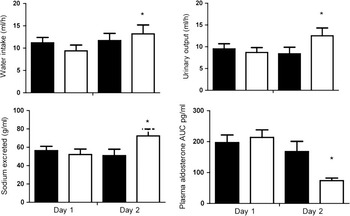
Rat offspring born from dams exposed to 8% NaCl through gestation until weaning had increased angiotensin II, higher blood pressure and blood pressure that was less responsive to salt intake (da Silva et al., Reference da Silva, de Noronha, de Oliveira, Malheiros and Heimann2003). In addition, rats exposed in utero and perinatally to a high-salt environment had an increased angiotensin II sensitivity (Arguelles et al., Reference Arguelles, Lopez-Sela, Brime, Costales and Vijande1996). This may have been the result of a feedback mechanism in which angiotensin II receptors are upregulated in the fetus in response to lower activity of the RAS in the mother (Arguelles et al., Reference Arguelles, Lopez-Sela, Brime, Costales and Vijande1996; Butler et al., Reference Butler, Pak, Midgely and Nemati2002). In sheep, two types of fetal programming by prenatal exposure to salt have been suggested (Digby et al., Reference Digby, Masters, Blache, Hynd and Revell2010a). First, there was a programming of the thirst threshold, which is illustrated by the difference in the intake of water over the first 4 h after receiving an oral salt dose. Offspring born to ewes fed high salt during pregnancy (‘salty lambs’) drank 200 ml less in the first 2 h than controls (ewe not exposed to salt during pregnancy) when exposed to a one-off oral salt dose (Digby et al., Reference Digby, Masters, Blache, Hynd and Revell2010a). However, from 2 to 4 h after the oral salt dose, control lambs decreased their water intake by 400 ml while the ‘salty’ lambs decreased by only 100 ml (Digby et al., Reference Digby, Masters, Blache, Hynd and Revell2010a). Second, there was a programming of the regulatory systems that control salt and water balance. Aldosterone concentration is blunted in response to an oral salt challenge in lambs born to ewes fed high salt during pregnancy, and at basal levels aldosterone is always higher than control offspring suggesting they are programmed to retain more salt. The aldosterone response in the study by Digby et al. (Reference Digby, Masters, Blache, Hynd and Revell2010a) was consistent with the responses in angiotensin II found in rats exposed to perinatal salt overload (da Silva et al., Reference da Silva, de Noronha, de Oliveira, Malheiros and Heimann2003). It seems the sensitivity of the RAS can be programmed in response to low activity of RAS in the mother during pregnancy (Arguelles et al., Reference Arguelles, Lopez-Sela, Brime, Costales and Vijande1996; Butler et al., Reference Butler, Pak, Midgely and Nemati2002). Similarly, offspring born to ewes that consumed a high-salt diet (14%) from day 60 of pregnancy until day 21 of lactation, show an attenuated response of renin to a salt dose and tended to retain more salt than normal sheep (Chadwick et al., Reference Chadwick, Vercoe, Williams and Revell2009b). In addition, the plasma concentration of AVP was lower in high-salt offspring, suggesting that the sensitivity of the kidney to changes in osmotic pressure was reduced in offspring born to ewes fed high salt during pregnancy (Digby et al., Reference Digby, Masters, Blache, Hynd and Revell2010a). These results combined with those of Desai et al. (Reference Desai, Guerra, Wang and Ross2003) suggest that the AVP threshold was altered in offspring in response to changes in water balance or salt ingestion during pregnancy. Furthermore, offspring born to ewes fed high salt during pregnancy, presented a modified temporal pattern of hormone secretion when consuming saline water for 2 days (Digby et al., Reference Digby, Masters, Blache and Revell2010b). Initially, water intake was lower in the offspring born to dams fed high salt during pregnancy, but there was a degree of correction on the second day, such that total water intake did not differ over the 2 days. Salt excretion, urinary output and aldosterone concentration were similar between both groups on day 1 (Figure 2). However, by day 2, urinary output and sodium excretion and, aldosterone secretion decreased, in lambs born to ewes fed high salt during pregnancy, while they remained unchanged in control lambs (Figure 2 adapted from Digby et al., Reference Digby, Masters, Blache and Revell2010b). Those modifications illustrate the programmed adaption to a load of ingested salt.
Daily mean saline water intake, urinary output, sodium excretion and plasma aldosterone area under the curve (AUC) of lambs born of mother fed to high NaCl diet (15%) during pregnancy (S lambs; open bars) for lambs born of mother not fed to low NaCl diet (0.9%) during pregnancy (C lambs; black bars) and consuming saline water for 2 days (adapted from Digby et al., Reference Digby, Masters, Blache and Revell2010b). *Denotes significant difference from day 1 (P < 0.05).

Prenatal salt exposure and programming of metabolism
It has previously been suggested that high-salt consumption decreases feed intake. In offspring born to ewes fed high salt during pregnancy, voluntary feed intake was ∼35% less than controls when consuming 1.3% saline water for 2 days (Digby et al., Reference Digby, Masters, Blache and Revell2010b). In addition, the secretion of insulin in both groups of offspring suggested that the energy balance of the lambs, defined as the difference between energy expenditure and the sum of energy intake and energy reserves, had drifted toward a negative value because of the decrease in feed intake (Blache et al., Reference Blache, Grandison, Masters, Dynes, Blackberry and Martin2007b). The decrease in insulin secretion was greater in offspring born to ewes fed high salt during pregnancy, possibly because of the lower feed intake. However, previous studies in wethers have revealed that the decrease in insulin following ingestion of high-salt diet is independent of a decrease in intake (Blache et al., Reference Blache, Grandison, Masters, Dynes, Blackberry and Martin2007b). Furthermore, leptin concentrations are lower in offspring born to ewes fed high salt during pregnancy, suggesting not only an increase in energy expenditure and a mobilization of energy reserves in response to ingestion of saline water but also an effect of ‘salt programming’ on leptin. This is very interesting because previous studies have suggested that leptin is not affected by fetal programming from salt ingestion (Blache et al., Reference Blache, Grandison, Masters, Dynes, Blackberry and Martin2007b; Digby et al., Reference Digby, Masters, Blache, Blackberry, Hynd and Revell2008, Reference Digby, Masters, Blache, Hynd and Revell2010a and Reference Digby, Masters, Blache and Revell2010b).
Conclusions
Saltbush can be a sustainable and alternative feed resource in sheep because sheep have the capacity to tolerate a high intake of salt. Pregnant ewes can tolerate 13% NaCl in their feed while they have access to fresh drinking water without compromising their reproductive capacity (Digby et al., Reference Digby, Masters, Blache, Blackberry, Hynd and Revell2008; Chadwick et al., Reference Chadwick, Vercoe, Williams and Revell2009a). It is important to note that, in contrast to salt in feed, ingestion of salt water has dramatic effects on the reproductive capacity of ewes. The mechanism(s) of the different effects according to the source of salt have not yet been elucidated. However, there is a need to further investigate whether pregnant ewes can graze different species of halophytic forages because they contain secondary compounds (oxalates and nitrates; Norman et al., Reference Norman, Freind, Masters, Rintoul, Dynes and Williams2004), which have not been evaluated by our work with NaCl supplementation (Digby et al., Reference Digby, Masters, Blache, Blackberry, Hynd and Revell2008, Reference Digby, Masters, Blache, Hynd and Revell2010a and Reference Digby, Masters, Blache and Revell2010b) or saltbush (Chadwick et al., Reference Chadwick, Vercoe, Williams and Revell2009a). In addition to the lack of effect on reproductive capacity, the exposure to salt during pregnancy could give a slight advantage to the offspring because of the fetal programming of their RAS (blunted aldosterone response) and their altered thirst threshold in response to an oral salt challenge. This adaptive response may be particularly useful, for example, when grazing herbivores are fed halophytic forages adapted to saline soils. In such cases, the ingestion of dietary salt typically limits feed intake and productivity (Masters et al., Reference Masters, Rintoul, Dynes, Pearce and Norman2005). Any shift in the set points of the RAS should be confirmed following prolonged exposure to salty food or salty water. Furthermore, changes in kidney size, nephron number and gene expression of the components of the RAS may play a role in the adaptations and we are investigating some of these aspects in current studies.
Acknowledgement
The studies from our group at UWA reviewed here could not have been contemplated without the generous assistance of the students and staff of Animal Science (University of WA), the collaboration with scientists from CSIRO Floreat, Australia (especially Dr Revell) and staff and students at The University of Adelaide, Roseworthy Campus. Special thanks to Ms Margaret Blackberry for her help with the hormone assays.