INTRODUCTION
The European plaice (Pleuronectes platessa Linnaeus), is a commercially important and widely distributed flatfish species. Plaice early life history has been extensively studied in many areas of the north-east Atlantic. Adult plaice spawn offshore, with pelagic eggs hatching after approximately 1 to 2 weeks. Upon reaching a suitable sandy beach nursery habitat, larval plaice undergo metamorphosis and remain on nursery grounds for a number of years, before joining the adult population (Fox et al., Reference Fox, McCloghrie and Nash2009). The abundance and distribution of juvenile flatfish inhabiting nursery grounds is dependent on the initial number of larvae delivered to the area (Gibson, Reference Gibson1997). It is therefore during the pelagic life stage that recruitment, or the year-class strength of plaice is determined, with factors such as temperature and hydrodynamics known to have a profound effect on the survival of eggs and larvae (Fox et al., Reference Fox, Planque and Darby2000; Van der Veer et al., Reference Van der Veer, Bolle, Geffen and Witte2009). However, the year-class strength of plaice has also been shown to be established through density-dependent processes operating during the nursery ground stage, demonstrating that the factors influencing recruitment may not be the same for different stocks of the same species (Nash & Geffen, Reference Nash and Geffen2000).
Though nursery grounds are in general considered to be areas where good growth is promoted and survival is enhanced (Gibson, Reference Gibson1994), the quality of these habitats can vary substantially. Faster growing or larger individuals are more efficient at feeding and predator evasion; therefore, high quality habitats will contribute significantly more juveniles to the adult stock in comparison to sub-optimal nursery grounds (Power et al., Reference Power, Burger and Stokes2006). The quantity or size of a nursery ground can also influence recruitment and larger habitats are known to give rise to a greater number of juvenile plaice for the adult population (Van der Veer et al., Reference Van der Veer, Berghahn, Miller and Rijnsdorp2000). Exposure and habitat structure of the nursery influences larval supply and levels of predation after settlement, thus affecting juvenile plaice densities, while sediment structure is important in terms of prey availability (Pihl & Van der Veer, Reference Pihl and Van der Veer1992). Given the increase in habitat degradation of coastal areas in recent times, identification and protection of high quality nursery grounds is essential, as a reduction in these areas will negatively affect flatfish recruitment (Zijlstra, Reference Zijlstra1972). Adequate assessment of a location should also be considered when attempting to identify important flatfish nursery habitats, given the small scale variation in growth and condition which can arise within a nursery (De Raedemaecker et al., Reference De Raedemaecker, Keating, Brophy, O'Connor and McGrath2010/11).
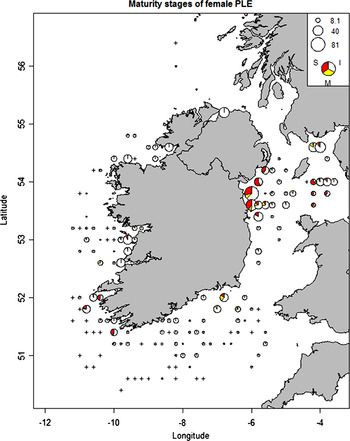
While a considerable number of studies have been carried out on the early life history of plaice in the North Sea, the Dutch Wadden Sea and the Irish Sea, information for the west coast of Ireland is lacking. Plaice are the most abundant juvenile flatfish species present on west of Ireland nursery grounds where they are known to settle between March and April (Allen et al., Reference Allen, Brophy, McGrath and King2008). Recent evidence from an Irish national biological sampling survey series indicates that there are plaice spawning grounds to the south-west of the country (Gerritsen, Reference Gerritsen2010) (Figure 1). There has been a reduction in the landings of plaice off the west coast of Ireland over the last three decades, with landings reaching an all-time low in 2006 (Anon., Reference Anon.2009). Moreover, ICES (International Council for the Exploration of the Sea) consider the information available for plaice stocks in areas VIIb and VIIc off the Irish west coast as insufficient for the evaluation of any stock trends (Anon., Reference Anon.2010). Hence, for the sustainable management of the Irish west coast plaice population, it is essential that stocks from this area are assessed.
Distribution of three maturity-classes (I (immature), M (maturing) and S (spawning)) of female plaice (PLE) around the Irish coast. The size of the pies refers to the sample size at each location (Gerritsen, Reference Gerritsen2010). Figure reproduced with permission of the Marine Institute Ireland.

Estimating the quantity of juveniles inhabiting a nursery ground can provide an indication as to the overall health of the adult population. A juvenile flatfish survey was established around the Dingle peninsula on the south-west coast of Ireland in 2000 to assess and monitor juvenile flatfish populations occupying sandy beaches on an annual basis and to identify any long-term temporal or spatial trends in abundance, length and condition. The survey was then extended to the west coast in 2002. The data collected from these surveys were used to: (1) investigate spatial and temporal trends in juvenile plaice abundance, length, and condition; (2) identify nursery grounds of high habitat quality, as indicated by high abundance and/or enhanced growth and condition; (3) determine if temperatures corresponding with the pelagic and juvenile life stage of plaice were related to plaice abundance or length; (4) determine if density-dependent growth operated on west of Ireland nursery grounds by comparing juvenile plaice densities and lengths; and (5) establish if the abundance of 0-group of plaice can be used to reliably predict the abundance of 1- and 2-group plaice in bottom trawl surveys along the Irish west coast in subsequent years.
MATERIALS AND METHODS
Study areas
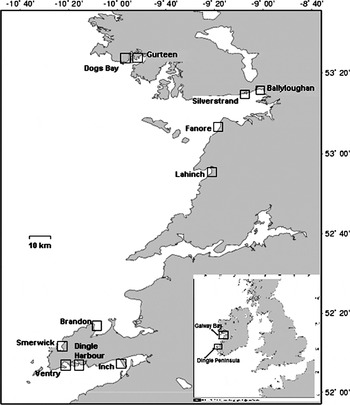
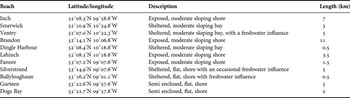
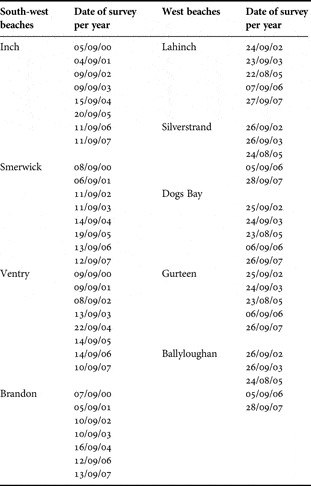
A combination of both sheltered and exposed sandy beach nursery grounds, with varying levels of wave exposure and sediment types were assessed on the west coast of Ireland over an eight year period (Table 1). The sample dates for each beach over the eight year period are provided in Table 2. Salinity can be highly variable on certain nursery locations (10‰–26‰) as a result of freshwater run-off, which can also result in excess growth of filamentous algae on the nursery. The study area was divided into two regions: west and south-west. Five beaches were assessed in the south-west; these were located on the Dingle peninsula in County Kerry. On the west coast the survey targeted four beaches within Galway Bay, and one beach on the County Clare coast (Figure 2). At the beginning of the survey, beaches in the west and south-west were assessed in both May and September. However, due to very low abundances of juvenile flatfish captured, the survey in May was discontinued. Two beaches yielding very low or no numbers of juvenile flatfish were also omitted from the survey after 2004. Data presented in the current work were for 0-group plaice captured in September only. Due to differences in the sampling procedures used and the timing of the survey between the south-west and west coasts, data collected from the two regions were analysed separately (Haynes et al., Reference Haynes, Brophy, McGrath, O'Callaghan, Comerford and Casburn2010). Data were not available for the west coast region in 2004.
0-group plaice nursery grounds assessed along the west coast of Ireland.

Name, location, and description of beaches assessed for juvenile plaice on the south-west and west coasts of Ireland during the juvenile flatfish survey (2000–2007).

Sample dates for beaches assessed along the west and south-west coasts of Ireland (2000–2007).

Fish collection
Sampling on a beach was carried out in a single day, within two hours either side of low tide. There was a maximum of four days between the first and last beach assessed in any one year, in a given region. On the west coast, fish were caught approximately one month earlier in 2005 in comparison to 2003 and 2007. When attempting to determine patterns of fish abundance and distribution, timing of sampling in terms of tidal, lunar and day/night effects can have a significant influence (Gibson et al., Reference Gibson, Robb, Burrows and Ansell1996). In order to reduce this source of variability, and to avoid the confounding effects of differences in the timing of sampling, fish were collected on all beaches over the eight year period on a spring tide during daylight hours.
Fish were captured from nursery grounds along the west and south-west coast of Ireland, using a Danish style beach seine, which was 20 m long and 2 m deep, with a 13 × 13 mm mesh size. The swept area of the beach seine was approximately 1380 m2, and described in greater detail in Haynes et al. (Reference Haynes, Brophy, McGrath, O'Callaghan, Comerford and Casburn2010). Mean plaice densities of plaice ± the standard deviation (SD) were calculated on each beach as the numbers per 1000 m2, for comparisons with plaice densities in other studies. All species captured in the beach seine were identified on the shore. Juvenile plaice were placed in plastic bags with the sample date and location, and frozen in the laboratory within a number of hours of being captured for further analyses.
Laboratory analyses
Frozen fish were removed from the freezer and allowed to thaw overnight. Juvenile plaice and flounder are similar in appearance, and may be difficult to distinguish. Therefore, the number of dorsal, anal and caudal fin rays, which are species specific for flatfish (Wheeler, Reference Wheeler1969), were counted under a stereoscopic microscope. This method has previously been used for the successful identification of plaice and flounder along the west coast of Ireland (Haynes et al., Reference Haynes, Allen, Brophy and McGrath2008). The standard length of plaice from the tip of the mouth to the where the caudal fins begin, was measured to the nearest 0.1 cm, and weight was measured to the nearest 0.1 g.
Separation of 0- and 1-group plaice
To distinguish between 0- and 1-group plaice captured throughout the eight year survey, the length–frequency distribution of all plaice captured in the eight year survey (N = 5305) was plotted. However, no clear modes were observed. Age data were available for juvenile plaice collected on the south-west and west coast nursery grounds for three and two years respectively, from Allen (Reference Allen2004). The largest 0-group plaice captured was 11 cm, so this length was used as a cut-off point to exclude 1+ fish in the current study.
Temperature data
Temperature has been found to be the main environmental factor controlling the growth and development of fish (Gibson, Reference Gibson1994; Yamashita et al., Reference Yamashita, Tanaka and Miller2001). Mean spring sea surface temperatures (January, February and March (JFM): the period corresponding to the pelagic stage) (Allen et al., Reference Allen, Brophy, McGrath and King2008), and mean summer sea surface temperatures (July, August and September (JAS)) were therefore used to determine if interannual variation in the relative abundance and size of juvenile plaice on south-west nursery areas had an environmental basis. For the south-west region, seven years of temperature and plaice data were available (2001–2007); for the south-west coast, five years of data (2002–2007, excluding 2004) were available. Temperature data were provided by the Marine Institute from the weather buoys M1 (53.1266°N 11.2000°W) off the south-west coast, and M3 (51.2166°N 10.5500°W) off the west coast of Ireland.
Density dependence growth
The density of juvenile plaice was calculated as the number of individuals per 1000 m−2. Due to intra-specific competition, high densities of juvenile fish on nursery grounds can lead to reduced growth, which in turn may affect the overall condition of a fish. As density dependence has been previously observed for plaice on nursery grounds (Van der Veer, Reference Van der Veer1986; Nash & Geffen, Reference Nash and Geffen2000), Pearson's correlation analysis was carried out on the mean density and the mean length of plaice captured on all nursery grounds in all years to determine if higher densities on nursery grounds were associated with a reduced mean length of plaice along the west coast of Ireland.
Condition analyses
Length and weight data were not available for every year of the survey due to inconsistent recording; hence plaice condition was calculated for the years 2003, 2005 and 2006 only. Morphometric indices based on such easily obtainable data have been reported to be good indicators of fish condition and habitat quality, as they incorporate all aspects of the life history of juvenile fish in a nursery area (Gilliers et al., Reference Gilliers, Le Pape, Désaunay, Morin, Guérault and Amara2006). Residuals from the linear regression of log10 length and log10 weight were used to calculate the condition for each plaice. This method is useful when determining the condition of fish from different size-classes (Blackwell et al., Reference Blackwell, Brown and Willis2000). Such condition indices assume that a fish of a heavier weight at a particular length are in better condition and can subsequently provide an indication as to the habitat quality of a nursery ground (Gilliers et al., Reference Gilliers, Amara and Bergeron2004). A positive residual value indicates higher than average condition, whereas a negative residual value indicates lower than average condition.
Recruitment
Several authors have previously attempted (Van Beek et al., Reference Van Beek, Rijnsdorp and de Clerck1989; Nielsen et al., Reference Nielsen, Bagge and MacKenzie1998) and some have been successful (Nash & Geffen, Reference Nash and Geffen2000) in relating abundances of 0-group flatfish to 1- or 2-group abundances. To investigate the correlation between two indices of relative abundance for juvenile plaice on the west coast of Ireland, the mean abundance of 0-group plaice collected in August and September for seven years of the survey (2003–2007) was plotted against the mean abundance of 1- and 2-group plaice of the corresponding year-classes captured between October and December along the south-west coast of Ireland (ICES division VIIj) during the Marine Institute's Irish Groundfish Survey (IGFS) on-board the RV ‘Celtic Explorer'. The relationship between the mean abundance of 1- and 2-group plaice was also investigated, as it may not be until a later age that future population abundances are established.
Statistical analyses
Data were tested for normality using the Anderson–Darling test. Homogeneity of variances was tested using Levene's test, and data were log transformed where necessary (Underwood, Reference Underwood1997). Once the assumptions of parametric analysis of variance were confirmed unbalanced type III nested analyses of variance (ANOVAs) were used to investigate temporal and spatial variability in the measured parameters. The null hypotheses that there was no difference in the numbers of plaice caught per haul (relative abundance) between beaches or years were tested. Length and condition of plaice was also compared between beaches, years and hauls. Beach was treated as a fixed factor, while year and haul were treated as random factors. Where the data failed to display homogeneity of variances even upon transformations, the non-parametric Kruskal–Wallis Test was performed. All significant differences were explored using Tukey's post hoc procedures with correction for multiple comparisons as described by Underwood (Reference Underwood1997). Tukey's post hoc procedures were performed on ranked data where homogeneity of variances failed to occur (Zar, Reference Zar1996). All non-parametric data were ranked in order to carry out Tukey's post hoc analyses. All statistical analyses were carried out using MINITAB 15.
RESULTS
Plaice abundance
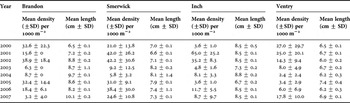
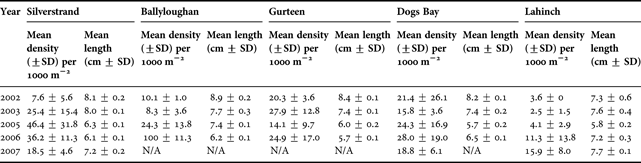
A total of 5112 plaice were captured on the south-west and west coasts of Ireland over the eight year period 2000–2007 inclusive. The mean densities (± SD) of plaice ranged from 2.4 (± 2.4) on Ventry in 2004 (Table 3), to 100 (± 11.3) individuals per 1000 m−2 on Ballyloughan in 2006 (Table 4).
Mean densities per 1000 m−2 (±SD) and mean lengths (cm ± SD) of juvenile plaice from nursery grounds on the south-west coast of Ireland (2000–2007).

Mean densities per 1000 m−2 (±SD) and mean lengths (cm ± SD) of juvenile plaice from nursery grounds on the west coast of Ireland (2002–2007). N/A denotes where no fish were captured.
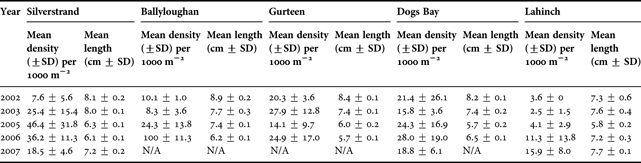
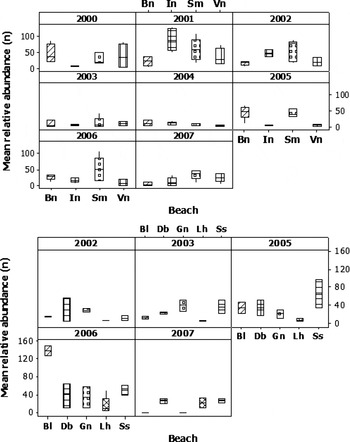
Eight years of juvenile plaice abundance data (2000–2007) were available for nursery grounds on the south-west coast. Non-parametric Kruskal–Wallis tests revealed that the abundance of plaice (N = 3723) differed significantly between beaches (df = 3; H = 16.47; P < 0.001) and also between years (df = 7; H = 36.4; P < 0.001). Tukey's multiple comparison tests showed that in the abundances of 0-group plaice were higher on Smerwick in 2002, 2003, 2006 and 2007, in comparison with the other south-west beaches (Figure 3). Ventry consistently yielded low abundances of plaice over the eight year study. Inter-annual variation in 0-group plaice abundances was observed on all beaches (Tukey's post hoc test, P < 0.05) but no consistent pattern emerged.
Plot showing patterns of spatial variation in mean juvenile plaice abundances (n) at nursery areas on the south-west (top) and west (bottom) coast of Ireland (2000–2007). Bn, Brandon; In, Inch; Sm, Smerwick; Vn, Ventry; Bl, Ballyloughan; Db, Dogs Bay; Gn, Gurteen; Lh, Lahinch; Ss, Silverstrand.

On the west coast, juvenile plaice abundance data were available for the years 2002, 2003, 2005, 2006, and 2007. The ANOVA showed that a significant interaction between beach and year occurred (df = 16; F = 3.23; P = 0.003). However, the main effects were not significant with no significant variation in the relative abundance of plaice (N =1389) between beaches (df = 4; F = 0.99; P = 0.442) or years (df = 4; F = 2.42; P = 0.09).
Plaice lengths
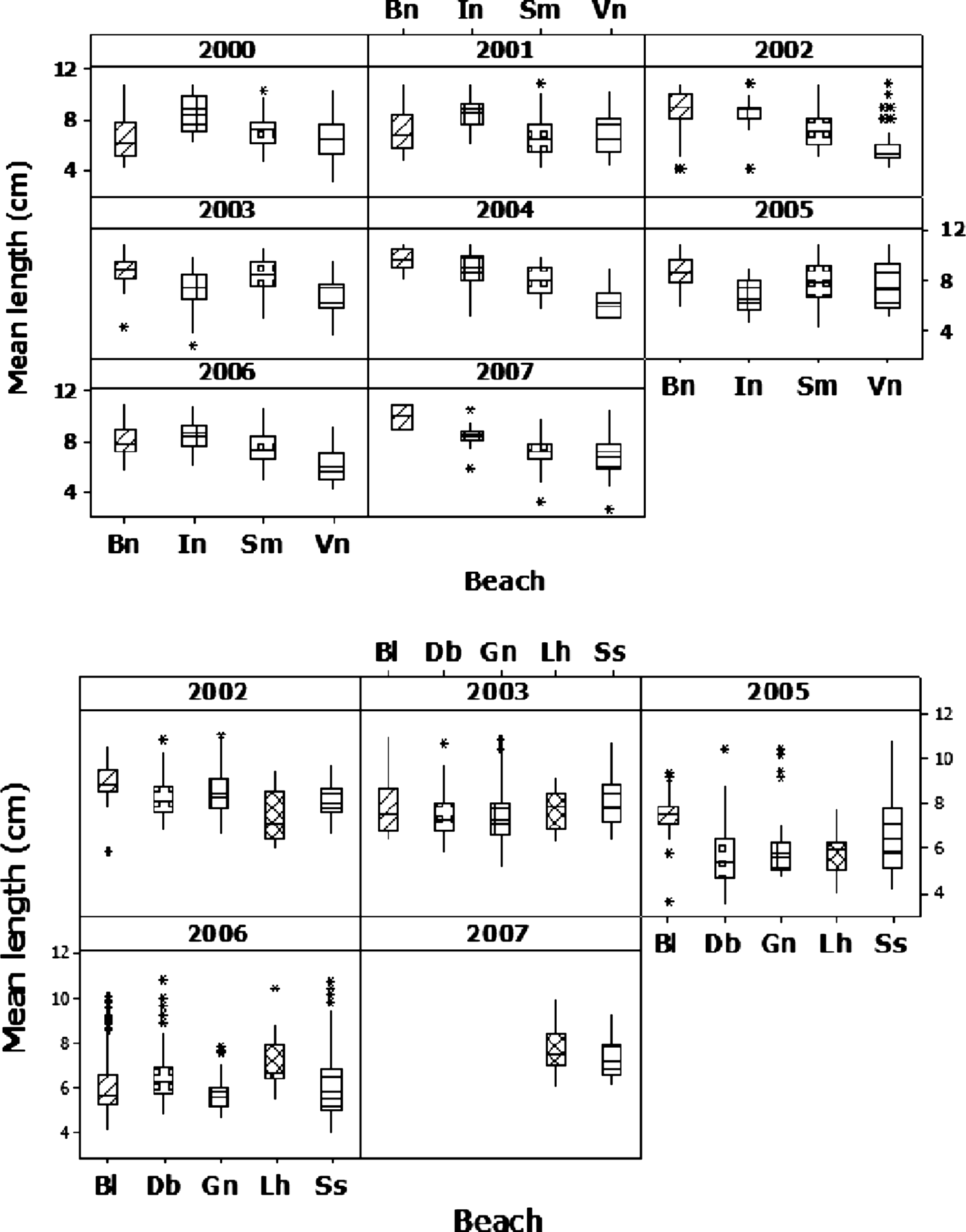
Mean lengths (± SD) of 0-group plaice ranged from 5.7 ± 1.0 cm on Gurteen in 2005, to 10.1 ± 0.2 cm on Brandon in 2007 (Table 3). For nursery grounds on the south-west coast, non-parametric Kruskal–Wallis tests revealed that the lengths of plaice differed significantly between beaches (df = 3; H = 590.01; P < 0.001) years (df = 7; H = 299.25; P < 0.001) and hauls (df = 6; H = 50.26; P < 0.001). Tukey's multiple comparison tests found that the mean length of plaice was highest on Brandon, followed by Inch and Smerwick (2002–2005, and 2007). Plaice were, in general, consistently smaller on Ventry (Figure 4). High inter-annual variability in the mean length of plaice occurred on each beach, with no overall pattern discerned.
Plots showing patterns of spatial variation in mean juvenile plaice lengths (cm) at nursery areas on the south-west (top) and west (bottom) coast of Ireland (2000–2007). Bn, Brandon; In, Inch; Sm, Smerwick; Vn, Ventry; Bl, Ballyloughan; Db, Dogs Bay; Gn, Gurteen; Lh, Lahinch; Ss, Silverstrand.
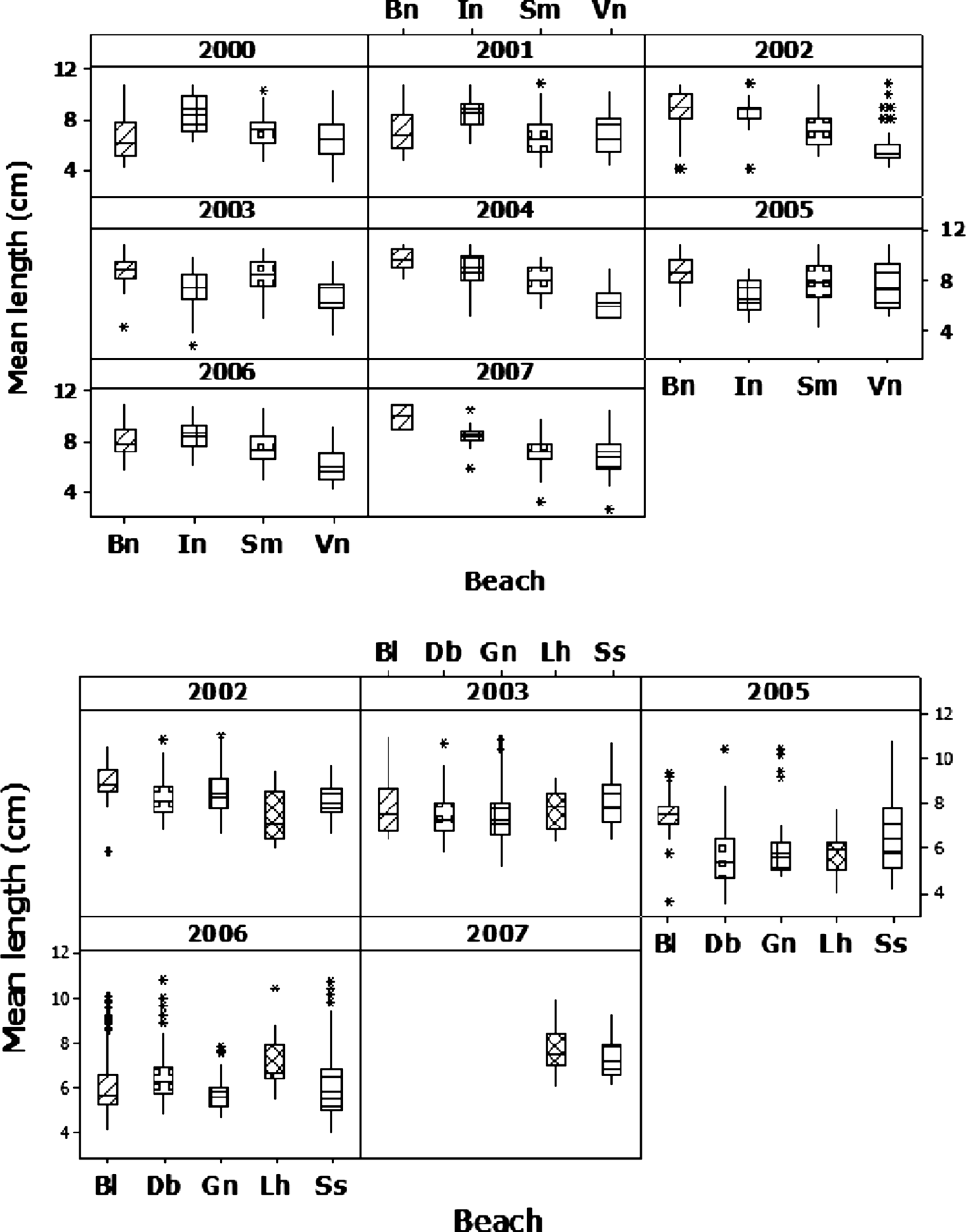
On the west coast, data for the lengths of plaice (N = 1403) were available for the years 2002, 2003, 2005, 2006 and 2007. Using non-parametric Kruskal–Wallis tests, the lengths of plaice were found to differ significantly between beaches (df = 2; H = 21.91; P < 0.001) years (df = 4; H = 444.40; P < 0.001) and hauls (df = 3; H = 9.92; P = 0.019). Tukey's tests indicated that there was no consistent trend in the mean length of plaice between beaches and years (Figure 4).
Plaice condition
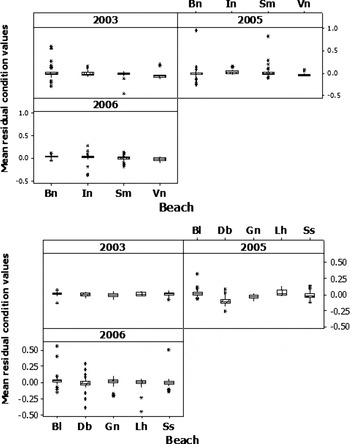
Using residuals of the length–weight relationship as a condition index, the mean condition of 0-group plaice in a given year ranged between 0.04 on Brandon in the year 2006 and −0.10 on Dogs Bay in the year 2005. Data for the condition of plaice on the south-west coast were available for the years 2003, 2005 and 2006. Using non-parametric Kruskal–Wallis tests, the condition of plaice differed significantly between beaches (df = 3; H = 99.35; P < 0.001) years (df = 2; H = 289.02; P < 0.001) and hauls (df = 6; H = 90.24; P < 0.001). Multiple comparisons tests revealed that plaice on Inch (0.01) exhibited the highest overall mean condition, followed by Brandon (0.00) and Smerwick (0.00). Plaice on Ventry had a significantly lower mean condition (−0.04) in contrast to other south-west nurseries (Figure 5).
Plots showing patterns of spatial variation in mean juvenile plaice condition at nursery areas the south-west (left) and west (right) coast of Ireland (2003, 2005 and 2006). Bn, Brandon; In, Inch; Sm, Smerwick; Vn, Ventry; Bl, Ballyloughan; Db, Dogs Bay; Gn, Gurteen; Lh, Lahinch; Ss, Silverstrand.

On the west coast, data for the condition of plaice were available for the years 2003, 2005 and 2006. Using non-parametric Kruskal–Wallis tests, the condition of plaice differed significantly between beaches (df = 4; F = 201.8; P < 0.001) years (df = 2; F = 127.70; P < 0.001), and hauls (df = 4; F = 18.14; P < 0.001), with no overall pattern discerned (Figure 5).
Density dependent growth
There was no evidence of density dependent growth on nursery grounds in the present study. No significant correlation between the mean density and the mean length of plaice on all nursery grounds was detected (P = 0.085).
Temperature and plaice abundance
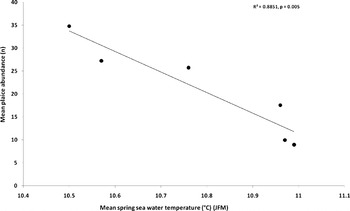
Abundances of 0-group plaice on the south-west coast (2001–2007) were significantly inversely correlated with the mean spring sea temperature (JFM), corresponding to the larval stage (r 2 = 0.885, P = 0.005) (Figure 6). However, no such correlation was observed between juvenile plaice abundances and mean summer temperatures (JAS) corresponding to the juvenile benthic stage (r 2 = 0.287, P = 0.640). Abundances of 0-group plaice on the west coast (2002–2007, excluding 2004) were not significantly correlated with the mean spring sea temperature or summer temperatures (P > 0.05).
Correlation between mean plaice abundance per year on south-west nursery grounds, and mean spring sea temperature (JFM, 2002–2007).

Recruitment
There was no relationship between the mean abundance of 0-group plaice collected from south-west nursery grounds, and the mean abundance of either 1 or 2 year plaice collected in the following year during the Irish Groundfish Survey, off the south-west coast (ICES area VIIj), over a 5 year period (P > 0.05). Furthermore, mean abundances of either 1- or 2-group plaice over the same period, were not significantly correlated with each other (P = 0.516).
DISCUSSION
Plaice successfully recruited to nine nursery grounds in each year of the study, with the exception of 2007 when plaice were absent from two beaches. The mean densities of juvenile plaice on nursery grounds ranged between 2.4 (±2.4) and 100 (±11.3) individuals 1000 m−2 over the eight year period. This is similar to reports from other areas in the north-east Atlantic; densities of plaice collected in August/September in the Kattegat ranged from 31 to 28 individuals 1000 m−2 (Nielsen et al., Reference Nielsen, Bagge and MacKenzie1998), in the Dutch Wadden Sea there were 1.7 individuals 1000 m−2 (Zijlstra et al., Reference Zijlstra, Dapper and Witte1982), and between 4.4 and 6.5 individuals 1000 m−2 were observed in the Irish Sea in autumn (Nash et al., Reference Nash, Geffen and Hughes1994). Density dependent growth, most likely due to food limitation, has been found to occur at plaice densities >5 individuals m−2 (Wennhage et al., Reference Wennhage, Pihl and Stål2007). The current study found no evidence of density dependent growth in 0-group plaice in August/September. However, density dependent processes may have impacted on growth earlier in the year in the period just after settlement. In the Irish Sea, density related processes on nursery grounds were described as the most likely factors affecting 0-group plaice abundances over a seven year period (Nash & Geffen, Reference Nash and Geffen2000). Other studies have also noted that an increase in the density of juvenile plaice impacted negatively on growth (Nash et al., Reference Nash, Geffen and Hughes1994; Modin & Pihl, Reference Modin and Pihl1996).
On the west coast of Ireland plaice abundances fluctuated temporally and spatially without any consistent trend emerging, which is common in juvenile plaice studies (Van der Veer, Reference Van der Veer, Pihl and Bergman1990; Nash & Geffen Reference Nash and Geffen2000; Riou et al., Reference Riou, Le Pape and Rogers2001). However, the Smerwick nursery supported a higher number of plaice in the majority of years. In general, juvenile plaice abundances are determined by differences in larval supply, resulting in interannual variability in recruitment (Bolle et al., Reference Bolle, Dickey-Collas, van Beek, Erftemeijer, Witte, Van der Veer and Rijinsdorp2009; Van der Veer et al., Reference Van der Veer, Bolle, Geffen and Witte2009), which is subsequently modified by processes operating on the nursery such as variation in habitat type (Wennhage & Pihl, Reference Wennhage and Pihl2001). Given the recent observations of plaice spawning to the south-west of the country (Gerritsen, Reference Gerritsen2010), the Smerwick nursey in the current study may be situated in a favourable geographical location in relation to the supply of settling larvae. Smerwick is also a moderately exposed habitat in comparison to other nursery locations; higher densities of plaice have been reported on semi-exposed shores in comparison to more exposed and sheltered areas (Pihl & Van Der Veer, Reference Pihl and Van der Veer1992). The finer sediment structure of Smerwick in comparison to more exposed locations might enhance the burial ability of 0-group plaice for predator evasion. In contrast to other south-west nursery areas, Ventry produced a consistently lower quantity of juvenile plaice over the eight years, indicative of a suboptimal nursery, possibly due to different benthic fauna types on this beach (De Raedemaecker et al., Reference De Raedemaecker, Keating, Brophy, O'Connor and McGrath2010/11). This nursery can, on occasion, also be characterized by a large volume of filamentous green algae (authors, personal observations), which is known to reduce plaice densities (Pihl & Van Der Veer, Reference Pihl and Van der Veer1992).
Plaice abundances on south-west nursery grounds were inversely related to mean spring sea temperatures during the pelagic stage. This negative relationship has also been observed in the Irish and North Seas (Fox et al., Reference Fox, Planque and Darby2000; Van der Veer et al., Reference Van der Veer, Bolle, Geffen and Witte2009). The consistency in the relationship between temperature and juvenile plaice abundance across the distribution of the species indicates that temperature is a major driver of recruitment success which overrides other more local processes. Colder sea temperatures during the pelagic and early demersal stages of flatfish are believed to significantly reduce the abundance of predators, which are more sensitive to the drop in sea temperature (Rijnsdorp & Van der Veer, Reference Rijnsdorp and Van der Veer2008). It has also been put forward that colder sea temperatures during the pelagic stage will reduce the activity of pathogenic bacteria on plaice eggs (Fonds, Reference Fonds1995).
No relationship was detected between plaice abundances and temperature on west coast nurseries, perhaps due to the lower number of years available for analysis. No significant relationship was identified between plaice abundances on Irish west coast nurseries and mean summer sea temperatures (during the early juvenile benthic stage). This indicates that survival after settlement may be under the influence of local nursery ground processes rather than broad scale environmental factors such as temperature. Predation has been shown to significantly reduce the densities of newly-settled plaice (Van der Veer et al., Reference Van der Veer, Pihl and Bergman1990; Pihl & Van der Veer, Reference Pihl and Van der Veer1992; Gibson et al., Reference Gibson, Yin and Robb1995). The size and quality of the nursery are also important determinants of abundance. Along the Swedish coast, it was revealed that the largest nursery grounds, in terms of surface area, did not produce to the highest abundances of juvenile plaice at the end of the nursery ground stage (Wennhage et al., Reference Wennhage, Pihl and Stål2007). This is also indicated in the present work; the larger beaches in terms of suitable habitat available for 0-group flatfish (Inch and Brandon) did not always support high densities of 0-group plaice.
Mean lengths of west of Ireland 0-group plaice collected in September ranged between 5.7 (±1.0) and 10.2 (±0.2) cm. This is similar to reports from other areas such as the Irish Sea ( of 7.5 cm in September; Nash et al., Reference Nash, Geffen and Hughes1994) and the Wadden Sea (7.5 cm, end of August; Berghahn et al., Reference Berghahn, Ludemann and Ruth1995) (8.5 cm in September; Zijlstra et al., Reference Zijlstra, Dapper and Witte1982). Smaller 0-group plaice were observed along the Swedish coast (3.5–5.5 cm) in August (Modin & Pihl, Reference Modin and Pihl1996); this may reflect differences in the age of the fish at capture.
On the south-west coast in the present study, both temporal and spatial variability in the mean lengths and condition of plaice were observed, with both good growth and condition of plaice exhibited on certain beaches. Faster growth experienced by juvenile flatfish on the nursery will reduce the time during which an individual is vulnerable to predation (Taylor, Reference Taylor2003). Hence, survival will be greatest on nursery grounds where juvenile flatfish experience rapid growth (Gibson, Reference Gibson1994; Sogard et al., Reference Sogard, Able and Hagan2001). However, given that differences in the lengths of plaice between nursery grounds in the present study may have arisen from differences in the timing of hatching or settlement, the use of additional indices such as the condition of plaice is also important, as this index provides information on the wellbeing of the fish, irrespective of age differences. In general, over the eight year period plaice on Brandon and Inch were larger and also in better condition while plaice on Ventry had lower mean lengths and condition compared with other nursery areas. These results are in agreement with those of an earlier study, where significantly lower otolith growth rates and morphometric condition in 0-group plaice inhabiting Ventry were detected, in comparison to Inch and Smerwick (De Raedemaecker et al., Reference De Raedemaecker, Keating, Brophy, O'Connor and McGrath2010/11). Differences in the growth of plaice between nursery areas imply variation in habitat quality which may be related to environmental conditions on the beaches. De Raedemaecker et al. (Reference De Raedemaecker, Keating, Brophy, O'Connor and McGrath2010/11) proposed that variation in otolith growth and condition of plaice at these nursery grounds in the west of Ireland could be linked to the variety of prey in the diet. Shifting between different types of prey throughout the nursery ground stage was also considered to influence the growth rates of juvenile plaice in the Wadden Sea (Van der Veer et al., Reference Van der Veer, Freitas, Koot, Witte and Zuur2010), with limited food availability put forward as the causative factor for the reduced growth rates of juvenile plaice in the Irish Sea (Ciotti et al., Reference Ciotti, Targett, Nash, Batty, Burrows and Geffen2010), and also in the North Sea (Teal et al., Reference Teal, De Leeuw and Rijnsdorp2008). However, there is no evidence to suggest that food is limiting on west of Ireland nursery grounds (De Raedemaecker et al., in press; Haynes et al., in press). The growth of 0-group flatfish is reported to be determined primarily by temperature, with higher growth observed at higher temperatures (Van der Veer & Witte, Reference Van der Veer and Witte1993). Although there is little information available on the environmental conditions on Irish south-west nursery grounds, a freshwater input on the nursery Ventry may have resulted in lower temperatures on this beach.
As well as the broad scale differences observed between beaches in the south-west region, small scale variability in length and condition were also observed between hauls on all beaches, which is consistent with the findings of De Raedemaecker et al. (Reference De Raedemaecker, Keating, Brophy, O'Connor and McGrath2010/11) for plaice on south-west nursery grounds. This may reflect the patchy distribution of prey and emphasizes the importance of appropriate spatial coverage when assessing habitat quality of inshore locations. Similar to length variability in the present investigation, fluctuations in the condition of plaice between hauls imply differences in the quality or the quantity of prey within nursery grounds, and emphasize the importance of adequate assessment of inshore locations.
The establishment of recruitment indices are valuable tools for predicting the future size of fish stocks. Some studies have been successful in the formation of a recruitment index. In the North Sea, Van Beek et al. (Reference Van Beek, Rijnsdorp and de Clerck1989) found a significant relationship between estimates of 0- and 1-group plaice abundances and year-class strength estimates from virtual population analysis. However, in the present study no consistent pattern in recruitment was discerned, with 0-group plaice abundances not related to mean abundances of either 1- or 2-group individuals captured off the west coast of Ireland over a six year period. Moreover, mean abundances of 1- and 2-group plaice were not significantly correlated. When attempting to establish a recruitment index, the accurate estimation of the species of interest, collected at the appropriate time when the year-class strength is set, is required. Previous juvenile flatfish investigations have shown that the abundance of 0-group plaice was only correlated with numbers of 1-group fish at a specific point in the nursery period (Nash & Geffen, Reference Nash and Geffen2000). The 0-group plaice in the present study were collected over a one week period during the summer months in each year of the flatfish survey. At this time, abundance estimates may have been confounded by emigration into deeper waters. On the other hand, sampling conditions along the west coast of Ireland remained consistent throughout the eight year time-series and abundance estimates were not influenced by variation in catch efficiencies of the selected gear (Nash et al., Reference Nash, Geffen and Hughes1994). Results should therefore provide reliable estimates of the relative abundance of juvenile flatfish and a good indication of fluctuations in the juvenile populations. This is supported by the detection of consistent signals, such as the relationship between abundance and spring temperatures in the south-west region and the consistently high relative abundances on some beaches. In relation to the collection of 1- and 2- group plaice along the west coast of Ireland, the Irish Groundfish Survey does not assess shallow inshore areas. Therefore, its spatial coverage may not be appropriate for estimating the abundance of 1- and 2- group plaice, which have been found to remain within their original coastal nursery area before moving offshore to deeper waters and recruiting to the adult stock (Lockwood, Reference Lockwood1974).
In summary, important plaice nursery grounds on the west coast of Ireland have been identified and densities of 0-group plaice over an eight year period have been estimated. Certain nursery areas were found to support relatively high abundances of 0-group plaice; in addition, growth and condition appear to be enhanced in these areas. Further evidence of the influence of temperature during the pelagic larval phase on year-class strength of plaice was presented. The present study has provided an improved understanding of the early life history of plaice on the Irish west coast. Long-term studies such as this are valuable for investigating habitat quality and the processes governing recruitment in flatfish.
ACKNOWLEDGEMENTS
We would like to extend our appreciation to Bord Iascaigh Mhara and Taidhge Mara Teoranta who funded much of the fieldwork. Thank you to Hans Gerritsen in the Marine Institute and Lahinch Seaworld, Galway Atlantaquaria for their assistance with sample collections, and Seaturtle.org for their mapping software. We thank all involved in the collection of fish over the years; Stephen Comerford, Fien de Raedemaecker and Bernadette O' Neill from the Commercial Fisheries Research Group. Thank you to the referees for their helpful comments regarding the present work. This research was funded by grants to Deirdre Brophy and David McGrath from the Irish Department of Education, Technological Sector Research Programme, Strands 1 and 3.