Introduction
Maladaptive experiences during childhood have been consistently linked with borderline personality disorder (BPD) including: abuse and neglect (Guzder et al. Reference Guzder, Paris, Zelkowitz and Feldman1999; Zanarini et al. Reference Zanarini, Frankenburg, Hennen, Reich and Silk2006), parent hostility and resentment (Hooley & Hoffman, Reference Hooley and Hoffman1999; Johnson et al. Reference Johnson, Cohen, Chen, Kasen and Brook2006) and exposure to domestic violence and parent conflict (Herman et al. Reference Herman, Perry and van der Kolk1989; Weaver & Clum, Reference Weaver and Clum1993). Most studies have been retrospective, however, with concomitant methodological issues, such as the tendency of patients with BPD to misinterpret or misreport past experiences with family members (Bailey & Shriver, Reference Bailey and Shriver1999). Furthermore, domestic conflict and child maltreatment usually occur in family environments characterized by multiple risk factors (Fergusson et al. Reference Fergusson, Boden and Horwood2006) difficult to disentangle with retrospective designs.
A series of prospective, longitudinal studies has revealed an association between abuse, neglect, parenting and BPD features (Johnson et al. Reference Johnson, Cohen, Brown, Smailes and Bernstein1999, Reference Johnson, Smailes, Cohen, Brown and Bernstein2000, Reference Johnson, Cohen, Smailes, Skodol, Brown and Oldham2001, Reference Johnson, Cohen, Chen, Kasen and Brook2006). Associations were focused on scales of personality disorder symptoms assessed in early adulthood, however, rather than on a collection of symptoms comparable in composition with a DSM-IV BPD diagnosis. Subsequently, large prospective longitudinal studies are now necessary to identify younger individuals with comparable symptom constellations (including subsyndromal levels of manifestation) to those identified in adult BPD. Such studies are challenging due to low base rates of BPD and protracted duration before formal diagnosis, typically during early adulthood, is made. However, BPD is unlikely to suddenly appear in early adulthood; rather, it may be considered within a developmental trajectory as the end point following the appearance of BPD symptoms during childhood or adolescence.
The importance of early identification of such symptoms, as manifest in a childhood phenotype, has been highlighted, both for the facilitation of intervention programmes (Chanen et al. Reference Chanen, Jovev, McCutcheon, Jackson and McGorry2008) and delineation of aetiological factors (Geiger & Crick, Reference Geiger, Crick, Ingram and Price2001). Furthermore, BPD assessments for children have been developed (Crick et al. Reference Crick, Murray-Close and Woods2005; Rogosch & Cicchetti, Reference Rogosch and Cicchetti2005), and it appears that BPD-related features may be identified as early as 6 years of age, and remain relatively stable over time (Stepp et al. Reference Stepp, Pilkonis, Hipwell, Loebar and Stouthamer-Loeber2010). Nevertheless, it has not been ascertained whether factors associated with BPD in adulthood are also associated with BPD symptoms during late childhood.
In the current study we investigated whether exposure to family adversity and maladaptive parent behaviour, during preschool and school periods, was predictive of BPD probable and definite symptoms (five or more) in late childhood. Additionally, the developmental pathways through which this association manifests were explored by considering the mediating effects of potential markers: Axis I DSM-IV diagnoses and intelligence quotient (IQ) at age 7–8 years.
Method
Participants
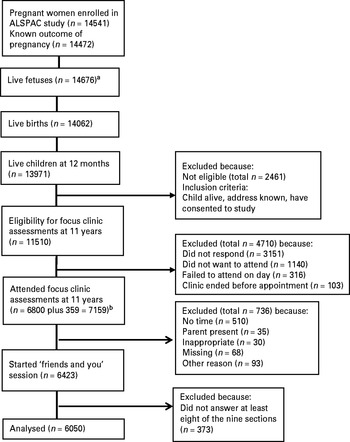
The Avon Longitudinal Study of Parents and Children (ALSPAC) is a birth cohort study, set in the UK, examining the determinants of development, health and disease during childhood and beyond (Golding et al. Reference Golding, Pembrey and Jones2001). A total of 14 541 women were enrolled, provided they were resident in Avon while pregnant, and had an expected delivery date between 1 April 1991 and 31 December 1992. As shown in Fig. 1, 13 971 children, alive at 12 months, formed the original cohort. From the first trimester of pregnancy parents completed postal questionnaires about themselves and the study child's health and development. Children were invited to attend annual assessment clinics, including face-to face interviews, and psychological and physical tests from 7 years onwards.
Flow of participants from pregnancy to 11-year assessment in the cohort study the Avon Longitudinal Study of Parents and Children (ALSPAC). a Includes multiple births (195 twins, three triplets, one quadruplet). b An additional 359 children were invited who were previously missed pregnancies, born and residing in the Avon area.

During the planning stage of the study, children from the Avon area were compared with 13 135 children from across the UK, participating in the Child Health and Education Study, on a number of demographic variables. Results suggested that the Avon population was fairly similar to that of the whole of Great Britain (Golding et al. Reference Golding, Pembrey and Jones2001). There were 11 510 children living in the study area and eligible for invitation to the 11-year annual assessment clinic; 6423 attended and started the interview session, incorporating the BPD questions (Fig. 1), though 373 of these children were excluded because they did not answer at least eight of the nine BPD questions. This study is, therefore, based on 6050 children (age range 10.4–13.6 years, mean age 11.7 years).
Ethical approval
Ethical approval was obtained from the ALSPAC Law and Ethics committee and the local research ethics committees.
BPD features interview
Borderline features were assessed using a face-to-face semi-structured interview: the UK Childhood Interview for DSM-IV Borderline Personality Disorder (UK-CI-BPD; Zanarini et al. Reference Zanarini, Horwood, Waylen and Wolke2004), based on the borderline module of the Diagnostic Interview for DSM-IV Personality Disorders (Zanarini et al. Reference Zanarini, Frankenburg, Sickel and Yong1996), which is a widely used semi-structured interview for all DSM-IV Axis II disorders. The inter-rater and test–retest reliability of the DSM-III, DSM-III-R and DSM-IV versions of this measure have all proven to be good to excellent (Zanarini et al. Reference Zanarini, Skodol, Bender, Dolan, Sanislow, Schaefer, Morey, Grilo, Shea, McGlashen and Gunderson2000; Zanarini & Frankenberg, Reference Zanarini and Frankenberg2001). The UK-CI-BPD was adapted from the CI-BPD (US version), with small changes in wording making it appropriate for a UK sample, e.g. ‘being angry’ was changed to ‘being cross’. The convergent validity of the CI-BPD was investigated using 171 adolescents (boys and girls) 13–17 years of age; 111 met criteria for BPD and 60 were normal comparison subjects. A Spearman's ρ of 0.89 was obtained when comparing a dimensional score for BPD on the CI-BPD and the total score on the Revised Diagnostic Interview for Borderlines.
The UK-CI-BPD differs from the adult interview in three ways: (1) the language is simpler; (2) two forms of impulsivity are omitted (reckless driving and promiscuity) due to lack of developmental appropriateness; and (3) the childhood interview is more structured than the adult version, with the answer to each question, and not just the rating for each of the nine criteria, entered into the dataset (Zanarini et al. Reference Zanarini, Horwood, Wolke, Waylen, Fitzmaurice and Grant2011).
The inter-rater reliability (κ) of the UK-CI-BPD, assessed from taped interviews of 30 children, ranged from 0.36 to 1.0 (median value 0.88), and 86% of the κ values were within the excellent range of >0.75 (Zanarini et al. Reference Zanarini, Horwood, Wolke, Waylen, Fitzmaurice and Grant2011).
The UK-CI-BPD is the first semi-structured interview designed to assess DSM-IV BPD in latency-aged children. Similar to DSM-IV criteria, the interview consists of nine sections: intense inappropriate anger; affective instability; emptiness; identity disturbance; paranoid ideation; abandonment; suicidal or self-mutilating behaviours; impulsivity and intense unstable relationships. Once a trained assessor had explored each section, a judgment was made as to whether each symptom was definitely present, probably present or absent. A symptom was classed as definitely present if it occurred daily or approximately 25% of the time, and probably present if it had occurred repeatedly, but did not meet the criterion for definitely present.
Two outcome variables were constructed for use in the logistic regression analyses: BPD symptoms probably present (symptoms present less than daily or 25% of the time) and BPD symptoms definitely present, both of which were based on the presence of five or more symptoms. Diagnosis of BPD according to the DSM-IV is based on the presence of five or more definite features; thus the probable BPD outcome represents a dimensional adjunct to the traditional categorical approach, i.e. children with five or more (categorical) subsyndromal symptoms (dimensional) are identified (Kraemer, Reference Kramer2007).
Sociodemographic and birth variables
The mother-reported sociodemographic information during the antenatal period included marital status (married versus single); home ownership (home owner versus rented); parent social class (based on the highest of the mother's or partner's occupational social class: dichotomized into non-manual versus manual); and maternal education, dichotomized into below O level versus O level or above (O levels being the standard school-leaving qualifications at age 16 years in the UK until recently). The ethnic origin of the child (white versus black or minority ethnic) and birth weight were obtained from birth records. Birth weight was dichotomized into ⩽2499 g (low birth weight) and ⩾2500 g.
Exposure variables: family adversity, suboptimal parenting and parent conflict
Family adversity
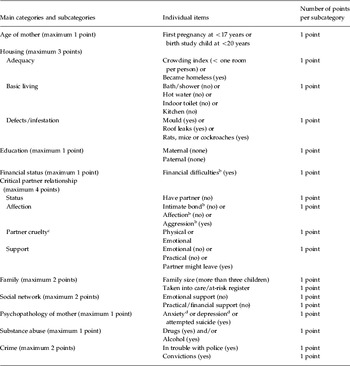
Multiple family risk factors were indicated using the Family Adversity Index (FAI; Bowen et al. Reference Bowen, Heron, Waylen and Wolke2005), which consists of 18 items taken from questionnaires administered throughout pregnancy (8, 12, 18 and 32 weeks gestation) (see Table 1 for more details). The FAI consists of items pertaining to young maternal age at first pregnancy (<17 years) or birth of study child (<20 years); housing (e.g. inadequacy: overcrowding or periods of homelessness); financial difficulties; problematic partner relationship; maternal affective disorder (depression, anxiety, suicidality); substance abuse (drugs or alcohol); or involvement in crime (i.e. in trouble with police or convictions). For the current analysis the item reflecting partner cruelty (emotional or physical) was removed from the FAI to prevent confounding with the domestic violence predictor variables. The remaining adversity items were summed and trichotomized into: none (no adversity); mild (one or two adversities) and severe (more than two adversities).
Individual items comprising the Family Adversity IndexFootnote a

a Maximum of 18 points in total.
b Each item was derived from a series of questions.
c These two items were removed from the index to prevent confounding with the domestic violence variable.
d Derived from the Crown Crisp Inventory.
Suboptimal parenting index
Selection of the suboptimal parenting predictors was based on a previous study (Waylen et al. Reference Waylen, Stallard and Stewart-Brown2008), which factor analysed questions pertaining to maternal attitudes, behaviours and feelings within the ALSPAC cohort. Three factors were evidenced, reflecting suboptimal parenting (hostility, resentment and hitting/shouting), which were found to be predictive of a variety of health outcomes during mid-childhood. These factors have been prospectively linked to personality disorders (and BPD features) within the literature (Johnson et al. Reference Johnson, Cohen, Chen, Kasen and Brook2006), and thus were combined to create a suboptimal parenting index.
Scales assessing parent behaviour, as reported by the mother, were dichotomized, indicating whether the maladaptive behaviour was present or absent. Where available, variables were constructed for the preschool (birth to up to 5 years) and school (5–8 years) periods. The suboptimal parenting index was constructed by summing seven items across the preschool and school periods to create an index of increasing exposure to suboptimal parenting on a scale of 0–7. Items were: hitting (preschool, school); shouting (preschool, school); hostility (preschool, school); and resentment (preschool).
Maternal hitting and shouting were indicated by the following two items: ‘When you are at home with your child how often do you slap him?’ and ‘When you are at home with your child how often do you shout at him?’ (Waylen et al. Reference Waylen, Stallard and Stewart-Brown2008). For the preschool period (24 and 42 months), hitting was coded as present if it occurred daily or every week at either time point, and shouting if it occurred daily at either time point. For the school period (77 months), hitting was recorded as present if reported often or sometimes, and shouting if reported often. We used less stringent criteria for the school period to reflect the observed reduction in hitting and shouting, as the child grows older (Hyman, Reference Hyman1997).
Hostility and resentment were constructed from a number of items loading on two distinct factors (Waylen et al. Reference Waylen, Stallard and Stewart-Brown2008). Preschool hostility items included: ‘mum feels that whining makes her want to hit child’ (21 months); ‘mum often irritated by child’ (47 months); ‘mum has battle of wills with child’ (47 months); and ‘child gets on mum's nerves’ (47 months). Preschool hostility was classed as present if reported in three or all items. Preschool resentment items included: ‘mum dislikes mess from child’ (47 months); ‘mum feels unbearable when child cries’ (21 months); ‘mum feels child's desires cause anger’ (21 months); and ‘mum feels has no time alone’ (33 months).
Preschool resentment was classed as present if reported for two or more items. For the school period, only hostility items were available: ‘mum often irritated by child’ (85 months); ‘mum has battle of wills with child’ (85 months); ‘child gets on mum's nerves’ (85 months). School hostility was considered present if answered positively for all three items.
Conflicting partnership index
Domestic violence and conflicting partnership measures were chosen according to reported prospective associations with negative child outcomes, generally (Kitzman et al. Reference Kitzmann, Holt and Kenney2003), and BPD, specifically, in retrospective studies (Herman et al. Reference Herman, Perry and van der Kolk1989; Weaver & Clum, Reference Weaver and Clum1993). The parent conflict index was constructed across the preschool and school periods from five items, on a scale of 0–5, reflecting increasing exposure to conflict between primary caregivers. Items were: conflicting partnership (preschool, school); partner broken or thrown things (preschool); physically hurt by partner (preschool); and emotional domestic violence (preschool).
Physical and emotional domestic violence variables (Bowen et al. Reference Bowen, Heron, Waylen and Wolke2005) were available for the preschool period only. Two physical domestic violence variables were constructed: physically hurt by partner and partner broken or thrown things. The variable ‘physically hurt by partner’ was constructed from the two items ‘physically hurt by partner’ (8, 21, 33 and 47 months) and ‘slapped or hit by partner’ (21 and 33 months), which were coded as present if the mother responded yes to one or more of the six items. The variable ‘partner broken or thrown things’ (21 and 33 months) was considered present if answered with yes at either time point. An emotional domestic violence variable was constructed from the item ‘your partner was emotionally cruel to you’ (8, 21, 33 and 47 months) (Bowen et al. Reference Bowen, Heron, Waylen and Wolke2005). Emotional domestic violence was considered present if reported at one or more time points.
Conflicting partnership
A conflicting partnership variable was derived for the preschool (33 months, or 22 months if the 33-month response was missing) and school (73 months) periods. It was constructed from the following items: ‘mum and partner argued’; ‘not speaking to partner for more than 30 min’; ‘one of you walking out of the house’; and ‘shouting or calling partner names’. For the preschool and school periods, each of these items was dichotomized; if either the mother, her partner or both parties had engaged in the behaviour, the item was coded as present. Conflicting partnership was considered positive if reported in three or all four items.
Potential confounders or markers for BPD symptoms
Study child IQ was assessed with the Wechsler Intelligence Scale for Children III (UK version) (Wechsler et al. Reference Wechsler, Golombok and Rust1992) during the focus at 8 years clinic. DSM-IV psychiatric diagnoses were derived at 7–8 years using the Development and Well-Being Assessment (DAWBA; Goodman et al. Reference Goodman, Ford, Richards, Gatward and Meltzer2000), completed by parents and teachers. Teachers were asked to complete the DAWBA for all the children in their class with a birth date between April 1991 and December 1992. The teacher completion rate was 5155/10 431 eligible children, and the mother completion rate was 8269/11 251. Mother and teacher reports were combined (where available), otherwise the mother report only was used. The diagnoses were made using a DSM-IV-TR algorithm, and reviewed by two experienced child psychiatrists (Robert Goodman and Tamsin Ford). The DAWBA has been validated for Axis I diagnoses and shown to have utility as a clinical assessment tool (Goodman et al. Reference Goodman, Ford, Richards, Gatward and Meltzer2000) (for further information, see http://www.dawba.com/). A dichotomous variable, indicating the presence of any major Axis I disorder [attention-deficit hyperactivity disorder (ADHD), conduct disorder, oppositional defiant disorder, depression or anxiety] was constructed.
Statistical analysis
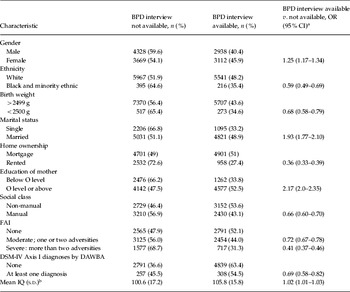
Initial analyses were carried out with SPSS version 17 statistical software (SPSS, Inc., USA). Selective drop-out was determined by comparing those who completed the borderline interview with those lost to follow-up (Table 2). Odds ratios (ORs) and 95% confidence intervals (CIs) were computed to test for gender differences in parenting variables and BPD probable and definite symptoms (Table 3). Crude associations between family adversity, maladaptive parenting and BPD probable and definite symptoms were computed. Associations were then adjusted for age and gender, then, additionally, DSM-IV diagnoses and IQ. ORs with 95% CIs are reported for the preschool and school periods, respectively (Tables 4 and 5). Path analysis was carried out, using Mplus version 6 (http://www.statmodel.com/), to elucidate the direct and indirect relationships between exposure to family adversity, suboptimal parenting and parent conflict, manifestation of DSM-IV Axis I diagnoses, IQ and the BPD outcome. A categorical ordinal BPD outcome was utilized in the path analysis, reflecting increasing severity of BPD [less than five symptoms (92.7%); five or more probable symptoms (6.4%); five or more definite symptoms (0.9%)]. Mplus version 6 software is suitable for the analysis of categorical outcomes, producing estimates in the form of probit coefficients. Probit coefficients indicate the strength of relationship between predictor variables and probability of group membership. They represent the difference that a one-unit change in the predictor variable makes in the cumulative normal probability of the outcome variable (Lee et al. Reference Lee, Uken and Sebold2007). For ordinal outcomes one coefficient per predictor is produced. This may be interpreted in the same way as a continuous dependent variable, as an ordinal dependent variable is comparable with a continuous latent response variable, which exceeds thresholds to give various outcome categories (Muthén, 1998–Reference Muthén2004).
Results
Differences between participants with and without the completed borderline interview
The frequencies of sociodemographic factors, psychiatric diagnoses and IQ are shown for ALSPAC participants with and without borderline interviews in Table 2. Those lost to follow-up were more often boys, ethnic minority children, of low birth weight, born to single mothers of lower education level, from rented properties and with parents in manual jobs. They were more likely to have been born into family adversity, and have had psychiatric diagnoses at 7–8 years. Children who dropped out had a lower IQ at 8 years. Thus, participants remaining in the analysis were less severely disadvantaged than those who dropped out.
Drop-out analysis comparing those where BPD symptoms interview was not available with those who completed the borderline interview at age 11 years

BPD, Borderline personality disorder; OR, odds ratio; CI, confidence interval; FAI, Family Adversity Index; DSM-IV, Diagnostic and Statistical Manual of Mental Disorders, 4th edn; DAWBA, Development and Well-Being Assessment; IQ, intelligence quotient.
a None of the 95% CIs includes 1.00.
b For BPD interview not available, n=1669; for BPD interview available, n=4787.
Frequency of BPD and maladaptive parenting variables
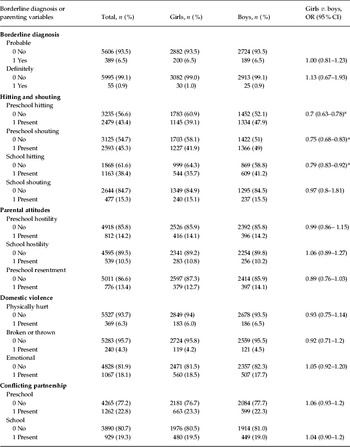
Table 3 reports the frequencies of BPD probably and definitely present and parenting variables (total and by gender). Of the ALSPAC cohort, 6.4% had five or more probable, and 0.9% had five or more definite, symptoms at 11 years. These findings are largely concordant with a previous community study, which reported that 7.8% of 9- to 19-year-olds had moderate BPD, and 3% had severe BPD (Bernstein et al. Reference Bernstein, Cohen, Velez, Schwab-Stone, Siever and Shinsato1993), with the lower values in the present study possibly attributable to the younger age of the cohort.
Frequencies of BPD diagnosis (probable and definite) and maladaptive parenting variables shown for the total sample and by gender

BPD, Borderline personality disorder; OR, odds ratio; CI, confidence interval.
a 95% CI does not include 1.
Hitting and shouting were common during the preschool period, becoming rarer during the school period (Table 3). Significantly more boys than girls were hit during both periods and shouted at during the preschool period. Hostility and resentment did not differ according to the gender of the study child. Domestic violence was reported for the preschool period only, with emotional domestic violence more common than being physically hurt by a partner and a partner having broken or thrown things. There were no gender differences for living in a household with domestic violence. Conflicting partnerships during both periods did not differ according to the gender of the child.
Associations between maladaptive parenting and BPD symptoms
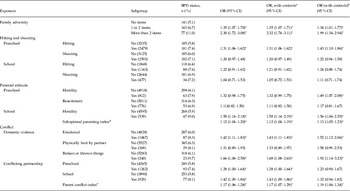
Table 4 shows the associations between family adversity, maladaptive parenting and BPD probable symptoms. The Table shows the crude associations, the associations after controlling for age and gender, and the associations after controlling for age, gender, DSM-IV diagnoses and IQ.
Associations between family adversity, maladaptive parenting and BPD probable status, showing crude associations, adjustment for age and gender, and additionally DSM-IV diagnosis and IQ

BPD, Borderline personality disorder; DSM-IV, Diagnostic and Statistical Manual of Mental Disorders, 4th edn; IQ, intelligence quotient; OR, odds ratio; CI, confidence interval.
a Controls include gender and age.
b Controls include gender, age, DSM-IV diagnosis and IQ.
c 95% CI does not include 1.00.
d Suboptimal parenting index on a scale of 1–7.
e Parent conflict index on a scale of 1–5 .
Family adversity (one or two items; more than two items), hitting (preschool), hostility (school), partner breaking or throwing things, emotional domestic violence and conflicting partnership (preschool and school) were all significantly associated with BPD probable symptoms. After controlling for confounders, conflicting partnership (preschool and school) was no longer predictive of BPD probable symptoms. Suboptimal parenting and parent conflict led to higher odds of BPD probable symptoms after adjusting for confounders.
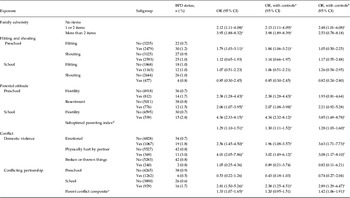
Table 5 shows the associations between family adversity, maladaptive parenting and BPD definite symptoms. Hitting (preschool), resentment, hostility (preschool and school), emotional domestic violence, physically hurt by partner and conflicting partnership (school) were predictive of BPD definite symptoms. After controlling for confounders, hostility (school), emotional domestic violence, physically hurt by partner and conflicting partnership (school) remained significantly predictive of BPD definite symptoms. Suboptimal parenting and parent conflict remained predictive of BPD definite symptoms after controlling for confounders.
Associations between maladaptive parenting and BPD definite status, showing crude associations, adjustment for age and gender, and additionally DSM-IV diagnosis and IQ

BPD, Borderline personality disorder; DSM-IV, Diagnostic and Statistical Manual of Mental Disorders, 4th edn; IQ, intelligence quotient; OR, odds ratio; CI, confidence interval.
a Controls include gender.
b Controls include gender, age, DSM-IV diagnosis and IQ.
c 95% CI does not include 1.00.
d Suboptimal parenting index on a scale of 1–7.
e Parent conflict index on a scale of 1–5.
Predictive associations between family adversity, parenting variables, potential mediators and BPD probable and definite symptoms
The predictive associations between family adversity, parenting variables, mediators and BPD probable and definite symptoms are shown in Supplementary Table S1(A, B, C). These associations were tested according to time ordering; therefore, family adversity was considered a predictor, while Axis I DSM-IV diagnoses (DAWBA), IQ and BPD were considered outcomes of family adversity and parenting variables. Univariate analysis indicated that family adversity was predictive of suboptimal parenting, parent conflict, DSM-IV diagnosis, IQ and BPD symptoms probable and definite (Supplementary Table S1A). Suboptimal parenting and parent conflict were predictive of DSM-IV diagnoses, IQ and BPD probable and definite symptoms (Supplementary Table S1B). DSM-IV diagnoses were predictive of BPD probable symptoms and IQ was predictive of BPD definite symptoms (Supplementary Table S1C). These findings are consistent with a pathway model in which family adversity is a precursor for suboptimal parenting and parent conflict, leading to DSM-IV diagnoses and lower IQ (child markers) culminating in BPD symptoms.
Path analysis
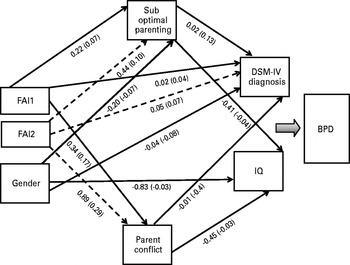
The path model incorporated the family adversity, suboptimal parenting and parent conflict indices as predictors. IQ and DSM-IV diagnoses were entered as potential mediators, while gender was entered as a control. Model fit indices indicated good fit (χ2=11.58, p=0.00, root mean square error of approximation=0.02, comparative fit index=0.99). Fig. 2 shows the unstandardized and standardized (in parentheses) estimates of the direct path coefficients between the various predictor and mediating variables. Non-significant paths (p>0.05, one-tailed) are not shown.
Final model showing unstandardized probit coefficients and standardized coefficients (in parentheses) for the direct effects of family adversity, suboptimal parenting, parent conflict, child intelligence quotient (IQ) and Diagnostic and Statistical Manual of Mental Disorders, 4th edn (DSM-IV) diagnosis (χ2=11.58, p=0.00, root mean square error of approximation=0.02, comparative fit index=0.99). Non-significant paths at the 0.05 level (one-tailed) are not shown. The Family Adversity Index (FAI) is coded into three categories: none, moderate and severe. FAI1 (one or two items) and FAI2 (more than two items) are dummy variables, with FAI (0 items) used as the reference group. – – →, Relationships (significant coefficients) for FAI2. ––→, Relationships (significant coefficients) for other coefficients. ‘Gender’ is a nominal variable: the negative relationship indicates that male gender is a significant predictor of parenting problems. For clarity, the correlation between parenting and conflict (unstandardized coefficient 0.20, standardized coefficient 0.02, p=0.00) is not shown in the diagram. ( ), Direct and indirect predictors of borderline personality disorder (BPD) are shown in Table 6.

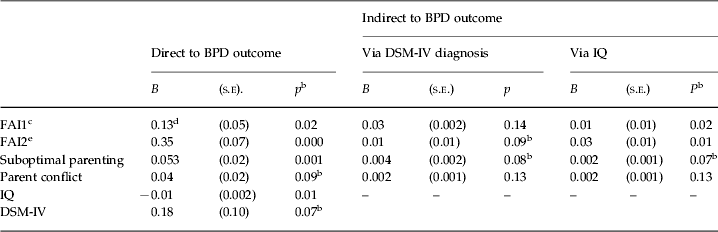
The direct relationships between family adversity (one or two adversities; more than two adversities), suboptimal parenting, parent conflict, DSM-IV diagnoses, IQ and BPD outcome at 11 years were significant. Direct and indirect path coefficients to the BPD outcome are shown in Table 6. The association between suboptimal parenting and BPD outcome was partially mediated by DSM-IV diagnoses and IQ at 7–8 years.
Unstandardized probit coefficients (B) for the direct and indirect paths between FAI, suboptimal parenting, parental conflict, IQ and subsequent BPD outcomeFootnote a at age 11 years

FAI, Family Adversity Index; IQ, intelligence quotient; BPD, borderline personality disorder; DSM-IV, Diagnostic and Statistical Manual of Mental Disorders, 4th edn; s.e., standard error.
a The BPD outcome is an ordinal categorical outcome: none; probable (five or more symptoms); definite (five or more symptoms).
b The p value is two-tailed, therefore divided by 2 to get a significance value, as the direction of the association is clearly hypothesized.
c The FAI1 category denotes one or two items.
d A probit coefficient of 0.13 indicates that for each unit increase in FAI there is an increase of 0.13 standard deviations in the predicted Z score of the cumulative normal distribution of BPD symptoms.
e The FAI2 category denotes more than two items.
Discussion
In line with previous research, we found that suboptimal parenting and parent conflict were more likely within families experiencing adversities, ranging from poverty and overcrowding to mental health problems (Fergusson et al. Reference Fergusson, Boden and Horwood2006). Family adversity was assessed in pregnancy, thereby excluding reverse-causality effects of parenting, or a challenging child, on family adversity. Family adversity had a direct impact on BPD symptoms at 11 years of age, and indirect effects via suboptimal parenting, parent conflict, poorer cognitive functioning and DSM-IV diagnoses of the child. Furthermore, there was a dose–response effect with an increase in family adversity and maladaptive parenting severity leading to increased odds of BPD symptoms. This indicates that children exposed to higher levels of family adversity and maladaptive parenting were at heightened risk of developing BPD symptoms. The direct impact of family adversity in pregnancy may be due to continued adversity throughout childhood, such as social deprivation, leading to increased BPD symptoms. Alternatively, adversity in early pregnancy may lead to increased stress for the fetus, and early programming alterations of the hypothalamic–pituitary–adrenal axis (Entringer et al. Reference Entringer, Kumsta, Hellhammer, Wadhwa and Wust2009), increasing the risk of BPD symptoms.
Despite controlling for other adversities, we found that suboptimal parenting and parent conflict had significant direct associations with BPD symptoms, adding to the current research literature by providing prospective evidence for a link between maladaptive parenting and subsequent BPD symptoms in late childhood. Furthermore, there were significant indirect associations between suboptimal parenting and BPD outcome via DSM-IV diagnosis and IQ.
There is ample evidence that lower IQ is often indicative of a deleterious home environment, lacking in resources and academic encouragement (Brody & Flor, Reference Brody and Flor1998; Van IJzendoorn et al. Reference Van IJzendoorn, Juffer and Klein Poelhuis2005). Therefore, maladaptive parenting is likely to contribute to poorer cognitive ability and increased BPD symptoms, as shown here. Considering the complexity of personality pathology (Tyrer et al. Reference Tyrer, Coombs, Ibrahimi, Mathilakath, Bajaj, Ranger and Din2007), these outcomes may have various aetiological pathways. A family environment characterized by conflict, aggression and anger directed at the child may make an impact upon the child in various ways including an alteration of internal schemata of behaviour and relationships (Westen et al. Reference Westen, Nakash, Thomas and Bradley2006), an exacerbation of stress responses (e.g. hypothalamic–pituitary–adrenocorticol axis) (Gunnar, Reference Gunnar1998) or an interaction with genes (Belsky & Beaver, Reference Belsky and Beaver2011). All of these may compromise cognitive and emotional regulation (Posner et al. Reference Posner, Rothbart, Vizueta, Thomas, Levy, Fossellla, Silbersweig, Stern, Clarkin and Kernberg2003). Indeed, individuals with BPD tend to display a disturbance in cognitive control processes (Posner et al. Reference Posner, Rothbart, Vizueta, Thomas, Levy, Fossellla, Silbersweig, Stern, Clarkin and Kernberg2003; Rogosch & Cicchetti, Reference Rogosch and Cicchetti2005).
An association between IQ and increased psychotic symptoms during adolescence has been observed, curvilinear in nature, with both low and high (to a lesser extent) IQ increasing risk (Horwood et al. Reference Horwood, Salvi, Thomas, Hollis, Lewis, Menezes, Thompson, Wolke, Zammit and Harrison2008). The present results suggest a more straightforward linear relationship between IQ and BPD symptoms (Supplementary Fig. S1), with high IQ possibly acting as a protective factor across the population (Batty et al. Reference Batty, Mortensen and Osler2005); due to an increased ability to mobilize resources and respond appropriately in difficult situations.
Axis I (DSM-IV) diagnoses at 7–8 years were directly associated with BPD outcome at 11 years within the path model. This is consistent with the ‘complication model’, which posits a predictive association between Axis I disorders and subsequent personality pathology (Philipsen et al. Reference Philipsen, Limberger, Lieb, Feige, Kleindienst, Ebner-Priemer, Barth, Schmahl and Bohus2008). Our findings indicate that diagnoses of anxiety, depression, ADHD or externalizing disorders (conduct disorder, oppositional defiant disorder) were direct precursors of subsequent BPD symptoms. Both suboptimal parenting and parent conflict, to a lesser extent, were predictive of a DSM-IV Axis I diagnosis at 7–8 years. The association between suboptimal parenting and BPD via DSM diagnoses was only partial, however, and the association between parent conflict and BPD was not mediated by DSM-IV diagnoses. Thus, only a proportion of children reporting BPD at 11 years was identified by the DSM-IV diagnoses at 7–8 years.
This suggests that the DAWBA diagnoses may not capture all cases of emotional dysregulation, or the combination of internalizing and externalizing manifestations (Crawford et al. Reference Crawford, Cohen and Brook2001), thought to presage the development of BPD (Crowell et al. Reference Crowell, Beauchaine and Linehan2009). While disorders such as conduct disorder and ADHD may have identified individuals more outwardly evincing the emotional dysregulation implicated in the development of BPD, other manifestations of emotional dysregulation may not have been observed by parents or teachers. Of note, male gender was significantly predictive of DSM-IV but not BPD diagnoses, suggesting that certain female typical manifestations of emotional dysregulation (e.g. self-harm and eating disorders) may not have been identified within the DSM-IV diagnoses.
Strengths and limitations
Study strengths include the large sample size and the assessment of family adversity before the birth of the child, precluding any reverse causality. The UK-CI-BPD was adapted from a well-validated instrument, piloted, administered by trained psychologists and showed high inter-rater reliability. The findings support the presence of a late childhood phenotype for BPD, and buttress current literature (Cohen et al. Reference Cohen, Crawford, Johnson and Kasen2005; Chanen et al. Reference Chanen, Jovev and Jackson2007) by demonstrating that borderline personality symptoms, recognized in late childhood, are associated with similar risk factors to BPD diagnosed in adulthood. However, before firm conclusions can be drawn, it needs to be ascertained whether these BPD symptoms demonstrate predictive validity (Crick et al. Reference Crick, Murray-Close and Woods2005) and are related to BPD clinically diagnosed in adulthood.
There was substantial and selective attrition in this study. Those with more family adversity were more likely to have been lost from follow-up. Thus, the study is likely to underestimate the prevalence of BPD symptoms in late childhood (Bernstein et al. Reference Bernstein, Cohen, Velez, Schwab-Stone, Siever and Shinsato1993). Despite selective drop-out, we found strong and hypothesized associations between family adversity, suboptimal parenting and parent conflict and BPD symptoms among the remaining, less severely disadvantaged individuals. Wolke et al. (Reference Wolke, Waylen, Samara, Steer, Goodman, Ford and Lamberts2009) demonstrated in simulations that even when drop-out is correlated with predictor/confounder variables, the relationships between predictors and outcome were not markedly attenuated. However, it cannot be precluded that selective drop-out had some influence on the predictive relationships reported.
Maternal hitting, shouting, hostility and resentment were based on self-report, potentially leading to an under-reporting of these factors. However, under-reporting would probably represent ‘non-differential misclassification’, i.e. under-reporting in both groups, therefore exerting a downward bias on our estimates of the long-term effects of suboptimal parenting, suggesting our robust estimates are conservative (underestimate effects) (Copeland et al. Reference Copeland, Checkoway, McMichael and Holbrook1977). The reported rates of suboptimal parenting are still fairly high, however, suggesting a reasonable level of self-disclosure, possibly due to the anonymous, postal method of data collection. While self-report measures are regarded as less robust than observational measures, they have the benefit of capturing attitudes and behaviours across longer time spans.
Due to the very low prevalence of reported sexual abuse in this sample (0.05%), it was excluded as a predictor, potentially omitting an important experiential factor (Zanarini et al. Reference Zanarini, Frankenburg, Hennen, Reich and Silk2006). Existing research, however, suggests that sexual abuse is not linked to the whole spectrum of BPD, and certain forms of BPD may be associated with maladaptive parenting other than sexual abuse (Salzman et al. Reference Salzman, Salzman, Wolfson, Albanese, Looper, Ostacher, Schwartz, Chinman, Land and Miyawaki1993).
Implications and future directions
Our results suggest that cognitive mechanisms play a direct and weak meditational role in the development of BPD symptoms. Assessing cognition via IQ supports that general cognitive ability relates to psychopathology (Batty et al. Reference Batty, Mortensen and Osler2005). However, given the proposed centrality of emotional dysregulation within the BPD construct (LeGris & van Reekum, Reference LeGris and van Reekum2006), it would be prudent for future developmental studies to tap into the domain of emotional dysregulation more directly in order to clarify the pathways via which BPD symptoms develop. Though DSM-IV diagnoses at 7–8 years identified a proportion of children reporting BPD symptoms at 11 years, results suggest that there may be other precursors to BPD in mid-childhood.
In addition, the present results concur with previous studies that exposure to family adversity, suboptimal parenting and parent conflict may have numerous negative outcomes for children, including lower cognitive ability and Axis I disorders. Further, we expand the current literature by providing prospective evidence of a link between maladaptive parenting and subsequent BPD symptoms at age 11 years, suggesting that interventions focused on improving parenting may produce wide-ranging positive effects.
We tentatively speculate that suboptimal parenting may be a marker for maternal irritable temperament (Siever & Davies, Reference Siever and Davies1991), potentially exposing the child to the double jeopardy of an inherited irritable temperament (Stringaris et al. Reference Stringaris, Maughan and Goodman2010) and suboptimal parenting, which may manifest in subsequent BPD symptoms (Crowell et al. Reference Crowell, Beauchaine and Linehan2009), including affective instability and intense inappropriate anger. Therefore, it would be desirable for future studies to ascertain whether there are prospective links between emotional/irritable temperament and later BPD symptoms. Assessing BPD symptoms in late childhood appears to be a promising avenue for understanding the development of BPD.
Supplementary material
For supplementary material accompanying this paper, visit http://dx.doi.org/10.1017/S0033291712000542.
Acknowledgements
We are extremely grateful to all the families who took part in this study, the midwives for their help in recruiting them, and the whole ALSPAC team, which includes interviewers, computer and laboratory technicians, clerical workers, research scientists, volunteers, managers, receptionists and nurses. We give special thanks to Andrea Waylen and Jeremy Horwood who helped in the conduct of the study. This article is the work of all the authors and D.W. and C.W. serve as guarantors for the content of the article. The UK Medical Research Council (grant no. 74882), the Wellcome Trust (grant no. 076467) and the University of Bristol provide core support for ALSPAC. C.W. was supported by a competitive Ph.D. scholarship funded by the University of Warwick, Department of Psychology.
Declaration of Interest
None.