Introduction
Parasitic nematodes detect and respond to specific cues in order to locate and parasitize hosts (Lee, Reference Lee and DL2002). For example, entomopathogenic nematodes (Steinernema and Heterorhabditis spp.) respond to odour blends and carbon dioxide emitted by live insect hosts (Dillman et al., Reference Dillman2012). The human parasite Strongyloides stercoralis is attracted to skin and sweat odorants (Castelletto et al., Reference Castelletto2014). Similarly, Heligmosomoides polygyrus (a parasite of rodents) is attracted to sweat odorants, faeces and carbon dioxide (Ruiz et al., Reference Ruiz2017). The terrestrial gastropod parasitic nematode Phasmarhabditis hermaphrodita is a lethal parasite of several pestiferous slug species (Wilson et al., Reference Wilson, Glen and George1993) and is attracted to slug faeces, mucus and volatiles (Rae et al., Reference Rae, Robertson and Wilson2006, Reference Rae, Robertson and Wilson2009; Hapca et al., Reference Hapca2007a,Reference Hapcab; Small and Bradford, Reference Small and Bradford2008; Nermut et al., Reference Nermut, Puza and Mracek2012). Phasmarhabditis hermaphrodita has been formulated into a biological control agent (Nemaslug®) used to kill slugs and snails across northern Europe (Rae et al., Reference Rae2007). Nematodes are applied to soil, where they seek out hosts, penetrate through the mantle and kill slugs within 4–21 days (Wilson et al., Reference Wilson, Glen and George1993; Tan and Grewal, Reference Tan and Grewal2001). The nematodes then reproduce on the decaying cadaver and go in search of more hosts (Rae et al., Reference Rae, Robertson and Wilson2009). Phasmarhabditis hermaphrodita has been shown to successfully protect crops such as lettuce and oilseed rape against slug damage (Wilson and Rae, Reference Wilson, Rae and Campos-Herrera2015).
Phasmarhabditis hermaphrodita is able to infect and kill many slug species from the families Arionidae, Milacidae, Limacidae and Vaginulidae (Rae, Reference Rae2017a) and uses mucus, faeces and volatiles to find slugs (Rae et al., Reference Rae, Robertson and Wilson2006, Reference Rae, Robertson and Wilson2009; Hapca et al., Reference Hapca2007a,Reference Hapcab; Small and Bradford, Reference Small and Bradford2008; Nermut et al., Reference Nermut, Puza and Mracek2012). However, all of these behavioural studies have concentrated on studying chemoattraction towards slugs and not snails. Phasmarhabditis hermaphrodita is able to kill several species of snails, including juvenile Cornu aspersum (Glen et al., Reference Glen1996) and adult Monacha cantiana and Cernuella virgata (Coupland, Reference Coupland1995; Wilson et al., Reference Wilson2000); however, some species, including Arianta arbustorum and Cepaea nemoralis, are resistant (Wilson et al., Reference Wilson2000; Williams and Rae, Reference Williams and Rae2016; Rae, Reference Rae2018). The reasons for their resistance to P. hermaphrodita are unknown but it could be due to the presence of the shell, which has the ability to trap, encase and kill nematodes (Rae, Reference Rae2017b). We decided to investigate whether P. hermaphrodita and other Phasmarhabditis species were attracted to snail mucus.
All behavioural studies using P. hermaphrodita (Rae et al., Reference Rae, Robertson and Wilson2006, Reference Rae, Robertson and Wilson2009; Hapca et al., Reference Hapca2007a,Reference Hapcab; Small and Bradford, Reference Small and Bradford2008; Nermut et al., Reference Nermut, Puza and Mracek2012), have concentrated on using one strain (the commercial isolate, designated DMG0001 by Hooper et al., Reference Hooper1999), which has been in production for over 20 years. There is no information about how wild strains of P. hermaphrodita and other Phasmarhabditis species respond to gastropod cues such as mucus. Therefore, we utilized a collection of recently isolated wild strains of P. hermaphrodita and Phasmarhabditis species (including P. californica and P. neopapillosa) (Andrus and Rae, Reference Andrus and Rae2018a) to examine their chemoattraction behaviour to snail mucus to see if it differed from the commercial isolate.
It is unknown what properties of gastropod mucus P. hermaphrodita nematodes are specifically attracted to. Mucus is used by gastropods for locomotion, lubrication, adhesion, protection and communication (Ng et al., Reference Ng2013). It is constantly secreted all over the gastropod body and is composed mainly of water (> 80%), proteins (proteoglycans and glycoproteins), carbohydrates (glycosaminoglycans, such as hyaluronic acid), lipids, metals and other molecules (Burton, Reference Burton1965; Kubota et al., Reference Kubota1985; Kim et al., Reference Kim1996; Werneke et al., Reference Werneke2007; Sallam et al., Reference Sallam, El-Massry and Nasr2009; Smith et al., Reference Smith2009). Therefore, we exposed Phasmarhabditis nematodes to a subset of these properties, including metal salts (FeSO4, ZnSO4, CuSO4 and MgSO4) and hyaluronic acid, and examined whether heat treatment of mucus (which denatures large glycoproteins) would alter the chemoattraction of the nematodes.
Nematodes are excellent organisms to study the genetic and neurobiological mechanisms responsible for behaviour (Rengarajan and Hallem, Reference Rengarajan and Hallem2016). Studies using Caenorhabditis elegans have identified genes, neurons and neurotransmitters that are essential for chemotaxis and avoidance behaviour towards alcohols, bacteria and various compounds (Bargmann, Reference Bargmann2006). Also, research using the necromenic nematode Pristionchus pacificus (and other Pristionchus species), which is associated with scarab beetles, has shown strong chemoattraction to insect pheromones (Hong and Sommer, Reference Hong and Sommer2006) due to activation of the protein kinase EGL-4 (Hong et al., Reference Hong, Witte and Sommer2008). However, the role this gene plays in chemoattraction in other nematodes remains unknown. Therefore, in a final experiment, we also examined whether Phasmarhabditis attraction was regulated by the cyclic guanosine monophosphate (cGMP)-dependent protein kinase EGL-4 through manipulation by pharmacological treatment using 8-bromo-cGMP.
Materials and methods
Source of invertebrates
Phasmarhabditis hermaphrodita (commercial strain DMG0001-Nemaslug®) was supplied by BASF Agricultural Specialities and stored at 15°C before use. Other nematodes used in this study consisted of wild isolated P. hermaphrodita strains (DMG0007 and DMG0008), P. californica (DMG0019) and P. neopapillosa (DMG0014) that are maintained as isogenic lines at Liverpool John Moores University and have been described elsewhere (see Andrus and Rae, Reference Andrus and Rae2018a). Snails (C. nemoralis and C. hortensis) were collected from sand dunes in Formby, Merseyside, UK. A selection of commonly found C. nemoralis morphs were collected, including pink (0 and 1 bands) and yellow (1 and 5 bands) snails. Only yellow five-banded C. hortensis were found and used in this study. Cornu aspersum were collected from Formby, Halifax, Liverpool, Whitby and Thurso. Arianta arbustorum were collected from Thurso. Snails were transported back to the laboratory and fed lettuce ad libitum at 15°C until use.
Chemotaxis assay
To assess the behaviour of Phasmarhabditis nematodes exposed to snail mucus an agar plate chemotaxis assay was used, as in previous studies (Rae et al., Reference Rae, Robertson and Wilson2006, Reference Rae, Robertson and Wilson2009). Briefly, 10 cm Petri dishes were half filled with 1.2% technical agar and left to dry for 48 hours. Using a 1 cm2 piece of Whatman number 1 filter paper, 0.01 g of snail mucus was swabbed gently from the foot of each snail and placed 0.5 cm from the edge of the plate. On the opposite side of the Petri dish 10 μl of distilled water was added to a 1 cm2 piece of Whatman number 1 filter paper and acted as the control. Approximately 50 dauer stage Phasmarhabditis nematodes were added to the middle of the plate and each plate was sealed with Parafilm® and stored at 20°C. The following morning the numbers of nematodes that had graduated to each piece of filter paper and the numbers that remained in the middle of the plate were recorded. Wild strains of Phasmarhabditis were sub-cultured by growing them in White traps (described in Andrus and Rae, Reference Andrus and Rae2018a), where c. 100 nematodes were added to a rotting piece of Limax flavus and left for 28 days until they grew to the dauer stage, and were then used in experiments. For each snail species three replicate plates were used and the experiment was repeated three times.
Usually chemotaxis data using nematodes are presented using a chemotaxis index (Bargmann et al., Reference Bargmann, Hartwieg and Horvitz1993); however, this does not take into account the number of nematodes that remained at the point of application and it is sometimes based on very few numbers of nematodes that graduated to the treatment or control, which can be misleading. Therefore, for each experiment we counted (and presented) the numbers of nematodes that moved to the mucus, the control and also those that remained at the point of application. Also, when studying chemotaxis in C. elegans, 1 m sodium azide is added to the treatment and control to stop nematode movement immediately (Bargmann et al., Reference Bargmann, Hartwieg and Horvitz1993). However, once P. hermaphrodita nematodes find mucus they remain there (Rae et al., Reference Rae, Robertson and Wilson2006, Reference Rae, Robertson and Wilson2009; Hapca et al., Reference Hapca2007a), hence there is no need to immobilize them.
Investigating the properties of snail mucus that Phasmarhabditis nematodes are attracted to
We attempted to discover what properties of mucus Phasmarhabditis spp. were attracted to. To do this we used the same chemotaxis assay described above, with modifications. We added four 1 cm2 pieces of filter paper to each plate and added different concentrations (0, 10, 50 and 100 μm) of each metal salt (FeSO4, ZnSO4, MgSO4 and CuSO4) to each piece of filter paper. Approximately 50 dauer stage P. hermaphrodita (DMG0007), P. neopapillosa (DMG0014) or P. californica (DMG0019) were added to three replicate plates and the whole experiment was repeated three times. It should be noted that it is unknown whether the higher salt concentrations affect the pH of the solutions added to the filter paper. Also, we did not use the commercial strain P. hermaphrodita (DMG0001), as in previous experiments it remained consistently at the point of application. We also repeated the same set up but exposed the same set of species of Phasmarhabditis (P. hermaphrodita DMG0007, P. neopapillosa DMG0014 and P. californica DMG0019) nematodes to sodium hyaluronate (the sodium salt of hyaluronic acid) at four different concentrations (0, 1, 5 and 10%).
We also investigated whether any large (unknown) glycoproteins may be involved in the attraction of Phasmarhabdits nematodes to snail mucus. Proteins in snail mucus can be denatured using heat treatment. Cornu aspersum mucus was harvested (as described previously), placed into 1.5 ml Eppendorfs and heated at 41°C or 82°C for 45 minutes in a heat block. The first treatment (41°C) was used to destroy smaller proteins (> 40,000 kDa) present in the mucus (Branden and Tooze, Reference Branden and Tooze1999). The second treatment (82°C) was used to target large glycoproteins (> 120,000 kDa) (Kubota et al., Reference Kubota1985). The heat-treated filter paper with mucus was then placed on the agar plate (as described previously) and a control piece of filter paper with water and treated at the same temperatures was placed opposite. Three replicate plates were used for each heat treatment and the experiment was repeated three times with P. hermaphrodita (DMG0007), P. neopapillosa (DMG0014) and P. californica (DMG0019).
Assessment of behaviour of Phasmarhabditis nematodes exposed to mucus after pharmacological treatment using 8-bromo-cGMP
Nematodes (C. elegans and P. pacificus) use the protein kinase EGL-4 to detect cues, which can be activated by treatment with membrane permeable cyclic guanosine monophosphate (8-bromo-cGMP) (Hong et al., Reference Hong, Witte and Sommer2008; Kroetz et al., Reference Kroetz2012). Therefore, we investigated whether treatment of Phasmarhabditis nematodes with 8-bromo-cGMP would increase their host-seeking ability. We exposed c. 300 dauer or adult stage P. hermaphrodita (DMG0001) or P. hermaphrodita (DMG0007) to 500 μm 8-bromo-cGMP (Sigma-Aldrich) in a 1.5 ml Eppendorf at 20°C (following Hong et al., Reference Hong, Witte and Sommer2008). Dauers were exposed to 8-bromo-cGMP for 3 hours and adults for just 1 hour, after which we washed the nematodes briefly in buffer and applied them to a chemotaxis plate with 0.01 g C. aspersum mucus on one side and a water control on the other (as used in the first experiments). In parallel, nematodes were exposed to water and not 8-bromo-cGMP and used in chemotaxis assays as a control. Phasmarhabditis hermaphrodita (DMG0001) was used in this experiment to investigate whether we could enhance its weak chemoattraction by increasing the activity of EGL-4. Three plates were used and the entire experiment was repeated three times.
Statistical analysis
The number of nematodes found in the snail mucus was compared to the number in the water control using a Mann–Whitney U test. The numbers of nematodes found in the mucus from each snail species (or snail location), and in the increasing concentrations of metals and sodium hyaluronate were compared using a Kruskal–Wallis test. Statistical analysis was carried out using SPSS 21 (IBM, Armonk, USA).
Results
Phasmarhabditis nematodes are attracted to mucus from several snail species
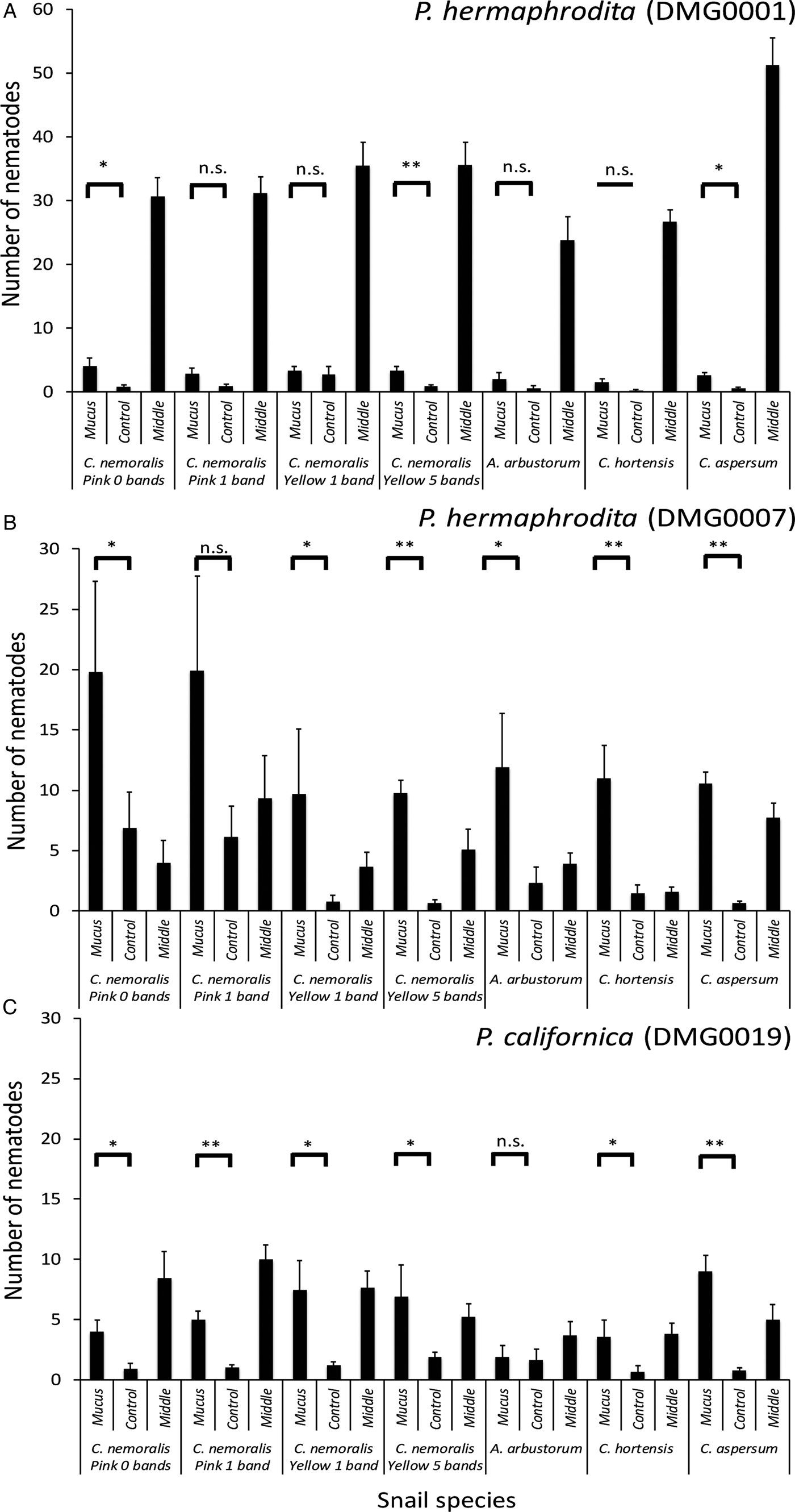
There was a significant difference between the numbers of P. hermaphrodita (DMG0001) found in mucus from pink C. nemoralis with zero bands (P = 0.023), yellow C. nemoralis with five bands (P = 0.0007) and C. aspersum (P = 0.0035) compared to the water control (fig. 1A). However, there was no significant difference between the numbers of P. hermaphrodita (DMG0001) found in mucus of yellow or pink C. nemoralis (1 band), C. hortensis or A. arbustorum and water (P > 0.05; fig. 1A). In general, very few nematodes (< 5) moved towards the mucus, whereas the majority (23–36) were found still at the point of application. In contrast, the recently isolated strain of P. hermaphrodita (DMG0007) was more active and attracted to snail mucus, with significantly more nematodes found in mucus from yellow C. nemoralis (1 band, P = 0.0052; 5 bands, P = 0.0002); pink C. nemoralis (0 bands, P = 0.046), C. hortensis (P = 0.0008), A. arbustorum (P = 0.0135) and C. aspersum (P = 0.0002) compared to water (fig. 1B). There was no significant difference between the numbers of P. hermaphrodita (DMG0007) found in mucus from pink C. nemoralis (1 band) and water (P = 0.066; fig. 1B).
The mean numbers of P. hermaphrodita (DMG0001) (A), P. hermaphrodita (DMG0007) (B) and P. californica (DMG0019) (C) found in mucus of pink C. nemoralis (0 and 1 bands), yellow C. nemoralis (1 and 5 bands), A. arbustorum, C. hortensis and C. aspersum, in the control (water), or at the application point. Significant differences between the numbers of nematodes found in mucus and the control at P < 0.05 are denoted by * and at P < 0.001 denoted by **; n.s. = non-significant (P > 0.05). Bars represent ± one standard error.

The numbers of P. californica (DMG0019) found in the mucus from pink C. nemoralis (0 bands, P = 0.007; 1 band, P = 0.0002), yellow C. nemoralis (1 band, P = 0.005; 5 bands, P = 0.035), C. hortensis (P = 0.015) and C. aspersum (P = 0.0002) were significantly greater than the number of nematodes found in water (fig. 1C). However, there was no significant difference between the numbers of P. californica (DMG0019) found in mucus from A. arbustorum compared to water (P = 0.43; fig. 1C).
Natural variation in chemoattraction of Phasmarhabditis nematodes to C. aspersum collected from around the UK
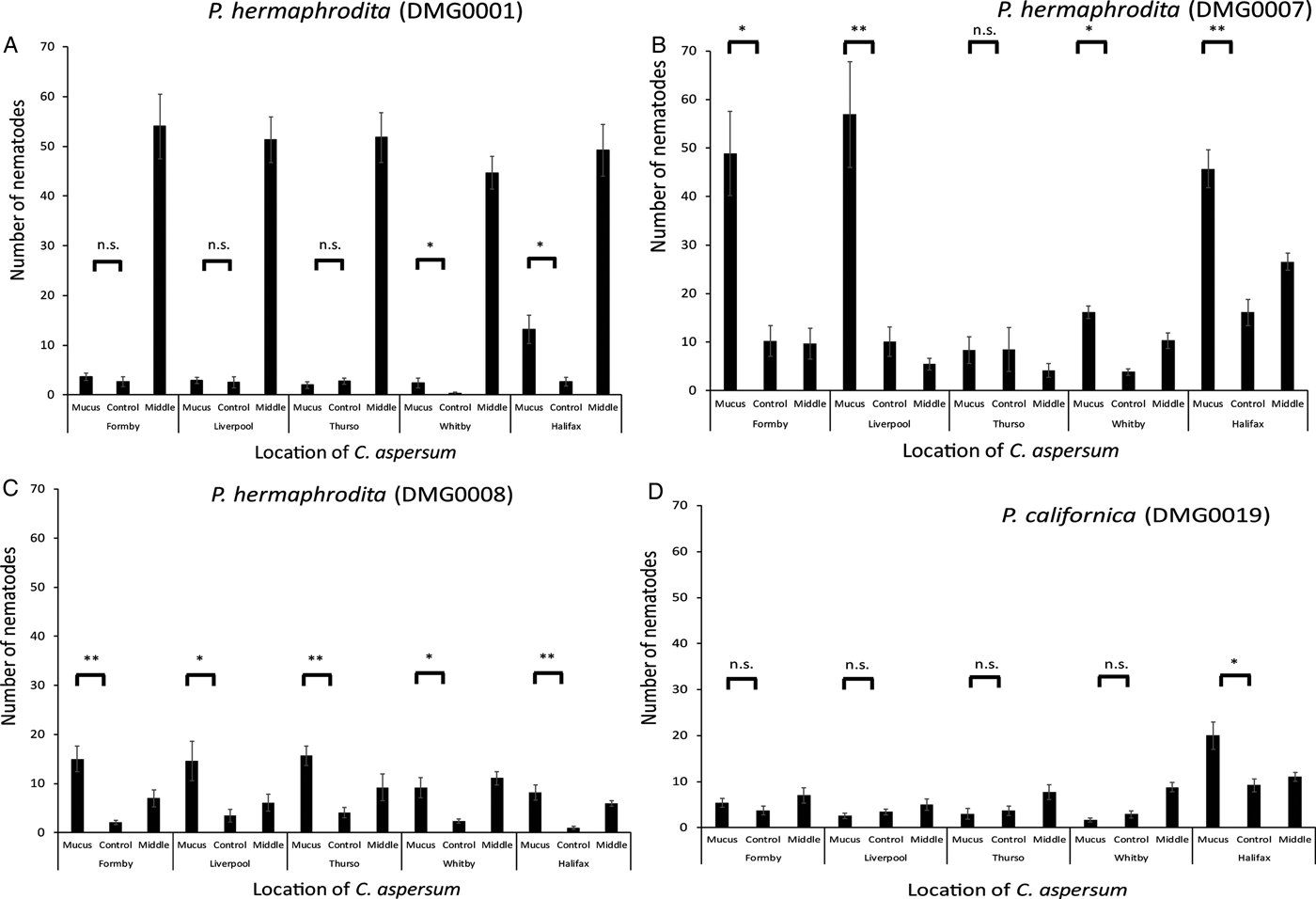
There was no significant difference between the numbers of P. hermaphrodita (DMG0001) found in mucus from C. aspersum collected from Formby, Thurso or Liverpool compared to water (P > 0.05; fig. 2A); however, significantly more nematodes were found in mucus of C. aspersum collected from Whitby (P = 0.038) and Halifax (P = 0.006) than water (fig. 2A). The majority of nematodes, however, were found at the point of application (similar to the previous experiment). In contrast, significantly more P. hermaphrodita (DMG0007) were found in the mucus from C. aspersum collected from Formby (P = 0.003), Liverpool (P = 0.0002), Whitby (P = 0.002) and Halifax (P = 0.0002) compared to water (fig. 2B). Mucus collected from C. aspersum from Formby, Liverpool and Whitby was significantly more attractive to P. hermaphrodita (DMG0007) than that from snails from Halifax (P < 0.05). There was no difference in the numbers of P. hermaphrodita (DMG0007) found in mucus from C. aspersum collected from Thurso and water (P = 0.5; fig. 2B).
The mean numbers of P. hermaphrodita (DMG0001) (A), P. hermaphrodita (DMG0007) (B), P. hermaphrodita (DMG0008) (C) and P. californica (DMG0019) (D) found in mucus of C. aspersum collected from Formby, Liverpool, Thurso, Whitby and Halifax, in the control (water), or at the application point. Significant differences between the numbers of nematodes found in mucus and the control at P < 0.05 are denoted by * and at P < 0.001 denoted by **; n.s. = non-significant (P > 0.05). Bars represent ± one standard error.

Phasmarhabditis hermaphrodita (DMG0008) were found significantly more in mucus from C. aspersum collected from all locations compared to water (P < 0.05; fig. 2C). There was no significant difference between the numbers of nematodes that were found in mucus from the different locations (P > 0.05; fig. 2C). In contrast, when P. californica (DMG0019) was exposed to mucus from C. aspersum collected from Formby, Liverpool, Whitby and Thurso there was no significant difference between the numbers of nematodes found in the mucus compared to water (P > 0.05; fig. 2D). However, P. californica (DMG0019) were found significantly more in mucus from C. aspersum collected from Halifax than water (P = 0.003; fig. 2D).
Phasmarhabditis nematodes are weakly attracted to metal salts found in snail mucus
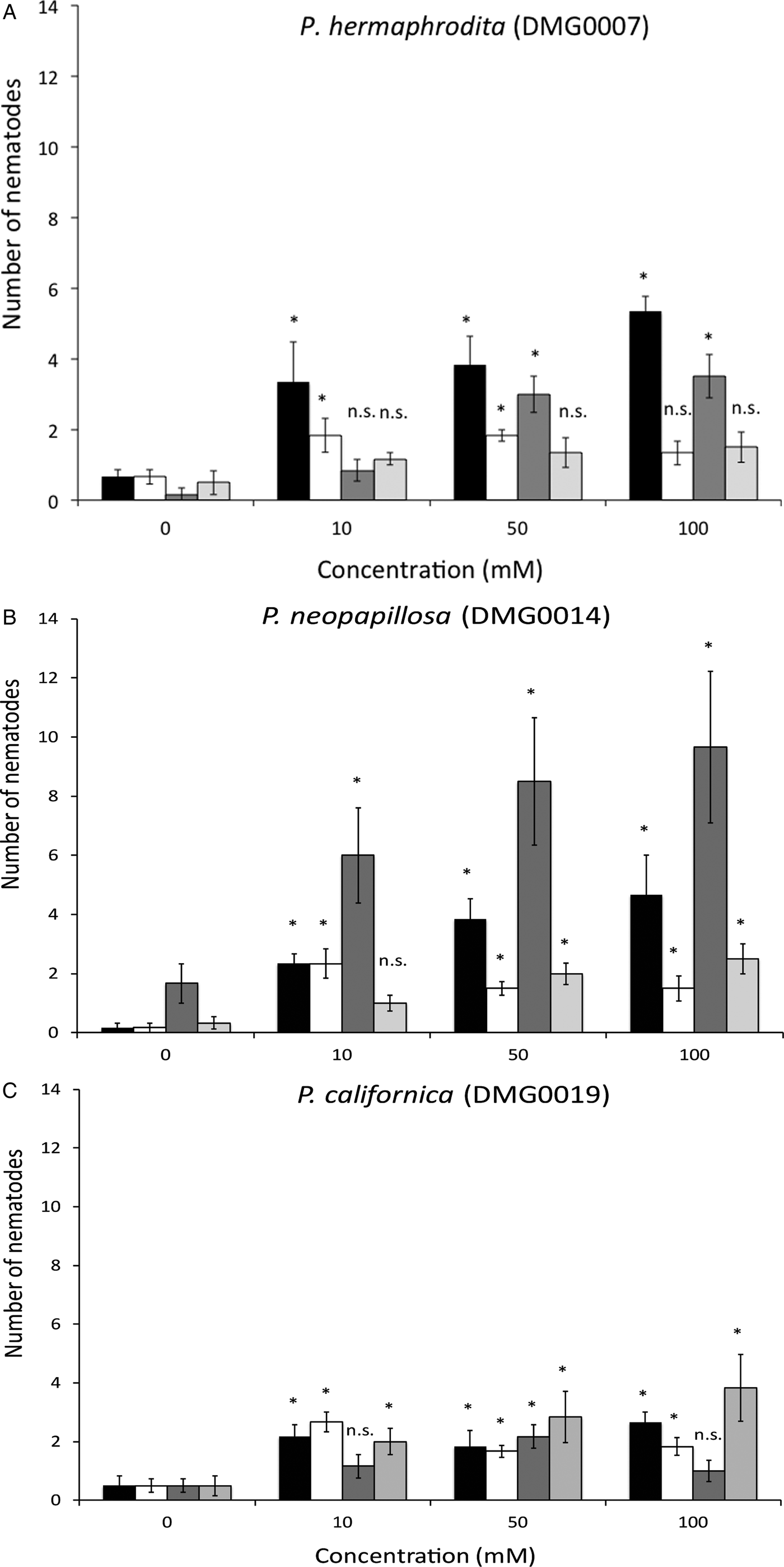
Significantly more P. hermaphrodita (DMG0007) were found in 10, 50 and 100 mm FeSO4 compared to the 0 mm control (P < 0.05; fig. 3A). There was no significant difference between the numbers of nematodes found in 10, 50 or 100 mm FeSO4 (P > 0.05). When exposed to a range of concentrations of ZnSO4 there were significantly more P. hermaphrodita (DMG0007) found in 10 and 50 mm of ZnSO4 (P < 0.05) but not 100 mm of ZnSO4 (P > 0.05) compared to 0 mm. There was a significant difference between the numbers of P. hermaphrodita (DMG0007) that were found in 0 and 50 or 100 mm of MgSO4 (P < 0.05) but not 10 mm (P > 0.05). There was no significant difference between the numbers of P. hermaphrodita (DMG0007) that were found in 0, 10, 50 or 100 mm of CuSO4 (P > 0.05).
The mean numbers of P. hermaphrodita (DMG0007) (A), P. neopapillosa (DMG0014) (B) and P. californica (DMG0019) (C) found in 0, 10, 50 and 100 mm of FeSO4 (black bars), ZnSO4 (white bars), MgSO4 (dark grey bars) and CuSO4 (light grey bars). Significant differences between the numbers of nematodes found in 0 and 10, 50 or 100 mm are denoted by * at P < 0.05; n.s. = non-significant (P > 0.05). Bars represent ± one standard error.

There were significantly more P. neopapillosa (DMG0014) found in 10, 50 or 100 mm of FeSO4, ZnSO4 and MgSO4 compared to the control (0 mm) (P < 0.05; fig. 3B). CuSO4 was also attractive to the nematodes, with significantly more nematodes found in 50 or 100 mm (P < 0.05) than the 0 mm control but not at 10 mm (P > 0.05; fig. 3B).
The numbers of P. californica (DMG0019) found in 10, 50 or 100 mm of FeSO4, ZnSO4 and CuSO4 compared to the 0 mm control were significantly different (P < 0.05; fig. 3C). There was no significant difference between the numbers of P. californica (DMG0019) found in 0, 10 and 100 mm MgSO4 (P > 0.05) but significantly more nematodes were found in 50 mm MgSO4 than in 0 mm (P < 0.05).
Attraction of Phasmarhabditis nematodes to mucus is attenuated by heat treatment
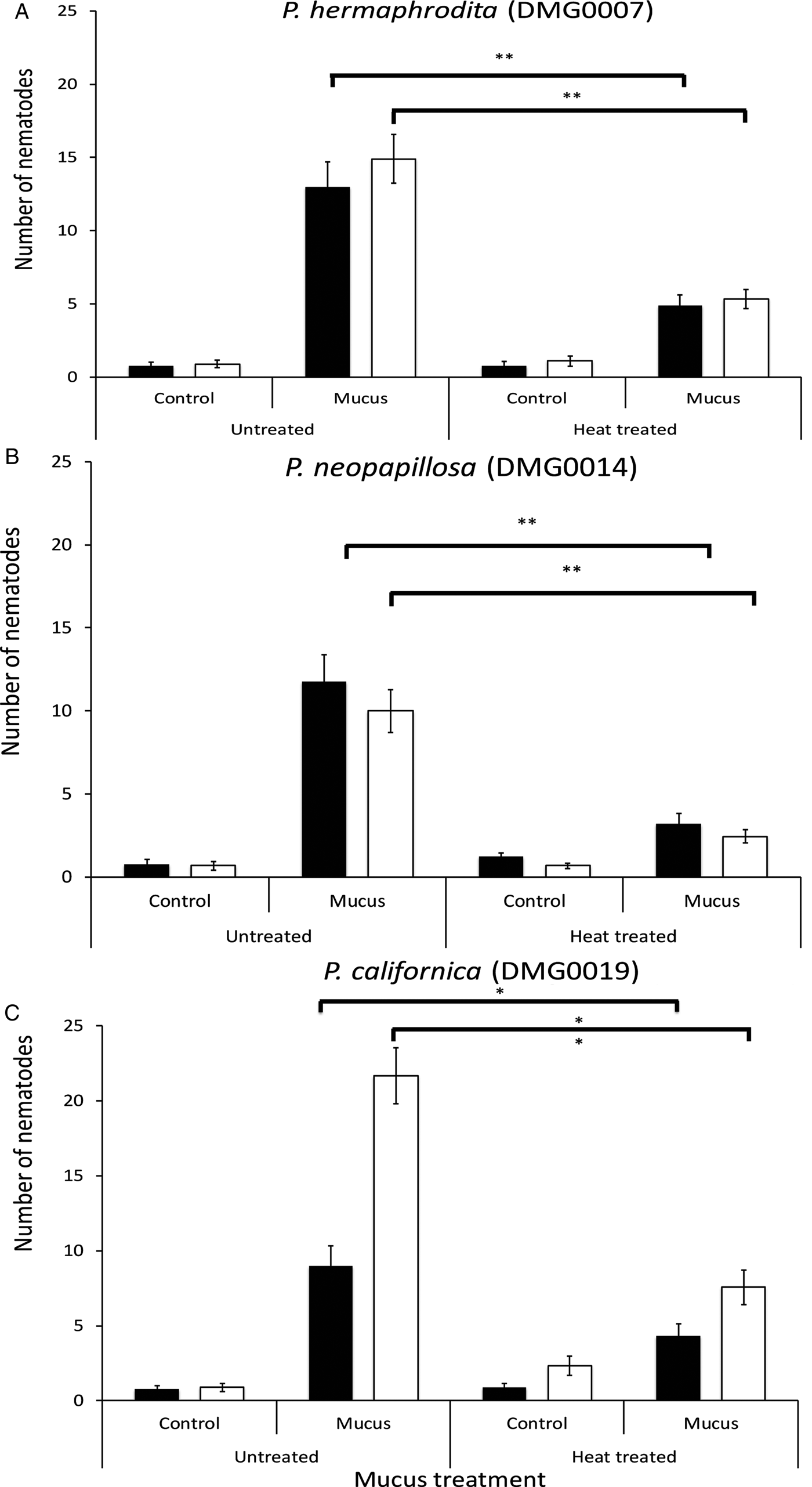
As previously reported, P. hermaphrodita (DMG0007), P. neopapillosa (DMG0014) and P. californica (DMG0019) were significantly attracted to C. aspersum mucus compared to the water control (P < 0.001; fig. 4A–C). This was also the case for all species when mucus from C. aspersum was treated at 41°C and 82°C (P < 0.001; fig. 4A–C). However, the mucus from C. aspersum exposed to 41°C and 82°C was significantly less attractive than mucus that was untreated (P < 0.001; fig. 4A–C). This implies that a protein (or proteins) present in the mucus is important in attraction towards mucus for Phasmarhabditis.
The mean numbers of P. hermaphrodita (DMG0007) (A), P. neopapillosa (DMG0014) (B) and P. californica (DMG0019) (C) found in untreated mucus from C. aspersum and mucus exposed to 41°C (black bars) and 82°C (white bars). Significant differences between the numbers of nematodes found in untreated mucus and heat-treated mucus at P < 0.05 are denoted by * and at P < 0.001 denoted by **; n.s. = non-significant (P > 0.05). Bars represent ± one standard error.

Phasmarhabditis nematodes are attracted to sodium hyaluronate
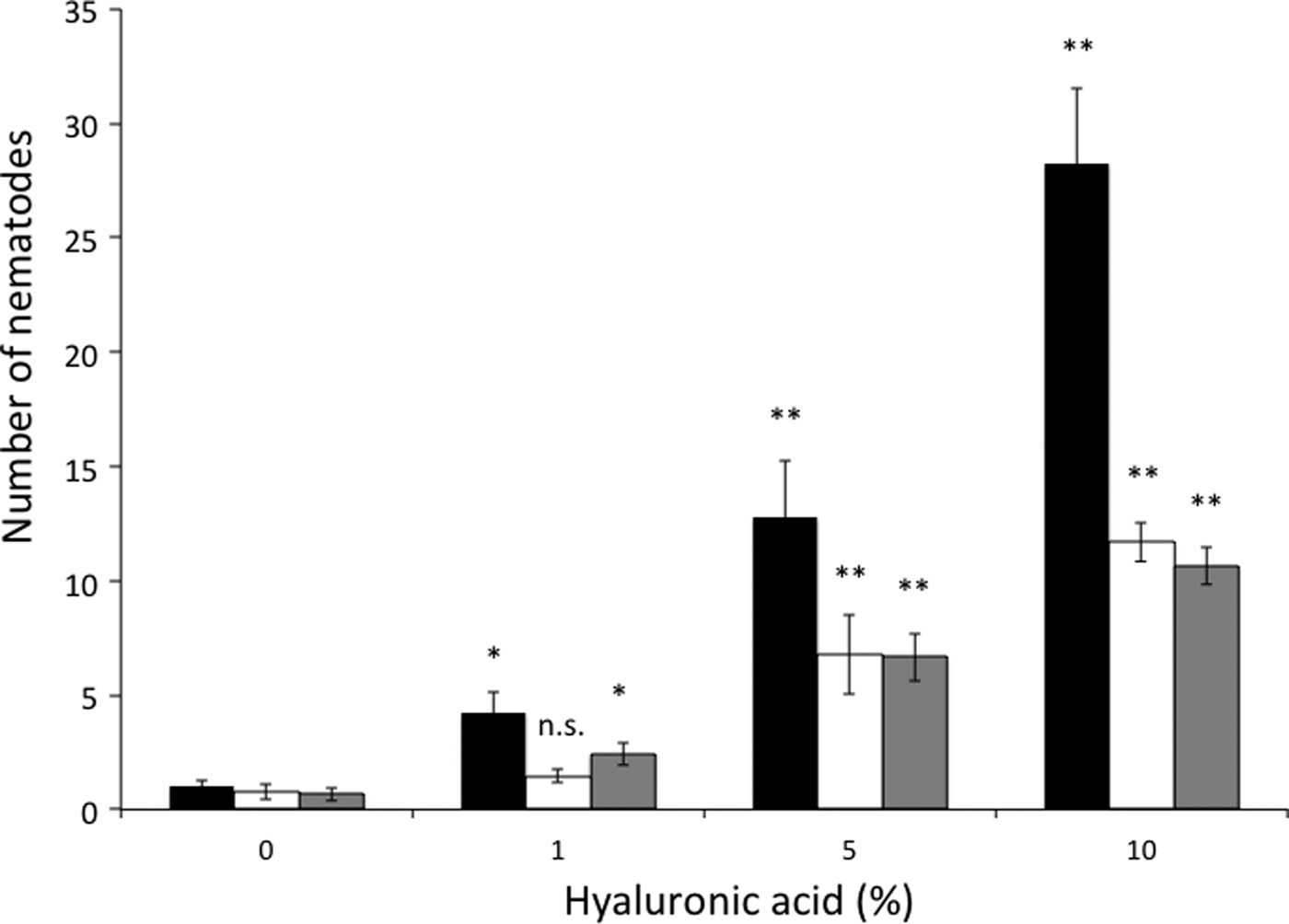
Phasmarhabditis hermaphrodita (DMG0007), P. neopapillosa (DMG0014) and P. californica (DMG0019) were significantly attracted to sodium hyaluronate at 1%, 5% and 10% compared to the 0% control (P < 0.001; fig. 5). There was no significant difference between the numbers of P. hermaphrodita (DMG0007), P. neopapillosa (DMG0014) or P. californica (DMG0019) found at 1% or 5% sodium hyaluronate (P > 0.05) but there were significantly more P. hermaphrodita (DMG0007) than P. neopapillosa (DMG0014) or P. californica (DMG0019) found in 10% sodium hyaluronate (P < 0.0001).
The mean numbers of P. hermaphrodita (DMG0007) (black bars), P. neopapillosa (DMG0014) (white bars) and P. californica (DMG0019) (grey bars) found in 0, 1, 5 and 10% sodium hyaluronate. Significant differences between the numbers of nematodes found at each concentration of sodium hyaluronate vs the control (0%) at P < 0.05 are denoted by * and at P < 0.001 denoted by **; n.s. = non-significant (P > 0.05). Bars represent ± one standard error.

Assessment of behaviour of Phasmarhabditis nematodes exposed to mucus after pharmacological treatment with 8-bromo-cGMP
When dauers of the commercial strain of P. hermaphrodita (DMG0001) were exposed to C. aspersum mucus, 2.56 ± 0.5 moved to it (compared to 0.56 ± 0.18 to the water control) (P < 0.05) (data not shown). When P. hermaphrodita (DMG0001) dauers were treated with 8-bromo-cGMP, 3.33 ± 0.65 moved to the mucus (compared to 0.56 ± 0.24 to the water control) (P < 0.05). There was no significant difference between the numbers of P. hermaphrodita (DMG0001) dauers found in the C. aspersum mucus when treated with 8-bromo-cGMP or not (P > 0.05) (data not shown).
When P. hermaphrodita (DMG0007) dauers were exposed to C. aspersum mucus, 10.56 ± 0.97 moved to it (compared to 0.67 ± 0.17 to the water control) (P < 0.001) (data not shown). When P. hermaphrodita (DMG0007) dauers were treated with 8-bromo-cGMP, 7.78 ± 1.22 nematodes moved to the mucus (compared to 0.78 ± 0.28 to the water control) (P < 0.001). There was no significant difference between the numbers of P. hermaphrodita (DMG0007) dauers found in the mucus when they were treated with 8-bromo-cGMP or not (P > 0.05) (data not shown).
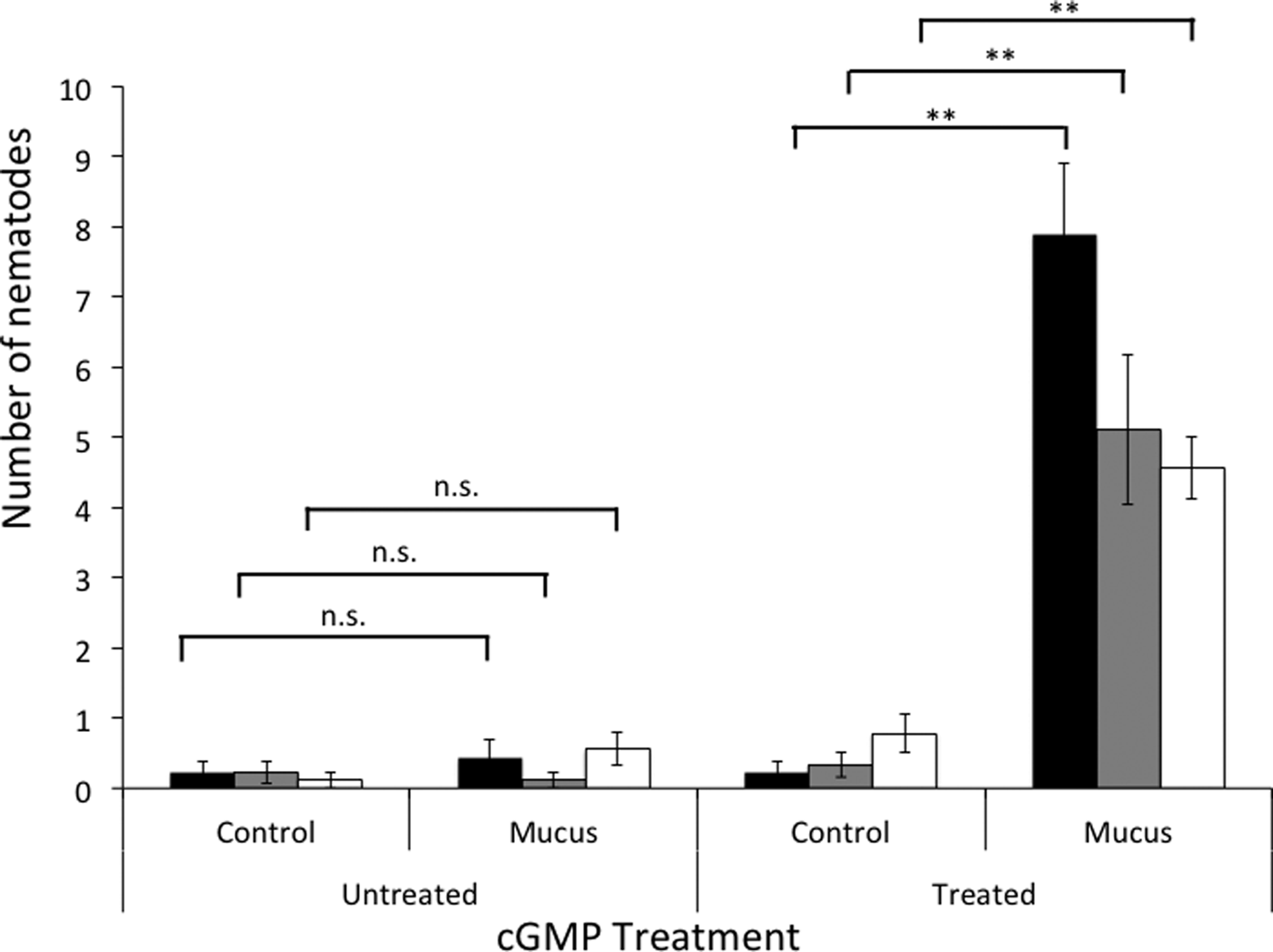
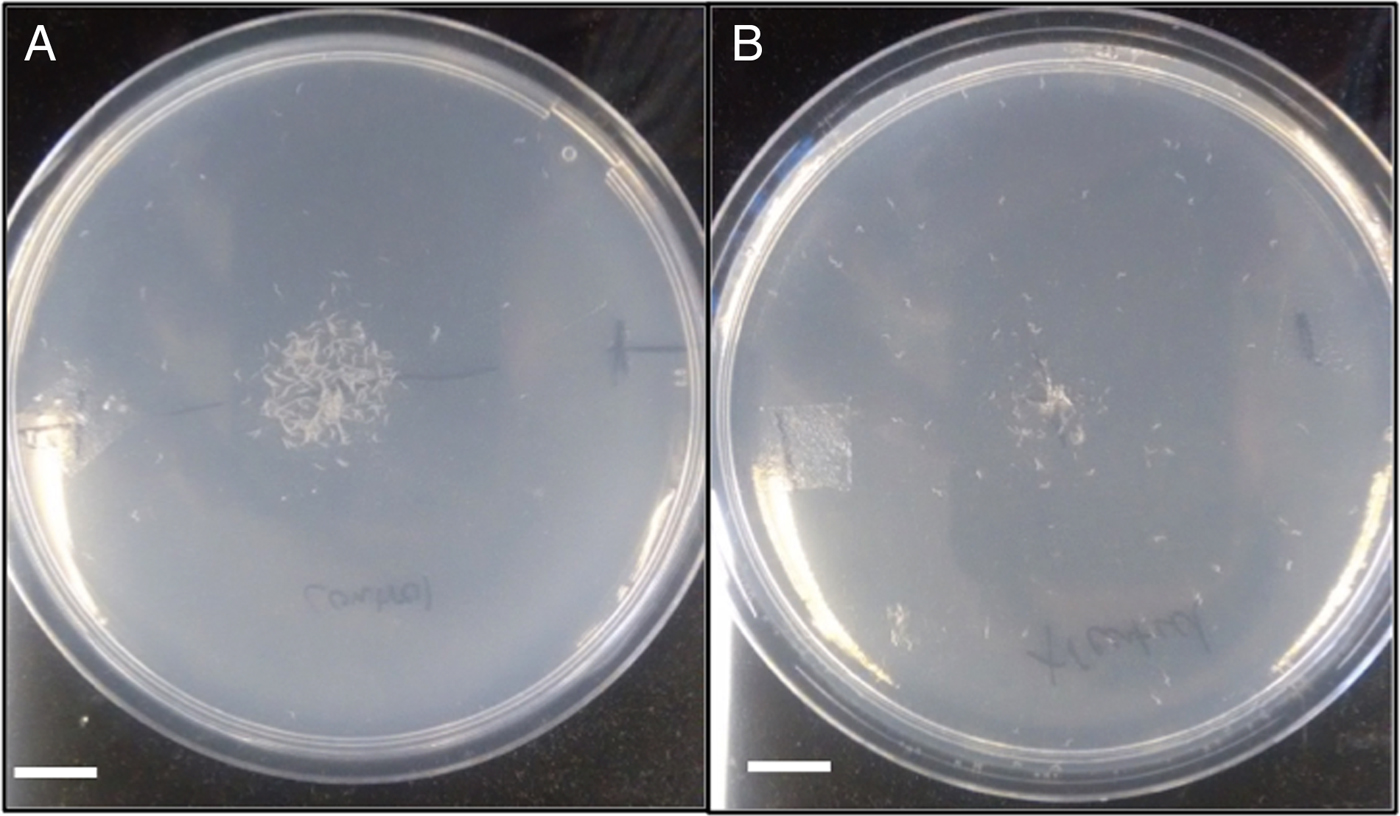
We believe that the 8-bromo-cGMP was unable to penetrate the thick cuticle of the dauers. Phasmarhabditis hermaphrodita dauers are very resistant to treatment with chemicals due to their thick cuticle and can survive prolonged exposure to detergents such as 1% SDS, whereas adults die quickly (Rae et al., Reference Rae, Tourna and Wilson2010), which is also the case for C. elegans (Cassada and Russell, Reference Cassada and Russell1975). It should be noted that we tested only two strains of P. hermaphrodita (DMG0001 and DMG0007). It may not be the dauer stage that is resistant but just these two isolates, therefore there may be other strains or species of Phasmarhabditis that are not resistant to 8-bromo-cGMP treatment. Nevertheless, we decided to concentrate on adult Phasmarhabditis and exposed them to 8-bromo-cGMP as they do not possess the impenetrable cuticle. Phasmarhabditis hermaphrodita (DMG0007), P. neopapillosa (DMG0014) and P. californica (DMG0019) adults were not attracted to C. aspersum mucus, with equal numbers found in the mucus and water control (P > 0.05; figs 6 and 7A). However, when adults of each species were exposed to 8-bromo-cGMP this had a highly significant effect and increased their attraction to C. aspersum mucus (P < 0.0001; figs 6 and 7B). The most extreme effect was found with P. hermaphrodita (DMG0007), for which significantly more nematodes were found in the mucus after treatment of 8-bromo-cGMP than P. neopapillosa (DMG0014) or P. californica (DMG0019) (P < 0.05; fig. 6).
The mean numbers of untreated or treated adult P. hermaphrodita (DMG0007) (black bars), P. neopapillosa (DMG0014) (grey bars) and P. californica (DMG0019) (white bars) found in mucus from C. aspersum. Pharmacological treatment consisted of 1-hour exposure to 500 μm 8-bromo-cGMP. Significant differences between the numbers of nematodes found in mucus and the control at P < 0.05 are denoted by * and at P < 0.001 denoted by **; n.s. = non-significant (P > 0.05). Bars represent ± one standard error.

After 12–16 hours of being added to the chemotaxis plate testing the behavioural response of adult P. hermaphrodita (DMG0007) to C. aspersum mucus the majority remain at the point of application at the centre of the plate (A). However, if treated for 1 hour with 500 μm 8-bromo-cGMP then added to the plate, adult P. hermaphrodita (DMG0007) disperse over the agar plate searching for snail mucus (B). Scale bar represents 1 cm.

Discussion
Here we have shown that there are striking differences in the chemotactic response of several recently isolated strains and the commercial strain of P. hermaphrodita as well as P. californica and P. neopapillosa when exposed to mucus from several snail species. Phasmarhabditis hermaphrodita (DMG0001) largely remained at the point of application and showed little evidence of chemoattraction to mucus from all snail species tested. In contrast, recently isolated P. hermaphrodita (DMG0007) and P. californica (DMG0019) were attracted to mucus from C. nemoralis, C. hortensis and A. arbustorum. Over 10 years ago, using the same agar-based assay, P. hermaphrodita (DMG0001) was able to chemotax towards many different slug species and was rarely found at the application point (Rae et al., Reference Rae, Robertson and Wilson2006, Reference Rae, Robertson and Wilson2009). It was also shown to be attracted to mucus from C. aspersum and C. hortensis, scoring chemotaxis indices of 0.45 and 0.2, respectively (Rae et al., Reference Rae, Robertson and Wilson2009). As this nematode has been in commercial production for over 20 years this suggests there may be a degree of in-lab evolution occurring. This is not uncommon in nematodes commonly used in research. For example, through decades of being propagated under laboratory conditions using the same monoxenic diet of Escherichia coli OP50 and being cultured at the same temperature (20–25°C), C. elegans N2 is phenotypically different from wild strains in terms of aggregation behaviour, maturation time, fecundity, body size and many other traits (Sterken et al., Reference Sterken2015). At the genetic level this continued culturing has led to laboratory-derived variation in three genes, npr-1, glb-5 and nath-10, which have striking effects on behaviour (Andersen et al., Reference Andersen2014), oxygen sensing (McGrath et al., Reference McGrath2009) and several other life history traits (Duveau and Félix, Reference Duveau and Félix2012) compared to wild isolated strains. Phasmarhabditis hermaphrodita (DMG0001) was initially discovered in 1988 in a moribund slug (D. reticulatum) showing signs of infection, from Long Ashton Research Station, UK (Wilson et al., Reference Wilson, Glen and George1993). Since then it has been under commercial production fed the bacterium Moraxella osloensis, which was chosen as it produces high yields of nematodes that are consistently virulent (Wilson et al., Reference Wilson1995a, Reference Wilsonb). It is therefore possible that decades of growth under the same laboratory conditions away from natural conditions and gastropod hosts may have affected chemoattraction in P. hermaphrodita (DMG0001). Similar results showing that lack of chemotactic ability towards several slug species have been reported (Andrus and Rae, Reference Andrus and Rae2018b). However, it should be noted that even if a potentially deleterious mutation may have hindered the ability of this nematode to respond to snail mucus it remains highly pathogenic to slugs (Williams and Rae, Reference Williams and Rae2015).
We also observed striking intra- and interspecies differences in chemotaxis in Phasmarhabditis nematodes. When exposed to mucus from C. aspersum collected from five different locations around the UK the two recently isolated strains of P. hermaphrodita (DMG0007 and DMG0008) were significantly attracted to mucus from snails from all locations (unlike the commercial strain DMG0001). In contrast, P. californica (DMG0019) did not find C. aspersum mucus attractive apart from those collected from Halifax. Presumably, this strain of C. aspersum produces some sort of attractive compound in greater quantity than the others, which is detected by P. californica (DMG0019). Phasmarhabditis californica was first discovered in California (Tandingan de Ley et al., Reference Tandingan De Ley2016) and has since been found in Ireland (Carnaghi et al., Reference Carnaghi2017) and Wales (Andrus and Rae, Reference Andrus and Rae2018a). Our strain was isolated from a snail (Oxychilus draparnaudi) collected from Pembrokeshire, Wales (Andrus and Rae, Reference Andrus and Rae2018a). Research into P. californica has concentrated on its recent description (Tandingan de Ley et al., Reference Tandingan De Ley2016) but there is little information about its biology. It seems curious that this species displays such limited attraction to snail mucus from C. aspersum yet was found parasitizing O. draparnaudi.
We have gained some insight into the properties that Phasmarhabditis nematodes use to detect mucus from snails. Mucus is composed mainly of water and a plethora of compounds, including glycoproteins, carbohydrates, metals and hyaluronic acid (Burton, Reference Burton1965; Kubota et al., Reference Kubota1985; Kim et al., Reference Kim1996; Werneke et al., Reference Werneke2007; Sallam et al., Reference Sallam, El-Massry and Nasr2009; Smith et al., Reference Smith2009). We have shown that Phasmarhabditis nematodes are weakly attracted to several metal salts that are abundant in terrestrial gastropod mucus. Werneke et al. (Reference Werneke2007) found zinc concentrations ranging from 70–340 ppm and levels of iron, manganese and copper ranging from 2–7 ppm in mucus from individual slugs (Arion hortensis). We also showed that heat treatment of mucus significantly reduced the attraction of snail mucus to the nematodes, which suggests that there are large (unknown) glycoproteins that the nematodes detect. However, our data strongly point towards hyaluronic acid as a significant source of nematode attraction in mucus. We found that recently isolated P. hermaphrodita (DMG0007), P. neopapillosa (DMG0014) and P. californica (DMG0019) were significantly attracted to increasing amounts of sodium hyaluronate (the sodium salt of hyaluronic acid). Hyaluronic acid has been shown to be an attractive cue for a diverse range of parasites. For example, cercariae of Acanthostomum brauni are attracted to hyaluronic acid from fish (Haas and Ostrowskide de Núñez, Reference Haas and Ostrowskide de Núñez1988). Also, the malarial parasite Plasmodium falciparum adheres to hyaluronic acid in cells in the placenta of infected pregnant mothers and is responsible for their aggregation (Beeson et al., Reference Beeson2000).
In a final experiment we investigated what genetic mechanism was used by Phasmarhabditis nematodes to detect snail mucus. We exposed P. hermaphrodita (DMG0007), P. neopapillosa (DMG0014) and P. californica (DMG0019) to exogenous 8-bromo-cGMP, which increases the activity of the protein kinase EGL-4 in other nematodes (Hong et al., Reference Hong, Witte and Sommer2008; Kroetz et al., Reference Kroetz2012). EGL-4 has been implicated in regulating behaviour in an array of different organisms, from nematodes (C. elegans and P. pacificus) to fruit flies (Osborne et al., Reference Osborne1997) and honeybees (Ben-Shahar et al., Reference Ben-Shahar2002). We did not observe an increase in chemotaxis behaviour when dauer stage nematodes were exposed to the compound, presumably because the compound cannot get through the rigid cuticle (Rae et al., Reference Rae, Tourna and Wilson2010). Future research will focus on trying to remove the second-stage cuticle via chemical exposure to maximize the uptake of 8-bromo-cGMP. We concentrated on using adult stage nematodes. This is not the host-seeking stage in P. hermaphrodita (Tan and Grewal, Reference Tan and Grewal2001) and will not chemotax towards mucus; however, after pharmacological application we found that the adults began chemotaxing to the snail mucus. This strongly implicates cGMP signalling and the role of EGL-4 in chemotaxis towards snail mucus in Phasmarhabditis nematodes. As this nematode is being developed as a genetic model to study the evolution of parasitism (Andrus and Rae, Reference Andrus and Rae2018a), this approach can be used to further investigate and genetically dissect the mechanisms responsible for behaviour used to find hosts – the first stage of parasitism. Also, these results emphasize the importance of the cGMP pathway and EGL-4 and its evolutionary conserved role as a modulator of host seeking in nematodes from the Diplogastridae (P. pacificus) and Rhabditidae (C. elegans and P. hermaphrodita), which were thought to have diverged 250–400 MYA (Dieterich et al., Reference Dieterich2008).
In summary, we have shown that there is interspecific and intraspecific variation in chemotaxis behaviour of P. hermaphrodita and Phasmarhabditis nematodes when exposed to snail mucus. We have shown that the commercial strain seems to have a reduced chemotactic response towards snail mucus, perhaps due to artificial selection as a result of mass production, but this has had little effect on its pathogenic potential towards pestiferous slugs (Williams and Rae, Reference Williams and Rae2015). We have also determined that one of the compounds used by Phasmarhabditis nematodes to detect snail mucus is hyaluronic acid and that the genetic mechanism used by these nematodes to detect snail mucus is the evolutionary conserved cGMP signalling pathway activated by the protein kinase EGL-4.