Background
Maternal mortality in developing countries
Maternal ill health is a serious public health problem in developing countries. Over 99% of the 536,000 maternal deaths estimated worldwide in 2005 occurred in less-developed countries (WHO et al., 2007). In addition, over 30 million women suffer illnesses and long-term disabilities from the complications of pregnancy and childbirth (Filippi et al., Reference Filippi, Ronsmans, Campbell, Graham, Mills and Borghi2006). Maternal mortality has also proved to be an intractable problem; globally, there has been no detectable change in levels of maternal mortality in almost three decades (WHO & UNICEF, 1996; WHO et al., 2001, 2004a, 2007a).
Epidemiological studies have revealed that during the intrapartum period, and the days directly after, the risk of mortality is significantly elevated (Ronsmans & Graham, Reference Ronsmans and Graham2006), and that the direct complications of pregnancy and childbirth (i.e. haemorrhage, hypertensive disorders, sepsis, abortion and obstructed labour) are responsible for the majority of deaths (Khan et al., Reference Khan, Wojdyla, Say, Gulmezoglu and Van Look2006). This information has provided the evidence base for a core strategy of intrapartum care in health centres (Campbell & Graham, Reference Campbell and Graham2006).
Key interventions are: (1) skilled birth attendance, delivery attended by an accredited health professional who functions within an enabling environment of transport, drugs and supplies; and (2) emergency obstetric care (EmOC), a package of medical interventions required to treat the main direct complications of pregnancy and childbirth (noted above). With sufficient coverage and utilization of these interventions, it is estimated that over 90% of maternal mortality could be prevented (Kilpatrick et al., Reference Kilpatrick, Crabtree, Kemp and Geller2002; Bartlett et al., Reference Bartlett, Mawji, Whitehead, Crouse, Dalil, Ionete and Salama2005; Campbell & Graham, Reference Campbell and Graham2006).
Provision and uptake of care are problematic due to the ‘massive deprivation in access’ characterized by the ‘sheer scarcity of staff and the excessive costs of care to mothers’ (Filippi et al., Reference Filippi, Ronsmans, Campbell, Graham, Mills and Borghi2006). In an emergency, when care may be required suddenly and/or at difficult times (e.g. at night), ensuring access is particularly difficult. Access is also typically constrained for vulnerable or marginalized groups (Weiss & Greenlick, Reference Weiss and Greenlick1970). A vast array of studies have demonstrated barriers to, or inequalities in, access related to social, cultural and economic disadvantage (Ensor & Cooper, Reference Ensor and Cooper2004; Cham et al., Reference Cham, Sundby and Vangen2005; Richard et al., Reference Richard, Witter and De Brouwere2008b), rurality and lack of transport (McCaw-Binns et al., Reference McCaw-Binns, Standard-Goldson, Ashley, Walker and MacGillivray2001; Davis-Floyd, Reference Davis-Floyd2003), and as arising from health policy (Mavalankar & Rosenfield, Reference Mavalankar and Rosenfield2005), systems and services (McCaw-Binns, Reference McCaw-Binns2005).
This article is concerned with describing and explaining access to health care in obstetric emergencies. Access is examined from the perspectives of the final caregivers of women who died during pregnancy or childbirth in two rural districts in Indonesia. Established and contemporary theoretical frameworks of access and a routine health surveillance method are used to consider the implications for health research and planning.
The concept of access
One of the most influential theoretical models of access to health care is the Andersen Behavioural Model (ABM) (Andersen & Newman, Reference Andersen and Newman1973; Aday & Andersen, Reference Aday and Andersen1974; Andersen, Reference Andersen1995). It consists of determining factors related to individuals and systems that influence health behaviour and service utilization (with the latter used as a proxy for access). Explanatory variables include: ‘predisposing factors’, e.g. age, sex and education; ‘enabling factors’, e.g. wealth, organization of services; and ‘need’, e.g. symptoms. The ABM, arguably the dominant concept of access, is used widely in policy and research (Gold, Reference Gold1998; Eden, Reference Eden1998; Ricketts & Goldsmith, Reference Ricketts and Goldsmith2005).
Other models have focused on the interaction between users and services. Penchansky & Thomas (Reference Penchansky and Thomas1981) have considered the ‘fit’ between patients' needs and services' ability to meet those needs. The Institute of Medicine has also conceived of access as an interaction between personal characteristics and structural features giving rise to service utilization and health outcomes (Millman, Reference Millman1993).
Dixon-Woods and colleagues (Reference Dixon-Woods, Cavers, Agarwal, Annandale, Arthur and Harvey2006) recently developed a framework that conceives of access as a dynamic, multi-dimensional, contingent process. They argue that utilization, conceptualized and measured relative to affluent groups, overlooks the issues of vulnerable groups, for whom access is typically constrained. They propose ‘candidacy’, or eligibility of care, as an alternative.
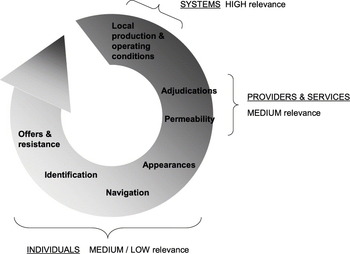
Candidacy encompasses a series of negotiations related to how individuals come to use or receive care. These are: ‘identification of candidacy’ (how disadvantaged people identify need in regard to specific events or crises), ‘navigation’ (an awareness of services and mobilization of resources), ‘permeability of services’ (how easily people can use services), ‘appearances’ (the ability of an individual to present credibly and articulately), ‘adjudications’ (providers' judgements or decisions that allow, or disallow, access), ‘offers and resistance’ (acknowledging that some refuse care that has been offered) and ‘operating conditions of the local production of candidacy’ (perceived and actual availability of health care determined by local conditions and revealed through repeated encounters of individuals and providers) (Dixon-Woods et al., Reference Dixon-Woods, Cavers, Agarwal, Annandale, Arthur and Harvey2006).
Models and frameworks have traditionally been used for measurement to select categorized variables and objectively evaluate trends and relationships between determinants of utilization to empirically demonstrate inequities in access. Over time, however, conceptualizations of access have come to reflect context-specific interactions between individuals and services. Finally, the concept of barriers to access (defined as individual and systemic social and economic factors that lead to reduced access (McCullock-Melnyk, Reference McCullock-Melnyk1988)) is said to be deficient in that it is derived from the viewpoints of professionals and fails to take into account the ‘lived experiences’ of service users (McCullock-Melnyk, Reference McCullock-Melnyk1990; Sword, Reference Sword1999).
‘Three delays’ framework
The ‘three delays’ framework is a classic pathways-based conceptualization of access to good quality EmOC (and thus maternal mortality prevention) rooted in the perspective of the service user (Thaddeus & Maine, Reference Thaddeus and Maine1994). Developed in the 1990s as part of the Prevention of Maternal Mortality programme at Columbia University, the framework is concerned with timely treatment of obstetric complications to prevent deaths and focuses on the interval between onset of a complication and receipt of care.
This framework sets out that delays may occur in an obstetric emergency in one or more of three ‘phases’: (a) in the decision to seek care (phase 1); (b) in the journey to care, once a decision to seek care has been made (phase 2); and/or (c) in receiving good quality care when a facility has been reached (phase 3).
Delays that occur in phase 1 are related to distance, cost and (perceived) quality of services, women's autonomy, economic status, education, illness and cultural factors. Despite cultural beliefs affecting preferences for care, Thaddeus & Maine (Reference Thaddeus and Maine1994) acknowledge the interplay of structural and individual factors: ‘a narrow focus on “cultural barriers” obscures the role that institutional inadequacies and economic considerations play in the decision to seek care’. Phase 2 delays refer to obstacles in reaching health facilities, including the distribution of facilities, travel distances and transport. Delays occur in phase 3 due to shortages of staff and equipment, and poor organization and management.
The framework has been used extensively in studies of maternal mortality in developing countries. Its applications include: quantifying the incidence of delays for service planning in Haiti and Nigeria (Okonofua et al., Reference Okonofua, Abejide and Makanjuola1992; Barnes-Josiah et al., Reference Barnes-Josiah, Myntti and Augustin1998); community-based investigations of maternal mortality in Zimbabwe (Fawcus et al., Reference Fawcus, Mbizvo, Lindmark and Nystrom1996); multivariate analysis into the determinants of delay in Bangladesh (Killewo et al., Reference Killewo, Anwar, Bashir, Yunus and Chakraborty2006); verbal autopsy in Afghanistan (Bartlett et al., Reference Bartlett, Mawji, Whitehead, Crouse, Dalil, Ionete and Salama2005) and Pakistan (Bartlett et al., Reference Bartlett, Jamieson, Kahn, Sultana, Wilson and Duerr2002); and clinical audit in Tanzania (Mbaruku et al., Reference Mbaruku, van Roosmalen, Kimondo, Bilango and Bergström2009). It has also been used to design community-oriented strategies (Sibley & Armbruster, Reference Sibley and Armbruster1997), to examine the influence of women's social positions on maternal mortality in Nigeria (Wall, Reference Wall1998) and to research health-seeking behaviours and perceptions of quality in rural Haiti (White et al., Reference White, Small, Frederic, Joseph, Bateau and Kershaw2006), Malawi (Barber, Reference Barber and Caplan2003), Bolivia (Otis & Brett, Reference Otis and Brett2008) and Guatemala (Berry, Reference Berry2008).
Rationale
Over a decade ago, a technical consultation marking ten years of the Safe Motherhood Initiative set out improving access as a key action message (Starrs, Reference Starrs1997). Research and programmes implemented since then recognize the importance of equitable access (ACCESS, 2009; Averting Maternal Death and Disability Program (AMDD), 2009; Family Care International, 2009). Despite this, access to EmOC remains poorly defined and difficult to ensure for poor and rural women in obstetric emergencies. The rationale for this paper is to improve understandings of access to EmOC and to inform research and policy to provide it.
Study setting
The study was conducted in January 2008 in the Serang and Pandeglang districts of Banten province, Java, Indonesia. Indonesia has a population of over 220 million, 88% of which are Muslim (Badan Pusat Statistik-Statistics Indonesia (BPS) & ORC Macro, 2003). Two-thirds of the population live in rural locations (BPS & ORC Macro, 2003) and more than half on less than US$2 per day (World Bank, 2006). With a population of over 123 million, Java, with Jakarta in the west, is the most densely populated of all Indonesia's 17,000 islands (BPS & ORC Macro, 2003).
The maternal mortality ratio for Indonesia is estimated between 307 (BPS & ORC Macro, 2003) and 420 (WHO et al., 2007) maternal deaths per 100,000 live births. At sub-national level, ratios of 212 and 628 have been measured in urban Serang and rural Pandeglang respectively (Ronsmans et al., Reference Ronsmans, Scott, Adisasmita, Deviany and Nandiaty2008) and extremely high levels of 2303 have been demonstrated among the poorest women in these districts (Ronsmans et al., Reference Ronsmans, Scott, Qomariyah, Achadi, Braunholtz and Marshall2009).
Home deliveries are common. Nationally, two in every three live deliveries occur in the home (BPS & ORC Macro, 2003; Achadi et al., Reference Achadi, Scott, Pambudi, Makowiecka, Marshall, Adisasmita, Deviany and Ronsmans2007), over 80% in the study districts (Ronsmans et al., Reference Ronsmans, Scott, Qomariyah, Achadi, Braunholtz and Marshall2009). Uncertified Traditional Birth Attendants (TBAs or dukun bayi) attend two in every three deliveries for uneducated women and two of every five in rural areas (BPS & ORC Macro, 2003).
Rural villages are served by the bidan di desa (village midwife) programme. Launched in 1989, it aims to post a qualified midwife in every rural village to live as part of, and provide integrated maternal and child health (MCH) services to, the community (Shankar et al., Reference Shankar, Sebayang, Guarenti, Utomo, Islam, Fauveau and Jalal2008). Despite two decades of support, the coverage and quality of services is compromised in remote and rural areas (Makowiecka et al., Reference Makowiecka, Achadi, Izati and Ronsmans2008), with the poor obtaining unequal access to services (Ensor et al., Reference Ensor, Nadjib, Quayyum and Megraini2008), particularly life-saving EmOC (Ronsmans et al., Reference Ronsmans, Endang, Gunawan, Zazri, McDermott, Koblinsky and Marshall2001; Hatt et al., Reference Hatt, Stanton, Makowiecka, Adisasmita, Achadi and Ronsmans2007).
Indonesia has a decentralized governance system, of which villages (desa) are the lowest level. Serang District has 373 desa, 80% of which are rural, and a population of 1.7 million. There is one district referral hospital, two private hospitals, and 36 health centres (puskesmas), ten with beds. Pandeglang is more remote with a population of 1.1 million and 335 desa, of which over 90% are rural. Pandeglang has one public comprehensive EmOC facility and 30 puskesmas, five with beds (Izati et al., Reference Izati, Pambudi and D'Ambruoso2005; Makowiecka et al., Reference Makowiecka, Achadi, Izati and Ronsmans2008). Villages are also served by posyandu, an integrated health post used for primary preventative care. Unpaid volunteer health workers (kader) provide basic care through posyandu. Five kader usually operate per posyandu.
Following the economic crisis in 1997, the government introduced health insurance for the poor through a publically owned commercial insurance organization. Jaring Pengaman Sosial (JPS), or social safety net schemes, use village authorities to identify and exempt poor families from the costs of care. The schemes do not waive the costs of incidentals, medication or transport (Sparrow, Reference Sparrow2008). At the time of the study, an insurance scheme called Asuransi Kesehatan untuk Keluarga Miskin (ASKESKIN), or health insurance for the poor, was in operation.
Methods
Verbal autopsy
A routine health surveillance method called verbal autopsy was used. Verbal autopsy is an established health surveillance technique used to generate cause-specific mortality profiles in populations with significant numbers of deaths outside health facilities and/or poor routine certification (WHO, 2007). It is widely used in over 30 countries (Baiden et al., Reference Baiden, Bawah, Biai, Binka, Boerma and Byass2007). In a verbal autopsy, final caregivers are interviewed on the medical signs and symptoms of the deceased prior to death. The interview data are then interpreted to establish a medical cause of death. Recently, verbal autopsy has been used to collect additional information on non-medical causes, circumstances and events surrounding deaths (WHO, 2004). In this study, verbal autopsy was extended in this manner, to collect information on the interaction of women with health services.
Identifying women and respondents
Women who had died during pregnancy, childbirth or within six weeks of pregnancy ending, regardless of whether they had died in or been cared for in a facility, were identified from a previous survey conducted in the study districts. The previous study used village-based informants, volunteer health workers (kader) and unpaid village officials (rukun tetangga), to collect information on maternal deaths that had occurred between January 2004 and December 2005. This study identified 474 such deaths (Ronsmans et al., Reference Ronsmans, Scott, Qomariyah, Achadi, Braunholtz and Marshall2009).
A total of 104 cases were purposively selected. The basis of the selection was two-fold: first, it reflected the profile of causes from the original survey; and second, based on geographical and resource feasibility, 104 cases represented a feasible number of interviews to conduct. The cases were not selected randomly and the selection did not seek to represent, nor make inferences for, the wider population.
District Health Office staff, consulted in the weeks prior to the survey, provided valuable support in making contact with families of deceased women. Families were approached for permission to conduct the interview through village leaders, community health staff (including village midwives and kader) and others as possible and necessary.
Ethical considerations
Informed consent was gained from all respondents. This included an explanation of the study, a guarantee of anonymity and assurance that participation would not have any bearing on the availability of health services to respondents or their families. Participants were not obliged to answer questions, and could stop the interview at any time and for any reason. Respondents were also given a gift at the end of the interview as a gesture of goodwill and as compensation for time that may have otherwise been spent generating income. The gift consisted of soap, shampoo, a toothbrush and toothpaste.
Ethical approval for the study was granted from the Faculty of Public Health, University of Indonesia and the College of Life Science and Medicine, University of Aberdeen.
Interview
The interview contained two parts. Firstly, as in a traditional verbal autopsy, a series of 75 checklist-style closed questions were used to collect information on medical signs and symptoms, from which a medical cause of death was interpreted. These were developed on the basis of standard verbal autopsy questions (WHO, 2007). Information was also collected on socioeconomic status through standard questions on asset ownership.
In the second part, respondents were asked about the circumstances and events surrounding the death in a semi-structured format with free dialogue. Respondents were asked to recount the events between onset of the complication until death, according to the ‘three delays’ framework (Thaddeus & Maine, Reference Thaddeus and Maine1994). At the end of the interview, respondents were also asked their opinions on the preventability and cause of death.
Descriptions of the general conduct of health professionals were invited, but questions were not asked about their clinical actions due to the likelihood that respondents were not in a position to be either exposed to or critique them in anything more than general terms. As a result, technical aspects of care, particularly those in facilities, cannot be examined in an equivalent manner.
Interviewers
Four public health graduates with general medical backgrounds (one nursing, two midwifery and one public health), and who were also familiar with the local context, were recruited and trained. In order not to impose a diagnostic line of enquiry (implicit or explicit) onto the interview, doctors were purposely not recruited. Although the majority of the work was conducted in Bahasa Indonesian, the abilities of the interviewers to communicate in the indigenous languages of the districts, Javanese and Sundanese, and in English, was also useful in maximizing communication between interviewers, respondents and researchers.
Three days of training were provided that adopted a role-playing format. Actions and situations such as audio-recording, gaining informed consent and potentially difficult or unwilling respondents were rehearsed to prepare the interviewers to respond to the informants and their ability to describe the cases. The researchers SNQ, PB and LD conducted the training and observed or participated in the interviews. The interviews were conducted in Bahasa Indonesian, with some exchanges in Sundanese and Javanese, and typically lasted 60–90 minutes. They were audio-recorded for transcription and translation, with observations noted on paper.
Data analysis
Descriptive statistics were prepared on the characteristics of women and respondents, and probable causes of death were interpreted from the data collected in the first part of the interview (see Fottrell et al. (Reference Fottrrel, Byass, Ouedraogo, Tamini, Gbangou and Sombie2007) for a description of the interpretation method). The narratives gained in the second part of the interview were regarded as representations of women's lived experiences of health care and constituted the main subject of the analysis.
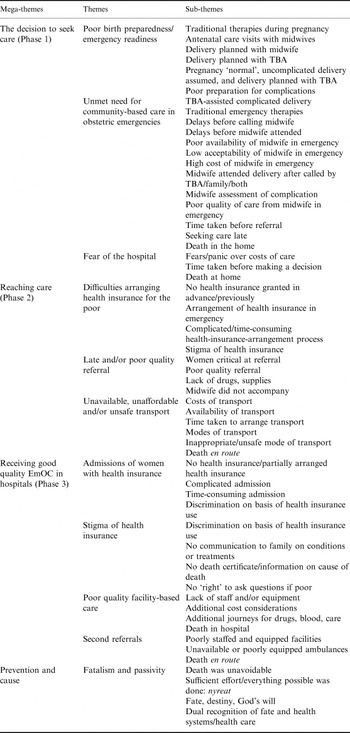
The audio recordings were transcribed and translated into English and qualitative analysis was performed. A combined inductive/deductive, iterative approach was adopted whereby the ‘three delays’ framework and respondents' opinions regarding the preventability and cause of death provided an initial coding frame (‘mega-themes’). Through a detailed examination of the transcripts, further recurring descriptive themes and sub-themes that emerged were used to supplement the initial coding frame. Explanations of access to care were constructed by considering patterns and relationships across the themes.
The researcher LD systematically searched and manually coded the data for recurring themes until thematic saturation was reached (the point at which no new categories, factors or explanations emerged). The results of the analysis are presented with supporting verbatim quotes from the interviews. Where quotes are provided, the relationship of the respondent to the deceased, the anonymized case reference number and probable cause of death are also indicated.
Results and Discussion
Characteristics of the women and respondents
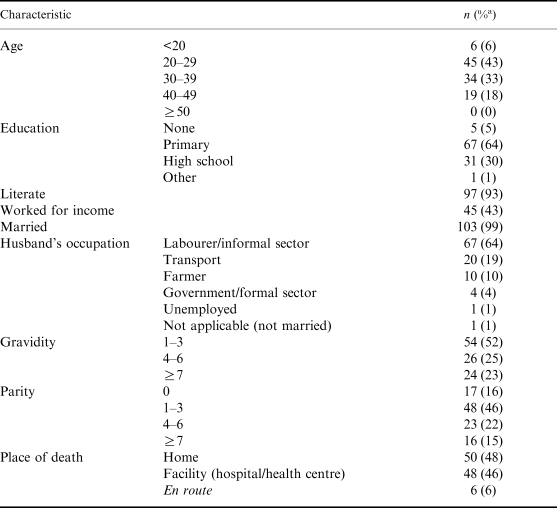
Over three-quarters of the women were aged 20–39 years at death; virtually all were married and almost half were employed. The majority were literate, with primary education. Husbands earned income mainly through labouring, informal work and transport. Half of the women had 1–3 previous live deliveries, a quarter had none and a quarter more than seven (Table 1). Just under half the women died at home, a similar proportion in a facility and six died en route. The respondents were mainly close relatives of the woman (parent, parent-in-law, spouse, sibling or child) and most had lived in the same household. Respondents had an average age of 47 and the majority were literate (data not shown).
Causes and delays
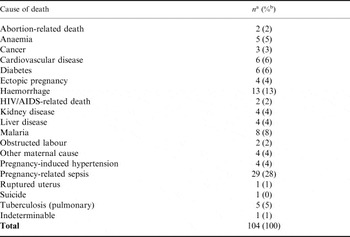
The leading medical cause of death was sepsis, accounting for one-third of the deaths. Haemorrhage and malaria together accounted for one-fifth and small proportions were due to pregnancy-induced hypertension, unsafe abortion and obstructed labour. Indirect causes (including conditions such as tuberculosis, human immunodeficiency virus (HIV), diabetes and cardiovascular disease) accounted for over a third of deaths (Table 2). Delays in the decision to seek care were reported by nearly half the respondents. Delays in reaching care were reported by two-thirds, and in receiving care in almost half of the cases (Table 3). These results are discussed in greater depth elsewhere (D'Ambruoso et al., Reference D'Ambruoso, Byass, Qomariyah and Ouedraogo2009; Byass et al., Reference Byass, D'Ambruoso, Ouédraogo and Qomariyah2009).
A thematic account of experiences of EmOC and perspectives on causation and preventability is provided below. The thematic framework is presented in Table 4.
The decision to seek care (Phase 1)
Poor birth preparedness/emergency readiness. Most women sought traditional therapies, including stomach massages and herbal medicines, from TBAs (dukun) during pregnancy. Women also generally sought antenatal care on more than one occasion with a village-based midwife. A common belief, recounted by respondents as being perpetuated by both women and providers, was that if a pregnancy was established as ‘normal’ by a midwife during antenatal care, then the delivery would be presumed to be uncomplicated. Midwives were thought to be unnecessary for ‘normal’ deliveries and were only called when a complication arose.
Interviewer: Did the midwife recommend having the delivery with the midwife or at hospital?
Father: No, she was healthy. (Case 543215, Haemorrhage)
As a result, women generally planned to deliver with dukun, with little provision for going to hospital in the event of a complication. If families failed to prepare transport, finances and blood donors etc., then delays were incurred when unexpected complications arose because the decision to seek care, and associated negotiations and arrangements, still had to be made.
Interviewer: Did you call the midwife?
Sister: No … we did not call [the midwife].
Interviewer: And then who told you to bring her to hospital?
Sister: Relatives, we discussed it.
Interview: You discussed it. It happened at 8 pm, and she was brought at …?
Sister: In the morning.
Interviewer: The event was at night, why did you bring her in the next morning? She had fainted; she should be brought to hospital that night.
Sister: I do not know, maybe because we were shocked, and then … because we were far from the main road, nobody had the chance to go there to seek the car.
Interviewer: During the night of the event until the next morning, what happened to [name]? Did she faint or continue bleeding? What happened maam?
Sister: Yes … she had bleeding all night long.
Interviewer: From night until morning?
Sister: Yes. (Case 448106, Ectopic pregnancy)
Unmet need for community-based care in obstetric emergencies
Despite being ‘first-line’ delivery attendants, TBAs are not trained or equipped to manage complications (Bailey et al., Reference Bailey, Szaszdi and Glover2002). When unexpected complications occurred, traditional medicine was often administered before a midwife was called.
Interviewer: Did he [traditional healer] give some kind of water or something?
Mother-in-law: He gave water, but he didn't say anything.
Interviewer: Did he ask to take her to hospital for instance?
Mother-in-law: Nope.
Interviewer: What did he do at that time?
Mother-in-law: He did nothing.
Respondent 2: Only [cast] the spells … (Case 267305, Pregnancy-related sepsis)
When a midwife was called, further delays were usually introduced because of the general shortage of health staff in villages.
Husband: The dukun pulled the placenta but it did not work. It was raining heavily, so when they called the midwife it took longer for her to arrive. Because the rain was heavy, she could not be saved by the time the midwife arrived. (Case 518105, Diabetes)
Respondent 2: There used to be a posyandu [integrated health post for rural areas], but only in name … there was no function of it … Kind of, inactive.
Interviewer: How about the midwife around here?
Respondent 1: There was no midwife. (Case 305302, Pregnancy-related sepsis)
Mother-in-law: When the midwife came she had already passed away. (Case 267305, Pregnancy-related sepsis)
Characteristics of the 104 women who died
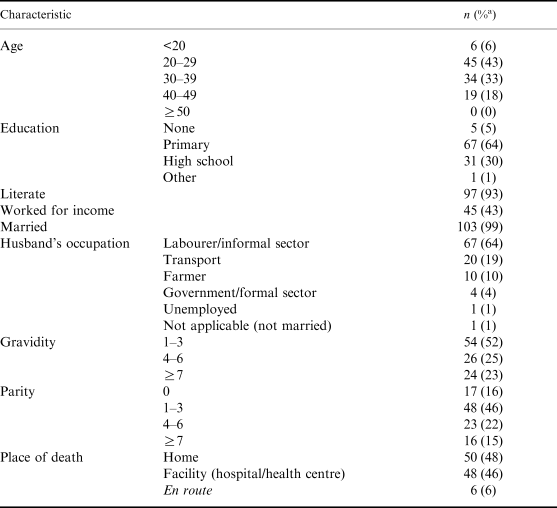
a Totals may be >100% due to rounding.
Mortality profile of the 104 women who died

a Up to three cause-of-death conclusions are generated by the InterVAM model. These were weighted according to their likelihoods. For example, if a case was concluded to be due to both haemorrhage (50% likelihood) and sepsis (50% likelihood), then this case would count as 0.5 of a case of haemorrhage and 0.5 of a case of sepsis.
b Totals may be >100% due to rounding.
Phases in which delays were reported

a According to the ‘three delays’ framework (Thaddeus & Maine, Reference Thaddeus and Maine1994).
b As a proportion of surviving women.
Thematic framework

The poor availability of midwives can be attributed to their low public pay, which necessitates their developing private practice. More than two-thirds of midwives' salaries come from private practice and over 90% generate income this way (Ensor et al., Reference Ensor, Nadjib, Quayyum and Megraini2008). As a result, midwives tend to prefer clients who can pay for services immediately and they are discouraged from establishing practices in rural areas where it is harder to make a private income.
Interviewer: What did midwife [name] say, why was the deceased brought to her house? Why didn't she help her to deliver at home?
Husband: She said that she had a lot of patients, she was busy. (Case 292101, Kidney disease)
In the cases where the midwife attended the woman in her household, and in time, the situation had to be clinically assessed before a referral could be made. In several cases, the midwife was also ill-equipped and/or had to convince the family of the need for referral, introducing further delays.
Fear of the hospital
Decisions to seek care were strongly influenced by concerns over the costs of care. A dominant view was that delivery care would incur high costs, of which respondents were fearful. In many cases, by the time a decision was made to accept the costs and seek care, the women's condition had become life-threatening.
Other relative: … she was not hospitalized … because of her fear of hospital. You have to understand our perception about being hospitalized, even if we get serious illnesses; we take care of it ourselves.
Interviewer: Oh … I see … fear of what?
Other relative: Here, there is no social safety net – we don't have the money. (Case 305302, Pregnancy-related sepsis)
Reaching care (Phase 2)
Difficulties arranging health insurance for the poor
A further dominant theme was the failure of the health insurance scheme for the poor to mediate these fears and enable access when a decision to seek care had been made. In the majority of cases, families had not been identified and issued with the green JPS health insurance card and had to arrange insurance in the emergency. In these cases, a Surat Keterangan Tidak Mampu (SKTM) letter, or poverty certificate, had to be issued from village authorities. The SKTM letter is an interim statement of eligibility for health insurance in lieu of a JPS/ASKESKIN card. The SKTM has to be used within a short time span, and covers a brief episode of care. In many cases, arranging the letter introduced or exacerbated delays. Respondents described bureaucratic processes whereby numerous forms of paperwork (cards, letters and certificates) required issue, authorization and/or signature from various village officials and health workers.
Sister: The family discussed and planned to take her to hospital ‘X’, but because they didn't have money, they needed to manage the statement letter for poor people first [SKTM letter]. The time to process the letter was so long, a day wasn't enough, finally she didn't have the chance to go to the hospital, she died immediately. (Case 128101, Tuberculosis (pulmonary))
Mother: We had to arrange the administration [health insurance] first because we are poor. We had to go to the bidan [midwife] first, then to the head of sub-district and to the head of the village to arrange the [SKTM] letter, so it took a long time. We should not have to arrange the administration [health insurance] first because it can be arranged later … I wanted her to be cared for immediately. (Case 131103, Pregnancy-related sepsis)
In many cases, health insurance was only partially arranged before the women's condition necessitated presenting at a facility. Even when successfully arranged and used, families still had to meet the costs of drugs, transport and other incidentals.
Late and poor quality referral
By the time they were referred, many women were in critical health states. Referral was also often of poor quality; the narratives indicated that, when they did attend, many health staff did not follow standard referral procedures on accompaniment, essential drugs, supplies, vehicles, referral letters, communication and monitoring. Inadequate birth preparedness/emergency readiness on the part of women and families coupled with inadequate community-based services had negative synergistic effects resulting in women not being attended or referred in time in the emergency situations.
Daughter: She died when there was no-one … When she died she cried for help like someone who was strangled. (Case 635106, Pregnancy-induced hypertension)
Unavailable, unaffordable and unsafe transport
When referral journeys were embarked upon, the cost of transport (usually public) was often problematic. At difficult times such as late at night, it was also usually unavailable. Even during the day and in good weather, transport could take hours to arrange. Modes of transport used in emergencies included: angkot, a public minibus, unlikely to be aseptic or equipped; and ojek, a rented motorcycle, highly inappropriate and dangerous.
Father: Her body was yellow, she was pale and weak with stomach ache and vomited continuously … I was bringing her to the hospital but [after] three junctions I had to go back because I couldn't stand for her to be transported by motorcycle. (Case 487101, Anaemia)
Receiving good quality EmOC in hospitals (Phase 3)
Admissions of women with health insurance
The difficulties of using health insurance extended into facilities. The bureaucratic, complicated and time-consuming admissions of poor women with health insurance, partially arranged health insurance, or no health insurance and no ability to pay for care, were recurrent themes. Some respondents felt that delays in receiving care arose because of using health insurance and would not have occurred otherwise.
Husband: [The admission] was quite difficult at first; they made it difficult … because the letters from ASKESKIN [health insurance for the poor] were not complete. And then I was told to arrange it. (Case 635107, Pregnancy-related sepsis)
The stigma of health insurance
The stigma of health insurance and its negative effect on quality of care were repeatedly recounted. In several cases, respondents indicated that the quality of care received in hospitals was lower than it may have been otherwise by virtue of the women's low economic status, revealed by their use of health insurance.
Mother: … the hospital staff don't really take care, she was not really cured, the doctor sometimes checked, but most of the time they don't really care for poor people, especially if we use the ASKESKIN [health insurance for the poor] card. (Case 540208, Abortion-related death)
Some respondents did not feel that there was a problem with bad quality care because they were poor. Others felt discriminated against.
Sister-in-law: At the hospital, sometimes poor people are neglected, especially when there is no referral from the bidan [midwife], they just ignored us … Just don't treat us differently. Even if we are poor people and use ASKESKIN, they neglect or ignore us. We are lacking in ways to go to the bidan or doctor. (Case 281102, Cancer)
There were repeated accounts of how hospital staff failed to explain procedures or conditions to family members, unless there was a direct implication for action (e.g. buying blood or medication). Over 80% of families were not informed of the cause of death or given death certificates. Many respondents expressed the opinion that they did not have authority to ask questions about their health care because they were poor.
Mother: … if you are poor, you can't ask this or that. If you have money you can. (Case 547303, Tuberculosis (pulmonary))
This context or culture of care is linked to how care is financed. Research on public funding for delivery care has shown that professionals are not fully reimbursed for care they provide through the ASKESKIN scheme (Ensor et al., Reference Ensor, Nadjib, Quayyum and Megraini2008). In addition to low public pay, incomplete reimbursements from ASKESKIN serve as a further disincentive to provide emergency care to poor women.
Poor quality facility-based care
Many respondents described facilities that were not adequately staffed or equipped, often lacking in crucial supplies, such as blood products. As a result, many families had to embark on additional journeys, and pay associated transport costs, to locate and purchase medicines and/or blood. This presented particular difficulties for poor families who had to balance the likelihood that their relative would survive with the cost implications of their death.
Interviewer: What about the cost?
Sister: Yes, it was difficult to find money to pay for the cost.
Interviewer: Was it expensive?
Sister: It was expensive. Where should we get the money from, from whom should we borrow money? [We] should have to sell land for that [costs of care]. (Case 401101, Pregnancy-related sepsis).
In several cases, by the time the necessary resources to obtain medications or blood products had been mobilized, the woman was too weak to have them administered, or had passed away.
Other relative: We brought her on Saturday at 6 o'clock in the morning. Then on Sunday, the blood was supposed to be transfused to her body. But we could not get it. We got it at 7 o'clock at night. So it was kind of late to do a blood transfusion. We were looking for the blood in the city. We couldn't get it there. (Case 295105, Pregnancy-related sepsis)
Husband: [We] bought the blood for 750,000 rupiahs (~80US$), 3 bags … only one and a half bags were used … then she died. (Case 302108 Haemorrhage)
Second referrals
Despite the physical presence of health facilities, shortages in personnel, equipment and supplies often led to a second referral. Second referrals may also have been made due to reluctance to treat poor patients (see D'Ambruoso et al. (Reference D'Ambruoso, Byass and Qomariyah2008) for a detailed example). Ambulances provided for second referrals were frequently un-staffed and ill-equipped. Several women died en route between hospitals.
Mother: I do not know for sure whether the hospital was full or not. If you have the money, you will immediately get the services. She did not have money. We had money, but now it is gone. (Case 401101, Pregnancy-related sepsis)
Mother: The doctor said, ‘there’s no option, there's no equipment here.' She went by ambulance. No health staff accompanied on the journey. (Case 300119, Malaria)
Opinions on preventability and cause
In more than half the cases, respondents felt that the deaths could not have been avoided and attributed them to destiny, fate or God's will, particularly when they felt that everything possible had been done. The extent of ‘everything possible’ varied, but generally referred to the efforts, albeit unsuccessful, of various individuals (the woman, family, TBAs, health workers, village leaders etc.). Sufficient effort to avoid death from disease or other conditions, by traditional or medical means, beyond which it was permissible to attribute the death to destiny, had a specific name: nyreat. When opinions of nyreat were explored, some respondents did acknowledge the contribution of unavailable or ineffective health systems, services and/or personnel. However, there was often an equivalent and ambiguous sense of submitting to or accepting destiny, fate or God's will.
Brother-in-law: Maybe it was her fate … and maybe she ran out of blood. (Case 478102, Haemorrhage)
Interviewer: After she was cut [episiotomy] by midwife [Y], she bled. According to you, was that a problem?
Husband: No … no problem. I let go of that, I am not disappointed. If I did not remember fate, I would consider it a problem. It is just that, I remember fate. (Case 292101, Haemorrhage)
Sister: If you think that [the death was avoidable] it is difficult, heart breaking. Let's think the way I have been thinking. It's her destiny, from the Almighty, I prefer it that way. (Case 548305, Cancer)
The expressions of destiny and fate may represent coping mechanisms to mediate grief, sorrow and/or culpability. They may also simply be a common turn of phrase. Contextualizing this theme, however, provides an additional explanation. In West Java, an elaborate and nuanced order of courtesy and politeness, related to social standing, exists. As observed by Iskandar and colleagues (Reference Iskandar, Utomo, Hull, Dharmaputra and Anwar1996) ‘When a woman dies it is God’s will, when she survives, it is the doctor's skill'. The passivity and fatalism over the deaths may therefore reflect feelings of powerlessness to question the medical staff and systems associated with authority. In addition, the multiple barriers described above conferred a cumulative disadvantage that culminated in exclusion from access. It is likely that the passivity and fatalism may have also reflected feelings of powerlessness in the face of such marked exclusion.
Social exclusion
Theoretical frameworks of exclusion set out that participation in social systems (including health care) is dictated by social and moral values that are expressed through repeated interactions of individuals with systems (Gilson, Reference Gilson2003; Freedman, Reference Freedman2005; Popay et al., Reference Popay, Escorel, Johnston, Mathieson and Rispel2008). As set out earlier, access to health care can be described as a highly dynamic, relational process between personal characteristics and structural features. If access and exclusion are sufficiently similar, and if exclusion is a phenomenon of the marginalized, then it follows that access might also usefully be considered as a phenomenon of disadvantaged groups.
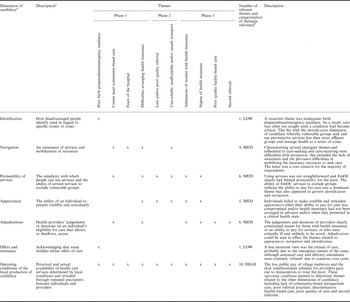
This supports the Dixon-Woods framework of access (2006). To examine its relevance in more depth, the core element of candidacy was examined in terms of the emergent themes (Table 5). This revealed a hierarchical arrangement of the relevance of the dimensions of candidacy. For example, an awareness of available care and an ability to mobilize resources (navigation) governed how people identified need and whether care was ‘refused’ (identification, offers and resistance), not the reverse. Similarly, the ease with which people use services (permeability) determined how they must mobilize resources (navigation). The judgements of providers regarding people's eligibility for care (adjudications) governed whether people presented for care convincingly (appearances). And the local conditions of systems and services (operating conditions) determined the ease with which they were used and providers' judgements allowed or disallowed access (permeability and adjudications).
Relevance of the dimensions of candidacy to emergent themes

a Reproduced from (Dixon-Woods et al., Reference Dixon-Woods, Cavers, Agarwal, Annandale, Arthur and Harvey2006).
b Categorization of thematic relevance: LOW=0–3 emergent themes relevant to dimension of candidacy; MED=4–6 emergent themes relevant to dimension of candidacy; HIGH=7–10 emergent themes relevant to dimension of candidacy.
From this, it can be inferred that the organization of health systems dictates service provision, provider and user behaviours; i.e. the locus of control over candidacy, or eligibility for access to EmOC, lies within the macro-level operating conditions. A reciprocal effect can also be seen whereby the behaviours and attitudes of service users (expressed in terms of powerlessness and passivity) feed back into the operating conditions, maintaining the social and cultural norms that shape the health system, and exclusion from access (Fig. 1).
Elements of eligibility for access to health care (candidacy) arranged according to thematic relevance reveals a structuralist and reciprocal hierarchy.

Social and cultural norms
These relationships are typical of the structuralist perspective, which sets out that deep social structures are produced and maintained in human actions and interactions (Riessman, Reference Riessman1974, Reference Riessman1984; Rappaport, Reference Rappaport1995). Rural Indonesian society is governed by a decentralized, yet staunchly hierarchical and bureaucratic system without a great deal of effective social welfare or protection and with widespread abuse of power and corruption (Friend, Reference Friend2003; Utomo, Reference Utomo2005). Village governance systems have been described as chaotic – ‘at the village level, most representatives (officials) scarcely understand their roles’ (Bebbington et al., Reference Bebbington, Dharmawan, Fahmi and Guggenheim2006) – and village-level health care has been characterized as being ‘without transparency and accountability’ and ‘increasingly privatized’ (Kristiansen & Santoso, Reference Kristiansen and Santoso2006). Society is also conservative and restrictive towards women, and by extension, their reproductive health needs (Beegle et al., Reference Beegle, Frankenberg and Thomas2001). Norms of discrimination, elitism and a market ideology were clearly reflected in the accounts of interactions and negotiations that took place when women attempted to access EmOC.
Implications for health planning
A focus on the macro-level organization and the culture and context of care is central to the structuralist reform agenda. Key approaches are well known. These include increasing the roles of lower cadre providers to encompass responsibilities traditionally within the realm of higher cadres, usually physicians (Riessman, Reference Riessman1984). In the rural villages on Java, bidan, kader and other health staff represent viable entry points for such reform. Increased investment, training and support with concomitant improvements in local-level health infrastructure such as posyandu could maximize their documented potential (Berman et al., Reference Berman, Gwatkin and Burger1987; Leimena, Reference Leimena1989; Kristiansen & Santoso, Reference Kristiansen and Santoso2006).
Health insurance for the poor is highly problematic. For providers, incomplete reimbursements, and low public pay, act as disincentives to treat the poor. For users, the schemes are poorly socialized and understood, highly bureaucratic and complicated, and they lead to lower quality and discriminatory care. Informing and issuing families with health insurance could also be achieved via kader and posyandu as part of birth preparedness/emergency readiness during the antenatal period.
When they have not been arranged in advance, poverty certificates (SKTM letters) need to be more quickly and easily attainable in emergencies. The SKTM letters could be placed within the authority and management of kader, to reduce bureaucracy and dependence on busy village officials, puskesmas heads etc. The health insurance system should also ensure rapid and full reimbursements to midwives in villages and hospitals to encourage their services to be made available to the poor. Finally, health staff should also receive training to improve their acceptance of women with health insurance in obstetric emergencies.
More progressive structuralist health policies challenge the biomedical model of health and health care by increasing mutual participation in care, reducing the passivity of the patient, sharing medical knowledge, increasing kinship and so on, allowing health and illness to be thought of as ‘inextricably linked to broader social arrangements’ (Reissman, Reference Riessman1984). Health planning from a more holistic perspective has the potential to develop robust solutions to complex problems. It could also help foster a sense of control at the micro-level, influencing people's feelings and behaviours regarding their health, lives and futures, and conferring a sense of self-worth and control that appear to be lacking in this setting.
Finally, the multitude of delays often resulted in admission of women to hospitals in a critical or moribund condition. As well as being avoidable, this may negatively distort clinical audits of quality of care that often do not take account of factors that occur outside a facility (Adisasmita et al., Reference Adisasmita, Deviany, Nandiaty, Stanton and Ronsmans2008).
Methodological reflections
By virtue of its focus on deaths outside hospitals, verbal autopsy provides an opportunity to collect information on the very individuals excluded from (and by) health care systems. Extending verbal autopsy to capture information on the dynamics of access maximizes the potential of a widely used, routine and action-oriented health planning method. Benefits and limitations of the approach are described below.
Interviewers and interviews
The verbal autopsy interview is typically a brief, one-off discussion, without feedback, conducted by a medical practitioner who may represent the structures of ‘medical authority’, so interpersonal power dynamics may be reproduced. The interview also deals with a sensitive topic. On a number of occasions observed by the authors and recounted by the interviewers, the interviewee struggled with or stopped the interview due to its upsetting nature. In most of these cases, the respondent decided to continue and complete the interview; only a small number did not wish to carry on (in these cases, the gift was still given). As a result, careful recruitment and training, continuous support for interviewers, appropriate conduct and carefully worded informed consent for respondents are critical to gain meaningful accounts of the cases. Sufficient time is also required. The extended verbal autopsy interview was 20–30 minutes longer than a standard verbal autopsy, an increase that may be significant in larger surveys.
Respondents
Although verbal autopsy collects subjective accounts of care, by virtue of the emergency situation, an atypical chain of events occurs that is likely to be recalled in detail – that is, ‘narrative reconstructions’ of ‘actual practices’ are likely to be obtained rather than ‘normative statements’ (Lambert & McKevitt, Reference Lambert and McKevitt2002). In addition, in the interviews in this study, several people (family members, friends and neighbours) in addition to the primary respondent were present at various points during the interview and information was often provided by more than one respondent. This was not challenged by the interviewers; they did not insist on a privately conducted one-to-one interview and attempted to gain consent from, and record descriptive information for, all who gave significant or substantial information. This approach allowed for cross-verification of information and ‘gap-filling’, which was useful if the respondent(s) had not been with the woman continuously from the onset of the complication until she died. Drawbacks were that confidentiality may have been compromised and attributing all the information provided to the primary respondent may have been inaccurate. The convention of verbal autopsy interviews being privately conducted, confidential interviews may not always be necessary nor appropriate. An interview under these conditions should be offered to respondents, rather than enforced.
Analysis
Verbal autopsy aims to detect the magnitude of medical disorders and identify, associate and quantify risk factors at aggregate level. Qualitative enquiry offers an alternative, complementary, analytical perspective, to describe and explain why such trends occur. Despite being time- and resource-intensive, the narrative approach is particularly appropriate to examine issues of access. Individual explanations of health-seeking behaviours ‘perform social functions rather than being neutral reflections’ (de Kok & Widdicombe, Reference De Kok and Widdicombe2008) and allow for an examination of social contexts on people's behaviours, and vice versa.
It is also important to consider for whom the results of verbal autopsy are useful. National and international organizations use standardized verbal autopsy data to monitor disease burdens between populations and over time (Byass, Reference Byass2007). Traditional verbal autopsy also considers cause of death in narrow biomedical terms of disease classification and organ failure. Broadening the cause of death concept to consider the impact of failures of health and social systems may provide more complete information, relevant for local-level planning.
Implications for future research
Verbal autopsy can be used as a means, or an element, of clinical audit to examine the social and structural constraints on access to quality care. Allied methods include near-miss audit (Filippi et al., Reference Filippi, Brugha, Browne, Gohou, Bacci and de Brouwere2004, Reference Filippi, Richard, Lange and Ouattara2009; Béhague et al., 2007), community- and facility-based maternal death reviews (Manandahar et al., Reference Manandhar, Osrin, Shrestha, Mesko, Morrison and Tumbahangphe2004; Richard et al., Reference Richard, Ouédraogo, Zongo, Ouattara, Zongo and Gruénais2008a) and confidential enquiries (Pattinson & Hall, Reference Pattinson and Hall2003; South Africa Every Death Counts Writing Group, 2008). When conducted appropriately, these methods have the potential to generate critical evaluations of access to (and quality of) health care using the insights of service users and providers operating in the local contexts.
Other more conventional qualitative approaches exist to describe and explain phenomena such as access. Their visibility, and hence utility, for local-level health planning is, however, limited. The analyses of the data collected, presented here and elsewhere (D'Ambruoso et al., Reference D'Ambruoso, Byass, Qomariyah and Ouedraogo2009; Byass et al., Reference Byass, D'Ambruoso, Ouédraogo and Qomariyah2009), demonstrate that qualitative enquiry can be combined with the wide application of verbal autopsy for a robust and routine interpretation of the social and structural dimensions of health, as well as to quantify the incidence of complications that are unpredictable and swift to kill in the absence of good quality care.
Conclusion
The narratives reveal a multitude of social and economic barriers to access that women encountered during obstetric emergencies in this setting. The manner in which the barriers arose demonstrated the structural construction of access to health care for disadvantaged groups, and that, in this setting, a different standard of care seems to be reserved for, and accepted by, the poor.
Although EmOC and skilled birth attendance require that women have access to professional delivery care, access itself remains poorly understood. Conceiving of access as dynamic and relational, and as a phenomenon of disadvantaged groups, may provide a useful point of departure for re-positioning health planning and basic distributive commitments that are appropriate for the social and economic, and emergency, contexts in which these services are provided.
Incorporating qualitative data collection and analysis into traditional biomedical and epidemiological approaches to health surveillance is a route to gaining cross-disciplinary insights into complex problems. This approach has the potential to inform more robust, effective and culturally relevant strategies to address the cumulative disadvantage and restricted access to essential, life-saving care for pregnant women in low-income settings.
Acknowledgments
This work was undertaken as part of the Initiative for Maternal Mortality Programme Assessment (Immpact), funded by the Bill & Melinda Gates Foundation, the UK Department for International Development, the European Commission and US Agency for International Development (USAID). Immpact is an international research programme which also provides technical assistance through its affiliate organization, Ipact. The funders have no responsibility for the information provided or views expressed in this paper. The views expressed herein are solely those of the authors. The authors would also like to acknowledge the contributions of: Dr Linda Barlett, for sharing the verbal autopsy interview schedule applied in a study in Afghanistan in 2002 (UNICEF and Centres for Disease Control, CDC, Atlanta), upon which the interview guide in this study was based; Dr Endang Acahdi and her team at the Centre for Family Welfare, University of Indonesia, including Kamaluddin Latief for co-ordinating the fieldwork and to Trisari Anggondowati and Eko Pambudi; the interviewers Lupthi Tri Utari, Sri Rahmi, Kray S. Asa and Agus Khomeini; and the District Health Offices in Serang and Pandeglang for the valuable support in making contact with the families of the deceased women. The authors are grateful to the respondents in Banten province who gave up their time to participate in the interviews. Finally, acknowledgements go to Dr Alice Kiger, Ms Suzanne Cross and Mr Alec Cumming at the University of Aberdeen, Dr Linda Bartlett at Johns Hopkins School of Public Health and Dr Susan Murray at Kings College London who gave useful comments on earlier versions of the manuscript.