Introduction
The Philippines, an archipelago country comprising over 7,000 islands with approximately 98 million inhabitants,Reference Hugelius, Adolfsson, Örtenwall and Gifford 1 is one of the most disaster-prone countries in the world. Early in the morning of November 8, 2013, the super typhoon Hayian (locally called Yolanda) made landfall into the central parts of the Philippines. Approximately 14 million people lost their homes, 28,000 people were injured, and approximately 7,000 died in the disaster. 2 , 3 In Tacloban, the regional capital of the Leyte province, the typhoon caused an almost complete loss of electricity and a severely damaged infrastructure. 2 , 4 All medical facilities in the Tacloban area were severely affected or were non-functional after the typhoon had passed. 5
Health in post-disaster settings is dependent on many factors, including pre-existing factors, the event itself, and the response. 6 , Reference Gerdin, Clarke and Allen 7 Most often, health effects include both physical injures as well as psychosocial harm and should therefore be seen in a biopsychosocial health perspective.Reference Birnbaum, Daily, O’Rourke and Loretti 8 , Reference Katz 9 Disaster responses aim to reverse adverse health effects caused by the event, decrease vulnerability, and increase the resilience of the population.Reference Doocy, Dick, Daniles and Kirsch 10 The first, and therefore vital, response to any disaster is the response from the local community, including rescue and health professionals.Reference Stallings 11 , Reference von Schreeb 12 During the early stages of the Haiyan disaster, the Philippine health authorities requested international support. 5 Approximately 100 Foreign Medical Teams (FMTs) responded to the disaster during the first month after the typhoon.Reference Birnbaum, Daily, O’Rourke and Loretti 13 Their roles were mainly to compensate for damaged medical facilities and infrastructures.Reference Birnbaum, Daily, O’Rourke and Loretti 13 A few studies have commented on the interaction between local medical resources and FMTs, addressing issues of cultural awareness, civil and military coordination, competence, and personal preparations among the international staff.Reference Brolin, Hawajri and von Schreeb 14 - Reference Kirsch, Sauer and Guha Sapir 16
Rescue workers in general have shown an increased prevalence in psychological problems, including posttraumatic stress disorder (PTSD), compared with the general population.Reference Zhang, Liu and Li 17 However, little has been written about the experiences of the primary health professionals during disasters.Reference Berger, Coutinho and Figueira 18 - Reference Baack and Alfred 20 Studies on first responders working during the Katrina hurricane (2005; Gulf Coast, USA) described their experiences as surreal,Reference Abolghasemi, Radfar, Khatami, Nia, Amid and Briggs 21 with feelings of uncertainly and frustration but also exhilaration.Reference Baker, Feldman and Lowerson 22 Role conflicts between personal and professional obligations also were reported.Reference Geisz-Everson, Dodd-McCue and Bennett 23 Both organizational and personal factors have shown to be of importance for preventing mental health problems among operational staff deployed in emergencies.Reference Adams and Turner 24 Organizational factors of importance are leadership, stress-management training, social climate, level of training, and expressions of appreciation and acknowledgement.Reference Adams and Turner 24 Previous traumatic experiences, personal losses, and role conflicts have been identified as risk factors in an individual perspective.Reference Adams and Turner 24 Today, there is no consensus on how to support operational personnel after potentially traumatic events. Evidence-based strategies for crisis support in general also are recommended for professionals.Reference Michel 25 , 26 In particular, social support from colleagues and supervisors seems to be of importance for helping to balance negative experiences.Reference Hobfoll, Watson and Bell 27 Several studies also have addressed the question on disaster competences, but no general consensus has been reached.Reference Halpern, Gurevich, Schwartz and Brazeau 28
There are many theories of stress and coping, including the transactional model of stress and coping described by Lazarus and Folkman,Reference Daily, Padjen and Birnbaum 29 , Reference Lazarus 30 later developed by Bonanno as the regulatory flexibility model.Reference Folkman 31 These models focus on stress appraisal as a cognitive process with emotional regulation related to this process. In the regulatory flexibility model, a feedback system is central for the individual in order to modify the emotional regulation and coping strategy used.Reference Folkman 31 Another approach is the Conservation of Resources (COR) theory.Reference Bonanno 32 The COR theory is a motivational theory describing how the individual strives to protect personal values and to compensate for losses of such values caused by traumatic events. 3 In this report, elements from both these perspectives will be used in addition to the concept of resilience. Resilience is a dynamic process, traditionally described as “to bounce back” after a stressful displacement.Reference Hobfoll 33 Most people, including individuals who are seen as resilient, experience some levels of distress related to a stressful event,Reference Southwick, Bonanno, Masten, Panter- Brick and Yehda 34 , Reference Norris 35 but they generally do not get hampered by their stress reactions in their ability to function. Therefore, resilience can be seen as a “healthy” adaption to a traumatic event.Reference Bonanno, Westphal and Mancini 36
The health care system is an important resource for promoting health after a disaster and it is highly dependent on the people deployed within it. In order to prepare and respond adequately, knowledge of primary professional responders’ experiences and needs during and immediately after a disaster is essential. Therefore, this study aimed to explore health professionals’ experiences of working during and in the immediate aftermath of a natural disaster.
Methods
An explorative, qualitative study using phenomenological hermeneutical methodReference Southwick and Charney 37 was used. The data collection was performed in the Tacloban area of the Philippines, five months after the typhoon. Inclusion criteria were that the participants should have been 18 years or over and been working as a health professional (medical doctor, nurse, or paramedic) during and in the immediate aftermath of the Haiyan typhoon. The ability to communicate in English (an official language in the Philippines) also was a requirement. A modified snowball sampleReference Lindseth and Norberg 38 was used, in which a participant or a supervisor in a hospital department proposed, based on personal knowledge, potential candidates to the researcher. When a potential participant was identified, written study information was given by the researcher, and if the person volunteered to participate in the study, a letter of consent was approved before the interview. No personal data such as name, exact age, or exact professional position were recorded.
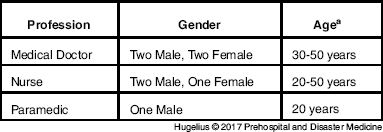
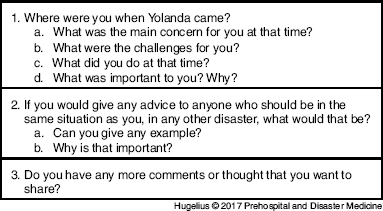
Eight individual interviews were conducted. The characteristics of the participants can be seen in Table 1. The participants were employed by either governmental, city-owned, or private hospitals, or by the regional office of Department of Health (Manila, Philippines). All interviews were conducted by the head investigator (KH) in or nearby the participant’s workplace, as requested by the participant. The interviews were held in a colleague-to-colleague way, and an interview guide (Table 2) was used to support the interviewer with asking questions that stimulated a more exploring, deep interview.Reference Southwick and Charney 37 The first and the last questions from the interview guide were used in all interviews as starting and ending questions, but apart from that, the use of the questions in the guide varied widely depending on the progress of the interview.
Characteristics of Participants

a If exact age was not spontaneously mentioned during the interview, age was estimated by the interviewer.
Interview Guide

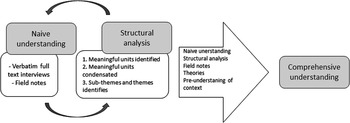
The interviews lasted for 20 to 90 minutes and were audio recorded. One of the interviews was interrupted because of an emergency situation and completed a few hours later. After the interviews, the interviewer (KH) wrote field notesReference Southwick and Charney 37 on personal reflections and impressions which occurred during the interview. The field notes were used later when formulating the naïve understanding and to validate and contribute to the comprehensive understandingReference Southwick and Charney 37 (Figure 1).
Overview of Analysis Process of Phenomenological Hermeneutic Methodology According to Lindseth and Norberg 2004.Reference Southwick and Charney 37

All interviews were transcribed verbatim and analyzed by a phenomenological hermeneutic approach, as described by Lindseth and Norberg.Reference Southwick and Charney 37 Phenomenological hermeneutic studies aim to capture the essence of the lived world experienceReference Southwick and Charney 37 and are based on the philosophy and epistemology of Paul Ricour.Reference Coyne 39 One core value for Ricour was that interpretation of texts means moving beyond understanding what the text says, to understand what it talks about.Reference Ricoeur 40 The meaning of the texts, as well as metaphors and manifest information, must be understood and the pre-understanding and context of the study are implicit and are therefore an important tool for reaching a deeper understanding of the text.Reference Ricoeur 40 , Reference Geanellos 41 It is not the experience itself, but the meaning of it, that can be transferred from private experiences to public knowledge.Reference Geanellos 41 Ricour also held that the interpretations and understanding of something is a constantly developing process, while the “truth” might change over time.Reference Ricoeur 40
Data analysis was conducted by the head researcher (KH), supervised by the co-authors, all who had access to the verbatim written texts. The analysis started with a naïve reading,Reference Southwick and Charney 37 where the whole text and field notes were read through several times to gain a general understanding of the phenomena studied. When a naïve understanding had been formulated, a structural analysisReference Southwick and Charney 37 was performed. First, meaningful units were identified and marked. The meanings units were thereafter condensed by re-writing their essential meaning in “everyday words,” formulated as concisely as possible. The condensed units were sorted into sub-themes and themes which were reflected upon in relation to the naïve understanding. The truthfulness in phenomenological hermeneutic methods depends on a coherence between the parts and the wholeness,Reference Southwick and Charney 37 and therefore, the process of comparing the structural and naïve analysis was repeated until the naïve understanding and the structural analysis validated each other and did not exclude any data.Reference Southwick and Charney 37 In the last step, a comprehensive understandingReference Southwick and Charney 37 was formulated by reading the whole text and the themes from the structural analysis and reflecting on them in relation to the text, field notes, literature, theories, and the context of the studyReference Southwick and Charney 37 (Figure 1). Pre-understanding and the context of the research was seen as a useful tool for reaching a deeper understanding of the lived experience studied and its meaning.Reference Southwick and Charney 37 , Reference Geanellos 41 The head researcher (KH) had experiences from working in several disaster situations, including the disaster studied, although in the Haiyan typhoon this was not as part of the health response. This experience was used to deepen the analysis of the texts and for formulating naïve and comprehensive understanding. By monitoring the analysis process and results in relation to the original texts, literature, experiences, and theories, the co-authors (MG, AA, and PO) contributed to an objective structural analysis and the formulation of a comprehensive understanding.Reference Southwick and Charney 37 The study was approved by the National Ethical Committee of the Philippines (Taguig, Philippines), approval NEC code 2014-005-Hugelius-DRB. Guidelines for research involving disaster-affected populationsReference Charalambous, Papadopoulos and Beadsmoore 42 were followed and arrangements for psychosocial support were available if such a need would have been desired by any participant.
Results
The analysis of the interviews is presented as a naïve understanding followed by a structural analysis showing one main theme, two themes, and six sub-themes. After that, the comprehensive understanding of the results is presented.
Naïve Understanding
The experience of being and working as a health professional during and after a natural disaster was described in the context of contrasts, sometimes involving emotional conflicts. The health professionals had high expectations for themselves to be strong and to be able to help others at the same time as they themselves felt lonely, scared, and out of control. Moral conflicts occurred then they were torn between worries about their own safety and their families’ wellbeing, at the same time as they felt a strong will and pride to serve the community and people in need of their services. Feelings of not being able to do enough or not having enough information distressed the staff. All health professionals said that they worked very hard and for a long time. Being flexible and being able to improvise was important in managing the situation. Support from authorities and foreign relief teams was described as both a relief and a disappointment.
Structural Analysis
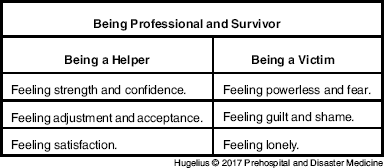
The structural analysis of 166 quotations resulted in one main theme (being professional and survivor), two themes (being a helper and being a victim), and six sub-themes (Table 3).
Results of the Structural Analysis

The main theme, being professional and survivor, described both positive and negative emotions and experiences from being both a helper, as part of the responding organization, and a victim, as part of the surviving but severely affected community, at the same time. The experiences were ongoing and integrated, meaning that experiences from the themes and sub-themes were sometimes simultaneously experienced.
Being a Helper
In the theme being a helper, which consisted from positively associated emotions to the meaning of being a health professional, three sub-themes emerged.
Feeling Strength and Confidence
Feelings of being strengthened by professional pride emerged from fulfilling one’s own and others’ expectations. The importance of not only relying on theoretical knowledge, but also on one’s own capacity to cope and manage the situation, was emphasized. To convince or remind oneself of being confident was mentioned as an important coping strategy. To convey safety and trust by staying strong and stable was important:
“You must encourage people around, even if you don’t have any courage yourself. You must think clear and calm. And when you do, you will find strength inside yourself.”
The health professionals also expressed pride in helping others and pride in being a medical professional contributing the community in a severe situation:
“I was telling myself, ‘those things are important,’ but then you realize what really matters. That makes it easier.”
The situation itself made the professionals see life values more clearly, and that insight strengthened them when they were guided by their inner values. The participants also described that being inside the “hospital-bubble” isolated them from external events and made it easier to repress negative feelings and thoughts.
Feeling Adjustment and Acceptance
By reaching a state in which the person stopped trying to control the uncontrollable situation, a feeling of acceptance emerged. That feeling made the person start to adapt their way of working, for example adjusting their way of working. This new adjusted way of working was based on flexibility and the acceptance that normal rules were not so relevant in this situation. For example, nurses had to perform traditional medical doctors’ procedures, like suturing, and surgical procedures such as Caesarian sections, which were performed by the light of a mobile telephone:
“You must realize that you cannot control…you must follow.”
“So, at the time, you could not tell who the nurses were and who were the doctors, because everyone was helping. Even nurses, even cleaning staff, they were helping us. She [a nurse- author’s note] won’t normally suture patients, like lacerated wounds….”
When the person no longer tried to control or to work according to books or normal routines, a clear insight, which created a sense of control and calmness inside the person, occurred.
Feeling Satisfaction
The feeling of being satisfied was empowered by a sense of altruism, a positive sense of helping another person in need and not expecting anything back. That feeling confirmed or reinforced a professional positive identity of being a helper:
“They could see it. When they were doing PSP [psychological support- author’s note], they could see the change in… in the personality of the… the person, and it made them feel good. It made them feel better that, instead of being just a victim, we are a helper.”
Being a Victim
In the theme being a victim, three sub-themes emerged describing negative emotions related to being a health professional during the disaster.
Feeling Powerless and Fear
Feelings of not being able to control the situation and being scared were strong feelings which affected the health professionals. Some had experienced moments when they themselves had feared dying. Some also described feelings of being cheated by the situation itself, meaning that even if they had prepared their very best, the force of the typhoon and the feelings of being a victim themselves surprised them and cheated them:
“We were helpless, also.”
“I was scared for my life, actually, even if I was inside….”
“You must realize…these are powers…strong powers… [silence]. You can be prepared but you have no idea what to be prepared for. Therefore, I say, you should trust yourself. Be prepared is illusion. Yes. Illusion.”
Additionally, the reconsideration of life values could contribute to the feeling of being disappointed with life and losing control and confidence.
Being inside the hospital, the medical personnel felt that they had no control of what was happening around them outside the hospital. They were unable to inform their patients or give them support when they themselves did not know what was happening and felt in need of help themselves.
Feeling Guilt and Shame
Feelings of guilt were commonly expressed. The guilt had different courses, sometimes in conflict with each other. All participants described guilt for leaving their families, while at the same time, feeling a moral obligation to serve patients or the community in need of their help. Being torn between these interests created emotions of guilt and shame. Also, feelings of not being able to do enough and to have to prioritize or refuse people also created feelings of shame. Guilt towards one’s own needs also was expressed, meaning that the professionals knew their responsibility to take care of themselves in order to enhance their own endurance and resistance to distress. When they realized that they felt bad after the disaster, they felt guilt:
“I told my wife that I cannot go [to evacuate- author’s note], because I…I’m the trained one for disaster management and it would have been, you know, bad for me as…as the chairman of disaster management, as if I’m running away from my obligation. I made a pledge, and I had my word. People would not believe me next time. So, even if she was crying, I had to stay.”
“When the wind subsided, there were a lot of patients coming here. But first we refused to accept them. We refused...(emotional).”
Feeling Lonely
The health professionals lost colleagues, friends, and family members in the disaster. Some participants stated that at the same time as they were taking care of others and providing psychosocial support to patients, they themselves were mourning. Feelings of being lonely, both as a human and as a health professionals, were described. The feeling of being lonely was reinforced by a feeling of being isolated from society outside the hospital. Sometimes, the health professionals felt that they could not trust themselves and their coping ability, and that created a feeling of sadness and loneliness:
“It was the saddest part of my life, because that’s the turning point of everything. When you realize that money is nothing. Really this is you, yourself, and your family. Your God…But you are alone.”
“How… how effective are they in the… the cost/benefit ratio? Because I noticed that several organizations are competing to give relief. Why? Because they want the attention of the donor.”
Experiences of external help, especially from international relief teams, were ambiguous. The health professionals expressed doubts about FMTs’ motives for coming, at the same time as they were thankful and admired them for their will and efforts to come and help. Although, the health professionals were disappointed when promised or expected support did not arrive, or when they felt ignored as individuals or as professional colleagues. This increased the feelings of being left alone and that no one could actually help or even share their situation.
Comprehensive Understanding
The meaning of being a health professional deployed during a natural disaster was a complex, powerful, and ambiguous experience of being part of the response system at the same time as being a survivor of the disaster.
The positive outcome of feeling confident and strong can be understood as a state that appears if a person feels confident to master the demands rather than to appraise them as a threat,Reference Daily, Padjen and Birnbaum 29 or as an investment of personal resources to cope a challenging stuation.Reference Bonanno 32 Among the health professionals, personal convictions and altruist motives influenced these processes both positively and negatively. Feelings of being part of a community or a system are essential for maintaining resilience,Reference Bonanno 32 , Reference Bonanno, Westphal and Mancini 36 and social interactions also are important for the individual appraisal and feedback process of regulatory strategies.Reference Folkman 31 When feeling isolated both as professionals, not getting enough acknowledgment for their efforts, or their personal needs from authorities, the community or FMTs, neither being part of the survivors’ community, a strong and potent feeling of abandonment and loneliness occurred. Moral conflicts of being torn between professional and private obligations and responsibilities occurred.
The health professionals also expressed feelings of lack of control, being helpless, and how they endeavored to establish a sense of control. Acceptance is an important component in fostering resilience in stressful and life-changing situations,Reference Bonanno, Westphal and Mancini 36 and the adjustment required to reach a state of acceptance when not being in control, as described by the health professionals, can be understood as a way of adjusting regulatory strategies to a more realistic appraisal,Reference Folkman 31 , Reference Bonanno, Westphal and Mancini 36 a process dependent on personality, social relations, and personal experiences.Reference Lazarus 30 , 43 , Reference Folkman and Moskowitz 44
The individual perception of the situation,Reference Daily, Padjen and Birnbaum 29 , Reference Lazarus 30 , Reference Bonanno 32 , 43 , Reference Folkman and Moskowitz 44 as well as individual core values and resource losses,Reference Bonanno 32 were central to create the meaning of being a health profession during a disaster.
Discussion
To work as a health professional during a natural disaster is highly challenging. This study has shown the complexity of the meaning of being both a victim, a survivor, and a part of a response system at the same time.
A disaster always compromises the functional status of a societal system and actions are needed in order for the society to become fully functional again. The health care system and its adaptive capacity is essential for promoting health, and the ability to adapt is closely related to the adaptive capacity of its staff.Reference Lazarus 45 In order to plan for good functioning of a health care system in a post-disaster setting, understanding of the complexity and meaning of the role of being a health professional is of importance.
It can be concluded that personal values contributed to moral conflicts and feelings of guilt and shame found in this study. The altruistic elements present in the theme being a helper contributed to a positive existential meaning for the health professionals. This could be seen as an investment to strengthen central values of a positive sense of self as a helping person.Reference Bonanno 32 Previous studies have described that helping others after disasters has been positively associated with wellbeing.Reference Norris, Stevens, Pfefferbaum, Wyche and Pfefferbaum 46 Focusing on personal values, such as an altruistic motive, has been found to buffer stress and contribute to resilience.Reference Bonanno, Westphal and Mancini 36 At the same time, the altruistic desire to help also generated guilt and shame when it was not possible to fulfil moral or idealistic expectations. The altruistic mechanisms in the sense of being a health professional during a disaster can therefore be both seen as a protective and a burdening element.
This study supports the idea that disaster training and planning should not only focus on medical performances, such as triage or organizational aspects as command systems, but also should cover personal and psychological aspects of being a health professional in disasters,Reference Kaiser, Sattler, Bellak and Dersin 47 such as strategies to support adequate adjusting regulatory strategies. In order to avoid resignation, the re-appraisal process must include finding a positive or neutral meaning in the situation.Reference Bonanno, Westphal and Mancini 36 With reference to the transactional model, the perception of control and clarity is essential, 43 and to discuss the extent to which a severe crisis situation can actually be controlled and the personal meaning of being in such a situation can possibly contribute to an increased personal preparedness.
Loneliness, a feeling strongly expressed in this study, can be a result of physical losses, but also a psychological or existential dimension which appears despite actual circumstances. The buffering effects of social relations and social support is essential for promoting recovery and resilience after traumatic events. 26 , Reference Bonanno, Westphal and Mancini 36 , Reference Slepski 48 In order to reduce feelings of loneliness among health professionals, awareness of the problem, as well as practical strategies, must be identified. Disaster radio, a temporary radio station which broadcasts specific disaster information and music in disaster affected areas, has been shown to reduce feelings of loneliness and isolation among disaster survivors.Reference Wietsse, Barui and Galappatti 49 To use disaster radio in and nearby medical facilitates might be a useful tool to decrease such feelings, also among health professionals.
Despite good intentions, meeting with FMTs raised ambiguous feelings among the participants in this study. Feelings of being abandoned by agencies who were expected to provide support indicate either false expectations from the health professionals or a potential for increased acknowledgement and response from the agencies. In order to organize aid with maximum benefit for the recipients, the context in which aid is delivered must be understood.Reference Kaiser, Sattler, Bellak and Dersin 47 A disaster normally occurs before the arrival of FMTs and the burden normally lasts long after they have left. This study can contribute to an increased awareness of primary health professionals’ situations and needs when planning for and using international medical response in disasters. Further research on the interaction between primary, local professionals and responding disaster organizations is needed to understand these processes and to increase the effectiveness of the overall response.
This study has shown that the meaning of being a health professional during a disaster involves both positive and negative experiences. There are still gaps in the knowledge about experiences and needs of operational personnel during disasters, as well as strategies to reduce negative elements such as guilt, shame, and helplessness found in this study. The relationship between the lived experience, training, and contingency planning also is worthy of further research.
Methodological Limitations
The validity of a qualitative study depends upon a detailed description of the research process and analysis of the data.Reference Hugelius, Gifford, Ortenwall and Adolfsson 50 In this study, the sample included both male and female participants with different employers and different professions in order to acquire a wide-range of experiences.Reference Hugelius, Gifford, Ortenwall and Adolfsson 50 The study is not intended to give a general description of all disaster-affected populations or disasters, but rather to contribute to the knowledge which may be applicable to similar situations.Reference von Schreeb 12 , Reference Polit and Beck 51
The time perspective is essential when conducting disaster studies.Reference Doocy, Dick, Daniles and Kirsch 10 Because of practical circumstances and to reduce the risk of interrupting the acute response and recovery phase,Reference Grimm, Hulse, Preiss and Schmidt 52 the interviews were conducted approximately five months after the disaster. Previous studies have shown that the time elapsed after a disaster event has a limited impact on survivors’ memories and experiences expressed in research.Reference Girratano, Savage, Barcelona-deMendoza and Harville 53 The impression received during the interviews and analysis was that the participants did remember and were able to express their experiences of the acute phase very well. It is possible that the time passed since the event had allowed time for reflection, which led to more insightful interviews.
The use of an interview guide when conducting narrative interviews can be questioned. In this study, the guide served as inspiration and support for the interviewer rather than a traditional interview guide, and only the first and the last questions were used in all interviews. To validate the interpretations of the texts, the naïve understanding and the structural analysis challenged each other until a coherent result emerged.Reference Southwick and Charney 37 Also, the authors’ pre-understanding of the context and literature and theories contributed to a deeper understanding of the meaning of the texts.Reference Southwick and Charney 37 , Reference Geanellos 41
Conclusions and Clinical Implications
Being a health professional during a natural disaster was described as a complex, powerful, and ambiguous experience of being part of the response system at the same time as being a survivor of the disaster. Personal values and altruistic motives as well as the individual perception, social aspects, and regulatory strategies to reach a balance between acceptance and control were important elements of the meaning.
In order to maintain an optimally functioning health care system during and after a disaster, health professionals have a central role. To prepare health professionals for the demanding situation of being in a natural disaster, disaster medicine training needs to include aspects of the meaning of being in such a situation. Also, health professionals’ specific needs, both as professionals and as survivors, must be taken into consideration when preparing for and responding to disasters, for example as FMTs.