Background
Dementia is caused by a range of conditions affecting the brain. Whilst changes in memory performance are regarded as the central feature, there are a group of less-common dementias that initially cause changes in communication abilities that significantly impact on the person and their family. These are referred to as primary progressive aphasias and are included under the classification of frontotemporal dementia (Gorno-Tempini et al. Reference Gorno-Tempini, Hillis, Weintraub, Kertesz, Mendez, Cappa, Ogar, Rohrer, Black, Boeve, Manes, Dronkers, Vandenberghe, Rascovsky, Patterson, Miller, Knopman, Hodges, Mesulam and Grossman2011; Neary et al. Reference Neary, Snowden, Gustafson, Passant, Stuss, Black, Freedman, Kertesz, Robert, Albert, Boone, Miller, Cummings and Benson1998). Semantic dementia, also called the semantic variant of primary progressive aphasia, is one of these conditions and presents with progressive communication difficulties arising out of changes to semantic memory (Gorno-Tempini et al. Reference Gorno-Tempini, Hillis, Weintraub, Kertesz, Mendez, Cappa, Ogar, Rohrer, Black, Boeve, Manes, Dronkers, Vandenberghe, Rascovsky, Patterson, Miller, Knopman, Hodges, Mesulam and Grossman2011; Neary et al. Reference Neary, Snowden, Gustafson, Passant, Stuss, Black, Freedman, Kertesz, Robert, Albert, Boone, Miller, Cummings and Benson1998). These changes are apparent when the individual concerned engages in cognitive assessment where expressive speech is observed to be fluent, but with word-finding difficulties alongside challenges in understanding words and concepts (Hodges and Patterson Reference Hodges and Patterson2007). In terms of broader cognitive issues in semantic dementia, visuospatial skills and recent memory are relatively well preserved in the earlier stages. Memory, however, does become impaired with time, with difficulties also often described in retrieving long-term memories as the condition progresses (Hodges and Patterson Reference Hodges and Patterson2007). Semantic dementia is regarded as a rarer dementia, with frontotemporal dementia as a whole estimated to account for between 5 and 10 per cent of all cases of dementia (Alzheimer's Disease International 2009), with semantic dementia representing a proportion of this.
Whilst a range of studies have outlined these biomedical aspects, research into interventions to support people with semantic dementia remains sparse, with the current literature largely focused on deficits in communication, particularly word finding and ways to recover or maintain words through structured practice (Carthery-Goulart et al. Reference Carthery-Goulart, da Costa da Silveira, Machado, Mansur, de Mattos Pimenta Parente, Hosogi Senaha, Dozzi Brucki and Nitrini2013; Jokel et al. Reference Jokel, Graham, Leonard and Rochon2014). More broadly, services often lack the specific knowledge required to provide effective provision (Snowden, Kindell and Neary Reference Snowden, Kindell, Neary, Bryan and Maxim2006). For example, whilst it is intended that person-centred care should inform dementia practice across the different dementias (Brooker Reference Brooker2007), there is a lack of guidance as to if, or how, therapies commonly used within this work, such as reminiscence, life-story work and communication skills training (Eggenberger, Heimerl and Bennett Reference Eggenberger, Heimerl and Bennett2013; Kindell et al. Reference Kindell, Burrow, Wilkinson and Keady2014a; McKeown, Clarke and Repper Reference McKeown, Clarke and Repper2006; Westerhof, Bohlmeijer and Webster Reference Westerhof, Bohlmeijer and Webster2010), can be applied to semantic dementia. It has, for example, been argued that such individuals may not experience the relative retention of long-term memory, seen in Alzheimer's disease, and so interventions that rely heavily on such memories, including reminiscence and life-story work, may not be appropriate and will need to be modified for those living with this condition (Eastern Cognitive Disorders Clinic Australia 2014; Kindell et al. Reference Kindell, Sage, Wilkinson and Keady2014b).
Turning in more detail to life-story work, this has been described as ‘an approach to working with a person and/or their family to find out about their life, recording that information in some way and then using the information with the person in their care’ (McKeown, Ryan and Clarke Reference McKeown, Ryan and Clarke2015: 239). Currently, life-story work is a popular approach in dementia care, with a range of life-story formats discussed in guidance (McKeown et al. Reference McKeown, Ryan, Button, Galloway, Wattam, Jepson and Rimmer2013). However, in clinical practice, life-story books are more commonly used, outlining the person with dementia's life story using photographs and written captions, often collated in chronological format (Kindell et al. Reference Kindell, Burrow, Wilkinson and Keady2014a; McKeown, Clarke and Repper Reference McKeown, Clarke and Repper2006). Such books are often made, stored and accessed by carers and staff, with little guidance on materials made, or controlled by, the person with dementia (Kindell et al. Reference Kindell, Burrow, Wilkinson and Keady2014a). In their systematic review on life-story work in health and social care, McKeown, Clarke and Repper (Reference McKeown, Clarke and Repper2006: 241) state that while there appear to be many positive benefits to life-story work, the literature is ‘immature’ with a ‘lack of critical debate about the use of life story work in practice’.
More recent studies have attempted to address some of these gaps, illustrating the positive effects of the work on a range of aspects, including quality of life, personal memory and staff attitudes (Gridley et al. Reference Gridley, Brooks, Birks, Baxter and Parker2016; Subramaniamay, Woods and Whitaker Reference Subramaniamay, Woods and Whitaker2014). Less clear are the specific effects of life-story books on communication (Subramaniamay, Woods and Whitaker Reference Subramaniamay, Woods and Whitaker2014), with a recent study identifying the need for ‘in-the-moment’ analysis of life-story work (Gridley et al. Reference Gridley, Brooks, Birks, Baxter and Parker2016). In addition, whilst there is an expanding body of work exploring conversational storytelling in dementia (see e.g. Hamilton Reference Hamilton2008; Hydén Reference Hydén2011, Reference Hydén2013; Hydén et al. Reference Hydén, Plejert, Samulesson and Orulv2012), further work is required in using this knowledge to shape effective practice in life-story work.
Changes in communication have been explored in the literature examining the use of ‘memory wallets’ or ‘memory aids’. Similar to life-story books, memory wallets contain personally relevant pictures and sentence stimuli surrounding facts about the person with dementia, listed from long-term memories through to recent statements. A number of quantitative studies using audio data have demonstrated an improvement in aspects of discourse, including statements of information, when using the memory wallet, compared to conversations without the aid, with a variety of conversation partners including: spouses (Bourgeois Reference Bourgeois1990), staff (Bourgeois et al. Reference Bourgeois, Dijkstra, Burgio and Allen-Burge2001) and in conversations with other people with dementia (Bourgeois Reference Bourgeois1993). However, memory wallets may be less effective in supporting conversation with individuals with advanced dementia (McPerson et al. Reference McPerson, Furniss, Sdogati, Cesaroni, Tartaglini and Lindesay2001). A systematic review of methods to enhance verbal communication between carers and people with Alzheimer's disease noted that the use of memory wallets, combined with specific carer training programmes, emerged as potentially the most effective mode of intervention (Egan et al. Reference Egan, Berube, Racine, Leonard and Rochon2010).
Less well explored with respect to memory wallets and life-story resources are issues of social interaction beyond the transmission of verbal information, in part arising from the use of audio recording for data collection. This includes aspects of embodied communication, including the use of gesture and the behaviours of the person without dementia during conversation using the life-story resource (but see Spilkin and Bethlehem Reference Spilkin and Bethlehem2003). Moos and Björn (Reference Moos and Björn2006: 431) argue that whilst studies showing changes in behaviour, particularly with memory wallets, have made an important contribution to the field, a move to more rigorous quantitative designs runs the risk of focusing on a narrow set of impacts and, given that there is still much to learn that, ‘qualitative assessments have been too hastily discontinued’.
Lastly, there has been less research recognising distinct practices within life-story work, for example, it has been raised that different disciplines may focus on different aims, for example, psychological versus social aims (Kindell et al. Reference Kindell, Burrow, Wilkinson and Keady2014a). Similarly, Westerhof, Bohlmeijer and Webster (Reference Westerhof, Bohlmeijer and Webster2010) have divided approaches within reminiscence into: simple reminiscence that stimulates social aspects and enhances personal wellbeing; life review that is directed at enhancing aspects of mental health, particularly during times of difficulty; and lastly, life-review therapy that particularly seeks to alleviate depression. These authors caution that there may be different goals and methods for each and that effectiveness should be studied in relation to the specific goals for intervention. A study of life-story work with couples aiming to enhance relationships reported some complexity with family carer's emotional and psychological reactions to the programme; whilst most participants reported positive reactions, a few were saddened by memories of things they could no longer do together and a greater recognition of the person with dementia's memory impairment (Ingersoll-Dayton et al. Reference Ingersoll-Dayton, Spencer, Kwak, Scherrer, Allen and Campbell2013). It appears, then, that attention to different goals, aspects and outcomes, for both the person with dementia and family members, would be beneficial to develop life-story practice further.
Despite practitioners adapting life-story work to the needs of those living with semantic dementia (Kindell, Sage and Cruice Reference Kindell, Sage and Cruice2015), there is no published research in this area. Working closely – and over time – in the domestic dwellings of five families where one member has a semantic dementia, this study aimed not to test or measure the quantitative effectiveness of life-story work as an intervention per se, or make generalisations across the field, but, instead, to: (a) offer an enhanced understanding about what life-story work offers people with semantic dementia and their families; (b) explore how families and people with semantic dementia took an active role in co-producing a biographically boundaried activity that had personal meaning for participants; and (c) to provide a deeper theoretical underpinning for practice, including understanding how unique aspects of the individual with semantic dementia could shape interaction and influence care. Moreover, the study follows the guidance of Moos and Björn (Reference Moos and Björn2006) in that a qualitative approach is used when adapting such work to this new area of inquiry to explore the complexities of the issues described.
Methodology and methods
A case study design (Yin Reference Yin2009) was implemented and used a mixed-methods approach with the following four phases and aims:
• Phase 1: assessment – to gain in-depth insight into the everyday experiences of each couple around interaction.
• Phase 2: intervention – to use this knowledge to plan and deliver an individually tailored life-story intervention to enhance interaction in the home situation.
• Phase 3: outcomes for individual couples – to explore the effects of the intervention on interaction.
• Phase 4: cross-case outcomes – to carry out a cross-case analysis to explore how life-story work contributed to care.
All phases and data collection took place at home. Each phase is now described in detail.
Phase 1: Assessment
The methods used were conversation analysis (Hutchby and Woofitt Reference Hutchby and Woofitt2008) and narrative analysis (Riessman Reference Riessman2008). Conversation analysis was chosen to directly analyse interaction at home in each family, with narrative analysis used alongside to understand the broader family context in which such interactions took place, including the changes in the lives of the person with semantic dementia and their family members following the onset of the semantic dementia. Conversation analysis is a qualitative research method that allows for investigation of naturally occurring conversations and other forms of social interaction. It provides a set of practices for recording, transcribing and analysing social interaction, examining the part that both parties play in jointly constructing orderly and meaningful interactions within a given communicative context (Schegloff Reference Schegloff and Goodwin2003). This allows the researcher to explore the communicative behaviours of both the person with semantic dementia and their family members (Perkins, Whitworth and Lesser Reference Perkins, Whitworth and Lesser1998). Moreover, the method aims to uncover recurring practices and behaviours evident within conversations (Hutchby and Woofitt Reference Hutchby and Woofitt2008), with a focus not necessarily just on communication breakdown but, equally, on communicative success (Perkins, Whitworth and Lesser Reference Perkins, Whitworth and Lesser1998). Conversation analysis has previously been used to explore training in using a life-story resource (Spilkin and Bethlehem Reference Spilkin and Bethlehem2003).
Conversation at home was explored directly through analysis of video recordings of everyday conversations. Video was chosen because this allowed for analysis of non-verbal behaviours. Three couples were given a small video camera and asked to record at least 20 minutes of conversation, either as a continuous conversation or in smaller chunks, without the researcher being present. They were free to choose where and when they recorded and the topic(s) of conversation. Two couples were uncomfortable recording on their own and so chose to video record with the researcher present. The video data (11 hours and 57 minutes) were viewed on a number of occasions with detailed notes made to outline interactional practices, with all video data transcribed by a standard transcribing service. The data and transcripts were discussed by the research team and sections illustrating the full range of interactional practices were identified for further in-depth transcription using conversation analysis procedures (Jefferson Reference Jefferson and Lerner2004). The data and the transcripts were then explored further to uncover patterns in the data for each couple. The process followed that advised by Hutchby and Woofitt (Reference Hutchby and Woofitt2008) to analyse conversation data, i.e. to discover the recurring practices within conversation for each couple and how they managed these within interaction.
Narrative analysis was used to understand the interrelationship between identity, self and the social world for each couple, including how such issues were displayed, or not, within interaction. Williams and Keady (Reference Williams, Keady, Watson, McKenna, Cowman and Keady2008: 331) advise that ‘narrative research and analysis is about asking for people's stories, listening and making sense of them and establishing how individual stories are part of a wider “storied” narrative of people's lives’. Narrative analysis began during assessment and continued into the intervention as part of the life-story work. Narrative interviews took place with each couple exploring the participants’ lives both before and now living with semantic dementia. Whilst a brief topic guide of potential questions was prepared, the intention was to follow the lead of the participants where possible and the stories they wanted to tell about their life, rather than impose a structure or series of questions upon them. Where necessary, interviews used objects, pictures or photographs from around the house to support the individual with semantic dementia to tell their story. In practice, some participants with semantic dementia were able to take part in interviews with little or no help, whilst for others support was required from the spouse in order to scaffold their ability to engage in the procedure. All interviews were audio-recorded, transcribed in full and analysed using thematic narrative analysis (Riessman Reference Riessman2008). Transcripts and field notes were entered into NVivo 10 to facilitate analysis and were explored line by line and given a code that referred to a particular story, incident or issue within the text.
Phase 2: Intervention
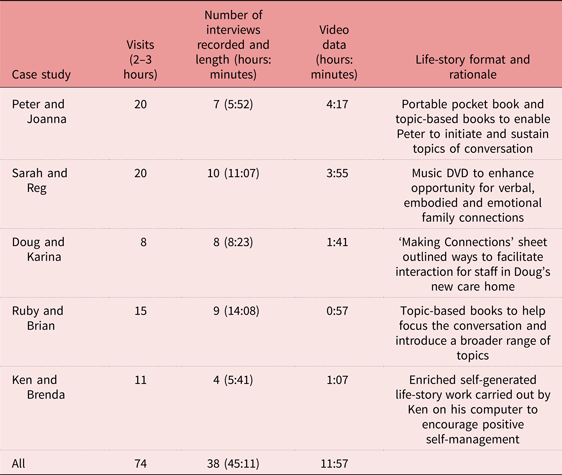
Within-case analysis, therefore, delivered a holistic understanding of the challenges present during interaction for a given couple and this specific knowledge was then used in Phase 2 to deliver an individually tailored life-story intervention. A central aspect of this was to consider how the process of life-story work and the final life-story product could potentially contribute to the life of the person with semantic dementia. Therefore, rather than produce a life-story book for all participants, as is common in clinical practice, discussion took place with the person and their spouse regarding the most appropriate format for life-story work. A range of factors were taken into consideration including: the particular challenges and skills with interaction for each couple and how life-story work could support interaction within this family context; the person's ability to engage in the process; cognitive factors such as autobiographical memory and processing of photographic material; and the situations in which the resource might be used. This led to a range of life-story formats, each tailored to each couples’ situation and needs (see Table 1).
Summary of case study data

Phase 3: Outcomes for individual couples
This represented the re-assessment phase following intervention, with outcomes for each couple explored in the following ways: (a) audiotaped interviews exploring the perceptions of life-story work; (b) observations of the process and use of life-story resources in the home situation recorded in field notes and written information sheets; and (c) video data of participants using their life-story resources, in four cases, and analysed using conversation analysis.
Phase 4: Cross-case outcomes
This represented the stage of cross-case analysis of outcomes and experiences reported in this paper. Conversation behaviours across case studies were compared and examined to uncover recurring practices and issues with interaction. These conversation issues were charted in table format, as is advised in cross-case synthesis in case study work where multiple sources of evidence are present (Yin Reference Yin2009). Cross-case analysis of narrative data began by reviewing the initial narrative analysis of each case study followed by further additional review using NVivo of transcribed interviews exploring the outcomes of the life-story work. This included viewing any visual data presented as part of the process, e.g. photographs, video data, paintings, etc., that illustrate the participant's engagement in life-story work. Codes were then compared and grouped in a hierarchical manner (Charmaz Reference Charmaz2006) to uncover recurring themes within the data. Following the narrative analysis, the synthesis table was expanded to encompass aspects of the narrative data and the intervention delivered in each case. This process allowed for triangulation of the various strands, and issues, as is advised in cross-case analysis of mixed-methods data (Yin Reference Yin2009). The first author led on the analysis of the data, but to ensure rigour within the research process, all members of the authorship team met on a regular basis to review the evolving analysis and data-set. This included joint data sessions to observe the video data and discuss conversation patterns, and reading sections of the interview transcripts and comparing and discussing emergent themes.
Participants
Five couples, where one member had semantic dementia, took part in the study and in one case (case study 2) the couple's daughter also participated. All participants lived in the North West of England. Individuals with semantic dementia had been given their diagnosis by either a consultant old-age psychiatrist or a neurologist, and ranged from the earliest stages of the condition to those in the advanced stage who were in receipt of substantial care packages and end-of-life planning. Each couple was visited between eight and 20 times by the first author (each visit taking on average two to three hours) with a total of 74 home visits conducted over a longitudinal period (ranging from seven to 18 months). The study was approved by a National Health Service Registered Ethics Committee, designated to consider studies where participants may lack capacity, and was also approved by each research governance department at the National Health Service local organisation where the research took place. A number of ethical challenges were identified including issues of on-going consent and potential distress during the research. These were managed under relevant legislation and guidance (British Psychological Society 2008; Mental Capacity Act 2005). Each of the couples is now described, including a brief outline with the challenges for conversation in each case. Names and some contextual/biographical information have been changed in order to maintain confidentiality.
Case study 1
Peter and Joanna (67 and 64 years, respectively) had been married for 43 years. Peter enjoyed going out alone and regularly playing tennis. He had been diagnosed five years previously and could discuss his diagnosis. In particular, he was experiencing significant word-finding difficulties, and both he and Joanna were finding these frustrating to manage within conversation.
Case study 2
Sarah and Reg (64 and 66 years old, respectively) had been married for 42 years. Sarah had been diagnosed four years before and would make reference to her dementia within conversation. She now needed a package of care both within the home and a support worker to take her out. Sarah rarely initiated interaction at home, apart from repetitive questions about the routine of the day, and could be passive in conversation when others tried to engage her.
Case study 3
Doug and Karina (both 73 years old) had been married for 48 years. Doug had been diagnosed with semantic dementia seven years previously. Whilst Doug was still fit and mobile, he needed Karina to organise and prompt him with all activities of daily living. His language abilities were now significantly compromised and his speech was hard to decipher.
Case study 4
Ruby and Brian (71 and 74 years old, respectively) had been married for 52 years. Ruby had recently been diagnosed but was reluctant to discuss her symptoms. She enjoyed going out on her own shopping and to the pub with Brian. Whilst she retained many language skills, Ruby's talk often contained long stories containing excessive detail which, if left to develop, could often become hard to follow.
Case study 5
Ken and Brenda (66 and 64, respectively) had been married for 41 years. Ken had received a diagnosis of early semantic dementia and he was very worried about the potential decline in his communication. It was, however, hard to notice any difficulties in Ken's talking and he required no additional help within his everyday life.
Findings: connections in life-story work
Life-story work was co-produced and delivered in all five case studies but tailored, as described, to individual needs with a variety of different formats produced. Table 1 provides a summary of the data collected over the duration of the study and the life-story format delivered.
Whilst photographic material helped support conversation for Peter and Ruby, albeit to differing degrees, Sarah and Doug showed a number of difficulties recognising photographs or even the memories which they depicted. For these participants, in particular, life-story books had a number of limitations and alternative formats were necessary. Ken, who was in the very early stages of semantic dementia, did not require a life-story resource to support conversation but carried out life-story work himself with different goals, as will be illustrated in the next section.
Five points of connection emerged from this analytical process (Interactional, Emotional, New, Practical and Future). The article will now explore each of these connections in turn, outlining their attributes and dimensions in relation to the data. Conversation and interview extracts from relevant participants are used to illustrate the analysis for each area further.
Interactional connections
In this study the life-story resources supported a variety of interactional connections by providing increased opportunities and support for interaction. Peter's book provided him with a range of topics he did not make reference to spontaneously and a structure to support his word finding. The video data taken of him using his life-story books showed that he could often read words that he struggled to find in open conversation or that the other party within the interaction would read the word for him, as illustrated in the following extract (Phase 3).
Extract 1: My trophy
Here, Peter (P) talks to the researcher (R) about one of his most important achievements in tennis: a trophy he won at an event in the town of Brentford. In free-flowing conversation during assessment he is observed to struggle to tell this story and particularly for the name ‘Brentford’, here, however, he reads it fluently, with the life-story book assisting the production of the target word. Non-verbal behaviours are described within double brackets, with emphasised words underlined. In addition, the extract shows how the pride that Peter feels for this event is facilitated, as evidenced by his facial expression and his direct point at the trophy in the photograph.
001 P: look ((pointing at the life-story book))
002 R: what does that say
003 P: tennis ((reading))
004 R: oh that's the picture ↑isn't it
005 P: yeah yeah ((smiling))
006 won a cup at Brentford ((reading text))
007 R: yeah
008 P: that ((pointing at trophy in the photo and smiling
009 broadly))
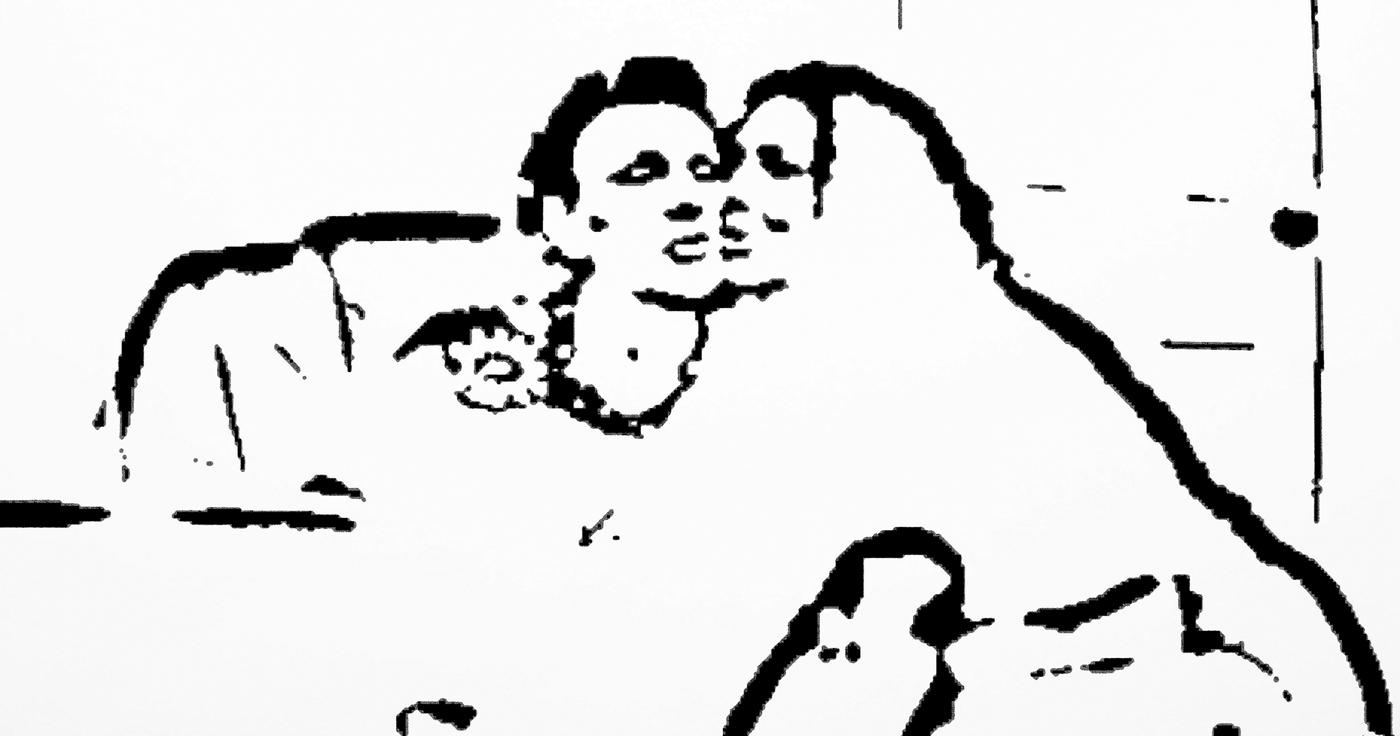
In contrast, when Sarah and her family were video recorded making and watching her life-story music DVD, analysis revealed more than just the family singing together. The DVD was a resource for encouraging verbal and embodied connections (Kindell et al. Reference Kindell, Wilkinson, Sage and Keady2017a). Sarah, for example, initiated interaction by commenting on, or making jokes, about the lyrics of the song. She used eye contact and touch to interact with her family, for example, placing her cheek next to her daughters when singing the lines of the song ‘dancing cheek to cheek’ (from the song, ‘The Lady in Red’ by Chris de Burgh), as Figure 1 illustrates (taken in Phase 2 when piloting the resource).
Sarah on the left and Harriet on the right (dancing cheek to cheek).

Whilst in conversation Sarah often took a passive role, when singing along to the life-story DVD, she was centre stage within the interaction and particularly played on the responses of those around her, ‘the audience’, thus emphasising her sense of performance. The following example illustrates some of these aspects.
Extract 2: Interaction arising from lyrics
Here Harriet (H) and Sarah (S) are singing along to a Tina Turner song (M, for music), ‘Simply the Best’, during piloting of the life-story resource (Phase 2). Italic text from speakers indicates singing, with simultaneous behaviours in square brackets. Here, Sarah is observed to use the lyrics of the song as a resource for interaction, joking with her daughter.
001 M: ⌈tear us apart⌉
002 H: ⌊tear us apart⌋
003 S: ((looks at H)) no ⌈no no⌉ no chance no chance
004 H: ⌊no no⌋
005 M: baby I would rather be ⌈dead⌉
006 S: ⌊dead⌋ no no we don't
007 want to die yet do we ((smiling))
As Doug was in the process of moving into a care home, his sheet ‘Making Connections’ focused on specific and realistic ways to connect with him, particularly based on his unique non-verbal interactional skills, including his ability to take turns at talk and use facial expression, body movement and tone of voice. Focusing less on information exchange and more on his social and non-verbal abilities provided ways to encourage interaction at a level that Doug could achieve. For example, despite his severe language difficulties, if appropriately prompted, Doug was able to act out an upper-class English accent, delivering an opportunity for a humorous and engaging encounter within interaction.
Extract 3: Upper-class accent
In this extract recorded during assessment in Phase 1, Doug (D) is in conversation with Karina (K) and the researcher (R). They have been talking about a friend who is ‘posh’ (upper class). Here Doug can be seen to act out being posh using exaggerated gestures, facial expression and his nose turned upwards, as upper-class mannerisms are often characterised. He manipulates the phonetic aspects of speech, including using extended vowels (colons here indicating extended vowels, with italics representing the upper-class accent).
001 K: Jim is terribly very posh
002 D: there's terribly see de de very easily see ree
003 round there I mean you can't go around not
004 doing anything at a:ll and you need a bit mo:re
005 you might do a little more than you're doing
006 now ((shrugs shoulders)) but just go slowly
007 round around ((hands up and out and nose upwards))
008 I'll take you around ((leans forward)) and I'll
009 tell you later in about yesterday I'll have
010 more than that thank you tush tush ((throwing
011 gesture))
012 R: off you go
013 K: was that Jim ((smiling))
014 D: yes
Doug's sheet specifically mentioned this skill, encouraging the care home staff to facilitate this ability in their social interactions with him.
Assessment in Phase 1 revealed that Ruby's talk could be hard to follow, with extended turns at talk involving stories with excessive detail. She often did not recognise this and it could be very hard for the other party to interrupt. Video recording in Phase 3 revealed that the life-story topic books provided a greater range of topics than everyday conversation and offered others a tool to help structure the interaction. This was sometimes by providing key pieces, or anchors, of information to understand the topic and, at other times, when stories became long and repetitive, the structure of the book allowed for the page to be turned and a new topic to be introduced in an indirect manner. This latter aspect was also noted in researcher field notes. Ruby and Brian loved to look at old photographs, and whilst Ruby had trouble recognising where she was, for example in holiday photographs, video recordings demonstrated she could often talk at length about what she was wearing, as fashion and being young for her age were important to her.
In this study, therefore, the life-story work contributed to facilitating both verbal and embodied behaviour in interaction in a number of ways. In addition, outcomes could be directly explored using analysis of video data as this provided an in-the-moment exploration of how the life-story resource facilitated participation in interaction.
Emotional connections
The life-story work also fostered emotional connections between family members and the person with semantic dementia or strengthened the person with dementia's connection with their own identity and this appeared to impact on wellbeing. This latter aspect was particularly evident in Ken's case because, whilst he expressed worries about significant challenges in conversation during interviews, these difficulties could not be identified within the video data (one hour) during assessment. Likewise, Ken's wife Brenda reported that she felt his difficulties in conversation were mild and happened only occasionally. At this stage, Ken could engage in conversation without the support of others or the need for any augmentative resources to support his talking, including a life-story resource. Ken was, however, able to engage in life-story work himself, on his laptop computer, writing out important stories from his life and about his interests currently. The aim of this self-generated life-story work was not to support conversation at this stage but a task of a psychological nature, helping him connect with his own identity, i.e. targeting issues of mental health and adjustment to his condition. He, for example, wrote about his interests and discussion took place during intervention on how to keep well and active following his diagnosis. As a result, Ken took up painting, an ambition he had long held but never pursued. Analysis of field notes and interviews with Ken and his wife during Phase 3 demonstrated that this self-generated life-story work and the related outcomes enabled him to focus on positive activities rather than ruminate over his potentially deteriorating cognitive state. For example, Ken and Brenda reported that he was not looking up his diagnosis on the internet as much, and during a discussion about painting and other activities Ken noted:
Yes, I think I have accepted that that is the only thing that can help remedy my feelings, because I recognise that there isn't anything that medically can be done to stall or clear it.
Peter's wife Joanna reported in Phase 3 that Peter often looked through the life-story books on his own, picking them up without prompting, saying: ‘he certainly enjoys it, he gets a lot of enjoyment out of looking at them’. This provided an opportunity for him to keep in touch with his own identity. Topics in the book for Peter were chosen because they were important for him in terms of interaction but, also, because they illustrated unique aspects of his identity at this present time. For example, pictures were taken of Peter doing everyday chores as he often spoke about his contribution to the household through these jobs and Joanna felt it was important that the books reflected these current concerns, remarking to the researcher:
Joanna: You perhaps wouldn't incorporate [those] in a normal life-story, because it's so incidental and not important.
Researcher: Yeah, but at the moment, that is really important.
Joanna: Yes, they're the things that resonate … I think that's very important. I don't know how Peter's memory functions now compared to someone with Alzheimer's, but I know people with Alzheimer's often, sort of, regress back to their early life. Peter doesn't seem to do that. (Phase 3 interview)
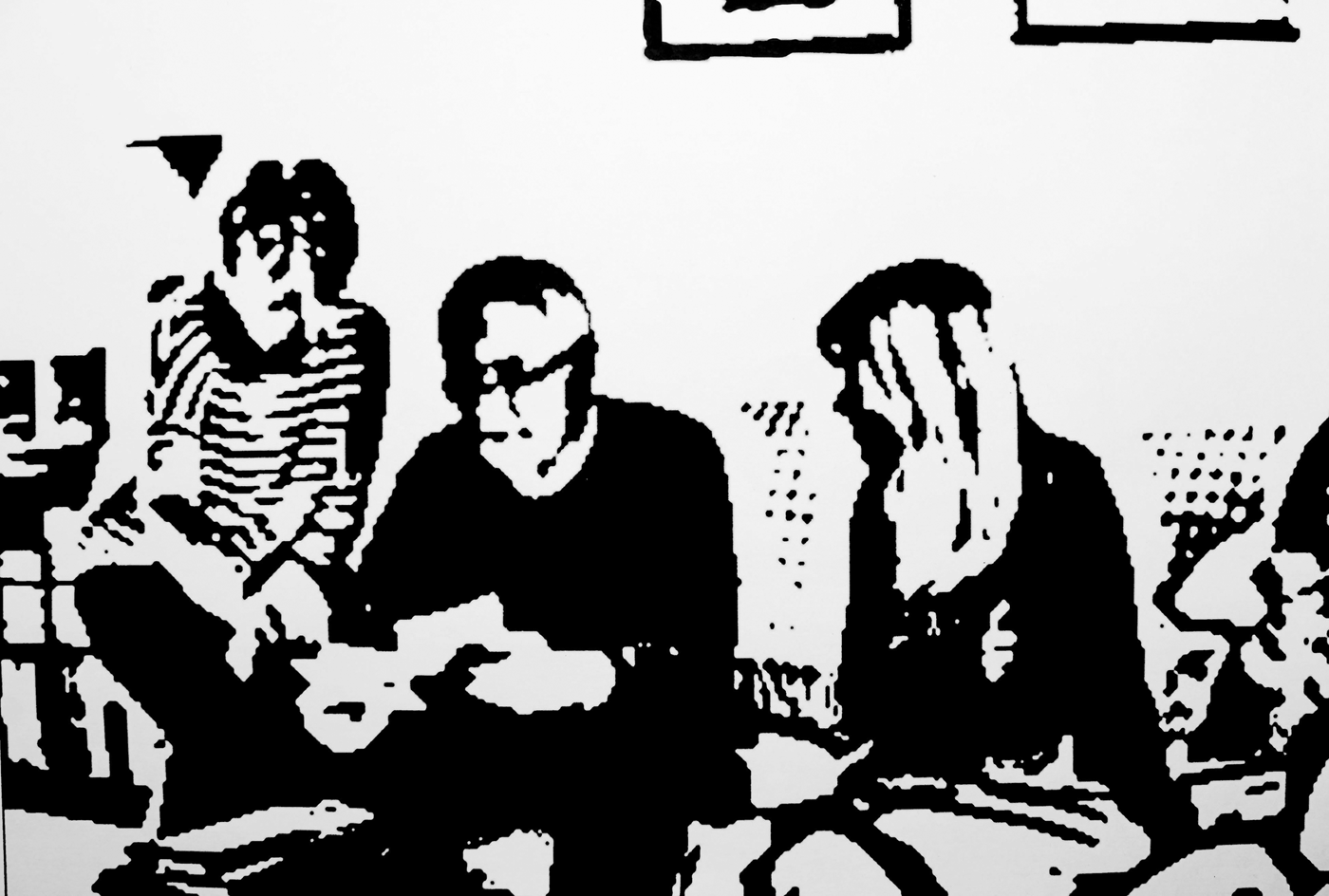
The video data illustrated the couples connecting at an emotional level when using the life-story resources. Peter and Joanna sat closest and displayed most affection when engaged in the life-story work, as Figure 2 (from video data during Phase 3), illustrates.
From left to right, Joanna, Peter and the researcher.

The emotional connections between Sarah and her family were highly evident in the video data of them singing together, e.g. Sarah was recorded telling her daughter she loved her at the end of one song, recorded during the piloting of the life-story intervention (Phase 2). When the (British singer) Cilla Black sings the line ‘my arms reach out to you with love’, on both occasions Sarah is video recorded during Phase 3 with her life-story music DVD, she reaches over and takes Reg's hand. During associated interviews, Sarah is unable to recall this is their engagement song but the data illustrate the embodied emotional connection between them.
In Ruby's case, whilst she could engage in stories about her life, her open conversation recorded during assessment often veered towards complaint stories (Selting Reference Selting2010), e.g. complaints about a friend's behaviour or service in a shop. Ruby would hold the conversational floor as the story became increasingly convoluted with a high degree of negative emotion displayed. In contrast, video data taken during Phase 3 demonstrated that the life-story books encouraged a range of other topics with different kinds of stories and emotions: those of pride, humour, love (and sadness) that facilitated different aspects of Ruby's character, identity and wellbeing. In addition, the format and presence of the book allowed for a way to move Ruby on to these other topics sensitively, as the following extract illustrates.
Extract 4: Moving the conversation forward
Ruby (Ru) is telling a long story about a recent argument in a public house, which has become circular and repetitive. The presence of the life-story book allows the researcher (R) to move Ruby off this topic without causing offence (lines 002–003):
[long story about an argument in the bar, Ruby getting very animated and angry]
001 Ru: I know yeah so–
002 R: We've put in about your ballet and tap haven't
003 we ((showing book))
004 Ru: Yes hhhhhhh ((smiling))
[Ruby moves on to talk about her love of ballet and tap dancing and why she had to give it up]
Brian indicated that following the recent diagnosis of semantic dementia, the life-story process had helped him think about Ruby, why they had married and all the good times together, therefore, helping him through this stage:
If you look back, it's been a good lifestyle … but, I mean, the nights out we used to have, it used to be, it was tremendous, we really did.
He added:
I read something in the paper once about the advice someone would give to couples who were on the point of divorcing. The thing was, he said, forget why you're divorcing now and think about why you got married in the first place. So what I'm saying is, not look at the problems which, like, have led to divorce, back to why you wanted to get married in the first place, how you got on and all the rest of it. I thought that was good advice that really, because it is. And I think the same kind of thing's happening here, from my point of view anyway. (Phase 3)
The life-story work, whilst enjoyable, also presented some emotional challenges for family members. Sarah's daughter Harriet reported that seeing her mother engaged in song was both happy and sad, as it reminded her of how she used to be. For this reason, when making the DVD one song was omitted from the final cut because it upset Harriet so much. Joanna talked about reflecting on the past with a degree of mixed emotion, and it was hard to be sure if the life-story process was helpful or not, e.g. whether it emphasised the loss she was experiencing for Peter as he was in the past:
I spend a lot of time now thinking about the past … you know, there's a lot of history in our marriage, isn't there, and I find I'm recalling all sorts of times and experiences, both happy and sad times and how we dealt with them, more particularly, how Peter dealt with them I think. (Phase 3)
The outcomes then, in terms of emotional connections within the data, were described in the narrative interviews and were directly seen through in-the-moment emotional connections observable in the video data.
New connections
This reflects where the process helped to build new supportive relationships and partnerships in care, for example, between paid carers, the person with dementia and their relatives. This connection was evident in the life-story work for Peter and Doug, with their respective spouses, Joanna and Karina, both reporting that the life-story work had been helpful to build new connections in other care settings. Joanna reported that Peter not only spontaneously showed his life-story books to people he already knew, including his daughters, grandchildren and friends, but he also showed them to new visitors to the house, to staff and other service users at day care, and he had taken the books with him when admitted for emergency respite care, adding ‘I think they've been a tremendous tool, they've been really helpful’ (Phase 3).
For Doug, his admission to long-term care, just as the intervention stage had started, meant that the life-story work was now aimed at helping the staff to build a relationship with him. Doug had experienced a considerable degree of personality change with his diagnosis. He was no longer reserved, aloof and avoiding chit-chat as Karina described him previously, he now actively sought out social interaction. Doug was not interested in football anymore but took great pleasure in his newly found interests of music and dancing. This meant that whilst the previous life-story book made when Doug was in the early stages of semantic dementia helped the staff to understand the life Doug had lived, the book did not convey his current interests or ways to engage him. Video recording of him looking through this book with Karina during assessment illustrated these, and other, limitations.
However, his sheet ‘Making Connections’ presented ways to connect with him in the here and now, including specific ways to exploit Doug's social skills and the activities that he particularly enjoyed. The sheet, for example, outlined: ‘I enjoy interaction and using my good nonverbal skills. The words do not have to make sense it's the social connections that are important to me’; ‘I can do a great posh voice, ask me about it’; ‘I like to move to music. I will conduct or dance along’. During Phase 3 interviews, Karina (K) and the researcher (R) talk about how Doug is settling into the care home:
R: So they seem to be doing everything, all the things we have put on the little sheet, don't they?
K: Yes absolutely.
R: And they seem to have got to know his little ways.
K: Yeah, one of the girls puts his music on and they have a dance.
Direct examination of the use of the life-story resources in other settings was beyond the ethical approval given for this study but would have been a useful addition to the research design, for example, by using participant observation, video and interviews with care staff.
Practical connections
For some individuals, the life-story work had impacted on important practical aspects, thus providing a more individually tailored care plan or activities for the person with dementia. Karina reported that explaining Doug's different needs, including his requirement for larger portions of sweet food, to the care home was an issue and could be delicate: ‘I'm a little bit concerned, because I don't want to criticise and say, you know, this isn't right or whatever. But [the home] is geared to that particular group of sweet little old ladies more than anything’ (Phase 3). She went on to describe how she had used Doug's ‘Making Connections’ sheet as a tool to explain to the staff about practical aspects of his care and she observed that it was now the front sheet to his care file. Likewise, Joanna reported that the day care centre had found the portable book helpful to get to know the activities that interested Peter, such as encouraging him to play the guitar.
The life-story work also had capacity to help the person with semantic dementia make practical changes in their own life, in terms of self-management. For example, Ruby and Ken, both with earlier semantic dementia, took stock of their lives and their interests as part of the life-story process and conversations about keeping well with semantic dementia. Ruby never made reference to her condition and her husband, Brian, reported during assessment that he felt it would be unhelpful to encourage her to do so. It was reported in field notes that the life-story work, however, presented as a way to talk practically about keeping active, without necessarily talking about the diagnosis, e.g. keeping up certain activities and identifying other enjoyable activities she was doing less of late. For Ken, on the other hand, the life-story work was part of direct conversations about the condition and a focus on activities to keep him engaged, leading to him making practical changes in his life and taking up a new hobby. This study used field notes and reports from carers or the person with dementia to inform this connection. However, examination of care plans to see if they contain specific autobiographical information that is recognisable as pertinent to only a certain individual or, for more depth, participant observation and video of care practices, would have enhanced the analysis further.
Future connections
There were elements of the life-story work carried out within the present, but with a consideration of future goals and issues. Ken produced his resource on the computer to read himself. However, there was potential for this material to be used as a starting point in the future in a portable book or life-story book format, similar to the one that Peter used. In this instance, the material would already be available in Ken's words. Ruby and Brian reported that they wanted to continue to add photographs to Ruby's book in the future, leading to on-going life-story work. In addition, however, the study demonstrated that past resources may have current limitations. Sarah and Doug, for example, had well-made life-story books that had been helpful in the earlier stages of the condition. However, video recordings of them during assessment looking through these resources showed them to have limited benefit in encouraging interaction presently, because they both had difficulty recognising many of the photographs and recalling the long-term memories, even with prompting. For this reason, Ruby and Brian were given written information about the future use of their life-story book in order to maintain this as a dynamic resource, including outlining sensitively that if certain pages no longer held interest, or were upsetting, then these could be removed, as follows:
We make life-story books so that you can take out any photographs that do not spark off conversation and memories, and add in new one's that do. Over time your interests may change and the book may need to reflect this … you can save them elsewhere as a record of important events, it just might be at the moment this is not something that particularly sparks off memories or conversation for you. (Intervention advice Phase 2)
The book was made in a format with pages that could be added and taken away and this made a more flexible resource than, for example, Sarah's book which had been printed and bound and so could not be altered. The data presented in this study, therefore, illustrate that life-story resources used to facilitate interaction need to be dynamic resources that are adapted along with the needs of the person with semantic dementia, and consideration of future use and adaptations could be built into current work.
Discussion
This study examined the potential of life-story work with five people living with semantic dementia and their spouse. This included understanding how life-story work might be tailored to the individual and their particular dementia, as well as developing a clearer insight into the potential outcomes of the work. The approach and format for life-story work in this study followed from detailed exploration of each individual with semantic dementia's current interactional needs using a mixed-methods design. This delivered a variety of life-story products, in each case with individualised goals and outcomes.
This study demonstrates that some individuals with semantic dementia were able to make, control and use life-story resources themselves. For example, Ken's self-directed work and Peter's portable life-story resource gave them both a level of control and empowerment not evident in the current life-story literature for people with dementia (McKeown, Clarke and Repper Reference McKeown, Clarke and Repper2006; Moos and Björn Reference Moos and Björn2006). In addition, whilst the semantic dementia literature currently lacks any consideration of self-management strategies by people living with this condition, Ken's case provides evidence that this may be possible in the earlier stages.
The study demonstrated the goal of life-story work in facilitating interactional connections, for example, by supporting personally related topics and through increased shared knowledge to help listeners understand the talk of the person with semantic dementia. Thus, the provision of the life-story books for Peter and Ruby provided important ‘anchors’ for the story world (Hamilton Reference Hamilton2008). However, these books focused on the present as well as the past, and books were not ordered in a chronological fashion but organised around those topics that engaged the person currently in conversation. This study demonstrates that life-story work in semantic dementia should include both recent and long-term memories relevant for the person concerned, reflecting the different profile of memory change in this condition (Eastern Cognitive Disorders Clinic Australia 2014; Kindell et al. Reference Kindell, Sage, Wilkinson and Keady2014b). Sarah, for example, could talk about her daughter as a baby and as she was now, but had no recollection, or indeed recognition, of stories of her growing up. This study goes further in identifying that recognising people and places in photographs may impact on life-story work. This is not to say that photographs are not appropriate; Ruby, for example, did not recognise the places in her photographs but enjoyed immensely talking about the different fashions. Whilst the life-story literature makes little reference to particular cognitive issues, this study indicates that individualised cognitive factors did impact on the process and product of life-story work. Therefore, assessment and piloting of life-story materials with the person with semantic dementia is crucial if such resources are to be used as aids to prompt interaction.
For some individuals with advancing semantic dementia, their cognitive difficulties meant that prompting past memories to use in current conversation, including through the use of life-story books, had its limitations. For these reasons, the life-story work with Sarah and Doug was not focused around facts, information or memories but on creative and unique ways to encourage interaction. Sarah's music DVD, therefore, contained songs that were relevant to her life story, but the focus was on the interaction provided by the song in-the-moment, rather than the memories associated with the song; the latter often being the focus of music within life-story work (Moos and Björn Reference Moos and Björn2006). So, for example, Sarah and Reg's engagement song was used for them to sing along to together, rather than to reminisce verbally about the past memories associated with the song. The focus of both the intervention and its evaluation was, therefore, an exploration of in-the-moment interaction. Doug's ‘Making Connections’ sheet focused largely on current activities and abilities that provided an opportunity for a social connection, thus moving beyond the need for information in conversation, into the realm of embodied interaction.
Moreover, this work has shown that life-story work goes beyond supporting information and memories in the talk of the person with dementia. The use of video data to explore the potential outcomes of this work helped to move life-story work into an interactional arena where abilities beyond the spoken word (and the information this conveyed) could be examined. This included use of facial expression, pointing, tone of voice and turn taking, as well as the behaviours of the other party within the interaction. This presents as a departure from the life-story literature, particularly that examining memory wallets/aids, using discourse measures (Bourgeois Reference Bourgeois1993; Bourgeois et al. Reference Bourgeois, Dijkstra, Burgio and Allen-Burge2001) or that examining autobiographical memory function (Subramaniamay, Woods and Whitaker Reference Subramaniamay, Woods and Whitaker2014). The broader focus presented here has important implications for life-story interventions aiming to improve quality of life in such individuals, particularly those with more advanced dementia.
This notion is also in keeping with the work of Hamilton (Reference Hamilton2008) in her examination of Elsie's narratives in the face of advancing Alzheimer's disease. Elsie displayed significant difficulties with communicating coherent narratives; however, ‘snapshots’ of the past were evident even within fragmented talk. Hamilton (Reference Hamilton2008) argues for the possibility of identity work within the here and now by focusing on instances of formulaic small talk, compliments, jokes and positive politeness (Brown and Levinson Reference Brown and Levinson1987). These are many of the features displayed within Sarah's interaction in her singing videos and the abilities that Karina attempts to facilitate in Doug in their video data. Within the literature it has been noted that the goal of conversation is not just to convey meaning, or transaction, but that conversation has an important interactive function (Brown and Yule Reference Brown and Yule1983; Simmons-Mackie and Damico Reference Simmons-Mackie and Damico1997) and this distinction was evident in a recent review of conversation and dementia (Kindell et al. Reference Kindell, Keady, Sage and Wilkinson2017b). This study, likewise, demonstrates the potential of life-story work to facilitate and enhance interaction, i.e. a social function to foster being together in-the-moment. This broader focus on interaction opens up possibilities to focus on strengths that support the person's identity and sense of self in advanced dementia.
In-the-moment analysis of life-story work has been highlighted as a current gap in practice (Gridley et al. Reference Gridley, Brooks, Birks, Baxter and Parker2016); this study demonstrates that video data analysed using the principles of Conversation Analysis shows promise. The method provided a way to explore recurring features of interaction and differences in terms of interaction during life-story work compared to casual conversation for both verbal and embodied behaviour. This method allows for the complexity of interaction to be studied and an acknowledgement that different activities may offer different choices in interaction. Life-story work may, for example, support interaction but repeated use of the resource provides a format for conversation that encourages questions where the answer is already known (Ekström, Ferm and Samuelsson Reference Ekström, Ferm and Samuelsson2017) and may deliver labelling and listing of materials (Spilkin and Bethlehem Reference Spilkin and Bethlehem2003). Further exploration of the different facets of life-story work using video data would benefit dementia care.
This study also demonstrated the emotional connections fostered by life-story work both in terms of the emotional connections between the person with semantic dementia and their family members, and how the work helped the person connect with their own identity. For example, for Ken, the approach was aimed at enhancing mental health following his diagnosis. This is consistent with the classification discussed by Westerhof, Bohlmeijer and Webster (Reference Westerhof, Bohlmeijer and Webster2010) with objectives focusing on differing social and psychological aspects.
Joint reminiscence and sharing of stories in couples’ intervention work has been advocated to strengthen emotional connections and, therefore, relationships in dementia (Wadham et al. Reference Wadham, Simpson, Rust and Murray2016). However, this study showed that whilst the life-story work helped relationships for some participants, the work also presented emotional challenges for some of the family carers, such as reminders of skills lost and changes in relationships, as seen in the work of Ingersoll-Dayton et al. (Reference Ingersoll-Dayton, Spencer, Kwak, Scherrer, Allen and Campbell2013). In addition, whilst sharing of stories was possible and valuable for Peter and Joanna, and Ruby and Brian, this was no longer feasible for those living with more advanced semantic dementia. For Sarah and Reg, and Doug and Karina, creative ways to make in-the-moment connections were important, illustrating again that life-story work requires greater attention to embodied and sensory dimensions.
This raises an important issue in terms of measuring outcomes for life-story work and many activities in dementia care: making a distinction between in-the-moment outcomes of an activity, i.e. measuring various aspects of participation in interaction and emotional connections, and the measurement of other longer-term outcomes once the activity has finished. For example, general quality of life measures have been used to evaluate life-story work and reminiscence (Subramaniamay, Woods and Whitaker Reference Subramaniamay, Woods and Whitaker2014; Woods et al. Reference Woods, Bruce, Edwards, Elvish, Hoare, Hounsome, Keady, Moniz-Cook, Orgeta, Orrell, Rees and Russell2012), focusing on the longer-term effects of the work. A focus on participation, in contrast, may examine in-the-moment interactional connections, or quality of life in-the-moment, and this might be effectively observed using video data.
The data also demonstrate how the life-story work helped people with semantic dementia to build new connections, or relationships with others, particularly in other care environments, particularly for Peter and Doug. Life-story work has been shown to improve staff attitudes in residential care (Subramaniamay, Woods and Whitaker Reference Subramaniamay, Woods and Whitaker2014) and a focus on biography is an essential feature of person-centred approaches to dementia (Brooker Reference Brooker2007; Kitwood Reference Kitwood1997a). Kitwood (Reference Kitwood and Marshall1997b: 36) wrote ‘if I were to choose one issue that marks out good care from bad, the new culture from the old, it would be that of appreciating the uniqueness of persons’, arguing for the importance of life history in care practice. Recognising the importance of the past, and often the long-term past, is a pillar of dementia care practice. However, as already discussed, the recent past, or indeed the present, are also relevant when working with people with semantic dementia. Thus, Doug's previous life-story book helped staff to understand the life Doug had lived, including all his achievements; however, it was limited as a tool to build new connections through interaction. In his sheet, aspects of Doug's interaction were succinctly outlined in a positive and memorable way with clear indicators for actions such connections, therefore providing an important starting point to appreciate, as Kitwood (Reference Kitwood and Marshall1997b) argues, Doug's uniqueness.
Practical connections were also demonstrated in the data in the way staff in the day care centre used the life-story information to plan appropriate activities for Peter, and the care home staff organised Doug's music. This illustrates how attention to life-story work can influence care planning and care practices (Hansebo and Kihlgren Reference Hansebo and Kihlgren2000) for people with semantic dementia. In this study, life-story work also had the capacity to help the person with semantic dementia make practical changes in their own life, in terms of self-management, and this therefore presents as a new finding. In Ken's case, this was done by direct conversations about the condition and a focus on activities to keep him engaged; for Ruby, it was possible to use life-story work to talk about keeping well and active without necessarily talking about the diagnosis.
Lastly, this study demonstrated future connections as an important theme arising from the data and refers to elements of life-story work carried out within the present, but with a consideration of future goals and issues. This presents life-story work and resulting resources in a dynamic context that may require adaptation as the person's needs change. This finding presents as a departure from the life-story literature, although this issue has been mentioned in therapeutic approaches for progressive aphasia. For example, Rogers and Alarcon (Reference Rogers and Alarcon1998: 645) argue that interventions for those with primary progressive aphasia should not just focus on the present but include proactive management: ‘therapy goals should be implemented in anticipation of continued decline in communication independence’. Whilst to those working in the broader field of dementia care this may seem obvious, much of the current intervention literature in semantic dementia is largely focused on present deficits rather than considering future challenges for therapy as the condition progresses (Carthery-Goulart et al. Reference Carthery-Goulart, da Costa da Silveira, Machado, Mansur, de Mattos Pimenta Parente, Hosogi Senaha, Dozzi Brucki and Nitrini2013; Jokel et al. Reference Jokel, Graham, Leonard and Rochon2014). Life-story work, in contrast to some supportive interventions involving people with dementia, does not hinge on awareness or ability to discuss diagnosis, and therefore presents as an intervention that enables a focus on identity, relationships and keeping well generally, rather than a focus on understanding the diagnosis of dementia. In this way, life-story work may present as a useful intervention for those who have less awareness or insight, to discuss wellbeing both now and in the future.
Study limitations
The ethical approval for this study prevented examination of care, relationships or interaction in other settings and, therefore, the findings relied on the reports of care-givers. Whilst studies have explored the attitudes of staff and others following life-story work (e.g. Subramaniamay, Woods and Whitaker Reference Subramaniamay, Woods and Whitaker2014), a challenging methodological development for future research might be to explore such attitudes within interaction, i.e. in-the-moment exploration of attitudes, or the ‘doing’ rather than the reporting of attitudes to explore the effects of life-story work. The sample within this study, whilst representing a range of stages of semantic dementia, was small in number and therefore may not be representative of all people with semantic dementia and caution should be used in attempting to generalise the findings from this work on to other case work/scenarios in dementia care. Lastly, whilst filming of interaction had many positive aspects, it was clear that some participants found this more challenging, both in terms of recording themselves and in being comfortable in front of the camera. In particular, this may have influenced initial sequences of interaction and the conversation behaviours of family members, who as a group were more aware of the filming process. Graded exposure to filming and further exploration of such issues would be useful in future studies.
Conclusion: developing interaction-focused life-story work
This study, and the points of connection discussed, has demonstrated that, even with significant challenges with communication in semantic dementia, skills can still be displayed within interaction and these skills can be actively facilitated with life-story work. This enhances interactional and emotional connections and impacts on other aspects of care. The specific focus on interaction within the broader field of life-story work may be more accurately termed ‘interaction-focused life-story work’. This approach involved finding out about unique aspects of an individual, including their skills and interests within conversation, and using this knowledge to shape shared experiences within interaction. The use of video data in this study to explore the in-the-moment effects of this was crucial. Goffman (Reference Goffman1967: 116) has described how talk can create a ‘communion of reciprocally sustained involvement’ and this can be demonstrated as present within certain interactions in this study, including those involving people with advanced semantic dementia.
Declaration of contribution of authors
All authors were involved in (a) the conception, design, analysis and interpretation of data; (b) the drafting of the article and revising it critically for important intellectual content; and (c) approval of the version to be published.
Funding
This work was supported by The Dunhill Medical Trust (Grant RTF33/1111).
Ethical approval
The study was approved by a National Health Service Registered Ethics Committee and by each research governance department at the National Health Service local organisation where the research took place.