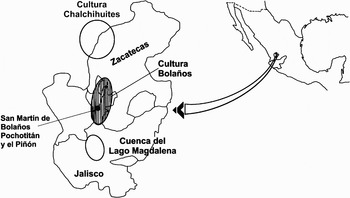
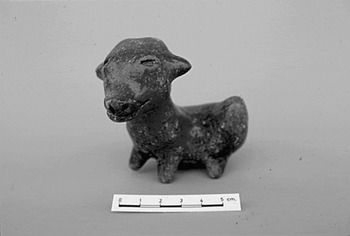
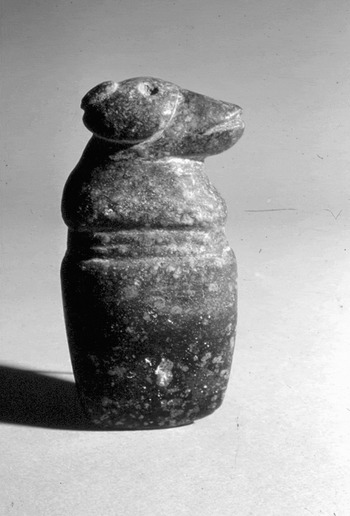
Three sealed-shaft tombs, with features that reveal the intricacies of the society that built them, were discovered in the central region of Bolaños Canyon, located in the northern part of the state of Jalisco, Mexico (Figure 1). This investigation is the first systematic archaeological study carried out in the region. It began fifteen years ago, encompassing the northern region, and the results were published in 1989. In 1991, a study of the central region began, leading to the discovery of a pre-Hispanic settlement in Cerro del Piñon (Cabrero García and López Cruz Reference García, Teresa and Cruz1997).
Map showing the Bolaños Canyon study area, located between the state of Jalisco and the state of Zacatecas, toward the northwest of Mexico.

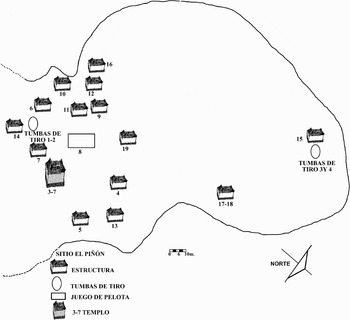
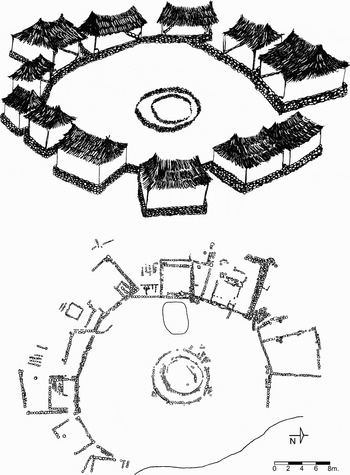
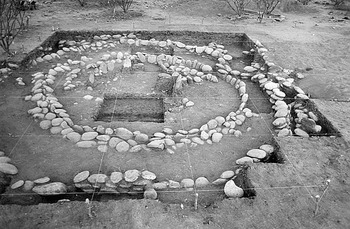
Excavations on El Piñon and Pochotitan were carried out from 1993 to 1997. This article summarizes the principal findings from El Piñon. Pochotitan is the second archaeological site excavated in Bolaños Canyon (Figures 2–3). It is located in front of Cerro del Piñon, on the first river terrace. This site was selected because of its three looted tombs, which we believed would belong to the same society as that of Piñon. The Pochotitan excavation revealed a circular architectural complex surrounded by nine rectangular structures. The internal space was occupied by a circular platform situated at the center of the grouping. This kind of architectural complex is found over the entire region of Bolaños and resembles those found in the central region of the state of Jalisco, which have been named “guachimontones” (Weigand Reference Weigand and Pickering1976:183; Weigand and Beekman Reference Weigand, Beekman and Townsend1998:35–52). Both sites (Piñon and Pochotitan) were contemporaneous, forming a single social, political, economic, and religious unit.
The archaeological site of El Piñon, located in the central area of the canyon, showing the houselike structures that were excavated, along with the discovered, sealed shaft tombs.

The archaeological site of Pochotitan, a contemporary of El Piñon. Commercial trade and storage of merchandise took place in Pochotitan.

NATURAL AND SOCIAL ENVIRONMENT
At present, the climate of the region is semiarid, with warm weather and thorny vegetation (cacti, mesquite, huizache, and prickly pear). However, analysis of the vegetation and the riverbed shows that, in the past, the environment included a wide diversity of vegetation, game animals, and sufficient water from the river and mountain streams.
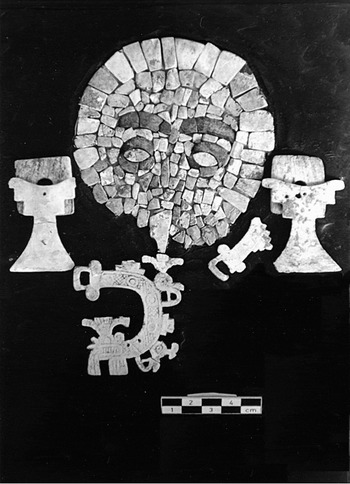
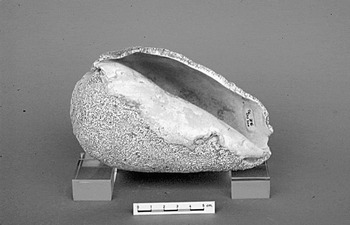
Archaeological elements discovered in both sites, such as shaft tombs, a ballgame arena, a structure resembling a monumental construction or temple (Figure 4), obsidian stone workshops at El Piñon, as well as a shell workshop found at the Pochotitan site (Figure 5), indicate that their inhabitants belonged to a stratified society whose economic base was the control of a commercial trade route linking western and northern Mexico. These societies were distinguished by their obsessive dedication to death, focusing on preserving the memory of their rulers. We think these findings support the theory that these people were government leaders for two reasons. First, they built shaft tombs rich in offerings, including seashells. And then, once the shaft-tomb era ended, they started a different burial tradition in which an area within the central plaza was selected where the people of the region buried what appear to be six of their government leaders in an excavated tomb; burials were found in a flexed position with rich treasures of seashells around them (Figure 6).
A temple was found in El Piñon to the north of the main plaza; inside the temple, two boxes were found containing cremated human bones from the shaft tombs.

A workshop for the production of seashell ornaments was found on a circular platform at the center of the circular archaeological site of Pochotitan.

Mask of Spondylus shell placed on the face of a human male buried in a prone position. The burial postdates the shaft-tombs period. Because of the high economic value of the offering, we suggest that this individual was a government figure. The individual was also surrounded by six human females, all of them also wearing seashell offerings (Olivellas sp).

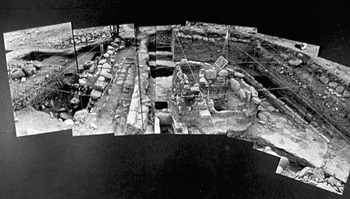
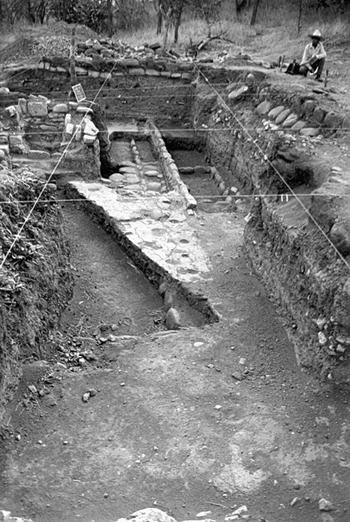
On the upper mesa, a civic-ceremonial structure was built, where the elite, as well as specialized craftsmen and religious leaders, also built their living quarters. Around this building, some domestic structures were found; we think these structures belonged to the elite because of their location within the ceremonial center. Toward the northwest of the plaza, two domestic structures were uncovered. A large quantity of decorated ceramics fragments were found here, along with pieces of clay figurines, all of which are similar to the pots and clay figurines found among the offerings of the shaft tombs. These findings support the theory that these domestic buildings were used as workshops to manufacture the offerings destined to be buried in the shaft tombs. At the northeastern end of the plaza, another structure was found, where we identified seven different remodeling episodes both inside and outside the structure. This was the only complex structure on the archaeological site; for this reason, we think it was used as religious temple (Figure 7).
Partial view of the posterior of the temple, showing remodeling of the temple structure.

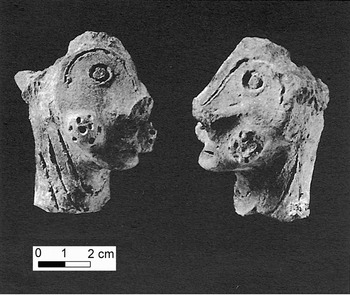
Next to this temple, another domestic structure was uncovered, at the entrance of which two direct burials were found. Inside these burial sites we found charms made of seashell and of baked clay, projectile-like objects made of obsidian, and one anthropomorphic figurine wearing a mask covering the skull and part of the face that contained what appears to be an opossum design (Figure 8). These findings support the theory that this building functioned as the residence of the religious leaders.
Figurine found inside the structure next to the temple, where we believe religious functionaries lived. The figuring represents a religious individual wearing an opossum mask. The opossum was a very important character in the Mesoamerican vision of the space and cosmos.

CHRONOLOGY
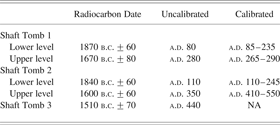
The chronology of El Piñon spans several periods of occupation that extend from 100 b.c. to a.d. 1260, when the site was abandoned. The period of shaft tombs extends approximately from a.d. 80 to a.d. 500. From Shaft Tombs 1 and 2, situated on the upper mesa at the elevation west of the ceremonial center, two radiocarbon dates from two different depths were obtained (Table 1).
Distribution of radiocarbon dates in the shaft tombs of El Piñon
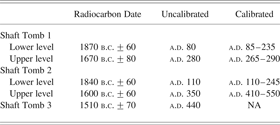
According to these radiocarbon dates, the tombs experienced a time lapse between a.d. 80 and a.d. 440, with intermediate periods, a.d. 110, a.d. 280, and a.d. 350. This means that Shaft Tombs 1 and 2 were reused on several occasions. Each time they were reopened, new human remains were placed inside. The number of individuals and funerary ollas in Shaft Tomb 3 indicate that it is very possible that this tomb was also reused even though we were not able to radiocarbon date it.
Stanley Long (Reference Long1966) studied several looted shaft tombs in Etzatlán, in the Jalisco area. Long was the first to postulate the reuse of shaft tombs. Using carbon dating and obsidian hydration, he proposed an age range from 200 b.c. to a.d. 200 for shaft tombs. Isabel Kelly (Reference Kelly1978), in Colima, postulated that the looted shaft tombs she studied belong to the Ortices Phase (410 b.c.–a.d. 270), probably extending into the Comala Phase (a.d. 545). Peter Furst (Reference Furst1966) put forth the probable date of 200 b.c. for a looted tomb in Tequilita, Nayarit, that included small figurines and vessels in the Chinesco style. This style was discovered among the offerings in Bolaños Shaft Tombs 1 and 2, although these pieces were locally manufactured, not imported. A sealed shaft tomb under a platform structure was found in Huitzilapa, an archaeological site in the central part of the state of Jalisco. This tomb presented a central shaft that separated two chambers; within this tomb, a rich treasure composed of seashells, turquoise, and jadeite was found. After 14C analysis, this structure was dated to a.d. 75 (López and Ramos de la Vega Reference López and de la Vega1997, Reference López and de la Vega1998:53–71).
SHAFT TOMBS OF EL PIÑON
Cerro del Piñon, situated on the outskirts of the town of San Martin de Bolaños, was occupied by a pre-Hispanic settlement that encompassed the entire hill and the upper mesa. On the slopes of the hill, stone-walled terraces were used for planting and for farmers' dwellings; each terrace has a one-room house built on a low platform. A civic-ceremonial center consisting of a plaza surrounded by low platforms, each with one or two living rooms, was built on the upper mesa. There lived the elite, specialized craftsmen, and priests.
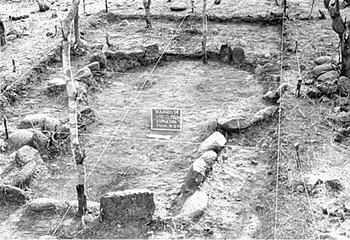
On the west of the plaza were groups of rooms and terraces accessed by stairs. A building that functioned as a temple is located on the first terrace on the plaza's east side. An enclosed sunken ballcourt traverses the plaza from east to west. West of the ballcourt stands a temazcal (a ritual steambath used by ballplayers; Figure 9). The ballgame in Mesoamerica was a sacred activity, for which the players had to be “purified” before starting the game; this purification process was accomplished by taking a sauna-like vapor bath (Krickerg Reference Krickberg1966:191; Leyenaar Reference Leyenaar1998:109–142). In most archaeological sites, such vapor baths are located near the ballcourt, and this is also the pattern at El Piñon. This structure consists of a circular area next to an elongated area, a design observed in many other vapor-bath structures; for this reason, we think the structure functioned as a sauna-like vapor bath to conduct the purifying ceremony before the ballgame took place (Cabrero García and López Cruz Reference García, Teresa and Cruz2002:83).
A structure, rectangular at one end and circular at the other, was found to the west of the ballcourt. Its unique shape and geographic location suggest that it was a temazcal, or ritual steam bath. In Mesoamerica outside western Mexico, temazcales were built in a similar shape and were used by ballplayers to take a ritual vapor bath before a ballgame started.

The discovery of three sealed-shaft tombs in an area unknown to Mexican archaeologists is a significant contribution to knowledge of this mortuary system. The tombs were the first sealed-shaft tombs discovered in western Mexico, contributing, for the first time, extensive information regarding mortuary rituals. The tombs were also the first shaft tombs discovered within a socioreligious context, unlike those of other regions of western Mexico that are found in cemeteries or places separated from daily and ritual activities (see Figure 1). It is important to add that the societies of Bolaños Canyon were rural, differing from those of central Jalisco, where this funerary style reached its sociocultural apogee (Weigand Reference Weigand and Pickering1976:183–227).
Four such tombs were discovered in El Piñon. Two of them were built beneath a building situated at the extreme southern end of the architectural complex; the first had been looted, and the second was discovered sealed (Shaft Tomb 3). The remaining two sealed tombs (Shaft Tombs 1 and 2) were discovered on the hill's upper mesa, near the extreme western edge of the complex. We describe only the sealed tombs here, as the looting of the other shaft tomb has destroyed all archaeological evidence.
In this part of Bolaños Canyon, a regular pattern was observed in which two tombs were built together, separated by a standard measure of 7 m. Each tomb had a single semicircular vaulted chamber connected to a circular lateral shaft, and the chamber of one tomb in each pair was slightly larger than the other.
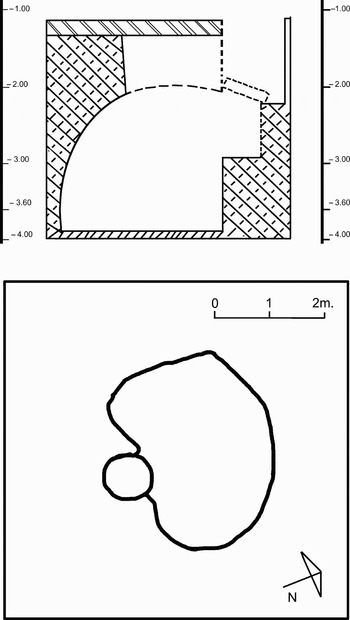
Shaft Tomb 1's semicircular chamber was 3.15 m in diameter, and the maximum height of the vault was 1.80 m. The lateral circular shaft was .80 m in diameter and 1 m long. Two steps gave access to Tomb 1's chamber—the first, .60 m high, and the second, 1 m high. The chamber of Shaft Tomb 2 measured 3 m in diameter, with a maximum vault height of 1.8 m.
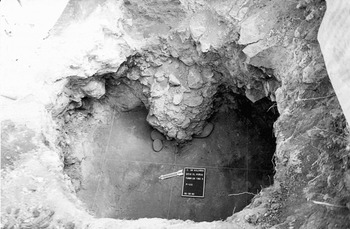
A circular lateral shaft .80 m in diameter and 1 m long was also found. Shaft Tomb 2's chamber was accessed via two steps, the first .72 m high, and the second, 1 m high. Tombs 1 and 2 were sealed with square slabs placed at the end of each tomb's shaft; each of these slabs measured .70 m×.60 m. The chamber of Shaft Tomb 3 measured 3.23 m in diameter, with a maximum vault height of 1.40 m. The lateral circular shaft was .80 m in diameter and 1 m deep. Access to the chamber was via a sloped ramp, and the entrance to the tomb was sealed with a rectangular stone (Figure 10). The entrances to the shafts of all tombs were concealed using tree trunks, soil, and stones.
Three sealed shaft tombs found in El Piñon, which presented a consistent design, represented here, and characterized by a shallow shaft into a chamber without specific shape.

The shaft tombs of El Piñon were dug into soft soil. In our opinion, the depth of the shafts and the shape of the chambers were the consequence of this soft subsoil, which offered little resistance to digging. The soft soil, however, led to the total collapse of the vaults of Shaft Tombs 1 and 2. While Shaft Tomb 3's vault was preserved, there was some erosion of rocks and soil. The debris from these collapses prevented us from determining the total number of individuals in the final burial in this tomb.
The tombs of El Piñon, unlike other known shaft tombs, form part of the civic-ceremonial center, an area dedicated to social and economic power. In other parts of western Mexico and in the north of Bolaños Canyon, shaft tombs were constructed far from settlement areas, and it is their distance from social contexts that has impeded understanding of their role in social behavior.
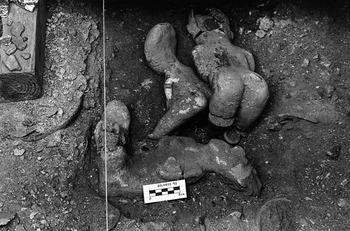
Collapse of the tomb's vault, which caused the visible damage to bones and other contents of the tomb.

HUMAN REMAINS IN THE CHAMBERS
The content and arrangement of bones and offerings was very similar in Shaft Tombs 1 and 2. In each, an individual was placed on either side of the access steps, with the head to the east. Osteological analysis was able to identify one articulated skeleton in Tomb 1 as female. In both tombs, offerings were concentrated between the two articulated skeletons, and in both tombs, skulls were placed together in a line at the rear of the chamber, surrounded by an accumulation of human bones.
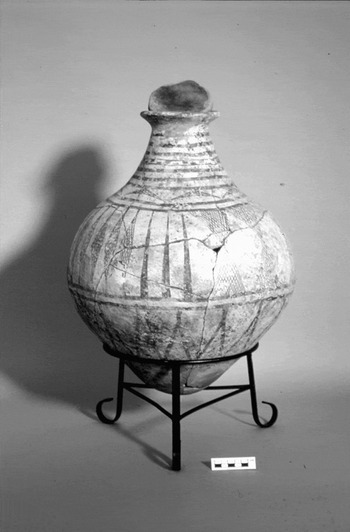
Large ollas full of incinerated bones were located very near the chamber walls in all three tombs. The fragments of incinerated bones included adults and subadults. This type of olla constitutes a novel feature in the shaft-tomb funerary custom; it is possible that it may be local to the Bolaños region, as it has not been found in shaft tombs in other parts of western Mexico.
Shaft Tomb 1
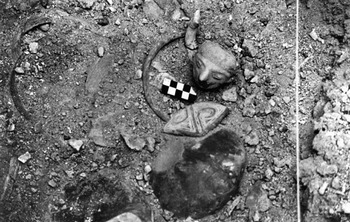
The vault's cave-in caused bones and objects to be fractured and relocated in disordered fashion (Figure 11). The only in situ materials were the articulated skeletons on each side of the access stair. A greater concentration of objects near the access to the chamber and between the skeletons was noted. These objects included tripod bowls, plates, miniature ollas, shell beads, and bracelets (Figure 12). Seven funerary ollas were distributed in the back of the chamber on both sides of the pile of bones (Figure 13).
Figurines found between the skeletons. The vault's collapse changed the original location of the human remains and the offerings.

Ollas containing cremated bones. Once the tomb's chamber was filled with burials and offerings, the human remains were extracted and cremated in stone boxes to free space inside the chamber for new burial ceremonies. The cremated bones were placed inside such ollas, which were placed around the walls of the chamber. The ollas resemble the design of the shaft tombs themselves, with the long neck resembling the shaft and the body, the chamber.

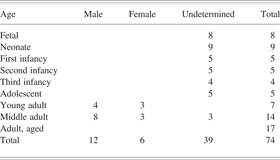
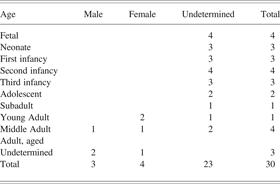
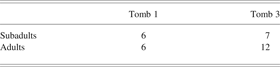
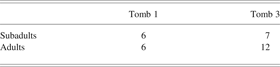
An osteological examination of the non-cremated remains revealed the presence of 38 adults (12 males, six females, and 20 adults of indeterminate sex), five adolescents, and 31 infants (fetuses and newborns; Table 2). Among the cremated remains it was possible to identify six adult and six sub-adult individuals (see Table 4). The average age reached was that of a middle-age adult (35–40 years old), with none reaching advanced adult age. A high mortality was noted among infants (including fetal stages, newborns, and children), adolescents, and young adults.
Concentration by age and sex of the individuals identified in Shaft Tomb 1
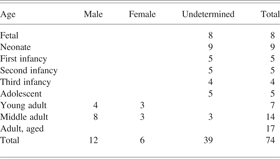
Pathologies or significant anomalies
Congenital anomalies included ankylosis between the right femur and its ischium in an individual in early infancy. Porotic hyperostosis and symmetrical osteoporosis was found in the orbits of newborns, infants, and young and middle-age adults, while evidene was also found of hyperostosis and cribra orbitalia attributed to generalized infections and nutritional deficiencies. Skeletal inflammation and infection processes were found on radii, femurs, tibias, and fibulas, while osteoarthritis was discovered in the humerii, femura, tibie, patellae, scapulae, vertebrae, calcaneii, and phalanges of the hand and foot. Ailments of the mouth included moderate cavities, periodontal disease, and abscesses.
Association of artifacts
A stone artifact with the figure of a human face on one end and a circular depression in the center, together with a malacate or spindle for making cotton thread, was found near the thorax of the articulated individual located at the south side of the chamber. A stone ax with a figure of a dog on the proximal end was placed near the same individual's feet. The articulated individual located on the north side of the chamber had a circular stone pendant. Ceramic objects (hollow figurines, beads, miniature ollas) were distributed between both individuals. Their direct association with the individuals is unknown.
A grouping of three projectiles (two flints and one obsidian) and a small solid “Chinesco”-style figurine, locally made, was found in the rear section. In total, seven funerary ollas, 20 vessels, seven miniature ollas, 15 hollow figurines, and one solid figurine were recovered. As mentioned earlier, seven funerary ollas were distributed near the walls at the back of the chamber.
Shaft Tomb 2
The collapse of the vault resulted in both the movement and breakage of bones and artifacts occupying the entire chamber space (Figure 14). The only in situ items identified were an articulated skeleton on each side of the access stairway, both individuals with their heads to the east. The concentration of offerings included tripod bowls, plates, miniature ollas, and shell bracelets. In each case there were six funerary ollas distributed to the side of the rear accumulation of bones. Osteological examination of this tomb remains unfinished, but preliminary reports show numbers similar to that of Tomb 1.
Shaft Tomb 3, showing the chamber below.

Association of artifacts
Several hollow female figurines were placed along the length of the body of the articulated individual at the south side of the chamber. One of these figurines is clearly reminiscent of the “Chinesco” style. However, it is apparent that it was locally made because the finish is of lower quality than that in the Nayarit area.
An ax decorated with a dog's face was found near the feet. A shell-bead necklace of Olivella sp., two shell wristbands, a grouping of three hollow female figurines, and two stone disks similar to those of Tomb 1 were placed around the skull of the articulated individual at the north side. The remaining offerings were concentrated between both individuals, without a clear association with either. A grouping of four obsidian projectile points was discovered at the back of the chamber. Funerary ollas were distributed at the rear of the chamber near the walls. In total, six funerary ollas, 27 vessels, four miniature ollas, and six hollow figurines were recovered (Figure 15).
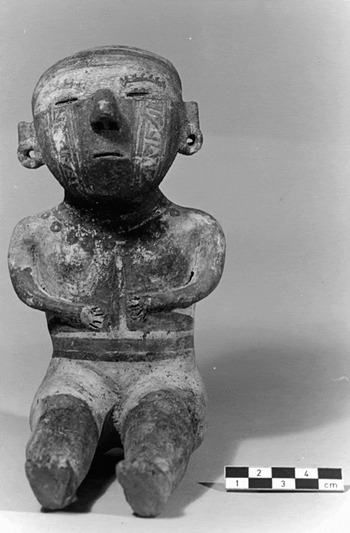
Hollow figurine depicting a warrior found on the north side of the main main occupant of Shaft Tomb 3. Because we have not found any other evidence of warfare, we suggest that the figurine represents a celestial warrior whose purpose was to protect the tomb's occupant(s) from evil forces in the afterlife.

Shaft Tomb 3
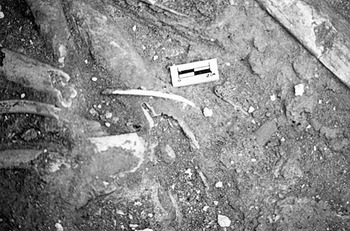
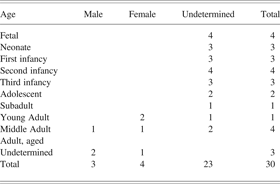
Fallen debris from the vault caused the contents of this chamber to be disturbed and fragmented (Figure 16). This impeded the identification in situ of the total number of individuals that had been entombed during the last cremation. Only three articulated skeletons were identified: one lying at the foot of the access ramp, another at the south end of the chamber, and the third on the opposite side. The latter two individuals had their skulls placed toward the east. At the back of the chamber there was a pile of all types of bones (femurs, skulls, ribs, etc.), as well as large ollas full of incinerated bones. In this tomb, 11 adults (three males, four females, and four of indeterminate sex), two adolescents, and seven infants (including fetuses and newborns) were found (Table 3). Among the incinerated bones, four subadults and 12 adults were identified (Table 4). As in Shaft Tomb 1, we noted a high infant-mortality rate (including fetal and infant stages) and a high mortality rate among adolescents and young adults.
Fragmentation and displacement of bones after the vault's collapse, which mixed bone remains with offerings. The photograph also shows a seashell ornament placed around one of the long bones.

Concentration by age and sex of the individuals identified in Shaft Tomb 3
Pathologies and significant anomalies
Pathologies and anomalies similar to those in Shaft Tomb 1 were noted. Porotic hyperostosis was observed on several skulls. Symmetric osteoporosis in the eye sockets of young and middle-aged adults was present. In newborns and young infants, these conditions are caused by anemia and nutritional deficiencies. Osteocartilaginous exotosis, osteoid osteomas, and osteoarthritis were observed on phalanges of hand and foot, vertebrae, patellae, and calcaneii. On the vertebrae, disk herniation was observed on several of the supine bodies. Moderate cavities were found on all mandibles and maxillas with premortem tooth loss, as well as a high frequency of hypoplasia on the enamel and several insisors with probably epigenetic deformities.
Concentration of cremated individuals identified in Shaft Tombs 1 and 3
Association of artifacts
A Strombus sp. snail had been placed on the thorax the individual laid across the access ramp (Figure 17), while a funeral olla was located near the skull and another near the feet. The individual placed on the north side of the chamber had a tubular ceramic pipe near the thorax (Figure 18). The individual buried in the far north of the chamber had the most objects distributed around him, which suggests that he was the most important figure of the cremation. On the thorax were placed several hundred shell, black coral, and ceramic beads.
Inside Shaft Tomb 3, the only tomb in which the vault did not collapse. There we found an entire sea snail (Strombus sp.) shell resting on top of the thorax of an individual interred at the entrance of the chamber.

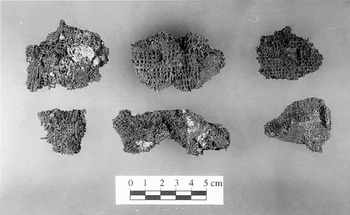
A textile fragment indicated that his dress was cotton cloth (Figure 19). From under the bones, several fragments of agave fiber were recovered, indicating that he was placed on a petate, or woven mat. Near the body were ceramic figurines of a seated human and a dog, as well as a miniature olla. The funerary ollas were laid out in the front of the chamber, near the walls. Bowls and plates were found in the central part but were not directly connected with anyone individual. In total, seven funerary ollas, two hollow figurines, 23 vessels, and one miniature olla were found.
Tubular terra cotta pipe from Shaft Tomb 3. The pipe rested next to the tomb's main occupant.

Evidence of Reutilization of Tombs
The most convincing evidence of the reutilization of tombs lies in the number of individuals identified in is the small space of each chamber. It would be impossible to inter so many fleshed bodies at one time. Osteological examination did not show evidence of dismemberment or drying outside the tomb. A second piece of evidence is the pile of bones at the rear of each chamber, which includes skulls and all types of bone. The third piece of evidence lies in the presence of cremated bones found inside the funerary ollas, and the fourth is the radiocarbon dates. Collectively, the tombs span a 360-year time period (a.d. 80–440), and the number of individuals in each tomb over this span suggests that entombed individuals, cremated and not, formed a small group, perhaps represented by the ruler, his or her descendants, and companions. Radiocarbon dating indicates that Tomb 1 was used for 200 years, a period of time in which probably eight rulers were buried, based on human remains both, cremated and not. We believe that Shaft Tomb 3 was used for a longer period of time than Tombs 1 and 2 based on identification of a larger number of both cremated and non-cremated individuals, meaning that probably more than eight rulers were buried, based on the adult group.
Fragments of the cotton cloth with which the main occupant of Shaft Tomb 3 was wrapped.

In contrast, radiocarbon dates for Tombs 1 and 2 suggest an alternative usage for the burial of successive rulers. There is a difference of 30 years between the oldest dates of Tomb 1 (a.d. 80) and Tomb 2 (a.d. 110). The difference between the most recent date of Tomb 1 (a.d. 280) and that of Tomb 2 (a.d. 350) is 70 years. This may indicate that each tomb was built for the ruler of that time. The alternate usage of the tombs probably reflects the way the ruler inherited the position—that is, from within a single lineage that could include sons, brothers, or cousins. The osteological examination shows similar heritable morphological features, a marked sexual dimorphism, and very similar discontinuous nonmetrical characteristics.
The removal of osteological remains for cremation, their subsequent placement in large ollas, and their placement inside the chambers suggests that, regardless of the practicalities of space, these individuals were destined to be placed in these tombs.
INTERPRETATION OF THE CONTENT OF THE TOMBS
Mortuary practices represent humanity's preoccupation with death. The organization and the complexity of a society can be inferred from the study of these practices (O'Shea Reference O'Shea1984). The way an individual is treated after death is a reflection of the status of said individual during life (Binford Reference Binford and Binford1972). Based on this principle, we can recognize social differences in a society. Mortuary practices constitute the way in which the dead are disposed and reflect the ideology of each society. The variety of funeral customs across the world is quite great, but those for the most important individuals of a group always stand out above the rest.
In the case of Bolaños culture, the burial system consisted of two simultaneous styles: shaft tombs for the chiefs or rulers, a very specialized mortuary custom among the groups that inhabited western Mexico from a.d. 100 to a.d. 600, and direct supine burial for lower-ranking people. A small offering of objects similar to those of the shaft tombs was placed with those directly buried in Pochotitan. On one of the Piñon's terraces, an adolescent was buried with his skull covered in hematite dust. Two other adults were buried in the interior patio of the site of Pochotitan; the first was laid out on a pile of incinerated bones and had a stone ax with the figure of a dog as an offering, while a hollow figurine of a female was placed next to the skull of the other.
We believe that shaft tombs also reflect the economic conditions of the period to which they belong. Shaft Tombs 1 and 2 offer an ample variety and wealth of technological objects, spanning a period of 270 years from the first to the fourth century a.d. In contrast, the last multiple burial in Shaft Tomb 3, dating to the fifth century, reveals a greater simplicity in its variety of objects. This could be indicative of an economic downturn, or possibly a deterioration of the mortuary customs, which soon after would disappear from this region.
As previously mentioned, we believe that the tombs were built for the burial of the ruler and his family. The most important mortuary rite was carried out after the death of a ruler. Each tomb would be opened on subsequent occasions to bury members of the ruler's family immediately after their death. Identification in each tomb of two (Tombs 1 and 2) or three (Tomb 3) adult articulated skeletons suggests that each inhumation was multiple, consisting of the ruler and his entourage. The possibility of large-scale demise was remote, unless by an epidemic that also killed the ruler. There is no archaeological or osteological evidence that members of the entourage were sacrificed. Absence of osteological evidence or signs of violent death suggests that a kind of poison was administered to members of the entourage. Nevertheless, at the entrance to Shaft Tomb 3, an obsidian knife was found, signifying probable human sacrifice, though no evidence of violence was present in the bones.
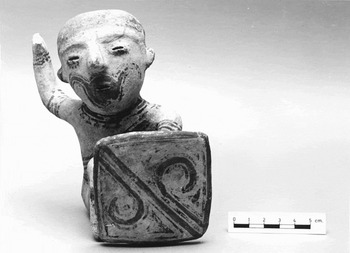
Based on evidence gathered in the three tombs, the ruler was buried on a petate (fragments of a mat woven with agave fibers and richly dressed with cotton cloth were found under the bone remains). The ruler was decorated with shell wristbands, shell beads, seashell trumpets, and ceramic objects, as well as objects he used in his daily activities, including dart thrower, arrowheads, and nets. (In Shaft Tomb 1, a net woven of agave fibers, used for hunting or fishing, was found.) Hollow clay figurines representing pregnant women and men and women wearing varied jewelry surrounded the ruler, warriors, and shamans, or priests (Figure 20).
Several hollow figurines depicting pregnant women from Shaft Tombs 1 and 2.

In general, the figurines appear motionless, and many of them have closed eyes. Some male figurines have lines across the eyes, as if they were stitched closed. These features probably symbolize lifeless individuals, representing their presence in the world of the dead. Vessels were found throughout the chamber, and some were found topped with a second, inverted vessel. We believe that the lower vessel held some type of food—hence, the necessity of covering it with another vessel to prevent dirt from entering. Pre-Columbian Mesoamerican peoples frequently used food as a funerary offering. They believed that their dead would journey to their final destination, known as the “underworld.”
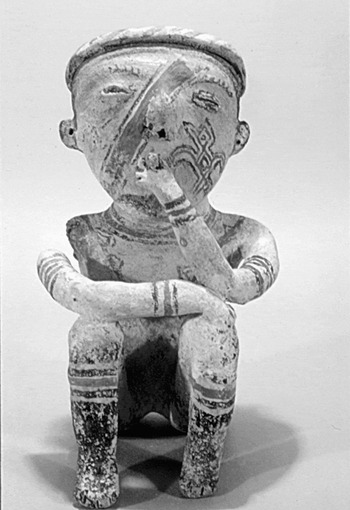
If one of the entourage were a priest or a shaman, he would be charged with protecting the ruler from bad spirits who would try to prevent the journey to his final destination. To do so, it would be necessary to communicate with the gods through achieving a state of unconsciousness via hallucinogens and sacred objects. Priests and shamans could only use the hallucinogens and sacred objects during ceremonies. It is probable that the individuals identified in Tomb 3, one associated with the seashell trumpet (considered a sacred object) and the other, smoking tobacco (considered a hallucinogen), were shamans or priests (Figure 21).
Hollow figurine from Shaft Tomb 2 showing a male character in a tobacco-smoking position, a unique find in western Mexico.

In addition, the representation of a person on the interior of a vessel with the symbol of peyote on his right hand is associated with the central figure in Tomb 3. The Huichol who currently live in this area customarily use hallucinogens such as peyote and tobacco. Peyote is collected from very distant areas and brought to their communities, where all of the community, including children, consume it. Cigarettes bought from local stores provide tobacco. In pre-Hispanic times, peyote and tobacco were acquired from the commercial route that crossed the Bolaños region (Myerhoff Reference Myerhoff1974; Nahmad Sittón et al. Reference Sittón, Salomón, Klineberg, Frust and Myerhoff1972).
Presence of females among the principal group in a multiple inhumation causes us to believe that women had a preponderant role within the society. Perhaps it was considered a privilege to accompany the ruler in death; therefore, offerings were placed around these individuals, distinguishing them by enhancing their status in the family group. In Tomb 1, the articulated skeleton on the south side was a female, accompanied by a malacate (an object on which cotton would be placed to be spun into thread) and an olla with specular iron dust (used as pigment for vessels) within. Both objects reflect gender roles—specifically, the weaving of cloth and the making of ceramic vessels. The predominance of female figurines, many of them pregnant, over male is additional evidence of the importance of women in this society. It is probable that these representations symbolize womens' status not only as bearers of children but also as directors of family education.
A representation of a dog appeared in all three tombs. In Shaft Tombs 1 and 2, it appeared on the end of a stone ax, and in Tomb 3, it appeared as a hollow figurine. These peoples likely shared the Mesoamerican belief that dogs guided man to his new home after death (de la Garza Reference de la Garza1997:111; Figures 22–23).
Hollow figurine of a dog from Shaft Tomb 3.

Large ollas containing incinerated bones were found in all three tombs. The ollas are similar in form and decoration. It is possible that the contents of each olla contained the bone remains of a ruler who was buried on occasions prior to the later deposition. Nevertheless, osteological analysis shows that the ollas contain the bone remains of several individuals of all ages and of both sexes. Based on this evidence, we propose that bone remains were relocated (without being specially selected) to clean the chamber space. Their subsequent cremation took place outside the tombs. (No evidence of fire exists in the interior of the chambers.) Evident importance was placed on returning the cremated bone fragments to the chambers inside the ollas.
We noted a pattern in the funeral rites of this region—specifically, in the remarkable homogeneity in decorative style of contributed vessels and hollow figurines. We consider these offerings to represent a funerary assemblage that did not vary, although objects of bodily adornment and of individual use, such as arrow points, shell beads, and so on, could be added. At the same time, the decorative and sculptural styles of vessels, ollas, and figurines reflect local character and differ from pieces found in other shaft tombs of western Mexico. The only external influence at Pochotitan was found on two figurines that clearly show the “Chinesco” style of Nayarit. Nevertheless, the finish and a stylistic variant indicate that they were produced locally. These facts indicate the development of the Bolaños culture and the presence of contact with groups from Nayarit, who also buried their dead in shaft tombs.
Stone ax in the shape of a dog from Tombs 1 and 2. The ax, along with the burial custom in Pochotitan, suggests that this culture shared elements of its cosmovision with broader Mesoamerica.

SUMMARY
In conclusion, from records in situ, osteological analysis, radiocarbon dates, and analysis of offerings, we can say that it is certain that the shaft tombs of El Piñon were reused, functioning as a kind of family crypt. There is also sufficient evidence to show that each tomb had two uses: for multiple burials of the ruler and his entourage and for individual members of the royal family. Each tomb was originally built for the burial of the ruler and his retinue, taking up the whole space of each chamber. The principal individual did not occupy a specific space in the chamber; he was distinguished only by the offerings surrounding his remains.
Beginning with the second inhumation, remains were treated in two ways: they were relocated toward the rear of the chamber or they were cremated. The remains left uncremated were treated in two ways: they were piled in no particular order (as in Shaft Tomb 3) or the skulls were placed together next to the rear wall of the chamber and disarticulated bones were placed in front (as in Shaft Tombs 1 and 2). Bone remains destined for cremation came from previous burials. They were removed without regard to age or sex and relocated within large ollas inside the chamber. The complete lack of evidence of traces of fire inside the chamber indicates that cremation took place outside the tombs. It is thought that the stone boxes found inside the ceremonial center's temple were used as crematories. They had several layers of ash, each one sealed with burned clay. These layers indicate incineration with some type of combustible material on multiple occasions. The cremated remains were placed in large ollas, covered with a rounded sherd, and returned to be deposited within the interior of the tomb chamber.
Bone remains and offerings were removed to provide space for subsequent burials in the same chamber; the objective was to free space in the chamber for the following burials. We believe that the tombs were used alternately, and even though each tomb was reused several times, a pairing off of tombs—recall that the distance between tombs was regular and patterned—seems to have been the norm, as suggested by the staggered radiocarbon dates from Shaft Tombs 1 and 2. The intentions behind alternation of use are, however, unknown.
The osteological analysis shows that each multiple burial consisted of a principal adult male accompanied by one or two adults, either two males or one male and one female. The presence of infants, including fetuses and newborns; children; adolescents; and young adults shows that the tombs were designated for burial of the ruler and his family. It is probable that, between the death of one ruler and the next, the tombs were opened to bury members of the family. There is no evidence of dismemberment or drying outside the tombs, and it is believed that individuals were buried shortly after death. Osteological examination reveals a normal life expectancy of middle adulthood for both genders. Different paleopathologies were caused mainly by nutritional deficiencies (anemias); changes in infant metabolism (cranial hyperostosis); and infection or inflammation, including caries. The practice of cranial deformation of the tabular erect type was also discovered.
The similarity in decorative styles in vessels and funerary ollas, and in sculptural style in hollow figurines, indicates a continuity of offerings in all burials. We found evidence that objects were removed from the chamber during cleaning and replaced as part of the offering for a new burial, along with the funerary ollas filled with cremated remains.
The red and black colors used to decorate the vessels and figurines may symbolize death, and the decorative motifs may represent symbols related to the mortuary rite. Closed eyes on the figurines probably simulate the closed eyes of buried individuals. The physical positions depicted by the hollow figurines, even when motionless, symbolize some of the daily and ritual activities of the ruler.
The clothing and jewelry of the principal individual, which were made of raw materials not present in the region, indicate a high level of commercial activity and a rich economy that was capable of providing the elite with exotic products of limited distribution. Comparative analysis with the shaft tomb of Huitzilapa (López and Ramos de la Vega Reference Weigand, Beekman and Townsend1998:53–70), located in central Jalisco, show that funerary custom supported a great variety of mortuary behaviors that perhaps depended on the social and economic situation of local societies. The tomb of Huitzilapa had two chambers and one central shaft, while the tombs of Bolaños had only one chamber and a laterally placed shaft. The tomb of Huitzilapa was discovered under one of the platforms of a ceremonial grouping; the tombs of Bolaños were part of a civic-ceremonial center and a living group at the Piñon site.
The tomb of Huitzilapa was dedicated to the burial of a single individual. The burial was multiple, and his entourage was female (Pickering and Cabrero García Reference Pickering, Teresa, García and Townsend1998:75–76). The tombs of El Piñon were reused on subsequent occasions, and each multiple burial represents the burial of a ruler with his entourage and family. In the tomb of Huitzilapa, the symbols of the priest or shaman (e.g., the seashell trumpet) were found on the skeleton of the principal individual, perhaps symbolizing the sacred position of the ruler; individuals who were possible shamans or priests were also identified in the El Piñon tombs. In the tomb of Huitzilapa, however, there was no evidence of cremation or of funerary ollas, as in the El Piñon tombs. The tomb of Huitzilapa had a rich variety of objects and raw materials, some from distant locations, that were placed next to the principal individual, bearing witness to the social and economic importance of the region at the time of his death.
The tombs of El Piñon represent a rural version of funerary practice in a region far from the great cultural center of Jalisco. The Bolaños region focused on the control of a trade route that linked central Jalisco with Chalchihuites, in the southern part of the state of Zacatecas. Presence of goods from far-off regions (tobacco, cotton, and several species of marine products, volcanic rock, obsidian, etc.) denotes the importance that the commercial route maintained in the Bolaños culture.
Ceramic offerings, such as vessels and hollow figurines, from the tomb of Huitzilapa represent sculptural and decorative styles previously known in central Jalisco, while the sels and hollow figurines from the tombs of Piñon are a unique style unknown in the shaft tombs of other regions of western Mexico, with the exception of pieces produced locally, which nevertheless show marked influence of the Chinesco style of Nayarit.
Finally, we emphasize that the discovery of the tombs of El Piñon has opened the door to a vast source of knowledge about the mortuary practices related to shaft-tomb burials in the Bolaños region. We conclude that these societies were complex and stratified, such that the lineage of the ruler determined who was buried in these funeral monuments.
RESUMEN
El descubrimiento de cuatro tumbas de tiro selladas (tres en el norte y una en el centro) en el estado de Jalisco dio la oportunidad de conocer las acciones del ritual mortuorio de esta singular costumbre funeraria. Gracias a los hallazgos se supo que el ritual tenía variantes de acuerdo a la cultura en que se llevaba a cabo. En el caso de la región de Bolaños (norte de Jalisco) se observaron distinciones significativas con respecto a la del área de Etzatlán (centro de Jalisco).
Las tumbas de Bolaños formaban parte del centro ceremonial del sitio El Piñón, lugar considerado como el más importante de la región fue el centro de control económico y político en combinación con Pochotitan sitio ubicado a la orilla del río Bolaños. Ambos sitios controlaban el paso de las caravanas comerciales después de establecer la ruta fluvial que comunicaba el centro de Jalisco (al sur) con el área de Chalchihuites (al norte).
Las tumbas fueron reutilizadas dentro de un lapso entre 200 y 300 años Se dedicaron al entierro del gobernante y su linaje por lo que hubo dos modalidades de entierros: múltiples cuando se depositaba al gobernante y sus acompañantes e individuales cuando moría algún miembro de su familia. El análisis de los restos óseos dio a conocer que en el grupo había desde fetos hasta adultos medios de ambos sexos. En cada caso se abría la tumba, se movían los restos óseos a la parte posterior de la cámara con el propósito de dejar libre el espacio y colocar un nuevo depósito. Cuando la parte posterior se llenaba de restos óseos se sacaban y se cremaban en dos cajas de piedra situadas en el interior del templo para luego introducir los restos cremados en grandes ollas que reproducían la forma de la tumba y éstas eran colocadas nuevamente en el interior de la cámara. Así se explica la reutilización de las tumbas y la gran cantidad de individuos depositados en cada una.
Los objetos de ofrenda se encontraban alrededor y entre los restos óseos, consideramos que pertenecieron sólo al último depósito de cuerpos ya que observan un similar estilo tanto vasijas como figurillas.
La región de Bolaños constituye la porción más al norte en que aparece esta costumbre mortuoria presentando distinciones en el ritual, sobresale la costumbre de cremar los restos óseos y depositarlos nuevamente en el interior de la cámara lo cual significa que las personas que fueron depositadas dentro de la cámara debían permanecer en ese lugar eternamente. El establecimiento de la ruta comercial les permitió desarrollar una economía basada en la elaboración de artefactos de obsidiana y de objetos de concha marina ambas mercancías utilizadas en el intercambio comercial. La floreciente economía favoreció el dispendio de recursos para mantener la costumbre de enterrar a sus gobernantes en tumbas de tiro. Por alguna razón hasta desconocida hacia el 500 d.C. se interrumpió la construcción de tumbas de tiro sustituyéndola por entierros directos acompañados de ricas ofrendas de concha marina.
ACKNOWLEDGMENTS
We gratefully acknowledge Liliana Torres, physical anthropologist, for performing the osteological examination, and Dr. Robert Pickering for his opinions regarding the remains and for his recommendations regarding publication of this article.