Introduction
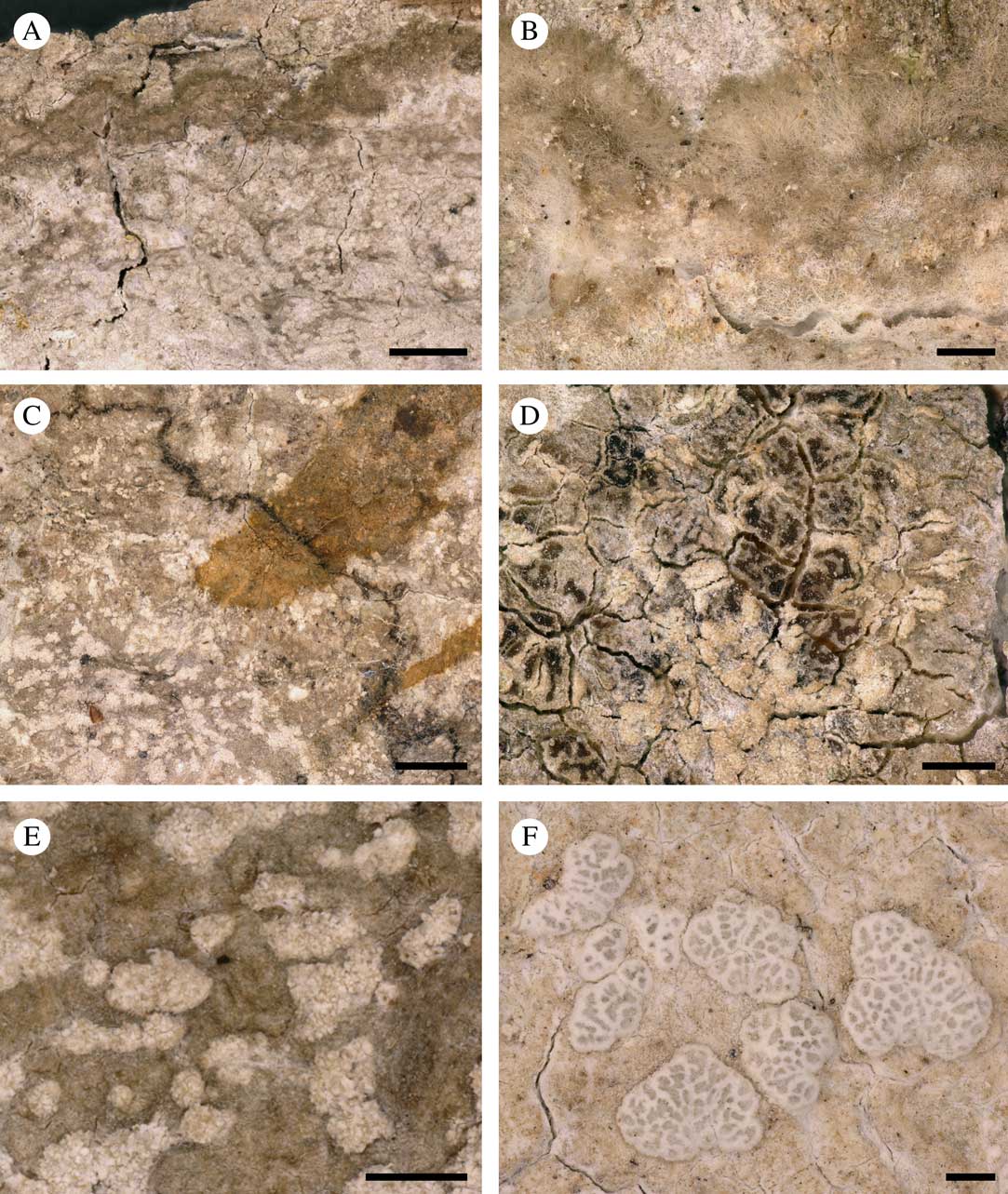
Enterographa sorediata Coppins & P. James is a crustose, corticolous lichen species confined to old-growth woodlands in the southern part of Great Britain (Sanderson Reference Sanderson2002). It is considered Near Threatened and a high priority species for biodiversity action plans (Woods & Coppins Reference Woods and Coppins2012). Enterographa sorediata is characterized by a pale grey or brownish grey thallus with rounded to elongate soralia, producing pinkish (when fresh), farinose soredia, and the production of protocetraric acid in the thallus (Coppins & James Reference Coppins and James1979; Sparrius Reference Sparrius2004) (Fig. 1). Since its description in 1979, the validity of the species has never been questioned despite its similar appearance to sorediate Schismatomma s. lat. species but which differ in chemistry and/or colour. The species was accepted in the revision of the genus by Sparrius (Reference Sparrius2004) and in the recent lichen flora of Great Britain and Ireland (Sanderson et al. Reference Sanderson, James and Dobson2009). In the original description, “immature or ? aborted” ascomata were reported, as well as “(?immature), 8–10×3–4 µm, 4-5 septate, fusiform, curved” ascospores (Coppins & James Reference Coppins and James1979). However, Sparrius (Reference Sparrius2004) examined the abundant type material and did not observe ascospores, despite the presence of immature ascomata similar to those of Enterographa crassa (DC.) Fée. Only the type seems to have had ascospores and most of the material collected since the description of the species is sterile or, when it does have E. crassa-like apothecia, no well-developed ascospores can be found (N. A. Sanderson, unpublished data).
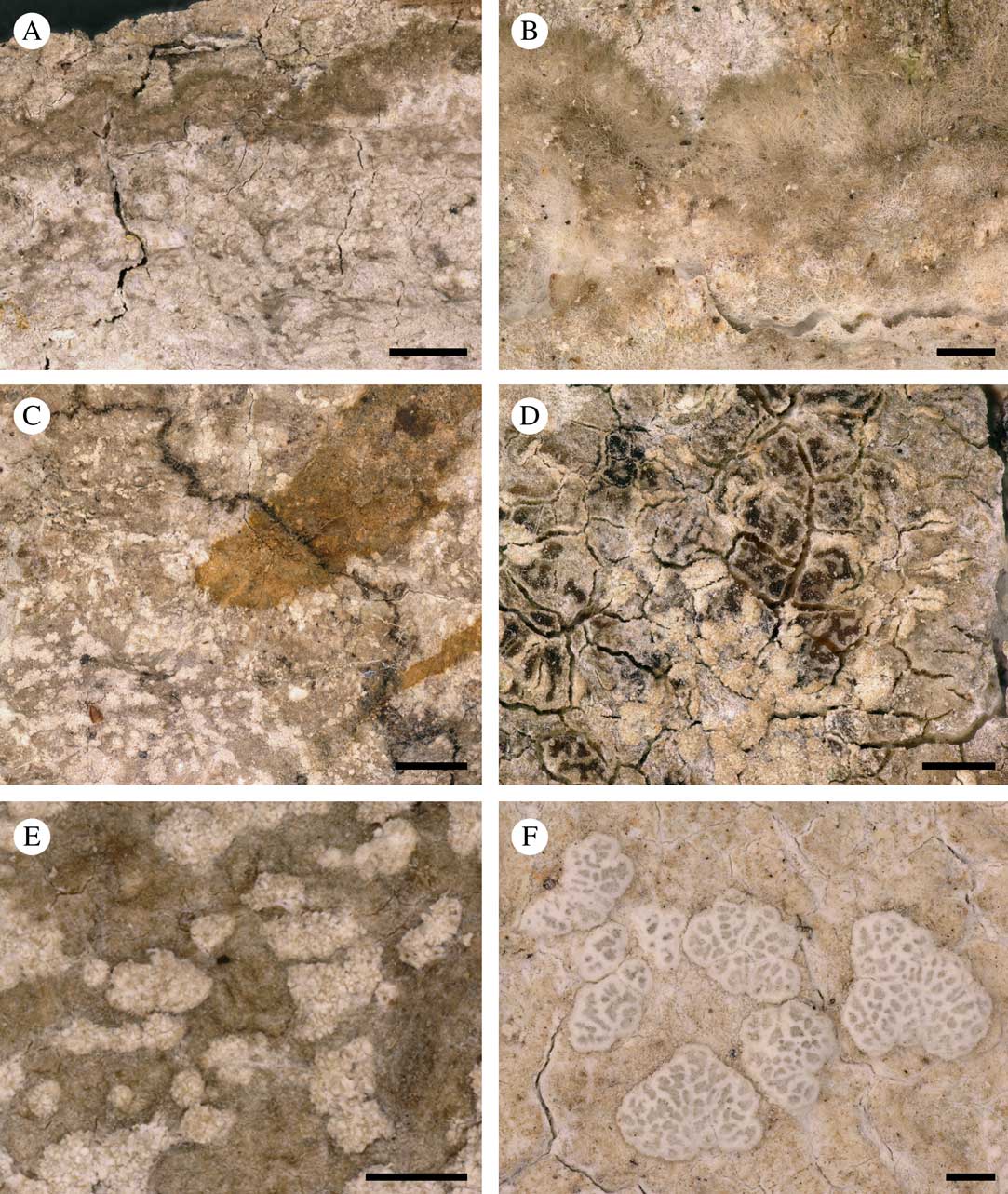
Syncesia myrticola. A, sorediate thallus with an easily discernible byssoid prothallus above, actively overgrowing other thalli (Sanderson 2181); B, byssoid prothallus (Sanderson 2238); C, sorediate thalli separated by a black borderline, and the darker areas correspond to an orange colouration due to the reaction with paraphenylenediamine (Sanderson 2238); D, thallus and ascomata of Enterographa crassa overgrown by a thin thallus of S. myrticola with soralia (Sanderson 2238); E, soralia (Sanderson 2201); F, ascomata (Ertz 16273). Scales: A & C=2 mm; B, D–F=0·5 mm. In colour online.
The present study originally aimed at verifying the generic position of Enterographa sorediata but will demonstrate that the species unexpectedly belongs to the genus Syncesia and is conspecific with S. myrticola (Fée) Tehler.
Materials and Methods
The external morphology was studied using an Olympus SZX12 stereomicroscope. Macroscopic photographs were taken with a Keyence VHX-5000 digital microscope and a VH-Z20R/W/T lens. Hand-cut sections of ascomata and thallus were mounted in water or in a solution of 5% potassium hydroxide (K) and studied using an Olympus BX51 compound microscope. Colour reactions of the thallus were studied using 5% potassium hydroxide solution (K), common household bleach (C), paraphenylenediamine (PD) and long-wave UV (366 nm). Lichen secondary metabolites were identified using thin-layer chromatography (TLC) in solvents B and G (Orange et al. Reference Orange, James and White2001). The extracts from Enterographa crassa (DC.) Fée, Lepraria membranacea (Dicks.) Vain. and Flavoparmelia caperata (L.) Hale were used as controls for confluentic, roccellic and protocetraric acids, respectively. We have not re-examined the type specimen of E. sorediata but detailed photographs are available on the data portal of the Natural History Museum (http://data.nhm.ac.uk/dataset/collection-specimens).
Molecular techniques
Well-preserved and freshly collected specimens of E. sorediata lacking any visible symptoms of fungal infection were used for DNA isolation. A small number of soredia were used for direct PCR as described in Ertz et al. (Reference Ertz, Tehler, Irestedt, Frisch, Thor and van den Boom2015). A targeted fragment of c. 1·1 kb at the 5′end of the nuLSU rDNA was amplified using primers LIC15R (Miadlikowska et al. Reference Miadlikowska, McCune and Lutzoni2002) with LR6 (Vilgalys & Hester Reference Vilgalys and Hester1990), a fragment of c. 1 kb of the RPB2 protein-coding gene was amplified using primers fRPB2-7cF and fRPB2-11aR (Liu et al. Reference Liu, Whelen and Hall1999), and a fragment of c. 0·6 kb of the nuITS rDNA using primers ITS1F and ITS4 (White et al. Reference White, Bruns, Lee and Taylor1990). The nuITS rDNA was also amplified for seven Syncesia specimens using DNA extracts available from Ertz et al. (Reference Ertz, Tehler, Irestedt, Frisch, Thor and van den Boom2015). The yield of the PCRs was verified by running the products on a 1% agarose gel using ethidium bromide. Both strands were sequenced by Macrogen® using amplification primers. The primer LR3 was also used for the sequencing of nuLSU (Vilgalys & Hester Reference Vilgalys and Hester1990; Vilgalys’ website, http://www.botany.duke.edu/fungi/mycolab). Sequence fragments were assembled with Sequencher version 5.3 (Gene Codes Corporation, Ann Arbor, Michigan). Sequences were subjected to ‘MegaBLAST’ searches to verify their closest relatives and to detect potential contaminations.
Taxon selection and phylogenetic analyses
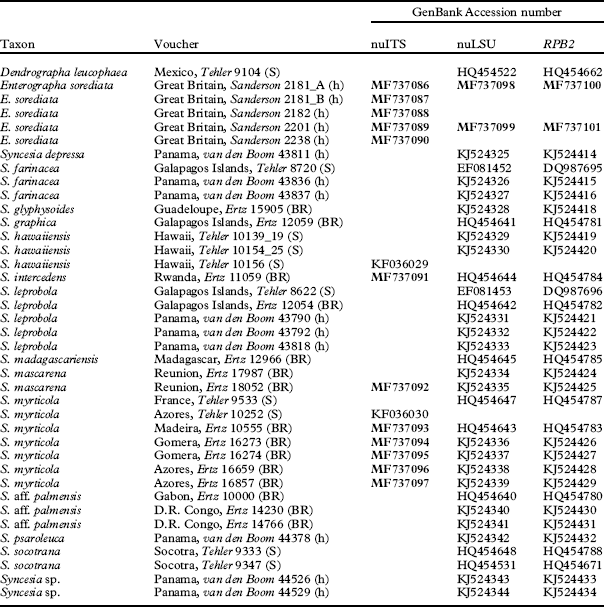
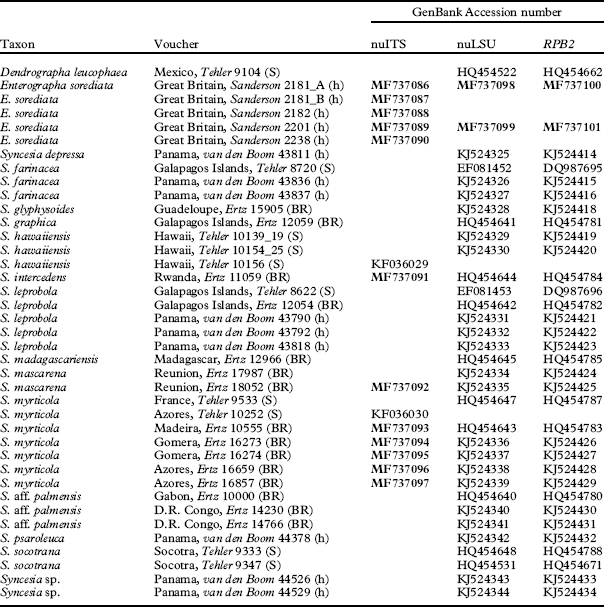
Because the closest relatives of E. sorediata based on ‘MegaBLAST’ searches were Syncesia species, 31 members of Syncesia for which the nuLSU+RPB2 sequences were available were selected from Ertz et al. (Reference Ertz, Tehler, Irestedt, Frisch, Thor and van den Boom2015) and their sequences retrieved from GenBank (Table 1). Dendrographa leucophaea (Tuck.) Darb. was chosen as outgroup. A dataset of 14 nuITS sequences was also assembled in order to verify whether E. sorediata differs from Syncesia myrticola. The sequences were aligned using MAFFT v6.814b (Katoh et al. Reference Katoh, Misawa, Kuma and Miyata2002) within Geneious and improved manually using Mesquite 3.04 (Maddison & Maddison Reference Maddison and Maddison2015). Terminal ends of sequences and ambiguously aligned regions were delimited manually and excluded from the datasets.
Specimens and DNA sequences used in this study, with their respective voucher information (h=private herbarium). GenBank Accession numbers in bold refer to sequences generated by this project
Bayesian analyses were carried out on the nuLSU+RPB2 and the nuITS datasets separately using the Metropolis-coupled Markov chain Monte Carlo (MCMCMC) method in MrBayes v.3.2.6 (Huelsenbeck & Ronquist Reference Huelsenbeck and Ronquist2001; Ronquist & Huelsenbeck Reference Ronquist and Huelsenbeck2003) on the CIPRES web portal (Miller et al. Reference Miller, Pfeiffer and Schwartz2010). Best-fit evolutionary models were estimated using Akaike Information Criterion (AIC; Akaike Reference Akaike1973) as implemented in jModelTest2 2.1.6 (Darriba et al. Reference Darriba, Taboada, Doallo and Posada2012). The GTR+I+G and the HKY+I models were selected for the nuLSU+RPB2 and nuITS datasets, respectively. For both datasets, two parallel MCMCMC runs were performed, each using four independent chains and 40 million generations, sampling trees every 1000th generation. Tracer v.1.6 (Rambaut & Drummond Reference Rambaut and Drummond2007) was used to ensure that stationarity was reached by plotting the log-likelihood values of the sample points against generation time. Posterior probabilities (PP) were determined by calculating a majority-rule consensus tree generated from 60 002 post-burn-in trees of the 80 002 trees sampled by the two MCMCMC runs using the sumt option of MrBayes. Posterior probabilities≥95 were considered to be significant. Phylogenetic trees were visualized using FigTree v.1.4.2 (Rambaut Reference Rambaut2012).
Results and Discussion
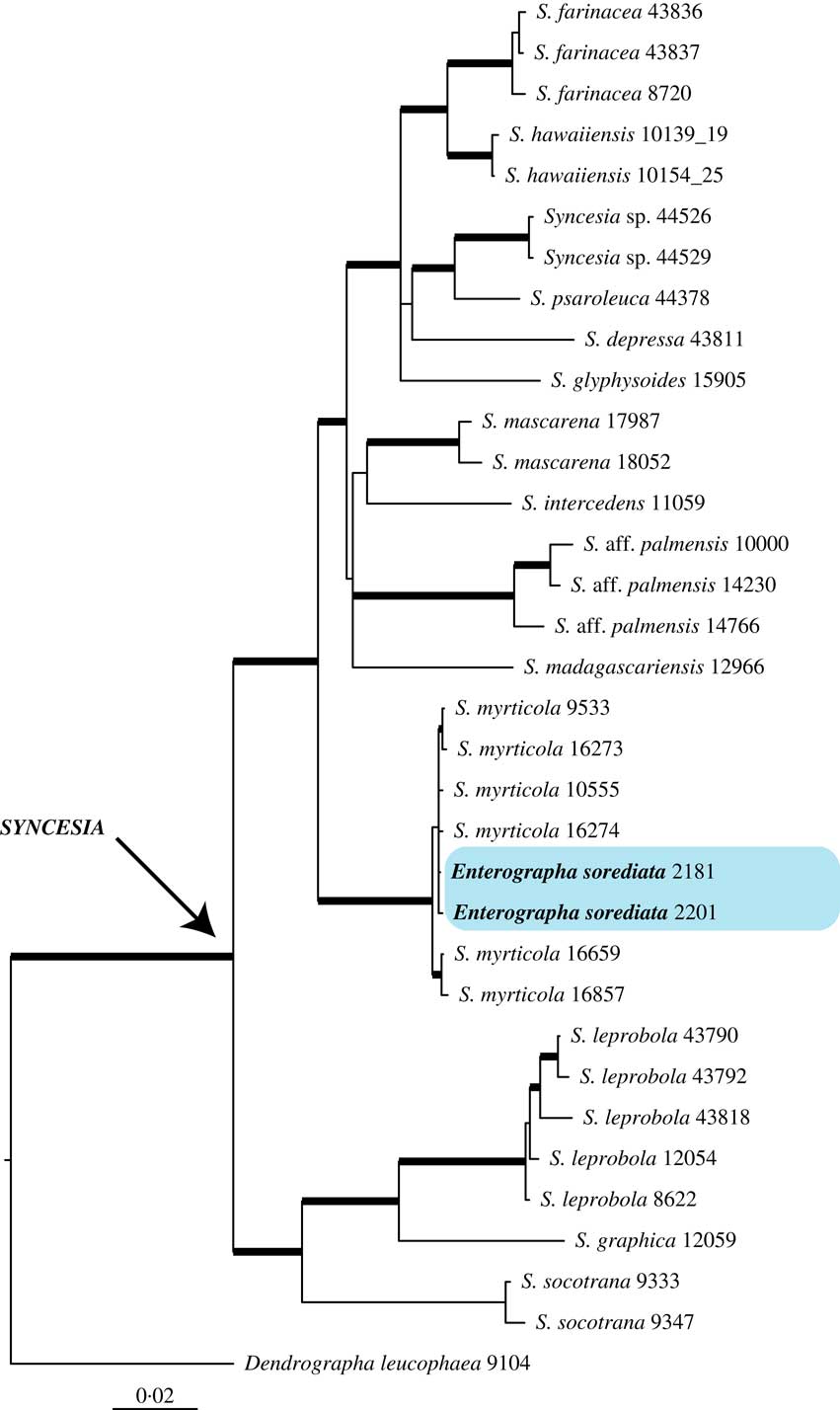
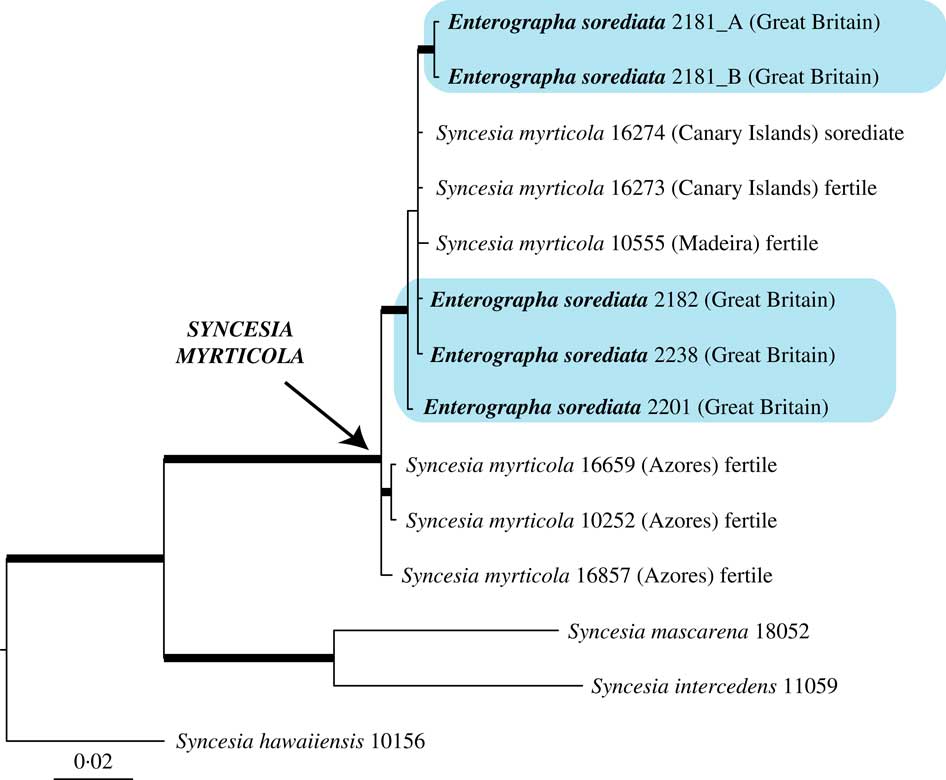
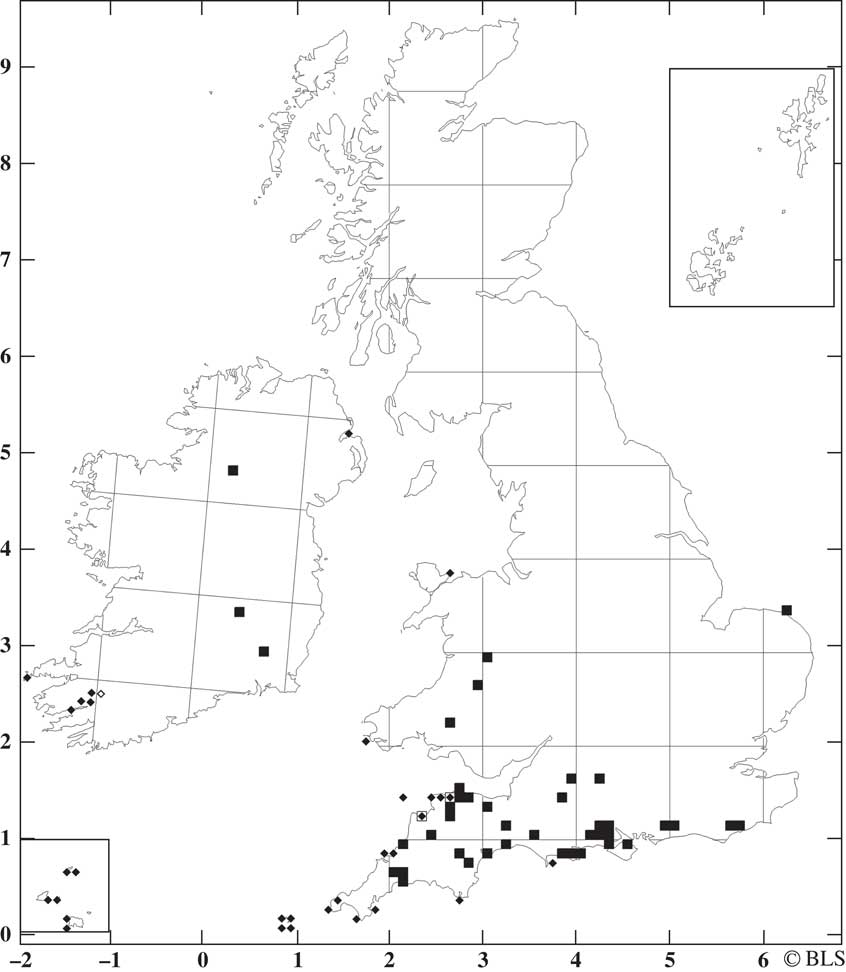
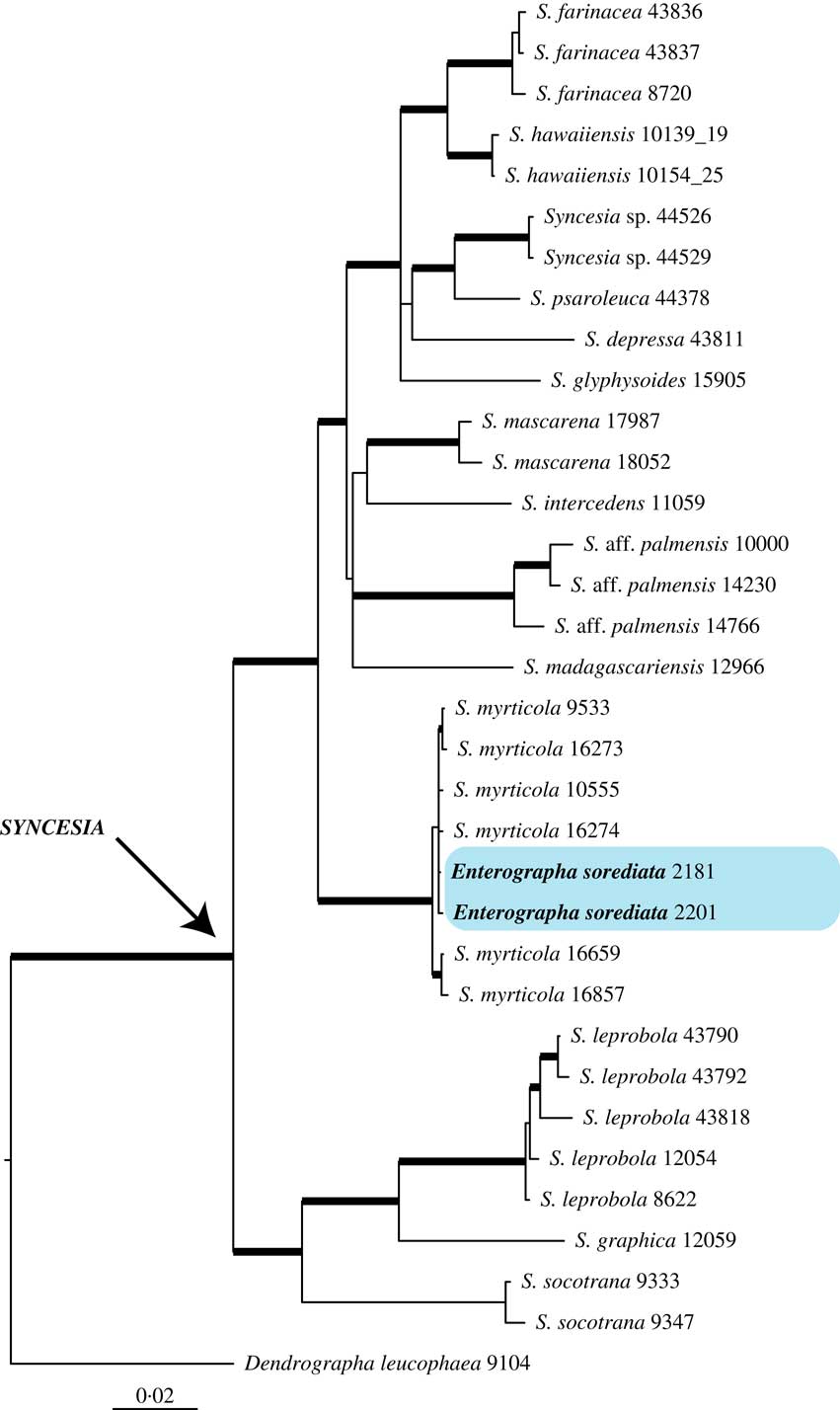
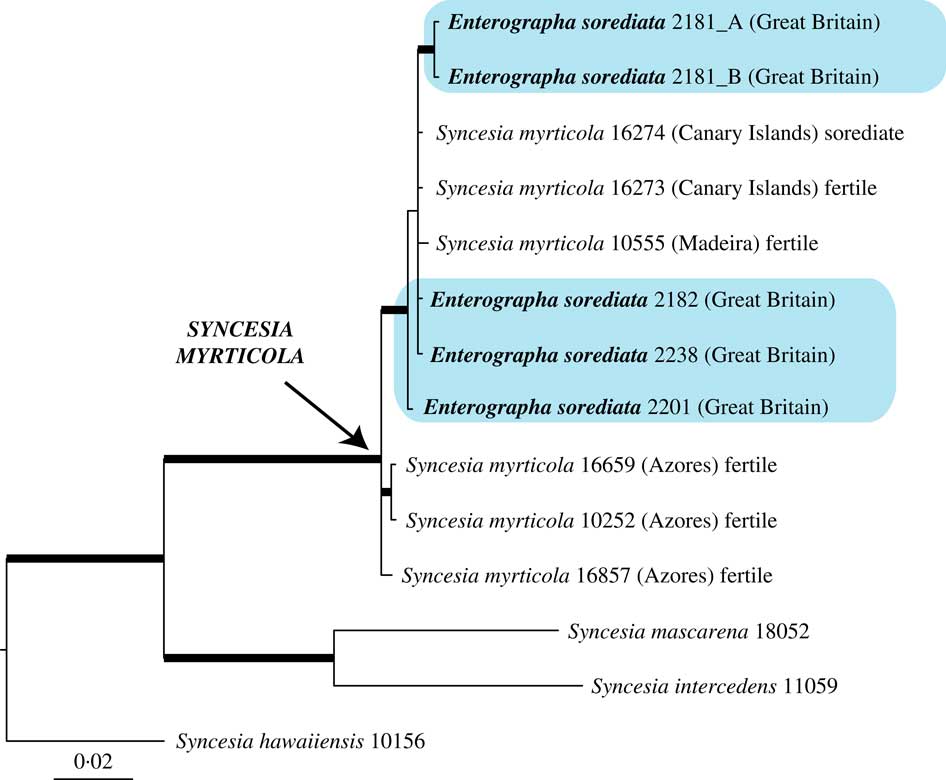
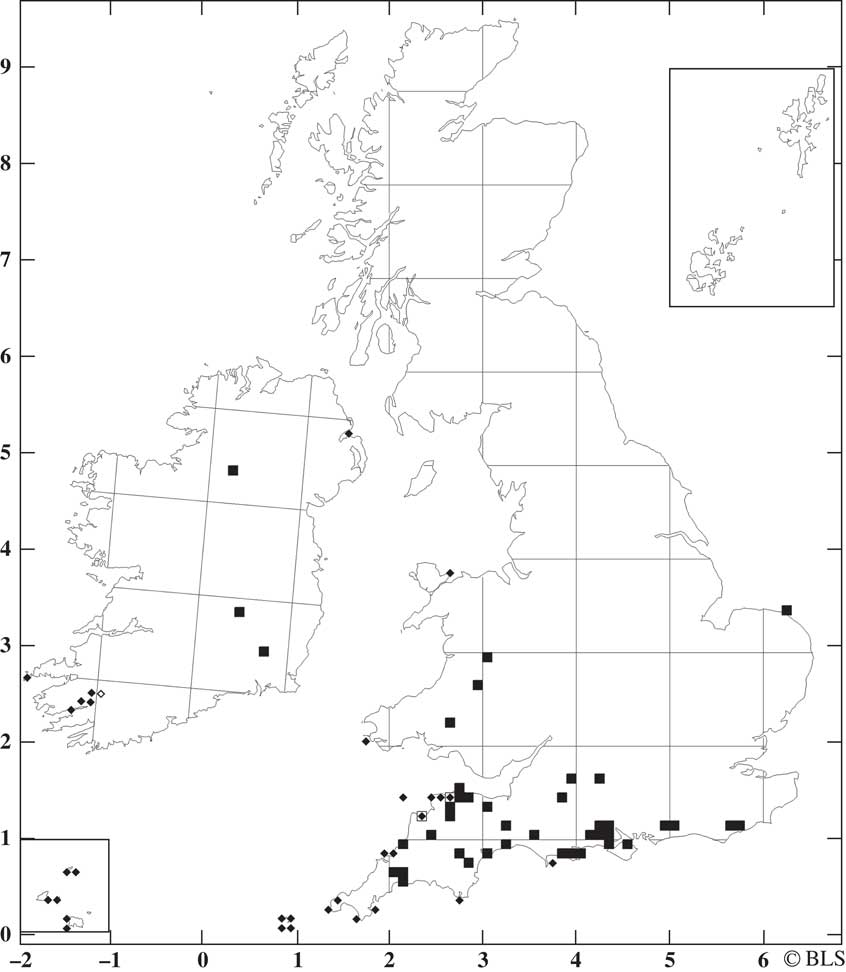
The nuLSU+RPB2 dataset consisted of 34 specimens and 1736 unambiguously aligned sites. The resulting phylogenetic tree (Fig. 2) surprisingly placed Enterographa sorediata within Syncesia, a predominantly neotropical genus of which 15 species (representing c. 70% of the genus) were recently sequenced in the framework of a phylogeny of Roccellaceae (Ertz et al. Reference Ertz, Tehler, Irestedt, Frisch, Thor and van den Boom2015). Enterographa sorediata is even nested within the clade of Syncesia myrticola, the generic type and the only Syncesia species found in Europe. In the north of its range, S. myrticola is present in south-west England, Wales and Ireland along the Atlantic coast, with a distribution extending southwards to the western Mediterranean area, the Canary Islands and the Azores, being confined to coastal habitats and growing on trees and rocks (Tehler Reference Tehler1997). While species circumscription in tropical Syncesia is still somewhat problematic, S. myrticola is phylogenetically well delimited with specimens forming a distinct well-supported clade within the genus (Ertz et al. Reference Ertz, Tehler, Irestedt, Frisch, Thor and van den Boom2015). Therefore, the phylogenetic results suggest that E. sorediata should be conspecific with S. myrticola. In order to verify the results with a more variable locus, we also sequenced nuITS (ITS1+5.8S+ITS2; Table 1) to generate a dataset consisting of 14 specimens and 597 unambiguously aligned sites. The resulting phylogenetic tree (Fig. 3) placed E. sorediata firmly into S. myrticola, leaving no doubt that both taxa are conspecific. This result is in agreement with the published chemistry, both taxa containing protocetraric acid. Roccellic acid is an additional compound present in S. myrticola and was not mentioned in the protologue of E. sorediata. This may be explained by the high likelihood that the TLC used for that paper (Coppins & James Reference Coppins and James1979) was probably carried out on an aluminium plate. Hence fatty acids would not have been detected. Our recent specimens of E. sorediata examined (viz. Sanderson 2201, 2181, 2182, 2238) all contain roccellic acid. The phylogenetic results are, however, in contradiction with the ascomata and ascospores reported for E. sorediata in the original description. Because S. myrticola easily overgrows neighbouring thalli of other crustose species (a byssoid prothallus often appears when the species is actively colonizing, such as in Fig. 1 A & B, but in longer established populations the prothallus is often no longer visible, being replaced by a dark brown to black borderline as in Fig. 1C), we believe that the immature or aborted ascomata and immature ascospores reported in the original description are those of Enterographa crassa overgrown by sorediate morphs of S. myrticola (Fig. 1). A TLC of the mixed specimen Sanderson 2238 (Fig. 1) notably revealed confluentic acid, the main substance present in E. crassa but absent in S. myrticola. Similar confusing mixtures were also recorded for Dendrographa decolorans (Turner & Borrer) Ertz & Tehler growing into E. crassa (Sanderson Reference Sanderson2002: 4, sub. Schismatomma decolorans). A thallus with both fully developed S. myrticola-like apothecia and soralia had been recently observed on an ancient Fraxinus during a biodiversity survey at Carrigawaddra, County Kerry, Ireland (Sanderson Reference Sanderson2016). The possibility of this being E. sorediata was discounted in the field owing to the presence of typical S. myrticola apothecia. A sorediate, non-fertile thallus of S. myrticola has already been published from the Canary Islands but the authors had not made any link with E. sorediata (Ertz et al. Reference Ertz, Tehler, Irestedt, Frisch, Thor and van den Boom2015). Since the DNA sequencing was carried out, a specimen of the sorediate morph has been collected in the New Forest from dry bark on an old Quercus with typical S. myrticola pycnidia and a developing apothecium. As a consequence, we lectotypify Enterographa sorediata on the sorediate thalli and suggest reducing E. sorediata into synonymy with S. myrticola. We provide an updated distribution map of Syncesia myrticola for Great Britain and Ireland, showing that the sorediate morph extends more inland whereas the fertile morph is more coastal (Fig. 4). The sorediate morph has a marked habitat specificity inland, being found almost entirely on the dry side of oaks (Quercus) that are more than 250 years old, with rare records from other ancient tree species such as Alnus (Sanderson et al. Reference Sanderson, James and Dobson2009) and a Fraxinus (recent field observations in Roydon Woods, a nature reserve adjacent to the New Forest). This dispersal strategy with a sterile soredia-producing morph is otherwise common in the Roccellaceae, as described in earlier papers (e.g. Tehler & Irestedt Reference Tehler and Irestedt2007; Tehler et al. Reference Tehler, Irestedt, Wedin and Ertz2010, Reference Tehler, Ertz and Irestedt2013).
Phylogenetic relationships within Syncesia using 33 samples based on a dataset of nuLSU and RPB2 sequences that resulted from a Bayesian analysis using MrBayes. Internal branches considered strongly supported (PP≥95) are represented by thicker lines. The newly sequenced samples, corresponding to Enterographa sorediata, are highlighted. Author collection numbers following the species names act as specimen and sequence identifiers (see Table 1).
Phylogenetic relationships within Syncesia based on a dataset of nuITS sequences that resulted from a Bayesian analysis using MrBayes. Internal branches considered strongly supported (PP≥95) are represented by thicker lines. The newly sequenced samples, corresponding to Enterographa sorediata, are highlighted. Author collection numbers following the species names act as specimen and sequence identifiers (see Table 1).
Distribution of Syncesia myrticola in Great Britain and Ireland (© BLS). Solid square=purely sorediate morph; solid diamond=purely fertile morph; open square with solid diamond=both purely sorediate morph and purely fertile morph; open diamond=fertile morph with soralia.
Syncesia myrticola (Fée) Tehler
Flora Neotropica, Monograph 74: 18 (1997).—Chiodecton myrticola Fée, Essai crypt. Écorc. 63 (1824); type: not seen.
Syn. nov.: Enterographa sorediata Coppins & P. James, Lichenologist 11: 40 (1979); type: Great Britain, Anglia, New Forest, Brockenhurst, Hollands Wood, on Quercus, 23 November 1976, F. Rose (BM—lectotype, sorediate thalli, designated here).
Sequenced specimens of ‘Enterographa sorediata’. Great Britain: England: V.C. 11, South Hampshire, New Forest SSSI: Busketts Wood, Great Stubby Hat, Grid Ref. SU30922 11185, in glade in pasture woodland, on dry bark on ancient Quercus robur, 2016, Sanderson 2181 (private herbarium); Busketts Wood, The Ridge, Grid Ref. SU31447 11281, in glade in pasture woodland, on dry bark on ancient Quercus robur, 2016, Sanderson 2182 (private herbarium); Bignell Wood, Grid Ref. SU28518 13346, Quercus-Fagus-Ilex pasture woodland, on acid bark on suppressed leaning Quercus robur, 2016, Sanderson 2201 (private herbarium); Allum Green, Grid Ref. SU27943 07798, Quercus in Fagus-Quercus-Ilex pasture woodland, dry bark of old Quercus robur, 2017, Sanderson 2238 & Cross (private herbarium).
The authors are indebted to Janet Simkin and the British Lichen Society for providing the distribution map of Syncesia myrticola. Cyrille Gerstmans and Wim Baert are warmly thanked for technical assistance.