WHY INDIA DESERVES MORE ATTENTION
In today's global economy, the prospects of individual countries are increasingly based on two parallel and mutually reinforcing pillars: quality and functional coordination of the various components of the local economic system and connectivity with the global system (Bathelt, Malmberg, & Maskell, Reference Bathelt, Malmberg and Maskell2004; Cano-Kollmann, Hannigan, & Mudambi, Reference Cano-Kollmann, Hannigan and Mudambi2018). The twentieth century ‘managerial economy’ was driven primarily by local systems, so differences in country outcomes were largely due to differences in their local systems and resources. However, in the twenty-first century ‘entrepreneurial economy’, the pillar of global connectivity, has become so crucial as to be indispensable (Audretsch & Thurik, Reference Audretsch and Thurik2001).
The Indian economy has many unique characteristics that continue to puzzle scholars and policy makers, especially when it is compared to the economy of the other Asian giant, China. Most scholars who study China agree that its local systems, especially its infrastructure (Fan & Zhang, Reference Fan and Zhang2004), developed in tandem with its global connectivity (Breslin, Reference Breslin2007). Thus, it repeats the pattern observed in advanced economies, albeit at a much faster pace. In contrast, India's development along these two dimensions has been quite unbalanced, and the reverse of the pattern observed in China (Huang & Khanna, Reference Huang and Khanna2003). The global connectivity of the Indian economy has proceeded apace, especially in the service sector – and particularly in knowledge-intensive services (Dahlman & Utz, Reference Dahlman and Utz2005), such as the IT, information technology enabled services (ITES), health care, and financial services. However, its manufacturing capabilities and physical infrastructure have lagged behind (Agrawal, Reference Agrawal2015).
China and India went through large political changes in the aftermath of World War II. In China, the Chinese Communist Party (CCP) won a protracted civil war that ended in 1949. Once in power, the CCP set up a one-party system that remains in place, albeit with some reforms, to this day. Two years earlier, India had won independence from Great Britain in 1947 through a largely non-violent struggle that lasted nearly half a century. In contrast with China, it set up a multi-party democracy. India's free democratic system became institutionalized and thrived, surviving some challenges over the decades. The country now organizes the largest political elections in the world with 900 million people going to the polls.
Even though they started from very different political systems, both India and China initially turned to socialism for ideas about how to run their economies. Both adopted five-year plans modeled after those in the Soviet Union, where they had been in use since 1928 and were credited with enabling rapid industrialization. Hence, both countries hoped that socialism and planning would help them achieve rapid economic growth. Both were disappointed.
In China, the failure of its socialist planned economy was exacerbated by large-scale political experiments. The country's ailing economy was one of the factors that strengthened the hands of the reformers within the CCP. In 1978, they launched a sweeping program whose main plank was the rolling back of government control of the economy. The reforms included allowing more private enterprise to help jump-start growth.
India, in turn, initiated reforms to liberalize its economy starting in 1991. To show how far India has moved away from socialist ideas, the government officially abandoned five-year plans after the 2012-2017 plan and dissolved the Planning Commission that created these plans. It replaced the commission with a new policy think tank called Niti Aayog. With a 15-year road map, Niti has started many initiatives to improve policies to nurture entrepreneurship, digital and physical infrastructure, and skills development. Niti Aayong is setting up numerous incubators across the country and launching a USD 1.5 billion fund of funds to nurture startups.Footnote [1]
A big challenge in India that differs from China's concerns demographics. In 2017 the population of India was 1.339 billion and that of China was 1.386 billion (World Bank, 2019b). But the population growth rate in China declined substantially because of the one-child policy that began in 1979, was modified in the mid-1980s, and finally ended in 2015. As a result, the proportion of young people steadily declined, which means that unless Chinese women start having more babies or the country attracts immigrants, the labor pool will shrink over time. Thus, China is challenged by the fact that its economic development cannot depend on the large cheap labor pool as it did previously. By contrast, India currently has a much higher proportion of young people who need to find first jobs. For this reason, the Indian government faces the urgent task of creating 10 million new jobs annually, which has proved challenging in recent years.
The CCP continues the practice of five-year plans even though most of the growth in the past few decades has come mainly from private firms. The CCP maintains its belief that the state has an important role in directing attention to aspirational goals, the realization of which depends on bottom up and top down trial and error experiments (Heilemann, 2018). The technological upgrading initiative that was first mentioned in the 10th FYP and lasted through the 11th and 12th FYPs is a recent example (Lewin, Kenney, & Murmann, Reference Lewin, Kenney and Murmann2016). Other recent initiatives include the development of sectors of the economy that are projected to play an important role in the future (e.g., supercomputers, artificial intelligence, and electric vehicles). The aspirational goal of becoming an innovation economy has led to increased investments in R&D since 2005 (Lewin et al., Reference Lewin, Kenney and Murmann2016). China now spends 2.11% of its gross domestic product (GDP) on R&D. In India, the government also accounts for a substantial share of R&D spending, but the corresponding figure is only 0.62% of GDP (World Bank, 2019c). In the US the figure is 2.74% of GDP (World Bank, 2019c).
The term ‘five-year plan’ might offer a misleading impression of what the Chinese government has been doing since 1978 – namely, conducting large economic experiments. These experiments started in the early 1980s with the creation of a special economic zone in Shenzhen, which aimed to imitate the capitalist success of Hong Kong. The Economist (2018) reports that ‘in 2010—two years before [President] Xi took over—around 500 policy-related pilot projects were being carried out at the provincial level, reckons Sebastian Heilmann of the University of Trier in Germany’, but by 2016 the number had dropped to about 70, which raises questions about how China will move from a middle-income to a high-income country.
In the past two decades, the Indian economy has performed well in terms of overall averages. Its GDP growth rate in this period has been 5% or more, one of the fastest rates in the world among major economies (World Bank, 2018). The country's poverty rate – based on the international poverty line of US$1.90 per day per capita (2011 purchasing power parity) – declined from about 40 percent in 2004 to 13.4 percent in 2015, whereas in China this rate fell from in 31.7 percent in 2002 to 0.7 percent in 2015 (World Bank, 2019a). Estimates by the World Poverty Clock (2019), an initiative funded by the German Federal Ministry of Education that draws on World Bank data, show that India has continued to improve its poverty rate since 2015. Thus, while India's GDP growth rate has lagged China's over the past 30 years, it has nonetheless grown at a sustained rate and lifted a large proportion of its population out of poverty.
India's economic growth since 1991 is driven primarily by two groups of firms. The first group consists of domestic firms that are members of business groups, particularly those that have taken advantage of the country's rising global connectivity to look abroad for knowledge, inputs, and markets (Kedia, Mukherjee, & Lahiri, Reference Kedia, Mukherjee and Lahiri2006; Mudambi, Saranga, & Schotter, Reference Mudambi, Saranga and Schotter2017). The second group consists of the subsidiaries of multinational enterprises (MNEs), mainly those that employ local highly skilled workers to service their global operations (Mudambi et al., Reference Mudambi, Saranga and Schotter2017). In this paper, we argue that the Indian entrepreneurship ecosystem was largely sparked by this second group of firms.
THE GENESIS OF THE INDIAN ENTREPRENEURSHIP ECOSYSTEM
Like almost everything about India, its entrepreneurship ecosystem is a study in contrasts. The outward orientation of its innovation system has generated a kind of dual economy, in which globally connected sectors have diverged from the inwardly focused sectors in terms of performance and outcomes. The globally connected campuses of MNE knowledge-intensive subsidiaries in Indian cities are virtually indistinguishable from their counterparts in the most advanced countries. But they exist cheek by jowl with appalling poverty. In spite of India's efforts at poverty reduction, as of 2019 about 48 million people still live below the international extreme poverty line of $1.90 per day (World Poverty Clock, 2019).
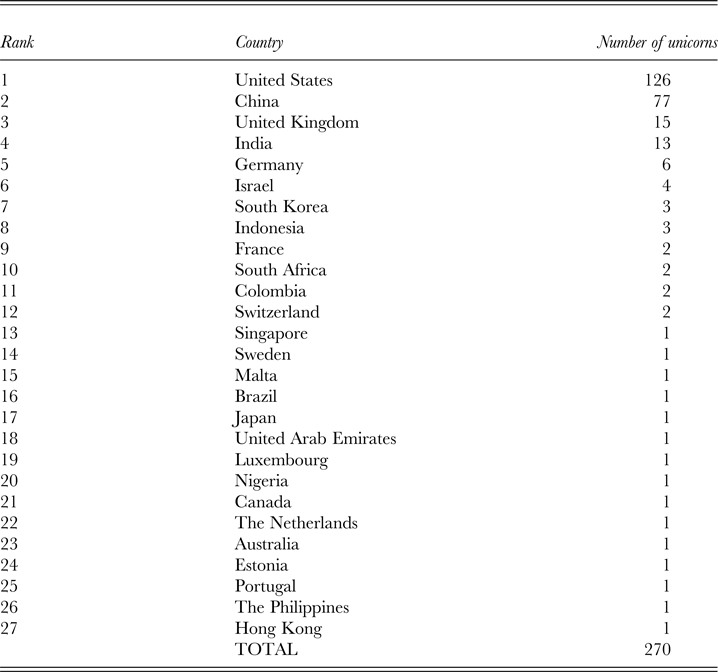
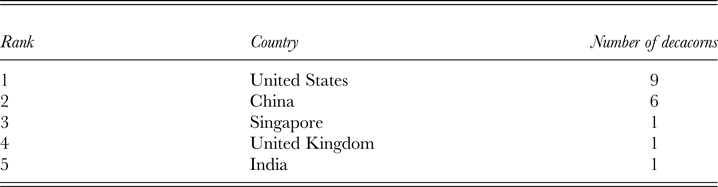
For several years, the number of tech startups in India (estimated at 7,200 to 7,700 between 2013 and September 2018) as well as the number of startups that have achieved substantial market capitalization, have increased rapidly (NASSCOM, 2018). India ranks fourth in the world in terms of the number of unicorns (startups that achieved a market capitalization in excess of US$1 billion) (Table 1). It ranks fifth in the number of startups that have achieved market capitalization in excess of US$10 billion (called decacorns) (Table 2). When startups reach this size, founders often become very wealthy. According to Forbes (2019), India currently has 106 billionaires with a total wealth of USD 405.3 billion. By comparison, China has 324 with a total wealth of USD 980.7 billion, and the US has 607 with a total wealth of USD 3.111 trillion. The entrepreneurship ecosystem is part of the broader economy to which it contributes and draws from.
Number of unicorns by country, August 2018

Note: Unicorns are companies with a market capitalization exceeding US$1 billion.
Source: CB Insights (2018).
Number of decacorns by country, August 2018

Note: Decacorns are companies with a market capitalization exceeding US$10 billion.
Source: CB Insights (2018).
While the above data reveal substantial growth in Indian innovation and entrepreneurship, this growth has been achieved despite systemic problems in the Indian economy. In particular, Indian enterprises face severe hurdles in terms of scaling up operations. Many of these scaling problems arise from serious shortcomings in India's physical infrastructure. For instance, as of 2018, India has built a mere 1,583 km in modern highways, in sharp contrast to China, which has built 142,500 km. A further indicator of India's backwardness in this dimension is that the country has no high-speed rail, whereas China has 29,000 km of track. These shortcomings hamper the ability of the country's entrepreneurial engine to lift millions more out of poverty (Narula, Reference Narula2015).
The Spark Provided by Foreign MNE Subsidiaries
The Indian economy opened to the world in 1991. The origins of the catch-up process can be traced to the establishment of foreign MNE subsidiaries in the IT industry in Bangalore, beginning with Texas Instruments in 1985. By the end of the twentieth century, virtually every major advanced-economy MNE was operating in the Bangalore cluster (Patibandla & Petersen, Reference Patibandla and Petersen2002). The Y2K phenomenon in the 1990s, in which (mainly) Western companies realized that they had to rewrite literally millions of lines of code, led to a sharp increase in the demand for the cost-effective services of these Bangalore-based subsidiaries.
Over time, the foreign MNE subsidiary cluster underwent what has been called ‘subsidiary evolution’ (Cantwell & Mudambi, Reference Cantwell and Mudambi2005), moving up the software development value chain from implementation and testing to design and post-production client support (Lewin, Massini, & Peeters, Reference Lewin, Massini and Peeters2009; Lorenzen & Mudambi, Reference Lorenzen and Mudambi2010). Undertaking complex tasks in a cost-effective manner influenced foreign MNE subsidiaries to increasingly outsource more routine components to local entrepreneurial firms (Prashantham & Yip, Reference Prashantham and Yip2017). Many of these local firms were spinouts led by enterprising former employees (Klepper & Sleeper, Reference Klepper and Sleeper2005), who understood the parent MNE's systems and culture. This systematic ‘spillover process’ led to the development of a thriving population of Indian startups that clustered like vines on the tree trunks provided by the MNE subsidiaries (Mudambi, Reference Mudambi2008). The spillover process that spawned the population of Indian startups ensured that the entrepreneurship hotspots (Bangalore, Delhi, Mumbai, Chennai, Hyderabad, and Pune) in the country were co-located with clusters of foreign MNEs, initially in the IT industry.
Two other processes arose to reinforce these spillover processes. First, Indian entrepreneurial firms began to use the valuable knowledge they had absorbed from their MNE partners to move up the value chain, developing and offering increasingly sophisticated services, generating ‘catch-up processes’ (Mudambi, Reference Mudambi2008). In so doing, they found higher value niches within global value chains (GVCs) (Parthasarathy & Aoyama, Reference Parthasarathy and Aoyama2006; Prashantham & Birkinshaw, Reference Prashantham and Birkinshaw2008). Second, falling global coordination costs, largely traceable to the steep decline in the cost of computing power, led smaller firms in advanced economies to take advantage of the services available in India in general and Bangalore in particular.
Bangalore as India's dominant entrepreneurial hub
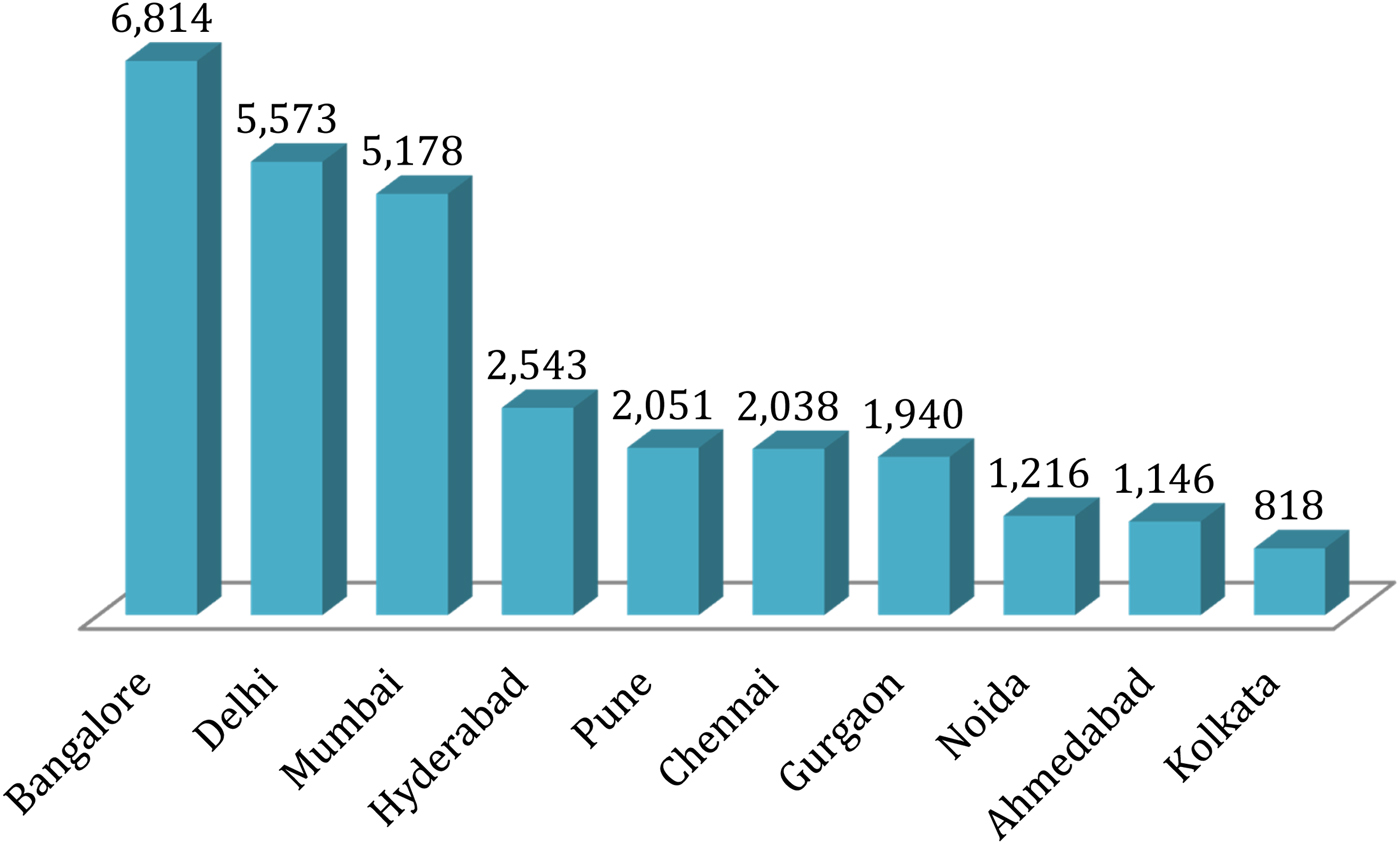
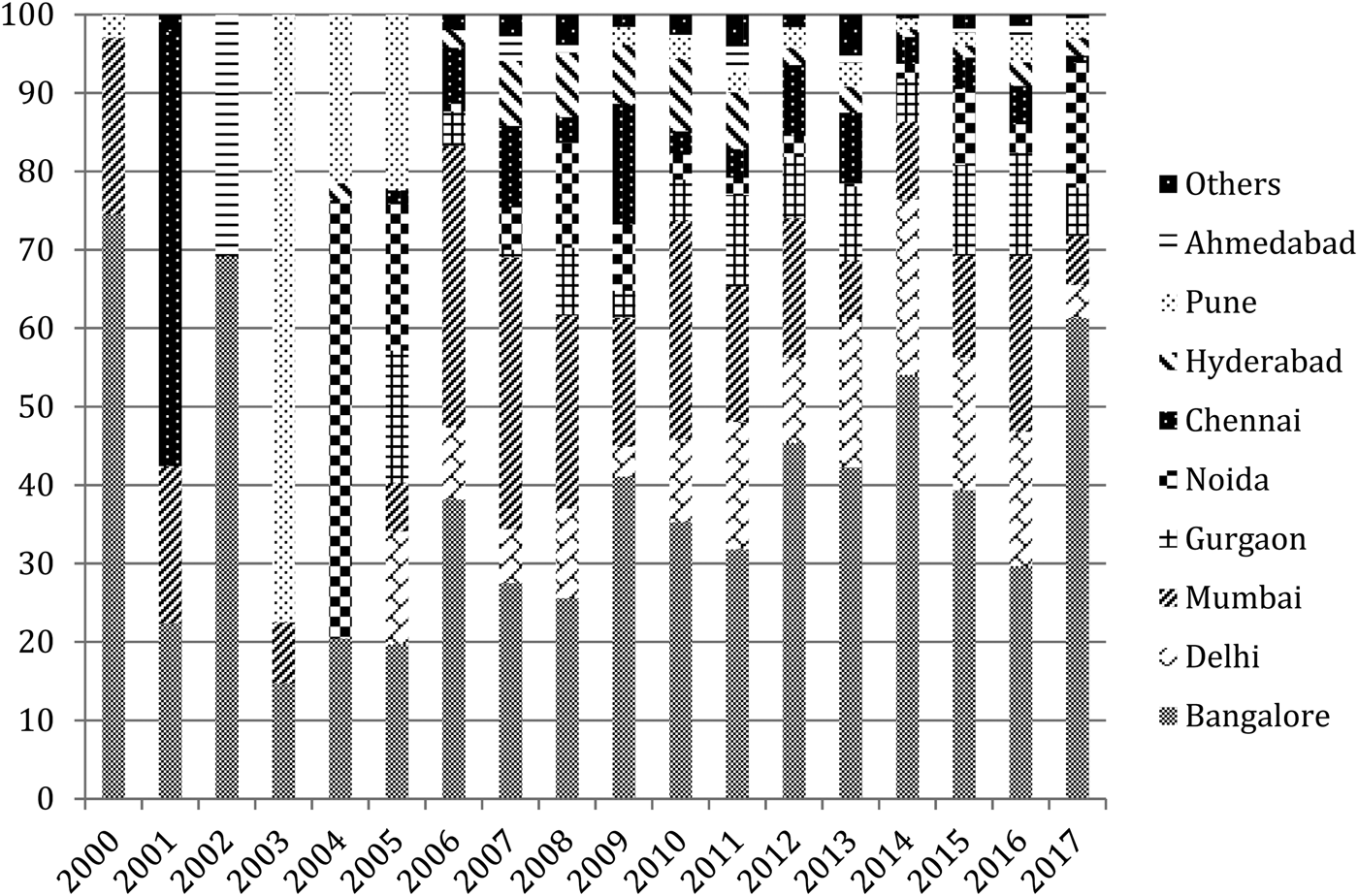
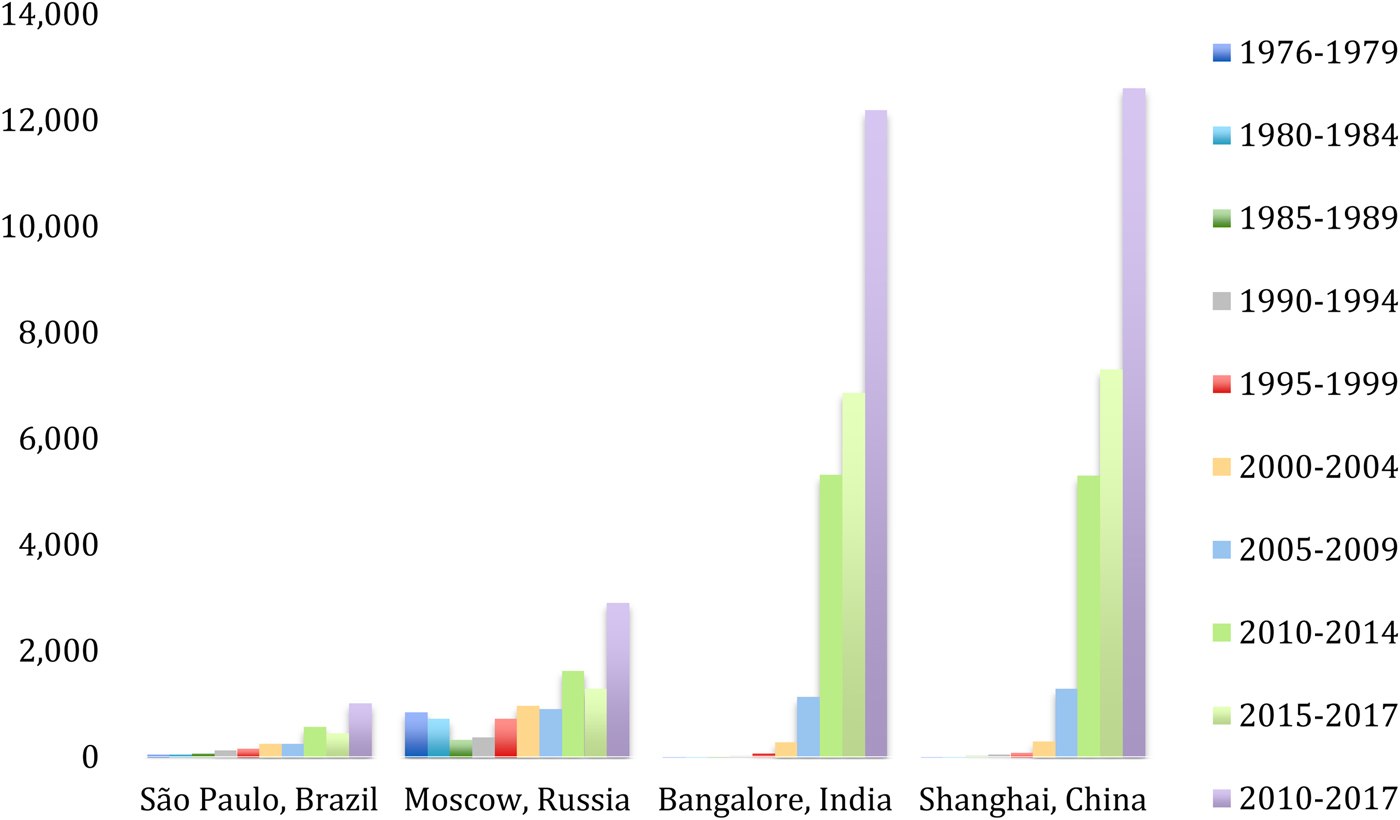
As the first major cluster of high-tech MNE subsidiaries, Bangalore became India's first knowledge hotspot and retains its dominance in the country's entrepreneurial landscape to this day (see Figure 1). However, vibrant entrepreneurial ecosystems have emerged in several other cities. The National Capital Region (Delhi, Noida, Gurgaon, etc.) is the second most active location for startups. Ever since the establishment of the T-Hub incubator in Hyderabad by the state government, the entrepreneurship ecosystem in that city has blossomed. In contrast, the country's commercial capital of Mumbai has lagged behind these newer centers. The spread of startups across cities in India is illustrated in Figures 2 and 3.
Cumulative number of startups in top 10 cities through 2018

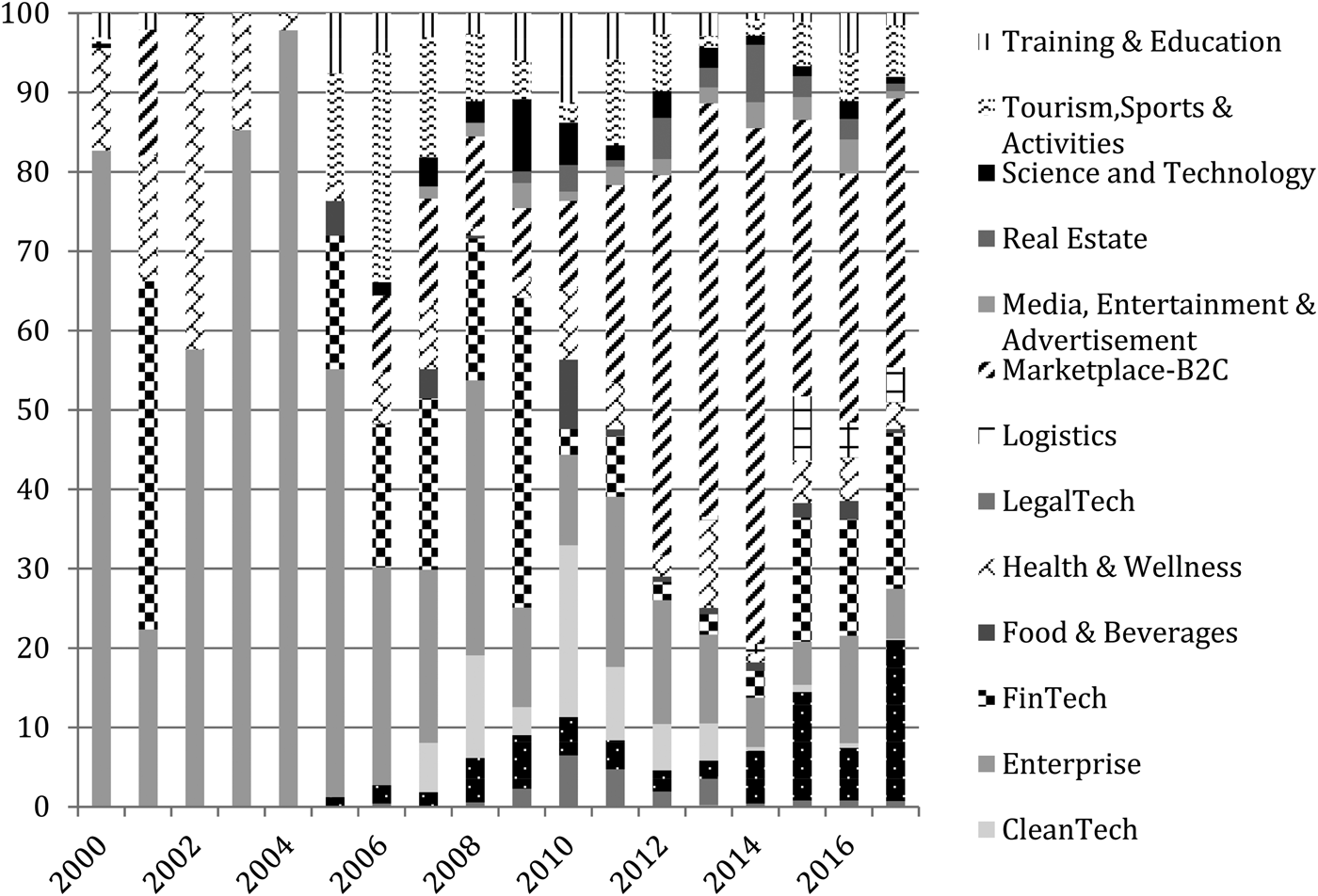
Industry-wise funding of startups in India by city, 2000–2017 (in percent)

Emerging market city patents, 1976–2017

As in the rest of the world, numerous Indian startups were established in the dot-com era. Only a few survived the subsequent meltdown. In any event, with very poor internet facilities and low credit card penetration, it would have been virtually impossible for internet-based businesses to grow. In the immediate post dot-com period (1999 to 2005), India had very few startups. According to Sabarinathan (Reference Sabarinathan2019), about 19 startups were funded by the top angels in India between 1999 and 2005, compared with 21 in 2006 and 16 in 2014. One of the main reasons could have been poor support for ventures because of the dot-com meltdown as well as an extremely buoyant job market due to the rapid growth of larger firms in the IT enabled services (ITES) sector.
The more recent startup developments are in sharp contrast to the IT and ITES ventures in earlier periods. Recent startups are more focused on addressing India's problems (inward facing) while most IT and ITES ventures in the earlier periods mainly related to global issues (outward facing). This change in perspective can be seen in ventures such as RedBus, which was one of the earliest startups to leverage technology to address one of India's major issues: bus ticketing. Before RedBus, it was virtually impossible to purchase bus tickets remotely. RedBus aggregated thousands of bus operators across the country and enabled the purchase of tickets across the country over the internet.
The start and subsequent popularity of RedBus, established by quintessential techies in their twenties, popularized startups as a career option once again. This was also the time when Web 2.0 (peer-generated content such as Wikipedia) was becoming popular, so starting a company did not require large amounts of funding. Events such as Proto attempted to create a platform to connect Web 2.0 entrepreneurs with angel investors. BarCamps and Startup Saturday created spaces for networking among the small entrepreneurial community to share knowledge.
The Indian entrepreneurial landscape was significantly changed by the cash-on-demand (COD) business model. Before the introduction of this model, e-commerce was restricted to the few who had credit cards, whereas COD enabled those without credit cards to engage in e-commerce. It was introduced by FlipKart, an e-commerce startup launched in 2007. After working at Amazon, the two co-founders of FlipKart decided to innovate the payment system mainly because they did not see any growth in online transactions. Although access to the internet as well as credit card penetration in India was high in large cities (and higher than it was in the dot-com era), customers were still reluctant to engage in transactions online. COD, however, enabled customers to pay from their home when the product was delivered. This model was not an entirely new concept. India Post had a service called Value Payable Post, which was a similar concept but failed to achieve widespread acceptance. Thanks to COD, online transactions on FlipKart increased by 30% in a very short period. This business model completely changed the perspective of India as a market. Because most of the business in India is conducted in informal markets,Footnote [2] ventures such as FlipKart were seen as instrumental in centralizing them. Thanks to a high level of investment, FlipKart and some of its clones were able to attract talent that had previously sought jobs at MNEs and their subsidiaries.
In recent years, investors have started to believe in India and invest heavily in local ventures, many of which were importing successful business models from elsewhere in the world. Uber was imitated by Ola, PayPal by PayTM, Yelp by Zomato, Monster by Naukri, and so on. By the time global players such as Amazon, Uber, and Monster entered India, these Indian counterparts were large enough to attract the attention of global investors such as Misoyashi Son and Jack Ma and compete successfully in local Indian markets. Because of this competition, some of these Indian startups (Zomato, Book My Show, Ola) not only have survived in India but have started to expand their operations to other parts of the world. An issue that many startups in India face is the shortage of suitable talent. One tactic that is becoming popular is the acquisition of smaller local companies by larger startups to gain access to their engineering and business talent. This trend is likely to have positive effects on the ecosystem.
After the establishment of a national startup policy, many ministries have started to support startups and provide grants for establishing incubators. The Department of Science and Technology alone has established over 140 incubators in many smaller cities (Surana, Singh, & Sagar, Reference Surana, Singh and Sagar2018). Many state governments are also designing new startup policies and incubators to support new ventures. Despite this startup growth across the country, Bangalore remains the main region for entrepreneurial talent. Many ventures with headquarters in other cities have development centers in Bangalore. MNE subsidiaries in Bangalore have been active in establishing accelerators, which now number about 17 (Goswami, Mitchell, & Bhagavatula, Reference Goswami, Mitchell and Bhagavatula2018). Some have accelerators located on their own premises, while other use the services of T-Hub, WeWork, and other coworking spaces for their accelerator programs.
THE RISE OF A GLOBALLY CONNECTED ENTREPRENEURAL/INNOVATION ECOSYSTEM
The Indian National System of Innovation
After 1985, even as Indian-based foreign MNE subsidiaries, along with their entrepreneurial suppliers, and other local firms,Footnote [3] moved up the value chain, their main strategy remained one of imitation and cost-based competition. In other words, while they engaged in sometimes rather complex tasks in GVCs, they mainly imitated processes that had been developed in advanced economies at lower cost. These have been called ‘output capabilities’ (Awate, Larsen, & Mudambi, Reference Awate, Larsen and Mudambi2012).
Evidence of true innovation capabilities in the Indian entrepreneurship ecosystem began to appear about two decades after the initial establishment of the Bangalore cluster, in interviews (Parthasarathy & Aoyama, Reference Parthasarathy and Aoyama2006) as well as in the more objective data presented here. Using the US patent record as the indicator of world-class innovation output, the first significant output from Bangalore-based inventors began to appear in about 2005 (Figure 3). Thereafter, the pace of increase has been nothing short of stupendous. Between 2015 and 2017, Bangalore-based inventors produced output roughly equal to their total production between 1975 and 2015.Footnote [4] Most of this production was in the IT sector, both hardware and software. However, the biopharmaceutical sector increasingly contributes to both innovation output and the startup population.
The Indian pharmaceutical industry has a long history, with some firms founded in the nineteenth century (Brandl, Mudambi & Scalera, Reference Brandl, Mudambi and Scalera2015) and foreign MNEs entering to sell drugs and drug formulations beginning in the early twentieth century. Throughout the post-1947 period, the sector experienced continual entry and expansion. This growth was spurred by the government's encouragement of the development of local drug manufacture through the production of generic drugs, i.e., the imitative reverse engineering of formulations of molecules developed in advanced countries. This ensured that the industry's innovation output remained so low as to be nonexistent, as local firms had no incentive to invest in innovation capabilities, and foreign firms were deterred from undertaking R&D in India.
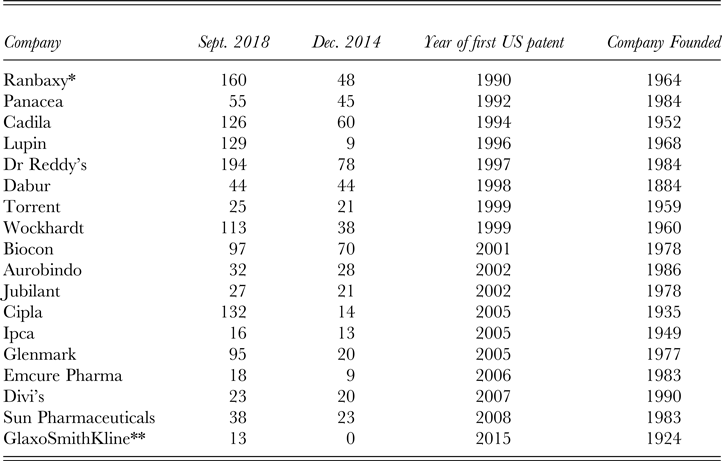
Beginning with government leadership at the Council of Scientific and Industrial Research (CSIR) in the 1990s, this sector transformed itself into a truly world-class innovation-driven constellation of large firms and startups (Brandl et al., Reference Brandl, Mudambi and Scalera2015). The spark in this case was the government's opening of the economy, culminating with its accession to the World Trade Organization's (WTO) Trade-Related Aspects of Intellectual Property Rights (TRIPS) in 1995. Between its founding in 1950 and 1993, the CSIR produced only 27 patents registered with the United States Patent and Trademark Office (US PTO). In contrast, between 1994 and 2015, it produced 540 (Brandl et al., Reference Brandl, Mudambi and Scalera2015). This generated a leadership and a demonstration effect that local firms followed, especially because they were now subject to the new TRIPS regime. The effect of this demonstration effect, reinforced by the new TRIPS regime, is clearly seen in Table 3, which shows a discontinuous change in the output of US patents around the mid-1990s.
The Indian pharmaceutical industry: US Patents

Notes: * Acquired by the Japanese MNE Dai-Ichi Sankyo in 2008, sold to the Indian firm Sun Pharma in 2014.
** Indian subsidiary of the global bio-pharma MNE headquartered in the UK.
Source: US PTO data and company annual reports.
We see a similar TRIPS-driven innovation pattern in wide range of Indian industries, from automotive to heavy electrical and construction sector. In the automotive sector, Mahindra & Mahindra transformed itself into an innovative global MNE with R&D facilities in Troy, Michigan, a suburb of Detroit. The firm was granted its first US patent in 2004, and by the end of 2018 it had been granted 61. Larsen and Toubro, an Indian MNE in the heavy electrical and construction sector, has also achieved significant innovation output.
Startups and Financing
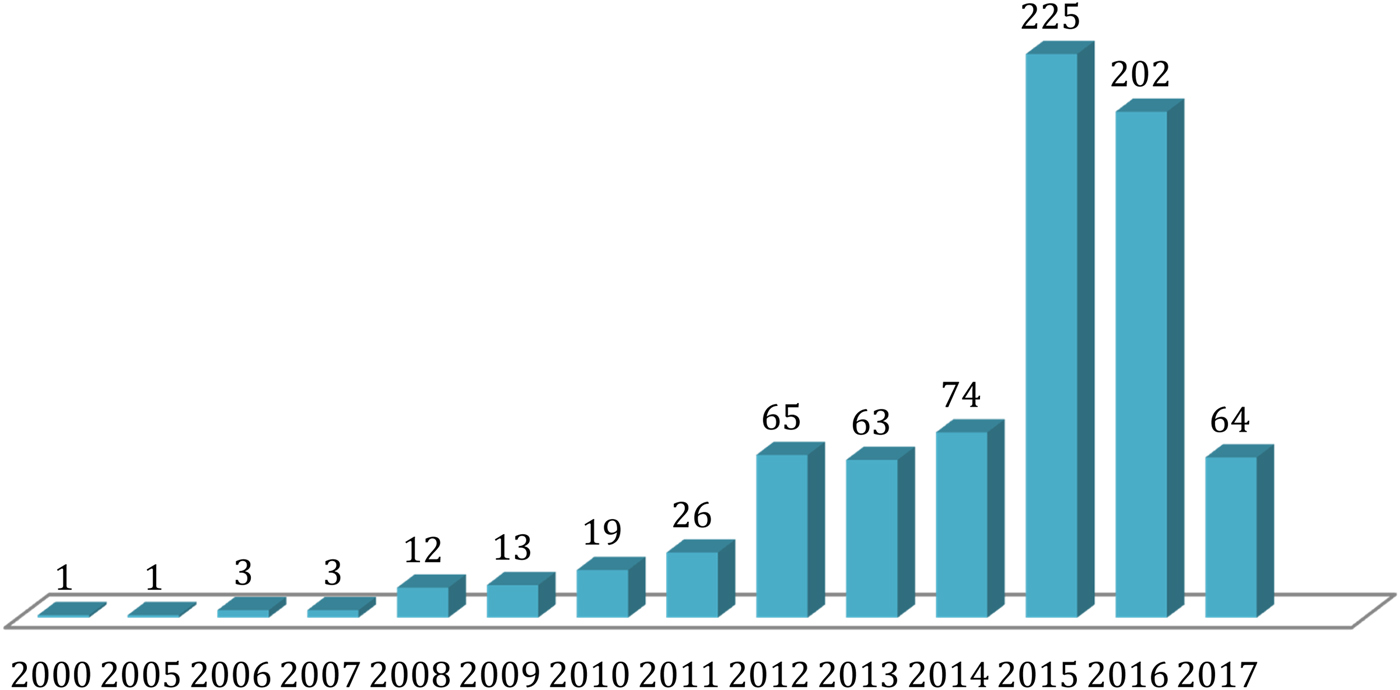
The Indian venture capital market is relatively young and remains in its infancy. Figure 4 shows the various rounds of VC funding that startups raised since 2000. Even in its short history, two inflection points can be identified: the first one around 2009 and the second around 2014. Lee Fixel of Tiger Global was in some ways responsible for the first inflection point, as one of the first to spot potential in India. He invested in JustDial, an investment that multiplied 20-fold when JustDial launched its IPO. Subsequently, he invested in most major Indian startups, including FlipKart, which went on to become the first unicorn in India. His investments in e-commerce and IT have played a significant role in raising India's profile as a potential market for goods and services. Before then, the Indian IT sector addressed problems in the Western world, primarily through the cost arbitrage model. This inflection point marked the beginning of India's attractiveness as a market for both national and international VCs (see also Mudambi et al., Reference Mudambi, Saranga and Schotter2017).
Angel investment in India by number of funding rounds

The second inflection point around 2014 was a surge in the volume of funding, brought about by events outside India. A report by Bain & Co and the Indian Private Equity and Venture Capital Association (Sheth, Singhal, & Taneja, Reference Sheth, Singhal and Taneja2014) noted that over US $10 billion was invested in Indian startups in 2013, a 16% increase over the previous year. One of the main reasons for the increase was the success of the Chinese firm Alibaba. While many investors in China and Japan consider India some years behind China in terms of the development and maturity of its economy, they expect its trajectory to follow that of its more advanced neighbor. Hence startups in India with business models similar to those of successful Chinese ventures began to receive more funding.
Figure 4 also shows the number of new startups receiving funds has started to decline, perhaps because investors are concentrating on backing unicorns such as Ola, Oyo, and InMobi through participating in larger funding rounds led by Chinese VCs, instead of directly investing in startups. In 2017, 97% of the $2.8 billion in Chinese investment went to just three unicorns: Ola, FlipKart, and PayTM mall. The trend continued in 2018, when 49% of the $1.7 billion in Chinese investment went to two unicorns, Zomato and PayTM (Poojara, Reference Poojara2018). Many in the Indian entrepreneurship ecosystem thought that the funding and the scale at which these well-funded startups operated was irrational. However, Walmart acquired FlipKart in 2018 for $16 billion, which provided some evidence that these Indian valuations were widely shared.
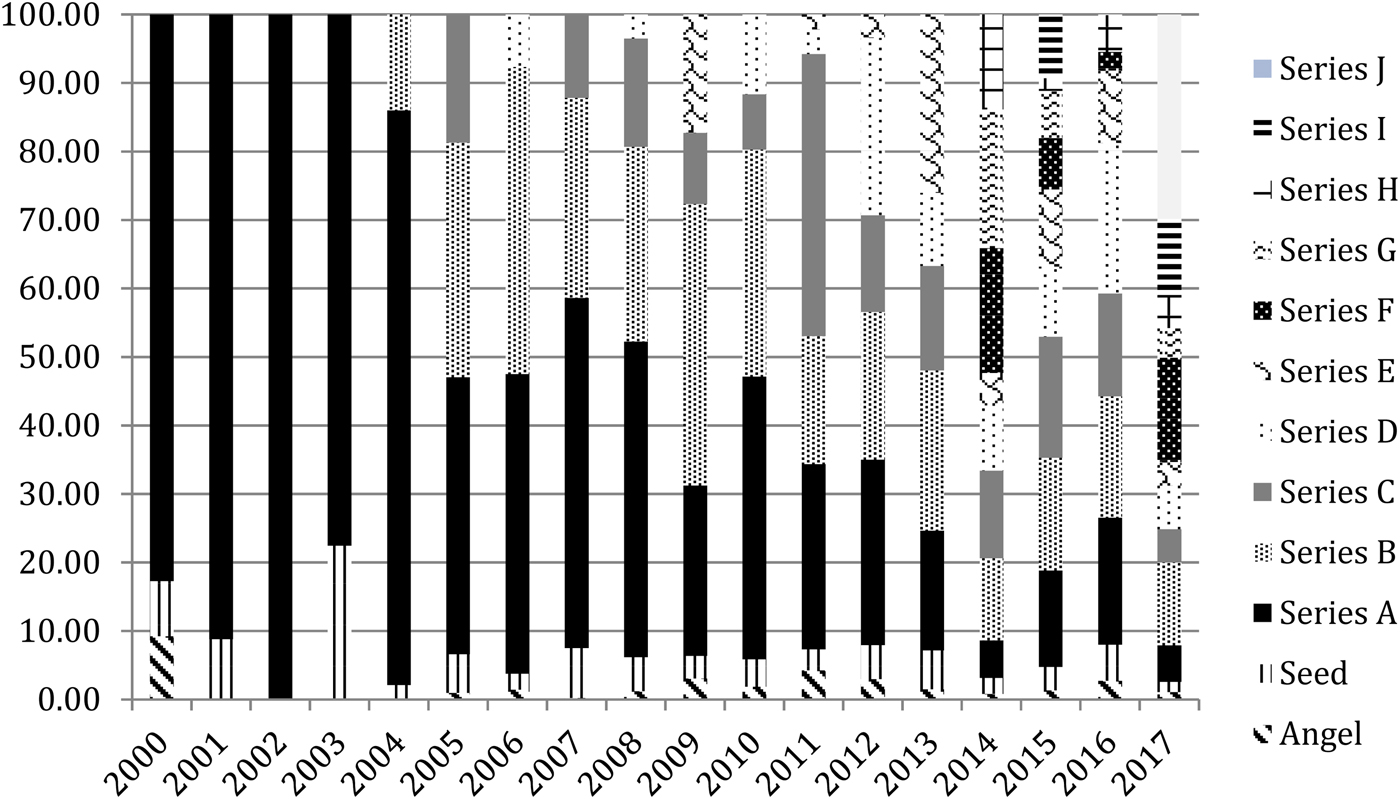
Figure 5 shows the percentage of invested funds by round between 2000 and 2015. Until 2004, most of the funds in India went into Series A funding (the first stage of VC financing). Beginning in 2005, a few startups raised Series C funding, the third stage of VC funding for young firms with a proven track record, typically aimed at building scale. Late-stage funding such as Series F and even H were raised only after 2013, indicating a significant change in the amount of funding received by startups in India. YCombinator recently announced that it would conduct interviews in India in summer 2019 to identify interesting startups (YCombinator, 2019). This will enhance the legitimacy of the startups that are selected and of the Indian entrepreneurship ecosystem as a whole.
Funding amount by round in India, 2000–2017 (in percent)

The entrepreneurship ecosystem in India is developing in many large cities. Based on the funding received by each city, around seven areas are receiving most of the funds (Figure 2). The National Capital Region around Delhi (Gurgaon and Noida) has emerged in the area outside Bangalore to receive the largest funding. Unicorns, such as Zomato, PayTM, Oyo, and Delhivery, are all located in and around Delhi. Several SaaS (software as a service) startups have emerged in Chennai. Zoho, which is a bootstrapped giant (its revenue is $300 million) operates from here. These new city-nodes in the Indian entrepreneurship ecosystem are beginning to show spinout activity, such as when Girish Matrubootham started FreshDesk after working for many years at Zoho. FreshDesk, which also operates from Chennai, is now a unicorn. These two large startups now form the nucleus of an ecosystem for other SaaS startups to emerge from this city. Mumbai, which is India's traditional business capital, does not have a large and thriving startup scene. However, it has great potential for growth, given that the nearby city of Pune has several large IT companies and a large population of engineers.
In the early years of the Indian entrepreneurship ecosystem (from 2000 to 2005), most startups that were funded were in the B2B (business-to-business) space, as can be seen in Figure 6. However, over time funding has shifted to startups in multiple industries. Startups in the automotive, education, tourism, and fintech sectors have received financing support. Health care also appears to be popular with investors. The B2C (business-to-consumer) space started receiving funds beginning in 2007. Given India's large population and the increasing penetration of the internet and smartphones, the B2C space is likely to be attractive in the future. Further, given the fact that India has a large informal sector, startups focused on logistics support have started to receive investment.
Funding amount in each sector, 2000–2017 (in percent)

The lack of funding support in some sectors is puzzling. India has a sophisticated film, media, and entertainment industry that has achieved global connectivity (Lorenzen & Mudambi, Reference Lorenzen and Mudambi2013). The country has a large number of scientists and engineers. However, ventures in media and entertainment and in science and technology do not seem to be receiving much support. Further, sectors such as food and beverage and real estate do not seem to be very attractive to investors.
Comparisons with China
Any discussion of Indian economic performance must benchmark it against its giant neighbor to the north. While the growth and performance of Indian performance has been strong along most dimensions, it lags corresponding achievements in China. India opened its economy to world about a decade later than China, and this head start may be one of the reasons for the current yawning gap between the two. However, when considering this ‘head start’, it is important to bear in mind that when China opened its economy in 1978, it was emerging from 10 years of the cultural revolution during which large parts of its economy were destroyed. Further, it is difficult to sort out whether British colonial rule and the institutional imprints it left independent India helped or hindered India's economic growth performance compared to China's one-party governance system.
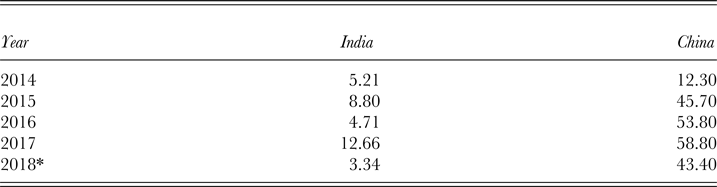
The Chinese entrepreneurship ecosystem, however, is both more mature as well as more focused than the Indian one. This corresponds to a smaller number of startups, along with a much higher success rate in terms of increasing scale (Tables 1 and 2). Not surprisingly, this gives China a significant advantage in terms of funding (Table 4). In 2018, funding for startups from all sources, both domestic and foreign, was over ten times higher in China than in India. Hence, China produces gigantic emerging economy MNEs (EMNEs) at a much higher frequency than India, and that trend is likely to persist well into the future.
Startup funding: India vs. China (US$ billion)

[Cited on 12 September 2018]. Available from URL: https://www.techinasia.com/china-startup-funding-set-to-smash-records-2018
Notes: * Through June.
Sources: Inc42, Indian Tech Startup Funding Report; Custer (Reference Custer2018). China startup funding on pace to smash records in 2018. TechiInAsia.com.
A MODEL OF INDIAN INNOVATION AND ENTREPRENEURSHIP
India has long been characterized as a dual economy that fits very well with the original Lewis model (Reference Lewis1954). The backward or ‘traditional’ sector consists of significant portions of agriculture along with small businesses in the informal sector. Domestic business groups and subsidiaries of foreign MNEs comprise the bulk of the advanced sector. Although migration of the large labor surplus from the backward sector to the advanced sector has been a feature of the Indian economy for at least a century, in recent years this flow has become a torrent involving literally millions of people.
The economy was highly regulated before 1991, but even during this period both groups of firms in the advanced sector brought in technology from advanced economies, albeit a generation or two behind the technology frontier. In the regulated period, their main objective was inward facing, that is, to serve the domestic market. Even before 1991, they did undertake significant investment ‘in activities demanding complex technologies, large-scale production and intensive management’ (Lall & Mohammad, Reference Lall and Mohammad1983: 143). The dual economy had a geographic dimension, in which the relatively advanced sector was primarily urban, whereas the backward sector was mostly rural.
This dualism has been exacerbated in the years following the opening of the economy in 1991. However, a very significant proportion of the internal migrants from the rural to the urban areas found higher paying jobs and saw their living standards rise rapidly, leading to a large expansion of the middle class. In the process, India's advanced sector has lifted millions out of poverty, an achievement that rivals China's in terms of reducing the extent of human deprivation. In the following discussion, we present a model consisting of three distinct but interlocking processes that together present an analytical picture of the innovation and entrepreneurship ecosystem that drives the advanced sector of the Indian economy.
Spillover Processes
MNE subsidiaries in India take two generic forms. The first, domestic market seeking, is exemplified by the operations of Hindustan Unilever, the subsidiary of the Anglo-Dutch MNE that has operated in India since 1933. In terms of traditional international business theory, this is a classic downstream-oriented market-seeking subsidiary (Dunning & Lundan, Reference Dunning and Lundan2008), whose spillovers to domestic competitors occur through several channels. These include: (a) demonstration effects; (b) co-operative upgrading of local suppliers of marketing services like advertising and logistics capabilities to manage of supply chains with a backward physical infrastructure; and (c) the labor market as when managers transition to employment in domestic competitors, taking valuable knowledge with them.
The second generic form is typified by the operations of information technology subsidiaries in Bangalore, that support the global R&D and client support of their parent firms. These upstream-oriented MNE subsidiaries have virtually no connection to the domestic economy other than through the hiring and employee retention function. They view India as a specialist base to service their global R&D and innovation networks. The lion's share of the significant patent output of the Bangalore metro area can be traced to the globally focused R&D efforts of these subsidiaries. In terms of international business theory, these are strategic asset-seeking subsidiaries (Dunning & Lundan, Reference Dunning and Lundan2008), whose spillovers to the domestic economy occur through supplier partnerships, labor market turnover to domestic competitors, and spinoff processes, when employees depart to launch their own startups, often serving as contractual suppliers to the employees’ former MNE employer (Klepper & Sleeper, Reference Klepper and Sleeper2005).
Catch-up Processes
Domestic firms in India had heterogeneous responses to the liberalization of the economy beginning in 1991. Leading firms viewed the new policy regime as an opportunity and aggressively partnered with advanced-economy MNEs, typically with their subsidiaries, taking advantage of the resulting knowledge spillovers to upgrade their capabilities. Lagging firms viewed liberalization as a threat and lobbied the government to delay or derail its provisions. In the event, many of the leading firms survived and thrived, while the lagging firms, by and large, disappeared (Kumaraswamy, Mudambi, Saranga, & Tripathy, Reference Kumaraswamy, Mudambi, Saranga and Tripathy2012).
Beginning as partners of MNE subsidiaries, many of the leading firms upgraded their capabilities, a variant of the ‘learning by supplying’ paradigm (Alcacer & Oxley, Reference Alcacer and Oxley2014). As they upgraded and were viewed as more of a competitive threat, these partnerships often dissolved with one party buying out the other. Alternatively, domestic firms that grew beyond this initial cooperative phase, hit a ‘glass ceiling’, beyond which their partners would no longer support their upgrading efforts. If further progress occurred, it often occurred through the Indian firm acquiring knowledge-rich targets in advanced economies (Awate, Larsen, & Mudambi, Reference Awate, Larsen and Mudambi2015). The eventual outcome of catch-up processes is the rise of EMNEs. Major Indian giants such as Infosys, TCS, and Bharat Forge all got their start as partners/suppliers of MNE subsidiaries in India.
The Analytical Model
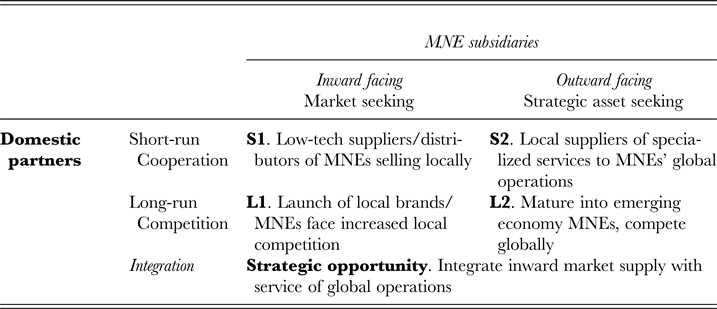
Catch-up and spillover processes are symbiotically related, complementary and are both either inward- or outward-facing (Awate et al., Reference Awate, Larsen and Mudambi2012; Fu, Pietrobelli, & Soete, Reference Fu, Pietrobelli and Loete2011; Kumaraswamy et al., Reference Kumaraswamy, Mudambi, Saranga and Tripathy2012). Putting the spillover and catch-up processes together yields the model summarized in Table 5. The model illustrates cooperative processes in the short run that lead almost inevitably to competitive processes in the long run.
Advanced-economy MNEs and local ventures’ spillover and catch-up

MNEs that serve the Indian market have local partners as suppliers or distributors. These cooperative relationships were in place for decades, as the economy grew very slowly (less than 4 percent per year) between independence in 1947 and the opening of the economy in 1991 (Mukherji, Reference Mukherji2009). This more-or-less fixed pie was conducive to stable, cooperative relationships. Domestic firms could not justify investing significant resources in upgrading activities, thereby risking their MNE relationships, in such a slow growing market.
However, this all changed in the post-1991 period. As the economy began to grow much more rapidly, domestic firms’ expectations of gains from upgrading continually increased. Hence, existing Indian firms with MNE subsidiary relationships (boxes S1 and S2 in Table 5) were encouraged to invest in R&D and innovation. Over time, this inexorably led them into competition with their erstwhile partners. The inward-facing MNEs faced new competitors, who developed competing products and services aimed at the domestic market, often with better local fit and lower cost (movement from S1 to L1 in Table 5). The outward-facing MNEs that serviced their global operations from India found new competition from new Indian EMNEs that had moved up to value chain (movement from S2 to L2 in Table 5).
Spillover processes also spurred domestic ventures. As the domestic market expanded, it gave rise to new and profitable niches that were well suited to small, entrepreneurial firms. Often these firms began by collaborating with MNE subsidiaries to enhance their products and services, either locally (S1 in Table 5) or globally (S2 in Table 5) (Prashantham & Birkinshaw, Reference Prashantham and Birkinshaw2008). Over time, many of these entrepreneurial firms became engaged in catch-up processes. Increasingly, entrepreneurial startups are launched to compete directly with advanced-economy MNEs (directly into L1 and L2 in Table 5), emulating knowledge-based entrepreneurial activity in advanced economies. Examples of such entrepreneurial firms are FlipKart, which was in direct competition with Amazon in India, and Ola, a competitor with Uber. SaaS firms, such as FreshDesk and Zoho, are competing with global players, such as SalesForce and Google. Zomato, a restaurant discovery and delivery startup, competes in the same space as Yelp; it now operates in 24 countries and is a top app in 19 of them.
Finally, some leading advanced-economy MNEs are beginning to realize that the disjointed inward- and outward-facing strategies inherent in the model in Table 5 are suboptimal. They are recognizing that integrating local and global strategies (the strategic opportunity in Table 5) offers the greatest promise to develop long run competitive advantage in the rapidly growing Indian market (Mudambi et al., Reference Mudambi, Saranga and Schotter2017).
This integrated strategy is made up of two parts. The first part involves leveraging the advanced capabilities in outward facing local subsidiaries to also develop products and services for the local growing middle class. In the second part, the locally created solutions developed to serve a large, geographically dispersed domestic population with a rudimentary physical infrastructure can be deployed in other emerging economies. This integration takes advantage of locally available sophisticated human capital and spreads the fixed costs of advanced operations over global sales. This can make up for the fact that the purchasing power of the Indian middle class is still too small to support the scale necessary for the efficient delivery of many products and services. This opportunity is also available to domestic firms.
However, implementing these integrated strategies is a difficult task that calls for high-level boundary-spanning capabilities (Schotter, Mudambi, Gaur, & Doz, Reference Schotter, Mudambi, Doz and Gaur2017). All three types of firms – advanced-economy MNE subsidiaries, large domestic firms, and domestic entrepreneurial startups – increasingly use members of the large Indian diaspora in a targeted manner to implement this boundary-spanning function. These individuals often have the cross-cultural as well as cross-organizational knowledge to bridge the divide between inward market-supplying and outward global-servicing operations.
THE FIVE CONTRIBUTIONS TO THIS SPECIAL ISSUE
The five articles in this Special Issue cover a variety of phenomena connected with the innovation and entrepreneurship ecosystem in India. Collectively, the articles paint a variegated and nuanced picture of the Indian innovation and entrepreneurship landscape. The first two investigate the role of clusters in accelerating innovation. The next article focuses on how academic incubators in India differ from Western models. The fourth contribution investigates the knowledge acquisition strategies of Indian pharmaceutical firms and the export performance of the Indian pharmaceutical industry in the face of a changing innovation ecosystem. The fifth and final article focuses on how connections to other agents in society and the economy enhance the legitimacy of international new ventures (INVs) in India and other emerging economies. The articles differ in their methods: three are mainly empirical (articles 1, 2, and 4), employing descriptive statistics, interviews, network analyses, and community discover tools, and two (articles 3 and 5) aim to make theoretical contributions.
The first article, ‘How Early Entrants Impact Cluster Emergence: MNEs vs. Local Firms in the Bangalore Digital Creative Industries’, by Lorenzen (Reference Lorenzen2019), presents an original exploratory analysis of the emerging digital creative industries (DCI) cluster in Bengaluru. Firms in the industry create animations, video special effects, and electronic games. The DCI innovation system is becoming global and a fundamental question for laggard countries such as India is how it can compete with the highly capable MNEs from advanced economies. The article relies on a manually collected dataset of entrants to the DCI cluster by MNEs and local Indian firms. Like a detective, Lorenzen (Reference Lorenzen2019) pieces together the emergence of the DCI cluster using multiple primary and secondary sources, including 19 extensive interviews with key players. The principal finding of the article is that MNEs develop production and innovation capabilities rapidly and in narrow parts of the value chain but that their activities have very little local spillover to other firms. By contrast, local firms develop these capabilities much more slowly, but they also involve broader portions of the value chain. Most importantly in terms of policy, local firms have much more knowledge spillover than MNEs, and local firms have higher participation in building a local entrepreneurial system. But local firms clearly benefit from being connected to sources of knowledge around the world even though their connections to MNEs within the cluster are not as strong as might be expected.
As mentioned earlier, Bengaluru is a key innovation hub in India, sometimes referred to the Silicon Valley of India (Arora & Gambardella, Reference Arora and Gambardella2005). The contribution by Turkina and Van Assche (Reference Turkina and Van Assche2019), ‘An Anatomy of Bengaluru's ICT Cluster: A Community Detection Approach’, systematically investigates the anatomy and structure of the information communications technology (ICT) cluster in the region using a variety of analytical methods, including a voltage-based algorithm – a tool for community discovery that that is relatively novel in regional studies. The article is based on a hand-collected dataset of 1,823 firms from different sources. The key analytical method used in the article is to distinguish horizontal ties between firms (these ties connect firms at the same level of the value chain) and vertical ties between firms (these ties connect firms across different levels of the value chain). We want to highlight a few of the interesting findings from the study. The horizontal network in the Bengaluru ICT cluster turns out to be decentralized and shows a number of distinct technological communities within which firms cooperate strongly. The vertical network is centralized around key firms and a few key topological clusters. However, the core firms in both types of networks are organized around key global technological leaders, Autodesk and IBM in horizontal networks and HP and Dell in vertical networks. The peripheral companies tend to be local Indian firms. The most important lesson for regions in other emerging economies that want to upgrade their technological capabilities is that the Bengaluru ICT cluster is no longer focused just around firms that innovate in software-related technological fields but now also focuses around firms that innovate in communications technology and electronic devices. Precisely how this came about is an important area of future research.
In their contribution, ‘The Institutional Context of Incubation: The Case of Academic Incubators in India’, Narayanan and Shin (2019) theorize on the differences between academic incubators in India (estimated to number from 120 to 140) and Western models. Previous theoretical work on incubators identify market failure as the key reason for the emergence of such incubators. Narayanan and Shin (2019) argue that this Western theoretical framework for the emergence and success of incubators in developed market economies is inadequate for understanding the reasons for the emergence of incubators in transforming countries such as India and what is required for incubators to succeed in stimulating entrepreneurship, especially among university graduates and other young people. Building on Scott's (Reference Scott2008) framework of institutional analysis, Narayanan and Shin (2019) explain that many assumptions taken for granted about the existence of regulatory, normative, and cultural-cognitive elements are carried over from Western countries to emerging economies. This implies that the functioning of incubators in emerging economies will depend on alternative processes and institutional features to make up for the absence of Western institutional characteristics, such as strong intellectual property regimes and clear bankruptcy laws. The implications of Narayanan and Shin's (2019) article go well beyond incubators. They persuasively show what MOR has been advocating since its inception – that in their theorizing scholars need to consider the extent to which local context is important in understanding a social phenomenon (Meyer, Reference Meyer2015; Murmann, Reference Murmann2014; Van de Ven, Meyer, & Jing, Reference Van de Ven, Meyer and Jing2018). Incubators in an emerging economy such as India should not be assumed to be the same thing as incubators in the West. By problematizing theoretically the institutional infrastructure supporting incubators in India, Narayanan and Shin (2019) raise many interesting questions for empirical work on incubators there and in other emerging economies. One might even learn something about Western incubators that previously was not noticed because it was taken for granted (March, Reference March2005).
In their article ‘Knowledge Sources and International Business Activity in a Changing Innovation Ecosystem: A Study of the Indian Pharmaceutical Industry’, Sahasranamam, Rentala, and Rose (Reference Sahasranamam, Rentala and Rose2019) examine the role of intellectual property (IP) institutions in the development of India's emerging economy. The focus is on the pharmaceutical industry, which has been an export success story, now shipping over 50% of its production to other countries. India built up its capacity to reverse engineer Western drugs when India moved to a process patent (Murmann, Reference Murmann2003: 88 ff, 185 ff; Penrose, Reference Penrose1951). This regime persisted for about a quarter-century until India began negotiations to participate in the WTO and the TRIPS agreement. India signed the TRIPS agreement in 1995, with a ten-year adjustment period, with full compliance by 2005 (Brandl, Darendeli & Mudambi, Reference Brandl, Darendeli and Mudambi2019). The article analyses how Indian pharmaceutical firms changed their strategies from a transitional period in 1995-2004 to a period when new TRIPS rules were in full effect (2005-2014). The authors conjecture that if Indian pharmaceutical firms wish to continue their strong export performance in the post-TRIPS period, they will increasingly seek access to knowledge from other players in the global knowledge ecosystem, rather than focusing on their own R&D. In the future, this conjecture can be tested with empirical data.
The phenomenon of this century is that Chinese entrepreneurs – after having studied and worked abroad – leverage their international ties to gain resources and legitimacy for their new ventures (Wang, Zweig, & Lin, Reference Wang, Zweig and Lin2011; Wright, Liu, Buck, & Filatotchev, Reference Wright, Liu, Buck and Filatotchev2007). In their contribution, ‘International New Ventures from Emerging Markets: Network Connectivity and Legitimacy Building’, Prashantham, Kumar, and Bhattacharyya (Reference Prashantham, Kumar and Bhattacharyya2019) extend theories developed based on the Chinese case to India and other emerging economies. They extend the analysis of connections within and across regional clusters (cluster connectivity) to new ventures that quickly operate across multiple countries, so-called INVs (Murmann, Ozdemir, & Sardana, Reference Murmann, Ozdemir and Sardana2015). Their contribution is in articulating that co-ethnic ties (individually based personal relationships) and MNE ties (organizationally based pipeline relationships) have differential but reinforcing effects on within-venture and cross-border legitimacy, for emerging market INVs. Building on the work of Lorenzen and Mudambi (Reference Lorenzen and Mudambi2013), Prashantham et al. (Reference Prashantham, Kumar and Bhattacharyya2019) illustrate their arguments with a software venture in Bengaluru. The article makes the interesting observation that although new Chinese ventures also have access to valuable organization-based pipeline relationships and personal relationships in areas such as the Zhongguancun district of Beijing, some evidence suggests that Indian ventures have greater access to co-ethnics in middle and senior management positions at Western ICT MNEs.
CONCLUSION
This introductory essay represents one of the first comprehensive attempts at taking stock of the Indian innovation/entrepreneurship ecosystem. The rapid growth of the Indian economy after being opened to the global trade and investment in 1991 has received a great deal of attention from scholar and policymakers. However, the entrepreneurship/innovation engine that powers this growth, and especially the symbiotic relationships between its domestic and foreign-owned components, have received relatively less attention. Our essay and the papers in this special issue are an attempt to address this under-researched aspect of the Indian economy.
While our analytical model was developed with the Indian context in mind, we believe that it applies well beyond this specific context. Globally dominant entrepreneurship ecosystems have two major components that may be metaphorically referred to as ‘pillars and ivy’. Large globally networked MNEs, such as Google, Microsoft, Daimler-Benz, and Siemens, are the pillars. As noted in the Indian case, such firms provided the initial sparks that triggered the formation of the Indian entrepreneurship/innovation ecosystem. The process that began in Bengaluru in the 1980s is spreading around the country in city after city. The startups are the ivy, and their success (metaphorically, the height to which they can climb) depends on their symbiotic connections with the pillars.
In the early phases, the pillars are typically foreign-owned MNEs based in advanced economies, while the ivy is composed of local startups. However, over time the startups often grow large enough to become pillars, or EMNEs in their own right, and foreign startups begin entering to tap into local knowledge. As the process of economy emergence continues, the MNE and startup populations operating in the economy are both composed of locally owned and foreign-owned firms.
The two components are both essential and reinforce each other. Without MNEs, the scaling of startup ideation is hampered. Without a vibrant population of startups, MNEs’ interest in a location remains cost driven, rather than capability and creativity driven. This remains true whether the context is India, China, Israel, or Taiwan. Preliminary quantitative evidence is consistent with this view (Awate & Mudambi, Reference Awate and Mudambi2018). Emerging knowledge clusters tend to gain access to global innovation systems through their breadth of innovation (diversity that tends to be associated with startups) whereas established knowledge clusters maintain their centrality through their depth of innovation (specialization that is typically associated with large MNEs).