Introduction
Phytogenic feed additives have been shown to have advantageous effects on normal intestinal functions, overall performance of birds (feed intake, feed conversion ratio, body weight gain, nutrient digestibility, egg production and carcass characteristics), meat quality and storage safety (Abd El-Hack et al., Reference ABD EL-HACK, ALAGAWANY, FARAG, TIWARI, KARTHIK, DHAMA, ZORRIEHZAHRA and ADEL2016; Alagawany et al., Reference ALAGAWANY, EL-HACK ABD, SAEED, ARAIN, BHUTTO, FAZLANI, BROHI and ARIF2017). Origanum vulgare L (Lamiaceae) is an aromatic plant; growing freely in most of European countries (Robu, 2004). The pharmacodynamic effects of O. vulgare extract is considered to be due to its bioactive ingredients such as thymol and carvacrol, which act in synergistic manner. It has various principal actions including as an antispasmodic, diuretic, antimicrobial broad spectrum (bactericidal, fungicidal, and viricid), antiparasitic, stomachic and as an immunomodulator agent. Results related to the effect of O. vulgare essential oil addition in poultry rations on haematological indices are scarce (Mohiti-Asli et al., 2016). In this article, the chemical composition and structure, biological activities and beneficial applications of O. vulgare in nutrition and its effect on health aspects of poultry are described.
Scientific classification and anatomical structure
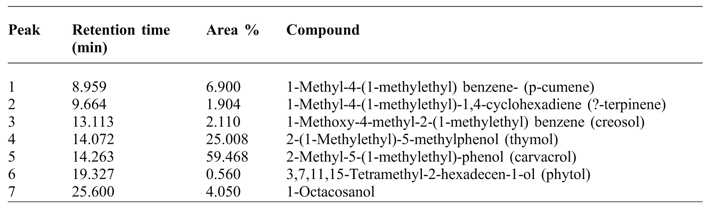
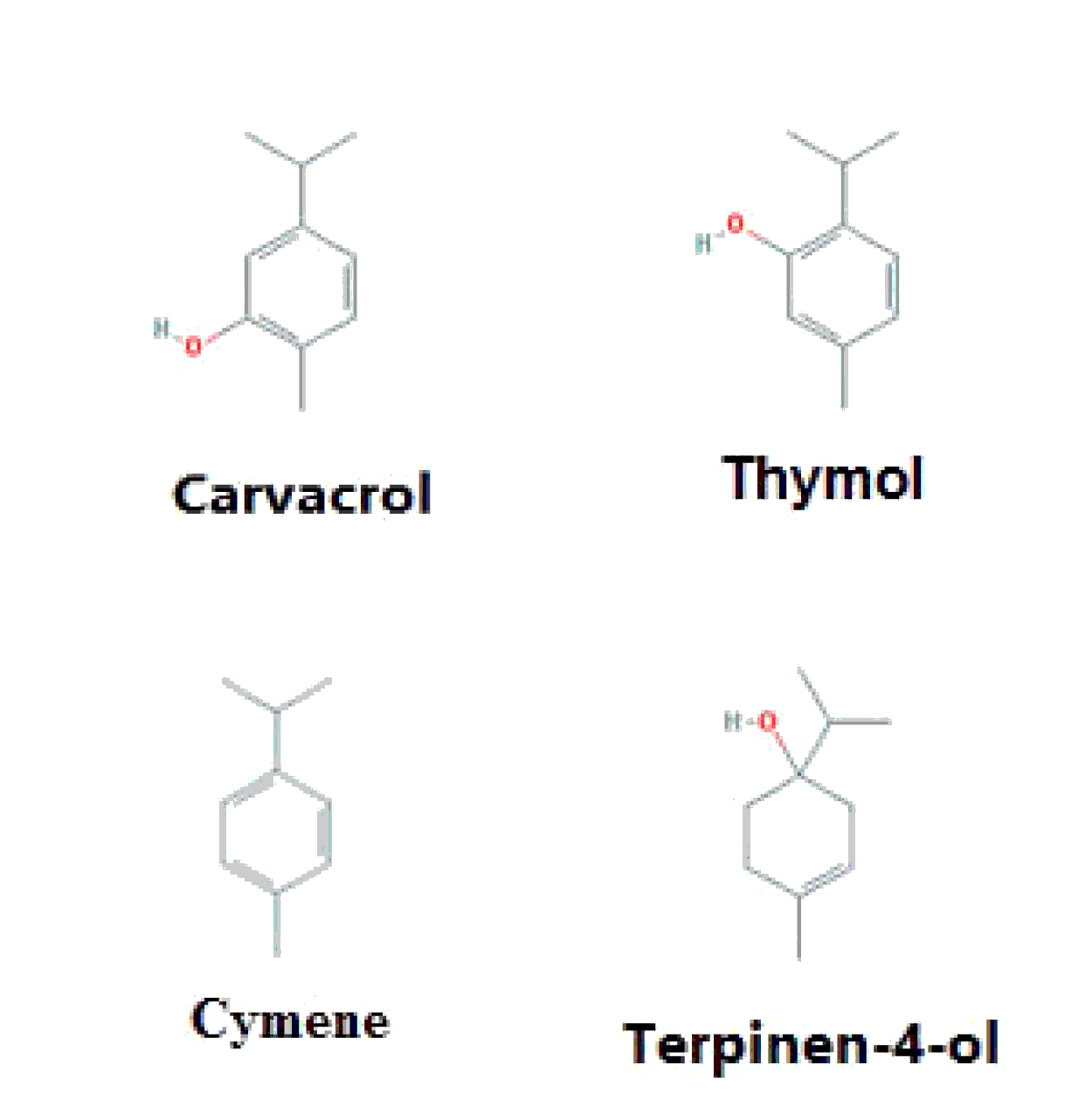
Scientific systematic grouping of the oregano plant is shown in Table 1. In addition, the basic anatomy and main ingredients of O. vulgare are shown in Figures 1 and 2, respectively.
Composition of Origanum vulgare assessed by GC-MS analysis (Coccimiglio et al., Reference COCCIMIGLIO, ALIPOUR, JIANG, GOTTARDO and SUNTRES2016).

Basic anatomy of oregano plant.

The main ingredients of the oregano oil.

Biological activities and beneficial aspects in poultry
Natural feed ingredients have shown beneficial impacts in the cell wall of the gastrointestinal tract, intestinal functions, the overall productivity of birds, meat quality and storage safety. Oregano can induce a marked improvement on the intestinal microbiota and ileal villus height of broilers when combined with attapulgite in a ratio 15 mg/kg of oregano to 2.4 g/kg of attapulgite (Skoufos et al., Reference SKOUFOS, GIANNENAS, TONTIS, BARTZANAS, KITTAS, PANAGAKIS and TZORA2016). Bozkurt et al. (Reference BOZKURT, ALÇIÇEK, ÇABUK, KÜÇÜKYILMAZ and ÇATLI2009) studied the effect of (0.00 and 1.0 g/kg diet) of the essential oil from oregano on the performance of broilers. Body weight gain was significantly increased at 21 and 42 days of age compared to the control diet group (containing no antibiotics or prebiotics). In addition, Fotea et al. (Reference FOTEA, COSTACHESCU, HOHA and LEONTE2010) evaluated the effect of three levels of oregano oil (0.3, 0.7 and 1% in feed) on broilers. The results showed that the highest weight gain was observed for 1% oregano oil supplementation. Roofchaee et al. (Reference ROOFCHAEE, IRANI, EBRAHIMZADEH and AKBARI2011) found that inclusion of 600 mg/kg of oregano essential oil in the grower diet of broilers significantly increased body weight gain compared with birds fed the control basal diet. Ghazi et al. (Reference GHAZI, AMJADIAN and NOROUZI2015) reported that feeding broilers with diet containing oregano essential oil (250 mg/kg) increased body weight and gain compared with the control containing no antibacterial or anticoccidial additives.
Galal et al. (Reference GALAL, EL-ARABY, HASSANIN and EL-SAID OMAR2016) showed the effect of two levels (0.005 and 0.01% in feed) of oregano oil on broiler performance and found that, during the first and second weeks of age, both doses had a significant effect on body weight gain compared with birds reared on a control (antibiotic free) diet. At slaughter, the higher dose of oregano essential oil achieved the highest body weight gain. Furthermore, Fonseca-García et al. (Reference FONSECA-GARCÍA, ESCALERA-VALENTE, MARTÍNEZ-GONZÁLEZ, CARMONA-GASCA, GUTIÉRREZ-ARENAS and ÁVILA-RAMOS2017) saw a significant increase in the height of intestinal villi, especially in the duodenum, by using oregano oil in poultry feed. Similar to these results, Mohiti-Asli and Ghanaatparast-Rashti (Reference MOHITI-ASLI and GHANAATPARAST-RASHTI2017) observed the improvement of the intestinal architecture by including 300 ppm oregano oil in poultry diets.
The average daily body weight gain from d 22 to 28 and 22 to 42 of broilers feed 300 ppm oregano essential oil was higher than broilers that received 500 ppm oregano essential oil in feed or the control diet (without phytogenic) group (Mohiti-Asli and Ghanaatparast-Rashti, Reference MOHITI-ASLI and GHANAATPARAST-RASHTI2016). Badiri and Saber (Reference BADIRI and SABER2016) recorded the effect of oregano essential oil (0, 50, 100, 200 and 400 mg/kg) on Japanese quail performance. The results revealed that final body weight and gain were markedly increased in the group that received 50 mg/kg oil compared to the other treatment groups. Recently, use of Mexican oregano oil (0.4 g/kg) in chicken diets improved feed efficiency rate, body weight and high-density lipoproteins in broiler chickens (Zamora et al., Reference ZAMORA, MELÉNDEZ, HUME, SILVA and VÁZQUEZ2017). Improvements in growth indices and production was explained by Gilani et al. (Reference GILANI, HOWARTH, NATTRASS, KITESSA, BAREKATAIN, FORDER, TRAN and HUGHES2017), who investigated the effect of oregano oil on the fasted broiler intestinal morphology and observed a significant increase of crypt depth and villi height in the ileum after nine hours fasting, which could be indirectly correlated with the increase of intestinal permeability. Çabuk et al. (Reference ÇABUK, ERATAK, ALÇIÇEK and TUGLU2014) studied the influences of a mixture of oregano with other herbal oils on the intestinal architecture of quail and observed increases in goblet cells number and size of the intestine with a dose of 48 mg/kg diet fed for 38 days, although they did not see any effects on crypt depth, villi width and height. Moreover, under a Clostridium perfringens challenge, oregano increased villus width and height in chickens significantly which is beneficial for commercial situations, especially where there is risk of gastric infection (Abudabos et al., Reference ABUDABOS, ALYEMNI, DAFALLA and KHAN2018).
In an trial using a mix of essential oils from six herbs growing wild in Turkey, viz. oregano oil (Origanum sp.), laurel leaf oil (Laurus nobilis L.), sage leaf oil (Salvia triloba L.), myrtle leaf oil (Myrtus communis), fennel seeds oil (Foeniculum vulgare) and citrus peel oil (Citrus sp.), birds fed the diet containing 48 mg essential oils/kg were the highest in body weight, followed by those receiving the diets containing 72 mg essential oils/kg, the antibiotic, the negative control diet and the 24 mg essential oils/kg at day 42, respectively. From one to 21 and one to 42 days of age, feed conversion ratios were significantly improved by the supplementation with 48 and 72 mg essential oils mix/kg diet. Feed intakes were significantly different between the treatments at 21 days, but not at 42 days. Supplementation in excess of 48 mg essential oils per kg feed had no additional beneficial effect on body weight, feed intake, feed conversion ratio or carcass yield. (Alçiçek et al., Reference ALÇIÇEK, BOZKURT and CABUK2003).
Improved nutrient digestibility and nutrient utilisation
Essential oils have an important impact on feed conversion, as they benefit microorganism population stability and augment nutrient absorption. In addition, essential oils can upgrade enzymes and enhance digestion. Lee et al. (Reference LEE, EVERTS, KAPPERT, FREHNER, LOSA and BEYNEN2003) found that carvacrol and thymol, improved feed conversion rate in broiler chickens, related to insulin-inactivating sites in the liver. This led to an increased efficiency, manifested as feed utilisation. Furthermore, these oils help protein digestibility by alleviating pepsin and HCl secretion (Mathlouthi et al., Reference MATHLOUTHI, BOUZAIENNE, OUESLATI, RECOQUILLAY, HAMDI, URDACI and BERGAOUI2012; Gopi et al., Reference GOPI, KARTHIK, MANJUNATHACHAR, TAMILMAHAN, KESAVAN, DASHPRAKASH, BALARAJU and PURUSHOTHAMAN2014). Fotea et al. (Reference FOTEA, COSTACHESCU, HOHA and LEONTE2010) studied the effect of oregano oil (0.3, 0.7 and 1%) and showed that 1% levels improved feed conversion ratio. Roofchaee et al. (Reference ROOFCHAEE, IRANI, EBRAHIMZADEH and AKBARI2011) found that inclusion of 600 mg/kg of oregano oil in grower diets significantly decreased feed intake and hence improved feed conversion ratio. Alp et al. (Reference ALP, MIDILLI, KOCABAGLI, YILMAZ, TURAN, GARGILI and ACAR2012) fed broilers on oregano oil at 0.0 and 300 mg/kg, and their results showed improved feed conversion ratio from 21 to 42 and one to 42 days of age, because birds fed oregano oil consumed less feed during 21 to 42 and one to 42 days of age. Esper et al. (Reference ESPER, GONÇALEZ, MARQUES, FELICIO and FELICIO2014) investigated GC/MS analysis for O. vulgare components and showed that the essential oil contained 4-terpineol that inhibited aflatoxins. These results indicated that the essential oil could provide a way to control aflatoxin in corn and soybean grains, which are typically used in poultry diets. Body weight and feed efficiency improved with 250 mg of oregano essential oil/kg of diet and when combined with vitamin C (200 mg L-ascorbic acid/kg of diet) when compared with those fed a control diet (Ghazi et al., Reference GHAZI, AMJADIAN and NOROUZI2015). In addition, Vázquez et al. (Reference VÁZQUEZ, MELÉNDEZ, ESTRADA, RODRÍGUEZ MUELA, VILLALOBOS, ZAMORA and HUME2015) compared the impact of two levels of supplementation of Mexican oregano oil (4% thymol + 60% carvacrol or 40% thymol + 20% carvacrol) in broiler feed on water intake, feed intake, feed efficiency, body weight and average daily gain. They found these combinations had more beneficial effects on water intake, feed intake and feed efficiency than if they were used separately. On the other hand, Galal et al. (Reference GALAL, EL-ARABY, HASSANIN and EL-SAID OMAR2016) found that supplementing with oregano essential oil (0.00, 0.005 and 0.01%) did not improve either feed conversion ratio or growth. Mohiti-Asli and Ghanaatparast-Rashti (Reference MOHITI-ASLI and GHANAATPARAST-RASHTI2016) observed that broilers fed diets supplemented with 300 ppm oregano oil had higher average daily feed intake than those fed 500 ppm supplementation during d 22 to 28 days of age. Supplementation with 300 ppm oregano oil decreased average daily feed intake when considered to the control basal diet. Neither 300 ppm nor 500 ppm oregano essential oil had any effect on feed conversion ratio from d 22 to 35 days of age. In Japanese quail, feed intake was clearly increased in the group that received 50 mg/kg oregano oil in feed in comparison with the other groups (0, 100, 200 and 400 mg/kg diet), but feed conversion ratio was significantly decreased (Badiri and Saber, 2016).
Antioxidant effects and meat quality
Some feeding trials have been unresponsive to oregano supplementation. Bozkurt et al. (Reference BOZKURT, ALÇIÇEK, ÇABUK, KÜÇÜKYILMAZ and ÇATLI2009) studied the effect of a control unsupplemented diet versus one containing 1.0 g/kg oregano oil and found that carcass characteristics (slaughter weight, carcass yield, and liver %) were not affected by oregano essential oil. Dietary oregano essential oil (0.0 and 300 mg/kg) did not affect pre-slaughter weight of broilers or carcass yield at 42 days of age (Alp et al., Reference ALP, MIDILLI, KOCABAGLI, YILMAZ, TURAN, GARGILI and ACAR2012). Conversely, Corduk et al. (Reference CORDUK, SARICA and YARIM2013) showed that supplementing with oregano oil in broiler chicken diet changed liver weight. Kirkpinar et al. (Reference KIRKPINAR, ÜNLÜ, SERDAROĞLU and TURP2014) worked with oregano oil at levels of 150 and 300 mg/kg diet on carcass characteristics of broiler and speculated that carcass yield or weight was significantly affected by consumption of the essential oil. Heart and liver weight of Japanese quail were significantly higher in the group that received 50 mg/kg oregano oil compared with other (0, 100.200 and 400 mg/kg diet) treatment groups (Badiri and Saber, 2016). The results obtained from Badiri and Saber (Reference BADIRI and SABER2016) study, showed that inclusion of oregano essential oil to quail feed had a clear impact on slaughter weight. On the other side, the addition of oregano essential oil had no significant effect on liver, heart, breast, and wings weights, but did increase thigh and neck weights.
There can be an antimicrobial and antioxidative effect from essential oils that contain phenolic active ingredients, which may be useful in maximising meat shelf life. A particular benefit may be the oxidative protection of the carcass, the meat and fat and the egg yolk (Franz et al., 2010). Oregano oil in doses of 50-100 mg/kg in diets has shown antioxidant activity in animal cells (Botsoglou et al., Reference BOTSOGLOU, FLOROU-PANERI, CHRISTAKI, FLETOURIS and SPAIS2002). Oregano may stabilise biochemical antioxidative mechanisms in broilers due to the activity of thymol and carvacrol (Hashemipour et al., Reference HASHEMIPOUR, KERMANSHAHI, GOLIAN and VELDKAMP2013). The antioxidant impact of oregano essential oil has been shown to be greater than vitamin E, and could be used to maintain the quality of poultry meat (Avila-Ramos et al., Reference AVILA-RAMOS, PRO-MARTÍNEZ, SOSA-MONTES, CUCA-GARCIA, BECERRIL-PÉREZ, FIGUEROA-VELASCO and NARCISO-GAYTÁN2012). The feeding trial reported by Akbarian et al. (Reference AKBARIAN, MICHIELS, GOLIAN, BUYSE, WANG and DE SMET2014) revealed that feeding oregano oil could enhance mechanisms to control heat stress stimulated by heat shock protein 70 mRNA, oxidative status and antioxidant enzyme production and, subsequently, can help maintain quality in meat produced from heat stress exposed broilers. Ghazi et al. (Reference GHAZI, AMJADIAN and NOROUZI2015) reported that lower MDA, as an indicator of oxidation status, was significantly decreased when oregano oil was included at levels of 250 mg/kg of diet. Gumus et al. (Reference GUMUS, ERCAN and IMIK2017) reported that MDA levels (as a measure of lipid peroxidation) significantly decreased in both liver and serum. Ri et al. (Reference RI, JIANG, KIM, WANG, ZHANG, WU, BONTEMPO and QI2017) discovered that dietary oregano reduced serum MDA level and elevated total antioxidant activity in the chicks at 21 and 42 days of age. Birds fed oregano had higher total antioxidant activity than the untreated chicks at 21 days of age. However, no dietary effects were observed on carcass yield, pH value, meat colour, drip or cooking loss. The combination of oregano and rosemary essential oil at 150 mg/kg in feed was successful in preventing lipid oxidation of broiler meat so retain quality for a longer period (Basmacioglu et al., 2004).
Antimicrobial (bacterial and virus) and immunomodulator effects
Phytogenic feed additives have potential antimicrobial effects which may help reduce intestinal pathogens through inhibition of attachment to the mucosa. Essential oils can cause improvements in digestive enzymes activity and absorption capacity. Roofchaee et al. (Reference ROOFCHAEE, IRANI, EBRAHIMZADEH and AKBARI2011) mentioned that dietary supplementation (600 and 1200 mg/kg) O. vulgare oil, showed a significant improvement in performance in chickens, as well as higher antioxidant serum activity. In this trial, the colonisation of lactic acid bacteria continued but reduce levels of caecal E. coli were seen with 300 and 600 mg/kg oregano supplementation.
Hulánková and Bořilová (Reference HULÁNKOVÁ and BOŘILOVÁ2012) evaluated in vitro suppression of pathogenic bacterial growth with Origanum vulgare L. essential oil (carvacrol content 72%). Mixing the oil and acetic or citric acids appeared to be a potential control for suppression of foodborne microorganisms, specially Salmonella spp. and L. monocytogenes, which are prevalent in slightly acidic foods. Mathlouthi et al. (Reference MATHLOUTHI, BOUZAIENNE, OUESLATI, RECOQUILLAY, HAMDI, URDACI and BERGAOUI2012) indicated that oregano oil had antimicrobial effects on the E. coli, Salmonella indiana, Listeria innocua, Staphylococcus aureus and Bacillus subtilis.
Betancourt et al. (Reference BETANCOURT, RODRIGUEZ, PHANDANOUVONG, ARIZA-NIETO, HUME, NISBET, AFANADOR-TÉLLEZ, VAN KLEY and NALIAN2014) isolated band patterns from different chicken gut regions exposed to serious bacterial challenges, including the duodenum, jejunum, and ileum, relative to the caecum and colon at different ages. The birds fed the oregano oil diets displayed a minor shift (62.7%) between these fore and hind gut compartments versus the control basal diet (without additives) group (53.7%). A 59% drop in mortality rate from ascites was seen in the treated groups compared to the birds fed the unsupplemented diet. Dietary supplementation with 60, 120 and 240 mg/kg of oregano oil (25% thymol + 25% carvacrol) mitigated intestinal lesion scores, ameliorated the intestinal morphology, minimised the inflammatory response and improved the specific immunity in C. perfringens-challenged broiler chickens. According to the data, the 240 mg oregano diet, was the optimum level for protecting broiler chickens from C. perfringens infections. The favourable impact of oregano might be correlated with the results on the intestinal healthy and immunity (Du et al., Reference DU, WANG, GAN, LI, GUO and GUO2016).
Nowotarska et al. (Reference NOWOTARSKA, NOWOTARSKI, GRANT, ELLIOTT, FRIEDMAN and SITU2017) discussed that oregano oil and it major component, carvacrol, could suppress the growth of Mycobacterium avium subsp. paratuberculosis. The microbial membrane analysis showed that the eradication of this bacteria may be correlated with the damage of the bacterial cell membrane, suggesting a mode of action for microbial control especially of Gram negative types.
Antiviral activity of oregano oil is poorly understood, although there are some reports on the activity against viruses although modes of action in this regard have not been fully described. Gilling et al. (Reference GILLING, KITAJIMA, TORREY and BRIGHT2014) reported that carvacrol can be powerful in inactivating non-enveloped murine norovirus (MNV), a human norovirus, within 1 h of exposure by acting directly on the viral capsid and then disrupting RNA. Sánchez et al. (Reference SÁNCHEZ, AZNAR and SÁNCHEZ2015) assessed carvacrol antiviral activity on norovirus surrogates, feline calicivirus (FCV), murine norovirus (MNV), and hepatitis A virus (HAV). The effects of carvacrol on MNV was dependent on the chemical oxygen demand (COD), with no efficacy seen over levels of 300 ppm. A 4-log drop in FCV infectivity was noticed when 0.5% carvacrol was used to sanitise lettuce, regardless of COD. Galal et al. (Reference GALAL, EL-ARABY, HASSANIN and EL-SAID OMAR2016) studied of the impact of oral treatment with 0.005 and 0.01% oregano oil on chicken interferon-alpha signalling pathway post New Castle Disease Virus vaccination. The results did not reveal any obvious positive immune modulatory effects on myxovirus resistance 1 transcript level, except at 29 days of age. There was a dose dependent up-regulation in both IFN regulatory factor-7 (IRF-7) and interferon-alpha RNA levels. Both doses of essential oil showed the ability to protect the birds from symptoms resulting from challenge with Newcastle Disease vaccination.
Immune stimulation by using herbal extracts may reduce the animal's susceptibility to infectious diseases (Dhama et al., Reference DHAMA, ALAGAWANY, EL-HACK, FARAG and TIWARI2015). Not all trials have been positive, for example Bozkurt et al. (Reference BOZKURT, ALÇIÇEK, ÇABUK, KÜÇÜKYILMAZ and ÇATLI2009) studied the effect of 1.0 g/kg diet of oregano on the performance of broilers and found that bursa was not affected by supplementation. Acamovic and Brooker (Reference ACAMOVIC and BROOKER2005) reported an immune stimulatory effect with thymol and oregano oil fed in broiler diets in terms of mononuclear phagocyte proliferation, as well as in cell mediated and humoral immunity.
In a study by Pérez-Rosés et al. (Reference PÉREZ-ROSÉS, RISCO, VILA, PEÑALVER and CAÑIGUERAL2015) it was reported that immunity partially participates in resistance against different infections. Phagocyte proliferation, cellular and humoral immune responses in broiler chickens could be improved by using herb oils, which elevated the ability of defence system to interact with infectious agents. Alp et al. (Reference ALP, MIDILLI, KOCABAGLI, YILMAZ, TURAN, GARGILI and ACAR2012) observed a that dietary oregano and anticoccidial supplementation improved the FCR significantly from 21 to 42 and 1 to 42 d of age, respectively, compared with a negative control diet (without supplementation). Birds fed the oregano oil diet consumed significantly less feed compared with those fed the negative control diet from 21 to 42 d or from 1 to 42 d of age. Although feeding oregano significantly lowered the excreta oocyst counts compared with those of birds fed the negative control diet, its anticoccidial effect was significantly less than the effects in birds fed the diet containing the anticoccidial.
In addition, broilers, when fed 300 ppm oregano oil in their diet, displayed higher IgG titres relative to those reared on a control (without supplementation) diet (Mohiti-Asli et al., 2017). Mohiti-Asli and Ghanaatparast-Rashti (Reference MOHITI-ASLI and GHANAATPARAST-RASHTI2015) mentioned that broilers fed 500 ppm oregano essential oil in their diets exhibited lower coccidial score lesions in the upper and mid sections of their intestine and had subsequently lower lesion scores and litter scores in respect to unchallenged birds.
Up until now, this review has focussed on the oil extract from oregano, but other active extracts are also available and have been tested in poultry feed. Franciosini et al. (Reference FRANCIOSINI, CASAGRANDE-PROIETTI, FORTE, BEGHELLI, ACUTI, ZANICHELLI, DAL BOSCO, CASTELLINI and TRABALZA-MARINUCCI2016) studied the addition of oregano aqueous extract to broiler chickens. This improved body weight up to 36 d of age and increased total serum IgG. Lactobacilli spp. Numbers were elevated in the ileum and caecum in all groups supplemented with aqueous extract. Staphylococcus spp. count was consistently lower in intestinal tracts from the aqueous extract supplemented birds. Scocco et al. (Reference SCOCCO, FORTE, FRANCIOSINI, MERCATI, CASAGRANDE-PROIETTI, DALL'AGLIO, ACUTI, TARDELLA and TRABALZA-MARINUCCI2017) observed that the aqueous extract treatment typically increased goblet cell activity (glycoconjugates) to levels above those seen for vitamins C and E treatments. Coliform populations were reduced in the ileum of the oregano treated group at 21 and 42 d of age but elevated in all other groups. E. coli had the lowest populations in the caecum following treatment with the oregano aqueous extract treatment at both sampling ages. Enterococci, Lactobacilli and Staphylococci spp. counts displayed no obvious variations among the different experimental treatments in the caecum. In the ileum, feeding the oregano aqueous extract did not result in the sharp fall in the lactic acid bacteria count that was previously noticed in the other experimental groups.
Metabolism
Mohiti-Asli et al. (2016) studied the effect of feeding oregano essential oil (300 and 500 ppm) on broilers. The results showed that broilers fed 300 ppm oregano oil had lower counts of heterophils and heterophil to lymphocyte ratio. However, there were no differences between the two levels of oregano oil on white blood cell count, lymphocytes or monocytes counts. Broilers that were supplemented Mexican oregano oil at 0.4 g/kg diet had slightly increased white blood cells, erythrocytes and haemoglobin levels. The birds fed the unsupplemented control diet had higher values of mean corpuscular volume, lymphocytes, monocytes and mean corpuscular haemoglobin, followed by the antibiotic positive control diet and Mexican oregano oil treated groups (Zamora et al., Reference ZAMORA, MELÉNDEZ, HUME, SILVA and VÁZQUEZ2017).
In a feeding trial reported by Soliman et al. (Reference SOLIMAN, NASSAN and ISMAIL2016) the effect of 0.3 and 0.6 g oregano on productive performance in Inshas chickens strain was studied. The results showed that plasma proteins, total protein, albumin, globulin and A/G ratio were not significantly affected compared with the control diet group and the indicator liver enzymes ALT, AST were not affected. Ghazi et al. (Reference GHAZI, AMJADIAN and NOROUZI2015) studied the effect of oregano oil (0.0 and 250.0 mg/kg diet) on growth performance and blood parameters of broiler chicks. They reported that triglyceride was decreased compared with control group. Zamora et al. (Reference ZAMORA, MELÉNDEZ, HUME, SILVA and VÁZQUEZ2017) reported that birds were supplemented 0.4% oregano oil had slightly increased albumin and haemoglobin levels.
In Japanese quail, cholesterol and high density lipoproteins (HDL) contents were higher in birds that received 100 mg/kg oregano oil in feed, while triglycerides were higher in-group that received 50 mg/kg oil, but cholesterol and LDL-cholesterol were lower in-group that was supplemented with 200 mg/kg oil (Badiri and Saber, 2016). Ghazi et al. (Reference GHAZI, AMJADIAN and NOROUZI2015) reported that oregano oil combined with vitamin C could have beneficial synergistic impacts on broiler chicks reared under heat stress circumstances through lower serum levels of glucose, triglycerides, malondialdehyde (MDA) and corticosterone. Zamora et al. (Reference ZAMORA, MELÉNDEZ, HUME, SILVA and VÁZQUEZ2017) found a significant increase in cholesterol and HDL with dietary of 0.4g/kg oregano oil, but not in triglycerides and low-density lipoproteins at 42 days of age.
Conclusions
The reviewed trials demonstrated overall that oregano extracts used as feed supplements can be used as an effective growth promoter as a natural alternative to drugs. In addition, oregano and its derivatives have antioxidant, growth promoting, antimicrobial, and immunostimulant impacts in poultry production. The antioxidant benefits of oregano and its bioactive components may protect the quality of meat and its derivatives. These effects showed that oregano extracts could enhance efficient growth and health in poultry. Overall, oregano can be supplemented from 10-30 g/kg diet, while its essential oils should be limited to 500 mg/kg diet for best performance and health.