The western slope of the Atacama Circumpuna (2,400–4,400 m asl) is a high-altitude, hyper-arid desert in which resources are discontinuous and limited to fertile oases.Footnote 1 The region stands out for its abundance of copper minerals and deep-rooted local mining tradition (Aldunate et al. Reference Aldunate, Castro and Varela2008; Figueroa et al. Reference Figueroa, Salazar, Salinas, Núñez-Regueiro and Manríquez2013; Núñez Reference Núñez1987, Reference Núñez1999; Núñez et al. Reference Núñez, Agüero, Cases and de Souza2003; Salazar Reference Salazar2008). The Atacama’s hyper-arid conditions have shaped the character of the metallurgical operations in the region. The location of the copper mines in remote areas with low agricultural productivity (Núñez Reference Núñez1999; Salazar, Berenguer, and Vega Reference Salazar, Berenguer and Vega2013) made transportation a critical aspect of the mining–metallurgical organization, and the relatively low availability of woody fuels restricted the location of smelting activities and led to the search for novel solutions, such as the use of wind.
Given that the production and distribution of metals were important aspects of the political economy of the Inka (Costin Reference Costin and Wailes1996; Earle Reference Earle1994; González Reference González2004; Lechtman Reference Lechtman, Burger, Morris and Matos2007; Zori Reference Zori, Alconini and Covey2018), the social, political, cultural, and environmental variability within the vast empire must have demanded a diverse set of imperial strategies to access and control metallic wealth. Scholars have argued that the state had direct control over the production process in some areas, especially through oversight of the labor of skilled artisans (Costin Reference Costin and Wailes1996; Earle Reference Earle1994; Zori Reference Zori, Alconini and Covey2018). In northern Chile, connections between mining–metallurgical sites and the Inka administration have been observed at Tarapacá Viejo (Zori Reference Zori, Alconini and Covey2018; Zori et al. Reference Zori, Trooper and Scott2013), Collahuasi-Miño (Figueroa et al. Reference Figueroa, Mille, Salazar, Berenguer, Menzies, Sapiains, Cifuentes and Joly2018; Salazar, Berenguer, and Vega Reference Salazar, Berenguer and Vega2013), El Abra (Núñez Reference Núñez1999; Salazar Reference Salazar2008; Salazar, Berenguer, and Vega Reference Salazar, Berenguer and Vega2013; Salazar, Borie, and Oñate Reference Salazar, Borie, Oñate, Vaughn and Tripcevich2013), Cerro Verde (Adán and Uribe Reference Adán and Uribe2005; Berenguer and Salazar Reference Berenguer and Salazar2017; Rodríguez Reference Rodríguez1981; Salazar, Berenguer, and Vega Reference Salazar, Berenguer and Vega2013), Viña del Cerro (Plaza et al. Reference Plaza, Garrido and Larreina‐García2023), and Los Infieles (Cantarutti Reference Cantarutti, Tripcevich and Vaughn2013).
Other models suggest that in some parts of the Southern Andes the state may not have directly controlled mining or the primary smelting of copper ores. Instead, these activities remained in the hands of local households whose members produced metal ingots as state tribute (Earle Reference Earle1994). Moreover, documentary evidence shows that the exploitation of some gold mines (and thus the production of metals) was coordinated and controlled by local lords (Berthelot Reference Berthelot, Murra, Wachtel and Revel1986). Recent studies also suggest that under imperial rule local agents may have developed wealth production projects independent of state control and intentions (Garrido Reference Garrido2018). This diverse evidence shows that controlling the production and distribution of metal wealth under the Inka Empire was a challenging task that had to accommodate local sociohistorical, technological, and ecological traditions and conditions (Zori Reference Zori, Alconini and Covey2018).
Archaeological research is of fundamental importance for unraveling this complexity, but the scarce direct evidence of metalworking sites limits our capacity to properly understand the production of metal in the Andes under the Inka Empire. San Pedro de Atacama (SPA) is one of the areas in which evidence for metal production is lacking. Even though an important set of pre-Inka metal objects have been recovered from burials, archaeometallurgical research has determined that most of these artifacts were imported from other regions (Cifuentes et al. Reference Cifuentes, Figueroa, Salazar and Mille2018; Lechtman and MacFarlane Reference Lechtman and MacFarlane2005; Maldonado et al. Reference Maldonado, Rehren, Pernicka, Núñez and Leibbrandt2013; Plaza Reference Plaza2018; Plaza et al. Reference Plaza, Figueroa and Martinón-Torres2022; Salazar et al. Reference Salazar, Figueroa, Morata, Mille, Manríquez and Cifuentes2011).Footnote 2 Although some evidence documents local metallurgical production from at least the late Formative Period (Cifuentes et al. Reference Cifuentes, Figueroa, Salazar and Mille2018; Salazar et al. Reference Salazar, Figueroa, Morata, Mille, Manríquez and Cifuentes2011), the data are scarce and poorly contextualized. This work is the first study of a metallurgical site in SPA: it investigates how the Inkas organized local metal production under hyper-arid conditions in an area with a relatively small population.
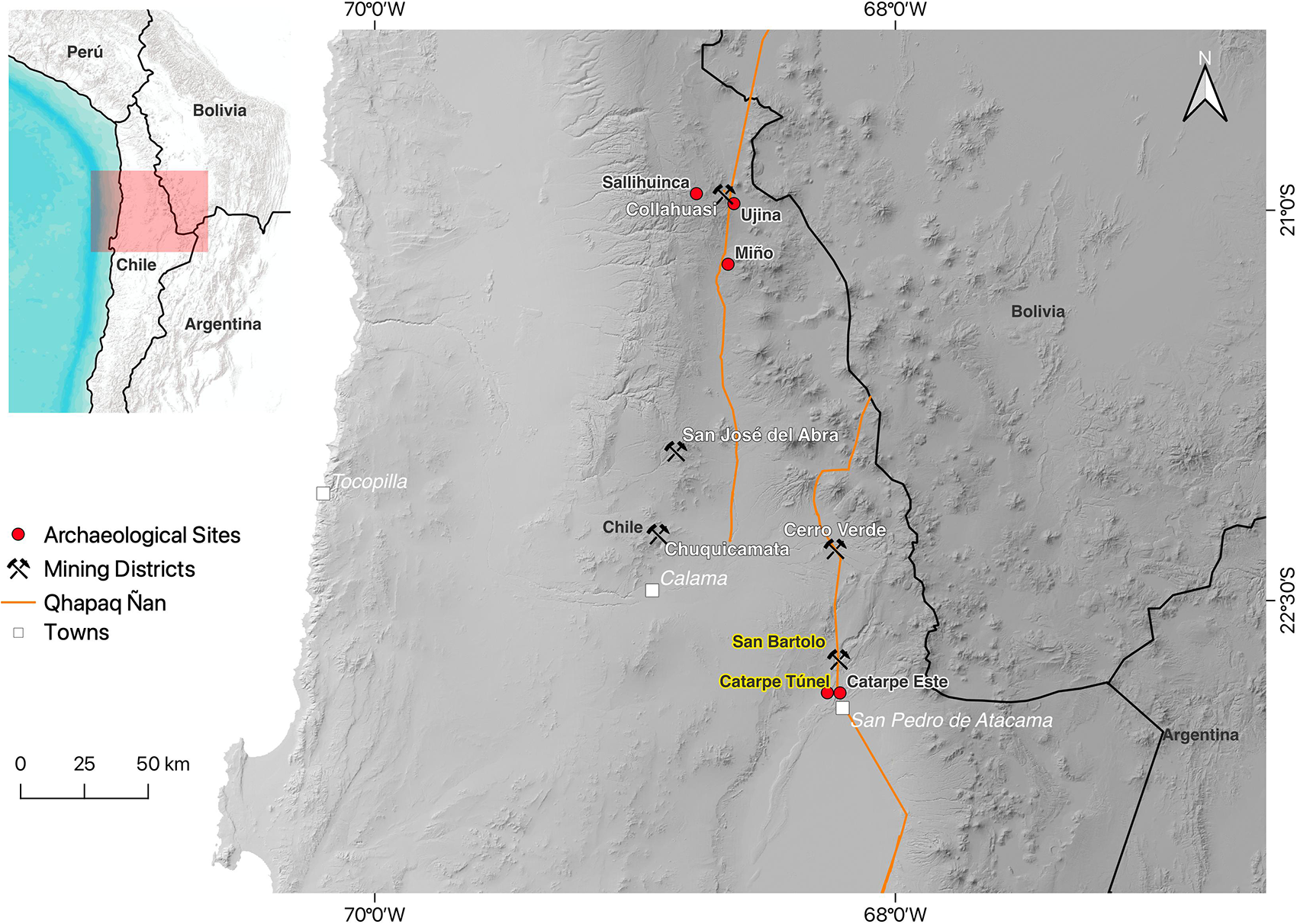
The evidence presented here comes from the Catarpe Túnel site, located in front of Catarpe Este site (Figure 1), arguably the most important Inka settlement in the Salar de Atacama basin (Lynch Reference Lynch1977; Santoro and Uribe Reference Santoro, Uribe, Alconini and Covey2018). At this site, we identified six metallurgical furnaces, corresponding to stone huayras Footnote 3 arranged on the edge of a windswept ridge of the Cordillera de la Sal (2,640 m asl).
Mining districts and metallurgical sites of the Atacama Circumpuna’s Western Slope (prepared by Cristián González, Fondecyt 1201603). (Color online)

The Catarpe Túnel Furnaces
An archaeological survey carried out in the Catarpe area, on the western edge of the ravine on a seam of the Cordillera de la Sal, identified six pyrometallurgical structures and other productive remains, such as slag, ceramic fragments, slagged rocks, copper ore, and lithic hand hammers for grinding minerals and slag. The site has been named Catarpe Túnel and is located very close to a section of the Qhapaq Ñan (Castro et al. Reference Castro, Varela, Aldunate and Araneda2004), as well as caravan trails and rock piles (spatial markers).
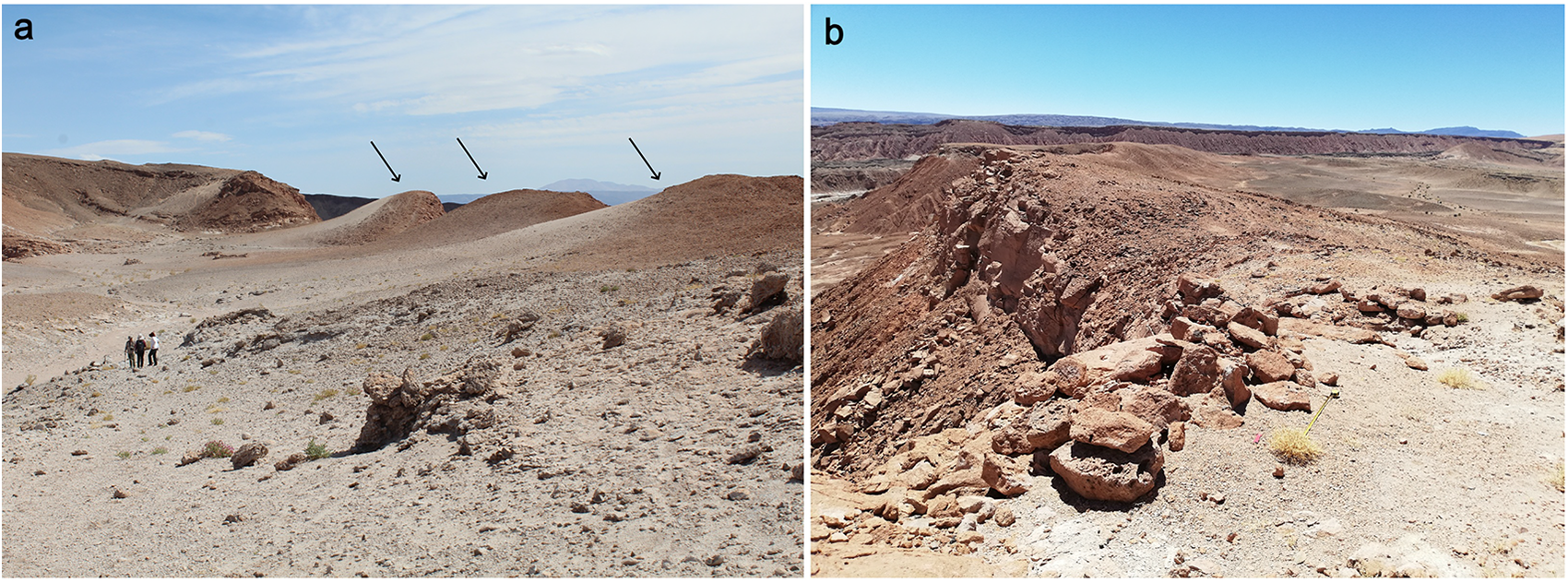
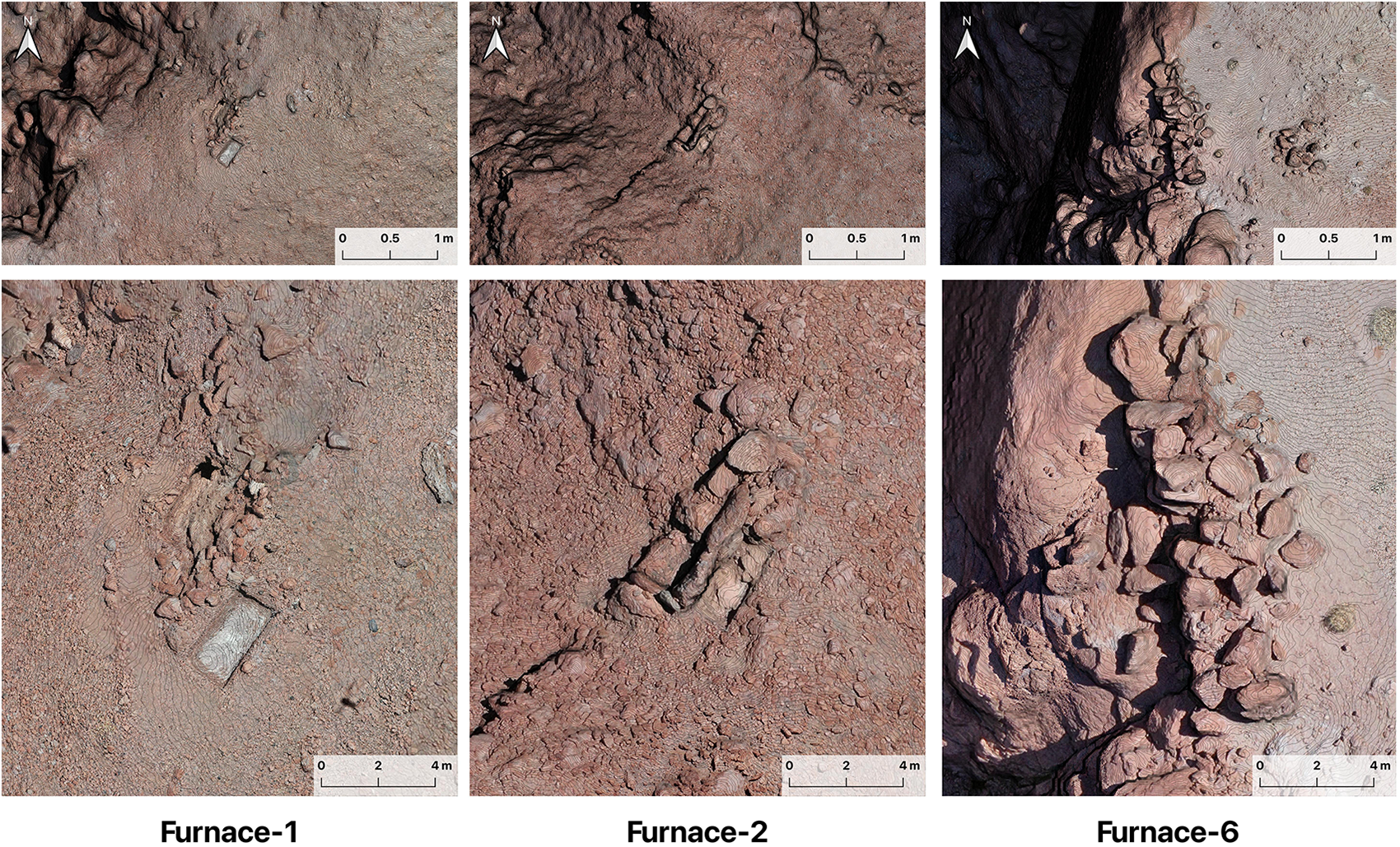
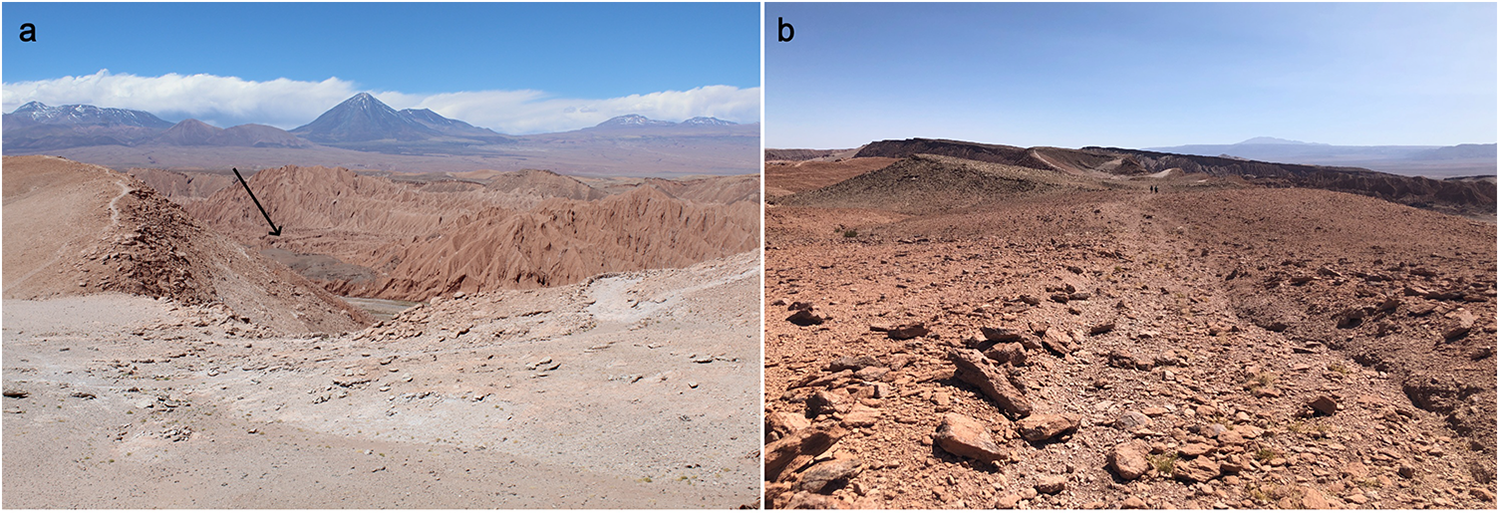
The furnaces are rectangular rustic stone structures between 2 and 4 m long, built without mortar in local rock (tuff). Following the typology proposed by Figueroa and colleagues (Reference Figueroa, Mille, Salazar, Berenguer, Menzies, Sapiains, Cifuentes and Joly2018), at least two types of furnaces have been distinguished: one made up of a row of semi-buried stones and bench-type furnaces, the latter consisting of a flat surface and a “backing” of vertical slabs. Other types are likely present, but the state of preservation of some of the structures does not allow us to confirm this. These furnaces are distributed along a 2 km span of the cliff edge, with a perpendicular orientation to the direction of the predominant winds (Figure 2). This placement would have been fundamental to their operation, as explained later. The mineral and fuel would have been placed inside the furnace, facing the cliff, and the “backing” (in the bench type) or “wall” (in the row of stones type) would have kept the fuel in place (Figure 3). The technology is similar to that of the furnaces of the southern highlands of Tarapacá: using wind as a crucial resource for copper, accompanied by a characteristic stone architecture constructed without the use of mortar and nearly without elevation (Figueroa et al. Reference Figueroa, Mille, Salazar, Berenguer, Menzies, Sapiains, Cifuentes and Joly2018).
(a) Location of the furnaces on the edges of the hills and (b) detail of the structure on the edge of the cliff (photographs by Ariadna Cifuentes, Fondecyt 1201603). (Color online)

Orthophotos of the furnaces at the Catarpe Túnel site (elaborated by Cristián González, Fondecyt 1201603). (Color online)

Excavations in Furnace 1 and Furnace 2
We carried out stratigraphic interventions on two furnaces that were selected because they represented two morphologies and were better conserved than the other furnaces. Furnace 1 is a rectangular structure 2.95 m long, 0.7 m wide, and 0.45 m high, with a northeast–southwest orientation. It consists of a low wall that creates an interior exposed to the winds of the sloping hillside and an exterior on a level; thus, it corresponds to the furnace type referred to as a row of semi-buried stones. Abundant slag, copper ore, slagged stones, domestic pottery, and clay remains were scattered in an area with a radius of 5 m. In this structure, we excavated two units of 1 × 0.5 m: the first on the exterior and the second on the interior, named 1E and 2I, respectively. We recovered abundant slag, metallic copper, copper ore, charcoal, clay, chañar fruits, pottery, bone chips, and an obsidian flake.
Furnace 2 is a rectangular structure 2.4 m long, 0.75 m wide, and 0.64 m high, with a northeast–southwest orientation. It has a backing of vertical slabs and a flat surface facing a cliff, through which the metallurgical waste generated by the operation was dispersed by gravity down the hill. On the ground nearby, we observed a rectangular piece of pottery with a flat-convex section, bearing signs of thermoalteration and slag and fragmented into three parts. A 1 × 0.5 m unit was excavated on the outside of the structure: there was no deposit inside the furnace because the operations took place on a stone surface. The excavation confirmed the presence of metallurgy-related materials, although they were scarce: two fragments of slag, camelid feces, and charcoal from a small combustion area.
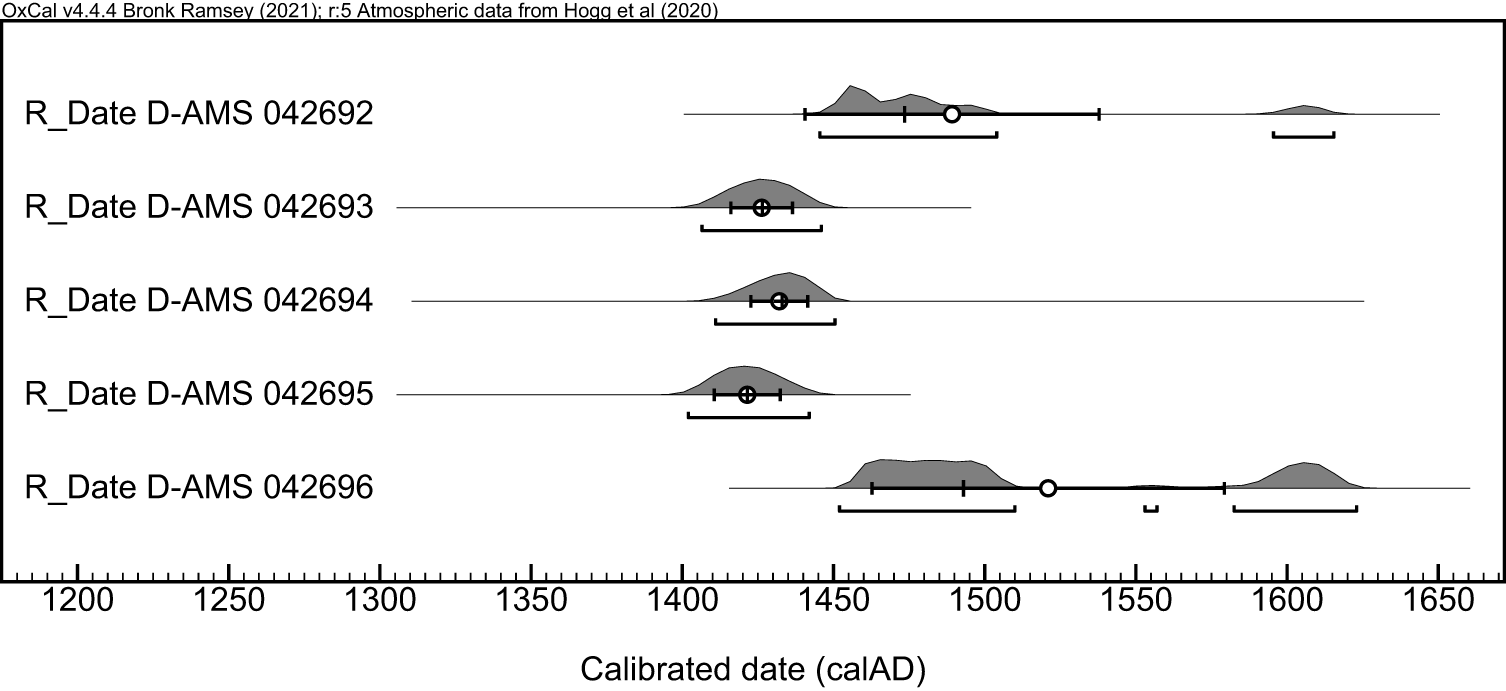
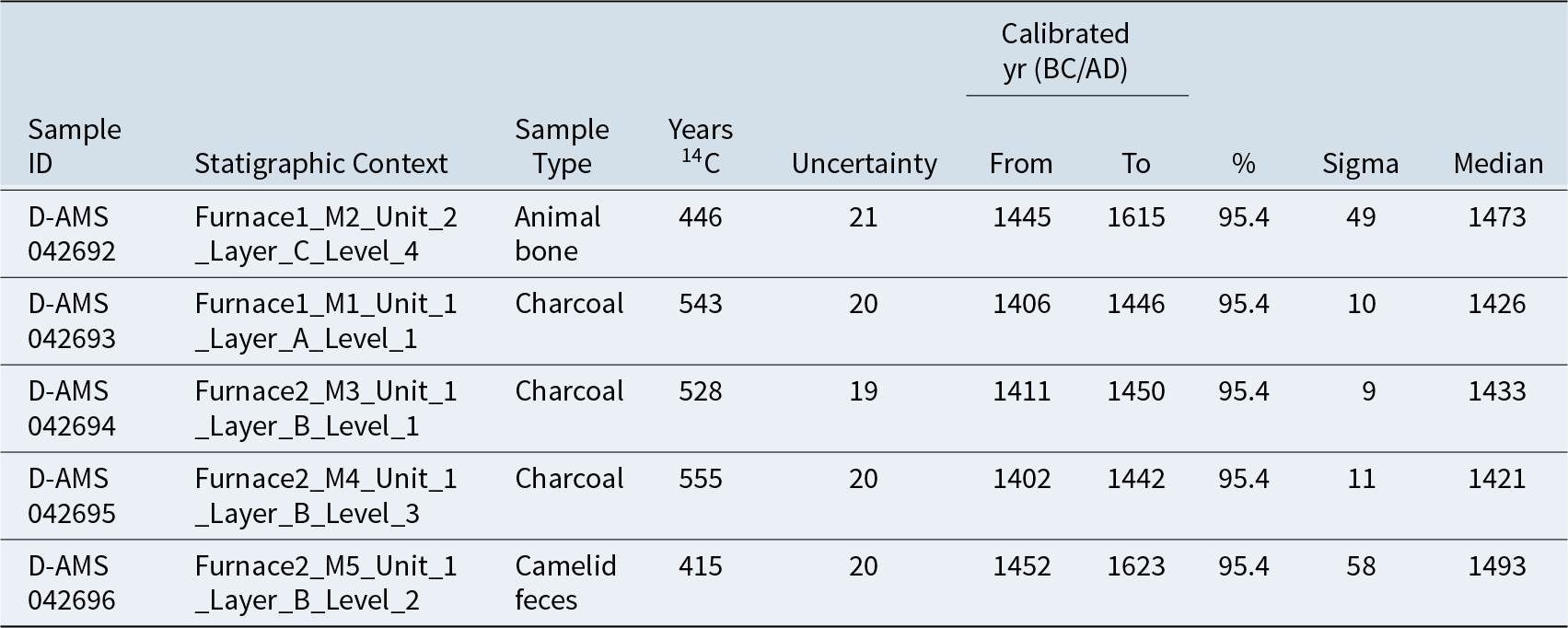
Five radiocarbon dates were processed: two for Furnace 1 and three for Furnace 2 (Table 1; Figure 4).Footnote 4 These indicate that the metallurgical operations in these furnaces took place between cal AD 1402 and 1450, during the late period of Tawantinsuyo influence in the Circumpuna de Atacama based on dates determined using plant samples. Notably, the most recent works on the intrusion of the Inka into Collasuyu place the beginning of the conquest at the start of the fifteenth century in the Atacama Circumpuna (Berenguer Reference Berenguer, Axel, Rivolta, Seldes, Vásquez and Pablo2007:426–427; Christie et al. Reference Christie, Berenguer, de-Pol, Álvarez, Ibacache, Morales and Villalba2019; Cornejo Reference Cornejo2014; Murphy et al. Reference Murphy, Salazar, Dee, Hayashida, Troncoso, Parcero-Oubiña, Berenguer and Erdil2024; Salazar et al. Reference Salazar, Berenguer, Castro, Hayashida, Parcero-Oubiña, Troncoso, Hayashida, Troncoso and Salazar2022).
Distribution of radiocarbon dates performed by DirectAMS (Bothell, Washington, USA). Data calibrated with OxCal 4.2 software (Bronk Ramsey Reference Bronk Ramsey2017) using the ShCal020 curve (Hogg et al. Reference Hogg, Heaton, Hua, Palmer, Turney, Southon and Bayliss2020).

Radiocarbon Dates.

Notes: Dates from DirectAMS, Bothell, Washington, USA, 2021 (Fondecyt 1201603). Data Calibrated with OxCal 4.2 Software (Bronk Ramsey Reference Bronk Ramsey2017) using the ShCal020 Curve (Hogg et al. Reference Hogg, Heaton, Hua, Palmer, Turney, Southon and Bayliss2020); elaborated by Rodrigo Loyola.
The analysis of pottery recovered from Furnace 1 determined that the operations were linked to local pottery traditions of the Loa-San Pedro component (Uribe Reference Uribe1997), including the Aiquina (AIQ), Turi Rojo Alisado (TRA), Turi Rojo Revestido Revestido Pulido (TRP), and Turi Grueso Alisado (TGA) types, as well as the Turi Rojo Revestido Pulido Ambas Caras (TPA) type, an Inka variant produced locally. These pottery types are ascribed to the Late Intermediate and Late periods, which could indicate that the furnace was in use during both periods. However, the presence of Late Intermediate ceramic types does not necessarily imply that the furnace was used before the Late period because several Late Intermediate types continued to be produced in the Late period (Uribe Reference Uribe2002). Notably, some fragments show slag or thermoalteration, suggesting the use of the vessels as containers for carrying out some stages, as has been observed in other metallurgical sites (Cifuentes Reference Cifuentes2023; Lechtman Reference Lechtman1976:34; Scattolin and Williams Reference Scattolin and Williams1992:77).
Ores and Metallic Copper
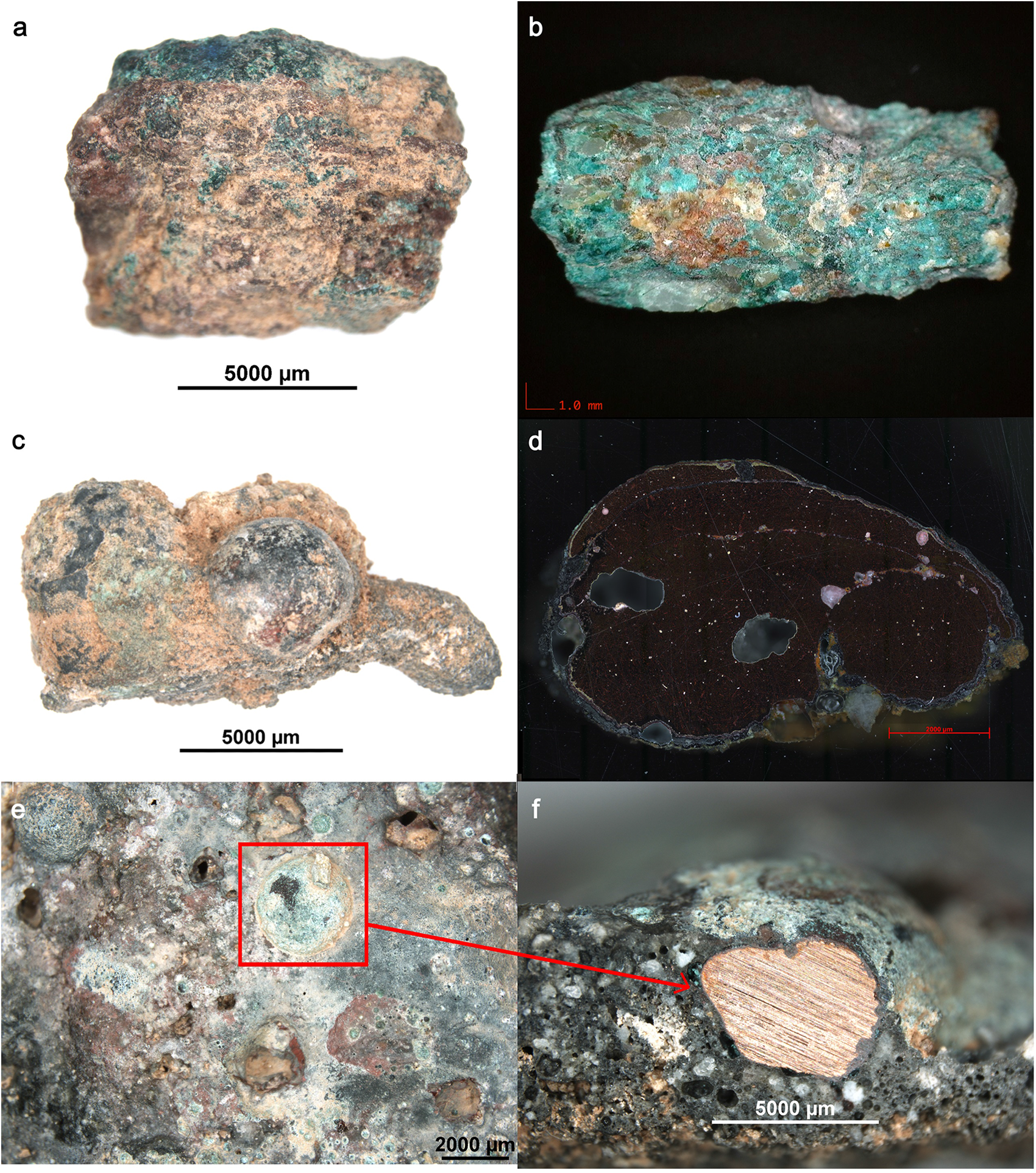
We identified more than 100 copper minerals in Furnace 1. Most were small fragments (0–5 mm) devoid of gangue (Figure 5a and b), indicating that they had been subjected to a milling and selection process. We also found metallic copper, identifying about 60 prills in Furnace 1 (Figure 5c and d). Most of the metallic remains ranged from 2 to 5 mm in diameter, although a conglomerate of prills was recovered that was 18.1 mm in diameter and had a mass of 2.78 g (Supplementary Figure 1). We did not find any finished objects or metallic debris that could constitute parts of objects or cuttings.
Materials from Furnace 1: (a, b) copper minerals observed with binocular loupe; (c) copper prill observed with binocular loupe; (d) copper prill in mosaic image obtained using optical microscope, dark field at 10×; (e, f) slags with copper prills observed with binocular loupe (photographs by Ariadna Cifuentes, Fondecyt 1201603, C2MRF). (Color online)

The excavations also recovered an abundant amount of slag. We identified 3,826 pieces of slag (1.5 kg), of which 99.8% came from Furnace 1 and only 0.2% (eight pieces) from Furnace 2. Although we observed some variability, most of the slags were small (6–10 mm, even if some reached 50 mm in diameter) and graphite gray in color, with green staining due to copper corrosion. Some contained sediment, indicating that they were deposited at high temperatures on the ground. Some samples allowed the identification of small copper prills trapped in their matrix that resembled those observed in the Collahuasi slags (Figure 5e and f). At Collahuasi, such slags were crushed to separate out the metal particles, which could then be remelted to form ingots (Figueroa et al. Reference Figueroa, Mille, Salazar, Berenguer, Menzies, Sapiains, Cifuentes and Joly2018).
Elemental chemical composition analyses were carried out on a selected sample of copper ores (n = 7) and prills (n = 11) using particle-induced X-ray emission (PIXE) (Supplementary Text 1; Supplementary Tables 1 and 2) and scanning electron microscopy (SEM) techniques. The tests were conducted at the Accélérateur Grand Louvre d’Analyse Élémentaire (AGLAE) at the Centre de Recherche et de Restauration des Musées de France (C2RMF) in Paris. These analyses aimed to identify the minerals being reduced, evaluate the copper content, and ascertain the pattern of chemical impurities present to determine the source of the minerals. In addition, the crystallographic features of the minerals were analyzed using powder X-ray diffraction (PXRD). To prepare the samples for PIXE, surface cleaning was performed to remove the patina and obtain uncorroded metal and a flat surface. The metal to be analyzed by SEM with energy-dispersive X-ray spectroscopy (SEM-EDX) was mounted in resin. For PXRD, a pulverized sample was obtained.
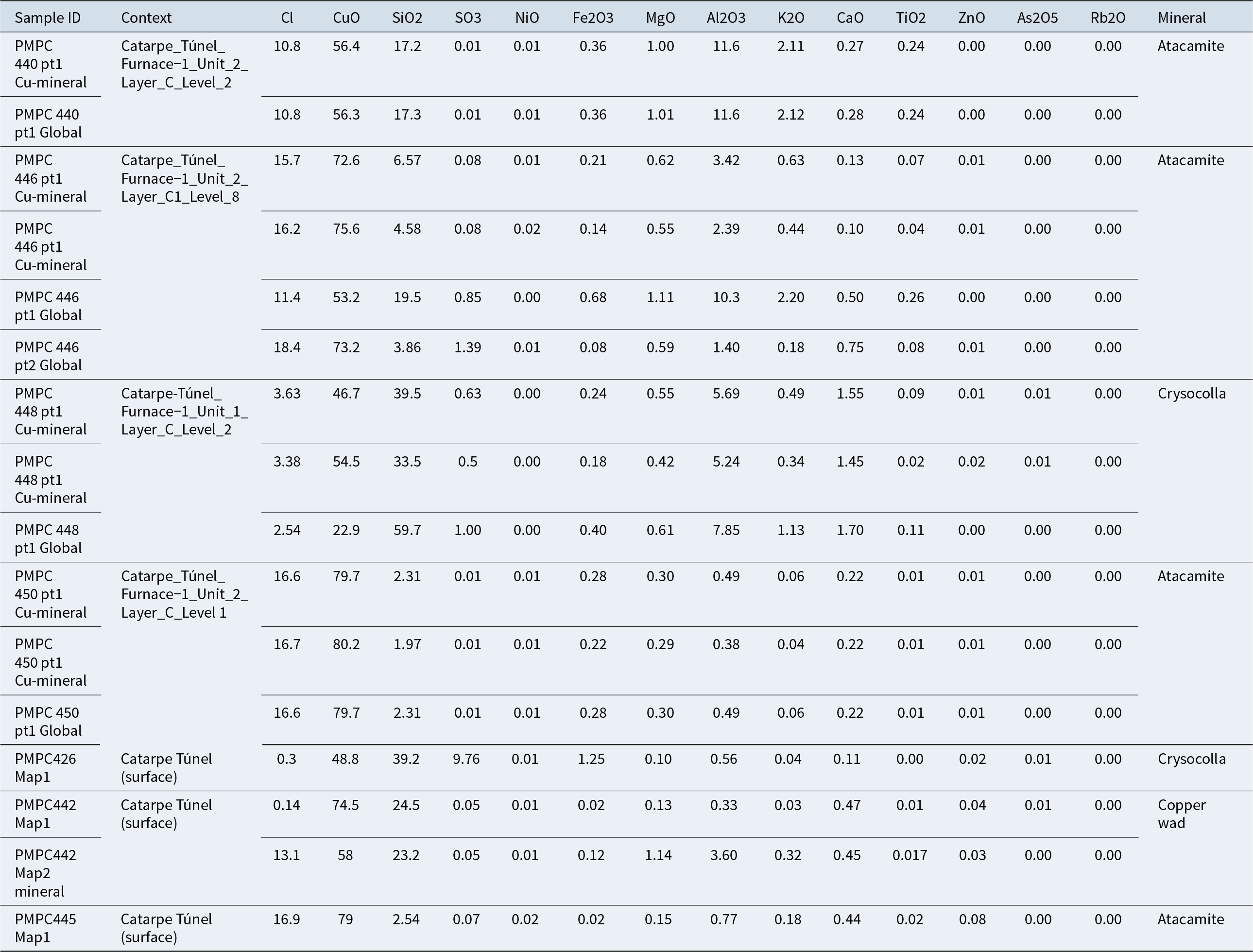
An analysis of seven mineral samples identified the presence of atacamite and chrysocolla (Table 2). Both the macroscopic inspection and the PXRD patterns of a comparable set of minerals found a greater range of minerals, including not only atacamite and chrysocolla but also brochantite, azurite, and clinoatacamite. A comparison with the various mineralizations of the region led us to establish a link with the ores at San Bartolo, located about 15 km north of the site. The San Bartolo ores contain atacamite, clinoatacamite, brochantite, malachite, and chrysocolla, as well as zeolites, albite, and celestine (Sapiains Reference Sapiains2023). We also established a link at the macroscopic level with the surface minerals found in the administrative center of Catarpe Este.
Catarpe Túnel Copper Ores from Furnace 1.

Notes: Analyzed by PIXE at C2MRF. Results are expressed in wt%.
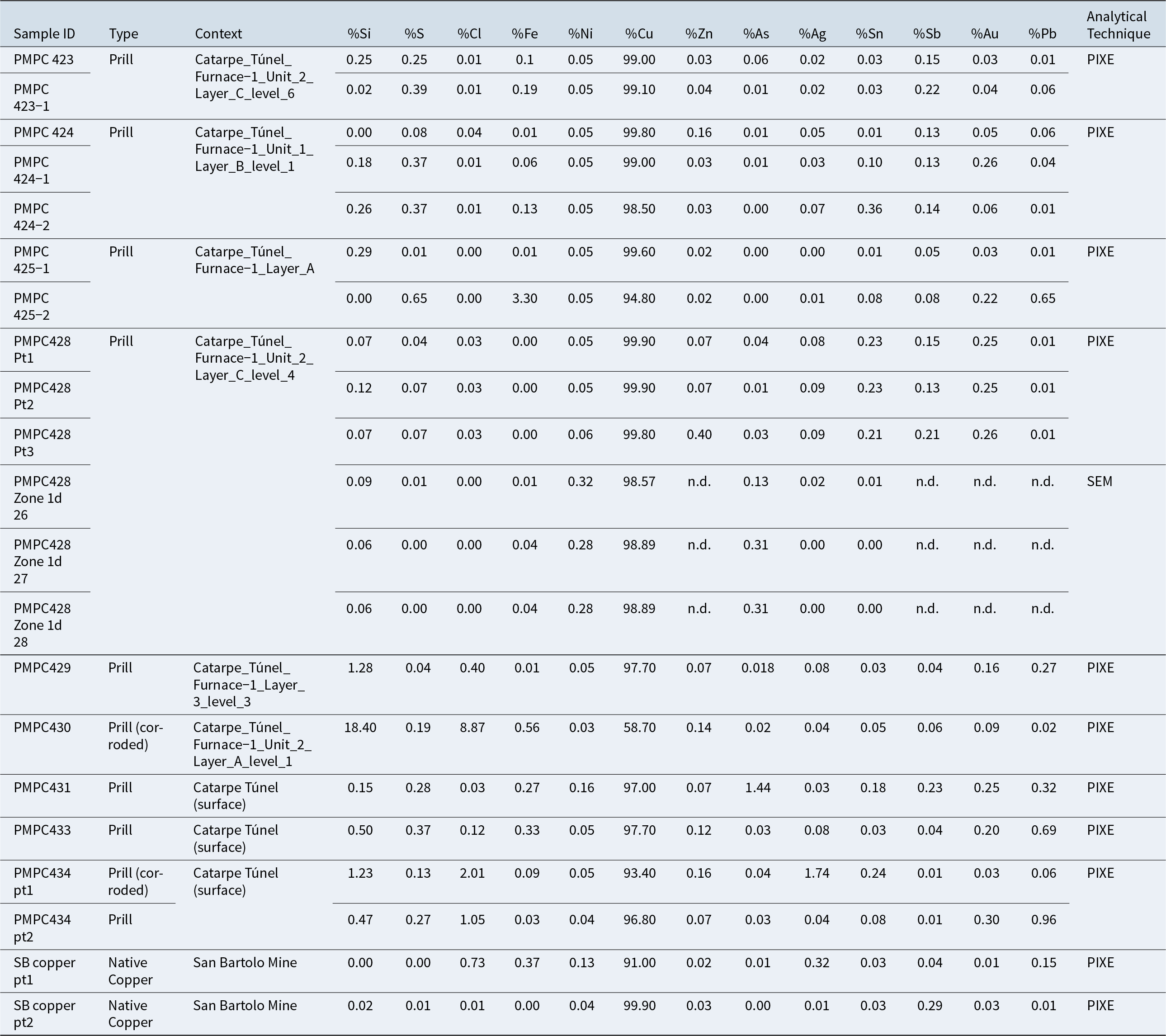
The analysis of metallic copper samples indicated that the Catarpe furnaces produced high-purity copper (99.9%). However, two samples contained 1.74% silver and 1.44% arsenic (Table 3). That native copper from San Bartolo included traces of silver, together with the presence of silver ores, offers a second line of evidence linking this mining center with the Catarpe furnaces.
Copper Metal Samples from Catarpe Túnel and Native Copper from San Bartolo Mine Analyzed by PIXE at C2RMF.

Notes: Results are expressed in wt%; n.d: no detected.
Technical Ceramics and Clay
On the surface of Furnace 2, we observed 21 fragments of a technical ceramic piece with a subrectangular shape, flat-convex section, thick walls, and an irregular, smoothed surface with fingerprints from its manufacture (Supplementary Figure 2). The paste has a reddish-brown color, compact appearance, and a high proportion of inclusions of different sizes, including white and black micas; it has a porous structure and the irregular fracture typical of refractory materials (Gluzman and Maisonnave Reference Gluzman and Maisonnave2020). Residues of a greenish slag are affixed to the fragment, and it displays conspicuous signs of thermal alteration; that is, differences in color caused by the exposure of certain sections to a heat source. Its shape could suggest that it was an open mold for the casting of a flat object such as an ingot. However, the internal face neither contains metallic remains nor traces of the bone paste (hydroxyapatite) used to cover casting surfaces that have been observed on such pieces in late metallurgical sites in northwestern Argentina and northern Chile that present evidence of Inka intervention (Angiorama Reference Angiorama2004; Gluzman and Maisonnave Reference Gluzman and Maisonnave2020; González Reference González1997, Reference González2010; Niemeyer Reference Niemeyer1979–1981, Niemeyer et al. Reference Niemeyer, Cervellino and Muñoz1983; Plaza et al. Reference Plaza, Pavlovic and Martinón-Torres2021; Zori et al. Reference Zori, Trooper and Scott2013).
We identified more than 300 clay fragments of variable sizes, some with slag (40%), evidence of thermoalteration (30%), and fingerprints from its manufacture (20%). Other fragments seemed to correspond to unfired clay, breaking easily. Furnace 1 contained 99% of the clay remains, whereas Furnace 2 presented three clay fragments, although the internal wall of the “backing” had adhered clay remains. We think that these clay concretions may have been a technological response to the need to seal openings, thereby improving the conditions of the reducing environment. Another plausible explanation involves the use of clay to plaster the interior of the combustion structures for silver production, as has been observed in the Inka limestone furnaces of Curamba in the highland region of Peru (Lechtman Reference Lechtman1976; Vetter et al. Reference Vetter, Petrick, Huaypar and Mackay2008), modern furnaces for cupellation in the Porco region of Bolivia (Van Buren and Cohen Reference Van Buren and Cohen2010), and furnaces dug in the ground at Huaca del Pueblo Batán Grande on the northern coast of Peru for the reduction of copper ores (Shimada et al. Reference Shimada, Epstein and Craig1982).
Fuel Management
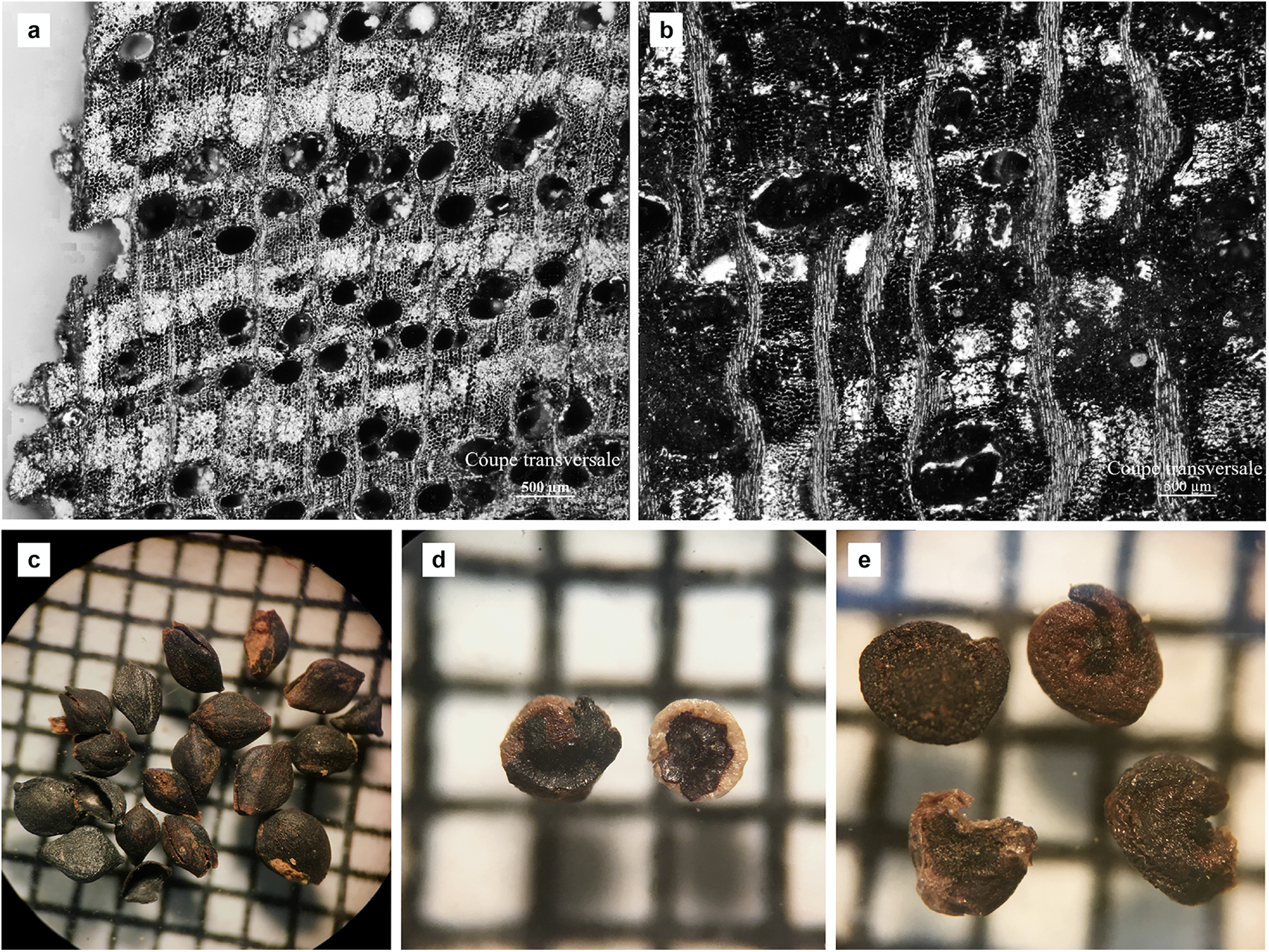
Abundant charcoal, bone fragments, and camelid dung were recovered from both furnaces, although carpological material was only obtained from Furnace 1. The anthracological analysis was oriented toward taxonomic determination and the recognition of non-anatomical elements such as fungi, shrinkage cracks, and vitrification, the presence or absence of which provides data on the management of the plant fuel (Grimberg Reference Grimberg2023). A carpological study was also carried out on material recovered by the flotation technique from unit 1E and dry sieving in unit 2I. Taxonomic identification was guided by the observation of morphological characteristics and grouping by similarity criteria. We obtained an interesting spectrum of species with high fuel potential. Only carob (Neltuma alba and Neltuma flexuosa) was used for the firewood we found, forming a monospecific combustion context. We also identified quinoa (Chenopodium quinua), wild grasses (Scirpus sp. and Poa sp., among others), and cachiyuyo (Atriplex sp., A. imbricata, and A. madariagae; Figure 6).
Archaeobotanical remains from Furnace 1: (a) Neltuma flexuosa; (b) Neltuma alba; (c) Sciper sp.; (d) Chenopodium quinua; (e) Atriplex imbricata. Cross section (photographs by Daniela Grimberg, Fondecyt 1201603). (Color online)

The presence of quinoa (three charred seeds) is interesting. Its low frequency suggests the probable use of dry sticks to light the furnace. The presence of seeds of cachiyuyo (not as charcoal) suggests its secondary use in the production of fire in 1E to maintain and increase heat, considering its resinous qualities. Its wood would have been used in such low quantities in the otherwise monospecific combustion process (involving carob with high calorific value) that it would have been completely consumed, leaving no traces: cachiyuyo was thus not identified in the anthracological analysis. Experiments show that robust woody elements with a higher calorific value promote the calcination of secondary woody elements (Piqué i Huerta Reference Piqué i Huerta1999); that is, elements that participate as fire starters and maintainers are completely combusted.
The anthracological analysis indicates that the combustion processes in Furnace 1 differed between 1E and 2I. In IE, charcoal was produced that would later be used in combustion for the reduction of minerals inside the furnace in unit 2I. The use of previously dried firewood rather than green or dead wood is indicated by the low presence of fungi and shrinkage cracks.
Species of carob, cachiyuyo, and the grasses that we identified grow in the Catarpe Valley. We believe that the fuel supply and management activities could have been carried out in this sector and that their selection was not random. It is no coincidence that cachiyuyo was selected as a propitiating and sustaining element of the fire, along with aquatic grasses (Cyperus sp.) that are highly flammable when dry. The supply and handling of the plant fuel took place during the first stages of the operational chain and included the selection of the fuel and its processing, storage, transport, and use.
The presence of compacted camelid dung on the sterile substrate of Furnace 2 and dispersed in the deposit of Furnace 1 suggests that it was also used as fuel. In other Andean regions, the combustible qualities of dried guano, referred to as taquia, were recognized (Lechtman Reference Lechtman1976; Petersen Reference Petersen1970). Many high-altitude Andean regions are arid environments with scarce woody resources. In this environmental context, in combination with the importance of llamas in transport and in other dimensions including ritual, the ubiquity of llama dung made it a significant resource. Guano is mentioned in the archaeological literature as a fuel for the operation of hearths in the pre-Inka mining camps of Chuquicamata (Núñez et al. Reference Núñez, Agüero, Cases and de Souza2003:21–22), as important to the development of metallurgical smelters in the Camarones Valley during the Late period (Álvarez Reference Álvarez1992–1993), and as used in colonial furnaces in Potosí and Porco (Petersen Reference Petersen1970; Van Buren and Cohen Reference Van Buren and Cohen2010) and Republican furnaces at Cerro Pasco in Peru (Lechtman Reference Lechtman1976). Ethnoarchaeological research has explored its use in furnaces for pottery production in the highlands of Peru and Bolivia (Sillar Reference Sillar2000), and the use of herbivore animal dung as fuel for metallurgical purposes has been reported in other parts of the world (Verly et al. Reference Verly, Rademakers, Somaglino, Tallet, Delvaux and Degryse2021). The use of dung as fuel could also explain the presence of carbonized seeds in the furnaces, which could have entered the record as part of the forage consumed by the animal (Miller and Smart Reference Miller and Smart1984). Finally, the discovery of highly fragmented bone, carbonized and calcined in Furnace 1 suggests the use of bone as fuel, as has been observed in Old World non-metallurgical combustion structures (Lambrecht et al. Reference Lambrecht, de Vera, Jambrina-Enríquez, Crevecoeur, González-Urquijo, Lazuen and Monnier2021; Morin Reference Morin2010). Taken together, these pieces of evidence suggest a variety of strategies for adapting to the fuel sources available in the driest desert in the world.
Discussion
The stratigraphic investigation of two furnaces of different morphologies enabled us to provide an initial characterization of the metallurgical Catarpe Túnel site. It is the only archaeometallurgical site that has so far been systematically studied in SPA and is one of the few sites of its kind excavated in copper-rich northern Chile. These sites’ metallurgical operations were oriented toward reducing copper ores to obtain unalloyed metallic copper, a practice developed by a group of local metallurgists during the Late period associated with Tawantinsuyu domination.
Despite limited excavations, we identified the presence of deposits with combustion features, recovering slag, metallic copper, copper ores, domestic pottery, obsidian, clay, botanic remains, dung, and highly fragmented bones. The differences between Furnace 1 (of the semi-buried stone row type) and Furnace 2 (of the bench type) in the morphology, quantity, and diversity of materials suggest that different operations or operations were carried out at different times. These should be investigated in the future.
Our data suggest a Late period, local, small-scale metallurgical production that adds to our understanding of the metallurgical panorama of the Southern Andes. These furnaces appear to belong to a Circumpunan regional-scale technology of stone huayras and probably represent the southernmost expression of this tradition, which has not been reported in other regions of the Andes and which we are just beginning to understand.
The Metallurgical Tradition of the Atacama Circumpuna’s Western Slope
The characteristics of the Catarpe Túnel furnaces link them technologically to what we have defined as the metallurgical tradition of the Atacama Circumpuna’s Western Slope (MTAC; Cifuentes Reference Cifuentes2023). This tradition involved small-scale copper extractive metallurgy, most likely linked to the local pastoralist–caravaning and mining communities of the Late Intermediate and Late periods. It developed at the region’s highest altitudes (2,400–4,500 m asl) and extended from the northern limit of the study region—including the southern highlands of Tarapacá, where the Ujina-Collahuasi (Figueroa et al. Reference Figueroa, Mille, Salazar, Berenguer, Menzies, Sapiains, Cifuentes and Joly2018; Salazar, Berenguer, and Vega Reference Salazar, Berenguer and Vega2013; Sapiains et al. Reference Sapiains, Menzies, Figueroa, Wilke, Mille, Salazar and Berenguer2020), Miño (Salazar, Berenguer, and Vega Reference Salazar, Berenguer and Vega2013), and Sallihuinca (Cifuentes Reference Cifuentes2023) sites are located—to the Catarpe Valley (see Figure 1). To the north, the metallurgical site Tarapacá Viejo (Tarapacá ravine, 1,400 m asl), from the Late Intermediate, Late, and colonial periods, presents furnaces from a different tradition; they are characterized by clay huayras with ventilation ducts (Zori and Trooper Reference Zori and Tropper2010; Zori et al. Reference Zori, Trooper and Scott2013).Footnote 5
Among the characteristics of the MTAC are the morphology of the furnaces, the mortarless stone construction (stone huayras), the probable use of local domestic pottery in their operations, their location in areas exposed to strong winds, and their orientation perpendicular to the direction of the winds. They also were used for similar purposes: the primary smelting of copper ores to obtain unalloyed metallic copper in the form of prills and drops. In other words, this technological tradition was designed not to produce finished metal objects but to obtain unalloyed metallic raw material.
As demonstrated in the case of the Ujina-Collahuasi furnaces that are located on small island hills (Figueroa et al. Reference Figueroa, Mille, Salazar, Berenguer, Menzies, Sapiains, Cifuentes and Joly2018), as well as other metallurgical furnaces in the southern Andean region (Cruz et al. Reference Cruz, Angiorama, Becerra, Braticevic and de Cobres2021, Reference Cruz, Lechtman and Rivera-Casanovas2022; Lechtman et al. Reference Lechtman, Cruz, MacFarlane and Carter2010; Zori et al. Reference Zori, Trooper and Scott2013), the natural draft provided by the wind for the primary reduction of copper and the ability to fuel combustion continuously would have been fundamental resources for the operating chain. They would have allowed the furnaces to reach sustained temperatures over time—for example, up to 1,200°C in Collahuasi (Figueroa et al. Reference Figueroa, Mille, Salazar, Berenguer, Menzies, Sapiains, Cifuentes and Joly2018). The specificity of this technology probably reflects the limited availability of woody resources in the area, considering that fuel resources are fundamental for the development of metallurgical operations (see Shimada and Craig [Reference Shimada and Craig2013] for other sustainable uses of fuel resources in arid regions of the Andes). Experimental archaeological studies have estimated that for every 6 k of ore and 4 k of flux, 20–30 k of charcoal would have been used (Tarragó and González Reference Tarragó and González1996). In the arid environment of the Atacama Desert, the use of wind and diverse fuels, such as dung and, later, fresh bone, appear to be plausible alternatives. The use of llama (Lama glama) dung in the metallurgical operations at Catarpe would relate this technology to pottery production because this fuel is present in both pyrotechnological processes.
A final characteristic of the MTAC is that, in most cases, the metallurgical operations were located next to caravan trails or the Qhapaq Ñan itself, possibly linking the users of these routes with the metallurgical activities occurring in the furnaces. In this context it is interesting to consider the concept of an itinerant production mode, based on the ethnoarchaeological model of “swallow potters”—itinerant artisans who manufactured vessels in other communities, leaving their technological footprint (Ramón Joffré Reference Ramón Joffré2013; Villanueva Reference Villanueva2020). This model has been proposed recently for goldsmiths from the northern coast of Peru (Vetter Reference Vetter, Vega-Centeno and Dulanto2020).
Metallurgical Production at the Edge of the Qhapaq Ñan
Although the technology of the Catarpe Túnel furnaces had a strong local imprint (MTAC), the proximity of the furnaces to the imperial road and the Inka administrative center of Catarpe Este suggests a link with the Inka administration (Figure 7). Considering that the region’s copper was a resource of particular interest to Tawantinsuyu (Adán and Uribe Reference Adán and Uribe2005; Aldunate Reference Aldunate, Aldunate and Cornejo2001; Berenguer et al. Reference Berenguer, Sanhueza, Cáceres, Núñez and Nielsen2011; Cornejo Reference Cornejo1995; Figueroa et al. Reference Figueroa, Mille, Salazar, Berenguer, Menzies, Sapiains, Cifuentes and Joly2018; Llagostera Reference Llagostera and Niemeyer1976; Lynch and Núñez Reference Lynch and Núñez1994; Núñez Reference Núñez1999; Rodríguez Reference Rodríguez1981; Salazar Reference Salazar2008; Uribe Reference Uribe1999–2000; Zori et al. Reference Zori, Trooper and Scott2013) and that the empire reorganized local mining–metallurgical systems to increase the scale of production and control the circulation of minerals and metals (Aldunate et al. Reference Aldunate, Castro and Varela2008; Angiorama Reference Angiorama2004; Figueroa et al. Reference Figueroa, Mille, Salazar, Berenguer, Menzies, Sapiains, Cifuentes and Joly2018; González Reference González2010; Niemeyer et al. Reference Niemeyer, Cervellino and Muñoz1983; Núñez Reference Núñez1999; Rodríguez Reference Rodríguez1981; Salazar Reference Salazar2008; Salazar, Borie, and Oñate Reference Salazar, Borie, Oñate, Vaughn and Tripcevich2013; Zori and Tropper Reference Zori and Tropper2010; Zori et al. Reference Zori, Trooper and Scott2013), the proximity of Catarpe Túnel to Inka sites could be interpreted as an expression of state control over copper production. The recovery of two exceptional Santamariano-style metal plates with zoomorphic motifs and anthropomorphic faces, as well as small gold plates, chisels, a tweezer, a tumi, and “fragments of plate and crucibles, deformed copper and even slag” (Lynch and Núñez Reference Lynch and Núñez1994:148) at the Inka site of Catarpe Este also links the administrative site with the Catarpe furnaces.
(a) Location of Catarpe Este and (b) Qhapaq Ñan (photographs by Ariadna Cifuentes, Fondecyt 1201603). (Color online)

Furthermore, the Catarpe Túnel site is located along a 2 km axis of the Qhapaq Ñan, less than 200 m from the imperial artery, which would have been an “official” traffic route (sensu Nielsen Reference Nielsen, Hirth and Pillsbury2013). As such, this artery must have made possible the supply of copper minerals to the site, as well as the transport of the metal obtained from metallurgical operations. That said, the furnaces at Catarpe Túnel are dispersed, and the site reveals no evidence of the type of centralized production found at other Inka-controlled metal sites in northern Chile such as Ujina and Sallihuinca (see Figure 1; Cifuentes Reference Cifuentes2023; Figueroa et al. Reference Figueroa, Mille, Salazar, Berenguer, Menzies, Sapiains, Cifuentes and Joly2018). However, Zori (Reference Zori, Alconini and Covey2018, Reference Zori2019) has identified relatively small Late-period smelting sites dispersed within a 2 km radius of the imperial center of Tarapacá Viejo in the Tarapacá area. Thus, Catarpe Túnel may be part of a series of similar sites dispersed around the administrative site of Catarpe Este.
Until such evidence is found, we cannot rule out the possibility that, despite its proximity to the Inka road, Catarpe Túnel furnaces were managed by local leaders and were not part of an imperial political economy. Given the tradition of small-scale sites associated with caravan trails in Atacama, metal ingots could have been produced at Catarpe Túnel by local herders and caravaners circulating through the Qhapaq Ñan or other nearby routes outside state control (Corrales Reference Corrales2017; Garrido and Salazar Reference Garrido and Salazar2017). The site could either represent a case of situational exploitation of the state road infrastructure by local groups, as has been posited for the local mining communities of the Cachiyuyo de Llampos mountain range north of Copiapó (Garrido Reference Garrido2016, Reference Garrido2017); a side effect of the development of the Inka political economy that opened up new economic opportunities for local populations (Garrido and Salazar Reference Garrido and Salazar2017); or an example of metallurgical practices taking place outside the state orbit, as seen at the Campo de Carrizal site in northwestern Argentina (Zagorodny et al. Reference Zagorodny, Angiorama, Becerra and Pérez-Pieroni2015). Further research on the local and regional scale is required to better support or discard these alternative hypotheses.
Further research is also required to understand the destination of the Catarpe Túnel smelted copper. Production from the Catarpe furnaces may have been consumed locally, consistent with the small-scale operations whether they were under imperial control or not. It is also possible that metallic copper produced at Catarpe Túnel was transported along the Qhapaq Ñan to manufacturing workshops outside the region, where more consistent pre-Inka and Inka metalworking traditions have been documented, such as in northwestern Argentina. Whatever the destination of the copper, it is clear that its production was segmented in the study area. Ores may have come from the San Bartolo mines, been smelted at Catarpe Túnel, and further refined or made into metal objects at other locations in or outside the region. Segmentation of production has been identified in all known Inka cases in northern Chile (Figueroa et al. Reference Figueroa, Mille, Salazar, Berenguer, Menzies, Sapiains, Cifuentes and Joly2018; Garrido and Plaza Reference Garrido and Teresa Plaza2020; Salazar et al. Reference Salazar, Berenguer, Castro, Hayashida, Parcero-Oubiña, Troncoso, Hayashida, Troncoso and Salazar2022; Zori Reference Zori, Alconini and Covey2018, Reference Zori2019).
Conclusions
The Catarpe Túnel furnaces are part of the MTAC, constituting its southernmost known expression. At these furnaces, the primary reduction of copper ores was carried out, and the metal produced was transported to other workshops for the production of finished objects. The limited availability of fuels due to the extreme aridity characteristic of the high-altitude desert in the MTAC shaped the fundamental characteristics of this metallurgical tradition, such as the selection of locations exposed to strong winds and the specialized use of a variety of fuels. The data provided by our recent research at Catarpe Túnel strengthen our proposal that a metallurgical tradition of stone huayras existed in the Circumpuna region and possibly in neighboring regions and should be studied in future research.
The pottery identified on the surface and through stratigraphy at Catarpe Túnel, the radiocarbon dates, the location of the site along the Qhapaq Ñan, and its position just over 1 km from the administrative center of Catarpe Este—the most important Inka site in the Salar de Atacama basin—link the metallurgical operations of Catarpe Túnel with Inka dominion over Atacama. Future research should delve into the consumption of this production—for whom it was produced and whether it was part of the exchange systems of the time—and explore whether the Inka sponsored it.
Catarpe Túnel seems to have formed part of a metal production system adapted to local traditions and conditions, which may have been characterized by dispersed, small-scale smelting operations organized around the administrative center of Catarpe, where metal production may have been concentrated. However, other models also need to be considered that focus on local traditions and agents who could have produced metallic copper as part of local economies not disrupted by the state or as an unpredicted side effect of imperial control over the Atacama region.
Acknowledgments
This research was conducted within the framework of Fondecyt 1201603 “Pre-Hispanic Mining Landscapes in the Atacama Desert: Towards a Stage of the Use of Copper Minerals and Their Link with the Production of Ritual Technology.” The Consejo de Monumentos Nacionales authorized the work through ORD.5419, and the sending of samples abroad was authorized according to entry no. 7041. We thank Mirta Solís, Jimmy Cenzano, Alberto Coca, and Eva Siares, the members of the board of directors of the Catarpe Indigenous community, for authorizing and collaborating on this research, which took place in its territory. We thank Claudia Ogalde and Marco Vásquez, who participated in the excavations, and Sibylle Manya, Quentin Lemasson, and Laurent Pichon, who supported the analyses at C2RMF. FEDER, Région Bretagne and Rennes Métropole contributed to the purchase of the X-ray powder diffractometer in Rennes. We thank Rodrigo Loyola, Jimena Cruz, Andrea Molina, and Wilfredo Faúndez for contributing to this research. We thank IIAM for the support provided for the conservation of the materials. We thank Damián Cifuentes for creating the figures. Ariadna Cifuentes is grateful for the support of the Agencia Nacional de Investigación y Desarrollo Programa de Becas de Doctorado Nacional 2018-21181195 and a grant from l’Institut Français du Chili (2021) for a research internship at the C2RMF/UMR 8068 CNRS, Musée du Louvre in Paris. Finally, we thank the Postdoctorado Fondecyt 3240369, ECOS ANID C19H05 and IRP ATACAMA SHS projects.
Funding Statement
This research was financially supported by Fondecyt 1201603. FEDER, Région Bretagne and Rennes Métropole contributed to the purchase of the X-Ray powder diffractometer in Rennes.
Data Availability Statement
Data analyses presented here can be found at the Centre de Recherche et de Restauration des Musées de France (C2RMF)/UMR 8068 CNRS, Musée du Louvre.
Competing Interests
The authors declare none.
Supplementary Material
The supplementary material for this article can be found at https://doi.org/10.1017/laq.2024.39.
Supplementary Text 1. Elemental Chemical Composition Results.
Supplementary Table 1. Certified reference materials (standards) on metallic samples analyzed by PIXE at C2RMF, Paris.
Supplementary Table 2. Metallic samples analyzed.
Supplementary Figure 1. Copper prill in mosaic image obtained using optical microscope.
Supplementary Figure 2. Technical ceramic piece from Furnace 2.